
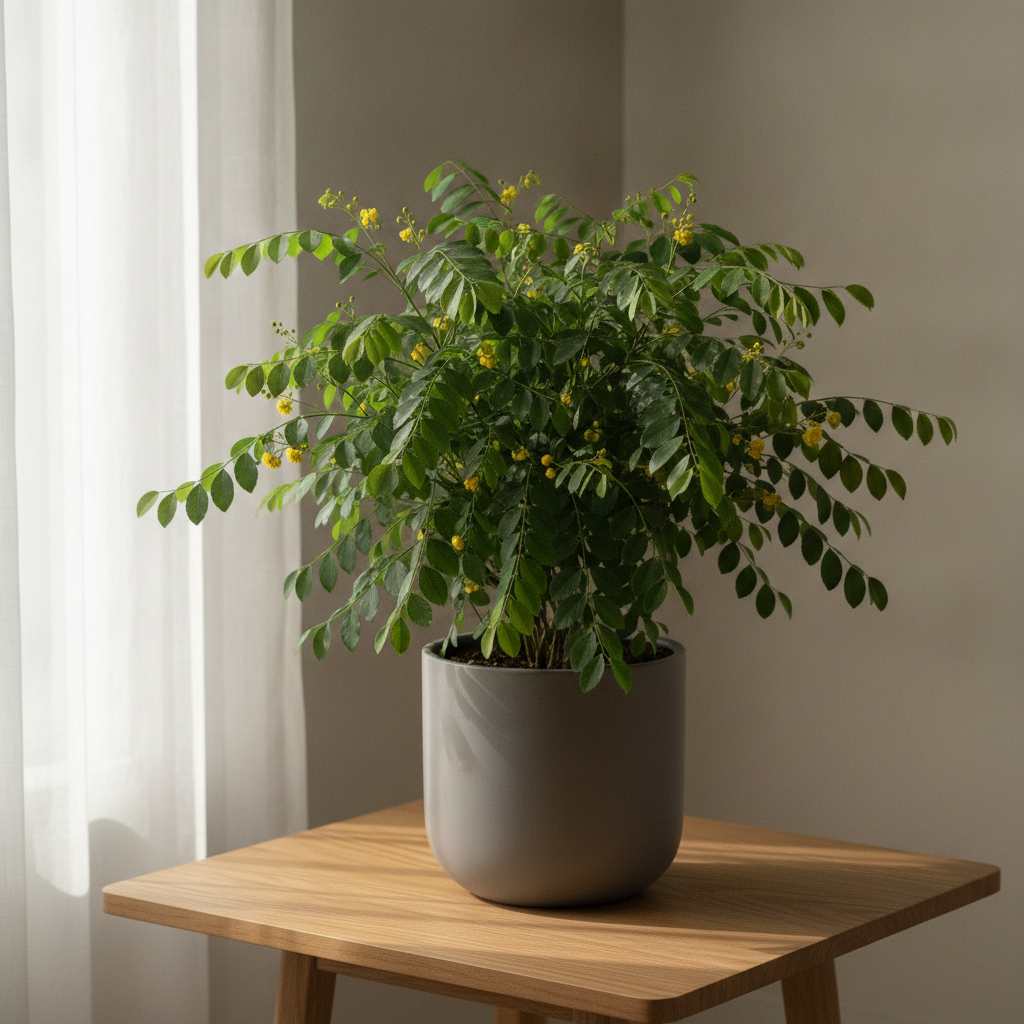
Few houseplants earn their keep through scent rather than spectacle, but the Chinese perfume plant is one of them. Known botanically as Aglaia odorata and sometimes sold as mock lime, mock lemon or Chinese rice flower, this evergreen shrub carries clusters of minuscule yellow blooms no larger than a grain of rice, each releasing a sweet, lemony fragrance that can perfume an entire room. Native to southern China and the warm forests of Southeast Asia, it belongs to the mahogany family (Meliaceae) and has been cultivated for centuries across Asia, where its flowers are traditionally used to scent tea, freshen linen and flavour perfumes.
As a houseplant, Aglaia odorata has a reputation for being undemanding yet quietly rewarding. It is a slow, woody grower that responds beautifully to pruning, which makes it a favourite subject for indoor bonsai and compact shrub forms alike. The difference between a plant that merely survives and one that truly thrives comes down to a handful of factors: enough light to trigger flowering, steady warmth, careful watering and the patience to let it settle. This guide walks through every element of its care, from reading light levels to diagnosing pests, so you can coax those famous fragrant flowers from your own plant.
Contents
- Quick Reference
- Why the Chinese Perfume Plant Makes a Rewarding Houseplant
- Light Requirements
- Watering & Humidity
- Soil, Potting & Repotting
- Fertilising
- Propagation
- Pests & Diseases
- Popular Varieties
- Frequently Asked Questions
Quick Reference: Chinese Perfume Plant at a Glance
| Light | Bright indirect light with two to four hours of gentle direct sun to encourage flowering |
| Watering | Keep evenly moist in growth; let the top 2 to 3 cm (1 in) dry between waterings |
| Temperature | 18 to 27 degrees C (64 to 81 degrees F); protect from anything below 10 degrees C (50 degrees F) |
| Humidity | Moderate to high, ideally 50 percent or above |
| Fertiliser | Balanced feed every two to four weeks during spring and summer |
| Toxicity | Not listed among the common toxic houseplants, but not confirmed edible; keep out of reach of pets and children |
Why the Chinese Perfume Plant Makes a Rewarding Houseplant
The appeal of Aglaia odorata is a study in restraint. Where many flowering houseplants shout for attention with large, colourful blooms, this shrub whispers. Its flowers are tiny golden spheres, gathered in loose sprays tucked among the foliage, and they are easy to miss with the eyes alone. The nose, however, finds them immediately. On a warm afternoon a single mature plant can scent a room with a fragrance often compared to lemon zest and honeyed jasmine, and because the plant can flower repeatedly through the warmer months, that perfume returns again and again.
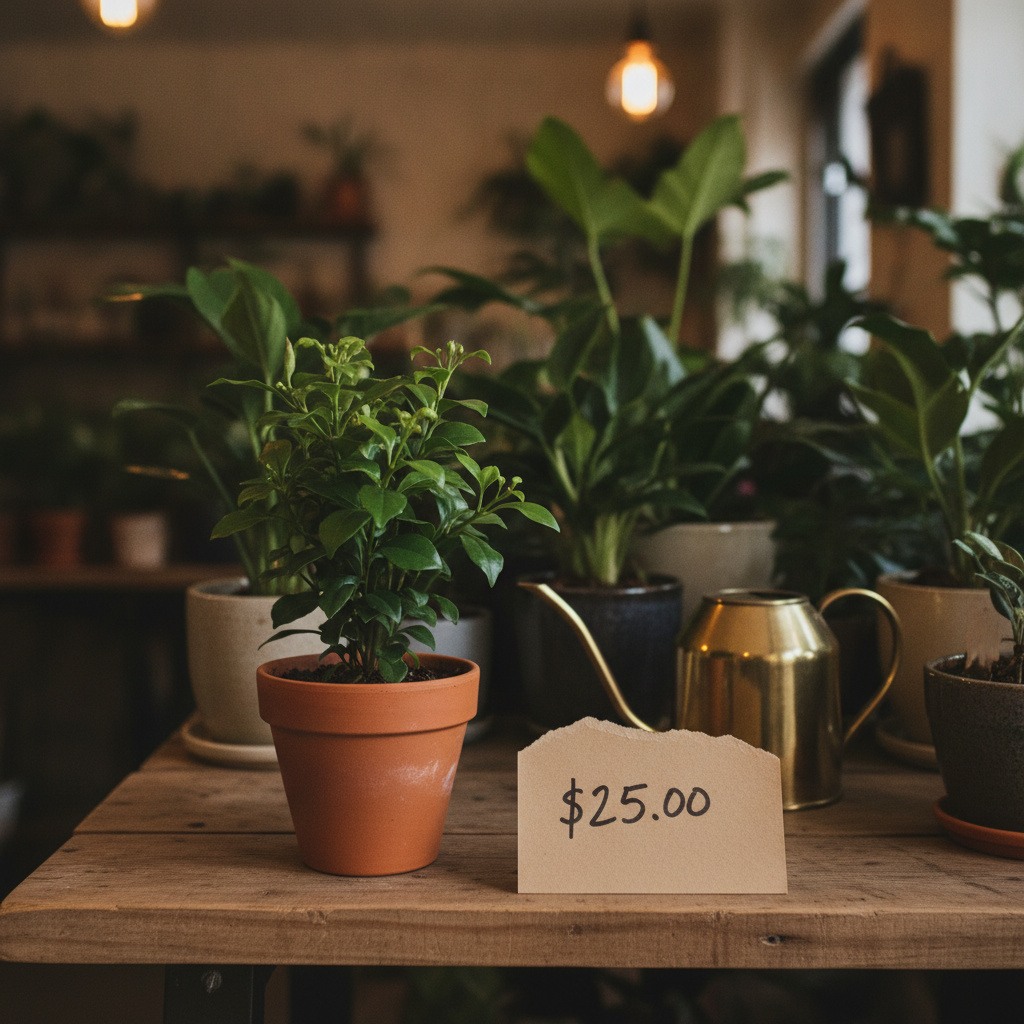
Beyond fragrance, the plant offers year-round structure. Its glossy, dark green leaves are pinnately compound, each made up of several small obovate leaflets set along a distinctively winged stalk, and they hold their colour and sheen through every season. The growth habit is dense and naturally bushy, and because the wood is slow to extend, the shrub keeps a tidy, sculptural silhouette with only occasional pruning. This slowness, which might frustrate a grower chasing rapid size, is exactly what makes Aglaia odorata so well suited to indoor life and to bonsai. It tolerates confinement, forgives a missed watering here and there, and rarely outgrows its welcome. For anyone who values a plant that rewards attention with scent and stays handsome even out of bloom, it is a quietly excellent choice.
Important — Toxicity: The Chinese perfume plant does not appear on the major lists of houseplants known to be toxic to cats and dogs, but it has also not been confirmed safe to eat, and several relatives in the genus contain naturally insecticidal compounds. Treat it as you would any ornamental shrub: enjoy the flowers, but do not let pets or children chew the foliage, and wash your hands after pruning.
Light Requirements
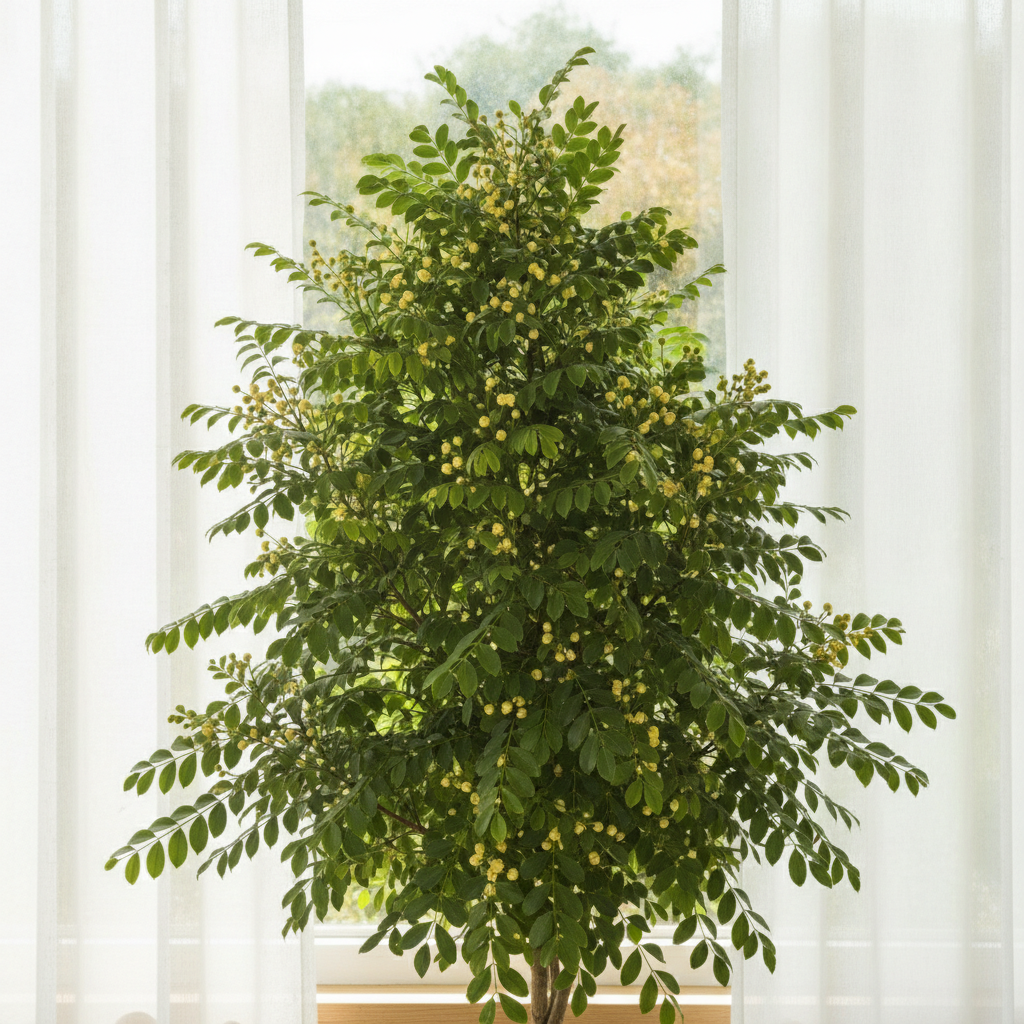
Light is the single biggest lever you have over whether an Aglaia odorata merely stays green or actually flowers. In its native range it grows as an understorey and forest-edge shrub, which means it is comfortable in bright, filtered conditions but also welcomes direct morning or late-afternoon sun. Indoors, the goal is to give it as much bright light as possible without scorching the leaves, because flower production is tied directly to the amount of energy the plant can gather.
The ideal spot is a position that receives bright indirect light for most of the day, supplemented by two to four hours of gentle direct sun. A plant kept in low light will survive for a long time, holding onto its foliage, but it will rarely if ever bloom, and its growth will slow almost to a standstill. If flowers and fragrance are the reason you bought the plant, err firmly on the side of more light.
Light Levels Explained
Understanding how different light intensities translate into real positions in your home makes placement far easier. The table below sets out the practical outcomes you can expect from each broad category of light.
| Light Category | Approx. Level | Typical Location | Outcome |
|---|---|---|---|
| Direct sun | 20,000 lux and above | Unshaded south or west window | Good in morning; midday summer sun can scorch leaves |
| Bright indirect | 10,000 to 20,000 lux | Near an east window or a curtained south window | Ideal; strong growth and reliable flowering |
| Medium | 5,000 to 10,000 lux | A metre or two back from a bright window | Healthy foliage but sparse or no flowers |
| Low | 1,000 to 5,000 lux | North window or interior room | Survives slowly, leggy growth, no blooms |
| Very low | Below 1,000 lux | Hallway or corner far from a window | Gradual decline; not recommended |
Window Orientation and Placement
South-facing window: The most productive position in most homes, offering the long hours of brightness the plant needs to flower. In high summer, filter the harshest midday rays with a sheer curtain to prevent leaf scorch, then let the plant enjoy the fuller light of spring and autumn unshaded.
East-facing window: An excellent choice. The plant catches soft, direct morning sun, which it relishes, and then bright indirect light for the rest of the day, all without the scorch risk of intense afternoon exposure.
West-facing window: Also very good, delivering strong afternoon light. Watch for heat build-up on summer afternoons, as glass can amplify the warmth; a small gap or light curtain solves the problem.
North-facing window: Generally too dim to support flowering. A plant here will hold its leaves but grow slowly and sparsely. If a north window is your only option, plan to supplement with a grow light.
Pro Tip — Rotate for Even Growth: Because the shrub grows towards its light source, give the pot a quarter turn every week or two. This keeps the canopy balanced and prevents the plant from leaning permanently towards the window, which matters especially if you are training it as a bonsai or a formal shrub.
How Light Affects Flowering and Fragrance
Unlike variegated foliage plants, where light governs leaf colour, in Aglaia odorata light governs the very thing people grow it for: flowers, and the scent they carry. Bud formation depends on the plant accumulating enough photosynthetic energy, so a well-lit specimen produces more of the small yellow blooms, more often, and with a stronger fragrance. A plant that has been languishing in a dim corner will often begin flowering within a season of being moved somewhere brighter, a transformation that is one of the small joys of growing this species.
Warning — Direct Sunlight: While the plant enjoys gentle direct sun, an abrupt move from a shaded interior into full midday summer sun can scald the leaves, leaving pale, papery or brown patches that do not recover. Always acclimatise a plant to brighter conditions gradually over one to two weeks.
Artificial Lighting
If natural light is limited, a full-spectrum LED grow light is an effective substitute and can even push a reluctant plant into bloom. Position the light roughly 20 to 30 cm (8 to 12 in) above the canopy and run it for ten to twelve hours a day. Because flowering is so light-hungry, supplementary lighting is often the deciding factor for growers in darker homes or during the short days of a northern winter.
Seasonal Adjustments
As daylight shortens through autumn, move the plant to your brightest available window to compensate for weaker, lower-angled sun. The reduced light of winter naturally slows growth and pauses flowering, which is normal. Come spring, as the days lengthen, ease the plant back from any winter position that now risks overexposure, and expect a fresh flush of growth and buds as the season warms.
Watering & Humidity
The Chinese perfume plant likes to be kept consistently moist during its active growth, but it has no tolerance for waterlogged roots. Getting the balance right is the second most important skill in its care after light. As a woody shrub with a fibrous root system, it prefers soil that is damp but never soggy, and it recovers far better from a brief dry spell than from standing in water.
When to Water
The most reliable guide is the top layer of the soil. Push a finger 2 to 3 cm (about 1 in) into the mix; when that upper layer feels dry but the soil below is still faintly cool and damp, it is time to water. During the warm growing months this may mean watering once or twice a week, while in the cool, dim months of winter the interval often stretches to once every ten days or fortnight.
Resist the urge to water on a fixed calendar. The correct frequency depends on your light, temperature, pot size and the season, all of which shift through the year. A plant in a warm, bright spring window drinks far more than the same plant in a cool January room. Reading the soil each time keeps you in step with what the plant actually needs rather than what a schedule assumes.
Pro Tip — Lift the Pot: With a little practice you can judge moisture by weight alone. Lift the pot just after watering to learn its heavy, saturated feel, then again a few days later. A pot that feels noticeably light has dried out and is ready for its next drink, a trick that is especially useful for dense bonsai plantings where a finger will not reach far.
How to Water Correctly
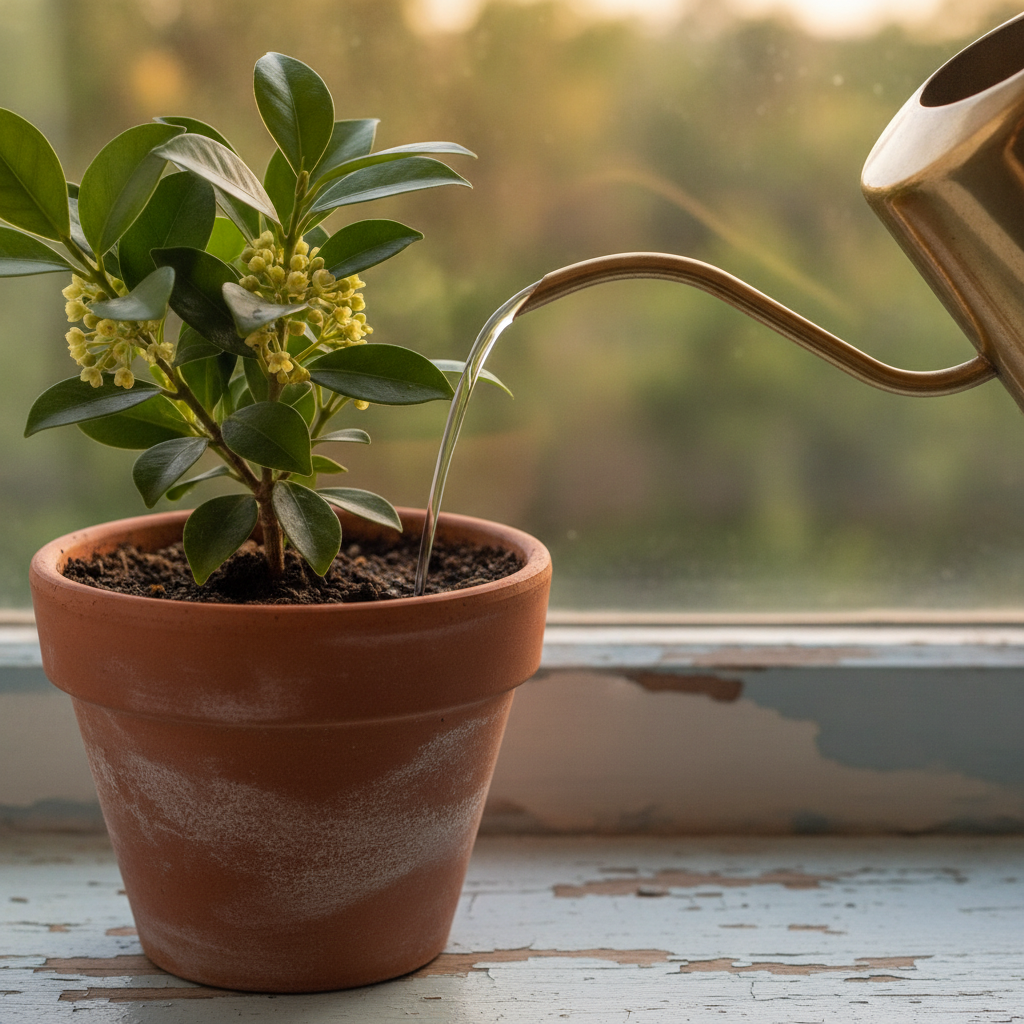
- Take the plant to a sink or use a watering can with a narrow spout so you can direct water onto the soil rather than the foliage.
- Pour slowly and evenly across the whole surface, letting the water soak in rather than running straight down the sides.
- Continue until water flows freely from the drainage holes, which ensures the entire root ball is moistened, not just the top.
- Let the pot drain completely for several minutes before returning it to its saucer or cover pot.
- Empty any water that collects in the saucer, as roots left sitting in it are the fastest route to rot.
Signs of Overwatering vs. Underwatering
| Symptom | Overwatering | Underwatering |
|---|---|---|
| Leaf colour | Yellowing, often starting with lower leaves | Dull green fading to brown at the tips and edges |
| Leaf texture | Soft, limp, sometimes translucent | Dry, crisp and brittle |
| Soil | Stays wet for days, may smell sour | Pulls away from the pot sides, bone dry |
| Roots | Brown, mushy and foul-smelling | Dry and papery but usually still firm |
| Leaf drop | Sudden loss of green leaves | Older leaves shed after wilting |
Warning — Root Rot: Persistently soggy soil starves the roots of oxygen and invites fungal rot, which can kill an otherwise healthy plant within weeks. If you notice a sour smell, blackened stems at the soil line or a wave of yellowing leaves, unpot the plant at once, trim away any soft brown roots with clean scissors and repot into fresh, well-draining mix.
Humidity Requirements
Coming from humid subtropical and tropical forests, Aglaia odorata is happiest when the air holds a little moisture, ideally around 50 percent relative humidity or above. It will cope with average household humidity, but very dry air, such as that produced by winter central heating, can leave it looking tired and can cause leaf tips to brown.
The clearest signs that the air is too dry are crisp brown leaf tips and edges, a general dullness to the foliage, and buds that dry up and drop before opening. None of these is fatal on its own, but together they suggest the plant would appreciate a more humid microclimate around it.
Raising humidity is straightforward. Grouping the plant with others creates a naturally moister pocket of air as they transpire together, while standing the pot on a wide tray of pebbles topped up with water lifts local humidity without wetting the roots. In very dry homes a small room humidifier is the most effective and consistent solution, particularly through the heating season.
Water Quality
The plant is not especially fussy about water, but it does best with room-temperature water rather than a cold shock straight from the tap. In areas with very hard water, mineral salts can build up in the soil over time, so if you notice a white crust forming on the surface or pot rim, switch occasionally to filtered or collected rainwater. Letting tap water stand overnight before use also allows some chlorine to dissipate.
Soil, Potting & Repotting
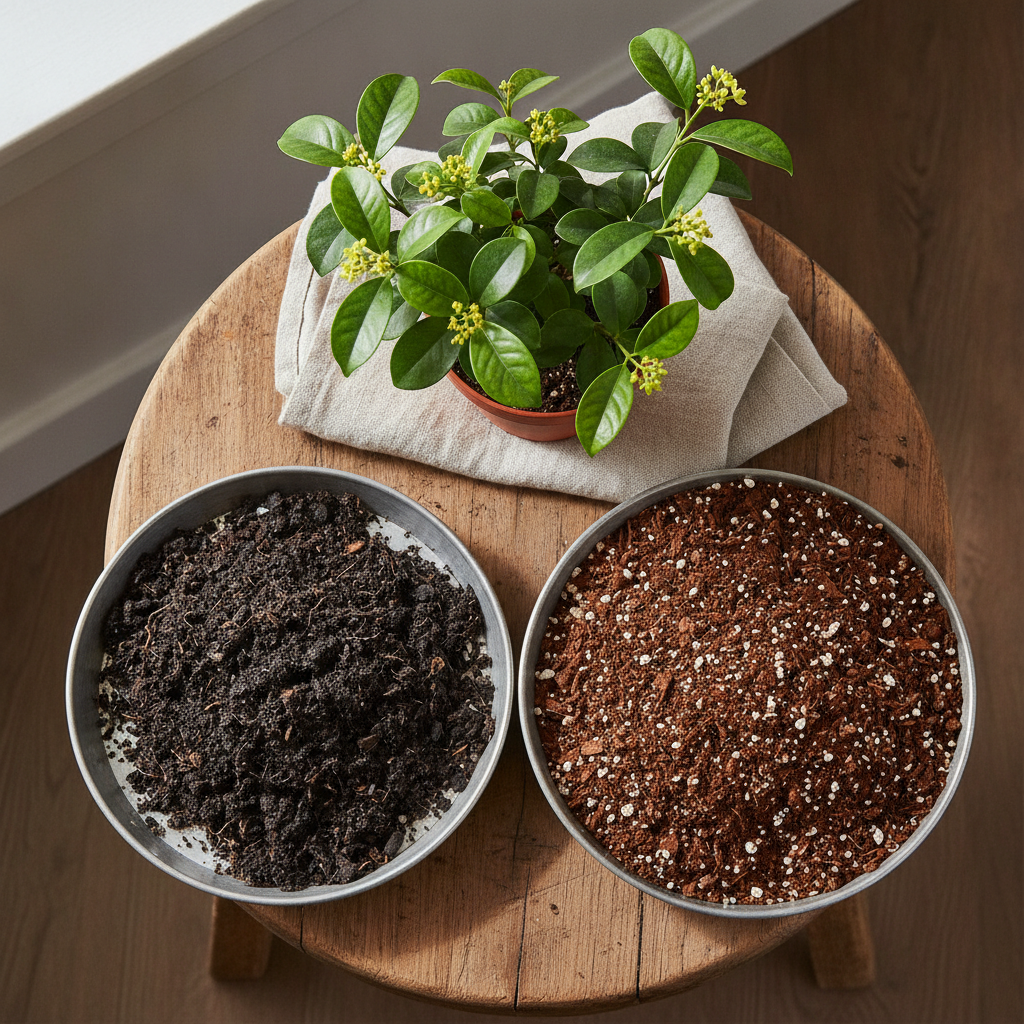
Good soil for the Chinese perfume plant walks a line between moisture retention and free drainage. As a woody shrub it wants a medium that holds enough water to keep its roots evenly damp, yet drains quickly enough that they never sit in the wet. A slightly acidic, humus-rich mix suits it best and mirrors the leaf-litter soils of its forest origins.
Ideal Soil Composition
A dependable blend starts with a quality peat-free or coir-based potting compost as the moisture-holding base, opened up with materials that add air and drainage. The aim is a mix that feels light and crumbly rather than dense and claggy, so that water passes through readily while the medium stays pleasantly moist.
| Component | Proportion | Function |
|---|---|---|
| Coir or peat-free compost | 50 percent | Holds moisture and nutrients, forms the body of the mix |
| Perlite or pumice | 25 percent | Creates air pockets and sharpens drainage |
| Fine composted bark | 15 percent | Adds structure and mimics forest leaf litter |
| Worm castings or leaf mould | 10 percent | Supplies gentle, slow-release nutrients and humus |
The plant prefers a mildly acidic root zone, roughly pH 5.5 to 6.5, which most coir and peat-free composts naturally sit within. There is no need to test obsessively, but avoid heavily limed or alkaline soils, which can lock up iron and other nutrients and lead to yellowing between the leaf veins.
Pro Tip — Quick Mix Recipe: For a fast, reliable blend, combine two handfuls of ordinary peat-free houseplant compost with one handful of perlite and half a handful of fine bark. This ratio drains well, stays lightly moist and works equally well for a shrub in a decorative pot or a specimen being trained as bonsai.
Choosing the Right Pot
The container you choose has a direct effect on how the roots breathe and drink. Because this plant is slow-growing and dislikes wet feet, a modest, well-drained pot serves it far better than an oversized one.
Drainage holes are non-negotiable. Whatever pot you pick, it must have holes in the base so excess water can escape. A beautiful cover pot with no drainage is fine as an outer sleeve, but the plant itself should sit in an inner pot that drains freely, and that inner pot must never be left standing in collected water.
Pot material: Terracotta is an excellent match, because its porous walls wick away surplus moisture and let air reach the roots, which suits a plant that hates sogginess. Glazed ceramic and plastic hold moisture longer, so if you use them, be a little more restrained with watering. For bonsai training, a shallow, well-drained bonsai pot is traditional and works well once the plant is established.
Pot size: Choose a pot only slightly larger than the current root ball, no more than 2 to 4 cm (1 to 2 in) wider. An excess of unused soil stays wet for too long and raises the risk of rot. This plant is quite content to be a little snug, and mild root confinement can even encourage flowering.
When to Repot
Given its slow growth, the Chinese perfume plant needs repotting only every two to three years, and often less. The signs that it is time include roots creeping through the drainage holes or circling tightly at the surface, water that races straight through without wetting the soil, and a general slowing of growth despite good care. The best moment to repot is early spring, just as the plant wakes into active growth and can recover quickly.
How to Repot: Step-by-Step
- Water the plant a day before repotting so the root ball is hydrated and holds together as you work.
- Ease the plant from its pot by tipping it and supporting the base of the stems, rather than pulling on the trunk.
- Gently tease apart any tightly circling roots and brush away a little of the old, spent soil from the outer edges.
- Trim off any dark, soft or dead roots with clean, sharp scissors to keep the system healthy.
- Set the plant in its new pot at the same depth as before, over a layer of fresh mix, and fill around the sides.
- Firm the soil lightly to remove large air gaps, keeping the trunk flare at the surface rather than buried.
- Water thoroughly to settle the mix, then place the plant back in bright, indirect light to recover.
Warning — Transplant Shock: This woody shrub can sulk after repotting, sometimes dropping a few leaves or pausing its growth for a couple of weeks. Ease the transition by keeping it warm, out of harsh direct sun, and lightly rather than heavily watered until you see fresh growth. Hold off on fertilising for four to six weeks, as feeding freshly disturbed roots can burn them.
Fertilising
A flowering shrub asks more of its soil than a foliage plant, and regular feeding through the growing season is what keeps Aglaia odorata producing fresh leaves and, crucially, buds. That said, it is not a heavy feeder in the way a fast-growing vine might be, and moderation prevents the salt build-up and soft, sappy growth that come with overfeeding.
The rhythm of feeding should follow the plant’s natural cycle: generous through spring and summer when it is growing and flowering, tapering to nothing through the darker, cooler months when it rests. Feeding a dormant winter plant does more harm than good, as the unused nutrients simply accumulate in the soil.
Understanding Plant Nutrients
Most fertilisers are labelled with an N-P-K ratio, the three numbers representing nitrogen, phosphorus and potassium. For a flowering shrub, a balanced feed keeps foliage and blooms in step, though a formula slightly higher in potassium can support flowering. The table below summarises what each key nutrient does and how a shortage shows itself.
| Nutrient | Symbol | Primary Function | Deficiency Symptoms |
|---|---|---|---|
| Nitrogen | N | Drives leaf and stem growth and rich green colour | Pale, yellowing older leaves and weak growth |
| Phosphorus | P | Supports roots, flowering and energy transfer | Poor flowering, dull or purplish leaves |
| Potassium | K | Aids flowering, water regulation and disease resistance | Browning leaf edges and few blooms |
| Calcium | Ca | Builds strong cell walls and new growth | Distorted, weak new shoots |
| Magnesium | Mg | Central to chlorophyll and photosynthesis | Yellowing between the veins of older leaves |
| Iron | Fe | Enables chlorophyll production in new growth | Yellowing between veins of the youngest leaves |
Types of Fertiliser
Liquid fertilisers: Diluted and applied with watering, these give you the most control and act quickly. They are ideal for the Chinese perfume plant because you can feed lightly and often, adjusting easily as the seasons change.
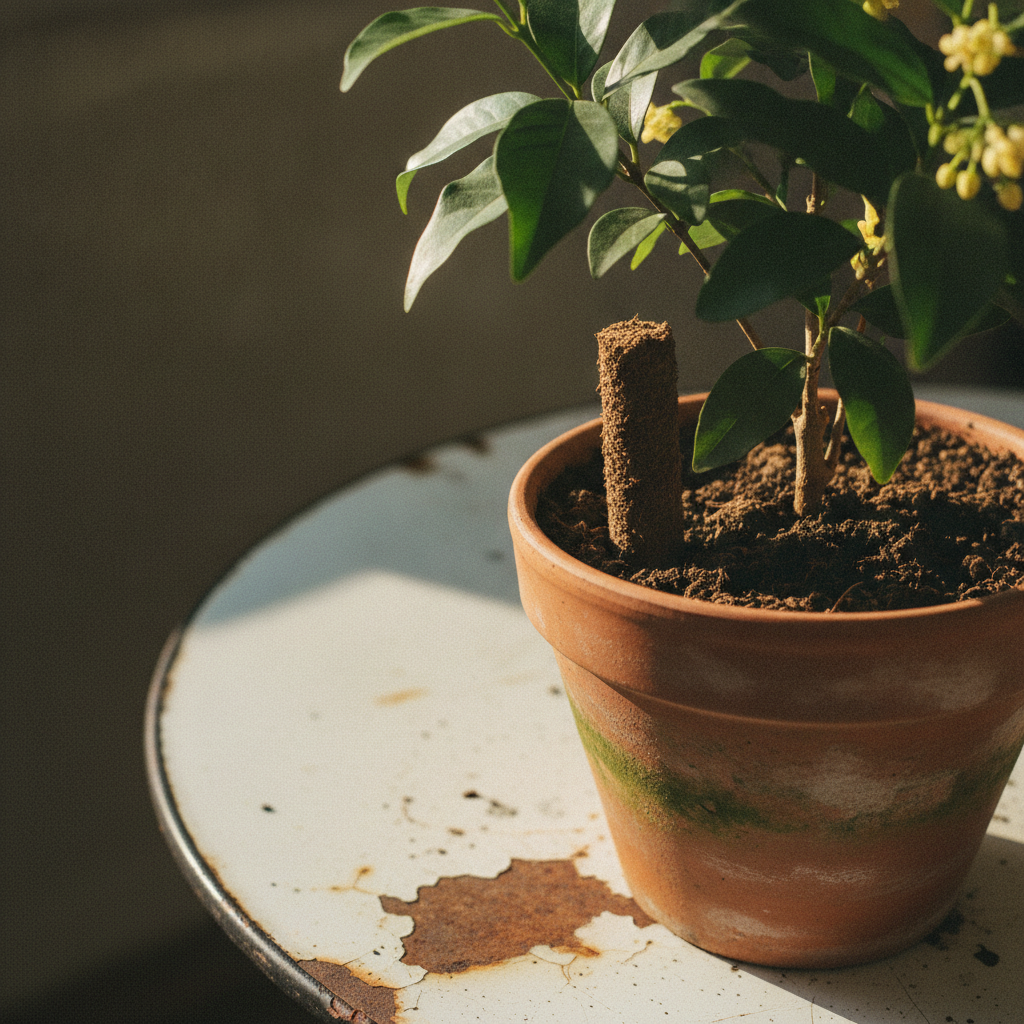
Slow-release granular: Coated pellets or sticks release nutrients gradually over weeks or months, making them a convenient, low-maintenance option. They suit growers who prefer not to measure feed at every watering, though they offer less fine control.
Organic fertilisers: Worm castings, seaweed extract and other organic feeds nourish the soil life as well as the plant, releasing nutrients gently and reducing the risk of burn. They are a forgiving choice and pair naturally with a humus-rich mix.
Feeding Schedule
Through spring and summer, feed with a balanced liquid fertiliser at half the label strength every two to four weeks. As growth slows in autumn, reduce feeding to once a month, then stop entirely through winter while the plant rests. Resume in early spring as new growth appears. A plant that is actively flowering appreciates the steadier end of this range to fuel bud after bud.
Pro Tip — Feed at Half Strength: Woody shrubs are easily overfed, and concentrated fertiliser can scorch fine roots. Mixing your feed to half the recommended dilution and applying it a little more often gives steadier nutrition with none of the risk, and it is the single easiest way to avoid fertiliser damage.
How to Fertilise
- Water the plant lightly first, as feeding into dry soil can burn the roots.
- Dilute your chosen liquid feed to half strength in a watering can.
- Apply evenly across the soil surface until it just begins to drain from the base.
- Avoid splashing concentrated feed onto the foliage, which can mark the leaves.
- Every couple of months, flush the pot with plain water to wash out accumulated salts.
Warning — Salt Build-Up: Over time, fertiliser salts accumulate in the soil and can show as a white crust on the surface or pot rim, alongside brown, scorched leaf tips. Every two to three months, flush the pot thoroughly with plain water, letting it run freely from the drainage holes for a minute or two to leach the salts away.
Propagation
Propagating the Chinese perfume plant tests a grower’s patience, but it is entirely achievable. Unlike soft-stemmed houseplants that root in a glass of water within a fortnight, this is a woody shrub, and its cuttings root slowly and unevenly. The two dependable methods are semi-hardwood stem cuttings and air layering, both of which reward warmth, humidity and a willingness to wait.
Because success rates from cuttings can be modest, it is worth starting several at once to improve your odds. Spring and early summer, when the plant is in active growth, are by far the best times to begin, as the extra warmth and light speed root formation.
Understanding Semi-Hardwood Cuttings
A semi-hardwood cutting is taken from a stem that has matured beyond soft, floppy new growth but has not yet become old, hard wood. This part of the stem, usually found on the current season’s growth in mid to late summer, is firm and slightly woody at the base while still flexible near the tip. It holds enough stored energy to sustain itself through the weeks of rooting yet is young enough to form new roots readily, which makes it the ideal material for propagating this shrub.
Stem Cuttings: Step-by-Step
This is the most common way to multiply the plant, and while it demands patience, it needs no special equipment beyond a warm, humid spot and, ideally, some rooting hormone.
- Select a healthy semi-hardwood stem about 8 to 12 cm (3 to 5 in) long, with several leaves and at least two nodes.
- Cut just below a node with clean, sharp secateurs, and remove the leaves from the lower half of the cutting.
- Dip the cut end in rooting hormone powder or gel to encourage root formation and guard against rot.
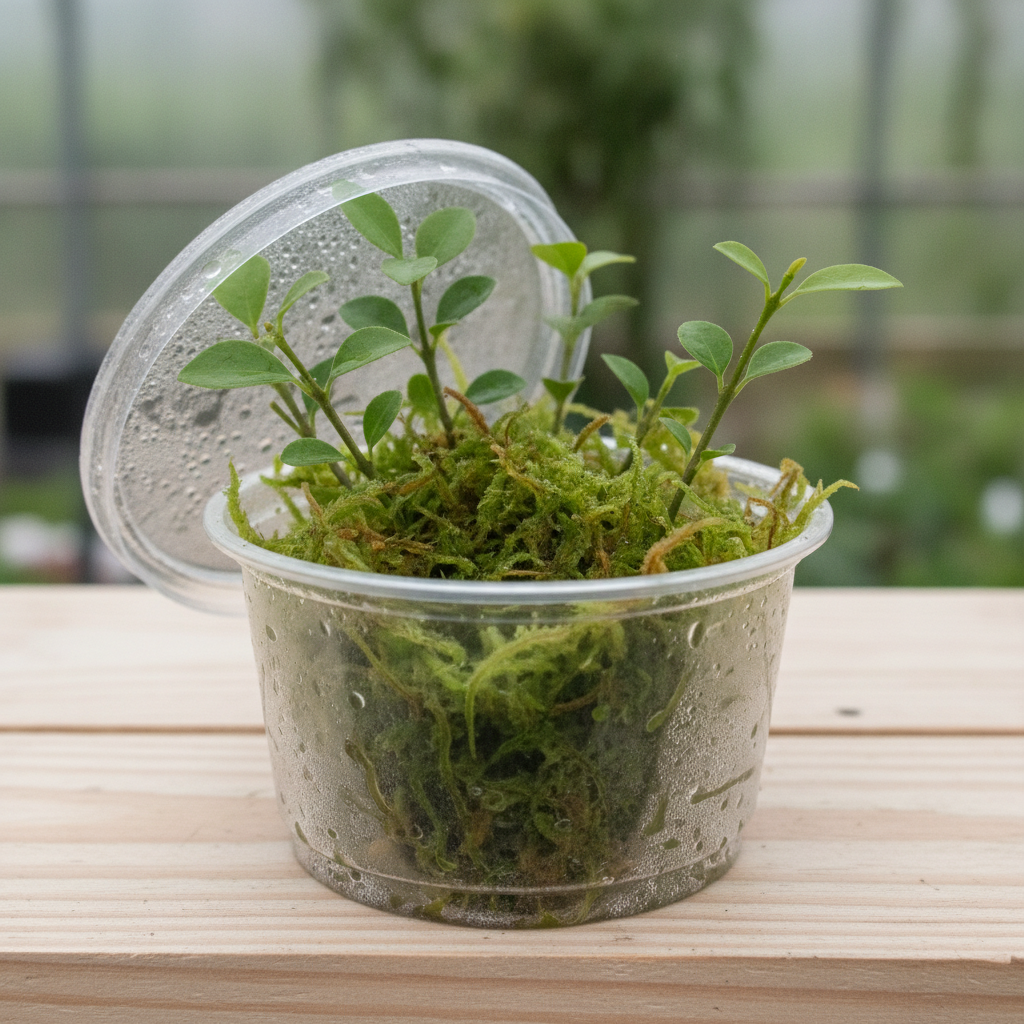
- Insert the cutting into a moist, free-draining mix of perlite and coir, or into damp sphagnum moss, burying the lower node.
- Cover with a clear bag or propagator lid to hold humidity, and keep it warm at around 22 to 26 degrees C (72 to 79 degrees F).
- Keep the medium lightly moist and be patient; roots typically form over six to twelve weeks. A gentle tug that meets resistance signals success.
Pro Tip — Bottom Heat Helps: Root formation in woody cuttings speeds up dramatically with warmth at the base. A heated propagation mat set to around 24 degrees C (75 degrees F) can turn a hit-and-miss process into a reliable one, and it is the closest thing to a secret weapon for rooting this stubborn shrub.
Air Layering: Step-by-Step
Air layering offers a higher success rate than cuttings because the new roots form while the stem is still attached to and nourished by the parent plant. It is the method of choice for a prized specimen or when you want a larger, ready-formed plant.
- Choose a healthy, semi-woody stem and select a point below a node where you would like roots to form.
- Make a shallow upward cut or remove a narrow ring of bark around the stem, then lightly dust the wound with rooting hormone.
- Wrap the wounded section in a generous handful of damp sphagnum moss, moulding it into a ball around the stem.
- Enclose the moss in clear plastic film and tie it firmly at both ends to seal in moisture, leaving it slightly loose in the middle.
- Keep the moss damp by opening and misting it if needed, and wait for white roots to appear through the film over one to three months.
- Once a good network of roots has formed, cut the stem just below the root ball and pot it up as a new plant.
Troubleshooting Propagation
| Problem | Likely Cause | Solution |
|---|---|---|
| Cutting rots at the base | Medium too wet or not sterile | Use a freer-draining mix, keep it just moist, and use clean tools |
| Cutting dries and shrivels | Humidity too low around the cutting | Cover with a bag or propagator to hold moisture |
| No roots after many weeks | Too cool, or wood too old or too soft | Add bottom heat and choose true semi-hardwood stems |
| Leaves drop from cutting | Normal stress, or the cutting has failed | Wait and watch; a firm green stem may still root |
Pests & Diseases
The Chinese perfume plant is reasonably resilient, but like any indoor shrub it can attract a handful of common sap-sucking pests, especially when grown in warm, still air. The good news is that early detection makes control simple, and a healthy, well-cared-for plant shrugs off minor infestations with little help.
Make a habit of inspecting your plant whenever you water, paying special attention to the undersides of leaves and the leaf axils where stems meet the trunk. These sheltered spots are where trouble usually begins, and catching it there, before it spreads, saves a great deal of effort later.

Common Pests
Mealybugs (Pseudococcus spp.)
Mealybugs appear as small, soft, white cottony blobs clustered in leaf axils and along stems. They pierce the plant to feed on sap, weakening it and leaving behind a sticky honeydew that can lead to sooty mould. On a densely branched shrub they can hide easily among the foliage.
Treatment: Dab each insect with a cotton bud dipped in diluted isopropyl alcohol, then follow up with an insecticidal soap or neem oil spray every week until they are gone. Isolate the plant from others while you treat it.
Scale Insects (Coccidae family)
Scale shows up as small, brown, waxy bumps stuck firmly to stems and the undersides of leaves. Like mealybugs, they feed on sap and excrete honeydew, and their hard protective shells make them stubborn to shift. A heavy infestation can cause yellowing and leaf drop.
Treatment: Scrape off what you can by hand or with an old toothbrush, then treat with horticultural oil or neem, which smothers them. Repeat every one to two weeks, as newly hatched crawlers continue to emerge for a while.
Spider Mites (Tetranychus urticae)
Spider mites thrive in hot, dry conditions and are almost too small to see, betraying their presence through fine speckling on the leaves and delicate webbing between stems. Left unchecked they cause foliage to look dusty, bronzed and generally lacklustre.
Treatment: Raise humidity, as mites hate moist air, and rinse the foliage thoroughly, including the undersides. Follow with neem oil or an insecticidal soap, repeating every few days to break their fast breeding cycle.
Aphids (Aphidoidea)
Aphids are small green, black or brown insects that cluster on soft new growth and flower buds, sucking sap and distorting the tender tissue. They reproduce quickly and, like the others, leave sticky honeydew in their wake.
Treatment: Knock them back with a firm spray of water, then apply insecticidal soap or neem oil to any that remain. Checking new growth regularly keeps small outbreaks from becoming large ones.
Common Diseases
Root Rot (Phytophthora and Pythium spp.)
By far the most serious threat to this plant, root rot is caused by soil-borne fungi that flourish in waterlogged conditions. Above ground it shows as yellowing leaves, wilting despite wet soil and a soft, darkened stem base, while below ground the roots turn brown and mushy.
Treatment: Act quickly by unpotting the plant, trimming away all soft rotten roots with sterile scissors and repotting into fresh, free-draining mix. Water sparingly afterwards, and correct the overwatering habit that caused it in the first place.
Sooty Mould (Capnodium spp.)
Sooty mould is a black, soot-like fungal film that grows on the sugary honeydew left by sap-sucking pests. It does not attack the plant directly, but a heavy coating blocks light from the leaves and hampers photosynthesis, so its presence is really a sign of an underlying pest problem.
Treatment: Wipe the leaves clean with a soft, damp cloth to remove the mould, then deal with the insects producing the honeydew. Once the pests are gone, no new mould will form.
Pest and Disease Summary
| Pest / Disease | Identification | Treatment |
|---|---|---|
| Mealybugs | White cottony clusters in axils | Alcohol swab, then neem or insecticidal soap |
| Scale | Brown waxy bumps on stems and leaves | Scrape off, then horticultural oil |
| Spider mites | Fine speckling and webbing | Raise humidity, rinse, apply neem |
| Aphids | Green or black insects on new growth | Water spray, then insecticidal soap |
| Root rot | Yellowing, wilting, mushy roots | Trim roots, repot, water less |
| Sooty mould | Black film on leaf surfaces | Wipe clean, control the pests behind it |
Prevention Strategies
Prevention is far easier than cure. Keep the plant healthy with appropriate light, water and feeding, since a vigorous plant resists pests and disease far better than a stressed one. Inspect regularly, keep the foliage clean and free of dust, and ensure good air circulation around the plant, which discourages both mites and fungal problems.
When you bring home any new plant, keep it apart from your collection for a couple of weeks and check it over carefully before introducing it. Most pest outbreaks arrive as hitchhikers on new acquisitions, and this simple quarantine habit prevents the majority of them.
Pro Tip — Neem Oil as Routine Defence: A light monthly spray of diluted neem oil, applied in the evening or out of direct sun to avoid leaf burn, acts as a gentle preventative that deters most common pests before they establish. Coat the undersides of the leaves and the leaf axils, where trouble usually starts.
Popular Varieties
The Chinese perfume plant is grown far more for its species form than for a wide range of named cultivars, and much of the variation you will encounter comes down to habit and scale rather than dramatic differences in leaf or flower. Even so, a few recognisable forms turn up in cultivation, from the familiar upright shrub to compact, small-leaved selections favoured for bonsai.
When shopping, you are most likely to find the plant simply labelled Aglaia odorata, sometimes under one of its common names such as mock lime or Chinese rice flower. The table below sets out the forms you are most likely to meet and how they differ in appearance and use.
| Variety | Leaf Appearance | Light Needs | Growth Rate | Availability |
|---|---|---|---|---|
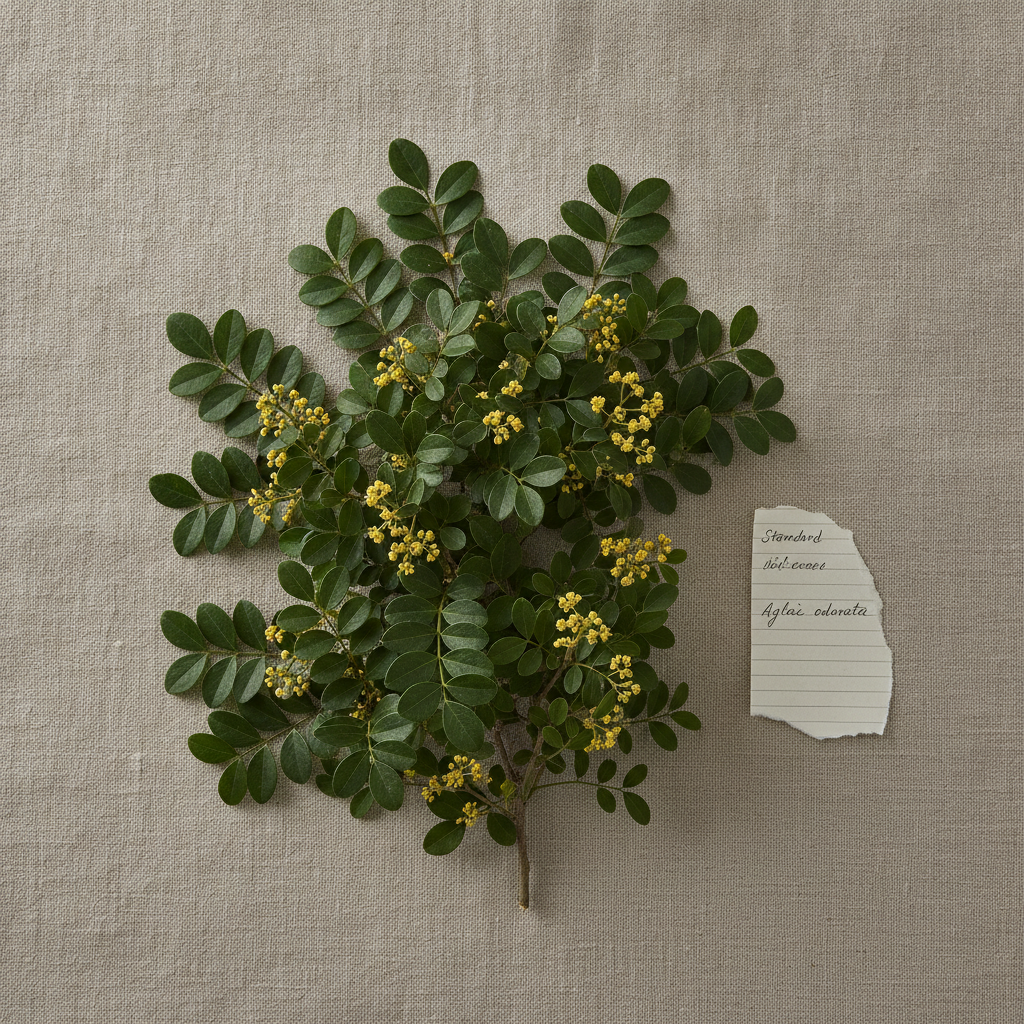
| Standard Aglaia odorata | Glossy dark green compound leaves, small oval leaflets | Bright indirect with some sun | Slow | Common |
| Dwarf form ‘Nana’ | Smaller, more crowded leaflets, dense habit | Bright indirect with some sun | Very slow | Occasional |
| Small-leaved form (var. microphyllina) | Notably tiny leaflets, fine texture | Bright indirect with some sun | Slow | Uncommon |
| Bonsai-trained specimens | Standard foliage on a shaped, aged trunk | Bright indirect with some sun | Slow | Specialist growers |
Featured Varieties
Standard Aglaia odorata
The classic form, an upright, bushy shrub with glossy compound foliage and sprays of tiny fragrant yellow flowers. It is the version most widely sold and the benchmark against which the others are judged.
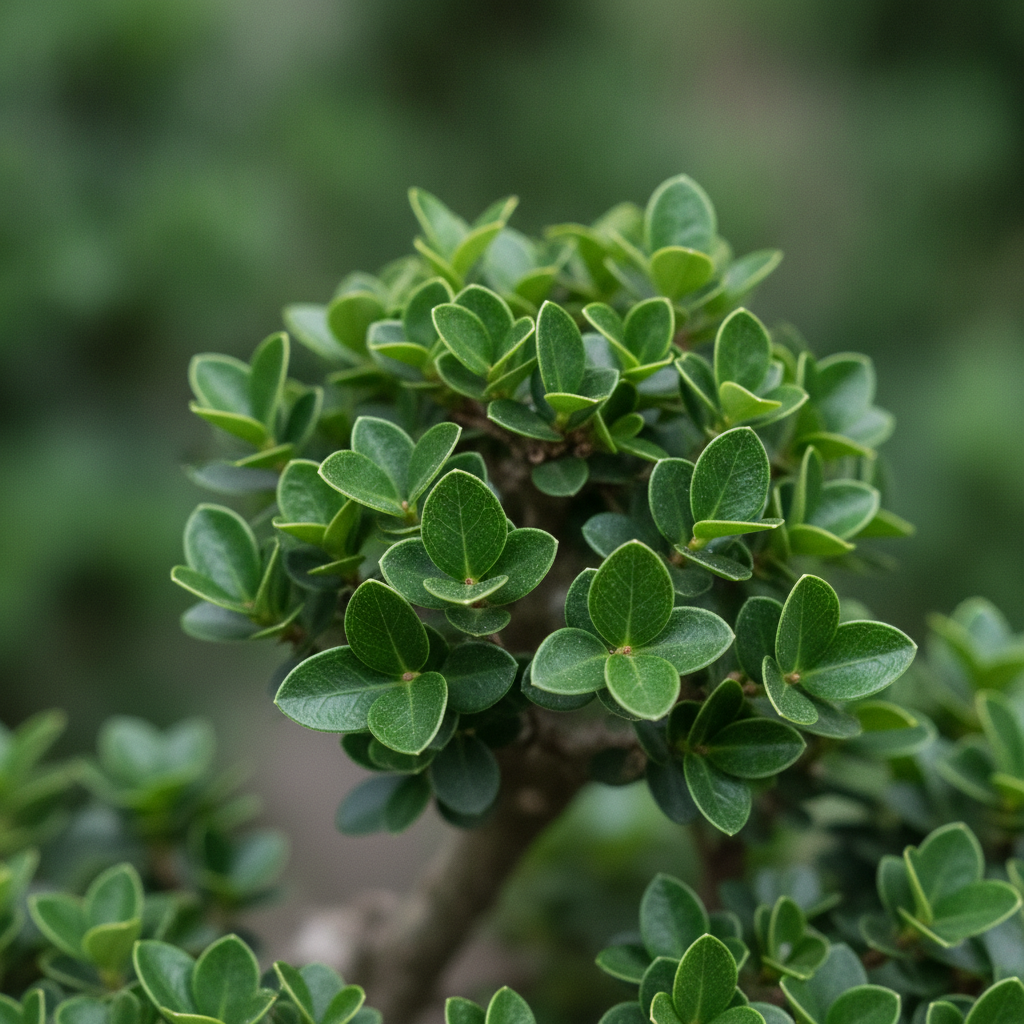
Dwarf ‘Nana’
A compact, slow-growing selection with smaller, more densely packed leaflets and a naturally rounded shape. Its restrained scale and fine texture make it a favourite for bonsai and small spaces.
Variety Profiles in Detail
Standard Aglaia odorata (Aglaia odorata)
The species in its everyday garden-centre form is a rounded evergreen shrub that, left unpruned indoors, reaches a manageable one to two metres over many years. Its chief virtue is the fragrance of its rice-grain flowers, which appear intermittently through the warm season. Grown well and given enough light, it is generous with those blooms, and its dense, glossy foliage keeps it handsome even when out of flower.
Dwarf ‘Nana’ (Aglaia odorata ‘Nana’)
This compact form condenses everything appealing about the species into a smaller package. Its leaflets are tinier and more crowded, giving a fine, almost fern-like texture, and its slow, dense growth lends itself perfectly to bonsai training and to growers with limited room. It flowers just as fragrantly as the standard form, making it a rewarding choice where space is at a premium.
Choosing the Right Variety for Your Space
For most homes the standard Aglaia odorata is the natural pick, offering the fullest flowering display and the easiest availability. If you are short on space, drawn to bonsai, or simply prefer a finer, more compact look, seek out the dwarf ‘Nana’ or a small-leaved form. Whichever you choose, the care is identical, so let the size and texture that suit your space guide the decision rather than any difference in difficulty.
Frequently Asked Questions
Why won’t my Chinese perfume plant flower?
The most common reason is insufficient light. Flowering in Aglaia odorata is directly tied to how much energy the plant can gather, so a specimen kept in a dim spot will stay green but rarely bloom. Move it to your brightest window, ideally one that offers a few hours of gentle direct sun, and be patient; flowering often resumes within a season. Under-feeding during the growing months and a plant that is still young can also delay blooms.
What does the Chinese perfume plant smell like?
Its fragrance is often described as a sweet blend of lemon and honeyed jasmine, fresh and citrusy rather than heavy. The scent is strongest on warm, sunny afternoons and can carry surprisingly far for such tiny flowers. This is precisely why the blooms have long been used to scent tea and perfume across Asia.
Is the Chinese perfume plant safe for pets?
It does not appear on the major published lists of houseplants known to be toxic to cats and dogs, but it has not been confirmed as safe to eat either, and some relatives in the genus contain naturally insecticidal compounds. The sensible approach is to treat it as a non-food ornamental: keep it out of reach of pets and children, and discourage any chewing of the leaves or flowers. This is a sensitive topic, and if you are worried a pet has eaten part of the plant, contact your vet.
Can I grow the Chinese perfume plant as a bonsai?
Yes, and it is one of the plant’s most popular uses. Its slow, woody growth, small leaves and tolerance of root confinement all suit bonsai training beautifully, and the dwarf forms are especially prized for the purpose. With regular pruning and wiring you can develop an attractive aged form over the years, and it will still reward you with its fragrant flowers.
Why are the leaves on my plant turning yellow?
Yellowing leaves most often point to a watering issue. Overwatering is the usual culprit, causing older leaves to yellow and the soil to stay wet, so check that the pot drains freely and let the top of the soil dry between waterings. Yellowing between the veins can instead indicate a nutrient shortage, particularly of magnesium or iron, which a balanced feed will address. A few older leaves yellowing and dropping now and then is simply normal ageing.
How big does the Chinese perfume plant get indoors?
Grown in a pot indoors and pruned occasionally, it typically stays a compact shrub of around one to two metres over many years, and often much smaller. Its slow growth means it rarely outgrows a room, and it responds so well to pruning that you can keep it to whatever size suits your space, from a tabletop bonsai to a modest floor-standing shrub.
How often should I prune it?
Prune lightly after a flush of flowering to maintain shape and encourage bushy new growth, which in turn carries the next round of blooms. The plant tolerates pruning well, so you can shape it fairly freely, though heavy cutting is best done in spring as growth resumes. Always use clean, sharp secateurs to avoid crushing the woody stems.
Can the Chinese perfume plant grow outdoors?
In warm, frost-free climates it makes an excellent garden shrub and can be grown outdoors year-round. In cooler regions it is best treated as a container plant that spends the warm months outside in a sheltered, sunny spot and comes indoors before temperatures drop below about 10 degrees C (50 degrees F), as it has no tolerance for frost.






