

Few houseplants command a room the way the candelabra cactus does. With its upright, ribbed green columns branching into the unmistakable candelabra silhouette, Euphorbia ingens looks less like a potted plant and more like a piece of living architecture lifted straight from a sun-baked African hillside. Despite the common name, it is not a cactus at all but a tree-forming succulent euphorbia, and that distinction shapes almost everything about how you grow it well. Master a handful of principles and this is one of the most forgiving, long-lived and quietly spectacular plants you can keep indoors.

Quick Reference
The table below distils the essentials for anyone who wants the headline figures before reading further. Everything here is expanded in the sections that follow, so treat it as a map rather than the whole journey.
| Botanical name | Euphorbia ingens |
| Common names | Candelabra cactus, candelabra tree, cowboy cactus, naboom |
| Family | Euphorbiaceae |
| Origin | Southern and south-eastern Africa |
| Light | Bright light, including several hours of direct sun |
| Watering | Sparingly; allow the mix to dry out fully between waterings |
| Soil | Gritty, sharply draining cactus and succulent mix |
| Temperature | 18 to 27 degrees Celsius (64 to 81 Fahrenheit); keep above 10 degrees Celsius (50 Fahrenheit) |
| Humidity | Low; ordinary dry room air is ideal |
| Feeding | Diluted cactus feed once or twice over the growing season |
| Mature height indoors | 1 to 2.5 metres (3 to 8 feet) over many years |
| Toxicity | Highly toxic; the milky latex is a severe skin and eye irritant |
| Difficulty | Easy, provided it is never overwatered |
Why the Candelabra Cactus Is Such a Striking Houseplant
In the wild, Euphorbia ingens is a genuine tree, reaching six to twelve metres (twenty to forty feet) and forming a dense, rounded crown of branching green stems across the savannahs and rocky slopes of South Africa, Mozambique, Zimbabwe and neighbouring regions. The Afrikaans name naboom, meaning roughly “snake tree”, hints at the slightly menacing, primeval presence it has in the landscape. What you grow at home is the same plant in miniature: a slow, sculptural column that may take a decade to reach the ceiling, all the while looking like a deliberate work of design.
The feature that confuses most newcomers is the complete absence of leaves. The fat, four- to five-angled stems are the photosynthetic organs, and the ridges running their length are lined with small paired spines that give the plant its cactus-like appearance. True leaves do appear, but only as tiny, fleeting structures on the newest growth, dropping almost as soon as they form. This is a classic convergent adaptation: faced with the same hot, dry conditions that shaped the cacti of the Americas, the African euphorbias independently evolved swollen water-storing stems, reduced leaves and defensive spines. The resemblance is so strong that the two groups are routinely mistaken for one another, yet they are only distantly related.
The single most important thing to understand before you bring one home has nothing to do with appearance. Every part of the plant exudes a thick, milky white latex when cut or broken, and that sap is seriously caustic. It can cause intense burning, blistering and inflammation on skin, and contact with the eyes can lead to severe pain and even temporary or lasting damage to sight. This is not a plant to prune casually or to keep where curious children or pets might gnaw on it. Handled with respect, it is no danger at all; treated carelessly, it earns its reputation. That balance of drama and discipline is precisely why so many experienced growers prize it.
Warning — Toxic Latex: Always wear gloves and eye protection when cutting Euphorbia ingens, keep the sap off your skin, and wash thoroughly afterwards. Never rub your eyes while handling the plant. Keep it out of reach of children and pets.
Light
Light is where the difference between a candelabra cactus that merely survives and one that genuinely thrives becomes most visible. This is a plant of open, sun-drenched habitats, and indoors it wants as much brightness as you can give it. A position within a metre or so of a south-facing or west-facing window, where it receives several hours of direct sun each day, suits it perfectly. In that kind of light the stems stay plump, deep green and compact, and the plant holds the upright, well-proportioned form that makes it so handsome.
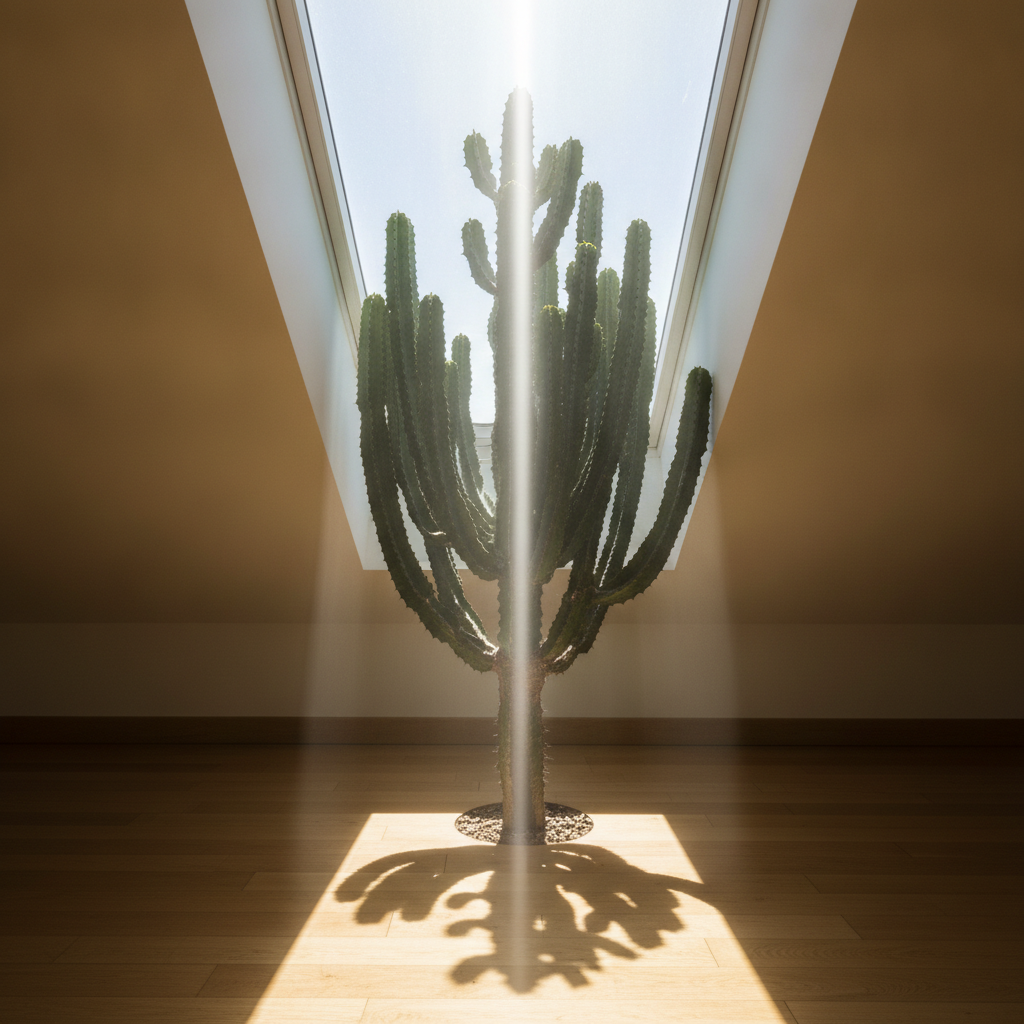
Deprive it of light and the response is unmistakable. Stems grown in shade become thin, pale and stretched, leaning hungrily towards the nearest window and losing the sturdy candelabra shape that is the whole point of the plant. This etiolation is hard to reverse, so it is far better to prevent it by choosing a bright spot from the outset. If the brightest room in your home still falls short, particularly through a dim northern winter, a full-spectrum grow light positioned above the plant will keep it growing steadily and stop the stretch.
One caveat applies to plants that have spent time in lower light, or to newly purchased specimens raised in a shaded greenhouse. Moving them abruptly into fierce, unfiltered summer sun can scorch the stems, leaving pale or brown patches that never fully recover. Acclimatise gradually over a week or two, increasing exposure a little at a time, and the plant will harden to full sun without complaint. Turning the pot a quarter rotation every couple of weeks also keeps growth even and stops the column leaning permanently towards the glass.
Pro Tip — Reading the Stems: Healthy candelabra cactus growth is firm, fat and richly green. If new segments emerge narrow, soft or noticeably paler than the old growth, the plant is telling you it wants more light long before any other symptom appears.
Watering
If light is what makes the candelabra cactus thrive, watering is what most often kills it. The swollen stems are water-storage tanks, evolved to carry the plant through long droughts, which means it is built to tolerate dryness and acutely vulnerable to excess. The guiding principle is simple and worth repeating to yourself every time you reach for the watering can: when in doubt, do not water.
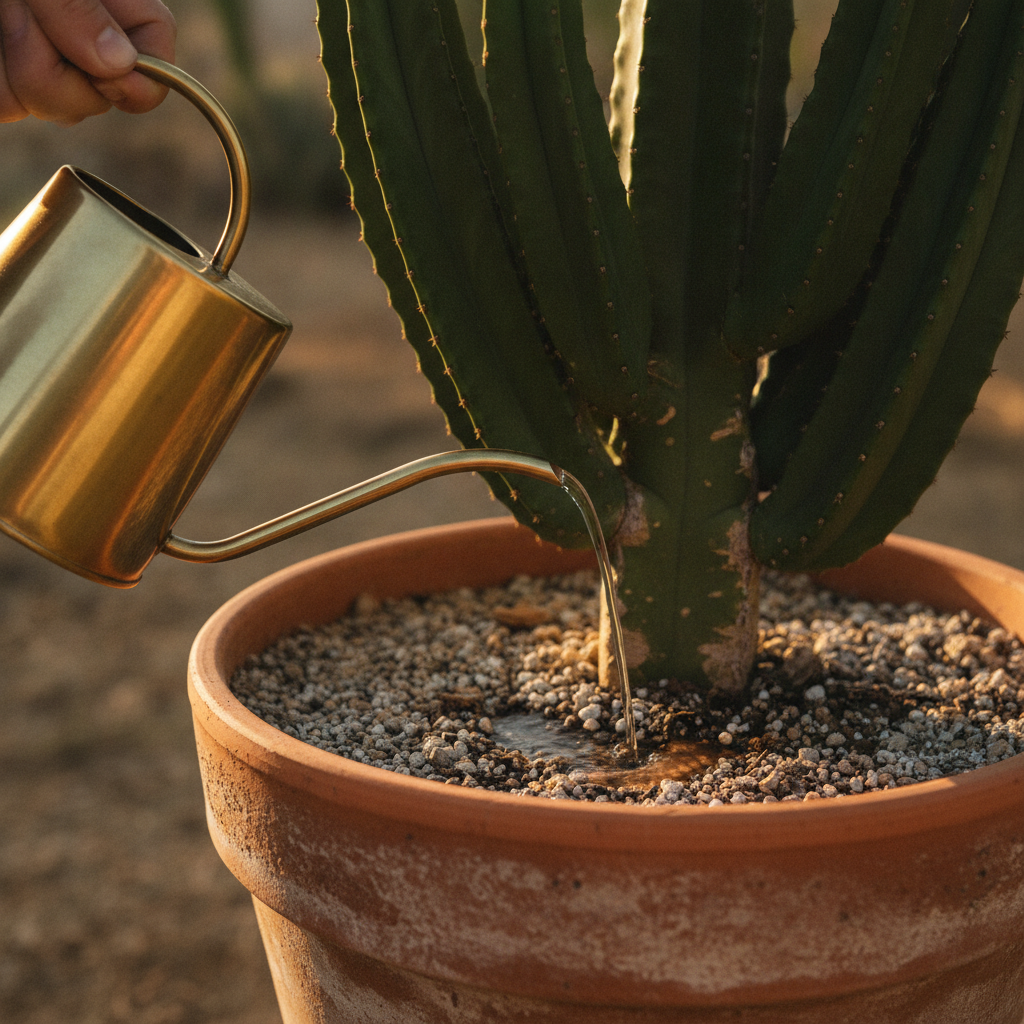
During the active growing season of spring and summer, water thoroughly but infrequently. Wait until the potting mix has dried out almost completely, then water generously so that moisture runs from the drainage holes, and tip away anything that collects in the saucer. This soak-and-dry rhythm mimics the occasional heavy downpours of the plant’s native climate far better than frequent light sprinkles, which keep the surface damp while leaving the roots gasping. In practice that often means watering every two to three weeks in summer, though the exact interval depends on pot size, light and warmth, so judge by the dryness of the mix rather than the calendar.
As autumn arrives and growth slows, taper off sharply. Through the coolest, darkest months the plant is effectively dormant and needs very little water, perhaps just enough every four to six weeks to stop the stems shrivelling. Cold, wet compost in winter is the single most dangerous combination for this plant, an almost guaranteed route to root and stem rot. The first signs of overwatering are stems that turn soft, yellowish or translucent at the base, often accompanied by a sour smell from the soil. By the time rot is visible it has usually advanced a long way, so prevention through restraint is everything. A slightly underwatered candelabra cactus will plump back up within a day of a good drink; an overwatered one rarely recovers.
Pro Tip — The Finger Test: Push a finger or a wooden skewer several centimetres into the mix before watering. If it comes out with any cool dampness or clinging soil, wait. Only water when the probe comes out completely dry.
Soil and Potting
Everything about watering this plant successfully rests on the medium it grows in. A sharply draining, open, gritty mix is non-negotiable, because it is the soil that determines how quickly water passes through and how much air reaches the roots. A standard general-purpose compost holds far too much moisture for a desert succulent and will keep the root zone soggy long after you would expect it to have dried.
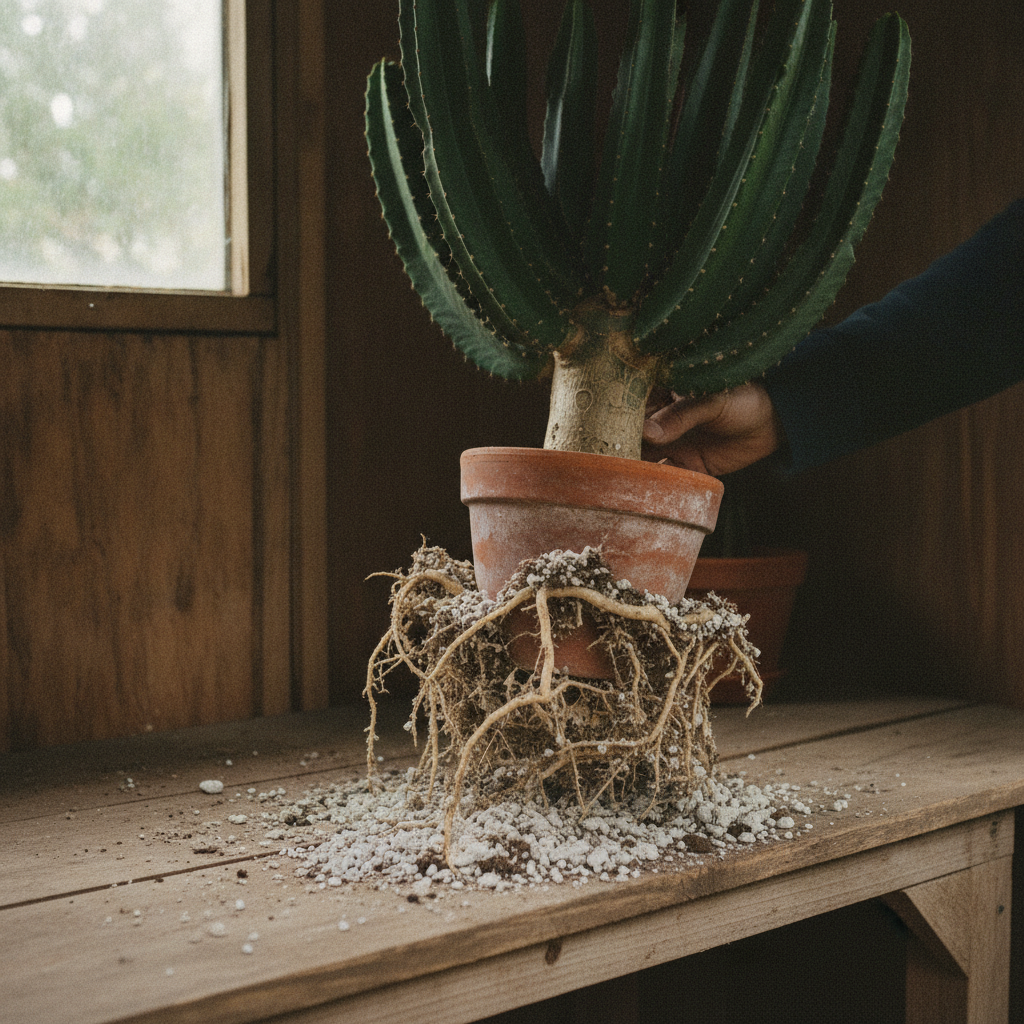
A reliable recipe is a proprietary cactus and succulent compost lightened still further with extra mineral grit, so that roughly half the volume is inorganic. Coarse horticultural sand, perlite, pumice or fine gravel all work, and the goal is a mix that water rushes straight through, leaving the particles damp but never waterlogged. The pot matters too. Terracotta is ideal because its porous walls wick moisture from the compost and let it evaporate, giving you a useful margin of safety against overwatering, and a generous drainage hole is essential whatever material you choose.
Candelabra cacti are slow growers and untroubled by a snug root system, so they need repotting only every two to three years, or when the plant becomes visibly top-heavy and unstable in its container. A tall specimen carries a surprising amount of weight high up, so a heavy, wide-based pot is worth choosing for stability as much as for the roots. When you do repot, do it in spring, wear stout gloves and eye protection, and have a second pair of hands ready, because manoeuvring a spined, sap-filled column without damaging the stems or yourself is genuinely a two-person job once the plant passes knee height. Settle it at the same depth it grew before, firm the gritty mix gently around the base, and then wait a week before watering to let any disturbed roots heal over.
Pro Tip — Add a Mulch of Grit: A top-dressing of coarse gravel or pebbles keeps the base of the stem dry, deters fungus gnats and gives a clean, desert-garden finish that suits the plant’s architecture.
Fertilising
The candelabra cactus is adapted to lean, mineral soils and asks very little in the way of feeding. It is far easier to harm it with too much fertiliser than to hold it back with too little, so a light touch is the right instinct here. A modest amount of nutrition during the growing season supports steady growth and keeps the stems a healthy green, but the plant will carry on perfectly well even if you forget entirely for a year.
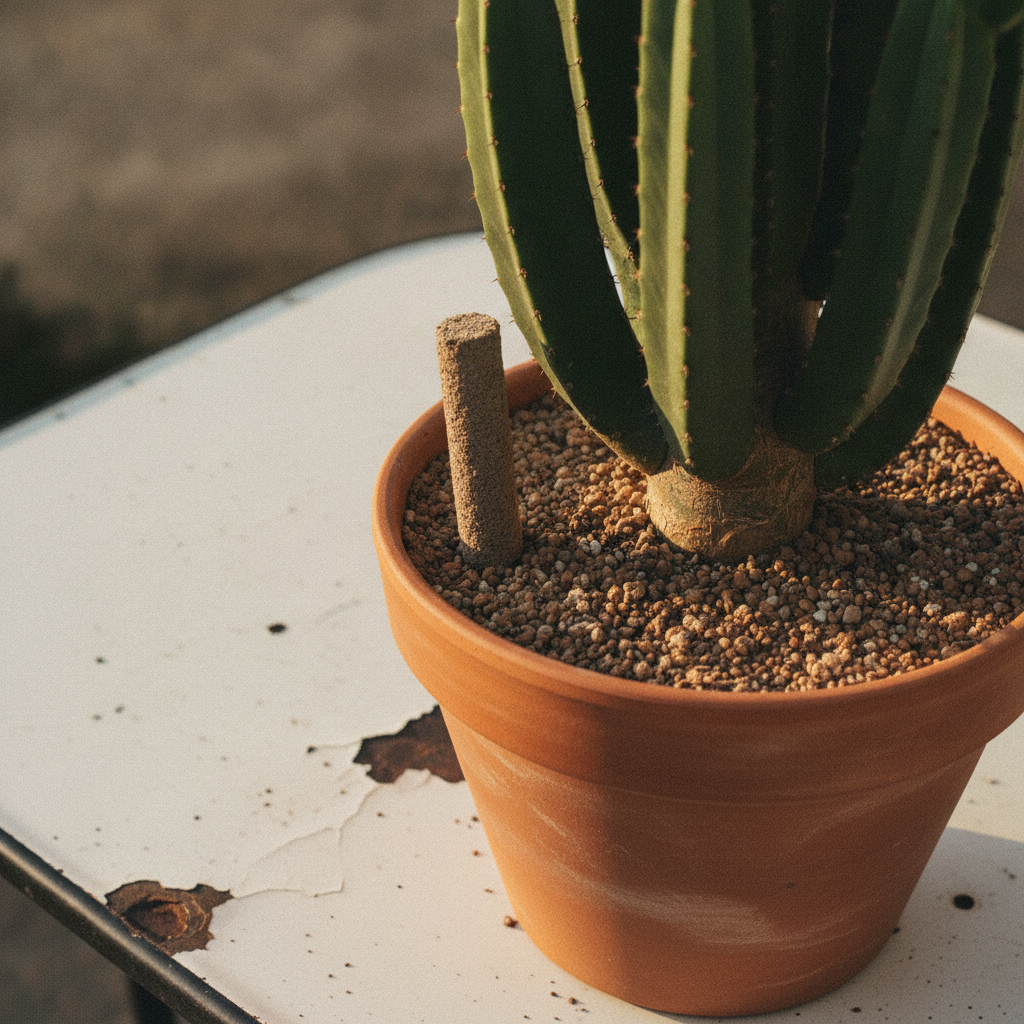
The simplest approach is a balanced fertiliser formulated for cacti and succulents, which is naturally low in nitrogen, applied at half the recommended strength once or twice across spring and summer. Feeds high in nitrogen encourage soft, sappy, overstretched growth that is weak and prone to toppling, exactly the opposite of the firm columns you want. Always apply liquid feed to compost that is already slightly moist rather than bone dry, so that the diluted solution spreads evenly and cannot scorch the roots. Slow-release succulent sticks or pellets pushed into the surface in spring are a low-effort alternative that releases a trickle of nutrients over several months.
Stop feeding altogether from autumn through winter. Pushing fertiliser at a plant that is resting forces weak, etiolated growth in the lowest-light months and unbalances the careful equilibrium between watering, light and nutrition. As with watering, the candelabra cactus rewards restraint: feed sparingly, feed only when it is actively growing, and let the plant set its own slow, deliberate pace.
Propagation
Propagating a candelabra cactus is straightforward in principle and entirely a matter of stem cuttings, but it is also the moment when the plant’s toxic sap demands the most care. This is not a task to undertake without gloves, eye protection and a clear, uncluttered workspace. Done thoughtfully it is reliable and rewarding; done casually it is the likeliest way to come to harm.
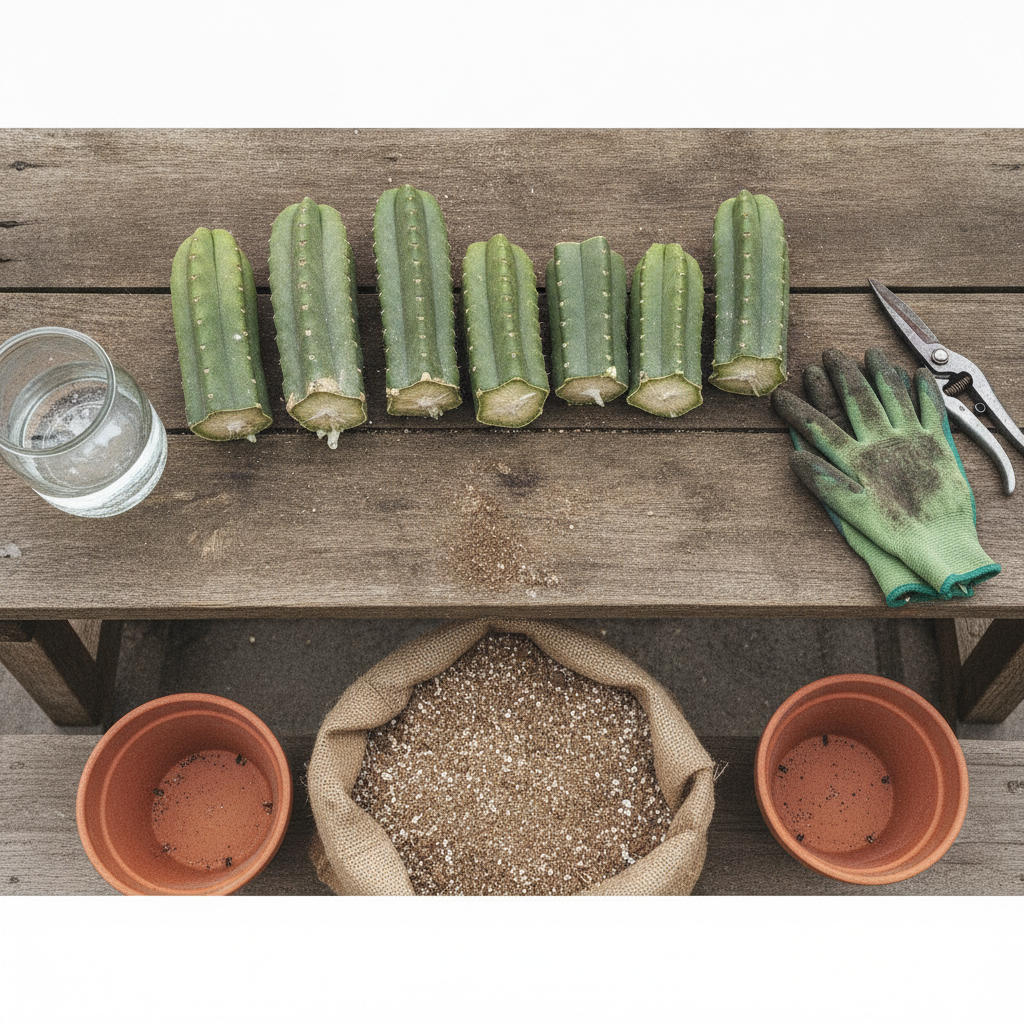
Spring or early summer is the best time, when the plant is in active growth and cuttings root most readily. The steps below describe the whole process from cut to established plant.
- Put on thick gloves and eye protection, and work in a ventilated space with the floor and surfaces protected, because the sap will flow freely.
- Using a clean, sharp, sterilised knife, sever a branch or stem segment cleanly where it joins the main stem, taking a piece roughly fifteen to thirty centimetres (six to twelve inches) long.
- Stem the bleeding immediately. The cut will weep copious white latex, so rinse the cut end under cool running water, or mist it repeatedly, until the flow stops, then blot it dry.
- Set the cutting aside in a warm, dry, airy spot out of direct sun for at least a week, until the cut surface dries and forms a firm, dry callus. Planting before this skin has formed almost always ends in rot.
- Once calloused, insert the base a few centimetres into a pot of dry, gritty cactus mix, supporting tall cuttings with a stake or by leaning them against something stable so they stay upright.
- Wait several more days, then water very lightly. Keep the mix only barely moist and the pot in bright, indirect light while roots form, which typically takes a month or more.
- Once you feel resistance when you gently tug the cutting, roots have established and you can move it to its permanent bright position and normal watering routine.
Patience is the whole secret. The callusing step cannot be rushed, and the temptation to water a fresh cutting generously is exactly what causes failure. A cutting kept too dry will simply wait; a cutting kept too wet will rot before it ever roots.
Warning — Sap on Tools and Skin: Wipe knives clean of latex before setting them down, never touch your face mid-task, and wash your hands, tools and any splashed surfaces thoroughly the moment you finish.
Pests and Problems
The candelabra cactus is robust and relatively untroubled by pests, but no houseplant is wholly immune, and its ridged, spiny stems offer plenty of sheltered crevices for unwelcome visitors to hide in. Most trouble, though, is self-inflicted and cultural rather than the work of insects, so it pays to know both kinds of problem.
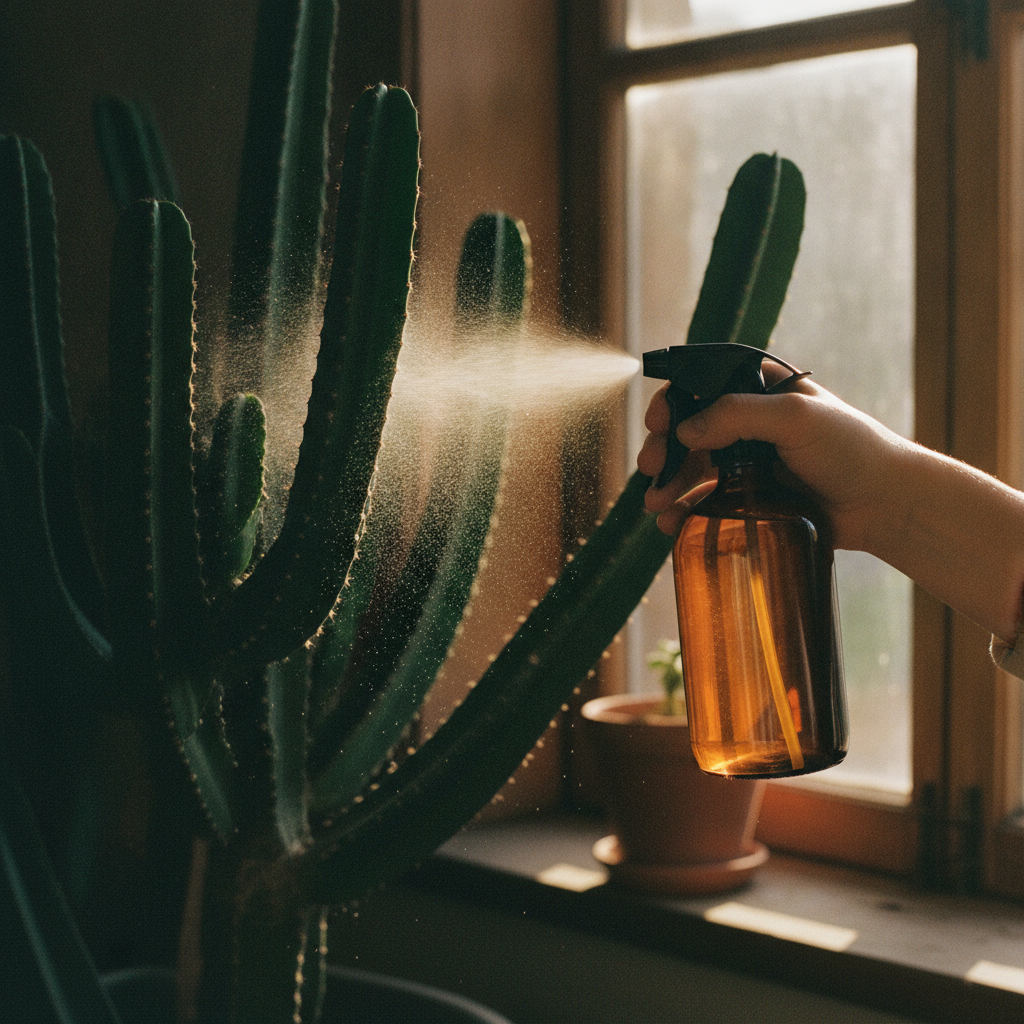
The most common pest is the mealybug, which appears as small, white, cottony tufts tucked into the angles of the stems and at the base of the spines. Spider mites can also colonise a plant kept in very dry, still air, leaving fine stippling and a faint webbing in the ridges, while scale insects occasionally fasten on as hard brown bumps. For a light infestation, dab the pests directly with a cotton bud moistened in isopropyl alcohol, or wipe them away. For anything more widespread, a horticultural soap or a neem-based spray applied carefully to the stems and crevices, and repeated every week or two, will usually clear the problem. Treat any new pest promptly, because the slow growth of this plant means damage is slow to grow out.
The far more frequent threat is rot, and it is almost always a consequence of overwatering, poor drainage or cold, damp conditions. Soft, mushy, yellowing or blackening tissue, particularly low on the plant, signals rot that has taken hold. If you catch it early you can sometimes save the plant by cutting well above the affected area into clean, firm green tissue, letting the cutting callus, and rooting it afresh as a new specimen, while discarding the rotted base and its soil. Corky brown patches on otherwise firm stems, by contrast, are usually old sun scars or natural ageing and are nothing to worry about. Stems that grow thin and pale point back to insufficient light, and a plant that suddenly drops its few small leaves is most often reacting to a change in temperature or watering rather than anything sinister. Read these signals as a language, and the candelabra cactus will tell you exactly what it needs.
Varieties
The wild species is magnificent in its own right, but a couple of ornamental forms have become favourites among collectors for the way they twist the familiar candelabra shape into something even more arresting. Both are grown exactly as the species, with the same demands for light, sharp drainage and careful watering.
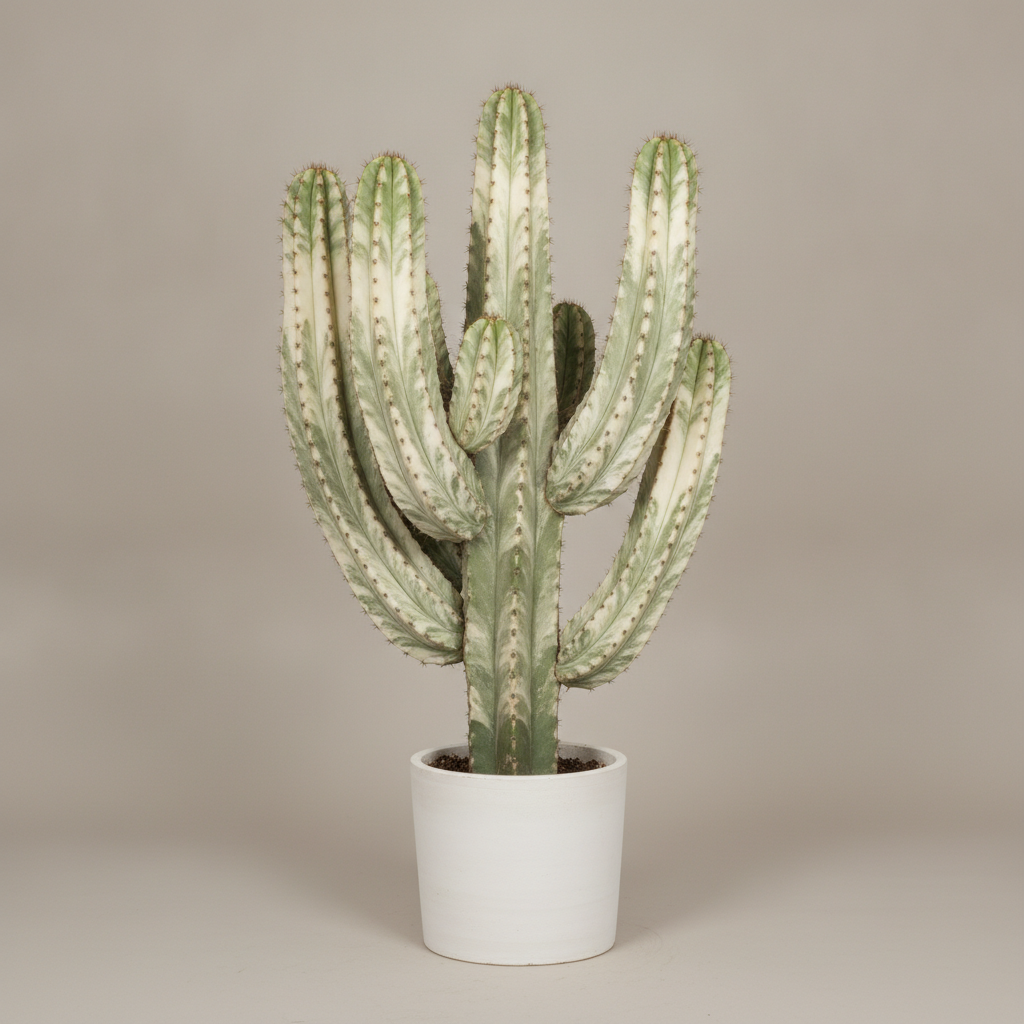
Euphorbia ingens ‘Variegata’
The variegated form trades uniform green for ribbed columns marbled in creamy white and pale jade, the lighter pigment swirling along the angled ridges. With less chlorophyll it grows more slowly than the species and is a touch more sensitive to harsh midday sun, which can bleach the pale tissue, so it appreciates very bright but slightly filtered light. The reward is a softer, almost ghostly version of the classic candelabra that glows beautifully against a dark wall.
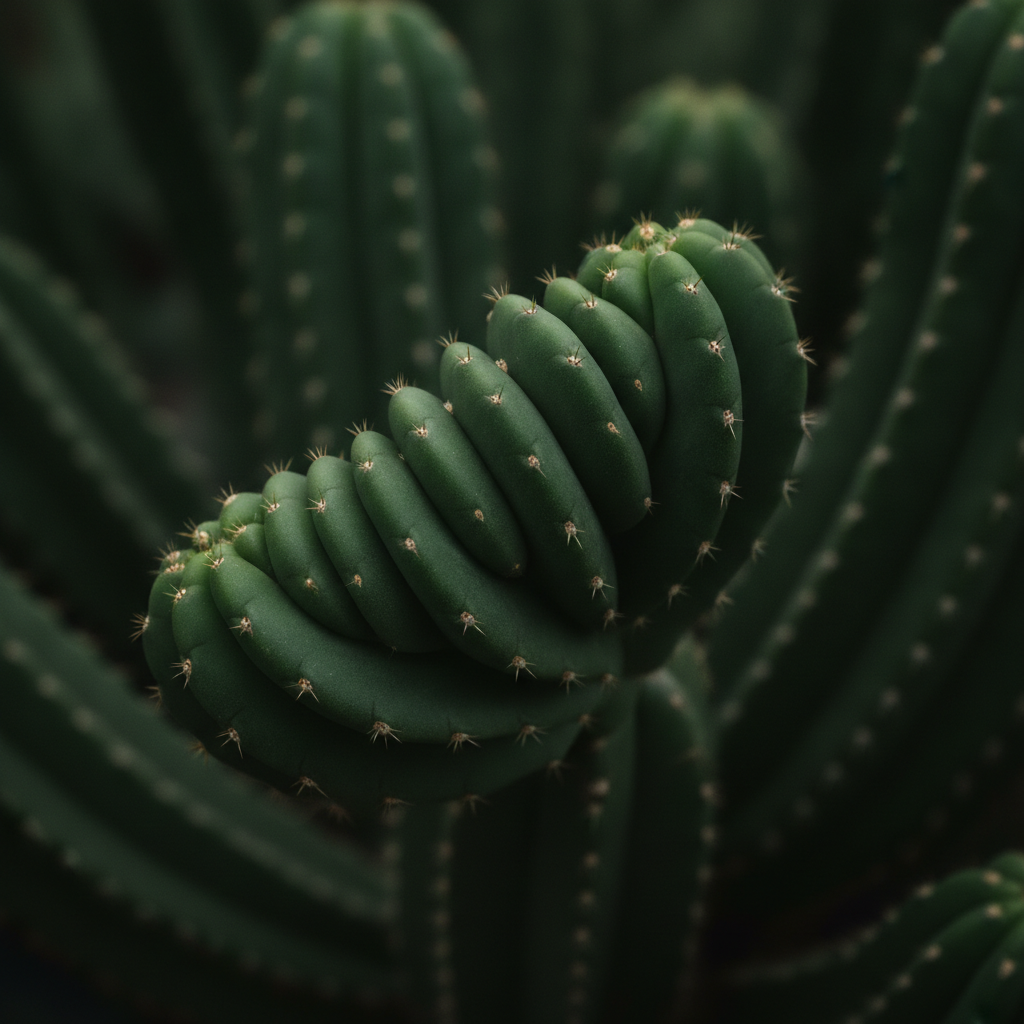
Euphorbia ingens ‘Monstrose’
The monstrose form abandons orderly growth altogether, producing knobbly, contorted, irregularly bunched ribs that pile and twist in unpredictable directions. No two plants are alike, and a well-grown specimen looks like a frozen green coral or a piece of abstract sculpture. It is prized precisely for that chaotic, one-of-a-kind character, and tends to stay more compact than the towering species, making it a striking choice where a full candelabra tree would be too large.
Frequently Asked Questions
Is the candelabra cactus actually a cactus?
No. Despite the name and the spined, fleshy, leafless appearance, Euphorbia ingens is a succulent member of the spurge family, Euphorbiaceae, and is only distantly related to true cacti. The likeness is a case of convergent evolution, where two unrelated plant groups developed similar features in response to similar arid conditions. The simplest way to tell euphorbias and cacti apart is the sap: euphorbias bleed a milky white latex, which true cacti never do.
How toxic is it really?
Genuinely toxic, and worth taking seriously. The white latex is a strong irritant that can cause painful burning and blistering on skin and severe inflammation if it reaches the eyes, with the potential for lasting damage to sight. Swallowing any part of the plant causes mouth and digestive irritation. None of this makes it unsafe to own, but it does mean you should handle it only with gloves and eye protection and keep it well away from children and pets.
Why are my plant’s stems turning yellow and soft?
Soft, yellowing or translucent stems, especially near the base, are the classic signature of overwatering and the rot that follows. Let the mix dry out completely, make sure the pot drains freely and never sits in water, and cut back watering sharply in the cooler months. If rot has set in, your best hope is to take a clean cutting from firm green tissue well above the damage and start a new plant.
How big will it get indoors?
Far smaller and slower than its wild relatives, which become true trees of six metres or more. As a houseplant it grows gradually over many years and commonly reaches one to two and a half metres (three to eight feet), its eventual size governed by the light it receives and the pot it is given. Because growth is so slow, it stays a manageable feature plant for a long time before height ever becomes an issue.
Can I prune it to control the shape?
You can, and removing a branch will encourage the plant to bush out below the cut, but pruning releases the caustic sap freely and must be done with full protection for your hands and eyes. Cut cleanly with a sterilised blade, stem the flow of latex with water, and keep the severed pieces, which root easily as new plants once calloused. If you simply want to slow a plant down rather than reshape it, restricting the pot size and feeding sparingly is a gentler way to keep it in bounds.
Does it need misting or high humidity?
Not at all. The candelabra cactus comes from hot, dry country and is perfectly content in the low humidity of an ordinary heated home. Misting does nothing useful and, by leaving moisture sitting in the stem crevices, can even encourage rot or fungal spots. Dry air is exactly what this plant prefers.






