
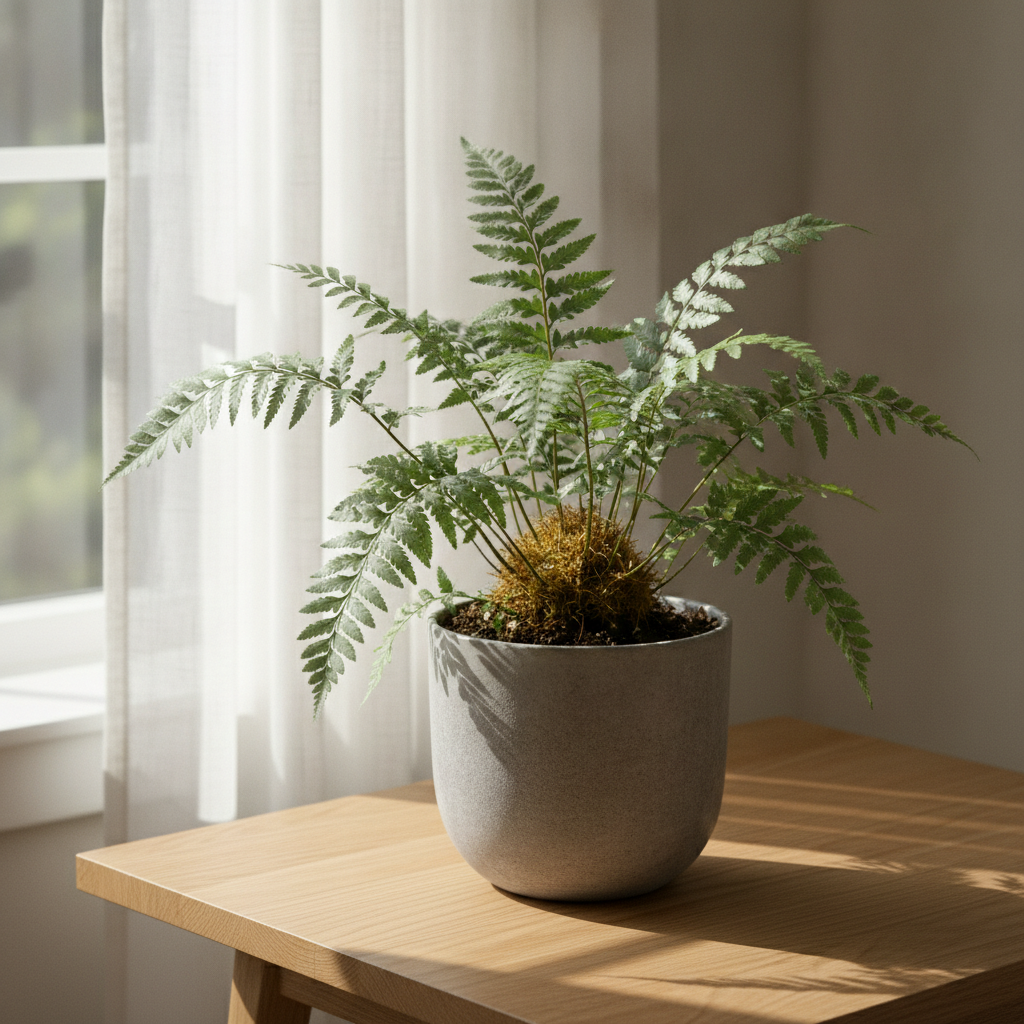
Few houseplants earn a double take quite like the blue fern plant. Where most ferns lean into every shade of emerald and lime, Phlebodium pseudoaureum arrives dusted in a soft, chalky blue, its deeply lobed fronds looking as though they have been brushed with sea mist. It is an epiphyte at heart, a plant that in the wild clings to the bark of tropical trees rather than rooting in the ground, and understanding that single fact unlocks almost everything about keeping it happy indoors. This guide walks through the difference between a blue fern that merely survives on a shelf and one that genuinely thrives, unfurling fresh powder-blue fronds season after season.
Quick Reference
Before getting into the detail, here is the blue fern plant at a glance. Keep these figures in mind as a baseline, then adjust to the specific conditions of your home.
| Botanical name | Phlebodium pseudoaureum (syn. Polypodium pseudoaureum) |
| Common names | Blue fern, blue star polypody, virginia blue fern |
| Family | Polypodiaceae |
| Origin | Tropical Americas, from Florida and the Caribbean through Central and South America |
| Light | Bright, indirect light; no direct midday sun |
| Water | Keep the mix evenly moist, never waterlogged; allow the top 2 to 3 cm (1 in) to dry |
| Humidity | Moderate to high, ideally 50 to 70 per cent |
| Temperature | 18 to 24 degrees C (64 to 75 degrees F) |
| Soil | Loose, airy, epiphytic mix rich in bark and perlite |
| Feeding | Dilute balanced feed monthly through spring and summer |
| Growth habit | Creeping golden-scaled rhizome with upright to arching fronds |
| Mature size | Around 30 to 50 cm (12 to 20 in) tall and wide indoors |
| Toxicity | Non-toxic and considered safe around cats, dogs and children |
| Difficulty | Intermediate |
Why Grow the Blue Fern as a Houseplant

The blue fern plant is grown, first and foremost, for its colour. That glaucous, silvery-blue cast is a waxy bloom on the surface of the fronds, and it sets the plant apart in any collection of houseplants that otherwise trend toward straightforward green. The fronds themselves are pinnatifid, meaning they are deeply cut into rounded lobes rather than divided into separate leaflets, which gives the plant a bold, sculptural outline quite unlike the lacy filigree of a maidenhair or a boston fern.
Beyond looks, there is a quiet toughness here that rewards the grower willing to meet its needs. As an epiphyte, Phlebodium pseudoaureum is adapted to the fluctuating moisture and airy footing of a tree branch, so it copes with the odd missed watering far better than the notoriously thirsty ferns that collapse the moment their roots dry out. It grows from a creeping rhizome clothed in soft, golden-brown scales, a feature it shares with its larger cousin Phlebodium aureum, and that rhizome will happily wander across the surface of the mix, sending up new fronds as it travels. The plant is also non-toxic, which makes it a reassuring choice for homes with curious pets or small children. For anyone who has mastered the basics of tropical houseplants and wants something with genuine visual character, the blue fern is a natural next step.
Light
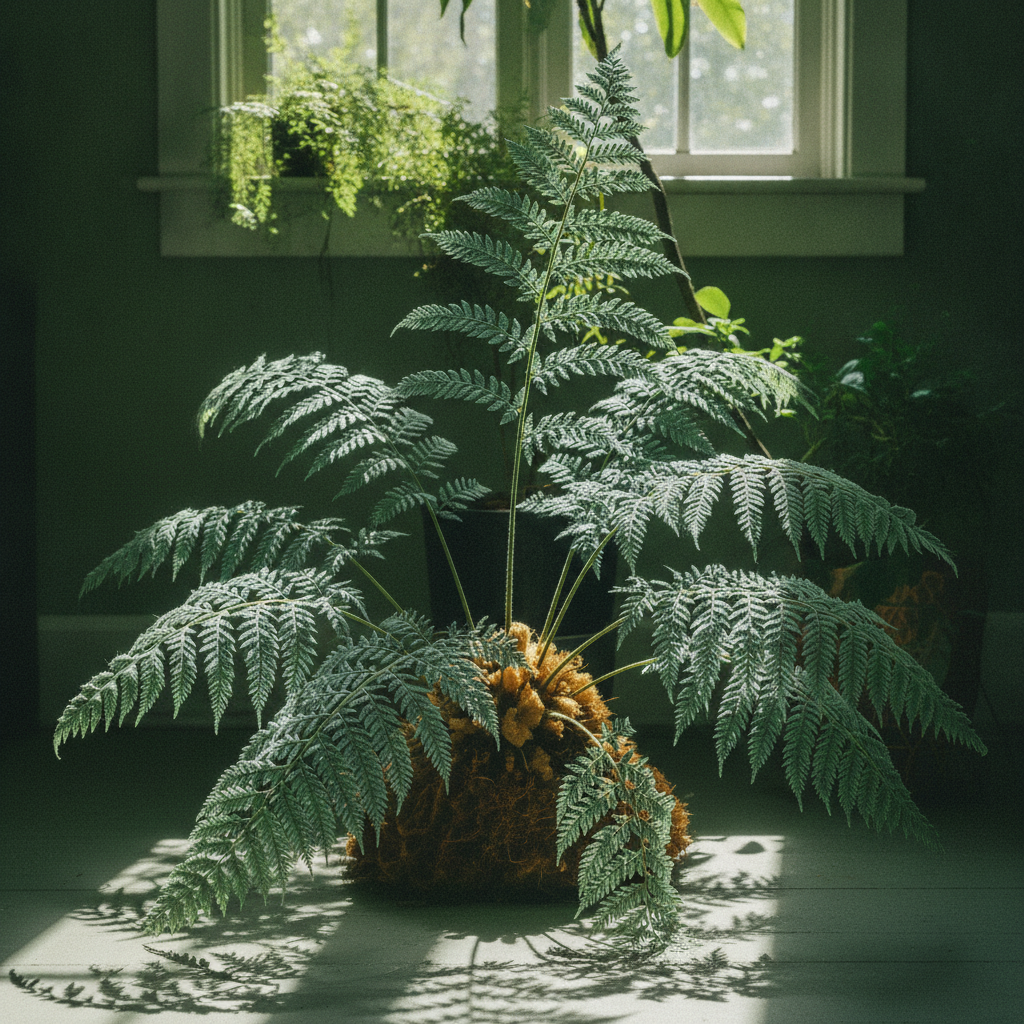
In its native range the blue fern grows as an understorey and epiphytic plant, catching light that has already been broken up and softened by the canopy overhead. Recreating that dappled brightness indoors is the single most important thing you can do for its colour. Bright, indirect light is ideal: think of a spot a metre or so back from an east or north-facing window, or beside a south or west window that is screened by a sheer curtain. In these conditions the fronds hold their blue bloom and grow densely, filling the pot with overlapping foliage.
Direct sun is the main hazard. A few hours of harsh midday light falling straight onto the fronds will scorch them, bleaching the blue to a tired yellow and leaving crisp brown patches that never recover. Too little light causes the opposite problem, a plant that survives but does not thrive: growth slows to a crawl, new fronds emerge small and widely spaced, and the prized blue fades toward a flat, dull green. If your plant is stretching or losing colour, move it gradually closer to a light source rather than shifting it in one dramatic jump, which can shock the foliage.
Pro Tip — Reading the colour: The intensity of the blue is a live readout of your light levels. Strong, silvery blue means the plant is well lit; a shift toward plain green is usually the first sign it wants a brighter position.
Watering
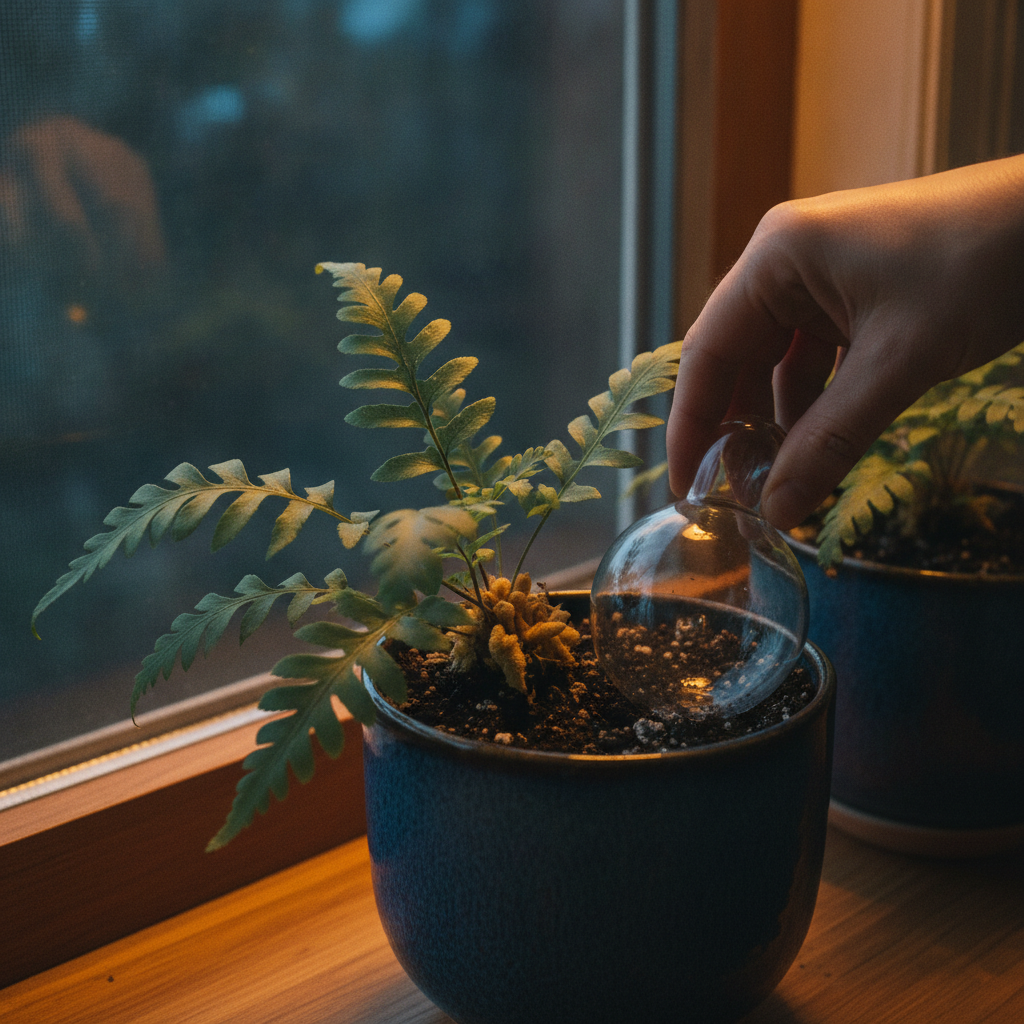
Watering the blue fern well is a balancing act between two mistakes. On one side sits the classic fern problem of letting the mix dry out completely, which crisps the delicate frond edges within a day or two. On the other sits the epiphyte’s Achilles heel, a rhizome and root system that rots quickly if left standing in soggy, airless compost. The target is steady, moderate moisture: the mix should feel like a wrung-out sponge, damp throughout but never dripping.
In practice, water thoroughly whenever the top 2 to 3 cm (about an inch) of the mix has begun to dry, letting water run freely from the drainage holes and then tipping away anything that collects in the saucer. Through the warmth of spring and summer this might mean watering once or twice a week; in the darker, cooler months growth slows and the interval stretches, so always test the mix with a finger rather than watering on a fixed schedule. Rainwater, distilled water or filtered water is gentler than hard tap water, which over time can leave a mineral crust and brown the frond tips. If you only have hard water, letting it stand overnight before use helps a little.
Warning — Rhizome rot: Never let the fuzzy rhizome sit in waterlogged mix. If fronds yellow and soften at the base while the compost stays wet, suspect rot, ease the plant out, and cut away any blackened, mushy sections of rhizome with a sterile blade before repotting into fresh, airy mix.
Soil
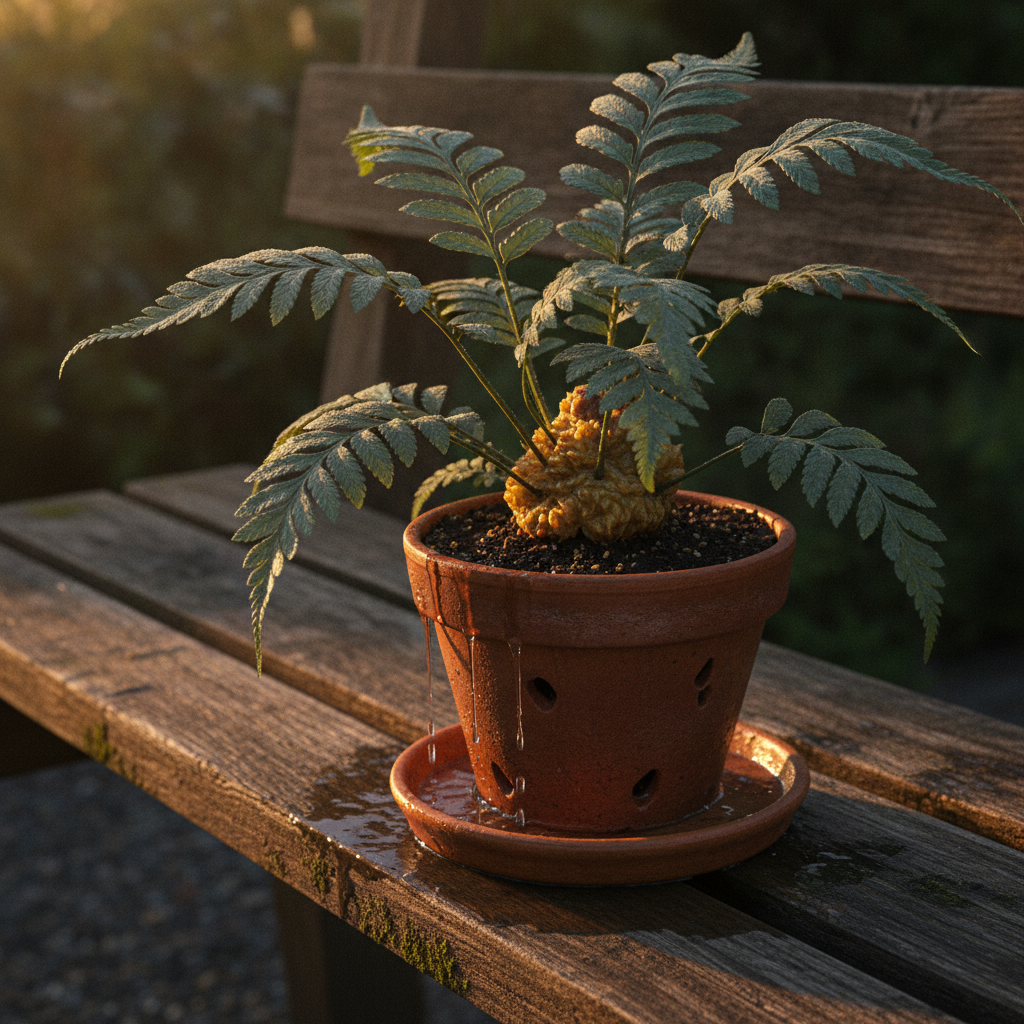
Because the blue fern is an epiphyte, ordinary bagged houseplant compost is too dense and holds too much water for its liking, and a plant potted into it will sooner or later suffer at the roots. What it wants instead is a loose, chunky, airy medium that mimics the debris-strewn bark it would colonise in the wild. A reliable recipe is roughly equal parts orchid bark, coco coir or peat-free compost, and perlite, with a generous handful of chopped sphagnum moss stirred through to hold moisture without compacting. The result should feel light and open, with plenty of gaps for air to reach the roots.
Potting itself needs a light touch. The rhizome should rest on or just at the surface of the mix rather than being buried, as a rhizome smothered under compost is far more prone to rot. Choose a pot only slightly larger than the current root system, ideally one with ample drainage holes, and resist the urge to over-pot; a large volume of damp mix around a small root system stays wet for too long. Repot every couple of years in spring, or when the rhizome has crept over the edge of the pot and roots are pushing out of the base, and take the opportunity to refresh the mix, which breaks down and loses its structure over time.
Fertilising

Ferns in general are modest feeders, and the blue fern is no exception. In the wild it draws nutrients from the thin layer of decaying leaf litter and organic debris that gathers around its rhizome, so it is adapted to a slow, dilute trickle of food rather than a rich diet. Overfeeding is a more common cause of trouble than underfeeding, showing up as scorched, browned frond tips where mineral salts have built up in the mix.
Through the active growing season of spring and summer, feed roughly once a month with a balanced liquid houseplant fertiliser diluted to half the recommended strength, always applied to already-moist mix so the roots are not shocked by concentrated feed on dry compost. A slow-release option, sprinkled sparingly onto the surface in spring, works equally well for those who prefer not to remember a monthly routine. In autumn and winter, when growth naturally slows, stop feeding altogether and let the plant rest. If you ever suspect a build-up of fertiliser salts, flush the pot through with plenty of plain water to leach them away.
Propagation
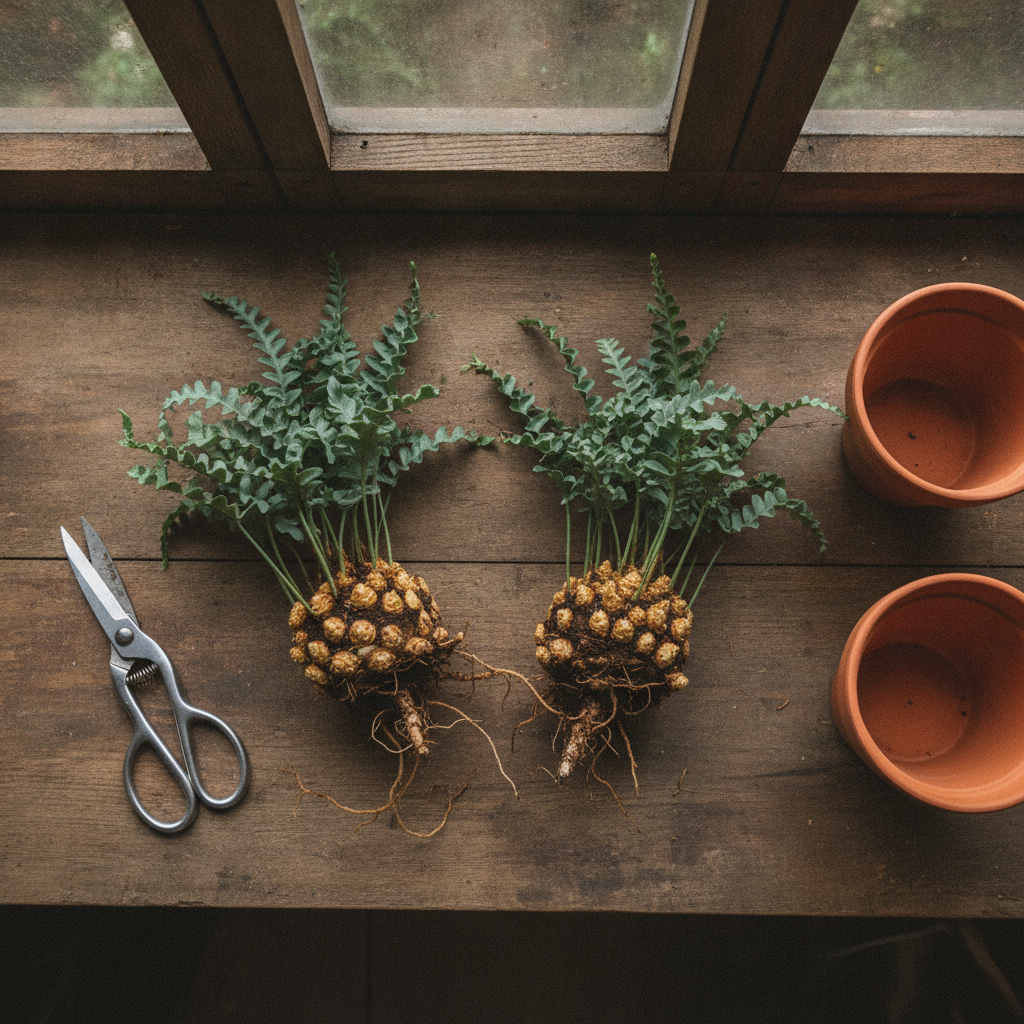
Unlike many popular houseplants, the blue fern cannot be grown from a leaf or stem cutting, because ferns do not reproduce that way. The straightforward method for the home grower is division of the creeping rhizome, best carried out in spring as the plant comes into active growth and ideally combined with a scheduled repotting so the plant is only disturbed once. A healthy, established clump with several growing points can be split into two or more sections, each with its own length of rhizome, a few fronds and a portion of roots.
- Water the plant a day beforehand so it is well hydrated and less stressed by the process.
- Ease the whole plant out of its pot and gently loosen the mix from around the rhizome and roots so you can see the natural growing points.
- Using a clean, sharp blade, cut the rhizome into sections, making sure each division carries a healthy length of rhizome, at least two or three fronds, and its own share of roots.
- Pot each division into fresh, airy epiphytic mix, keeping the rhizome resting on the surface rather than buried, and firm the mix just enough to hold the plant steady.
- Water lightly, then place the new plants somewhere warm and humid with bright indirect light, and keep the mix just moist while they settle and root in over the following weeks.
Mature blue ferns also produce spores in neat rounded clusters on the undersides of the fronds, and these can in theory be grown on, but raising ferns from spore is a slow and exacting business better suited to dedicated enthusiasts than to anyone simply wanting another plant or two. For the vast majority of growers, division is quicker, more reliable and far more satisfying.
Pro Tip — Sterilise your blade: Wipe your knife or secateurs with isopropyl alcohol before cutting the rhizome. A clean cut on a clean tool dramatically reduces the risk of introducing rot into the freshly divided sections.
Pests and Problems
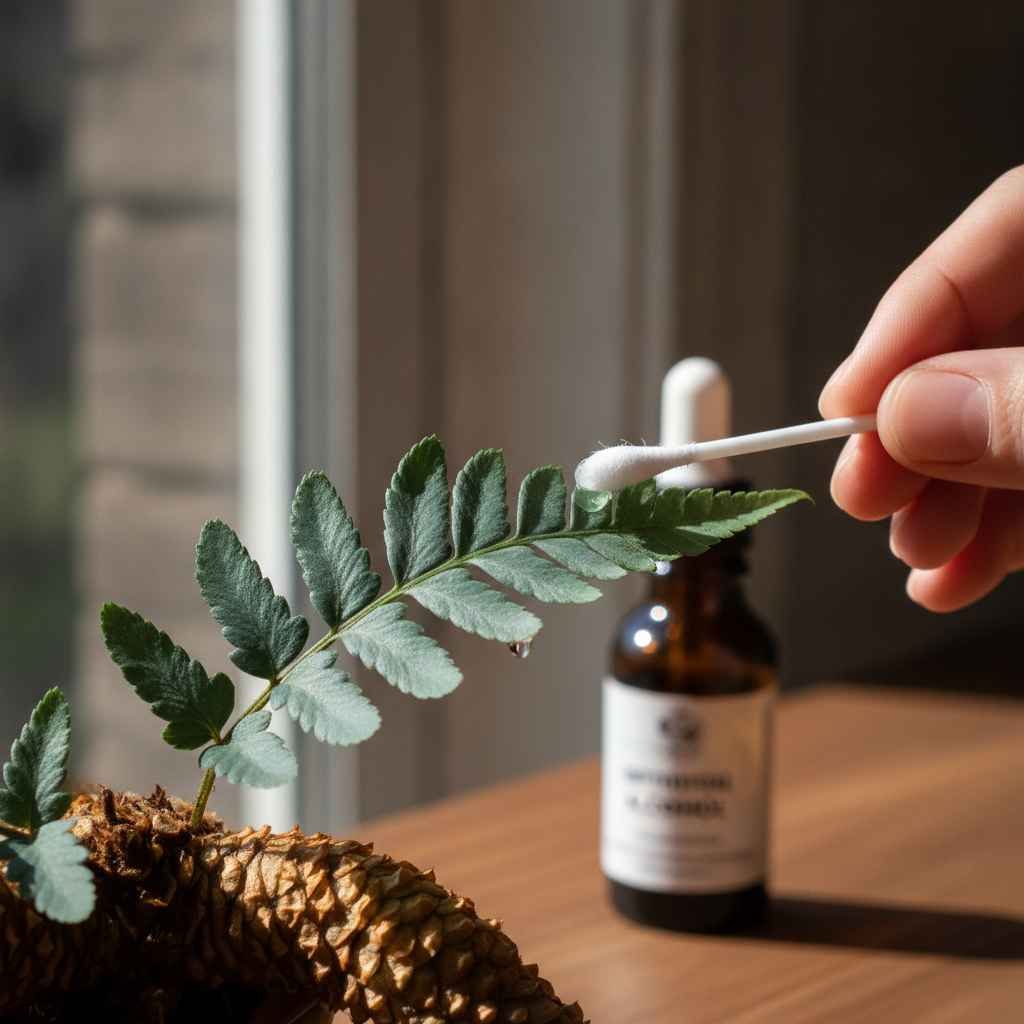
The blue fern is not especially prone to pests, but the warm, humid conditions it enjoys can also suit a few unwelcome visitors. Scale insects, which appear as small brown or tan bumps clustered along the frond ribs and rhizome, are the most persistent nuisance, and mealybugs may turn up as white cottony tufts tucked into the crevices where fronds meet the rhizome. Both are best tackled early, by dabbing each one directly with a cotton bud dipped in isopropyl alcohol and repeating every few days until they are gone. Fungus gnats, whose larvae thrive in perpetually wet compost, are more a sign of overwatering than a threat in themselves, and letting the surface of the mix dry between waterings usually clears them.
A word of caution on treatment: ferns are more sensitive than many houseplants to the oils and soaps often reached for against pests, and a strong insecticidal soap or neem spray can damage the delicate fronds. Always test any spray on a single frond first and wait a day before treating the whole plant. Most day-to-day complaints, though, are not pests at all but responses to care. Browning, crispy frond edges point to air that is too dry or a mix that has been allowed to dry out; yellowing, softening fronds usually mean the roots are too wet; and a loss of the signature blue colour, as covered above, almost always comes down to insufficient light. Reading these signals and adjusting early is what keeps a blue fern looking its best.
Pro Tip — Humidity first: Because so many blue fern problems trace back to dry air, grouping it with other plants, standing it on a pebble tray, or running a small humidifier nearby prevents far more trouble than any pest treatment ever cures.
Varieties
The blue fern belongs to the small but distinctive genus Phlebodium, and it is often sold and grown alongside its close relatives, which share the same powder-blue colouring and easygoing epiphytic nature. Two in particular are worth knowing, as they turn up frequently under the broad label of blue fern and are cared for in almost exactly the same way.
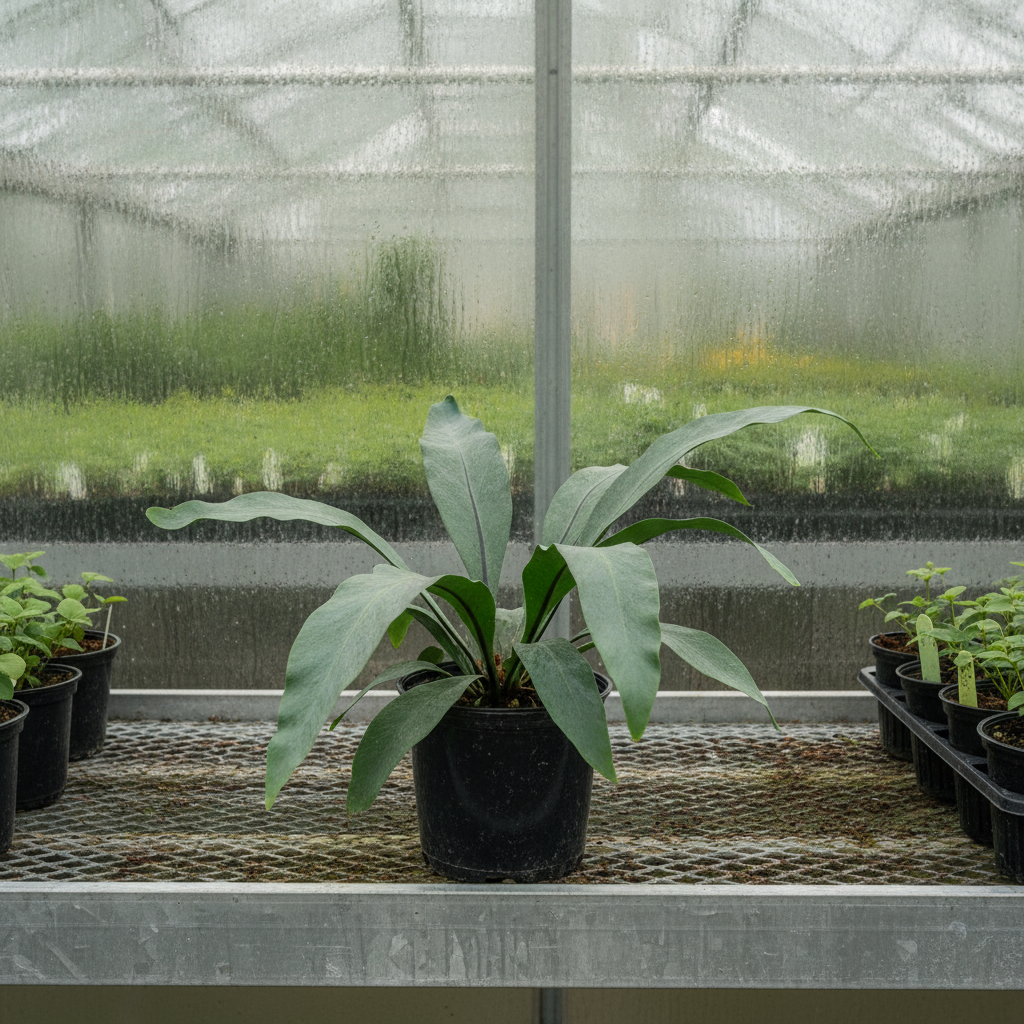
Blue Star Fern (Phlebodium aureum ‘Blue Star’) is the best-known member of the group and the plant many people picture when they hear the name blue fern. Its fronds are broader and more strap-like, with gently wavy margins and the same matte, powdery-blue finish. It grows a little larger and more robustly than pseudoaureum, making it a forgiving introduction to the genus.
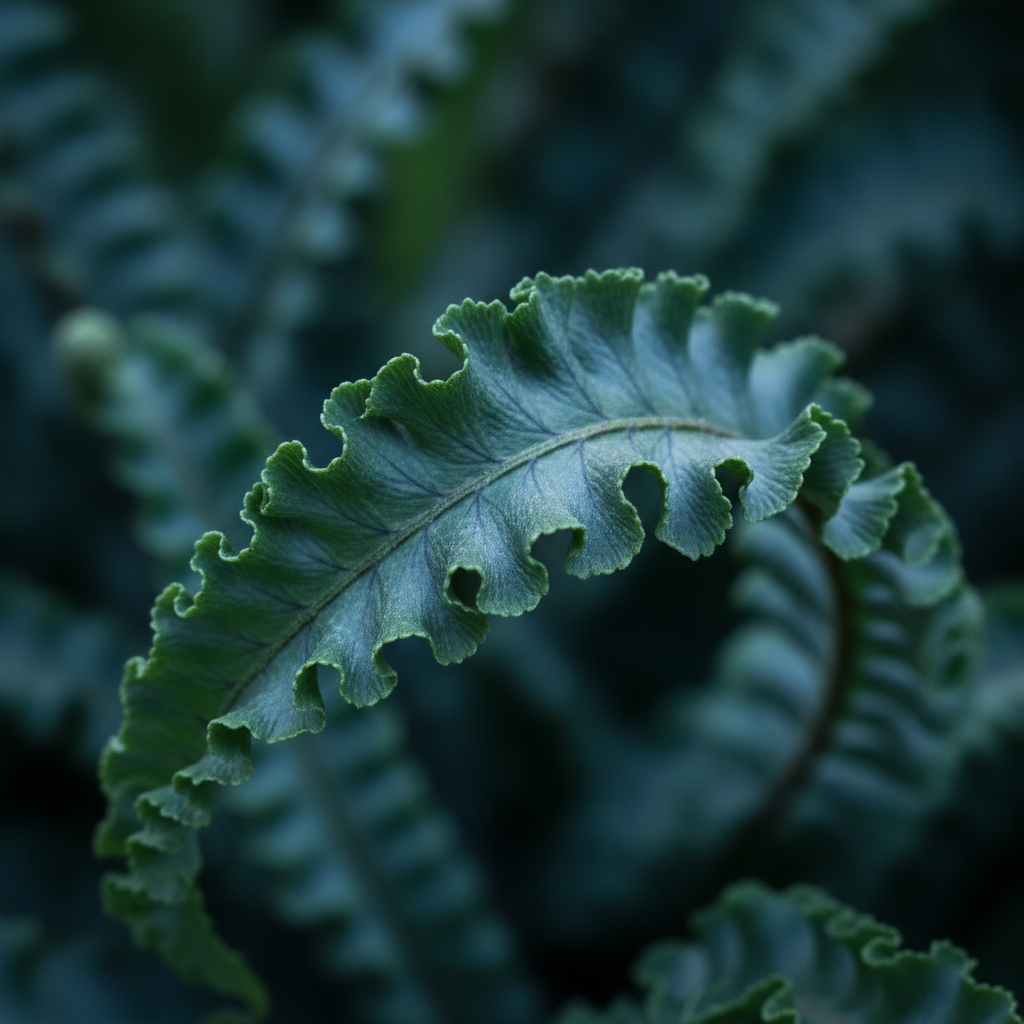
Mandaianum (Phlebodium aureum ‘Mandaianum’) is the showy, ruffled cultivar of the group, its blue-green fronds finished with deeply wavy, frilled and crested margins that give the whole plant a lively, crimped silhouette. It is grown for that theatrical texture and, like the others, asks for bright indirect light, an airy mix and steady moisture.
Frequently Asked Questions
Why is my blue fern losing its blue colour?
The powder-blue bloom is strongest in bright, indirect light. When a blue fern fades toward plain green, insufficient light is almost always the cause. Move it gradually to a brighter spot, out of direct sun, and new fronds should return with a stronger blue cast.
Is the blue fern plant safe for cats and dogs?
Yes. Phlebodium pseudoaureum and its close relatives are considered non-toxic and are regarded as safe around cats, dogs and children, which makes the blue fern a relaxed choice for a busy household.
Why are the frond tips turning brown and crispy?
Crispy brown edges usually mean the air is too dry or the mix has been allowed to dry out fully between waterings. Raise the humidity around the plant, keep the mix evenly moist, and consider switching to rainwater or filtered water if hard tap water is leaving mineral deposits.
Should I bury the fuzzy rhizome when I repot?
No. The golden-scaled rhizome should rest on or just at the surface of the mix. Burying it under compost holds too much moisture against it and greatly increases the risk of rot, so keep it exposed and let it creep freely.
How often should I repot a blue fern?
Every two years or so is usually enough, done in spring. Repot sooner if the rhizome has crept over the pot edge or roots are escaping the drainage holes, and always refresh the airy epiphytic mix at the same time, as it breaks down and compacts over time.
Can I grow a blue fern in a bathroom?
A bathroom with a window can be an excellent home for a blue fern, since the naturally higher humidity from showers and baths suits it well. Just make sure it still receives bright, indirect light, as a dim, windowless bathroom will leave it starved of the light it needs to keep its colour.






