
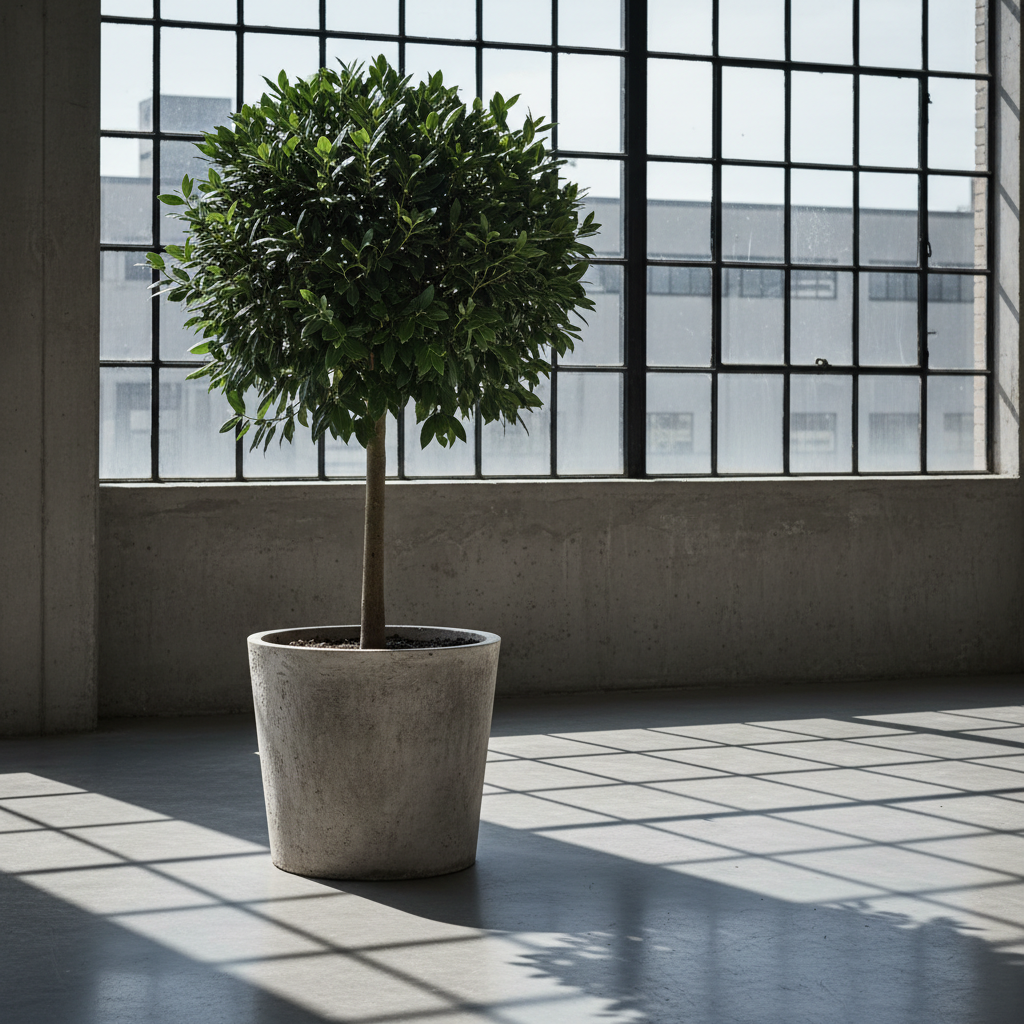
Few houseplants earn their keep quite like bay laurel. Laurus nobilis is the slow, dignified Mediterranean evergreen that supplies the glossy leaf dropped into almost every stockpot, stew and bouquet garni, and it happens to be one of the most forgiving woody plants you can keep in a container. Grow it well and it becomes a sculptural, clippable shrub that lives for decades and perfumes the kitchen every time you brush past it. The difference between a bay that merely survives and one that genuinely thrives comes down to a handful of Mediterranean instincts: sharp drainage, generous light, and the restraint to leave it slightly drier than your tropical foliage plants.
Contents
- Quick Reference
- Why Bay Laurel Makes a Great Houseplant
- Light
- Watering
- Soil and Potting
- Fertilising
- Propagation
- Pests and Problems
- Varieties
- Frequently Asked Questions
Quick Reference
Bay laurel is a woody Mediterranean shrub rather than a soft tropical, so its preferences read a little differently from the average leafy houseplant. The table below summarises everything at a glance, and each topic is explored in depth further down the guide.
| Common names | Bay laurel, sweet bay, bay tree, true laurel, Grecian laurel |
| Botanical name | Laurus nobilis |
| Family | Lauraceae |
| Origin | Mediterranean basin and Asia Minor |
| Light | Bright light, ideally several hours of direct sun; a south or west window indoors |
| Water | Moderate; let the top 3 to 5 cm (1 to 2 in) of compost dry between waterings |
| Soil | Free-draining, loam-based mix with added grit; slightly acidic to neutral pH |
| Temperature | 15 to 24 degrees C (59 to 75 degrees F) in growth; hardy to roughly -5 degrees C (23 degrees F) in containers |
| Humidity | Undemanding; average household humidity is fine |
| Feeding | Light feeder; balanced liquid feed monthly in spring and summer |
| Growth rate | Slow, roughly 10 to 30 cm (4 to 12 in) a year in a pot |
| Mature size indoors | 1 to 1.8 m (3 to 6 ft) in a container, easily kept smaller by clipping |
| Toxicity | The culinary bay; non-toxic as the kitchen herb, though whole leaves should never be swallowed |
Why Bay Laurel Makes a Great Houseplant
Bay laurel arrives with a pedigree no other kitchen plant can match. The Greeks wove its leaves into the victory wreaths that crowned athletes and poets, and the very word laureate still carries that meaning today. The species name nobilis means renowned or noble, and the plant has been cultivated around the Mediterranean for thousands of years, valued equally for its aromatic foliage and its handsome, evergreen silhouette. Bring one indoors and you are growing a living piece of classical history that also seasons your soup.
Practically speaking, bay is one of the most adaptable woody plants for container life. It accepts hard clipping without sulking, which is why it is so often sold as a clean lollipop standard, a pyramid or a spiral. That same tolerance means a plant grown indoors can be kept to whatever size suits the room, year after year, simply by trimming in summer. The leathery leaves resist the dry, fluctuating air of a centrally heated home far better than the thin foliage of ferns or calatheas, and the plant shrugs off the odd missed watering thanks to its drought-adapted Mediterranean constitution.
It is also a slow, long-lived companion rather than a fast-growing novelty. A well-kept bay can outlast the furniture around it, thickening gradually into a gnarled, characterful little tree. For anyone who finds the relentless pace of pothos or tradescantia faintly exhausting, the measured, unhurried growth of bay is a relief. You are not racing to keep up with it. You are tending something that rewards patience.
Pro Tip — Know your laurel: Several unrelated plants share the name laurel. True bay (Laurus nobilis) is the culinary one. Cherry laurel (Prunus laurocerasus) and spotted laurel (Aucuba) are ornamental shrubs whose leaves are not for the kitchen, and cherry laurel is genuinely poisonous. When in doubt, crush a leaf: true bay releases a warm, spicy, eucalyptus-and-clove aroma that the impostors lack.
Light
Light is where bay laurel is most insistent. This is a plant of open Mediterranean hillsides and sun-baked courtyards, and it wants as much brightness as your home can offer. Indoors, the ideal position is directly in front of a south or west-facing window where it can soak up at least three or four hours of direct sun a day. A bright east window will keep it healthy too, though growth will be a touch slower and the plant may lean noticeably towards the glass. In a dim, north-facing room bay will not die quickly, but it will gradually grow thin, pale and leggy, stretching its internodes and shedding the dense, compact habit that makes it attractive.
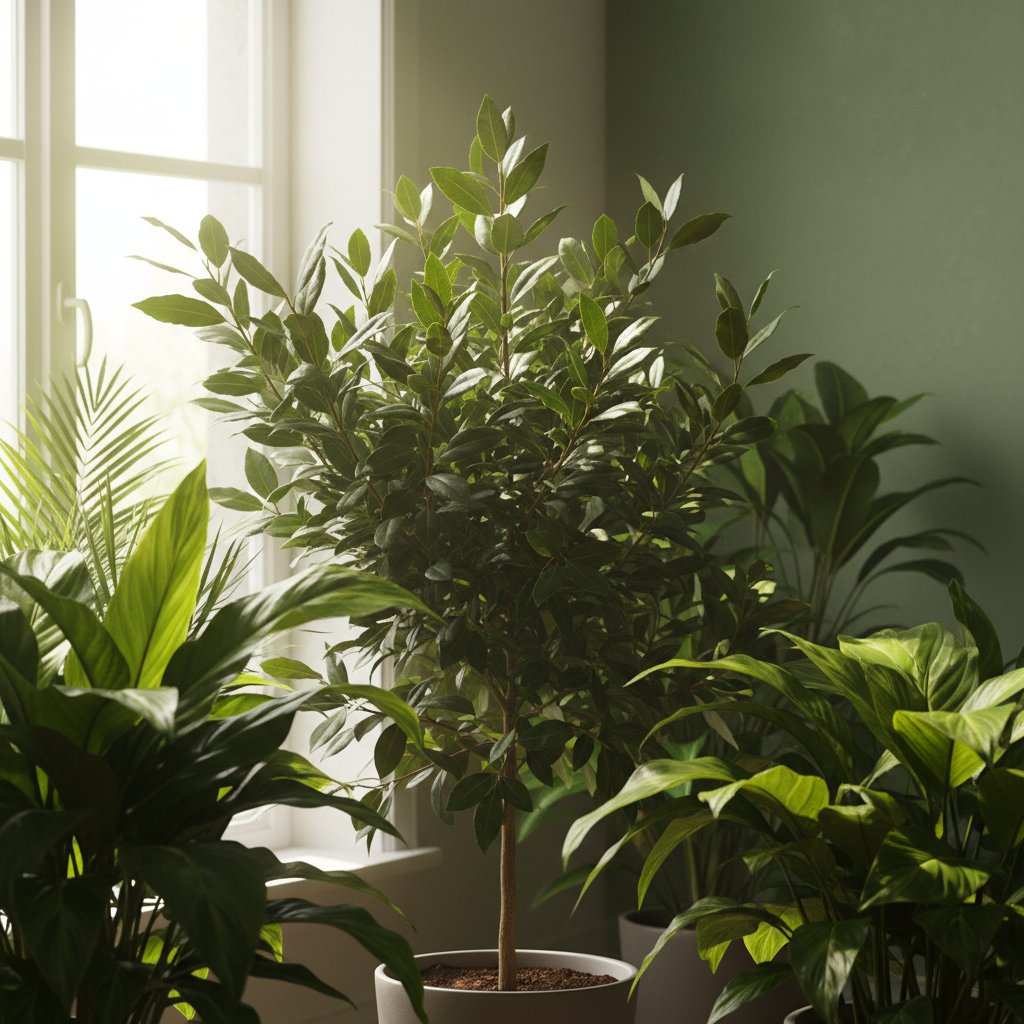
The signs of a bay grown in the right light are easy to read. The leaves stay a deep, lustrous green, the new growth is short-jointed and bushy, and the whole plant feels solid. Too little light produces the opposite picture: long, weak stems, widely spaced leaves and a tendency to drop older foliage from the interior of the plant. If your only bright spot is limited, rotate the pot a quarter turn each week so every side receives its share and the plant grows evenly rather than lopsided.
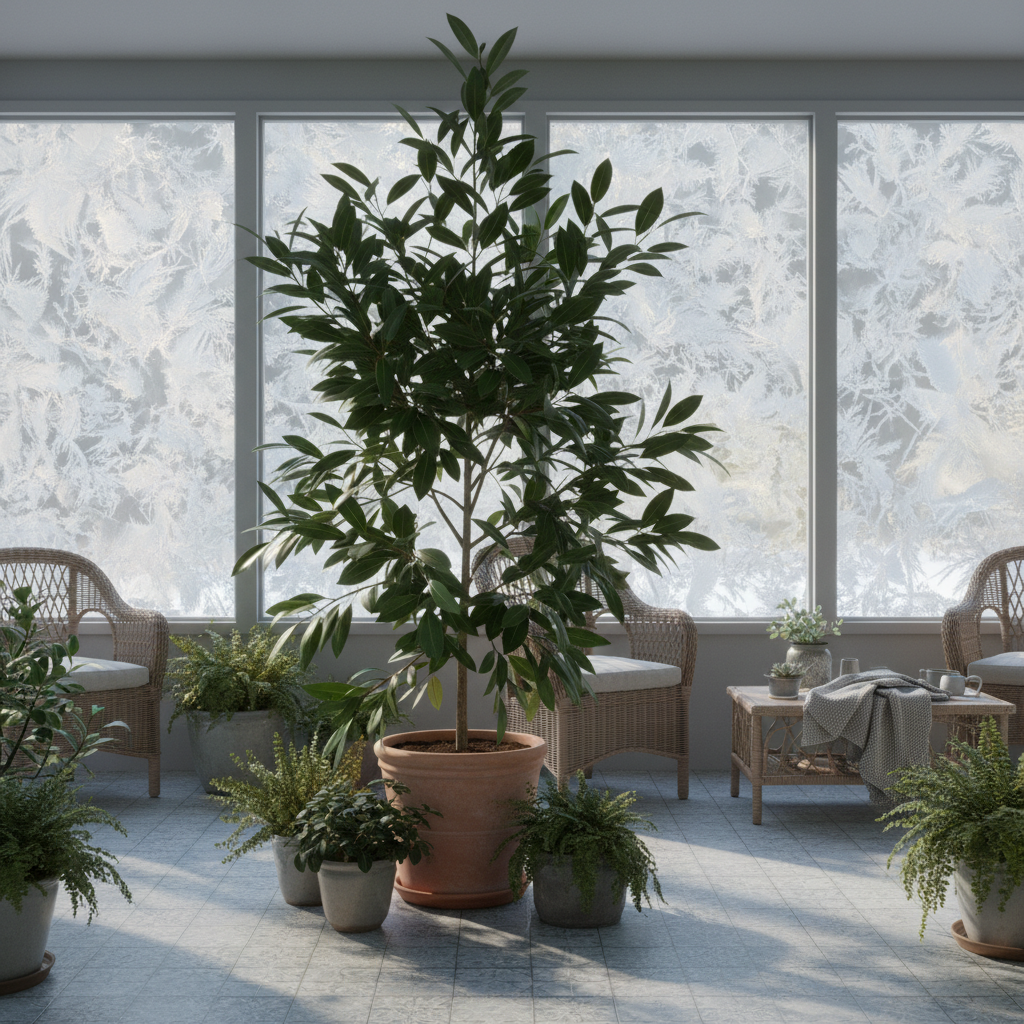
Bay positively enjoys spending the warmer months outdoors, and a summer holiday on a sunny patio or balcony will do more for its vigour than anything else. Acclimatise it gradually over a week or two so the leaves do not scorch in the sudden intensity of unfiltered sun, then bring it back inside before the first frosts threaten. Plants moved abruptly from a dim interior into blazing midday sun can develop bleached, papery patches on the most exposed leaves, so ease the transition rather than rushing it.
Pro Tip — Summer outdoors: A spell outside from late spring to early autumn rewards bay with sturdier stems and more aromatic leaves. Just remember it is far less hardy in a pot than in the ground, because the confined roots have no buffer against cold, so return it to shelter well before temperatures drop near freezing.
Watering
If there is one skill that separates a flourishing bay from a struggling one, it is watering with a Mediterranean mindset. Bay laurel is adapted to a climate of wet winters and bone-dry summers, which means it resents sitting in constantly soggy compost far more than it minds an occasional dry spell. The reliable approach is to water thoroughly, let the surplus drain away completely, and then wait until the top 3 to 5 cm (1 to 2 in) of compost has dried before watering again. Push a finger into the soil rather than guessing from the surface, which can look dry while the root zone is still damp.
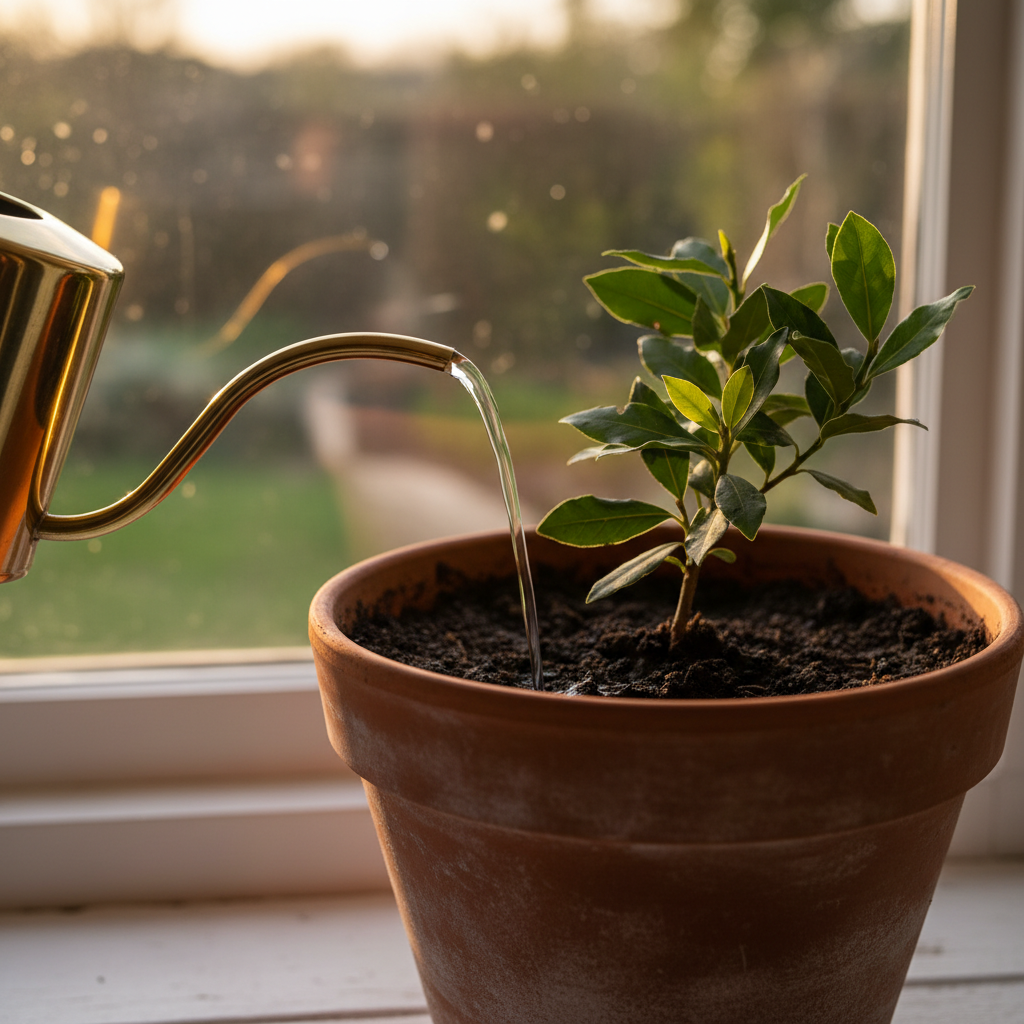
The biggest risk by far is overwatering. Roots left standing in waterlogged compost are quickly starved of oxygen, and root rot follows. The first symptoms are deceptively similar to drought: drooping, yellowing leaves and a generally sad appearance, which tempts the unwary into watering even more. If a normally robust bay suddenly wilts despite damp soil, tip it gently out of its pot and check the roots. Healthy bay roots are firm and pale, whereas rotting ones are brown, soft and smell sour. Caught early, the fix is to remove the damaged roots, repot into fresh free-draining mix and water sparingly while it recovers.
Watering needs shift with the seasons. Through the bright, active months of spring and summer a container bay can drink surprisingly fast, especially if it is standing outdoors in the sun, and may need watering two or three times a week in a heatwave. In autumn and winter, when growth slows almost to a stop, that demand collapses, and a thorough watering every couple of weeks is often plenty. The cardinal winter mistake is to keep watering on a summer schedule, leaving cold, sodden compost around dormant roots, which is a recipe for rot. Terracotta pots help enormously here, because their porous walls let excess moisture evaporate and make overwatering much harder.
Warning — Drainage is non-negotiable: Never let a bay stand in a saucer of water for more than half an hour after watering. The single most common way to kill a container bay is to drown it, and a forgotten saucer of standing water is usually the culprit. Always tip the excess away.
Soil and Potting
Bay laurel asks for a soil that mimics the lean, gritty, fast-draining ground of its native hillsides. The best base for a container plant is a good loam-based compost, such as a John Innes No 2 or No 3, which has the weight and structure to anchor a top-heavy little tree and holds nutrients far better than a peat-free multipurpose mix on its own. To that, add roughly a third by volume of horticultural grit, coarse perlite or sharp sand to open up the texture and guarantee that water moves through freely rather than lingering around the roots. Bay is happiest in a slightly acidic to neutral soil, but it is not fussy about pH within that range.
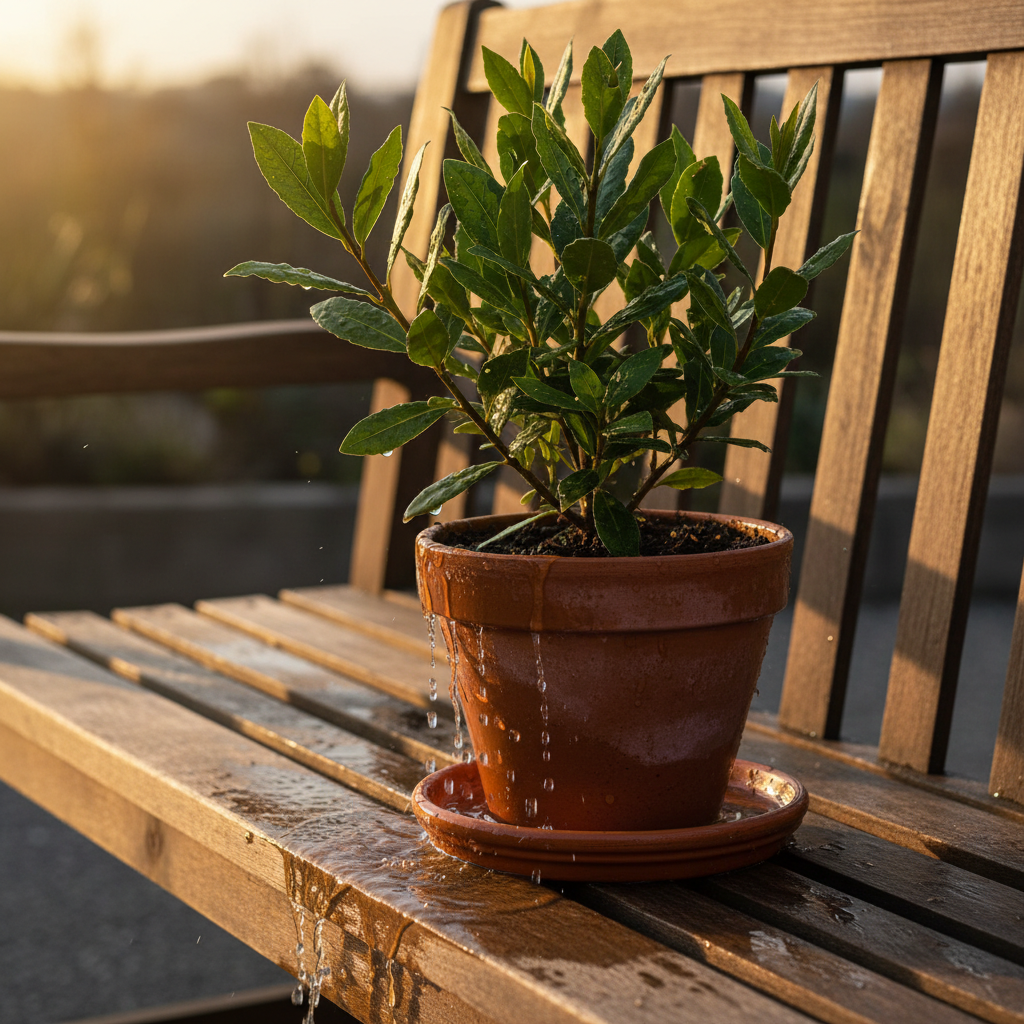
The pot matters as much as what fills it. Choose a container with generous drainage holes, and favour terracotta over plastic or glazed ceramic whenever the plant will be watered regularly, because the breathable clay helps the rootball dry out between drinks. Bay is comfortable being slightly pot-bound and does not need a cavernous container; a vessel only a little larger than the rootball encourages a denser, more compact plant and reduces the volume of wet compost sitting around the roots. An over-large pot holds too much moisture and invites exactly the rot problems you are trying to avoid.
Because bay grows slowly, repotting is an occasional chore rather than an annual ritual. Every two to three years is usually right, moving up just one pot size each time, ideally in spring as the plant wakes up. When a mature bay reaches the largest pot you can comfortably manage, you can keep it going almost indefinitely by root pruning instead: lift it out, shave a few centimetres of root and old compost from the sides and base, and return it to the same pot with fresh mix. This keeps the plant in scale with its container for many years.
Pro Tip — Top-dress between repottings: In the years you do not repot, scrape away the top 2 to 3 cm (about 1 in) of tired compost each spring and replace it with fresh mix and a little slow-release feed. It refreshes the surface roots and tops up nutrients without disturbing the plant.
Fertilising
Bay laurel is a naturally lean feeder, evolved for poor Mediterranean soils, so it neither needs nor wants heavy fertilising. That said, a plant confined to a pot eventually exhausts the nutrients in its compost, and a modest feeding routine keeps the foliage a rich green and supports steady new growth. During the active season from spring to late summer, a balanced liquid houseplant or general-purpose feed diluted to the recommended strength and applied roughly once a month is ample. Always feed onto already-moist compost rather than bone-dry soil, which can let concentrated fertiliser burn the roots.
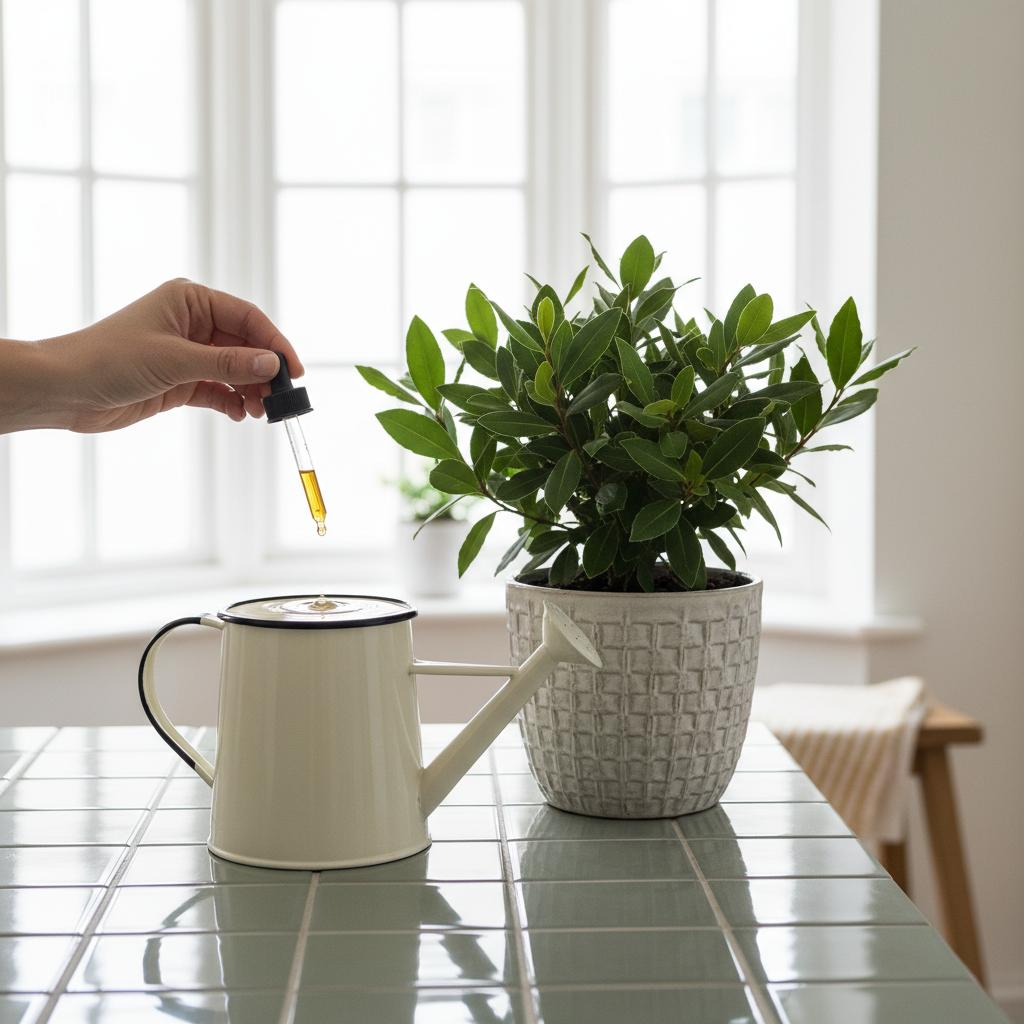
For gardeners who prefer a hands-off approach, a single application of slow-release granules worked into the top of the compost in spring will release nutrients gently across the whole growing season and removes the need to remember monthly liquid feeds. Either method works well; the key is restraint. Bay does not respond to extra feeding with extra vigour, and pushing it with too much nitrogen produces soft, sappy growth that is both weaker and far more attractive to sap-sucking pests.
Stop feeding altogether from autumn through winter. With light levels low and the plant essentially dormant, it cannot use the nutrients, and unused fertiliser salts simply accumulate in the compost where they can damage the roots over time. If you notice a chalky white crust forming on the soil surface or the pot rim, that is a sign of salt build-up; flush it out by watering thoroughly several times and letting the water run freely from the drainage holes, carrying the excess away.
Pro Tip — Yellowing despite feeding: If the youngest leaves yellow while their veins stay green, suspect an iron or magnesium shortfall, common when tap water is hard and alkaline. A dose of diluted seaweed feed or a magnesium-rich tonic usually greens it up, and watering occasionally with rainwater helps over the longer term.
Propagation
Propagating bay laurel is an exercise in patience. Unlike the soft, fast-rooting vines that throw out roots in a glass of water within days, bay is a woody plant that roots slowly and somewhat reluctantly. Do not expect the quick gratification of a pothos cutting; a bay cutting may take two to four months, sometimes longer, to form a usable root system. Water rooting is unreliable and tends to end in rot, so the dependable route is semi-hardwood cuttings taken in late summer.
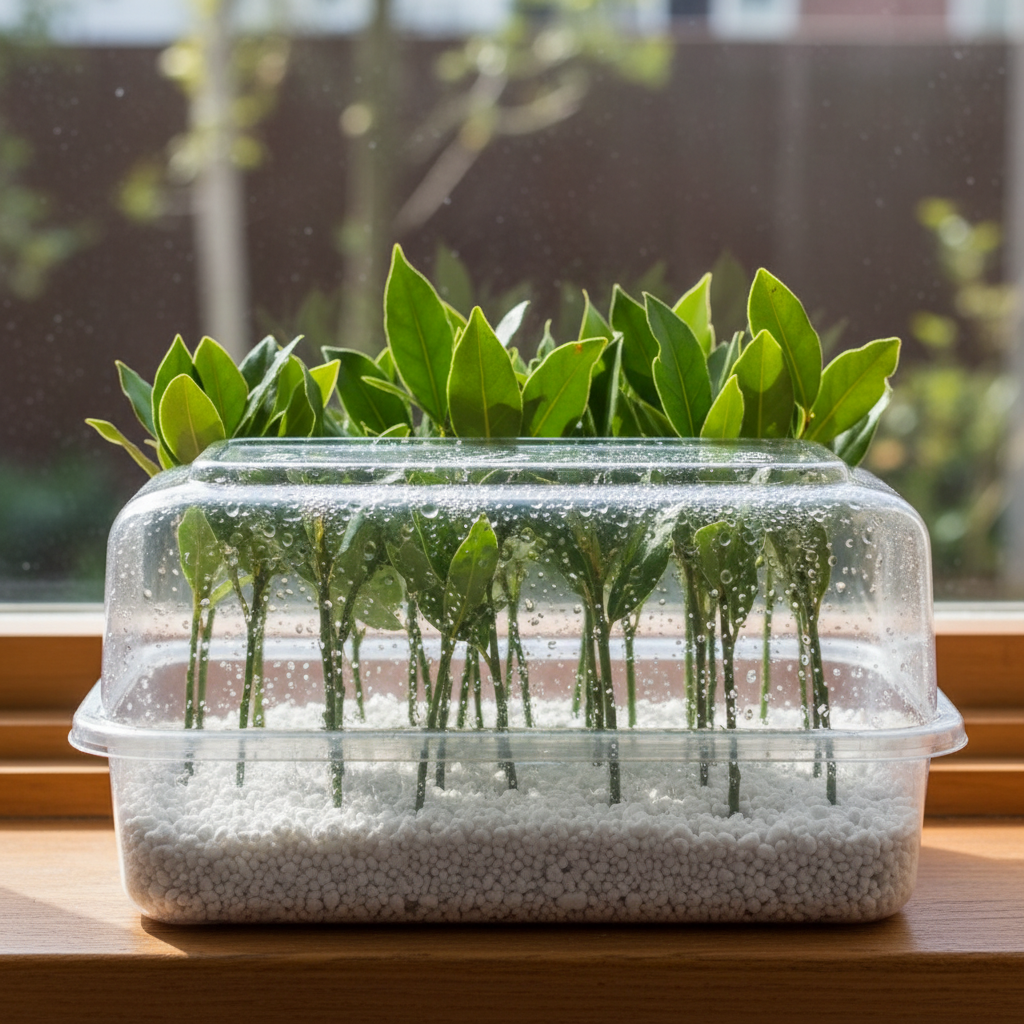
To take cuttings, work through these steps in late summer when the current season’s growth has begun to firm up but is not yet fully woody.
- Select healthy, semi-ripe shoots from the current year, around 10 to 15 cm (4 to 6 in) long, and cut just below a leaf node with clean, sharp secateurs.
- Strip the leaves from the lower half of each cutting, leaving two or three leaves at the top, and pinch out any soft growing tip.
- To reduce moisture loss, halve the remaining leaves by cutting them across, and lightly wound the base of the stem by scraping a thin sliver of bark from one side.
- Dip the cut end in hormone rooting powder or gel, which makes a real difference with a stubborn rooter like bay.
- Insert the cuttings around the edge of a pot filled with a gritty, free-draining mix of perlite and a little compost, firming them in gently.
- Cover with a clear humidity dome or a loose plastic bag held off the leaves, and place somewhere warm and bright but out of direct sun.
- Keep the medium just barely moist, never soggy, and be patient. Resist the urge to tug at the cuttings to check progress; new growth at the tip is your signal that roots have formed.
An alternative for those who find cuttings frustrating is layering, which lets the parent plant do the hard work. Bend a low, flexible branch down to a pot of compost beside the plant, wound the underside where it touches the soil, pin it down and keep it moist. Roots form along the buried section over many months, after which the new plant can be severed and potted on. Bay can also be grown from seed, but germination is slow and erratic and the seedlings take years to reach a useful size, so it is rarely worth the wait for a home grower.
Pests and Problems
Bay laurel is robust, but a small cast of pests is drawn to its leathery leaves, and a couple of physiological problems crop up often enough to be worth knowing. The two pests you are most likely to meet are scale insects and the bay sucker, and both are easier to manage if you catch them early, which is why a regular close inspection of the foliage pays off.
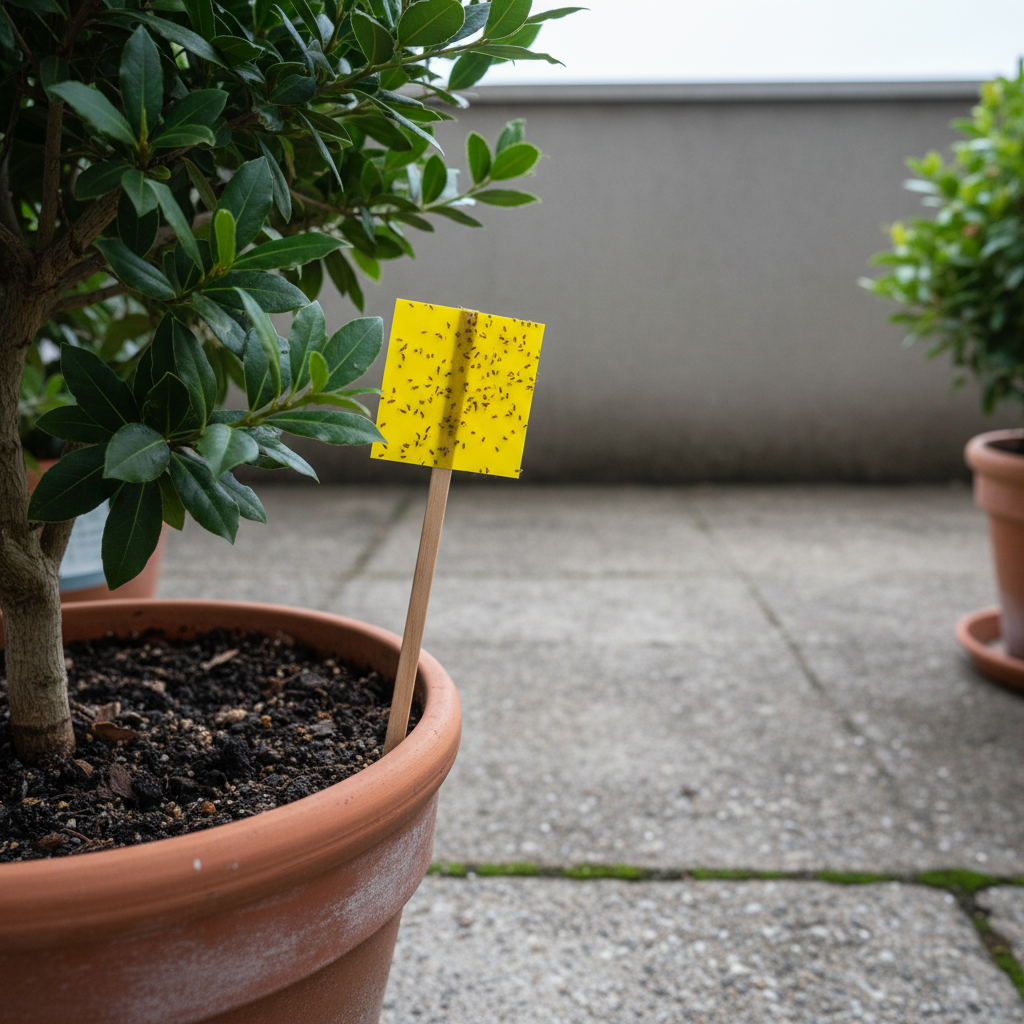
Scale insects are the most persistent nuisance. They appear as small, flat, brown or tan discs clamped to the stems and the undersides of leaves, often along the midrib, and they excrete a sticky honeydew that leaves the foliage glossy and tacky and encourages a black coating of sooty mould. Light infestations can be wiped off with a cloth or a cotton bud dipped in dilute horticultural soap; heavier ones respond to repeated treatment with horticultural oil or an organic soap spray, smothering the insects over several applications a week or two apart.
The bay sucker (Trioza alacris) is a more specialised pest that causes a distinctive symptom: the leaf margins curl downwards, thicken and turn pale yellow then brown, often with a waxy white residue where the young insects have fed. The simplest control is to pick off and destroy affected leaves as soon as you see them, which removes the developing insects before they can spread. A bad case can be knocked back with an organic insecticidal soap, and keeping the plant in good airflow discourages a build-up.
Not every blemish is a pest. Brown or yellow leaves are most often a watering or environmental issue. Sudden yellowing with damp soil points to overwatering and possible root rot, while crisp brown leaf edges usually mean the plant has been allowed to dry out too far or is suffering cold draughts. Pale patches on the most exposed leaves after a move outdoors are simple sun scorch. Some leaf drop in winter, particularly of older interior leaves, is normal as the plant adjusts to lower light, and is no cause for alarm provided the new growth in spring is healthy.
Warning — Winter cold and wet together: The combination most likely to harm a container bay is cold and wet at the same time. Roots that are merely cold cope well, and roots that are merely dry cope well, but cold sodden compost in midwinter is the classic killer. Keep winter watering minimal and protect the pot from waterlogging.
Varieties
Most bay sold for the kitchen is simply the species, Laurus nobilis, with its familiar deep green, lance-shaped leaves. A handful of selected forms add ornamental interest, however, and two in particular are worth seeking out for their distinctive foliage.
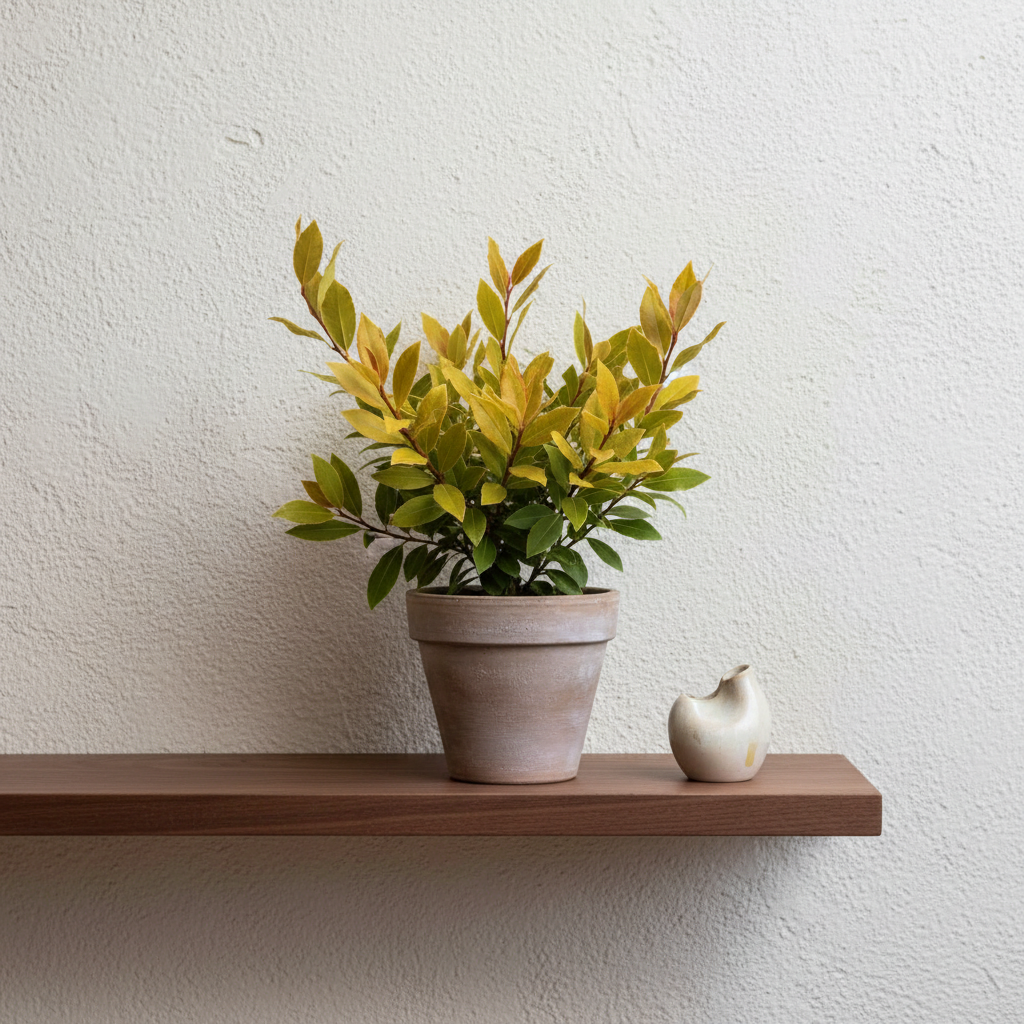
Aurea (Golden Bay)
Laurus nobilis ‘Aurea’ carries the same leathery, aromatic, lance-shaped leaves as the species, but the new growth emerges flushed a warm golden-yellow before maturing to a softer yellow-green. The colour is brightest in good light and gives the plant a lift, especially in winter. It is fully usable in the kitchen and grows much like ordinary bay, though it can be a little more prone to cold and wind damage on the brightest foliage, so a sheltered, sunny spot suits it best.
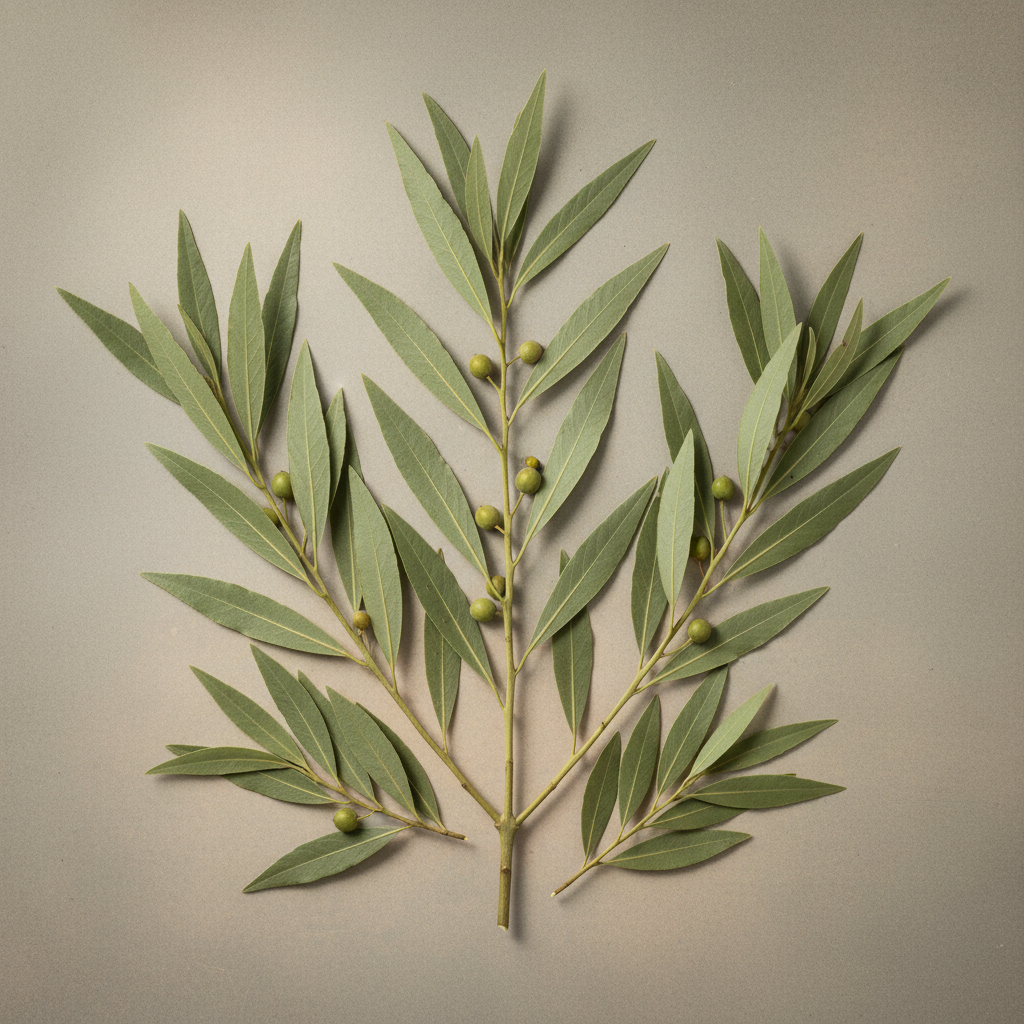
Angustifolia (Willow-Leaf Bay)
Laurus nobilis f. angustifolia, the willow-leaf bay, swaps the broad leaf of the species for narrow, elongated foliage in a slightly paler green, giving the whole plant a finer, more delicate, almost feathery appearance. The leaves are just as aromatic and just as good for cooking. This form has a reputation for being marginally hardier and more wind-resistant than the standard bay, which makes it a sensible choice for an exposed balcony or a cooler position.
Frequently Asked Questions
Why are my bay laurel leaves turning yellow?
Yellowing has several causes, so read the context. Yellow leaves combined with damp, heavy soil almost always mean overwatering and the early stages of root rot; let the compost dry further and check the roots. Yellowing of the oldest leaves alone, especially in winter, is usually natural ageing. If the youngest leaves yellow between green veins, the plant is short of iron or magnesium, common with hard tap water, and a seaweed or magnesium feed plus occasional rainwater will help.
Can I grow bay laurel entirely indoors?
Yes, provided you can give it a genuinely bright spot with several hours of direct sun, such as a south or west window. Indoor bay grows more slowly than one that summers outside, and it appreciates cooler, brighter conditions in winter rather than the dry heat beside a radiator. Many growers compromise by keeping it inside over winter and moving it out to a sunny patio for the warm months, which gives the best of both worlds.
How do I keep my bay tree compact and bushy?
Bay responds beautifully to clipping, which is why it is so often shaped into standards and topiary. Trim it in late spring and again in midsummer if needed, pruning to just above a leaf or bud to encourage branching. Pinching out the soft growing tips during the season keeps the plant dense rather than leggy. Always cut with secateurs rather than shears on a leafy bay, because shearing slices the large leaves in half and leaves an unsightly fringe of browned edges.
Is bay laurel safe around pets and children?
True bay (Laurus nobilis) is the culinary herb and is not considered seriously toxic, but the leaves are tough and leathery and should never be swallowed whole by anyone, as they do not soften in cooking and can be a choking or digestive hazard, which is why recipes tell you to remove them before serving. The aromatic oils can cause mild stomach upset in pets if a lot of foliage is eaten. The far greater danger is confusing it with cherry laurel (Prunus laurocerasus), an unrelated ornamental shrub that is genuinely poisonous, so be certain of your plant’s identity.
How cold can my bay tree tolerate?
Bay is reasonably hardy when planted in the ground, surviving down to roughly -5 to -10 degrees C (23 to 14 degrees F) once established. In a container it is far more vulnerable, because the confined roots have no insulating mass of earth around them and can freeze solid. Treat a potted bay as only lightly frost-hardy: move it into a porch, unheated greenhouse or sheltered spot against a house wall in hard frosts, wrap the pot in fleece or hessian, and keep the compost on the dry side through winter.
Why are the edges of my bay leaves curling and browning?
Downward-curling, thickened, browning leaf margins, sometimes with a waxy white deposit, are the classic sign of bay sucker, a sap-feeding pest. Pick off and destroy affected leaves promptly and treat persistent infestations with an organic soap spray. If the browning is dry and crisp rather than curled, the cause is more likely environmental, such as drought, cold draughts or scorch, in which case adjust the conditions accordingly.
Bay laurel rewards a light touch and a sunny windowsill with years of glossy, fragrant foliage and a steady supply of the most useful leaf in the kitchen. Give it bright light, sharp drainage and the restraint to let it dry between waterings, protect it from cold wet winters, and clip it to whatever shape pleases you. Do that, and your bay will quietly outlast almost everything else on the plant shelf.






