
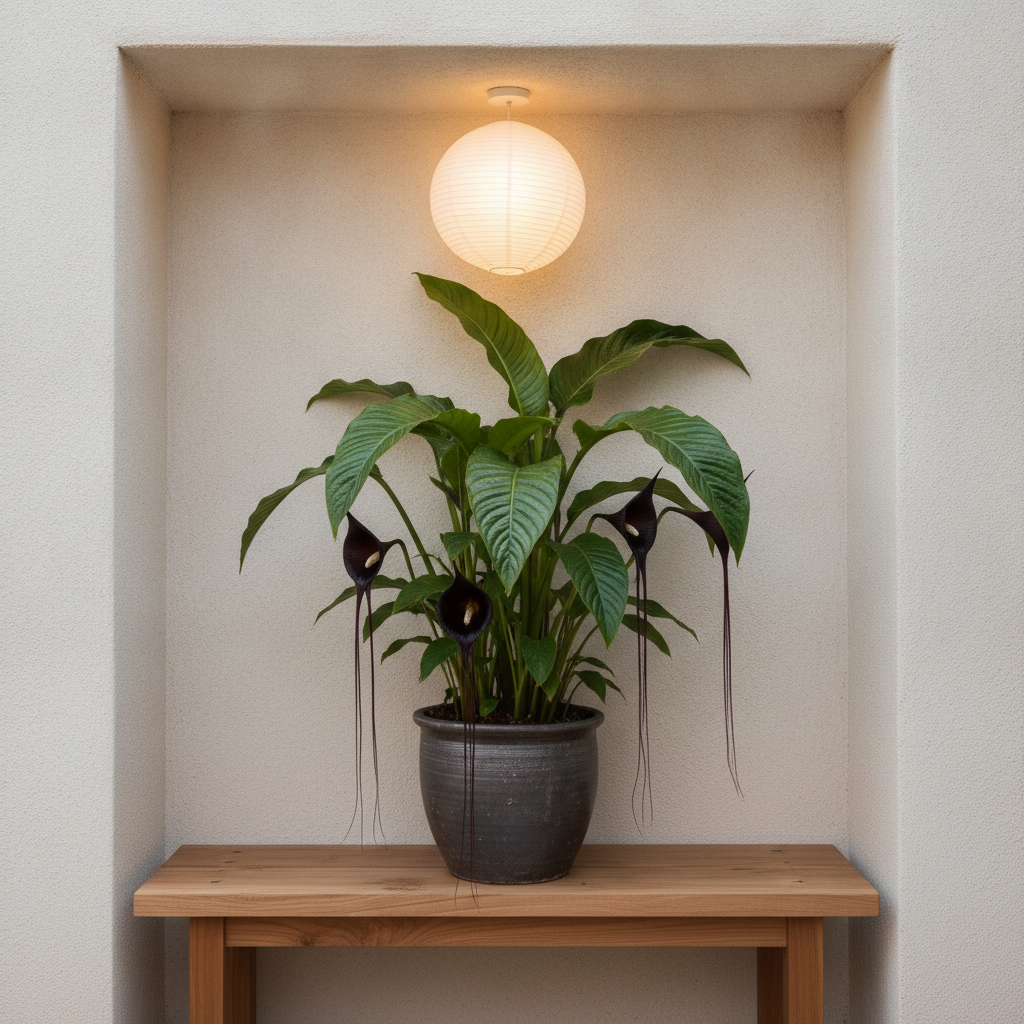
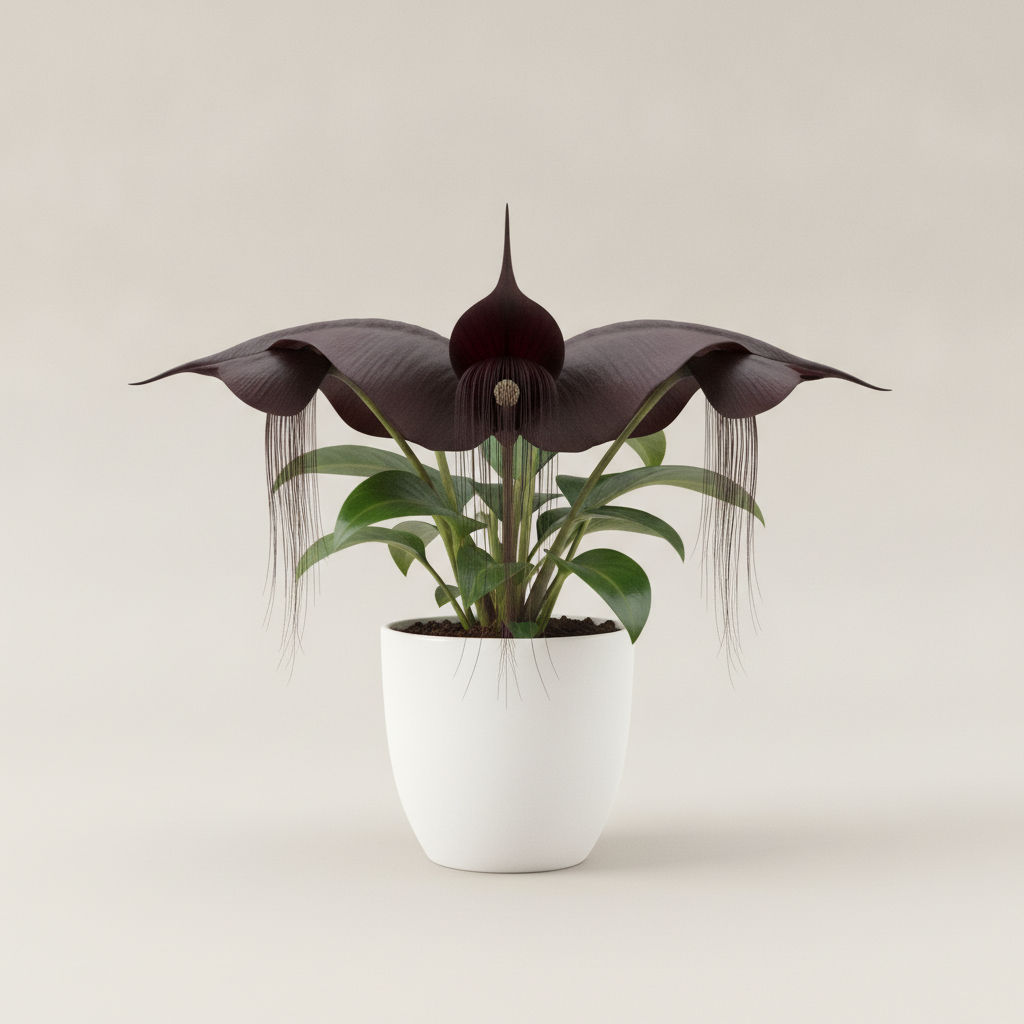
Few houseplants provoke a double-take quite like the bat flower. Its blooms rise on slender stalks above a clump of glossy, pleated foliage and unfurl into something that looks less like a flower and more like a small creature caught mid-flight: two broad, wing-like bracts in a deep blackish-purple, a cluster of dark central flowers, and a curtain of long, whisker-like filaments that can dangle 25 centimetres (10 inches) or more. The plant is Tacca chantrieri, a member of the yam family (Dioscoreaceae) native to the warm, shaded rainforest floors of southern China, Thailand, Myanmar, and the Malay Peninsula. Gardeners know it by an unusually evocative roster of common names, among them black bat flower, devil flower, and cat’s whiskers.
That theatrical appearance comes with a reputation for being temperamental, and the reputation is partly deserved. The bat flower is not a plant that forgives the neglect a pothos shrugs off, and it punishes dry air, cold draughts, and soggy roots with brown leaf edges and stalled growth. Yet much of its difficulty is really just a matter of recreating the rainforest understory it comes from: steady warmth, high humidity, filtered light, and a soil that stays evenly moist without ever turning to mud. This guide walks through every aspect of its care, drawing a clear distinction between what it takes merely to keep a bat flower alive and what it takes to coax it into producing those extraordinary blooms year after year.
Contents
- Quick Reference
- Why the Bat Flower Makes a Rewarding Houseplant
- Light Requirements
- Watering & Humidity
- Soil, Potting & Repotting
- Fertilising
- Propagation
- Pests & Diseases
- Popular Varieties
- Frequently Asked Questions
Quick Reference: Bat Flower at a Glance
| Light | Bright, indirect light; never direct midday sun |
| Watering | Keep evenly moist; water when the top 1 to 2 cm of soil feels barely dry |
| Temperature | 18 to 28°C (64 to 82°F); never below 13°C (55°F) |
| Humidity | High, ideally 60 to 80 per cent |
| Fertiliser | Balanced feed at half strength every 2 to 4 weeks in spring and summer |
| Toxicity | Toxicity data is limited; treat as mildly toxic and keep away from pets and children |
Why the Bat Flower Makes a Rewarding Houseplant
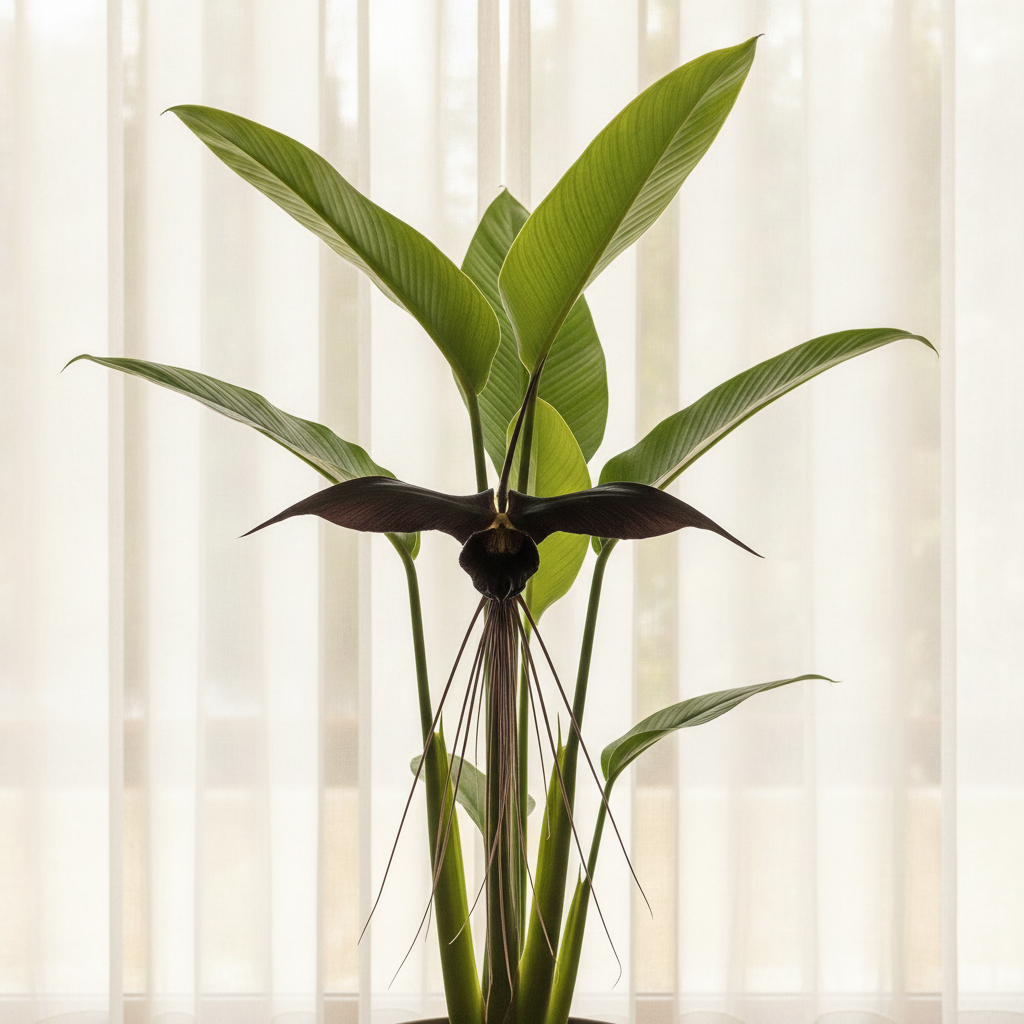
The honest answer is that the bat flower earns its place through spectacle rather than ease. There is nothing else in cultivation that looks like it. The flower structure is a masterclass in botanical theatre: the two large outer bracts arch upward and outward like wings, a second pair of smaller bracts sits behind, and from the dark central umbel of true flowers hang the filiform bracteoles, the famous whiskers, which in a mature specimen can trail well past the rim of the pot. A healthy plant in summer may carry several of these inflorescences at once, each lasting for weeks. For a grower who wants a living conversation piece, the bat flower is almost unrivalled.

Even out of flower, the plant has presence. The foliage is broad, lance-shaped, and deeply pleated, with a glossy dark-green surface that catches light beautifully, and a well-grown clump forms a tidy rosette 40 to 60 centimetres (16 to 24 inches) tall. The trade-off is that this is a plant that asks you to pay attention. It will not thrive on a forgotten windowsill, and a grower used to drought-tolerant succulents will need to adjust to its appetite for moisture and humidity. The reward for that attentiveness is a houseplant that genuinely surprises every person who sees it for the first time, and a flowering display that no amount of money can buy off the shelf in full bloom.
Important — Toxicity: Detailed toxicity data for Tacca chantrieri is limited, and it is not listed among the common pet-toxic houseplants. Even so, the rhizomes of related Tacca species contain bitter compounds, and no part of the plant should be eaten. Treat it as mildly toxic, keep it out of reach of curious pets and small children, and wash your hands after handling cut rhizomes.
Light Requirements
In the wild the bat flower grows on the forest floor, beneath a dense canopy that filters and softens the tropical sun before it ever reaches the leaves. This single fact dictates everything about its light needs indoors. The plant wants brightness, but brightness arriving as diffuse, dappled, or filtered light rather than a direct beam. Get this balance right and the foliage stays a deep, even green and the plant has the energy to flower; get it wrong in either direction and you will see the difference quickly.
The ideal is a position that receives plenty of ambient daylight but where the sun’s disc never falls directly on the leaves for any length of time. A spot a metre or two back from a bright window, or directly in front of a window screened by a sheer curtain, suits it well. Morning sun is gentle enough to tolerate, but the harsh light of midday and afternoon will scorch the foliage.
Light Levels Explained
Indoor light is easy to misjudge because the human eye adapts so readily, making most rooms feel brighter than they really are to a plant. The categories below give a rough sense of where the bat flower sits and what each level means for it in practice.
| Light Category | Approx. Level | Typical Location | Outcome |
|---|---|---|---|
| Direct sun | 50,000 lux and above | On a south or west sill, midday | Leaf scorch, bleached patches, crisp edges |
| Bright indirect | 10,000 to 25,000 lux | Near an east window or behind a sheer curtain | Ideal; lush growth and best flowering |
| Medium | 5,000 to 10,000 lux | A metre or two back from a bright window | Tolerated; healthy but may flower less |
| Low | 1,000 to 5,000 lux | A dim corner or a north room interior | Survives slowly, weak growth, rarely flowers |
| Very low | Below 1,000 lux | Deep interior, far from any window | Decline; leggy, pale, eventual loss |
Window Orientation and Placement
South-facing window: The brightest aspect in the northern hemisphere, and usually too intense if the plant sits on the sill. Set it back a metre or more, or diffuse the light with a sheer curtain, and a south window becomes one of the best positions in the home.
East-facing window: Close to perfect. The plant receives soft, cool morning sun and then bright ambient light for the rest of the day, which mimics the gentle dappling of its native habitat.
West-facing window: Workable, but the afternoon sun through a west window carries real heat. Pull the plant back from the glass or filter the strongest hours to avoid scorching.
North-facing window: The gentlest exposure, and safe from scorch, but often a little dim for strong flowering. A bat flower will live happily on a north sill, though it may produce fewer blooms than it would in brighter, filtered light.
Pro Tip — Read the Leaves: The plant tells you when the light is wrong. Pale, washed-out foliage and a leggy reach toward the window mean too little light, while crisp brown edges, bleached patches, and a faded sheen mean too much direct sun. Adjust placement gradually, a little at a time, rather than moving the plant across the room in one go.
How Light Affects Flowering
Foliage will hold up in fairly modest light, but flowering is far more demanding. To build and open those elaborate inflorescences the plant needs a sustained level of bright, indirect light through the growing season. A bat flower kept in a dim corner may stay green and alive for years and never bloom, leaving its owner puzzled. If yours refuses to flower despite otherwise good care, light is the first variable to increase, moving it to a brighter but still filtered position and watching for new bud development over the following weeks.
Warning — Direct Sunlight: Of all the mistakes made with this plant, placing it in direct sun is among the fastest to cause visible harm. Unfiltered midday light will bleach and scorch the broad leaves within days, and the damage does not heal. When moving a plant to a brighter spot, increase exposure gradually over a couple of weeks so it can acclimatise.
Artificial Lighting
The bat flower responds well to supplementary lighting, which can be a genuine help in homes that lack a suitably bright window or during the dark months of winter. A full-spectrum LED grow-light positioned 30 to 45 centimetres (12 to 18 inches) above the foliage and run for 10 to 12 hours a day provides plenty of energy without the heat that scorches leaves. Many growers in cooler climates use grow-lights specifically to keep the plant flowering through the shorter days when natural light alone would not sustain it.
Seasonal Adjustments
Light intensity indoors can fall by half or more between summer and midwinter, and the sun also sits lower, reaching further into a room. A bat flower that needed protection from a summer south window may be perfectly comfortable on that same sill in December. Move the plant a little closer to the light as the days shorten, then pull it back again in spring, and watch the leaves for the cues described above rather than relying on a fixed position year-round.
Watering & Humidity
Watering is where most bat flowers are won or lost, because the plant asks for something that sounds contradictory: soil that is consistently moist but never waterlogged. In its rainforest home the roots sit in a leaf-litter layer that is perpetually damp yet freely draining, never flooded and never bone dry. Replicating that balance indoors is the single most important skill in keeping the plant happy, and it is worth thinking of the goal as moisture management rather than a fixed watering schedule.
When to Water
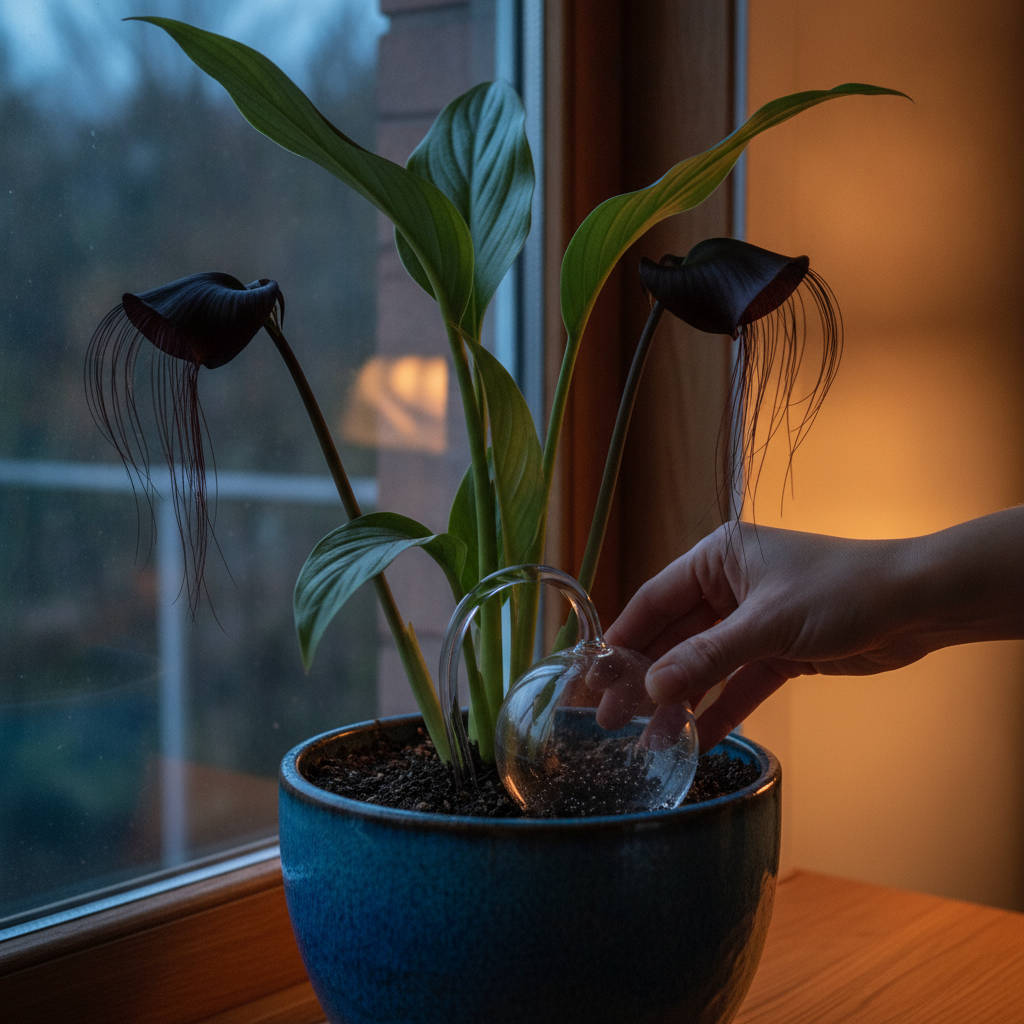
The reliable guide is your finger. Push it into the top of the soil, and when the surface 1 to 2 centimetres feels barely dry to the touch while the layer beneath is still cool and damp, it is time to water again. You are aiming to never let the root zone dry out completely, but also never to leave it standing in water. In practice this often means watering a little and often rather than soaking heavily then waiting a long time.
Frequency shifts with the seasons and conditions. Through the warm growing months a bat flower in active growth may need watering two or three times a week, while in the cooler, lower-light period of winter the same plant may want water only once a week or even less. Always let the plant and the soil dictate the timing rather than the calendar, and check before every watering rather than assuming.
Pro Tip — Lukewarm Water: This is a tropical plant that resents a cold shock at the roots. Use water at room temperature or slightly warm, and let tap water stand for a few hours so any chlorine dissipates and the temperature settles. Cold water straight from the tap can stress the roots and check growth.
How to Water Correctly
- Check the soil first, watering only when the top 1 to 2 cm feels barely dry rather than on a fixed schedule.
- Use room-temperature water that has been allowed to stand, avoiding cold tap water.
- Water evenly over the surface until it begins to flow from the drainage holes, wetting the whole root ball rather than just one side.
- Let the pot drain completely for several minutes so no excess sits at the base.
- Empty the saucer or cachepot of any standing water; the roots must never sit in it.
- Return the plant to its position and check again in a day or two to judge how fast it is drying.
Signs of Overwatering vs. Underwatering
| Symptom | Overwatering | Underwatering |
|---|---|---|
| Leaf colour | Yellowing, often from the lower leaves upward | Dull green fading to brown at the tips and edges |
| Leaf texture | Soft, limp, sometimes translucent | Crisp, dry, papery edges |
| Soil | Stays wet for days, may smell sour | Pulls away from the pot, dries hard and fast |
| Roots | Brown, mushy, foul-smelling | Dry, brittle, pale and thin |
| Growth | Stalled, with collapsing stalks at the base | Slowed, with wilting that recovers after watering |
Warning — Root Rot: The bat flower is highly susceptible to root rot, and a waterlogged rhizome can collapse quickly. If you notice a sour smell, blackening at the base of the stalks, or soft brown roots, act at once: unpot the plant, cut away all rotten tissue with a sterile blade, and repot into fresh, free-draining mix. Recovery is possible only if you catch it early.
Humidity Requirements
If watering is the first pillar of bat flower care, humidity is the second, and it is the factor that most often defeats growers in dry homes and heated climates. This plant comes from a rainforest understory where the air is heavy with moisture, and it genuinely needs a relative humidity in the region of 60 to 80 per cent to look its best. The average centrally heated living room sits closer to 30 or 40 per cent, which the plant reads as a constant low-grade stress.
The symptoms of insufficient humidity are easy to recognise: brown, crisping leaf tips and margins, buds that fail to open or shrivel before they do, and a general lack of vigour even when watering and light are correct. Because these signs overlap with underwatering, growers sometimes respond by adding more water, which only risks root rot. If the soil is moist but the leaf tips are still browning, dry air is almost always the culprit.
Raising humidity reliably usually takes more than a quick mist. The most effective approach is a small room humidifier running near the plant, which holds the air moist around the clock. Grouping plants together raises local humidity through their combined transpiration, and a wide tray of pebbles topped up with water beneath the pot helps too, as long as the pot itself sits on the pebbles and not in the water. A bathroom or kitchen with good light is often the most naturally humid room in the house and can be an ideal home for a bat flower.
Water Quality
The bat flower is moderately sensitive to the dissolved salts and minerals in hard tap water, which over time can accumulate in the soil and show as browning leaf margins. Where the local water is very hard or heavily chlorinated, rainwater, filtered water, or water left to stand overnight all make a noticeable difference. If you can only use tap water, flushing the pot thoroughly every month or two helps to leach away the salts that would otherwise build up around the roots.
Soil, Potting & Repotting
The soil for a bat flower has to perform a delicate double act: hold enough moisture to keep the roots evenly damp, yet drain freely enough that water never pools around the rhizome. A dense, water-retentive compost will smother the roots and invite rot, while a fast-draining cactus mix will dry out far too quickly for a plant that hates going dry. The answer is a loose, rich, organic blend built around chunky, airy components.
Ideal Soil Composition
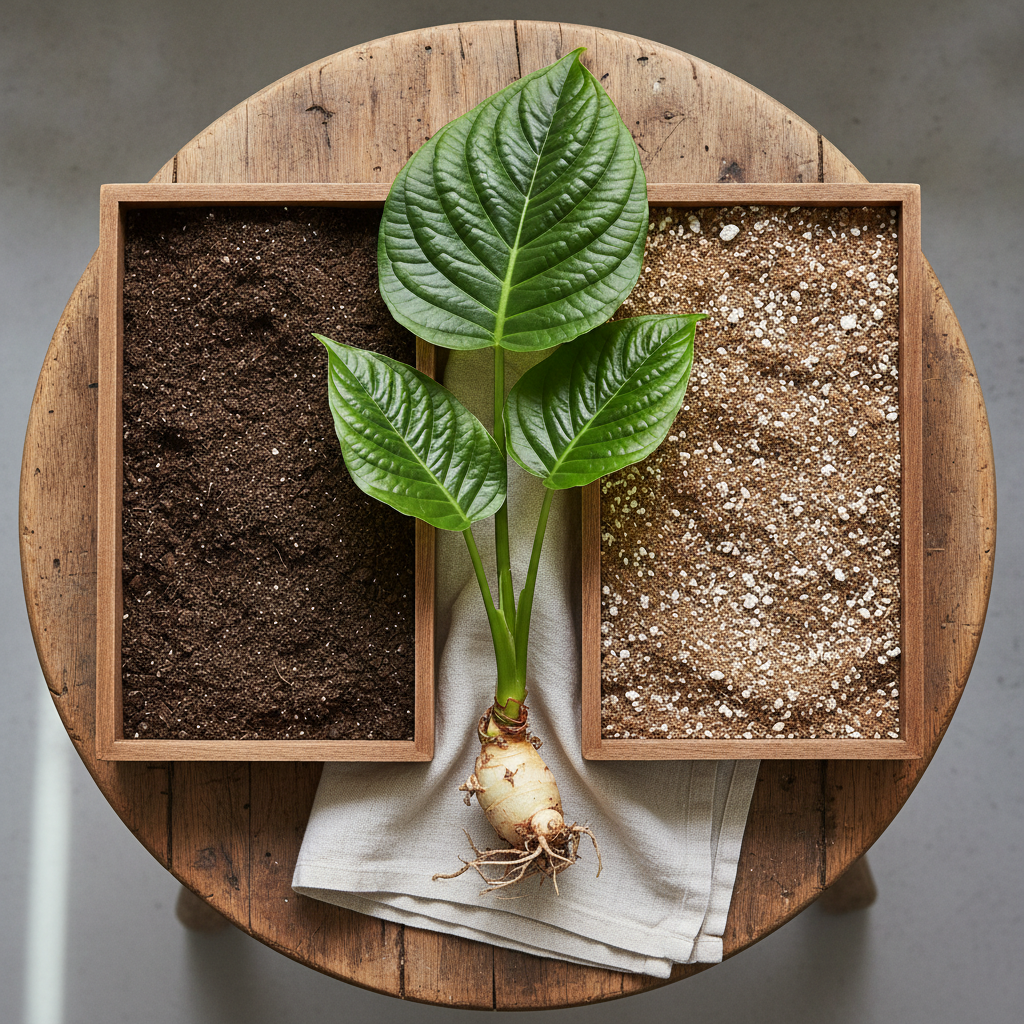
A reliable recipe treats the bat flower much like an epiphytic aroid or an orchid that happens to grow in the ground. The base should be rich in organic matter to hold moisture and feed the plant, while bark and perlite open the structure so air reaches the roots and surplus water escapes. The proportions below give a good starting point that you can adjust toward more bark in humid homes or more coir where the air is dry.
| Component | Proportion | Function |
|---|---|---|
| Peat-free coco coir or quality potting compost | 40 per cent | Holds moisture and provides body and nutrients |
| Fine orchid bark | 30 per cent | Opens the structure and keeps the mix airy |
| Perlite or pumice | 20 per cent | Improves drainage and prevents compaction |
| Worm castings or leaf mould | 10 per cent | Adds slow, gentle nutrition and beneficial microbes |
The bat flower prefers a slightly acidic to neutral soil, in the region of pH 6.0 to 6.5. The organic components in the mix above tend to sit naturally in this range, so most growers never need to test or adjust it, but it is worth knowing if you garden in an area with strongly alkaline water.
Pro Tip — Quick Mix Recipe: For a fast, dependable blend, combine two handfuls of peat-free houseplant compost, one and a half handfuls of fine orchid bark, and one handful of perlite, then stir through a generous pinch of worm castings. It mixes in minutes and gives the open, moisture-retentive texture a bat flower wants.
Choosing the Right Pot
Because the plant grows from a horizontal rhizome rather than a deep taproot, it favours a pot that is wider than it is deep, giving the rhizome room to spread sideways. A shallow, broad container also holds less of the soggy reservoir at the base that deep pots can trap, which suits a plant so prone to root rot.
Drainage holes are non-negotiable. Whatever the pot is made of, it must have generous drainage holes. A bat flower in a pot without them is living on borrowed time, because there is no way to flush the soil or let excess water escape, and the rhizome will eventually rot.
Pot material: Glazed ceramic and plastic both hold moisture well, which suits this thirsty plant, but they demand a careful hand with watering. Terracotta breathes and dries faster, which lowers the risk of rot but means you must water more often. Many growers find a plastic nursery pot inside a decorative cachepot gives the best of both, holding moisture while remaining easy to lift and check.
Pot size: Choose a pot only a little larger than the root mass. The bat flower actually flowers more freely when slightly snug in its container, and an oversized pot holds a large volume of wet soil the roots cannot use, which raises the risk of rot considerably.
When to Repot
Repotting is best done in spring, as the plant moves into active growth, and only when it genuinely needs it, which for a bat flower is roughly every one to two years. The cues are roots emerging from the drainage holes, the rhizome crowding to the edge of the pot, water running straight through a root-bound mass, or simply a mix that has broken down into something dense and airless. Because the plant resents disturbance, do not repot more often than necessary, and refresh the top few centimetres of soil in the years between full repottings.
How to Repot: Step-by-Step
- Water the plant lightly a day beforehand so the root ball holds together and the plant is not stressed.
- Ease the plant out gently, supporting the base of the foliage rather than pulling on the stalks.
- Tease away the old, spent soil from around the rhizome and inspect the roots, trimming any that are soft, brown, or rotten with a sterile blade.
- Choose a pot just one size up, add a layer of fresh mix, and set the rhizome at the same depth it sat before, never buried deeper.
- Fill around the roots with fresh mix, firming gently to remove air pockets without compacting the soil.
- Water thoroughly, let it drain completely, and return the plant to a warm, humid, brightly shaded spot.
- Hold off on fertiliser for three to four weeks while the roots settle and recover.
Warning — Transplant Shock: The bat flower dislikes having its roots disturbed and may sulk for a few weeks after repotting, sometimes drooping or pausing its growth. Keep it warm, humid, and out of direct sun during this period, resist the urge to overwater while it recovers, and it should settle and resume growth without lasting harm.
Fertilising
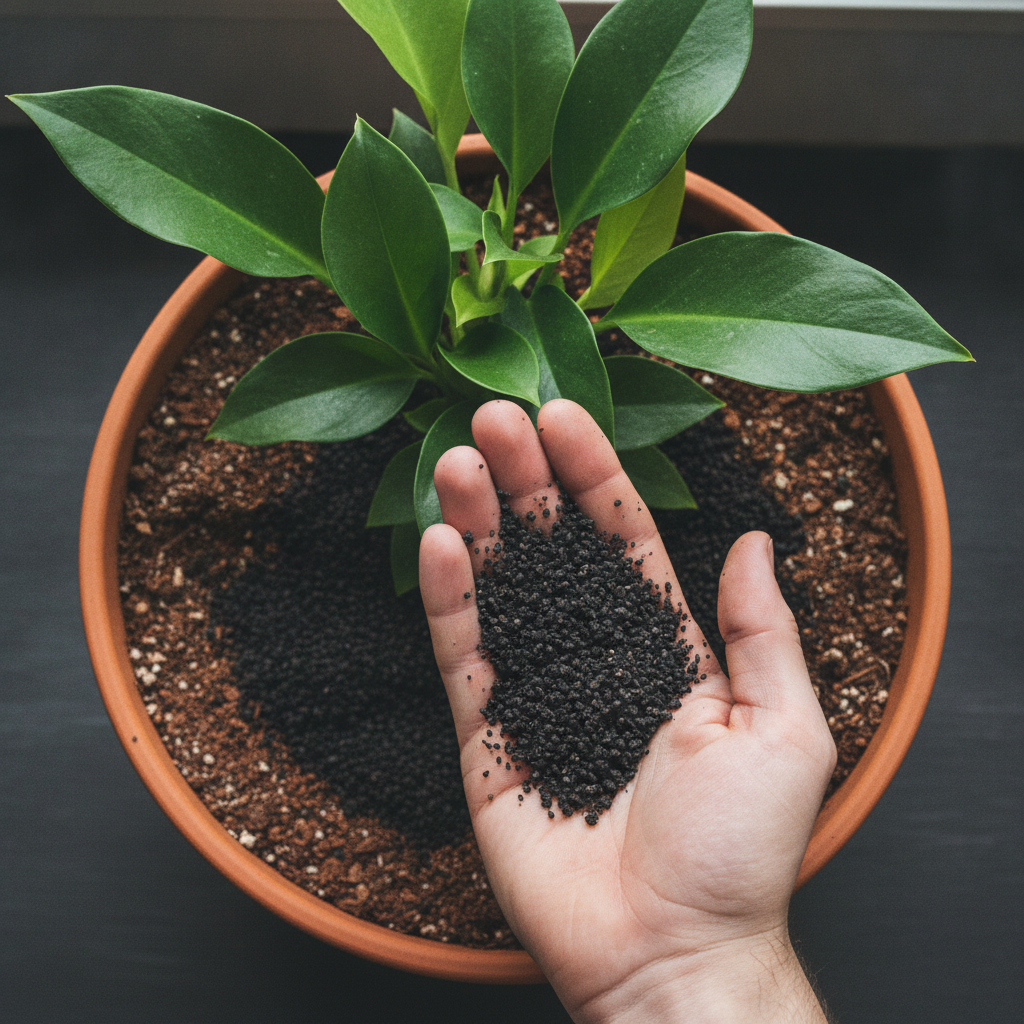
A flowering plant of the bat flower’s ambition needs a steady supply of nutrients to fuel both its broad foliage and its elaborate blooms, but it is also a plant that takes offence at heavy feeding. The trick is regular, dilute nutrition through the growing season rather than occasional strong doses, which keeps the plant fed without the salt build-up that browns its sensitive leaf margins.
Think of feeding as supporting active growth. From spring through to early autumn the plant is building leaves and flowers and welcomes a regular feed, while in the darker, cooler months it slows down and its appetite all but disappears. Matching your feeding to this rhythm is far more effective than fertilising at a constant rate year-round.
Understanding Plant Nutrients
A balanced houseplant fertiliser supplies the three macronutrients in roughly equal measure, along with the secondary and trace elements a plant needs in smaller amounts. For the bat flower a balanced feed works well across the season, though some growers switch to a formula slightly higher in phosphorus and potassium as flowering approaches to support bloom development. The table below explains what each major nutrient does and how a shortage shows itself.
| Nutrient | Symbol | Primary Function | Deficiency Symptoms |
|---|---|---|---|
| Nitrogen | N | Leaf and stem growth, green colour | Pale, yellowing older leaves, slow growth |
| Phosphorus | P | Root development and flowering | Poor flowering, dull foliage, weak roots |
| Potassium | K | Overall vigour and water regulation | Brown leaf edges, weak stalks |
| Calcium | Ca | Cell-wall strength and new growth | Distorted, stunted new leaves |
| Magnesium | Mg | Core of the chlorophyll molecule | Yellowing between the veins of older leaves |
| Iron | Fe | Chlorophyll production in new growth | Yellowing between veins of young leaves |
Types of Fertiliser
Liquid fertilisers: The easiest choice for a bat flower, because they let you control the dose precisely and dilute well below the recommended strength. Mixed into the watering can, a liquid feed reaches the roots evenly and is the method most growers rely on through the growing season.
Slow-release granular: Granules release nutrients gradually over months, which suits a busy schedule, but they offer less control over timing and strength. If you use them, choose a gentle formulation and keep an eye out for any sign of salt build-up or leaf-edge browning.
Organic fertilisers: Worm castings, dilute seaweed extract, and similar organic feeds release nutrients slowly and gently, and they are very hard to overdo. They also nurture the soil life that keeps an organic mix healthy, which makes them a natural fit for a plant grown in a rich, bark-based blend.
Feeding Schedule
Through spring and summer, feed with a balanced liquid fertiliser at half the recommended strength every two to four weeks. As the days shorten in autumn, taper the feeding off, and through winter stop almost entirely, giving at most a single very dilute feed if the plant remains in active growth under lights. Always apply fertiliser to already-moist soil rather than dry roots, which prevents the concentrated solution from burning them.
Pro Tip — Less Is More: When in doubt, underfeed. The bat flower copes far better with too little fertiliser than too much, and the brown, crisping leaf margins that growers often blame on dry air are sometimes the result of fertiliser salts accumulating in the soil. Half strength is a safe default, and quarter strength is fine for a plant that already looks healthy.
How to Fertilise
- Water the plant first, or feed when the soil is already moist, never onto a dry root ball.
- Dilute a balanced liquid fertiliser to half the label strength in room-temperature water.
- Apply evenly over the soil until it just begins to drain, wetting the whole root zone.
- Let the pot drain fully and empty any solution from the saucer or cachepot.
- Every month or two, water with plain water alone to flush out accumulated salts.
Warning — Salt Build-Up: Fertiliser salts that accumulate in the soil over time will scorch the bat flower’s sensitive roots and brown its leaf edges. A white crust on the soil surface or pot rim is the warning sign. Flush the pot thoroughly with plain water two or three times whenever you see it, letting the water run freely from the drainage holes to carry the salts away.
Propagation
Propagating a bat flower is a slower and more deliberate business than rooting a cutting of a trailing vine, because the plant does not grow from stem cuttings at all. It spreads instead through its rhizome, the thickened underground stem from which both roots and foliage emerge, and it can also be raised from seed by the patient grower. Division is the faster and far more reliable of the two methods for the home grower.
Whichever route you take, the work is best done in spring as the plant enters its active season, when it has the longest possible stretch of warm, bright growing conditions ahead to recover and establish. Patience is essential: a divided bat flower may take weeks to settle, and a seed-grown one can take a year or more to reach flowering size.
Understanding the Rhizome
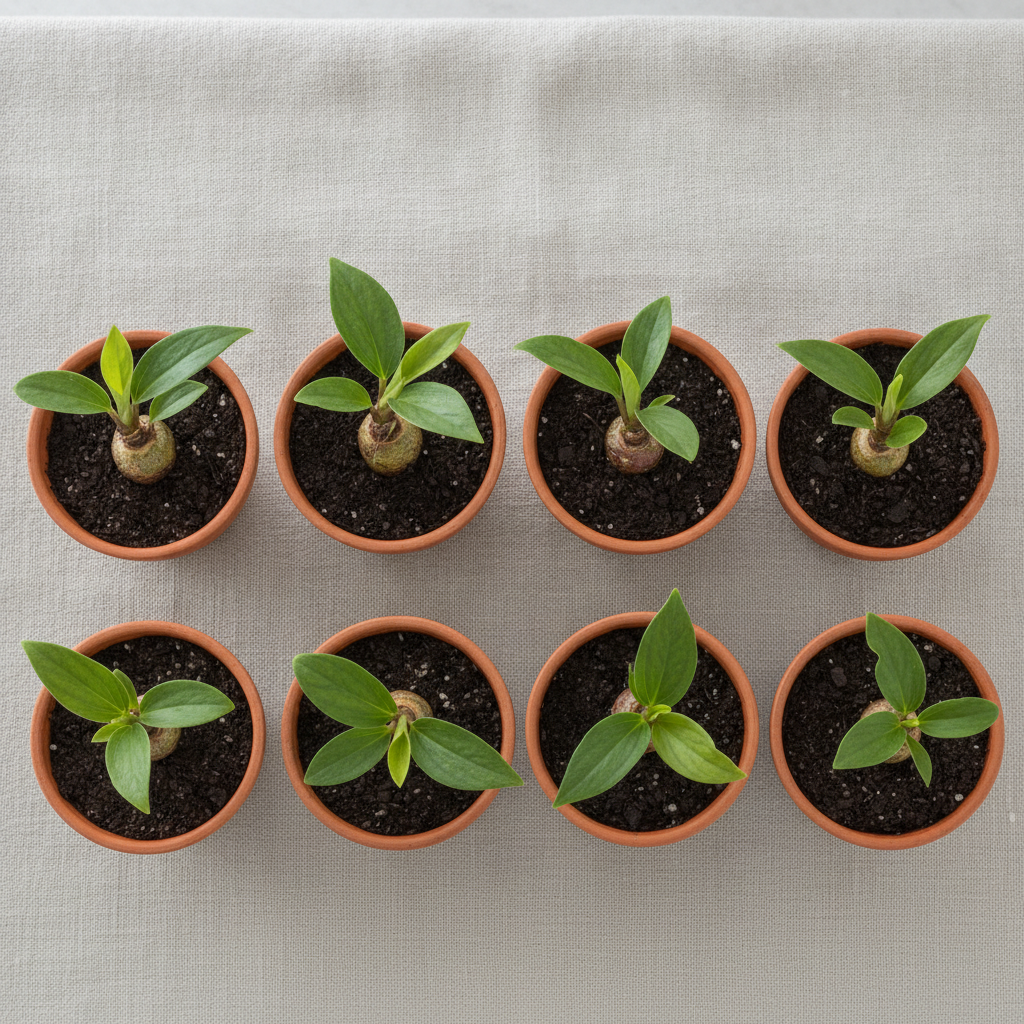
The rhizome is the heart of the plant, a horizontal, fleshy stem that creeps just below the soil surface and sends up foliage along its length while putting down roots beneath. Over time it branches, and each branch carries one or more growth points, or eyes, capable of becoming an independent plant. Successful division comes down to recognising these growth points and ensuring every piece you separate has at least one, along with a healthy share of roots.
Division: Step-by-Step
Division suits a mature, crowded plant that has filled its pot with rhizome. It is the surest way to make new bat flowers, and because each division is already a sizeable piece of an established plant, the new plants can reach flowering size within a season or two.
- Unpot the plant in spring and gently clear the soil from the rhizome so you can see its structure and the growth points along it.
- Identify natural divisions where the rhizome branches, making sure each intended section has at least one growth point and a portion of healthy roots.
- Cut cleanly through the rhizome with a sterilised sharp knife, making as few cuts as possible.
- Dust the cut surfaces with cinnamon or a little sulphur powder to discourage rot, and let them dry for an hour or two.
- Pot each division into its own small pot of fresh, free-draining mix, setting the rhizome at its original depth.
- Water lightly, then keep the divisions warm, humid, and out of direct sun while they establish.
Pro Tip — Sterilise Your Blade: The cut surfaces of a freshly divided rhizome are an open door for fungal rot. Wipe your knife with isopropyl alcohol before every cut, dust the wounds with cinnamon, and let them air-dry briefly before potting. This single habit prevents most of the losses that discourage first-time dividers.
Growing from Seed: Step-by-Step
Raising bat flowers from seed is a project for the patient. Germination is slow and uneven, and seedlings take a long time to reach any size, but it is the only way to produce large numbers of plants and the only practical option if you cannot obtain a rhizome to divide. Fresh seed germinates far more reliably than old, so sow as soon after harvest as you can.
- Soak the fresh seed in warm water for 24 hours to soften the seed coat and improve germination.
- Sow onto the surface of a moist, fine, free-draining seed mix and cover very lightly.
- Keep the mix consistently warm, ideally 25 to 30°C (77 to 86°F), using a heated propagator if needed.
- Maintain high humidity under a clear cover, and keep the medium moist but never waterlogged.
- Be patient, as germination can take anywhere from one to several months and is rarely uniform.
- Once seedlings have a few true leaves, pot them on individually and grow them in warm, humid, brightly shaded conditions.
Troubleshooting Propagation
| Problem | Likely Cause | Solution |
|---|---|---|
| Division rots after potting | Cut surfaces infected, or mix too wet | Sterilise tools, dust cuts, use free-draining mix and water sparingly |
| Seeds fail to germinate | Old seed or too cool a temperature | Use fresh seed and provide steady bottom heat of 25 to 30°C |
| Division wilts and stalls | Normal transplant shock, or too few roots | Keep warm and humid, be patient, and ensure each piece has adequate roots |
| Seedlings damp off | Fungal disease in stagnant, wet conditions | Improve airflow, ease off watering, and use a clean sterile medium |
Pests & Diseases
A bat flower grown in the warm, humid conditions it loves is generally robust, but those same conditions can also favour certain pests and fungal problems if airflow is poor or the plant is stressed. The best defence is a healthy, well-cared-for plant, combined with the simple habit of inspecting the foliage regularly so that any trouble is caught while it is still small and easily dealt with.
Pay particular attention to the undersides of the leaves and the leaf axils where pests like to hide, and isolate any new plant for a couple of weeks before letting it join your collection. Most infestations are far easier to clear when they involve a handful of pests rather than an established colony.
Common Pests
Spider Mites (Tetranychus urticae)
The most likely pest in a centrally heated, dry home, spider mites thrive precisely where humidity drops too low for the plant’s comfort. They are tiny, but the fine webbing they spin between leaves and stems and the pale stippling they leave on the foliage give them away. A heavy infestation leaves leaves dull, speckled, and bronzed.
Treatment: Rinse the plant thoroughly, including the leaf undersides, then treat with insecticidal soap or neem oil, repeating every five to seven days until clear. Raising the humidity makes the environment far less hospitable to them and helps prevent a return.
Mealybugs (Pseudococcus longispinus)
Mealybugs appear as small, white, cottony tufts tucked into leaf axils and along the stalks, where they suck sap and weaken the plant. They multiply quickly in warm conditions and excrete a sticky honeydew that can lead to sooty mould.
Treatment: Dab each insect directly with a cotton bud dipped in isopropyl alcohol, then follow up with neem oil or insecticidal soap across the whole plant. Check weekly, as a few survivors can quickly rebuild a colony.
Aphids (Aphis gossypii)
Aphids cluster on soft new growth and flower stalks, where they pierce the tissue to feed and can distort emerging leaves and buds. They too leave sticky honeydew behind, and a serious infestation can sap a plant’s vigour and spoil developing flowers.
Treatment: Knock them back with a firm spray of water, then treat with insecticidal soap or neem oil. Keep checking the new growth, which is where they reappear first.
Common Diseases
Root Rot (Pythium and Phytophthora)
By far the most serious threat to a bat flower, root rot follows from soil that stays waterlogged, and it can destroy a plant within days once it takes hold. The above-ground signs are yellowing, collapsing foliage and a soft, blackened base, while the roots themselves turn brown and mushy.
Treatment: Act immediately by unpotting the plant, cutting away all soft, dark tissue with a sterile blade, and repotting into fresh, free-draining mix. Then correct the underlying watering and drainage so it cannot recur. Prevention through careful watering is far more reliable than any cure.
Grey Mould (Botrytis cinerea)
Grey mould is a fungal disease favoured by cool, damp, stagnant air, and it shows as a fuzzy grey-brown growth on flowers, buds, and damaged leaf tissue. It is most likely to appear where humidity is high but air movement is poor.
Treatment: Remove and dispose of all affected parts at once, improve air circulation around the plant, and avoid wetting the foliage when watering. A fungicide may help in stubborn cases, but better airflow is the lasting fix.
Leaf Spot (Colletotrichum species)
Fungal leaf spot produces brown or black blotches, sometimes ringed with yellow, that spread on wet foliage in humid conditions. While rarely fatal, it disfigures the leaves and indicates that conditions are too consistently wet at the surface.
Treatment: Remove affected leaves, keep water off the foliage, improve ventilation, and treat with a copper-based fungicide if the spots continue to spread.
Pest and Disease Summary
| Pest / Disease | Identification | Treatment |
|---|---|---|
| Spider mites | Fine webbing, pale stippling, bronzed leaves | Rinse, neem oil or insecticidal soap, raise humidity |
| Mealybugs | White cottony tufts in axils and on stalks | Alcohol on a cotton bud, then neem oil |
| Aphids | Clusters on new growth and flower stalks | Water spray, then insecticidal soap or neem oil |
| Root rot | Yellowing collapse, soft black base, mushy roots | Cut away rot, repot in fresh mix, correct watering |
| Grey mould | Fuzzy grey-brown growth on flowers and tissue | Remove affected parts, improve airflow |
| Leaf spot | Brown or black blotches on wet foliage | Remove leaves, keep foliage dry, copper fungicide |
Prevention Strategies
Almost every problem a bat flower suffers can be traced back to a single root cause: conditions that are either too wet at the roots or too stagnant in the air. Watering carefully so the soil is moist but never soggy, ensuring the pot drains freely, and keeping gentle air movement around the plant between waterings will head off the great majority of both pests and diseases before they start.
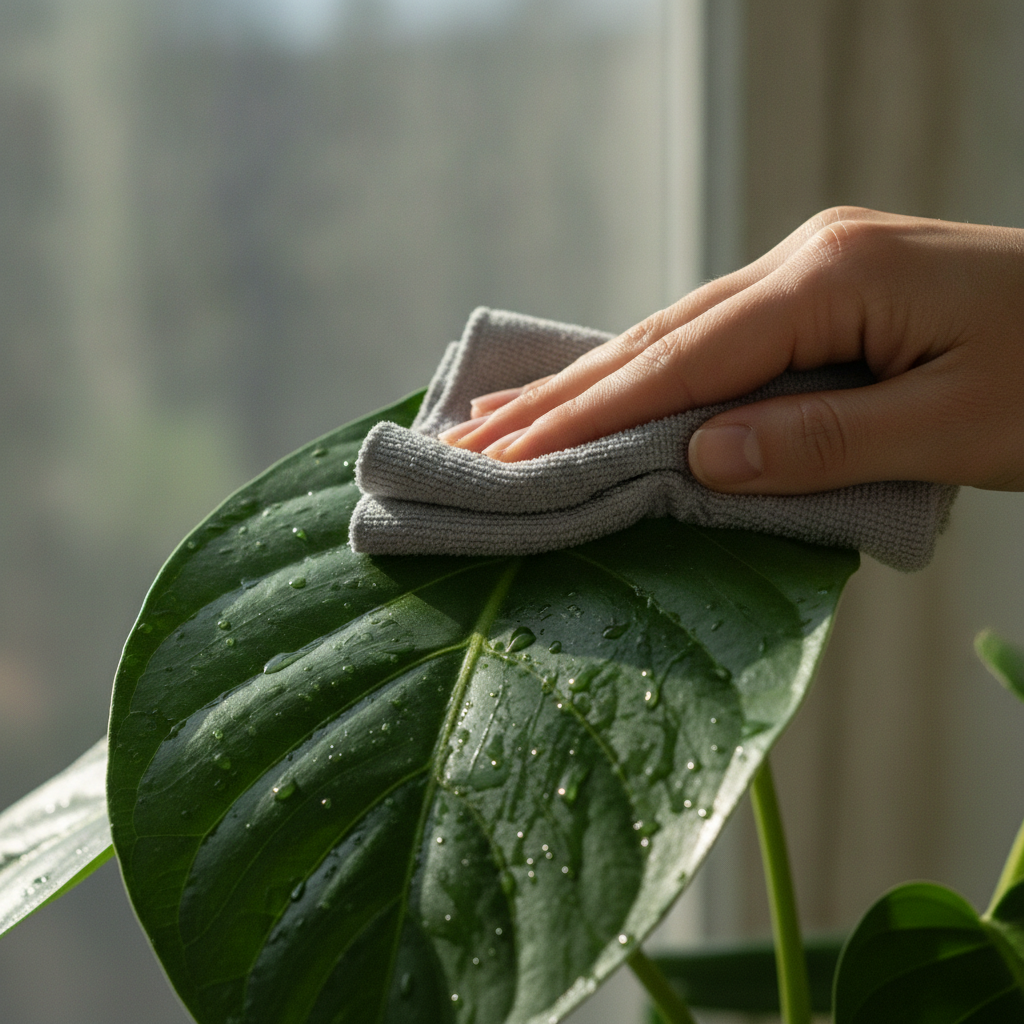
Beyond that, the everyday habits matter most. Inspect the plant whenever you water, wipe the leaves to remove dust and reveal early pests, quarantine new arrivals before they join the collection, and remove dead or fading foliage promptly so it cannot become a seat of infection. A plant kept clean, well-fed, and correctly watered has the vigour to shrug off the minor troubles that overwhelm a stressed one.
Pro Tip — Neem as Routine: A light monthly spray of diluted neem oil over the foliage, including the undersides, works as a gentle deterrent that keeps mites and mealybugs from ever gaining a foothold. Apply it in the evening or out of direct sun so the oil does not magnify the light and mark the leaves.
Popular Varieties
The bat flower most people picture is Tacca chantrieri, the black bat flower, but the genus Tacca contains a handful of related species and forms that turn up in cultivation, each with its own character. They share the same broad care requirements, so a grower who masters one can handle any of them, and several make fascinating companions on a humid, brightly shaded shelf.
The two most widely grown are the black and white bat flowers, which differ chiefly in the colour of their blooms. Beyond these, the genus offers larger-flowered forms and a few species grown as much for botanical curiosity as for ornament. Availability varies a great deal: the black bat flower is the easiest to find, while some of the others are specialist items sought out by collectors.
| Variety | Flower Appearance | Light Needs | Growth Rate | Availability |
|---|---|---|---|---|
| Black Bat Flower (T. chantrieri) | Blackish-purple wings, long dark whiskers | Bright indirect | Moderate | Common |
| White Bat Flower (T. integrifolia) | Creamy-white bracts, dark centre, pale whiskers | Bright indirect | Moderate | Fairly common |
| Giant White Bat Flower | Larger white bracts, taller stalks | Bright indirect | Moderate | Uncommon |
| T. chantrieri ‘Nivea’ | Pale, near-white form of the black bat flower | Bright indirect | Moderate | Rare |
| Polynesian Arrowroot (T. leontopetaloides) | Greenish bracts, grown for its tuber | Bright indirect to part sun | Moderate to fast | Specialist |
Featured Varieties
Black Bat Flower
The classic and most sought-after form, Tacca chantrieri bears blooms in the deepest maroon-black, with broad wing-like bracts and long, dark, cat’s-whisker filaments that trail dramatically below the flower. It is the bat flower most growers picture and the easiest of the group to find.
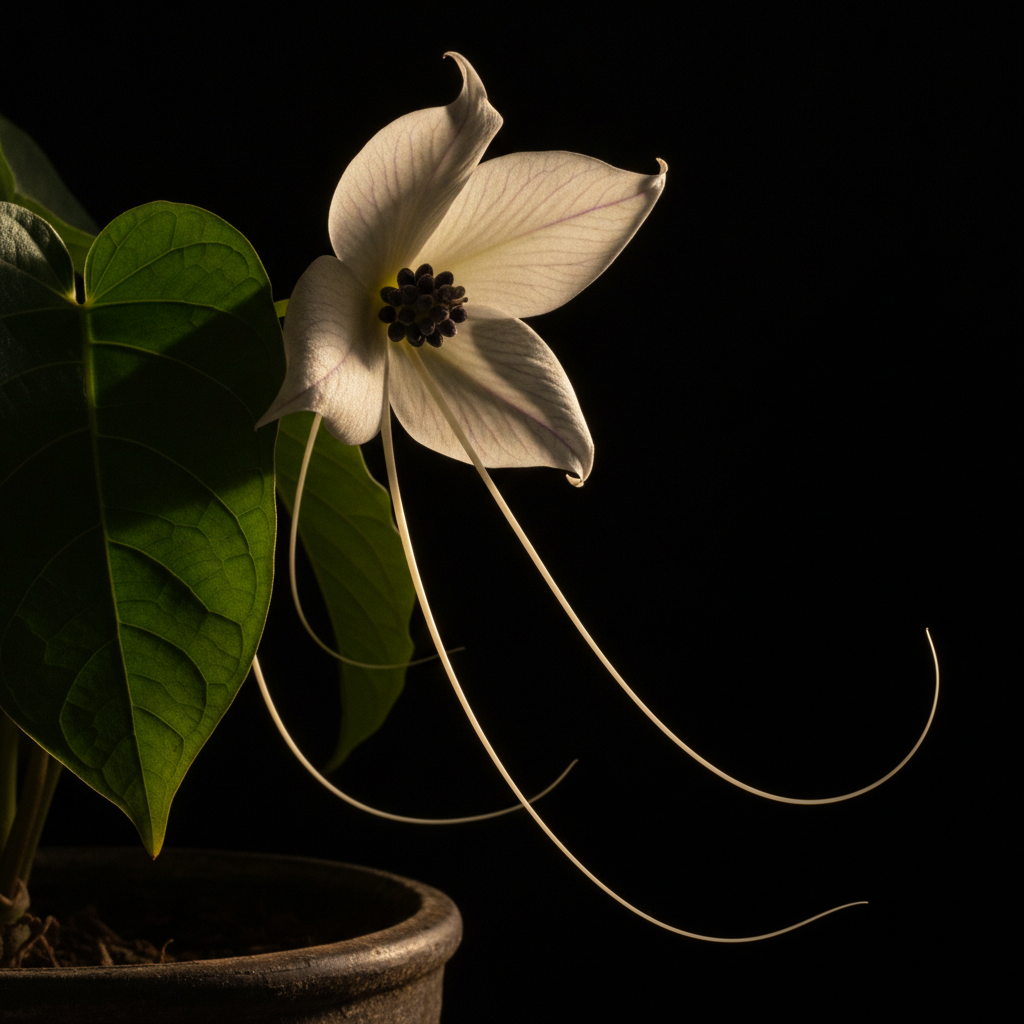
White Bat Flower
The closely related Tacca integrifolia carries broad, creamy-white upper bracts veined faintly with purple, a dark central cluster of flowers, and long pale whiskers. Often a little larger than the black form, it makes a striking pale counterpoint and is grown in exactly the same way.
Variety Profiles in Detail
Black Bat Flower (Tacca chantrieri)
The species that gives the group its name and its fame, the black bat flower is native to the rainforests of mainland Southeast Asia and southern China. Its dark, almost sinister blooms and dangling whiskers have made it a prized ornamental, and it is the benchmark against which the others are measured. A well-grown specimen in full flower is among the most arresting plants anyone can keep indoors.
White Bat Flower (Tacca integrifolia)
Found across a similar range from India through Southeast Asia, the white bat flower trades the brooding darkness of its cousin for pale, luminous bracts that seem to glow against the deep green foliage. It tends to grow a little taller and its flowers can be larger, and many collectors enjoy keeping the two side by side for the contrast.
Polynesian Arrowroot (Tacca leontopetaloides)
A more widely distributed relative grown historically across the Pacific for the edible starch in its tubers, this species has greener, more subdued flowers and a coarser habit. It is more a botanical curiosity than an ornamental showpiece, but it shares the family’s distinctive whiskered flower structure and the same fondness for warmth and moisture.
Choosing the Right Variety for Your Space
For most growers the choice comes down to the black or the white bat flower, and the decision is largely aesthetic, since their care is identical. The black form delivers the dramatic, gothic spectacle that draws people to the plant in the first place, while the white form offers a softer, more luminous display that shows beautifully against dark foliage or a pale interior. Whichever you choose, the deciding factor is not the variety but your conditions: a warm, humid, brightly shaded spot will let any of them flourish, while a dry, cool, dim one will defeat them all. Get the environment right, and the bat flower will reward you with a display that no other houseplant can match.
Frequently Asked Questions
Why won’t my bat flower bloom?
The most common reason is insufficient light. A bat flower will stay green and alive in modest light but needs sustained bright, indirect light through the growing season to build its energy-hungry flowers. Move it to a brighter but still filtered position, keep humidity high and feeding regular, and make sure it is warm enough, then give it time to respond over the coming weeks.
Why are the leaf tips turning brown?
Brown, crisping leaf tips almost always point to low humidity, the bat flower’s single most common complaint indoors. They can also result from fertiliser salts building up in the soil or from hard, mineral-rich tap water. Raise the humidity with a humidifier, flush the pot occasionally with plain water, and consider switching to filtered or rainwater.
How often should I water a bat flower?
There is no fixed schedule. Water whenever the top 1 to 2 centimetres of soil feels barely dry, which in warm growing conditions may be two or three times a week and in winter as little as once a week. Always check the soil before watering rather than following the calendar, and never let the plant either dry out completely or sit in water.
Is the bat flower toxic to cats and dogs?
Detailed toxicity data for Tacca chantrieri is limited, and it is not listed among the common pet-toxic houseplants. That said, related species contain bitter compounds in their rhizomes, and no part of the plant should be eaten. The sensible approach is to treat it as mildly toxic, keep it out of reach of pets and small children, and wash your hands after handling cut rhizomes.
What are the long whiskers on the flower for?
The whiskers are elongated filaments called bracteoles, and their exact purpose has long intrigued botanists. They were once thought to attract pollinating insects by mimicking decay or movement, though research suggests Tacca chantrieri is largely self-pollinating and the whiskers may play only a minor role. Whatever their function in the wild, they are the feature that makes the flower so unforgettable.
Is the bat flower a difficult plant to grow?
It has a reputation for being fussy, and it is certainly more demanding than an easygoing pothos or snake plant. Its needs for warmth, high humidity, steady moisture, and filtered light are specific, and it does not forgive neglect. But none of those needs is mysterious, and a grower who can provide a warm, humid, brightly shaded spot and water with care will find it far more manageable than its reputation suggests.
Should I cut off the spent flowers?
Yes. Once a bloom has faded, snip its stalk back to the base with sterile scissors, unless you want to let it set seed. Removing spent flowers keeps the plant tidy, directs its energy into foliage and new blooms, and reduces the chance of fading tissue becoming a site for grey mould.
Does the bat flower go dormant in winter?
In cooler conditions it slows markedly and may shed some foliage, behaving as though semi-dormant, though it rarely dies back completely indoors if kept warm. Through this period reduce watering, stop feeding, and keep it warm and out of cold draughts. As light and warmth return in spring it will resume active growth, which is the moment to repot, divide, or restart regular feeding.






