
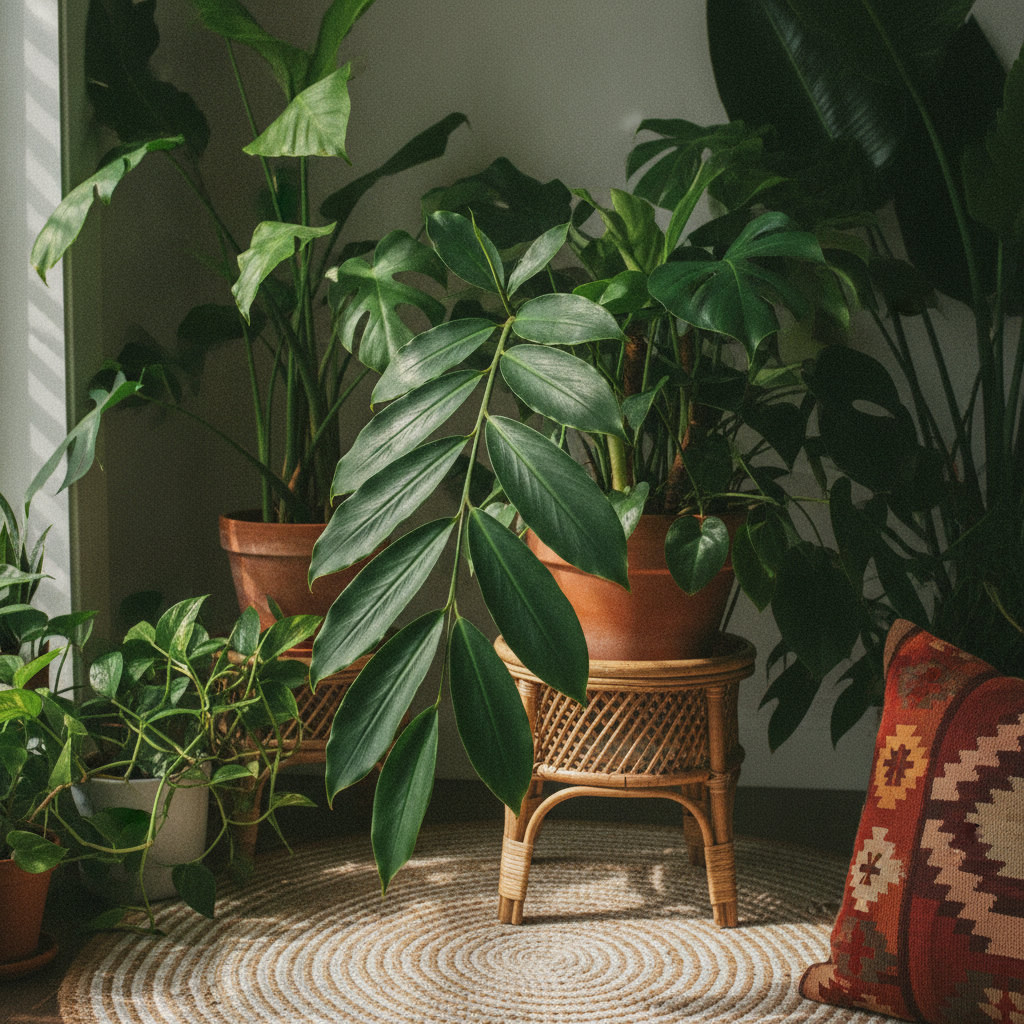
Few houseplants make their architecture as obvious as the spiral ginger. Its leaves emerge in a slow, deliberate rotation around each fleshy stem, tracing a green staircase that winds upward like a botanical spring. Known in cultivation as the Red Tower Ginger, Costus barbatus belongs to the Costaceae, the family of spiral gingers that split away from the true gingers long ago and evolved their own signature growth habit. Native to the humid cloud forests and clearings of Costa Rica in Central America, it has travelled far from its mountain streams to become a dramatic focal plant in warm, bright interiors and conservatories around the world.
The spiral ginger has a reputation for being demanding, and that reputation is only half deserved. It asks for warmth, steady moisture and humidity that most tropical foliage plants also want, and in return it grows quickly and forgivingly. The gap between merely keeping one alive and watching it thrive comes down to a handful of details: never letting the rootball dry out completely, giving it bright light without harsh midday sun, and keeping the air around it from turning bone dry. This guide walks through every one of those details, from the science of how its leaves use light to the exact steps for dividing a mature clump, so you can grow a spiral ginger that flowers rather than one that merely survives.
Contents
- Quick Reference
- Why Spiral Ginger Makes a Rewarding Houseplant
- Light Requirements
- Watering & Humidity
- Soil, Potting & Repotting
- Fertilising
- Propagation
- Pests & Diseases
- Popular Varieties
- Frequently Asked Questions
Quick Reference: Spiral Ginger at a Glance
| Light | Bright indirect light with an hour or two of gentle direct morning sun; avoid harsh midday sun |
| Watering | Keep the mix evenly moist; water when the top 2 to 3 cm (about 1 in) begins to dry, never let it fully dry out |
| Temperature | 18 to 29°C (64 to 84°F); protect from anything below 13°C (55°F) |
| Humidity | High, ideally 60% or more; will struggle below about 45% |
| Fertiliser | Balanced feed every 2 to 4 weeks through spring and summer; pause in winter |
| Toxicity | Generally regarded as non-toxic to cats, dogs and humans, though data is limited; not intended for eating |
Why Spiral Ginger Makes a Rewarding Houseplant
The single most compelling reason to grow a spiral ginger is the way it holds itself. Where most foliage plants stack their leaves in flat, predictable ranks, Costus barbatus arranges each new leaf a fixed angle around from the last, so a single stem becomes a living helix. The effect is sculptural rather than busy, and it gives the plant a sense of movement even when it is standing perfectly still. Set against a plain wall or beside simpler-leaved companions, that spiral geometry does a great deal of decorative work with very little fuss.
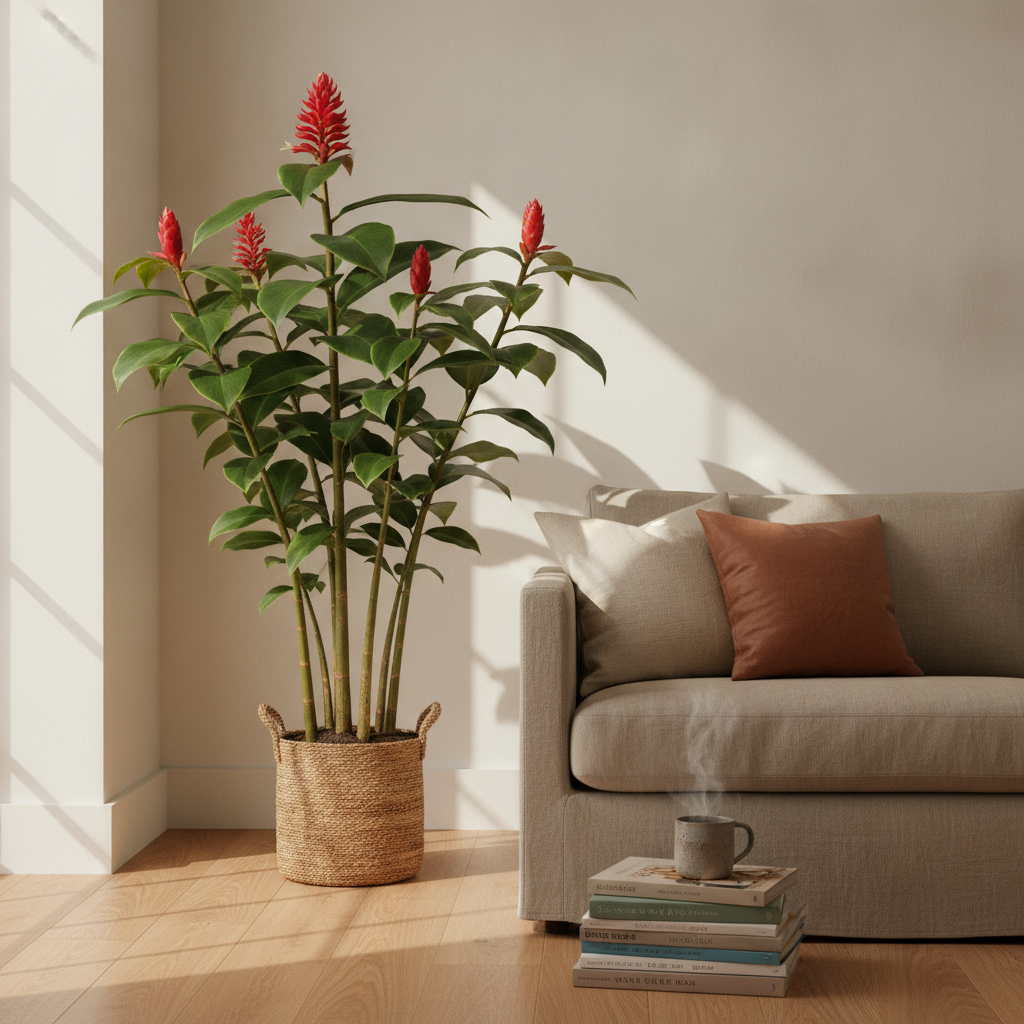
Beyond looks, the spiral ginger earns its place through vigour and generosity. Given warmth and moisture it grows fast, sending up cane-like stems that can reach well over a metre indoors and clumping outward from a spreading rhizome. Mature, well-fed plants reward that growth with the feature that gives the Red Tower Ginger its name: a tall, waxy cone of overlapping scarlet bracts from which small tubular yellow flowers emerge in sequence. It also propagates with unusual willingness, so a single plant quickly becomes a source of gifts and replacements. For growers who enjoy an active, responsive plant rather than a static one, that pace is a large part of the appeal.
Important — Toxicity: The spiral ginger is generally regarded as non-toxic to cats, dogs and people, in keeping with many members of the ginger alliance, though published toxicity data for this particular species is limited. It is an ornamental rather than a culinary ginger, so do not treat it as edible, and as a sensible precaution keep curious pets and small children from chewing the foliage or stems.
Light Requirements
In its native Costa Rican forests, Costus barbatus grows at the bright edges of the canopy: clearings, stream banks and light gaps where it receives strong, filtered light rather than the deep shade of the forest floor. Recreating that balance indoors is the key to a compact, well-coloured plant. Too little light and the stems stretch, the spacing between leaves widens and the whole plant grows lax and pale. Too much unshaded sun and the broad leaves scorch. The sweet spot is generous, bright light that has been softened before it reaches the foliage.
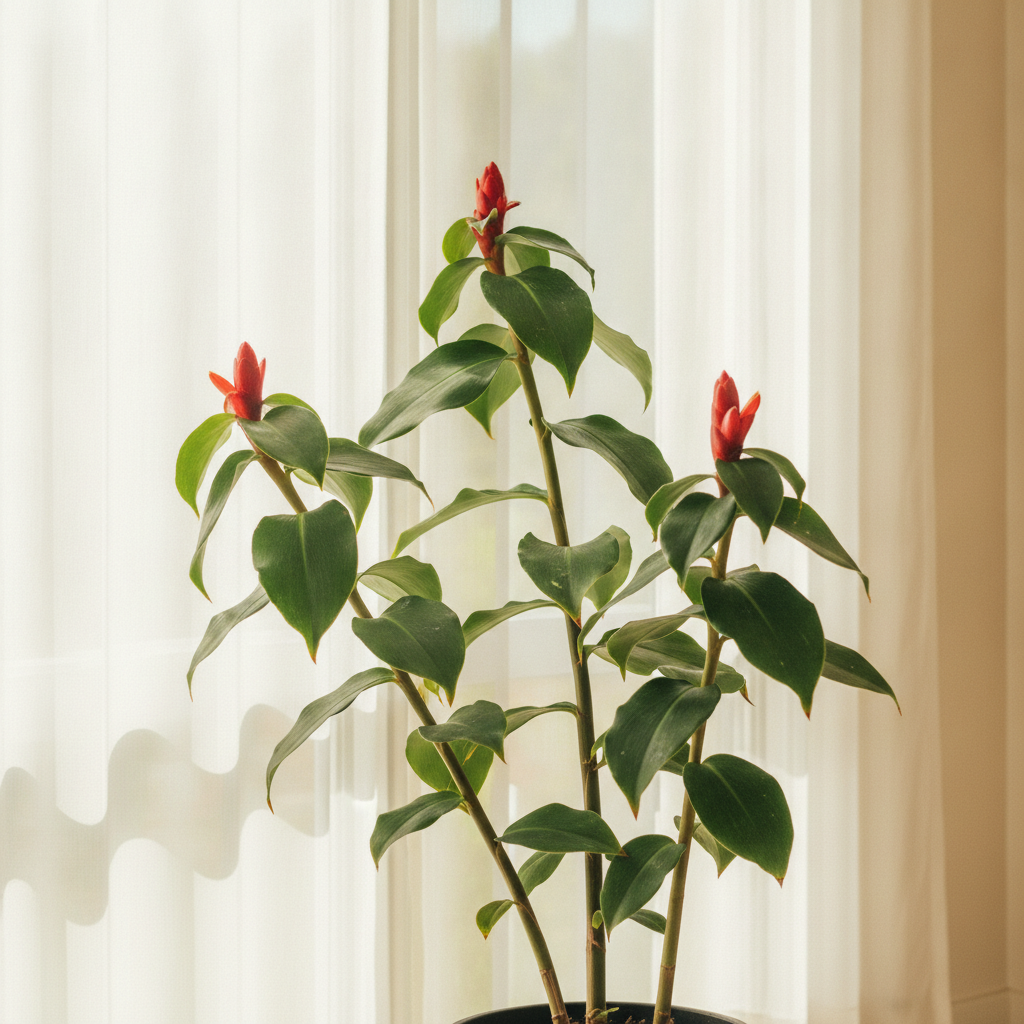
The ideal position is a spot that stays bright all day and catches an hour or two of gentle direct sun in the early morning, when the light is weak and cool. A location a short distance back from a large, unobstructed window, or directly in a window screened by a sheer curtain, suits it well. If you can comfortably read by the ambient light without a lamp for most of the day, and the plant casts a soft-edged shadow rather than a razor-sharp one, you are close to the mark.
Light Levels Explained
Plant light is often described in vague terms, so it helps to anchor those categories to rough illuminance values measured in lux and to the outcomes you can expect from the spiral ginger in each. The table below sets out the practical tiers.
| Light Category | Approx. Level | Typical Location | Outcome |
|---|---|---|---|
| Direct sun | 50,000 lux and above | On an unshaded south-facing sill at midday | Leaf scorch and bleaching within days |
| Bright indirect | 15,000 to 30,000 lux | Beside an east window or behind a sheer curtain | Ideal; compact growth and best colour |
| Medium | 8,000 to 15,000 lux | A metre or two back from a bright window | Acceptable; slightly looser, slower growth |
| Low | 2,000 to 8,000 lux | Near a north window or deep in a room | Leggy, stretched stems; unlikely to flower |
| Very low | Below 2,000 lux | Interior hallway or windowless corner | Gradual decline; not sustainable |
Window Orientation and Placement
South-facing window: The brightest exposure in the northern hemisphere. It can work superbly for a spiral ginger provided the midday sun is diffused with a sheer curtain or the plant is set back a metre or so from the glass. Unfiltered, a south window will scorch the leaves.
East-facing window: Often the best all-round choice. The plant receives soft, cool morning sun that it can take directly, then bright indirect light for the rest of the day. Placed right at an east sill, the spiral ginger usually needs no additional shading.
West-facing window: Workable, but the afternoon sun through a west window is hot and strong. Treat it much like a south window and diffuse the direct rays, or stand the plant just outside the sun’s direct path.
North-facing window: The dimmest exposure, and generally too weak on its own for good growth. A spiral ginger will hang on at a north window but stretch and refuse to flower. If north light is all you have, plan to supplement it with a grow light.
Pro Tip — Rotate for Even Growth: Because the spiral ginger grows toward its light source, stems lean noticeably over time. Give the pot a quarter turn each week so every side of the spiral receives its share, and the plant will stay upright and symmetrical instead of listing toward the window.
How Light Affects Growth and Flowering
Light governs far more than survival for this plant; it determines its shape and its ability to bloom. Under bright, even light the internodes stay short, so the leaves sit close together and the spiral looks tight and full. As light drops, the plant invests in reaching rather than filling out, and those internodes lengthen until the staircase becomes an open, gappy ladder. Flowering, in particular, is a luxury the spiral ginger only affords itself when light and feeding are both generous, which is why indoor plants in marginal light produce lush foliage but never the scarlet cone. If you want blooms, bright light is not optional.
Warning — Direct Sunlight: Move a spiral ginger from shade into full sun and its leaves can scorch within a single afternoon, showing bleached patches and crisp brown edges that never recover. Any increase in light should be made gradually over a week or two so the foliage can acclimatise.
Artificial Lighting
The spiral ginger responds well to supplementary lighting, which makes it a viable plant even in rooms with poor natural light. A full-spectrum LED grow light positioned 30 to 45 cm (12 to 18 in) above the foliage and run for 12 to 14 hours a day can substitute entirely for a bright window. Because the plant grows tall, choose an adjustable fixture you can raise as the stems extend, and keep the light on a timer so day length stays consistent. Supplemental light is especially useful through the short days of winter, when even a good window may not provide enough to keep growth active.
Seasonal Adjustments
The intensity and angle of daylight shift through the year, and a spiral ginger’s position should shift with it. Light that is perfect at a summer window can become inadequate by midwinter as the sun sits lower and weaker, so plants often benefit from moving closer to the glass in the darker months. Come spring, reverse the move to avoid the strengthening sun scorching foliage that acclimatised to gentler winter light. Watch the plant rather than the calendar: stretching, widely spaced leaves signal a need for more light, while bleaching or browning signals too much.
Watering & Humidity
Water is where the spiral ginger diverges most sharply from the drought-tolerant succulents and the dry-loving aroids many growers cut their teeth on. This is a plant of stream banks and moist forest floors, and it wants its rootball to stay consistently damp. The guiding principle is evenly moist but never waterlogged: the mix should feel like a wrung-out sponge, holding moisture throughout without standing water pooling at the roots. Letting it dry out completely, even once, will trigger crisping leaf edges and can knock the plant back badly.
When to Water
Rather than watering on a fixed schedule, check the mix with your finger and water when the top 2 to 3 cm (about 1 in) has begun to dry while the layer beneath is still damp. In a warm, bright spot through the growing season that often means watering every few days, since a fast-growing spiral ginger in active growth drinks heavily. The exact frequency depends on pot size, light, temperature and the season, so the feel of the soil is always a more reliable guide than the number of days since the last drink.
Growth slows in the cooler, darker months, and the plant’s thirst slows with it. Through winter, allow the surface to dry a little further between waterings and reduce the frequency, but do not let the rootball dry out completely as you might with a dormant succulent. The spiral ginger’s roots are always working to some degree, and a completely parched pot in winter is just as damaging as one in summer, only slower to show it.
Pro Tip — Lift the Pot: Weight is one of the most reliable moisture gauges there is. Learn how heavy the pot feels straight after a thorough watering and again when the top few centimetres have dried. Lifting the pot then quickly tells you whether the deeper mix is still holding water, without disturbing the roots.
How to Water Correctly
- Check the mix first, watering only once the top 2 to 3 cm (about 1 in) has started to dry.
- Use room-temperature water, since cold water shocks the tropical roots and can cause leaf spotting.
- Pour slowly and evenly across the whole surface until water runs freely from the drainage holes.
- Let the pot drain fully for several minutes so no water is left sitting around the roots.
- Empty the saucer or cache pot; never leave the plant standing in collected water.
- Return the plant to its spot and reassess in a couple of days rather than watering again on reflex.
Signs of Overwatering vs. Underwatering
Because the spiral ginger likes to stay moist, the danger is less about watering often and more about drainage. Trouble arises when a moisture-loving plant sits in a mix that holds water without air, so the symptoms below are worth learning to read.
| Symptom | Overwatering | Underwatering |
|---|---|---|
| Leaf colour | Yellowing across whole leaves, often lower ones first | Dull green fading to brown at the tips and margins |
| Leaf texture | Soft, limp and sometimes translucent | Crisp, papery and curling inward |
| Soil | Stays wet for many days and may smell sour | Pulls away from the pot sides and sheds water |
| Roots | Brown, mushy and easily detached | Dry, brittle and pale |
| Stem base | Soft or blackened where it meets the soil | Firm but shrivelled and thin |
Warning — Root Rot: A sour smell, persistently soggy mix and soft blackened stem bases point to root rot, the most serious risk for an overwatered spiral ginger. Act quickly by unpotting the plant, cutting away any brown mushy roots with sterile scissors, and repotting into fresh, airy mix. Salvaging healthy rhizome divisions is often the surest route to recovery.
Humidity Requirements
Humidity matters as much as watering for this plant. Coming from a cloud-forest climate where the air is almost always damp, the spiral ginger wants relative humidity of around 60% or higher and starts to suffer once the air drops below roughly 45%. In centrally heated or air-conditioned rooms, where indoor humidity can fall to 30% or less, dry air quickly becomes the limiting factor even when watering is perfect.
The first sign of air that is too dry is browning, crisping leaf edges and tips, sometimes accompanied by leaves that fail to unfurl cleanly. Because the spiral ginger has large, thin leaves with a lot of surface area, it loses moisture to dry air faster than thicker-leaved plants, so these symptoms often appear before any watering problem would. If several leaves are edge-burning while the soil is properly moist, low humidity is almost always the cause.
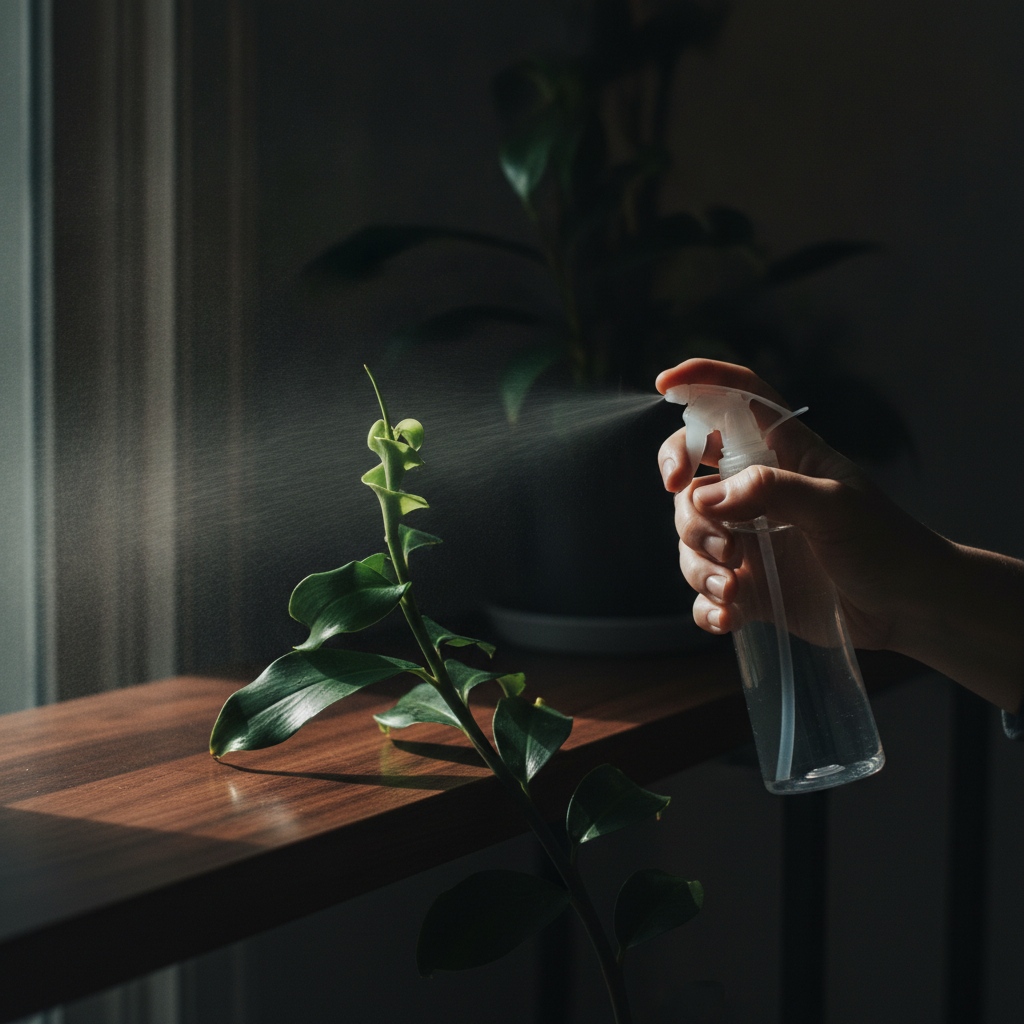
Raising humidity reliably usually means more than a passing mist. A room humidifier is the most effective and consistent option and is well worth the investment for a serious specimen. Grouping plants together raises the local humidity through their combined transpiration, and a wide pebble tray filled with water beneath the pot helps too, provided the pot itself sits above the waterline. A naturally humid room such as a bright bathroom can be an ideal home. Misting offers only a brief lift and is no substitute for these steadier methods.
Water Quality
The spiral ginger’s thin leaves can be sensitive to the minerals, chlorine and fluoride found in some tap water, which may show as brown tips or small spots over time. In most areas ordinary tap water is fine, but if you notice persistent tip burn despite good humidity and watering, switching to filtered or rainwater often resolves it. Letting tap water stand overnight before use allows some chlorine to dissipate and brings it to room temperature at the same time, which the roots much prefer to a cold drink straight from the tap.
Soil, Potting & Repotting
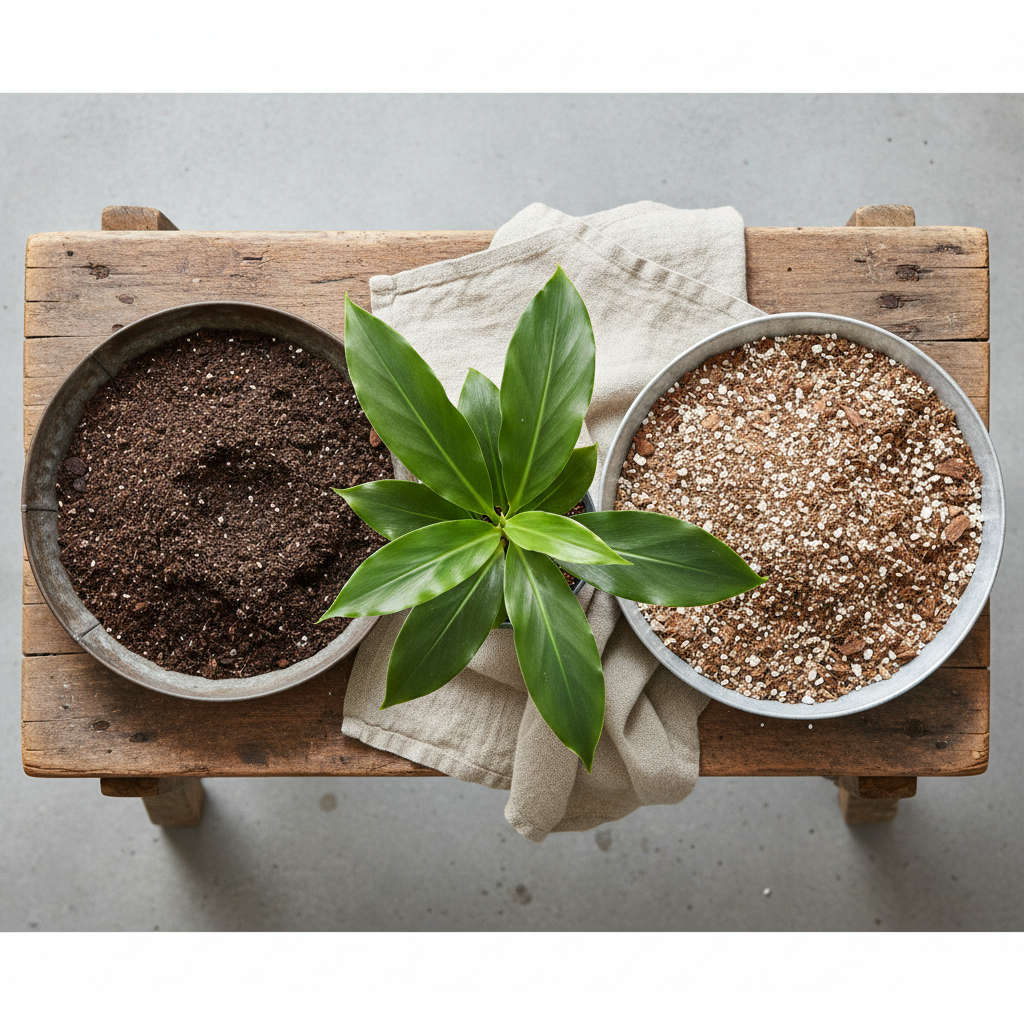
The spiral ginger needs a growing medium that performs a delicate balancing act: it must hold moisture, because the plant hates to dry out, yet drain and breathe freely enough that the roots are never starved of air. A dense, water-retentive potting soil on its own stays too wet and invites rot, while a fast-draining cactus mix dries far too quickly for a moisture lover. The answer is a rich, organic base opened up with plenty of coarse material.
Ideal Soil Composition
A good spiral ginger mix starts with a quality peat-free or peat-based potting compost as the moisture-holding foundation, then adds coarse ingredients to build in air pockets and drainage. The aim is a medium that stays reliably damp for a few days after watering but never turns to mud. The proportions below make a dependable starting recipe.
| Component | Proportion | Function |
|---|---|---|
| Quality potting compost | 50% | Holds moisture and supplies nutrients |
| Coco coir or leaf mould | 20% | Retains water while keeping the mix open |
| Perlite or pumice | 20% | Creates air pockets and improves drainage |
| Fine composted bark | 10% | Adds structure and slows compaction |
The spiral ginger prefers a slightly acidic to neutral root zone, roughly pH 6.0 to 6.8, which most peat-free and bark-based mixes fall into naturally. There is rarely any need to adjust pH deliberately; a good organic mix refreshed at repotting keeps it comfortably in range.
Pro Tip — Quick Mix Recipe: For a fuss-free blend, combine two parts general houseplant compost with one part perlite and one part coco coir. It gives the moisture retention a spiral ginger craves while leaving enough air in the mix to keep the roots healthy, and every ingredient is easy to find.
Choosing the Right Pot
Because the spiral ginger spreads from a horizontal rhizome, it appreciates a pot with a little width to grow into, and because it is thirsty, a slightly larger volume of mix helps buffer against drying out between waterings. The trade-offs between pot type come down to how they interact with that need for steady moisture.
Drainage holes are non-negotiable. However much this plant likes moisture, it must never sit in standing water, and only a pot with open drainage holes lets excess escape. A decorative cache pot without holes is fine as an outer cover, but the plant should live in an inner pot that drains and be lifted out to water.
Pot material: Plastic and glazed ceramic hold moisture longer, which suits a moisture-loving spiral ginger and reduces watering frequency. Unglazed terracotta breathes and dries faster, which lowers rot risk but means you will water more often; it can be a good choice if you tend to overwater, but a moisture lover in terracotta needs closer attention.
Pot size: Move up only one size at a time, choosing a pot 2 to 4 cm (1 to 2 in) wider than the current one. An oversized pot holds a large volume of wet mix the roots cannot use, which stays soggy and invites rot. Stepping up gradually keeps the moisture balance manageable.
When to Repot
A vigorous spiral ginger often needs repotting every year or two, more frequently than slower houseplants, because it grows fast and its spreading rhizome soon fills a pot. Tell-tale signs include roots circling the base or emerging from the drainage holes, new shoots crowding the pot edge, water that races straight through without wetting the mix, and growth that has stalled despite good care. The best time to repot is spring, at the start of the active growing season, so the plant can recover quickly and put out fresh roots into its new mix.
How to Repot: Step-by-Step
- Water the plant a day beforehand so the rootball is moist and holds together, easing it out of the pot.
- Ease the plant out by tipping the pot and supporting the base of the stems, rather than pulling on the foliage.
- Gently tease apart the outer roots and shake off some of the old, spent mix from around the rhizome.
- Inspect the rhizome and roots, trimming away any soft, brown or rotten sections with sterile scissors.
- Set the plant into a pot one size larger with fresh mix, keeping the rhizome at the same depth as before.
- Fill around the roots with fresh mix, firming gently to remove air pockets without compacting it hard.
- Water thoroughly, let it drain, and return the plant to bright, indirect light out of strong sun.
Warning — Transplant Shock: A spiral ginger may sulk for a week or two after repotting, sometimes drooping or dropping a leaf as it re-establishes. Resist the urge to fertilise straight away or to overwater in response. Keep conditions warm, humid and stable, and let the plant settle; new root growth and fresh leaves usually follow within a few weeks.
Fertilising
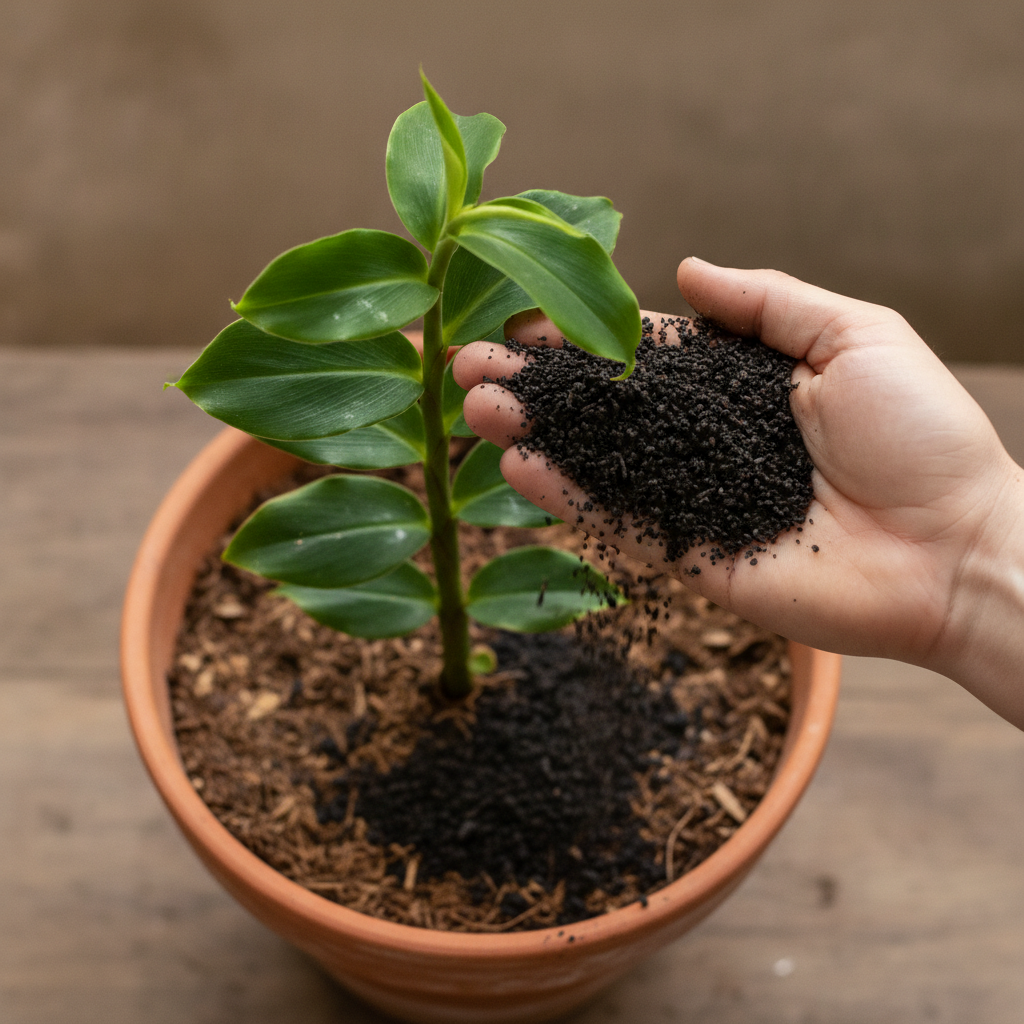
The spiral ginger is a hungry plant. Its rapid growth and large leaves demand a steady supply of nutrients, and well-fed specimens are noticeably lusher, greener and far more likely to produce their scarlet flower cones than starved ones. At the same time, its roots are sensitive to the salts that fertilisers leave behind, so the art of feeding this plant lies in being both generous and measured.
Feeding tracks the growing season closely. Through the warm, bright months of spring and summer, when the plant is actively pushing out new stems and leaves, regular feeding fuels that growth. As light fades and growth slows into autumn and winter, the plant’s appetite drops sharply and feeding should be scaled right back or stopped, because fertiliser applied to a resting plant simply accumulates in the mix as harmful salt.
Understanding Plant Nutrients
Fertilisers are labelled with an NPK ratio giving the percentages of nitrogen, phosphorus and potassium, the three nutrients plants use in the largest quantities. Beyond these, several secondary and trace elements keep a plant healthy, and knowing what each does makes it far easier to read and correct a deficiency in the foliage.
| Nutrient | Symbol | Primary Function | Deficiency Symptoms |
|---|---|---|---|
| Nitrogen | N | Drives leafy growth and green colour | Pale, yellowing older leaves and slow growth |
| Phosphorus | P | Supports roots, energy transfer and flowering | Dull leaves, weak roots, poor blooming |
| Potassium | K | Regulates water and overall vigour | Yellow or scorched leaf margins |
| Calcium | Ca | Builds cell walls and new growth | Distorted, hooked or stunted new leaves |
| Magnesium | Mg | Central atom of the chlorophyll molecule | Yellowing between the veins of older leaves |
| Iron | Fe | Enables chlorophyll production | Yellowing between veins of the newest leaves |
Types of Fertiliser
Liquid fertilisers: The easiest way to feed a spiral ginger with precision. Diluted in water and applied during a normal watering, they deliver nutrients immediately and let you control the strength exactly. Their downside is that they must be reapplied regularly, since they wash through with each watering.
Slow-release granular: Coated prills that release nutrients gradually over several months, offering convenience for growers who would rather not mix feed every couple of weeks. They give less precise control over timing, and because they keep releasing regardless of the season, they are best applied only at the start of spring.
Organic fertilisers: Options such as worm castings, diluted seaweed extract and compost-based feeds release nutrients slowly and gently while improving the soil life. They carry little risk of burning the roots and suit the spiral ginger well, though their nutrient content is lower and less predictable than synthetic feeds.
Feeding Schedule
During spring and summer, feed with a balanced liquid fertiliser diluted to half the label strength every two to four weeks. A spiral ginger in strong light and active growth can take the more frequent end of that range, while one in more modest conditions does better with less. As days shorten in autumn, taper the feeding off, and through the depths of winter stop altogether until growth resumes in spring. Always apply feed to already-moist soil rather than a dry rootball, so the nutrients spread evenly and do not concentrate against dry roots.
Pro Tip — Feed at Half Strength: Manufacturers’ recommended doses are pitched high, and the spiral ginger’s salt-sensitive roots do better with a lighter touch. Mixing liquid feed to half the stated strength but applying it a little more often gives steady nutrition with far less risk of fertiliser burn or salt build-up.
How to Fertilise
- Water the plant lightly first, or feed straight after watering, so the roots are never fed while dry.
- Mix a balanced liquid fertiliser to half the recommended strength in room-temperature water.
- Pour the diluted feed evenly over the mix until it just begins to drain from the bottom.
- Discard any feed that collects in the saucer so the roots do not sit in a concentrated solution.
- Every month or two, flush the pot with plain water to wash out accumulated mineral salts.
Warning — Salt Build-Up: A white crust on the soil surface or around the pot rim, along with browning leaf tips, signals a build-up of fertiliser salts. Flush the pot thoroughly with plenty of plain water, letting it run through several times, and ease off the feeding until the plant recovers.
Propagation
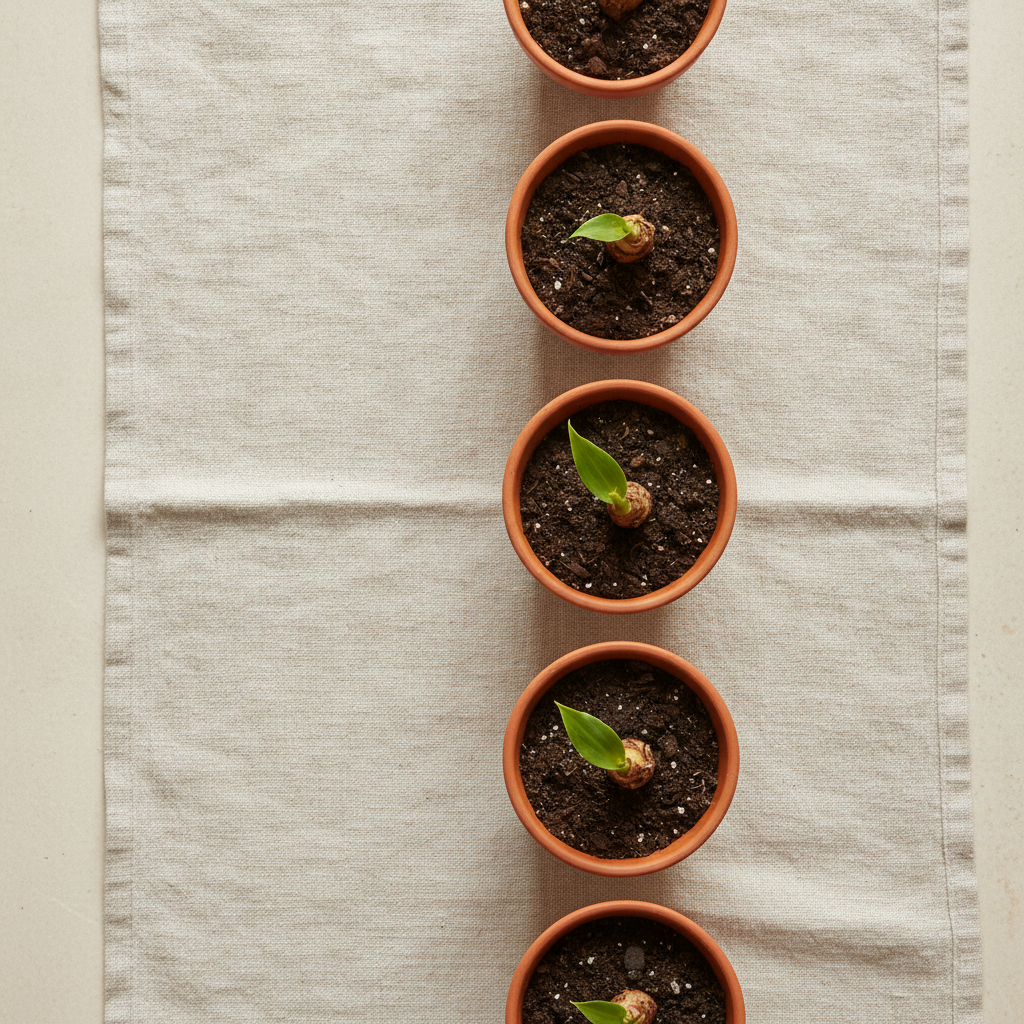
Propagation is one of the spiral ginger’s great pleasures, because it multiplies with real enthusiasm. Where many houseplants root reluctantly, this one spreads naturally from its rhizome and roots readily from stem sections, so a single healthy plant becomes a ready supply of new ones. There are two dependable methods for the home grower: dividing the rhizome and taking stem cuttings.
Both methods work best in spring and early summer, when the plant is in active growth and eager to root. The warmth and lengthening light of the growing season mean new divisions and cuttings establish far faster than they would in the cold, dark months, when growth all but stops and cut surfaces are more prone to rotting than rooting.
Understanding the Rhizome
The engine of a spiral ginger is its rhizome, a thickened horizontal stem that runs just below the soil surface and stores energy and water. New shoots rise from growth points along its length, which is why a mature plant slowly forms an expanding clump of stems rather than a single trunk. Understanding the rhizome is the key to propagation: each section that carries at least one healthy growth point and some roots can become an independent plant. This same structure is what lets the spiral ginger recover so well from division and even from setbacks like root rot, since a sound piece of rhizome holds everything a new plant needs to start again.
Rhizome Division: Step-by-Step
Division is the fastest and most reliable method, and it doubles as a way to manage the size of a clump that has outgrown its pot. Each division starts life as an already-established small plant, so it establishes quickly.
- Water the plant the day before, then slide the whole rootball out of its pot to expose the rhizome.
- Shake and tease away enough soil to see the rhizome clearly and locate its natural divisions and growth points.
- Using a clean, sharp knife, cut the rhizome into sections, each with at least one shoot and a portion of healthy roots.
- Let the cut surfaces air-dry for an hour or two, which helps seal them against rot.
- Pot each division into its own container of fresh, airy mix, setting the rhizome just below the surface.
- Water in well, then keep the divisions warm, humid and out of direct sun while they root and settle.
Pro Tip — Sterilise Your Blade: Wipe your knife with isopropyl alcohol before and between cuts. The spiral ginger’s fleshy rhizome is an easy entry point for rot-causing bacteria and fungi, and a clean blade is the simplest insurance against introducing an infection to a fresh wound.
Stem Cuttings: Step-by-Step
The spiral ginger has a second, almost magical trick: sections of its cane-like stems can root and sprout new plants, even when laid horizontally. This method is a good way to make use of a stem that has grown too tall or been knocked off, and it produces a satisfying number of plantlets from a single cane.
- Choose a mature but healthy stem and cut it into sections, each containing at least one node.
- Allow the cut ends to dry for an hour or two so the wounds can callus over.
- Lay each section horizontally on, or partly buried in, a tray of damp mix or sphagnum moss, node facing up.
- Cover the tray with a clear lid or bag to hold humidity, and keep it warm and bright but out of direct sun.
- Keep the medium lightly moist, and within a few weeks roots and a new shoot should emerge from the node.
- Once a plantlet has its own roots and a leaf or two, pot it up individually and grow it on as normal.
Troubleshooting Propagation
| Problem | Likely Cause | Solution |
|---|---|---|
| Division rots before rooting | Cut surfaces kept too wet or blade not sterile | Air-dry cuts first, use clean tools and airy mix |
| Cuttings shrivel and dry out | Humidity too low around the cuttings | Cover with a clear lid or bag to hold moisture |
| No roots after many weeks | Too cold, too dark, or taken out of season | Provide warmth and bright light; propagate in spring |
| Shoot emerges then stalls | Plantlet potted on before it had enough roots | Wait for a solid root system before potting up |
Pests & Diseases
A healthy, well-cared-for spiral ginger is reasonably resilient, but its soft, moisture-rich growth and love of humidity make it attractive to a handful of common pests, and the warm, damp conditions it enjoys can occasionally favour fungal disease. The best defence is vigilance: catching a problem early, when it involves a few insects or a single spotted leaf, makes it far easier to treat than a full infestation.
Make a habit of inspecting your plant whenever you water, paying particular attention to the undersides of leaves, the leaf axils where they meet the stem, and any new growth. These sheltered spots are where pests establish first, and a quick weekly look is usually enough to spot trouble before it spreads.
Common Pests
Spider Mites (Tetranychus urticae)
Spider mites are the pest most drawn to a spiral ginger stressed by dry air. Almost too small to see, they cluster on leaf undersides, causing fine yellow stippling and, in bad cases, delicate webbing between the leaves and stems. Because they thrive in exactly the dry conditions the plant dislikes, an outbreak is often a sign that humidity has been too low.
Treatment: Rinse the plant thoroughly, including the leaf undersides, then treat with insecticidal soap or neem oil every few days until the mites are gone. Raising humidity makes the plant far less hospitable to them and helps prevent a recurrence.
Mealybugs (Pseudococcus species)
Mealybugs appear as small, soft, white cottony blobs tucked into leaf axils and along the stems. They feed on sap, weakening the plant and leaving behind sticky honeydew that can turn into black sooty mould. The spiral ginger’s many sheltered leaf junctions give them plenty of hiding places.
Treatment: Dab each insect directly with a cotton bud dipped in isopropyl alcohol, which kills them on contact, then follow up with neem oil or insecticidal soap. Check weekly for a while, as their eggs can hatch in waves.
Scale Insects (Coccus species)
Scale insects look like small brown or tan bumps stuck firmly to stems and the undersides of leaves. Under their waxy shells they feed on sap, and like mealybugs they excrete honeydew. Their armoured covering makes them stubborn and easy to mistake for part of the plant.
Treatment: Scrape off what you can with a fingernail or an alcohol-dipped cotton bud, then treat with horticultural oil to smother any survivors. Persistent infestations may need repeated treatment over several weeks.
Common Diseases
Root Rot (Pythium and Phytophthora species)
Root rot is the most serious disease threat, arising when the mix stays waterlogged and airless for too long and fungal pathogens attack the drowning roots. Signs include yellowing, wilting leaves despite wet soil, a sour smell and soft, blackened stem bases. Left unchecked it can kill a plant quickly.
Treatment: Unpot the plant, cut away all soft, brown roots and rhizome with sterile tools, and repot the healthy remainder into fresh, airy mix. Improve drainage and watering habits to prevent a return, and salvage sound rhizome divisions as a backup.
Leaf Spot (various fungal pathogens)
Fungal leaf spot shows as brown or dark patches, sometimes with a yellow halo, that spread when water sits on the foliage in warm, still, humid air. While rarely fatal, it disfigures the leaves and can spread if conditions stay damp and stagnant.
Treatment: Remove affected leaves, improve air circulation around the plant, and avoid wetting the foliage when watering. In stubborn cases a suitable fungicide can help bring it under control.
Pest and Disease Summary
| Pest / Disease | Identification | Treatment |
|---|---|---|
| Spider mites | Fine yellow stippling and webbing on leaf undersides | Rinse, raise humidity, treat with neem or soap |
| Mealybugs | White cottony clusters in leaf axils | Alcohol swab, then neem oil or insecticidal soap |
| Scale insects | Brown waxy bumps on stems and leaf undersides | Scrape off, then apply horticultural oil |
| Root rot | Wilting in wet soil, sour smell, black stem bases | Cut away rot, repot in fresh airy mix |
| Leaf spot | Brown patches, sometimes with a yellow halo | Remove leaves, improve airflow, keep foliage dry |
Prevention Strategies
Prevention with a spiral ginger comes down to keeping the plant unstressed and its environment balanced. A plant grown in good light, watered correctly and kept in humid air is far more resistant to both pests and disease than one struggling with dry air or soggy roots. Because low humidity invites spider mites while overwatering invites rot, getting those two fundamentals right heads off the two most common problems at once.
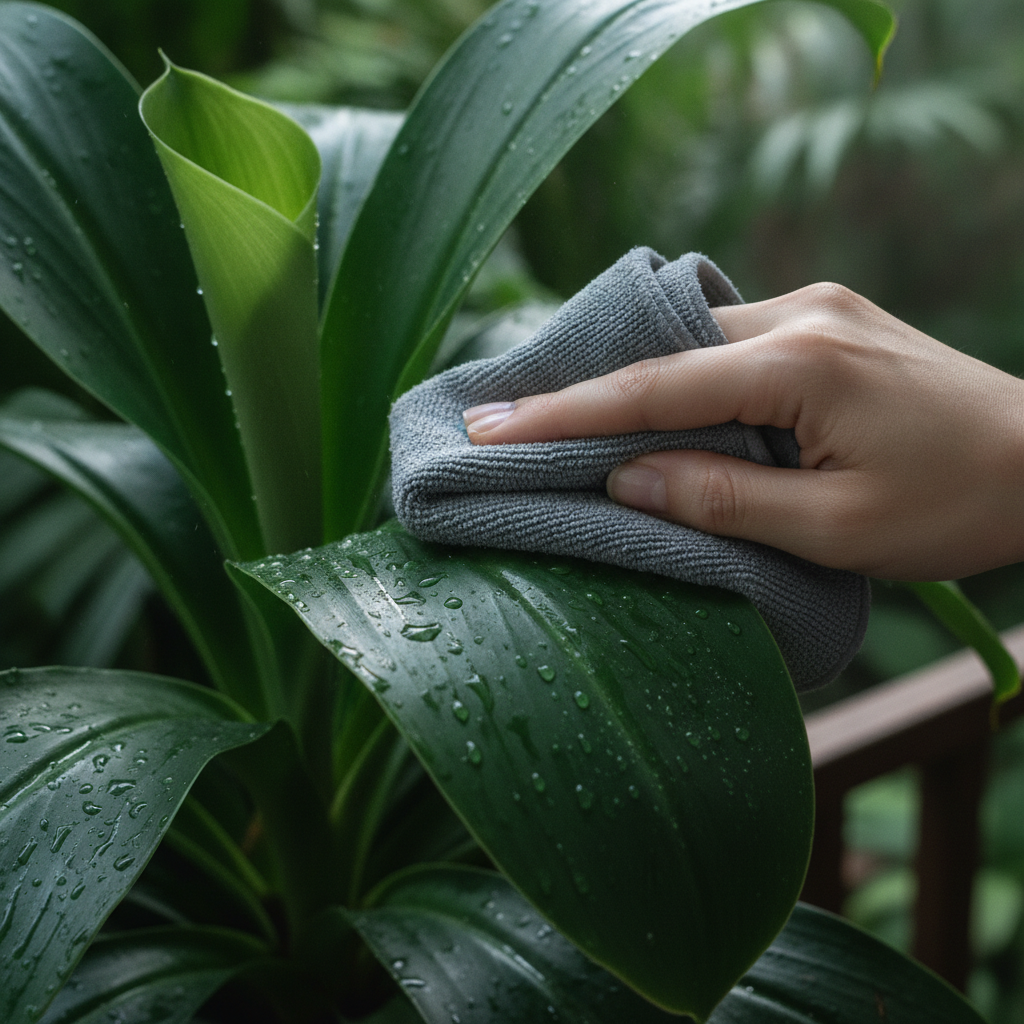
Good habits do the rest. Quarantine any new plant for a couple of weeks before it joins your collection, inspect your spiral ginger whenever you water, keep the leaves clean and free of dust, and ensure air can circulate around it rather than sitting stagnant. Removing dead or fallen leaves promptly denies pests and fungi a foothold, and catching problems early keeps them small.
Pro Tip — Neem Oil as Routine Defence: A monthly wipe or light spray of diluted neem oil during the growing season acts as a gentle deterrent, discouraging pests before they establish. Apply it in the evening or out of direct sun so the treated leaves do not scorch, and always test on a single leaf first.
Popular Varieties
Spiral ginger is both a common name for Costus barbatus specifically and a loose label for the wider genus Costus, which contains many ornamental relatives sharing the same distinctive spiralling growth. For the indoor grower, that means the plants sold as spiral gingers range from the classic Red Tower Ginger to variegated forms and compact, differently coloured cousins, all cared for in much the same way.
The species and cultivars below are the ones you are most likely to encounter, whether under the strict name Costus barbatus or the broader spiral ginger banner. Their care is near-identical, so choosing between them is largely a matter of the foliage and flowers you find most appealing and the space you have to give them.
| Variety | Leaf Appearance | Light Needs | Growth Rate | Availability |
|---|---|---|---|---|
| Red Tower Ginger | Glossy deep green, velvety maroon undersides | Bright indirect | Fast | Common |
| Variegated Spiral Ginger | Green streaked and edged with creamy white | Bright indirect | Moderate | Occasional |
| Orange Tulip Ginger | Broad glossy green, orange flower bracts | Bright indirect | Fast | Occasional |
| Fiery Costus | Ribbed green leaves, pinkish-red cone | Bright indirect | Moderate | Occasional |
| Dwarf French Kiss | Compact green foliage, pink bracts | Bright indirect | Moderate | Specialist |
| Spiral Flag Ginger | Green spiralling leaves, white flowers | Bright indirect | Fast | Occasional |
Featured Varieties
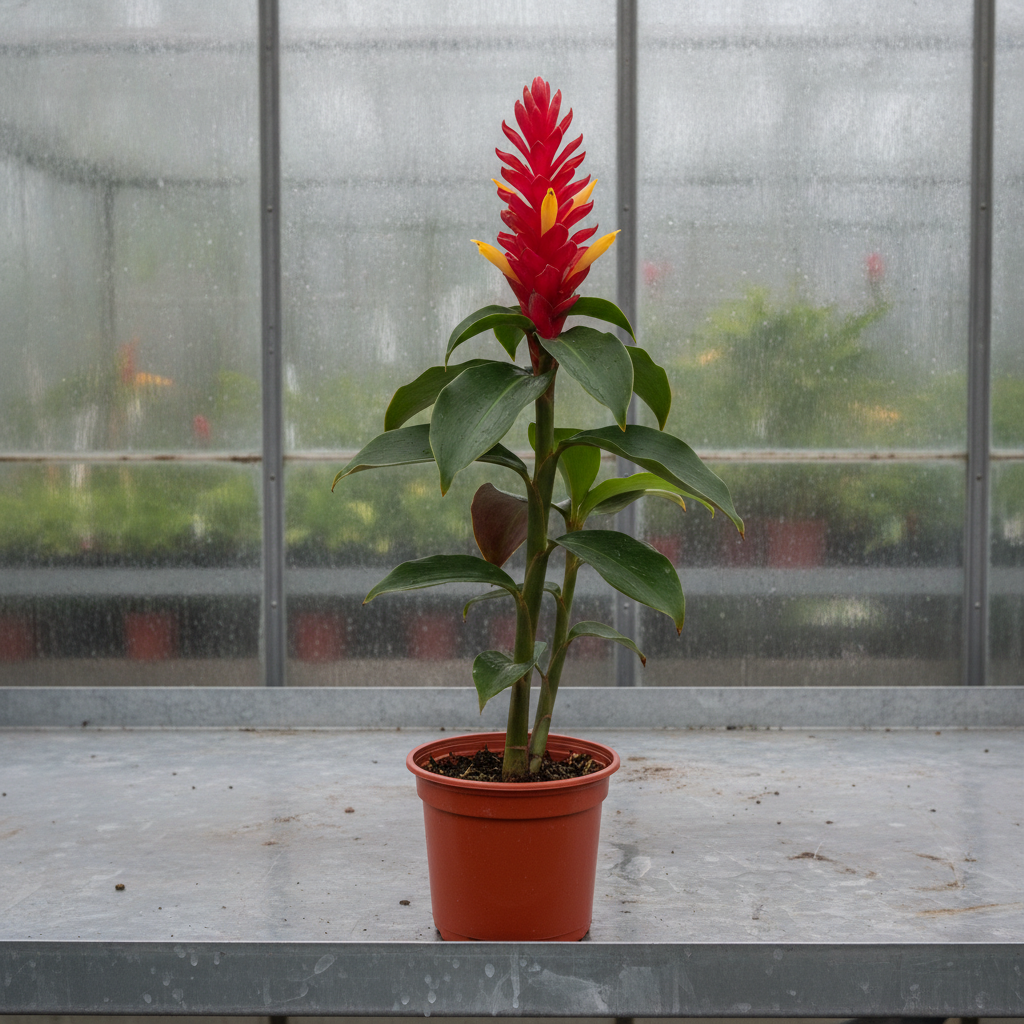
Red Tower Ginger
The classic form of the species and the reason it is so widely grown. Tall stems carry glossy deep green leaves with soft, velvety maroon undersides, and mature plants produce a striking waxy cone of red bracts from which small yellow tubular flowers emerge. It is the benchmark spiral ginger for indoor and conservatory growers alike.
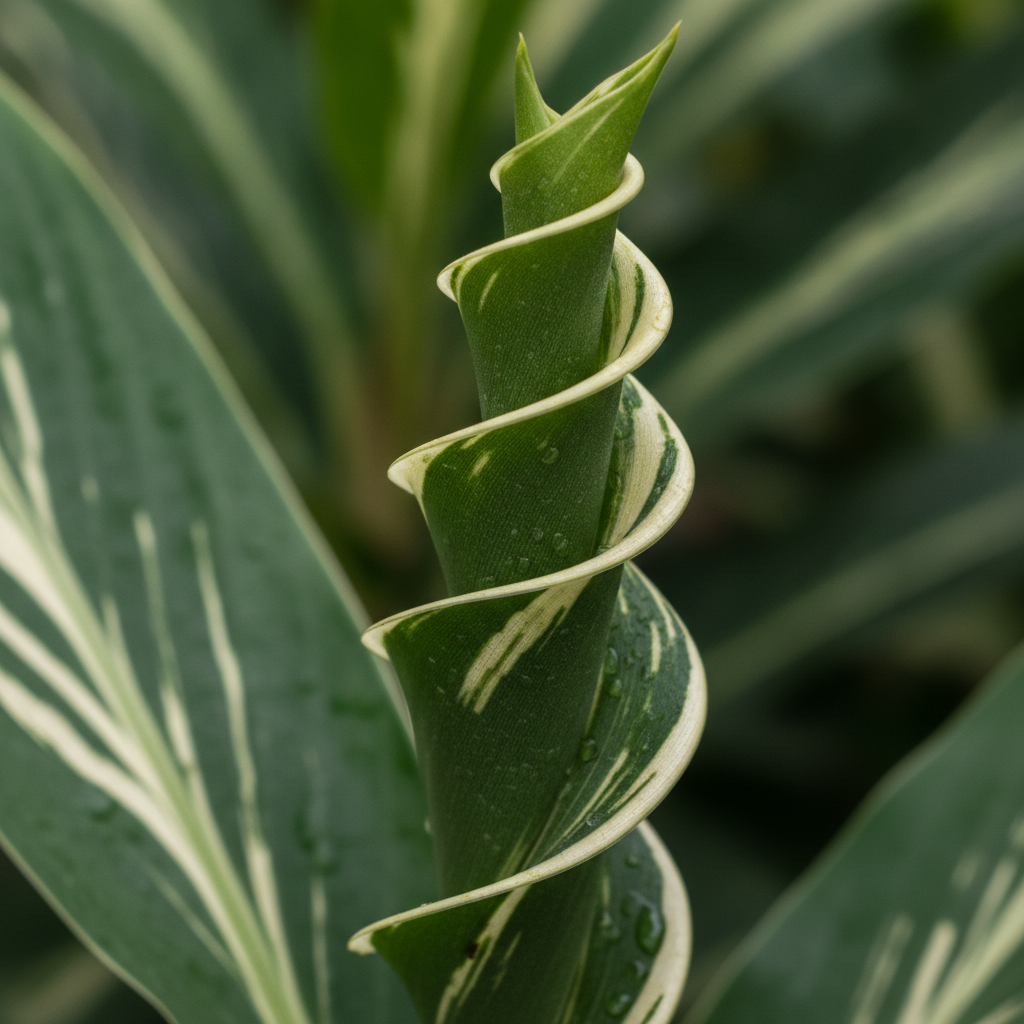
Variegated Spiral Ginger
A collector’s favourite in which the spiralling leaves are streaked and edged with creamy white against the deep green. The variegation makes an already sculptural plant even more eye-catching, though the reduced chlorophyll means it grows a little more slowly and appreciates consistently bright, indirect light to hold its markings.
Variety Profiles in Detail
Red Tower Ginger (Costus barbatus)
This is the plant most people mean by spiral ginger. In the wild it can reach two to three metres (roughly 6 to 10 ft), though indoors it usually settles at one to one and a half metres (3 to 5 ft). Its two great ornamental features are the fuzzy, wine-coloured undersides of the leaves, which catch the light beautifully, and the long-lasting red flower cone that gives it its name. It is fast, forgiving and the ideal introduction to the genus.
Orange Tulip Ginger (Costus productus)
A more compact relative that stays lower and bushier than the Red Tower Ginger, making it better suited to tighter spaces. Its glossy green leaves spiral in the family style, and it produces cheerful orange, tulip-shaped flowers close to the foliage over a long season. It is a rewarding choice for growers who want the spiral habit and regular flowers without a tall plant.
Spiral Flag Ginger (Costus arabicus)
Grown for its clean, architectural foliage as much as its flowers, this species is also the parent of the popular variegated form. The plain green type is vigorous and easy, spiralling upward on tall canes and topping out with white flowers, while its variegated selection brings the creamy striping prized by collectors. Both want the same warm, humid, bright conditions as the rest of the genus.
Choosing the Right Variety for Your Space
The main practical difference between spiral gingers is size, so match the variety to your space and light. If you have the height and a large bright spot, the Red Tower Ginger rewards you with dramatic stems and its signature scarlet cone. For smaller rooms, a compact species such as the Orange Tulip Ginger offers the same spiralling charm and reliable flowers in a more manageable frame. Variegated forms make the boldest statement but ask for the brightest indirect light and a touch more patience. Whichever you choose, the care described throughout this guide applies across the group, so confidence with one spiral ginger transfers easily to the rest.
Frequently Asked Questions
Why are the edges of my spiral ginger’s leaves turning brown and crispy?
Crispy brown leaf edges on a spiral ginger almost always point to air that is too dry, and sometimes to a rootball that has been allowed to dry out. This is a humidity-loving cloud-forest plant, so raise the moisture in the air with a humidifier or pebble tray and keep the mix evenly damp. If tip burn persists despite good humidity and watering, minerals in your tap water may be the cause, in which case switch to filtered or rainwater.
How big does a spiral ginger get indoors?
Indoors, Costus barbatus typically reaches one to one and a half metres (3 to 5 ft), though in ideal conditions with plenty of headroom it can grow taller. In its native habitat it climbs to two or three metres. You can keep it more compact by growing it in bright light, which shortens the spacing between leaves, and by dividing the clump regularly to limit how large the rootstock becomes.
Will my spiral ginger flower as a houseplant?
It can, but flowering indoors takes generous conditions. The red flower cone appears only on mature, well-established plants that receive bright light, steady warmth, high humidity and regular feeding through the growing season. Plants in dim light will grow lush foliage but rarely bloom. If flowers are your goal, prioritise the brightest indirect spot you can offer and keep the plant well fed and unstressed.
Is spiral ginger safe around cats and dogs?
The spiral ginger is generally regarded as non-toxic to cats and dogs, in line with many plants in the wider ginger group, though specific toxicity data for the species is limited. It is an ornamental plant rather than an edible ginger, so it should not be eaten, and as a sensible precaution it is best to discourage pets from chewing the foliage. If a pet does eat a large amount and shows signs of distress, contact your vet.
My spiral ginger’s stems have gone tall and leggy. What happened?
Leggy stems with wide gaps between the leaves are the classic sign of too little light. The plant is stretching toward its light source instead of filling out. Move it to a brighter position with more bright, indirect light, or add a grow light, and new growth should come in tighter and fuller. You can also cut back overly stretched stems, and those cuttings can be rooted to make new plants.
How often should I repot my spiral ginger?
Because it grows quickly and spreads from a rhizome, a spiral ginger often needs repotting every one to two years, sooner than many houseplants. Repot in spring when you see roots emerging from the drainage holes, new shoots crowding the pot, or water running straight through. Move up just one pot size at a time, and take the opportunity to divide the rhizome if you would like more plants.
Should I cut back my spiral ginger in winter?
There is no need for routine winter pruning. Simply remove any dead, damaged or yellowing leaves and stems as they appear. Growth naturally slows in the cooler, darker months, so reduce watering and stop feeding until spring. If a stem has finished flowering or grown untidy, you can cut it back, and the plant will send up fresh shoots from the rhizome when active growth resumes.
Can I grow spiral ginger outdoors?
In frost-free tropical and subtropical climates the spiral ginger makes a superb outdoor plant for a warm, sheltered, partly shaded spot with rich, moist soil. In cooler regions it is best grown in a container that can spend summer outdoors and be brought inside before temperatures fall below about 13°C (55°F). It will not tolerate frost, so in temperate climates treat it as an indoor or greenhouse plant for most of the year.






