
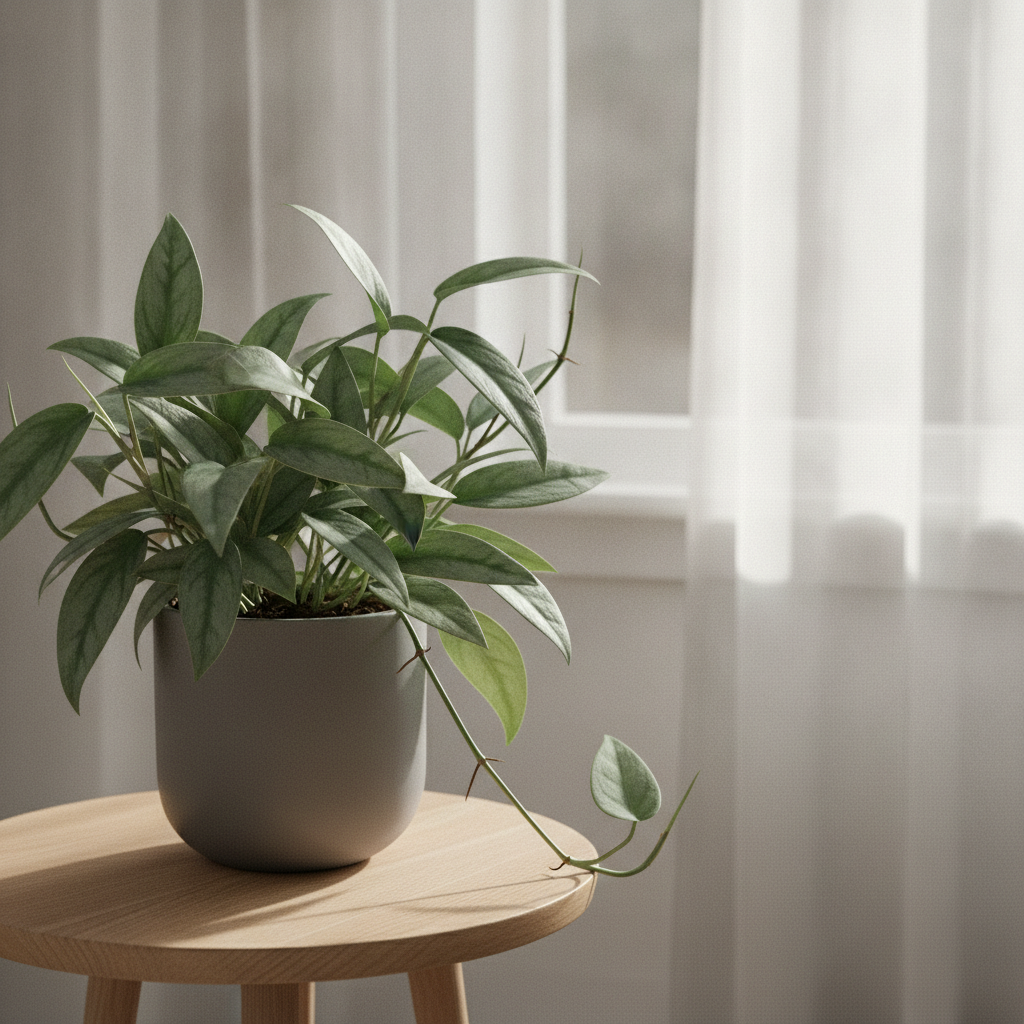
Few houseplants reward a little patience quite like the Cebu Blue Vine. Most aroids announce themselves with size or colour, but Epipremnum pinnatum ‘Cebu Blue’ trades on something subtler: a cool, metallic shimmer that slides across its lance-shaped leaves as the light moves. Native to the island of Cebu in the Philippines and across the wider tropical Pacific, this is a plant that looks delicate on the shelf yet behaves, given the chance, like the vigorous jungle climber it actually is. Understanding the gap between those two states, the modest trailer most people own and the fenestrated giant it can become, is the key to growing it well.
Quick Reference
If you only read one section before bringing your plant home, make it this one. The table below distils the whole guide into the numbers that matter, and the chapters that follow explain the reasoning behind each.
| Care Factor | Requirement |
| Botanical name | Epipremnum pinnatum ‘Cebu Blue’ |
| Common names | Cebu Blue Vine, Cebu Blue Pothos, Dragon Tail Plant, Blue Philodendron (incorrect) |
| Light | Bright, indirect light; tolerates medium light |
| Water | When the top 3 to 5 cm (1 to 2 in) of mix dries out |
| Soil | Chunky, free-draining aroid mix |
| Humidity | Average to high; 50 to 70 per cent ideal |
| Temperature | 18 to 29°C (64 to 84°F) |
| Feeding | Monthly in spring and summer with diluted balanced feed |
| Toxicity | Toxic to pets and humans if ingested (calcium oxalates) |
| Difficulty | Easy |
- Why grow a Cebu Blue Vine
- Light
- Watering
- Soil and potting
- Fertilising
- Propagation
- Pests and problems
- Varieties
- Frequently asked questions
Why Grow a Cebu Blue Vine as a Houseplant
The first thing people notice is the colour. Where most pothos relatives lean into glossy mid-green, the Cebu Blue carries a powdery, almost pewter cast across its foliage, a quality that shifts towards silver-blue in bright light and settles into a deeper teal-green in shade. It is not a true blue, of course, no plant pigment produces that, but a structural sheen on the leaf surface that scatters cool light. The effect is genuinely unusual on a shelf full of greens, and it is the main reason collectors seek the plant out.

The second reason is its dual personality. As a juvenile, which is how virtually every plant is sold, it produces small, entire, lance-shaped leaves on slender vines that trail happily from a hanging pot or shelf. Give it a moss pole and consistently bright light, though, and it begins to mature. Mature foliage on Epipremnum pinnatum can reach 30 cm (12 in) or more in length and develops the dramatic pinnate fenestrations, the splits and holes, that make the species look like a slimmer cousin of the Monstera. Watching a houseplant transform from one form into the other over a couple of years is a quietly addictive experience, and the Cebu Blue offers it more readily than most.
There is a practical case too. This is a forgiving plant. It survives in medium light, tolerates the occasional missed watering thanks to its semi-succulent stems, and roots so easily from cuttings that one healthy vine quickly becomes a shelf full of plants. For a beginner who wants something a little more distinctive than a standard golden pothos, it sits in an ideal sweet spot between novelty and resilience. The distinction between merely surviving and genuinely thriving runs through everything below, and with this species the difference shows up most clearly in leaf size, colour saturation and whether the plant ever bothers to mature at all.
Pro Tip — Name confusion: The Cebu Blue is frequently sold as a “pothos” and occasionally as a “blue philodendron”. It is neither, strictly speaking. It belongs to the genus Epipremnum, the same as the common pothos, but it is a distinct species, Epipremnum pinnatum. The care is pothos-like, but knowing the true name helps when you are hunting down reliable information.
Light
Light is the single biggest lever you have over how a Cebu Blue Vine looks. In its native habitat it begins life on the forest floor and climbs tree trunks towards the canopy, so it is adapted to a gradient that runs from deep shade up into bright, dappled light. Indoors, the brighter end of that gradient is where the plant earns its keep.
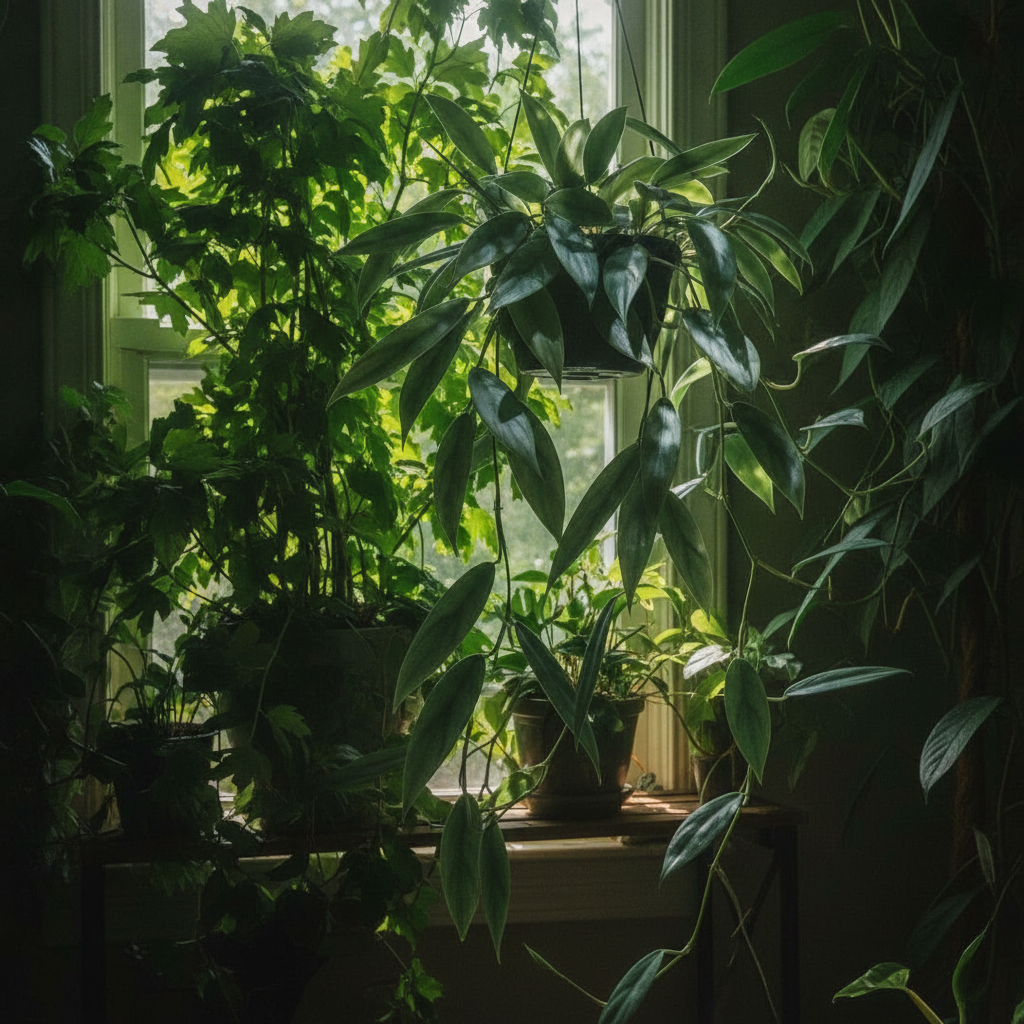
Bright, indirect light is the goal. A position a metre or two back from an east or west-facing window, or a few steps inside a bright south-facing room, suits it almost perfectly. In these conditions the silvery sheen is at its most pronounced, the internodes (the gaps between leaves) stay short and compact, and the vine grows with real vigour. This is also the lighting in which a plant trained up a pole is most likely to begin maturing and producing its fenestrated adult foliage.
The plant will survive in medium and even fairly low light, which is partly why it has a reputation as an easy houseplant. What it will not do in those conditions is thrive. Starved of light, the vine stretches, the gaps between leaves lengthen, new leaves come in smaller, and the celebrated blue shimmer fades towards a flat green. A leggy, dull Cebu Blue is almost always a plant asking for more light rather than more of anything else. If a brighter window is not available, the species responds well to a full-spectrum LED grow light running for ten to twelve hours a day.
Direct sun is the one thing to avoid. A few hours of gentle early-morning sun do no harm, but harsh midday or afternoon sun striking the leaves directly will scorch them, leaving bleached, crispy patches that never recover. If you can see a hard-edged shadow cast by the plant for much of the day, the light is too strong and the pot should be moved back or screened with a sheer curtain.
Pro Tip — Rotate for even growth: Like most vining aroids, the Cebu Blue grows towards its light source and will lean and thin out on the shaded side over time. Give the pot a quarter turn each time you water to keep the foliage full and balanced all the way round.
Watering
If overwatering kills more houseplants than anything else, the Cebu Blue gives you a built-in margin for error. Its stems are semi-succulent and hold a useful reserve of moisture, so the plant copes far better with being a little too dry than with sitting in sodden mix. The guiding principle is simple: water thoroughly, then wait until the soil has dried out substantially before watering again.
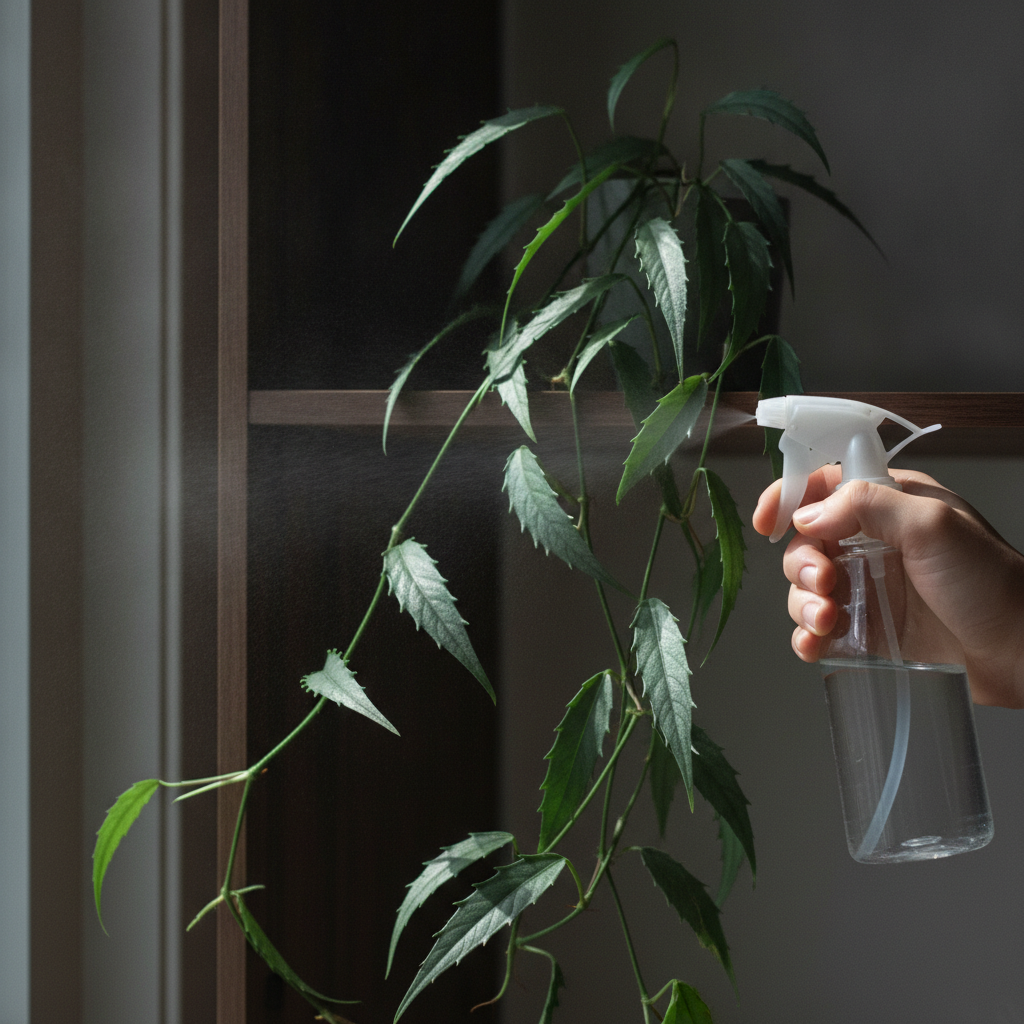
In practice, wait until the top 3 to 5 cm (1 to 2 in) of the mix feels dry to the touch, then water until it runs freely from the drainage holes. Let it drain completely and never leave the pot standing in a saucer of water. During the warmth of spring and summer, when the plant is growing actively, this might mean watering every five to seven days. In the lower light and cooler temperatures of autumn and winter, the interval can stretch to ten days or a fortnight. Rather than watering on a fixed schedule, check the soil with a finger and let the plant’s actual needs set the pace.
The two failure modes show up clearly in the leaves. Persistent overwatering produces yellowing leaves, often several at once and frequently lower down the plant, sometimes accompanied by a soft, mushy stem base and the sour smell of rot. Underwatering, by contrast, leaves the foliage limp, curled and crisp at the edges, with the semi-succulent stems looking thinner than usual. Of the two, recovering an underwatered Cebu Blue is far easier than rescuing one that has been kept soggy, which is why erring towards the dry side is sound advice.
Water quality rarely troubles this species. It is not as sensitive as a calathea, so ordinary tap water is usually fine. If your water is very hard or heavily chlorinated and you notice mineral crusting on the soil surface, leaving water to stand overnight or using filtered or rainwater will keep things tidy, though it is seldom strictly necessary.
Soil and Potting
As an epiphytic climber, the Cebu Blue is built to anchor its roots into bark, leaf litter and the crevices of tree trunks rather than dense earth. Its roots want air as much as moisture, and the most common potting mistake is sealing them into a heavy, water-retentive medium. The answer is a chunky, free-draining aroid mix that mimics the loose, airy material the plant evolved to grow in.
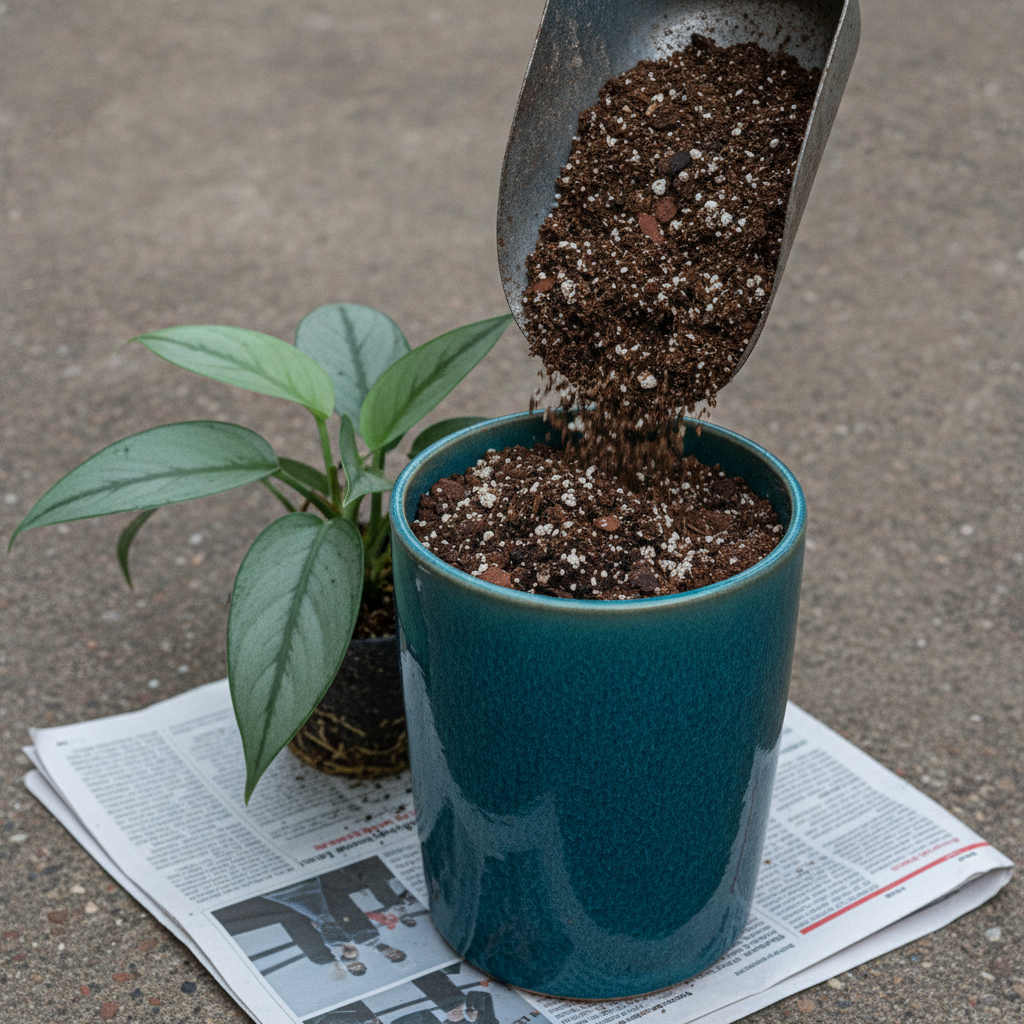
A reliable blend starts from a base of good-quality houseplant compost and opens it up with generous additions. A practical recipe is roughly equal parts potting compost, orchid bark and perlite, with a couple of handfuls of horticultural charcoal and a little coco coir mixed through. The bark provides the chunky structure the roots love to grip, the perlite guarantees drainage and air pockets, the charcoal helps keep the mix sweet, and the coir holds just enough moisture to stop everything drying out too fast. The result should feel light and loose in the hand and water should pour straight through it.
Whatever pot you choose must have drainage holes; this is non-negotiable for a plant this sensitive to wet feet. Terracotta is an excellent choice because its porous walls wick away excess moisture, though a plastic or glazed nursery pot works perfectly well if you are disciplined about watering. The Cebu Blue is not in a hurry to be repotted and is quite content to be a little root-bound, so there is no need to keep moving it into ever-larger containers.
Plan to repot roughly every two years, or whenever you see roots escaping the drainage holes and circling the bottom of the pot. Spring, at the start of the growing season, is the ideal moment. Move up just one pot size, no more, since an oversized pot holds a reservoir of damp soil around the roots that invites rot. This is also the natural time to refresh tired, broken-down mix and to add or upgrade a moss pole if you are encouraging the plant to climb and mature.
Warning — Skip the pebble myth: A layer of gravel or pebbles at the bottom of the pot does not improve drainage. It actually raises the saturated zone of soil closer to the roots. Use a free-draining mix throughout and a pot with proper holes instead.
Fertilising
The Cebu Blue is not a heavy feeder, but because a houseplant draws on only the small pocket of soil in its pot, a little supplementary feeding during the growing season makes a visible difference to leaf size and colour. The aim is steady, gentle nutrition rather than a forced growth spurt.
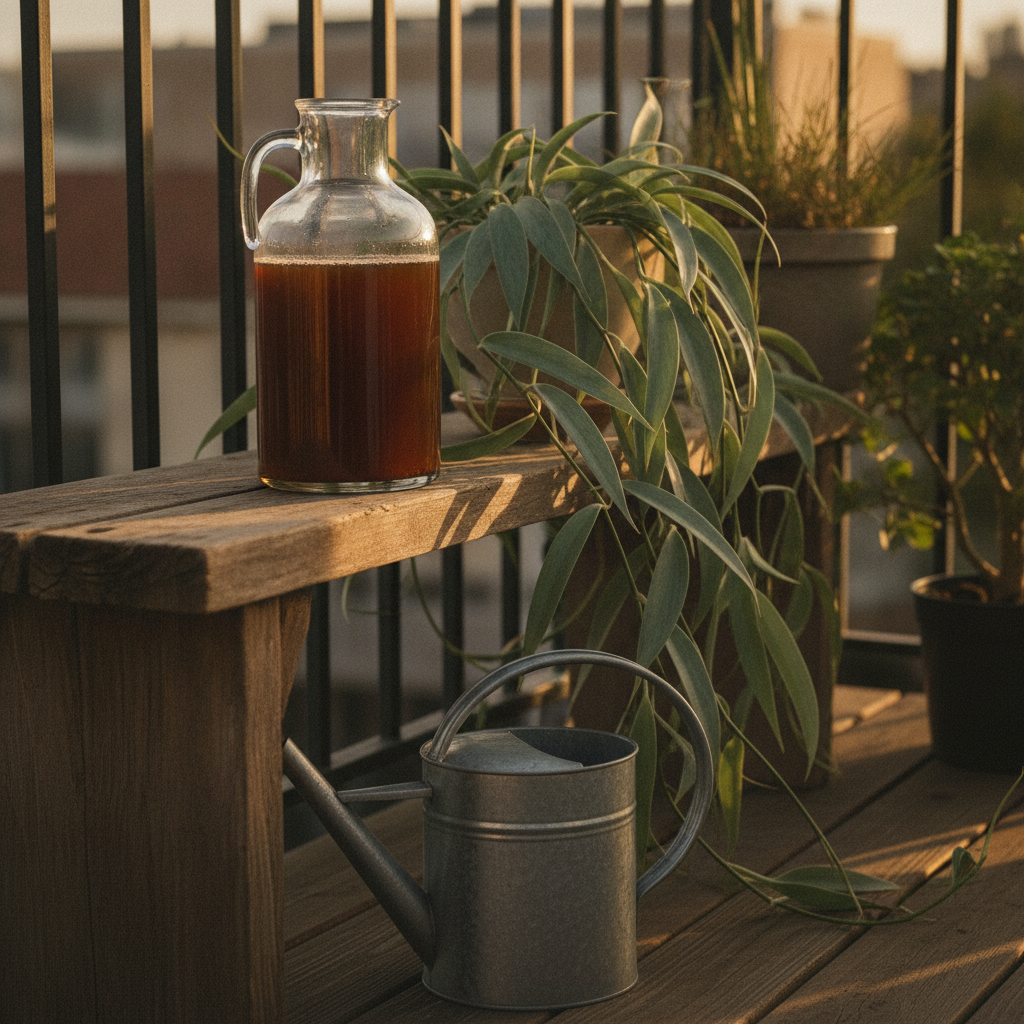
Through spring and summer, feed about once a month with a balanced liquid houseplant fertiliser diluted to half the strength recommended on the bottle. A balanced formulation, with roughly equal nitrogen, phosphorus and potassium, supports both healthy foliage and strong roots. Diluting it protects against the most common feeding mistake, which is overfeeding: too much fertiliser scorches the root tips and leaves a tell-tale white crust of mineral salts on the soil surface and around the pot rim. With this plant, less and more often beats a heavy occasional dose.
In autumn and winter, growth slows or stops as light levels fall, and the plant’s appetite drops with it. Stop feeding entirely during these months. Fertilising a dormant or slow plant simply leaves unused salts to accumulate in the soil, where they can do harm rather than good. Resume in spring once you see fresh new leaves unfurling, which is the plant’s own signal that it is ready to use the extra nutrition.
If salts do build up over time, flush the pot every few months by running water through the soil for a minute or two and letting it drain completely. This washes the accumulated minerals out through the drainage holes and resets the soil chemistry. It is a small piece of routine maintenance that keeps the root system healthy over the long term.
Propagation
Propagating the Cebu Blue is one of the genuine pleasures of owning one. Like its pothos relatives it roots with almost comic ease from stem cuttings, so a single plant quickly becomes the source of gifts, backups and a fuller pot. The whole process turns on one piece of plant anatomy: the node.
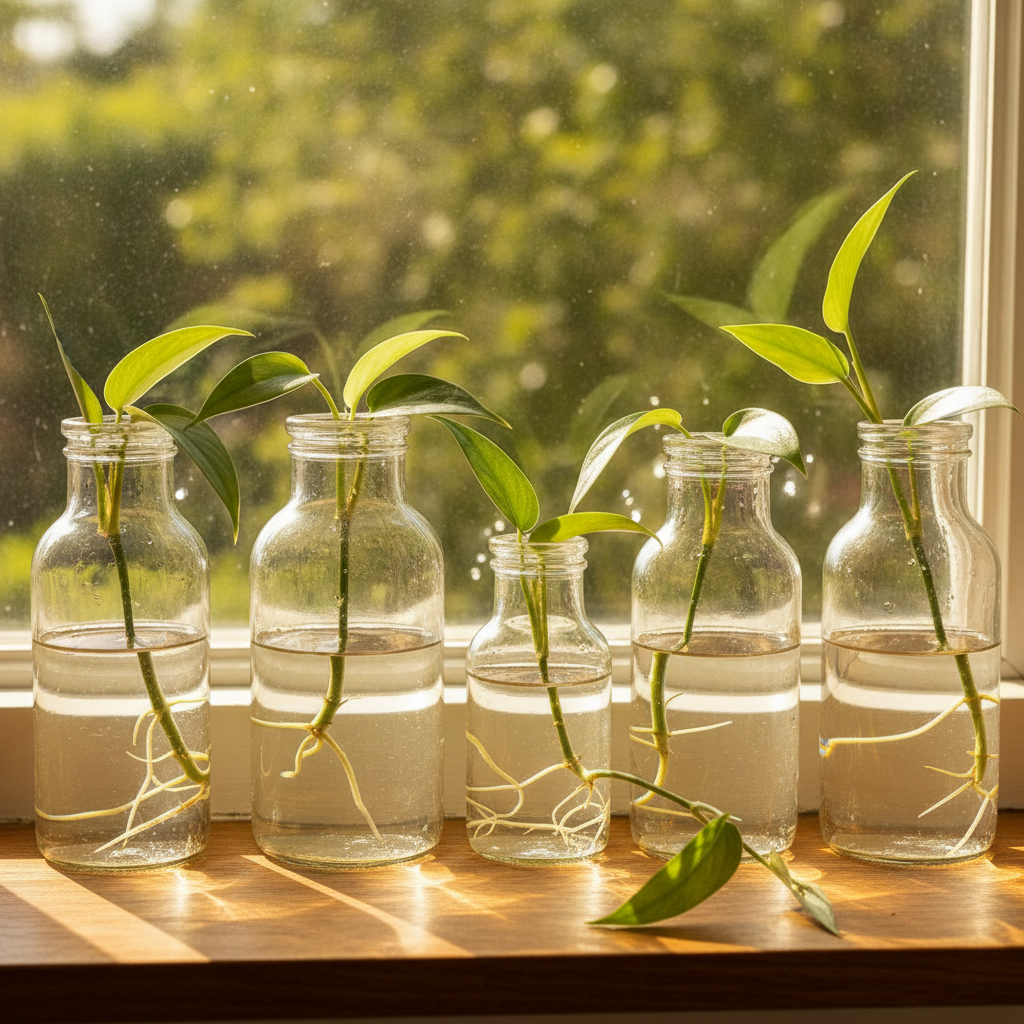
A node is the slightly swollen point on the vine where a leaf meets the stem, and it is from here that new roots emerge. Often you can already see a small brown nub, an aerial root, beginning to form there. Any cutting you take must include at least one node; a leaf alone, with no node attached, will sit in water indefinitely and never root. With that single rule understood, the rest is straightforward.
To propagate in water, follow these steps:
- Using clean, sharp scissors or secateurs, cut a healthy length of vine just below a node, taking a section with two or three leaves.
- Remove the lowest leaf so that its node sits bare, since this is the node you will submerge.
- Place the cutting in a glass of clean room-temperature water, making sure at least one node is underwater while the remaining leaves stay above the surface.
- Set the glass in a warm spot with bright, indirect light, and refresh the water every few days to keep it oxygenated and clear.
- Within one to three weeks, white roots will emerge from the node. Once they reach 3 to 5 cm (1 to 2 in), pot the cutting up into a chunky aroid mix.
Water rooting is the most satisfying method because you can watch the roots develop, but it has one drawback: water roots are slightly different from soil roots and the cutting needs a short adjustment period after potting. To skip that step, you can root cuttings directly in moist sphagnum moss or straight into the aroid mix itself, keeping the medium lightly damp and the humidity high. Cuttings planted this way establish a little more slowly at first but transition more smoothly into a permanent home.
Whichever route you take, spring and summer are the best times to propagate. In the warmth and brighter light of the growing season, cuttings root faster and more reliably than they do in the short, cool days of winter, when the whole process slows to a crawl.
Pro Tip — Pot several together: A single rooted cutting can look sparse for months. For a full, lush pot straight away, root three or four cuttings at once and plant them together in the same container. The plant naturally grows as a clustered vine, so this only mimics how it behaves in the wild.
Pests and Problems
A healthy, well-grown Cebu Blue is rarely troubled by pests, and most of the problems owners encounter trace back to watering or light rather than to insects. Still, it pays to know what to watch for, because catching trouble early is far easier than reversing it.
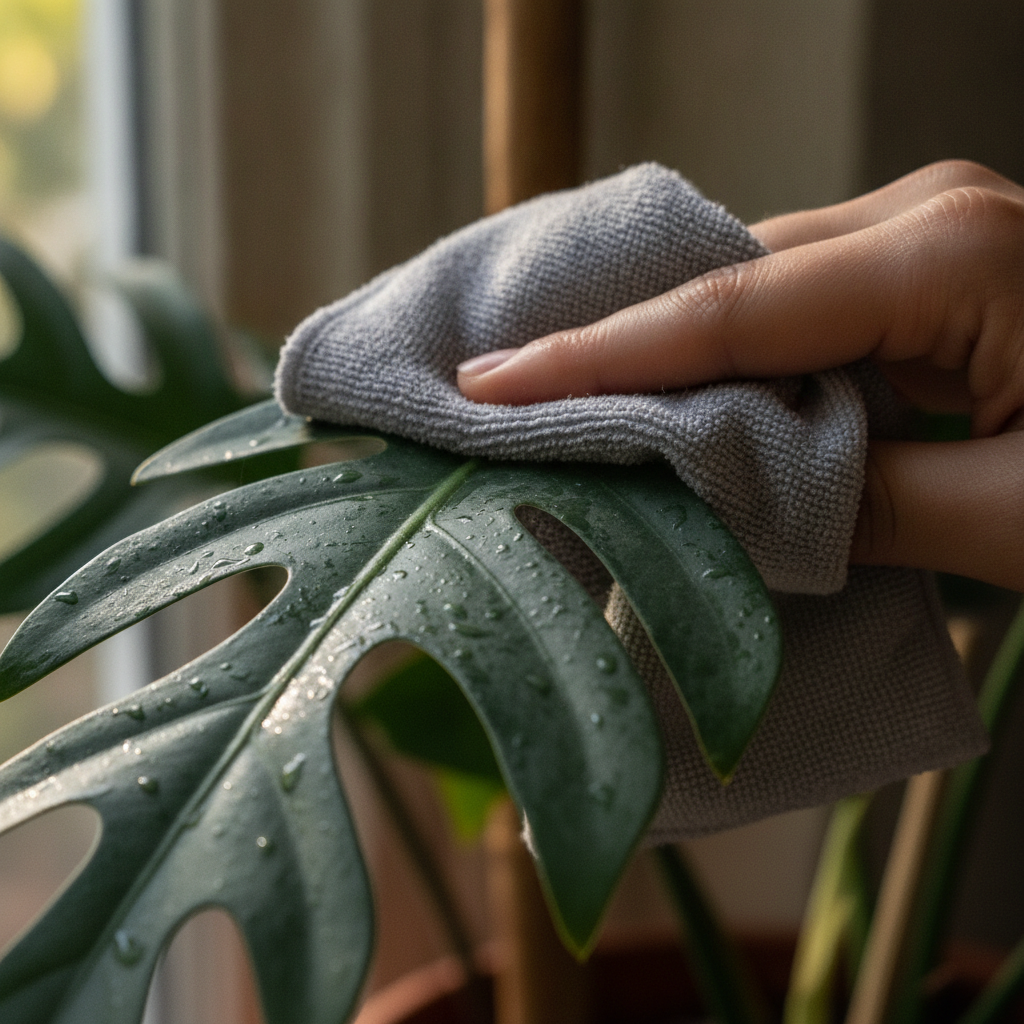
The usual indoor suspects are spider mites, mealybugs and scale. Spider mites favour warm, dry air and betray themselves with fine webbing in the leaf axils and a faint stippling or speckling across the foliage; raising humidity and rinsing the plant down discourages them. Mealybugs appear as small cottony white tufts tucked where leaf meets stem, while scale shows up as flat brown bumps that do not brush off easily. All three respond to the same treatment: wipe the affected areas with a cotton bud dipped in diluted isopropyl alcohol, then treat the whole plant with insecticidal soap or a neem oil solution, repeating every week or so until the infestation clears. Isolate an affected plant from its neighbours while you deal with it.
More often, though, the complaints are physiological. The table below maps the most common symptoms to their usual causes and fixes.
| Symptom | Likely Cause | Remedy |
| Yellowing leaves, often lower down | Overwatering or waterlogged mix | Let the soil dry further; check drainage and reduce frequency |
| Crispy brown leaf edges | Low humidity or underwatering | Raise humidity; check the watering routine |
| Leggy growth, long gaps between leaves | Insufficient light | Move to a brighter spot or add a grow light |
| Faded, dull, less silvery colour | Too little light | Increase brightness gradually |
| Bleached or scorched patches | Direct sun | Move out of direct rays or add a sheer screen |
| No fenestration on mature plant | Not climbing, or light too low | Provide a moss pole and brighter light |
One quiet point of confusion deserves a mention: the lack of fenestration on a juvenile plant is not a problem at all. Owners sometimes worry that their Cebu Blue is unhealthy because the leaves stay small and entire, but this is simply the plant’s juvenile form. The holes and splits arrive only once the vine starts climbing and maturing, which brings us neatly to the question of varieties.
Warning — Toxic if eaten: Like all Epipremnum species, the Cebu Blue contains insoluble calcium oxalate crystals and is toxic to cats, dogs and humans if chewed or swallowed, causing oral irritation, drooling and stomach upset. Keep it out of reach of curious pets and small children, and wash your hands after taking cuttings.
Varieties
The Cebu Blue is itself a named selection of Epipremnum pinnatum, prized for its blue sheen, so the “varieties” worth knowing are really the forms you will encounter in the trade. Two stand out: the classic Cebu Blue everyone falls for, and its rare, coveted variegated counterpart.
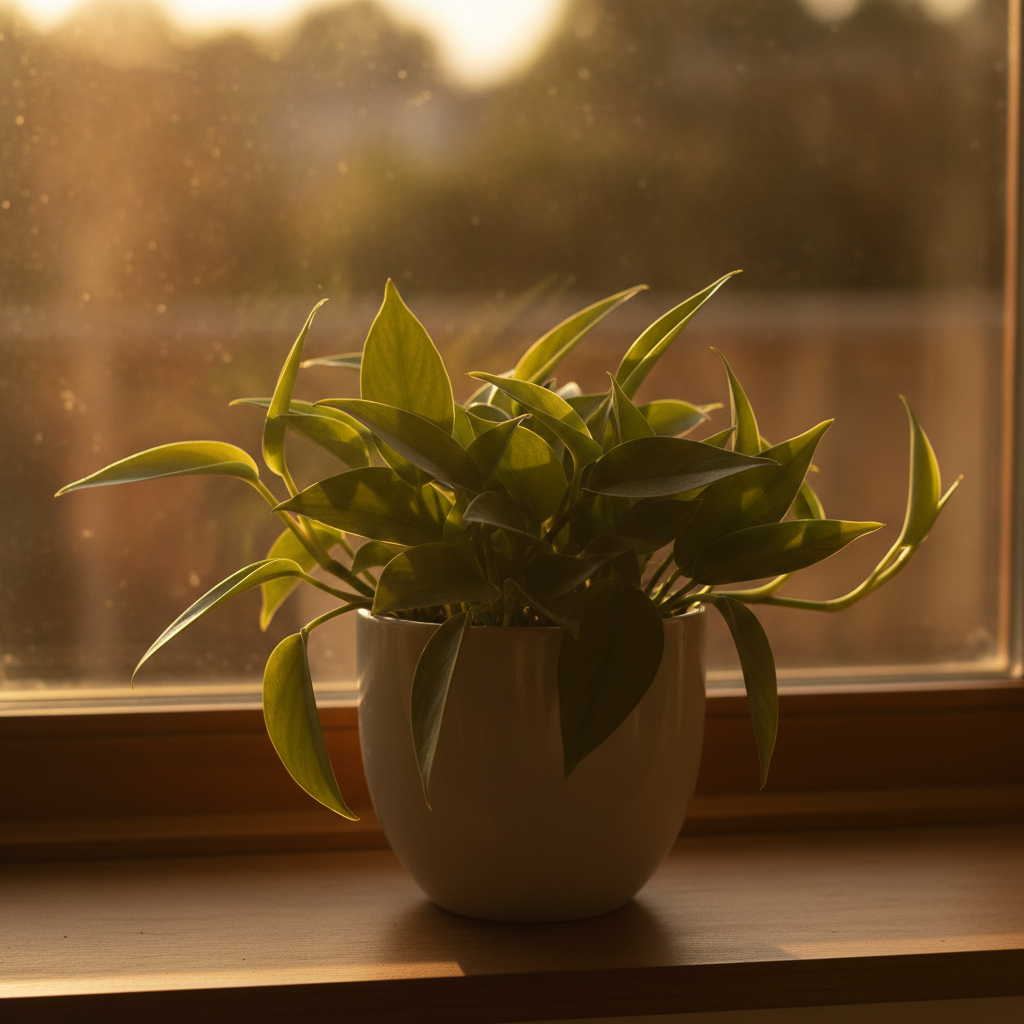
Cebu Blue is the form that started it all. Its juvenile leaves are narrow, lance-shaped and carry the signature silvery blue-green metallic shimmer that gives the plant its name. Grown up a pole in bright light, it eventually produces much larger, pinnately fenestrated adult leaves, the dramatic split foliage that surprises so many owners. Easy, vigorous and widely available, it is the version almost everyone owns.
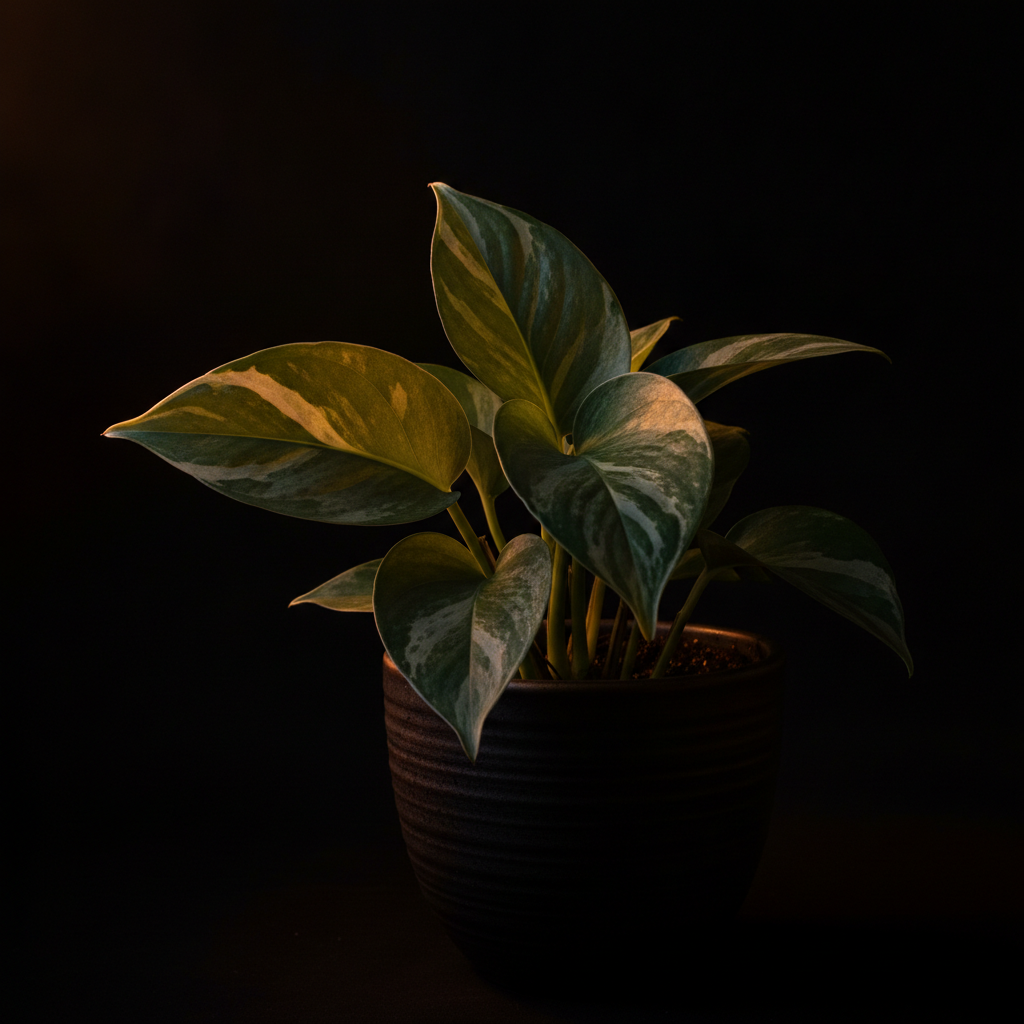
Variegated Cebu Blue is the rare, highly sought-after form, with blue-green leaves marbled and streaked in creamy white. The variegated tissue carries less chlorophyll, so the plant grows more slowly and needs consistently bright, indirect light to keep its colour balance and avoid reverting to plain green. It commands a premium price and a little more attention, but for collectors the shimmering blue-and-cream foliage is hard to resist.
Beyond these two, you may see the plain green species, Epipremnum pinnatum without the blue selection, sold simply as a “Dragon Tail” plant. It is the same species and shares the same easy care, but lacks the metallic colour that makes the Cebu Blue special. Whichever form you choose, the care described in this guide applies across the board.
Frequently Asked Questions
Is the Cebu Blue Vine a pothos or a philodendron?
Neither exactly, though it is closest to pothos. It is Epipremnum pinnatum ‘Cebu Blue’, a member of the same genus as the common pothos (Epipremnum aureum) but a distinct species. It is sometimes mislabelled a “blue philodendron”, but it is not a philodendron at all. The care, however, is very much like that of a pothos.
Why are my Cebu Blue’s leaves not splitting?
Fenestration, the splits and holes in the leaves, only develops on mature growth. To trigger maturity, the vine needs to climb. Give it a moss pole to ascend and provide bright, indirect light, and over time it will begin producing the larger, pinnately split adult foliage. A plant left to trail will keep making small juvenile leaves indefinitely, which is perfectly healthy, just not mature.
Why has my plant lost its blue colour?
The silvery-blue sheen is most pronounced in bright, indirect light. If a plant is kept too dark, the colour flattens towards ordinary green and growth becomes leggy. Move it gradually to a brighter position, or supplement with a grow light, and the cooler tones will return on new growth.
How fast does the Cebu Blue Vine grow?
In good light and warmth it is a vigorous grower, easily putting on a metre or more of vine in a single growing season. Growth slows markedly in winter and in lower light. Climbing plants on a pole tend to grow larger leaves and gain height faster than those left to trail.
Is the Cebu Blue Vine safe around pets?
No. It contains insoluble calcium oxalate crystals and is toxic to cats, dogs and humans if ingested, causing mouth irritation, drooling and digestive upset. It is not usually life-threatening, but it is unpleasant, so keep the plant out of reach of pets and children that like to nibble.
Can I grow it in just water permanently?
You can keep a Cebu Blue alive in water for a long time, and many people maintain cuttings this way for months. For the healthiest, most vigorous plant in the long run, however, it is better to pot rooted cuttings into a chunky aroid mix. If you do grow it in water, change the water regularly and add a few drops of dilute hydroponic fertiliser to supply the nutrients soil would otherwise provide.






