
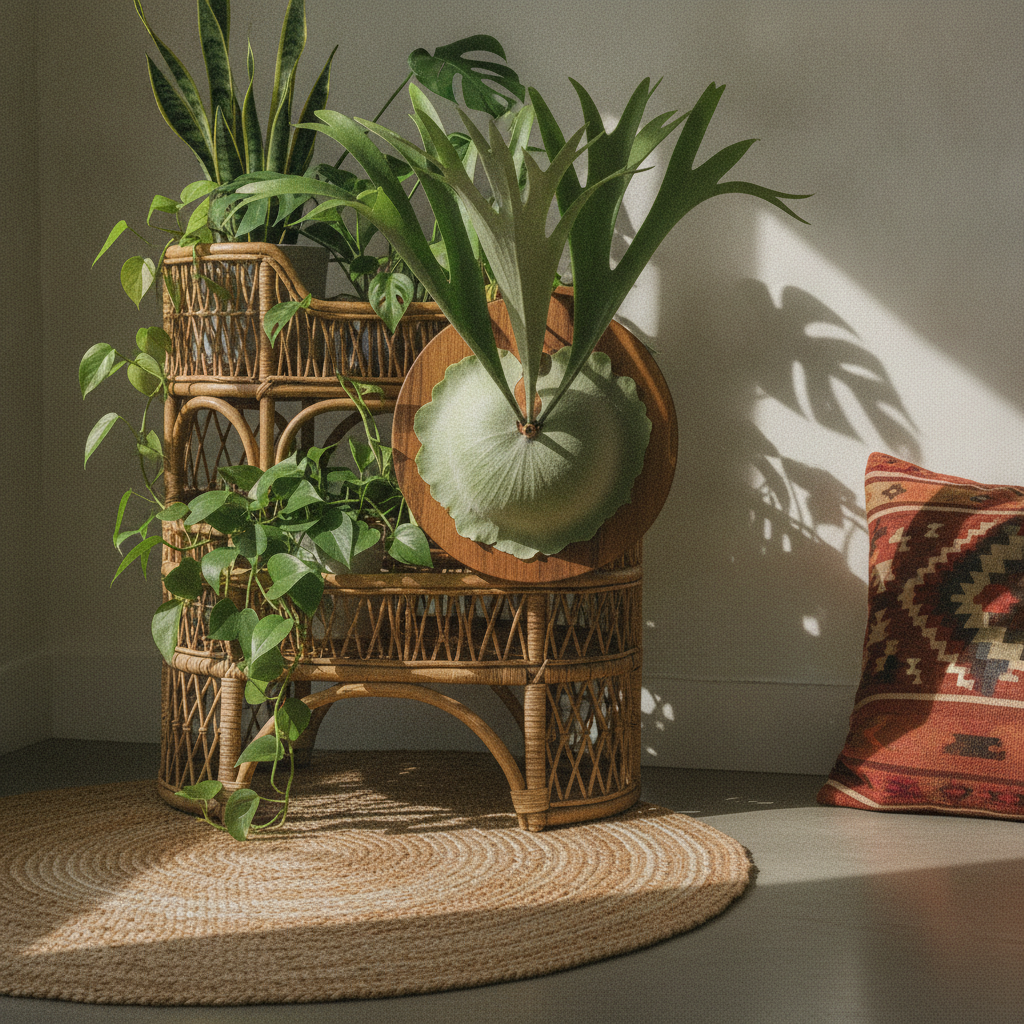
Few houseplants command a wall the way the staghorn elkhorn fern does. Known botanically as Platycerium superbum, this Australian epiphyte grows not as a tidy pot of foliage but as a living sculpture: a broad shield of overlapping fronds cradling a crown of forked, antler-like leaves that arch outward like the headgear of a stag. It is one of the largest of all staghorn ferns, and where the common staghorn is content on a small plaque, a mature superbum can throw fertile fronds well over a metre (3 to 4 feet) long. Growing it well is less about routine watering and more about understanding an organism that evolved to live in the fork of a rainforest tree, drinking from the air and the debris it catches.
In this guide
- Quick reference
- Why grow the staghorn elkhorn fern
- Light
- Watering
- Soil and mounting
- Fertilising
- Propagation
- Pests and problems
- Varieties and relatives
- Frequently asked questions
Quick reference
| Botanical name | Platycerium superbum |
| Common names | Staghorn fern, elkhorn fern, giant staghorn |
| Family | Polypodiaceae |
| Origin | Rainforests of eastern Australia (Queensland and New South Wales) |
| Growth habit | Epiphytic fern, mounted or basket grown, solitary (does not form clumps) |
| Mature size | Up to 1.5 to 2 m (5 to 6.5 ft) across on a mature mount |
| Light | Bright, filtered or indirect light; no harsh direct midday sun |
| Water | Soak the mount when the moss approaches dry, then let it drain fully |
| Humidity | Moderate to high, 50 per cent and above preferred |
| Temperature | 15 to 24 C (59 to 75 F); protect below 10 C (50 F) |
| Feeding | Dilute balanced feed roughly monthly in the growing season |
| Propagation | Spores only (no pups or divisions) |
| Toxicity | Non-toxic to cats and dogs |
| Difficulty | Intermediate |
Why grow the staghorn elkhorn fern
The staghorn elkhorn fern earns its place through sheer architecture. Unlike most ferns, which produce a single kind of leaf, Platycerium superbum grows two distinct frond types, each with a job to do. The first are the sterile fronds, sometimes called shield or nest fronds. These start pale green and rounded, pressing flat against the mount, and over months they mature to a papery tan and build up into a large upright basket. Far from being dead leaves to be tidied away, this basket is the plant’s stomach and root protection: it catches falling leaves, rain and insects, and shelters the root ball in a cool, moist pocket. The second frond type is the fertile fronds, the dramatic grey-green antlers that fork repeatedly and give the plant its name. On the undersides of these, at the notch where the lobes divide, the plant produces a single dense patch of brown spores.
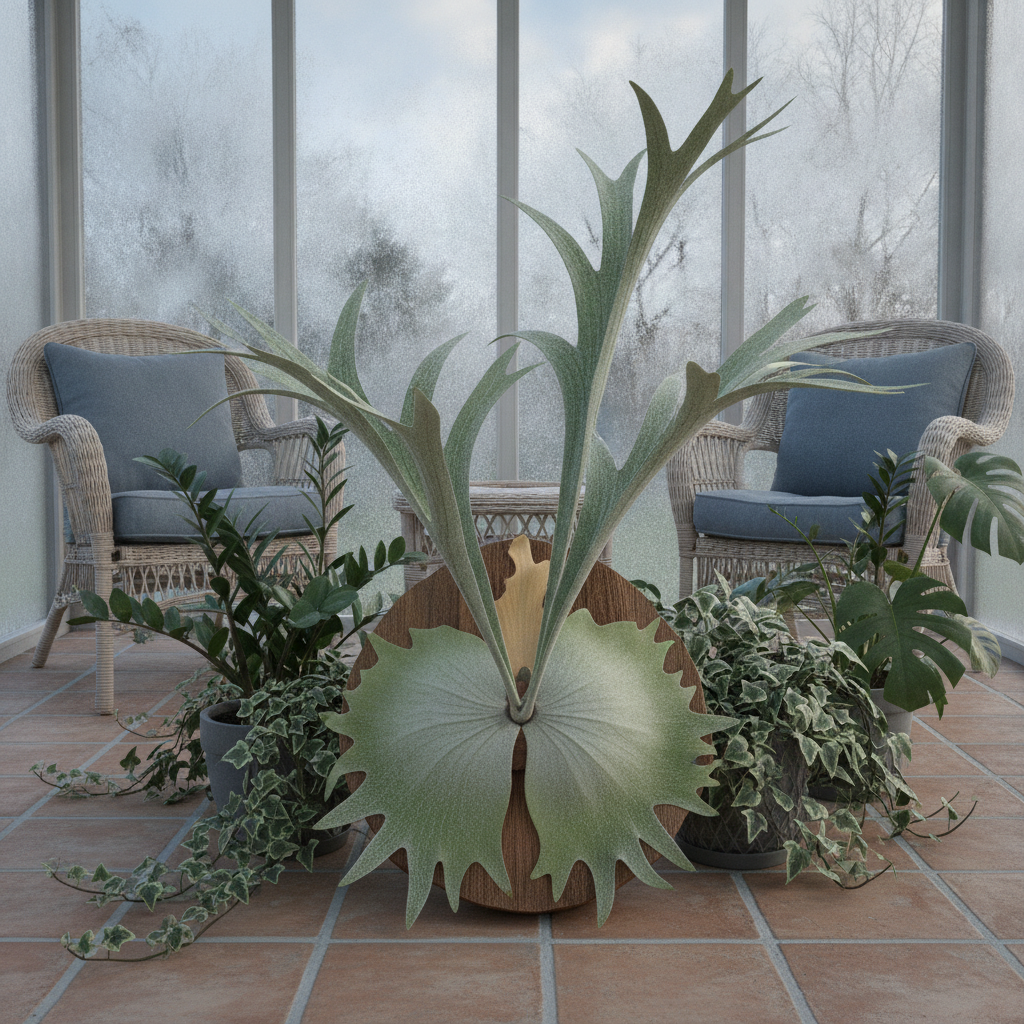
In the wild, this fern wedges itself into the branches of tall trees, drawing nothing from the soil below and everything from the air, the rain and the litter it collects. Understanding that origin explains almost every care decision that follows. It is why the plant prefers to be mounted rather than potted, why it is watered by soaking rather than sipping from a saucer, and why overwatering is the single fastest way to kill it. It is also why superbum grows as a solitary plant: unlike the clumping common staghorn, it does not produce offsets, so a specimen is always a single crown that slowly, majestically enlarges. For a grower willing to meet it halfway, it repays the effort with decades of striking growth and almost no fussiness once established.
Light
Light is the lever that decides whether a staghorn elkhorn fern merely survives or genuinely thrives. In its native canopy it lives in dappled brightness, shaded from the fierce overhead sun by the leaves above but bathed in plenty of ambient light from the sides. Indoors, the goal is to recreate that bright-but-buffered quality. A position a metre or two back from an east or north window, or beside a south or west window screened with a sheer curtain, suits it well. There it will build broad, firm shield fronds and hold its antlers proudly upright.
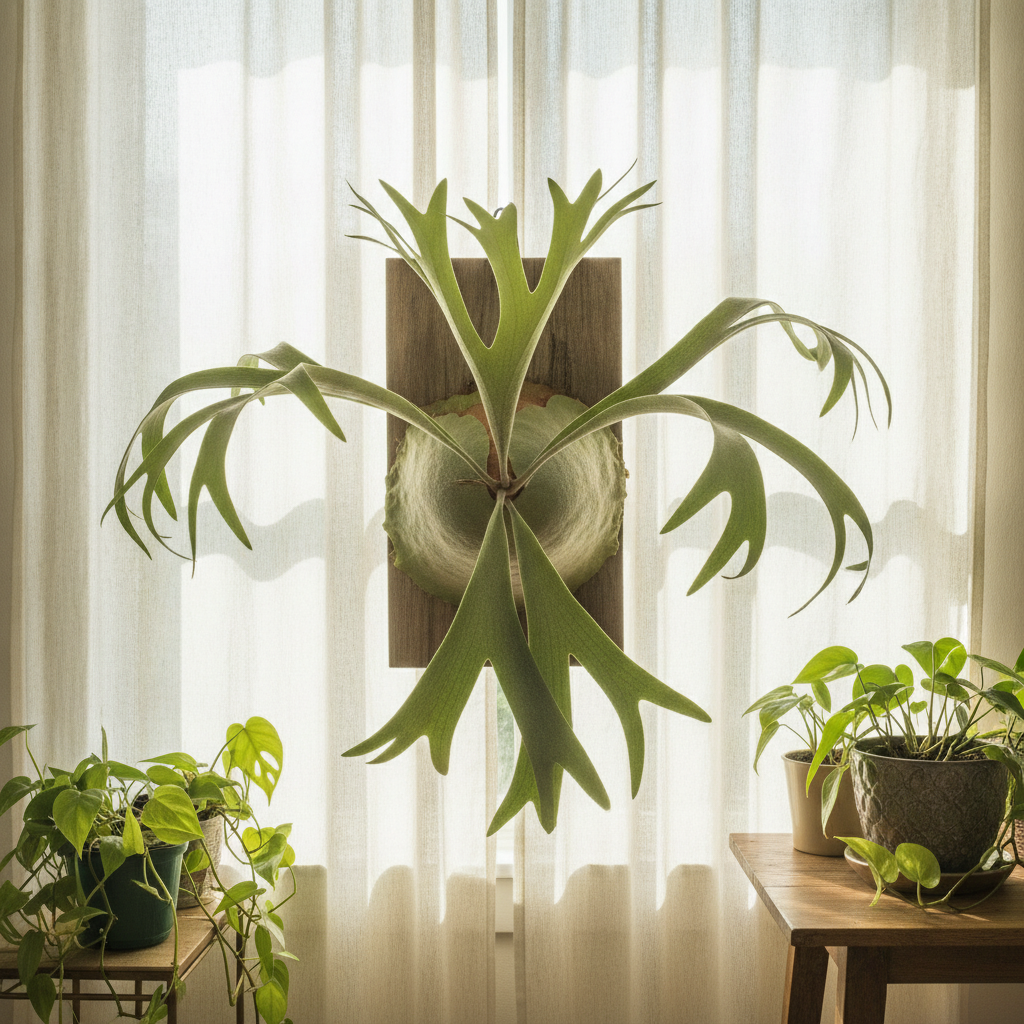
Too little light produces a plant that will survive but sulk: fronds come in soft, pale and floppy, spacing between growth stretches, and the whole specimen loses the taut, sculptural quality that makes it worth growing. Too much direct sun is worse and faster, scorching the fertile fronds with bleached or brown patches that never recover. The felted, silvery down that coats healthy fronds is the plant’s own sunscreen, but it can only do so much against unfiltered glass. If you move a fern that has been living in shade into a brighter spot, do it gradually over two to three weeks so the fronds can acclimatise rather than burn.
Pro Tip – Reading the fronds: A staghorn holding its antlers firm and upright with a fresh silvery bloom is getting the light it wants. Fronds that flop and darken to a flat, dull green usually mean the plant needs to move closer to the window.
Watering
Watering a mounted staghorn is unlike watering any potted plant, and getting comfortable with the technique is the biggest step towards success. Because there is no pot and often no conventional soil, you cannot judge thirst by lifting a container or poking a finger into compost. Instead you learn the weight and feel of the mount. When the moss and root ball behind the shield fronds are approaching dry, take the whole mount down and soak it: submerge the root ball and moss in a basin, sink or bucket of room-temperature water for around ten to twenty minutes until it is thoroughly saturated, then lift it out and let every drop drain away before rehanging.
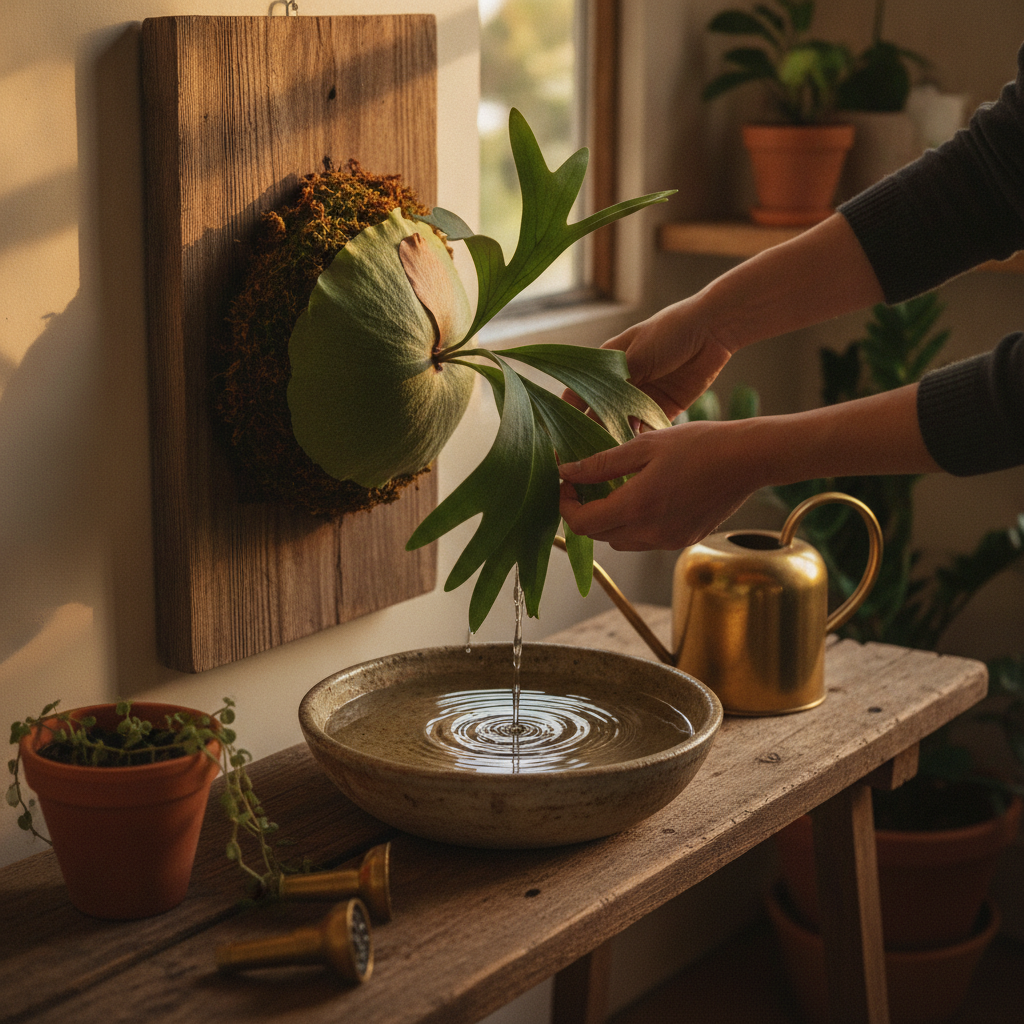
How often you soak depends entirely on your conditions, so treat frequency as something to read rather than schedule. In a warm, bright, airy room a mount might want soaking once a week; in a cool or humid spot it may stretch to every ten days or fortnight. The cardinal rule is that the root ball must dry appreciably between soakings. Staghorns resent sitting permanently wet, and the most common cause of death by far is rot from overwatering, which shows first as blackening at the base of the shield fronds. When in doubt, wait a day. A staghorn tolerates a brief drought far more gracefully than it tolerates a soggy mount. Rainwater or filtered water is kinder than hard tap water over the long term, since these epiphytes are sensitive to mineral build-up, but occasional tap water is not a disaster.
Humidity matters too, since these ferns evolved in a moist forest atmosphere. Average indoor humidity is usually adequate for an established plant, but if your air is very dry, especially in winter with heating running, a grouping with other plants, a nearby humidifier or a well-lit bathroom will all help keep the antlers fresh. Avoid the temptation to mist as a substitute for soaking; misting wets the fronds but does little for the roots that actually need the water.
Warning – Do not remove the brown shields: The tan, papery shield fronds that build up over the mount are alive and essential even when they look dead. Peeling them off exposes the roots and robs the plant of its natural reservoir. Leave them in place permanently.
Soil and mounting
Strictly speaking, a staghorn elkhorn fern does not want soil at all. As an epiphyte it grows on surfaces, not in the ground, so the aim is to give the roots something moist and airy to grip rather than a dense medium that holds water around them. The traditional and still the best approach is to mount the fern on a board or slab. Take a piece of untreated hardwood or a cork slab, build up a generous mound of damp sphagnum moss where the root ball will sit, settle the plant onto it with the shield fronds facing the board, and secure the whole thing with fishing line, plastic-coated wire or strips of old tights wrapped around the base until the roots have gripped on their own.
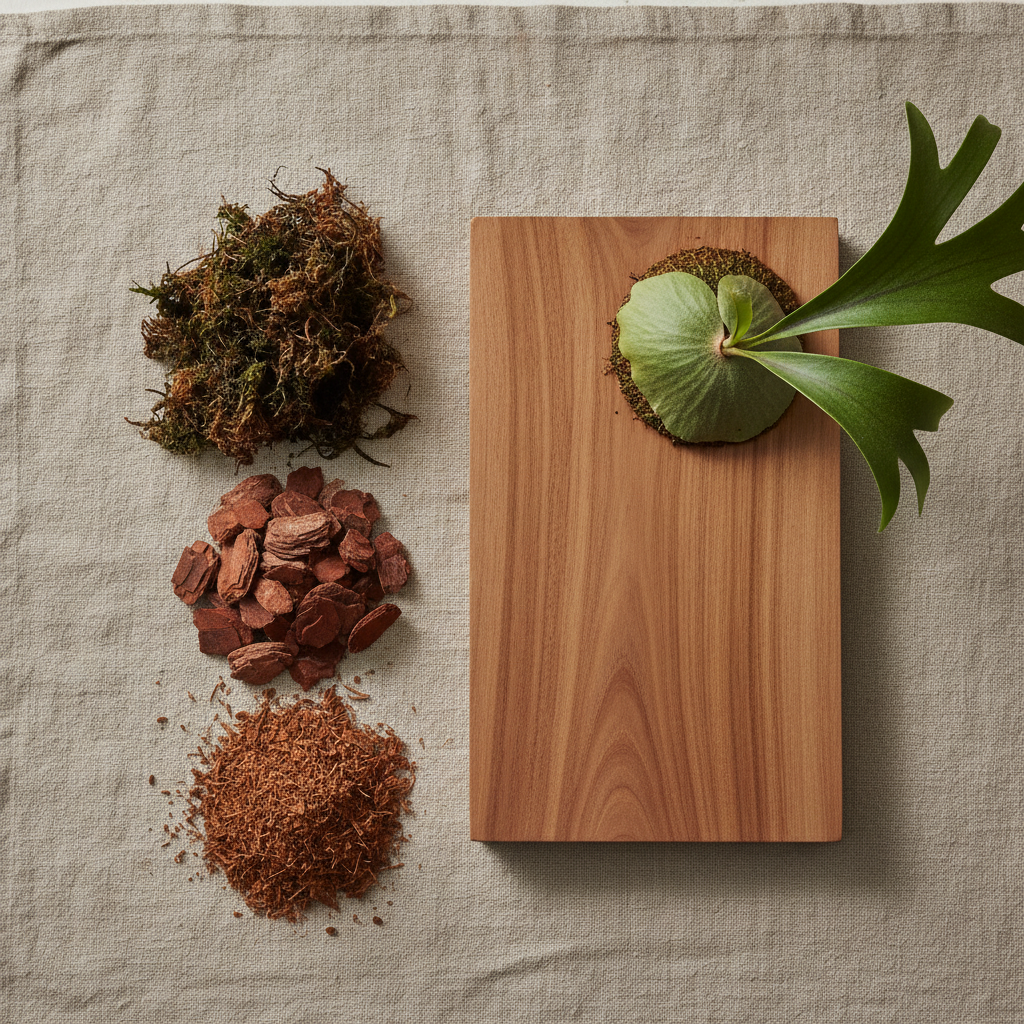
If you would rather not mount, the fern can also be grown in a hanging basket or a wide, shallow pot filled with a very open, chunky mix. A blend along the lines of orchid bark, coarse perlite, coconut coir and a good handful of sphagnum moss holds moisture without staying sodden and gives roots the air they crave. Whatever the method, drainage is everything. The medium should feel like a wrung-out sponge at its wettest, never a swamp.
Staghorns dislike disturbance and are slow to re-establish, so do not repot or remount on any fixed schedule. A young plant may need moving to a larger board every few years as it outgrows the old one, and the signal is simply that the fern has visibly overtaken its mount or the moss has broken down. When that time comes, rather than pulling the plant off its old board, it is usually kindest to fix the entire old mount onto a larger new board and let the fern carry on undisturbed.
Pro Tip – Mount for the long term: Because remounting sets the plant back, start with a board larger than the fern currently needs. A generous mount bought now saves the fern a stressful move in two years’ time.
Fertilising
In the wild a staghorn feeds itself slowly on the decomposing leaf litter and insect debris that collect in its shield-frond basket, so it is adapted to a lean, steady trickle of nutrients rather than heavy feeding. Indoors that translates to a light hand. During the active growing months of spring and summer, a balanced liquid houseplant fertiliser diluted to half the recommended strength, applied roughly once a month, is plenty. The easiest way to deliver it is to add the diluted feed to the water you soak the mount in, so the nutrients reach the roots directly.
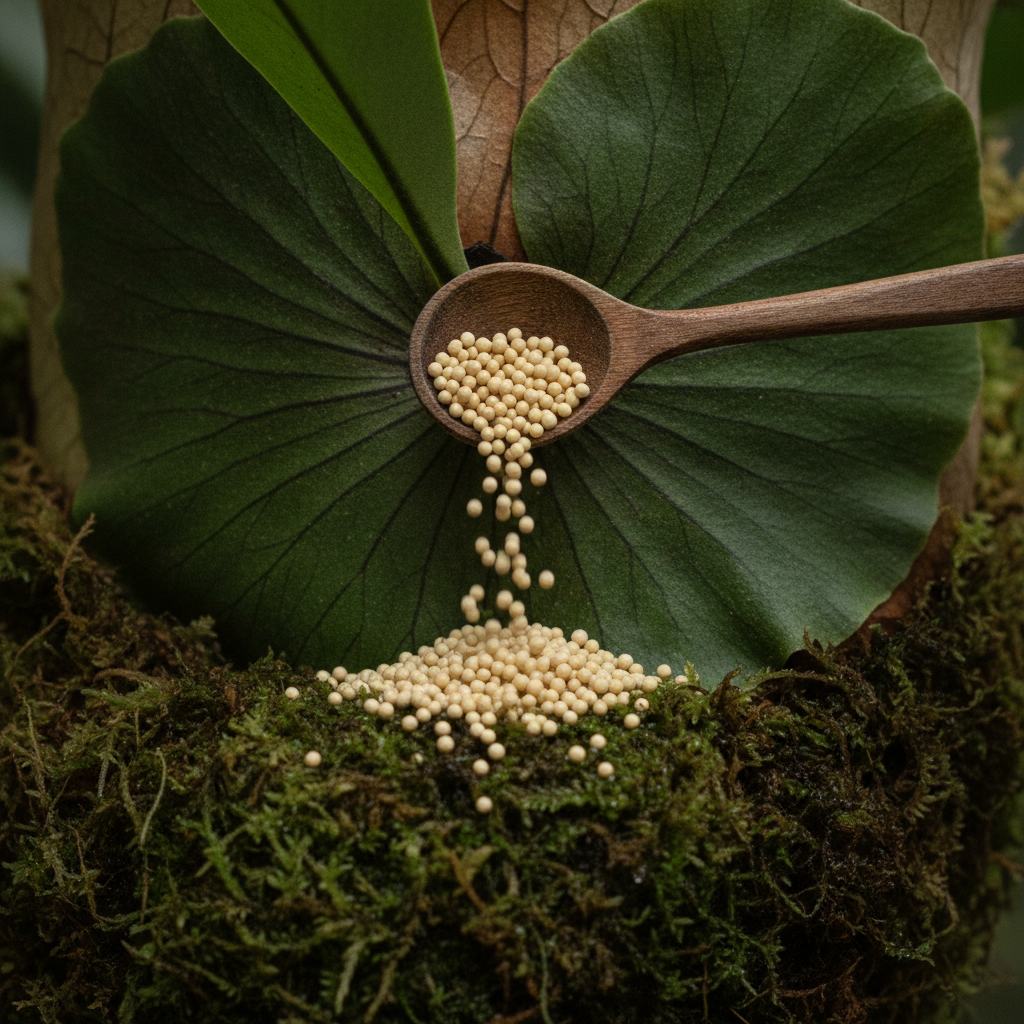
Some growers like to tuck a banana skin or a small amount of well-rotted organic matter behind the shield fronds to mimic the natural litter feed, and mature plants respond well to it, but this is optional and easy to overdo. In autumn and winter, when growth naturally slows, stop feeding altogether and let the plant rest. Over-fertilising is a real risk with these ferns: the felted fronds can develop brown, scorched tips and the roots can be chemically burned if salts accumulate in the moss. If you ever suspect a build-up, flush the mount through with several changes of plain water to leach the excess away.
Propagation
Here the staghorn elkhorn fern parts ways with its more forgiving cousins. The common staghorn, Platycerium bifurcatum, clumps freely and produces pups that can simply be cut away and mounted, giving beginners an easy route to new plants. Platycerium superbum does no such thing. It is a strictly solitary species that never forms offsets, which means the only way to make more is from spores. This is a patient, greenhouse-grower’s project rather than a quick weekend job, but it is genuinely rewarding for anyone who wants to try.
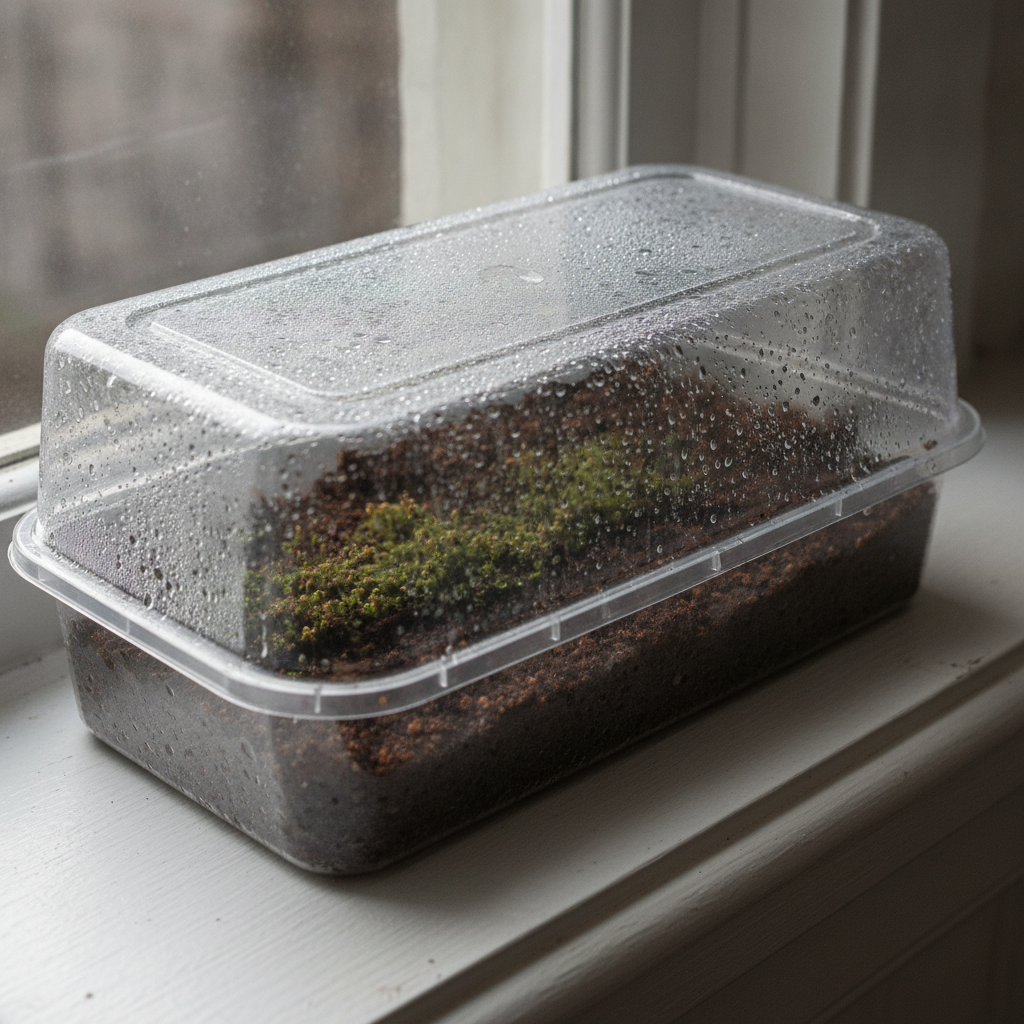
To raise a staghorn from spores, follow these stages:
- Collect ripe spores by cutting a section of fertile frond bearing a dark, dusty spore patch and resting it patch-side down on a sheet of clean paper for a day or two. The fine brown spore dust that falls is what you sow.
- Fill a small container with sterile, damp medium such as milled sphagnum or a fine peat-based seed mix, and scatter the spores thinly across the surface without covering them.
- Cover with a clear lid or place inside a plastic bag to lock in humidity, and set it in warm, bright but indirect light. Keep the surface consistently moist, ideally by watering from below with distilled water.
- Wait. Over several weeks to a few months a green film of prothalli, the fern’s tiny first life stage, develops across the surface. Keep this stage humid, as fertilisation happens in the film of moisture.
- In time, minuscule fronds appear from the prothalli. Once these young ferns are large enough to handle, prick them out into small clumps, grow them on under humidity, and eventually mount the strongest onto their own boards.
The whole journey from spore to mountable plant can take a year or more, and cleanliness is critical throughout to keep algae and moss from overwhelming the delicate prothalli. It is not the way to build a quick collection, but watching a giant fern begin life as green dust is one of the more remarkable things a houseplant grower can do.
Pests and problems
Staghorn elkhorn ferns are robust and relatively pest-resistant, but the pest that does trouble them most is scale insect. These appear as small brown or greyish limpet-like bumps along the fronds and, awkwardly, they can be mistaken for the plant’s own spore patches or the natural felting. The distinction matters: spores sit in a defined patch at the frond notch and rub off as fine dust, while scale insects are scattered, raised and stubbornly stuck. Because staghorns are sensitive to some chemical treatments and to horticultural oils that can clog their felted fronds, the safest approach is physical removal, dabbing each insect with a cotton bud dipped in diluted isopropyl alcohol.
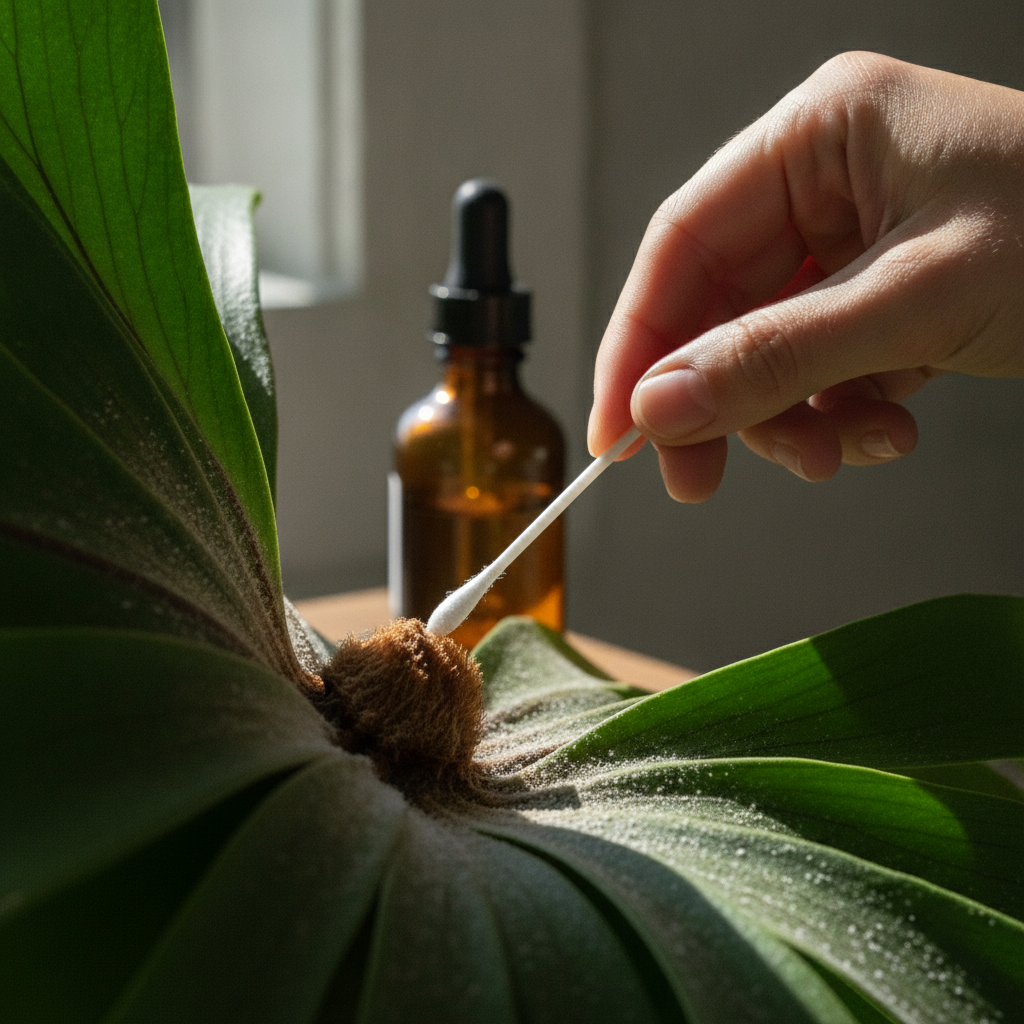
Beyond pests, the problems that trouble staghorns are almost always cultural, and they trace back to water and light. A blackening, mushy base of the shield fronds points to overwatering and rot, the most serious problem of all; the remedy is to stop soaking, improve air movement, and hope the crown has not already been lost. Browning, crisping frond tips usually signal the opposite, air that is too dry, or a build-up of fertiliser salts, or hard-water minerals in the moss. Pale, limp, stretched fronds mean too little light, while bleached or scorched patches mean too much direct sun. The table below gathers the common signals.
| Symptom | Likely cause | What to do |
| Black, soft base of shield fronds | Overwatering and rot | Stop soaking, increase airflow, reduce frequency |
| Brown, crisp antler tips | Low humidity or salt build-up | Raise humidity, flush the moss, ease off feeding |
| Pale, floppy, stretched fronds | Too little light | Move closer to a bright window |
| Bleached or scorched patches | Direct sun | Filter the light or move back from the glass |
| Small stuck brown bumps | Scale insects | Dab with diluted isopropyl alcohol on a cotton bud |
Varieties and relatives
The genus Platycerium holds around eighteen species, and the staghorn most people first meet is not superbum at all but its smaller, easier relatives. Platycerium superbum is frequently confused with Platycerium grande, a very similar giant from Southeast Asia; the reliable way to tell them apart is the spore patches, as superbum carries a single patch at each frond notch while grande carries two. Among the relatives grown as houseplants, two stand out for how differently they behave from the giant solitary superbum.
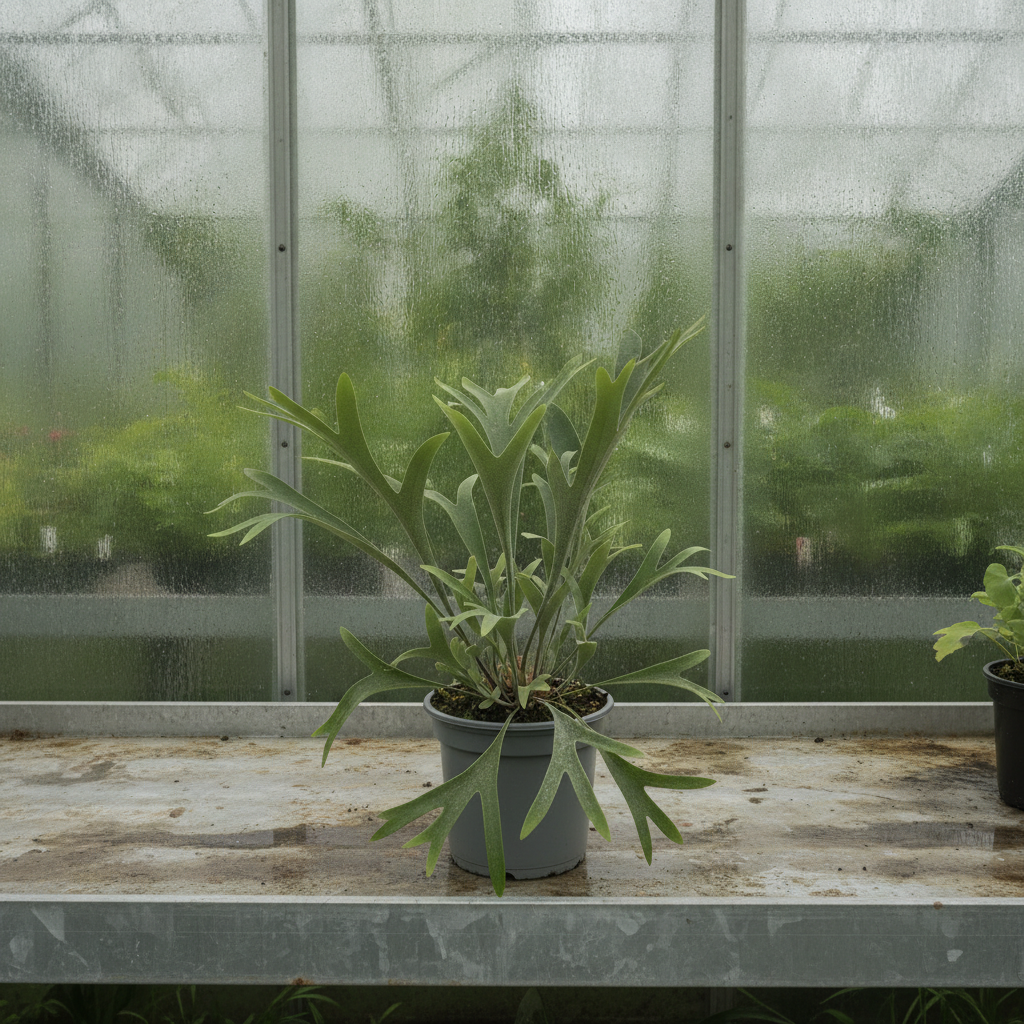
Common Staghorn (Platycerium bifurcatum)
The beginner’s staghorn and by far the most widely sold. It is smaller and hardier than superbum, tolerates cooler and drier conditions, and crucially it clumps: it throws pups from its base that can be divided off to make new plants. If superbum feels daunting, this is the species to learn on.
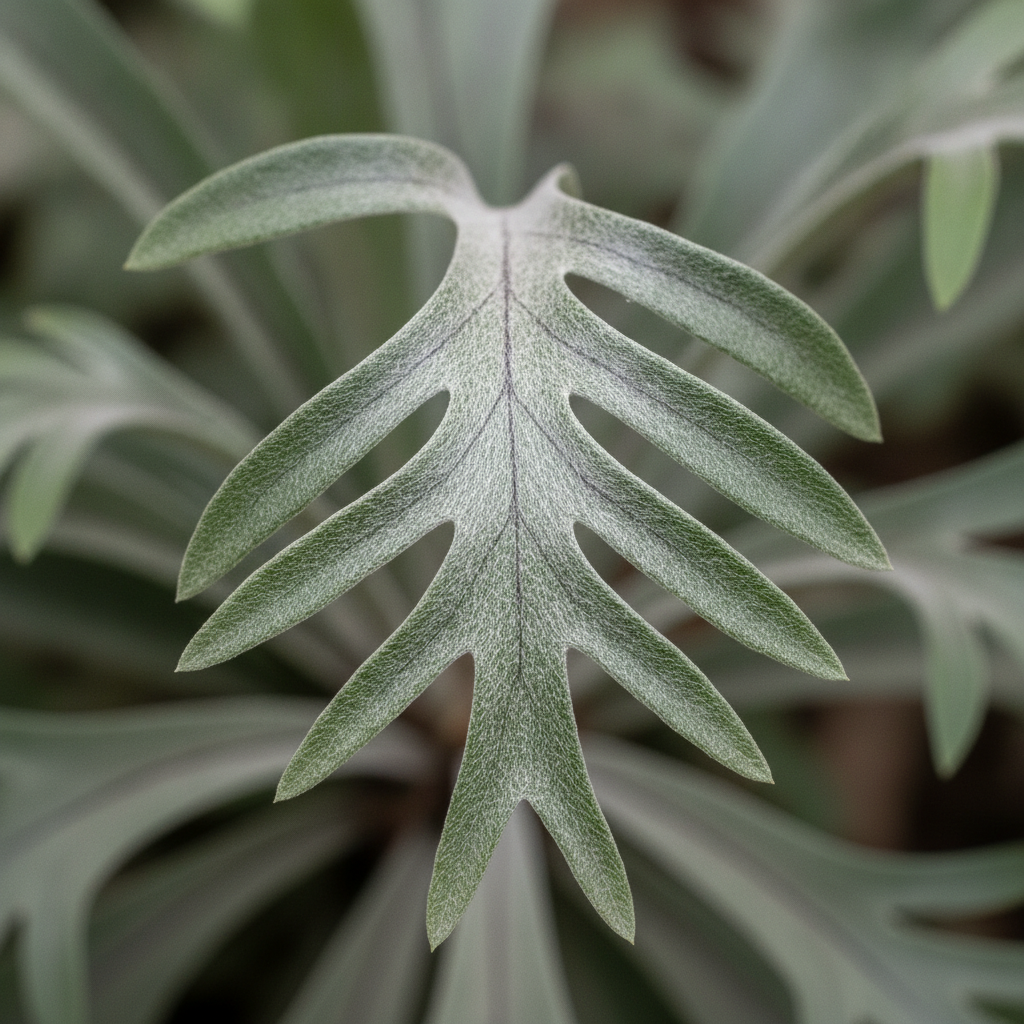
Silver Elkhorn (Platycerium veitchii)
An Australian species prized for its narrow, upright fronds so densely covered in white felt-like hairs that the whole plant looks silvered. That heavy felting is an adaptation to bright, exposed conditions, so veitchii takes more sun than most staghorns and rewards it with a striking pale, sculptural form.
Frequently asked questions
Why are the lower fronds on my staghorn turning brown?
If it is the flat, rounded shield fronds at the back turning tan and papery, this is completely normal and healthy. Shield fronds are meant to mature to brown and build up into a protective basket, and you should never remove them. If it is the antler fronds browning and crisping, look instead at humidity, feeding and water quality.
How do I know when to water a mounted staghorn?
Judge by weight and feel rather than by a calendar. Lift the mount; a freshly soaked one is noticeably heavy, and as it dries it lightens. When it feels light and the moss is approaching dry, it is time to soak again. Erring slightly on the dry side is always safer than keeping the mount constantly wet.
Can I grow a staghorn elkhorn fern in a normal pot of soil?
It is possible in a wide, shallow pot filled with a very open, bark-based epiphyte mix, but dense potting soil will hold too much water around the roots and invite rot. Most growers find the plant healthier and far more striking mounted on a board, which is how it grows in nature.
Is the staghorn elkhorn fern safe around pets?
Yes. Platycerium superbum is considered non-toxic to cats and dogs, which makes it a reassuring choice for pet households. Even so, it is sensible to discourage nibbling, as any plant material can cause a mild stomach upset if eaten in quantity.
Why won’t my staghorn produce pups like my friend’s?
Because it is the wrong species for that. Your friend almost certainly grows the common staghorn, Platycerium bifurcatum, which clumps and pups freely. Platycerium superbum is solitary and never produces offsets, so it can only be propagated from spores. There is nothing wrong with your plant.
Grow the staghorn elkhorn fern as the epiphyte it is, on a board, in bright filtered light, soaked and then left to breathe, and it becomes one of the most rewarding and low-maintenance statement plants you can own. Respect its dislike of wet feet, leave its shield fronds alone, and this Australian giant will slowly build itself into a living sculpture that outlasts almost everything else on the wall.






