
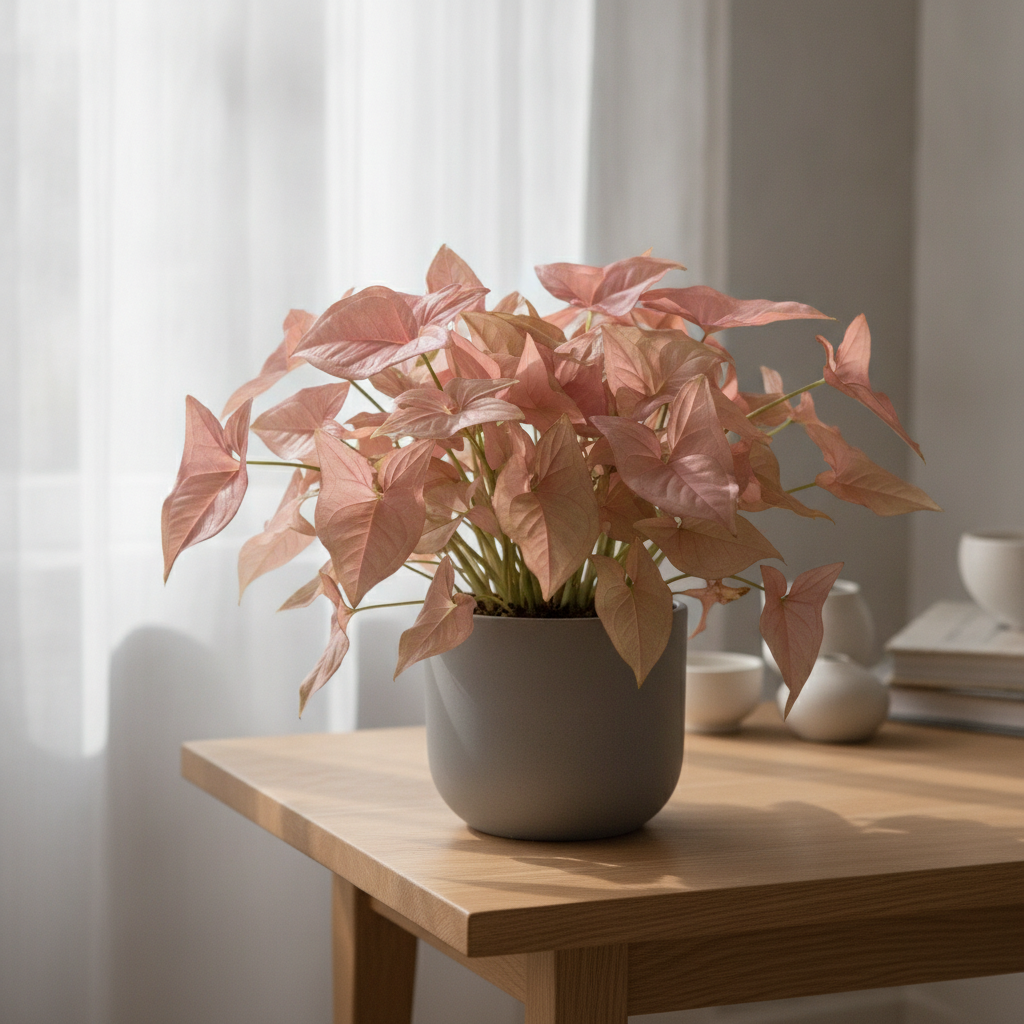
Few houseplants greet you with a colour quite like the Neon Syngonium. Where most foliage plants trade in greens, this cultivar of Syngonium podophyllum unfurls soft arrowhead leaves in a warm bubblegum pink, a shade that reads as almost fluorescent on the newest growth before it settles into a paler blush with age. Sold under names such as Neon Robusta and Neon Arrowhead Vine, it belongs to the arum family (Araceae) and hails from the humid understorey of tropical Central and South America, where wild arrowhead vines scramble across the forest floor and climb tree trunks toward the light.
The Neon Syngonium has a reputation as an easy, forgiving plant, and for good reason: it grows quickly, roots almost eagerly from cuttings, and tolerates a wide range of indoor conditions. The catch is that surviving and thriving are two different things. A neglected plant will hang on for months as a sparse, faded specimen, while one given the right light, moisture and feeding will pump out dense, richly coloured foliage that trails or climbs with real vigour. This guide covers everything you need to move your plant firmly into the thriving category, from reading its leaves for watering cues to keeping that signature pink from washing out.
Contents
- Quick Reference
- Why Neon Syngonium Makes a Rewarding Houseplant
- Light Requirements
- Watering & Humidity
- Soil, Potting & Repotting
- Fertilising
- Propagation
- Pests & Diseases
- Popular Varieties
- Frequently Asked Questions
Quick Reference: Neon Syngonium at a Glance
| Light | Bright, indirect light. More light than green forms to hold pink colour, but no harsh direct midday sun. |
| Watering | Keep soil lightly and evenly moist. Water when the top 2 to 3 cm (1 inch) feels dry. |
| Temperature | 18 to 27 degrees C (65 to 81 degrees F). Avoid anything below 15 degrees C (59 degrees F). |
| Humidity | Prefers 50 to 60 percent or higher, tolerates average household humidity. |
| Fertiliser | Balanced liquid feed at half strength every 3 to 4 weeks in spring and summer. |
| Toxicity | Toxic to cats, dogs and humans if chewed or swallowed. Contains calcium oxalate crystals. |
Why Neon Syngonium Makes a Rewarding Houseplant
The strongest argument for the Neon Syngonium is that it delivers a rare colour with almost none of the fuss that usually accompanies pink foliage. Many brightly variegated plants are slow, temperamental and quick to revert, but this cultivar grows fast, roots readily and forgives the occasional missed watering. A young plant bought as a small pot can fill out into a lush mound within a single growing season, and left to trail from a shelf or trained up a moss pole, it takes on a completely different character as it matures.
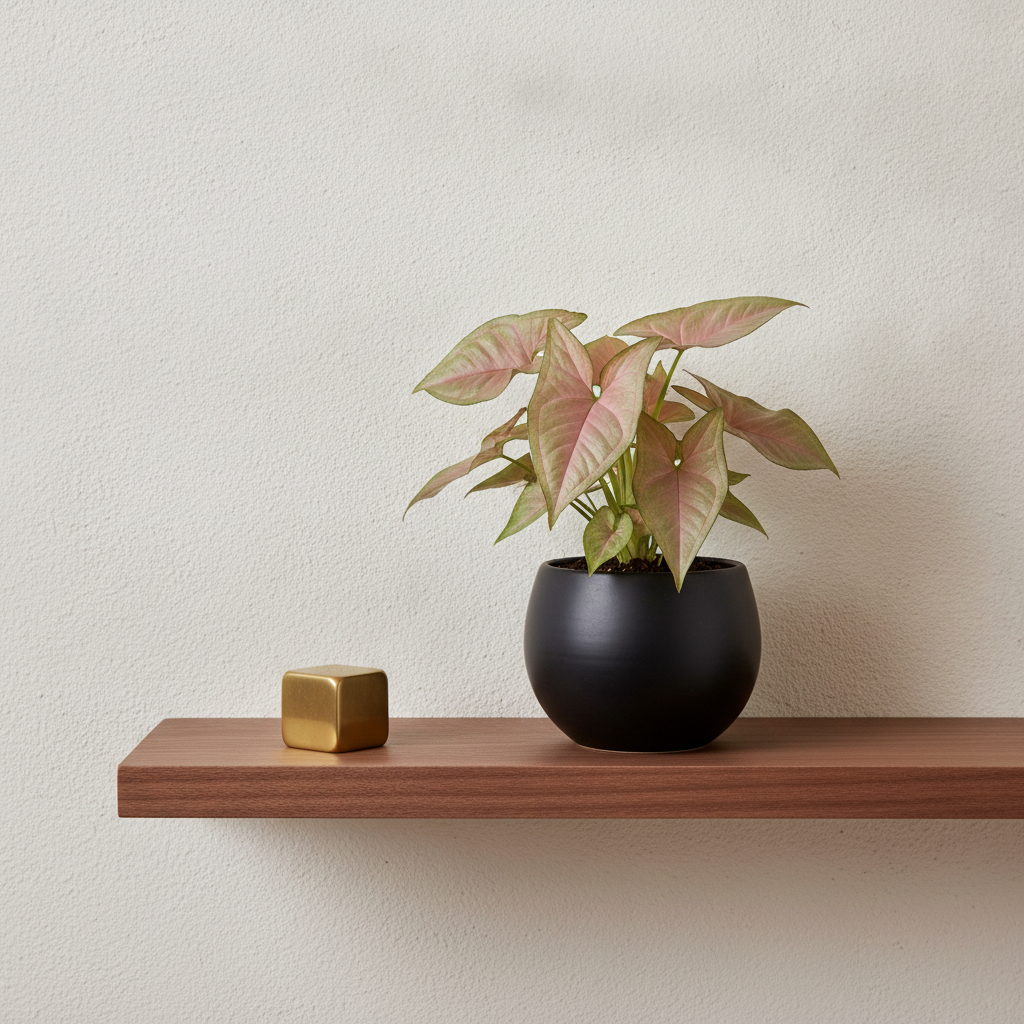
It also earns its place through versatility. The arrowhead plant shifts habit as it ages, beginning as a tidy, self-supporting rosette of upright leaves and gradually producing longer, vining stems that can climb or cascade. That means a single plant suits a tabletop, a hanging basket or a supported column, depending on how you choose to grow it. Combined with its tolerance of ordinary room conditions and its willingness to be pinched back into a bushier shape, the Neon Syngonium rewards beginners while still offering enough behaviour to keep experienced growers engaged.
Important — Toxicity: All parts of the Neon Syngonium contain insoluble calcium oxalate crystals. Chewing or swallowing the leaves or stems can cause intense oral irritation, drooling, difficulty swallowing and vomiting in cats, dogs and people. The sap may also irritate sensitive skin. Keep the plant out of reach of pets and small children, and wash your hands after taking cuttings.
Light Requirements
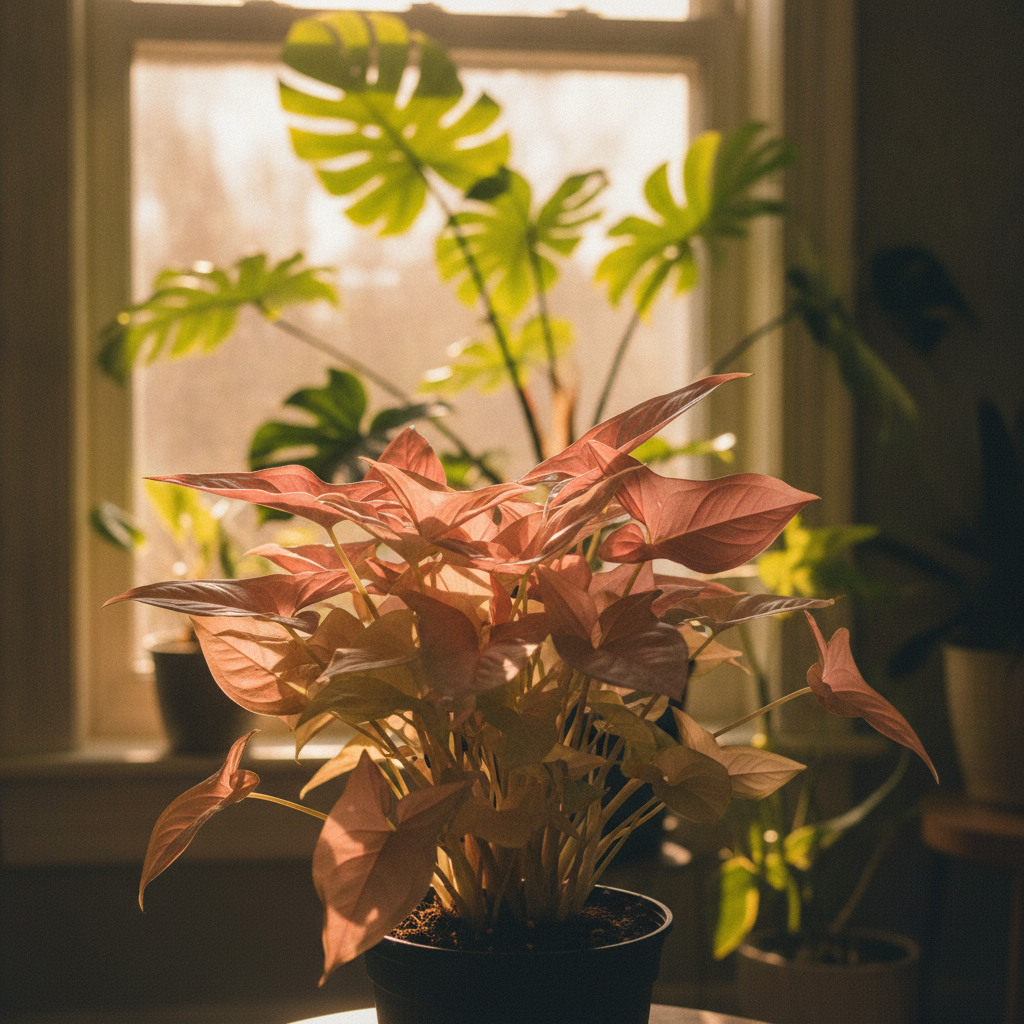
Light is the single biggest factor in how good a Neon Syngonium looks, because its pink pigment depends on it. In the wild, arrowhead vines grow in dappled shade beneath a forest canopy, receiving plenty of bright, filtered light without ever being blasted by full tropical sun. Indoors, the goal is to recreate that bright but gentle exposure.
The ideal position is a spot with bright, indirect light for most of the day: near a window but out of the direct path of strong midday sun. Pink cultivars are hungrier for light than the plain green forms because they carry less chlorophyll, so a Neon kept in a dim corner will fade toward pale green and grow leggy as it stretches for brightness. A little gentle morning sun is beneficial and helps saturate the colour, but harsh afternoon rays will scorch the delicate leaves.
Light Levels Explained
Understanding how different light intensities translate into real placements makes it far easier to find the right home for your plant. The table below sets out the practical categories most growers use.
| Light Category | Approx. Level | Typical Location | Outcome |
|---|---|---|---|
| Direct sun | Over 50,000 lux | On an unshaded south-facing sill | Leaf scorch, bleached patches, crisp edges |
| Bright indirect | 10,000 to 20,000 lux | Near an east window or set back from a bright one | Ideal: strong pink, compact growth |
| Medium | 5,000 to 10,000 lux | A metre or two into a bright room | Acceptable, colour slightly muted |
| Low | 1,000 to 2,500 lux | Interior wall, north corner | Fading, leggy stems, slow growth |
| Very low | Under 1,000 lux | Far from any window | Decline, loss of pink, weak leaves |
Window Orientation and Placement
South-facing window: The brightest option in the northern hemisphere. Excellent as long as you set the plant back from the glass or filter the light with a sheer curtain, since direct summer sun here will burn the leaves.
East-facing window: Often the sweet spot. Gentle morning sun followed by bright indirect light for the rest of the day keeps the pink vivid without any risk of scorching.
West-facing window: Good, but the strong late-afternoon sun can be intense in summer. Place the plant slightly to one side or a short distance back from the glass.
North-facing window: Usable but marginal for a pink cultivar. Expect duller colour and looser growth, and consider supplementing with a grow light through winter.
Pro Tip — Rotate for Even Growth: Give the pot a quarter turn each time you water. Syngoniums lean noticeably toward their light source, and regular rotation keeps the plant full and symmetrical rather than one-sided.
How Light Affects Leaf Colour
The intensity of the pink is a direct readout of the light your plant receives. In bright, indirect conditions the new leaves emerge a vivid bubblegum pink and hold much of that colour as they mature. Moved into shade, the same plant produces leaves that are noticeably greener and flatter in tone, because the plant increases chlorophyll to make the most of the scarce light. If your Neon is looking more mint than magenta, the answer is almost always more light rather than any change to watering or feeding.
Warning — Direct Sunlight: The pink leaves of this cultivar are more vulnerable to sunburn than ordinary green foliage. A few hours of unfiltered midday or afternoon sun can leave permanent bleached or brown patches. Introduce brighter positions gradually rather than moving a shade-grown plant straight into strong sun.
Artificial Lighting
The Neon Syngonium responds very well to supplemental lighting, which makes it a good candidate for rooms with limited natural light. A full-spectrum LED grow light positioned 30 to 45 cm (12 to 18 inches) above the plant and run for 10 to 12 hours a day will maintain strong colour and compact growth. This is especially useful through the darker winter months, when even a bright windowsill may not deliver enough light to keep the pink from fading.
Seasonal Adjustments
As daylight shortens and weakens through autumn and winter, move your plant closer to its window or add a grow light to compensate. In summer, watch that the same position which was perfect in winter has not become too harsh as the sun climbs higher and stronger, and pull the plant back or add a sheer curtain if you see any signs of scorching. Small seasonal shifts of this kind keep the plant in its ideal band year round.
Watering & Humidity
The Neon Syngonium likes its soil kept lightly and evenly moist, which puts it between the thirsty ferns and the drought-tolerant succulents. It is not a plant that wants to dry out completely, but it is even less tolerant of sitting in waterlogged soil. Getting the rhythm right is mostly a matter of feeling the soil rather than following a fixed schedule.
When to Water
As a general rule, water when the top 2 to 3 cm (about 1 inch) of the mix has dried out but the soil below is still slightly damp. Push a finger into the surface to check rather than relying on how the top looks, since the surface dries far faster than the root zone. In a bright, warm spot during the growing season this often means watering once or twice a week, while in winter the interval stretches out considerably.
Several factors change how quickly your plant dries: more light and warmth speed it up, a larger pot or a peat-heavy mix slow it down, and a plant that is root-bound will drink faster than one recently potted on. Because of this, learn to read your particular plant in its particular spot rather than watering every plant in the house on the same day.
Pro Tip — Let the Plant Tell You: A Neon Syngonium that needs water will often droop its leaves slightly, then perk back up within hours of a drink. Used as a gentle backstop rather than routine practice, this wilting cue is one of the most reliable signals the plant gives.
How to Water Correctly
- Check the soil with a finger to confirm the top few centimetres have dried.
- Water thoroughly, pouring evenly around the base until liquid runs freely from the drainage holes.
- Let the pot drain completely, ideally in a sink or on a saucer you can empty.
- Tip away any water that collects in the saucer or cover pot so the roots never stand in it.
- Return the plant to its spot and wait until the top layer dries again before repeating.
Signs of Overwatering vs. Underwatering
| Symptom | Overwatering | Underwatering |
|---|---|---|
| Leaf colour | Yellowing, often several leaves at once | Dull, with browning crispy edges |
| Leaf texture | Soft, limp, sometimes translucent | Thin, papery, curling inward |
| Soil | Stays wet for days, may smell sour | Bone dry, pulling away from the pot sides |
| Roots | Brown, mushy, foul-smelling | Dry, brittle, pale |
| Stem base | Soft or blackened at soil line | Firm but shrivelled |
Warning — Root Rot: Overwatering is the most common way to kill a Syngonium. If you find soft, brown, smelly roots, unpot the plant immediately, trim away all affected roots with clean scissors, and repot into fresh, well-draining mix. Caught early, most plants recover; left standing in soggy soil, root rot spreads until the stems collapse.
Humidity Requirements
As a tropical understorey plant, the Neon Syngonium appreciates humidity above 50 percent and will look its best in the 50 to 60 percent range or higher. That said, it is genuinely adaptable and copes with ordinary household air far better than fussier aroids such as calatheas, so you do not need a terrarium to grow it well.
When the air is too dry, the main symptoms are crisp brown leaf edges and tips, along with slower growth and smaller new leaves. These are most common in winter when central heating strips moisture from the air. If you see them creeping in, raising the ambient humidity usually reverses the trend on new growth.
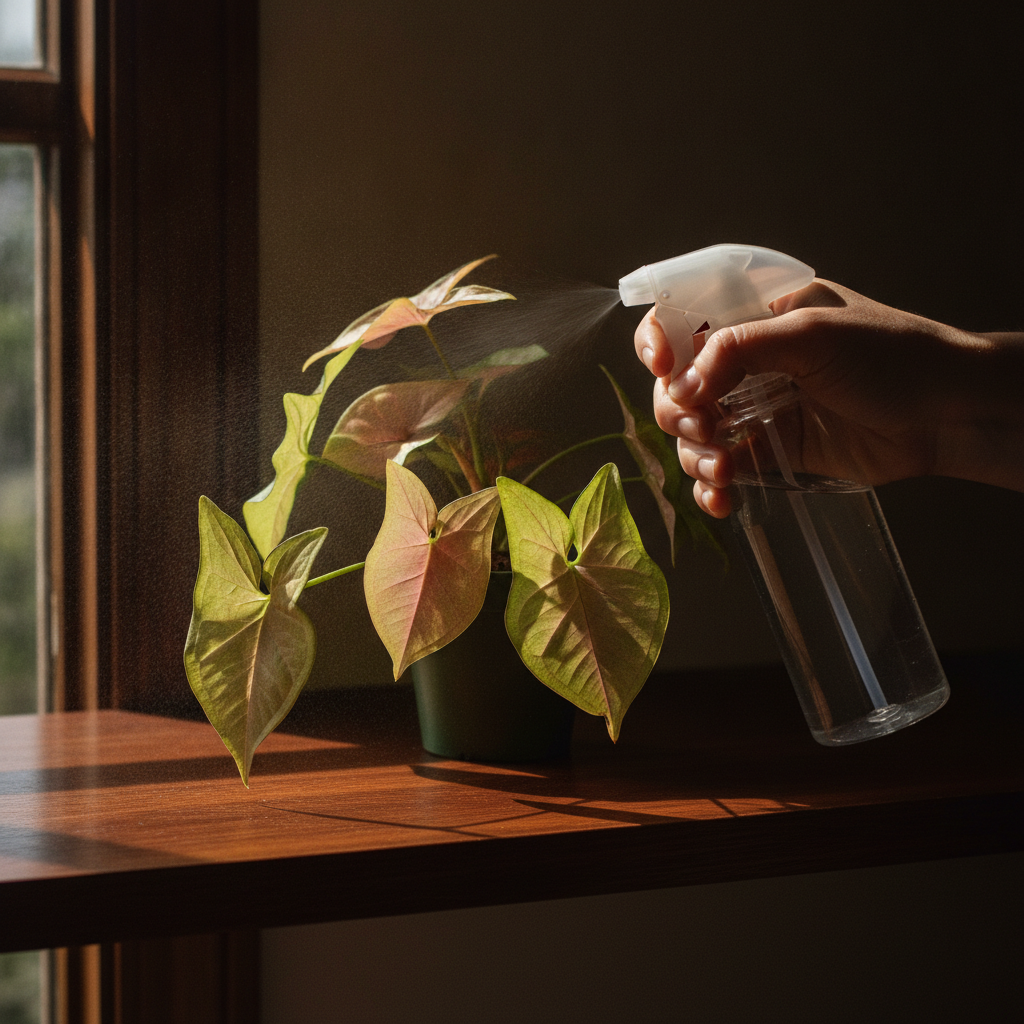
The most reliable way to raise humidity is a small room humidifier placed near the plant. Grouping plants together, standing the pot on a tray of pebbles topped up with water, or moving the plant to a naturally humid room such as a bright bathroom all help too. Misting gives only a brief lift and is not a substitute for any of these methods.
Water Quality
Neon Syngoniums are only mildly sensitive to water quality, but very hard or heavily chlorinated tap water can contribute to brown tips over time. If your tap water is problematic, letting it stand overnight before use allows some chlorine to dissipate, and rainwater or filtered water is a gentle alternative. Always use water at room temperature, as very cold water can shock the roots.
Soil, Potting & Repotting
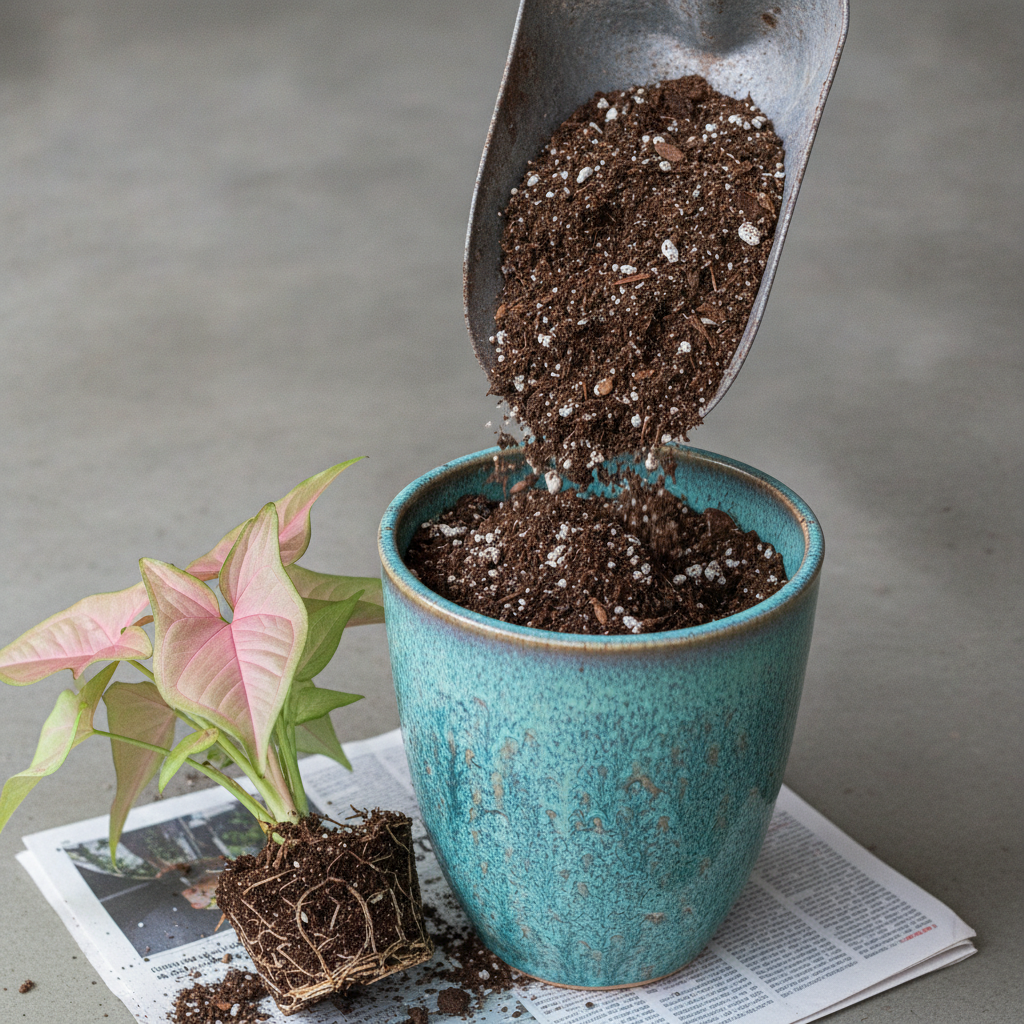
The right growing medium underpins everything else. Because the Neon Syngonium wants steady moisture but hates waterlogging, the goal is a mix that holds water without turning to mud, staying open and airy so that oxygen reaches the roots between waterings.
Ideal Soil Composition
A quality peat-free or coir-based houseplant compost forms a good base, but on its own it tends to compact and stay wet. Lightening it with chunky, aerating materials transforms how the plant grows. The blend below is a dependable starting point that you can adjust to your conditions.
| Component | Proportion | Function |
|---|---|---|
| Houseplant compost or coir | 50 percent | Holds moisture and nutrients |
| Perlite or pumice | 25 percent | Improves drainage and aeration |
| Orchid bark or fine bark | 15 percent | Creates air pockets, resists compaction |
| Worm castings or compost | 10 percent | Adds gentle, slow-release nutrition |
The Neon Syngonium prefers a slightly acidic to neutral soil pH, roughly in the range of 5.5 to 6.5. Most commercial houseplant composts already fall within this band, so it is rarely something you need to measure or adjust, but it is worth knowing if you mix your own from unusual ingredients.
Pro Tip — Quick Mix Recipe: For a fast, reliable blend, combine two handfuls of standard houseplant compost with one handful of perlite and a small handful of orchid bark. This aroid-style mix drains freely while still holding enough moisture to keep an arrowhead plant happy.
Choosing the Right Pot
The container matters as much as what goes in it. The right pot supports healthy roots and makes watering mistakes far less likely.
Drainage holes are non-negotiable. Whatever material or style you choose, the pot must have holes in the base so excess water can escape. A decorative cover pot without drainage is fine only if you lift the inner nursery pot out to water and drain it, then return it once it has stopped dripping.
Pot material: Plastic and glazed ceramic hold moisture longer and suit this plant well, since it likes consistent dampness. Unglazed terracotta breathes and dries faster, which can be useful if you tend to overwater but means you will need to water more often.
Pot size: Choose a pot only 2 to 3 cm (1 inch) wider than the current root ball. An oversized pot holds a large volume of wet soil around a small set of roots, which is a common route to root rot. Syngoniums also flower and grow more contentedly when their roots are a little snug.
When to Repot
Fast-growing Neon Syngoniums typically need repotting every one to two years. Tell-tale signs that it is time include roots emerging from the drainage holes or circling the surface, water running straight through without soaking in, and growth that has slowed despite good care. The best time to repot is spring or early summer, when the plant is in active growth and recovers quickly.
How to Repot: Step-by-Step
- Water the plant a day beforehand so the root ball is moist and holds together.
- Gently ease the plant out of its pot, supporting the base of the stems.
- Tease apart any tightly circling roots and brush off a little of the old, spent soil.
- Inspect the roots, trimming away any that are brown, soft or dead with clean scissors.
- Add fresh mix to the base of the new pot, then position the plant at the same depth as before.
- Backfill around the roots with fresh mix, firming gently to remove large air gaps.
- Water thoroughly, let it drain, and return the plant to bright, indirect light.
Warning — Transplant Shock: A little drooping or a paused stretch of growth in the days after repotting is normal. Do not respond by overwatering or feeding, which stresses recovering roots further. Keep the plant somewhere stable and bright, water normally, and it will settle within a week or two.
Fertilising
Because the Neon Syngonium grows quickly, it draws steadily on the nutrients in its soil, and those are used up or washed out within a few months of potting. Regular, modest feeding through the growing season replaces them and keeps new leaves large, well coloured and closely spaced.
The watchword is moderation. This is not a heavy feeder, and too much fertiliser does more harm than too little, scorching roots and building up damaging salts. A little, given often and always diluted, is the reliable approach.
Understanding Plant Nutrients
Fertiliser labels carry three prominent numbers, the NPK ratio, standing for nitrogen, phosphorus and potassium. For a foliage plant like the Neon Syngonium, a balanced ratio such as 10-10-10, or one slightly higher in nitrogen, supports the leafy growth you want. Beyond these three, plants also need secondary nutrients and trace elements, which quality fertilisers include.
| Nutrient | Symbol | Primary Function | Deficiency Symptoms |
|---|---|---|---|
| Nitrogen | N | Leaf and stem growth, green pigment | Overall paling, older leaves yellowing first |
| Phosphorus | P | Root development, energy transfer | Stunted growth, dull or purplish tint |
| Potassium | K | Overall vigour, water regulation | Yellow or brown leaf margins |
| Calcium | Ca | Cell wall structure | Distorted, weak new growth |
| Magnesium | Mg | Core of the chlorophyll molecule | Yellowing between the leaf veins |
| Iron | Fe | Chlorophyll production | Pale new leaves with green veins |
Types of Fertiliser
Liquid fertilisers: The easiest option for this plant. Diluted into water and applied during normal watering, they give you precise control over dose and timing, which suits a light feeder perfectly.
Slow-release granular: Pellets mixed into the soil release nutrients gradually over several months. Convenient, though you sacrifice some control, so err toward a lighter application than the packet suggests.
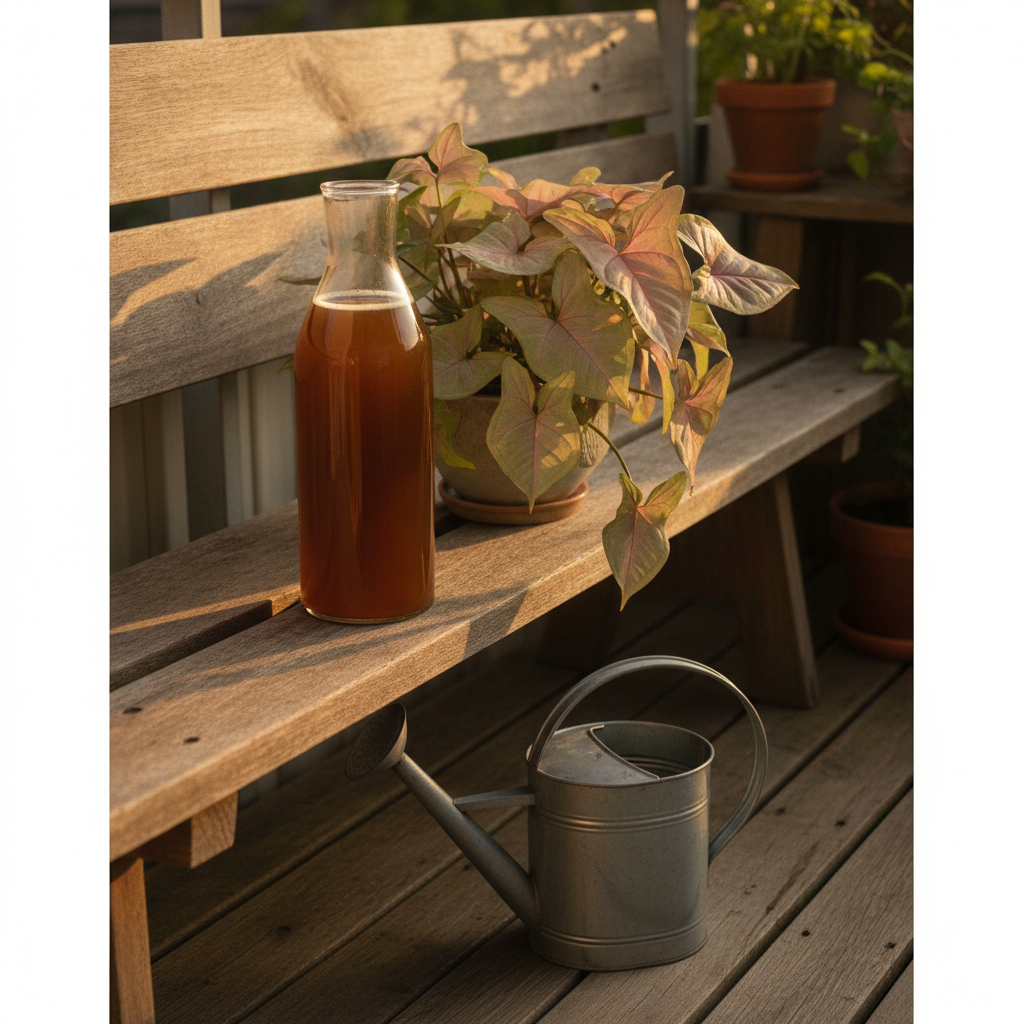
Organic fertilisers: Worm castings, diluted compost tea and seaweed feeds provide gentle nutrition along with beneficial soil life. They are very hard to overdo and pair well with the plant’s preference for a light touch.
Feeding Schedule
Feed every three to four weeks during the active growing season of spring and summer, using a balanced liquid fertiliser at half the recommended strength. As growth slows in autumn, taper the feeding off, and stop altogether through winter when the plant is resting. Feeding a dormant plant simply loads the soil with unused salts.
Pro Tip — Half Strength, Twice as Often: Rather than a full-strength dose once a month, many growers get better results from a very dilute feed applied with most waterings in summer. It mimics the steady trickle of nutrients the plant would receive in nature and avoids sudden spikes.
How to Fertilise
- Water the plant lightly first if the soil is very dry, to protect the roots from concentrated feed.
- Dilute the fertiliser in water to half the strength stated on the label.
- Apply evenly around the soil, letting it drain through as with normal watering.
- Every couple of months, flush the pot with plain water to wash out accumulated salts.
Warning — Salt Build-Up: A white crust on the soil surface or around the pot rim, along with brown leaf tips, signals a build-up of fertiliser salts. Correct it by flushing the pot with a generous volume of plain water until it runs freely from the base, and ease off feeding until the plant recovers.
Propagation
One of the great pleasures of the Neon Syngonium is how freely it propagates. Cuttings root quickly and reliably, so a single healthy plant can become several within a season, whether you want fuller pots, gifts for friends or simply a way to rejuvenate a leggy specimen.
Propagation is best done in spring and summer, when the plant is growing strongly and cuttings root fastest. The two most dependable methods are rooting cuttings in water and rooting them directly in a moist medium, and both hinge on the same key structure: the node.
Understanding Nodes
A node is the slightly thickened point on a stem where a leaf joins, and it is from here that new roots and shoots emerge. On a Syngonium you will often see small brown nubs or aerial roots at the nodes already, poised to grow. Any cutting you take must include at least one node below the leaf, because a length of stem with only leaves and no node will not root, no matter how long you wait.
Water Propagation: Step-by-Step
Rooting in water is the most popular method because you can watch the roots develop, which makes it especially satisfying and beginner-friendly.
- Choose a healthy stem and cut just below a node with clean, sharp scissors, keeping one or two leaves on the cutting.
- Remove any lower leaves that would sit under the waterline, leaving the node exposed.
- Place the cutting in a jar of room-temperature water so the node is submerged but the remaining leaves are not.
- Set the jar in bright, indirect light and refresh the water every few days to keep it clear and oxygenated.
- Wait for roots to reach 3 to 5 cm (1 to 2 inches), which usually takes two to four weeks.
- Pot the rooted cutting into moist mix and keep it a little more humid than usual while it adjusts to soil.
Pro Tip — Pot Before Roots Get Too Long: Water roots differ from soil roots, and cuttings left in water for many weeks can struggle when transferred. Move cuttings into soil once the roots are a few centimetres long, while they still adapt easily to their new medium.
Sphagnum Moss Propagation: Step-by-Step
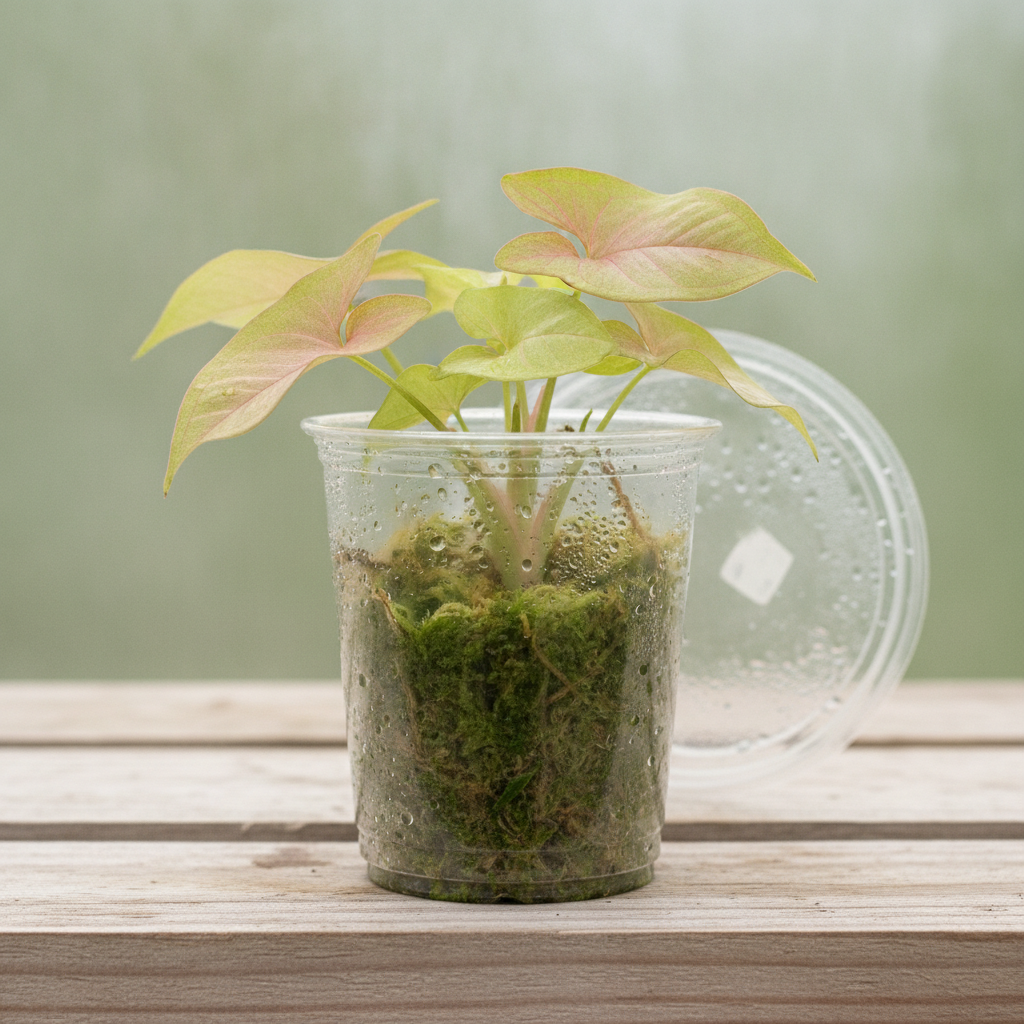
Rooting in damp sphagnum moss produces roots that are already adapted to a solid medium, so they transition into potting mix with little fuss.
- Take a node-bearing cutting exactly as for water propagation.
- Soak sphagnum moss, then wring it out so it is damp but not dripping.
- Nestle the cutting into the moss inside a clear cup or pot, with the node in contact with the moss.
- Cover loosely with a lid or bag to hold humidity, leaving a small gap for airflow.
- Keep the moss lightly moist and in bright, indirect light, checking every few days.
- Once roots are well established through the moss, pot the whole cutting up into standard mix.
Troubleshooting Propagation
| Problem | Likely Cause | Solution |
|---|---|---|
| Cutting rots in water | Stale water, no node, or too warm | Refresh water often, ensure a node is submerged, avoid heat |
| No roots after weeks | Node missing or low light and warmth | Check for a node, move to brighter, warmer spot |
| Roots but leaves wilt | Shock when moved to soil | Raise humidity and keep soil evenly moist while it settles |
| Yellowing cutting | Too little light or exhausted energy | Increase light, be patient, keep one healthy leaf attached |
Pests & Diseases
The Neon Syngonium is fairly robust, but like any houseplant it can attract pests and, under poor conditions, develop disease. The good news is that problems are almost always manageable when caught early, which is why a quick look over your plant each time you water pays off.
Most trouble arrives with a new plant or with the dry, still air of winter. A short quarantine for new arrivals and regular inspection of the leaf undersides are the two habits that prevent the majority of infestations from ever taking hold.

Common Pests
Spider Mites (Tetranychus urticae)
These tiny sap-suckers thrive in warm, dry conditions and are one of the most common pests on Syngoniums. Look for fine stippling or speckling on the leaves, a dusty appearance, and delicate webbing in the leaf axils. Heavy infestations leave foliage pale and papery.
Treatment: Rinse the plant thoroughly, then treat with insecticidal soap or diluted neem oil, coating the leaf undersides. Repeat every five to seven days for several weeks, and raise humidity, which mites dislike.
Mealybugs (Pseudococcus longispinus)
Mealybugs appear as small, white, cottony clusters tucked into leaf joints and along stems. They suck sap and excrete sticky honeydew, which can lead to sooty mould and a generally weakened plant.
Treatment: Dab each insect with a cotton bud dipped in rubbing alcohol, then follow up with neem oil or insecticidal soap across the whole plant. Check weekly, as mealybugs hide well and often return from missed pockets.
Aphids (Aphis gossypii)
Aphids are small green, black or pink insects that cluster on soft new growth and flower stalks, distorting young leaves as they feed. They multiply quickly and also leave honeydew behind.
Treatment: Knock them back with a firm spray of water, then apply insecticidal soap or neem oil. Because they reproduce so fast, repeat treatments and keep checking the tender new growth where they gather.
Common Diseases
Root Rot (Pythium and Phytophthora species)
By far the most serious threat, root rot is caused by fungal-like pathogens that flourish in waterlogged soil. Above ground it shows as yellowing, wilting leaves and a soft, darkened stem base, while the roots below turn brown and mushy.
Treatment: Unpot the plant, cut away all rotten roots with sterile scissors, and repot into fresh, well-draining mix in a clean pot. Water more sparingly afterwards, and take healthy cuttings as insurance if the rot is advanced.
Bacterial Leaf Spot (Xanthomonas species)
This shows as water-soaked spots that enlarge into brown or black lesions, sometimes ringed with a yellow halo. It spreads in wet, stagnant conditions and can move quickly through crowded, poorly ventilated foliage.
Treatment: Remove affected leaves promptly, improve airflow, and avoid wetting the foliage when watering. Keep the plant a little drier and isolated until no new spots appear.
Pest and Disease Summary
| Pest / Disease | Identification | Treatment |
|---|---|---|
| Spider mites | Stippling, fine webbing, dusty leaves | Rinse, neem or soap, raise humidity |
| Mealybugs | White cottony clusters in joints | Alcohol swab, then neem or soap |
| Aphids | Insect clusters on new growth | Water spray, then soap or neem |
| Root rot | Yellowing, soft stem, mushy roots | Trim roots, repot, water less |
| Bacterial leaf spot | Dark, water-soaked lesions | Remove leaves, improve airflow, keep dry |
Prevention Strategies
Prevention is far easier than cure. Quarantine every new plant for a couple of weeks before letting it join your collection, and inspect the undersides of leaves regularly, since that is where pests establish first. Keep the foliage clean by wiping the leaves occasionally, which both removes dust and lets you spot early signs of trouble.
Good cultural care is the best defence of all. A plant grown in appropriate light, watered correctly and not overfed is more resistant to both pests and disease, because it is not stressed. Adequate spacing and airflow between plants also discourage the humid, stagnant pockets that fungal and bacterial problems love.
Pro Tip — Neem as Routine Defence: A light monthly spray of diluted neem oil over the leaves, especially the undersides, works as a preventative that deters most common pests before they take hold. Apply it in the evening or out of direct sun to avoid leaf marking.
Popular Varieties
The Neon Syngonium is itself one cultivar within a wide and colourful family of arrowhead plants. Once its pink foliage has drawn you in, it is worth knowing the related varieties, since many share identical care and let you build a collection of contrasting colours and patterns from a single easy species.
The varieties below span solid pinks, veined and speckled forms, and the classic greens, all descended from Syngonium podophyllum or its close relatives. Nearly all want the same bright indirect light, steady moisture and warmth, so mixing them is straightforward.
| Variety | Leaf Appearance | Light Needs | Growth Rate | Availability |
|---|---|---|---|---|
| Neon Robusta | Solid bubblegum pink, blush with age | Bright indirect | Fast | Common |
| Pink Allusion | Creamy green with rosy-pink veins | Bright indirect | Moderate | Common |
| Berry Allusion | Pale green flushed pink and cream | Bright indirect | Moderate | Fairly common |
| Confetti | Green speckled and splashed with pink | Bright indirect | Fast | Fairly common |
| White Butterfly | Green edges around a creamy centre | Medium to bright | Fast | Very common |
| Pixie | Small compact green and cream leaves | Medium to bright | Slow | Common |
| Maria Allusion | Bronze-green with rosy undertones | Bright indirect | Moderate | Fairly common |
Featured Varieties
Neon Robusta
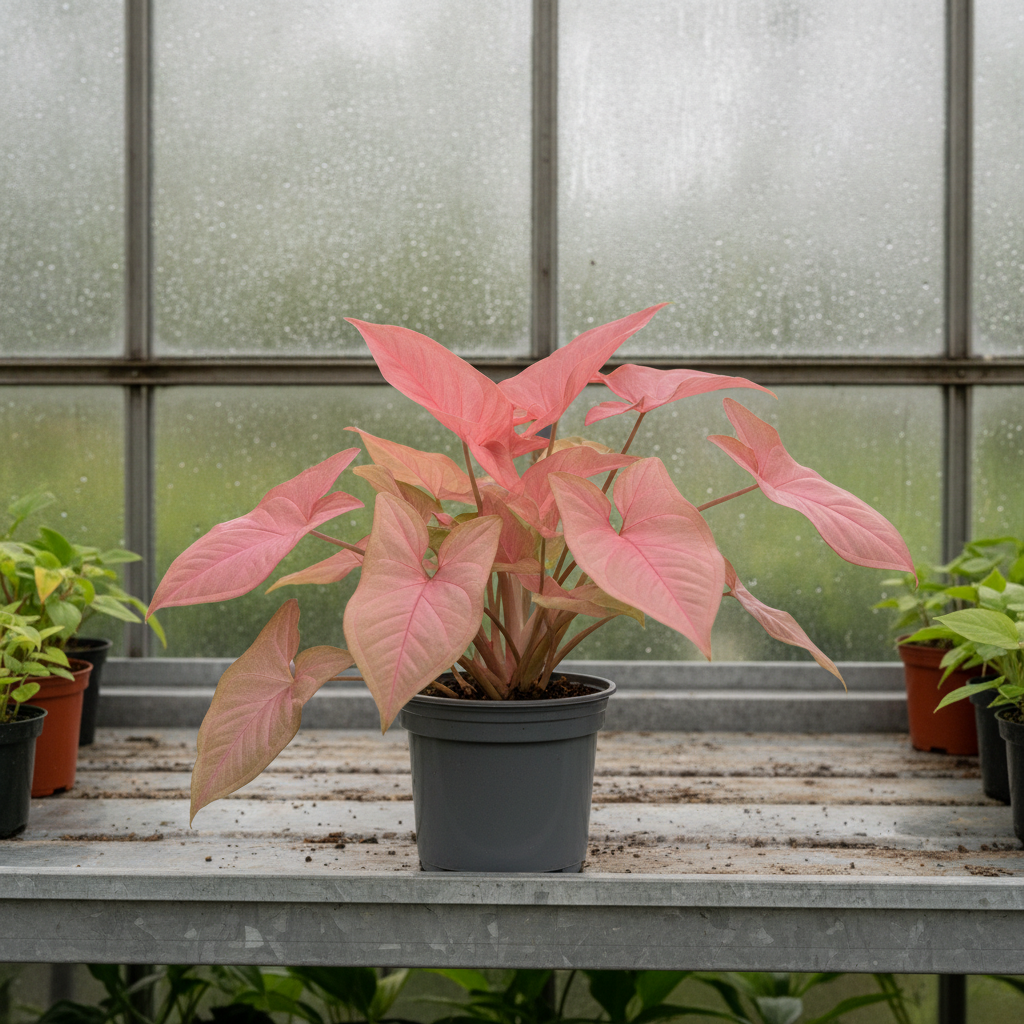
The definitive pink arrowhead plant, with solid bubblegum-pink new leaves that are almost fluorescent before softening to a paler blush-green as they age. Vigorous and easy, it is the variety most people mean when they say Neon Syngonium.
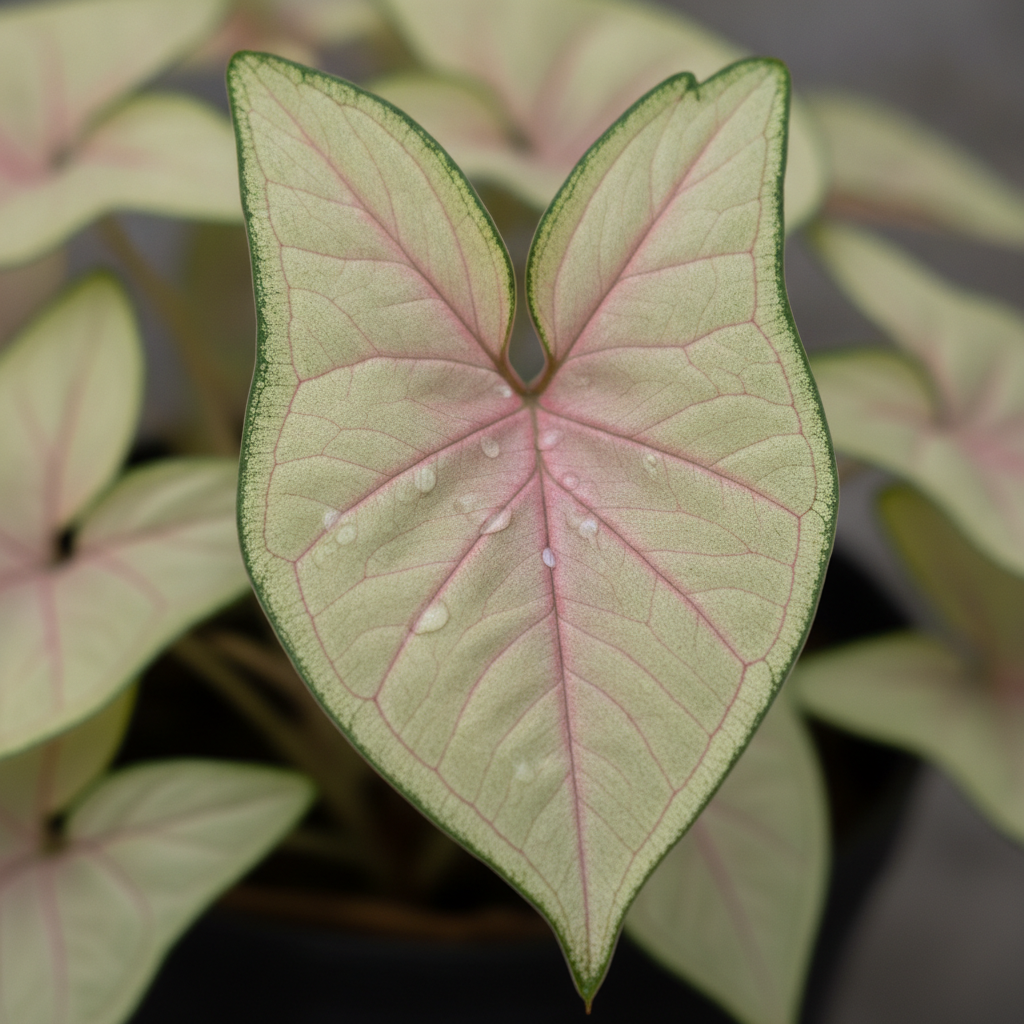
Pink Allusion
A subtler pink, with pale creamy-green arrowhead leaves veined in rosy pink and edged in a slightly darker green. More restrained than the solid Neon, it brings a delicate, painterly quality that suits growers who prefer patterned foliage to a block of colour.
Variety Profiles in Detail
Neon Robusta (Syngonium podophyllum ‘Neon Robusta’)
Neon Robusta is prized for the purity of its pink. In good light the leaves emerge an intense candy pink and hold much of that tone as they expand, gradually mellowing to a soft blush. It grows fast and trails willingly, making it a natural choice for hanging pots or a supported pole, and its colour is the clearest barometer of whether it is getting enough light.
Pink Allusion (Syngonium podophyllum ‘Pink Allusion’)
Part of the Allusion series bred for compact, well-behaved growth, Pink Allusion pairs a pale green leaf with warm pink veining and a fine darker margin. It stays tidier and slightly slower than Neon Robusta, holding its bushy form for longer, which makes it an excellent tabletop plant for those who want colour without a sprawling habit.
Choosing the Right Variety for Your Space
If you have a genuinely bright spot and want maximum impact, the solid pinks such as Neon Robusta deliver the boldest colour, though they need that light to stay saturated. For medium-light rooms, the green and cream forms like White Butterfly are more forgiving and stay handsome even where a pink would fade. Consider habit too: choose a trailing-friendly variety for a shelf or basket, and a naturally compact one such as Pixie or a member of the Allusion series where you want a plant to hold its shape without frequent pruning.
Frequently Asked Questions
Why is my Neon Syngonium losing its pink colour?
The most common cause is insufficient light. Pink cultivars carry less chlorophyll and need bright, indirect light to keep their colour, so a plant in a dim spot will produce greener, flatter leaves. Move it closer to a bright window or add a grow light, and new growth should return to a stronger pink.
Why are the leaf tips turning brown?
Brown, crispy tips usually point to low humidity, underwatering or a build-up of salts from hard water or excess fertiliser. Check that you are watering before the soil dries out completely, raise the humidity if your home is dry, and flush the pot with plain water occasionally to clear any salt build-up.
Is the Neon Syngonium safe around pets?
No. Like other aroids, it contains insoluble calcium oxalate crystals that are toxic to cats and dogs, causing oral irritation, drooling and vomiting if chewed. Keep it well out of reach of curious pets, and contact a vet if you suspect your animal has bitten into it.
How do I keep my plant bushy instead of leggy?
Two things keep a Syngonium full: enough light and regular pinching. Bright light prevents the stems from stretching, and cutting back the longest vines just above a node encourages the plant to branch. You can root the trimmed cuttings and pop them back into the same pot to make it fuller still.
How fast does a Neon Syngonium grow?
Quickly, given warmth, light and steady moisture. In the growing season it can push out a new leaf every week or two and fill a pot within a season. Growth slows markedly in winter, which is normal and not a cause for concern.
Should I let my Syngonium climb or trail?
Both work, and the choice is yours. Left to trail from a shelf or basket, the stems lengthen and the plant takes on a cascading look. Given a moss pole to climb, it produces larger, more deeply lobed mature leaves as it ascends. Providing support tends to encourage bigger foliage, while trailing keeps the juvenile arrowhead shape.
Why are lower leaves turning yellow?
An occasional yellow lower leaf is simply the plant shedding old growth and is nothing to worry about. If several leaves yellow at once, though, suspect overwatering, and check that the soil is not staying soggy and that the pot drains freely.
Can I grow a Neon Syngonium in water permanently?
You can keep one in water for a long time, and many people display cuttings in vases indefinitely. For the healthiest, most vigorous plant, however, potting it into soil once it has rooted gives it access to far more nutrients and generally produces fuller growth than water culture alone.






