
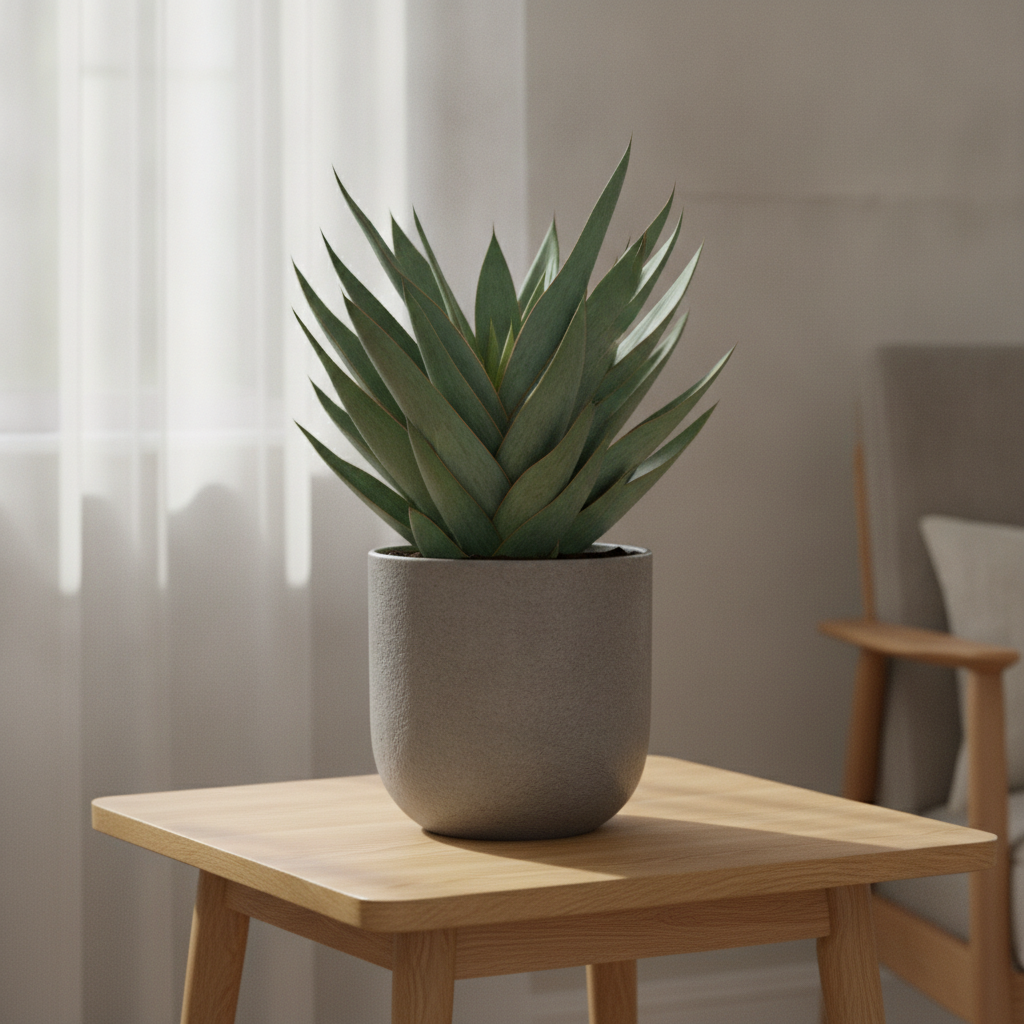
Few houseplants look as deliberately sculpted as the samurai snake plant. Known botanically as Dracaena ehrenbergii and long sold under its former name Sansevieria ehrenbergii, this compact succulent arranges its stiff, sword-shaped leaves in a single flattened fan, each blade edged in a fine reddish-brown line as though someone had trimmed it with a blade. Widely traded as “Samurai” or “Samurai Dwarf”, it is native to the dry scrub and rocky ground of East Africa and the southern Arabian Peninsula, where it endures blazing sun, poor soil and months without rain. The alternate name Samurai Dwarf reflects both its upright, armoured silhouette and its slow, restrained size.
That desert pedigree is exactly why it has become such a rewarding indoor plant. The samurai snake plant asks for almost nothing, tolerates the low light and dry air of centrally heated rooms, and forgives the forgetful waterer more readily than almost any other plant you can buy. Yet there is a real gap between a samurai snake plant that merely survives on a shadowed shelf and one that thrives, colours up and slowly offsets into a dense clump. This guide walks through every element of its care, from reading its light to dividing the rhizome, so you can keep yours firmly in the thriving category.
Contents
- Quick Reference
- Why the Samurai Snake Plant Makes an Excellent Houseplant
- Light Requirements
- Watering & Humidity
- Soil, Potting & Repotting
- Fertilising
- Propagation
- Pests & Diseases
- Popular Varieties
- Frequently Asked Questions
Quick Reference: Samurai Snake Plant at a Glance
| Light | Bright indirect light preferred, with an hour or two of gentle direct sun; tolerates medium to low light but grows slowly there |
| Watering | Sparingly. Let the soil dry out completely, then water thoroughly. Roughly every 2 to 3 weeks in summer, monthly or less in winter |
| Temperature | 18 to 27 degrees Celsius (64 to 81 Fahrenheit); protect from anything below 10 degrees Celsius (50 Fahrenheit) |
| Humidity | Undemanding. Ordinary household air of 30 to 50 percent is ideal; dislikes damp, stagnant conditions |
| Fertiliser | A dilute succulent or cactus feed once or twice across spring and summer; none in autumn and winter |
| Toxicity | Mildly toxic to cats, dogs and people if eaten, due to saponins; keep out of reach of pets and young children |
Why the Samurai Snake Plant Makes an Excellent Houseplant
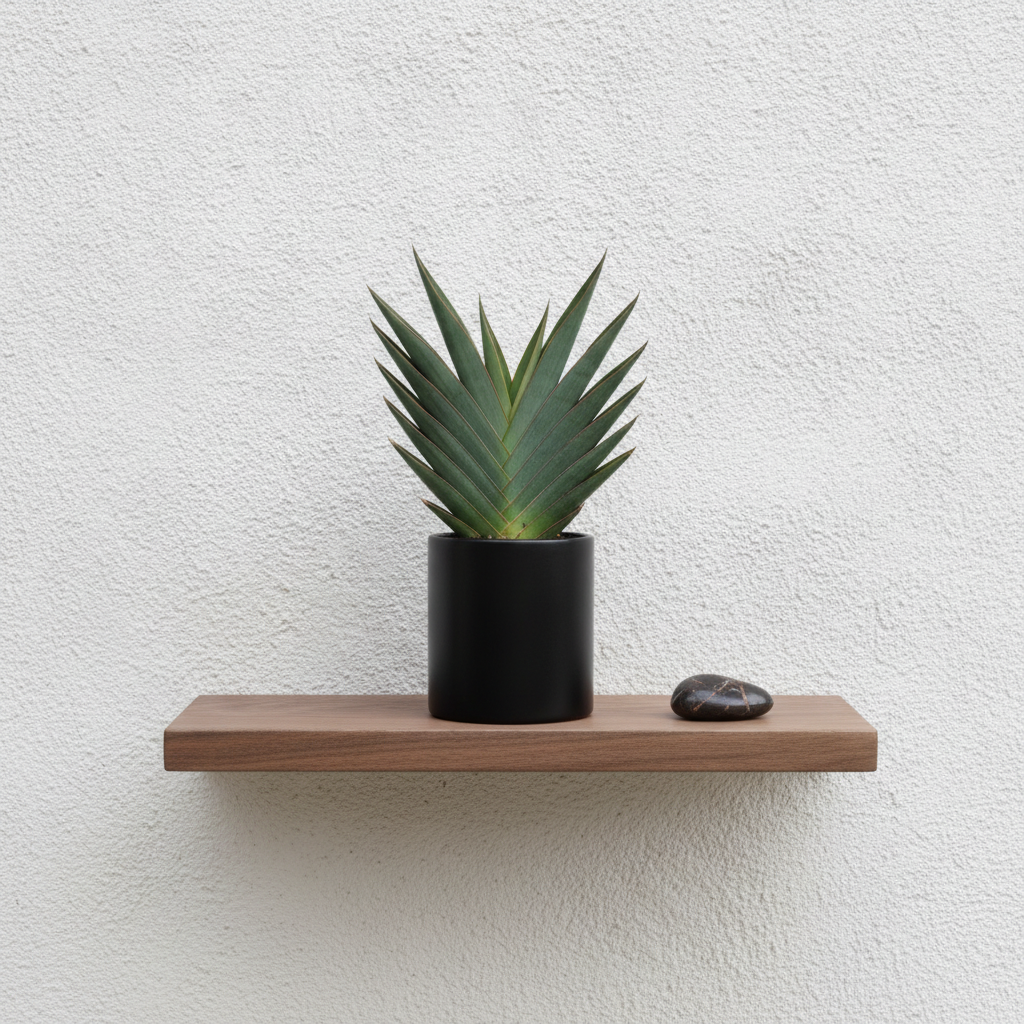
The appeal of the samurai snake plant begins with its architecture. Rather than sending up the tall, flat blades most people associate with sansevierias, it produces short, thick leaves in a strict two-ranked fan, so a mature plant reads as a compact green sculpture no more than 15 to 30 centimetres (6 to 12 inches) tall. That restraint makes it one of the few statement succulents that genuinely suits a small shelf, a desk or a windowsill, where a full-sized snake plant would tower awkwardly. The blue-green colour and the crisp reddish edge give it a cultivated, almost hand-finished look that pairs as easily with minimalist interiors as with a crowded plant collection.
Beyond looks, this is a plant built for real life. It stores water in its swollen leaves and rhizome and photosynthesises using a water-thrifty pathway known as CAM, opening its pores at night to lose less moisture. In practical terms that means it copes with dry indoor air, irregular watering and low light far better than most houseplants, and like other members of its group it quietly contributes to air movement and interest in a room without demanding daily attention. It is genuinely one of the best choices for beginners, frequent travellers or anyone who has killed a fern and concluded they lack a green thumb.
Important — Toxicity: Like all snake plants, the samurai contains saponins that can cause drooling, nausea, vomiting and diarrhoea if the leaves are chewed by cats, dogs or curious children. It is considered only mildly toxic and is rarely dangerous, but the sap can also irritate skin. Site it out of reach of pets and children, and wash your hands after cutting the leaves.
Light Requirements
Light is the single biggest lever you have over the health and appearance of a samurai snake plant. In its native range it grows out in the open, so it is fundamentally a sun-loving plant that has simply learned to endure shade. Indoors it will accept a surprisingly wide band of conditions, but the quality of growth, the tightness of the fan and the intensity of the leaf colour all improve as light increases, up to a point.
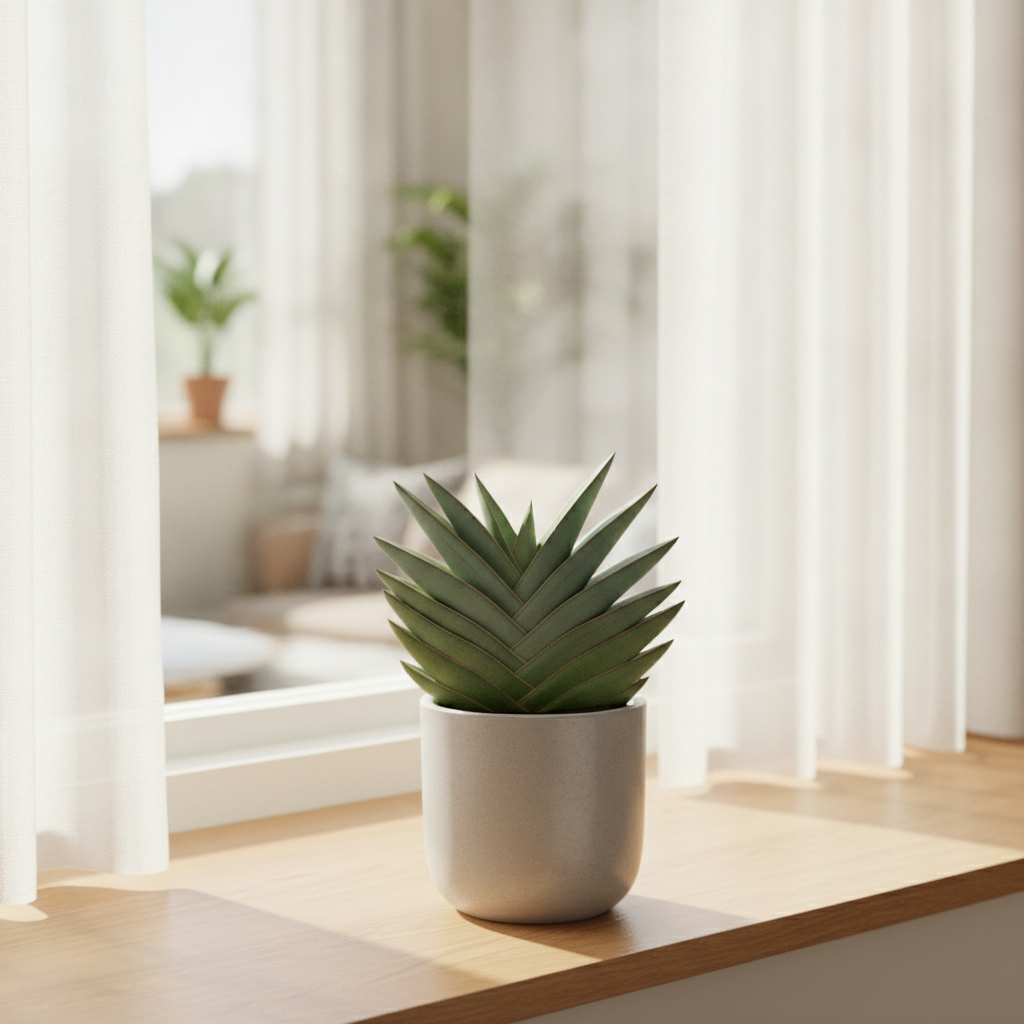
The sweet spot is bright, indirect light with perhaps an hour or two of soft direct sun each day, such as early morning or late afternoon. In these conditions the leaves stay short and stout, the blue-green tone deepens and the reddish margins are at their most pronounced. Give it too little light and the plant does not die, but it stretches, the new leaves grow longer and thinner, the fan loosens and the whole silhouette loses the crisp, armoured quality that makes it worth growing.
Light Levels Explained
Because “bright” and “low” mean different things to different people, it helps to think in rough illuminance bands measured in lux. The table below shows how the samurai snake plant responds across the spectrum, from full sun to the dim corners it will merely tolerate.
| Light Category | Approx. Level | Typical Location | Outcome |
|---|---|---|---|
| Direct sun | Over 50,000 lux | Unobstructed south-facing sill | Fine if acclimatised gradually; risk of scorch if sudden |
| Bright indirect | 10,000 to 25,000 lux | Near an east or filtered south window | Ideal; compact fan, strong colour, steady growth |
| Medium | 5,000 to 10,000 lux | A metre or two back from a bright window | Good; slower but healthy |
| Low | 1,000 to 5,000 lux | North window or shaded interior | Survives; leaves stretch, colour fades, growth stalls |
| Very low | Under 1,000 lux | Windowless room, deep corner | Slow decline over months; not sustainable long term |
Window Orientation and Placement
South-facing window: The brightest position and, with a little care, an excellent one. A samurai snake plant set slightly back from a south window, or behind a sheer curtain, enjoys the strong light it evolved for while avoiding the risk of scorch on the hottest summer afternoons. Plants moved suddenly into full southern sun after living in a shop or a dim room should be introduced over a week or two.
East-facing window: Arguably the perfect home. Gentle morning sun followed by bright indirect light for the rest of the day suits this plant beautifully and rarely causes any scorching.
West-facing window: Also very good. The afternoon light is stronger and warmer, so in a hot climate pull the plant back a little or diffuse the harshest rays, but in most homes a west sill produces compact, well-coloured growth.
North-facing window: Workable but the weakest option. The plant will hold on and stay alive, but expect slower growth, looser form and muted colour. If a north room is your only choice, consider supplementing with a grow light.
Pro Tip — Rotate for an Even Fan: Because the leaves grow in a single flat plane, a samurai snake plant leans noticeably towards its light source. Give the pot a quarter turn every week or two so the fan develops evenly rather than twisting to face the window.
How Light Affects Leaf Colour and Form
The reddish-brown margin and the depth of the blue-green body are both light-dependent. Under strong, bright conditions the plant concentrates protective pigments and the edges redden while the leaf surface takes on a chalky, glaucous bloom. In shade those same leaves turn a flatter, plainer green and the margins fade. Form responds just as clearly: high light keeps leaves short and packed, while low light draws them out long and spaced, so the tidy fan gradually opens into a loose, floppy rosette. If your plant is stretching, the message is simple, it wants more light.
Warning — Direct Sunlight: Although this is a sun-tolerant plant, a specimen kept for months in low light has soft, unhardened tissue. Moving it straight into fierce midday sun can bleach or brown the leaf faces within days. Always harden a shade-grown plant off gradually over one to two weeks before exposing it to strong direct sun.
Artificial Lighting
The samurai snake plant grows well under artificial light, which makes it a fine choice for offices and windowless rooms. A standard full-spectrum LED grow light positioned 20 to 40 centimetres (8 to 16 inches) above the plant and run for 10 to 12 hours a day supplies more than enough energy to keep the fan compact and coloured. Ordinary bright office lighting alone will keep an established plant ticking over, though growth will be slow.
Seasonal Adjustments
Light indoors falls sharply between autumn and midwinter, and the samurai snake plant responds by slowing almost to a halt. Move it to your brightest available window for the darker months, clean any dust from the leaves so they capture what light there is, and reduce watering to match the reduced growth. When the days lengthen again in spring, ease it back to its usual spot and resume normal care as new growth appears from the centre of the fan.
Watering & Humidity
If light is the lever that shapes a samurai snake plant, water is the one that most often kills it. This is a succulent that has evolved to survive drought by hoarding moisture in its thick leaves and rhizome, and it is far more likely to die from too much water than too little. The guiding principle is simple: when in doubt, wait. A slightly thirsty samurai snake plant recovers within hours of a drink, whereas an overwatered one rots from the roots up, often before you notice anything is wrong.
When to Water
Water only when the potting mix has dried out completely, from the surface right down to the base of the pot. In a warm, bright room during summer that typically means watering once every two to three weeks, but do not water by the calendar. Push a finger deep into the soil, or lift the pot to feel its weight, and only water when it is bone dry and light. A wooden skewer inserted to the bottom and pulled out clean and dry is another reliable check.
In autumn and winter, when growth stops, stretch the interval dramatically. Many growers water a mature samurai snake plant just once a month or even less over winter, and plants in cool rooms can go six weeks or more between drinks without complaint. The colder and darker the conditions, the less water the plant can use and the longer you should wait.
Pro Tip — The Weight Test: Learn the feel of your plant’s pot when freshly watered and again when fully dry. Lifting it becomes the fastest, most accurate way to judge thirst, no gadgets required. A dry pot feels almost alarmingly light.
How to Water Correctly
- Confirm the soil is dry to the bottom of the pot before doing anything else.
- Water the soil directly, avoiding the crown where the leaves meet, since water pooling there can cause rot.
- Add water slowly until it runs freely from the drainage holes, wetting the entire root ball.
- Let the pot drain completely for several minutes, then tip away any water left in the saucer or cachepot.
- Return the plant to its spot and do not water again until the mix is fully dry once more.
Signs of Overwatering vs. Underwatering
| Symptom | Overwatering | Underwatering |
|---|---|---|
| Leaf colour | Yellowing, then browning from the base upwards | Dulling, with a faint bronze or greyish cast |
| Leaf texture | Soft, mushy, translucent at the base | Wrinkled, puckered or slightly shrivelled |
| Soil | Stays wet for many days, may smell sour | Bone dry, pulling away from the pot sides |
| Roots | Brown, slimy and foul-smelling | Firm and pale, sometimes dry at the tips |
| Stem base | Soft, dark, collapsing at soil level | Firm but the fan may feel loose or wobbly |
Warning — Root Rot: A soft, dark, collapsing base is the classic sign of root rot, the most common cause of death in this plant. If you spot it, unpot immediately, cut away every mushy root and rotten section back to firm white tissue, dust the cuts with cinnamon or a fungicide, let them callus for a day and repot into fresh, dry, gritty mix. Withhold water for a week to let the wounds seal.
Humidity Requirements
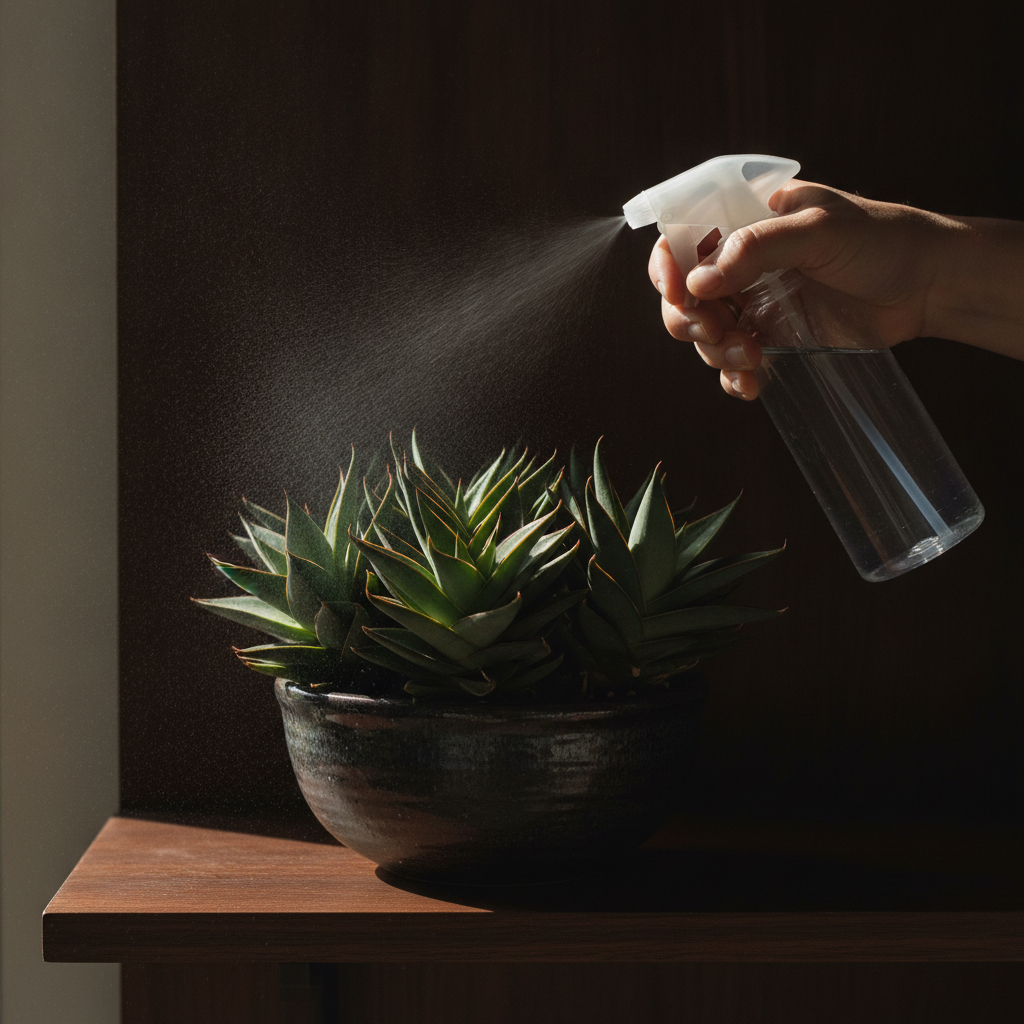
Humidity is refreshingly unimportant here. The samurai snake plant comes from arid country and is perfectly content in the dry air of a heated or air-conditioned home, thriving anywhere in the ordinary 30 to 50 percent range. It has no need for misting, pebble trays or humidifiers, and in fact prefers not to have moisture lingering on its leaves.
If anything, the risk runs the other way. Persistently high humidity combined with poor air movement encourages fungal spotting on the leaves and slows the drying of the soil, both of which work against a plant adapted to a fast wet-dry cycle. There is no distinct set of low-humidity distress symptoms to watch for, because this plant simply does not suffer in dry air.
Should you ever grow it in an unusually damp room, such as a poorly ventilated bathroom, simply ensure good airflow and let the soil dry thoroughly between waterings to offset the extra moisture in the air.
Water Quality
The samurai snake plant is not fussy about water, and ordinary tap water is fine for most growers. If your supply is very hard or heavily chlorinated, mineral deposits can build up in the soil over time, so an occasional flush with rainwater or filtered water helps. Because you water so infrequently, letting tap water stand for an hour or so before use to take the chill off is a small kindness rather than a requirement.
Soil, Potting & Repotting
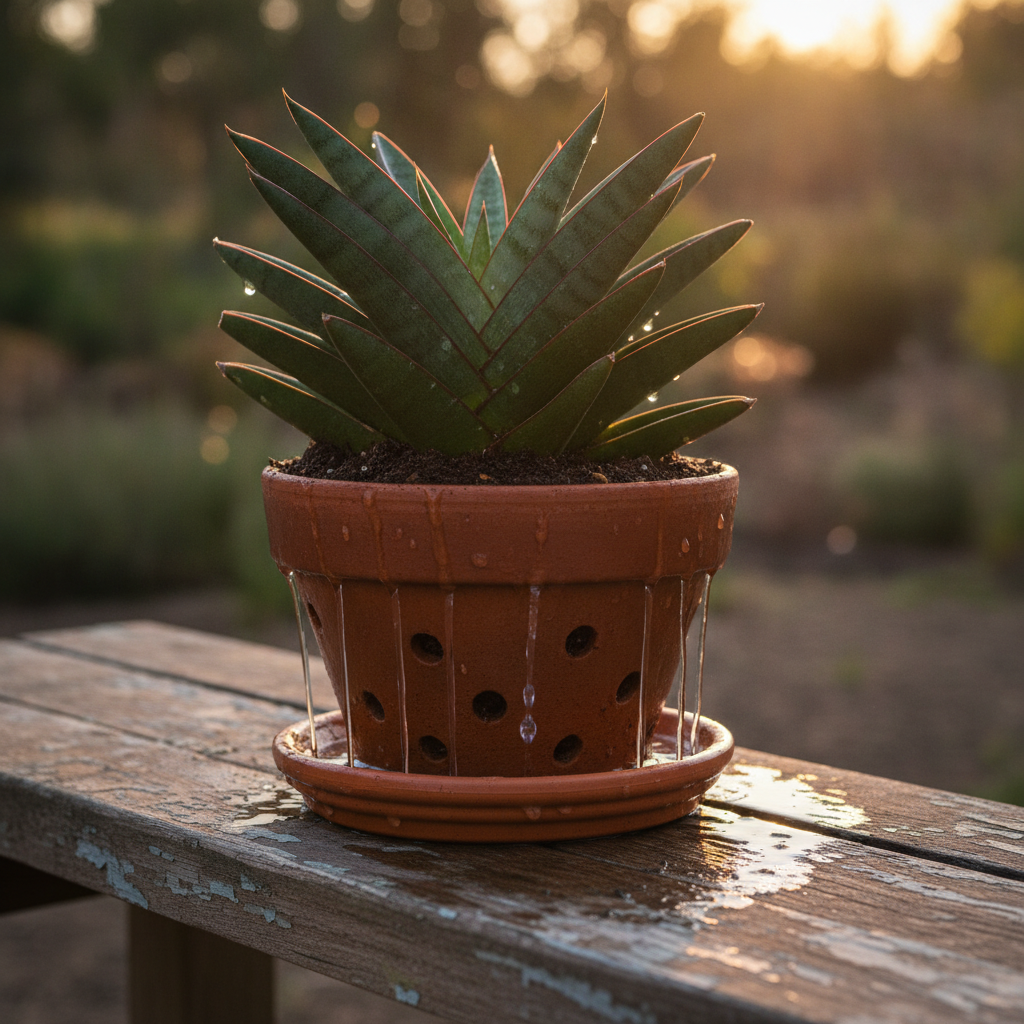
Everything about the samurai snake plant’s watering needs points to the same soil requirement: sharp, fast drainage. A mix that holds water like a sponge will keep the rhizome damp long after the plant has taken what it needs, and damp roots are the road to rot. The aim is a gritty, open substrate that wets thoroughly, drains almost instantly and dries out completely within a week or two.
Ideal Soil Composition
The simplest reliable approach is to start with a bagged cactus and succulent compost and open it up further with extra grit, since most commercial mixes still hold a little too much moisture for this plant. The components below combine to give both the drainage and the light anchorage the samurai snake plant needs.
| Component | Proportion | Function |
|---|---|---|
| Cactus and succulent compost | 2 parts | Base structure and modest nutrient content |
| Coarse perlite or pumice | 1 part | Opens the mix and holds air around the roots |
| Horticultural grit or coarse sand | 1 part | Adds weight and speeds drainage |
The samurai snake plant prefers a soil that is neutral to slightly acidic, roughly pH 6.0 to 7.0, which most cactus mixes fall within naturally. There is no need to test or adjust pH in ordinary home growing; simply avoid heavy, peat-only composts that stay wet and pack down over time.
Pro Tip — Quick Mix Recipe: No cactus compost to hand? Combine roughly half ordinary houseplant compost with half a mix of perlite and grit. If you can squeeze a wet handful and it crumbles apart rather than holding together in a ball, the drainage is about right.
Choosing the Right Pot
Pot choice matters more for this plant than for most, because the container directly controls how quickly the soil dries. A snug pot that dries fast is far safer than a large one that stays damp around unused roots.
Drainage holes are non-negotiable. Never plant a samurai snake plant in a pot without drainage. If you love a decorative cachepot that has no holes, use it as an outer cover only, keeping the plant in a plain draining nursery pot that you lift out to water.
Pot material: Unglazed terracotta is the ideal choice because its porous walls wick moisture out of the soil and help it dry evenly, greatly reducing rot risk. Glazed ceramic and plastic both work but hold moisture longer, so if you use them, be even more disciplined about letting the mix dry out.
Pot size: Choose a pot only slightly larger than the root ball. These plants are happy somewhat crowded and actually flower and offset more readily when a touch pot-bound, so resist the urge to give them room to grow into. A shallow pot suits the spreading rhizome better than a deep one.
When to Repot
The samurai snake plant is slow-growing and enjoys tight quarters, so it needs repotting only every two to four years. The usual triggers are roots or offsets crowding out of the pot, the rhizome pushing the plant upward or against the rim, or the old soil breaking down and staying wet too long. Spring or early summer is the best time, when the plant is entering active growth and can recover quickly. Occasionally a vigorous clump will actually crack a rigid plastic pot as it expands, which is an unmistakable sign it is time.
How to Repot: Step-by-Step
- Water lightly a day or two beforehand if the soil is dust dry, which makes the root ball easier to remove, or repot fully dry if you prefer to inspect the roots cleanly.
- Ease the plant out by tipping the pot and supporting the base of the fan, rather than pulling on the leaves.
- Gently tease away the old soil and examine the rhizome and roots, trimming off anything soft, brown or dead with clean tools.
- Choose a pot just one size up, add a layer of fresh gritty mix, and position the plant at the same depth it sat before.
- Fill around the roots with fresh mix, firming lightly so the plant sits stable but not compacted.
- Wait a week before watering, giving any disturbed or trimmed roots time to callus and reducing the chance of rot.
Warning — Transplant Shock: Resist the temptation to water a freshly repotted samurai snake plant straight away. Its roots are almost always nicked during repotting, and water sitting against those fresh wounds is the fastest route to rot. A dry week after repotting is one of the most important habits you can build with this plant.
Fertilising
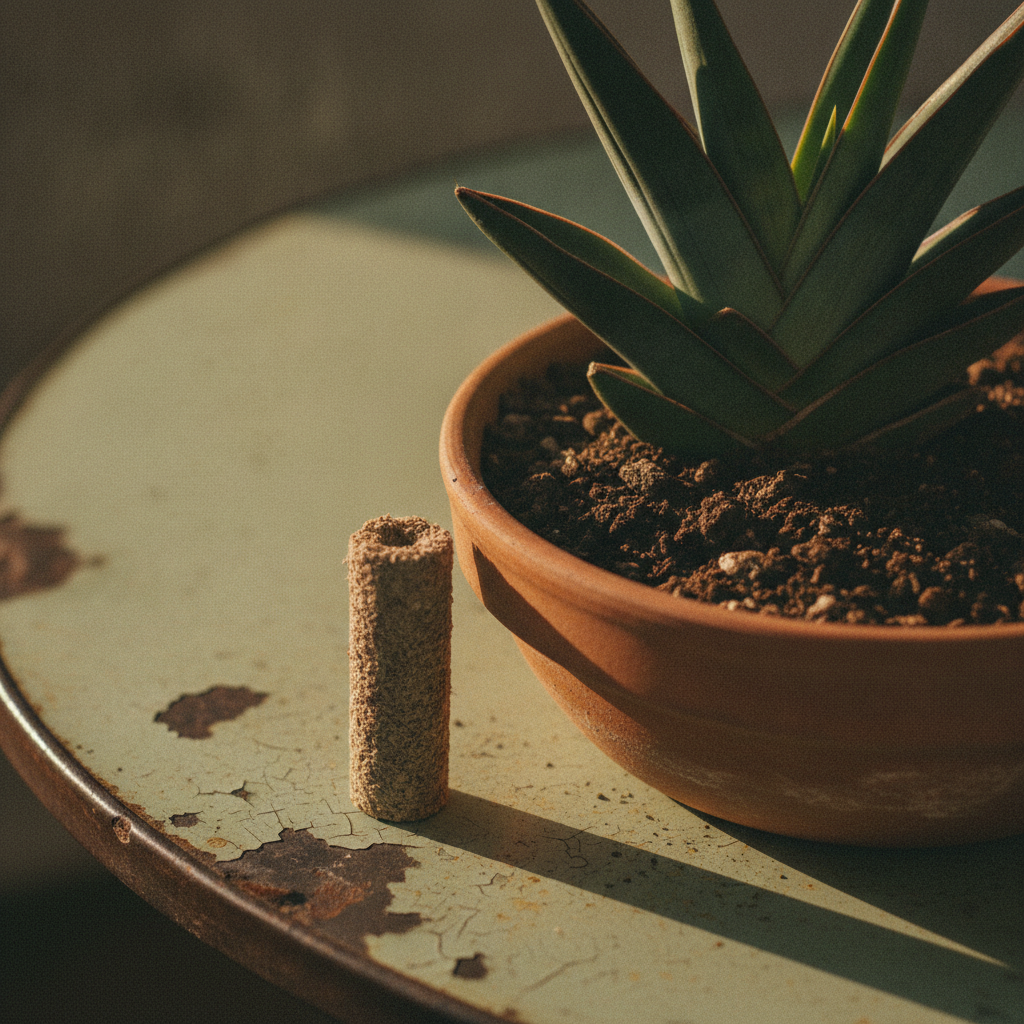
Feeding a samurai snake plant is a task defined by restraint. Adapted to poor, stony ground, it needs very little supplementary nutrition and is easily harmed by too much. Overfeeding produces soft, weak, stretched growth and leads to a build-up of mineral salts that can scorch the roots, so the rule is to feed lightly, infrequently, and only during the growing season.
A plant in fresh compost has all it needs for its first year, so hold off feeding a recently potted specimen entirely. For established plants, one or two dilute feeds spread across spring and summer are ample to keep the leaves firm and well-coloured.
Understanding Plant Nutrients
Fertilisers are labelled with an N-P-K ratio describing the proportion of nitrogen, phosphorus and potassium, the three nutrients plants use in the largest amounts. For a foliage succulent like this, a balanced or slightly nitrogen-leaning feed is ideal, though because you apply so little, the exact ratio matters far less than the dilution. The table below outlines the key nutrients and what their absence looks like.
| Nutrient | Symbol | Primary Function | Deficiency Symptoms |
|---|---|---|---|
| Nitrogen | N | Leaf growth and green pigment | Pale, yellowing older leaves and stalled growth |
| Phosphorus | P | Root development and energy transfer | Weak roots and generally sluggish vigour |
| Potassium | K | Water regulation and overall hardiness | Yellow or browning leaf margins |
| Magnesium | Mg | Core of the chlorophyll molecule | Yellowing between the veins of older leaves |
| Iron | Fe | Chlorophyll formation in new growth | Yellowing of the youngest leaves while veins stay green |
Types of Fertiliser
Liquid fertilisers: The easiest option to control, because you can dilute them heavily and apply only when needed. A cactus or succulent liquid feed, or a balanced houseplant feed at half or quarter strength, is perfect for this plant.
Slow-release granular: A small amount of slow-release fertiliser worked into the soil at repotting can supply gentle nutrition across a whole season, which suits the plant’s low, steady appetite well. Use less than the packet suggests.
Organic fertilisers: Options such as diluted worm-casting tea or a light top-dressing of worm castings release nutrients slowly and gently, making them hard to overdo and a safe choice for cautious growers.
Feeding Schedule
Feed only during active growth in spring and summer. For most plants that means a dilute liquid feed once in late spring and again in midsummer, and that is enough. Stop feeding entirely from early autumn through winter, when the plant is dormant and cannot use the nutrients, and any excess simply accumulates in the soil as harmful salts.
Pro Tip — Dilute, Then Dilute Again: With this plant, too little feed is always safer than too much. Mix your fertiliser to half the recommended strength, and if you are unsure, halve it once more. You cannot easily undo a scorched root system, but you can always feed a little more next time.
How to Fertilise
- Only feed a plant that is in active growth and has been watered recently, never one that is bone dry or dormant.
- Dilute a liquid feed to half strength or less in your watering can.
- Apply it to already-moist soil, which prevents the concentrated solution from contacting and burning dry roots.
- Water normally next time to help move the nutrients through the soil, and skip feeding until the following scheduled date.
Warning — Salt Build-Up: White or crusty deposits on the soil surface or pot rim signal accumulated fertiliser salts. Flush them out by running water through the pot several times until it drains freely, let it dry completely, and ease back on feeding. Chronic salt build-up browns leaf tips and damages roots.
Propagation
Propagating a samurai snake plant is genuinely satisfying, and the good news is that its natural growth habit does most of the work for you. As the plant matures it spreads by an underground rhizome, sending up new fans a short distance from the parent. These offsets, or pups, are the key to reliable propagation and the reason division is by far the best method for this species.
It is worth understanding why division is preferred over leaf cuttings, which work for some other snake plants. While a leaf section of a plain green sansevieria can be rooted, the process is extremely slow and, for any cultivar selected for a particular form or colour, the resulting plantlets often revert to a plainer type. Dividing the rhizome, by contrast, produces an exact copy of the parent that establishes quickly because it already has its own roots and leaves.
Understanding the Rhizome
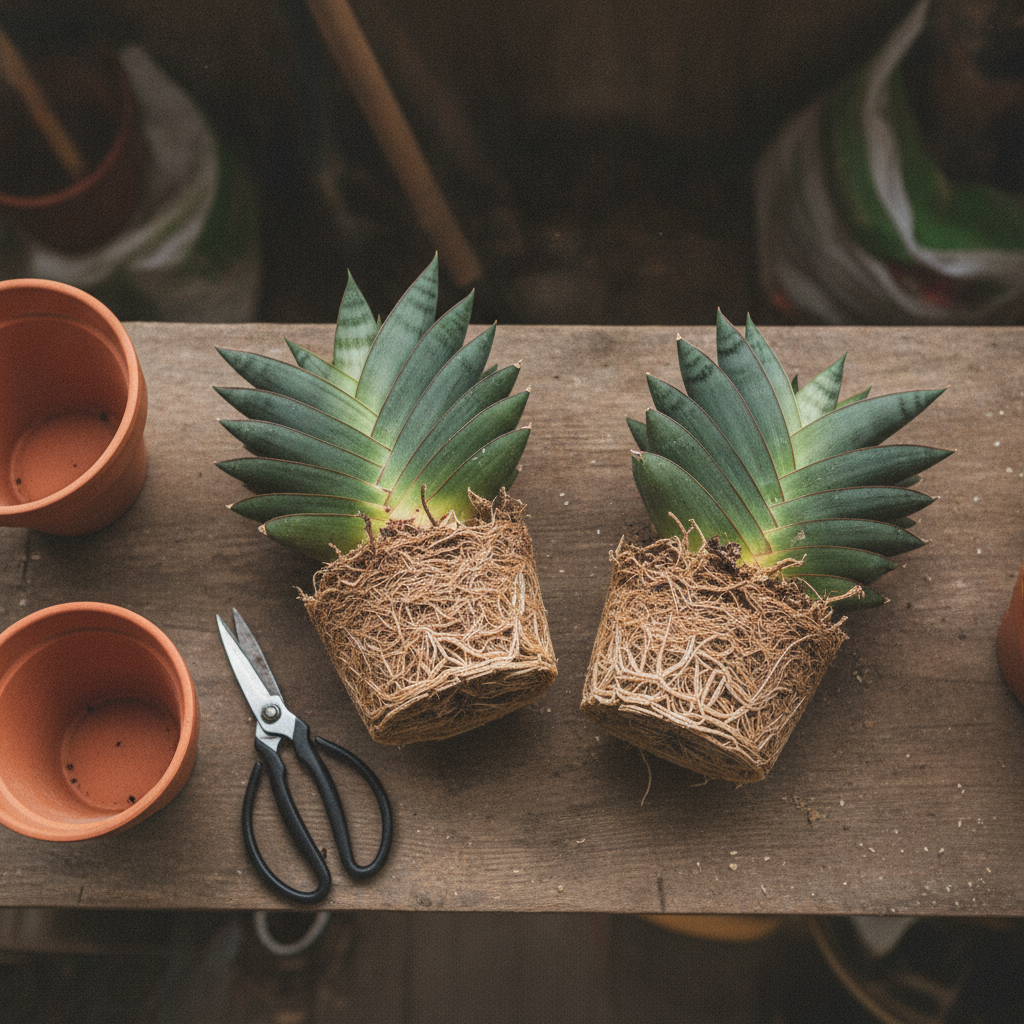
The rhizome is a thick, horizontal underground stem that stores energy and water and links each fan in the clump. New fans arise along its length, so an established samurai snake plant is really a colony of connected crowns rather than a single plant. Propagation by division simply means separating these natural units, each with a section of rhizome and its own roots, into independent plants.
Division: Step-by-Step
Division is best done in spring or early summer, ideally combined with a scheduled repotting so the plant is only disturbed once. Choose a clump that has at least two well-developed fans before you start.
- Remove the whole plant from its pot and brush away the soil until you can clearly see the rhizome connecting the fans.
- Identify natural divisions where each fan has its own cluster of roots and a length of rhizome.
- Separate the sections by gently pulling them apart, or by cutting cleanly through the rhizome with a sterilised sharp knife, making sure each piece keeps roots and at least one healthy fan.
- Let the cut surfaces air-dry and callus for one to two days in a shaded, dry spot to seal against rot.
- Pot each division into its own small pot of dry, gritty succulent mix, at the same depth it grew before.
- Wait about a week before the first light watering, then resume normal, sparing care.
Pro Tip — Always Let Cuts Callus: Whether you divide or take cuttings, never pot a fresh wound straight into moist soil. Allowing the cut to dry and callus for a day or two forms a protective barrier that dramatically lowers the risk of rot, the single most common reason propagations fail.
Leaf Cuttings: Step-by-Step
Leaf cuttings are slower and less certain than division, but they are a fun experiment if you have a spare leaf and plenty of patience. Note that this method can take many months and may not preserve the exact character of a named form.
- Cut a healthy mature leaf close to the base with a sterilised blade, noting which end was lowest, as it must be replanted the same way up.
- If the leaf is long, cut it into several sections, keeping track of the original orientation.
- Leave the sections to callus in a dry, shaded place for two to three days.
- Insert the lower edge a few centimetres into dry, gritty mix, keeping the correct way up.
- Place in bright indirect light and water only very lightly every couple of weeks, waiting for roots and eventually a small pup to form over the following months.
Troubleshooting Propagation
| Problem | Likely Cause | Solution |
|---|---|---|
| Division rots at the base | Potted too wet, or watered before the cut callused | Use dry gritty mix, callus first, delay watering a week |
| Cutting shrivels away | Too dry for too long, or no roots formed | Give a little more warmth and the occasional light water |
| No roots after months | Too cold or too dark to trigger growth | Move somewhere warmer and brighter and be patient |
| Leaf cutting reverts to plain green | Normal for cuttings of selected forms | Use division instead to keep the parent’s character |
Pests & Diseases
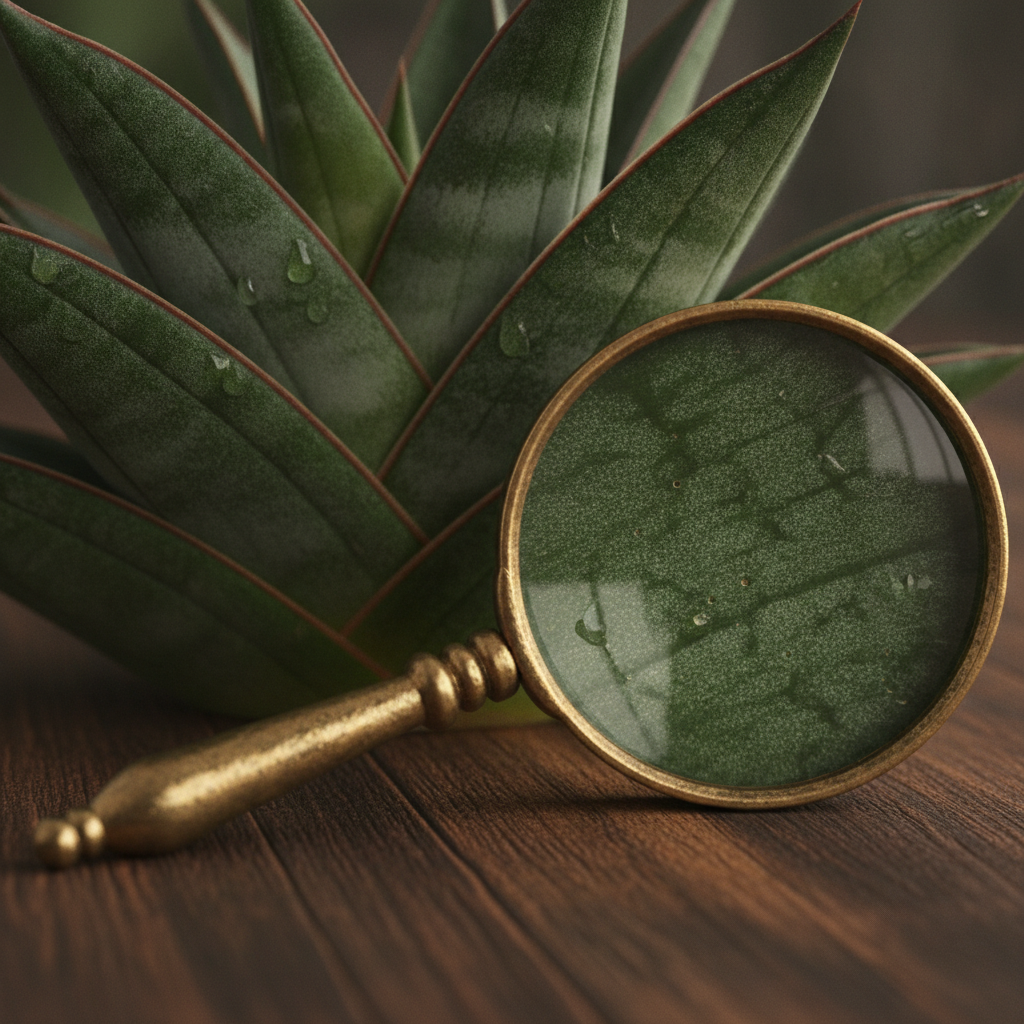
The samurai snake plant is one of the more trouble-free houseplants you can own, and a healthy specimen in the right conditions rarely attracts pests. Its tough, waxy leaves deter many insects, and its drought tolerance keeps it clear of the damp-loving problems that plague thirstier plants. When trouble does arise, it is almost always linked to overwatering or to pests brought in on a neighbouring plant.
The great majority of issues with this plant are cultural rather than biological, which is to say the plant is far more likely to suffer from how it is watered than from anything living on it. Even so, it pays to inspect new arrivals and to check the leaf axils occasionally, since a small infestation caught early is trivial to clear.
Common Pests
Mealybugs (Pseudococcus species)
The most likely pest on a snake plant, mealybugs appear as small, soft, white cottony tufts tucked into the leaf axils and along the bases of the fan. They feed on sap, weakening the plant and leaving a sticky residue.
Treatment: Dab each insect directly with a cotton bud dipped in rubbing alcohol, then wipe the area clean. For larger infestations, treat with insecticidal soap or a diluted neem oil solution every week until clear, and isolate the plant from its neighbours.
Spider Mites (Tetranychus urticae)
Rare on this plant but possible in very hot, dry conditions, spider mites are tiny and hard to see, betrayed mainly by fine webbing and faint pale stippling on the leaf surface.
Treatment: Wipe the leaves with a damp cloth to remove mites and webbing, then treat with neem oil or insecticidal soap. Raising humidity slightly and improving airflow discourages them from returning.
Scale Insects (Coccoidea)
Scale show up as small, hard, brown, limpet-like bumps stuck firmly to the leaves, often along the margins. Like mealybugs they suck sap and can leave a sticky honeydew behind.
Treatment: Scrape them off gently with a fingernail or an old toothbrush, then dab with alcohol and follow up with neem oil. Persistent cases may need repeated weekly treatments to catch newly hatched crawlers.
Common Diseases
Root Rot (Pythium and Fusarium species)
By far the most serious threat to a samurai snake plant, root rot is caused by soil-borne fungi that thrive in waterlogged conditions. It shows as a soft, yellowing, collapsing base and mushy, foul-smelling roots.
Treatment: Act fast. Unpot the plant, cut away all rotten tissue back to firm healthy growth, dust the cuts with fungicide or cinnamon, let them dry, and repot into fresh dry gritty mix. Prevent recurrence by watering only when fully dry and using a free-draining pot and soil.
Fungal Leaf Spot (various fungi)
Less common, leaf spot appears as sunken brown or reddish blotches, sometimes with a yellow halo, usually where water has sat on the leaves in humid, still air.
Treatment: Remove affected leaves, improve air circulation, and keep water off the foliage when you water. A copper-based fungicide can help stubborn cases, but cultural changes usually resolve it.
Pest and Disease Summary
| Pest / Disease | Identification | Treatment |
|---|---|---|
| Mealybugs | White cottony tufts in leaf axils | Alcohol swab, then insecticidal soap or neem |
| Spider mites | Fine webbing and pale stippling | Wipe clean, neem oil, improve airflow |
| Scale | Hard brown bumps on leaves | Scrape off, dab with alcohol, neem oil |
| Root rot | Soft collapsing base, smelly roots | Cut out rot, repot dry, water less |
| Fungal leaf spot | Brown or reddish sunken blotches | Remove leaves, improve airflow, keep foliage dry |
Prevention Strategies
Prevention with this plant is mostly a matter of good watering discipline and a little vigilance. Because rot is the overwhelming danger, the most valuable habit you can form is to always let the soil dry completely and to use a pot and mix that drain freely. Get that right and you have sidestepped the plant’s only common serious problem.
For pests, quarantine every new plant for a couple of weeks before it joins your collection, inspect the leaves and axils when you water, and wipe the foliage occasionally to keep it clean and let you spot early trouble. Good airflow around the plant discourages both pests and fungal disease.
Pro Tip — Isolate and Inspect: Most infestations arrive on a newly bought plant. Keeping new arrivals apart from your other plants for two weeks, and checking them over before mingling, prevents the vast majority of pest outbreaks before they start.
Popular Varieties
The plant sold as the samurai snake plant sits within a small group of closely related forms of Dracaena ehrenbergii, and the naming in the trade can be delightfully inconsistent. The compact “Samurai Dwarf” is the form most people mean, but the species and its relatives offer a handful of distinct looks worth knowing, from the tidy stacked fan of the dwarf to the plump, banana-like blades of another well-loved form.
Because these forms share almost identical care, choosing between them is really a question of size and silhouette rather than growing difficulty. The table and profiles below cover the ones you are most likely to encounter.
| Variety | Leaf Appearance | Light Needs | Growth Rate | Availability |
|---|---|---|---|---|
| Samurai Dwarf | Short, stiff, boat-shaped blue-green leaves in a tight fan with red edges | Bright indirect | Slow | Common |
| Ehrenbergii (species) | Taller, longer blue-grey blades in a looser fan | Bright indirect to sun | Slow to moderate | Occasional |
| Banana (Sansevieria ehrenbergii ‘Banana’) | Thick, curved, boat-shaped blue-grey leaves like small bananas | Bright indirect to sun | Slow | Occasional |
| Blue Sansevieria | Robust blue-toned blades, larger and more upright | Bright indirect to sun | Moderate | Uncommon |
Featured Varieties
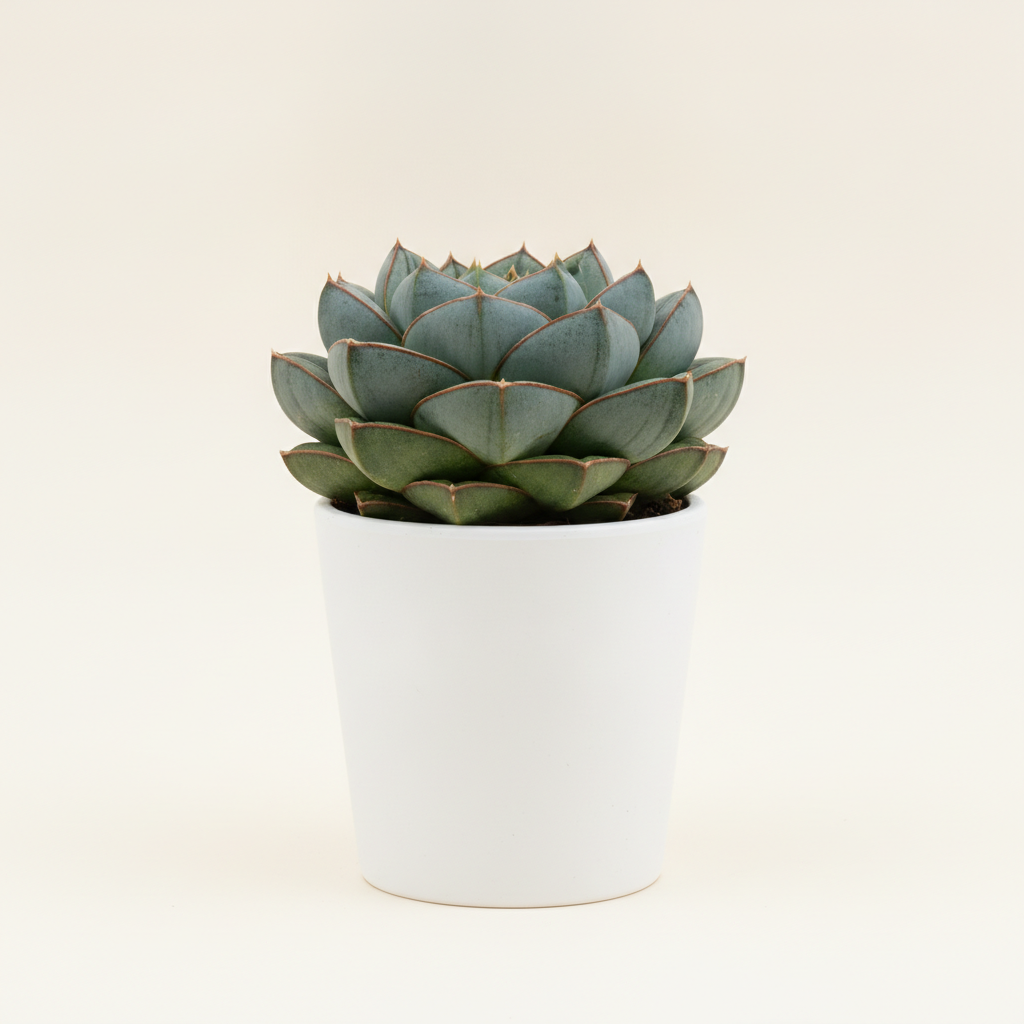
Samurai Dwarf
The classic form and the one most often labelled simply “Samurai”. It builds a very compact, tightly overlapping fan of rigid, channelled blue-green leaves, each finished with a fine reddish-brown margin. Its small size and sculptural neatness make it the ideal choice for a shelf or desk.
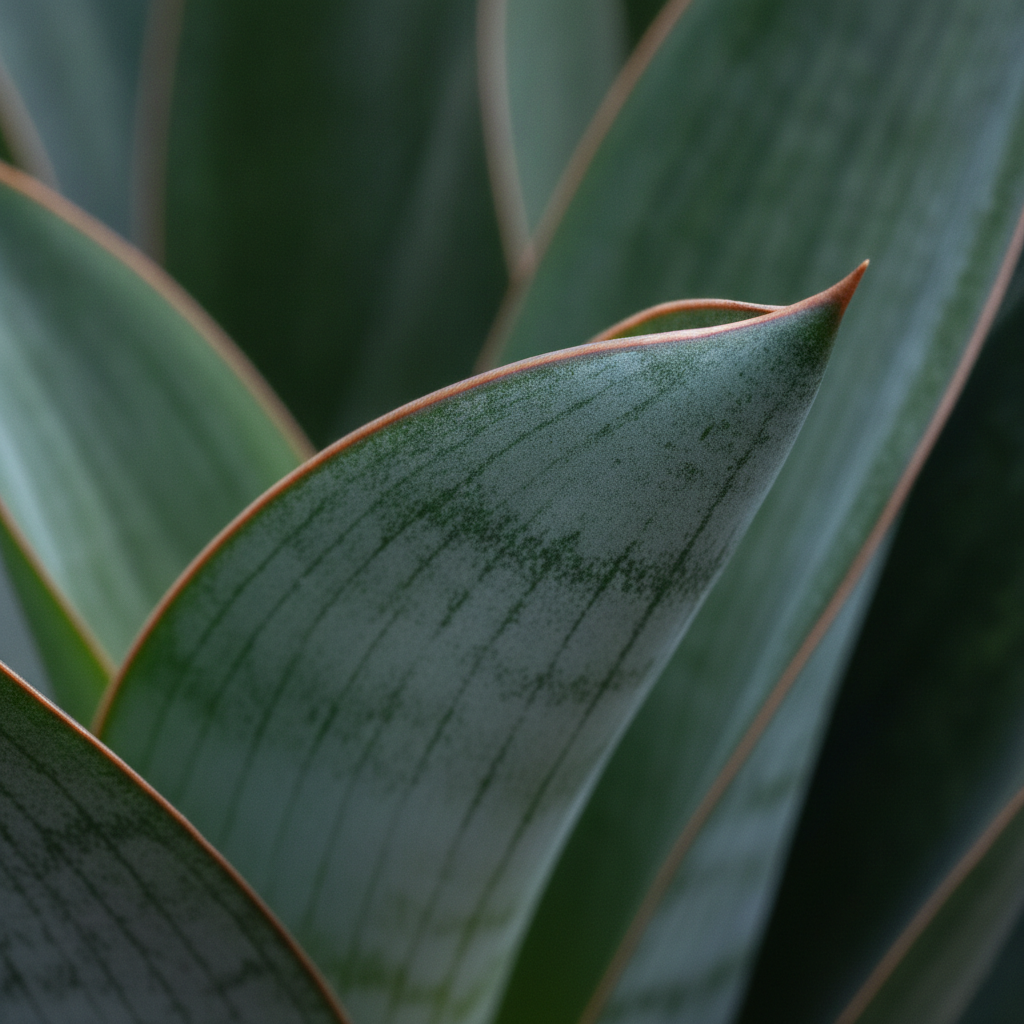
Banana
Named for its plump, curved blades, the Banana form carries thicker, boat-shaped blue-grey leaves that swell and taper like small green bananas, edged with a subtle coppery line. It is a little larger and rounder in feel than the dwarf and makes a striking, chunky counterpoint in a succulent collection.
Variety Profiles in Detail
Samurai Dwarf (Dracaena ehrenbergii)
The dwarf is prized for staying small and orderly, rarely exceeding 20 to 30 centimetres (8 to 12 inches). Its leaves are the shortest and stiffest of the group, stacked in an unmistakable two-ranked fan that looks almost machined. Because it is slow and compact, it is the version most suited to indoor life and the one you are most likely to find for sale.
Banana Form (Dracaena ehrenbergii ‘Banana’)
This form trades the dwarf’s crisp angularity for softer, fuller curves. Its thicker leaves store more water and give the plant a rounded, sculptural profile, while the blue-grey colouring and coppery edging remain. Care is identical to the dwarf; it simply takes up a little more space and reads as bolder.
Ehrenbergii Species Form (Dracaena ehrenbergii)
The un-selected species grows taller and looser than the dwarf, with longer blue-grey blades and, in time, a more open fan that can develop into a sizeable clump. It is the closest to the wild plant and rewards bright light with strong colour, but its greater size makes it better suited to a floor-standing pot than a shelf.
Choosing the Right Variety for Your Space
For a small, tidy accent on a shelf, desk or windowsill, the Samurai Dwarf is the obvious pick, offering maximum sculptural impact in minimum space. If you want something chunkier and more unusual to anchor a group of succulents, the Banana form brings pleasing bulk and curve. And if you have the room and want a specimen that will slowly build into a substantial clump, the taller species form delivers that presence. Whichever you choose, the care is essentially the same, so let looks and available space guide your decision.
Frequently Asked Questions
How often should I water a samurai snake plant?
Only when the soil has dried out completely, which in a warm bright room usually means once every two to three weeks in summer and as little as once a month or less in winter. Always check that the mix is bone dry before watering rather than following a fixed schedule, because overwatering is the main way this plant is killed.
Why are the leaves on my samurai snake plant getting long and floppy?
Stretched, elongated leaves and a loosening fan are the classic sign of too little light. The plant is reaching for a brighter source. Move it to a spot with more bright, indirect light, or add a grow light, and new growth will return to the short, compact form.
Is the samurai snake plant safe for cats and dogs?
No, it is mildly toxic. Like all snake plants it contains saponins that can cause drooling, vomiting and diarrhoea if a pet chews the leaves. It is rarely dangerous, but it is best kept out of reach of cats, dogs and small children.
Why is my samurai snake plant turning yellow and soft at the base?
A soft, yellowing, collapsing base almost always means overwatering and root rot. Unpot the plant, cut away any mushy roots and rotten tissue back to firm growth, let the cuts dry, and repot into fresh dry gritty mix. In future, water only when the soil is completely dry.
How big does a samurai snake plant get?
The popular dwarf form stays small, usually 15 to 30 centimetres (6 to 12 inches) tall, and spreads slowly into a clump over years. The taller species form can reach greater heights in time, but all forms are slow-growing, so you will not need to manage rapid size changes.
Does the samurai snake plant need special soil?
It needs a very free-draining mix. A bagged cactus and succulent compost opened up with extra perlite and grit is ideal. Ordinary houseplant compost on its own holds far too much moisture and will lead to rot, so always add plenty of drainage material.
How do I propagate a samurai snake plant?
Division is the easiest and most reliable method. Remove the plant from its pot in spring, separate a fan that has its own roots and a piece of rhizome, let the cut callus for a day or two, and pot it into dry gritty mix. Leaf cuttings are possible but much slower and less certain.
Can a samurai snake plant survive in low light?
It can survive in low light for a long time, which is part of its reputation for toughness, but it will not thrive there. Expect slow growth, stretched leaves and faded colour. For a genuinely healthy, compact plant, give it bright indirect light.
Why does my samurai snake plant have brown, crispy leaf tips?
Brown tips can come from a build-up of mineral salts from tap water or over-fertilising, or occasionally from prolonged drought. Flush the pot thoroughly with water to clear salts, ease back on feeding, and make sure you are watering deeply when you do water rather than giving frequent small sips.






