

Few houseplants look quite so much like living sculpture as the silver torch euphorbia. Sold under a scattering of names, most commonly cat tails euphorbia, its slim, pencil-thin stems fork and rise into a pale silvery-green candelabra that reads more like coral or driftwood than a conventional pot plant. Botanically it is Euphorbia leucodendron, a leafless succulent from the dry south and southwest of Madagascar, where it grows into a much branched shrub or small tree. Indoors it stays a manageable, upright specimen prized by collectors for its architectural silhouette and its almost unkillable tolerance of neglect.
Its reputation is that of a plant you can forget about, and for the most part that is fair. It asks for very little water, thrives on strong light, and shrugs off the dry air of a centrally heated room. Yet there is a real gap between a silver torch euphorbia that merely survives, sitting pale and slightly shrunken in soggy soil, and one that thrives, plumping into firm, colourful, well-branched stems that catch the light. The difference comes down to a handful of decisions about drainage, watering rhythm and handling. This guide walks through every one of them, from the ideal soil recipe to safe propagation, because this is a plant whose milky sap demands a little more respect than most.
Contents
- Quick Reference
- Why Silver Torch Euphorbia Makes a Striking Houseplant
- Light Requirements
- Watering & Humidity
- Soil, Potting & Repotting
- Fertilising
- Propagation
- Pests & Diseases
- Popular Varieties
- Frequently Asked Questions
Quick Reference: Silver Torch Euphorbia at a Glance
| Light | Bright light, including several hours of direct sun; a south or west window indoors |
| Watering | Sparingly; soak then let the mix dry out completely, roughly every 2 to 3 weeks in summer and monthly or less in winter |
| Temperature | 18 to 29 degrees Celsius (64 to 84 degrees Fahrenheit); keep above 10 degrees Celsius (50 degrees Fahrenheit) |
| Humidity | Low; ordinary dry room air is ideal, no misting needed |
| Fertiliser | Dilute cactus feed once a month through spring and summer only |
| Toxicity | Toxic; the milky latex is a serious skin, eye and mucous-membrane irritant and harmful if swallowed |
Why Silver Torch Euphorbia Makes a Striking Houseplant
The appeal of this plant is almost entirely about form. Where most houseplants earn their place with foliage, the silver torch euphorbia has dispensed with permanent leaves altogether. Its slender cylindrical stems, seldom thicker than a pencil, take over the work of photosynthesis, which is why they hold that soft grey-green to silvery colour year round. Those stems branch again and again from near-vertical growing points, producing a dense, upward-reaching cluster that genuinely resembles a torch or a bundle of cat tails. In a minimalist interior it functions as a piece of living architecture, and it pairs beautifully with concrete, pale wood and matte ceramics.
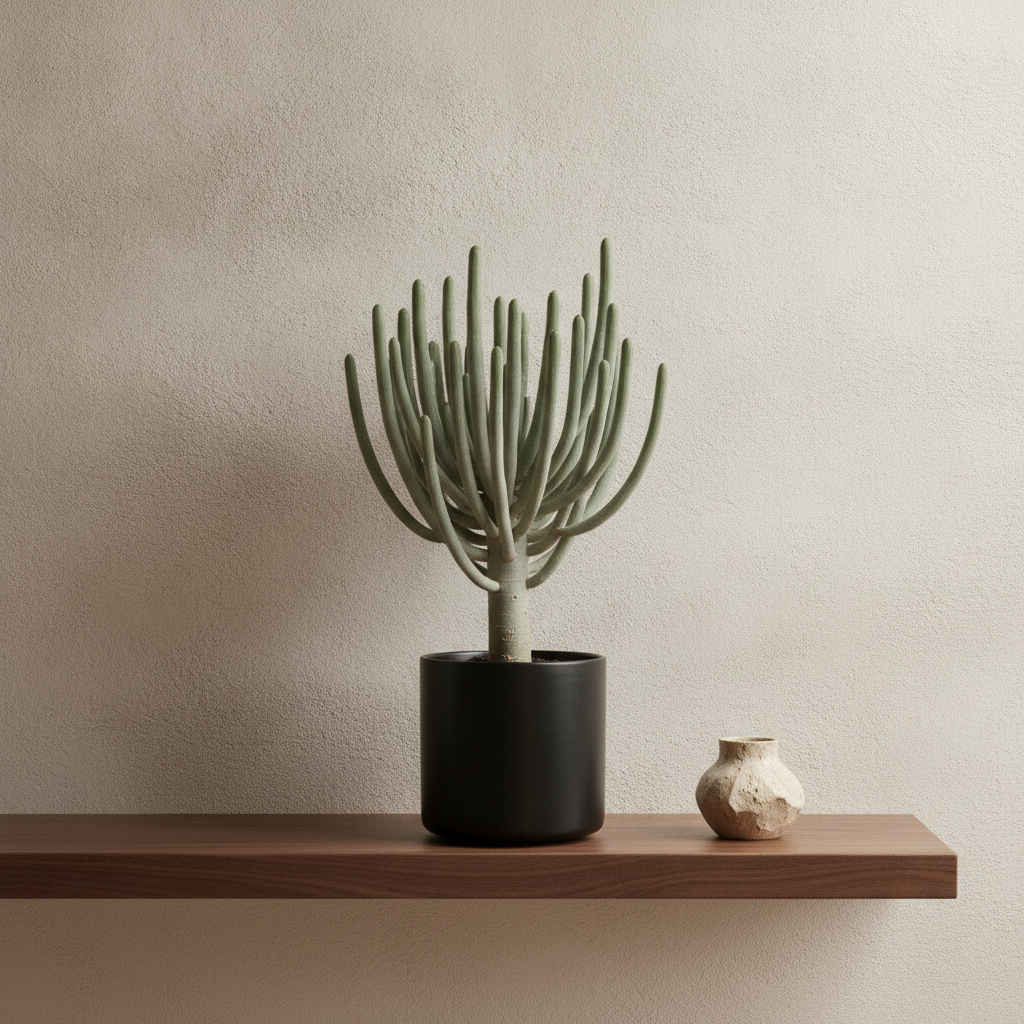
Beyond looks, it is one of the most forgiving succulents you can grow. It stores water in its stems, so it copes with the erratic watering that kills thirstier plants, and it positively enjoys the warm, dry, low-humidity conditions of a modern home that make ferns and calatheas sulk. A healthy specimen grows slowly but steadily, gaining perhaps 15 to 30 centimetres (6 to 12 inches) of new stem in a good year, and it can live for decades with minimal intervention. The one genuine drawback, and it is an important one, is the sap. Every part of the plant bleeds a copious milky-white latex when cut or broken, and this is not a plant to grow carelessly around curious children or pets.
Important — Toxicity: Like all euphorbias, Euphorbia leucodendron exudes a milky latex that is a strong irritant. Contact can cause burning, redness and blistering of the skin, and it is especially dangerous to the eyes, where it can cause severe pain and temporary or even lasting damage to sight. The sap is also toxic if swallowed. Always wear gloves and eye protection when pruning or propagating, keep the plant out of reach of children and pets, and never rub your eyes while handling it.
Light Requirements
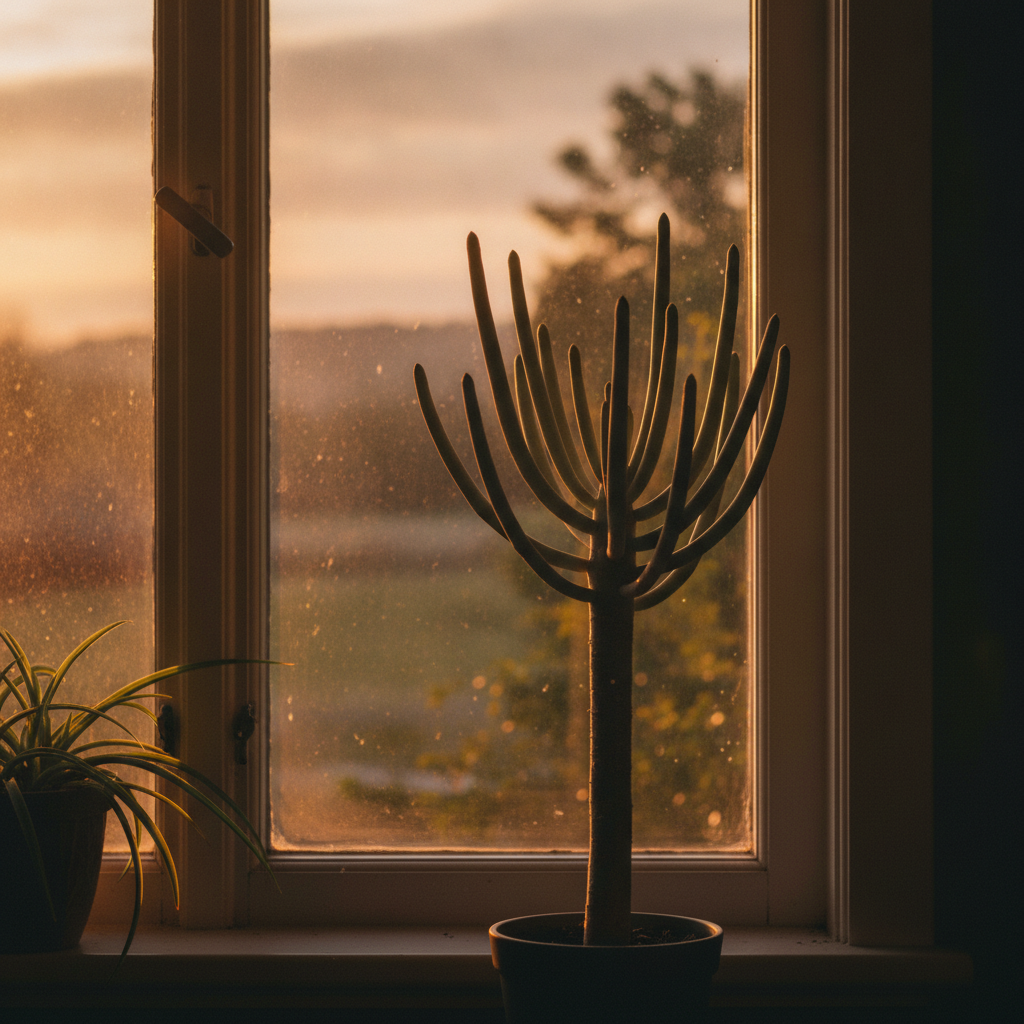
Light is the single biggest factor in whether this euphorbia thrives or merely limps along. In its native Madagascar it grows fully exposed under a fierce subtropical sun, and everything about it, from the reduced leaves to the silvery stem surface, is an adaptation to intense light and heat. Indoors it wants the brightest position you can offer, ideally with a few hours of direct sun falling on the stems each day.
The ideal indoor spot is directly in front of an unobstructed south-facing window (in the northern hemisphere) or a west-facing one, where the plant will bank enough energy to keep its stems firm, well coloured and compact. Given too little light it does not die quickly, but it stretches, producing thin, weak, elongated growth that leans toward the window and eventually flops. Pale, spindly new stems are the classic sign that a silver torch euphorbia needs to move somewhere brighter.
Light Levels Explained
Because “bright light” means different things to different growers, the table below translates the usual categories into what they mean for this plant. Note that unlike many houseplants, the silver torch euphorbia genuinely wants to be in the top two tiers.
| Light Category | Approx. Level | Typical Location | Outcome |
|---|---|---|---|
| Direct sun | Over 50,000 lux | On a south or west windowsill | Ideal; firm, compact, well-coloured stems |
| Bright indirect | 10,000 to 20,000 lux | Just back from a bright window | Good; steady if slightly slower growth |
| Medium | 5,000 to 10,000 lux | A few metres from a window, or an east window | Tolerated; growth thins and slows |
| Low | 1,000 to 2,500 lux | A north window or interior wall | Poor; stretched, weak, pale stems |
| Very low | Under 1,000 lux | A dim corner or hallway | Unsuitable; slow decline over time |
Window Orientation and Placement
South-facing window: The best position in most homes. It supplies the long hours of strong, direct light this plant evolved for. Place the pot right on or beside the sill so the stems bathe in as much sun as possible.
East-facing window: Workable but rarely ideal on its own. The gentle morning sun is welcome, but the plant may slowly stretch toward the glass through the duller afternoon. Rotate it regularly and accept slightly looser growth.
West-facing window: A strong second choice after south. The hot afternoon sun suits the plant well, and stems kept here usually stay firm and compact. Watch only for overheating behind glass on the hottest summer days.
North-facing window: Generally too dim to keep this euphorbia in good condition long term. It will survive for a while but steadily etiolate. If a north window is all you have, plan to supplement with a grow light.
Pro Tip — Rotate for Even Growth: Because the stems reach so strongly toward light, this plant will lean and grow lopsided if left facing one way. Give the pot a quarter turn every week or two so all sides receive their share of sun and the candelabra stays balanced and upright.
How Light Affects Stem Colour and Form
Since the stems are the whole show, light quality shapes the plant’s appearance directly. Under strong sun the stems stay short-jointed, firm and take on their characteristic silvery, sometimes faintly blue-grey cast, occasionally with a subtle reddish or purplish flush at the tips in the brightest conditions. In weaker light they turn a flatter, softer green, elongate between branch points and lose that dense, muscular look. Good light, in other words, is what gives the plant its sculptural quality in the first place.
Warning — Direct Sunlight: A plant grown in shade should not be moved abruptly into full sun. Its stems will scorch, developing pale, bleached or brown patches that never recover. Acclimatise it over two to three weeks, giving a little more direct sun each day, before leaving it in a full-sun position.
Artificial Lighting
If your home simply lacks a bright enough window, a full-spectrum LED grow light is an effective substitute. Position it 20 to 40 centimetres (8 to 16 inches) above the stems and run it for 12 to 14 hours a day. Because this is such a light-hungry plant, a grow light is often the difference between healthy compact growth and permanent stretching in darker rooms and through northern winters.
Seasonal Adjustments
Light levels indoors fall dramatically between summer and midwinter. As the days shorten, move the plant to your brightest window and, if needed, add supplementary lighting to see it through. This is also the season to ease right off on water, since a plant receiving less light needs far less moisture. In spring, reintroduce stronger sun gradually rather than shifting the plant straight back into blazing light.
Watering & Humidity
If light is what makes this plant thrive, water is what most often kills it. As a stem succulent from a seasonally arid climate, Euphorbia leucodendron stores its own reserves and is built to endure long dry spells. The commonest cause of death by a wide margin is overwatering, so the guiding principle is simple: when in doubt, wait.
When to Water
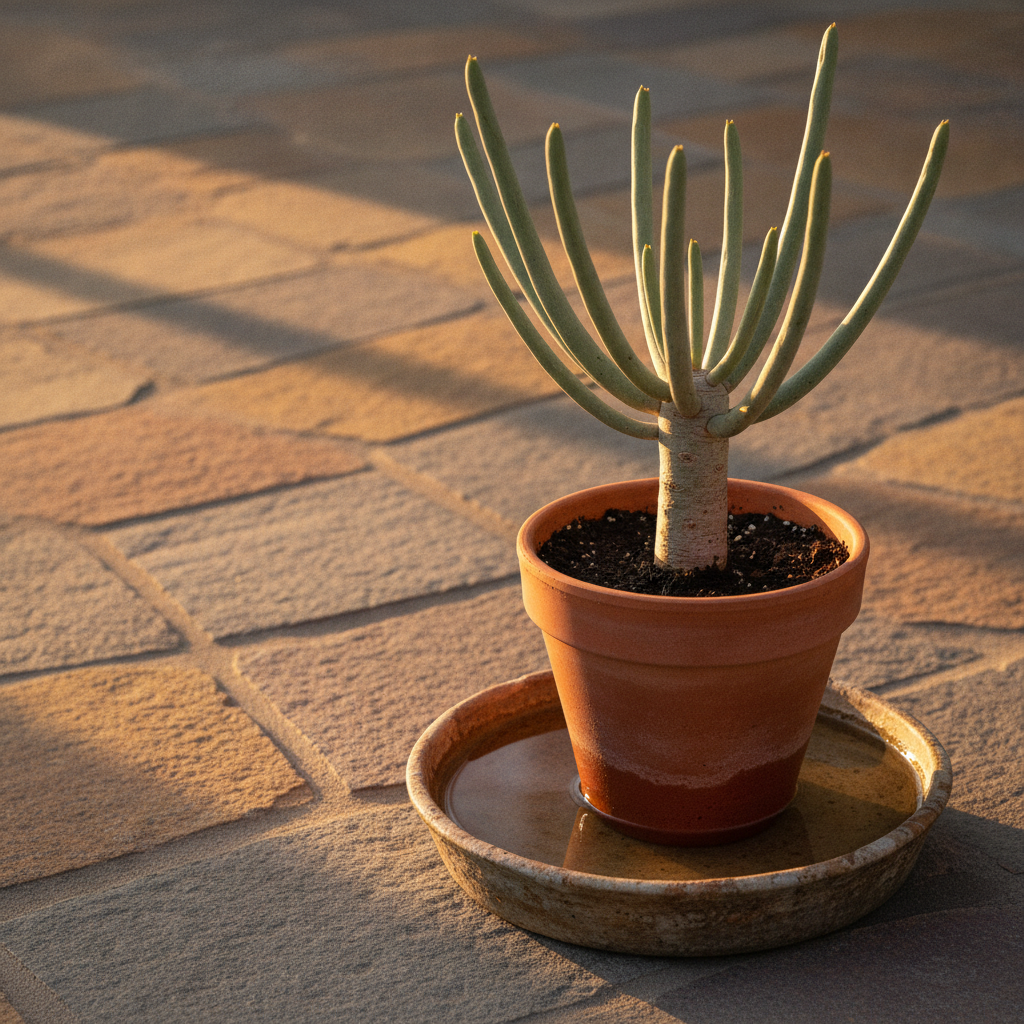
Water only when the potting mix has dried out completely, from top to bottom. Push a finger or a wooden skewer deep into the pot; if there is any coolness or dampness, leave it. In practice this usually means watering roughly every two to three weeks during the warm, bright months, and far less often in winter.
The plant also tells you what it needs. Stems that are plump, firm and upright are well hydrated and need nothing. If they begin to look slightly thinner, softly wrinkled or a little dull, that is the plant drawing on its reserves and a good moment for a thorough soak. This is a far safer signal to follow than any fixed calendar, because the right frequency depends on your light, pot and season.
Pro Tip — Lean Toward Underwatering: A thirsty silver torch euphorbia recovers within a day of a good drink, but a waterlogged one rots from the roots up and cannot be saved. When you are unsure whether to water, always choose to wait another week. Neglect suits this plant far better than attention.
How to Water Correctly
- Check that the mix is bone dry all the way down before you begin.
- Water thoroughly, either from the top or by standing the pot in a shallow tray, until moisture reaches the whole root ball.
- Let the pot drain freely for a few minutes so no water is held at the base.
- Tip away anything left in the saucer or tray; the roots must never sit in standing water.
- Return the plant to its bright spot and do not water again until the mix has dried out completely.
Signs of Overwatering vs. Underwatering
| Symptom | Overwatering | Underwatering |
|---|---|---|
| Stem colour | Yellowing, then browning or blackening from the base | Dulls slightly, staying otherwise green |
| Stem texture | Soft, mushy, water-soaked and collapsing | Thin, wrinkled and slightly shrunken but firm |
| Soil | Stays wet for days, may smell sour | Bone dry throughout |
| Roots | Brown, slimy and rotten | Dry and pale but intact |
| Base of plant | Blackened, soft and unstable | Firm and sound |
Warning — Root Rot: A soft, discolouring or blackening base is a sign of advanced root rot and is often fatal. Your only chance is to act at once: cut well above the affected tissue with a clean, sharp blade, let the healthy cutting callus for a week or more, and restart the plant as a fresh cutting in dry, gritty mix. The original rotting root ball should be discarded.
Humidity Requirements
Here the silver torch euphorbia is refreshingly undemanding. It is perfectly happy in the dry air of a centrally heated or air-conditioned home and needs no help at all with humidity. Ambient levels of 30 to 50 percent, typical of most living rooms, suit it well.
In fact, high humidity works against this plant rather than for it. Damp, stagnant air raises the risk of fungal problems and rot, particularly if it is combined with cool temperatures or overwatering. The stems never need the pampering that thin-leaved tropicals demand.
For that reason you should not mist a silver torch euphorbia, group it tightly with humidity-loving plants, or stand it over a pebble tray. If anything, good airflow around the stems is the more useful thing to provide, as it keeps the surface dry and discourages disease.
Water Quality
Water quality is not a major concern for this tough succulent, and ordinary tap water is fine in most areas. Because you water so infrequently, mineral build-up is slow to accumulate. If your water is very hard, or if you notice a pale crust forming on the soil surface, switching to filtered or collected rainwater now and then, and flushing the pot thoroughly when you do water, will keep the mix sweet.
Soil, Potting & Repotting
Get the soil right and much of the rest of this plant’s care takes care of itself. The entire aim is fast drainage. This euphorbia must never sit in moisture, so the mix should be gritty, open and quick to dry, closer to what you would use for a desert cactus than a leafy houseplant.
Ideal Soil Composition
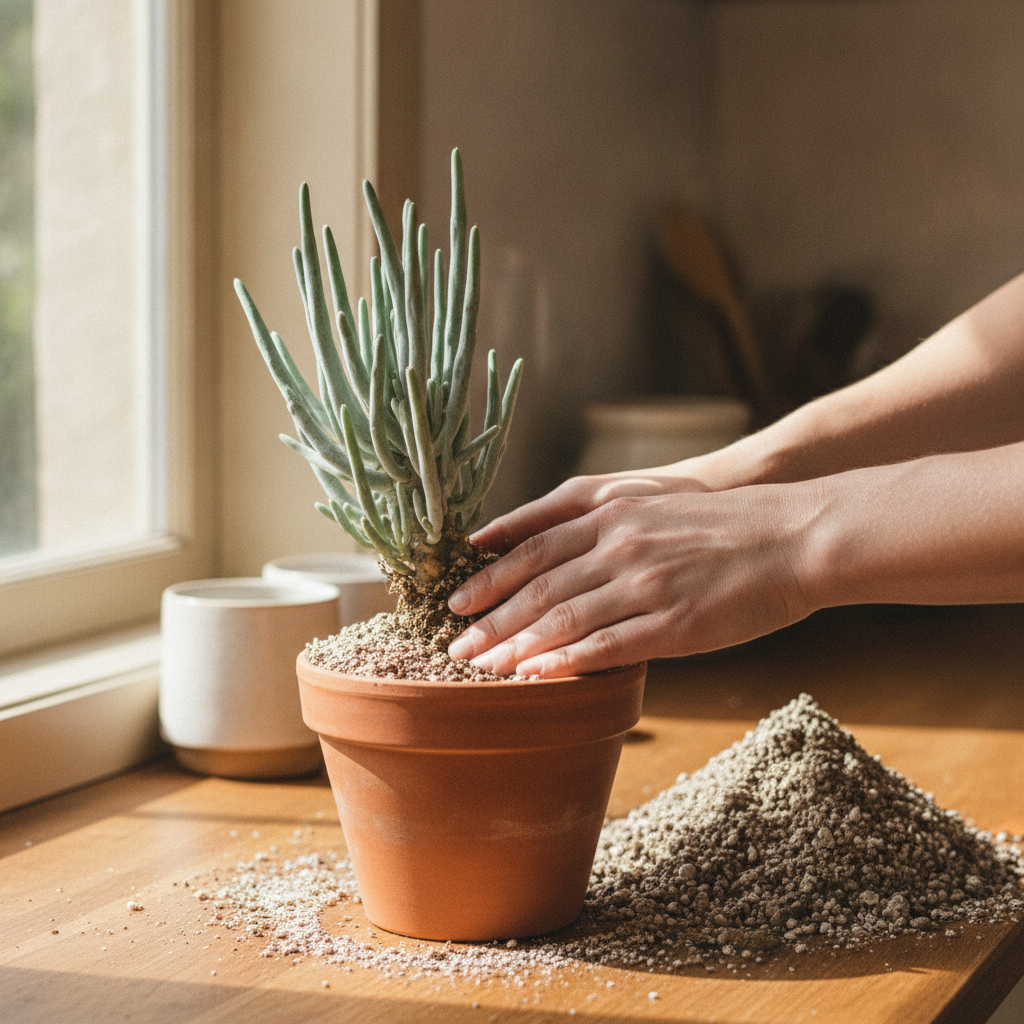
A good starting point is a proprietary cactus and succulent compost with extra grit added, or a home-mixed blend of a standard base amended heavily with mineral material. The mineral component, whether coarse sand, perlite, pumice or fine grit, is what keeps the mix airy and stops it staying wet. Aim for at least half the volume to be gritty, free-draining material.
| Component | Proportion | Function |
|---|---|---|
| Cactus or standard compost | 40 to 50 percent | Holds a little moisture and provides light nutrition |
| Coarse grit or pumice | 25 to 30 percent | Creates fast drainage and air pockets around the roots |
| Perlite | 20 to 25 percent | Keeps the mix light and prevents compaction |
| Fine bark or coco chips (optional) | Up to 10 percent | Adds structure and further improves aeration |
The plant is not fussy about acidity and does well across a slightly acidic to neutral range, roughly pH 6.0 to 7.0, which is where most cactus composts naturally sit. There is no need to test or adjust pH under normal conditions.
Pro Tip — Quick Mix Recipe: For a reliable blend, combine two parts cactus compost, one part pumice or coarse grit and one part perlite. If in doubt, add more grit rather than less; this plant would always rather be a touch too dry than a touch too wet.
Choosing the Right Pot
The container matters almost as much as the mix inside it. A pot that drains and breathes well makes the difference between roots that stay healthy and roots that suffocate in trapped moisture.
Drainage holes are non-negotiable. Never plant a silver torch euphorbia in a pot without a drainage hole. Any water that cannot escape will pool at the base and rot the roots. Decorative cover pots are fine only as an outer sleeve, and even then you must tip out any water that collects after watering.
Pot material: Unglazed terracotta is the natural choice. Its porous walls wick moisture out of the mix and let it dry evenly, which is exactly what this plant wants. Plastic and glazed ceramic can work, but they hold water longer, so you must be more disciplined about letting the mix dry before watering again.
Pot size: Choose a snug pot only a little larger than the root ball. An oversized pot holds a large volume of slow-drying mix that stays wet for too long. As this plant grows tall it can also become top-heavy, so a slightly heavier terracotta or stone pot helps keep the whole thing stable.
When to Repot
This is a slow-growing succulent that actively prefers being a little pot-bound, so repotting is infrequent, typically once every two to three years. Signs that it is time include roots emerging from the drainage holes, the mix drying out unusually fast, or the plant becoming unstable in a pot it has outgrown. The best time to repot is in spring, at the start of the active growing season. When you do, wait several days before watering to give any disturbed roots time to seal.
How to Repot: Step-by-Step
- Put on thick gloves and eye protection before you start; broken stems will leak irritant latex.
- Let the mix dry out first, then gently ease the plant from its pot, supporting the base rather than gripping the stems.
- Tease away the old mix from the roots and inspect them, trimming off anything soft, brown or rotten with a clean blade.
- Set the plant in a pot one size larger with fresh gritty mix, at the same depth it sat before.
- Fill around the roots with mix, firming lightly to hold the plant steady and upright.
- Do not water for five to seven days, then resume normal, sparing watering once any wounds have sealed.
Warning — Transplant Shock: Repotting inevitably damages some fine roots, and watering straight away lets rot enter those open wounds. The dry rest period afterwards is not optional. Keep the freshly repotted plant out of harsh midday sun for a week or two as well, so it can settle without added stress.
Fertilising
The silver torch euphorbia is a lean feeder adapted to poor, sandy ground, so its fertiliser needs are modest. A little feed during the growing season supports steady new growth, but overfeeding does far more harm than the occasional missed dose.
Think of feeding as a gentle top-up rather than a driver of growth. Light and water do most of the work; fertiliser simply replaces the small amount of nutrients the plant draws from a limited pot of gritty mix over time.
Understanding Plant Nutrients
Fertilisers are labelled with an N-P-K ratio, showing the proportions of nitrogen, phosphorus and potassium. For a stem succulent grown for firm, compact form rather than lush foliage, a balanced or slightly low-nitrogen feed is best, since too much nitrogen forces soft, weak, rot-prone growth. A cactus fertiliser, which is formulated exactly along these lines, is the simplest choice.
| Nutrient | Symbol | Primary Function | Deficiency Symptoms |
|---|---|---|---|
| Nitrogen | N | Drives stem growth and green colour | Pale, weak, slow growth |
| Phosphorus | P | Supports roots and overall vigour | Stunted growth, poor rooting |
| Potassium | K | Strengthens tissue and stress tolerance | Soft growth, browning tips |
| Calcium | Ca | Builds firm cell walls | Weak, distorted new growth |
| Magnesium | Mg | Central to photosynthesis in the stems | General yellowing of older tissue |
| Iron | Fe | Aids chlorophyll production | Pale new growth |
Types of Fertiliser
Liquid fertilisers: The easiest to control for this plant. Use a cactus feed or a balanced houseplant feed diluted to half strength, applied to already-moist mix so the roots are never hit with concentrated salts. This is the recommended default approach.
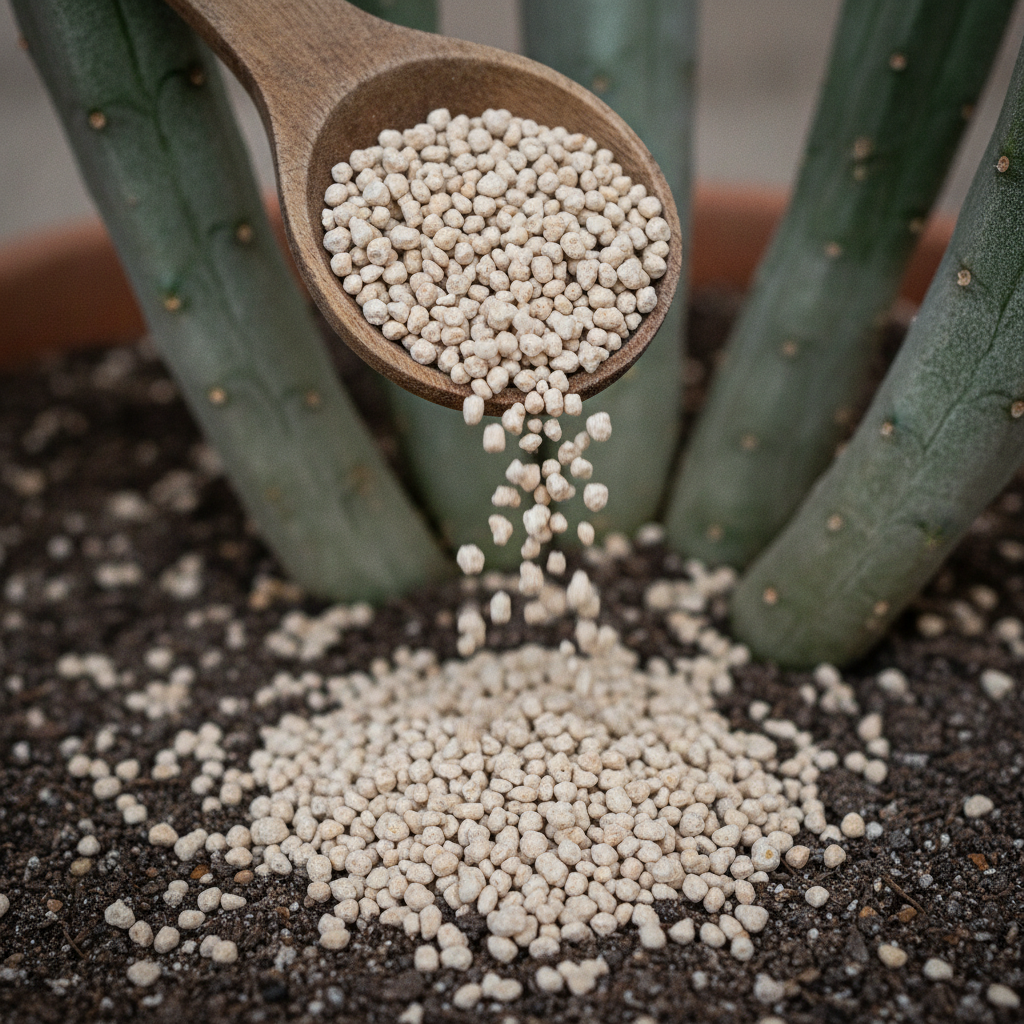
Slow-release granular: A convenient hands-off option. A small amount of slow-release cactus feed scattered on the surface in spring will drip-feed nutrients gently over several months. Use less than the label suggests, as these products are calibrated for hungrier plants.
Organic fertilisers: Mild options such as heavily diluted worm-casting tea can be used, but they are rarely necessary. Avoid rich, high-nitrogen organic feeds like manure, which push the soft growth this plant is prone to rotting from.
Feeding Schedule
Feed only during the active growing season, from mid-spring through to late summer. A dilute liquid feed roughly once a month is ample. Stop fertilising entirely in autumn and winter, when growth slows or halts and the plant cannot use the extra nutrients, which would then simply accumulate as harmful salts in the mix.
Pro Tip — Less Is More: With this plant, underfeeding is almost impossible while overfeeding is easy. If you are unsure, skip a feed. A slightly hungry silver torch euphorbia stays compact and characterful; an overfed one turns soft, floppy and far more vulnerable to rot.
How to Fertilise
- Dilute a cactus or balanced feed to half the recommended strength.
- Water the plant normally first, or feed onto mix that is already slightly moist, never bone dry.
- Apply the diluted feed evenly to the soil, keeping it off the stems.
- Let the pot drain fully and tip away any run-off.
- Repeat about once a month through spring and summer only, then stop for the winter.
Warning — Salt Build-Up: Fertiliser salts that accumulate in the mix can scorch roots, showing as browning stems and a white crust on the soil. Every few months, flush the pot by watering thoroughly until plenty runs out of the base, which rinses excess salts away. Always let the mix dry out completely afterwards.
Propagation
Propagating a silver torch euphorbia is straightforward and rewarding, since its branching stems root readily from cuttings. The one genuine complication is the latex, which flows freely from every cut and must be handled with care. Done properly, a single stem can give you several new plants.
The best time to take cuttings is late spring or early summer, when the plant is growing actively and wounds heal quickly. Almost all propagation is done from stem cuttings; the plant is not grown from division, and seed is rarely available to home growers.
Understanding the Latex and Callusing
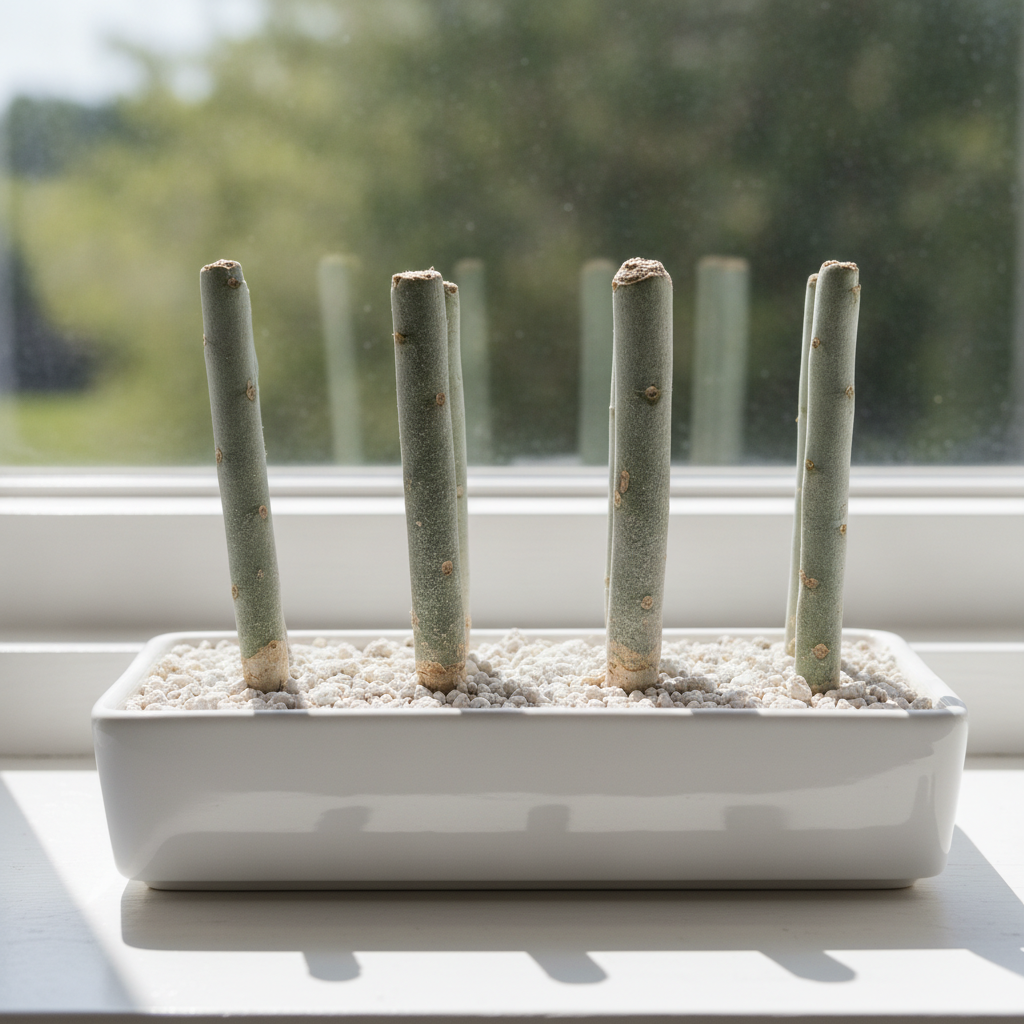
When you cut a stem, milky latex wells up immediately from both the cutting and the parent plant. This sap is a serious irritant, so gloves and eye protection are essential, and you should keep the work well away from your face. The flow can be stopped by dabbing the cut ends with a tissue or briefly rinsing them under cool water. Crucially, every cutting must then be left to dry and form a hard, sealed callus over the wound before it is planted. Skipping this step is the single most common reason cuttings rot instead of rooting.
Stem Cuttings: Step-by-Step
This is the standard and most reliable method. With clean tools, protective gear and a little patience, success rates are high.
- Put on gloves and eye protection, and work in a spot you can wipe down easily.
- Using a clean, sharp knife, cut a healthy stem segment 8 to 15 centimetres (3 to 6 inches) long, ideally where it branches.
- Stop the latex flow on both the cutting and the parent by dabbing with a tissue or rinsing the ends under cool water.
- Set the cutting aside in a dry, airy, shaded place for 7 to 14 days until the cut end forms a firm, dry callus.
- Insert the callused end about 2 to 3 centimetres (1 inch) into dry, gritty succulent mix or pure pumice or perlite.
- Keep it warm and bright but out of harsh sun, and leave it dry for the first week to ten days.
- After that, water only very lightly and occasionally; roots typically form within three to six weeks.
Pro Tip — Test Before You Water: Once a cutting is potted, give it a very gentle tug after a month. Slight resistance means roots have formed and you can begin light, careful watering. No resistance means it is still rooting, so leave it dry a while longer rather than risk rotting an unrooted cutting.
Rooting in an Open, Gritty Medium: Step-by-Step
A slight variation that many growers prefer for extra insurance against rot is to root the callused cuttings in a purely mineral medium before potting them on into normal mix.
- Fill a small pot or tray with pure pumice, perlite or coarse grit, with no compost added.
- Stand the callused cuttings upright in the medium so they are held firmly but shallowly.
- Place them somewhere warm and bright with good airflow, and keep the medium almost completely dry.
- Mist the surface lightly every week or so, just enough to encourage roots to reach downward without wetting the cuttings.
- Once well rooted, pot each cutting on into your standard gritty succulent mix and resume normal, sparing care.
Troubleshooting Propagation
| Problem | Likely Cause | Solution |
|---|---|---|
| Cutting turns soft and black | Planted before callusing, or kept too wet | Discard it; always callus fully and keep the medium dry |
| No roots after many weeks | Too cold, too dark, or too dry for too long | Move somewhere warmer and brighter and mist lightly |
| Cutting shrivels badly | Excessive water loss before rooting | Give a very light misting and improve warmth |
| Parent wound looks unhealthy | Dirty tools or lingering wet sap | Keep the wound dry and clean; use sterile tools next time |
Pests & Diseases
One of the quiet pleasures of growing this plant is how rarely it runs into trouble. Its tough, resinous stems and irritant sap deter most pests, and its dislike of moisture keeps many diseases at bay. When problems do arise, they are almost always linked to overwatering rather than to any pest.
Even so, it pays to look the plant over now and then, checking the branch junctions and the base of the stems where trouble tends to hide. Catching an issue early, whether a few mealybugs or the first sign of softness at the base, makes it far easier to deal with.
Common Pests
Mealybugs (Pseudococcus species)
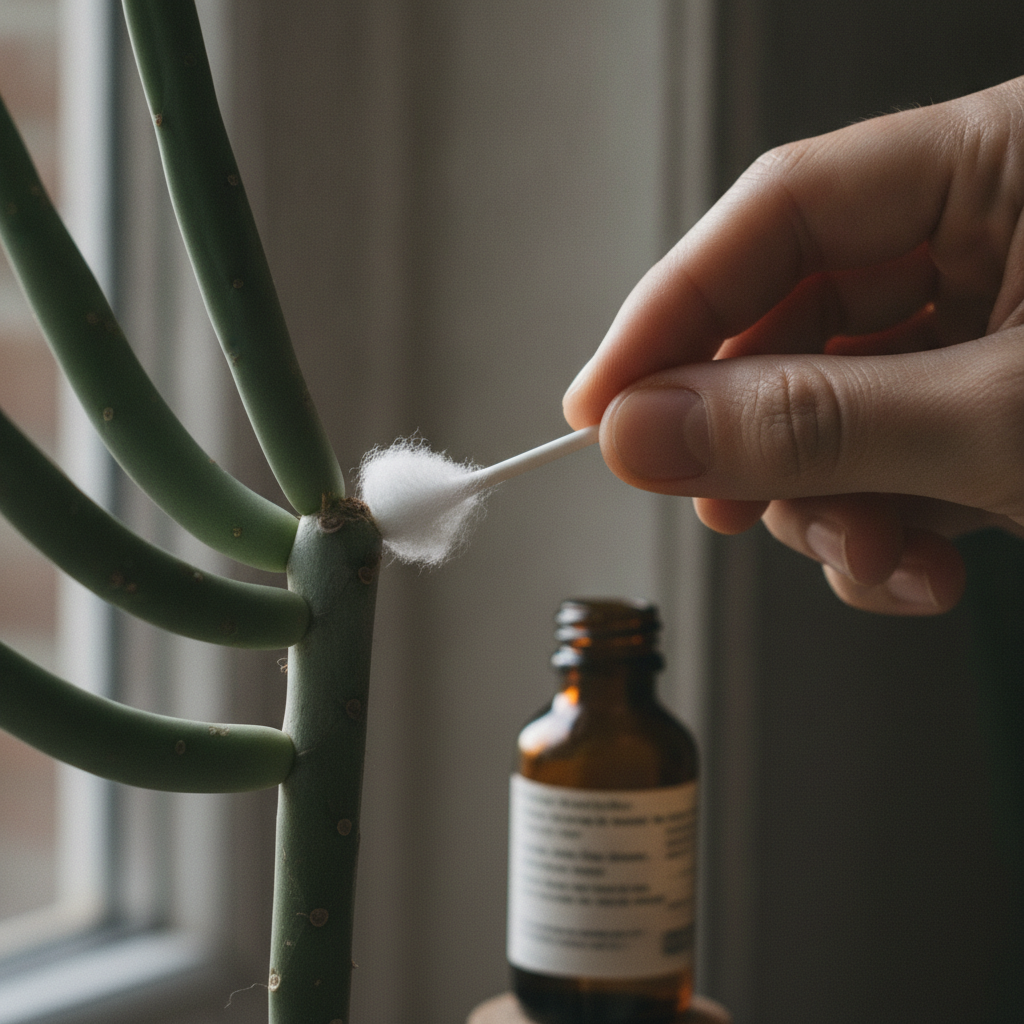
The most likely pest by far. Mealybugs appear as small, white, cottony tufts tucked into the branch junctions and around the growing points, where they suck sap and slowly weaken the plant. On a silvery, textured euphorbia they are easy to overlook until numbers build.
Treatment: Dab each one with a cotton bud dipped in isopropyl alcohol, which dissolves their protective coating on contact. For heavier infestations, follow up with a systemic insecticide or a suitable horticultural treatment, and re-check every few days until they are gone.
Spider Mites (Tetranychus urticae)
These tiny mites thrive in hot, dry conditions and can occasionally attack the stems, leaving fine stippling, a dulled surface and, in bad cases, delicate webbing between the branches. They are hard to see without a magnifier.
Treatment: Wipe the stems down to remove mites and webbing, then treat with a miticide or insecticidal soap. Improving airflow and repeating the treatment weekly for a few weeks usually clears them.
Scale Insects (Coccidae family)
Scale show up as small, hard or waxy brown bumps clinging to the stems, often along the shaded sides. They can be mistaken for part of the plant, but they gradually sap its strength and may leave sticky honeydew behind.
Treatment: Scrape or rub them off gently with an alcohol-dipped cotton bud or a soft brush, then treat persistent cases with horticultural oil or a systemic insecticide. Inspect regularly, as scale can be stubborn.
Common Diseases
Root and Stem Rot (Pythium and Fusarium species)
By far the most serious threat to this plant, and almost always self-inflicted through overwatering or poor drainage. It begins out of sight in the roots, then shows as yellowing, softening and blackening at the base of the stems, which lose their firmness and may topple.
Treatment: Act immediately. Cut back to firm, healthy, unblemished tissue with a sterile blade, let the healthy portion callus, and restart it as a fresh cutting in dry, gritty mix. The rotten root ball and mix should be discarded, and future watering kept much more sparing.
Fungal Leaf and Stem Spots (various pathogens)
In damp, stagnant, poorly ventilated conditions, dark or sunken spots and lesions can occasionally develop on the stems. They are uncommon on a plant kept dry and airy, and their presence usually signals that conditions are too humid.
Treatment: Improve airflow, reduce watering and humidity, and remove badly affected sections with a clean blade. A copper-based or general fungicide can help in persistent cases, but correcting the conditions is the real fix.
Pest and Disease Summary
| Pest / Disease | Identification | Treatment |
|---|---|---|
| Mealybugs | White cottony tufts in branch junctions | Alcohol on a cotton bud; systemic treatment if severe |
| Spider mites | Fine stippling, dull stems, faint webbing | Wipe down and apply miticide or insecticidal soap |
| Scale | Hard brown bumps on the stems | Scrape off; treat with horticultural oil |
| Root and stem rot | Soft, blackening base; yellowing stems | Cut to healthy tissue and restart as a cutting |
| Fungal spots | Dark or sunken lesions on stems | Improve airflow, cut affected parts, use fungicide |
Prevention Strategies
Prevention here is mostly a matter of getting the basics right, because a well-grown silver torch euphorbia is naturally resistant. Bright light, a fast-draining mix, disciplined watering and good airflow together head off almost every problem this plant is likely to face.
It also helps to inspect new arrivals before placing them near your other plants, and to keep the stems free of dust and debris. Quarantining any recently bought succulent for a couple of weeks is a simple habit that stops pests spreading through a collection.
Pro Tip — Dry Air Is Your Ally: Unlike most houseplants, this euphorbia benefits from the very conditions that stress leafy tropicals. Warm, dry, well-ventilated air keeps its stems firm and denies both fungal disease and moisture-loving pests the damp foothold they need.
Popular Varieties
The silver torch euphorbia is grown mainly as the true species, and it does not have the long list of named cultivars that many houseplants carry. What variation exists tends to be in growth form, most notably the striking crested mutation, along with a few closely related, similar-looking euphorbias that are often sold under the same everyday names.
Because of this overlap, plants labelled cat tails euphorbia in shops are not always exactly the same thing. It is worth knowing the main forms you are likely to meet so you can recognise what you are buying and give it the right care, which in practice is much the same across all of them.
| Variety | Stem Appearance | Light Needs | Growth Rate | Availability |
|---|---|---|---|---|
| Species (Cat Tails) | Slim, cylindrical, silvery grey-green, densely branching | High, direct sun | Slow to moderate | Common |
| Crested form (‘Cristata’) | Fan-shaped, fused, undulating ridges | High, direct sun | Slow | Uncommon, collector item |
| Variegated forms | Stems marked with cream or paler zones | High but slightly less intense | Slow | Rare |
| Euphorbia alluaudii (look-alike) | Very similar slim green stems, sometimes with tiny leaves | High, direct sun | Moderate | Common, often mislabelled |
Featured Varieties
Crested Form (‘Cristata’)
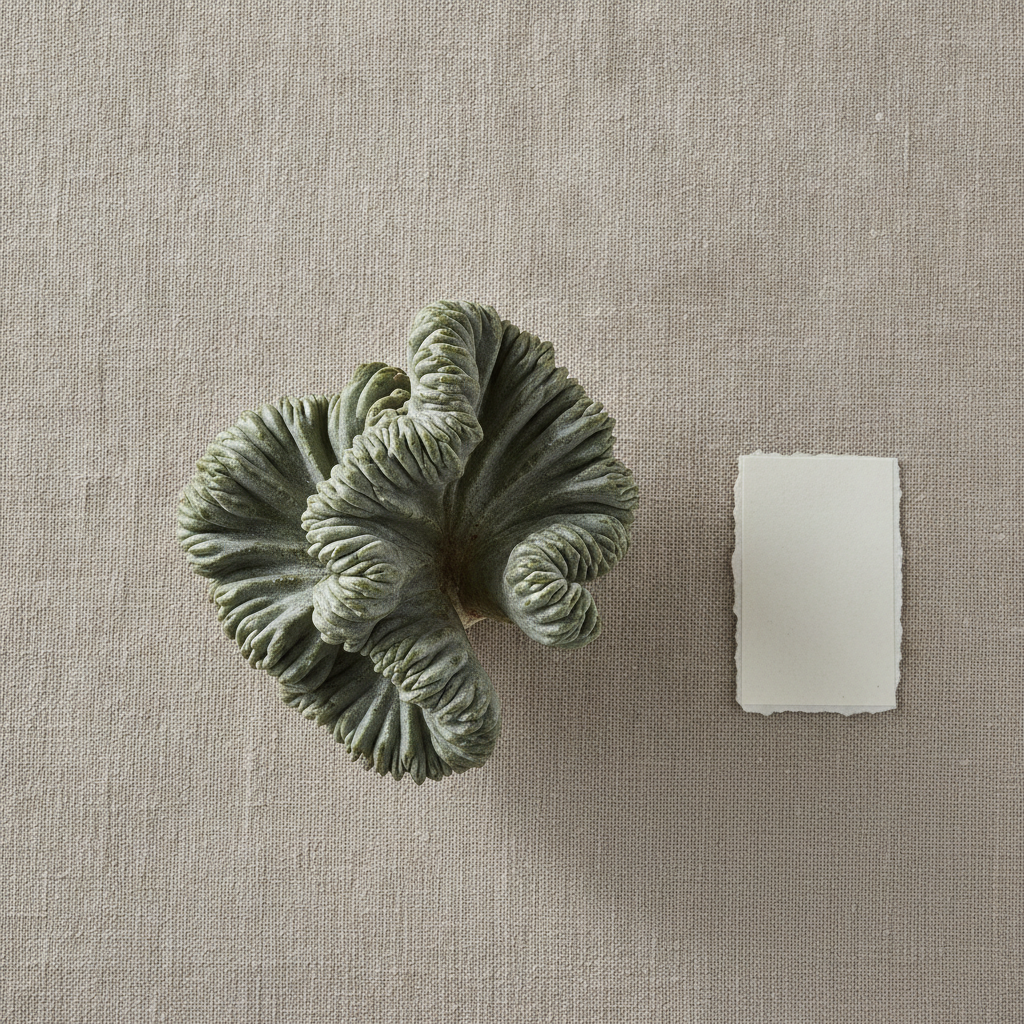
A prized mutation in which the normal growing points fuse into flattened, fan-shaped, brain-like ridges instead of round stems. It grows slowly and unpredictably into a sculptural, undulating mass, and it is very much a collector’s plant.
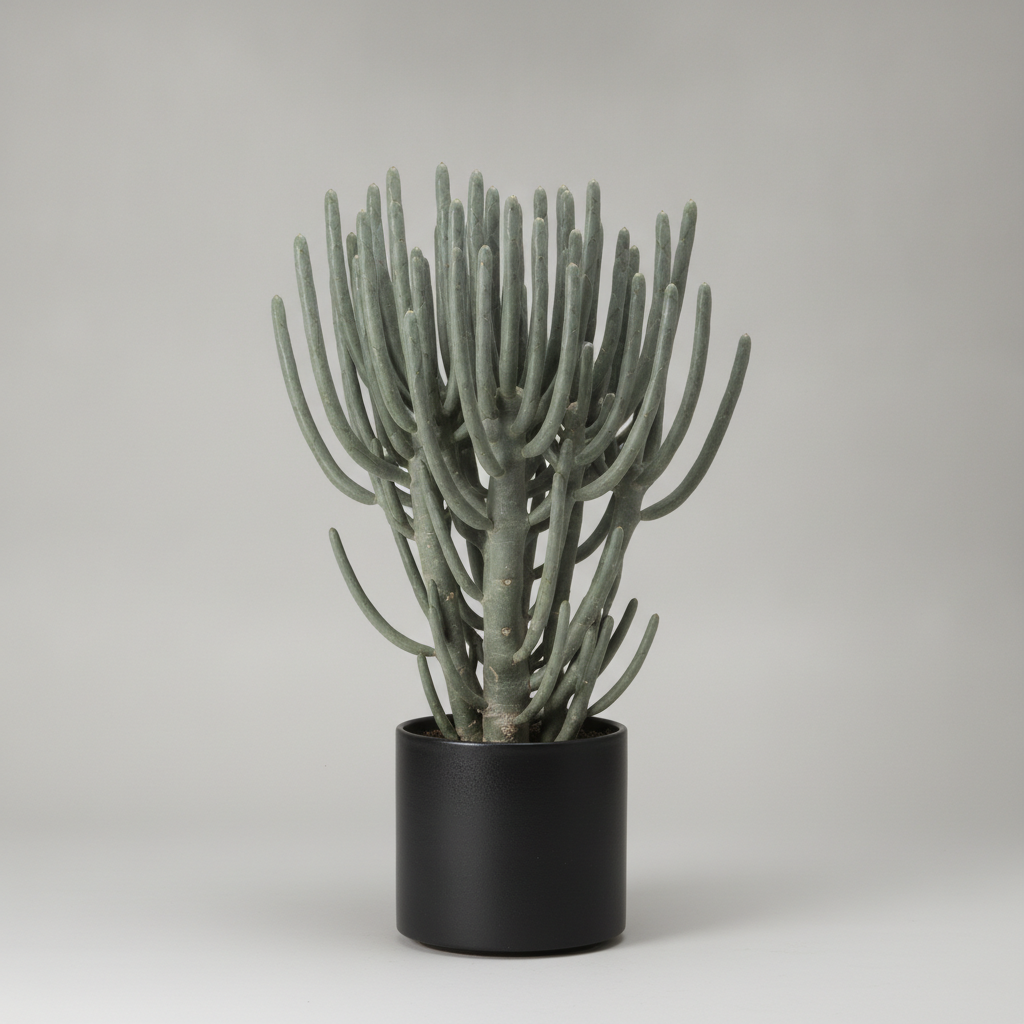
Standard Cat Tails Form
The classic species, with dense clusters of smooth, pencil-thin, silvery grey-green stems branching into an upright candelabra. This is the form most people mean by silver torch or cat tails euphorbia, and the easiest to find.
Variety Profiles in Detail
Standard Cat Tails Form (Euphorbia leucodendron)
The true species is a much branched, leafless succulent shrub to small tree, reaching several metres tall in the wild in Madagascar but staying far smaller in a pot. Its slim cylindrical stems photosynthesise in place of leaves, producing only tiny, short-lived ones at the growing tips. Grown in strong light and lean, gritty mix, it develops the firm, compact, silvery form that makes it so popular as a low-maintenance sculptural houseplant.
Crested Form (Euphorbia leucodendron ‘Cristata’)
The crested, or cristate, form arises when the plant’s normal single growing point mutates into a growing line, so the stems fuse and fan out into wavy, ridged crests rather than round columns. The result is a one-of-a-kind, coral-like sculpture that no two plants share. Care is identical to the species, though crested growth tends to be even slower and, being denser, benefits from especially sharp drainage and careful watering to avoid moisture lodging in its folds.
Look-Alike: Cat Tails (Euphorbia alluaudii)
Also from Madagascar and also sold as cat tails euphorbia, Euphorbia alluaudii is so similar in its slim, branching green stems that the two are frequently confused and mislabelled in the trade. It often carries more visible small leaves along the stems and can grow a little faster. For the home grower the distinction matters little, as the care requirements, right down to the irritant sap, are effectively the same.
Choosing the Right Variety for Your Space
For most people the standard species is the obvious choice: readily available, affordable and undemanding, it delivers the full sculptural effect with almost no fuss. If you have a very bright spot and enjoy hunting down unusual plants, the crested form is a spectacular centrepiece, though it costs more and grows slowly. Whichever you choose, the essentials of strong light, gritty soil, sparing water and careful handling stay exactly the same.
Frequently Asked Questions
Is the silver torch euphorbia poisonous?
Yes. Like all euphorbias, it produces a milky white latex that is a strong irritant to skin and eyes and is toxic if swallowed. Contact can cause burning and blistering, and sap in the eyes can be seriously damaging. Wear gloves and eye protection when handling it, and keep it away from children and pets.
Why are the stems going soft or yellow at the base?
A soft, yellowing or blackening base is the classic sign of overwatering and root rot, the most common problem this plant faces. Stop watering at once, and if the rot is advanced, cut back to firm, healthy tissue and restart the healthy top as a cutting in dry, gritty mix. Water much more sparingly in future.
Why is my plant thin, pale and stretching?
Thin, pale, elongated stems that lean toward the window mean the plant is not getting enough light. Move it to your brightest position, ideally a south or west window with some direct sun, or add a grow light. Reintroduce strong sun gradually so the stems do not scorch.
How often should I water it?
Only when the mix has dried out completely, which is roughly every two to three weeks in the warm months and monthly or less in winter. Rather than following a strict schedule, check that the soil is bone dry first, and always err on the side of watering less often.
Does it need leaves to be healthy?
No. This is a naturally leafless succulent that photosynthesises through its green stems. It produces only tiny, temporary leaves at the growing tips, which soon drop. A plant with bare, firm, well-coloured stems and no obvious leaves is completely normal and healthy.
How big does it get indoors?
In the wild it can reach several metres, but as a slow-growing houseplant it usually stays between about 0.5 and 1.5 metres (roughly 1.5 to 5 feet) over many years, depending on light and pot size. You can keep it more compact by growing it in a snug pot and pruning it, always with gloves and eye protection because of the sap.
Can I grow it from a cutting?
Yes, and stem cuttings are the standard method. Cut a healthy stem while wearing protection, stop the latex flow, and let the cut end dry into a firm callus for one to two weeks before planting it in dry, gritty mix. Roots usually form within three to six weeks.
Should I mist it or raise the humidity?
No. This is a dry-climate succulent that prefers ordinary, even dry, room air and good ventilation. Misting or high humidity does more harm than good, raising the risk of rot and fungal problems. Leave the humidity boosters for your tropical foliage plants.
Why won’t my plant grow?
Slow growth is normal for this species, especially in the cooler, darker months when it rests. If it has made no progress at all through spring and summer, the usual causes are too little light, too little warmth, or overwatering that has quietly damaged the roots. Give it more sun, warmth and a drier regime, and feed lightly in the growing season.
Is it safe to have around cats and dogs?
Not really. The irritant, toxic latex can harm pets that chew or brush against a broken stem, causing mouth and skin irritation and stomach upset if ingested. If you share your home with animals that nibble plants, place this euphorbia well out of their reach or choose a pet-safe plant instead.






