
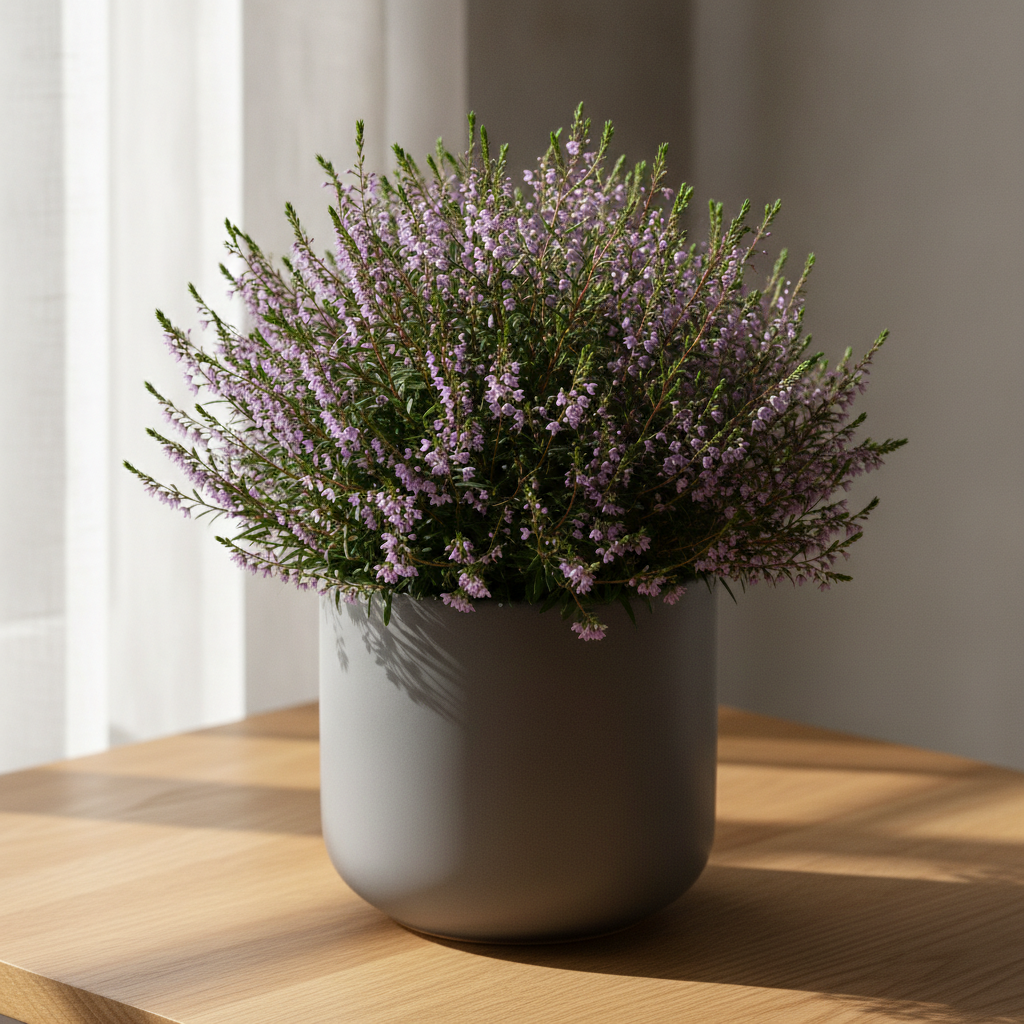
Few houseplants flower with the cheerful persistence of Mexican heather (Cuphea hyssopifolia), a fine-textured evergreen subshrub from the highlands of Mexico, Guatemala and Honduras. Despite the common name it is not a true heather at all, belonging instead to the loosestrife family, Lythraceae. The resemblance is superficial: dense, wiry stems clothed in small glossy leaves, peppered almost year-round with tiny six-petalled blooms in lavender-purple, pink or white. The plant earns its other names, false heather, Hawaiian heather and elfin herb, from that same delicate, miniature look.
Outdoors in mild climates it forms a tidy mound 30 to 60 centimetres (12 to 24 inches) tall, beloved by bees and butterflies. Indoors it asks for one thing above all else, light, and rewards a bright windowsill with months of colour. Mexican heather is not a difficult plant, but there is a real gap between merely keeping it alive and coaxing it into the floriferous, compact specimen it can become. This guide covers everything from the brightness it needs to bloom to the watering rhythm that keeps its fine roots happy, so you can move your plant from surviving to genuinely thriving.
Contents
- Quick Reference
- Why Mexican Heather Makes a Rewarding Houseplant
- Light Requirements
- Watering & Humidity
- Soil, Potting & Repotting
- Fertilising
- Propagation
- Pests & Diseases
- Popular Varieties
- Frequently Asked Questions
Quick Reference: Mexican Heather at a Glance
| Light | Very bright indirect light with some direct sun; full sun outdoors in temperate climates |
| Watering | Keep evenly moist; water when the top 2 to 3 cm (1 inch) of soil feels dry, never waterlogged |
| Temperature | 18 to 26°C (64 to 79°F); protect from anything below 5°C (41°F) |
| Humidity | Moderate, around 40 to 60 percent; tolerant but appreciates a little extra |
| Fertiliser | Balanced liquid feed every two to four weeks in spring and summer |
| Toxicity | Considered non-toxic to cats, dogs and humans |
Why Mexican Heather Makes a Rewarding Houseplant
The appeal of Mexican heather starts with its sheer flower power. Where many flowering houseplants offer a brief seasonal display before settling into a long green dormancy, a well-lit Cuphea hyssopifolia produces a steady succession of small blooms across spring, summer and autumn, and in a warm sunny room it may barely pause at all. Each flower is modest, only a few millimetres across, but they arrive in such numbers that the whole plant takes on a soft haze of colour. Combined with the fine, almost ferny foliage, the effect is delicate and rather charming, more reminiscent of a flowering meadow plant than a typical glossy-leaved houseplant.

It is also an unusually well-behaved plant. Left to its own devices it forms a naturally rounded, compact mound that needs little pruning to look neat, and its small stature suits a windowsill, a desk or a bright shelf where larger flowering plants would crowd the space. For households with curious pets, there is further reassurance: Mexican heather is not listed among the plants known to be toxic to cats or dogs, so an exploratory nibble is unlikely to cause harm. None of this means the plant is indestructible, and the honest truth is that indoors it lives or dies by the quality of its light, but given a sunny spot and a sensible watering routine it is one of the more generous flowering plants you can grow.
Important — Toxicity: Mexican heather is widely regarded as non-toxic to cats, dogs and people, and it does not appear on the ASPCA list of toxic plants. Even so, no plant material is meant to be eaten, and ingestion can still cause mild stomach upset, so it is sensible to keep it out of reach of pets and small children who like to chew.
Light Requirements
Light is the single most important factor in growing Mexican heather successfully indoors. In its native range it grows in open, sunny situations, and that heritage shows: this is a plant that flowers in response to brightness. Give it too little and it will survive in a leggy, sparse form that produces few if any blooms; give it generous light and it stays compact and covers itself in flowers. If you take away one lesson from this guide, let it be that a Mexican heather kept in a dim corner is a plant being asked to do the impossible.
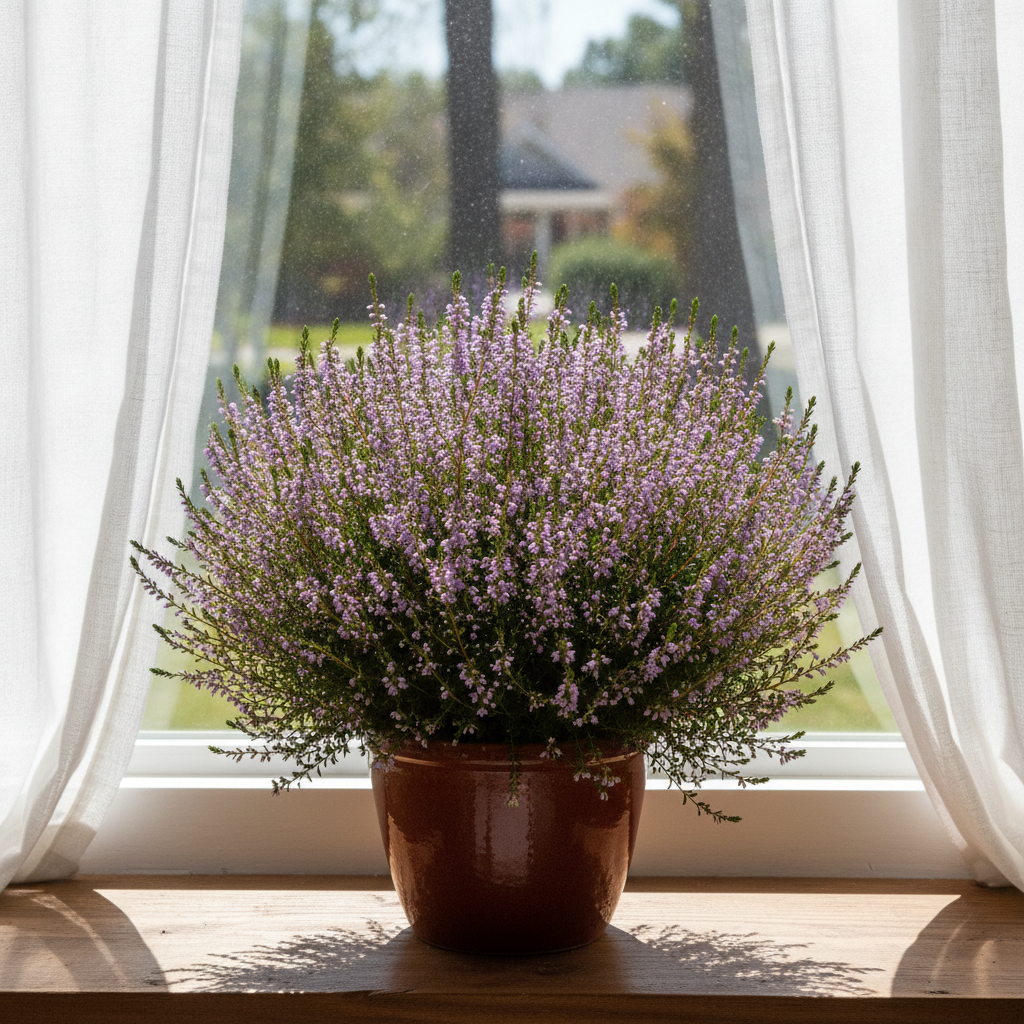
The ideal indoor position is one that receives very bright light for most of the day, including a few hours of gentle direct sun. Morning or late-afternoon sun is welcomed, while the fierce, magnified heat of an unshaded south-facing window in high summer is best softened slightly with a sheer curtain. Aim to mimic the bright, open conditions the plant enjoys outdoors, and you will see the difference in both leaf density and flower count.
Light Levels Explained
Indoor light is far weaker than most people assume, and a spot that looks bright to the eye may be only moderately lit in practical terms. The table below sets out the common categories and where Mexican heather sits within them.
| Light Category | Approx. Level | Typical Location | Outcome |
|---|---|---|---|
| Direct sun | 20,000 lux and above | On an unshaded south windowsill | Excellent flowering; shade midday in peak summer to avoid scorch |
| Bright indirect | 10,000 to 20,000 lux | Beside a sunny window or behind a sheer curtain | Ideal; compact growth and steady blooms |
| Medium | 5,000 to 10,000 lux | A metre or so back from a bright window | Survives; growth thinner, fewer flowers |
| Low | 1,000 to 5,000 lux | North window or interior wall | Poor; leggy stems, little to no flowering |
| Very low | Below 1,000 lux | Hallways, far from any window | Decline; not viable long term |
Window Orientation and Placement
South-facing window: In the northern hemisphere this is the brightest aspect and generally the best choice for Mexican heather. The plant will thrive in the strong light, though during the most intense weeks of summer a thin curtain or a half-metre setback prevents the foliage from scorching.
East-facing window: An excellent option. The plant enjoys several hours of cooler morning sun followed by bright light for the rest of the day, a combination it handles without any risk of leaf burn.
West-facing window: Also very good. Afternoon sun here is strong and warm, which suits flowering, although a west window can run hot in summer, so keep an eye on soil moisture and consider light shading on the hottest days.
North-facing window: The weakest aspect and the hardest place to succeed. A north window rarely supplies enough light for good flowering, and a plant kept here will tend to stretch and bloom sparingly. If a north window is your only option, supplementary lighting becomes almost essential.
Pro Tip — Rotate for Even Growth: Because the plant grows towards its light source, give the pot a quarter turn every week or two. This keeps the mound symmetrical and stops the shaded side from thinning out and dropping its flowers.
How Light Affects Flowering
With most foliage houseplants, light controls the pace of leaf production. With Mexican heather it controls the flowers, which is the whole reason most people grow it. In strong light the plant directs energy into a continuous flush of buds, and the stems stay short and densely packed. As light falls below the ideal, flowering slows first, then stops, and the plant redirects its resources into stretching towards the brightest available source. The internodes, the gaps between leaves along the stem, lengthen, the mound opens up and becomes sparse, and the overall look turns gangly. If your plant has stopped blooming and looks loose and reaching, weak light is almost always the cause, and moving it closer to a window is the first and usually the only remedy needed.
Warning — Direct Sunlight: While Mexican heather loves sun, a plant grown in lower light and then moved abruptly into intense direct sun can scorch, developing pale or brown patches on the leaves. Acclimatise it over a week or two by gradually increasing its exposure rather than relocating it in one step.
Artificial Lighting
Where natural light is limited, particularly through the short days of winter, a full-spectrum LED grow light can keep Mexican heather compact and even encourage off-season blooms. Position the light around 20 to 30 centimetres (8 to 12 inches) above the canopy and run it for roughly 12 to 14 hours a day. Because this plant is such a light-hungry bloomer, supplementary lighting tends to produce a more visible improvement here than it would on a tolerant foliage plant.
Seasonal Adjustments
Light intensity and day length swing considerably through the year, so the plant’s needs shift with the seasons. In autumn and winter, move it to your brightest window and accept that flowering may slow or pause, which is entirely natural. As spring returns and the sun climbs higher, growth and blooming pick up again, and you may need to introduce light shading on a south or west window to prevent the strengthening midday sun from scorching foliage that softened over winter.
Watering & Humidity
If light governs whether Mexican heather flowers, water governs whether it stays healthy. This is a plant of moderate, consistent moisture rather than extremes. Unlike a succulent it dislikes drying out completely, and its fine root system reacts quickly to drought by wilting and dropping flowers and leaves. At the same time it has no tolerance for waterlogging, which suffocates the roots and invites rot. The goal is an evenly moist soil that is never soggy and never bone dry.
When to Water
Check the soil with your finger and water when the top 2 to 3 centimetres (about an inch) have dried but the soil beneath is still slightly moist. In a bright, warm room during the growing season this might mean watering every few days, while in cooler, darker winter conditions the interval stretches out. Rather than watering on a fixed schedule, let the feel of the soil guide you, since the plant’s thirst varies with light, temperature and the time of year.
Pay particular attention during hot, sunny spells, when a small pot of fine foliage can dry out alarmingly fast. A Mexican heather that has been allowed to wilt will usually recover if watered promptly, but repeated drought stress shortens its flowering and weakens the plant over time. Consistency is more valuable than volume here.
Pro Tip — Mulch the Surface: A thin layer of fine bark or gravel over the soil surface slows evaporation and buffers the moisture swings that this plant dislikes, which is especially helpful on a hot, sunny windowsill where small pots dry out quickly.
How to Water Correctly
- Check that the top couple of centimetres of soil have dried before reaching for the watering can.
- Water at the base of the plant using room-temperature water, moving around the pot so the whole root ball is moistened evenly.
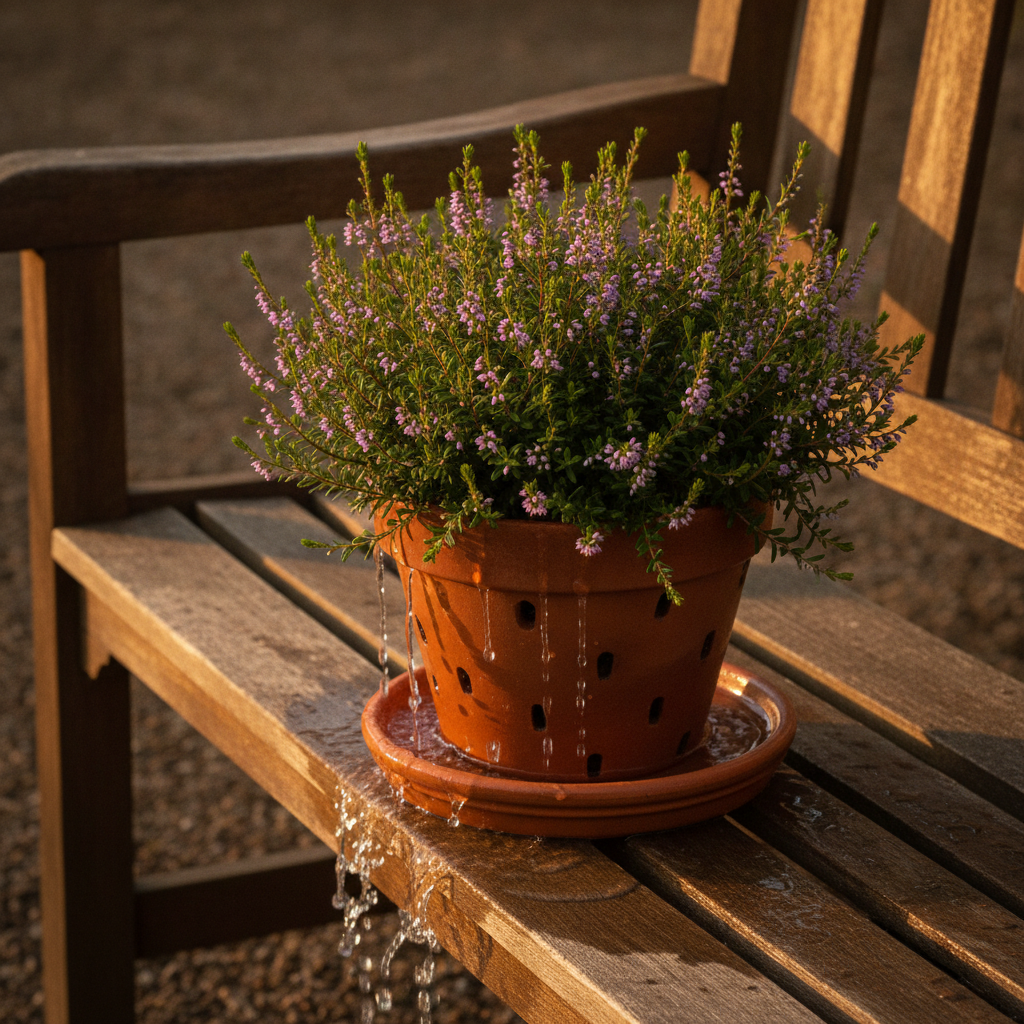
- Continue until water runs freely from the drainage holes, which ensures the soil is wetted all the way through.
- Let the pot drain fully for a few minutes so no excess sits at the bottom.
- Empty the saucer or cover pot; never leave the plant standing in collected water.
Signs of Overwatering vs. Underwatering
| Symptom | Overwatering | Underwatering |
|---|---|---|
| Leaf colour | Yellowing, often across the lower stems | Dull, browning and crisp at the tips |
| Leaf texture | Soft, limp, sometimes translucent | Dry, brittle, shrivelled |
| Soil | Stays wet for days, may smell sour | Pulls away from the pot, dust-dry |
| Flowers | Buds blacken and drop before opening | Blooms wilt and fall rapidly |
| Stem base | Dark, soft and mushy near the soil | Firm but the whole plant droops |
Warning — Root Rot: Persistent sogginess is the fastest way to kill a Mexican heather. If you notice a sour smell, blackened stem bases or widespread yellowing, ease off watering immediately, and if the rot is advanced, remove the plant from its pot, trim away any soft brown roots and repot into fresh, well-draining soil.
Humidity Requirements
Mexican heather is reasonably accommodating about humidity and copes well with the moderate levels of an average home, roughly 40 to 60 percent. Coming from regions with a defined wet season, it does enjoy a slightly more humid atmosphere than truly arid conditions, and you may see the foliage look its freshest when the air is not too dry.
Problems tend to appear only in genuinely dry settings, such as a room with forced-air heating in winter, where the very fine leaves can brown at the edges and the plant may shed some foliage. These are signals that the air has become too parched rather than a sign of any deeper trouble.
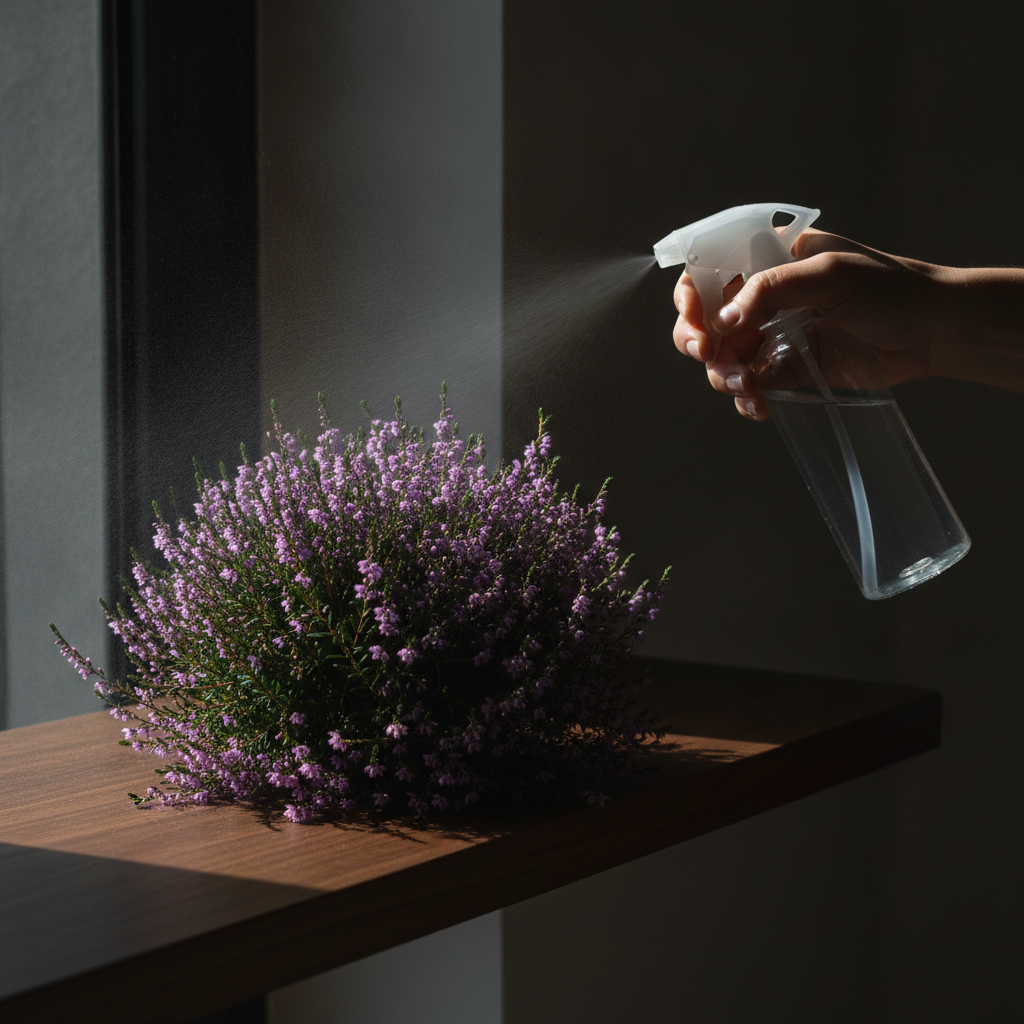
If you need to raise humidity, the simplest options are to stand the pot on a tray of damp pebbles, group it with other plants so they share their collective transpiration, or run a small humidifier nearby during the driest months. Occasional light misting does little harm but offers only a brief lift, so the pebble tray and humidifier are more reliable.
Water Quality
Mexican heather is not especially fussy about water quality and tolerates ordinary tap water in most areas. In regions with very hard water, mineral salts can gradually accumulate in the soil and show as crusting on the surface or pot rim, so flushing the pot thoroughly every month or two helps. If you keep rainwater, the plant will happily take it, and rainwater is the safest choice where the tap supply is heavily treated.
Soil, Potting & Repotting
The right growing medium for Mexican heather strikes a balance between moisture retention and free drainage. Because the plant likes to stay evenly damp but resents standing in water, the soil needs to hold enough moisture to keep the fine roots comfortable while still letting excess drain away quickly. A good-quality general houseplant or potting compost forms an excellent base, lightened with grit or perlite to keep it open.
Ideal Soil Composition
A reliable blend combines a peat-free multipurpose compost with material that improves aeration and drainage, plus a little organic matter to hold nutrients and moisture. The aim is a fluffy, well-structured mix rather than something dense and heavy that compacts over time.
| Component | Proportion | Function |
|---|---|---|
| Multipurpose potting compost | 60 percent | Holds moisture and nutrients, the bulk of the mix |
| Perlite or horticultural grit | 25 percent | Opens the structure and speeds drainage |
| Fine bark or coir | 15 percent | Adds air pockets and steadies moisture levels |
Mexican heather prefers a soil that is slightly acidic to neutral, roughly pH 6.0 to 7.0, which most standard composts fall within naturally. There is no need to chase a precise figure; a fresh, good-quality mix will sit comfortably in the right range and suit the plant well.
Pro Tip — Quick Mix Recipe: For a fast, dependable blend, stir together four handfuls of multipurpose compost, two handfuls of perlite and one handful of fine bark. It drains freely, holds enough moisture for the fine roots and suits Mexican heather grown on a sunny sill.
Choosing the Right Pot
The container matters as much as the compost inside it, because it determines how quickly the soil dries and whether excess water can escape. For a moisture-loving but rot-prone plant like this one, the priority is drainage paired with a size that does not leave the roots sitting in too much wet soil.
Drainage holes are non-negotiable. Whatever pot you choose, it must have holes in the base. Without them water collects at the bottom, the lower roots drown and rot sets in, and no amount of careful watering can fully compensate for a sealed container.
Pot material: Terracotta is a forgiving choice because its porous walls let the soil breathe and dry a little faster, which suits a plant that hates sogginess, though it does mean more frequent watering. Glazed ceramic and plastic retain moisture longer and reduce watering frequency, but call for a slightly more careful hand so the soil never stays saturated.
Pot size: Choose a pot only slightly larger than the root ball, ideally 2 to 4 centimetres (1 to 2 inches) wider than the current one. An oversized pot holds a large volume of damp soil that the modest root system cannot use quickly, and that lingering moisture is exactly what encourages rot.
When to Repot
Mexican heather is a relatively fast grower in good conditions and generally benefits from repotting once a year, ideally in spring as growth resumes. Signs that it is ready include roots emerging from the drainage holes, water running straight through without wetting the soil, and a plant that dries out far quicker than it used to. Refreshing the compost at the same time replenishes nutrients and keeps the structure open.
How to Repot: Step-by-Step
- Water the plant lightly a day beforehand so the root ball holds together and slides out cleanly.
- Tip the pot and ease the plant out, supporting the base of the stems rather than pulling on the foliage.
- Gently tease apart any roots circling the bottom, and trim off any that are dark, soft or rotten.
- Add a layer of fresh mix to the new pot, then position the plant at the same depth it grew before.
- Fill around the root ball with fresh compost, firming gently to remove large air gaps without compacting it.
- Water thoroughly to settle the soil, then return the plant to its bright spot and let it recover.
Warning — Transplant Shock: Expect a brief sulk after repotting, with some flower drop and a short pause in growth. Keep the plant out of harsh midday sun for a week, water normally and avoid feeding until you see fresh growth, which signals the roots have settled in.
Fertilising
A plant that flowers as freely as Mexican heather has a real appetite, and regular feeding through the growing season is what sustains that long succession of blooms. Producing buds month after month draws steadily on the plant’s reserves, and the limited soil in a pot is quickly exhausted, so without supplementary nutrients flowering tails off and the foliage loses its rich green.
That said, more is not better. Mexican heather responds best to light, frequent feeding rather than occasional heavy doses, which can scorch the fine roots and build up damaging salts in the compost. A measured approach keeps the plant well nourished without overwhelming it.
Understanding Plant Nutrients
Fertilisers are described by their ratio of three main nutrients, nitrogen, phosphorus and potassium, shown on the label as N-P-K. For a flowering plant, a balanced feed or one slightly higher in potassium supports both healthy foliage and abundant blooms. The table below summarises the roles of the key nutrients and the symptoms that appear when each runs short.
| Nutrient | Symbol | Primary Function | Deficiency Symptoms |
|---|---|---|---|
| Nitrogen | N | Leafy growth and green pigment | Pale, yellowing older leaves and slow growth |
| Phosphorus | P | Root development and flower formation | Poor rooting, weak blooming, dull foliage |
| Potassium | K | Flowering, vigour and stress resistance | Browning leaf edges and reduced bloom |
| Calcium | Ca | Cell wall strength and new growth | Distorted, weak young shoots |
| Magnesium | Mg | Core of the chlorophyll molecule | Yellowing between the veins of older leaves |
| Iron | Fe | Chlorophyll production in new growth | Yellow young leaves with green veins |
Types of Fertiliser
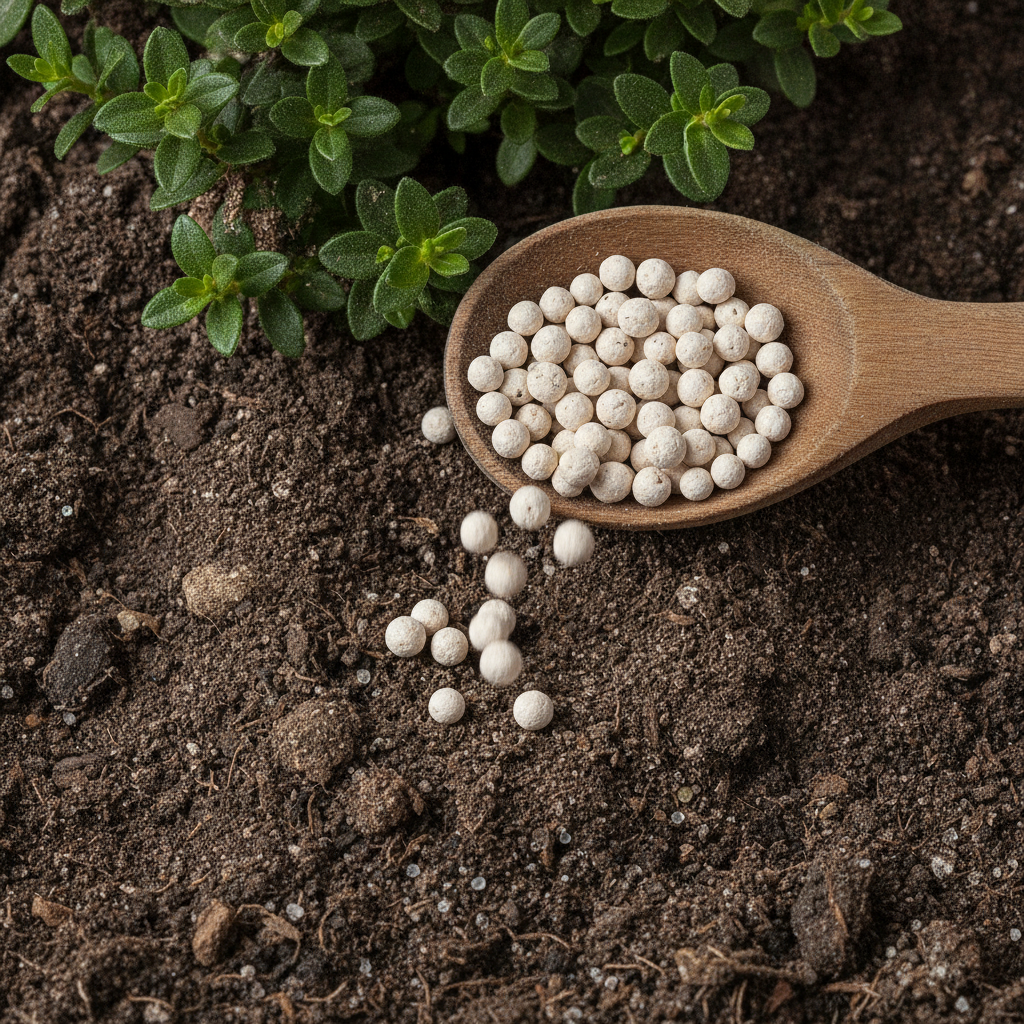
Liquid fertilisers: The most practical choice for a flowering pot plant, liquid feeds are diluted in water and applied during normal watering. They act quickly and let you control the strength precisely, which makes them ideal for the little-and-often approach Mexican heather prefers.
Slow-release granular: Coated granules mixed into the soil release nutrients gradually over several months. They are convenient and low-effort, providing a steady background supply, though you sacrifice some control over timing and dosage compared with liquid feeds.
Organic fertilisers: Options such as seaweed extract, worm-cast tea or diluted organic concentrates feed the plant gently while improving the soil’s biological health. They tend to be milder and lower in nutrient concentration, so they suit growers who prefer a natural, forgiving routine.
Feeding Schedule
Feed Mexican heather every two to four weeks through spring and summer, when it is actively growing and flowering, using a balanced liquid fertiliser at half the recommended strength. As autumn arrives and growth slows, taper the feeding off, and stop altogether through winter when the plant is resting. Resume in spring once you see fresh shoots and the first new buds.
Pro Tip — Half Strength, Double Frequency: Diluting your feed to half the label rate but applying it twice as often gives the plant a gentle, even supply of nutrients, which suits its fine roots far better than occasional full-strength doses and reduces the risk of fertiliser burn.
How to Fertilise
- Water the plant lightly first if the soil is very dry, so the feed never hits parched roots directly.
- Dilute the liquid fertiliser to half the recommended strength in a clean watering can.
- Apply the solution evenly to the soil until it just begins to drain from the bottom.
- Avoid splashing concentrated feed onto the foliage or flowers, which can mark them.
- Every month or so, water with plain water only to flush out any accumulated salts.
Warning — Salt Build-Up: White crusting on the soil surface or pot rim and browning leaf tips can signal a build-up of fertiliser salts. Flush the pot by running plenty of plain water through it until it drains freely, and scale back your feeding strength to prevent it recurring.
Propagation
Mexican heather propagates readily, which is good news given that older plants can grow woody and less floriferous over time. Raising a few young replacements every year or two keeps your stock fresh and gives you spares to share. The most reliable method by far is stem cuttings, which root quickly from the soft new growth, while seed is also possible for those who enjoy growing from scratch.
The best time to take cuttings is in late spring or early summer, when the plant is in active growth and rooting is fastest. Avoid the depths of winter, when low light and cool temperatures slow everything down and cuttings are far more likely to sulk or rot before they root.
Understanding Stem Cuttings
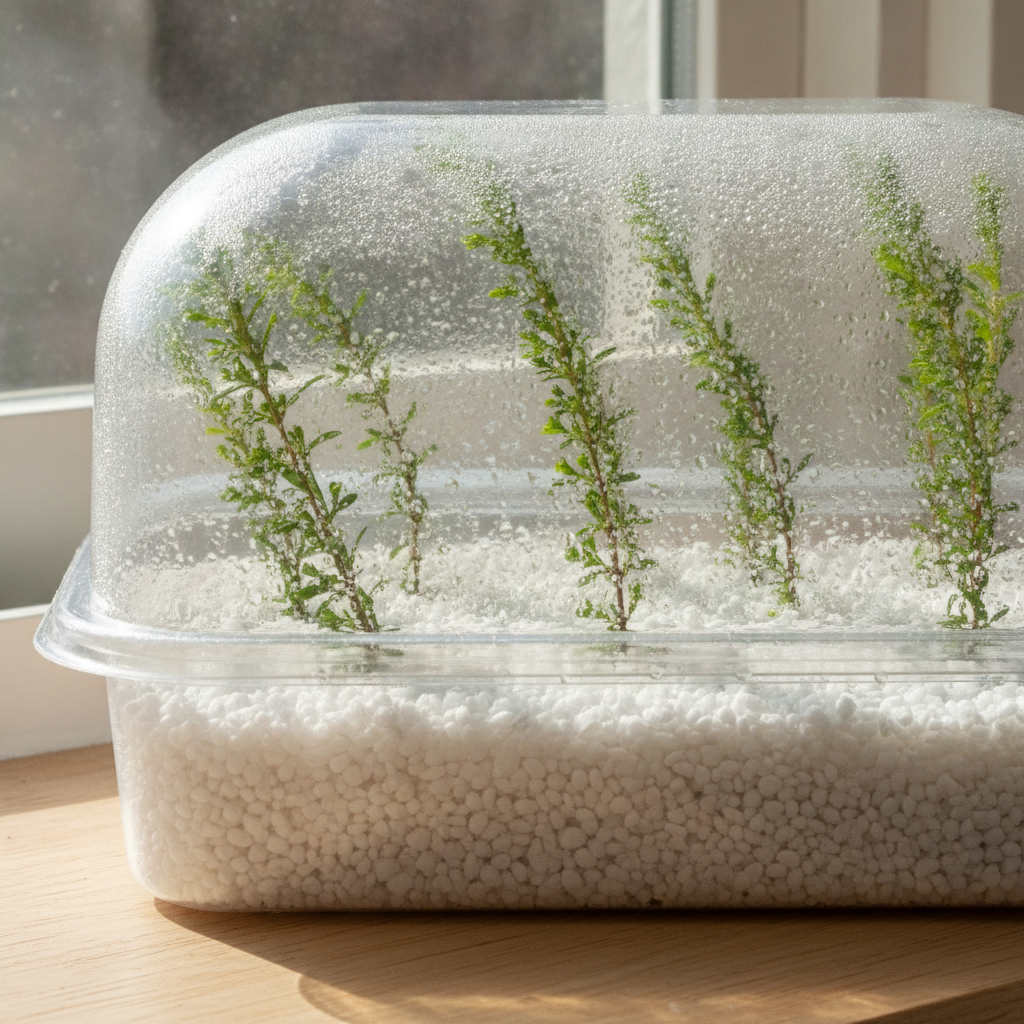
A stem cutting works because the plant can generate new roots from the tissue at and just below a node, the point where leaves attach to the stem. Choose healthy, non-flowering shoots of soft to semi-firm growth around 8 to 10 centimetres (3 to 4 inches) long, as these root more eagerly than older woody stems. Each cutting carries enough stored energy to sustain itself for the week or two it needs to form roots, provided it is kept warm, humid and out of harsh sun.
Stem Cuttings in Soil: Step-by-Step
Rooting directly in a light, moist medium is the simplest and most dependable approach for Mexican heather, and it spares the cuttings the shock of moving from water into soil later.
- Using clean, sharp scissors, snip a 8 to 10 centimetre (3 to 4 inch) tip cutting just below a node from healthy, non-flowering growth.
- Strip the leaves from the lower third of the cutting, leaving a clean length of stem to insert.
- Dip the cut end in rooting hormone if you have it, which speeds rooting but is not essential.
- Insert the cutting into a moist mix of perlite and compost, firming it gently so it stands upright.
- Cover with a clear humidity dome or a loose plastic bag to keep the air around it moist.
- Place in bright, indirect light at around 20 to 24°C (68 to 75°F) and keep the medium lightly damp.
- After two to three weeks, a gentle tug that meets resistance shows roots have formed, and you can begin to acclimatise it to open air.
Pro Tip — Take Several at Once: Cuttings are small and not every one will take, so root five or six together in a single tray. You can pot up the strongest and discard any that fail, which all but guarantees a few healthy new plants.
Growing from Seed: Step-by-Step
Mexican heather can also be raised from its tiny seed, which is a slower route but rewarding, and a good way to produce a larger number of plants for a display or garden border.
- Sow the fine seed thinly on the surface of a moist, free-draining seed compost in spring.
- Press the seed gently onto the surface but do not bury it, as light aids germination.
- Cover the tray with a clear lid or bag to hold humidity, and keep it warm at around 21 to 24°C (70 to 75°F).
- Place in bright, indirect light and keep the surface consistently moist but never waterlogged.
- Once seedlings have a few true leaves and are large enough to handle, prick them out into individual pots.
Troubleshooting Propagation
| Problem | Likely Cause | Solution |
|---|---|---|
| Cuttings rot at the base | Medium too wet or air too stagnant | Use a more open mix and ventilate the dome briefly each day |
| Cuttings wilt and shrivel | Too little humidity or roots not yet formed | Keep covered and out of direct sun until rooted |
| No roots after a month | Cool temperatures or weak light | Provide bottom warmth and brighter, indirect light |
| Seed fails to germinate | Seed buried, or surface dried out | Surface-sow and keep consistently moist and warm |
Pests & Diseases
Mexican heather is a fairly resilient plant and not especially prone to pests, but its dense, fine foliage can shelter small insects, and indoor conditions occasionally allow an infestation to take hold before it is noticed. Most troubles are easily managed if caught early, which is the main argument for giving the plant a quick inspection whenever you water it.
The majority of problems indoors trace back to environmental stress rather than the pests themselves. A plant weakened by poor light, dry air or erratic watering is far more inviting to insects and disease, so good cultural care is your first and best line of defence.
Common Pests
Spider Mites (Tetranychus urticae)
These minuscule sap-suckers thrive in warm, dry conditions and are among the most likely pests on indoor Mexican heather. They cause fine pale stippling on the leaves and, in bad cases, delicate webbing among the stems. The plant’s dense foliage makes them easy to overlook until numbers are high.
Treatment: Rinse the plant thoroughly, raise the humidity, and treat with insecticidal soap or a diluted neem oil spray, repeating every few days to break the breeding cycle.
Aphids (Aphidoidea)
Soft-bodied green, black or pink insects that cluster on tender new shoots and flower buds, sucking sap and excreting sticky honeydew. They can distort fresh growth and reduce flowering if left unchecked, and they reproduce rapidly.
Treatment: Dislodge light infestations with a firm spray of water, then follow up with insecticidal soap or neem oil, paying attention to the growing tips where they gather.
Whiteflies (Trialeurodes vaporariorum)
Tiny white winged insects that rise in a cloud when the plant is disturbed and gather on the undersides of leaves. Like aphids they feed on sap and produce honeydew, weakening the plant and encouraging sooty mould.
Treatment: Hang yellow sticky traps to catch the adults and spray the leaf undersides with insecticidal soap or neem oil over several weeks to clear successive generations.
Common Diseases
Root Rot (Pythium and Phytophthora spp.)
By far the most serious threat to Mexican heather, root rot follows from soil that stays saturated. The roots blacken and turn mushy, the stem base softens, and the plant wilts and yellows even though the soil is wet, which often confuses growers into watering more.
Treatment: Unpot the plant, cut away all soft, dark roots, and repot into fresh, free-draining soil in a clean pot with good drainage, then water sparingly until it recovers.
Powdery Mildew (Erysiphe spp.)
A white, powdery coating on the leaves that appears in conditions of poor air circulation and high humidity, particularly where plants are crowded. It mars the foliage and, if severe, can weaken the plant and reduce flowering.
Treatment: Improve airflow, remove the worst-affected leaves, and treat with a suitable fungicide or a homemade potassium bicarbonate spray, avoiding wetting the foliage when watering.
Pest and Disease Summary
| Pest / Disease | Identification | Treatment |
|---|---|---|
| Spider mites | Fine stippling and webbing on foliage | Rinse, raise humidity, apply neem or insecticidal soap |
| Aphids | Clusters on shoots and buds with sticky residue | Spray off, then treat with soap or neem oil |
| Whiteflies | Small white flies on leaf undersides | Yellow sticky traps and repeated soap or neem sprays |
| Root rot | Black mushy roots, wilting in wet soil | Trim roots and repot into fresh, draining mix |
| Powdery mildew | White powdery film on leaves | Improve airflow and apply fungicide |
Prevention Strategies
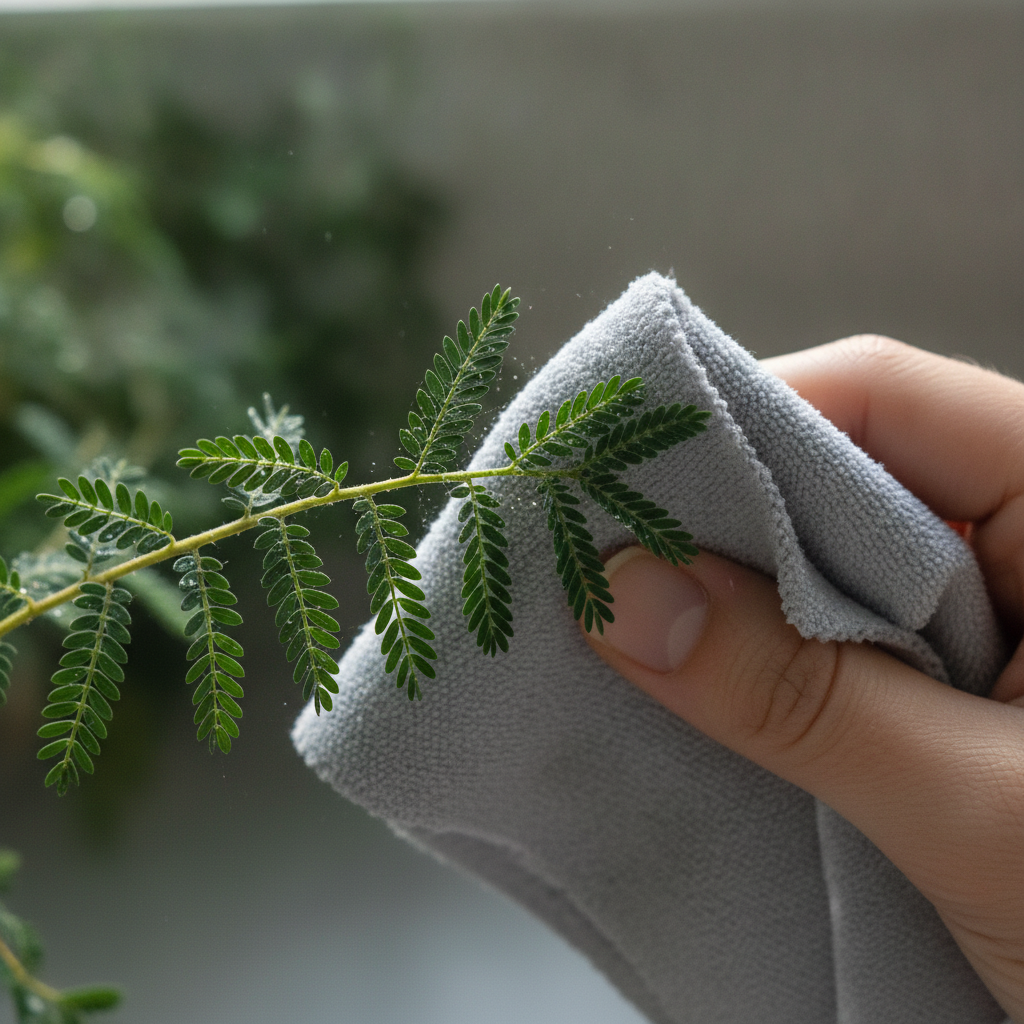
Prevention is far easier than cure. Inspect your plant regularly, looking under the leaves and among the dense stems where pests like to hide, and isolate any new plant for a couple of weeks before introducing it to your collection. Keeping the foliage clean, the air moving and the watering consistent removes most of the conditions that pests and diseases exploit.
Above all, grow the plant well. A Mexican heather in bright light, evenly watered and lightly fed, is vigorous enough to shrug off the minor problems that would overwhelm a stressed, struggling specimen. Healthy plants are resilient plants, and good husbandry is the most effective pest control there is.
Pro Tip — Quarantine New Arrivals: Keep any newly bought plant separate from the rest of your collection for two to three weeks. Pests often hitch a ride home unseen, and a short quarantine lets any problem reveal itself before it can spread to your other plants.
Popular Varieties
The wild species carries lavender-purple flowers, but breeders have selected a range of cultivars in different colours and habits, from pure white forms to larger-flowered selections bred specifically for an extended blooming season. All share the same fine foliage and easy temperament, so your choice comes down mainly to flower colour and the size of plant you want.
When buying, you will most often encounter the named purple and white forms, while the newer breeding-series plants are increasingly common in garden centres for their bigger, more prolific blooms. The table and profiles below cover the most widely available varieties to help you choose.
| Variety | Leaf Appearance | Light Needs | Growth Rate | Availability |
|---|---|---|---|---|
| ‘Allyson’ | Fine green, deep lavender-purple flowers | Bright with some sun | Moderate to fast | Common |
| ‘Alba’ | Fine green, pure white flowers | Bright with some sun | Moderate | Common |
| ‘Rosea’ | Fine green, soft pink flowers | Bright with some sun | Moderate | Frequent |
| ‘Itsy Bitsy’ series | Very fine green, purple, pink or white | Bright with some sun | Compact and slow | Frequent |
| ‘Floriglory’ series | Lush green, large vivid purple blooms | Bright with some sun | Fast | Increasing |
| ‘Diana’ | Dense green, large magenta-purple flowers | Bright with some sun | Fast | Increasing |
Featured Varieties
‘Allyson’
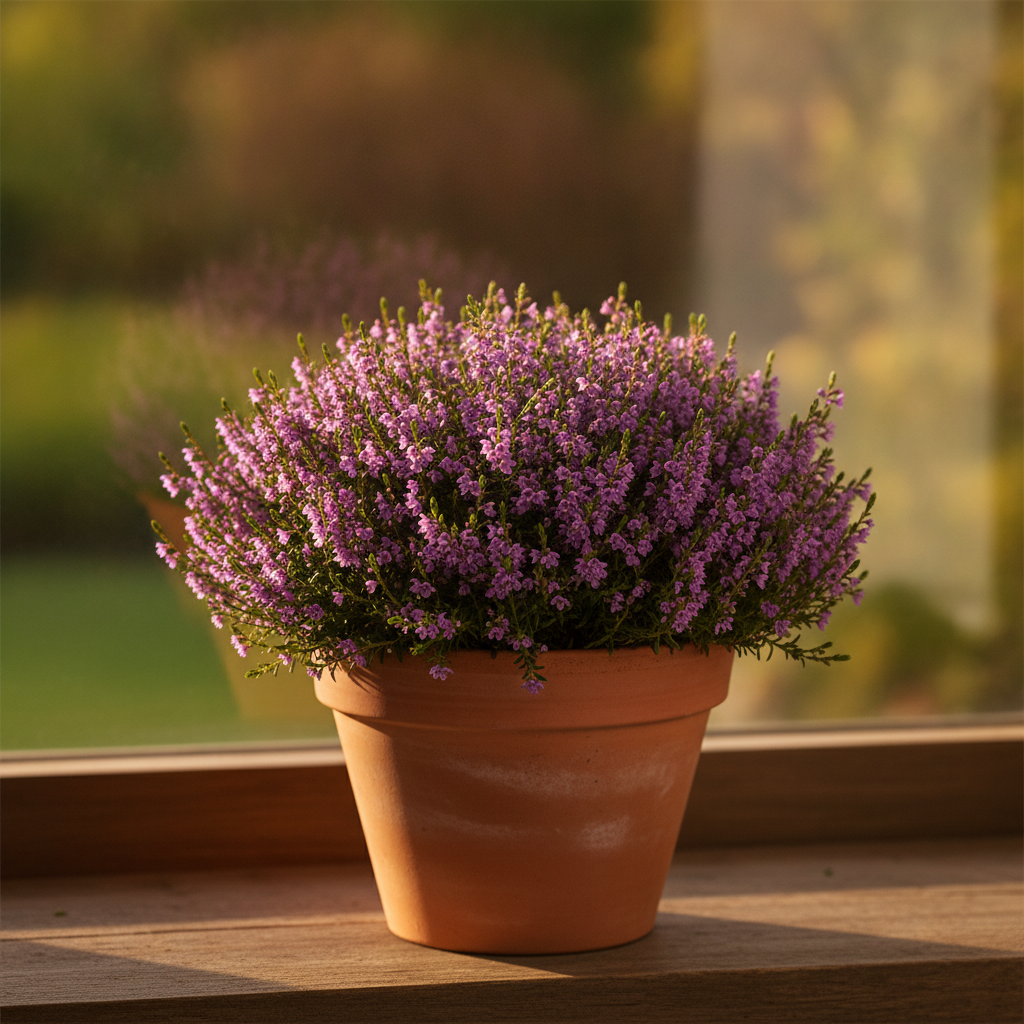
The most widely grown selection and the one most people picture as Mexican heather, ‘Allyson’ forms a neat mound smothered in tiny deep lavender-purple flowers against fine glossy foliage. It is reliable, free-flowering and an excellent first choice.
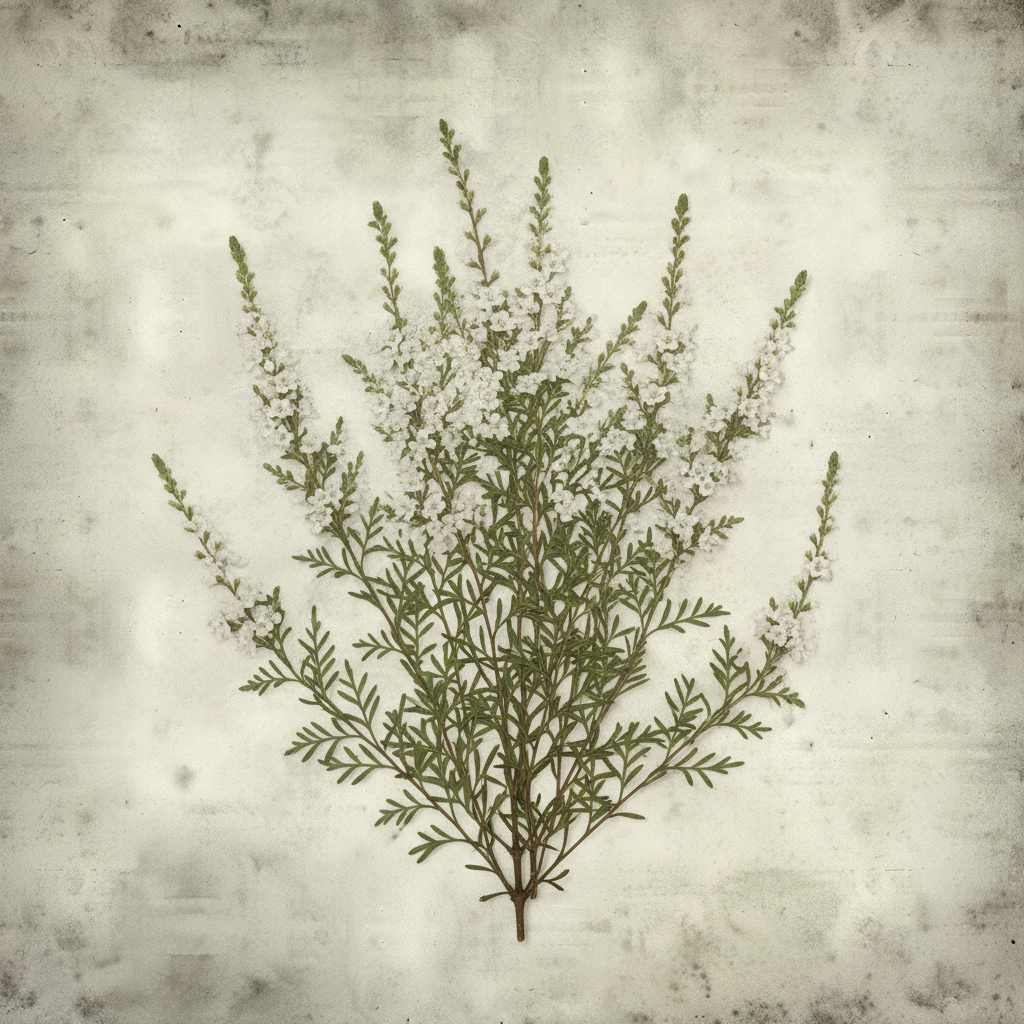
‘Alba’
The white-flowered form offers the same ferny green foliage dotted with masses of small pure-white blooms. It brings a cooler, more luminous look and pairs beautifully with the purple form for a two-tone display on a bright sill.
Variety Profiles in Detail
‘Rosea’ (Cuphea hyssopifolia ‘Rosea’)
A soft pink-flowered selection that sits between the purple and white forms in tone, ‘Rosea’ has the same compact, fine-leaved habit and free-flowering nature. It is a charming choice for a softer colour scheme and combines readily with the other named forms.
‘Floriglory Diana’ (Cuphea hyssopifolia ‘Floriglory Diana’)
Part of a modern breeding line developed for larger flowers and a longer season, ‘Diana’ carries notably bigger magenta-purple blooms on a lush, vigorous plant. It makes more impact than the older selections and is increasingly sold as a flowering patio and houseplant.
Choosing the Right Variety for Your Space
For most indoor growers the classic purple ‘Allyson’ is the natural starting point, dependable and easy to find. If you want something a little different, the white ‘Alba’ and pink ‘Rosea’ offer fresh colour without any change in care, while the newer ‘Floriglory’ types reward a very bright spot with a bolder, longer display. Whichever you choose, the growing requirements are identical, so let flower colour and the eventual size of plant guide your decision and pick the one that best suits your windowsill.
Frequently Asked Questions
Is Mexican heather a true heather?
No. Despite the name and its heather-like appearance, Cuphea hyssopifolia belongs to the loosestrife family, Lythraceae, and is unrelated to the true heathers of the family Ericaceae. The common name simply reflects its fine foliage and small flowers, which recall a true heather at a glance.
Why has my Mexican heather stopped flowering?
The most common reason is insufficient light. Mexican heather needs very bright conditions with some direct sun to bloom freely, and in a dim spot it stops flowering and grows leggy. Move it to your brightest window, and make sure it is being fed during the growing season, since exhausted soil also limits blooming.
Can Mexican heather grow indoors permanently?
Yes, provided you can give it enough light. It makes a fine long-term houseplant on a very bright, sunny windowsill, where it will flower for much of the year. In lower light it survives but grows thin and stops blooming, so a sunny position is the key to keeping it indoors successfully.
Is Mexican heather safe for cats and dogs?
It is generally regarded as non-toxic to cats and dogs and does not appear on the ASPCA list of toxic plants. As with any plant, eating a quantity of foliage could cause mild stomach upset, so it is still wise to discourage pets from nibbling, but it is considered a pet-safe choice.
How often should I water Mexican heather?
Water when the top 2 to 3 centimetres (about an inch) of soil have dried, keeping the medium evenly moist but never waterlogged. In a warm, bright room in summer this may mean watering every few days, while in winter the interval lengthens. Let the feel of the soil, rather than a fixed schedule, decide.
Should I prune my Mexican heather?
Light pruning helps keep the plant compact and encourages bushier growth and more flowers. Trim it back lightly in early spring, and pinch the stem tips through the growing season to maintain a dense, rounded shape. Older plants that have become woody and sparse respond well to a harder cut back to rejuvenate them.
Why are the leaves on my Mexican heather turning brown?
Brown, crispy leaves usually point to the soil drying out too far or the air being too dry, both of which stress the fine foliage. Check that you are watering consistently and consider raising the humidity. Brown patches after a sudden move into strong sun, by contrast, indicate scorch, which acclimatising the plant gradually will prevent.
Can I move my Mexican heather outdoors in summer?
Yes, and it often thrives outside in the warm months, where the strong light produces abundant flowers that attract bees and butterflies. Acclimatise it gradually to the brighter conditions, keep it well watered, and bring it back indoors before temperatures fall towards 5°C (41°F), as it is tender and will not survive frost.






