
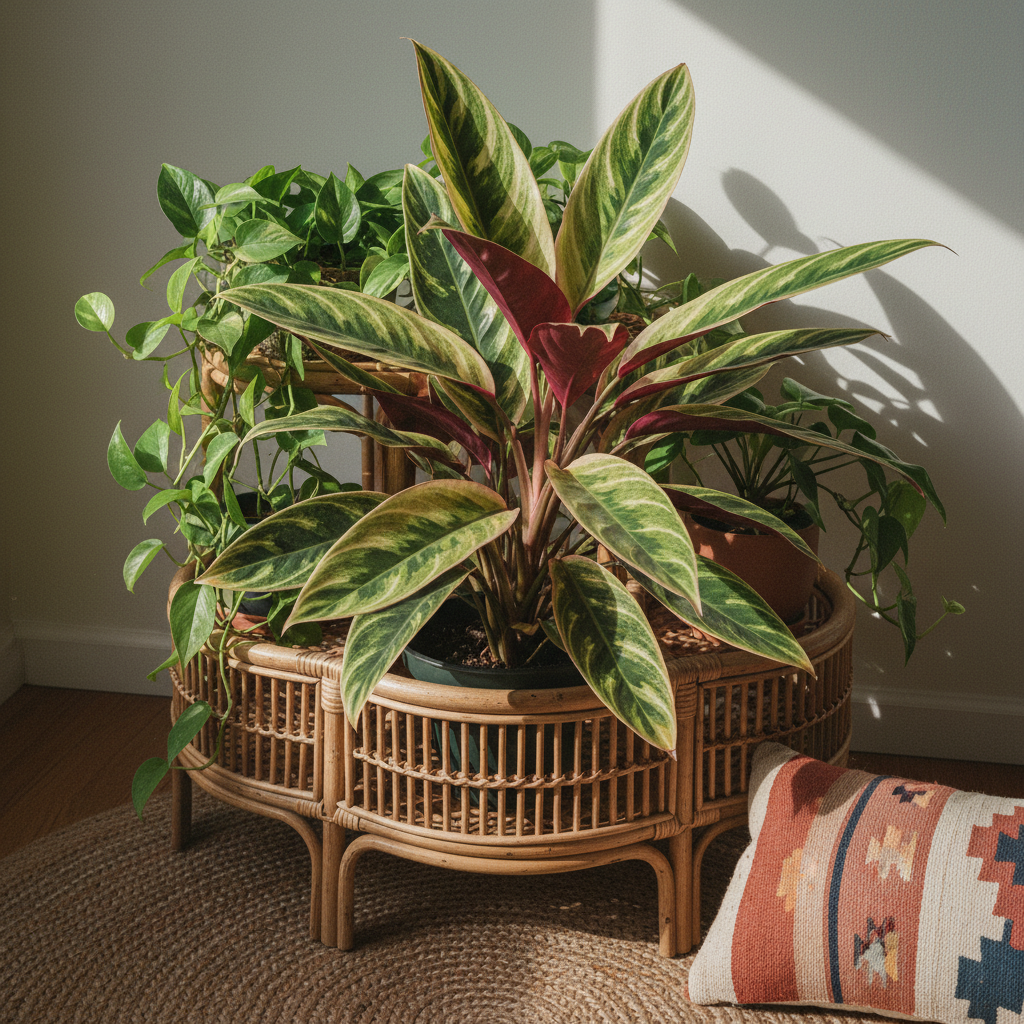
Few houseplants stop a person mid-stride the way a healthy Stromanthe sanguinea does. The long, lance-shaped leaves are splashed across the upper surface in irregular ribbons of cream, mint and deep green, and when a leaf arches or catches a draught it flashes a vivid magenta-pink underside that looks almost backlit. Sold under the common names Stromanthe, Triostar and Tricolor, it is a tropical perennial in the prayer plant family (Marantaceae) and a close relative of the better known Calathea, Maranta and Ctenanthe.
Native to the humid coastal rainforests of southeastern Brazil, Stromanthe has a well-earned reputation as a demanding houseplant. It will survive in a wide range of homes, but it only truly thrives when its light, water quality and humidity all line up. This guide is structured to take you from keeping a Stromanthe alive on a typical living-room shelf to growing the kind of dense, glossy, deeply coloured specimen that looks like it belongs in a magazine shoot.
Contents
- Quick Reference
- Why Stromanthe Makes a Striking Houseplant
- Light Requirements
- Watering & Humidity
- Soil, Potting & Repotting
- Fertilising
- Propagation
- Pests & Diseases
- Popular Varieties
- Frequently Asked Questions
Quick Reference: Stromanthe at a Glance
| Botanical name | Stromanthe sanguinea, family Marantaceae |
| Common names | Stromanthe, Triostar, Tricolor, Stromanthe Triostar |
| Light | Bright indirect light; tolerates gentle morning sun, no harsh afternoon sun |
| Watering | Keep evenly moist; let only the very top of the mix dry between waterings |
| Temperature | 18 to 27 °C (65 to 80 °F); never below 15 °C (59 °F) |
| Humidity | 60 percent and above, ideally 70 to 80 percent |
| Soil | Light, peat- or coir-based aroid mix with perlite and orchid bark; slightly acidic |
| Fertiliser | Balanced liquid feed at half strength, monthly from spring to early autumn |
| Mature size | 60 to 90 cm (2 to 3 ft) tall and wide indoors |
| Toxicity | Non-toxic to cats, dogs and humans |
| Origin | Atlantic rainforests of southeastern Brazil |
Why Stromanthe Makes a Striking Houseplant
The visual impact comes from two features at once. The upper leaf surface is painted in long, irregular brushstrokes of cream, pale green and dark forest green, no two leaves identical, so a mature plant reads as a layered tapestry rather than a single colour. Turn the leaves over and the contrast intensifies: the underside is a saturated magenta-pink that picks up any light in the room and pushes it back out. Few other houseplants put that much colour into their foliage without flowering.
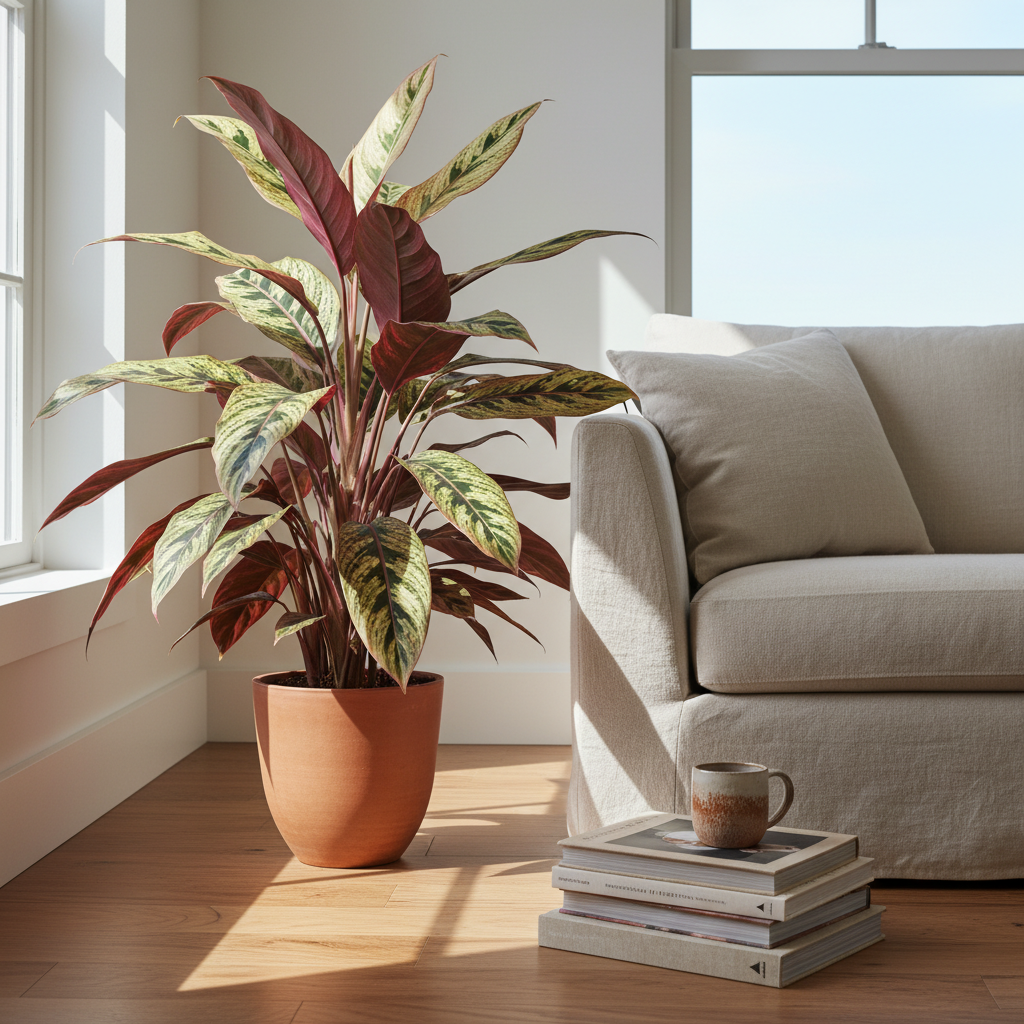
Behind the looks is a useful behavioural quirk. Like the rest of the Marantaceae, Stromanthe is nyctinastic, meaning it folds its leaves up at dusk and reopens them at dawn, driven by water pressure in a small thickened joint at the base of each leaf called the pulvinus. The pink undersides come together like hands in prayer overnight, which is where the family’s nickname comes from. In a quiet room you can sometimes hear the leaves move as they shift position over a few hours, a small daily piece of theatre most houseplants do not provide.
Stromanthe is also non-toxic to cats, dogs and humans according to the ASPCA’s plant database, which sets it apart from many of the most ornamental houseplants in the same visual category. A curious pet sampling a leaf will get a bad taste and possibly a stomach upset, but not the calcium-oxalate burning that comes with philodendrons, dieffenbachias or peace lilies.
Pro Tip — Pick a finished plant: Stromanthe is propagated commercially by division, which means small specimens often look thin and stretched in the pot. If you have a choice, pay a little more for a plant with at least three or four mature crowns clustered together. It will fill out into a dense clump far faster than a single-stem starter, and the variegation reads more dramatically when many leaves overlap.
Light Requirements
Light is the single most consequential variable for a Stromanthe and the one most people get wrong in both directions. In its native habitat it grows on the rainforest floor under a high canopy of trees, so the light that reaches it is bright but diffused, with patches of brief direct sun rather than long uninterrupted exposure. Recreating that quality indoors is the goal.
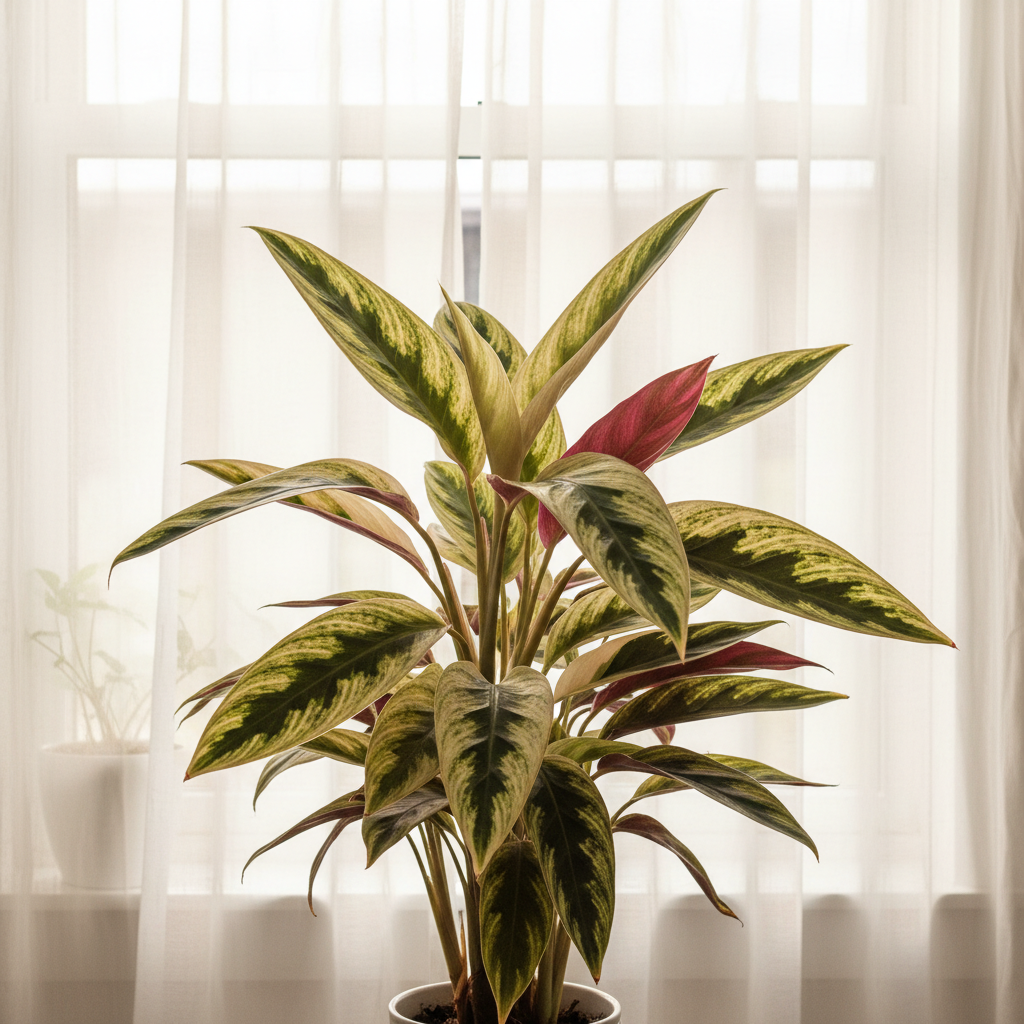
In practical terms, a Stromanthe wants bright indirect light for most of the day. An east-facing window where it can catch the gentle low sun of early morning and then sit in steady bright shade for the rest of the day is close to ideal. A south- or west-facing window works well too, provided the plant is set back from the glass or behind a sheer curtain so that the harshest midday and afternoon rays are filtered. A few hours of weak winter sun rarely causes any problem and may actually help a plant that has stretched during a dim autumn.
Direct summer sun for more than an hour or two is a different story. The variegated cream and white sections contain little chlorophyll and burn quickly, turning crisp brown or translucent within days. If a leaf develops a bleached, papery patch on the side facing the window, that is sunburn and there is no way to reverse it on that leaf, only to move the plant. North-facing windows in the Northern Hemisphere are the opposite extreme. A Stromanthe will survive there, but new leaves will emerge smaller and the variegation will fade as the plant produces more chlorophyll to compensate for the dim conditions.
Signs your light is wrong
Too much direct sun shows up as bleached or scorched patches on the upper surface of the leaves, often on the side closest to the window. The whole plant may also look washed out, with the dark green sections paling toward yellow. Too little light produces the opposite picture: new leaves come in smaller, on longer thinner petioles, the variegation flattens to mostly green, and the plant leans noticeably toward the brightest part of the room. Rotating the pot a quarter turn every week or two helps even out growth no matter what window the plant is near.
Pro Tip — Use a light meter: Stromanthes thrive in roughly 200 to 800 foot-candles, or about 2,000 to 8,000 lux. A free phone app such as Lux Light Meter is accurate enough to tell you whether a spot is in range. If your reading at midday in the brightest part of the plant’s intended home is under 1,000 lux, look for somewhere closer to the window or add a small full-spectrum grow light.
Watering & Humidity
A Stromanthe wants to be evenly moist, never bone dry, never standing in water. That sounds simple until you consider the soil starts drying out at the surface long before the roots at the bottom of the pot do, which is why blind watering on a fixed schedule is one of the most common ways to slowly kill this plant. The right approach is to check by touch and lift the pot to feel its weight.
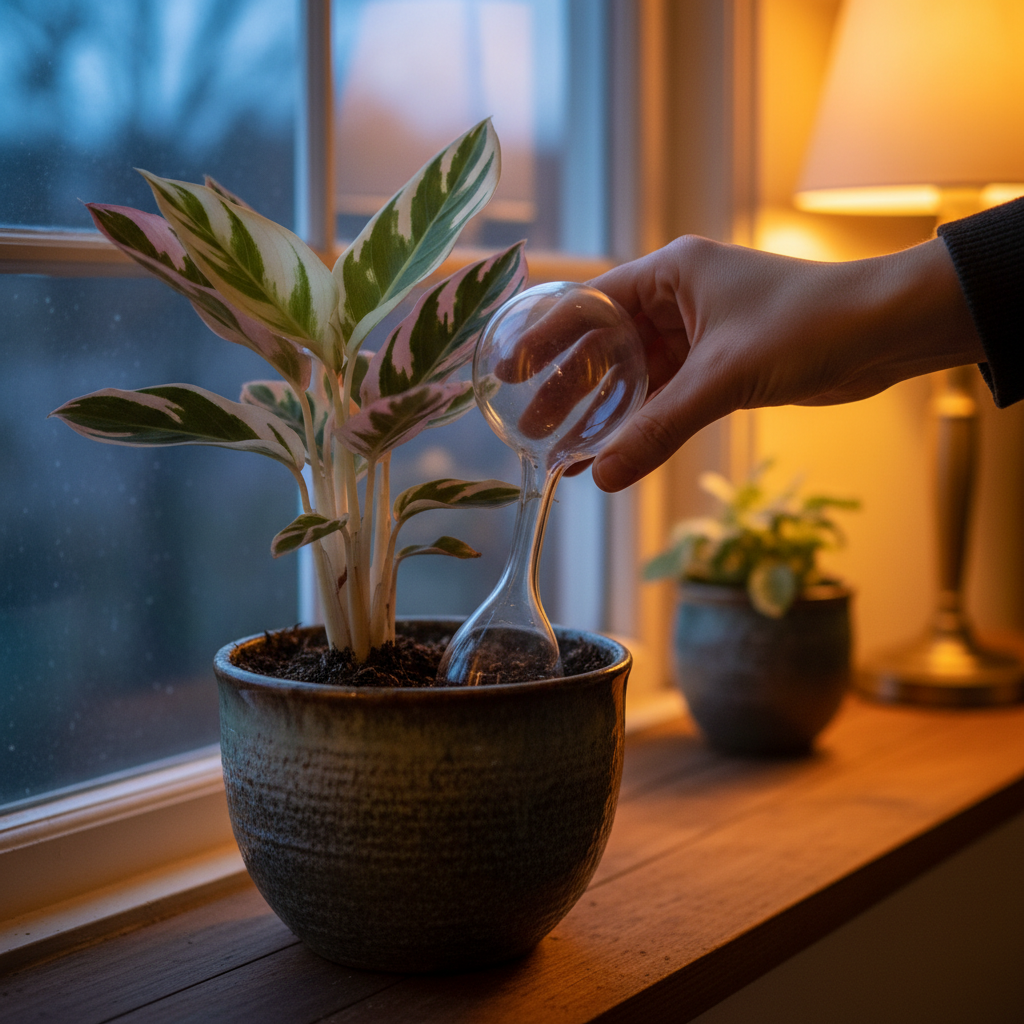
Water thoroughly whenever the top 2 to 3 cm (about 1 in) of the mix has dried out and the pot feels noticeably lighter than it did just after watering. Water until you see a steady stream running from the drainage holes, let it drain for a few minutes, then tip away anything left in the saucer or cover pot. In a typical centrally heated home with a bright spot, this usually works out to roughly once a week in spring and summer and every 10 to 14 days through autumn and winter, but treat those as rough anchors rather than rules.
Water quality matters more than most plants
Marantaceae are notorious for reacting badly to the chlorine, chloramine and fluoride in many municipal tap waters. The damage shows up as brown, crispy leaf tips and edges that creep slowly inward over months, often misdiagnosed as low humidity. If your Stromanthe is browning at the tips despite a well-judged watering routine, switch the water source before you change anything else.
Rainwater is the gold standard if you can collect it, and tropical-plant nurseries have used it for decades for exactly this group of plants. Filtered water from a carbon-block filter removes most of the chlorine. Distilled or reverse-osmosis water is reliable but eventually leaches minerals from the soil, so use it in combination with a properly fertilised mix. Letting tap water sit overnight to off-gas chlorine is a partial fix at best and does nothing to remove chloramine, which is what most utilities now use.
Humidity is non-negotiable
More than most houseplants, Stromanthe rewards humidity in the high range. Below about 50 percent the leaf edges start to brown and the plant looks gradually shabbier; below 40 percent it suffers visibly. The sweet spot is 60 to 80 percent, which is well above what a typical living room offers in winter. A digital hygrometer beside the plant takes the guesswork out of the question.
Effective ways to raise local humidity, in order of how much they actually help: run a cool-mist humidifier nearby (by far the most effective option); group the Stromanthe with other plants so they share transpired water; move it to a brighter bathroom or a kitchen; place the pot on a tray of pebbles topped up with water so the saucer sits just above the waterline. Misting the leaves with a spray bottle looks productive but raises the ambient humidity only briefly and can actually invite leaf-spot diseases if water sits on the foliage overnight.
Warning — Brown tips are diagnostic: On a Stromanthe, persistent brown leaf tips and edges almost always point to one of three things: tap water chemistry, chronically low humidity, or a wet-dry watering cycle that swings too far in both directions. Investigate in that order. Trimming brown tips off with sharp scissors at a natural angle is purely cosmetic and does not fix the underlying problem.
Soil, Potting & Repotting
Stromanthe roots are fine and dense and demand a mix that holds moisture without ever turning sour. A heavy peat-based potting compost straight from the bag will compact down, choke the roots and rot the rhizome within a season. The aim is a substrate that drinks deeply when watered, drains the excess fast, and dries out evenly rather than from the top down.

A reliable home mix is roughly 50 percent good quality coir- or peat-based houseplant compost, 20 percent perlite, 20 percent fine orchid bark and 10 percent worm castings or sieved leaf mould. The compost provides the water-holding bulk, the perlite keeps air around the roots, the bark adds chunky structure so the mix does not pack down, and the worm castings supply slow background nutrition. A pre-mixed aroid blend from a reputable supplier is a perfectly good shortcut and saves measuring.
Choosing a pot
Stromanthe likes to be slightly snug in its pot. A container that is one size too large holds onto excess moisture at the bottom long after the roots have used what they need, which is the exact condition that causes rot. When you repot, step up only 2 to 3 cm (about 1 in) in diameter, no more. Terracotta dries faster than plastic or glazed ceramic and is the safer choice in cooler rooms or for inexperienced waterers; glazed pots are fine in bright warm rooms where the mix is being used up quickly. Whatever the material, drainage holes are non-negotiable.
When and how to repot
Repot every 18 to 24 months in spring or early summer, when the plant has the longest growing season ahead to recover. The signal to repot is usually one of three things: roots emerging from the drainage holes, water running straight through without soaking in, or the plant noticeably needing water more often than it used to. Slide the rootball out, tease away loose old mix with your fingers, trim any obviously dead or mushy black roots with sterile scissors, and settle it into a slightly larger pot with fresh mix tucked firmly around the edges. Water thoroughly and put it back in its usual spot.
- Water the plant the day before repotting so the rootball comes out cleanly and the roots are less brittle.
- Prepare the new pot with a 2 to 3 cm (1 in) layer of fresh mix in the bottom.
- Slide the plant out of its old pot and gently loosen the outer roots and any compacted soil with your fingers.
- Inspect the roots, trimming away any that are blackened, mushy or smell sour with sterilised scissors.
- Centre the plant in the new pot at the same depth it was growing before and fill in around the sides with fresh mix.
- Press the mix down firmly enough to support the plant but not so hard that you compact out the air.
- Water thoroughly until liquid drains freely, then return the plant to its usual spot and keep humidity high for the next week.
Fertilising
Stromanthe is a moderate feeder by tropical-plant standards. It responds well to consistent, dilute feeding during the growing season and resents the salt build-up that comes with heavy or frequent application. The variegated cultivars in particular are sensitive: too much nitrogen pushes the plant to produce greener leaves at the expense of the cream and pink, undoing the very thing you bought it for.
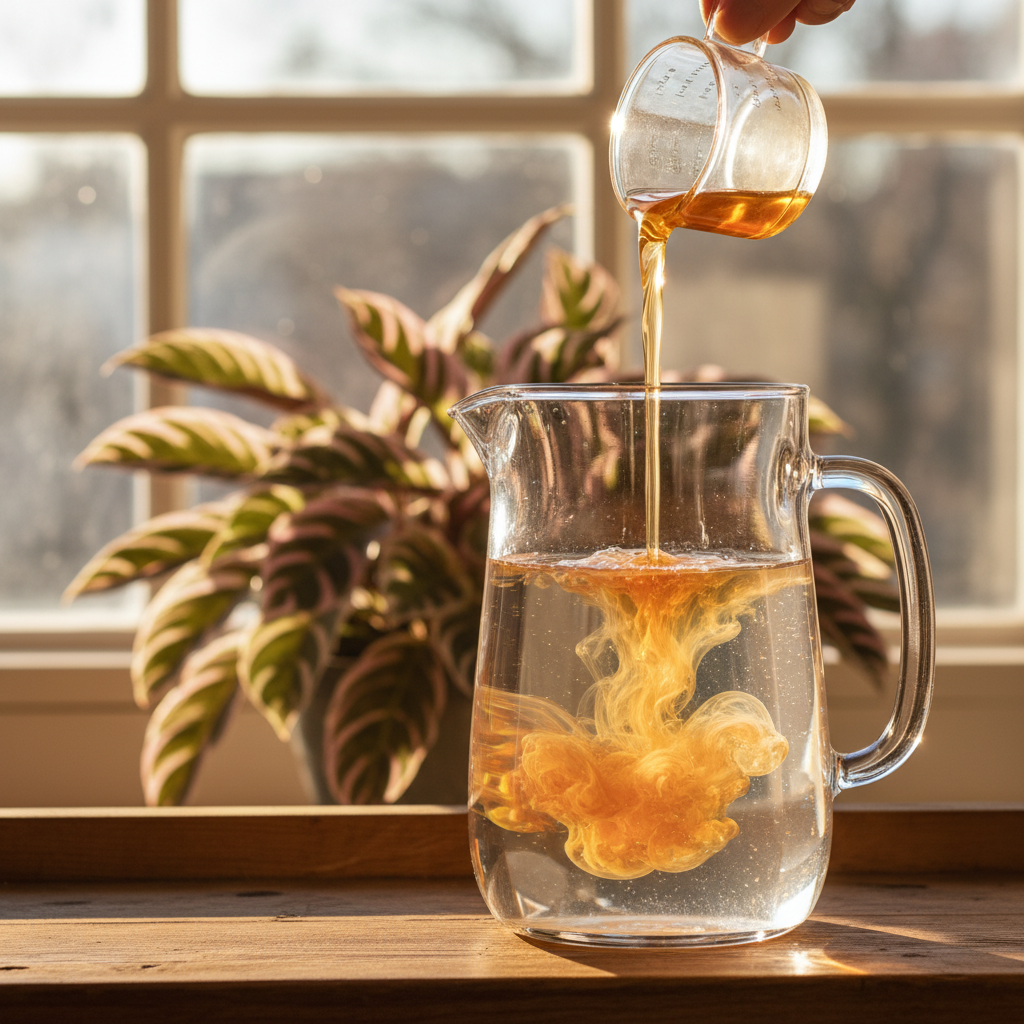
Use a balanced liquid houseplant fertiliser with an N-P-K ratio of around 10-10-10 or 20-20-20, diluted to half the strength on the label, applied once a month from early spring through to early autumn. Always water the plant first with plain water before applying a fertiliser solution; feeding into bone-dry soil concentrates the salts at the roots and causes the same tip-burn that hard tap water does. Skip feeding entirely from late autumn through winter when the plant is barely growing.
A slow-release granular fertiliser scattered on the surface of the mix at repotting time is a fine alternative if you find liquid feeding fiddly. Choose a formulation aimed at foliage houseplants rather than flowering plants, and use roughly half the dose listed on the packet because most are calibrated for outdoor container plants that receive much higher light levels than a houseplant ever will.
Reading the plant
Pale, slow growth with small new leaves usually means the plant is underfed, especially if the substrate has been the same for more than a year. Crusty white deposits on the soil surface, browning leaf edges that creep inward from the tip, and stunted new growth all suggest fertiliser salts have built up. The fix is to flush the pot by watering thoroughly with plain water two or three times in succession until plenty drains out the bottom each time, then resume feeding at a lower frequency.
Pro Tip — Flush twice a year: Even with careful feeding, mineral salts gradually accumulate in the soil. Flushing the pot with three times its volume of plain water every six months washes the excess out the drainage holes and resets the substrate chemistry. Do it in the kitchen sink or shower so the run-off does not stain a floor.
Propagation
Stromanthe is propagated by division of the rhizome, and only by division. Leaf cuttings will not root, stem cuttings have no nodes to work with in the conventional sense, and there are no aerial pups or runners to detach. This is one of the very few common houseplants where water rooting is not an option at all, and trying it produces nothing but rotten leaves in cloudy water.
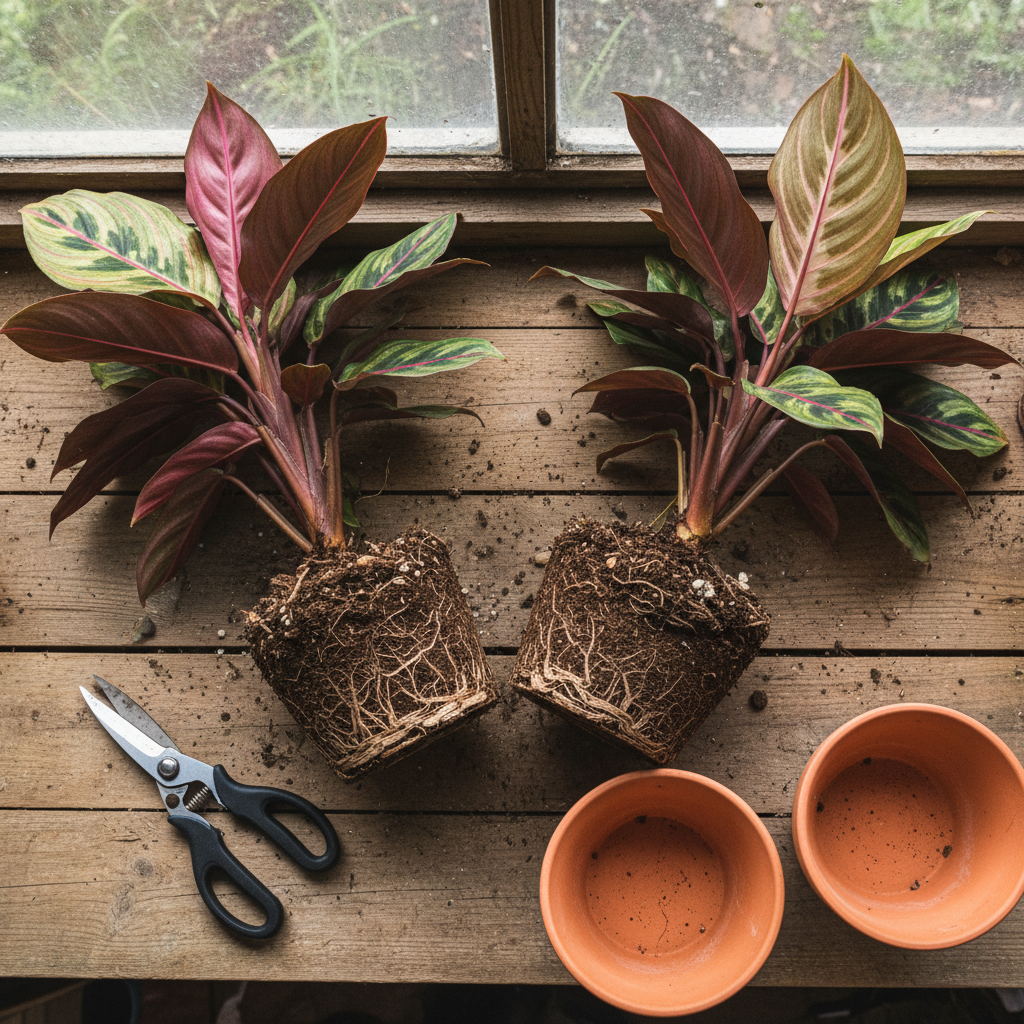
The good news is that division is straightforward and has a very high success rate when done at the right moment. Spring and early summer are best, when the plant has months of warm bright weather ahead to re-establish. A mature Stromanthe naturally forms several distinct crowns connected by an underground rhizome; each of those crowns, with its own roots and shoots, can become an independent plant.
- Water the plant a day or two before dividing so the rootball is hydrated and pliable, not bone dry and brittle.
- Turn the pot on its side and slide the entire plant out. If it is stuck, squeeze a plastic pot to release the sides or tap a terracotta pot firmly on the rim.
- Gently brush or shake loose mix off the roots so you can see the underground rhizome and where the natural divisions sit.
- Identify clumps that each carry at least three to five leaves and a healthy mass of their own roots. Trying to make too many divisions from one plant produces weak starts that struggle for months.
- Tease the clumps apart with your fingers wherever possible. Where the rhizome resists, cut cleanly through it with a sharp, sterilised blade in a single decisive motion.
- Pot each division into its own snug container of fresh aroid mix, the crown at exactly the same depth it sat in the parent pot, and firm the substrate gently around the roots.
- Water thoroughly and place the new pots somewhere warm, bright and very humid. A clear plastic bag loosely tented over each plant for the first one to two weeks recreates the rainforest-floor conditions the roots need to take hold.
- Hold off on fertilising for at least six weeks, and expect the plant to look limp and underwhelming for the first month before new growth signals it has settled.
Warning — Do not divide a struggling plant: Division is a major stress, and a plant already weakened by root rot, pest damage or chronic underwatering rarely survives it. If the parent plant looks unwell, fix that first; only divide healthy specimens that have outgrown their pots and are actively pushing new growth.
Pests & Diseases
Stromanthe is not unusually pest-prone, but several issues hit this species harder than others because of how much it depends on humid, evenly moist conditions. Spider mites in particular thrive in the warm dry air that is the exact opposite of what a Stromanthe needs, so any drift toward poor cultural conditions tends to invite them in.
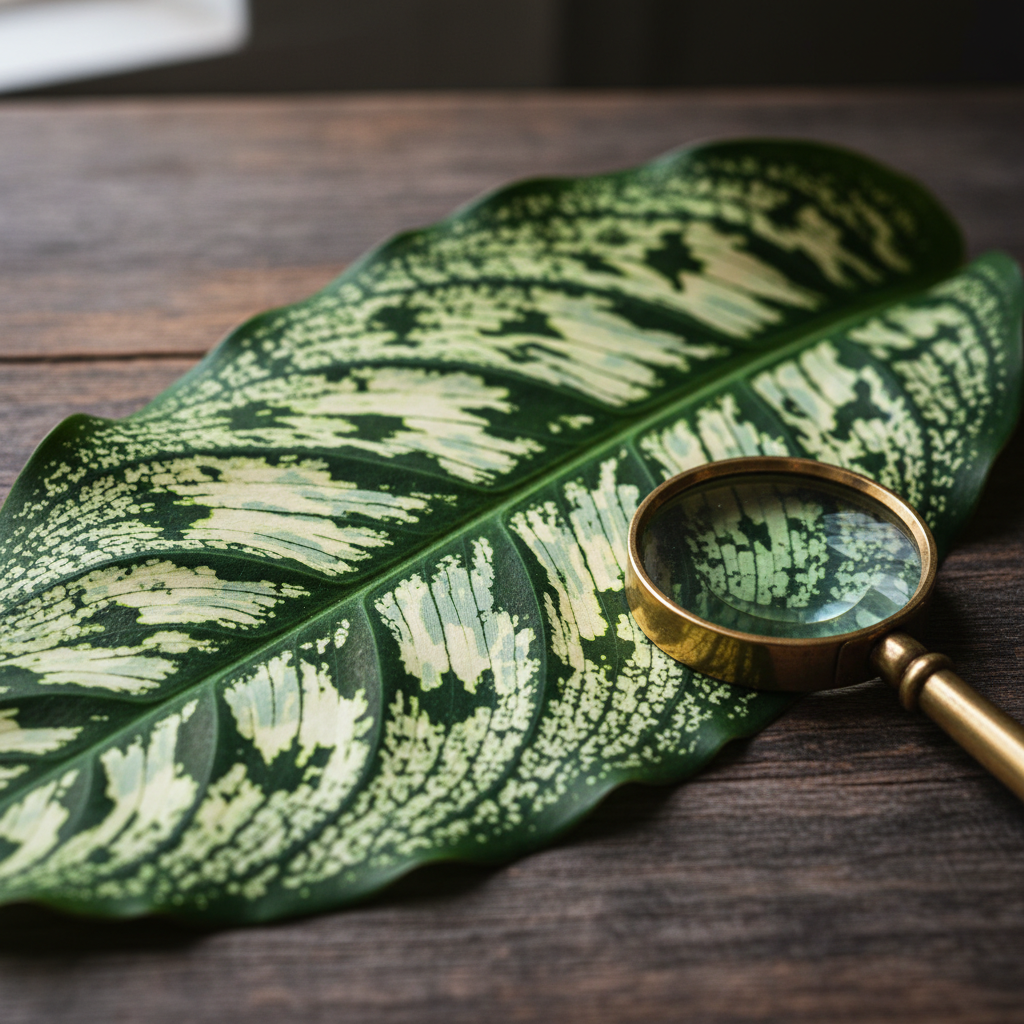
Spider mites
By far the most common Stromanthe pest. Spider mites are tiny eight-legged arachnids barely visible to the naked eye, and they cluster on the leaf undersides where they pierce the cells and suck out the contents. Early signs are a faint stippling of pale dots on the upper surface and very fine webbing where the leaf meets the stem. A heavy infestation turns whole leaves dull, yellow and brittle within weeks. They explode in warm, dry conditions, which is why Stromanthes kept above radiators in winter are particularly vulnerable.
Treat as soon as you suspect them. Move the plant to a sink or shower and rinse both leaf surfaces thoroughly with lukewarm water, paying particular attention to the undersides. Follow up with a thorough spray of insecticidal soap or a 1 percent neem-oil solution every five to seven days for at least three rounds to catch eggs as they hatch. Raise the ambient humidity at the same time, because mites struggle in moist air.
Mealybugs
White, cotton-wool tufts in the leaf axils and along petioles are mealybugs. They pierce the plant for sap and excrete sticky honeydew that attracts sooty mould. Dab each insect directly with a cotton bud dipped in 70 percent isopropyl alcohol, which dissolves their protective waxy coating instantly. Inspect the plant weekly for the next month, because newly hatched crawlers are mobile and easily missed.
Fungus gnats
Small dark flies hovering above the soil and weak, struggling new growth point to fungus gnats. The adults are a nuisance, but it is the larvae feeding on root hairs in the top few centimetres of mix that do the actual damage. The fix is to let the surface dry out more between waterings, top-dress the pot with a 1 cm (about a half-inch) layer of horticultural sand or fine grit to deny the adults a place to lay eggs, and hang yellow sticky traps to break the breeding cycle.
Root rot
The most serious problem a Stromanthe owner is likely to encounter, and almost always the result of cultural error rather than aggressive pathogens. Yellowing lower leaves combined with a soft, blackened base and a sour smell from the soil are the classic signs. Unpot the plant immediately, wash away all the old mix, cut every blackened or mushy root back to healthy tissue with sterile scissors, and repot into fresh dry mix in a clean pot. Hold off watering for a week to let the cuts callus, then water sparingly until you see new growth. Plants caught early often recover; plants with no firm white roots left rarely do.
Leaf-spot diseases
Brown or yellow spots with a darker ring, often appearing after a period of high humidity with water sitting on the leaves, point to a fungal or bacterial leaf-spot infection. Remove affected leaves with sterile scissors, improve air circulation around the plant, stop misting, and water only at the soil level. Most cases resolve once the cultural conditions improve, without any need for fungicides.
Popular Varieties
Stromanthe is essentially a one-species houseplant, with a handful of cultivars selected from Stromanthe sanguinea for the intensity and pattern of their variegation. The wild form, sometimes labelled simply as Stromanthe sanguinea without a cultivar name, has plain glossy dark green upper surfaces and the same magenta-pink undersides, and is well worth growing in its own right but rarely sold outside specialist nurseries.
‘Triostar’ (also ‘Tricolor’)
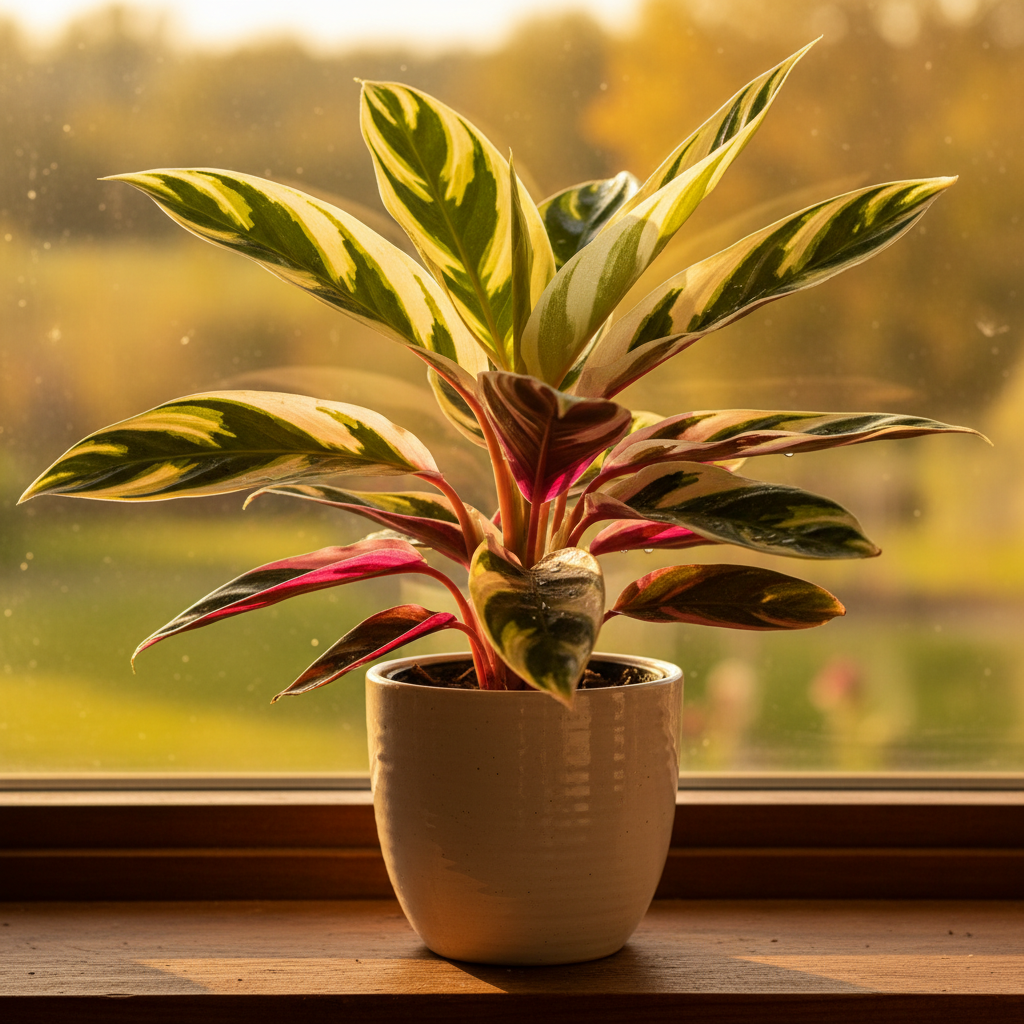
‘Triostar’ is the cultivar that put Stromanthe on the houseplant map. Each long lance-shaped leaf is painted in irregular brushstrokes of cream, mint and dark forest green on the upper surface, with a vivid magenta-pink underside that reads as a flash of colour whenever the foliage tilts. No two leaves are alike, which gives a mature clump the layered look of a small interior sculpture. It is the most widely available form, the most photographed and, fortunately, no more difficult than any other Stromanthe to grow well.
‘Magicstar’
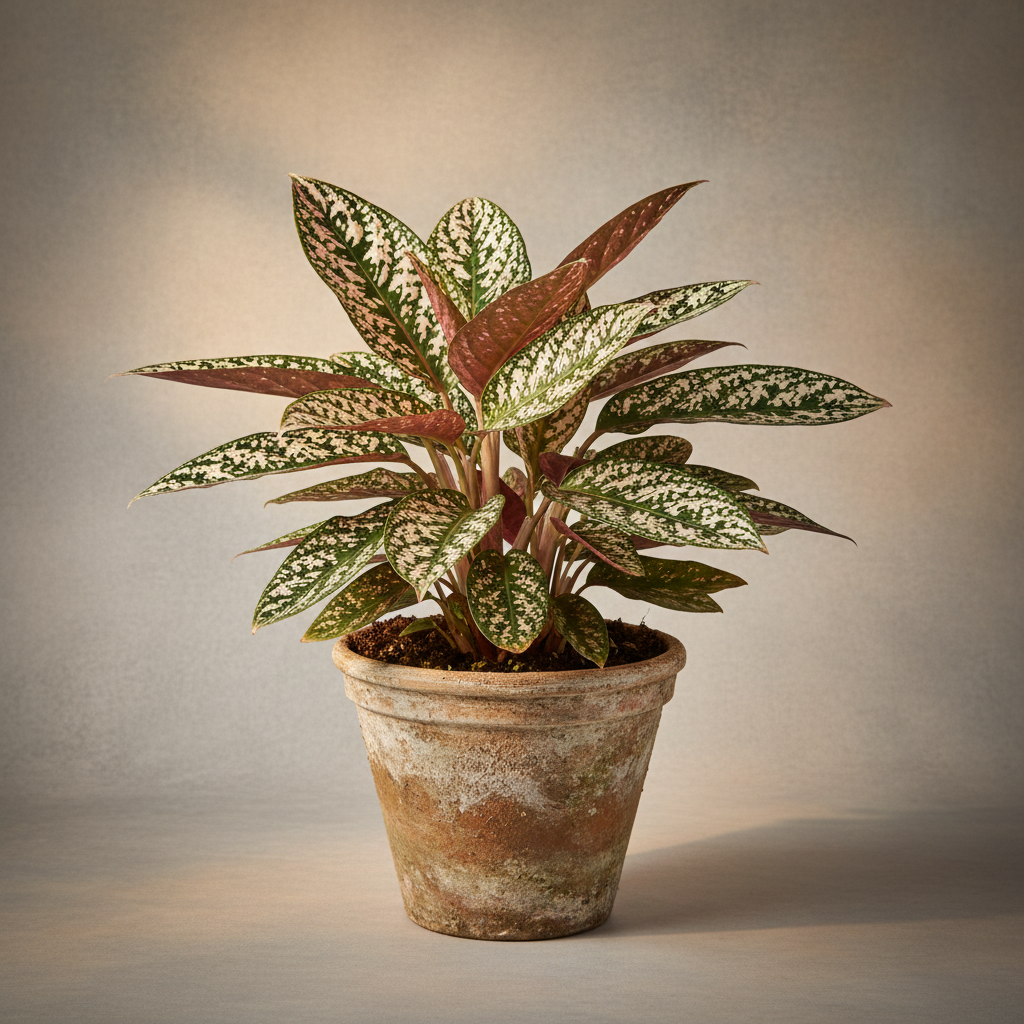
‘Magicstar’ is a more compact cultivar than ‘Triostar’, with smaller leaves and a finer, almost speckled pattern of pure white and pink against a deep green ground rather than broad brushstrokes. The undersides are still pink but a touch more muted. Its smaller mature size, around 45 cm (about 18 in), makes it a better fit for shelves and tabletops where a full-sized Triostar would dominate the space. Availability outside specialist growers can be patchy.
Two other cultivars turn up occasionally in well-stocked nurseries and online specialist shops. ‘Charlie’ is a relatively recent introduction with bolder, blockier sections of cream and an even more saturated pink underside, on a plant that stays slightly smaller than ‘Triostar’. ‘Multicolor’ is an older synonym sometimes used interchangeably with ‘Triostar’ in the trade, though strict cultivar identifiers usually treat them as distinct selections. If you are buying online, look at the photograph rather than the name alone; the houseplant trade is notoriously loose with Stromanthe cultivar labels.
Frequently Asked Questions
Why are the tips of my Stromanthe’s leaves turning brown?
Brown crispy tips on a Stromanthe almost always come down to one of three causes, in this order of likelihood: tap water that contains chlorine, chloramine or fluoride; ambient humidity that is too low (typically below 50 percent); or a watering rhythm that lets the soil swing between bone dry and waterlogged. Switching to rainwater, distilled water or filtered water for a month is the fastest diagnostic test. If new leaves come in clean while older leaves still show damage, water chemistry was the cause.
Why is my Stromanthe losing its variegation?
Leaves emerging mostly green with little or no cream and pink is a clear sign the plant is not getting enough light. The variegated cells contain little chlorophyll, so in dim conditions the plant produces leaves with more green tissue to keep itself photosynthesising. Move it closer to a bright window, behind a sheer curtain if needed, and the next round of new leaves should come in with more colour. Over-fertilising can also push a plant toward greener growth, so cut back on feeding if the light is already good.
Is Stromanthe safe for cats and dogs?
Yes. Stromanthe is listed as non-toxic to cats, dogs and humans in the ASPCA’s Toxic and Non-Toxic Plant List. A pet that chews a leaf may still get a mild stomach upset simply because plant material is not a normal part of its diet, but there are no calcium oxalates or other toxins to worry about. Compared with most of the other tropical foliage plants in its visual category, including dieffenbachia, philodendron and peace lily, it is a notably safer choice for a household with curious animals.
Why do the leaves close up at night?
Stromanthe and the rest of the Marantaceae move their leaves on a daily cycle, opening flat in the morning and folding upward like hands in prayer overnight. The mechanism is a thickened joint at the base of each leaf, called the pulvinus, that swells and shrinks with water pressure in response to changing light levels. It is normal and healthy behaviour, and a plant whose leaves stop closing at night often has something else going wrong, usually too little light or chronic stress. If your plant suddenly stops moving its leaves, check the position and the watering rhythm before worrying about anything more serious.
Can I keep a Stromanthe in a bathroom?
A bathroom is often an excellent home for a Stromanthe, provided the room has a window. The higher baseline humidity from showers and baths is exactly what the plant wants, and the regular bursts of warm humid air help compensate for the dry conditions in the rest of the house. A windowless bathroom with only artificial light is too dim; a small full-spectrum grow light on a timer can fix that if the rest of the conditions are right.
How often does Stromanthe need to be repotted?
Roughly every 18 to 24 months, in spring or early summer. Stromanthe likes to be slightly snug in its pot and resents being over-potted, so step up only one size (2 to 3 cm or about 1 in larger in diameter) each time. The signal to repot is usually roots growing out the drainage holes, water running straight through without soaking in, or the plant drying out noticeably faster than it used to.
My Stromanthe is dropping leaves — what went wrong?
Sudden leaf drop almost always points to a sudden change in conditions: a cold draught from an open window or a door used a lot in winter, a move to a much drier or darker location, a recent overwatering or underwatering, or a temperature drop below about 15 °C (59 °F). Identify the change and reverse it. The plant rarely drops leaves on a healthy steady routine, even an imperfect one, because it adapts to consistency much better than it adapts to surprises.
Does Stromanthe flower indoors?
Rarely. The species produces small reddish flowers on short panicles in its native habitat, but indoor specimens almost never bloom because they cannot easily replicate the day-length, humidity and light intensity that trigger flowering. This is not a loss to grieve. Stromanthe is grown for its foliage, and the energy a plant would put into flowers is better spent on more of those striking leaves.






