
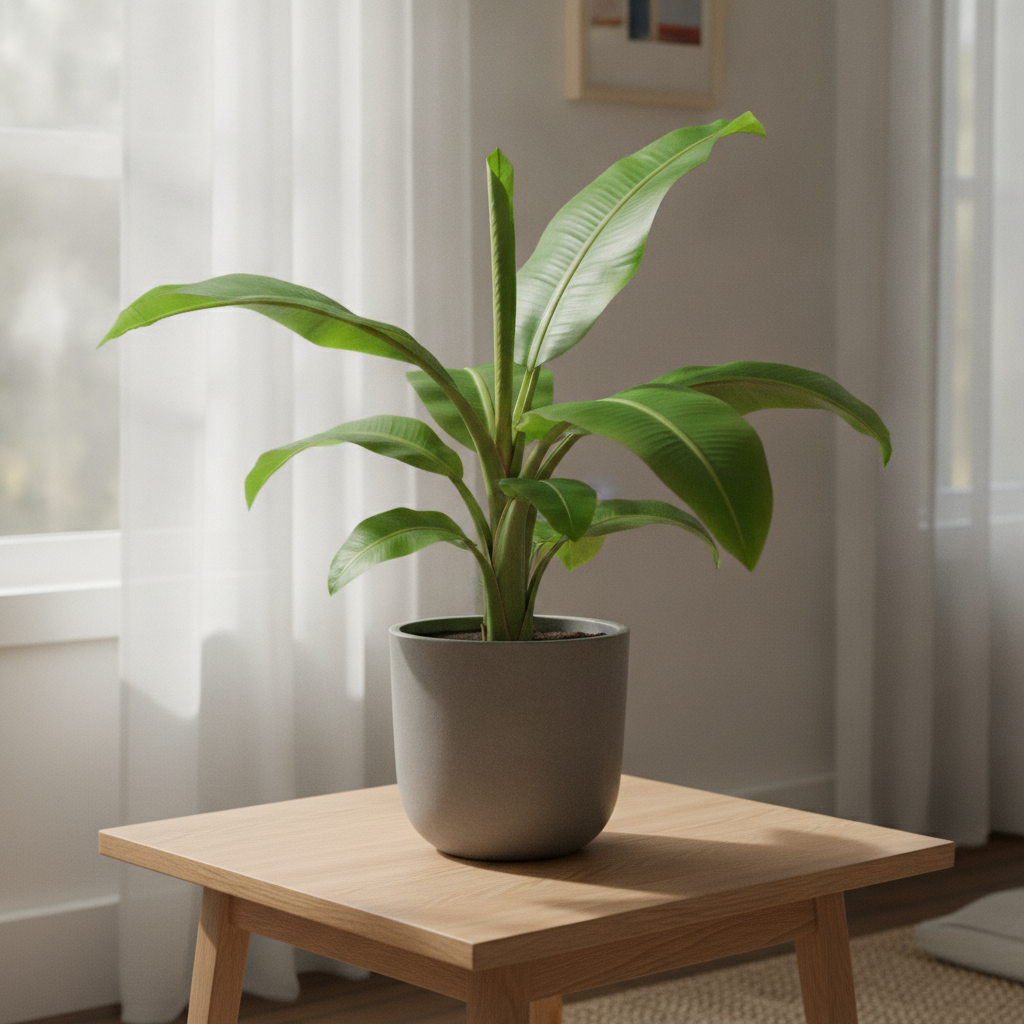
Nothing else on a windowsill unfurls quite like a dwarf banana plant. Where most houseplants add a leaf every few weeks, a happy Musa acuminata ‘Dwarf Cavendish’ pushes out a fresh paddle-shaped blade every seven to ten days in summer, each one rolled tight like a green cigar before it splits open and arches outward. It is the closest thing indoor gardening offers to watching a plant grow in real time, and in a bright enough room it will even reward you with a hand of small, intensely sweet bananas.
The ‘Dwarf Cavendish’ is the cultivar that makes all of this possible inside four walls. The standard Cavendish banana of the supermarket reaches four to five metres (13 to 16 feet); this compact selection tops out at a far more manageable 1.5 to 2.4 metres (5 to 8 feet) and often less in a pot, with a stocky pseudostem and short internodes that keep the whole plant dense and upright. Grown well it is undemanding. Grown in a dim corner with cautious watering it sulks, browns and stalls. This guide covers everything that separates a banana that merely survives from one that genuinely thrives.
In This Guide
- Quick reference
- Why grow a dwarf banana as a houseplant
- Light
- Watering
- Soil and potting
- Fertilising
- Propagation
- Pests and problems
- Varieties to know
- Frequently asked questions
Quick Reference
| Common name | Dwarf banana plant, Cavendish banana, dwarf Cavendish |
| Botanical name | Musa acuminata ‘Dwarf Cavendish’ |
| Family | Musaceae |
| Origin | Cultivated selection of Southeast Asian Musa acuminata; first widely grown in 19th-century England |
| Light | Very bright indirect to several hours of direct sun |
| Water | Keep evenly moist; never bone dry, never waterlogged |
| Humidity | High, 50 per cent or more preferred |
| Temperature | 18 to 30 degrees C (64 to 86 degrees F) |
| Soil | Rich, free-draining, moisture-retentive mix |
| Fertiliser | Heavy feeder; balanced or high-potassium feed every 1 to 2 weeks in growth |
| Mature size indoors | 1.5 to 2.4 metres (5 to 8 feet) tall |
| Growth rate | Very fast in warmth and light |
| Toxicity | Non-toxic to cats, dogs and people |
| Propagation | Division of suckers (pups) |
| Difficulty | Easy to moderate |
Why Grow a Dwarf Banana as a Houseplant
The dwarf banana earns its place indoors on sheer presence. A single plant reads as a piece of living architecture, its broad blades catching and softening light in a way no narrow-leaved plant can match. Because it is a herbaceous perennial rather than a tree, that “trunk” is not wood at all but a pseudostem, a tightly furled column of leaf bases that feels surprisingly cool and fleshy to the touch. Every new leaf emerges from the very centre of this column, pushing upward and outward, so the plant always looks fresh and actively growing.
The ‘Dwarf Cavendish’ specifically is a 19th-century selection with a storied past. It was propagated in the glasshouses of Chatsworth House in Derbyshire by the head gardener Joseph Paxton in the 1830s, named for William Cavendish, the sixth Duke of Devonshire, and from there distributed across the tropics. The vast majority of Cavendish bananas grown commercially today trace back to this lineage, which means the plant on your windowsill is a close genetic relative of the fruit in your kitchen. Its compact stature is not a gimmick; the short internodes and sturdy pseudostem make it one of the few bananas that can realistically fruit in a container.
There is a practical appeal too. The dwarf banana is non-toxic to cats, dogs and children, which sets it apart from many of the large statement plants people reach for, such as dieffenbachia or philodendron. It grows fast enough to feel rewarding within a single season, forgives the occasional mistake, and propagates itself for free by throwing up suckers around its base. For anyone who wants maximum tropical impact with minimal fuss, few plants offer a better return.
Pro Tip — Plan for scale: A dwarf banana that is thriving will outgrow a tabletop within a year. Give it a permanent floor position near your brightest window from the start, rather than planning to move a heavy, top-heavy plant later.
Light
Light is the single biggest factor that separates a thriving dwarf banana from a struggling one. In the wild this is a plant of open clearings and field edges in full tropical sun, and it carries that appetite indoors. To survive, a dwarf banana needs bright indirect light for most of the day. To thrive, fruit and hold its compact form, it wants several hours of genuine direct sun, ideally from a south or west-facing window in the Northern Hemisphere.
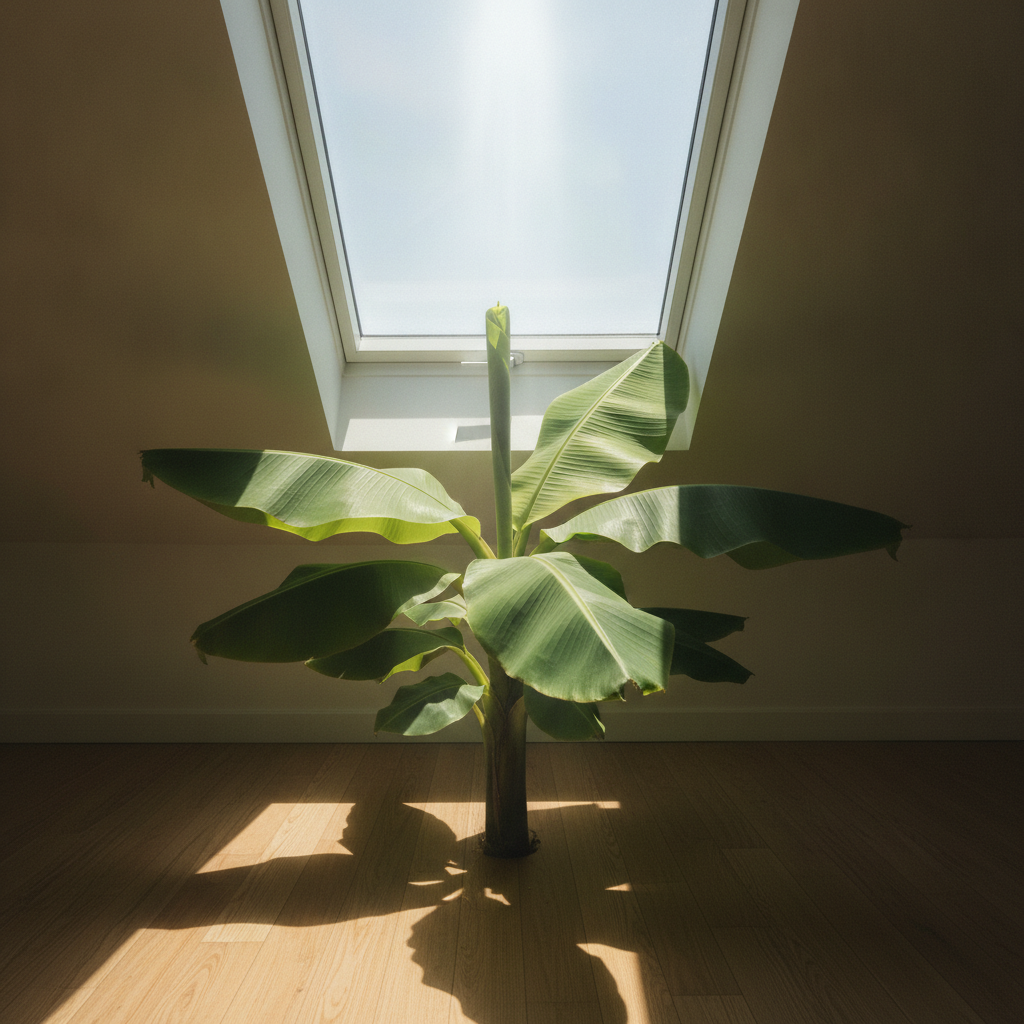
The plant tells you clearly when light is short. Leaves grow larger but thinner and floppier, the gaps between them stretch, and the rich green pales toward yellow. New blades may emerge undersized. By contrast, a banana in strong light produces shorter, stiffer, deeply coloured leaves held closer together, and it is in these conditions that flowering becomes a realistic prospect. If your brightest window still falls short, particularly through a dim northern winter, a full-spectrum LED grow light running for ten to twelve hours a day makes a genuine difference and will keep growth steady through the cold months.
One caveat applies to plants that have spent time in lower light. Banana leaves that developed in shade can scorch if moved abruptly into harsh midday sun, showing dry bleached patches. Acclimatise a newly bought or recently moved plant over a week or two, increasing exposure gradually, and the new leaves will form sun-hardened from the outset. Rotating the pot a quarter turn each week keeps growth symmetrical, since the plant leans noticeably toward its light source.
Watering
Bananas are thirsty plants with large leaves that transpire heavily, and watering is where the dwarf banana asks for more attention than a typical succulent-style houseplant. The aim is consistent, even moisture: the mix should stay damp like a wrung-out sponge, never dust dry and never sitting in a swamp. In active summer growth a healthy plant in bright light may need watering two or three times a week; in winter, with growth slowed, that might fall to once a week or less. Always let the top two to three centimetres (about an inch) of mix begin to dry before watering again, then water thoroughly until it runs from the drainage holes.
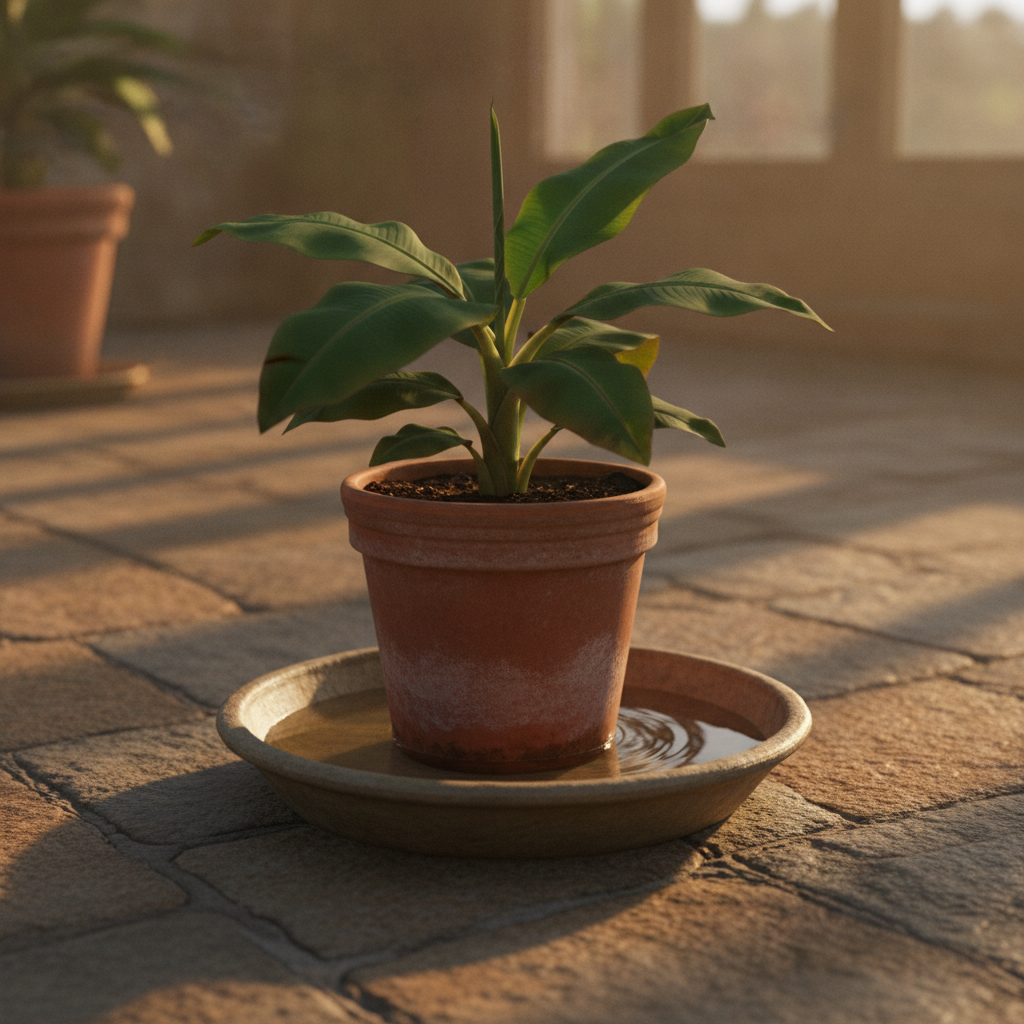
The danger at both extremes is real. Let the rootball dry out completely and the lower leaves yellow and crisp from the edges inward, sometimes within a day given how fast the plant transpires. Keep it permanently saturated in a pot without drainage and the roots suffocate and rot, producing a soft, blackening pseudostem base and a sour smell that is far harder to reverse. Because the plant drinks so much, the practical solution is a large, free-draining pot that holds moisture without becoming waterlogged, paired with attentive checking rather than a rigid schedule.
Humidity matters alongside watering. Banana leaves brown at the edges and tips in dry indoor air, especially near radiators or air conditioning. Aim for 50 per cent relative humidity or higher. Grouping plants together, standing the pot on a wide tray of damp pebbles, or running a humidifier nearby all help. Tepid water is gentler than cold, and if your tap water is hard or heavily chlorinated, rainwater or filtered water reduces the mineral spotting that can mar the large, prominent leaves.
Warning — Cold water shock: Bananas are tropical and dislike cold roots. Watering with cold water, or leaving the plant in a draughty spot below 15 degrees C (59 degrees F), can stall growth and cause sudden leaf yellowing even when moisture levels are correct.
Soil and Potting
The ideal banana mix performs a balancing act: rich and moisture-retentive enough to satisfy a hungry, thirsty plant, yet open enough that excess water drains away quickly and roots never sit in stagnant wet. A good starting point is a quality houseplant or general-purpose compost amended with around a third coarse material, such as perlite, fine bark or coarse grit, to keep the structure loose. Adding well-rotted compost or worm castings boosts the fertility bananas crave. The target pH is mildly acidic to neutral, roughly 5.5 to 7.0, which most peat-free houseplant composts fall within naturally.
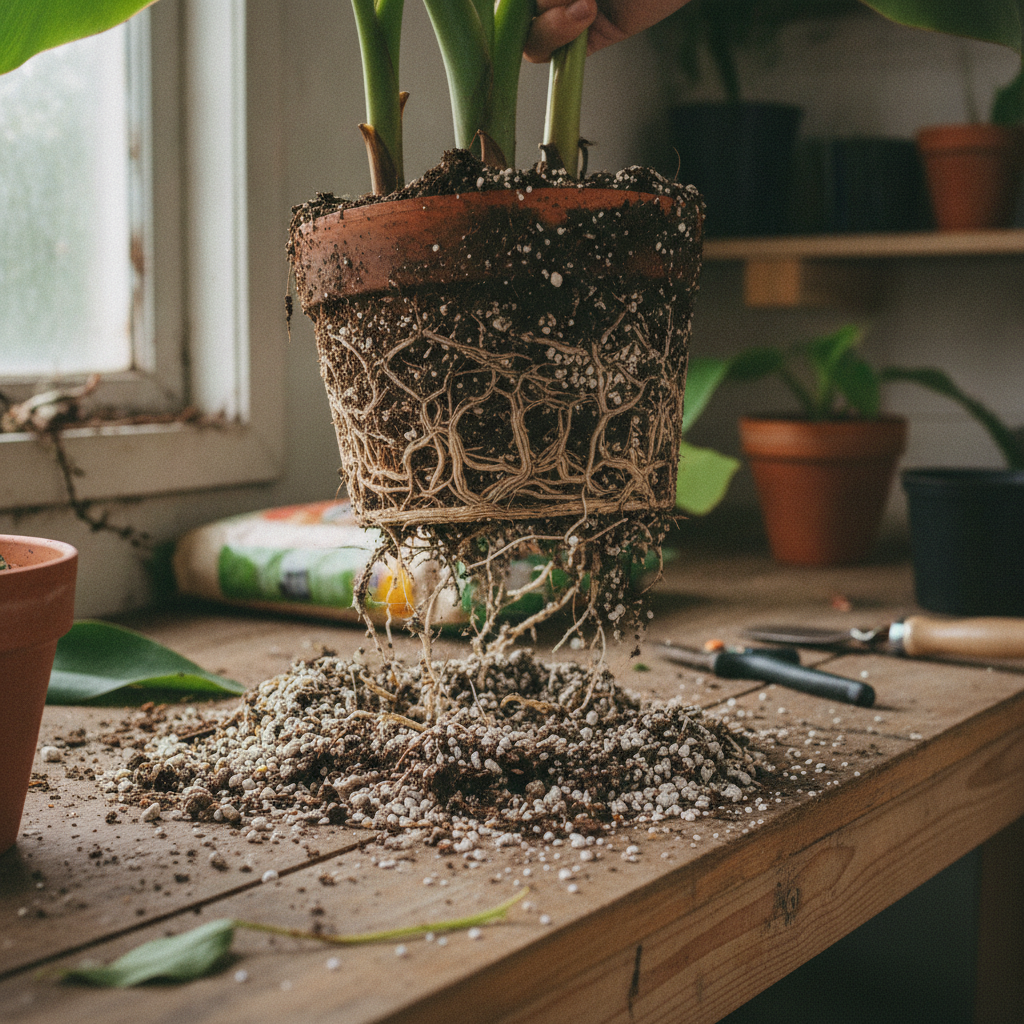
Pot choice supports the watering strategy. A container that is too small dries out constantly and restricts the vigorous root system, while one that is wildly oversized holds a reservoir of wet mix the roots cannot reach, inviting rot. Move up one pot size at a time, choosing a pot two to four centimetres (about an inch or two) wider than the current one, and make sure it has generous drainage holes. Terracotta breathes and helps prevent overwatering, though it dries faster and may need more frequent topping up; a heavy or wide-based pot also counters the plant’s tendency to become top-heavy.
Repot a fast-growing dwarf banana every spring, or whenever roots circle the base and emerge from the drainage holes. Repotting is also the moment to inspect for suckers and divide if you wish. Settle the plant at the same depth it grew before, firming the fresh mix gently around the rootball to remove air pockets, then water it in well. Spring and early summer are the best times, giving the plant a full season of warmth and light to re-establish before growth slows.
Fertilising
If there is one area where new growers under-deliver, it is feeding. Bananas are among the hungriest plants you can keep indoors, building enormous leaf area at speed, and they need a steady supply of nutrients to match. During the active growing season from spring through early autumn, feed every one to two weeks with a balanced liquid fertiliser, or a formula slightly higher in potassium if you are aiming for fruit, since potassium drives flowering and fruit development. Dilute to the strength stated on the label, applied to already-moist mix to avoid scorching the roots.
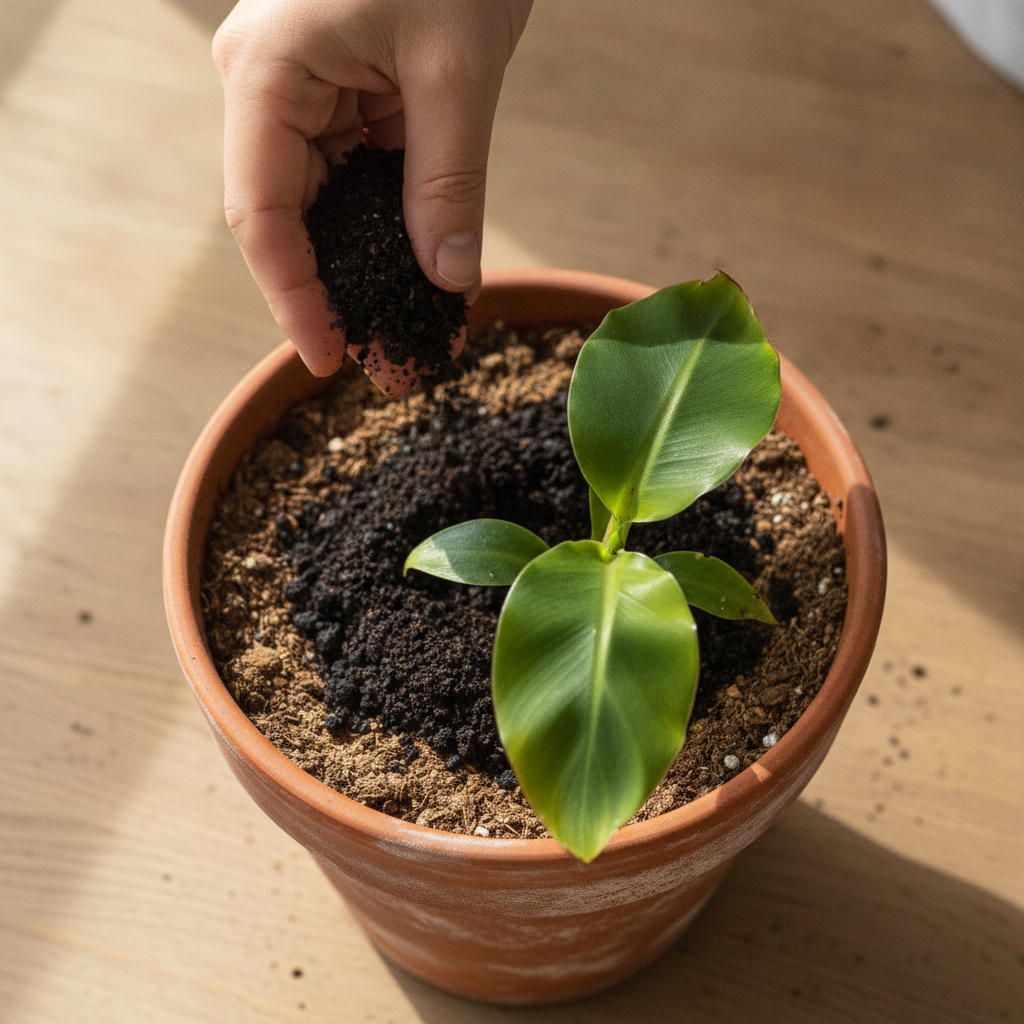
Organic approaches suit bananas well and reduce the risk of overfeeding. A spring top-dressing of worm castings or well-rotted compost releases nutrients gradually with every watering, and a monthly drench of dilute compost tea or seaweed feed keeps trace elements topped up. Magnesium deficiency, which shows as yellowing between the veins of older leaves while the veins stay green, is common in fast-growing bananas and responds quickly to a dose of dilute Epsom salts, roughly a teaspoon per litre, applied once or twice in the growing season.
Ease off as the days shorten. Through late autumn and winter, when growth naturally slows, reduce feeding to once a month or stop entirely until spring. Continuing to feed heavily into a dim, cool winter simply allows unused fertiliser salts to accumulate in the mix, which can burn root tips and brown leaf margins. If you suspect salt build-up, flush the pot thoroughly with plain water a few times, letting it drain completely, to leach the excess away.
Pro Tip — Read the oldest leaves: Bananas signal nutrient needs through their lower foliage first. Even yellowing of whole older leaves often means general hunger, while a green-veined yellow pattern points specifically to magnesium. The newest central leaf should always look the healthiest.
Propagation
Dwarf bananas do not propagate from leaf or stem cuttings the way many houseplants do. Instead they multiply naturally by suckers, also called pups, which are baby plants that emerge from the underground rhizome around the base of the parent. This is the only reliable way to propagate a named cultivar like ‘Dwarf Cavendish’ at home, and it produces an exact clone of the mother plant. The parent helpfully does most of the work; your job is simply to separate the offsets at the right moment.
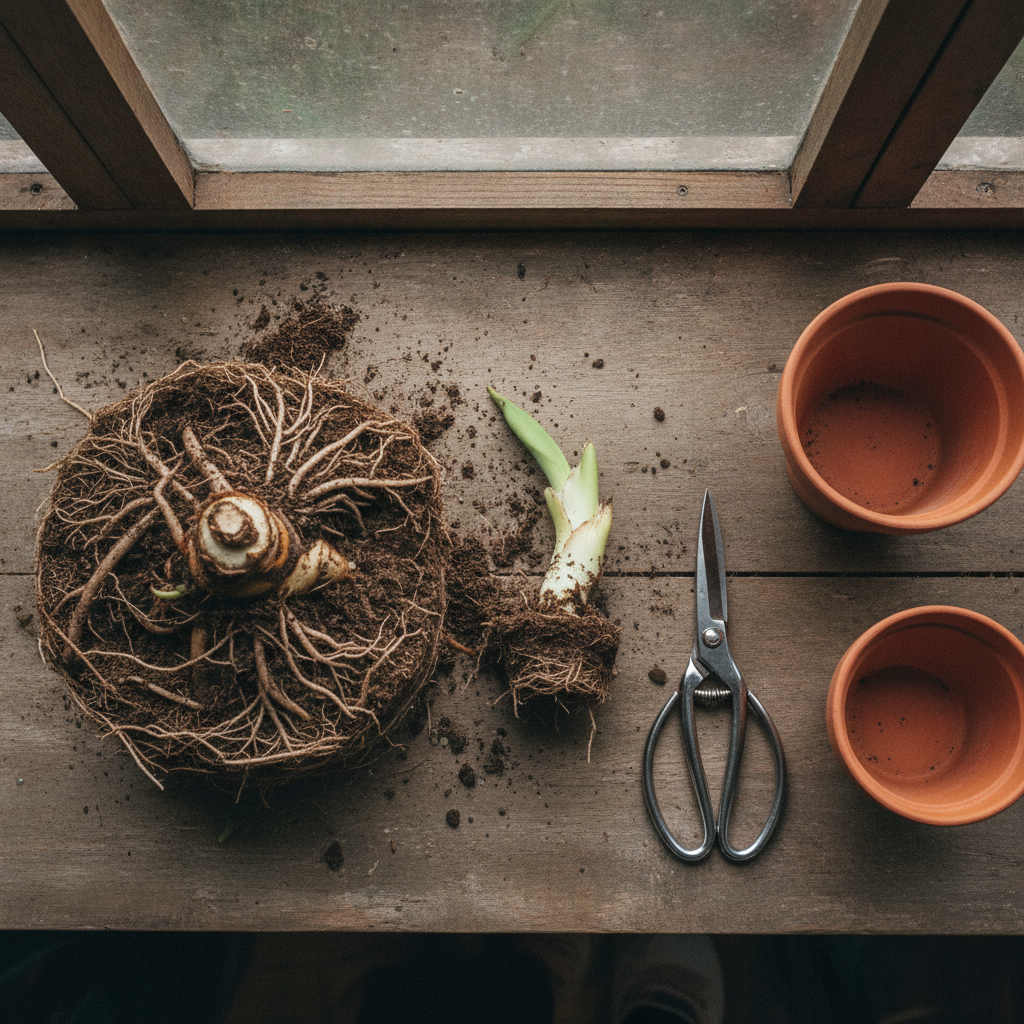
The best pups to remove are so-called sword suckers, which have narrow, spear-like early leaves and a substantial share of root, rather than broad-leaved suckers that depend more heavily on the parent. Wait until a pup is at least 20 to 30 centimetres (8 to 12 inches) tall with some roots of its own. The job is cleanest done at repotting time, when the whole rootball is out of the pot and the connections are visible.
- Water the parent the day before so it is well hydrated and not stressed.
- Ease the whole plant from its pot and brush away enough mix to expose where the pup joins the parent rhizome.
- Using a clean, sharp knife or spade, cut downward through the rhizome to separate the pup, keeping as much of its own root and a section of firm rhizome as possible.
- Pot the division into a small container of the same rich, free-draining mix, settling it at its original depth.
- Water in well and keep the new plant warm, humid and in bright indirect light while it establishes, easing it into stronger sun once new growth appears.
Expect a short pause while the division recovers; a pup may sit still for a few weeks before its first new leaf signals that fresh roots have taken hold. Keeping it slightly on the drier side at first, never bone dry but not sodden, reduces the risk of the cut surface rotting. Within a season a healthy division will be growing as vigorously as its parent.
Pests and Problems
Indoors, the dwarf banana’s main adversary is dry air and the pests that thrive in it. Spider mites are the most persistent threat, favouring the warm, dry conditions of a heated room; they speckle the leaves with fine pale stippling and spin almost invisible webbing in the leaf joints. Because banana leaves are large and exposed, mites can build up quickly, so inspect the undersides regularly. Raising humidity, wiping the foliage and treating early with a horticultural soap or neem oil keeps them in check.
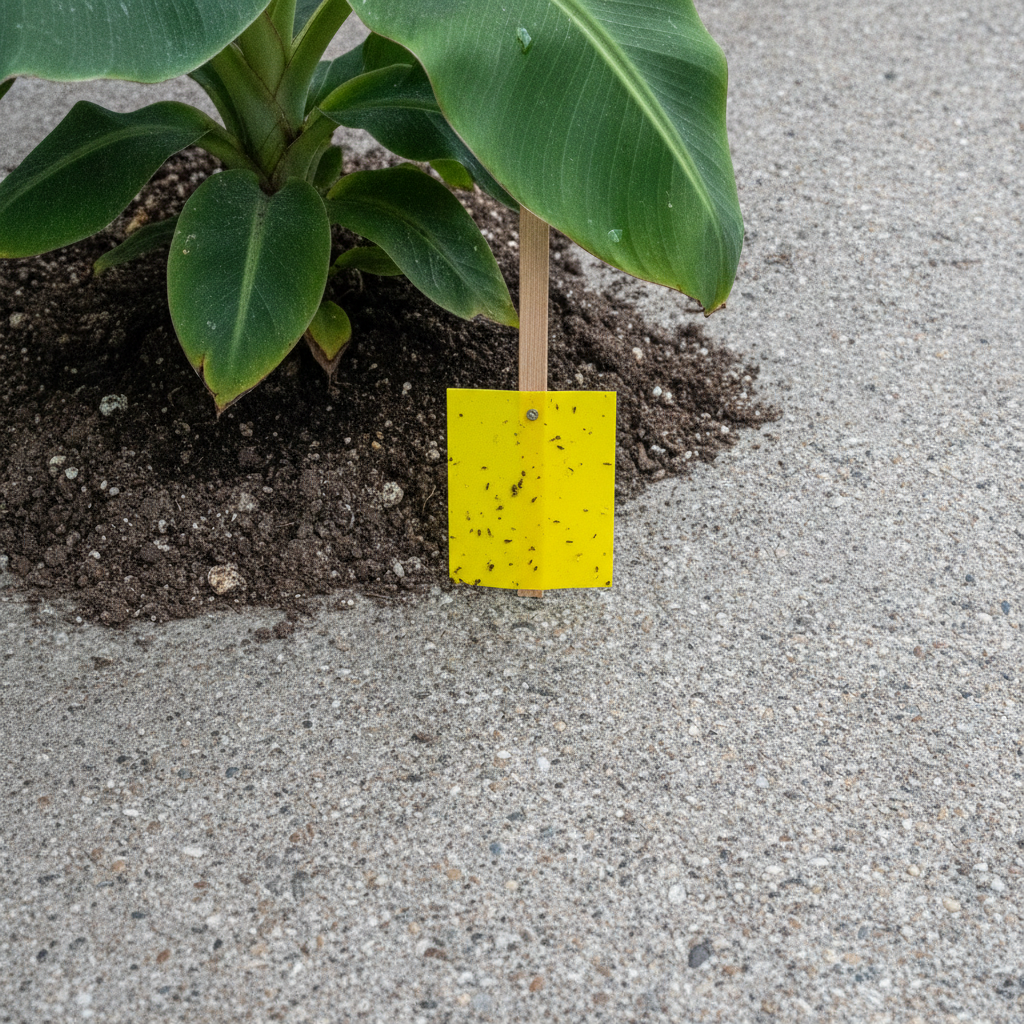
Aphids and mealybugs also appear from time to time, clustering on soft new growth and in the furled heart of the plant. Aphids are easily rinsed off or wiped away; mealybugs, which look like small tufts of cotton wool, are dealt with by dabbing each one with a cotton bud dipped in surgical spirit. Fungus gnats, the small flies that hover around the pot, are a symptom of mix that stays too wet at the surface. Letting the top layer dry between waterings and using yellow sticky traps breaks their breeding cycle without harming the plant.
Most banana troubles, though, are cultural rather than pest-driven, and the leaves read like a diagnostic chart. Brown, crispy leaf edges point to low humidity or under-watering. Whole lower leaves yellowing usually means either hunger or inconsistent moisture, and is partly natural as the plant retires its oldest foliage. A soft, darkening pseudostem base signals root rot from overwatering and is the most serious issue, best avoided by getting drainage and watering rhythm right. Pale, stretched, floppy new growth almost always comes down to insufficient light. Bleached dry patches in the centre of a leaf indicate sunscald from a too-rapid move into direct sun.
Pro Tip — Older leaves will always go: A banana constantly retires its lowest leaf as it pushes a new one from the centre. One yellowing bottom leaf at a time, with healthy new growth above, is normal ageing and not a sign of trouble. Simply trim it away once it has fully browned.
Varieties to Know
The ‘Dwarf Cavendish’ is the benchmark indoor banana, but it sits within a small group of compact ornamental cultivars worth knowing if you want something even smaller or more colourful. The two below are the most widely available and best suited to container life.
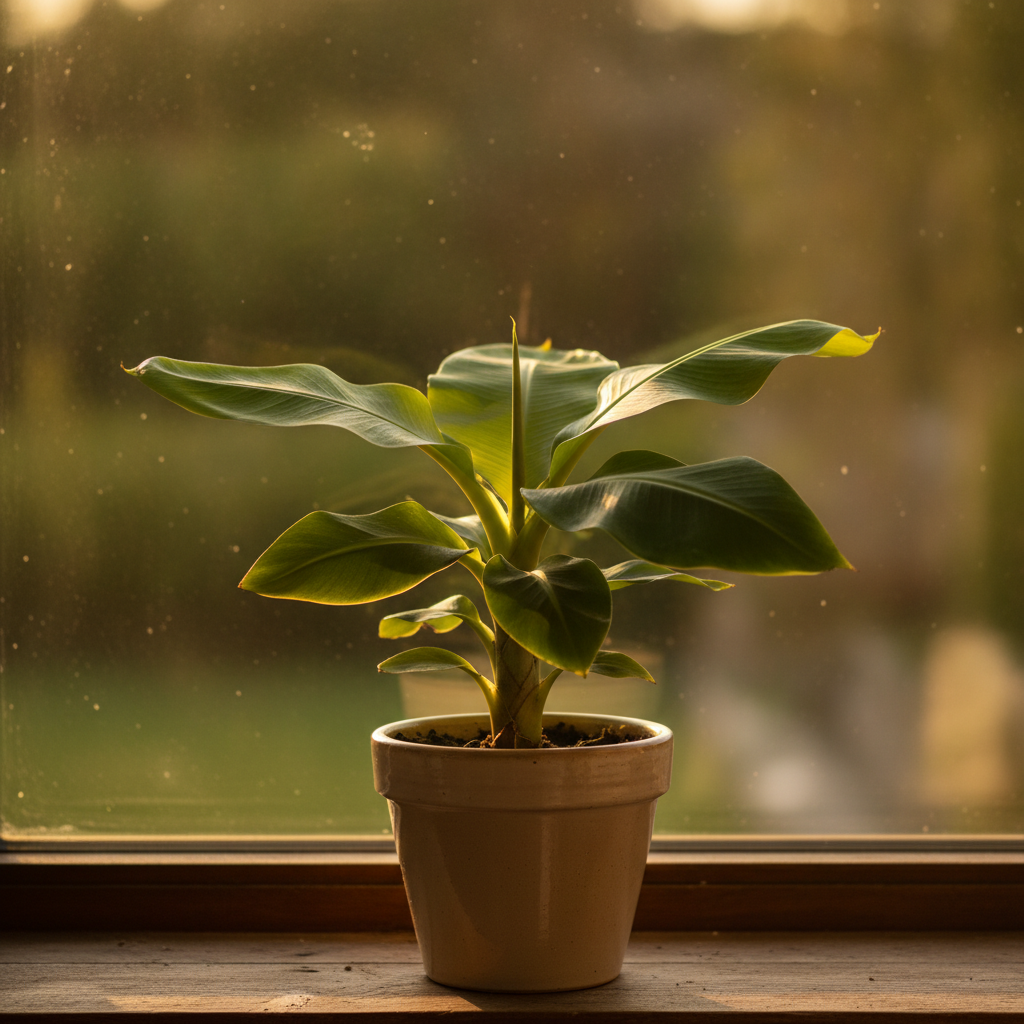
Super Dwarf Cavendish
An even more compact selection that tops out around 60 to 90 centimetres (2 to 3 feet), with broad glossy mid-green paddle leaves on a short, squat pseudostem. Its small stature makes it the most realistic choice for a sunny windowsill or a smaller room, and it can fruit at a remarkably modest height given strong light and steady feeding.
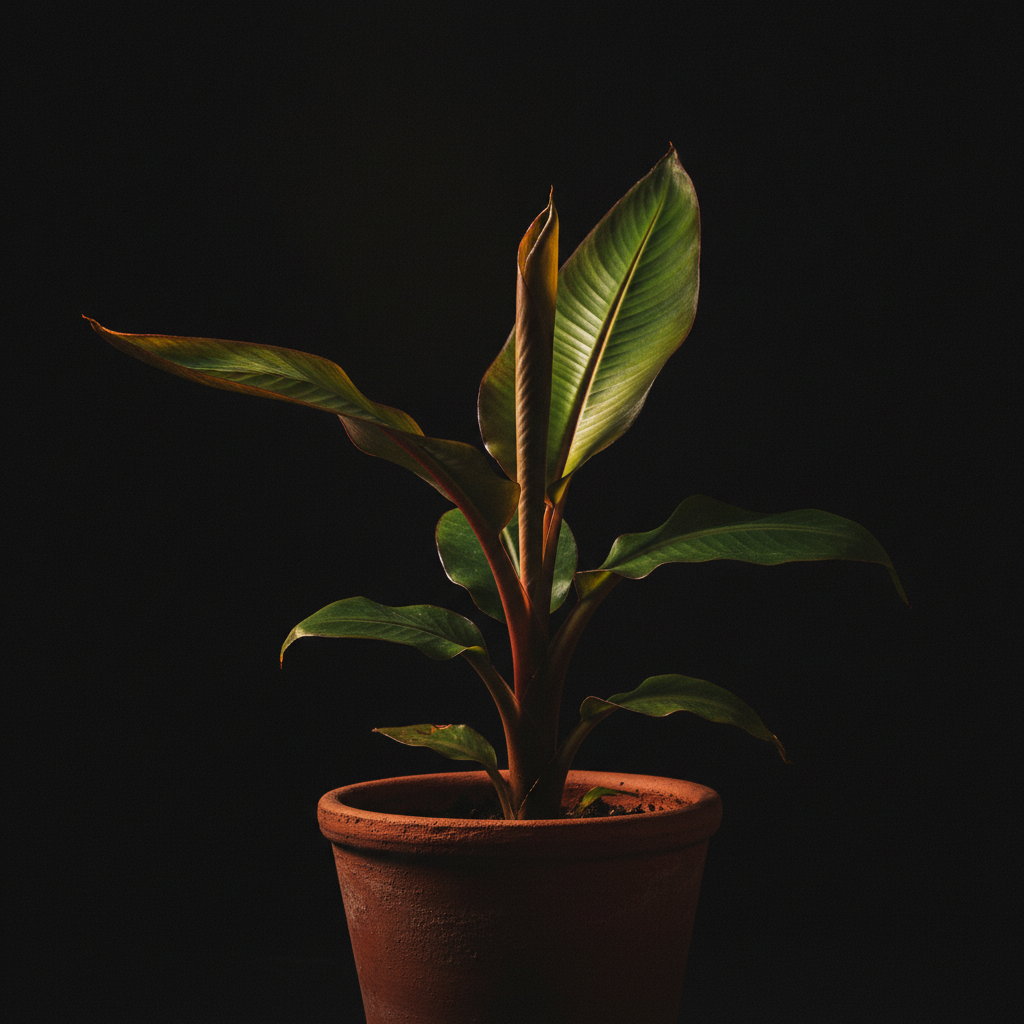
Dwarf Red
Grown as much for its colour as its fruit, the dwarf red banana flushes its young leaves and pseudostem with bronze to burgundy tones that deepen in strong light. It tends to run a little taller than the Cavendish forms and produces shorter, reddish-skinned fruit. Care is identical, though the rich leaf colour is at its best with several hours of direct sun.
Frequently Asked Questions
Will a dwarf banana plant actually produce fruit indoors?
It can, and the ‘Dwarf Cavendish’ is one of the few bananas realistically able to do so in a large container. Fruiting requires near-ideal conditions: several hours of direct sun daily, warmth, generous feeding, ample water and a mature plant, usually after a year or more of strong growth. The bananas it sets are small but genuinely sweet. Many growers keep the plant purely for its foliage, treating any fruit as a bonus rather than the goal.
Why are the edges of my banana leaves turning brown?
Brown, crispy edges are almost always a sign of low humidity, under-watering, or both, often worsened by proximity to a radiator or air-conditioning vent. Raise the humidity around the plant, keep the mix evenly moist, and move it away from direct heat sources. A little edge browning on the large leaves is hard to avoid entirely indoors and does not harm the plant’s overall health.
Is the dwarf banana plant safe around pets?
Yes. The banana plant is non-toxic to cats, dogs and people, making it one of the safer large statement plants for a household with curious animals or young children. As with any plant, nibbled foliage may cause mild stomach upset simply through the volume of fibre, but it contains no toxic compounds.
My banana’s lower leaves keep yellowing. Is it dying?
Usually not. Bananas naturally retire their oldest, lowest leaf each time they push a new one from the centre, so a single yellowing bottom leaf alongside healthy new growth is normal. Worry only if several leaves yellow at once, if the newest central leaf is affected, or if the pseudostem base feels soft, which would point to a watering, feeding or rot problem rather than ordinary ageing.
How fast does a dwarf banana grow?
Very fast in the right conditions. In warmth and bright light through the growing season, a healthy plant can unfurl a new leaf every week to ten days and gain noticeable height in a single summer. Growth slows or pauses in winter, particularly if light and warmth drop, and resumes with vigour as spring returns.
What should I do if my banana gets too tall?
Unlike a woody plant, a banana cannot simply be pruned shorter, since cutting the pseudostem removes the growing point. The natural solution is built into the plant: each main stem fruits once and then dies back, while suckers rise to replace it. To manage size, allow a younger pup to take over and remove the spent or oversized parent stem at the base, keeping a continuous cycle of fresh, appropriately sized growth.
Give a dwarf banana plant the light, water and food it genuinely wants and it will repay you faster than almost any other houseplant, turning a bright corner into something that feels unmistakably tropical. Keep an eye on humidity, feed it generously through the growing season, and let its suckers carry the plant forward year after year.






