
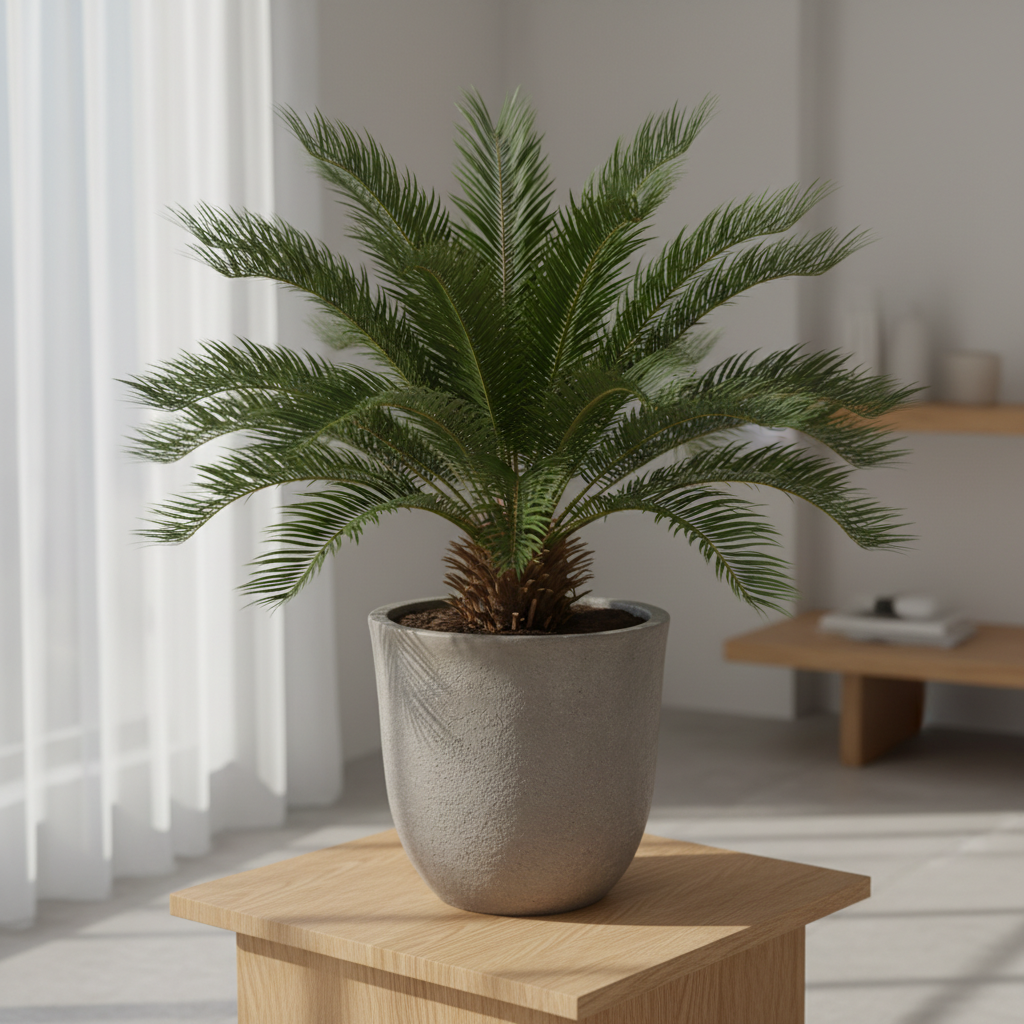
Few houseplants carry as much prehistoric gravity as the sago palm. Despite the name, Cycas revoluta is not a palm at all but a cycad, a member of an ancient lineage of seed plants that flourished alongside the dinosaurs and has changed remarkably little in roughly 280 million years. Native to the warm, rocky coastlines of southern Japan, including Kyushu and the Ryukyu Islands, it has become one of the most widely grown ornamental cycads in the world, prized for the architectural symmetry of its stiff, glossy, dark-green crown. Each plant produces a tidy rosette of pinnate fronds that radiate from a stout, shaggy trunk, giving even a young specimen the bearing of a miniature tree.
That ancient pedigree comes with an ancient temperament: the sago palm is slow, deliberate, and almost indestructible once it is settled, yet quietly unforgiving of the two things it cannot abide, soggy roots and impatience. A plant that has survived three mass extinctions does not need to be coddled, but it does need to be understood. This guide covers everything required to move a sago palm from merely surviving on a windowsill to genuinely thriving as a long-lived centrepiece, from the precise balance of light and water it prefers to its serious toxicity, its nutrient quirks, and the patient art of propagating new plants from its offsets.
Contents
- Quick Reference
- Why the Sago Palm Makes a Rewarding Houseplant
- Light Requirements
- Watering & Humidity
- Soil, Potting & Repotting
- Fertilising
- Propagation
- Pests & Diseases
- Popular Varieties
- Frequently Asked Questions
Quick Reference: Sago Palm at a Glance
| Light | Bright light, including several hours of direct sun; bright indirect indoors |
| Watering | Allow the top third of the pot to dry out; water thoroughly, then leave it alone |
| Temperature | 15 to 24 degrees Celsius (59 to 75 Fahrenheit); keep above 10 degrees Celsius (50 Fahrenheit) |
| Humidity | Average household humidity, around 40 to 50 percent, is fine |
| Fertiliser | Light feeder; a balanced or palm feed with magnesium and manganese, spring to late summer |
| Toxicity | Highly toxic to pets and people; all parts, especially the seeds, can cause liver failure |
Why the Sago Palm Makes a Rewarding Houseplant
The appeal of the sago palm begins with its silhouette. A mature crown of fronds is so evenly spaced and so geometrically precise that the plant looks almost designed, a living sculpture that holds its form year-round without dropping leaves or sprawling out of shape. Unlike fast-growing foliage plants that demand constant pruning and repositioning, a sago palm changes slowly and predictably, often pushing out a single flush of new fronds each year in a dramatic, coordinated burst. For anyone who wants a statement plant that stays composed, it is hard to beat.

Its second great virtue is resilience. The sago palm stores water and energy in its swollen trunk, or caudex, which lets it shrug off the occasional missed watering and recover from setbacks that would kill a thirstier plant. This same reserve makes it forgiving of the irregular care that comes with busy lives and long absences. It tolerates a wide range of indoor conditions, lives for decades, and can be passed down within a family as a genuine heirloom. The trade-off for all this toughness is its single most important drawback, which every owner must take seriously before bringing one home.
Important — Toxicity: The sago palm is one of the most poisonous plants commonly sold for the home. Every part contains the toxin cycasin, with the seeds being the most concentrated and dangerous. Ingestion can cause vomiting, liver failure, and death in dogs, cats, and humans, and even a small amount can be fatal to a curious pet. Keep it well out of reach of animals and children, wash your hands after handling it, and reconsider keeping one at all in a household with pets that chew on plants.
Light Requirements
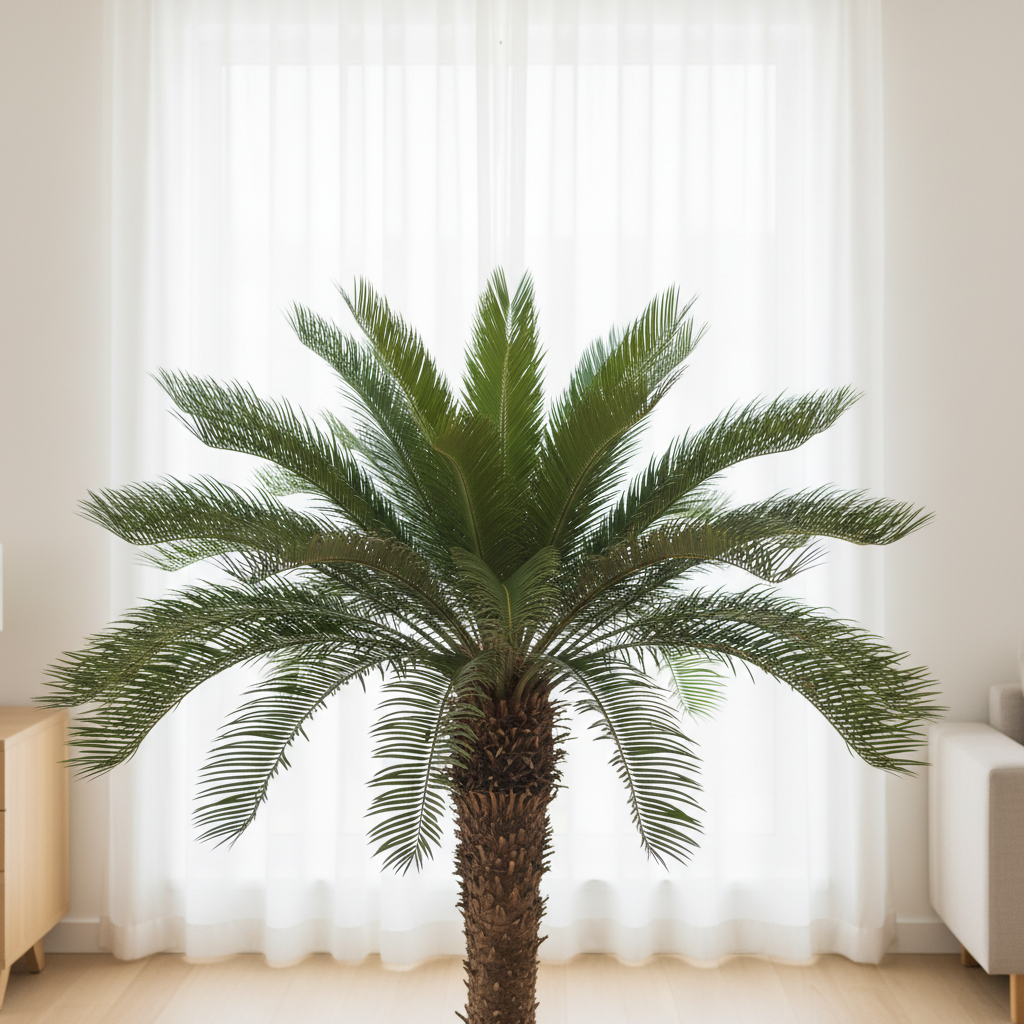
Light is the single greatest lever you have over a sago palm’s health and appearance. In its native habitat it grows in open, sun-drenched, rocky ground, so it is built to handle far more direct light than most foliage houseplants. Indoors, it wants the brightest spot you can give it, and it will reward that brightness with compact, sturdy fronds and a tighter, more symmetrical crown.
The ideal indoor position is directly in front of, or very close to, a bright window where the plant receives several hours of sun each day plus ample bright, indirect light for the rest. A sago palm kept in dim conditions does not die quickly, but it slowly declines: new fronds emerge longer, thinner, and weaker as they stretch towards the light, the crown loses its tight geometry, and the once-a-year growth flush may fail to appear at all. Bright light is not a luxury for this plant, it is the difference between a stunted survivor and a thriving specimen.
Light Levels Explained
Indoor light is far weaker than most people assume, and it falls away sharply with every step back from a window. The table below translates the usual descriptive terms into approximate light levels and the practical outcome you can expect for a sago palm in each.
| Light Category | Approx. Level | Typical Location | Outcome |
|---|---|---|---|
| Direct sun | 20,000 lux and above | On a south or west sill, unobstructed | Excellent; tight, compact, vigorous fronds |
| Bright indirect | 10,000 to 20,000 lux | Just beside a bright window | Very good; healthy steady growth |
| Medium | 5,000 to 10,000 lux | A metre or two from a window | Tolerated; slower, slightly looser growth |
| Low | 1,000 to 5,000 lux | Interior wall, north room | Poor; stretched fronds, no annual flush |
| Very low | Below 1,000 lux | Hallway, windowless corner | Decline; gradual loss of the plant |
Window Orientation and Placement
South-facing window: The best choice in the northern hemisphere. A sago palm placed in or very near a south window receives the long hours of strong light it craves, producing the most compact, robust growth. Only in the most intense summer glare behind unscreened glass might the newest, softest fronds need a sheer curtain to prevent scorching.
East-facing window: A reliable option offering gentle direct morning sun followed by bright light. Growth will be slightly slower than at a south window but still healthy, and the risk of leaf scorch is low.
West-facing window: Good, providing strong afternoon sun. Watch that the combination of hot afternoon light and a warm room does not dry the pot out too rapidly in summer, and rotate the plant occasionally so it does not lean.
North-facing window: The weakest position and best avoided for long-term growth. A sago palm will hang on at a north window but rarely thrives there, growing thin and reluctant. If north light is all you have, supplement it with a grow light.
Pro Tip — Rotate for Symmetry: The sago palm’s great selling point is its even, radial crown, and that symmetry depends on light reaching the plant from all sides. Give the pot a quarter turn every week or two so each frond receives equal light, and the crown will stay balanced instead of leaning towards the window.
How Light Affects the Annual Flush
Unlike plants that grow more or less continuously, a sago palm typically produces all its new fronds in a single coordinated flush, often once a year in spring or early summer. The energy for that flush is banked over the preceding months, and it is banked through photosynthesis, which means through light. A plant kept bright through autumn and winter has the reserves to push out a strong ring of new fronds; a plant kept dim may skip its flush entirely or produce only a few weak leaves. If you want the satisfying annual display of fresh, unfurling fronds, sustained bright light all year is the price of admission.
Warning — Direct Sunlight: While established sago palms love sun, a plant moved abruptly from a dim shop or a shaded interior into full, hot summer sun can scorch. The soft new fronds are especially vulnerable. Acclimatise the plant over two to three weeks, increasing its sun exposure gradually, to avoid bleached or burnt patches that will not recover.
Artificial Lighting
Because the sago palm demands so much light, it is an excellent candidate for supplementary growing under lamps, particularly in darker rooms or through short winter days. A full-spectrum LED grow light positioned 30 to 45 centimetres (12 to 18 inches) above the crown, run for 10 to 12 hours a day, can substitute for or top up natural light effectively. Given the plant’s slow metabolism it does not need an extravagant setup, but consistent, bright artificial light will keep a sago palm in good condition through a sunless winter and help maintain that prized compact form.
Seasonal Adjustments
As light intensity drops in autumn and winter, move the plant to the brightest available position and resist the temptation to keep feeding and watering on a summer schedule, as the reduced light slows growth to a near halt. In spring, as the new flush approaches, return the plant to its sunniest spot and watch for the central crown to begin swelling, the first sign that fresh fronds are on the way.
Watering & Humidity
If light is the lever that determines how well a sago palm grows, watering is the one that most often determines whether it lives or dies. This is a plant adapted to lean, fast-draining ground that dries between rains, and its thick trunk lets it store moisture against drought. The cardinal rule is simple: a sago palm would far rather be too dry than too wet. The overwhelming majority of sago palms that fail indoors are killed not by neglect but by kindness, drowned in soil that stays perpetually damp.
When to Water
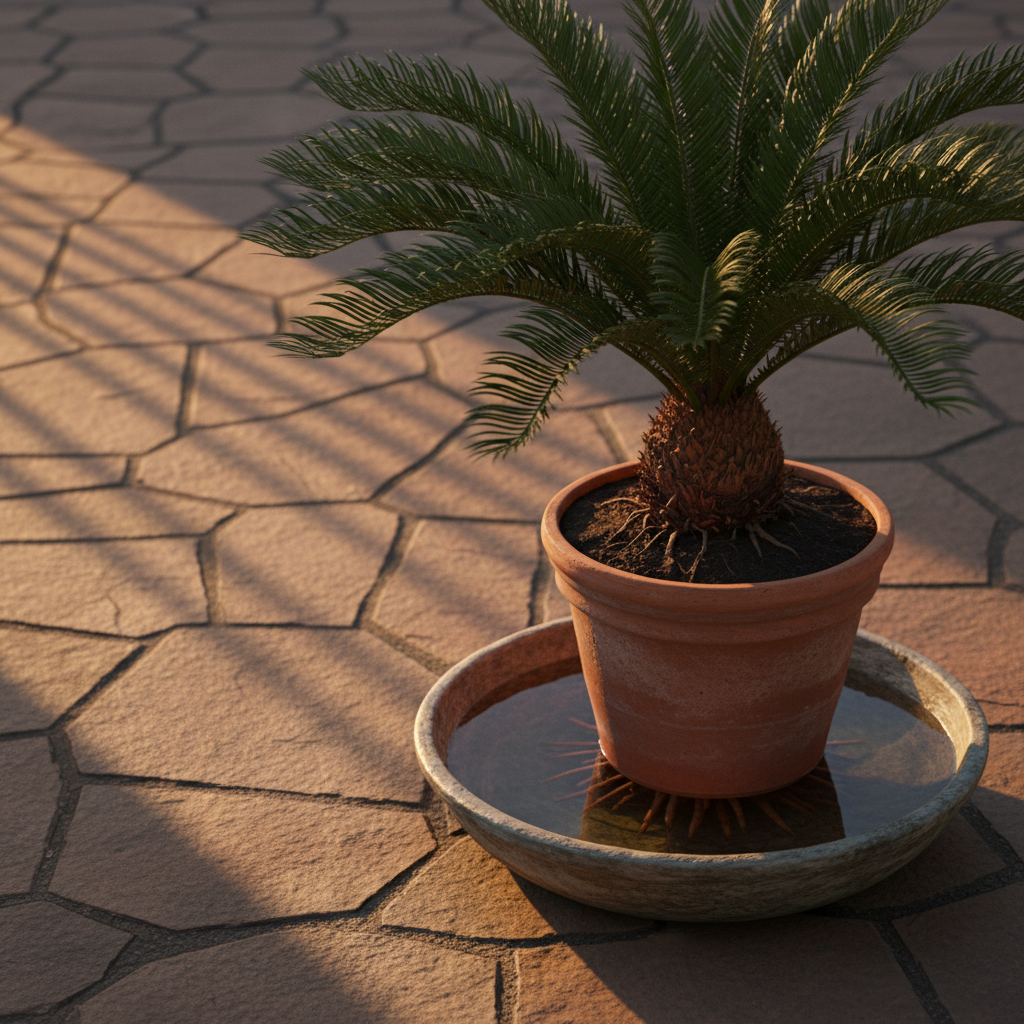
The reliable trigger for watering is dryness, not the calendar. Wait until the top third of the pot has dried out completely before watering again, and check by pushing a finger several centimetres into the soil or by lifting the pot to feel its weight, which drops noticeably as the mix dries. In a bright, warm room during the growing season this might mean watering every week to ten days; in winter, in cooler and dimmer conditions, the same pot may go three or four weeks between drinks.
Adjust your rhythm to the conditions rather than fixing it. Higher light, warmth, and active growth all speed drying and call for more frequent watering, while cool temperatures, low light, and winter dormancy slow everything down. When in doubt, wait. A sago palm will tell you it is thirsty long before it is in danger, and a few extra dry days do far less harm than one watering too many.
Pro Tip — Weigh the Pot: The most accurate way to judge watering is by weight. Lift the pot just after a thorough watering to learn its heavy weight, then lift it again when the soil is properly dry. After a week of this you will be able to tell at a glance whether your sago palm needs water, with no guesswork and no risk of overwatering.
How to Water Correctly
- Check that the top third of the soil is dry before you begin; if it is still damp, wait.
- Water thoroughly, applying water evenly over the surface or from below until it is fully saturated.
- If watering from the top, continue until water runs freely from the drainage holes, ensuring the whole root ball is wetted.
- Let the pot drain completely for several minutes so no excess water is held at the base.
- Tip away any water that collects in the saucer or cover pot; never leave the plant standing in water.
- Wait until the soil has dried to the correct depth again before the next watering, however long that takes.
Signs of Overwatering vs. Underwatering
| Symptom | Overwatering | Underwatering |
|---|---|---|
| Frond colour | Widespread yellowing, often starting at the base and spreading | Older, lower fronds yellow first while the crown stays green |
| Frond texture | Soft, limp, sometimes mushy at the base | Dry, crisp, browning at the tips |
| Soil | Stays wet for many days, may smell sour | Bone dry, pulling away from the pot edges |
| Roots and trunk | Dark, soft, foul-smelling; a spongy caudex is a grave sign | Firm but dry; the trunk may feel slightly shrunken |
| New growth | Emerging fronds rot or fail to develop | Flush is delayed or smaller than usual |
Warning — Root Rot: Root and crown rot is the sago palm’s most common cause of death, and it advances silently below the soil before any frond shows distress. Once the trunk turns soft and smells sour the plant is very difficult to save. If you suspect rot, unpot immediately, cut away all blackened tissue with a sterile blade, dust the wounds with a fungicide or cinnamon, and repot into fresh, barely moistened, fast-draining mix. Prevention through restraint is far easier than any cure.
Humidity Requirements
The sago palm is refreshingly undemanding about humidity, one more reason it suits ordinary homes so well. Coming from breezy coastal habitats rather than steamy jungles, it is perfectly content in average household air of around 40 to 50 percent relative humidity and has no need for the misting and humidifiers that pamper tropical foliage plants.
That said, very dry air, particularly the parched conditions near radiators and forced-air heating in winter, can leave frond tips brown and crisp over time. This is rarely serious, but if you notice persistent tip browning that is not explained by underwatering or fertiliser salts, low humidity may be a contributing factor worth easing.
If you do want to raise humidity slightly, the gentlest methods are to group the plant with others, to stand the pot on a wide tray of damp pebbles with the pot itself sitting clear of the water, or to run a small humidifier nearby during the driest months. Avoid heavy, frequent misting, which does little for the air around such a stiff-leaved plant and can encourage fungal spotting on the fronds.
Water Quality
Sago palms are reasonably tolerant of ordinary tap water, but they can be sensitive to a heavy build-up of salts and minerals over the long term, which may show as browning tips. If your tap water is very hard or heavily chlorinated, using filtered water, collected rainwater, or tap water left to stand overnight will reduce the mineral load. Flushing the pot thoroughly every few months, by watering generously until plenty drains away, helps wash accumulated salts out of the soil.
Soil, Potting & Repotting
Everything about caring for a sago palm comes back to drainage, and drainage begins with the soil. Because the plant is so prone to root rot in wet conditions, the growing medium must let water pass through quickly while holding just enough moisture to keep the roots alive between waterings. A heavy, water-retentive potting compost, the kind that suits ferns and tropical foliage, is precisely the wrong choice and a frequent cause of failure.
Ideal Soil Composition
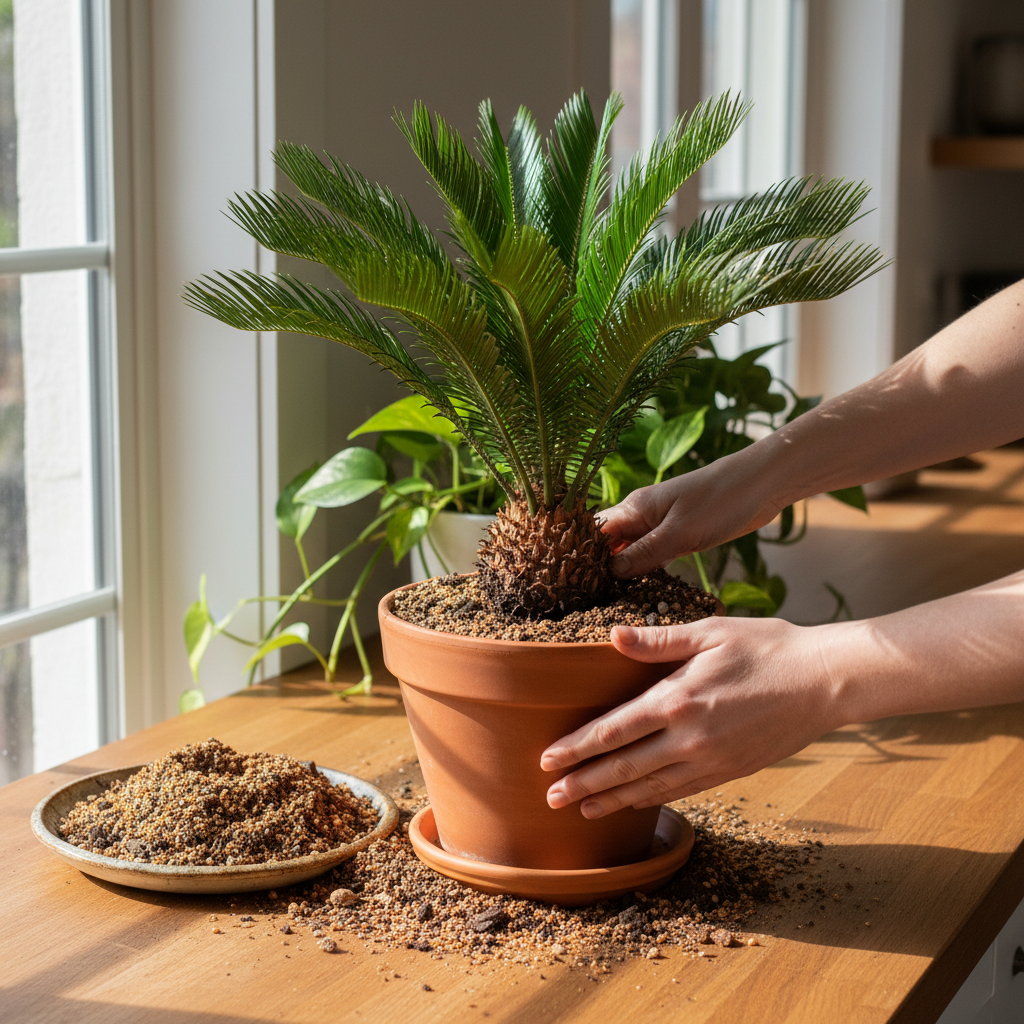
The aim is a mix that is open and gritty, with plenty of coarse material to create air pockets and let water drain freely. A good starting point is a quality cactus or palm compost, opened up further with extra grit, perlite, or pumice so that roughly a third to a half of the volume is coarse, free-draining material. The table below breaks down a reliable blend and the job each component does.
| Component | Proportion | Function |
|---|---|---|
| Cactus or palm compost | 50 percent | Base structure with modest moisture and nutrient holding |
| Coarse grit or pumice | 25 percent | Sharp drainage and weight for a top-heavy plant |
| Perlite | 15 percent | Air pockets and lightweight aeration |
| Composted bark or coir | 10 percent | A little structure and slow-release organic matter |
The sago palm prefers a soil that runs from slightly acidic to neutral, roughly pH 5.5 to 6.5, which most cactus and palm composts naturally provide. There is no need to chase an exact figure, but very alkaline soils can lock up the micronutrients the plant needs and are worth avoiding.
Pro Tip — Quick Mix Recipe: For a fuss-free blend, combine two parts of a good cactus and succulent compost with one part coarse perlite and one part fine grit or pumice. The result drains in seconds, resists compaction, and gives a sago palm exactly the lean, airy footing it evolved for.
Choosing the Right Pot
The container matters almost as much as the soil, because the wrong pot can undo even the best mix. A sago palm’s top-heavy crown and its hatred of wet feet make the choice of vessel a practical decision as much as an aesthetic one.
Drainage holes are non-negotiable. The pot must have one or more generous drainage holes. A decorative cover pot without drainage is acceptable only as an outer sleeve, and only if you lift the inner pot out to water and let it drain fully before returning it. Standing water at the base of the pot is the surest route to root rot.
Pot material: Unglazed terracotta is ideal for sago palms. Its porous walls wick moisture out of the soil and breathe, helping the mix dry evenly and forgiving the occasional heavy hand with the watering can. Its weight is also an asset for steadying a tall, top-heavy crown. Glazed ceramic and plastic both work but hold moisture longer, so they demand more discipline with watering.
Pot size: Choose a pot only slightly larger than the root ball. Sago palms actually grow well slightly pot-bound, and an oversized pot holds a large volume of soil that stays wet long after the roots have taken what they need, inviting rot. When you do move up, increase the pot diameter by just two to three centimetres at a time.
When to Repot
The sago palm is slow-growing and content in tight quarters, so it needs repotting only infrequently, typically every three to four years or when it is visibly root-bound, with roots circling the surface or escaping the drainage holes. The best time is spring, just before the growing season, so the plant can settle and recover as it enters active growth. Because repotting disturbs the roots of a plant that resents disturbance, do it only when genuinely necessary rather than on a fixed schedule.
How to Repot: Step-by-Step
- Water the plant a day or two beforehand so the root ball holds together, and put on gloves, as all parts of the plant are toxic.
- Ease the plant out of its pot by tipping it and supporting the trunk; never pull on the fronds, which are sharp and can tear.
- Gently tease away old, loose soil from the outer roots and inspect for any dark, soft, or rotten sections.
- Trim away damaged or rotten roots with a clean, sterile blade, and let any cuts dry briefly.
- Position the plant in the new pot at the same depth it grew before, on a layer of fresh mix, and fill around the roots with your gritty blend.
- Firm the soil lightly to remove large air gaps, keeping the base of the trunk at the surface rather than buried.
- Wait several days before watering, then water sparingly, allowing the disturbed roots to seal over and reducing the risk of rot.
Warning — Transplant Shock: Sago palms dislike root disturbance and may sulk for weeks or even months after repotting, pausing growth and occasionally dropping a frond or two. This is normal. Keep the plant warm, bright, and on the dry side while it recovers, and resist the urge to fertilise or overwater in an attempt to revive it, which only adds stress.
Fertilising
The sago palm is a light and unhurried feeder, in keeping with its slow metabolism and its origins in poor, rocky soils. It does not need the rich diet that fast-growing tropicals demand, and overfeeding does far more harm than too little. A modest, well-timed feeding programme through the growing season is all it takes to support that single, satisfying annual flush of fronds.
One nutritional quirk sets the sago palm apart from ordinary houseplants: it is unusually prone to deficiencies of magnesium and manganese, two micronutrients that many general fertilisers supply only sparingly. A shortage of these elements produces some of the most recognisable disorders seen in cycads, so choosing a feed that includes them matters more here than it does for most plants.
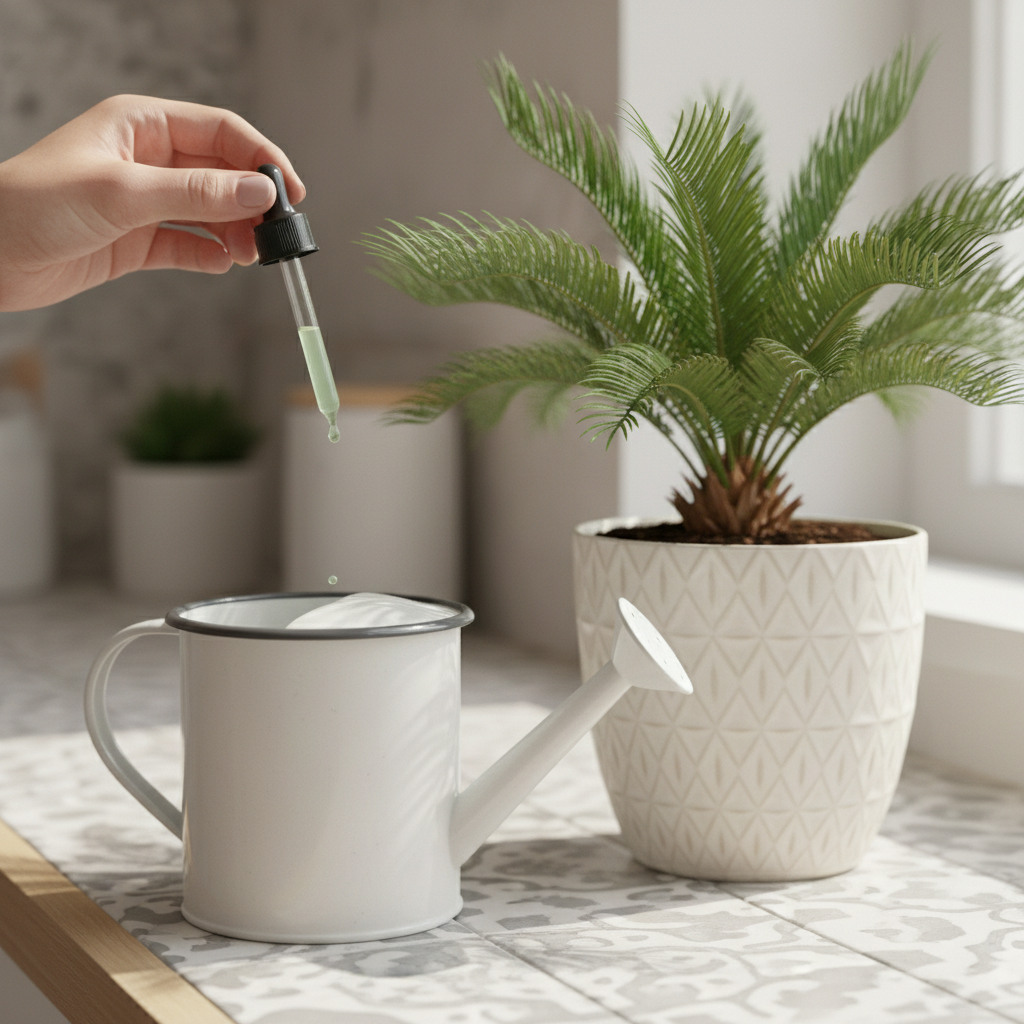
Understanding Plant Nutrients
Fertilisers are labelled with an NPK ratio showing the proportion of nitrogen, phosphorus, and potassium, the three macronutrients plants use in the greatest quantity. For a sago palm, a balanced ratio is ideal, but the secondary and micronutrients, especially magnesium, manganese, and iron, deserve equal attention. The table below summarises the key nutrients and the symptoms a sago palm shows when each runs short.
| Nutrient | Symbol | Primary Function | Deficiency Symptoms |
|---|---|---|---|
| Nitrogen | N | Frond growth and rich green colour | Uniform paling and yellowing of older fronds |
| Phosphorus | P | Root development and energy transfer | Stunted growth, dull foliage |
| Potassium | K | Overall vigour and stress resistance | Yellow or scorched frond margins, especially on older leaves |
| Magnesium | Mg | Core of the chlorophyll molecule | Yellow bands along older fronds while the midrib stays green |
| Manganese | Mn | Healthy new growth and enzyme function | Frizzled, stunted, withered new fronds, the classic frizzle top |
| Iron | Fe | Chlorophyll production in new leaves | Yellowing between the veins of the newest fronds |
Types of Fertiliser
Liquid fertilisers: A balanced liquid feed diluted to half strength is the easiest way to nourish a sago palm. It acts quickly, is simple to control, and lets you stop instantly when growth slows. Choose one that lists trace elements including magnesium and manganese, or supplement a basic feed with a dedicated micronutrient product.
Slow-release granular: Controlled-release pellets, especially those formulated for palms, are convenient and well-suited to the sago palm’s steady appetite. Scattered on the soil in spring, they feed gently over several months and reduce the risk of the spikes and crashes that liquid feeds can cause if applied carelessly.
Organic fertilisers: Worm castings, a top-dressing of mature compost, or a diluted organic feed all work well and release nutrients slowly and safely. They are gentle on the roots and improve the soil over time, though they may not supply enough magnesium and manganese on their own, so an occasional micronutrient top-up is still wise.
Feeding Schedule
Feed only during the active growing season, from spring to late summer. A balanced liquid feed at half strength once a month is ample, or a single application of a slow-release palm fertiliser in spring will carry the plant through the season. Stop feeding entirely in autumn and winter, when growth halts and unused fertiliser simply accumulates in the soil as harmful salts. Given the sago palm’s slow pace, it is always safer to underfeed than to overfeed.
Pro Tip — Guard Against Frizzle Top: The withered, frizzled new growth known as frizzle top is caused by manganese deficiency and is one of the most common, and most preventable, problems in sago palms. A feed containing manganese, or an occasional dose of manganese sulphate diluted as directed, keeps new fronds emerging strong and green. Badly affected fronds will not recover, but corrected nutrition protects the next flush.
How to Fertilise
- Make sure the soil is already slightly moist; never apply fertiliser to bone-dry roots, which can cause burn.
- Dilute a balanced liquid feed to half the recommended strength in your watering can.
- Apply evenly to the soil during a normal watering, avoiding splashing concentrated feed onto the trunk or fronds.
- For granular feed, scatter the pellets evenly over the soil surface in spring and water them in.
- Flush the pot with plain water every couple of months during the growing season to wash out any salt build-up.
Warning — Salt Build-Up: A white crust on the soil surface or around the pot rim, together with browning frond tips, signals a build-up of fertiliser salts. Cut back on feeding and leach the pot by watering generously with plain water several times, letting it drain fully each time, to dissolve and carry away the excess.
Propagation
Propagating a sago palm is an exercise in patience rather than skill. Unlike the leafy houseplants that root from a cutting in a glass of water on the windowsill, a cycad cannot be grown from a leaf or a stem fragment. There are only two real routes to a new plant: separating the offsets, or pups, that form around the base and trunk of a mature specimen, and raising plants from seed, which is far slower and requires both a male and a female parent.
For almost every home grower, pups are the answer. A healthy, established sago palm produces small clonal offsets that can be detached and grown on into identical new plants. It is a slow process measured in months rather than weeks, but it is reliable, and it is deeply satisfying to turn one plant into several over the years.
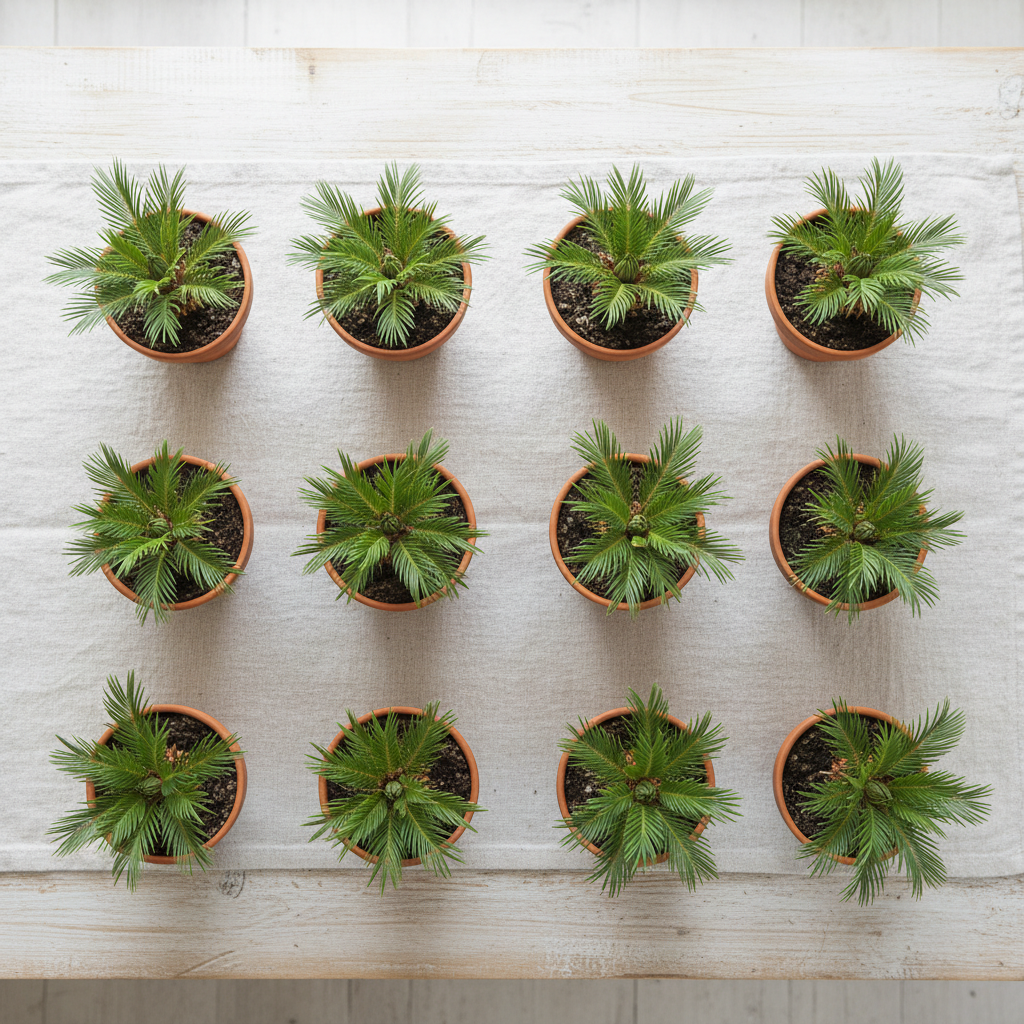
Understanding Pups and Offsets
Pups are small, bulb-like offsets that develop on the lower trunk and around the base of a mature sago palm. They are genetically identical to the parent, drawing on it for support until they form roots of their own. The largest, most rounded pups, ideally those that already show a tiny tuft of leaves, are the best candidates for removal, while very small or flat pups are better left in place to grow on. Spring and early summer, at the start of the growing season, is the ideal time to detach them.
Propagation by Pups: Step-by-Step
This is the most reliable method and the one to reach for first. Work with gloves and clean tools, as the plant is toxic and the wounds are vulnerable to infection.
- Choose a firm, well-formed pup, ideally one already carrying a few small leaves, and clear the soil away from its point of attachment.
- Using a clean, sharp knife or a narrow trowel, carefully detach the pup from the parent, taking any roots it has already formed.
- Remove any leaves and fine roots from the pup, leaving a clean bulb, and let it dry in a shaded, airy spot for a few days to a week so the cut callouses over.
- Pot the calloused pup into a small container of barely moist, gritty, fast-draining mix, burying roughly the lower half and leaving the top exposed.
- Place it somewhere warm and bright but out of harsh direct sun, and keep the soil only just barely moist, never wet.
- Be patient: rooting can take several months, and the first new leaves are a slow reward. Resist overwatering throughout, as a rotting pup is the usual failure.
Pro Tip — Callous Before Potting: The single most important step in propagating sago palm pups is letting the cut surface dry and callous over before potting. A fresh, moist wound pushed straight into damp soil rots almost every time, while a dry, sealed pup roots cleanly. A few days of patience here makes all the difference between success and a mushy failure.
Propagation by Seed: Step-by-Step
Seed propagation is the slow, specialist route, of interest mainly to dedicated collectors. Sago palms are dioecious, meaning individual plants are either male or female, so viable seed requires pollination between two mature plants of opposite sex, which takes many years to reach reproductive age. The large seeds are also extremely toxic and must be handled with great care.
- Soak the cleaned, ripe seeds in warm water for one to two days to soften the hard outer coat, wearing gloves throughout.
- Sow the seeds on their side, half-buried, in a tray of warm, gritty, free-draining mix.
- Keep the medium warm, around 25 to 30 degrees Celsius (77 to 86 Fahrenheit), and only just moist.
- Wait. Germination is famously slow and erratic, often taking several months, and not every seed will sprout.
- Once seedlings are well established with their first true leaves, pot them on individually into the standard gritty mix.
Troubleshooting Propagation
| Problem | Likely Cause | Solution |
|---|---|---|
| Pup turns soft and rots | Potted while the cut was still fresh, or kept too wet | Always callous the cut first and keep the mix barely moist |
| No roots after many months | Too cold, or the pup was too small and immature | Provide steady warmth and start with larger, well-formed pups |
| Pup shrivels and dries out | Soil allowed to go completely bone dry for too long | Maintain a barely-there moisture, never fully dry, never wet |
| Seeds fail to germinate | Old or infertile seed, or insufficient warmth | Use fresh viable seed and keep the medium consistently warm |
Pests & Diseases
For all its toughness, the sago palm is not immune to trouble, and it has one particular enemy that has devastated cycad collections around the world. Most problems, however, are preventable or treatable when caught early, and a regular habit of inspecting the plant, especially the undersides of the fronds and the leaf bases, is the best defence.
The stiff, waxy fronds of a sago palm are less appealing to many common houseplant pests than soft, tender foliage, but the sheltered crevices around the crown and trunk make ideal hiding places for the sap-suckers that do target it. Quarantine any new plant for a few weeks before placing it near your sago palm, and act at the first sign of an infestation rather than waiting.
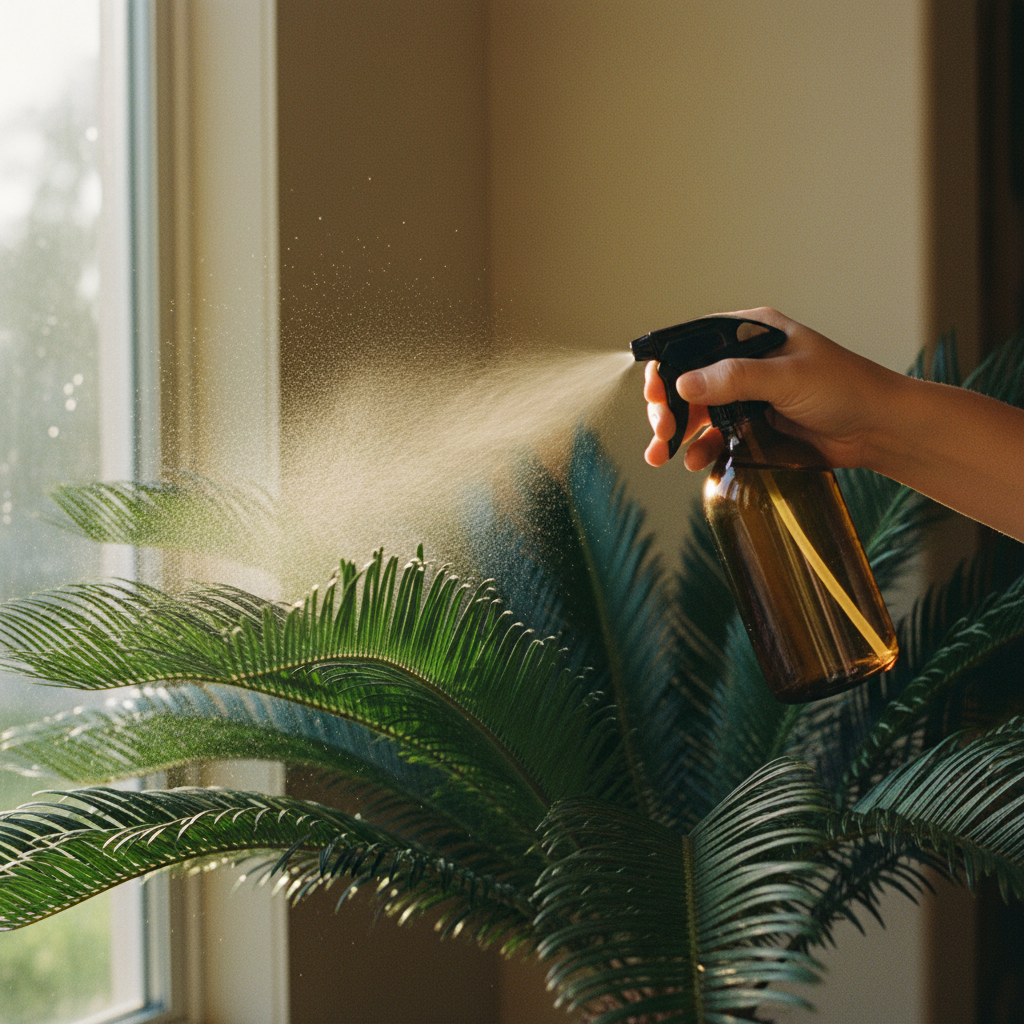
Common Pests
Asian Cycad Scale (Aulacaspis yasumatsui)
This is the single most serious pest of sago palms and a notorious killer of cycads worldwide. It appears as a dense, crusty white coating that spreads rapidly over the fronds, trunk, and even the roots, sucking the plant dry and overwhelming it with astonishing speed. A heavy infestation can kill an otherwise healthy plant in a matter of weeks, and it spreads easily to other cycads.
Treatment: Act immediately and aggressively. Isolate the plant, cut away and bag the worst-affected fronds, and treat thoroughly and repeatedly with horticultural oil to smother the scale, ensuring complete coverage including the trunk. Repeated applications over several weeks are essential, as is a systemic insecticide in stubborn cases. Persistence is the only path to control.
Mealybugs (Pseudococcus species)
Mealybugs are small, soft-bodied insects that cluster in the protected crevices of the crown and at the leaf bases, coating themselves in a white, cottony wax. They suck sap, weaken the plant, and excrete sticky honeydew that encourages sooty mould. Their fondness for hidden nooks makes the sago palm’s tight crown a favourite haunt.
Treatment: Dab visible colonies with a cotton bud dipped in diluted isopropyl alcohol, then treat the whole plant with neem oil or insecticidal soap, repeating every week or two until they are gone. Pay close attention to the deep crevices where they hide.
Spider Mites (Tetranychus urticae)
These tiny arachnids thrive in hot, dry conditions and can colonise a sago palm kept in a warm, arid room. They are almost invisible to the naked eye but betray themselves with fine speckling or stippling on the fronds, a dull bronzed look, and delicate webbing between the leaflets in bad cases.
Treatment: Rinse the fronds thoroughly to dislodge the mites, raise the humidity around the plant, and treat with neem oil or a miticide, repeating to catch newly hatched generations. Spider mites breed explosively, so prompt and repeated action matters.
Common Diseases
Root and Crown Rot (Phytophthora and Pythium species)
By far the most common disease of sago palms, root and crown rot is a fungal and water-mould problem driven almost entirely by overwatering and poor drainage. It attacks the roots and the base of the trunk, turning healthy tissue dark, soft, and foul-smelling, and once it reaches the caudex the plant is usually beyond saving. Yellowing fronds and a spongy trunk base are the warning signs.
Treatment: Prevention through restraint is the only reliable cure. If caught early, unpot the plant, cut away all rotten tissue with a sterile blade, treat the wounds with a fungicide, and repot into fresh, dry, fast-draining mix, then water very sparingly while it recovers.
Manganese Deficiency, or Frizzle Top
Though strictly a nutritional disorder rather than an infection, frizzle top is so common and so distinctive that it belongs in any list of sago palm afflictions. A shortage of manganese causes new fronds to emerge stunted, withered, yellowed, and frizzled, sometimes failing to develop at all. It is one of the most frequent reasons a sago palm looks unwell despite otherwise good care.
Treatment: Apply a fertiliser containing manganese, or a measured dose of manganese sulphate, to correct the deficiency. Affected fronds will not recover and can be removed once new healthy growth appears, but corrected nutrition protects every flush thereafter.
Pest and Disease Summary
| Pest / Disease | Identification | Treatment |
|---|---|---|
| Asian cycad scale | Crusty white coating spreading over fronds and trunk | Isolate, remove worst fronds, repeated horticultural oil, systemic if needed |
| Mealybugs | White cottony clusters in crown crevices and leaf bases | Alcohol on a cotton bud, then neem or insecticidal soap, repeated |
| Spider mites | Fine stippling, bronzing, and webbing in dry conditions | Rinse, raise humidity, treat with neem or a miticide |
| Root and crown rot | Yellowing fronds, soft dark roots, spongy trunk base | Cut away rot, fungicide, fresh dry mix, water sparingly |
| Frizzle top | Stunted, withered, frizzled new fronds | Correct with a manganese-containing feed |
Prevention Strategies
The best defence against every problem on this list is a healthy, well-grown plant in the right conditions. Bright light, a fast-draining mix, careful watering, and a balanced feed produce a sago palm that resists pests and shrugs off disease, while a plant struggling in dim light and soggy soil is a magnet for trouble. Inspect your plant regularly, paying special attention to the crown and the undersides of the fronds, where the earliest signs of scale and mealybugs appear.
Quarantine every new plant for two to three weeks before letting it share space with your sago palm, and be especially cautious with other cycads, which can carry cycad scale. Keep the fronds clean and free of dust, ensure good air circulation around the plant, and never leave it standing in water. These simple habits prevent the overwhelming majority of issues before they begin.
Pro Tip — Catch Scale Early: Asian cycad scale is far easier to control when caught at the very start, as a few small white specks, than once it has formed a solid crust. Make a habit of checking the undersides of the fronds and the leaf bases every time you water, and treat the moment you see anything suspicious. With this pest, a fast response is everything.
Popular Varieties
The world of cultivated sago palms is narrower than that of many houseplants, because Cycas revoluta is an ancient, slow species with relatively little cultivar variation. Most plants sold as sago palms are simply the straight species, the classic King Sago, and much of the variation you will encounter is a matter of size, age, and form rather than dramatically different foliage.
That said, a handful of named forms and closely related species do circulate among collectors and at specialist nurseries, from rare variegated selections to cold-hardy cousins and the larger, more arching Queen Sago that is often confused with it. The table and profiles below cover the most notable.
| Variety | Leaf Appearance | Light Needs | Growth Rate | Availability |
|---|---|---|---|---|
| King Sago | Stiff, glossy, dark-green symmetrical crown | Bright, some direct sun | Very slow | Very common |
| Variegated Sago | Fronds streaked with creamy-yellow markings | Bright, gentle direct sun | Extremely slow | Rare |
| Dwarf Sago | Compact crown of shorter, tightly packed fronds | Bright, some direct sun | Very slow | Uncommon |
| Queen Sago (Cycas circinalis) | Longer, softer, more arching fronds | Bright, indirect to some sun | Slow | Uncommon |
| Panzhihua Sago (Cycas panzhihuaensis) | Similar to King Sago, notably cold-hardy | Bright, full sun | Slow | Rare |
Featured Varieties
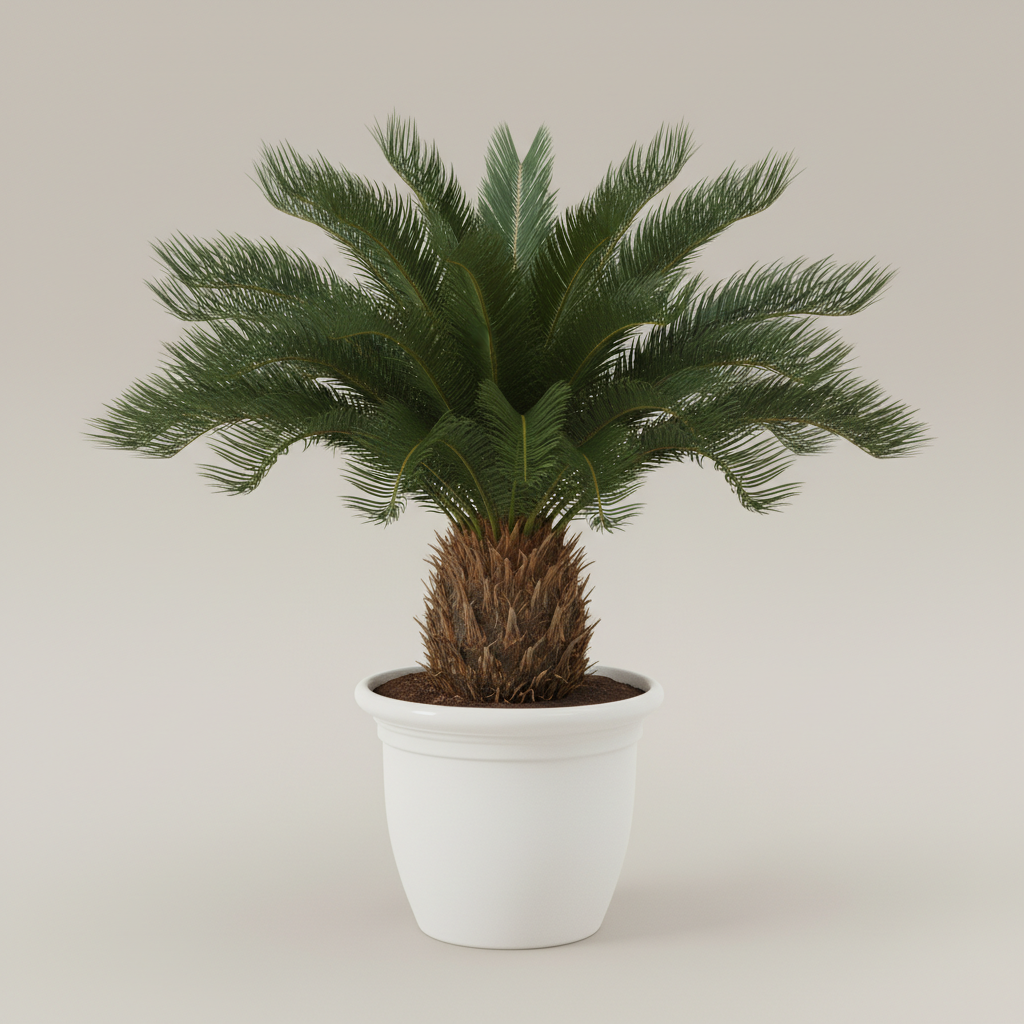
King Sago
The classic and by far the most widely grown form, the King Sago is simply Cycas revoluta at its most typical: a tight, perfectly symmetrical rosette of stiff, arching, dark-green fronds rising from a stout, shaggy trunk. It is the benchmark against which all other sagos are judged and the plant most people picture at the name.
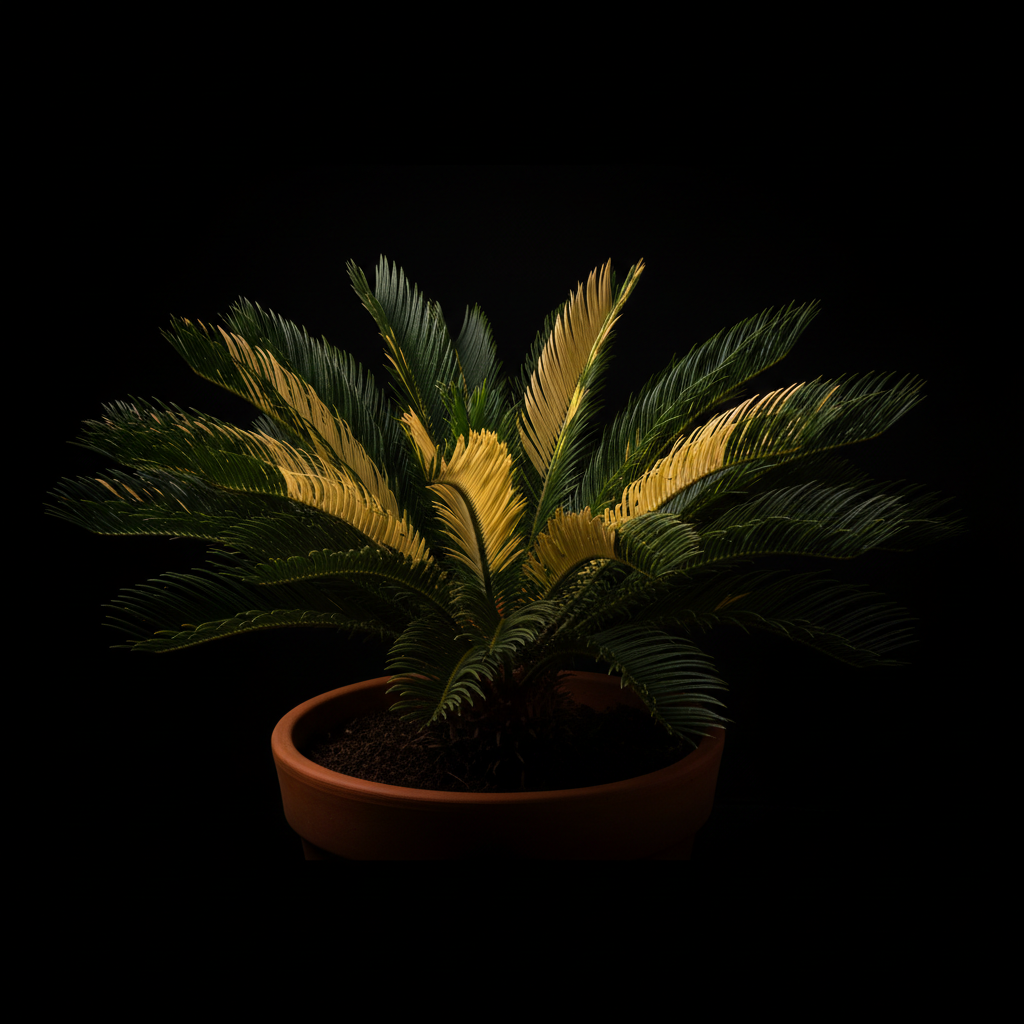
Variegated Sago
A prized rarity, the variegated sago carries irregular streaks and blotches of creamy yellow across its fronds, most striking on the newest growth. Variegation makes an already slow plant slower still, as the pale tissue produces less energy, so these selections command high prices and demand bright light to keep their markings crisp.
Variety Profiles in Detail
Dwarf Sago (Cycas revoluta dwarf forms)
Naturally compact selections of the species produce shorter, more tightly packed fronds and a smaller overall stature, making them well-suited to bonsai treatment and to growers short on space. Care is identical to the standard King Sago, and the dense, jewel-like crown of a well-grown dwarf has a charm all its own.
Queen Sago (Cycas circinalis)
Frequently confused with the King Sago, the Queen Sago is a separate species with longer, softer, and more gracefully arching fronds and a generally larger, more tropical appearance. It is slightly more tender and a touch faster growing, preferring a little more warmth and humidity, but is otherwise grown along similar lines. It is just as toxic as its more familiar cousin.
Panzhihua Sago (Cycas panzhihuaensis)
Native to a small region of south-western China, this species closely resembles the King Sago but is notably more cold-hardy, of particular interest to gardeners attempting to grow cycads outdoors in cooler climates. As a houseplant it behaves much like Cycas revoluta, wanting bright light and sharp drainage.
Choosing the Right Variety for Your Space
For almost everyone, the standard King Sago is the right choice: it is widely available, reasonably priced, and embodies everything that makes the species appealing. If space is tight or you are drawn to bonsai, seek out a dwarf form, while collectors with a bright spot and deep pockets may hunt down a variegated specimen. Whichever you choose, the care is essentially the same, so let availability, budget, and the brightness of your space guide the decision rather than worrying over subtle differences in foliage.
Frequently Asked Questions
Is the sago palm actually a palm?
No. Despite its common name and palm-like silhouette, Cycas revoluta is a cycad, not a true palm. Cycads are an ancient group of seed plants more closely related to conifers than to palms, and they reproduce with cones and seeds rather than flowers. The resemblance to palms is purely superficial.
Why is my sago palm turning yellow?
It depends which fronds. Yellowing of the oldest, lowest fronds is often natural ageing, especially when a new flush appears. Widespread yellowing, including newer growth, usually points to overwatering and the early stages of root rot, while a banded yellowing along the fronds suggests a magnesium or manganese deficiency. Check the soil moisture and your feeding routine to identify the cause.
How fast does a sago palm grow?
Very slowly. A sago palm typically produces just one flush of new fronds a year and adds only a couple of centimetres of trunk annually. A specimen of any size represents many years, sometimes decades, of growth, which is part of what makes mature plants so valuable. Patience is essential with this species.
Why has my sago palm only grown one set of leaves?
This is completely normal. Sago palms grow in flushes, pushing out a whole ring of new fronds at once and then pausing, often for a year, before the next flush. A long quiet period between bursts of growth is not a sign of ill health but simply the plant’s natural rhythm, provided the existing fronds stay green and firm.
Is the sago palm dangerous to pets?
Yes, extremely. The sago palm is one of the most poisonous plants commonly kept in homes. All parts contain the toxin cycasin, and the seeds are especially deadly. Ingestion can cause severe vomiting, liver failure, and death in dogs and cats, and even a small amount can be fatal. If you have pets that chew on plants, this is a plant to avoid or to keep entirely out of reach.
Can I grow a sago palm from a cutting?
No. As a cycad, the sago palm cannot be propagated from a leaf or stem cutting the way many houseplants can. The only practical way to make a new plant at home is to detach and root the offsets, or pups, that form at the base and on the trunk of a mature specimen. Seed is the only other route, and it is far slower.
What are the brown tufts at the base of my sago palm?
Those small, rounded growths are pups, the plant’s natural offsets. They are clones of the parent and can be left in place for a fuller, multi-headed look or carefully detached in spring and grown on into new plants. Their appearance is a healthy sign that your sago palm is mature and well-established.
Why are the new fronds on my sago palm frizzled and stunted?
This classic disorder is known as frizzle top and is caused by a deficiency of manganese. The newest fronds emerge withered, yellowed, and frizzled, sometimes failing to develop properly. Treat it by applying a fertiliser containing manganese, or a measured dose of manganese sulphate. The affected fronds will not recover, but corrected feeding protects future growth.
How long do sago palms live?
A very long time. Given suitable conditions, a sago palm can live for many decades, even well over a century, and mature plants are often passed down as treasured heirlooms. Their slow growth and great longevity make them one of the most enduring plants you can own, a genuine living link to the age of the dinosaurs.
Can a sago palm live outdoors?
In mild climates, yes. Sago palms are reasonably hardy and can be grown outdoors year-round in warm temperate and subtropical regions, tolerating brief light frosts once established. In colder climates they are best grown in containers that can be moved to a bright, frost-free spot indoors for the winter. They relish a spell outdoors in the warmer months wherever the weather allows.






