
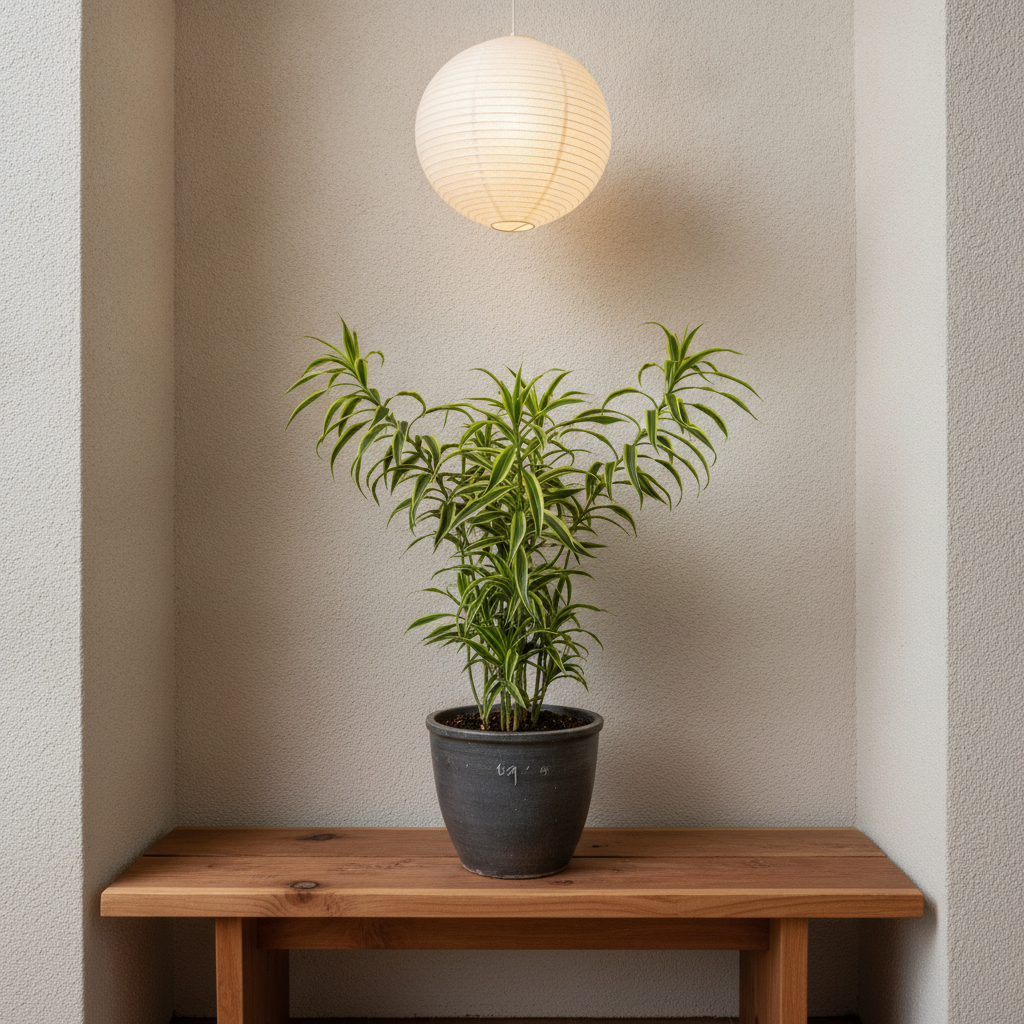
Few houseplants carry their architecture quite so proudly as the Song of India. A cultivated form of Dracaena reflexa, a slow-growing evergreen shrub native to Madagascar, Mozambique and the islands of the western Indian Ocean, it builds its character from the way its short, lance-shaped leaves spiral in dense whorls around slender, gently zig-zagging woody stems. Each leaf is edged in a broad band of creamy gold, so a mature specimen reads as a column of pale-rimmed green that catches the light from across a room. It has been a fixture of homes, offices and hotel lobbies for decades, partly because it looks far more demanding than it is.
That gap between appearance and reality is the heart of this guide. The Song of India will survive a surprising amount of neglect: irregular watering, dim corners and the occasional missed feeding rarely kill it outright. Thriving is a different matter. A plant that is merely surviving holds onto its lower leaves grudgingly, fades its variegation to a tired lime and inches upward with bare stems, while one that is genuinely thriving keeps its colour vivid, packs new growth tightly and slowly develops the sculptural, multi-stemmed silhouette that makes the species worth growing. Everything below is aimed at the second outcome, covering light, watering, soil, feeding, propagation, pests and the cultivars worth seeking out.
Contents
- Quick Reference
- Why Song of India Makes a Rewarding Houseplant
- Light Requirements
- Watering & Humidity
- Soil, Potting & Repotting
- Fertilising
- Propagation
- Pests & Diseases
- Popular Varieties
- Frequently Asked Questions
Quick Reference: Song of India at a Glance
| Light | Bright, indirect light for the strongest variegation; tolerates medium light at the cost of colour |
| Watering | When the top 4 to 5 cm (1.5 to 2 in) of soil is dry, roughly every 7 to 14 days |
| Temperature | 18 to 26 C (65 to 79 F); avoid anything below 13 C (55 F) |
| Humidity | Average to high, ideally 40 to 60 per cent |
| Fertiliser | Balanced liquid feed at half strength, monthly through spring and summer |
| Toxicity | Toxic to cats and dogs if eaten; mildly irritating to people |
Why Song of India Makes a Rewarding Houseplant
The first thing in the Song of India’s favour is its forgiving constitution. As a member of the genus Dracaena, it shares the resilience that makes corn plants and dragon trees such reliable houseplants: a tolerance for low humidity, irregular watering and the dry, centrally heated air that defeats more delicate tropicals. It does not collapse if you go away for a fortnight, and it rarely needs the constant attention that ferns or calatheas demand. For anyone building confidence with houseplants, it offers a generous margin for error while still rewarding good care with steady, visible progress.
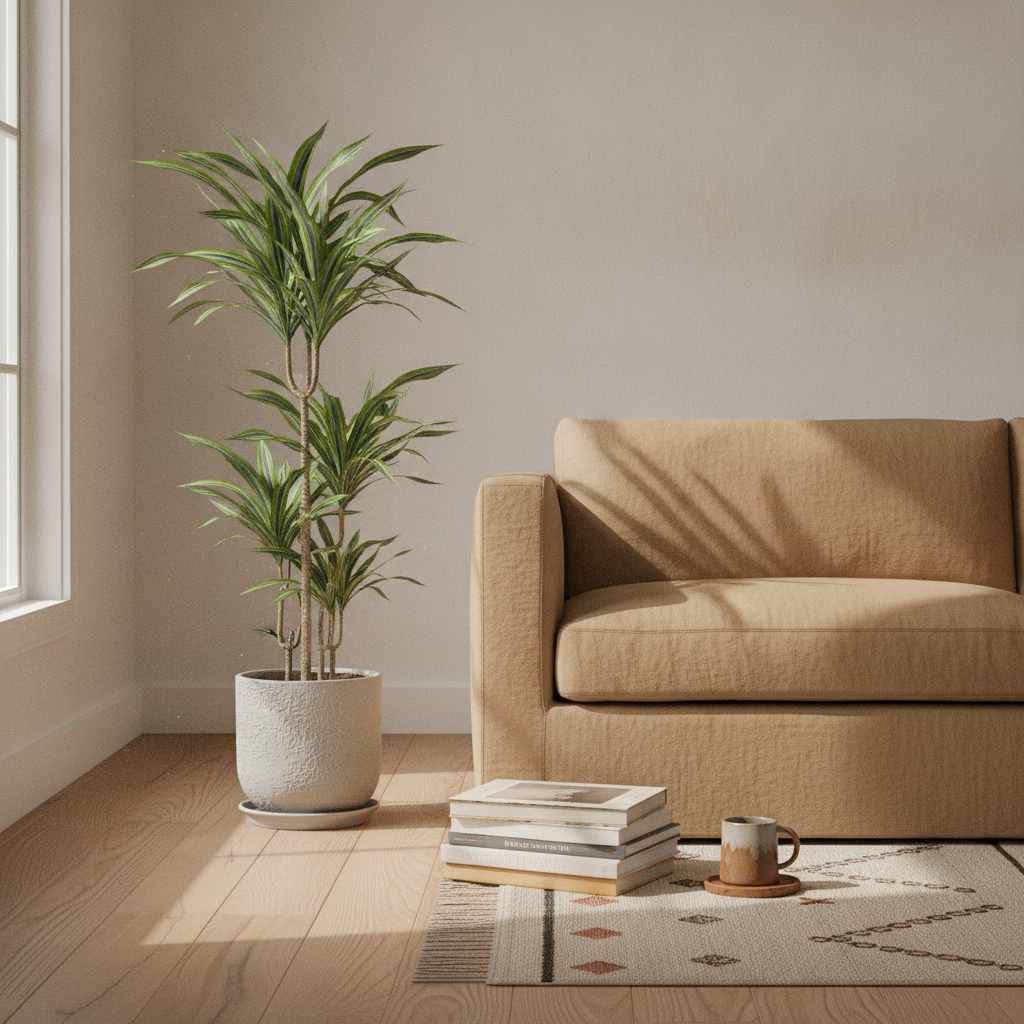
The second is the foliage itself. The gold-margined leaves are arranged so densely that even a young plant looks full, and because the stems naturally lean and branch as they age, an established specimen develops an irregular, almost bonsai-like form that no two plants quite share. The variegation brightens a dim corner without the plant needing direct sun, and the pale leaf edges pick up and reflect ambient light in a way that solid green foliage cannot. Add to that a slow growth rate, which means it holds its shape and rarely outgrows a room, and you have a plant that earns its place as a long-term feature rather than a seasonal filler.
Important — Toxicity: Dracaena reflexa contains saponins that are toxic to cats and dogs. Ingestion can cause vomiting (sometimes with blood), drooling, loss of appetite and dilated pupils in cats. Keep the plant out of reach of pets and curious children, and contact a vet promptly if you suspect your animal has chewed the leaves.
Light Requirements
Light is the single biggest lever you have over how good a Song of India looks. In its native habitat it grows as an understorey and forest-margin shrub, receiving bright but largely filtered light through a canopy, and that is exactly what it wants indoors: plenty of brightness without prolonged direct sun on the leaves. Give it enough and the gold margins stay wide and saturated, the internodes stay short and the plant keeps its lower leaves. Starve it of light and the consequences appear gradually, which is what catches most owners out.
The ideal position is a spot that is bright for most of the day but shielded from the harshest midday rays, for example a couple of metres back from a south or west window, or directly beside an east-facing one. In a room that feels comfortably bright to read in without a lamp, the plant will be content. The variegated cultivars are noticeably hungrier for light than the plain green species, because the pale margins contain little chlorophyll and the plant must work harder to photosynthesise.
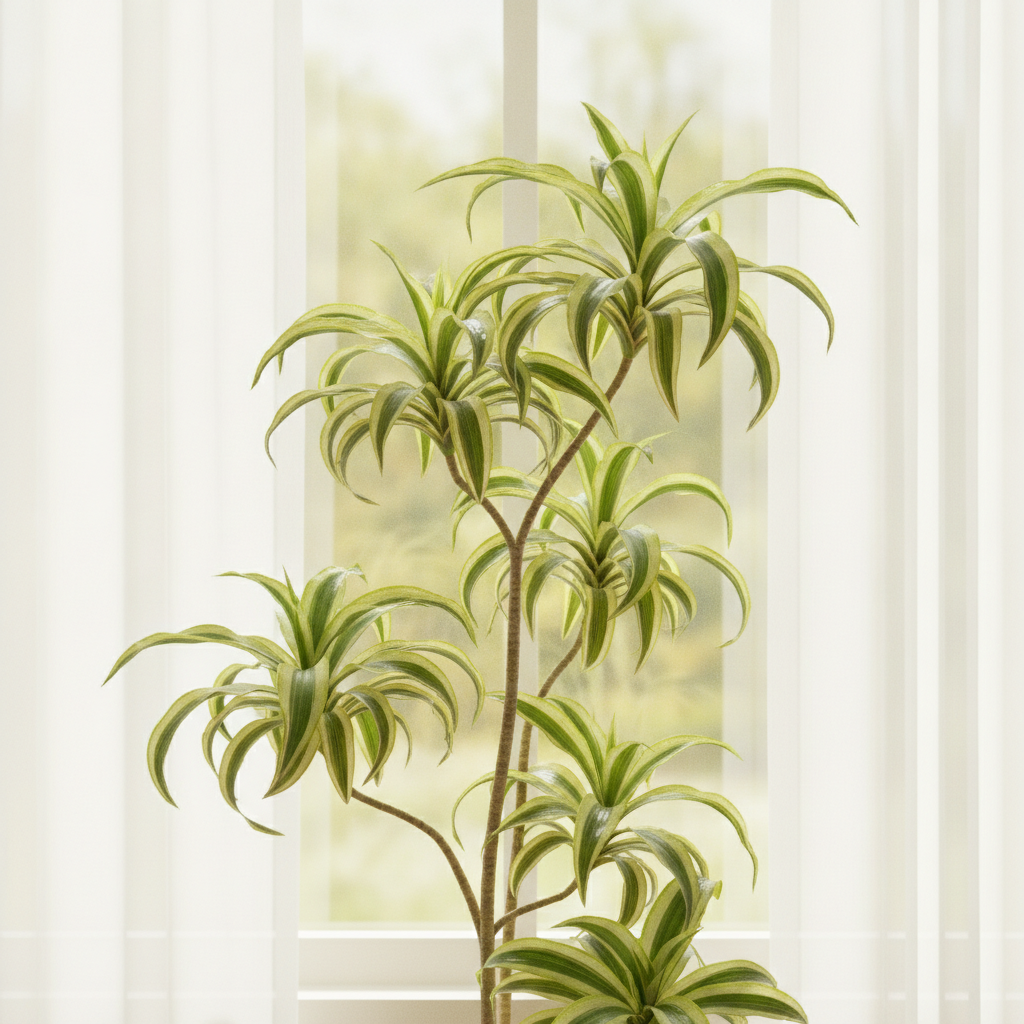
Light Levels Explained
Houseplant light is often described in vague terms, so it helps to map those labels to rough illuminance values measured in lux and to the outcome you can expect from a Song of India at each level.
| Light Category | Approx. Level | Typical Location | Outcome |
|---|---|---|---|
| Direct sun | Over 50,000 lux | On an unshaded south windowsill | Risk of bleached patches and scorched leaf tips |
| Bright indirect | 10,000 to 25,000 lux | Near an east window or back from a south one | Best growth, widest and brightest variegation |
| Medium | 5,000 to 10,000 lux | A few metres into a bright room | Steady but slow growth, variegation slightly muted |
| Low | 1,000 to 5,000 lux | A north-facing room or interior wall | Survives, but leggy growth and fading colour |
| Very low | Under 1,000 lux | A windowless hallway or far corner | Slow decline, leaf drop, near loss of variegation |
Window Orientation and Placement
South-facing window: The brightest option in the northern hemisphere and an excellent choice provided you diffuse the midday sun with a sheer curtain or set the plant a metre or two back. Unfiltered summer sun directly on the foliage will bleach and crisp the leaf edges.
East-facing window: Arguably the sweet spot. Gentle morning sun followed by bright ambient light for the rest of the day suits the plant perfectly, with little risk of scorch.
West-facing window: Good, with the same caveat as a south window. The afternoon sun is strong, so position the plant slightly off to one side or filter the glass.
North-facing window: Workable for the green species but a struggle for the variegated cultivars, which will gradually lose colour and stretch toward the glass. If north light is all you have, consider supplementing it.
Pro Tip — Rotate for Even Growth: Because the plant leans toward its light source, give the pot a quarter turn every week or two. This keeps the stems growing upright and the whorls of foliage balanced on all sides rather than crowding toward the window.
How Light Affects Variegation
The gold margins are not just decorative; they are a direct readout of how much light the plant is receiving. In strong, bright conditions the variegation is wide, crisp and warmly golden. As light drops, the plant compensates by producing more chlorophyll to capture what little energy is available, so the pale bands narrow and green over, and new leaves emerge progressively less colourful than the old ones. If you notice fresh growth coming in greener than the foliage below it, that is the plant asking, unmistakably, for a brighter position.
Warning — Direct Sunlight: Move a plant into strong direct sun gradually. A Song of India taken straight from a shaded interior to a sunny windowsill can develop pale, scorched patches within days, because the leaves have not had time to acclimatise. Increase exposure over a week or two instead.
Artificial Lighting
The Song of India responds well to supplementary lighting, which makes it a practical choice for offices and rooms with poor natural light. A full-spectrum LED grow light positioned 30 to 45 cm (12 to 18 in) above the plant and run for 10 to 12 hours a day will maintain healthy growth and good variegation where daylight alone falls short. Ordinary household LEDs do little for the plant, so choose a fixture designed for growing if you are relying on it as the main source.
Seasonal Adjustments
Light intensity indoors can halve between summer and midwinter, so a position that is ideal in July may be too dim in December. As the days shorten, move the plant closer to its window, clean the glass and clean the leaves so they can make the most of what is available. In spring, reverse the process and watch for any sign of scorch as the sun climbs higher and stronger again.
Watering & Humidity
If light governs how the Song of India looks, watering governs whether it lives. Like most dracaenas it stores a little moisture in its fleshy stems and roots, which makes it far more tolerant of underwatering than overwatering. The single most common way to kill one is kindness in the form of a constantly soggy pot. The goal is a rhythm of thorough soaking followed by genuine partial drying, never a permanently damp rootball.
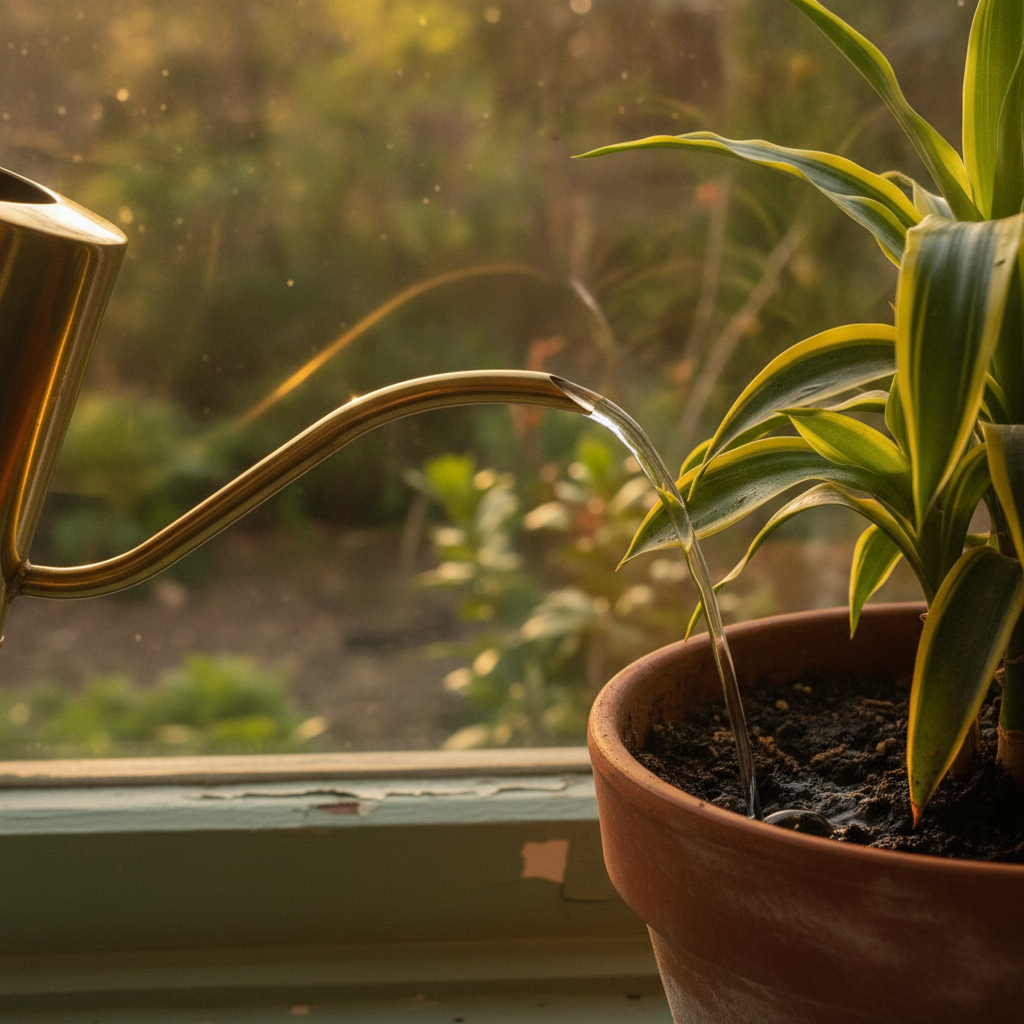
When to Water
Rather than watering on a fixed calendar, water by what the soil tells you. Push a finger into the top of the pot, and when the upper 4 to 5 cm (1.5 to 2 in) feels dry, it is time. In a bright, warm spot during the growing season this usually works out to roughly once a week, while in winter, or in lower light, the interval can stretch to once a fortnight or more.
Several factors shift that interval. Warmth, bright light and an actively growing plant all speed up drying and call for more frequent watering, while cool rooms, low light and the winter rest period slow everything down. The pot matters too: a plant in a small terracotta pot will dry out far faster than the same plant in a large plastic one, so learn the rhythm of your particular plant in its particular spot rather than trusting a number.
Pro Tip — Lift the Pot: The most reliable gauge of moisture is weight. Lift the pot right after watering to learn how heavy a fully watered plant feels, then again a week later. A pot that feels light is dry to the core; one that still feels heavy can wait. With practice you will rarely need to touch the soil at all.
How to Water Correctly
- Take the plant to a sink or use a saucer that can catch the runoff.
- Pour room-temperature water evenly over the whole soil surface, not just one spot.
- Keep going until water runs freely from the drainage holes, which ensures the entire rootball is wetted.
- Let the pot drain completely for several minutes so no excess remains trapped at the base.
- Empty the saucer or cache pot; never leave the plant standing in collected water.
- Wait until the top few centimetres dry out again before repeating.
Signs of Overwatering vs. Underwatering
| Symptom | Overwatering | Underwatering |
|---|---|---|
| Leaf colour | Yellowing, often starting with lower leaves | Browning, dry tips and margins |
| Leaf texture | Soft, limp, sometimes translucent | Crisp, papery, curling inward |
| Soil | Stays wet for many days, may smell sour | Bone dry, pulling away from the pot sides |
| Roots | Brown, mushy, foul-smelling | Dry and brittle but still pale and firm |
| Stem base | Soft or spongy, a serious warning sign | Firm but the plant may droop slightly |
Warning — Root Rot: A soft, darkened stem base accompanied by a sour smell from the soil signals advancing root rot, which is usually fatal if ignored. Act at once: unpot the plant, cut away all brown mushy roots with sterilised scissors, and repot into fresh, fast-draining mix in a clean pot. Withhold water for a few days afterward while the cut roots callus.
Humidity Requirements
Coming from the humid forests of the Indian Ocean islands, the Song of India appreciates moisture in the air, though it copes with average household humidity better than many tropical foliage plants. It is happiest somewhere between 40 and 60 per cent relative humidity. It will tolerate drier conditions, but very dry air, particularly near a radiator in winter, tends to show up as brown, crispy leaf tips.
The clearest symptom of air that is too dry is browning at the very tips and edges of the leaves while the rest of the foliage stays green and healthy. This is easy to confuse with underwatering or with the fluoride sensitivity discussed below, so consider all three causes together rather than assuming the worst.
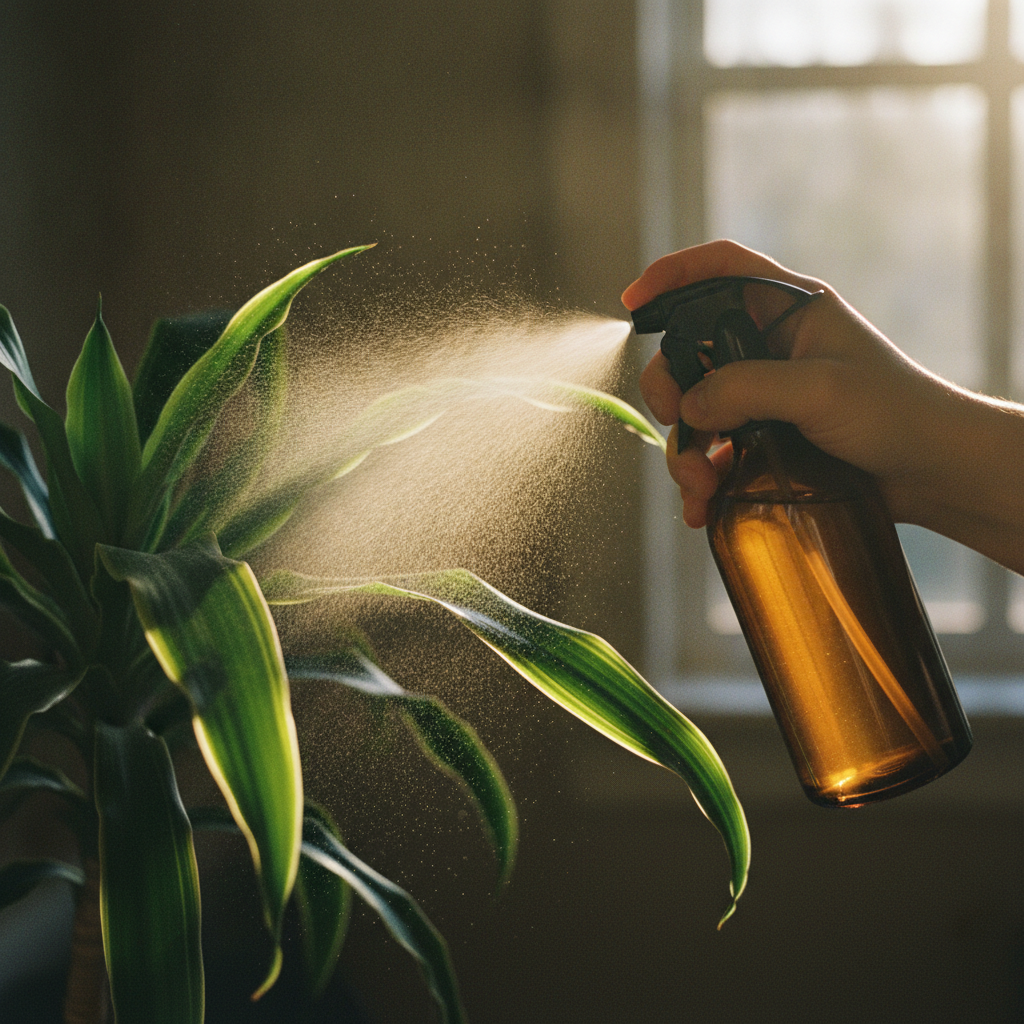
Raising humidity is straightforward. Grouping plants together creates a moister microclimate as they transpire, a pebble tray topped with water beneath the pot lifts local humidity as it evaporates, and in a particularly dry room a small humidifier is the most effective and consistent solution. Misting offers only a brief, marginal benefit and is not a substitute for any of these.
Water Quality
Dracaenas, and the Song of India in particular, are notably sensitive to fluoride and to high levels of salts and chlorine in tap water. Over time these accumulate in the leaf tissue and cause the characteristic browning of leaf tips and margins. If your tap water is heavily fluoridated or softened, switch to rainwater, distilled water or filtered water, or at the very least leave tap water to stand uncovered overnight so some of the chlorine dissipates before use. This single change resolves a great many cases of mysterious tip browning.
Soil, Potting & Repotting
The right soil makes correct watering easy and the wrong soil makes it nearly impossible. Because the Song of India is so vulnerable to a waterlogged rootball, the priority is a medium that holds enough moisture to keep the plant hydrated while draining fast enough that excess water never lingers around the roots.
Ideal Soil Composition
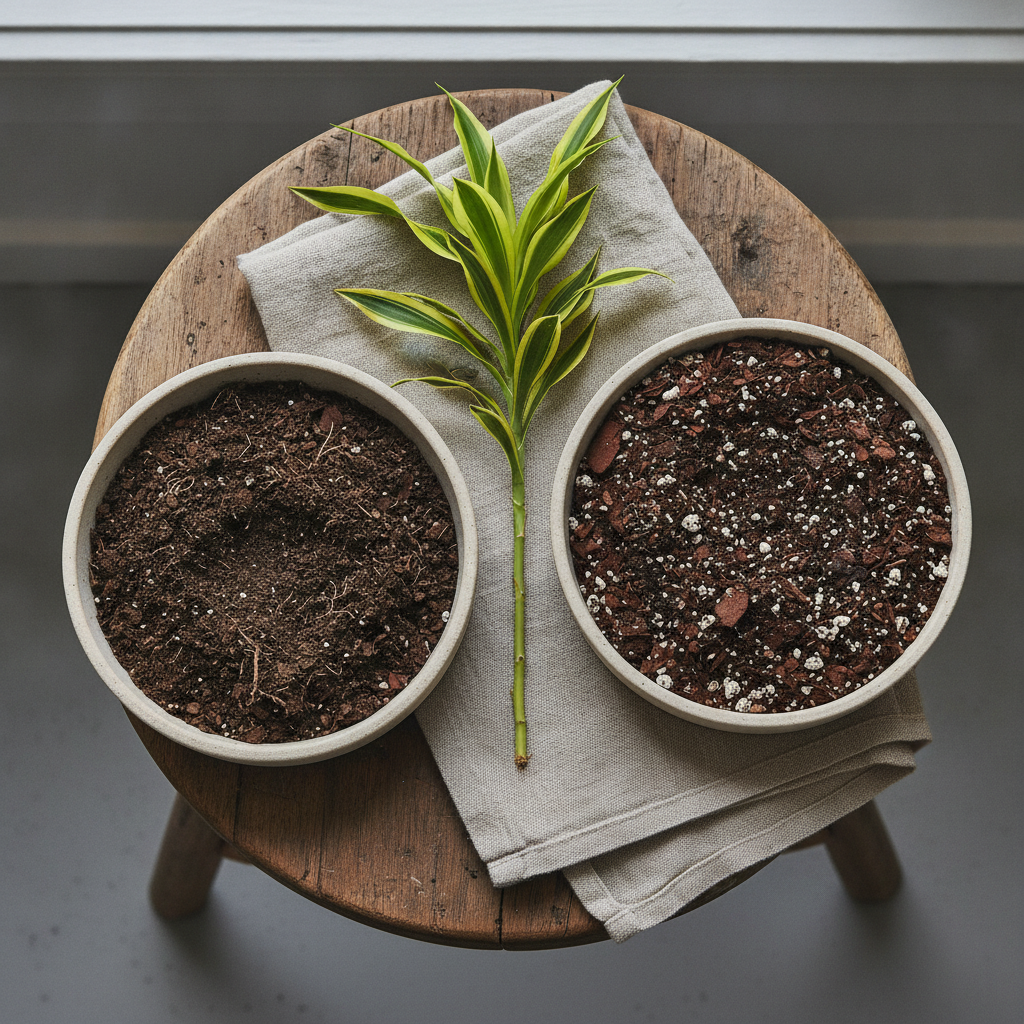
A good general-purpose houseplant compost forms a fine base, but on its own it tends to compact and hold too much water. The fix is to open it up with coarse, free-draining materials so that air can reach the roots. A blend built around peat-free potting compost with added perlite and a little bark hits the balance well for this plant.
| Component | Proportion | Function |
|---|---|---|
| Peat-free potting compost | 60 per cent | Holds moisture and nutrients, the base of the mix |
| Perlite or pumice | 25 per cent | Creates air pockets and sharp drainage |
| Orchid bark or coir | 15 per cent | Adds structure and keeps the mix open over time |
The Song of India prefers a soil that is slightly acidic to neutral, in the range of roughly pH 6.0 to 6.5. Most commercial potting composts already sit comfortably within this band, so it is rarely worth testing or adjusting unless you are mixing your own medium from raw ingredients.
Pro Tip — Quick Mix Recipe: For a no-fuss blend, combine two large scoops of peat-free houseplant compost with one scoop of perlite and a generous handful of orchid bark. It drains freely, resists compaction and suits the Song of India alongside most other dracaenas.
Choosing the Right Pot
The pot is part of the watering system, not just a container. Its size, material and drainage all influence how quickly the soil dries and therefore how forgiving the plant is of your watering habits.
Drainage holes are non-negotiable. Whatever pot you choose, it must have holes in the base. Without them, water collects at the bottom out of sight and rots the roots no matter how carefully you water. If you love a decorative pot with no drainage, use it as a cache pot and keep the plant in a plain plastic nursery pot that lifts out for watering.
Pot material: Terracotta is porous and wicks moisture from the soil, which suits this plant well and offers a safety margin against overwatering, though it dries faster and needs more frequent attention. Glazed ceramic and plastic retain moisture longer, which can be convenient in a bright, warm spot but demands a more disciplined hand with the watering can.
Pot size: Choose a pot only 2 to 4 cm (1 to 2 in) wider than the current rootball. An oversized pot holds a large volume of soil that stays wet long after the roots have taken what they need, which is a fast route to rot in a slow-growing plant like this one.
When to Repot
The Song of India is slow-growing and actually flowers and performs best when slightly root-bound, so it needs repotting only every two to three years. The signs that the time has come include roots emerging from the drainage holes or circling visibly at the soil surface, water running straight through without wetting the rootball, and growth that has stalled despite good light and feeding. The best time to repot is spring, as the plant enters its active growing season and can recover quickly.
How to Repot: Step-by-Step
- Water the plant a day before repotting so the rootball is moist and holds together.
- Slide the plant out by tipping the pot and supporting the base of the stems, rather than pulling on the foliage.
- Gently tease away some of the old, spent soil from around the roots and inspect them, trimming any that are brown or mushy.
- Add a layer of fresh mix to the new pot, then position the plant at the same depth it sat before.
- Fill around the rootball with fresh mix, firming lightly to remove large air gaps without compacting it hard.
- Water thoroughly to settle the soil, then top up any mix that sinks.
- Return the plant to its usual spot and hold off on feeding for a month or so while it settles.
Warning — Transplant Shock: Some leaf drop or a brief pause in growth after repotting is normal as the plant adjusts. Resist the urge to compensate by overwatering or feeding heavily, which only adds stress. Keep conditions stable, water normally and give it a few weeks to recover.
Fertilising
The Song of India is a light feeder, in keeping with its slow growth, and it is far easier to harm it with too much fertiliser than too little. A modest, regular feed through the growing months keeps the foliage dense and the variegation strong, while a heavy hand leads to a build-up of salts that scorches the very leaf tips you are trying to protect.
Think of feeding as a supplement to good light and fresh soil rather than a substitute for them. No amount of fertiliser will fix a plant struggling in a dark corner, and overfeeding a plant that lacks light simply pushes weak, leggy growth. Get the position right first, then feed to support it.
Understanding Plant Nutrients
Fertiliser labels carry three numbers, the N-P-K ratio, which give the percentages of nitrogen, phosphorus and potassium. For a foliage plant like the Song of India, a balanced ratio or one slightly weighted toward nitrogen supports the leafy growth you want. Beyond these three, a handful of secondary nutrients and trace elements keep the plant healthy, and a good houseplant feed will include them.
| Nutrient | Symbol | Primary Function | Deficiency Symptoms |
|---|---|---|---|
| Nitrogen | N | Drives leaf and stem growth | Pale, uniformly yellowing older leaves |
| Phosphorus | P | Root development and energy transfer | Stunted growth, dull foliage |
| Potassium | K | Overall vigour and water regulation | Yellow or brown leaf margins |
| Magnesium | Mg | Central component of chlorophyll | Yellowing between the veins of older leaves |
| Iron | Fe | Chlorophyll formation in new growth | Yellowing between the veins of young leaves |
Types of Fertiliser
Liquid fertilisers: The most practical choice for this plant. Diluted into the watering can, they let you control the dose precisely and stop easily in winter. A balanced houseplant feed at half the recommended strength is ideal.
Slow-release granular: Granules or prills release nutrients gradually over several months, which is convenient but harder to dial back if the plant shows signs of overfeeding. If you use them, apply at the lower end of the recommended rate.
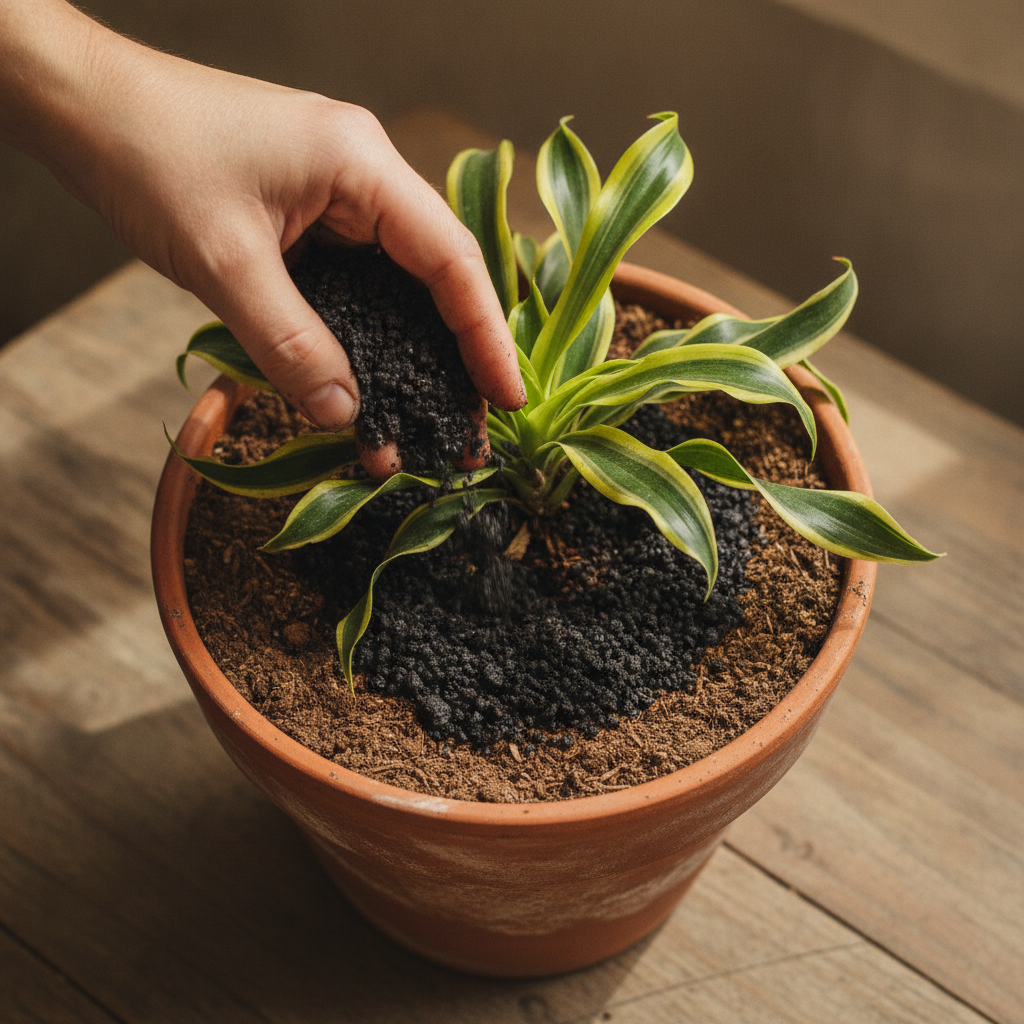
Organic fertilisers: Worm castings, diluted seaweed extract and similar gentle organic feeds release nutrients slowly and are very forgiving, making them well suited to a plant that resents being overfed. A thin top-dressing of worm castings in spring is an easy, low-risk option.
Feeding Schedule
Feed roughly once a month during spring and summer, when the plant is actively growing. As growth slows in autumn, taper off, and through the winter months stop feeding altogether, since a resting plant cannot use the nutrients and they simply accumulate in the soil. Resume in spring when you see fresh growth appear.
Pro Tip — Less Is More: When in doubt, underfeed. A Song of India that is fed lightly and occasionally will always look better than one pushed with frequent strong feeds, which scorch leaf tips and leave a crust of mineral salts on the soil surface. Half strength, once a month, is plenty.
How to Fertilise
- Dilute a balanced liquid feed to half the strength stated on the label.
- Water the plant with plain water first if the soil is bone dry, to avoid feeding into a parched rootball.
- Apply the diluted feed evenly over the soil until a little drains from the base.
- Empty any runoff from the saucer so salts are not reabsorbed.
- Every couple of months, flush the pot with plenty of plain water to wash out accumulated salts.
Warning — Salt Build-Up: A white crust on the soil surface or around the pot rim, combined with browning leaf tips, points to a build-up of fertiliser salts. Flush the pot thoroughly under running water for a minute or two to leach them out, and cut back on both the frequency and strength of feeding.
Propagation
Propagating the Song of India is one of the quiet pleasures of growing it, and conveniently it doubles as a way to rejuvenate a plant that has grown tall and bare at the base. Because it grows from woody stems, it propagates reliably from stem cuttings, and an old leggy specimen can be cut back hard and turned into several compact new plants.
The best time to take cuttings is spring or early summer, when the plant is growing actively and roots form fastest. Cuttings taken in the depths of winter will often sit and sulk for months, so it pays to wait for the growing season.
Understanding Stem Nodes
The key to successful propagation is the node, the slightly raised band on the stem from which leaves and roots emerge. Every cutting must include at least one node, because that is where new roots will form. The smooth length of stem between nodes, the internode, cannot produce roots on its own, so a cutting that is all internode and no node will never take. Once you can read the stem and spot the nodes, the rest of the process is simple.
Stem Tip Cuttings: Step-by-Step
Tip cuttings take the growing end of a stem complete with its crown of leaves, and they make the most attractive new plants because they already have a fully formed head of foliage.
- Using clean, sharp secateurs, cut a 10 to 15 cm (4 to 6 in) length from the tip of a healthy stem, just below a node.
- Strip the leaves from the lowest few centimetres so that at least one bare node will sit in the rooting medium.
- Optionally dip the cut end in rooting hormone to speed things along.
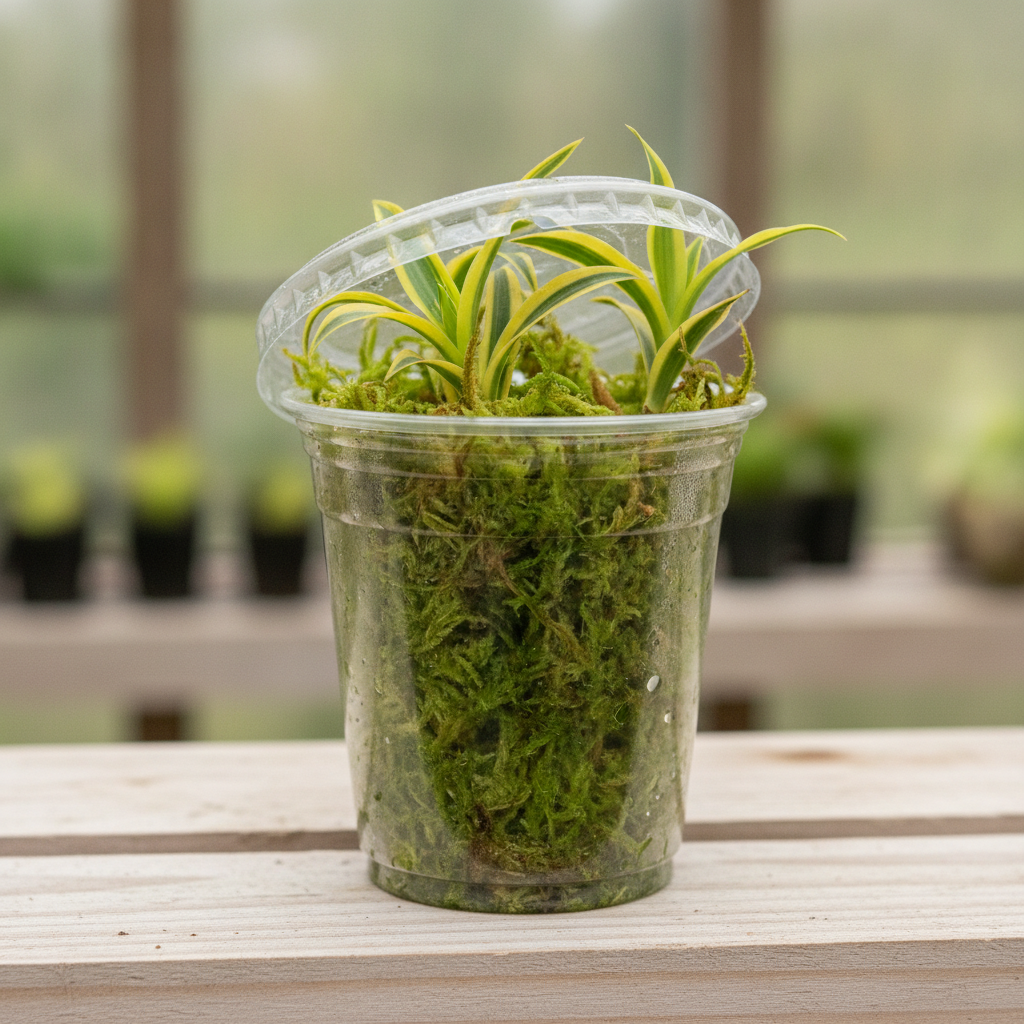
- Insert the cutting into damp sphagnum moss, a glass of water or a small pot of moist, free-draining mix.
- Keep it warm, bright and out of direct sun, maintaining humidity with a clear cover or propagator lid.
- Roots usually appear within three to six weeks; once they are a few centimetres long, pot the cutting into normal mix.
Pro Tip — Do Not Discard the Stump: When you take a tip cutting, the remaining bare stump left on the parent plant will usually sprout one or more new shoots from just below the cut. So a single hard prune gives you both a new plant from the tip and a bushier, rejuvenated parent. Keep watering the stump normally and be patient.
Stem Section Cuttings: Step-by-Step
A longer length of bare stem can be cut into several sections, each capable of producing a new plant. This is the method to use when rejuvenating a tall, leggy specimen, as it makes the most of every part of the stem.
- Cut a length of healthy bare stem into sections 5 to 8 cm (2 to 3 in) long, each containing at least one node.
- Note which end of each section was lower; cuttings must be planted the right way up to root properly.
- Let the cut ends dry and callus for a few hours to reduce the risk of rot.
- Lay or stand the sections in moist rooting medium, keeping the original lower end downward.
- Maintain warmth and humidity, and wait. Stem sections root more slowly than tip cuttings, often taking six to ten weeks.
- Once shoots and roots have formed, pot each section up individually.
Troubleshooting Propagation
| Problem | Likely Cause | Solution |
|---|---|---|
| Cutting rots before rooting | Medium too wet or cut end not callused | Use barely damp medium and let cuts dry first |
| No roots after many weeks | Too cold, too dark, or no node included | Provide warmth and bright indirect light, check for a node |
| Leaves shrivel on the cutting | Humidity too low while rootless | Cover with a clear bag or propagator to hold moisture |
| Section planted upside down | Orientation lost during cutting | Always mark the lower end before separating sections |
Pests & Diseases
A healthy, well-positioned Song of India is not especially prone to pests, but no houseplant is immune, and the dry indoor air that the plant otherwise tolerates can encourage a few common troublemakers. The best defence is vigilance: most infestations are easy to clear if caught early and far harder once they have spread.
Make a habit of inspecting your plant whenever you water, paying particular attention to the undersides of leaves and the tight axils where leaf meets stem, which is exactly where pests like to hide. A new plant brought into the home should be checked carefully and ideally kept apart from your other plants for a couple of weeks.
Common Pests
Spider Mites (Tetranychus urticae)
The most likely pest on a Song of India, encouraged by warm, dry air. They are almost too small to see, but they leave fine pale stippling across the leaves and, in a bad infestation, delicate webbing strung between the foliage. The leaves take on a dull, dusty look as the mites feed.
Treatment: Rinse the plant thoroughly in the shower to knock the population back, then treat with neem oil or insecticidal soap, repeating every five to seven days for a few weeks. Raising humidity makes the environment far less welcoming to them.
Mealybugs (Pseudococcus species)
Small, soft-bodied insects that look like tiny tufts of white cotton wool, clustering in leaf axils and along the stems. They suck sap and excrete sticky honeydew, which can lead to sooty mould.
Treatment: Dab each insect directly with a cotton bud dipped in isopropyl alcohol, which kills them on contact, then follow up with neem oil to catch any survivors and eggs. Check weekly until clear.
Scale (Coccoidea species)
These appear as small brown or tan bumps stuck fast to the stems and the undersides of leaves. Their waxy shell makes them easy to mistake for part of the plant and protects them from many sprays.
Treatment: Scrape them off gently with a fingernail or an old toothbrush, then treat with neem oil or a systemic insecticide. Persistence is key, as they are stubborn and often need several rounds.
Common Diseases
Root Rot (Pythium and Phytophthora species)
By far the most serious threat to this plant, and almost always a consequence of overwatering or poor drainage. The roots suffocate and decay in waterlogged soil, the lower leaves yellow and drop, and the stem base turns soft and dark.
Treatment: Unpot the plant, cut away all soft, brown roots with sterilised scissors, and repot into fresh, fast-draining mix in a clean pot with good drainage. Reduce watering afterward. Prevention through careful watering is far more reliable than any cure.
Leaf Spot (Fusarium and bacterial pathogens)
Brown or tan spots, sometimes with a yellow halo, appearing on the foliage, usually where leaves stay wet for long periods or air circulation is poor. It is more a nuisance than a killer but spreads if ignored.
Treatment: Remove affected leaves, avoid wetting the foliage when watering, and improve airflow around the plant. A copper-based fungicide can help in persistent cases.
Pest and Disease Summary
| Pest / Disease | Identification | Treatment |
|---|---|---|
| Spider mites | Fine stippling and webbing, dusty leaves | Rinse, neem oil, raise humidity |
| Mealybugs | White cottony tufts in leaf axils | Alcohol on a cotton bud, then neem oil |
| Scale | Brown waxy bumps on stems and leaves | Scrape off, neem oil or systemic |
| Root rot | Yellow lower leaves, soft dark stem base | Trim roots, repot, reduce watering |
| Leaf spot | Brown spots, sometimes haloed | Remove leaves, improve airflow |
Prevention Strategies
Prevention rests on keeping the plant strong and watching it closely. A Song of India in good light, watered correctly and not overfed has the natural vigour to shrug off minor pest pressure, whereas a stressed plant in a dark, dry corner is an open invitation. Regular inspection, prompt isolation of anything suspect and good general hygiene do most of the work.
Wiping the leaves with a damp cloth every few weeks serves double duty: it removes the dust that blocks light and clogs the leaves’ pores, and it lets you spot the first signs of pests before they establish. It also keeps the variegation looking its glossy best, which is reason enough on its own.
Pro Tip — Quarantine New Arrivals: The most common way pests enter a collection is on a newly bought plant. Keep any new plant separate from the rest for two to three weeks and inspect it closely before introducing it to your other greenery. This simple habit prevents the great majority of infestations.
Popular Varieties
Although the name Song of India refers specifically to the gold-variegated form, the species Dracaena reflexa has given rise to a small family of cultivars that differ mainly in the colour and pattern of their foliage. Knowing them helps you pick the right plant and understand what you already have.
All of them share the same basic care, so choosing between them comes down to colouring and the light you can offer. As a rule, the more boldly variegated the cultivar, the more light it needs to hold that colour, while the greener forms cope better in modest conditions.
| Variety | Leaf Appearance | Light Needs | Growth Rate | Availability |
|---|---|---|---|---|
| Song of India | Green centre, broad creamy-gold margins | High | Slow | Common |
| Song of Jamaica | Deep green with lime-green central stripes | Medium to high | Slow | Common |
| Plain green D. reflexa | Uniform glossy dark green | Medium | Slow | Occasional |
| Anita | Narrow, fine green leaves, near solid | Medium | Slow | Occasional |
Featured Varieties
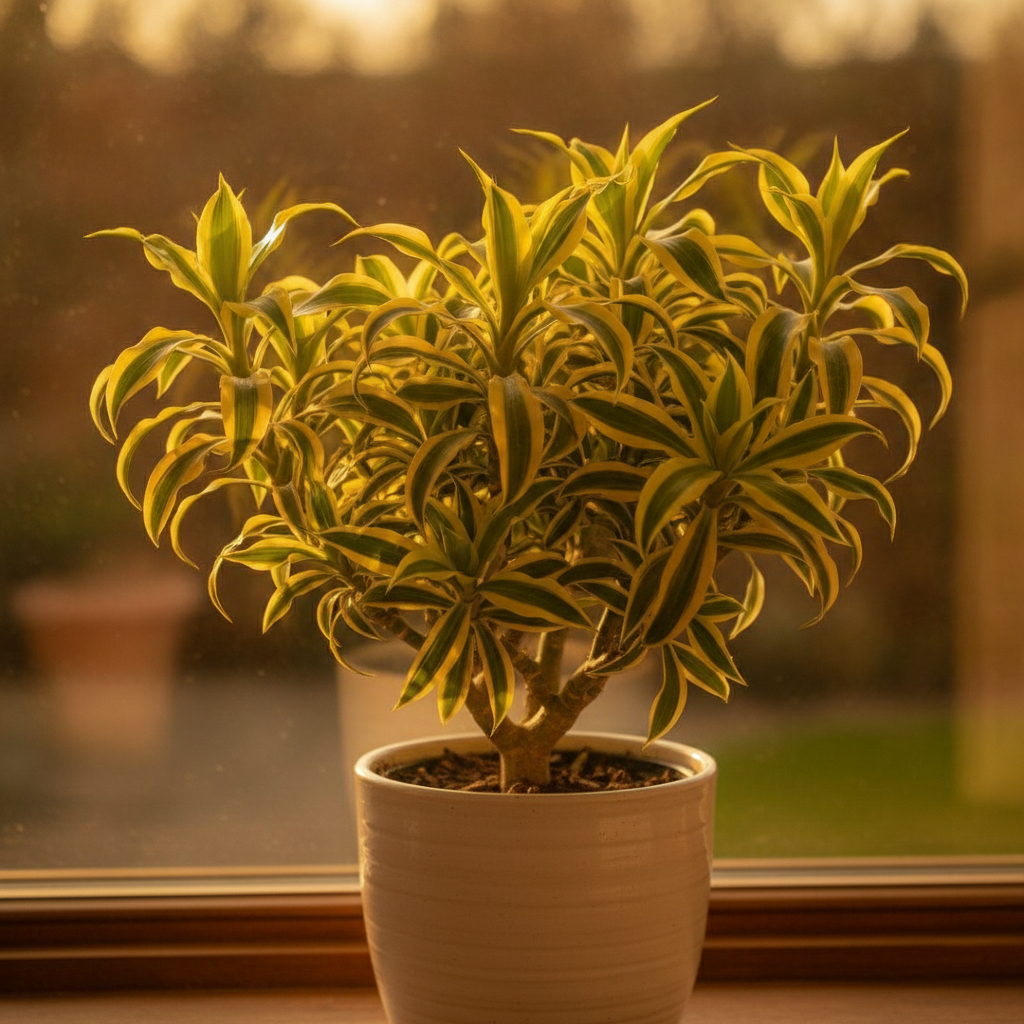
Song of India
The classic and most widely grown form, with a green leaf centre framed by wide bands of warm, creamy gold. It is the brightest of the cultivars and the one that gives the plant its name, but it also needs the most light to keep those margins from fading.
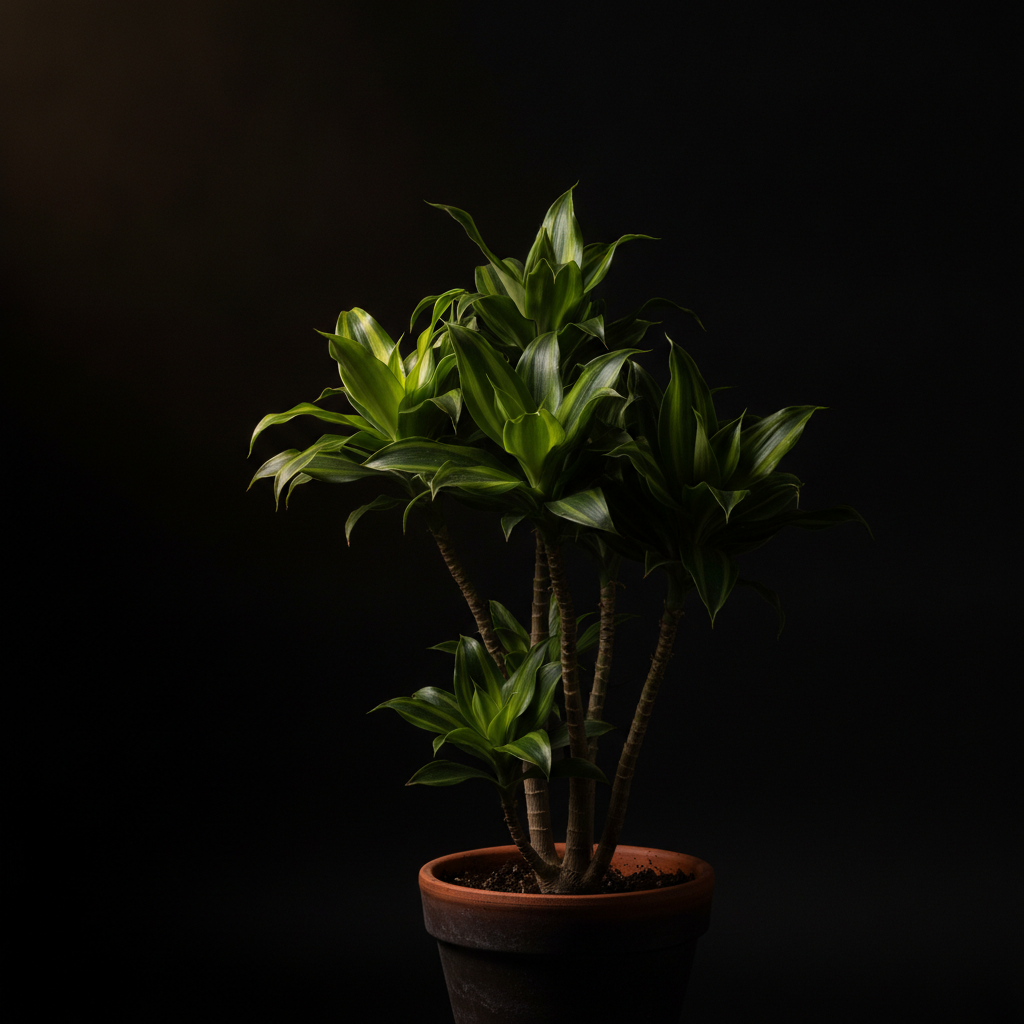
Song of Jamaica
A quieter, more restrained relative, with deep green leaves marked by soft lime-green or chartreuse central striping rather than gold margins. It reads as a darker, cooler plant and holds its colour a little better in medium light than the gold form.
Variety Profiles in Detail
Song of India (Dracaena reflexa ‘Variegata’)
The cultivar that defines the species in most people’s minds. Its leaves are densely whorled and edged in broad, warm gold, giving a young plant immediate impact and a mature one a luminous, multi-stemmed presence. It is the most demanding of the group when it comes to light, since the pale margins photosynthesise poorly, but reward that need and it is hard to beat for brightening an interior.
Song of Jamaica (Dracaena reflexa ‘Song of Jamaica’)
Sometimes confused with its golden sibling, this cultivar trades the cream-and-gold margins for green-on-green striping, the lighter chartreuse running down the centre of each darker leaf. The overall effect is more subdued and works well in cooler, more minimal interiors. It is a touch more tolerant of medium light, making it a sensible choice where the brighter form would struggle.
Choosing the Right Variety for Your Space
Let your light decide. If you have a bright spot near an east or filtered south window, the gold Song of India will thrive and earn its keep as a focal point. If your brightest available position is closer to medium light, lean toward Song of Jamaica or a plainer green form, which will hold their character without the gradual fade that disappoints so many owners of the variegated type. Whichever you choose, the care is the same, so the only real question is which colouring suits your room and the light you can give it.
Frequently Asked Questions
Why are the tips of my Song of India turning brown?
Brown leaf tips most often come from one of three causes: dry air, inconsistent watering, or a sensitivity to fluoride and salts in tap water. Rule them out in turn by raising humidity, watering more evenly when the top few centimetres dry, and switching to rainwater or filtered water. In this species, water quality is a surprisingly common culprit.
Why is my plant losing its lower leaves?
Shedding the occasional lowest leaf is natural as the plant grows taller and develops its characteristic bare-stemmed, tufted form. Rapid or widespread loss of lower leaves, however, usually signals overwatering or too little light, so check the soil moisture and the brightness of the position before assuming it is normal ageing.
How fast does a Song of India grow?
Slowly. Even in good conditions it adds only a modest amount of height each year, which is part of its appeal as a long-lived, low-maintenance feature plant. Do not expect the rapid filling-out of a pothos or a tradescantia; patience is part of the deal with this one.
My plant has become tall and leggy. Can I fix it?
Yes, and easily. Cut the bare stem back to whatever height you like with clean secateurs; the plant will sprout new shoots from just below the cut, growing back bushier. The piece you removed can be rooted as a cutting, so a single prune both rejuvenates the parent and gives you a new plant.
Is the Song of India safe for cats and dogs?
No. Like all dracaenas it contains saponins that are toxic to cats and dogs if eaten, causing symptoms such as vomiting, drooling and loss of appetite. Keep it well out of reach of pets, and consult a vet if you think an animal has chewed it.
Why is the new growth greener than the older leaves?
This is the plant telling you it wants more light. When light is insufficient, it produces extra chlorophyll to compensate, so fresh leaves emerge with narrower, greener margins than the well-coloured older foliage. Move it somewhere brighter and subsequent growth should return to its proper variegation.
Does it need misting?
Not really. Misting raises humidity only briefly and does little to prevent brown tips. If your air is dry, a pebble tray, grouping plants together or a small humidifier will do far more good, and wetting the foliage too often can actually encourage leaf spot.
How often should I repot?
Only every two to three years. The Song of India is slow-growing and content to be slightly root-bound, so frequent repotting does more harm than good. Move it up a single pot size in spring when you see roots emerging from the drainage holes or growth stalling despite good care.






