
English lavender, known botanically as Lavandula angustifolia, is one of those rare plants whose name has become a synonym for its own scent. Native to the rocky, sun-baked hillsides of the western Mediterranean and now grown in cottage gardens, perfumeries and apothecaries from Provence to the Pacific Northwest, this woody-based sub-shrub produces narrow silvery-grey leaves and tall slender spikes packed with small tubular purple flowers. It belongs to the mint family (Lamiaceae) and is the hardiest, finest-scented and most culinarily prized of the roughly forty-seven recognised species in the genus Lavandula. Gardeners also know it by older names including true lavender, common lavender, narrow-leaved lavender and the now-deprecated Lavandula officinalis.
Lavender has a reputation as a beginner-friendly plant outdoors and a notoriously difficult one indoors, and both reputations are deserved. Given a sunny, free-draining spot in the garden, an established English lavender will shrug off drought, alkaline soil and freezing winters with very little human intervention. Asked to live full-time in a heated, humid, low-light living room, the same plant will sulk, drop its silver colour, stretch out into leggy stems and eventually rot at the crown. This guide separates surviving from thriving for both situations: how to keep a potted lavender alive on a windowsill, how to grow one well on a balcony or terrace, and how to settle it permanently into a garden bed where it will reward you for fifteen years or more.
Contents
- Quick Reference
- Why Lavender Makes a Rewarding but Demanding Houseplant
- Light Requirements
- Watering and Humidity
- Soil, Potting and Repotting
- Fertilising
- Propagation
- Pests and Diseases
- Popular Varieties
- Frequently Asked Questions
Quick Reference: Lavender at a Glance
| Light | Full sun: six or more hours of direct light daily. Indoors, the brightest south-facing window you have, plus supplemental grow-lighting in winter. |
| Watering | Drought-tolerant. Water deeply when the top 3 to 5 cm (1 to 2 in) of soil is fully dry, then leave alone. Reduce to almost nothing in winter. |
| Temperature | Tolerates 4 to 30 degrees Celsius (39 to 86 degrees Fahrenheit). Hardy outdoors to roughly minus 15 degrees Celsius (5 degrees Fahrenheit). Needs a cool winter rest below 10 degrees Celsius (50 degrees Fahrenheit) to flower well. |
| Humidity | Low, between 30 and 50 per cent. Detests high humidity, which encourages fungal disease. |
| Fertiliser | Minimal. A single light feed in early spring is plenty for in-ground plants; potted lavenders benefit from a half-strength balanced feed once or twice during active growth. |
| Toxicity | Generally non-toxic to humans and considered safe in culinary quantities. Mildly toxic to cats and dogs if eaten in volume due to linalool and linalyl acetate. Concentrated essential oil is irritating to skin and unsafe for cats. |
Why Lavender Makes a Rewarding but Demanding Houseplant
Few plants offer the multisensory payoff that lavender does. The silvery foliage softens any colour palette, the spikes give months of garden interest in a way that fewer than a handful of perennials can match, and the volatile oils released when you brush the leaves are pleasant to almost everyone and proven, in several small clinical studies, to lower measurable markers of anxiety. The flowers attract bees and butterflies but very few destructive insects. The plant tolerates poor, stony, alkaline soils that defeat most decorative perennials, and a mature specimen will produce hundreds of stems each summer suitable for drying, distilling, baking, scenting linen or simply being looked at.
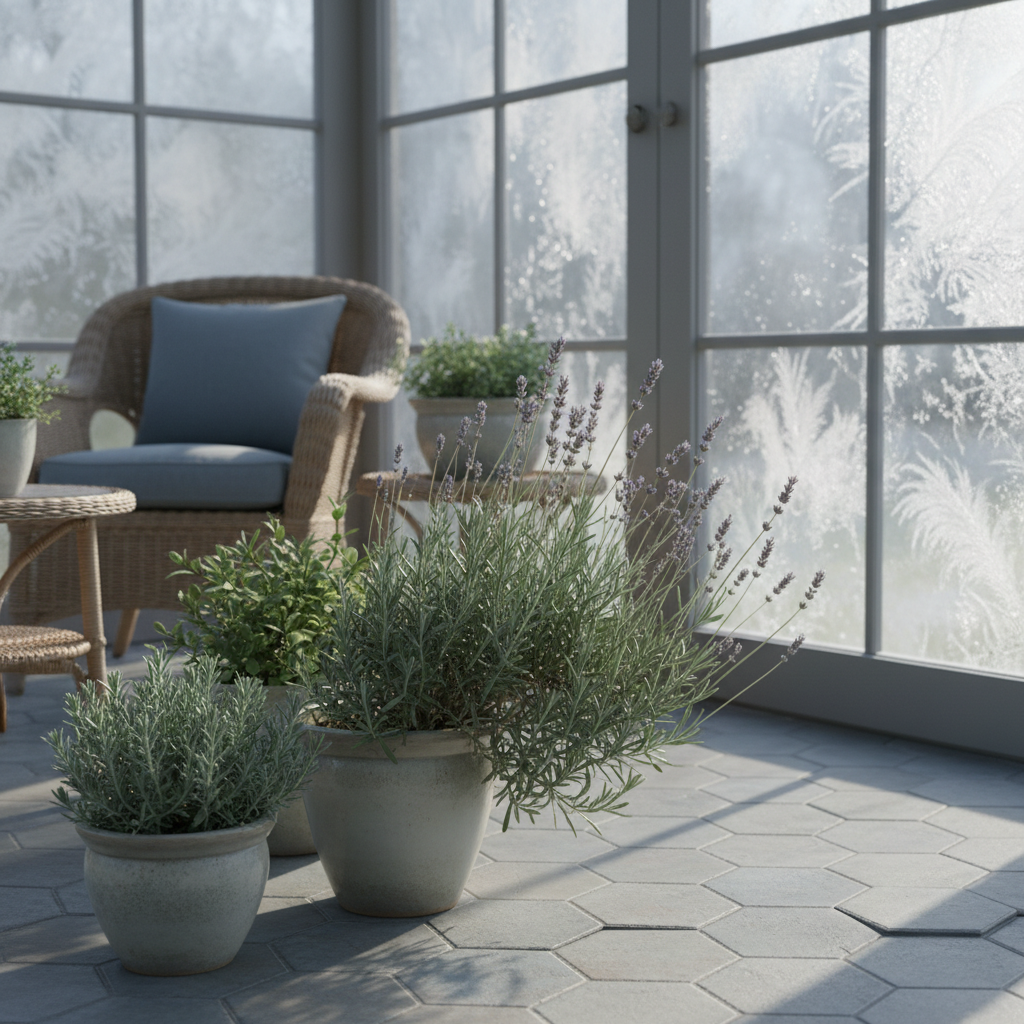
The flip side is that lavender evolved on the dry, breezy, rocky slopes of the Mediterranean basin, and the conditions in a centrally heated home are the opposite of that environment in almost every measurable way. The air is still, the humidity is moderately high, the light coming through double-glazed windows is a small fraction of unobstructed sun, the soil in a saucer-bound pot stays moist for far longer than the plant prefers, and the winter temperatures never drop low enough to trigger the cool dormancy that lavender needs to flower well the following year. A lavender on a coffee table is a plant that is slowly being killed by kindness. To grow it well indoors you need to recreate as much of its native climate as you reasonably can: blazing direct sun, sharply draining gritty soil, a porous pot, sparing water and a cold winter rest. Anything less and you will get a stretched, pale, eventually rotting shadow of the plant.
Important — Toxicity: The plant itself is generally non-toxic and the flowers are widely used in cooking and baking. However, the concentrated essential oil is a different story: it is a known skin irritant in undiluted form and can be toxic to cats, who lack the liver enzymes to metabolise linalool efficiently. Keep diffusers off, oil bottles out of reach, and do not apply lavender oil topically to pets. Eating large quantities of fresh foliage can also cause mild gastrointestinal upset in cats and dogs.
Light Requirements
Of all the variables that decide whether a lavender thrives or merely struggles on indoors, light is the single most important. Lavender is a true heliophyte: a plant whose physiology, growth habit and flowering behaviour are tuned to a daily diet of full, unfiltered sun. Anything less than about six hours of direct light a day will produce a recognisably unhappy plant, one with elongated soft stems, paler and greener foliage (instead of the characteristic silver), few or no flower spikes and a much higher susceptibility to fungal disease.
The ideal indoor placement is right against the glass of an unobstructed south-facing window in the northern hemisphere, or a north-facing one in the southern hemisphere. Even there, the plant is receiving perhaps a third of the photon flux it would receive standing outside in the open. For a potted lavender that lives indoors year-round, supplemental grow-lighting is not a luxury but a practical necessity, especially during the short days of late autumn and winter.
Light Levels Explained
The terms gardeners use to describe light intensity overlap inconsistently between catalogues and books, so it helps to anchor them in approximate measured values. The table below uses lux, the SI unit for illuminance perceived by the human eye, and notes how each category translates into a realistic indoor location and the likely outcome for a lavender placed there.
| Light Category | Approx. Level | Typical Location | Outcome |
|---|---|---|---|
| Full direct sun | 50,000 lux and above | Outdoor terrace, balcony in full sun, or pressed against an unshaded south window | Ideal. Compact silver growth, abundant flowering, full essential-oil production. |
| Bright direct (partial) | 20,000 to 50,000 lux | South or south-west window with some seasonal shading | Acceptable. Growth slightly stretched, flowering reduced but present. |
| Bright indirect | 10,000 to 20,000 lux | East window or set back from a south window | Marginal. Plant survives but rarely flowers; legginess likely. |
| Medium | 2,500 to 10,000 lux | North window or a couple of metres into a sunny room | Decline. Foliage greens up and softens, stems flop, disease risk rises. |
| Low | Below 2,500 lux | Inner room, far from any window | Failure. Plant will not last a season here. Move it or supplement. |
Window Orientation and Placement
South-facing window: The default and almost the only suitable indoor location in the northern hemisphere. Place the pot as close to the glass as possible without leaves touching it. In summer, double-glazed south-facing glass can lift the leaf-surface temperature uncomfortably high, so a metre or so of stand-off is fine during the hottest weeks.
East-facing window: Workable if the window is large and unobstructed. Lavender will lean noticeably towards the light from such a window; rotate the pot a quarter turn every week or two to even out the growth.
West-facing window: Similar to east but with hotter, lower-angle light late in the day. Acceptable for most of the year, less ideal in midsummer when the afternoon sun can scorch tender new growth.
North-facing window: Effectively unsuitable for English lavender. The light here is too cool, too low in intensity and too short in duration. A plant kept on a north window will need almost continuous grow-light supplementation to stay alive, and even then will rarely flower.
Pro Tip — Summer Outdoors: The most effective single thing you can do for an indoor-grown lavender is to move it outdoors from late spring to early autumn, into a sunny, sheltered spot on a balcony, terrace or doorstep. A summer outside undoes a lot of the cumulative weakness from winter indoors and is often the difference between a plant that flowers and one that does not.
How Light Affects Foliage Colour and Essential Oils
The famous silvery cast of lavender leaves is produced by a dense layer of branching star-shaped trichomes (microscopic hairs) on the leaf surface, which the plant evolves to deflect the intense Mediterranean sun and reduce water loss. In low light the plant produces fewer trichomes and the leaves develop a flatter, greener colour. The same trichomes house the glandular cells that synthesise the volatile oils responsible for the scent and for many of the plant’s reputed therapeutic effects. A lavender grown in shade is therefore not only paler and floppier; it is also measurably less fragrant. If you crush a leaf and smell only a faint herbal note where there should be a bright, almost piercing perfume, the cause is almost always insufficient light.
Warning — Direct Sunlight: Counter-intuitively, lavender can scorch indoors even though it loves outdoor sun. The reason is acclimation. A plant that has been kept in moderate indoor light over winter has a leaf cuticle and oil layer adapted to that low light. Moving it abruptly into all-day direct summer sun outside, or onto a south windowsill behind unfiltered glass, can bleach the leaves within days. Increase light exposure gradually over two weeks before committing to a fully sunny position.
Artificial Lighting
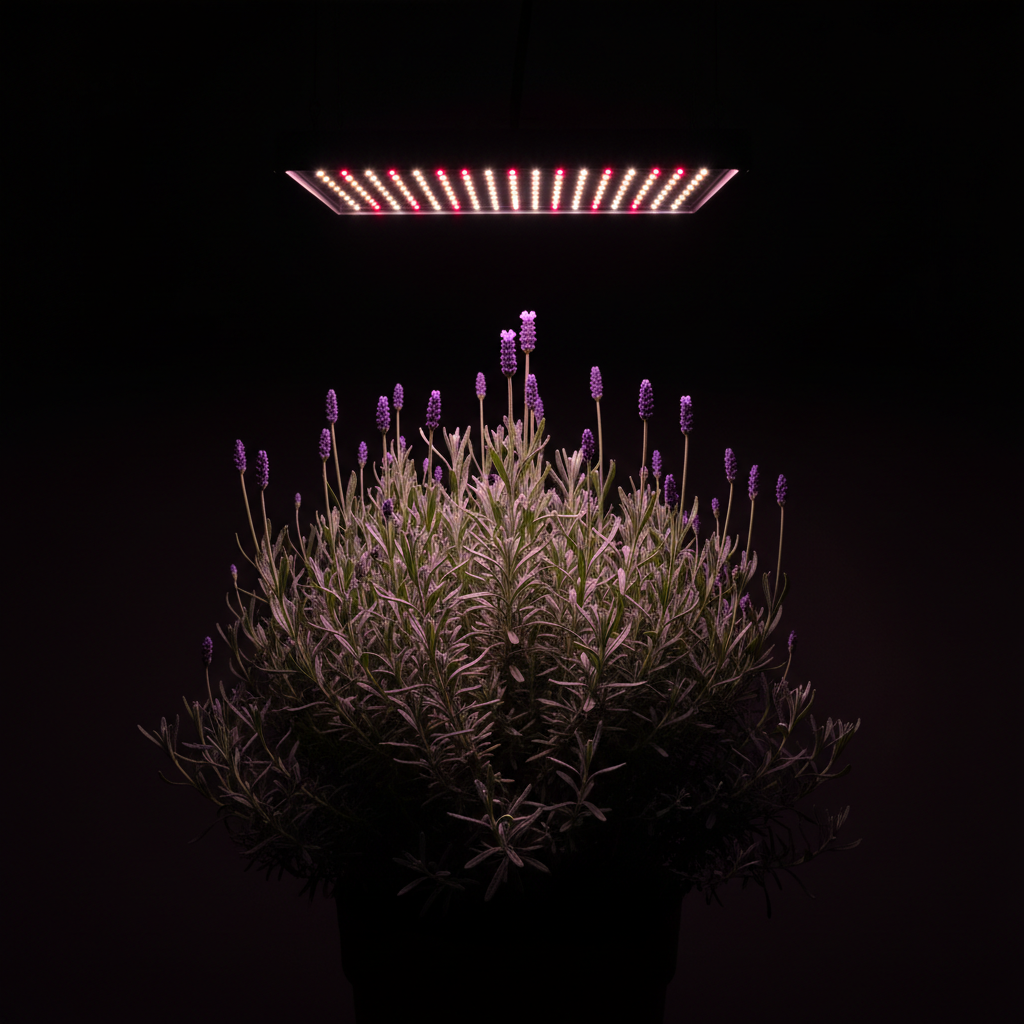
Lavender responds well to high-quality LED grow-lights and is one of the few aromatic herbs worth the investment in a serious setup. Aim for a full-spectrum fixture rated at roughly 100 to 200 micromoles of photosynthetically active radiation per square metre per second at canopy level, run for twelve to fourteen hours a day during the winter months. White-LED panels in the 3,500 to 5,000 kelvin range are easier on the eye than the older blurple panels and give comparable plant performance. Position the light 25 to 40 cm (10 to 16 in) above the canopy and adjust as the plant grows. Even a single inexpensive clip-on grow bar above a south windowsill makes a substantial difference between November and March in mid and high latitudes.
Seasonal Adjustments
Lavender experiences a strong photoperiodic and thermal cycle in its native range and benefits from a similar pattern in cultivation. From late autumn to late winter, reduce supplemental lighting if you can give the plant a cool, bright resting place; from late winter onwards increase both day length and light intensity to mimic an advancing Mediterranean spring. Plants treated this way produce noticeably more flower spikes the following summer than those kept under uniform conditions year-round.
Watering and Humidity
Almost every premature death of a cultivated lavender, whether in pot or in ground, comes down to too much water and too little air at the roots. Lavender evolved on porous, stony substrates where rainwater drains away within minutes, and its root system is shallow, fibrous and intolerant of standing moisture. Treat it as you would a Mediterranean succulent rather than a leafy houseplant, and you will avoid the great majority of problems before they start.
When to Water
The reliable cue is the soil itself. Push a clean finger 3 to 5 cm (1 to 2 in) into the mix and water only when that depth is fully dry to the touch and the pot feels noticeably light when lifted. For a small pot on a sunny windowsill in summer this might mean every five to seven days; for a larger pot on a cool autumn balcony, every two or three weeks; for an indoor plant in winter, perhaps once a month. There is no fixed schedule that works across seasons, and any care guide that gives you one is misleading you.
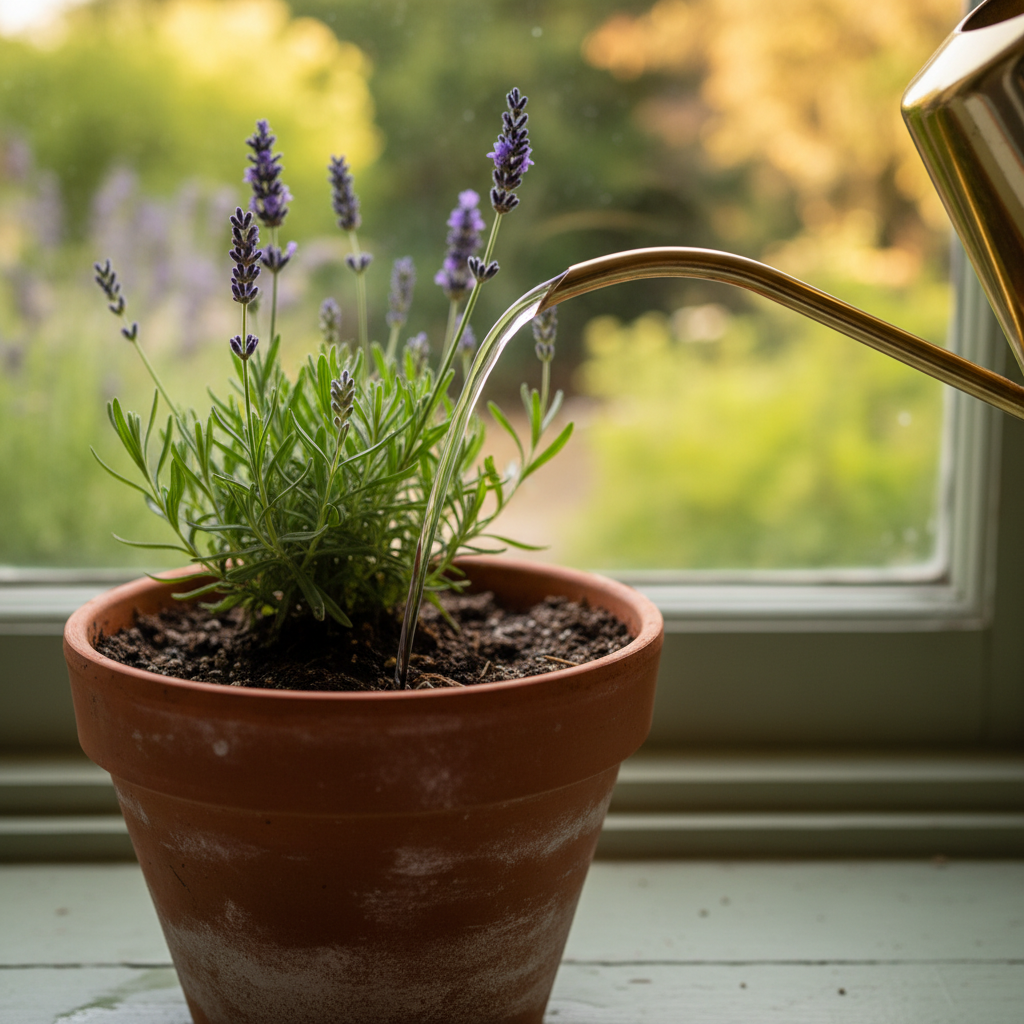
When you do water, water generously and deeply: pour slowly until water runs freely from the drainage holes, then stop. This wets the entire root ball and flushes accumulated salts. Empty the saucer within ten minutes so the roots are never sitting in a reservoir. Half-watering, where only the top centimetre is moistened, encourages the roots to grow upwards in search of moisture and weakens the plant.
Pro Tip — The Lift Test: Before reaching for the watering can, pick up the pot. A lavender that needs water feels surprisingly light; one that still has moisture at depth feels solid. With a little practice this is faster and more reliable than any moisture meter, especially in gritty mixes where prongs read low even when water is available.
How to Water Correctly
- Choose room-temperature water; rainwater or filtered water is preferable in hard-water areas, though established lavenders tolerate moderate alkalinity.
- Direct the spout at the soil surface, never at the foliage or the crown of the plant.
- Pour slowly, allowing the water to soak in rather than pool on top.
- Continue until water flows from every drainage hole at the base of the pot.
- Wait ten minutes for the pot to finish draining, then empty any standing water from the saucer.
- Return the pot to its growing position and do not water again until the next finger test confirms the top few centimetres are dry.
Signs of Overwatering vs. Underwatering
| Symptom | Overwatering | Underwatering |
|---|---|---|
| Leaf colour | Yellowing of lower leaves first, often progressing to brown | Foliage stays silver but takes on a dull, slightly grey-blue cast |
| Leaf texture | Soft, limp, sometimes blackened at the tips | Dry, brittle, may snap when bent |
| Soil surface | Persistently dark and damp; possible green algae or moss | Cracked, pulled away from the pot wall, dust-like |
| Roots | Brown, mushy, with a sour or fermented smell | Cream to pale tan, dry but intact |
| Stem base | Softening or blackening at the crown; whole branches die suddenly | Whole plant wilts uniformly but recovers within hours of a thorough soak |
Warning — Root Rot: Root rot in lavender is almost always fatal once it reaches the woody crown, because the plant cannot regenerate a new root system from a damaged base the way some softer perennials can. The disease is usually triggered by waterlogged soil rather than by infection alone, and prevention is far easier than cure. If you suspect rot, unpot the plant immediately, cut away any blackened or mushy roots with sterilised secateurs, repot into a smaller container of dry gritty mix and withhold water for at least a week.
Humidity Requirements
Lavender prefers low to moderate ambient humidity, ideally between 30 and 50 per cent. This is unusual among popular houseplants, most of which are tropical and welcome higher levels. In a typical heated home in winter the air sits at around 30 to 40 per cent, which suits the plant well. In summer, in coastal or otherwise humid climates, ambient humidity can climb above 70 per cent for weeks at a time, and this is when fungal problems on lavender become most common.
Symptoms of excessive humidity are the opposite of those most growers are trained to look for. Instead of crispy brown leaf tips, you will see grey-brown patches of soft rot on the foliage, blackened spots that spread overnight on a humid morning, and a general loss of the bright herbaceous scent. If you notice these signs, increase air movement around the plant with a small oscillating fan, space pots further apart, and avoid wetting the foliage during routine watering.
There is essentially no situation in indoor cultivation where you should be raising humidity for a lavender. Skip the pebble tray, the humidifier and any inclination to mist the leaves. The dry-air complaint that bothers tropical plants does not apply here.
Water Quality
Lavender is one of the more chemistry-tolerant houseplants. It evolved on chalky and limestone-derived soils and copes well with hard tap water, mildly chlorinated supplies and moderately alkaline conditions. If your water is exceptionally hard you may see white mineral crust accumulating on the soil surface or pot rim over time; a periodic deep flush, or an occasional watering with collected rainwater, deals with this. Avoid softened water, however, because the sodium ions added by salt-based water softeners are genuinely damaging to plant roots over time.
Soil, Potting and Repotting
If light is the single most important environmental factor for lavender, soil is a very close second. The growing medium does two jobs at once: it gives the plant a stable foothold and it determines how quickly water moves away from the roots. Standard houseplant compost, bagged for African violets or peace lilies, holds far too much water for far too long and will eventually kill an indoor lavender no matter how carefully you ration the watering can.
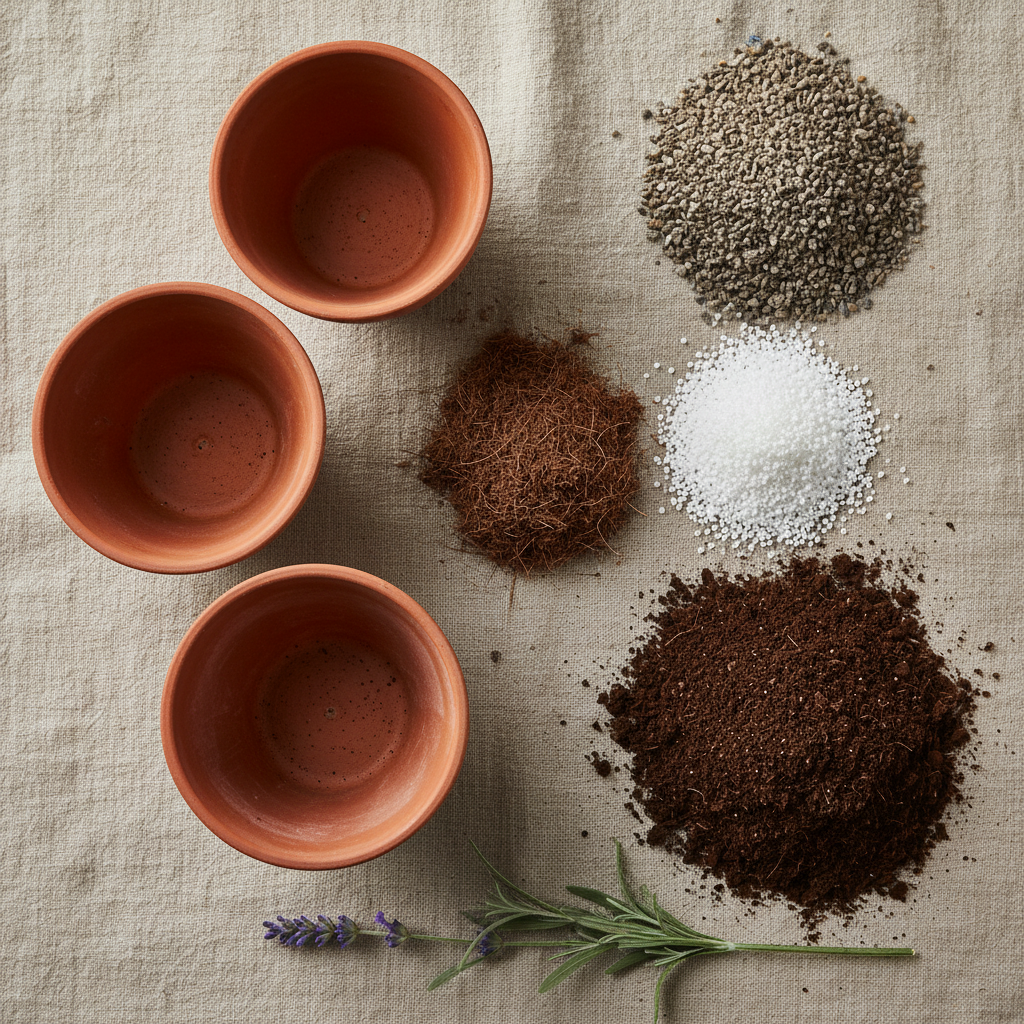
Ideal Soil Composition
A successful lavender mix is gritty, low in organic matter and structurally open. The aim is a medium through which water moves quickly during a watering and which then dries out across most of its volume within a couple of days. A practical starting point uses one part coarse horticultural grit or sharp sand, one part perlite or pumice, and one part of a lean loam-based compost such as a John Innes No. 2. Avoid peat-heavy potting mixes, coco-coir blends marketed as “moisture-retentive” and anything described as enriched or premium, since the extra organic content is precisely what you do not want here.
| Component | Proportion | Function |
|---|---|---|
| Loam-based compost (e.g. John Innes No. 2) | 1 part | Provides modest nutrition, mineral structure and pH buffering. Avoid peat-based or fertility-boosted blends. |
| Coarse horticultural grit or sharp sand | 1 part | Creates large air pockets, weights the pot for stability and mimics native stony soils. |
| Perlite or pumice (4 to 8 mm grade) | 1 part | Lightens the mix, accelerates drainage and prevents compaction over time. |
| Crushed limestone or oyster shell (optional) | 1 tablespoon per litre | Nudges pH towards alkaline, which lavender prefers; also adds slow-release calcium. |
Lavender prefers a slightly alkaline soil, ideally in the range of pH 6.5 to 7.8, though it tolerates a wider band than this. If your starting compost is markedly acidic (most peat-based mixes are below pH 6), a teaspoon of garden lime per litre of mix brings it into range. Test occasionally with an inexpensive pH meter or a strip kit if you grow lavender in pots for many years, since repeated watering with soft rainwater can gradually drift the medium back towards acidity.
Pro Tip — Quick Mix Recipe: When you do not feel like measuring, the rule of thumb is one-third grit, one-third perlite, one-third lean compost, with a small handful of garden lime worked through. Mix it dry on a sheet of newspaper, pot up, water in lightly, and you have a usable lavender medium in about five minutes.
Choosing the Right Pot
The pot matters more for lavender than for most houseplants because the material and size both affect how long the substrate stays wet. A breathable container of unglazed terracotta or natural clay loses moisture through its walls and brings the drying cycle closer to what the plant experiences in the ground. A glazed ceramic, plastic or metal pot retains water and demands more careful watering discipline from the grower.
Drainage holes are non-negotiable. A lavender will not survive long-term in a sealed cachepot. If you want a decorative outer vessel, use it as a slip cover and lift the inner pot out to water, returning it once the saucer has been emptied. A single small drainage hole is the bare minimum; multiple generous holes are better.
Pot material: Unglazed terracotta is the traditional and best choice. Its porosity wicks moisture out of the root ball, its weight stabilises a top-heavy plant, and its colour suits the silver foliage. Glazed ceramic is acceptable if you water with restraint. Plastic is usable for nursery growing but invites overwatering as a long-term home. Avoid metal containers, which heat and cool rapidly and can damage shallow roots.
Pot size: Match the pot to the root ball plus about 3 to 5 cm (1 to 2 in) of clearance on all sides, no more. Lavender resents being over-potted, because the excess volume of damp medium around the small root system stays wet for far too long. A young rooted cutting is happy in a 10 cm (4 in) pot; a flowering specimen typically lives in a 20 to 25 cm (8 to 10 in) pot for several years before needing the next size up.
When to Repot
A potted lavender typically needs repotting every two to three years, or whenever you notice that watering runs straight through the pot without wetting the medium, that the soil has shrunk visibly away from the walls, or that fine white roots are emerging from the drainage holes. The best time to repot is early spring, just as growth resumes, so that the plant has the whole growing season to settle into its new container before winter. Avoid repotting in autumn, when fresh root growth is unlikely and the disturbed plant will sit in damp mix through the dormant months.
How to Repot: Step-by-Step
- Water the plant lightly the day before repotting so the root ball holds together but is not waterlogged.
- Prepare the new pot by adding a base layer of gritty mix sufficient to bring the top of the root ball about 2 cm (0.75 in) below the rim.
- Ease the plant out of its old pot by tipping it sideways and supporting the crown; do not pull on the stems.
- Tease the outermost roots free with your fingers, removing any clearly dead or blackened tissue with sterilised secateurs.
- Position the plant centrally in the new pot at the same depth it was growing previously: never bury the woody crown.
- Fill in around the root ball with fresh gritty mix, firming gently as you go to eliminate large air pockets without compacting.
- Water in lightly, just enough to settle the medium, and place the freshly potted plant in a sheltered position out of direct midday sun for the first week to recover.
Warning — Transplant Shock: Lavender does not enjoy root disturbance and will often look dejected for two to three weeks after repotting. Resist the urge to compensate with extra water or fertiliser during this period; both will make recovery harder. New silver growth from the tips is your signal that the plant has settled and normal care can resume.
Fertilising
Lavender belongs to a small group of cultivated plants for which the most common feeding mistake is feeding at all. In its native habitat it grows on thin, mineral-poor soils that would starve most herbaceous perennials, and the rich diet of nutrients found in a typical houseplant fertiliser regime works against it. Overfed lavenders grow soft, sappy stems that flop over, lose their characteristic compact silver habit, become more attractive to aphids, and often produce fewer flowers than plants left almost entirely alone.
That said, a potted lavender exists in a closed system: the small volume of substrate has only as much fertility as you put into it, and that fertility is gradually washed out by repeated watering. A modest annual feed keeps the plant productive without tipping it into the lush-and-lazy growth pattern.
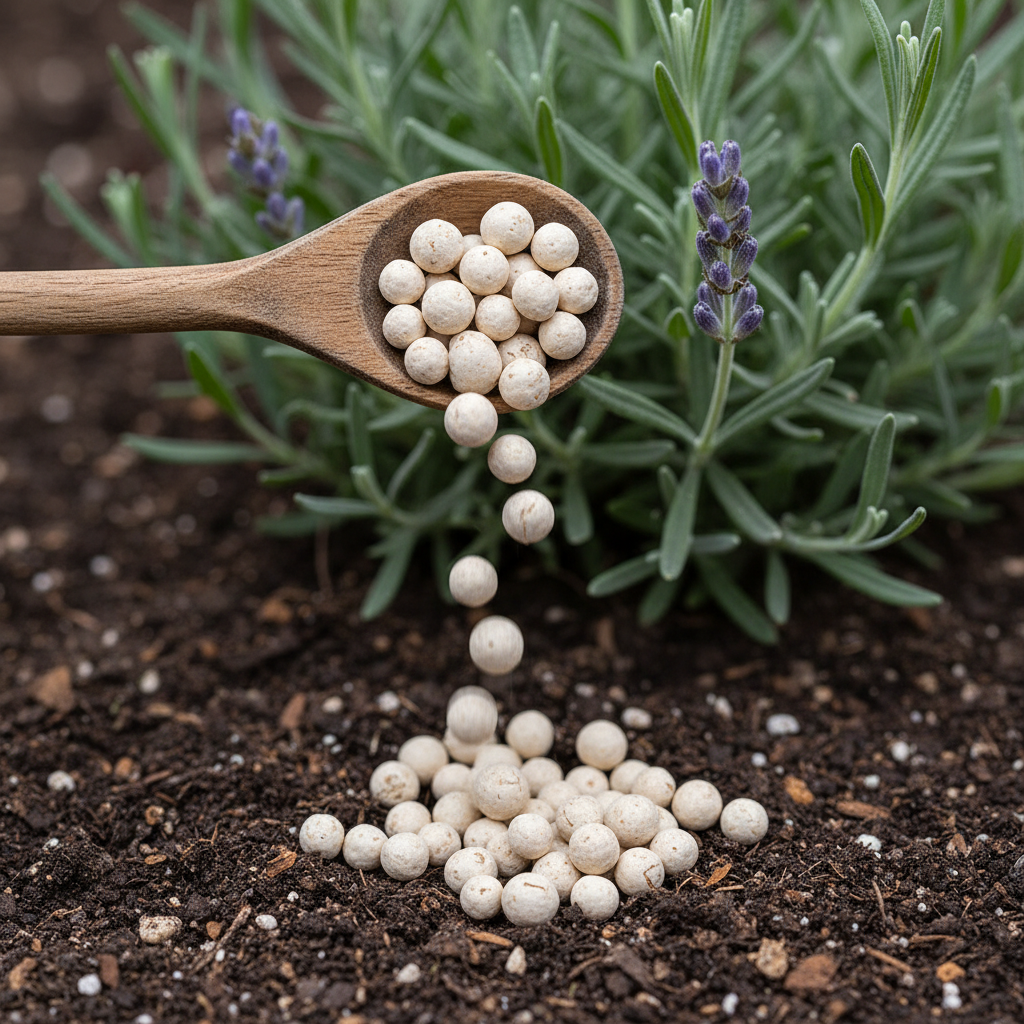
Understanding Plant Nutrients
Plant fertilisers are sold by their NPK ratio: the percentages of nitrogen (N), phosphorus (P) and potassium (K) they contain. Each macronutrient supports a different aspect of growth, and the right balance for lavender skews towards potassium and phosphorus over nitrogen, the opposite of what foliage-first houseplant feeds usually offer.
| Nutrient | Symbol | Primary Function | Deficiency Symptoms |
|---|---|---|---|
| Nitrogen | N | Drives green vegetative growth, leaf production and chlorophyll synthesis. | Older leaves turn pale yellow; growth slows. Rare in lavender unless severely starved. |
| Phosphorus | P | Supports root development, flower initiation and energy transfer. | Poor flowering, dull foliage, weak root growth. |
| Potassium | K | Regulates water balance, strengthens cell walls and supports disease resistance. | Brown leaf edges, weak stems, increased disease susceptibility. |
| Calcium | Ca | Builds strong cell walls; particularly important for alkaline-loving plants. | Distorted new growth and tip die-back. Usually adequate if lime is in the mix. |
| Magnesium | Mg | Central atom of the chlorophyll molecule and a co-factor for many enzymes. | Interveinal yellowing on older leaves while the veins themselves stay green. |
| Iron | Fe | Required for chlorophyll synthesis; less available in highly alkaline mixes. | Pale or yellow new growth; rare in well-prepared lavender mix. |
Types of Fertiliser
Liquid fertilisers: Diluted liquid feeds are precise and forgiving because you control the dose. For lavender, choose a balanced or slightly potassium-rich product (a tomato feed works well) and dilute to half the label strength. One or two applications across the entire growing season is enough.
Slow-release granular: Coated prills release nutrients slowly over three to six months and are well suited to lavender because they avoid the spikes of fertility a liquid feed creates. A teaspoon scattered around the base of the plant in early spring covers the whole growing season for most pots.
Organic fertilisers: Composted seaweed, sieved garden compost top-dressed at a few millimetres depth, or a sprinkle of bone meal in spring all provide gentle, slow nutrition without the salinity risk of synthetic feeds. Lavender pairs particularly well with seaweed-based products, which deliver useful trace elements and a small dose of potassium.
Feeding Schedule
For an in-ground lavender, no routine feeding is required at all beyond a light dressing of compost or bone meal in early spring. For a potted indoor or outdoor lavender, apply a single dose of slow-release granular feed in early spring as new growth begins, or one or two half-strength liquid feeds spaced six to eight weeks apart between April and July. Cease all feeding from late summer onwards so the plant can harden off before winter; soft, late-season growth fed by autumn fertiliser is highly vulnerable to cold damage and fungal disease.
Pro Tip — Less is More: If you remember only one rule about feeding lavender, make it this: when in doubt, do not. Far more lavenders are killed by overfeeding than have ever been killed by neglect. A plant in lean conditions concentrates its essential oils, holds its compact silver form and flowers heavily; a pampered one sprawls, greens up and disappoints.
How to Fertilise
- Water the plant a day before feeding so the roots are hydrated and not at risk of fertiliser burn.
- Mix liquid feed to half the manufacturer’s recommended strength, or measure out a level teaspoon of slow-release prills.
- Apply to the soil surface around the base of the plant, never directly onto the foliage or into the centre of the crown.
- Water in lightly so granular fertiliser reaches the root zone, or simply allow liquid feed to soak through.
- Record the date so you do not unintentionally double up later in the season.
Warning — Salt Build-Up: Frequent feeding in pots leads to a gradual accumulation of mineral salts in the substrate, visible as white crust on the soil surface or pot rim. These salts damage fine root hairs and reduce the plant’s ability to take up water. Flush the substrate thoroughly with plain water two or three times in succession every six months to wash accumulated salts out through the drainage holes.
Propagation
Lavender propagates very reliably from stem cuttings, much less reliably from seed, and not at all from leaf cuttings. Almost all named cultivars are sterile or do not come true from seed, so vegetative propagation is the only practical way to reproduce a particular plant. Fortunately, lavender is one of the most cooperative subjects for the cuttings technique: a softwood or semi-hardwood stem inserted into a free-draining medium and kept just barely moist will produce its first roots within three to four weeks.
The traditional reasons to propagate are practical and aesthetic at once. A mature lavender begins to develop a woody, hollow base after seven or eight years and gradually loses vigour, so a small batch of new cuttings every few summers ensures that you always have a young replacement on the way. Cuttings are also the cheapest possible way to plant a hedge or fill a border, and they make excellent gifts for fellow gardeners.
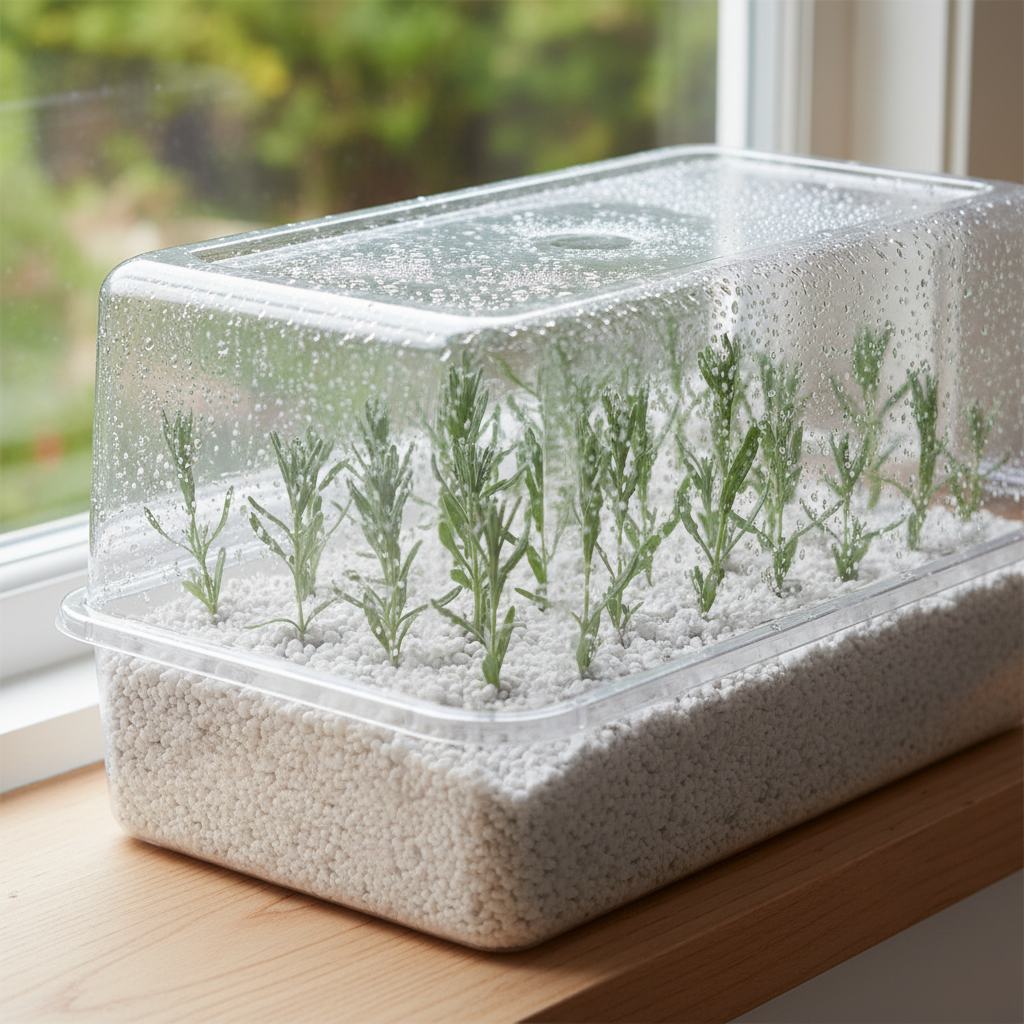
Understanding Stem Wood Stages
Lavender stems pass through three distinct stages over the course of a year, each suited to a slightly different propagation technique. Softwood is the fresh, flexible green growth produced in late spring and early summer; semi-hardwood is the firmer, partly woody growth of mid to late summer; and hardwood is the fully lignified woody stem of autumn and winter. Softwood and semi-hardwood cuttings are the most reliable for lavender. Hardwood cuttings work in theory but root slowly and are easily lost to winter wet, so most home growers stick with the warmer-season techniques.
Softwood Cuttings: Step-by-Step
The softwood method, taken in late spring or early summer before flowering, is the fastest route to a rooted plant. Aim to start the process in the morning, while the parent plant is fully turgid and the air is cool.
- Select healthy, non-flowering shoots about 8 to 10 cm (3 to 4 in) long with at least three or four pairs of leaves.
- Cut just below a leaf node with sterilised secateurs or a sharp knife; the cleaner the cut, the lower the rot risk.
- Strip the leaves from the lower half of each cutting, leaving two or three pairs at the top.
- Dip the cut end in hormone rooting powder or gel if you have it; this is helpful but not essential for lavender.
- Fill small pots or a seed tray with a 50:50 mix of perlite and coarse sand, moistened lightly.
- Use a pencil or dibber to make a hole and insert each cutting up to the lowest remaining leaves, firming gently so the stem stands upright.
- Cover loosely with a clear plastic humidity dome or a propagator lid, leaving a small ventilation gap to prevent fungal problems.
- Place in bright indirect light at around 18 to 22 degrees Celsius (65 to 72 degrees Fahrenheit); avoid direct sun, which scorches unrooted cuttings.
- Check moisture every few days and mist the medium very lightly if it begins to dry out; never let it become waterlogged.
- After three to four weeks, gently tug a cutting; resistance indicates roots have formed, and the plant can be moved out of the dome and into its first 7 cm (3 in) pot of lavender mix.
Pro Tip — Heel Cuttings: For an even higher success rate, take “heel” cuttings instead of straight cuts. Pull a side shoot downwards from a slightly older stem so it tears away with a small sliver of older wood at the base. The exposed cambium roots more readily than a fresh cut and the heel itself resists rotting.
Semi-Hardwood Cuttings: Step-by-Step
Semi-hardwood cuttings taken in late summer, after flowering has finished, are slower to root but generally produce sturdier young plants ready to face their first winter. The procedure is almost identical to softwood, with a few adjustments for the firmer material.
- Choose shoots that have begun to firm up at the base but are still flexible at the tip, again about 8 to 10 cm (3 to 4 in) long.
- Trim each cutting cleanly below a node and remove the lower leaves as before.
- Wound the base of the cutting by lightly scraping a thin sliver of bark off one side; this exposes more cambium and promotes rooting.
- Use a slightly grittier rooting medium (two parts perlite to one part sand) since semi-hardwood cuttings are more rot-prone in damp media.
- Insert cuttings into the medium and cover loosely as for softwood, but expect rooting to take six to ten weeks rather than three to four.
- Overwinter the rooted cuttings in a cool but frost-free location and pot them on individually the following spring.
Troubleshooting Propagation
| Problem | Likely Cause | Solution |
|---|---|---|
| Cuttings rot at the base | Medium too wet or insufficient air movement under the dome | Use a grittier medium, water more sparingly and leave the dome partly open for daily ventilation. |
| Leaves yellow and drop | Excess humidity or insufficient light | Move to a brighter (but still indirect) position and vent the dome more often. |
| Cuttings wilt persistently | Cuttings were taken from a stressed or thirsty parent plant | Water the parent thoroughly the day before, take cuttings in the morning, and re-cut the base before insertion. |
| Roots form but cutting fails after potting on | Sudden change in conditions from humid dome to dry air | Acclimatise gradually over a week by lifting the dome for progressively longer periods before moving to standard conditions. |
Pests and Diseases
One of lavender’s many practical virtues is its resistance to pests and diseases. The same essential oils that make the foliage smell so distinctive are also potent natural insecticides and fungicides, and a healthy lavender growing in appropriate conditions is one of the least bothered plants in the garden or on the windowsill. Most of the problems described below appear only when the plant is already stressed by insufficient light, excess moisture, poor air movement or over-fertilisation.
Indoor cultivation, with its low air movement and warmer year-round temperatures, presents a slightly different pest picture than the open garden. Aphids and whiteflies are the most common insect pests indoors; fungal diseases triggered by overly wet substrate or stagnant humid air dominate the disease list. Most indoor problems are resolved more quickly by correcting the underlying cause than by reaching for a spray.
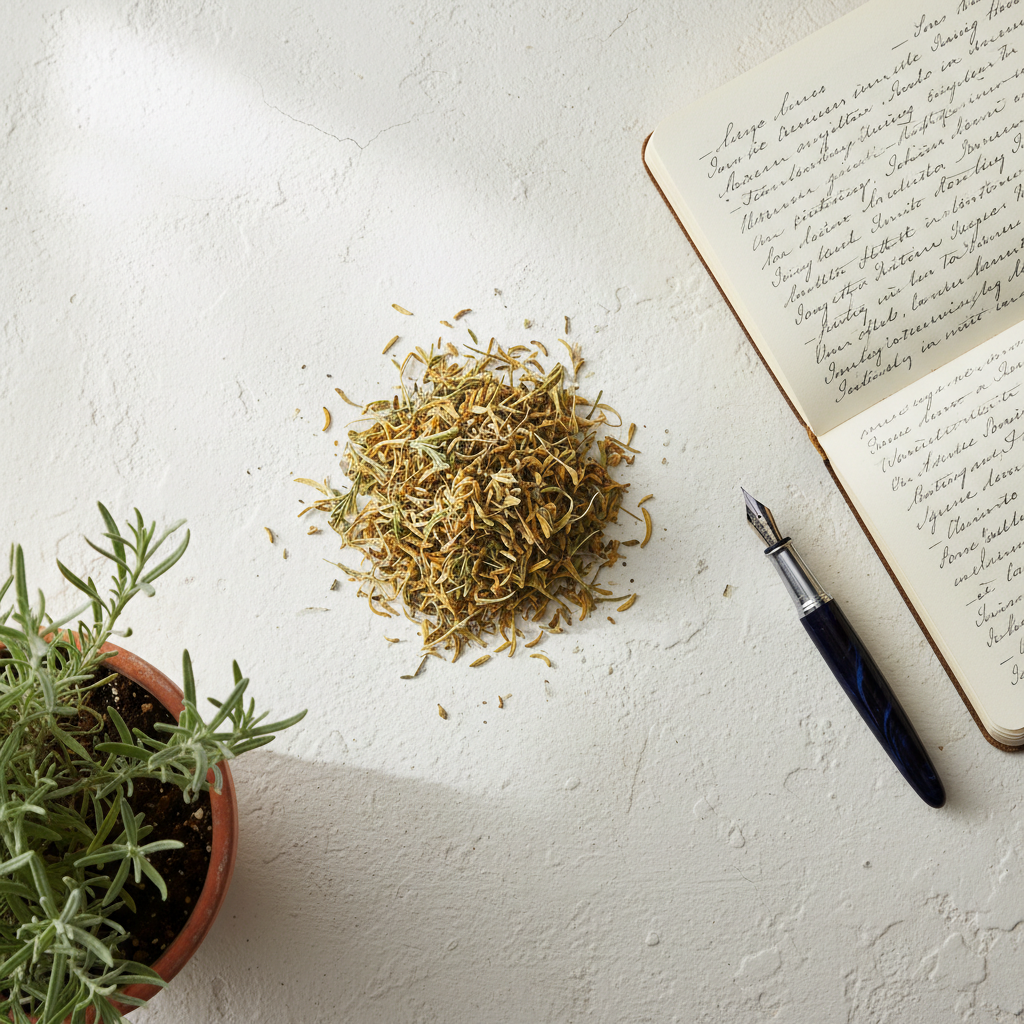
Common Pests
Aphids (Aphis gossypii and related species)
Small soft-bodied insects, typically green or grey, that cluster on the newest growth and flower buds. They feed by piercing the plant tissue and extracting sap, producing sticky honeydew that in turn attracts sooty mould. On lavender, aphid pressure rises sharply when the plant has been overfed and is producing the soft, succulent growth that aphids prefer.
Treatment: Knock visible colonies off with a strong jet of water outdoors, or wipe gently with a damp cloth indoors. For persistent infestations, an insecticidal soap spray applied weekly for three weeks clears the population. Address the underlying cause by reducing fertiliser and increasing light.
Whitefly (Trialeurodes vaporariorum)
Tiny powdery white moth-like insects that lift off in clouds when the foliage is disturbed. They feed on leaf undersides, weakening growth and leaving honeydew deposits. Whitefly is largely an indoor and greenhouse pest of lavender; outdoor plants rarely host significant populations.
Treatment: Yellow sticky traps placed at canopy height capture adults and provide a useful population estimate. Insecticidal soap or neem oil sprays at five to seven day intervals interrupt the life cycle. Improve ventilation and reduce ambient humidity to make the environment less hospitable.
Spittlebugs (Philaenus spumarius)
The nymphal stage of the meadow froghopper, recognised by the conspicuous frothy white blobs of “cuckoo spit” deposited on stems in late spring and early summer. The insect itself is small and green. Damage to the plant is generally cosmetic but heavy infestations can stunt new growth. More worryingly, spittlebugs are confirmed vectors of Xylella fastidiosa, a serious bacterial pathogen of lavender in southern Europe.
Treatment: A strong jet of water rinses the spittle away and dislodges the nymph. In regions with confirmed Xylella outbreaks, follow local plant-health guidance, as physical removal alone may not be sufficient.
Rosemary Beetle (Chrysolina americana)
A strikingly metallic green and purple-striped beetle that has become widespread on Mediterranean herbs in parts of Europe since the 1990s. Both adults and larvae chew the foliage, sometimes stripping branches. Despite its name, it attacks lavender as readily as rosemary.
Treatment: Hand-picking is effective for small populations; check the plant in the evening when beetles are most active and drop them into a jar of soapy water. For larger populations, contact insecticides containing pyrethrum applied as a directed spray reduce numbers.
Common Diseases
Root Rot (Phytophthora and Rhizoctonia species)
By a wide margin the most serious lavender disease, root rot is caused by soil-borne water moulds and fungi that thrive in cool, waterlogged conditions. Symptoms are an unmistakable sudden wilting that fails to recover after watering, blackening at the crown, and a sour, fermented smell from the root ball. Affected plants rarely recover, particularly once the woody base is involved.
Treatment: Prevention is the only reliable approach: gritty mix, generous drainage, sparing water and well-ventilated air. If caught very early, you can sometimes salvage a plant by unpotting it, washing the roots clean of old substrate, cutting away any blackened tissue and repotting into completely dry, fresh, gritty medium. Withhold water for at least a week and accept that recovery is not guaranteed.
Septoria Leaf Spot (Septoria lavandulae)
A fungal disease that produces small grey-brown spots with darker margins on the foliage, often spreading from older lower leaves upwards. The pathogen thrives in humid conditions and is much more common on plants grown in shaded, still-air positions or watered overhead.
Treatment: Remove and destroy affected foliage, improve air movement around the plant, and avoid wetting leaves during watering. Copper-based fungicides slow the spread on severely affected plants but are rarely needed if the cultural conditions are corrected.
Alfalfa Mosaic Virus (Alfalfa mosaic virus, AMV)
A viral disease that produces bright yellow mottling on the foliage, often in a chevron or mosaic pattern that radiates from the leaf veins. The virus is spread by aphids and by contaminated propagation material, and there is no cure.
Treatment: Affected plants should be removed and destroyed to prevent spread to neighbouring lavenders and other susceptible species. Control aphid populations vigorously and do not propagate cuttings from any plant showing virus symptoms.
Pest and Disease Summary
| Pest / Disease | Identification | Treatment |
|---|---|---|
| Aphids | Green or grey clusters on new growth; sticky honeydew | Strong water jet; insecticidal soap; reduce fertiliser |
| Whitefly | Powdery white insects rising in clouds; honeydew on leaves | Yellow sticky traps; neem oil; improve ventilation |
| Spittlebugs | Frothy white “cuckoo spit” on stems in spring | Rinse off with water; follow local Xylella guidance |
| Rosemary beetle | Metallic green and purple-striped adults chewing foliage | Hand-pick into soapy water; pyrethrum if severe |
| Root rot | Sudden wilting; blackened crown; sour smell | Improve drainage; cut away affected roots; usually fatal once advanced |
| Septoria leaf spot | Grey-brown spots with darker margins | Remove affected leaves; improve airflow; copper fungicide if severe |
| Alfalfa mosaic virus | Bright yellow mottling on foliage | No cure; destroy affected plants; control aphids |
Prevention Strategies
The single most effective prevention strategy for lavender is to provide the conditions in which the plant naturally flourishes. A lavender in full sun, growing in a gritty alkaline mix, watered sparingly and pruned annually to maintain a compact open structure is essentially immune to most of the problems on this list. Conversely, a plant in low light, in dense moisture-retentive compost, watered on a fixed schedule and never pruned will accumulate problems no matter how diligently you spray for each one in turn.
Annual pruning deserves particular emphasis, because it both shapes the plant and opens the canopy to the air movement that suppresses fungal disease. Trim back about a third of the previous season’s growth in late summer, after flowering has finished, taking care never to cut into bare old wood. A lavender pruned every year for its first eight years will remain compact, productive and disease-free for far longer than one allowed to sprawl unattended.
Pro Tip — Inspect the Crown: The earliest visible warning sign of trouble in lavender is rarely on the leaves. It is in the woody crown at soil level. Check this point every few weeks during the growing season for any blackening, softening, or unusual moisture. Catching crown rot at the first dark spot, before it spreads, is often the difference between losing a single branch and losing the whole plant.
Popular Varieties
The genus Lavandula contains roughly forty-seven species, but a great majority of garden and pot cultivation centres on three: Lavandula angustifolia (English lavender, the subject of this guide), Lavandula x intermedia (lavandin, a vigorous sterile hybrid between angustifolia and a related species), and Lavandula stoechas (French or Spanish lavender, with its characteristic flag-like bracts). Within L. angustifolia alone, several dozen named cultivars have been selected and bred over the last hundred years for differences in flower colour, plant size, bloom time and essential-oil profile.
For containers and small spaces, the more compact L. angustifolia cultivars are almost always the better choice than the larger lavandins, which can reach a metre across and dominate any pot smaller than 40 cm. Where space allows, growing one of each lavender group gives you a much longer combined flowering season, since the angustifolias bloom first in early summer and the lavandins follow on three to four weeks later.
| Variety | Leaf Appearance | Light Needs | Growth Rate | Availability |
|---|---|---|---|---|
| ‘Hidcote’ | Compact, silvery-grey, narrow | Full sun | Slow to moderate | Very common |
| ‘Munstead’ | Slightly broader, grey-green | Full sun | Moderate | Very common |
| ‘Royal Velvet’ | Dense, silvery, slightly upright | Full sun | Moderate | Common in specialist nurseries |
| ‘Melissa’ | Bright silver, small leaves | Full sun | Slow | Specialist |
| ‘Loddon Blue’ | Mid grey-green, fine-textured | Full sun | Moderate | Common |
| ‘Twickel Purple’ | Grey-green, slightly larger habit | Full sun | Moderate to fast | Common |
| ‘Folgate’ | Grey-green, narrow | Full sun | Moderate | Specialist |
| ‘Lady’ (seed strain) | Light grey-green, smaller | Full sun | Fast (flowers first year from seed) | Common as seed |
Featured Varieties
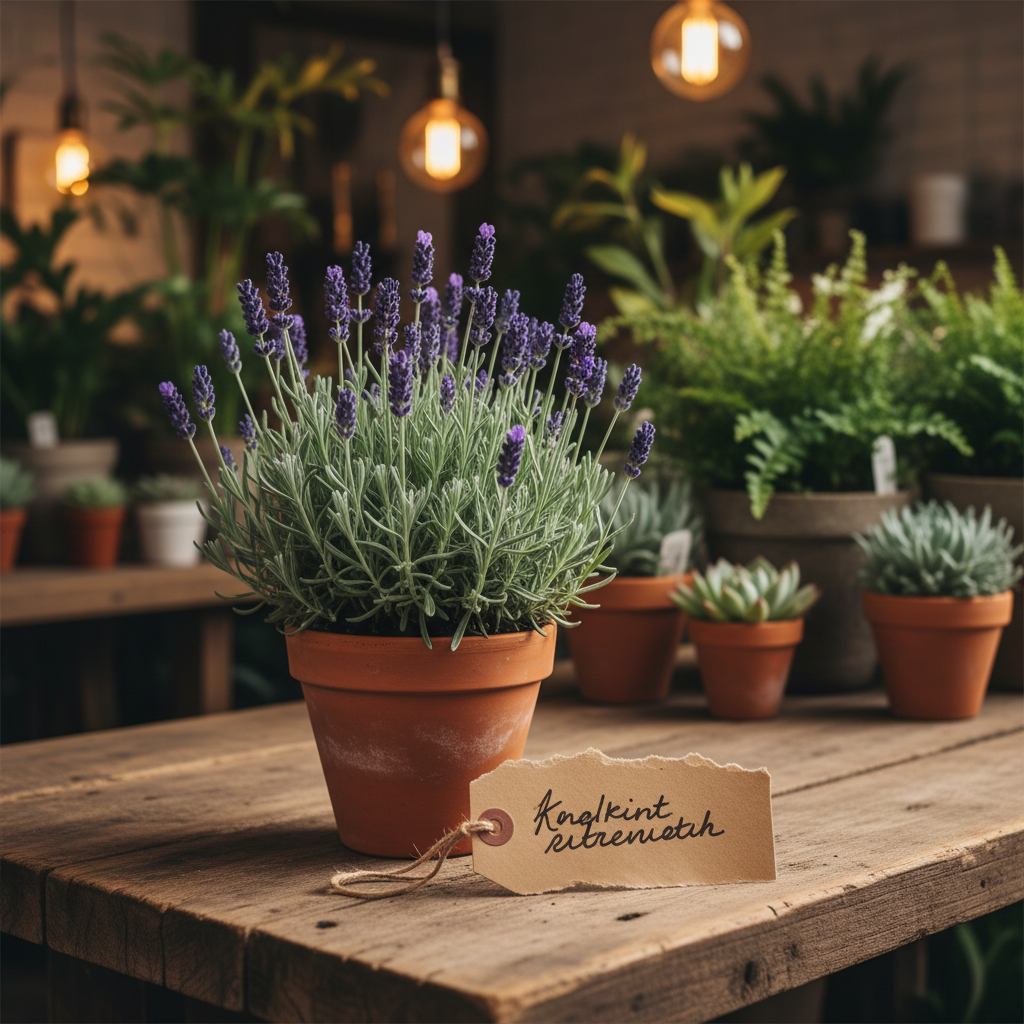
‘Hidcote’
Selected at Hidcote Manor in Gloucestershire in the 1920s, ‘Hidcote’ is the gold standard of compact English lavender. Plants form tight 40 to 50 cm (16 to 20 in) mounds of intensely silver foliage topped by short dense spikes of deep violet-purple flowers in midsummer. The compact habit and slow growth make it ideal for containers, low hedges and the front of borders. The flowers dry exceptionally well and hold their colour for years.
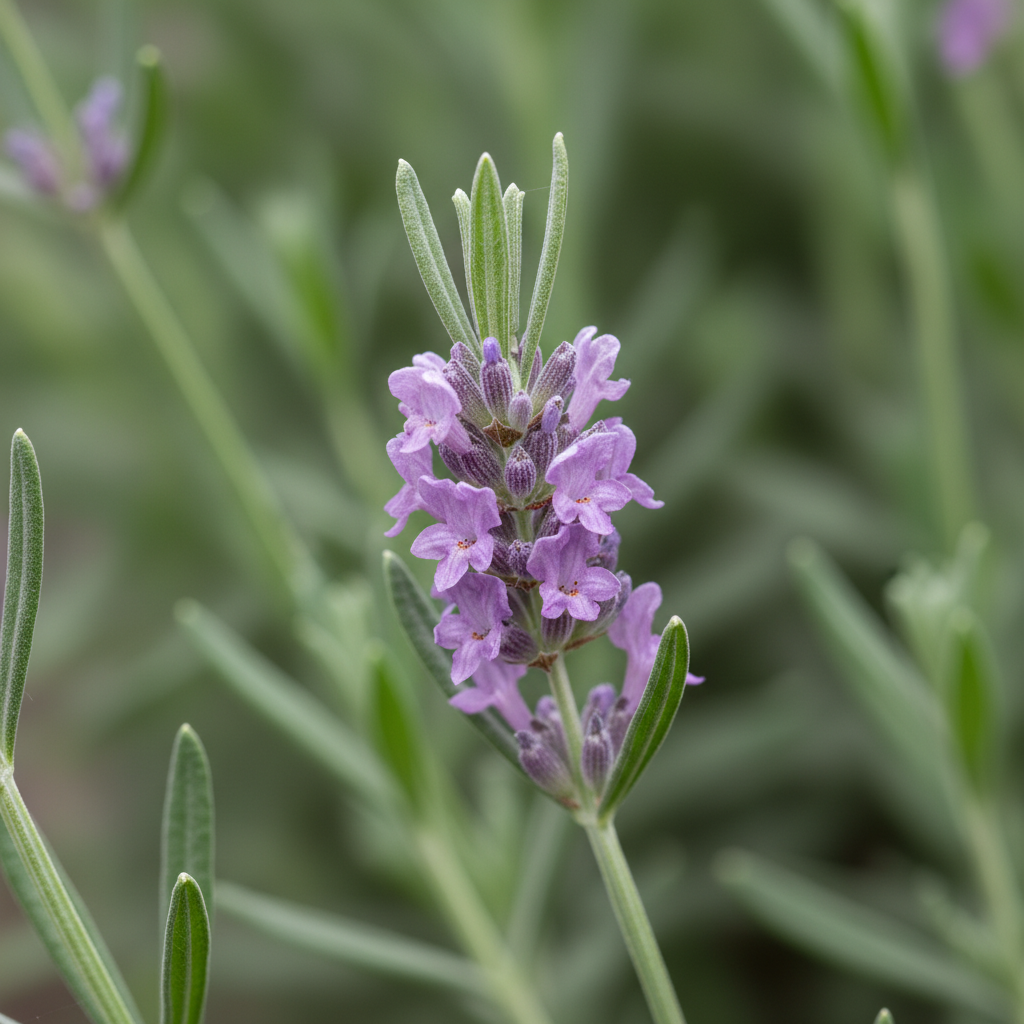
‘Munstead’
Named after Munstead Wood, the garden of the influential English designer Gertrude Jekyll, ‘Munstead’ is slightly larger and looser than ‘Hidcote’ at around 45 to 60 cm (18 to 24 in). The flower spikes are a softer lilac-mauve and the foliage tends towards grey-green rather than pure silver. The looser habit suits cottage planting schemes where the more formal compact mounds of ‘Hidcote’ would feel out of place. It also flowers slightly earlier than most other cultivars, extending the season.
Variety Profiles in Detail
‘Royal Velvet’ (Lavandula angustifolia ‘Royal Velvet’)
Bred for the cut-flower trade, ‘Royal Velvet’ produces unusually long stems (up to 70 cm / 28 in) topped by very dark, almost black-violet flower spikes. The colour holds dark when dried, making it the cultivar of choice for cut and dried floristry. As a garden plant it is slightly more demanding of moisture than the classic English forms but otherwise behaves much like ‘Hidcote’.
‘Melissa’ (Lavandula angustifolia ‘Melissa’)
A delicate cultivar with pale pink rather than the usual purple flowers. ‘Melissa’ is one of the more compact forms, reaching only around 40 cm (16 in), and is well suited to mixed pastel schemes. The flowers are smaller and the scent slightly sweeter than the classic blue-purple cultivars.
‘Loddon Blue’ (Lavandula angustifolia ‘Loddon Blue’)
An older British cultivar with rich, deep blue-violet flowers and a tidy, dense habit similar to ‘Hidcote’ but with slightly larger flower spikes. It is one of the most reliable garden cultivars in cool maritime climates such as those of the British Isles and the Pacific Northwest.
‘Twickel Purple’ (Lavandula angustifolia ‘Twickel Purple’)
Originating in the Netherlands, ‘Twickel Purple’ is named for the Twickel Estate near Delden and is distinguished by long fan-shaped flower heads where the individual spikes spread outwards from a common base. The habit is slightly larger than the classic English cultivars at about 60 cm (24 in) tall and wide.
‘Lady’ (Lavandula angustifolia ‘Lady’)
Unusually for an English lavender, ‘Lady’ is grown from seed and will flower in its first year from a spring sowing. The habit is more compact than most cultivars, around 30 to 40 cm (12 to 16 in), with bright mid-blue flowers. It is the obvious choice for gardeners who want to fill a border quickly and inexpensively from seed.
Choosing the Right Variety for Your Space
For windowsill pots and small balcony containers, choose a compact cultivar such as ‘Hidcote’, ‘Melissa’ or ‘Lady’ that will not exceed the volume of the container in its mature size. For a low hedge along a path, ‘Hidcote’ is the traditional choice for its uniform compact form, while ‘Loddon Blue’ offers richer flower colour. For cut and dried flowers, ‘Royal Velvet’ is unmatched. For cottage-garden borders where a softer, looser look is desired, ‘Munstead’ and ‘Twickel Purple’ both blend gracefully with other herbaceous perennials. And for a long combined flowering season, plant an angustifolia cultivar alongside a lavandin such as ‘Grosso’ or ‘Provence’; the angustifolia carries the early summer, the lavandin the high summer.
Frequently Asked Questions
Can I keep lavender indoors permanently?
Yes, but with effort and with realistic expectations. A lavender kept on the sunniest available windowsill, in a gritty mix, watered sparingly and given supplemental grow-lighting through winter, will survive and produce some flowers each summer. It will not look as compact, fragrant or floriferous as the same plant grown outdoors in a sunny spot, however. Most experienced growers treat indoor lavender as a temporary visitor brought in for short periods rather than a permanent resident.
Why is my lavender turning grey-brown and dying from the centre?
Centre die-back is almost always caused by one of three things: root or crown rot from excess moisture, poor air movement through a dense canopy, or simple old age in a plant that has not been pruned annually and has developed hollow woody centres. Investigate watering and drainage first, prune to open the canopy if airflow is poor, and consider taking cuttings to replace an old, woody plant rather than trying to rejuvenate it.
Should I cut off the flower spikes after they finish?
Yes. Deadheading spent flower spikes encourages the plant to put its energy back into vegetative growth rather than seed production, and it improves the visual appearance of the plant for the rest of the season. Cut just below the base of the spike, taking a few centimetres of stem with it. Many growers combine deadheading with the annual late-summer prune for efficiency.
When and how hard should I prune my lavender?
Prune once a year, in late summer, immediately after the flowers have finished. Trim back approximately one-third of the previous season’s growth, shaping the plant into a tight rounded mound. Never cut into bare, woody stems with no green growth: lavender does not reliably re-sprout from old wood and a hard cut into bare branches often kills them outright. A second much lighter tidy-up in early spring removes any winter-damaged tips.
Can I cook with English lavender?
Yes, and L. angustifolia is the species to choose for culinary use because of its sweet, balanced flavour profile. Lavandins (L. x intermedia) contain higher proportions of camphor and tend to taste medicinal in food. Use the flowers sparingly: too much lavender quickly turns a dish soapy. Classic uses include herbes de Provence blends, lavender-infused sugar for biscuits, lavender ice cream and a sprinkle into long-cooked savoury stews. Always use untreated plants grown for culinary purposes, not garden centre specimens that may have been sprayed.
Is lavender safe around cats and dogs?
The plant itself is only mildly toxic, and casual contact or a small nibble is unlikely to cause more than minor gastrointestinal upset. Concentrated essential oil is a different matter, particularly for cats, who lack the liver enzymes to metabolise linalool effectively. Keep diffusers off in rooms where cats spend time, do not apply lavender oil topically to any pet, and store essential oil bottles out of reach. As with any plant, monitor pets that show unusual interest in chewing the foliage.
How long does an English lavender plant live?
With appropriate conditions and annual pruning, an in-ground English lavender will remain productive for ten to fifteen years before declining. Container-grown plants typically have shorter lifespans of five to eight years, in part because they accumulate root-zone issues over time that an in-ground plant escapes. The traditional response to a tired old lavender is to take cuttings rather than to try to renovate the parent, since hard pruning of woody stems rarely succeeds.
My lavender flowered beautifully once and has not flowered since. Why?
The most common cause is insufficient light in the year following the original flush, often because the plant has been moved indoors or to a shadier spot. The second most common cause is over-fertilising, which pushes vegetative growth at the expense of flowering. The third is the absence of a cool winter rest: lavender needs a period of cool temperatures (below about 10 degrees Celsius / 50 degrees Fahrenheit) for several weeks to set flower buds for the next season. A plant kept in a uniformly warm room year-round may never bloom again.
Can I grow lavender from grocery-store seeds or supermarket bunches?
Seeds: yes, but only if you choose a named seed-strain variety such as ‘Lady’. Most named cultivars do not come true from seed and many are sterile. Supermarket bunches: usually no. Cut lavender stems sold for floristry are normally fully woody and have already flowered; even fresh-cut bunches root very poorly compared to specifically chosen softwood or semi-hardwood cuttings taken from a living plant.
What is the difference between English lavender, French lavender and lavandin?
English lavender (L. angustifolia) is the hardiest, finest-scented and most culinarily prized species, with classic narrow leaves and slim flower spikes. French or Spanish lavender (L. stoechas) has distinctive flag-like coloured bracts on top of each flower spike and is less cold-hardy, often grown as an annual in cooler climates. Lavandin (L. x intermedia) is a sterile hybrid between angustifolia and a related species; it produces much larger plants with longer stems and is the source of most commercial lavender essential oil, though its scent is sharper and more camphoraceous than that of true English lavender.






