
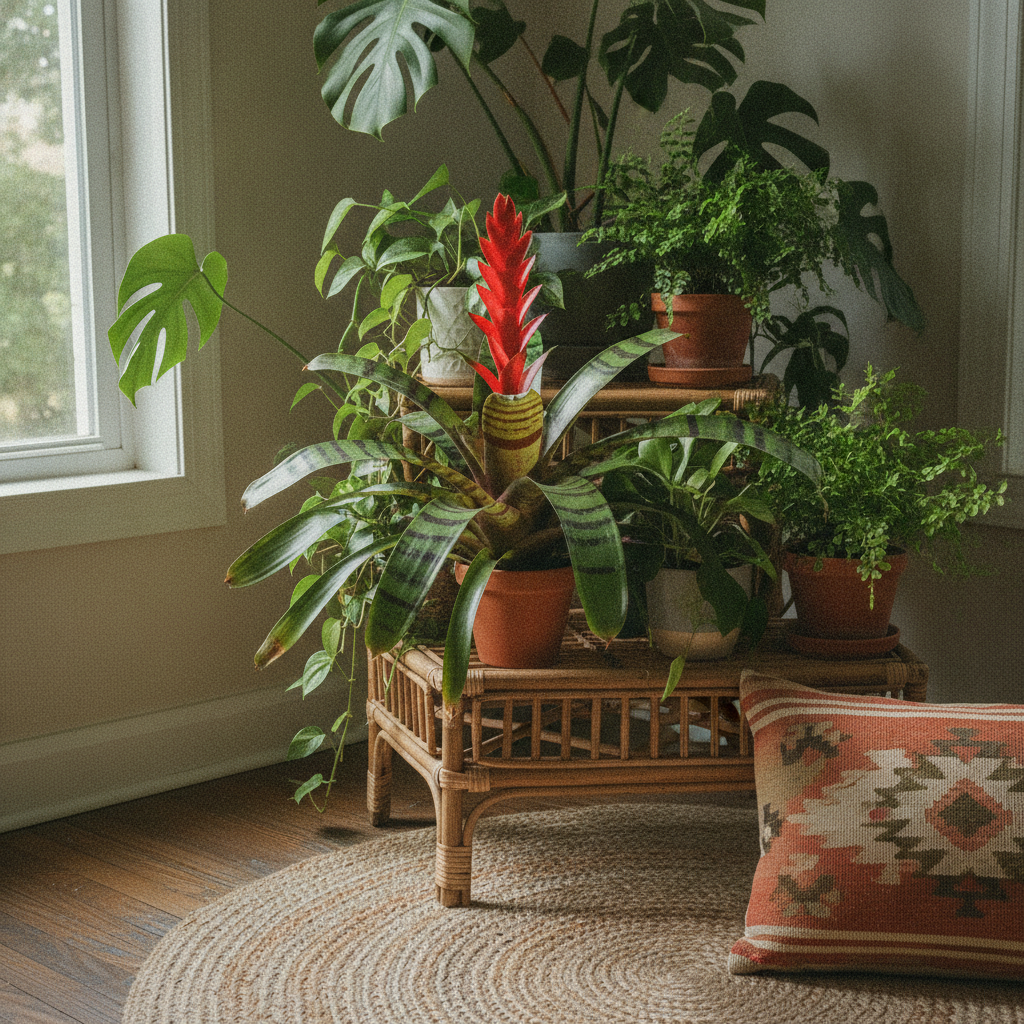
Few houseplants announce themselves quite as boldly as the flaming sword bromeliad (Vriesea splendens), a tank-forming epiphyte from the humid lowland rainforests of eastern Venezuela, Guyana, the Guianas, Trinidad and northern Brazil. Its name comes from the dramatic inflorescence: a tall, flattened, sword-shaped spike that rises straight from the centre of the rosette and glows a brilliant scarlet-red, edged with small yellow flowers that emerge one by one over several weeks. Even out of bloom the plant earns its place, because the broad, arching, strap-like leaves are marked with dark maroon-purple cross-banding that gives rise to its other common name, the zebra bromeliad.
The flaming sword has a reputation as one of the easier bromeliads to keep indoors, and that reputation is largely deserved. It asks for warmth, soft water in its central cup and protection from scorching sun, and in return it tolerates the average living room better than most of its rainforest relatives. The gap between merely surviving and genuinely thriving, however, comes down to a handful of details that are easy to get wrong: water quality, the way moisture is delivered, and the understanding that this is a once-flowering plant whose real future lies in the offsets it leaves behind. This guide covers all of it, from light and watering through to propagating the next generation.
Contents
- Quick Reference
- Why the Flaming Sword Bromeliad Makes a Striking Houseplant
- Light Requirements
- Watering & Humidity
- Soil, Potting & Repotting
- Fertilising
- Propagation
- Pests & Diseases
- Popular Varieties
- Frequently Asked Questions
Quick Reference: Flaming Sword Bromeliad at a Glance
| Light | Bright, indirect light; shield from harsh direct sun |
| Watering | Keep the central cup topped up with soft water; let the potting mix dry slightly between waterings |
| Temperature | 18 to 27°C (64 to 81°F); avoid anything below 13°C (55°F) |
| Humidity | Moderate to high, ideally above 50 per cent |
| Fertiliser | Weak, quarter-strength feed two or three times across the growing season |
| Toxicity | Non-toxic to cats, dogs and humans |
Why the Flaming Sword Bromeliad Makes a Striking Houseplant
The flaming sword belongs to the family Bromeliaceae, the same New World family that gives us the pineapple and the wispy grey Spanish moss draped over southern oak trees. Within that family Vriesea splendens sits among the so-called tank bromeliads, plants that have evolved a watertight central reservoir formed by the overlapping bases of their leaves. In the wild this rosette perches on tree branches as an epiphyte, gathering rainwater and falling debris in its cup and drawing much of its moisture and nutrition through specialised scales on the leaves rather than through an extensive root system. Understanding that single fact, that the plant is built to drink from its centre rather than its roots, explains almost everything about how to care for it well.
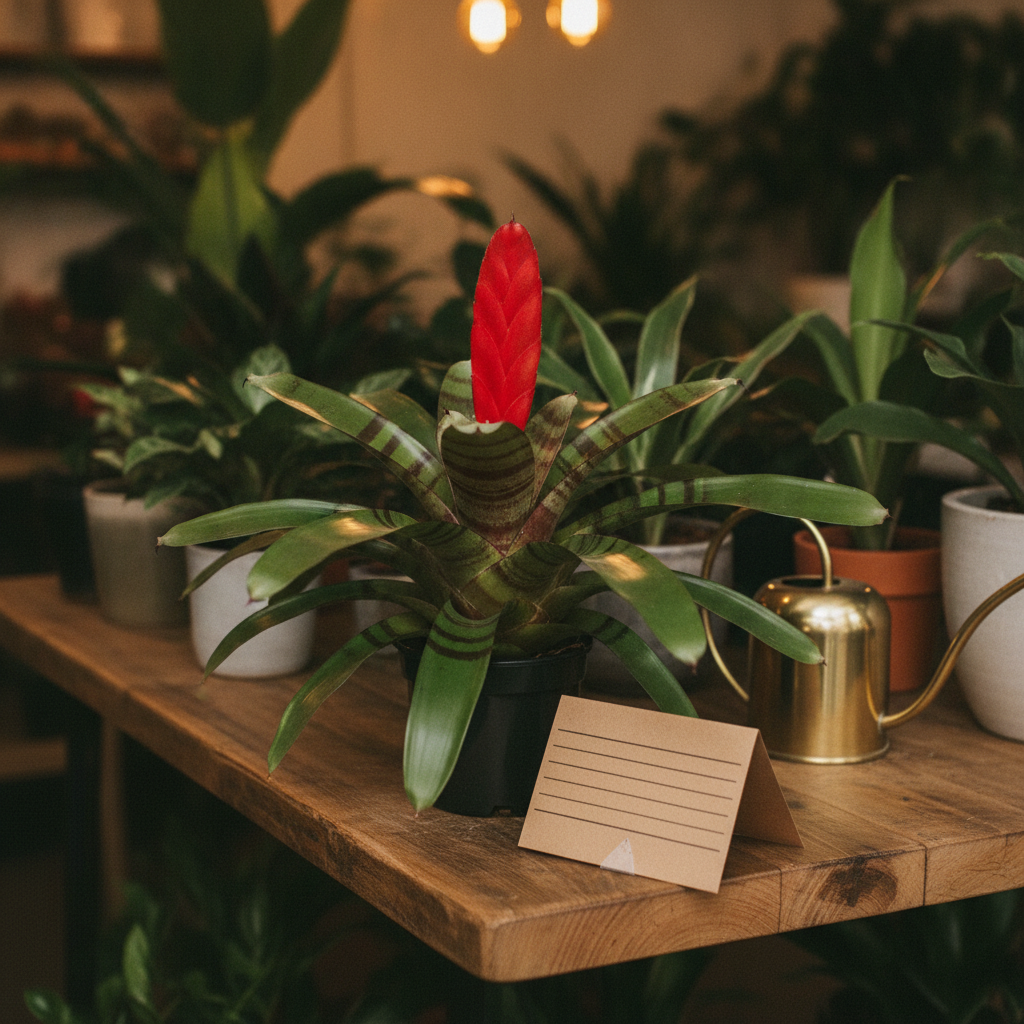
As a decorative plant the appeal is twofold. The foliage alone makes a quiet, architectural statement, its arching green straps overlaid with bands of deep burgundy that read almost black in low light. Then, usually once the plant reaches maturity at three to five years old, it sends up the famous flaming sword: a slender, paddle-flat bract that can reach 60 centimetres (24 inches) or more and holds its fiery colour for two to three months, far longer than the brief true flowers tucked along its edges. It is one of the longest-lasting displays in the houseplant world, which is part of why the flaming sword has been a florist staple since the Victorian era.
Important — Toxicity: Good news for pet owners. Vriesea species are listed as non-toxic to cats and dogs by the ASPCA, and the plant poses no poisoning risk to humans. The leaf tips can be firm and the leaf edges slightly abrasive, so curious pets may simply find it unpalatable rather than dangerous.
Light Requirements
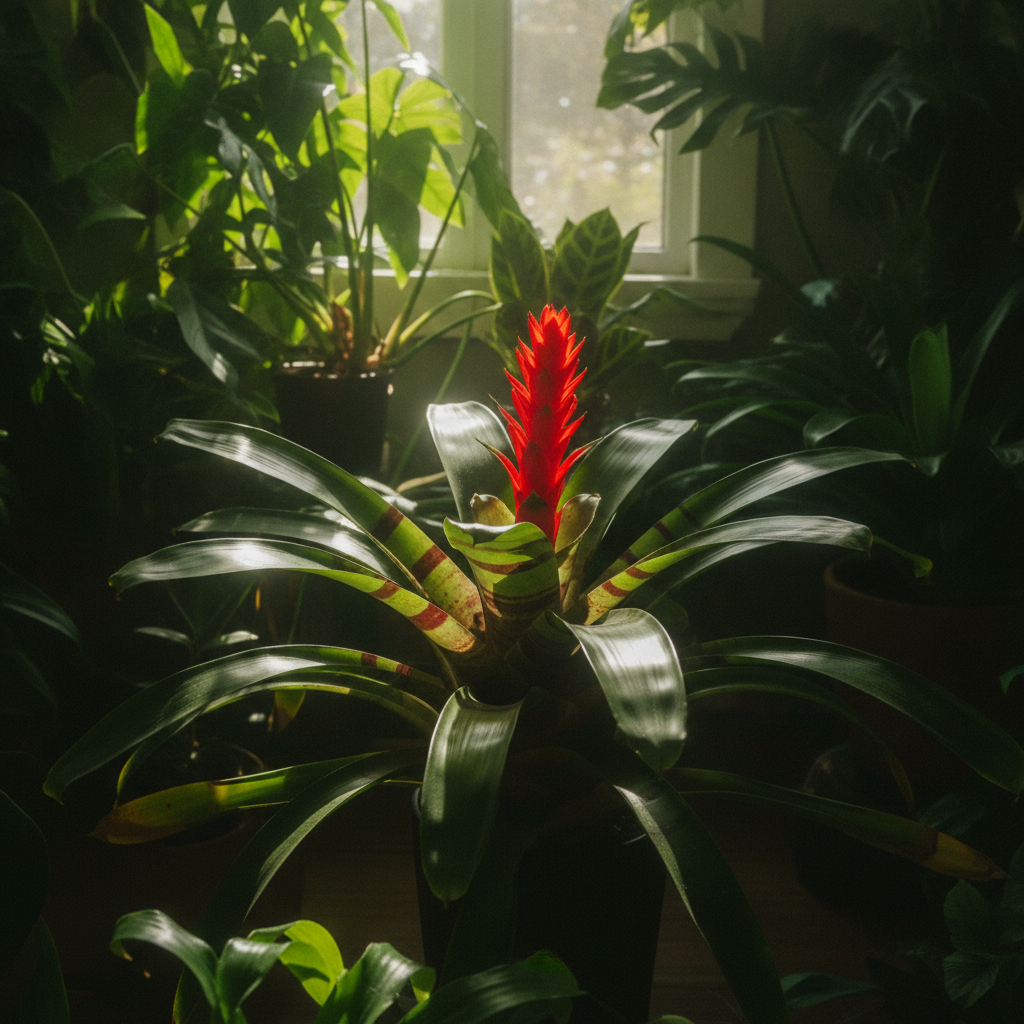
In its native canopy the flaming sword grows in dappled shade, catching bright light filtered through the leaves of taller trees rather than full tropical sun. Recreating that condition indoors means giving it plenty of light without ever letting midday sun fall directly on the leaves for long. Bright, indirect light is the target, and a plant that receives it will hold its banding crisply and stand the best chance of producing its bract.
Too little light is the more common mistake. In a dim corner the leaves stretch, lose their contrast and turn a flat, soft green, and a plant kept in gloom for months will almost never flower. Too much light is the opposite failure: under harsh sun the foliage bleaches to a yellowish, washed-out tone and may develop dry brown scorch patches that never recover. The sweet spot sits comfortably between the two.
Light Levels Explained
Houseplant light is often described in vague terms, so the table below translates the usual categories into rough lux values and the practical outcome you can expect from a flaming sword in each.
| Light Category | Approx. Level | Typical Location | Outcome |
|---|---|---|---|
| Direct sun | Over 50,000 lux | On a south sill in summer | Risk of bleaching and scorch |
| Bright indirect | 15,000 to 30,000 lux | Near an east window or a metre back from a south one | Ideal; strong colour, best chance of flowering |
| Medium | 8,000 to 15,000 lux | Interior of a bright room | Healthy but slower; flowering less reliable |
| Low | 2,000 to 8,000 lux | North-facing room, away from the glass | Survives but stretches and fades |
| Very low | Under 2,000 lux | Hallway or windowless nook | Slow decline; not recommended |
Window Orientation and Placement
South-facing window: The brightest exposure in the northern hemisphere. A flaming sword can thrive here provided it is set a metre or so back from the glass or screened with a sheer curtain, so it receives the brightness without the direct beam.
East-facing window: Arguably the perfect spot. Gentle morning sun is rarely strong enough to scorch, and the plant can sit right on or beside the sill enjoying several hours of soft direct light before the day heats up.
West-facing window: Workable, but the afternoon sun here carries more heat than the morning equivalent, so a little distance from the glass or a light curtain helps during summer.
North-facing window: The dimmest aspect. A flaming sword will hold on directly in front of a north window, but growth slows and flowering becomes unlikely. Consider supplementing with a grow light if this is your only option.
Pro Tip — Even Light All Round: Bromeliad rosettes grow symmetrically and look their best from every angle. Give the pot a quarter turn each time you water so that one side does not lean towards the light while the other thins out.
How Light Affects Leaf Colour and Flowering
The dark cross-banding that gives the zebra bromeliad its nickname is itself a light-dependent feature. In strong indirect light the pigment deepens and the contrast between the green and the maroon bands sharpens, while in shade the bands fade towards a uniform green. Light also governs flowering: a mature plant that has banked enough energy in bright conditions is far more likely to initiate its bract, whereas a shade-grown specimen may stay vegetative indefinitely.
Warning — Direct Sunlight: A flaming sword moved abruptly from a shop’s interior to a sunny sill can scorch within a single afternoon. Acclimatise any new plant over a week or two, increasing its light exposure gradually, and never leave it pressed against hot summer glass.
Artificial Lighting
The flaming sword responds well to supplemental light, which makes it a candidate for homes without a good window. A full-spectrum LED grow light positioned 30 to 45 centimetres (12 to 18 inches) above the rosette and run for ten to twelve hours a day will keep colour and growth strong. Many growers find that a consistent artificial photoperiod is actually more reliable for triggering bloom than fluctuating natural light.
Seasonal Adjustments
Light intensity indoors falls sharply between autumn and late winter. As the days shorten, move the plant closer to its window or to a brighter aspect to compensate, then ease it back in spring as the sun strengthens to avoid the sudden jump that causes scorch. A plant that looked happy in a south room all winter may need to retreat a little once June arrives.
Watering & Humidity
Watering a flaming sword is unlike watering almost any other houseplant, because the most important reservoir is not the pot but the central cup formed by the leaf bases. This tank is the plant’s primary source of moisture and a place where it absorbs nutrients directly. Keeping it correctly filled, and keeping the water in it fresh, is the single biggest factor in growing this bromeliad well.
When to Water
Aim to keep the central cup roughly a third to half full at all times, and top it up before it runs dry. The potting mix is a secondary concern: it should be kept lightly moist during active growth but allowed to dry on the surface between waterings, because the shallow roots resent sitting in constant wet. In practice this means checking the cup every few days and giving the mix a modest drink only when the top couple of centimetres feel dry.
Crucially, the water in the cup must not be allowed to stagnate. Stale water encourages rot in the crown, the most common way these plants are lost. Every week or two, tip the old water out by gently leaning the rosette over a sink and refill with fresh, so the reservoir is regularly flushed rather than left to fester.
Pro Tip — Mind the Water Type: Bromeliads are sensitive to the minerals and chlorine in hard tap water, which can leave crusty deposits in the cup and brown the leaf tips. Use rainwater, distilled water or filtered water wherever possible, especially in the central tank.
How to Water Correctly
- Check the central cup first. If it is less than a third full, move on to refilling it.
- Pour soft, room-temperature water slowly into the centre of the rosette until the cup is about half full. Avoid overfilling, which simply spills.
- Once a week or two, empty the cup completely before refilling to prevent the water turning stagnant.
- Feel the potting mix. If the top two centimetres are dry, water the mix until a little drains from the base, then discard what collects in the saucer.
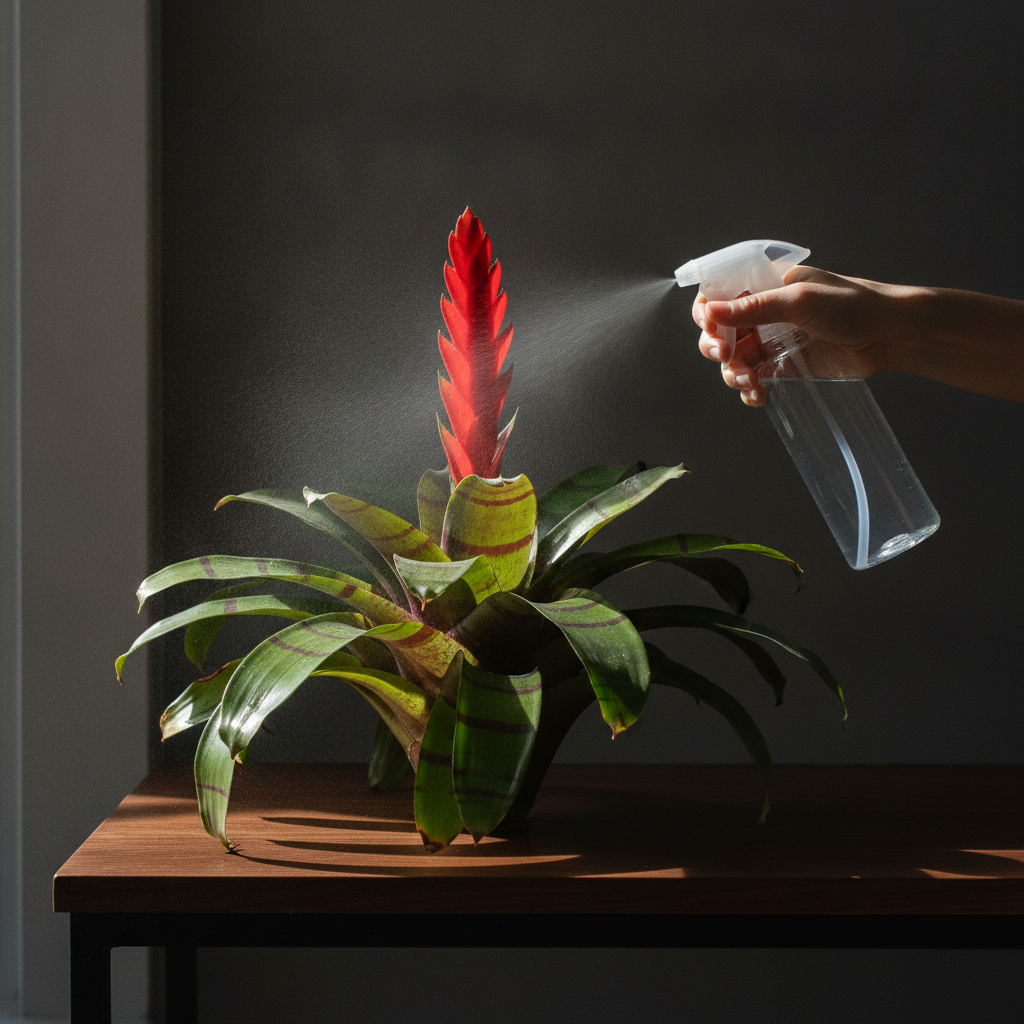
- Mist the foliage occasionally between waterings, particularly in dry indoor air, to mimic the humidity of the plant’s natural home.
- Reduce both cup and mix watering in winter when growth slows and the plant uses far less.
Signs of Overwatering vs. Underwatering
| Symptom | Overwatering | Underwatering |
|---|---|---|
| Leaf colour | Pale, yellowing inner leaves | Dull, slightly greyed foliage |
| Leaf texture | Soft, mushy bases near the crown | Thin, curling or wrinkled leaves |
| Leaf tips | Browning from a rotting base outward | Crisp brown tips from dryness |
| Central crown | Soft, foul-smelling, pulls away easily | Dry but firm |
| Roots | Blackened and slimy | Dry and brittle |
Warning — Crown and Root Rot: If the centre of the rosette turns soft and the inner leaves lift out with a gentle tug, crown rot has set in, almost always from stagnant cup water or a waterlogged mix. Tip out the cup, move the plant somewhere airier and drier, and hope any offsets at the base survive, as a rotted crown rarely recovers.
Humidity Requirements
As a rainforest epiphyte the flaming sword appreciates humidity above 50 per cent and will look its best in the 50 to 70 per cent range. It tolerates ordinary household air better than fussier bromeliads, but very dry conditions, such as a room with winter central heating running hard, take a visible toll.
The first sign of air that is too dry is browning, papery leaf tips and edges. The banding may also look less vivid, and any developing bract can fail to expand fully. None of this is immediately fatal, but it dulls the plant and, over time, weakens it.
Raising humidity is straightforward. Group the plant with other houseplants so they share the moisture they transpire, stand the pot on a tray of damp pebbles kept topped up with water, or run a small humidifier nearby during the driest months. A bathroom or kitchen with good light is often the happiest home of all, since both rooms tend to stay naturally more humid.
Water Quality
It is worth repeating because it matters so much: water quality is more important for bromeliads than for nearly any other common houseplant. The leaf scales that line the cup and foliage are efficient at absorbing whatever is in the water, including the dissolved salts and chlorine of hard tap supplies. Over weeks these accumulate, scorching leaf tips and leaving white mineral crusts. Rainwater is ideal and free; distilled or reverse-osmosis water is the next best thing; and if you must use tap water, letting it stand uncovered overnight allows some chlorine to dissipate before it reaches the plant.
Soil, Potting & Repotting
Because the flaming sword is an epiphyte, its roots evolved to anchor it to bark and to take up the occasional drink, not to mine a dense volume of soil. This makes the potting medium less about feeding the plant and more about holding it upright while draining almost instantly. An ordinary bag of houseplant compost, which stays wet and airless, is exactly the wrong choice and a fast route to root rot.
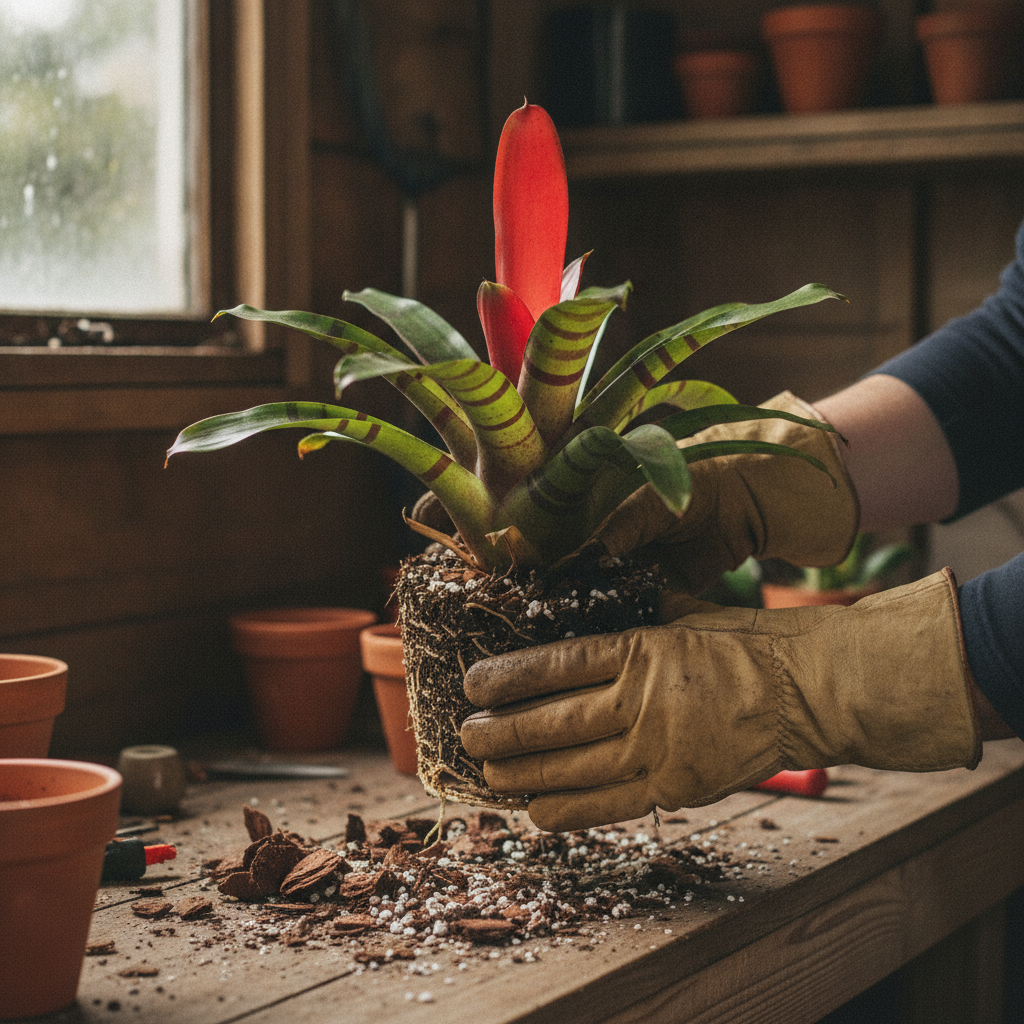
Ideal Soil Composition
The goal is an open, chunky, fast-draining mix that lets air reach the roots. A dedicated bromeliad or orchid mix works well straight from the bag, or you can blend your own from a few common ingredients to achieve the same airy structure.
| Component | Proportion | Function |
|---|---|---|
| Orchid bark | Roughly half | Creates large air pockets and mimics the bark the plant clings to in nature |
| Perlite or pumice | About a quarter | Keeps the mix loose and sharply drained |
| Coco coir or peat-free compost | About a quarter | Holds just enough moisture without becoming dense |
| Horticultural charcoal | A small handful | Keeps the mix sweet and resists souring |
The flaming sword prefers a slightly acidic root zone, somewhere around pH 5.0 to 6.0, which a bark and coir based mix provides naturally. There is no need to test or adjust this for a houseplant; simply avoiding lime-heavy garden soils keeps it in range.
Pro Tip — Quick Mix Recipe: No specialist ingredients to hand? Combine two parts orchid bark, one part perlite and one part peat-free houseplant compost. It drains freely, holds the rosette steady and suits the flaming sword far better than straight potting soil.
Choosing the Right Pot
The flaming sword has a small, shallow root system and a top-heavy rosette, which shapes the kind of pot it wants. Smaller is generally better, both because the roots fill little space and because a heavier, more stable pot stops a flowering plant toppling over.
Drainage holes are non-negotiable. Whatever container you choose must drain freely from the base. A decorative cover pot with no holes will trap water around the roots and undo all the work of an airy mix, so if you use one, lift the plant out to water and let it drain before returning it.
Pot material: Terracotta is a sound choice because its porous walls wick away excess moisture and add weight low down, counterbalancing the tall bract. Plastic and glazed ceramic work too, but watch your watering more carefully since they hold moisture longer.
Pot size: A pot only a little wider than the root ball is plenty. Resist the urge to pot up into a large container, as the surplus mix simply stays wet and invites rot. Many growers keep a flaming sword in the same modest pot for its whole life.
When to Repot
A flaming sword rarely needs repotting for the sake of its roots, which grow slowly and stay compact. The usual reasons to repot are to refresh a mix that has broken down and gone soggy after a couple of years, to settle a newly bought plant into a more suitable medium, or to pot up offsets once they have been separated. The mother plant, having flowered once, will not be repotted to grow larger because it is already at the end of its life cycle.
How to Repot: Step-by-Step
- Water lightly a day ahead so the plant is hydrated but the mix is not sodden.
- Ease the rosette out by tipping the pot and supporting the base, rather than pulling on the leaves.
- Gently tease away the old, spent mix from the roots, removing any that is broken down or smells sour.
- Inspect the roots and trim away anything blackened or mushy with clean scissors.
- Settle the plant into fresh, chunky mix at the same depth it sat before, never burying the crown.
- Firm the mix just enough to hold the rosette steady, keeping it loose and airy.
- Refill the central cup with soft water and return the plant to bright, indirect light.
Warning — Transplant Shock: Never bury the base of the leaves when repotting. If the crown is set too deep, water collects against it and rot quickly follows. Keep the rosette sitting proud of the mix exactly as it grew before.
Fertilising
The flaming sword is a light feeder, and the most common fertilising error is generosity. In the wild it makes do with the dilute nutrients washed into its cup from rain and decaying leaf litter, so heavy or frequent feeding does more harm than good, scorching the leaf tips and weakening the plant.
Treat feeding as an occasional supplement rather than a routine. A weak, balanced fertiliser applied a handful of times across spring and summer is all this bromeliad needs to stay strong and to fuel its eventual bract.
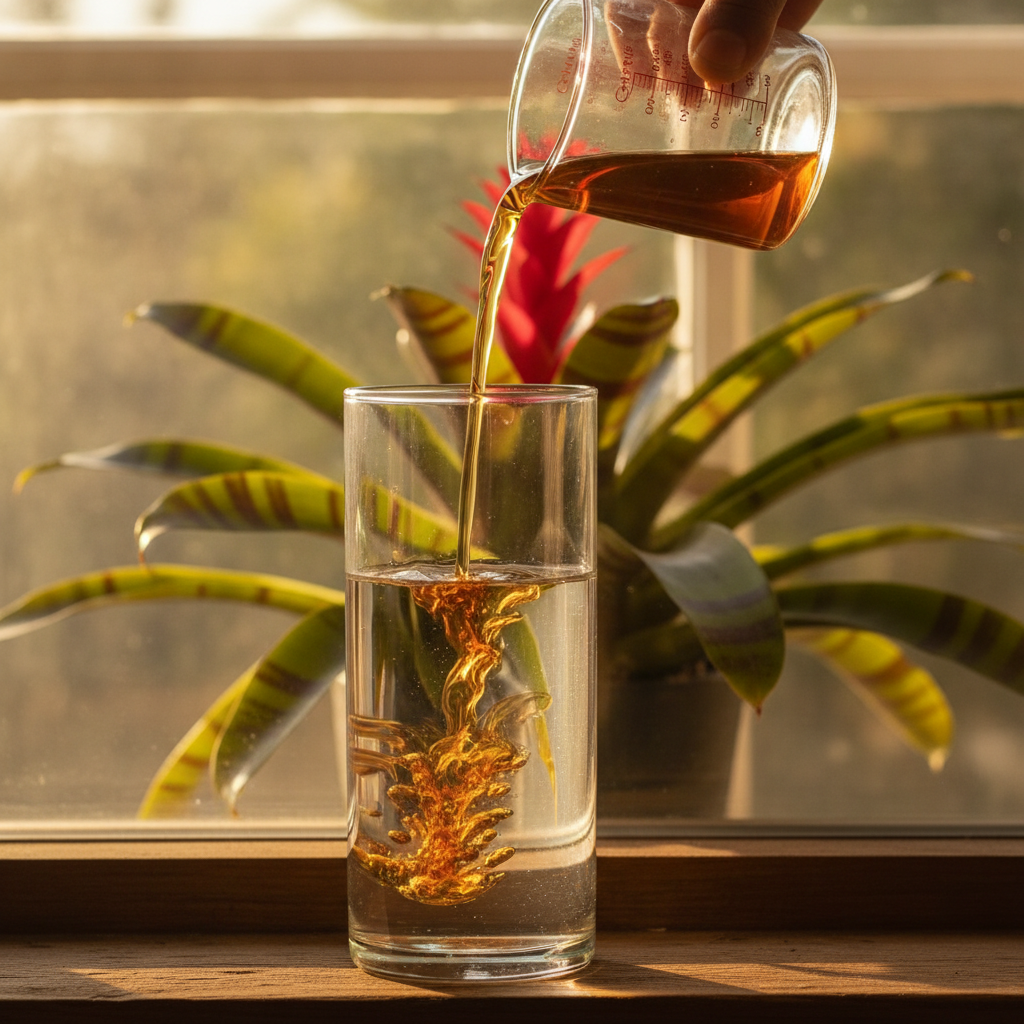
Understanding Plant Nutrients
Fertilisers list three headline numbers, the N-P-K ratio, representing nitrogen, phosphorus and potassium. A balanced or slightly nitrogen-led feed suits foliage plants like the flaming sword, but the deeper point for bromeliads is moderation and avoiding certain elements rather than chasing a precise ratio.
| Nutrient | Symbol | Primary Function | Deficiency Symptoms |
|---|---|---|---|
| Nitrogen | N | Leaf and overall growth | Pale, slow, undersized foliage |
| Phosphorus | P | Roots and flower development | Weak growth, reluctance to bloom |
| Potassium | K | General vigour and resilience | Yellow leaf margins, browning edges |
| Calcium | Ca | Cell walls and new growth | Distorted, weak emerging leaves |
| Magnesium | Mg | Chlorophyll production | Yellowing between leaf veins |
| Iron | Fe | Green pigment in new leaves | Pale young foliage with green veins |
Types of Fertiliser
Liquid fertilisers: The easiest to control and the best fit for a bromeliad. Diluted to a quarter of the recommended strength, a balanced liquid feed can be applied to the mix or misted lightly onto the foliage during the growing season.
Slow-release granular: Convenient for many plants but harder to dose for a light feeder like this. If used at all, scatter only a few granules on the surface and keep them away from the central cup, where concentrated salts can burn the crown.
Organic fertilisers: Gentle options such as a very dilute seaweed or worm-cast feed suit the flaming sword’s modest appetite and are forgiving if you slightly overdo the dilution. They release nutrients slowly and are unlikely to scorch.
Feeding Schedule
Feed only during the active growing months of spring and summer, two or three times across the whole season, and stop entirely in autumn and winter when the plant is resting. A mature plant building towards flowering benefits from this light feeding, but once the bract is in full colour the rosette has effectively completed its mission and feeding can taper off.
Pro Tip — Avoid Copper: Bromeliads are unusually sensitive to copper, which is toxic to them. Avoid copper-based fungicides and do not let cup water sit in copper or brass vessels. When choosing a feed, steer clear of products with high copper micronutrient levels.
How to Fertilise
- Mix a balanced liquid fertiliser at a quarter of the strength stated on the label.
- Water the plant first with plain water if the mix is very dry, to avoid feeding parched roots.
- Apply the dilute feed to the potting mix, or mist it lightly over the leaves.
- Keep concentrated fertiliser out of the central cup, refreshing the cup with plain soft water instead.
- Flush the mix with plain water every month or two to wash out any accumulated salts.
Warning — Salt Build-Up: Brown, crispy leaf tips often signal a build-up of fertiliser salts rather than a watering fault. If you see them, cut back feeding and flush the mix thoroughly with several pots’ worth of plain soft water to leach the salts away.
Propagation
Propagation is where the flaming sword’s life story takes its decisive turn. Like most bromeliads it is monocarpic, meaning each rosette flowers only once and then slowly declines over the following months. This sounds like bad news, but it is not the end of the plant: before and after blooming the mother produces offsets, known as pups, around her base, and these become the next generation.
Understanding this cycle changes how you read your plant. A flaming sword whose central rosette is fading after a long bloom is not failing through your neglect; it is doing exactly what it is meant to do, and your job is simply to nurture the pups it leaves behind.
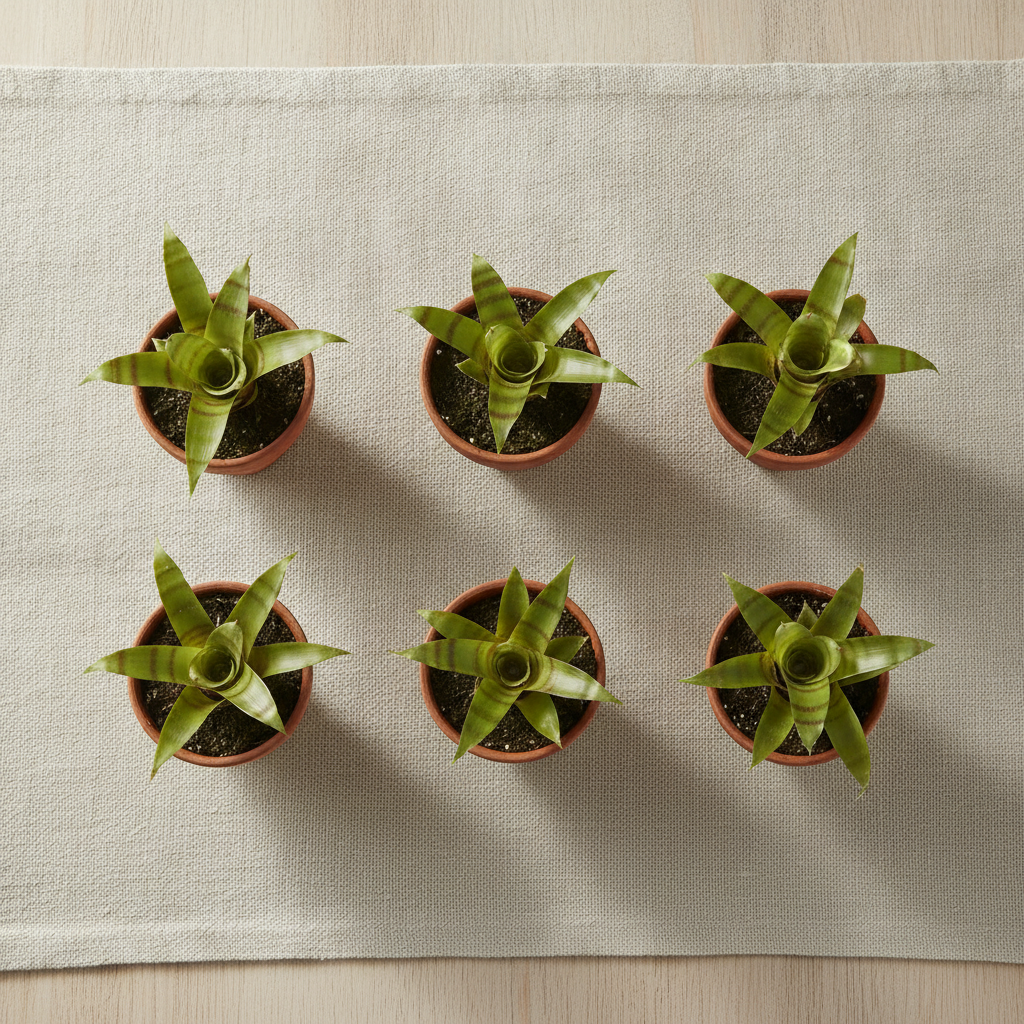
Understanding Pups and the Plant’s Life Cycle
Pups emerge as miniature rosettes from the base of the mother plant, drawing on her reserves while they establish their own roots. Vriesea splendens tends to produce fewer offsets than some bromeliads, sometimes only one or two, so each pup is worth caring for. Patience is essential here: a pup left to grow to a good size on the mother will be far stronger and quicker to flower than one removed too early. Note that this plant cannot be propagated from leaf cuttings or by air layering; offsets, and occasionally division of a clump, are the only practical routes.
Separating Pups: Step-by-Step
The reliable method of propagation is to detach a well-grown pup and pot it on its own. Wait until the offset is at least a third, and ideally half, the size of the mother and has begun to form its own small roots.
- Wait until the pup is one third to one half the size of the parent and shows signs of its own roots.
- Ease the whole plant out of its pot so you can see where the pup joins the mother.
- With a clean, sharp knife, cut the pup away cleanly at the point of attachment, taking any roots it has formed.
- Let the cut surface dry for a few hours, which reduces the risk of rot at the wound.
- Pot the pup into a small container of chunky, free-draining bromeliad mix, just deep enough to hold it upright.
- Keep the mix barely moist and the central cup lightly filled, in warm, bright, indirect light and high humidity.
Pro Tip — Steady the New Pup: A freshly separated pup with few roots can wobble and struggle to anchor. Push a couple of short bamboo stakes around it, or wedge it with a little extra bark, until its roots take hold and hold the rosette firm.
Leaving Pups in Place: Step-by-Step
You do not have to separate pups at all. Many growers simply let the old mother die back naturally and allow an offset to take her place in the same pot, forming a continuous clump over the years. It is the lowest-effort approach and often the most reliable.
- Once the bract has finished, leave the fading mother rosette in place rather than removing it immediately.
- Continue normal care, keeping the strongest pup well watered as it develops.
- When the mother has fully browned and dried, cut her away at the base with clean scissors.
- Let the pup grow on in the same pot, refreshing the mix around it if it has broken down.
- In time this offset will mature and flower, and the cycle begins again.
Troubleshooting Propagation
| Problem | Likely Cause | Solution |
|---|---|---|
| Pup rots after separation | Removed too early, or cut kept too wet | Wait for larger pups, let the wound dry, keep the mix barely moist |
| Mother produces no pups | Plant not yet mature, or stressed by poor light | Be patient and provide bright indirect light and warmth |
| Pup is slow to root | Low warmth or humidity | Raise temperature and humidity; expect roots over several weeks |
| Pup leans or topples | Few roots to anchor it | Stake or wedge until established |
Pests & Diseases
The flaming sword is a fairly resilient plant, and most of the trouble it runs into is cultural rather than pest-driven, with rot from overwatering topping the list. That said, a few sap-feeding insects do target bromeliads, and the plant’s water-holding cup creates conditions that reward vigilance.
Regular inspection is the best defence. Run your eye over the leaf bases, the undersides and the developing bract every week or two, and deal with any intruders early while they are still few in number.
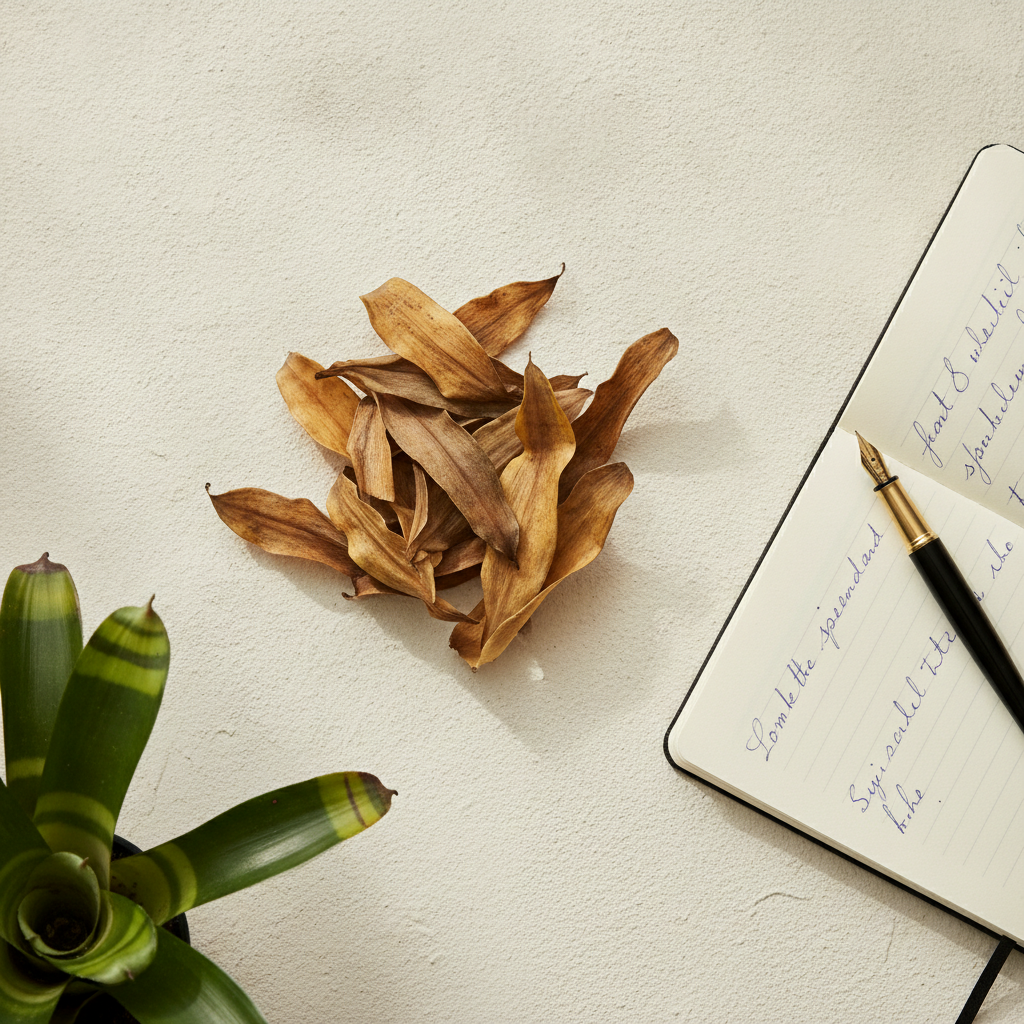
Common Pests
Scale Insects (Coccoidea)
Scale are the most frequent pest of bromeliads, appearing as small, flat brown or tan discs clinging to the leaves, often along the undersides and in the protected leaf axils. They feed on sap, weakening the plant and leaving a sticky honeydew that can turn sooty and black.
Treatment: Scrape or wipe them off with a cloth or a cotton bud dipped in diluted isopropyl alcohol, checking the leaf axils carefully. For larger outbreaks, treat with horticultural oil, repeating every week or two until clear.
Mealybugs (Pseudococcidae)
Mealybugs show up as small, white, cottony tufts hiding where the leaves overlap and around the base of the rosette. Like scale they suck sap and excrete honeydew, and the cup’s sheltered crevices give them an ideal place to hide.
Treatment: Dab each insect with an alcohol-dipped cotton bud, then wipe the area clean. Persistent infestations respond to insecticidal soap or horticultural oil, taking care to reach into the leaf bases where they congregate.
Spider Mites (Tetranychidae)
Spider mites are a risk mainly when the air is very dry, the same low-humidity conditions a flaming sword dislikes anyway. They are tiny, but their fine webbing between leaves and a stippled, dusty look to the foliage give them away.
Treatment: Rinse the foliage under a gentle stream of water and raise the humidity, which mites hate. For stubborn cases, treat with insecticidal soap or horticultural oil and keep conditions humid to discourage their return.
Common Diseases
Crown and Root Rot (Phytophthora and others)
By far the most serious threat to a flaming sword, crown rot strikes when water sits too long in a stagnant cup or a waterlogged mix. The centre of the rosette softens, darkens and smells unpleasant, and the inner leaves pull away with little resistance.
Treatment: There is rarely a cure once the crown is soft. Prevention is everything: keep the cup fresh, never overwater the mix and ensure free drainage. If the mother is lost, any healthy basal pups may still be salvageable.
Fungal Leaf Spot (various fungi)
Leaf spot appears as brown or black blotches, sometimes ringed with yellow, usually where moisture lingers on the foliage in still, humid air. It is more cosmetic than fatal but can spread if conditions stay damp and stagnant.
Treatment: Remove badly affected leaves, improve air circulation around the plant and avoid wetting the foliage late in the day. Remember to avoid copper-based fungicides, which are toxic to bromeliads.
Pest and Disease Summary
| Pest / Disease | Identification | Treatment |
|---|---|---|
| Scale | Flat brown discs on leaves and axils, sticky honeydew | Wipe off with alcohol; horticultural oil for outbreaks |
| Mealybugs | White cottony tufts in leaf joints | Alcohol swab; insecticidal soap or oil |
| Spider mites | Fine webbing and stippled, dusty leaves | Rinse, raise humidity, insecticidal soap |
| Crown and root rot | Soft, smelly, darkening centre; inner leaves pull free | Prevent with fresh cup water and sharp drainage; usually fatal |
| Fungal leaf spot | Brown or black blotches, sometimes yellow-ringed | Remove leaves, improve airflow, keep foliage drier |
Prevention Strategies
The healthiest flaming sword is one grown in conditions close to its rainforest origins: warmth, bright filtered light, moving air and clean water. Good air circulation in particular does more to prevent both pests and fungal problems than any spray, so avoid cramming the plant into a stagnant corner.
Quarantine every new plant for a couple of weeks before it joins your collection, since shop-bought bromeliads can arrive carrying scale or mealybugs. Keep the cup water fresh, wipe the leaves occasionally to remove dust and early pests, and you will head off the great majority of issues before they start.
Pro Tip — Treat the Cup, Too: When dealing with pests, do not forget the central reservoir. Tip out the old water, check the leaf bases at the waterline where insects love to hide, and refill with fresh soft water as part of any treatment.
Popular Varieties
The flaming sword has been cultivated and crossed for well over a century, giving rise to a range of named forms and to a wider group of related Vriesea hybrids grown for their foliage and flower spikes. Some are selections of Vriesea splendens itself, while others are hybrids that share its tank-forming habit and dramatic bract.
When choosing, decide whether the banded foliage or the inflorescence matters more to you, and bear in mind that all of them follow the same once-flowering life cycle and the same straightforward care.
| Variety | Leaf Appearance | Light Needs | Growth Rate | Availability |
|---|---|---|---|---|
| V. splendens ‘Flaming Sword’ | Green with dark maroon cross-bands | Bright indirect | Slow to moderate | Very common |
| V. splendens ‘Major’ | Bolder, wider banding; taller bract | Bright indirect | Slow to moderate | Common |
| Vriesea ‘Splenriet’ | Finely striped green and maroon | Bright indirect | Moderate | Occasional |
| Vriesea ‘Christiane’ | Plain green, compact | Bright indirect | Moderate | Occasional |
| V. carinata (Lobster Claw) | Soft green, no banding | Bright indirect | Moderate | Common |
| V. hieroglyphica | Large, intricately marked leaves | Bright indirect | Slow | Collector |
Featured Varieties
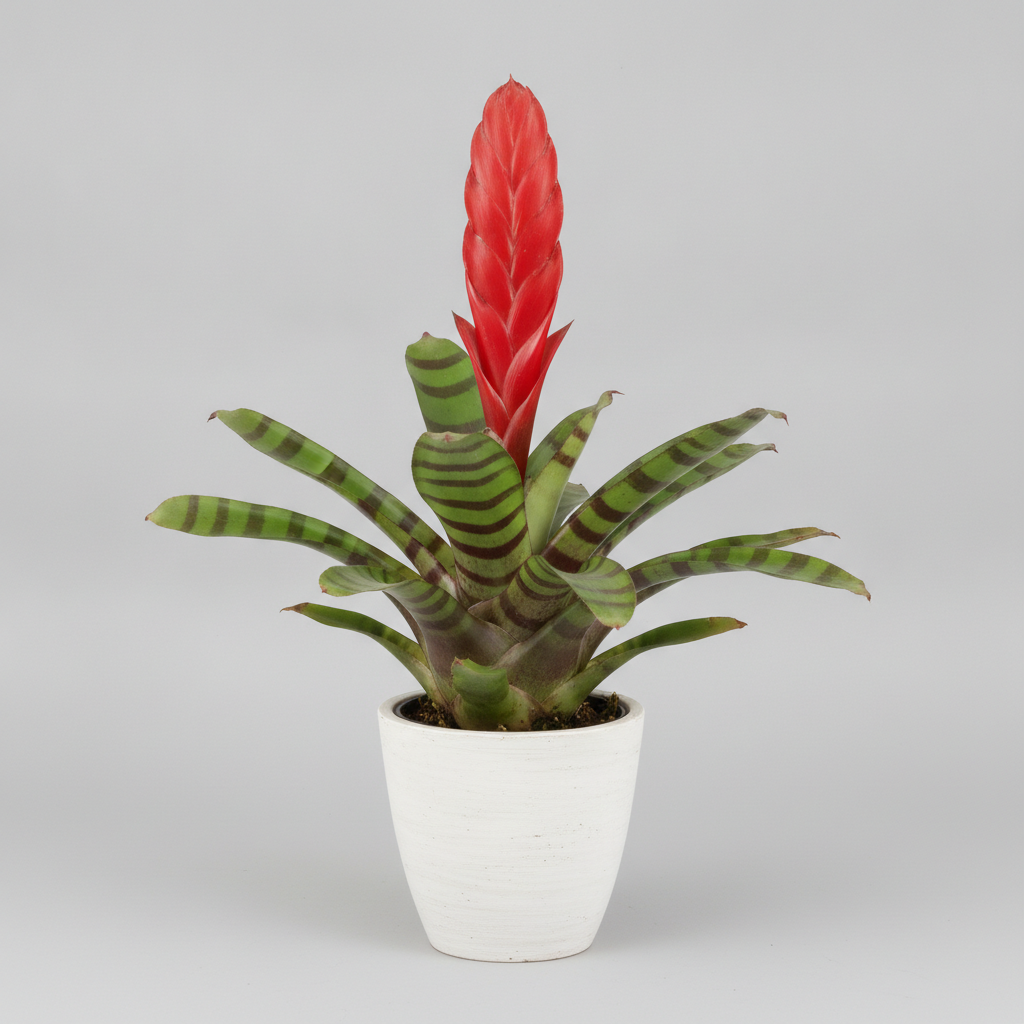
Vriesea splendens ‘Major’
A larger, more emphatic form of the classic flaming sword, ‘Major’ carries wider and darker cross-banding across broad green leaves and tends to throw an especially tall, brilliantly scarlet sword bract. It is the variety to choose if you want maximum drama from both foliage and flower.
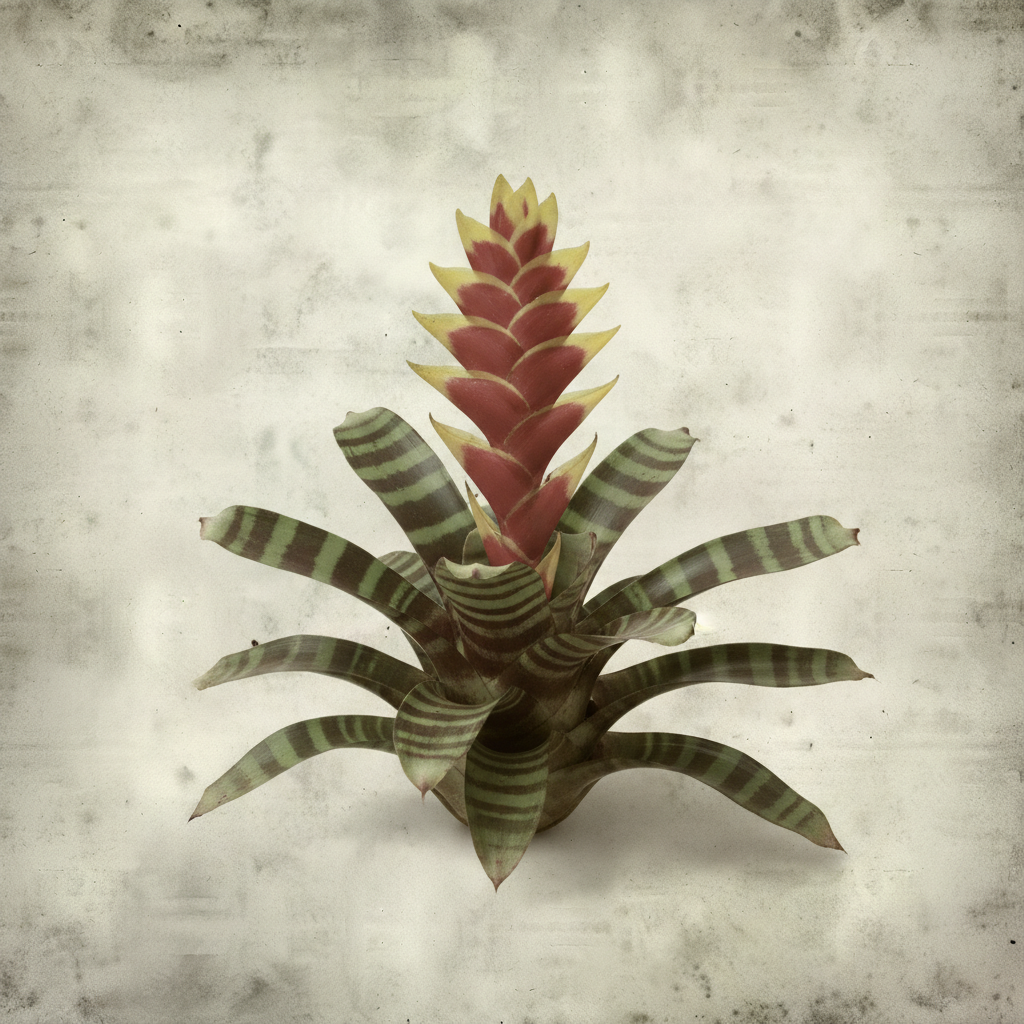
Vriesea ‘Splenriet’
A compact hybrid prized for its finely striped green-and-maroon foliage and a branched, flattened inflorescence in red and yellow. ‘Splenriet’ is a little more forgiving of average humidity than the species and suits smaller spaces where a full-sized flaming sword would dominate.
Variety Profiles in Detail
Lobster Claw Vriesea (Vriesea carinata)
A close relative grown for its flower rather than its leaves, Vriesea carinata has plain soft-green foliage topped by a flattened inflorescence of red and yellow that curves like a lobster claw. It is smaller and neater than the flaming sword and shares exactly the same care.
King of Bromeliads (Vriesea hieroglyphica)
A collector’s plant celebrated for its enormous, intricately marked leaves patterned with dark hieroglyph-like markings, hence the name. It grows large and slow, is valued for foliage above all, and rewards the patient grower who can give it space, warmth and consistent humidity.
Choosing the Right Variety for Your Space
For most homes the classic flaming sword or its bolder ‘Major’ form offers the best balance of striking looks and easy care, fitting comfortably on a bright sill or side table. If space is tight, a compact hybrid like ‘Splenriet’ makes more sense, while dedicated foliage lovers with room to spare might graduate to the magnificent Vriesea hieroglyphica. Whichever you pick, the care described in this guide applies across the board.
Frequently Asked Questions
Why is my flaming sword bromeliad dying after flowering?
This is entirely normal and not a sign of poor care. Bromeliads are monocarpic, so each rosette flowers once and then gradually declines over the following months. The plant’s future lies in the pups it produces at its base, which you can grow on to replace the parent.
How often should I water the central cup?
Keep the cup roughly a third to half full at all times and top it up before it empties, using soft water such as rainwater or distilled water. Tip out and refresh the water every week or two so it does not stagnate, which is the main cause of crown rot.
Is the flaming sword bromeliad safe for cats and dogs?
Yes. Vriesea species are listed as non-toxic to both cats and dogs by the ASPCA and are not poisonous to people, which makes the flaming sword a reassuring choice for pet-owning households.
How can I get my bromeliad to flower again?
The original rosette will not flower a second time, but its pups will once they mature, usually after a few years in bright indirect light. Some growers encourage a mature pup to bloom by enclosing it in a clear bag with a ripe apple for a week or two, as the ethylene the apple gives off can trigger flowering.
Why are the tips of the leaves turning brown?
Brown, crispy tips usually point to dry air, hard or chlorinated water, or a build-up of fertiliser salts. Raise the humidity, switch to soft water for the cup and foliage, and flush the mix occasionally with plain water to leach out salts.
Does the flaming sword need to be misted?
Misting is helpful rather than essential. It briefly raises humidity around the leaves and suits the plant’s epiphytic habit, but for a lasting effect a pebble tray or a small humidifier does more. If you do mist, use soft water to avoid leaving mineral spots on the foliage.
What kind of pot and soil should I use?
Choose a small pot with drainage holes, ideally terracotta for stability, and fill it with an open, chunky mix such as orchid bark blended with perlite and a little coir. Ordinary potting compost holds too much water for these shallow-rooted epiphytes and risks rot.
When should I separate the pups?
Wait until each pup is at least a third, and ideally half, the size of the mother and has started to form its own roots. Removed too early, a pup struggles to establish, so patience here pays off with a far stronger young plant.
The flaming sword bromeliad rewards a light touch: soft water in its cup, bright filtered light, warmth and a little humidity. Master those few essentials, look after the pups it leaves behind, and a single plant can brighten your home for many years to come.






