
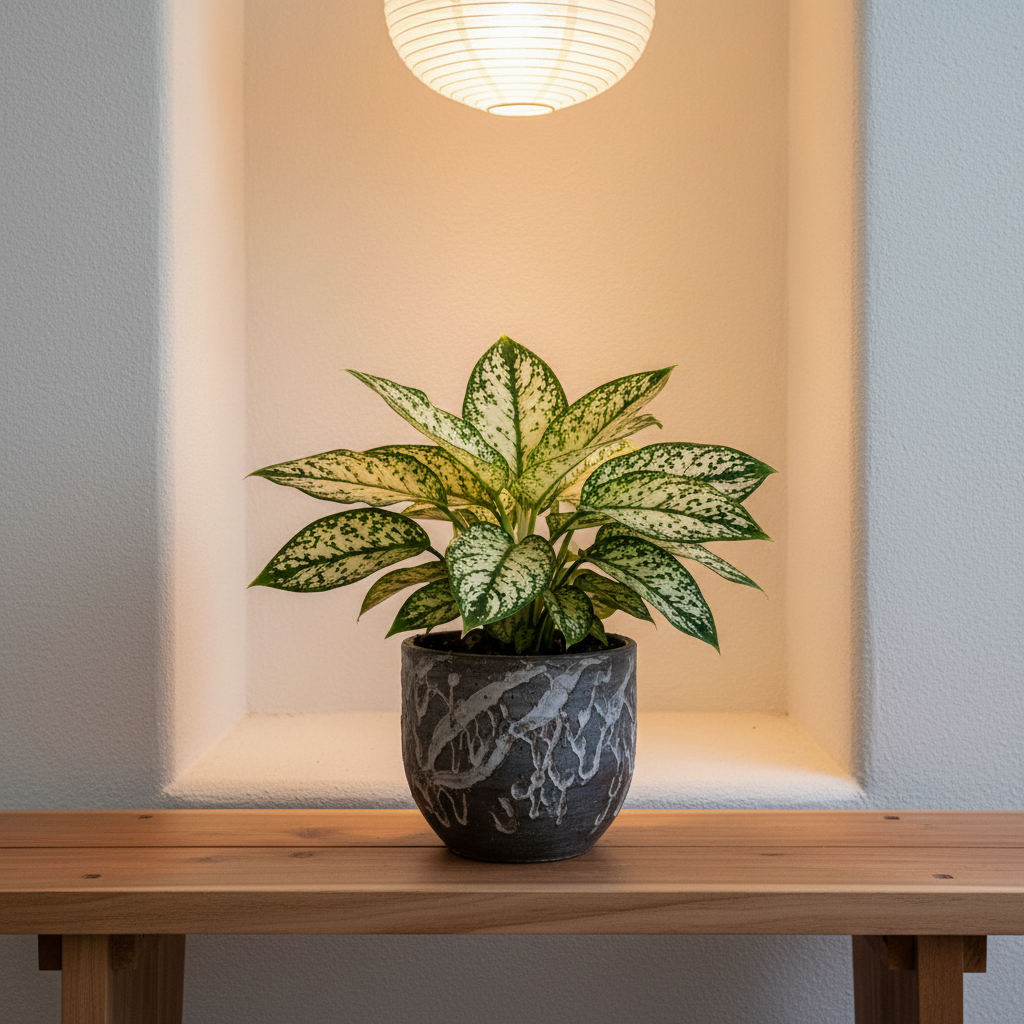
Few houseplants make a stronger case for low expectations producing big rewards than the Snow White Aglaonema. A naturally compact member of the Aglaonema genus, Aglaonema costatum carries broad, deep-green leaves freckled with creamy-white spots and split by a bold ivory midrib, and it does all of this while tolerating the sort of dim, neglected corners that would defeat most variegated plants. It is the kind of plant that survives a forgotten week and thrives on a little consistency, which makes it one of the most forgiving statement plants you can keep indoors.
Quick Reference
| Common names | Snow White Aglaonema, Spotted Evergreen, Spotted Chinese Evergreen |
| Botanical name | Aglaonema costatum |
| Family | Araceae (aroids) |
| Light | Low to medium indirect light; tolerates shade, no direct sun |
| Water | When the top 3 to 5 cm (1 to 2 in) of soil is dry |
| Soil | Light, well-draining aroid or peat-based mix |
| Temperature | 18 to 27 C (65 to 80 F) |
| Humidity | Average to high; happiest above 50 percent |
| Fertiliser | Balanced feed, diluted, monthly in spring and summer |
| Mature size | 20 to 40 cm (8 to 16 in) tall and wide |
| Propagation | Division of crowns and rhizomes |
| Toxicity | Toxic to pets and humans if ingested (calcium oxalates) |
| Difficulty | Easy |
Why the Snow White Aglaonema Is a Great Houseplant
The genus Aglaonema has been cultivated in Asia for centuries, valued in Chinese tradition as a bringer of good fortune, which is where the broader common name “Chinese evergreen” originates. Aglaonema costatum is one of the smaller, more naturally patterned species in the group, native to the forest floors of southwestern Thailand and the surrounding region. That heritage tells you almost everything you need to know about how to keep it happy: it evolved beneath a dense canopy, in warm, humid, dimly lit conditions where bright sun rarely reaches and the soil stays evenly moist but never waterlogged.
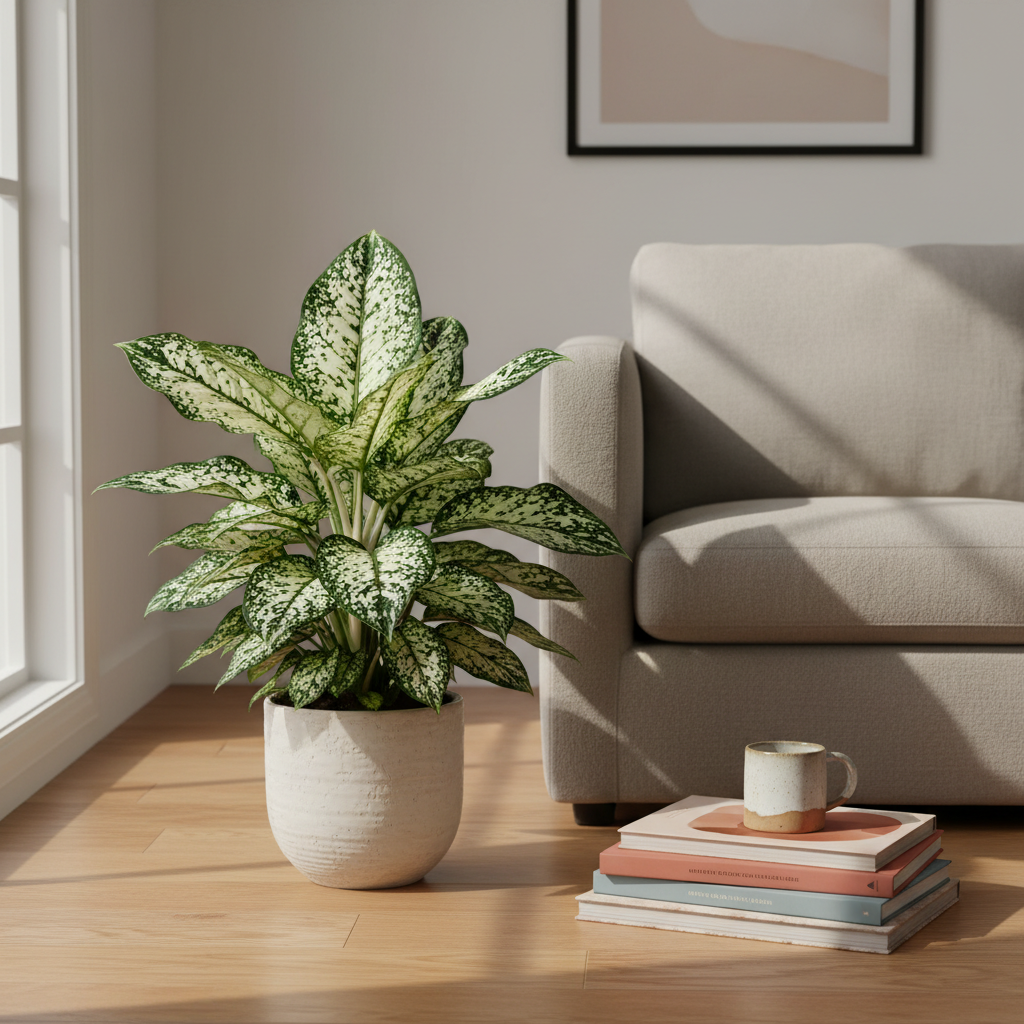
What sets the Snow White apart from the taller, faster aglaonemas you might see in offices is its low, clumping habit and the crispness of its markings. Rather than growing into a leggy stem, it forms a tidy rosette of leaves that emerge close to the soil, each one dark and glossy with a scatter of white spots that look almost hand-painted. This makes it a natural fit for tabletops, desks, low shelves and grouped plant displays where a tall plant would feel out of scale.
Its real selling point, though, is resilience. Variegated and patterned foliage usually demands strong light to hold its colour, but the Snow White keeps its markings even in the gloom, and it shrugs off the dry air, irregular watering and temperature swings of an ordinary home. For a beginner who wants something more visually interesting than a pothos but is nervous about anything labelled “difficult,” it occupies a rare sweet spot of high impact and low maintenance.
Pro Tip — Buy the look you want: Aglaonemas grow slowly, so the plant you bring home is roughly the size and fullness it will have for a long time. Choose a specimen that is already dense and well-marked rather than expecting a sparse one to fill out quickly.
Light
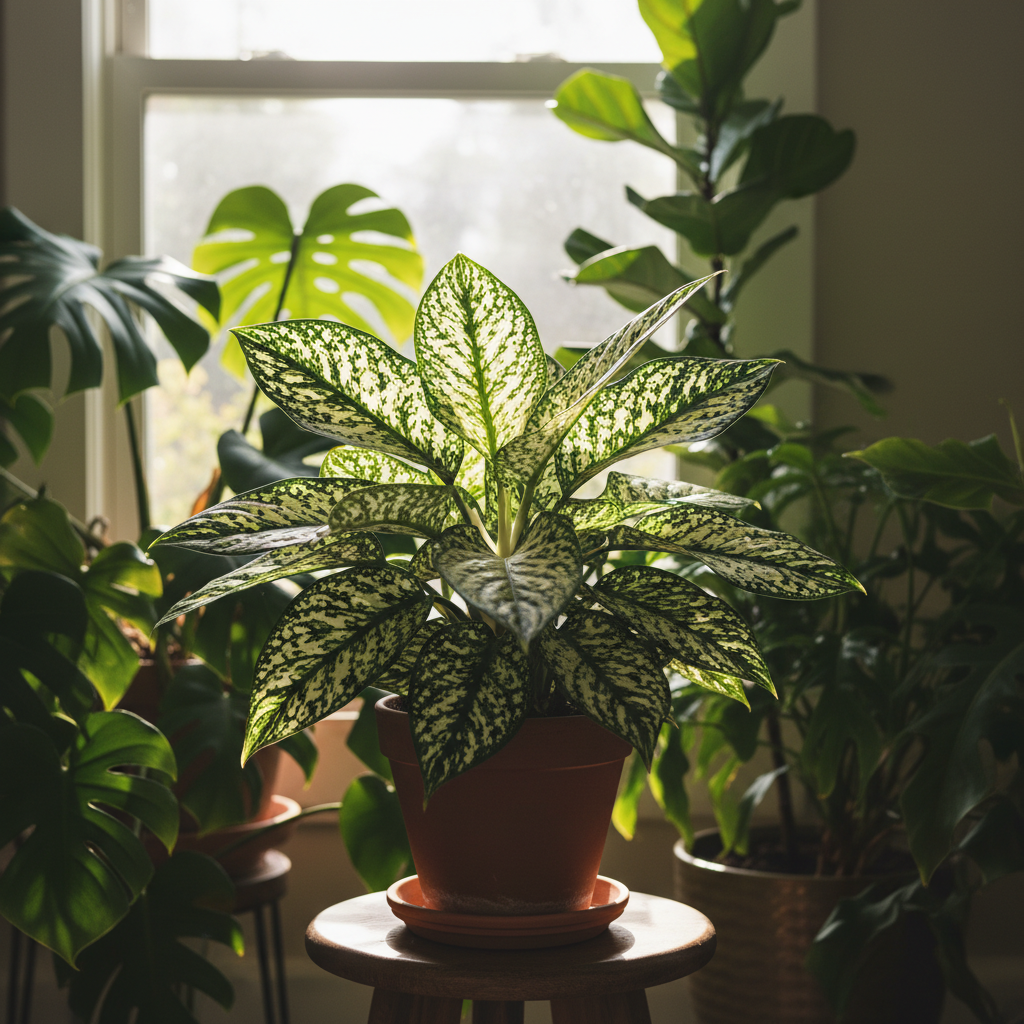
Light is where the Snow White Aglaonema earns its reputation as one of the most adaptable plants you can own. It will survive in genuinely low light, including north-facing rooms and spots several metres from a window, which is why it turns up so often in lobbies and windowless offices. To survive, it needs surprisingly little. To truly thrive, with steady new growth and the boldest possible markings, it prefers bright but indirect light, the kind that falls a metre or so back from an east or north window, or behind a sheer curtain on a brighter exposure.
The one thing to avoid is direct sun. The leaves of Aglaonema costatum are adapted to shade, and even an hour or two of midday sun through glass can scorch them, leaving bleached or crispy patches that will not recover. If you notice the green areas fading to a washed-out pale green, the plant is getting too much light and should be moved back. If new leaves emerge smaller, the gaps between them stretch out, and the plant leans hard toward the window, it wants a little more light.
Because the markings hold up so well in dim conditions, this is a rare patterned plant you can place purely for looks rather than for light. A grow light on a timer is a reliable option for a dark corner you love, but it is genuinely optional here in a way it would not be for most variegated foliage.
Watering
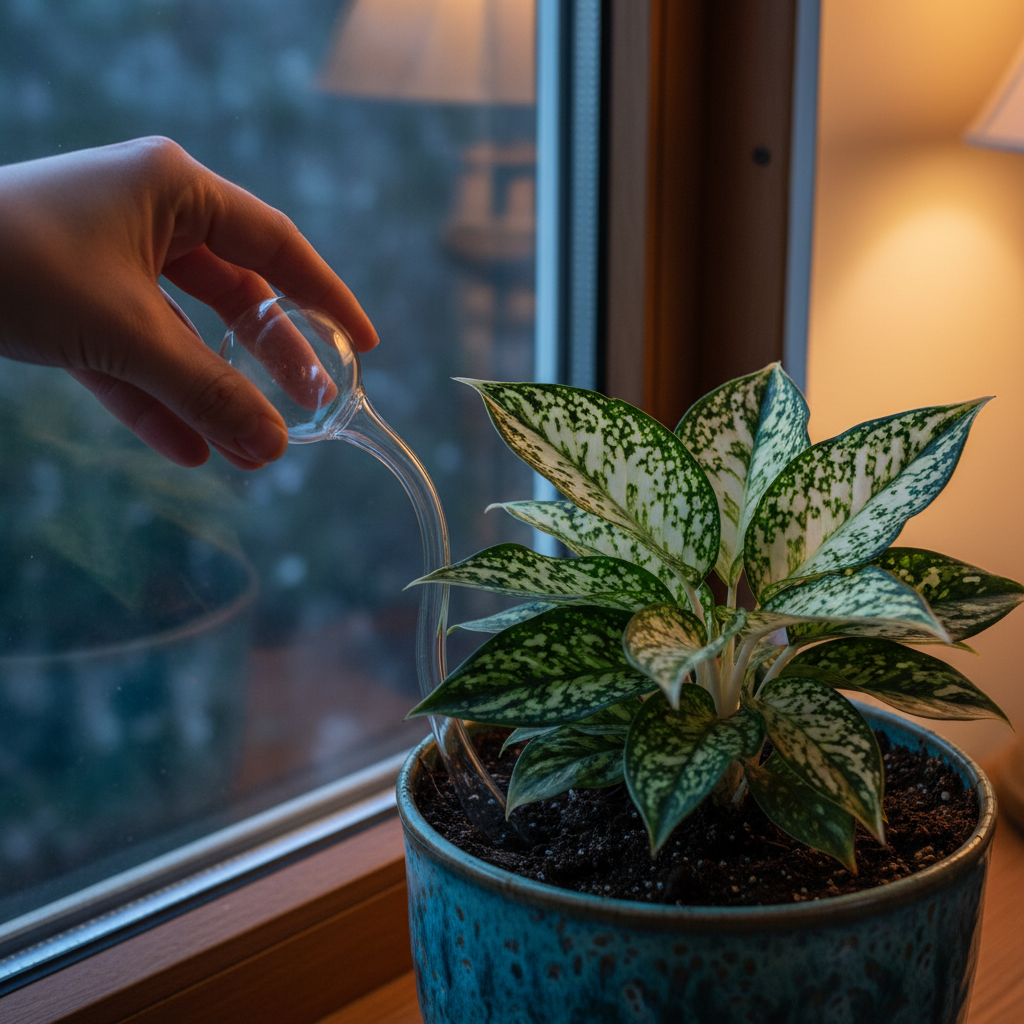
The single most common way to harm an aglaonema is to water it too often. These plants store moisture in their thick stems and roots, and they would much rather sit slightly dry than stay constantly wet. The reliable rule is to wait until the top 3 to 5 cm (1 to 2 in) of soil has dried out, then water thoroughly until liquid runs from the drainage holes, and tip away whatever collects in the saucer. In a typical home this works out to roughly once a week in the warm months and noticeably less in winter, but the calendar matters less than the feel of the soil, so check with a finger before reaching for the can.
Overwatering shows itself first as yellowing lower leaves and a soft, sometimes faintly sour-smelling base, which signals root rot taking hold. Underwatering, by contrast, produces curling leaves, crispy brown edges and a general droop that perks up within hours of a good drink. Of the two problems, drought is far easier to fix, which is why erring on the dry side is always the safer instinct with this plant.
Water quality is worth a thought if you tend to see brown leaf tips. Aglaonemas can be sensitive to the fluoride and chlorine in some tap water, so if tipping persists despite good watering habits, switch to filtered, distilled or rainwater, or leave tap water to stand overnight before using it.
Warning — Cold water shock: Aglaonemas dislike cold water on their roots. Use water at room temperature, especially in winter, as a sudden chill can cause leaf spotting and stress the plant.
Soil and Potting
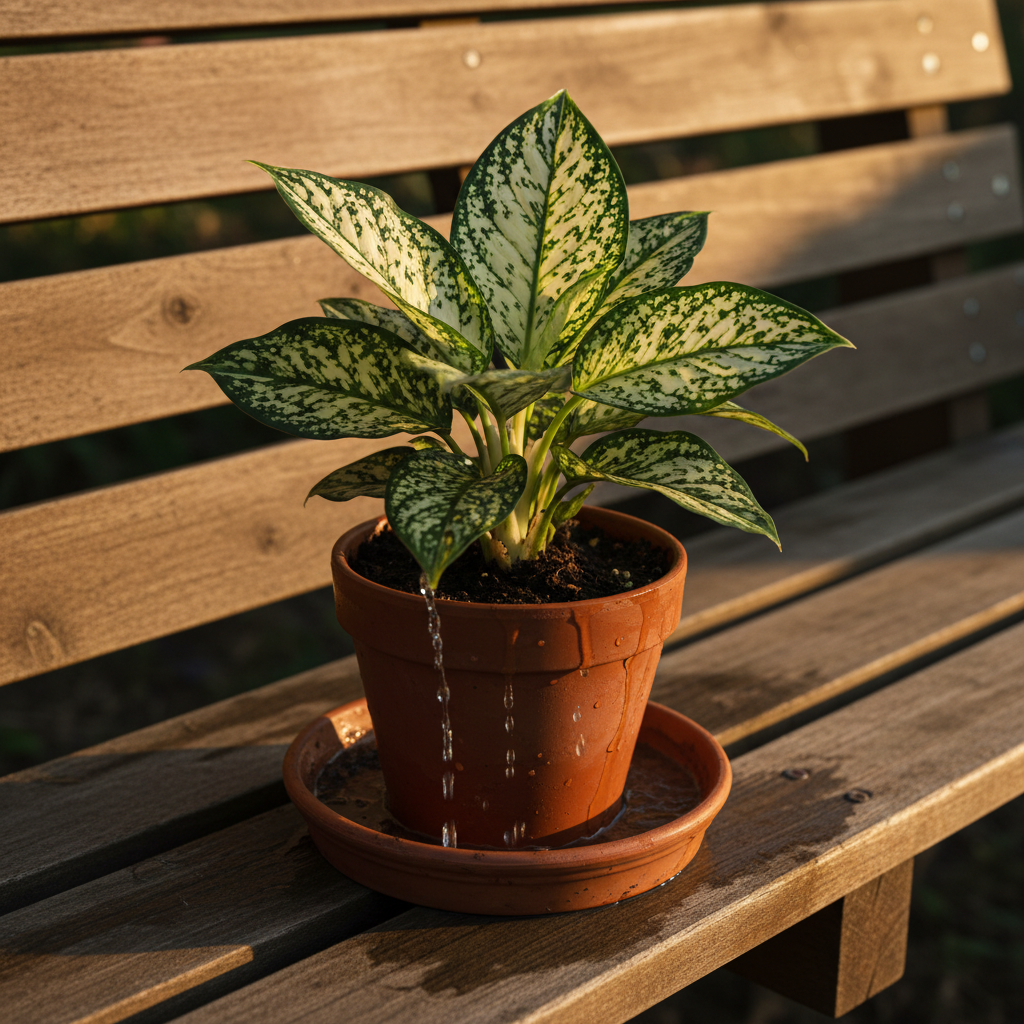
The Snow White wants a potting mix that holds a little moisture but drains freely, mirroring the loose, leaf-litter soil of its forest-floor home. A quality peat-based or coir-based houseplant compost works well as a base, but it benefits enormously from being lightened with extra drainage material. A simple and effective recipe is two parts standard potting mix to one part perlite and one part orchid bark or coco chips, which keeps the blend airy and stops it from compacting into a dense, water-holding block over time.
Drainage at the pot itself matters just as much as the mix. Always plant into a container with drainage holes, and if you prefer a decorative cachepot without them, keep the plant in a plastic nursery pot inside it so you can lift it out, water it at the sink and let it drain completely before returning it. Standing water at the base of the pot is the fastest route to the root rot this plant is otherwise so good at avoiding.
Aglaonemas are slow growers with modest root systems and they are quite happy being a little snug in their pots, so there is no need to rush repotting. Every two to three years is plenty, ideally in spring, and you should move up only one pot size at a time. Choosing a pot that is too large surrounds the roots with damp, unused soil that stays wet and invites rot, so resist the urge to over-pot a small plant into a big container.
Fertilising
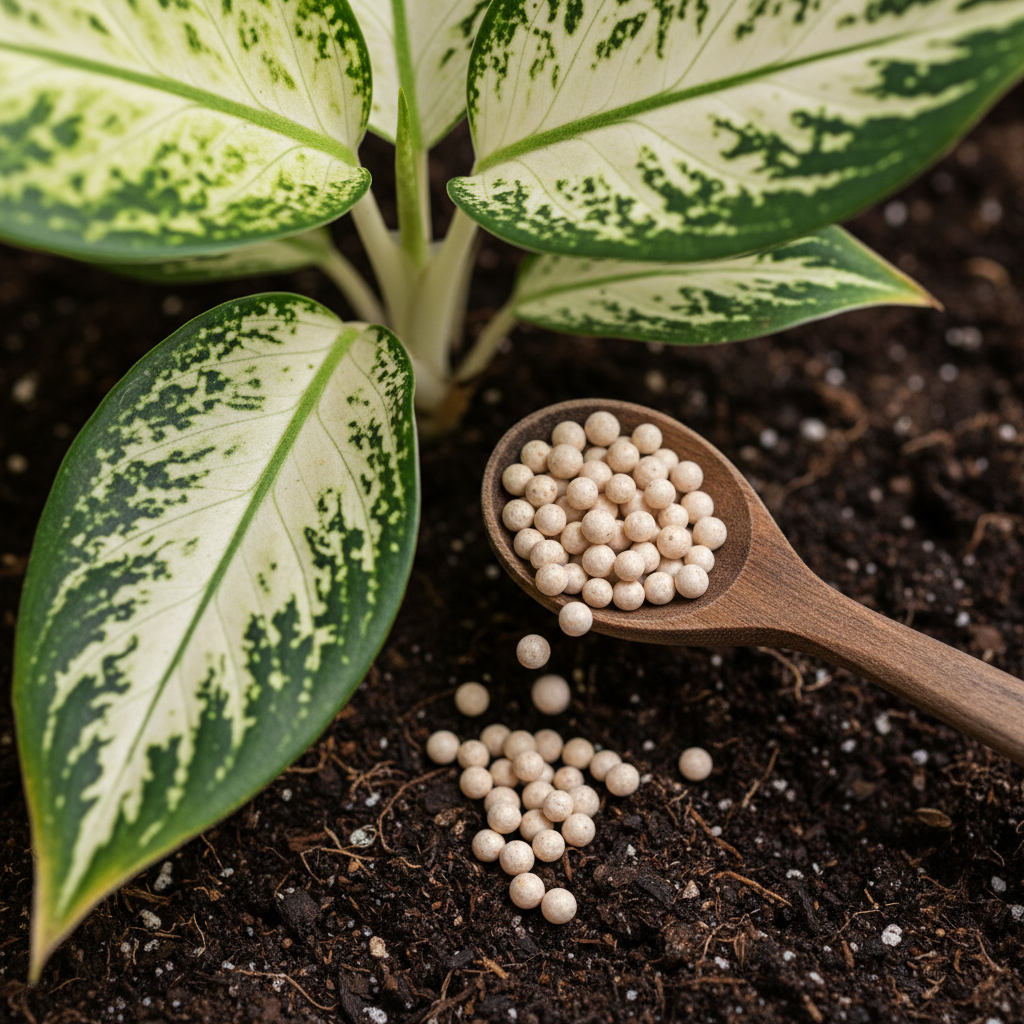
As a slow grower, the Snow White Aglaonema is not a heavy feeder, and far more plants are harmed by too much fertiliser than too little. During the active growing season of spring and summer, a balanced liquid houseplant feed diluted to roughly half the recommended strength, applied about once a month, is all it needs to keep producing healthy, well-marked leaves. Always apply feed to already-damp soil rather than a bone-dry rootball, as concentrated nutrients against dry roots can scorch them.
In autumn and winter, when growth naturally slows or stops, you should pause feeding entirely. Pushing fertiliser into a plant that is not actively growing simply leaves unused salts to accumulate in the soil, and that build-up is a frequent and avoidable cause of brown leaf tips and edges. If you suspect salts have accumulated, flush the pot thoroughly with plenty of plain water two or three times, letting it drain fully between each pass, to wash the excess out.
A slow-release granular fertiliser worked lightly into the soil surface in spring is a convenient alternative for anyone who would rather not measure liquid feed each month. Whichever route you choose, restraint is the guiding principle: a lightly fed aglaonema is a healthy one, while an overfed one tells you so quickly through scorched margins.
Propagation
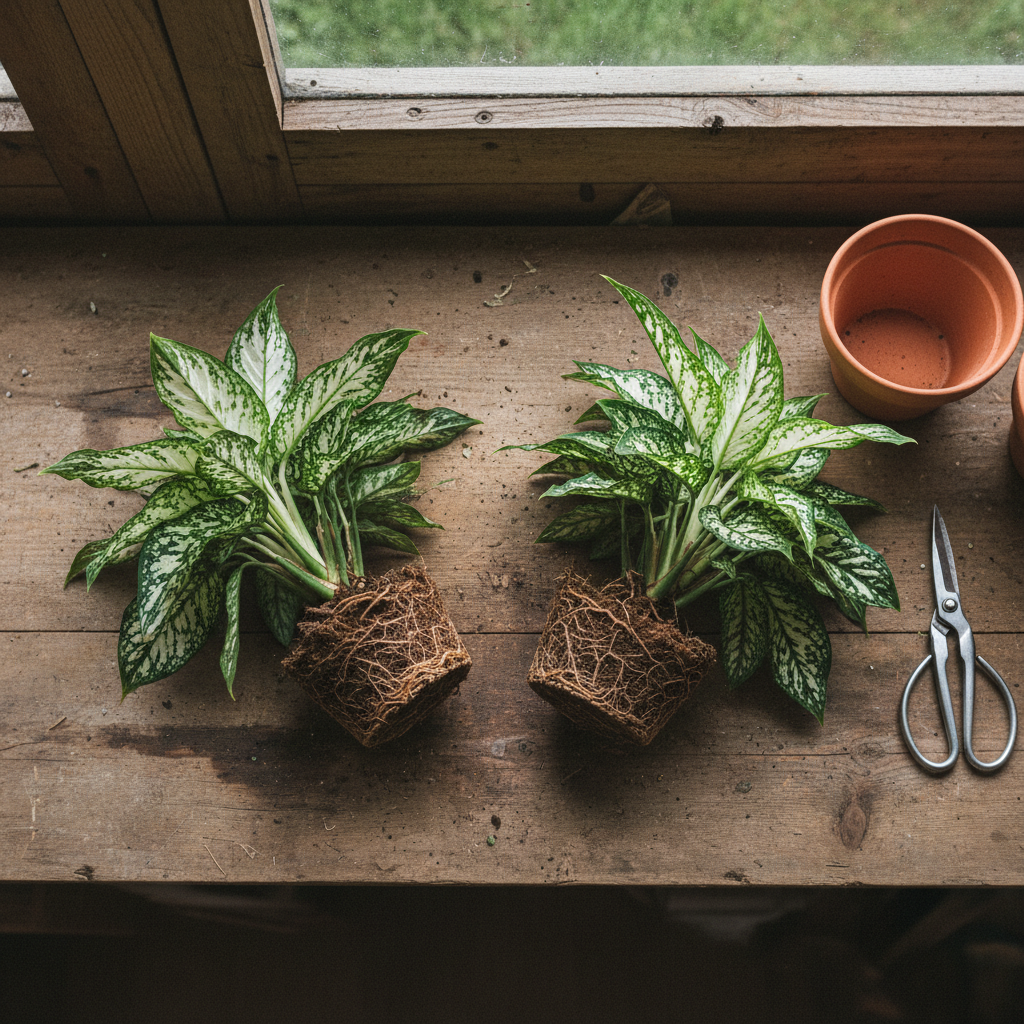
Unlike vining aroids such as pothos or philodendron, the Snow White Aglaonema does not root readily from a simple stem cutting in a jar of water. Its low, clumping growth means the dependable method is division, separating the clump into smaller plants each with their own roots and shoots. Mature specimens naturally produce new crowns and offsets around the base over time, and these are what you divide. The best moment is spring, ideally when you are already repotting, so the plant has a full growing season to recover.
To divide a healthy plant, work through the following steps:
- Water the plant a day beforehand so it is well hydrated and less stressed by the disturbance.
- Ease the whole plant out of its pot and gently brush or rinse away enough soil to see where the separate crowns and their roots meet.
- Identify natural divisions, sections that each carry several leaves attached to a healthy clump of roots.
- Separate them by teasing the roots apart with your fingers where possible, or cutting cleanly with a sterilised knife where the rhizome holds them together.
- Pot each division into its own small container of fresh, well-draining mix, setting it at the same depth it grew before.
- Water lightly and place the new plants somewhere warm and out of direct sun while they settle.
Expect each division to sulk briefly before resuming growth, which is normal as the roots re-establish. Keep the soil lightly moist but not soggy during this period, hold off on fertiliser for a month or so, and warmth and patience will do the rest. Within a few weeks you should see new leaves confirming that the divisions have taken.
Pests and Problems
The Snow White Aglaonema is not especially prone to pests, but the usual indoor offenders can still appear, particularly when the air is dry or the plant is stressed. Spider mites are the most likely culprit, showing up as fine webbing and a faint stippling on the leaves, and they multiply fastest in warm, dry conditions. Mealybugs may also turn up as small cottony white tufts tucked into leaf joints, and scale can appear as flat brown bumps along stems and the undersides of leaves. Catching any of these early makes them far easier to deal with.
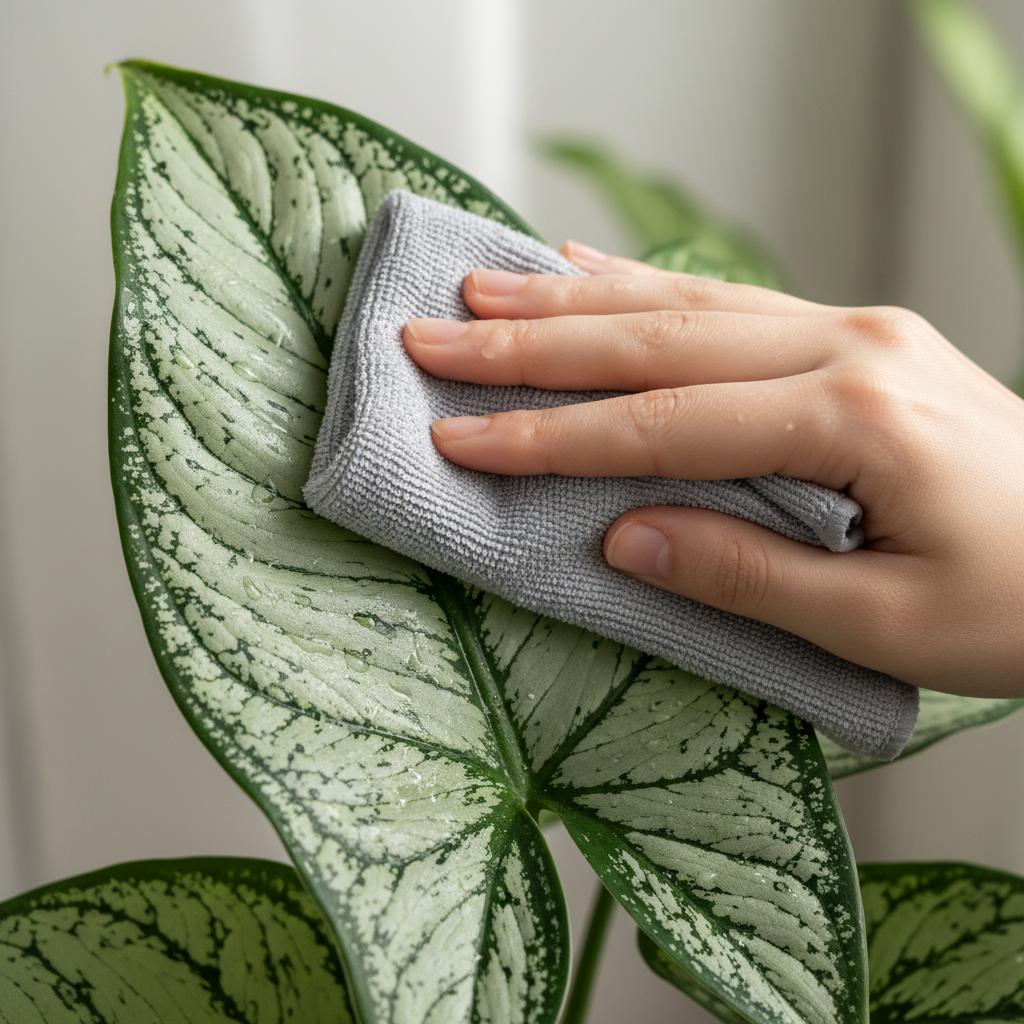
The best defence is a simple habit: wipe the leaves with a damp cloth every few weeks, which removes dust, keeps the markings vivid and gives you a regular close look at both surfaces of the foliage. If you do find pests, wipe them off with a cloth or a cotton bud dipped in diluted isopropyl alcohol, then treat the whole plant with insecticidal soap or a neem oil solution, repeating every week or so until no new pests appear. Isolating an affected plant from your collection while you treat it stops a small problem from spreading.
Most aglaonema troubles, though, are cultural rather than pest-related, and the leaves are quick to tell you what is wrong. Yellowing lower leaves usually point to overwatering, while crispy brown tips suggest dry air, mineral build-up or fluoride in tap water. Pale, washed-out colour means too much light, and curling or drooping leaves typically signal thirst or cold draughts. The table below sums up the most common signs and their fixes.
| Symptom | Likely cause | Fix |
| Yellowing lower leaves | Overwatering | Let soil dry more between waterings; check drainage |
| Brown, crispy leaf tips | Dry air, salt build-up or fluoride | Raise humidity, flush soil, switch to filtered water |
| Pale, faded markings | Too much light | Move further from the window |
| Curling or drooping leaves | Underwatering or cold | Water thoroughly; move away from draughts |
| Leggy, stretched growth | Too little light | Move to a brighter indirect spot |
| Sudden leaf spotting | Cold water or cold draught | Use room-temperature water; relocate the plant |
Warning — Toxicity: Like all aglaonemas, Aglaonema costatum contains insoluble calcium oxalate crystals and is toxic to cats, dogs and humans if chewed or swallowed, causing painful mouth irritation, drooling and swelling. Keep it out of reach of pets and small children, and wash your hands after handling cut stems, as the sap can irritate skin.
Varieties
The name “Snow White Aglaonema” is most often attached to Aglaonema costatum and its closely related forms, all sharing the same low, compact habit and dark leaves marked with white. Within the species there are a handful of named selections worth knowing, and the wider Aglaonema genus offers many more colourful relatives if you fall for the group as a whole.
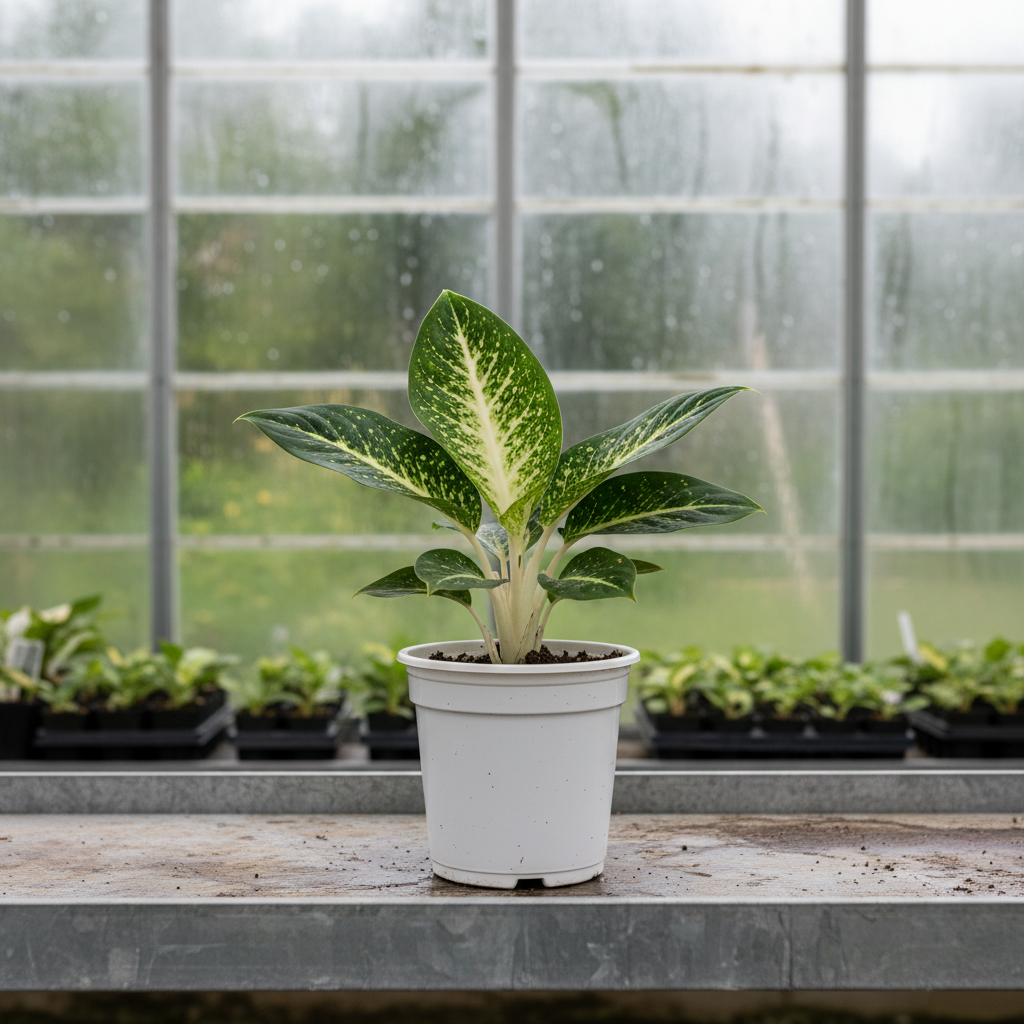
‘Foxii’ is the most widely grown form, a compact selection with broad, deep-green leaves, a prominent ivory midrib and lighter scattered white freckling. Its sturdy, rounded leaves and tidy clumping shape make it the classic “Snow White” look most people picture.
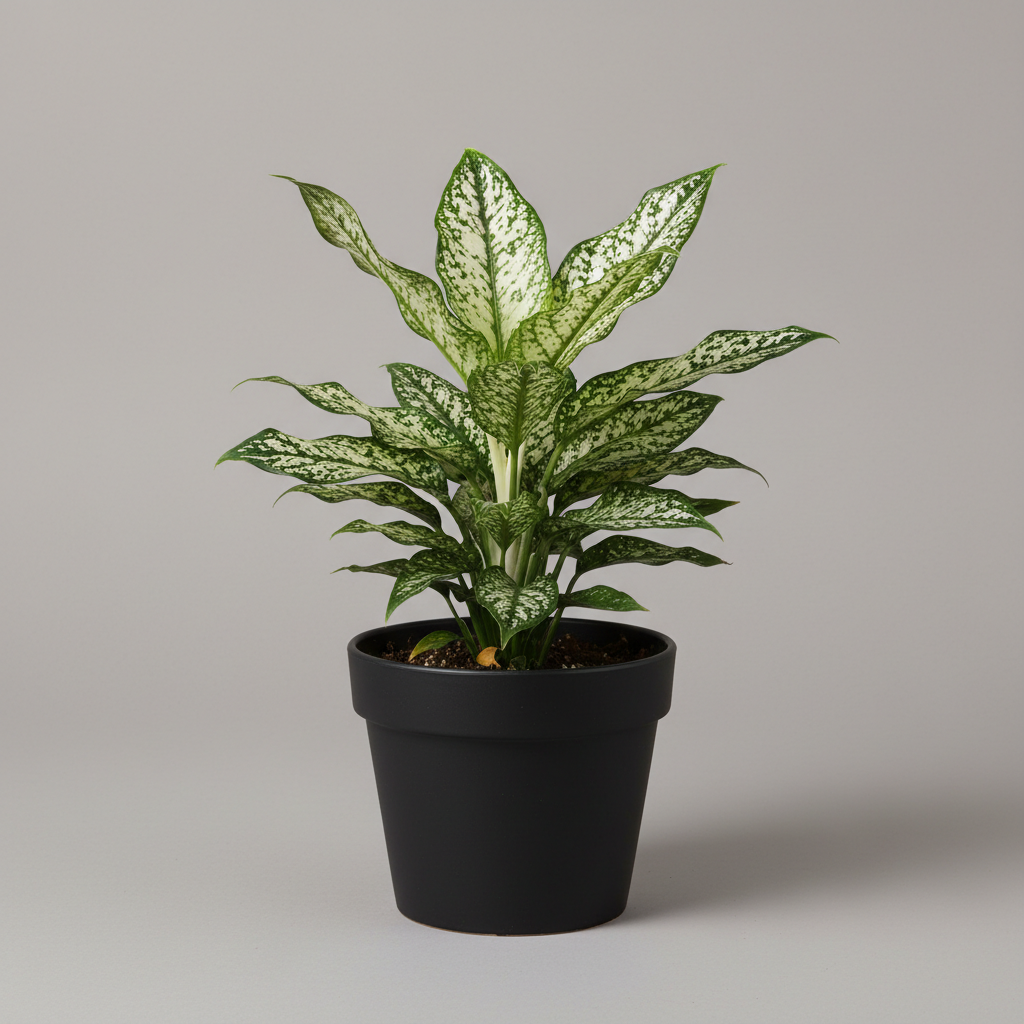
The immaculatum form carries narrower, more elongated leaves with finer, denser white spotting across a glossy dark-green surface. It has a slightly more delicate, speckled appearance than ‘Foxii’ while keeping the same easy-going nature.
Beyond the species itself, the broader genus has been bred into dozens of vividly coloured hybrids that share the same care. If you enjoy the Snow White, look out for the silvery ‘Silver Bay’ and ‘Silver Queen’, the pink-flushed ‘Red Siam’ and ‘Siam Aurora’, and the dramatic deep-pink and green ‘Pink Dalmatian’, all of which thrive in the same low-light, low-fuss conditions described here.
Frequently Asked Questions
Why does my Snow White Aglaonema have brown leaf tips?
Brown, crispy tips are usually a sign of dry air, a build-up of mineral salts from fertiliser, or sensitivity to fluoride and chlorine in tap water. Raise the humidity around the plant, flush the soil thoroughly with plain water a few times to wash out accumulated salts, and consider switching to filtered, distilled or rainwater if the problem persists.
How often should I water it?
Water only when the top 3 to 5 cm (1 to 2 in) of soil has dried out, which is often about once a week in spring and summer and less in winter. Always check the soil with a finger rather than following a fixed schedule, because this plant copes with dryness far better than with constantly wet roots.
Can a Snow White Aglaonema live in low light?
Yes, it is one of the best patterned plants for low light and will survive in dim corners and north-facing rooms while keeping its markings. It grows fastest and densest in bright indirect light, but it never wants direct sun, which scorches the leaves.
Is the Snow White Aglaonema toxic to cats and dogs?
Yes. It contains insoluble calcium oxalate crystals that are toxic to cats, dogs and humans if chewed or swallowed, causing mouth and throat irritation, drooling and swelling. Keep it out of reach of pets and children, and wash your hands after handling cut stems.
How do I propagate it?
Propagate by division rather than stem cuttings. In spring, lift the plant, separate the clump into sections that each have their own leaves and roots, and pot them up individually in fresh, well-draining mix. Keep the divisions warm and lightly moist while they re-establish.
Why are the lower leaves turning yellow?
Yellowing lower leaves most often mean overwatering. Let the soil dry out more between waterings, make sure the pot drains freely and never leaves the roots sitting in water, and check that the mix is light and airy rather than dense and water-holding. An occasional old leaf yellowing and dropping is normal, but several at once points to soggy roots.






