
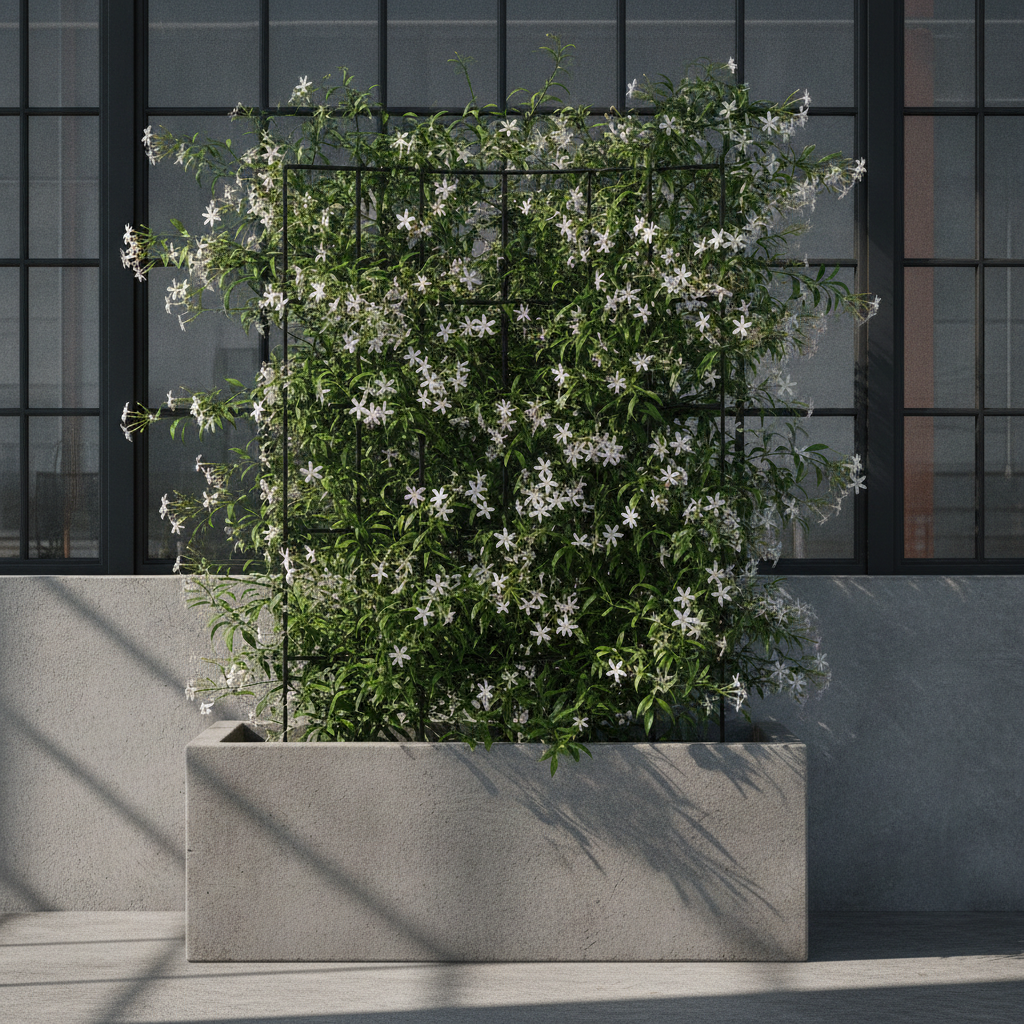
Few houseplants reward a sunny windowsill quite as generously as angel wing jasmine (Jasminum nitidum), a glossy-leaved scrambling climber that opens flushed purple buds into starry, faintly fragrant white pinwheels. Native to the Admiralty Islands off Papua New Guinea, it has travelled the warm regions of the world as an ornamental and settled comfortably into bright indoor rooms in cooler climates. It is forgiving enough for a confident beginner, yet generous enough with its blooms to keep an experienced grower interested season after season.
This guide walks through everything the plant needs to move from merely surviving to genuinely thriving, from the quality of light it craves to the rhythm of watering, the right soil, sensible feeding, reliable propagation and the handful of pests worth watching for.
Quick Reference
- Why grow angel wing jasmine
- Light
- Watering
- Soil and potting
- Fertilising
- Propagation
- Pests and problems
- Varieties and related jasmines
- Frequently asked questions
| Common names | Angel wing jasmine, shining jasmine, windmill jasmine, royal jasmine, star jasmine |
| Botanical name | Jasminum nitidum |
| Family | Oleaceae |
| Origin | Admiralty Islands, Papua New Guinea |
| Plant type | Evergreen scrambling shrub or vine |
| Mature size indoors | 1 to 2 metres (3 to 6 feet) when trained, longer if left to ramble |
| Light | Bright indirect light with a few hours of direct sun for flowering |
| Watering | When the top 2 to 3 cm (1 inch) of soil dries out |
| Soil | Rich, free-draining potting mix, slightly acidic to neutral |
| Temperature | 18 to 27 degrees C (64 to 81 degrees F) |
| Humidity | Moderate to high, above 50 per cent ideal |
| Feeding | Every 2 to 4 weeks in spring and summer |
| Propagation | Stem cuttings, layering |
| Toxicity | Generally considered non-toxic to cats and dogs |
| Difficulty | Easy to moderate |
Why Grow Angel Wing Jasmine as a Houseplant
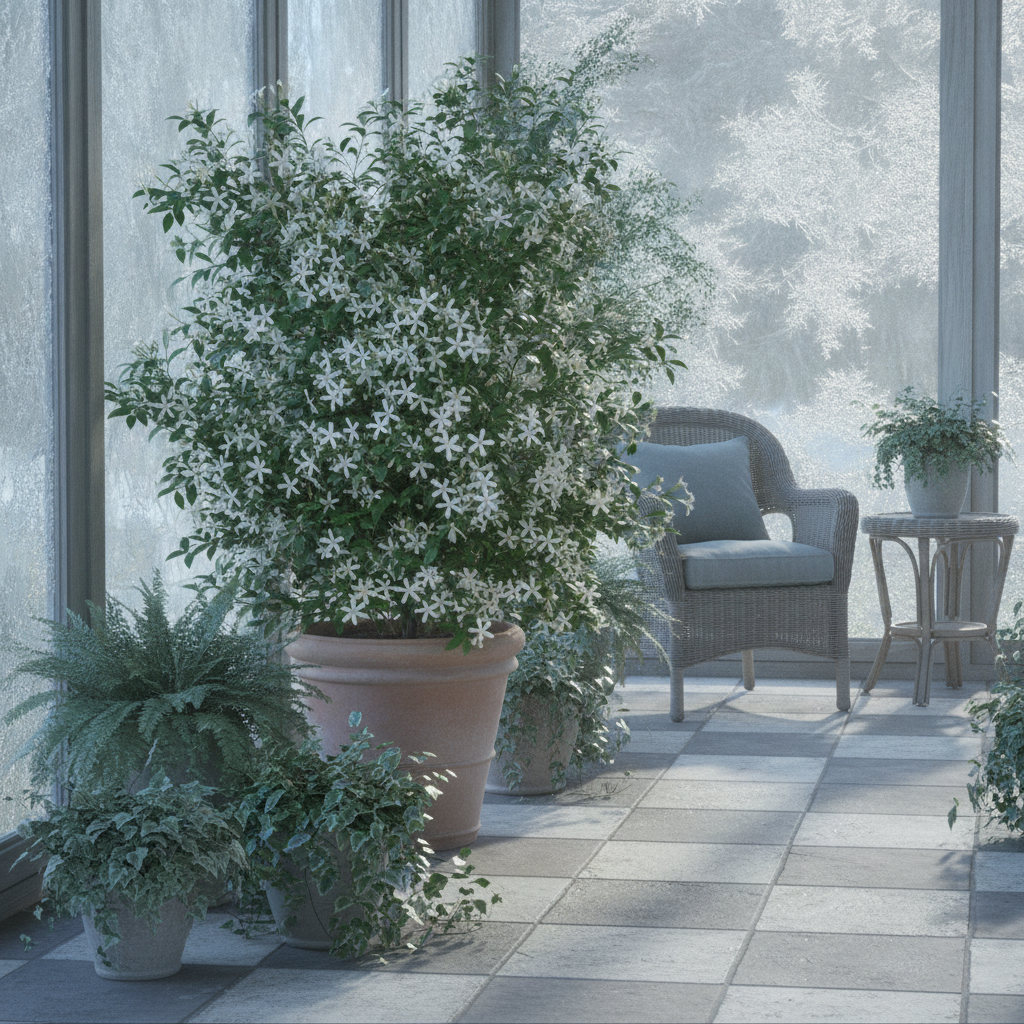
Angel wing jasmine earns its place indoors on three counts: handsome foliage, a long flowering season and a scent that is present without being overpowering. The leaves are simple, opposite, lance-shaped to oval and deeply glossy, holding a dark forest green that looks polished even in fairly modest light. That alone makes it a satisfying foliage plant, but the flowers are the real draw. Borne in loose clusters, each bloom opens from a slim purple-flushed bud into a flat star of nine to eleven narrow petals, pure white above and brushed with rose-purple on the reverse. The effect, especially when several open together, is of a small constellation hovering over the dark leaves.
Unlike many of the heavily perfumed jasmines, Jasminum nitidum carries a lighter, sweeter fragrance that drifts gently in a warm room rather than filling the house. For people who find some jasmines cloying, this restraint is a virtue. The plant also flowers over a long stretch, typically from late spring through summer and often sporadically beyond, so a well-placed specimen can be in bloom for months rather than weeks.
It is, at heart, a scrambler. Left alone it produces long, flexible stems that reach for anything to lean on, which means it adapts well to a hoop, a small trellis or a wire frame and can be kept compact with regular pruning. This habit makes it versatile: train it upright as a flowering feature, let it spill from a tall pot, or keep it clipped into a tidy mound. Add to this its general good nature, its tolerance of ordinary indoor conditions and its reputation as non-toxic to cats and dogs, and angel wing jasmine becomes one of the more rewarding flowering climbers a home grower can keep.
Pro Tip – Buy in bud: When choosing a plant, look for one carrying plenty of plump purple buds rather than only open flowers. Buds will continue opening over the following weeks, giving you a longer display as the plant settles into its new home.
Light
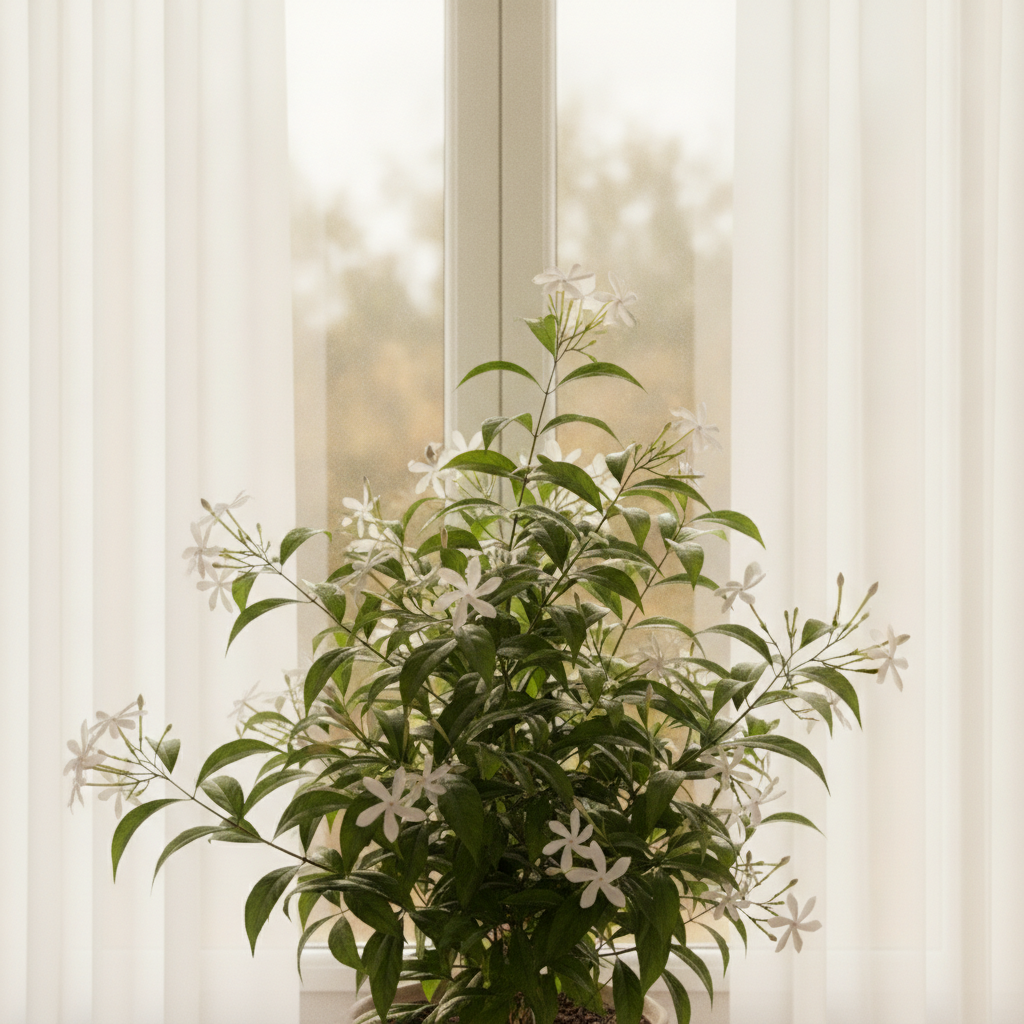
Light is the single biggest factor that separates a jasmine that merely lives from one that flowers freely. Angel wing jasmine is a sun lover at heart, and indoors it wants the brightest position you can offer. A spot within a metre of an east or west-facing window suits it well, and a south-facing aspect is excellent provided the fiercest midday rays in high summer are softened by a sheer curtain. Several hours of gentle direct sun each day, particularly the kinder light of morning, will reward you with stronger stems, denser foliage and far more buds.
In a position that is merely bright but never sunny, the plant will survive and keep its leaves, but flowering tends to fall away to a token few blooms or none at all. The stems also stretch and weaken as they reach toward the light, leaving wide gaps between leaves and a leggy, sparse appearance. If you notice this elongation, take it as a clear request for more light rather than more water or feed.
Take care, though, with sudden moves into strong sun. A plant that has been growing in lower light can scorch if shifted abruptly onto a hot, unscreened windowsill, showing pale or bleached patches on the most exposed leaves. Acclimatise it over a week or two, increasing exposure gradually. During the shorter, darker days of winter, move the plant to your sunniest window, and if natural light is genuinely poor a full-spectrum LED grow light running for ten to twelve hours a day will help maintain healthy growth until spring returns.
Pro Tip – Turn for even growth: Rotate the pot a quarter turn each week so every side receives its share of light. This keeps the plant growing evenly rather than leaning hard toward the glass, and it makes for a fuller, more balanced shape.
Watering
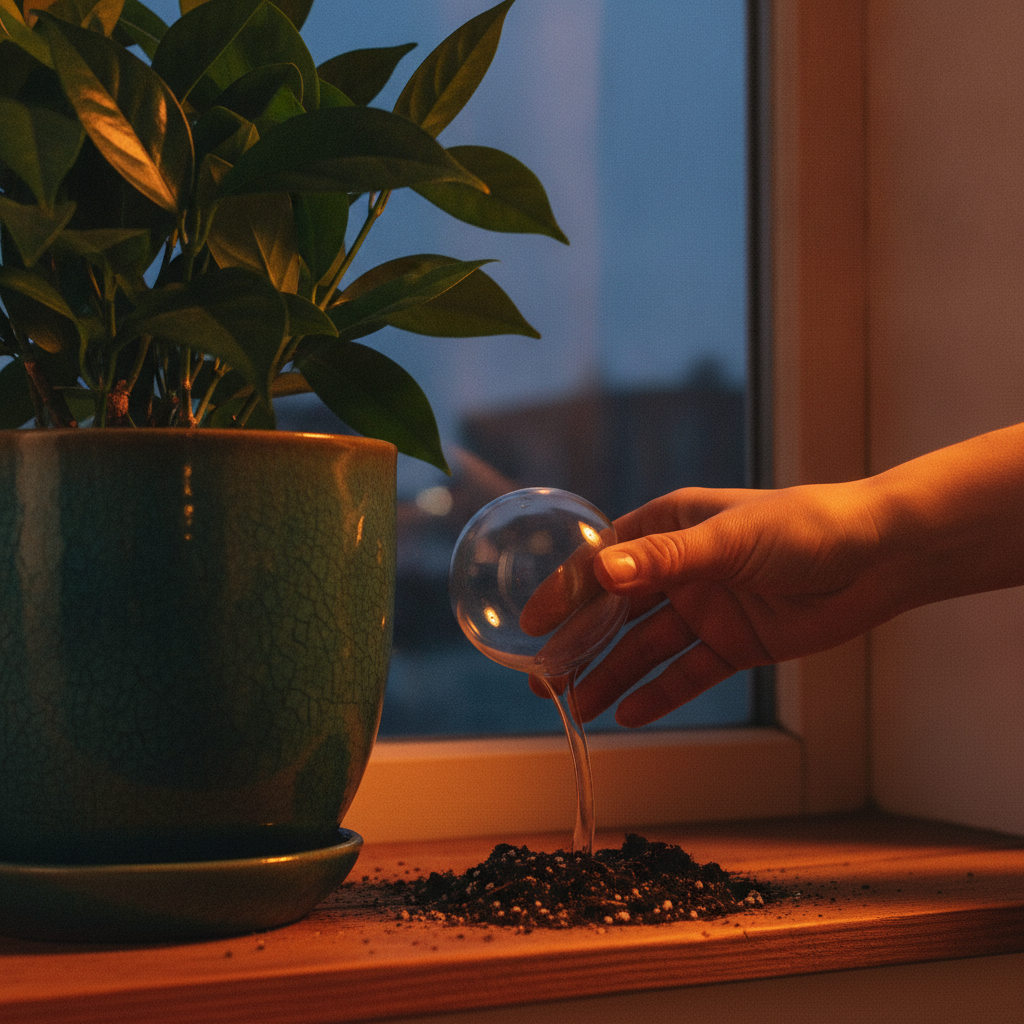
Angel wing jasmine likes its soil kept evenly moist during the growing season, but it has no tolerance for sitting in water. The aim is a steady rhythm: water thoroughly, let the top of the mix dry a little, then water again. As a practical test, push a finger into the soil and water when the top 2 to 3 cm (about an inch) feels dry to the touch. In a bright, warm room through spring and summer, an actively growing plant may need this every few days; in winter the interval lengthens considerably.
When you do water, do it properly. Pour slowly and evenly until water runs freely from the drainage holes, which ensures the entire root ball is moistened rather than just the surface. Let the excess drain away completely and never leave the pot standing in a saucer of water. Roots that sit in stagnant moisture quickly suffocate and rot, and root rot is by far the most common way this plant is lost. Yellowing lower leaves combined with a constantly wet, sour-smelling mix are the warning signs to act on.
The flip side is drought. While the plant copes with brief dryness, prolonged underwatering during the growing season causes buds to drop before they open and leaves to crisp at the edges. Consistency matters more than volume here, particularly while the plant is in bud. Through the cooler months, when growth slows, allow the mix to dry more between waterings, but do not let it become bone dry for extended periods. If your tap water is very hard or heavily chlorinated, the plant will appreciate rainwater or filtered water, and water at room temperature is always kinder to the roots than cold straight from the tap.
Warning – Bud drop: Sudden swings between bone dry and saturated are a leading cause of buds falling before they open. Keep watering steady and even while the plant is setting and opening flowers, and avoid moving it to a draughty or much cooler spot at the same time.
Soil and Potting
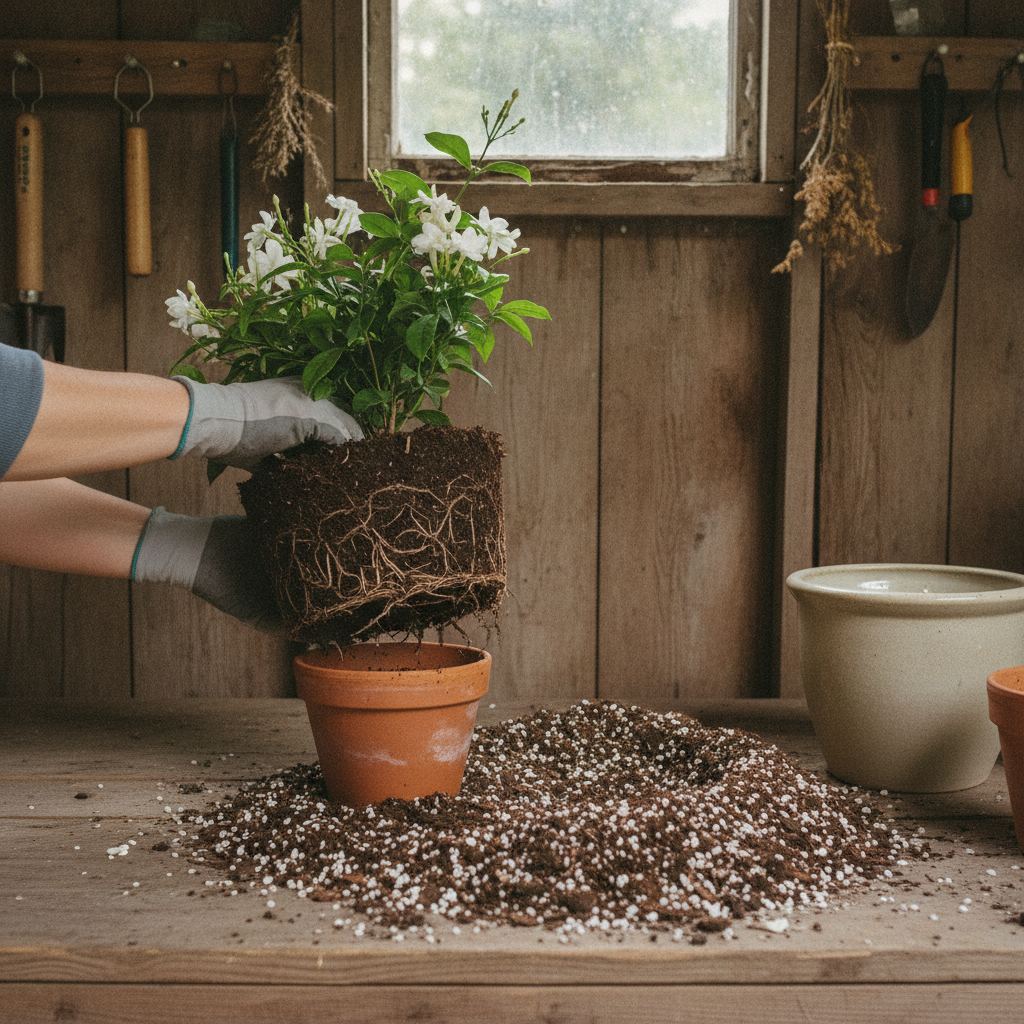
The ideal growing medium for angel wing jasmine balances two things that can seem at odds: the ability to hold moisture and nutrients, and the ability to drain quickly so the roots are never starved of air. A good general-purpose potting compost forms the base, but on its own it tends to stay too wet for too long. Opening it up with a generous handful of perlite, and optionally some fine bark or coarse horticultural grit, transforms it into the kind of moist yet airy mix the plant prefers. A slightly acidic to neutral pH, roughly 6.0 to 7.0, suits it best.
A reliable home blend is around two parts quality potting compost to one part perlite, with a small amount of bark or worm castings stirred through for structure and slow nutrition. Whatever mix you use, the pot itself must have drainage holes. A decorative cover pot without holes is fine as an outer layer, but the plant should always sit in an inner container that lets water escape, and that inner pot should never be left swimming in collected runoff.
Repot a young, vigorous plant every spring, and an established one every two years or so, stepping up by just one pot size each time. Too large a pot holds a reservoir of wet soil around the roots and invites rot, so resist the temptation to overpot. The best time to repot is early spring, just as new growth begins, which lets the plant recover quickly. Ease it out, tease apart any tightly circling roots, settle it into fresh mix at the same depth it was growing before, then water it in well. If a plant is happy and flowering and you would rather not disturb it, simply refreshing the top few centimetres of compost each spring is a gentler alternative that still tops up nutrients.
Fertilising
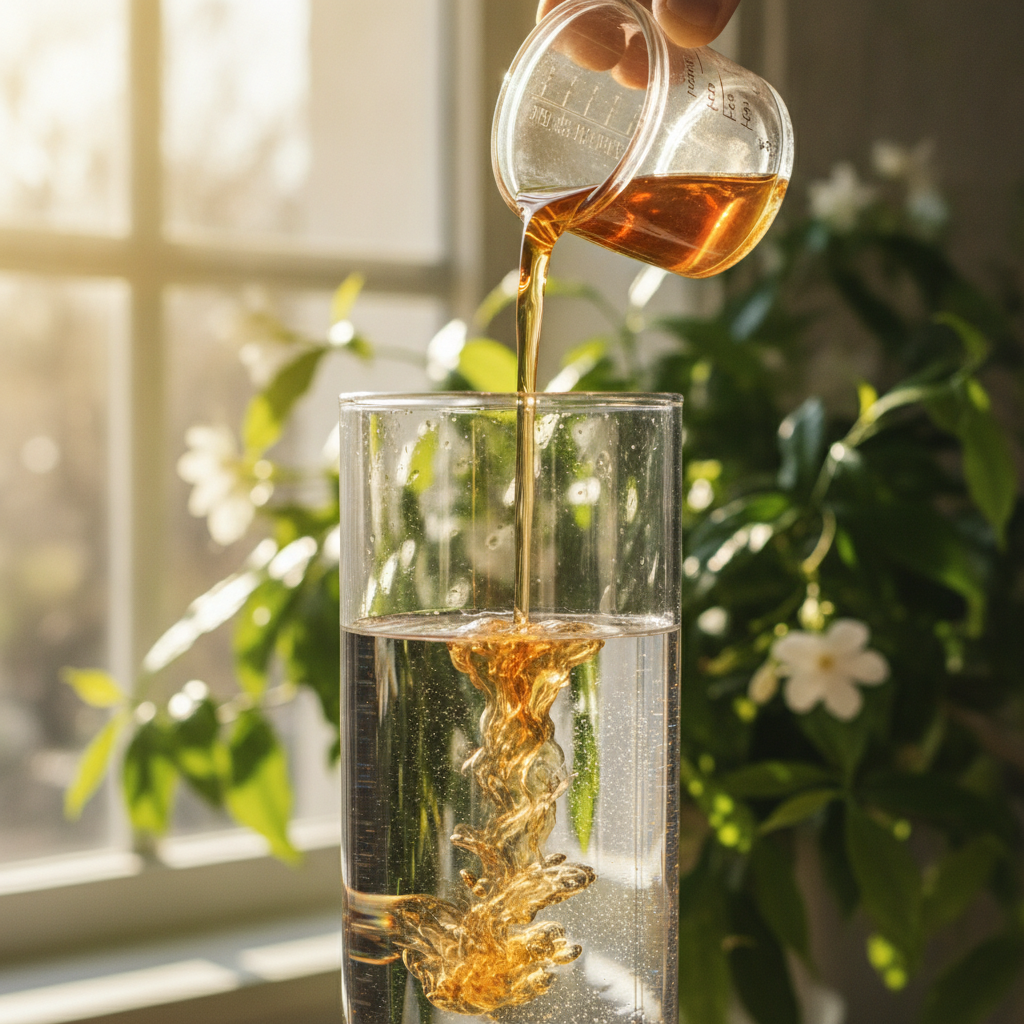
A flowering climber like angel wing jasmine is a hungry plant during the growing season, and regular feeding makes a marked difference to both the quantity of blooms and the depth of leaf colour. From early spring through to the end of summer, feed every two to four weeks with a balanced liquid houseplant fertiliser diluted to the strength recommended on the label, or slightly weaker. Always apply feed to already-moist soil rather than a dry root ball, which protects the fine roots from the concentrated salts in fertiliser.
While the plant is actively building toward flowering, a fertiliser somewhat higher in phosphorus and potassium relative to nitrogen can encourage more and better blooms. A formulation sold for tomatoes or for flowering plants works well here. A purely high-nitrogen feed, by contrast, tends to push lush green growth at the expense of flowers, so it is worth shifting the balance toward bloom-friendly nutrients as buds begin to form. Some growers alternate a general feed with a high-potassium one to cover both leaf and flower.
As autumn arrives and growth naturally slows, taper the feeding off, and through the depths of winter stop altogether. Feeding a resting plant in low light does no good and risks a harmful build-up of mineral salts in the soil. If you ever see a white crust forming on the soil surface or around the pot rim, or brown, scorched leaf tips, flush the pot through with plenty of plain water to leach out the accumulated salts, and consider easing back on the feed.
Pro Tip – Less is safer: When in doubt, feed at half the recommended strength more often rather than full strength occasionally. A steady, gentle supply of nutrients suits this plant far better than infrequent heavy doses that the roots struggle to absorb.
Propagation
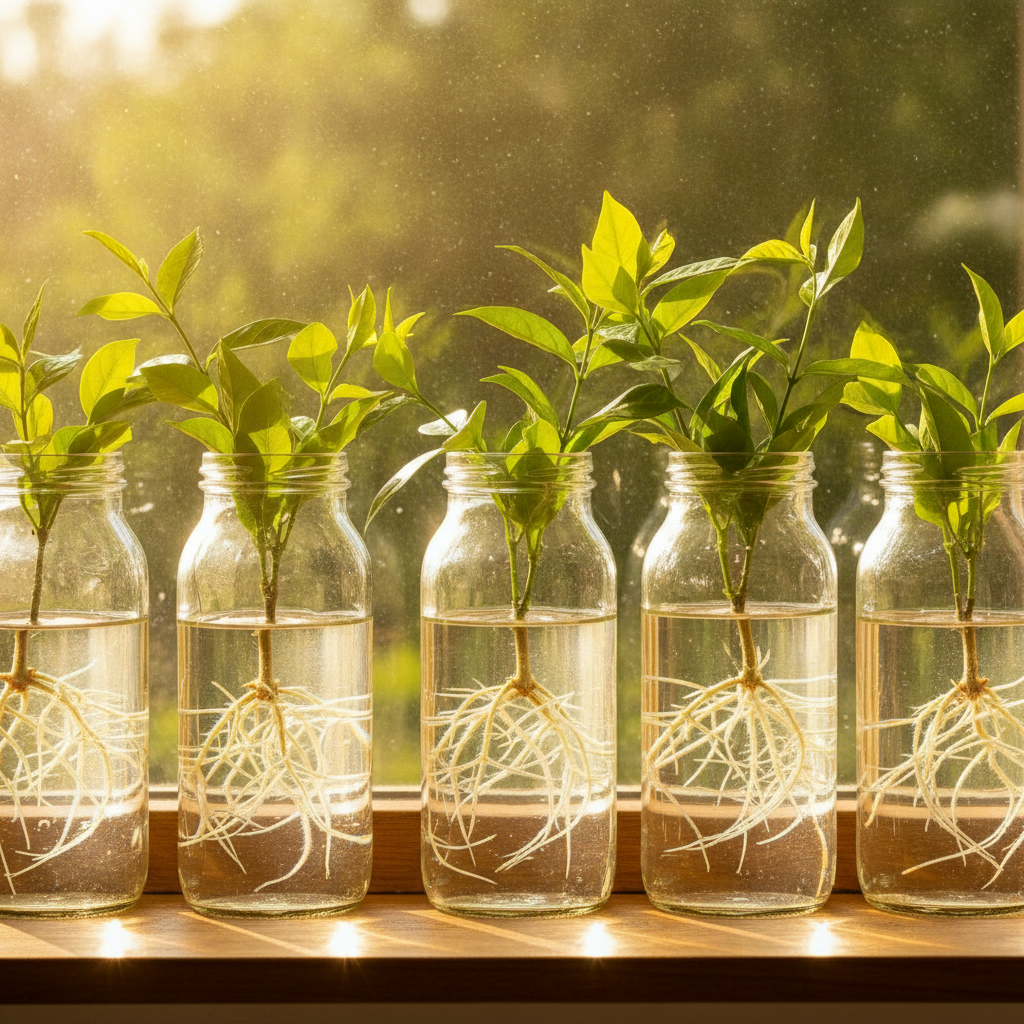
Angel wing jasmine propagates readily from stem cuttings, which is the most reliable way to make new plants and a useful means of keeping a favourite going. The best material is semi-ripe growth taken in late spring or summer: stems that are no longer soft and green but not yet fully woody and brown. Choose healthy, non-flowering shoots, as a cutting that is busy trying to bloom roots less willingly than one focused on growth.
Follow these steps for cuttings:
- Using clean, sharp scissors or secateurs, cut a length of stem about 10 to 15 cm (4 to 6 inches) long, making the cut just below a leaf node, the slightly swollen point where leaves emerge.
- Strip the leaves from the lower third to half of the cutting, leaving two or three leaves at the top to drive growth.
- Dip the cut end in rooting hormone if you have it, which is optional but improves the strike rate.
- Insert the cutting into a small pot of moist, free-draining mix such as a blend of compost and perlite, or stand it in a jar of clean water with the bare nodes submerged.
- Keep it warm, around 21 to 24 degrees C (70 to 75 degrees F), in bright but indirect light, and maintain high humidity by covering a soil-based cutting loosely with a clear bag or propagator lid.
- Keep the medium lightly moist, refreshing jar water every few days, and wait for roots to form over the following four to eight weeks.
Once a soil cutting resists a gentle tug, or a water cutting has produced firm roots a few centimetres long, it is ready to pot on into a small container of standard mix. Water-rooted cuttings transfer most successfully while their new roots are still young, as roots formed in water adapt more easily to soil at that stage. Layering is an even simpler alternative for an established plant: pin a low, flexible stem down onto the surface of an adjacent pot of compost, keep the contact point moist, and once it has rooted at the node, sever it from the parent and grow it on as an independent plant.
Pests and Problems

Angel wing jasmine is not especially prone to trouble, but like most leafy indoor plants it can attract a handful of sap-sucking pests, particularly when stressed or grown in dry air. The usual suspects are mealybugs, aphids, spider mites, whitefly and scale. Mealybugs appear as small white cottony tufts tucked into leaf joints and stem crooks; aphids cluster on soft new growth and buds; spider mites are tiny and reveal themselves through fine webbing and a stippled, dusty look on the leaves, thriving especially in hot, dry conditions; whitefly rise in a small white cloud when the plant is disturbed; and scale shows as flat brown bumps along stems and the backs of leaves.
The best defence is regular inspection. Turn a few leaves over each time you water and check the newest growth and the buds, since catching an infestation early makes it far easier to clear. For a light outbreak, wiping the affected parts with a cotton bud or cloth dipped in diluted isopropyl alcohol, or rinsing the plant under a gentle spray of water, often does the job. For something more established, treat thoroughly with insecticidal soap or a neem-based spray, coating the undersides of the leaves where pests shelter, and repeat every week or so until the problem is gone. Isolate a newly affected plant from your others while you deal with it.
Beyond pests, most of the difficulties this plant runs into are environmental. Yellowing leaves usually point to overwatering or poor drainage, especially when the lower leaves go first and the soil stays wet. A plant that drops its buds is most often reacting to inconsistent watering, a sudden change in temperature or position, or a draught. Sparse or absent flowering nearly always traces back to insufficient light or an excess of nitrogen-heavy feed. Brown, crispy leaf edges suggest air that is too dry or a build-up of fertiliser salts, while pale, bleached patches indicate sunburn from too much harsh direct sun too quickly. Read each symptom as feedback, adjust the one likely cause, and the plant generally recovers.
Warning – Quarantine new arrivals: Most pest invasions arrive hidden on a newly bought plant. Keep any new addition apart from your collection for a couple of weeks and inspect it closely before letting it join the others on the shelf.
Varieties and Related Jasmines
Angel wing jasmine is grown largely as the true species, Jasminum nitidum, and named cultivars are uncommon in the trade. Because the name jasmine is shared across many different plants, though, it is easy to confuse this species with its relatives at the garden centre. The two jasmines below are the ones most often grown indoors alongside it and most frequently mistaken for it, so knowing the differences helps you choose the plant you actually want.
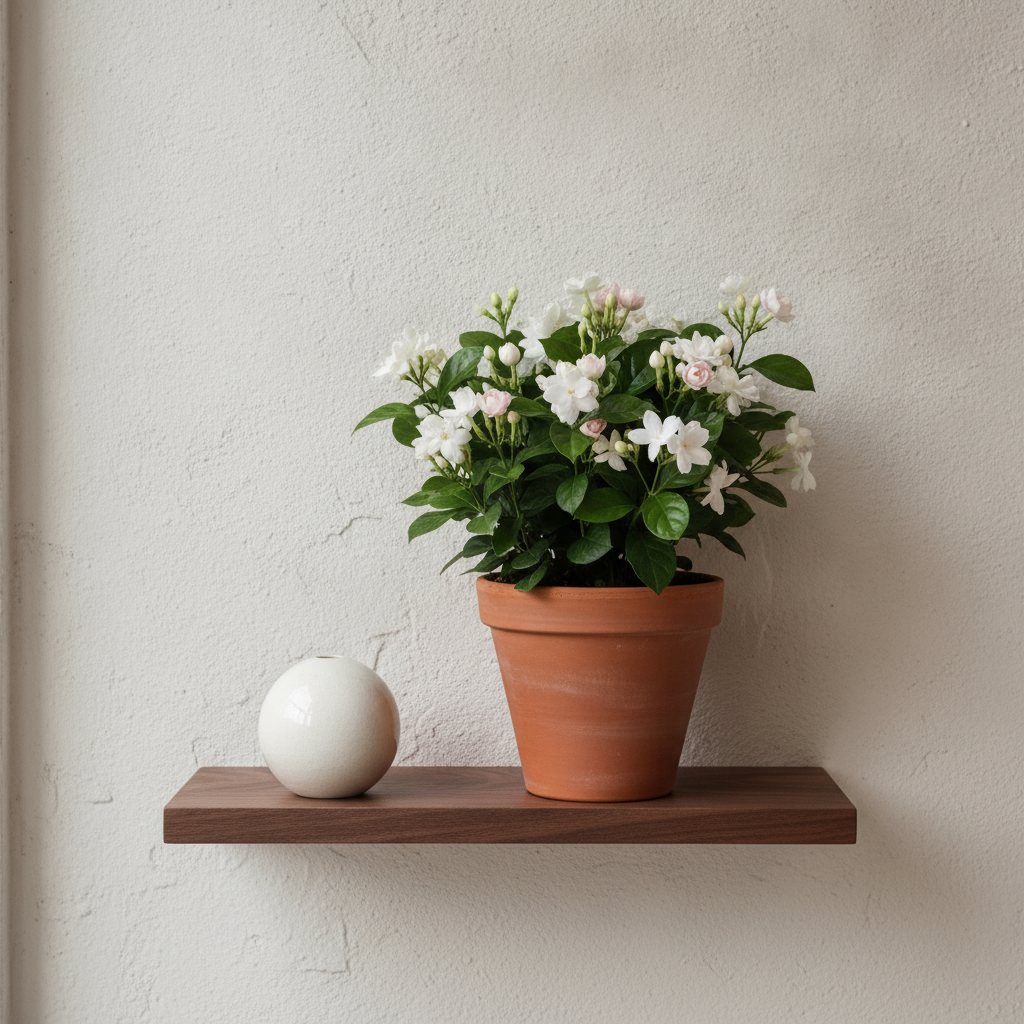
Arabian Jasmine (Jasminum sambac) is a bushier, more shrubby plant with rounded, glossy deep-green leaves and intensely fragrant waxy white flowers that often age to soft pink. It is the jasmine behind many perfumes and scented teas, and its perfume is much stronger and heavier than that of angel wing jasmine. Choose it if powerful fragrance is your priority and you do not mind a more compact, less climbing habit.
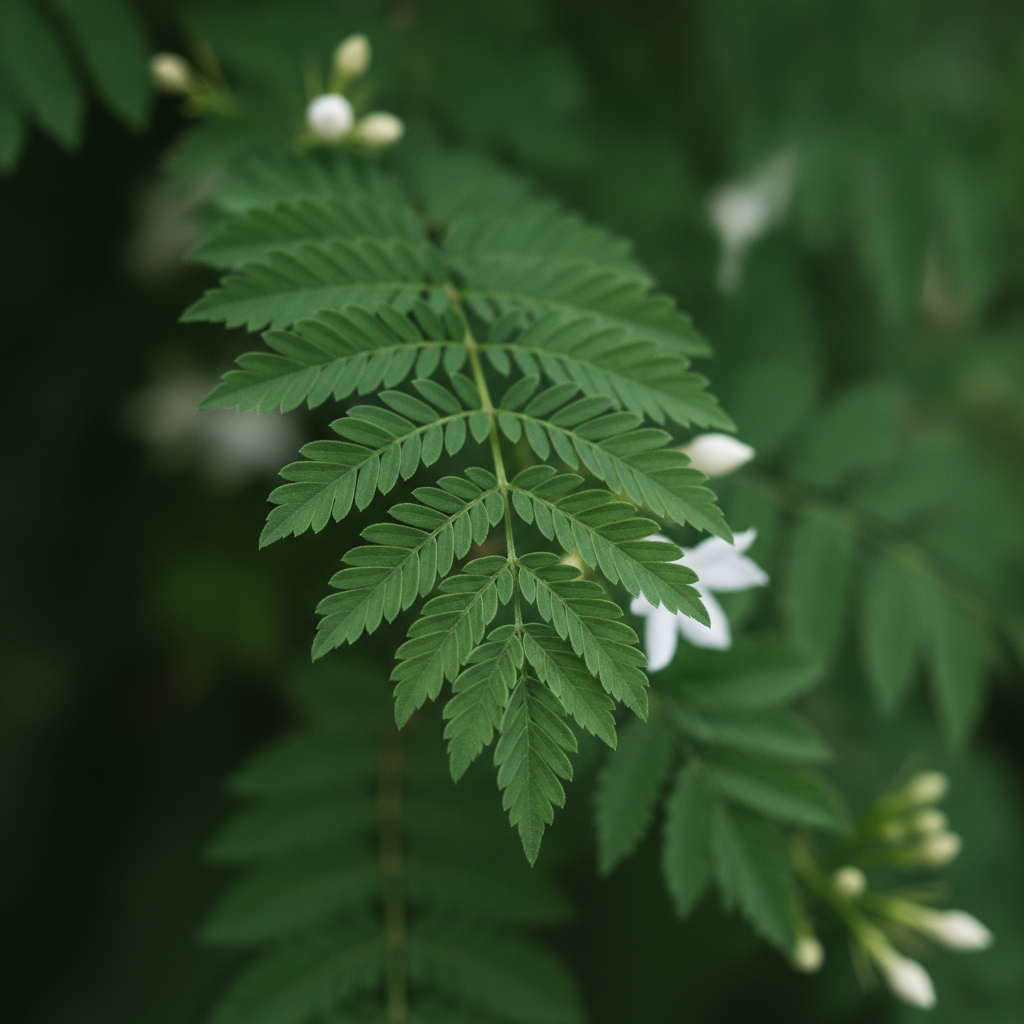
Common Jasmine (Jasminum officinale) is a vigorous climber with feathery, pinnate leaves made up of several leaflets, quite distinct from the simple single leaves of angel wing jasmine. It bears clusters of small, pure-white, strongly fragrant star-shaped flowers and is hardier than its tropical cousins, often grown outdoors in temperate gardens. Choose it for a larger climbing display and greater cold tolerance.
The quickest way to tell angel wing jasmine apart from these two is to look at the leaves and the flower form. Jasminum nitidum has simple, single, very glossy leaves and broad, flat, many-petalled pinwheel flowers flushed purple on the reverse, whereas common jasmine has divided, feathery foliage and common Arabian jasmine has rounded leaves on a bushier frame. If the label simply reads star jasmine, be doubly careful, as that name is also used for an entirely unrelated plant, Trachelospermum jasminoides, which is not a true jasmine at all.
Frequently Asked Questions
Why is my angel wing jasmine not flowering?
The most common reason is too little light. This plant needs a bright spot with some direct sun to bloom well, so move it to your sunniest window if flowering is poor. The other frequent cause is feeding too much nitrogen, which drives leafy growth at the expense of flowers; switch to a bloom-oriented feed higher in phosphorus and potassium as buds should be forming.
Is angel wing jasmine safe for cats and dogs?
Jasminum nitidum is generally regarded as non-toxic to cats and dogs, and true jasmines are not listed among the plants known to poison pets. That said, any plant can cause mild stomach upset if a curious animal eats a large amount, so it is still sensible to discourage nibbling and to confirm the botanical name, since several unrelated plants share the name jasmine and some of those are toxic.
Why are the buds falling off before they open?
Bud drop is usually a stress response. The leading triggers are inconsistent watering, letting the plant swing between bone dry and saturated, and a sudden change in conditions such as a move to a colder or draughtier spot. Keep watering steady and even while the plant is in bud, and avoid relocating it or exposing it to draughts during this sensitive period.
How big does angel wing jasmine get indoors?
As a scrambling climber it can produce long stems, but indoors it is easily kept to 1 to 2 metres (3 to 6 feet) trained on a support, and smaller still with regular pruning. Trim it back after a flush of flowering to keep it bushy and within the size you want, and use the trimmings as cuttings.
Can I grow angel wing jasmine outdoors?
In warm, frost-free climates, roughly equivalent to USDA zones 9 to 11, it grows happily outdoors year-round as an evergreen climber. In cooler regions it is best kept as an indoor or conservatory plant, though it can spend the warm months outside in a sheltered, sunny spot and then be brought back indoors well before the first frost.
How often should I repot it?
Repot a young, vigorous plant each spring and an established one every couple of years, moving up only one pot size at a time. Avoid jumping to a much larger pot, as the extra volume of wet soil around the roots raises the risk of rot. If you would rather not disturb a happy, flowering plant, simply replace the top few centimetres of compost with fresh mix each spring.






