
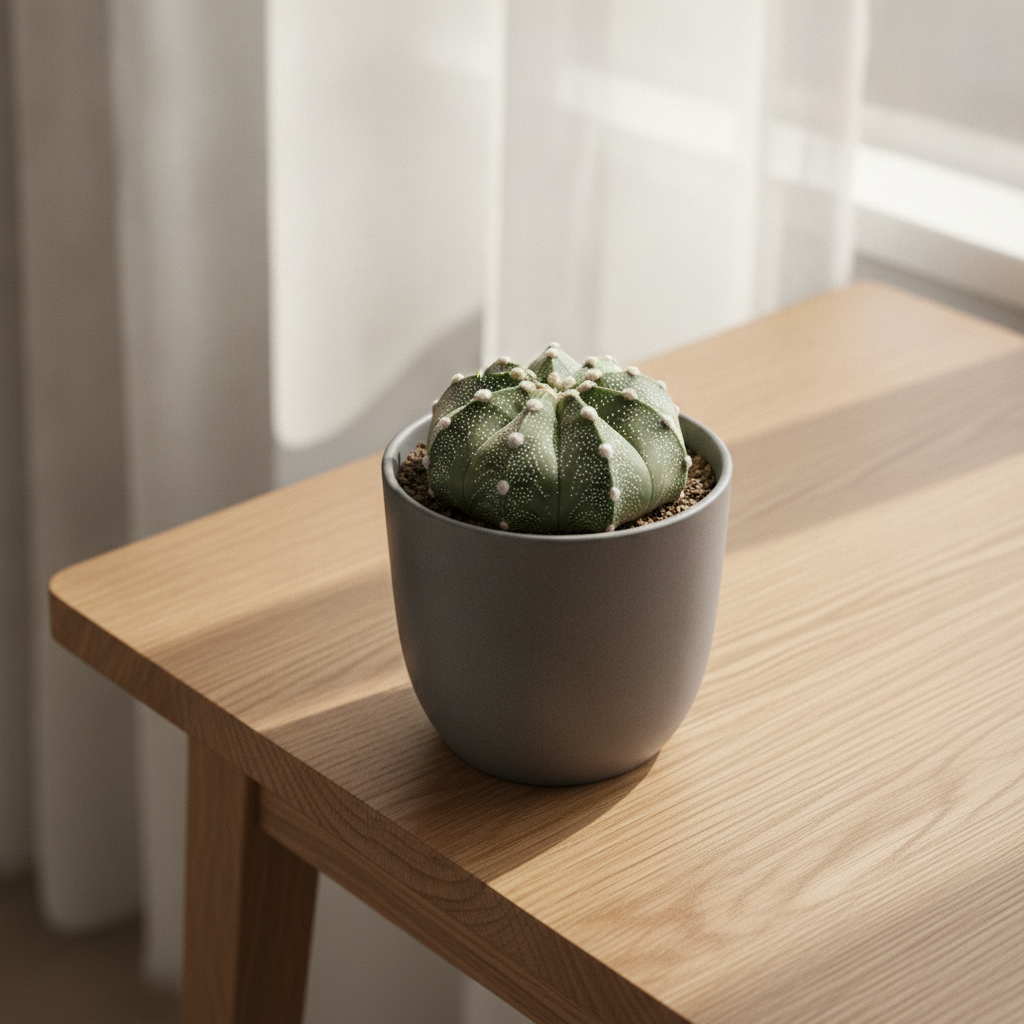
Few cacti look less like a cactus than the star cactus. Instead of a bristling armour of spines it presents a smooth, flattened green dome, pressed down like a starfish that has settled onto the desert floor, its surface freckled with tiny white tufts and divided into neat radiating ribs. Known botanically as Astrophytum asterias and popularly as the sand dollar cactus or sea urchin cactus, it is one of the most collectable of all globular cacti, prized for its geometric symmetry, its complete lack of spines and the surprisingly large sulphur-yellow flower that opens from its crown in the growing season.
This guide covers everything you need to keep one alive and, more importantly, to keep it thriving: the light it craves, the disciplined watering that separates a plump healthy specimen from a rotted one, the sharply draining mineral soil it demands, and the slow patient business of raising new plants from seed. The star cactus is not difficult, but it is unforgiving of the one mistake most houseplant owners are prone to make, which is kindness in the form of too much water.
Quick Reference
- Why the Star Cactus Makes a Rewarding Houseplant
- Light
- Watering
- Soil and Potting
- Fertilising
- Propagation
- Pests and Problems
- Varieties and Cultivars
- Frequently Asked Questions
| Common names | Star cactus, sand dollar cactus, sea urchin cactus, star peyote |
| Botanical name | Astrophytum asterias |
| Family | Cactaceae |
| Origin | Chihuahuan Desert of southern Texas and north-eastern Mexico |
| Mature size | 5 to 15 cm (2 to 6 in) across, rarely taller than 6 cm (2.5 in) |
| Light | Bright light with some gentle direct sun |
| Water | Soak thoroughly, then let dry completely; nearly dry in winter |
| Soil | Very gritty, fast-draining mineral cactus mix |
| Temperature | 20 to 30 degrees C (68 to 86 F) in growth; keep above 7 degrees C (45 F) |
| Humidity | Low; average dry room air is ideal |
| Toxicity | Non-toxic to cats and dogs |
| Difficulty | Easy to moderate, provided watering is disciplined |
Why the Star Cactus Makes a Rewarding Houseplant
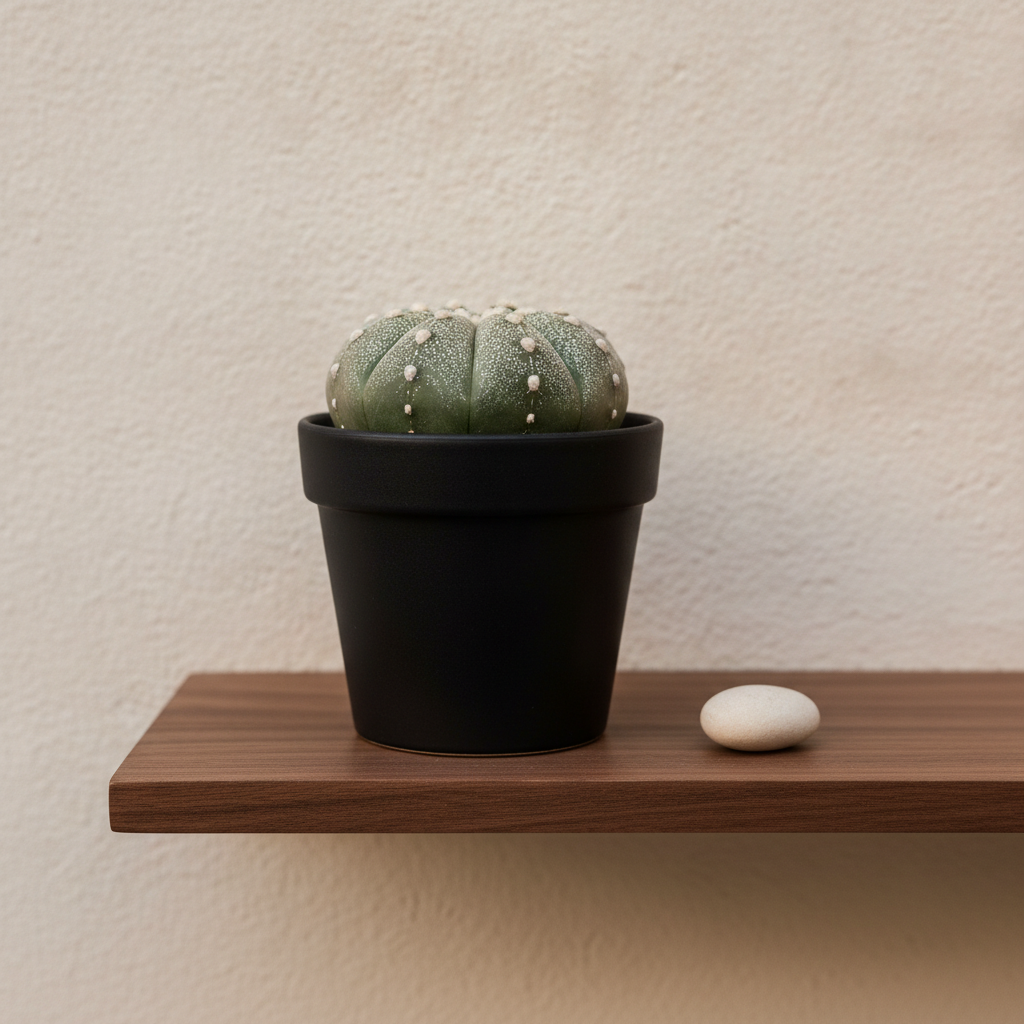
What draws people to Astrophytum asterias is its geometry. The body is a low, ribbed disc, usually carrying eight broad ribs though occasionally four, six or ten, and each rib is lined with evenly spaced woolly areoles that look like tiny white buttons stitched into the green skin. Scattered across the whole surface are minute white flecks, tufts of fine hair-like trichomes that give the plant a dusting of frost and help reflect the fierce desert sun. There are no spines at all, which makes it one of the few cacti you can handle and repot without gloves, and one of the safest to keep in a home with curious pets or children.
It is also a genuinely compact plant. A star cactus can spend its entire life in a pot no larger than a teacup, growing so slowly that a specimen the size of a biscuit may already be a decade old. That slowness is a virtue on a crowded windowsill, and it means the plant rarely needs repotting or intervention. In late spring and through summer, a mature plant produces a comparatively enormous flower from the tuft of wool at its crown, a glossy funnel of yellow petals with a warm red or orange throat, sometimes as wide as the plant itself. The flowers are short-lived, lasting only a few days each, but a healthy plant will send up several across the season.
There is a conservation story woven into its appeal as well. In the wild the star cactus is genuinely rare and legally protected, found only in a scattering of Chihuahuan Desert grassland populations in southern Texas and the neighbouring Mexican states, where habitat loss and illegal collection have pushed it onto endangered lists and into the strictest tiers of international trade protection. The plants sold to hobbyists are nursery-propagated from seed, so growing one at home puts no pressure on wild populations. Understanding where it comes from also explains how to care for it: this is a plant of hot, bright, mineral-poor ground that bakes for months and receives rain only in short seasonal bursts, and everything about good care flows from imitating those conditions.
Light
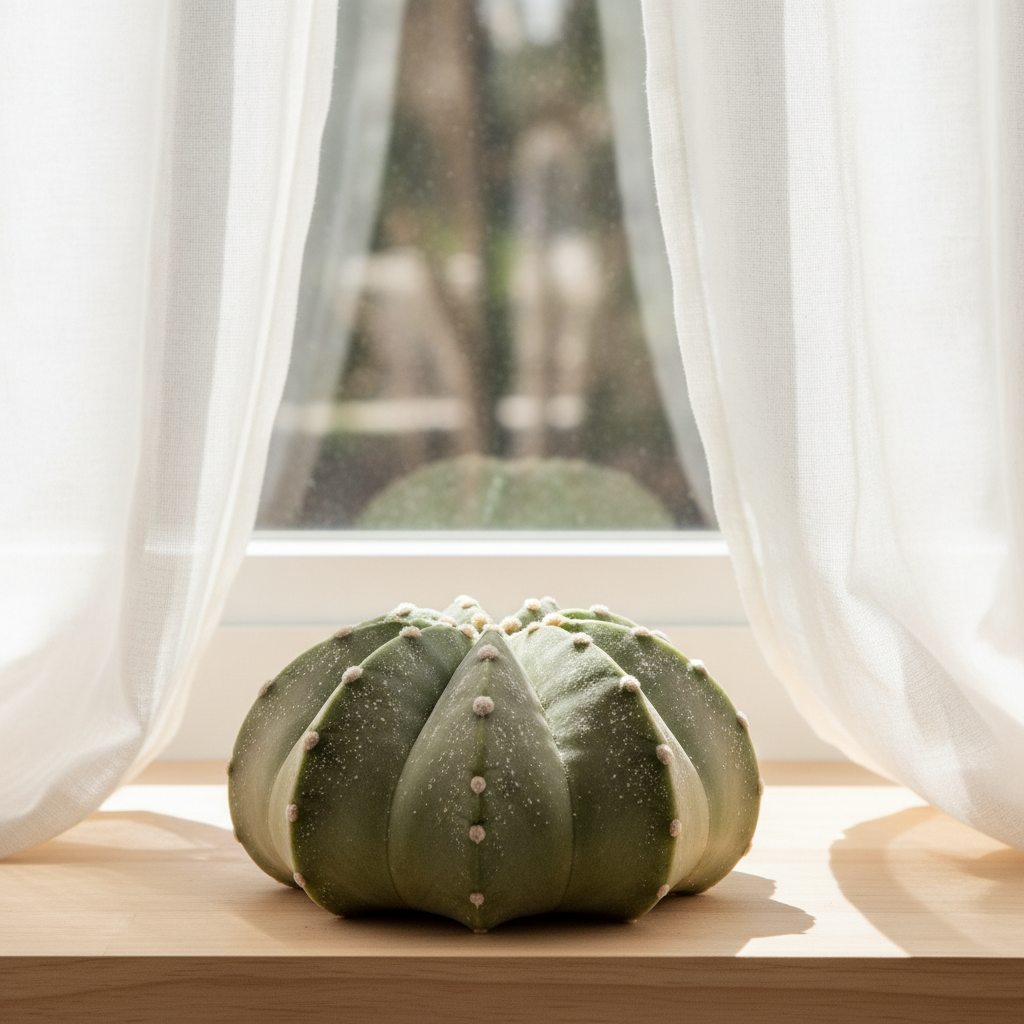
Light is the single factor that most shapes how a star cactus looks. In its native grassland the plant grows in full exposure, often partly shaded at ground level by tufts of dry grass but otherwise under an open sky, so indoors it wants the brightest position you can offer. A south-facing or west-facing windowsill is close to ideal, giving several hours of direct sun balanced by the softening effect of the glass. An east window works too, delivering gentle morning sun that is rarely strong enough to scorch. In a north-facing room the plant will survive but slowly etiolate, losing its tight flattened shape.
The difference between merely surviving and truly thriving shows up in the plant’s silhouette. Given enough light, the star cactus stays low and disc-like, its ribs broad and its flecking dense and bright. Starved of light it begins to dome upward and then to elongate into an unnatural column, reaching for the window, with wider gaps between the areoles and a paler, thinner skin. This stretching, called etiolation, cannot be reversed once it happens; the swollen growth is permanent, so it is far better to prevent it by providing strong light from the start.
A note of caution applies to intense summer sun behind glass, especially for a plant that has spent winter in dimmer conditions. Move it into strong sun gradually over a week or two rather than all at once, because a sudden jump can bleach or brown the tissue in a permanent scorch. If you see a pale straw-coloured or corky patch developing on the side facing the window, ease the plant back or add a sheer curtain during the hottest hours. Rotating the pot a quarter turn every week or two keeps growth even and stops the plant leaning.
Pro Tip — Grow-light backup: If your brightest window still leaves the plant stretching in winter, a small full-spectrum LED grow-light placed 20 to 30 cm (8 to 12 in) above the plant for 10 to 12 hours a day will hold its shape through the dark months until natural light returns.
Watering
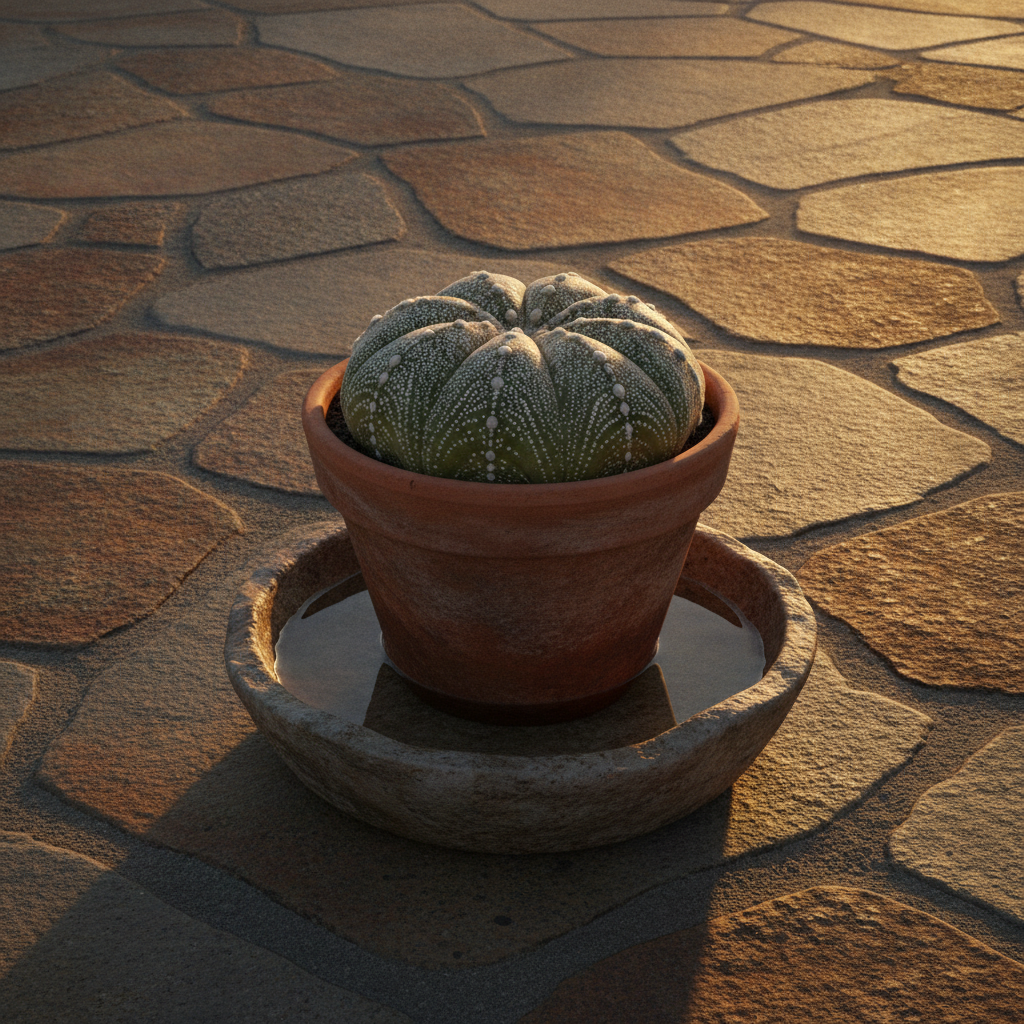
Watering is where star cacti are won and lost. The plant stores water in its swollen body to ride out long droughts, which means it is built to tolerate dryness and deeply intolerant of sitting wet. The method that works is the soak and dry approach: water thoroughly so that moisture runs from the drainage holes and the entire root ball is wetted, then wait until the soil has dried out completely before watering again. During the warm growing months from spring into early autumn this might mean watering every ten days to two weeks, but the calendar matters far less than the actual dryness of the soil.
Because the flattened crown collects water and rot begins there so easily, many growers prefer to bottom-water. Stand the pot in a shallow dish of water for fifteen to thirty minutes and let the gritty mix wick moisture upward, then remove it and allow it to drain fully. This keeps the vulnerable growing point dry and encourages roots to reach downward. If you water from above instead, aim for the soil surface and keep water out of the central wool.
Winter changes everything. As light and temperatures fall the star cactus enters a natural rest, and in this period it wants to be kept almost completely dry, with perhaps a single light watering across the whole of the coldest months, or none at all if the plant is somewhere cold. This enforced dry rest is not neglect; it is essential, both to prevent cold wet roots from rotting and to trigger the flower buds that will open the following season. A star cactus kept warm and watered through winter often refuses to bloom and is far more likely to succumb to rot.
Learn to read the plant. A well-watered star cactus is firm and plump with its ribs full; one that is thirsty will look very slightly shrunken or wrinkled at the base and feel a touch softer, which is your cue to water. A plant that feels squishy, looks yellowed or translucent, or shows blackening at soil level is telling you the opposite, that it has had too much, and the only remedy then is to stop watering immediately and, if rot has set in, to unpot and inspect the roots.
Warning — When in doubt, wait: More star cacti die from a generous owner than from a forgetful one. If you are unsure whether the plant needs water, it almost certainly does not. Give it another few days and check again.
Soil and Potting
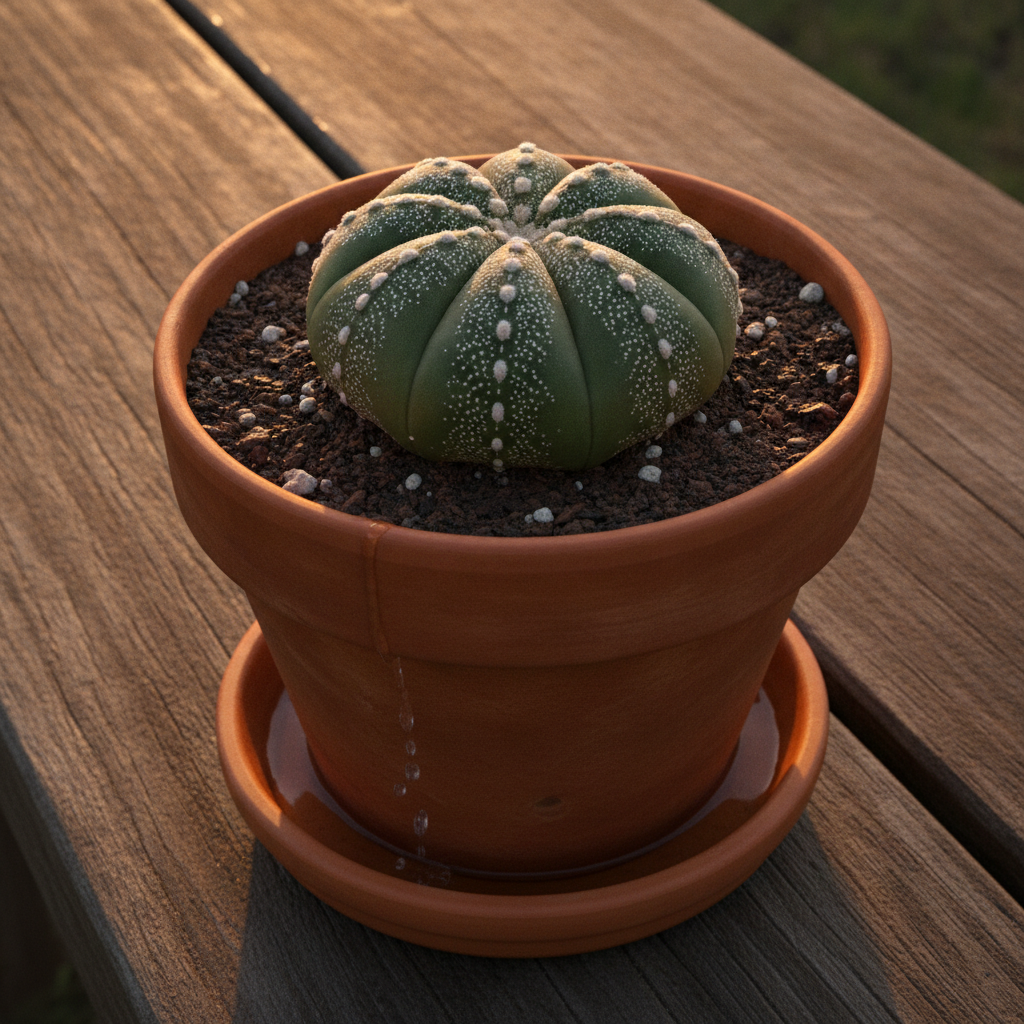
The soil for a star cactus should be far grittier and leaner than most bagged cactus composts. In the wild it grows in shallow, stony, mineral ground that holds almost no organic matter and drains the moment rain stops, so the goal in a pot is a mix that wets thoroughly and then dries quickly, never staying soggy. A reliable blend is roughly half mineral grit, using pumice, coarse perlite or a fired-clay product, and half a standard cactus or gritty potting soil, adjusted so the finished mix feels sharp and chunky rather than smooth and peaty. If you buy a ready-made cactus mix, cut it with an equal volume of pumice or perlite before use, because most such mixes hold too much moisture on their own.
The pot matters as much as its contents. Choose a container with generous drainage holes and only slightly larger than the plant itself, since a star cactus grown in an oversized pot sits in a mass of slow-drying soil that invites rot. Terracotta is the traditional and sensible choice because its porous walls let moisture evaporate and help the root zone dry between waterings; glazed ceramic and plastic hold water longer and demand even more restraint. A shallow pot suits the plant’s low, wide root system better than a deep one.
Repotting is an infrequent job. Because the plant grows so slowly it may be happy in the same pot for three or four years, and the best time to move it is in early spring as growth resumes. Handle it gently, tease away the old exhausted soil from the roots, and check for any soft brown patches while you have it out. After repotting, resist the urge to water straight away: wait a week or so before the first watering so that any roots nicked during the move can callus over rather than rot. This dry settling-in period is a small discipline that prevents a great deal of trouble.
Fertilising
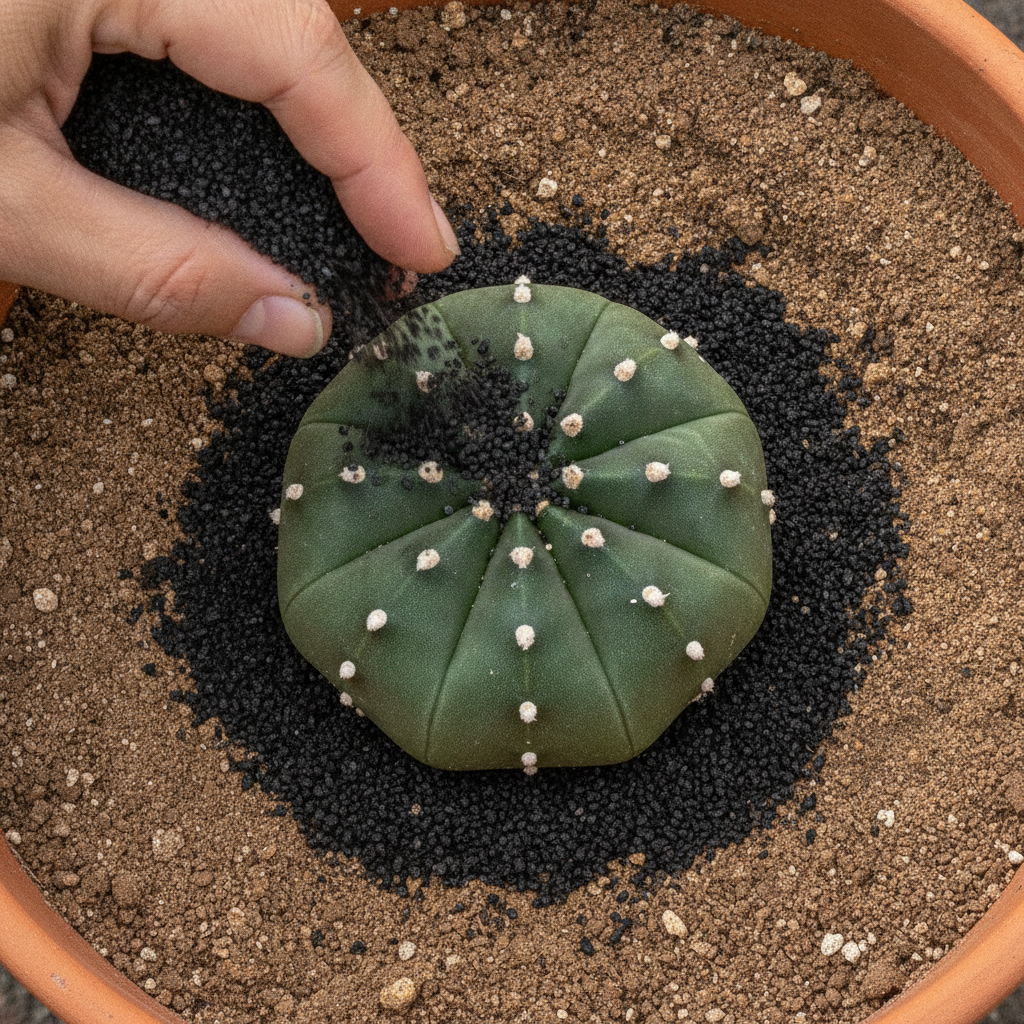
A star cactus needs very little feeding, and overfeeding does more harm than doing nothing at all. In its natural home it draws a meagre living from thin mineral soil, so it is adapted to scarcity, and a plant pushed with too much nitrogen responds with soft, swollen, distorted growth that spoils its tight symmetry and is more prone to rot and pests. Think of fertiliser as an occasional light supplement rather than a regular meal.
During the growing season from spring to early autumn, a dilute low-nitrogen feed applied roughly once a month is plenty. A fertiliser formulated for cacti and succulents, which is naturally lower in nitrogen and higher in potassium and phosphorus, suits the plant well and helps support flowering; if you use a general houseplant feed, dilute it to a quarter or half of the recommended strength. Always apply fertiliser to already-moist soil rather than to a bone-dry root ball, since feeding a dry, thirsty plant can burn the roots. A gentle organic option is a light top-dressing of worm castings in spring, which releases nutrients slowly and mildly.
Stop feeding entirely from mid-autumn through winter. During the dormant period the plant is not actively growing and cannot use the nutrients, so any fertiliser simply accumulates as salts in the soil and risks damaging the roots. Resume only when the days lengthen and you see the first signs of renewed growth in spring.
Propagation
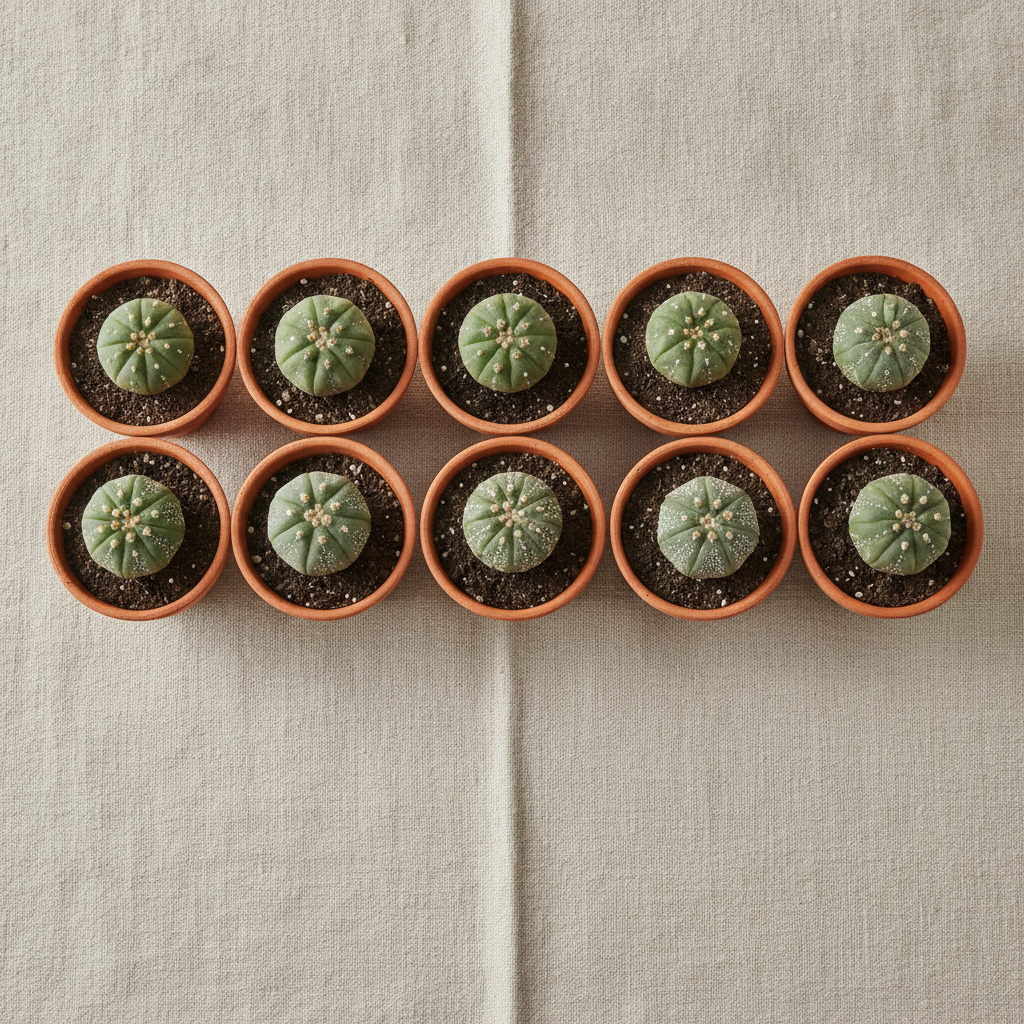
Propagating a star cactus is a lesson in patience, because unlike many succulents it cannot be grown from a leaf or a stem cutting. The plant is almost always solitary, rarely producing the offsets or pups that make so many other cacti easy to divide, and it has no leaves to root. The overwhelmingly usual method, and the one that produces the nursery plants you buy, is growing from seed. It is slow but genuinely rewarding, and it is the only way to produce numbers of plants.
To raise star cacti from seed, sow the fine seed on the surface of a moist, sterile, gritty mix in a small pot or tray, barely covering it, then cover the container with a clear lid or place it inside a plastic bag to hold humidity. Kept warm at around 20 to 25 degrees C (68 to 77 F) and in bright indirect light, germination usually begins within a week or two. The seedlings appear as tiny green spheres and grow with agonising slowness; they need consistent warmth, careful humidity and protection from both drying out and damping off, and they will take several years to reach flowering size. Follow these stages:
- Fill a small pot with a sterile, gritty seed mix and moisten it, then let excess water drain away.
- Scatter the seed thinly across the surface and press it in gently without burying it.
- Cover the pot with a clear lid or a plastic bag to maintain high humidity, and place it somewhere warm and bright but out of harsh direct sun.
- Keep the surface lightly moist until germination, then gradually increase ventilation over the following weeks to harden off the seedlings.
- Once the young plants are established and growing, begin the normal soak and dry watering routine and pot them on individually as they enlarge.
Two other methods appear in cultivation. Very occasionally a plant that has been damaged at its growing point, or certain clustering forms, will throw offsets, and these can be carefully removed once they have their own roots, left to callus for a few days and potted into gritty mix. Grafting, in which a young star cactus is fixed onto a faster-growing rootstock cactus, is widely used by specialist growers to speed up growth and rescue slow or rot-prone seedlings, though it is an advanced technique rather than a beginner’s project.
Pro Tip — Patience pays: A star cactus grown from seed may take four to six years to flower. Sow more seed than you think you need, keep the seedlings warm and humid in their first year, and think in seasons rather than weeks.
Pests and Problems
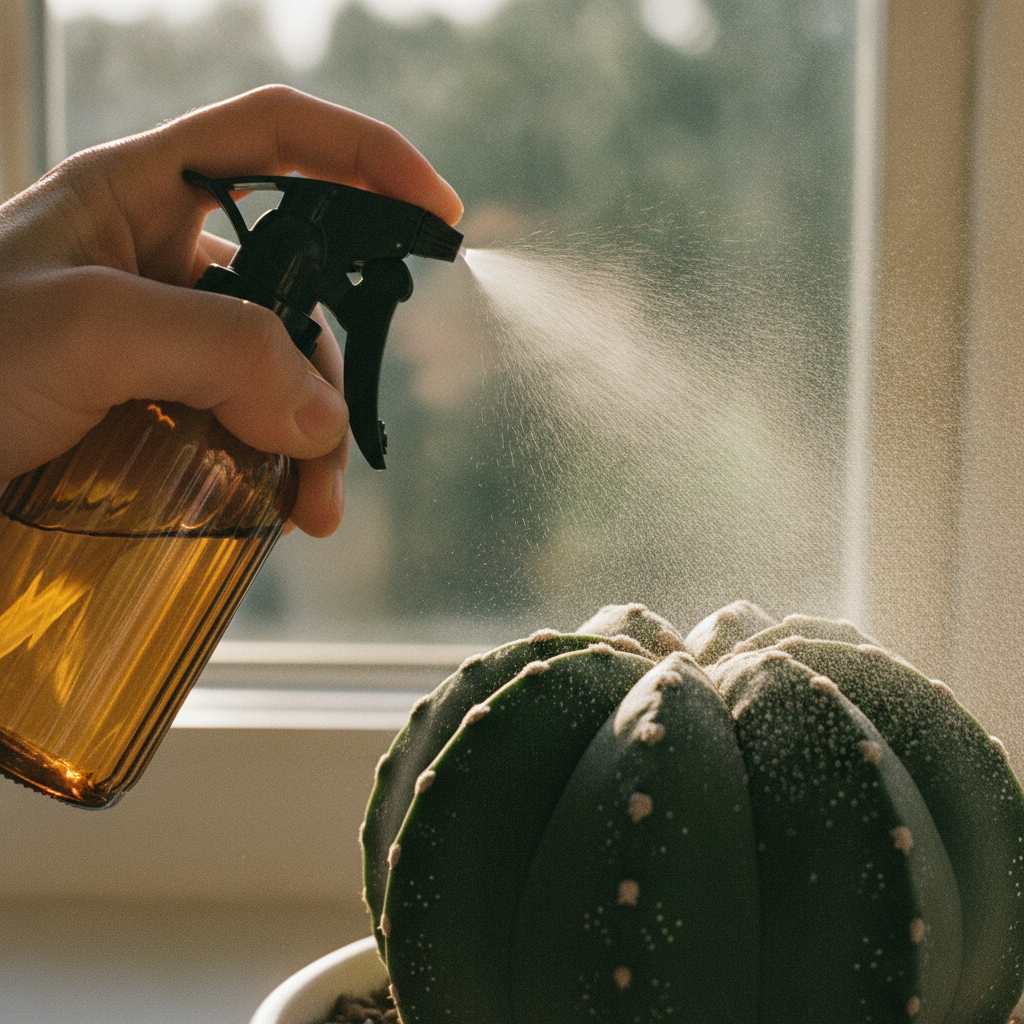
The star cactus is not especially pest-prone, but a handful of familiar culprits can trouble it, and by far the most serious threat is not an insect at all but rot caused by overwatering. Because the two problems overlap in how they weaken a plant, it pays to inspect your cactus regularly, looking over the body and, when you repot, into the roots.
Mealybugs are the most common insect pest, appearing as small white cottony blobs tucked into the wool of the areoles and the crevices between ribs, where they are easy to mistake for the plant’s natural flecking. A particularly insidious relative, the root mealybug, lives unseen among the roots and shows itself only as a plant that fails to thrive despite good care; you find it by unpotting and checking for white powdery deposits around the roots. Spider mites can also attack in hot dry conditions, leaving fine stippling or a rusty, corky bronzing on the body, and scale insects occasionally appear as hard brown bumps. Fungus gnats, whose larvae live in wet soil, are usually a sign that you are watering too often rather than a threat in themselves.
For small infestations of mealybugs or scale, dab each pest directly with a cotton bud dipped in isopropyl alcohol, which kills it on contact. For wider problems, a treatment with neem oil or an appropriate insecticidal soap or systemic, repeated at intervals to catch newly hatched young, will bring things under control; root mealybugs may require unpotting, rinsing the roots clean and repotting into fresh soil. Keeping the plant in good light with disciplined watering is the best long-term defence, since stressed and overwatered plants are the ones pests find easiest to colonise.
Rot is the problem that kills most star cacti. It usually starts at the base or the crown as a soft, discoloured, water-soaked patch that spreads and turns brown or black, and it follows from soil that stays wet, a pot without drainage, cold damp conditions in winter, or water pooling in the crown. Caught early, you can sometimes save the plant by cutting well back into clean firm green tissue with a sterile blade, letting the wound callus and treating it almost like a fresh cutting, but prevention through gritty soil, careful watering and a dry winter rest is far more reliable than any cure.
Varieties and Cultivars
Part of the fascination of Astrophytum asterias is how much variation growers have coaxed from a single species. Decades of selective breeding, much of it pioneered in Japan, have produced a range of named forms that differ chiefly in the density and pattern of the white flecking, the size and shape of the areoles, and the number of ribs. Two forms in particular anchor most collections.
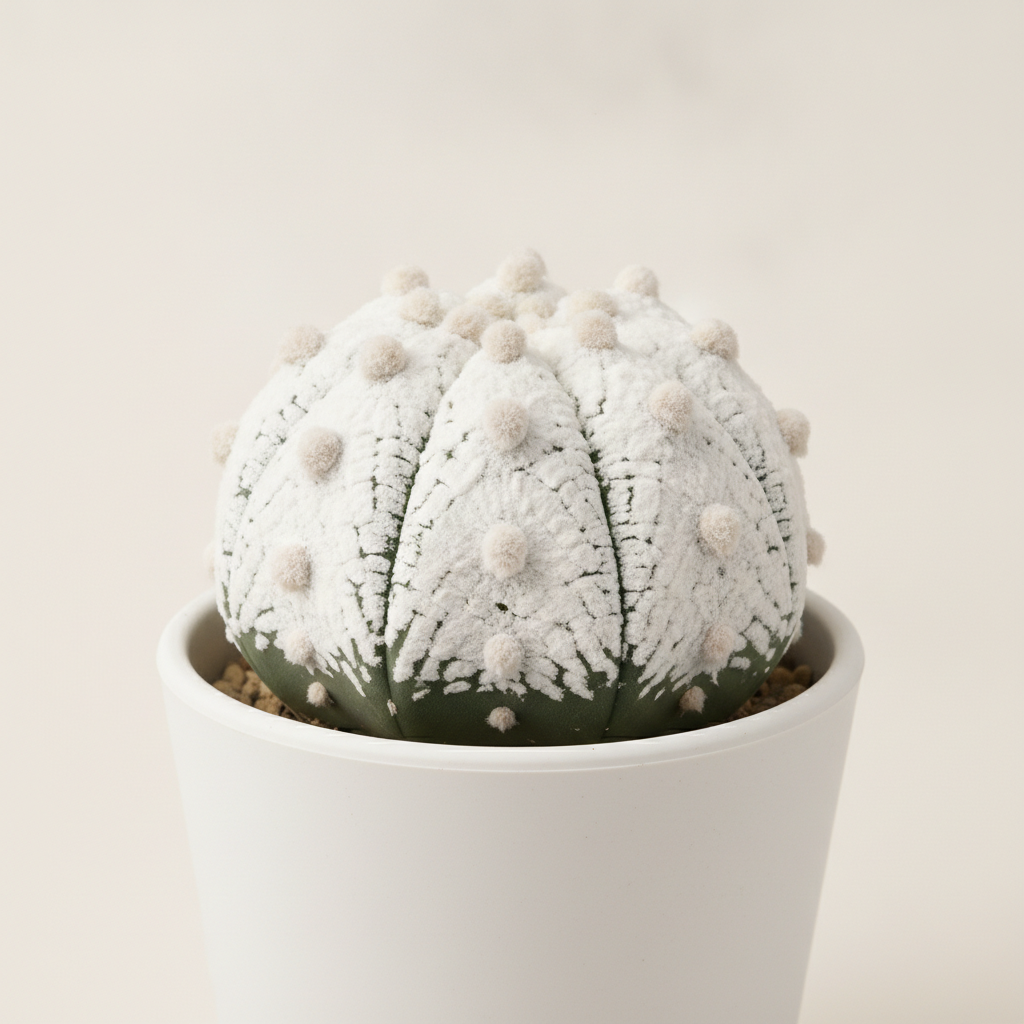
‘Super Kabuto’
The most celebrated cultivar, developed in Japan and prized for its extraordinarily dense white flecking. The tufts of trichomes are so large and numerous that they can nearly obscure the green body, giving the plant a marbled, frosted, almost porcelain appearance. Selectively bred over generations for ever heavier and more even flecking, it is the form most collectors covet.
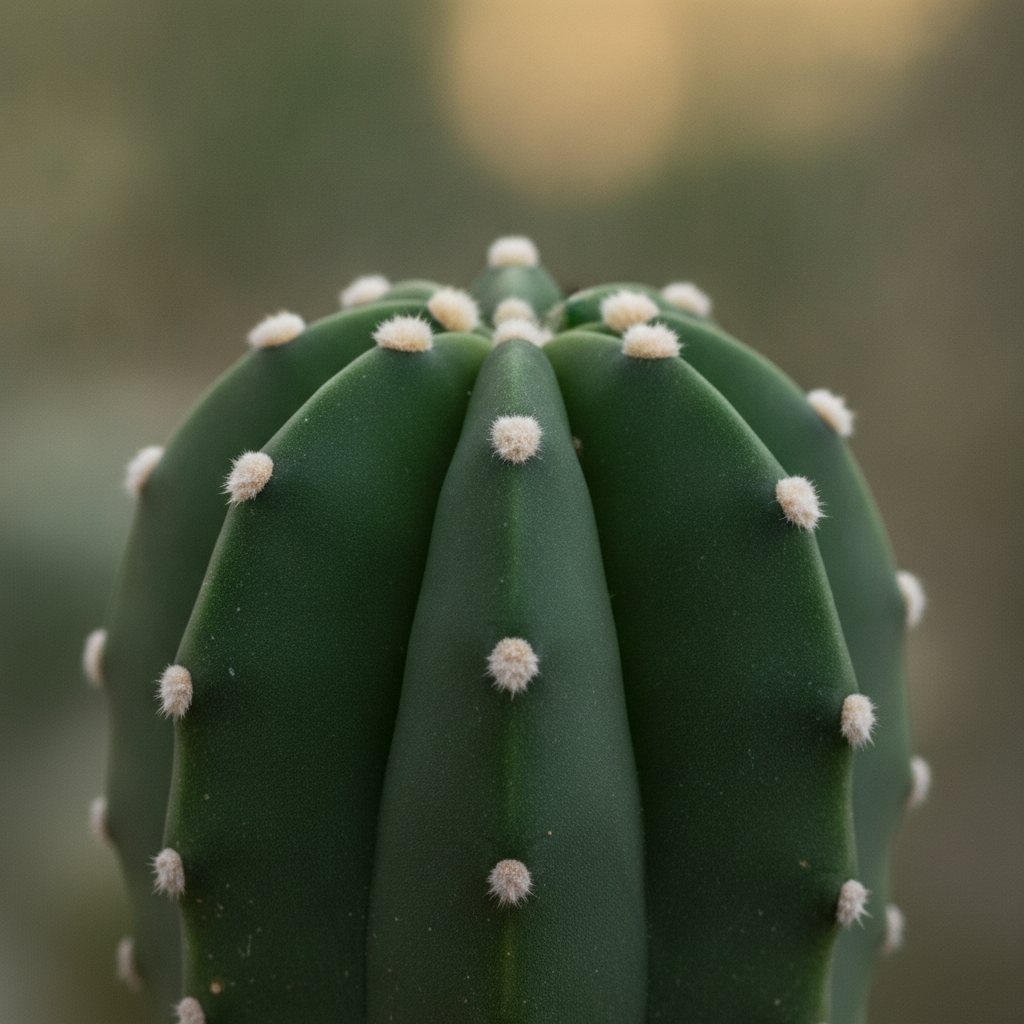
‘Nudum’
The visual opposite of ‘Super Kabuto’, this form has a smooth, deep-green body almost entirely free of white flecking. Stripped of the frosted dusting, its clean unmarked ribs and neat woolly areoles show off the plant’s underlying geometry with a spare, sculptural elegance that many growers find just as compelling as the busier flecked forms.
Beyond these two, collectors seek out a number of other named forms. The ‘V-type’ or ‘V-shape’ shows its flecking arranged in bold V-shaped bands running across the ribs, while ‘Ooibo’ forms have unusually large, prominent areoles. Multi-ribbed and low-rib selections play with the rib count away from the usual eight, and clustering forms such as those sometimes sold as ‘Hanazono’ break the species’ normally solitary habit to produce heads that cluster and flower profusely. Countless hybrids also exist, crossing Astrophytum asterias with relatives such as Astrophytum myriostigma, the bishop’s cap, to combine flecking, ribbing and flower colour in new ways. All of them share the same undemanding care described in this guide.
Frequently Asked Questions
Why is my star cactus turning into a tall column instead of staying flat?
This is etiolation, caused by too little light. The plant stretches upward searching for brighter conditions, losing its natural flattened disc shape. Move it to your brightest window or add a grow-light. Unfortunately the stretched growth is permanent and will not flatten again, so the aim is to prevent any further elongation.
How often should I water a star cactus?
Water only when the soil has dried out completely, which in the growing season often means every ten days to two weeks, and in winter little to nothing at all. Rather than following a fixed schedule, check that the mix is bone dry before watering. When in doubt, wait, because far more of these plants die from overwatering than from drought.
Is the star cactus safe for cats and dogs?
Yes. Astrophytum asterias is not toxic to cats or dogs, and because it is entirely spineless it poses none of the physical hazard of a spiny cactus, making it one of the safest cacti for a home with pets.
Why won’t my star cactus flower?
The two usual reasons are age and the lack of a proper winter rest. A plant must be mature, generally at least four years old, before it will bloom, and it needs a cool, dry, dormant period through winter to set flower buds. If yours is old enough but kept warm and watered all year, giving it a genuine dry rest over winter often prompts flowering the following season, as does ensuring it gets plenty of light.
My star cactus has gone soft and brown at the base. What happened?
That is rot, almost always from overwatering, poor drainage or cold wet conditions. Stop watering at once and unpot the plant to inspect the roots. If firm green tissue remains, you can cut back above the rot with a sterile blade, let the cut callus for several days and treat the piece as a fresh start in dry gritty mix. Going forward, use a very free-draining soil, a pot with drainage holes and a much drier winter regime.
Can I grow a star cactus from a cutting?
No. The star cactus has no leaves and is almost always solitary, so it cannot be propagated from a leaf or stem cutting the way many succulents can. It is grown from seed, which is slow but reliable, and specialist growers sometimes graft it or, rarely, remove naturally occurring offsets.






