
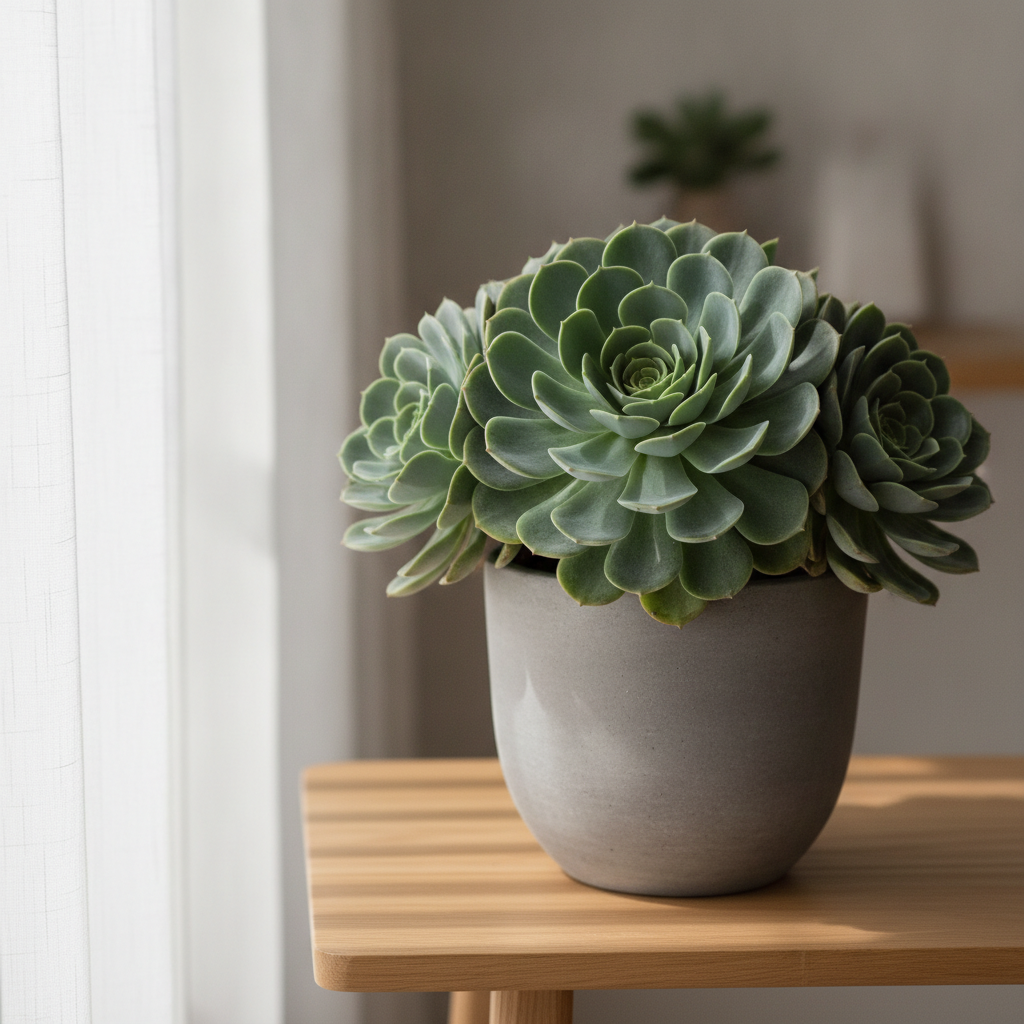
Few houseplants earn their common name as literally as the rose succulent. Known botanically as Aeonium aureum and long sold under its former name Greenovia aurea, this Canary Island native arranges its spoon-shaped leaves into a cup so tightly layered that a well-grown rosette is almost indistinguishable from a blooming rose. Gardeners also know it as the mountain rose or the green rose bud, and each of those names points to the same trick: as the dry season arrives, the plant draws its leaves inward and closes into a compact bud, only to unfurl again when cooler, wetter weather returns.
That seasonal folding is the key to understanding this plant, because the rose succulent grows on a calendar most other succulents ignore. It is a winter grower, active through the mild, damp months and dormant in the heat of summer, which flips the usual watering advice on its head. The plant has a reputation for being fussy, but that reputation comes almost entirely from people treating it like a summer-growing echeveria. Give it the rhythm it evolved for and it is remarkably forgiving. This guide covers everything from light and water to soil, feeding, propagation and pests, and throughout it draws a clear line between simply keeping the plant alive and coaxing it into the dense, symmetrical rosettes that make it worth growing in the first place.
Contents
- Quick Reference
- Why the Rose Succulent Makes a Charming Houseplant
- Light Requirements
- Watering & Humidity
- Soil, Potting & Repotting
- Fertilising
- Propagation
- Pests & Diseases
- Popular Varieties
- Frequently Asked Questions
Quick Reference: Rose Succulent at a Glance
| Light | Bright light with a few hours of gentle direct sun; protect from harsh summer midday rays |
| Watering | Soak and dry, but water most in autumn to spring and keep nearly dry during summer dormancy |
| Temperature | 10 to 24°C (50 to 75°F); keep above 5°C (41°F) and out of frost |
| Humidity | Average room humidity, 30 to 50 per cent; good airflow matters more than moisture |
| Fertiliser | Dilute low-nitrogen feed once a month during the autumn-to-spring growing season only |
| Toxicity | Non-toxic to cats, dogs and humans, making it a safe choice for pet households |
Why the Rose Succulent Makes a Charming Houseplant
The appeal of the rose succulent begins and ends with its shape. Each rosette is built from dozens of overlapping, slightly cupped leaves in a soft blue-green to fresh apple-green, dusted in some forms with a fine powdery bloom that gives the plant a frosted, almost matte finish. When conditions are cool and the plant is in active growth, those leaves fan open into a shallow bowl. As the growing season ends the leaves contract towards the centre, and the whole rosette tightens into a form so rose-like that it regularly fools first-time viewers into thinking it is a flower. No other common succulent reproduces this effect so convincingly.
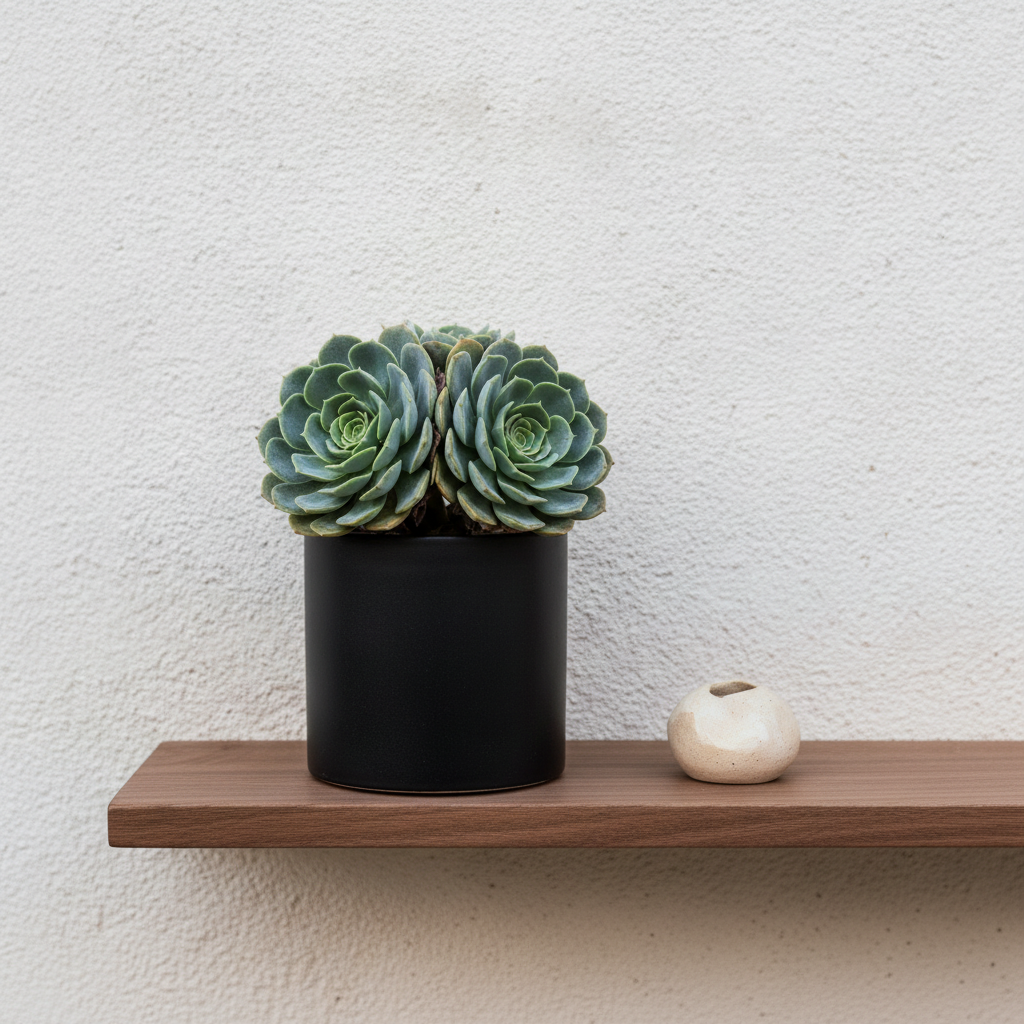
Beyond looks, the rose succulent suits indoor life for practical reasons. It stays small, with individual rosettes usually reaching 5 to 15 centimetres (2 to 6 inches) across and clumps rarely exceeding 30 centimetres (12 inches) wide, so it fits a windowsill or a compact shelf without ever demanding a larger footprint. It is slow and undramatic, asking for attention only a handful of times a year. Because its active season falls in autumn and winter, it stays green and handsome through the months when many other houseplants sulk in low light. And unlike several popular succulents in the wider spurge and kalanchoe families, it carries no toxic sap, so it can share a home with curious pets and children without concern. The one adjustment new growers must make is mental rather than practical: learning to water generously when instinct says a succulent should be resting, and to hold back when instinct says to soak it.
Important — Toxicity: The rose succulent is considered non-toxic to cats, dogs and people, which sets it apart from lookalike succulents in the Euphorbia and Kalanchoe groups. Even so, it is not food, and nibbling fleshy leaves can cause mild stomach upset in pets simply through the volume of moisture and fibre, so it is still best kept out of reach of determined chewers.
Light Requirements
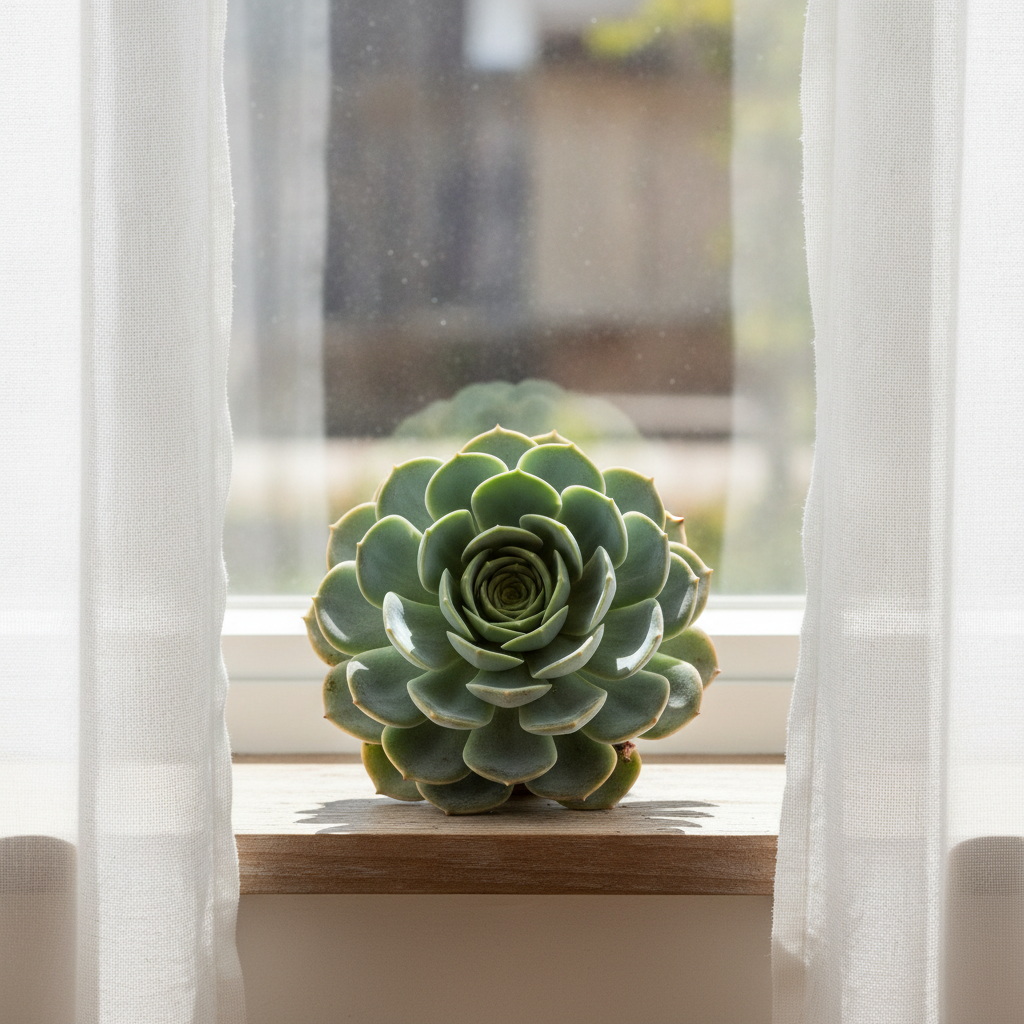
Light is the single biggest factor separating a tight, rose-perfect rosette from a loose, stretched-out plant that has lost its charm. In its native Canary Island habitat the rose succulent grows on shaded rock faces and north-facing cliffs, so while it is a sun-loving succulent by houseplant standards, it is not a desert plant that wants blazing all-day exposure. It thrives on bright light with a few hours of gentle, direct sun, and it responds to too little light by opening and elongating in a way that destroys the rose shape.
The ideal indoor position gives the plant strong illumination for most of the day plus a couple of hours of soft morning or late-afternoon sun. In that light the leaves stay compact, the bloom stays intense, and the rosette holds its layered, cupped structure. Because the plant is actively growing through autumn and winter, when the sun sits low and weak in much of the northern hemisphere, the brightest spot you can offer during those months is rarely too much.
Light Levels Explained
Understanding where your home falls on the spectrum from full sun to deep shade makes it far easier to place this plant well. The table below sets out the practical categories, with rough light readings, typical locations and the result you can expect from a rose succulent in each.
| Light Category | Approx. Level | Typical Location | Outcome |
|---|---|---|---|
| Direct sun | 50,000 lux and above | On a south-facing sill in summer | Risk of scorch and stress bronzing during hot dormancy |
| Bright with some direct sun | 20,000 to 40,000 lux | East or west sill, or just back from a south window | Ideal; tight rosettes and strong colour |
| Bright indirect | 10,000 to 20,000 lux | Beside a large bright window | Good, though rosettes may open slightly wider |
| Medium | 5,000 to 10,000 lux | A metre or two back from a window | Gradual stretching and loss of the rose form |
| Low | Below 5,000 lux | Interior wall or north corner | Poor; leggy, pale growth and eventual decline |
Window Orientation and Placement
South-facing window: Excellent through autumn and winter, when the sun is weak and the plant is growing hard. In summer, when the plant is dormant and the sun is fierce, pull it back from the glass or add a sheer curtain to prevent scorch on leaves that are not actively cooling themselves through growth.
East-facing window: A near-perfect year-round position. Gentle morning sun gives the plant the direct light it wants without the intensity that causes damage, and the afternoon shade keeps it comfortable during dormancy.
West-facing window: Also very good, offering strong afternoon light. Watch for heat build-up behind the glass on hot summer afternoons, and be ready to shade lightly if the leaves begin to look tired or bleached.
North-facing window: Usable in the brightest north rooms but generally the weakest choice, especially in winter when the plant most wants light. Expect the rosettes to open and loosen. A supplementary grow light is the reliable fix here.
Pro Tip — Rotate for Symmetry: Because the rosette grows towards its light source, a plant left in one position slowly leans and loses its balance. Give the pot a quarter turn every week or two so every side receives equal light and the rose shape stays evenly domed.
How Light Affects Colour and Form
The rose succulent uses light to build its whole identity. In ample light the leaves stay short, thick and closely stacked, holding the tight cup that gives the plant its name, and the blue-green colour deepens with a visible waxy bloom. In marginal light the plant lengthens its internodes, the leaves spread apart to catch more light, and the rosette flattens and eventually splays open. This stretching, called etiolation, cannot be reversed once it happens; the affected growth stays elongated, and only new growth under better light will return to a compact form. If your plant has already stretched, improving its light and, in time, beheading and re-rooting the tightest crown is the route back to a good shape.
Warning — Direct Sunlight: During summer dormancy the plant is not growing and cannot repair sun damage quickly. Sudden exposure to intense midday sun, especially after a spell in lower light, can bleach or brown the leaf tips within a day. Always increase sun exposure gradually over a week or two rather than moving the plant straight into a blazing window.
Artificial Lighting
Because its growing season coincides with the darkest part of the year, the rose succulent is an ideal candidate for supplementary lighting. A full-spectrum LED grow light positioned 20 to 30 centimetres (8 to 12 inches) above the plant, running for 10 to 12 hours a day, easily replaces weak winter sun and keeps rosettes tight through to spring. Aim for a light that delivers plenty of intensity rather than a token desk lamp; a plant that stretches under artificial light is simply not getting enough of it.
Seasonal Adjustments
Read the plant’s own calendar rather than the season on the wall. From autumn through spring, when the rosettes are open and growing, give the maximum bright light you can. As summer approaches and the leaves begin to fold inward into their bud form, ease off the direct sun and move the plant somewhere brighter but cooler and more sheltered. The folding is not a sign of distress; it is the plant protecting its growing point through the heat, and forcing more sun on it at that point only risks scorch.
Watering & Humidity
Watering is where the rose succulent trips up more growers than any other, and almost always because they apply standard summer-succulent logic to a winter-growing plant. The core method is the familiar soak-and-dry approach used for most succulents, but the timing is reversed. This plant drinks most eagerly in the cool months and wants to stay nearly dry through the summer, the opposite of an echeveria or a jade plant.
When to Water
During the growing season, from roughly early autumn to late spring, water thoroughly whenever the potting mix has dried out almost completely. In a gritty succulent mix and a small pot, that usually means watering every week to ten days, though light, temperature and pot size all shift the interval. The reliable test is your finger or a wooden skewer pushed into the soil: if it comes out dry and clean, it is time to water, and if any damp soil clings to it, wait.
Through the summer the plant is dormant, its leaves folded into a tight bud, and its need for water drops sharply. Reduce watering to a light drink every three or four weeks, just enough to stop the roots shrivelling entirely, and never soak a dormant plant sitting in heat. Watering a resting rose succulent as though it were still growing is the single fastest way to rot it. As autumn returns and the rosette begins to open again, resume regular watering gradually.
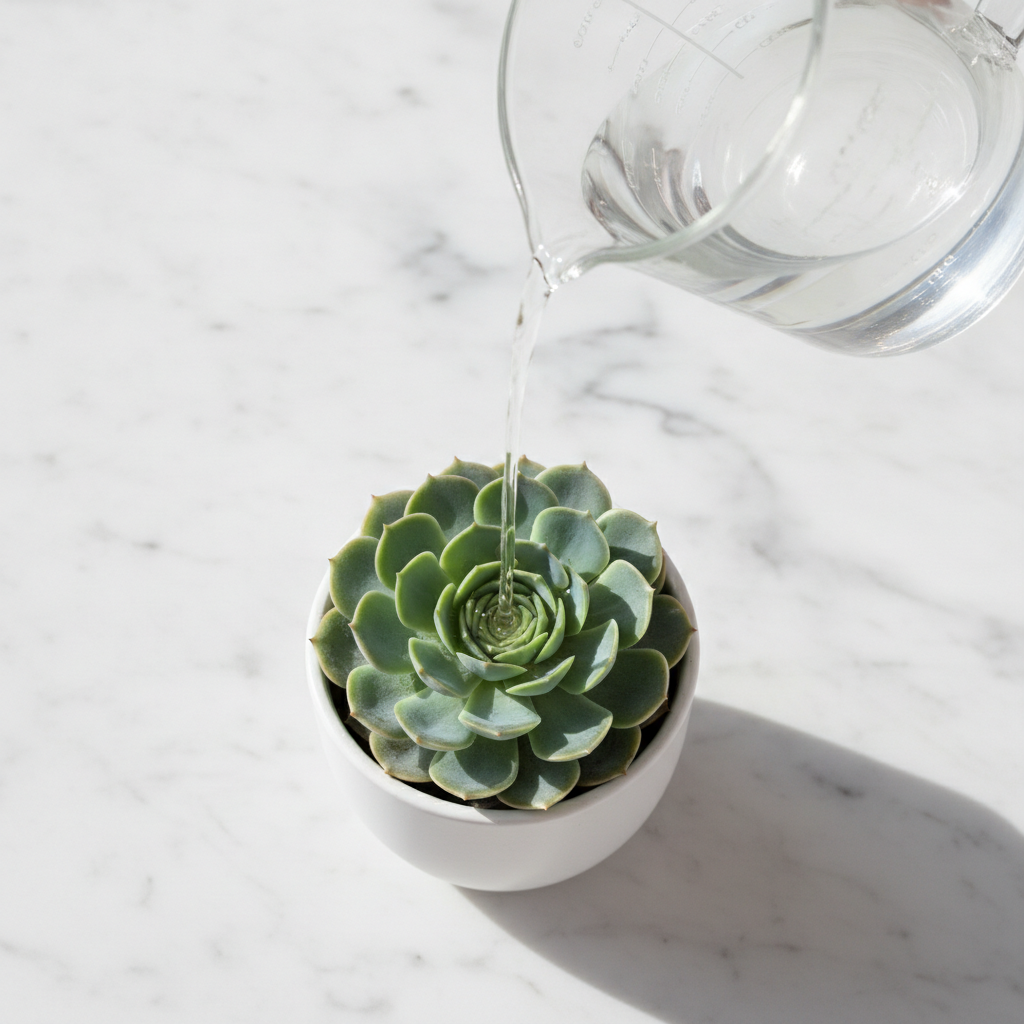
Pro Tip — Water the Soil, Not the Rosette: Water pooling in the tightly packed centre of the rosette can sit there for hours and trigger crown rot, especially in cool weather. Direct the water onto the soil around the base, or bottom-water by standing the pot in a shallow dish, so the leaves stay dry.
How to Water Correctly
- Check that the potting mix is dry to at least a couple of centimetres down, and ideally almost all the way through during the growing season.
- Using room-temperature water, pour slowly and steadily onto the soil surface at the edge of the pot, keeping the water off the leaves and out of the crown.
- Continue until water runs freely from the drainage holes, which ensures the whole root zone is wetted rather than just the top layer.
- Let the pot drain completely for several minutes, then tip away any water left standing in the saucer or cover pot.
- Wait until the mix has dried out again before the next watering, adjusting the interval for the season and the plant’s growth stage.
Signs of Overwatering vs. Underwatering
| Symptom | Overwatering | Underwatering |
|---|---|---|
| Leaf colour | Yellowing, translucent or blackening leaves | Dull, faded green with reddish stress tints |
| Leaf texture | Soft, mushy, water-logged and easily detached | Thin, wrinkled and slightly puckered |
| Soil | Stays wet for many days, may smell sour | Bone dry and pulling away from the pot sides |
| Roots | Brown, slimy and rotting | Dry, brittle and sparse |
| Stem base | Blackened, soft and collapsing | Firm but shrunken and woody |
Warning — Root Rot: A rose succulent that suddenly goes soft and dark at the base is almost always rotting from overwatering, and once the stem collapses the plant cannot be saved intact. Act early: if you catch it while only the lowest leaves are affected, unpot the plant, cut away every soft, discoloured part until you reach firm clean tissue, let the cut callus for a few days, and re-root the healthy crown in fresh dry mix.
Humidity Requirements
The rose succulent is relaxed about humidity and thrives in the average 30 to 50 per cent found in most homes. It does not need or want the extra moisture that tropical foliage plants crave, and in fact high humidity combined with still air can encourage rot and fungal problems in the dense rosette.
Problems tied to the air are far more likely to come from stagnation than from dryness. In a closed, humid room the water that lingers between the packed leaves has no chance to evaporate, which is exactly the condition rot enjoys. Signs of trouble here look like darkening at the leaf bases and a musty smell rather than the crisping tips you would see from dry air.
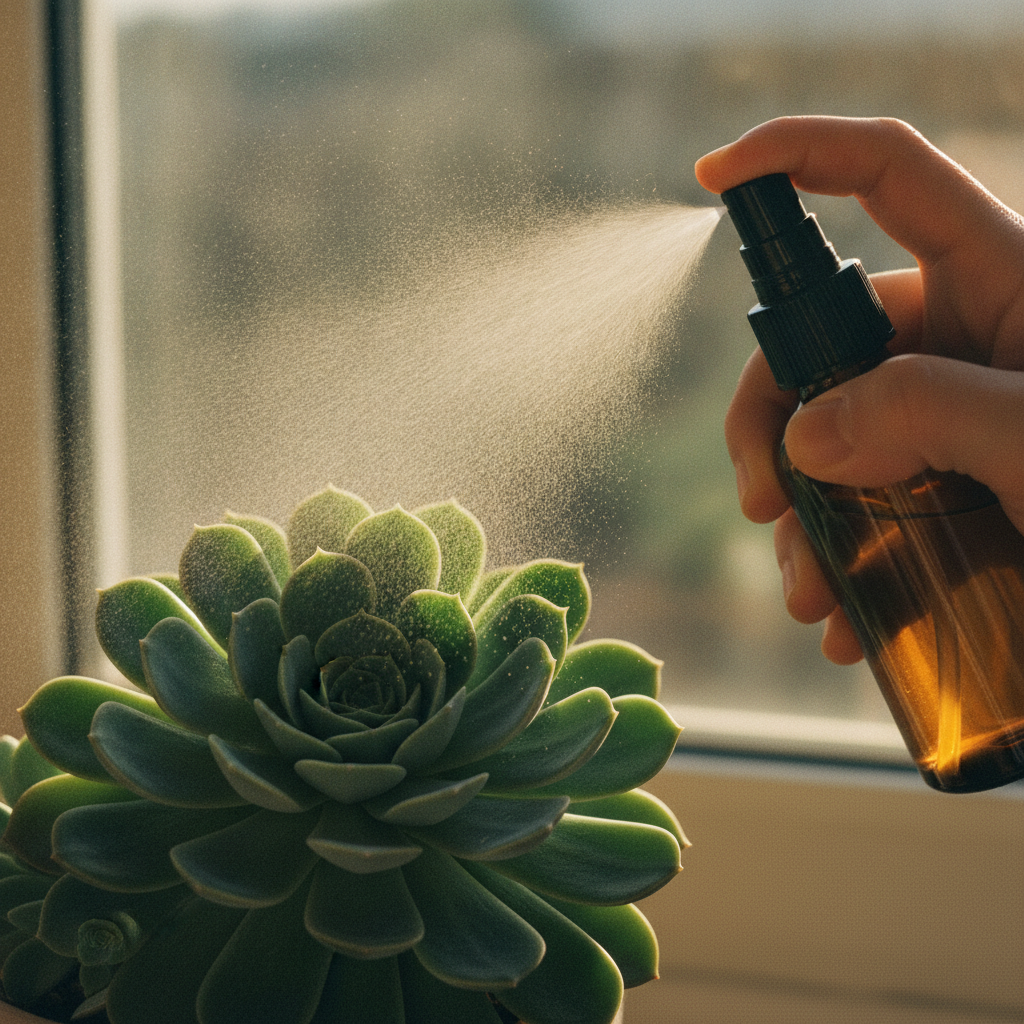
Rather than raising humidity, focus on good airflow. A gently circulating room, an occasional open window in mild weather, or a small fan running nearby all help the rosette dry quickly after watering and keep fungal issues at bay. There is no need to mist this plant; misting only wets the crown and works against you.
Water Quality
Ordinary tap water is fine for the rose succulent in most areas, as it is not especially sensitive to the minerals and chlorine that trouble some tropical plants. In regions with very hard water you may see a pale crust of mineral salts build up on the soil surface or pot rim over time; flushing the pot thoroughly with plenty of water every few months clears this. If you happen to collect rainwater it is an excellent free choice, but for this plant it is a nicety rather than a necessity.
Soil, Potting & Repotting
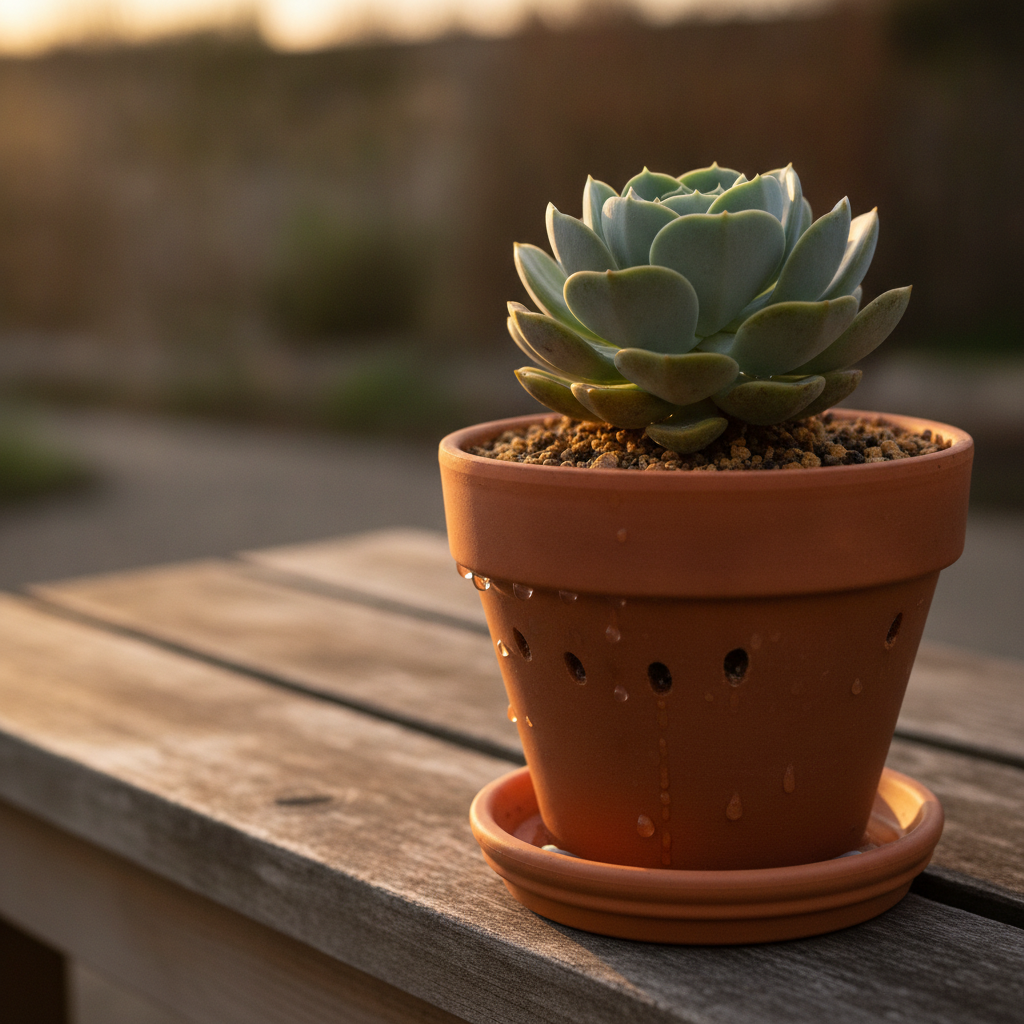
Get the soil right and half the battle with the rose succulent is already won, because a fast-draining, airy mix removes the standing moisture that causes almost every serious problem this plant faces. The goal is a substrate that holds enough moisture to keep the roots alive between waterings but drains within seconds and never stays soggy.
Ideal Soil Composition
A good rose succulent mix is built around plenty of coarse mineral grit to guarantee drainage, with only a modest fraction of organic matter to hold a little moisture and nutrition. A reliable starting point is roughly half mineral grit and half a light, open organic base. The table below breaks down a workable recipe and the job each component does.
| Component | Proportion | Function |
|---|---|---|
| Coarse sand or fine grit | 25 per cent | Adds weight and sharp drainage, mimicking rocky habitat |
| Perlite or pumice | 25 per cent | Creates air pockets and keeps the mix from compacting |
| Coir or peat-free compost | 30 per cent | Holds light moisture and a small nutrient reserve |
| Bagged succulent or cactus mix | 20 per cent | Provides balanced structure and trace nutrients |
The rose succulent is not fussy about pH and does well in the slightly acidic to neutral range, around 6.0 to 7.0, that most commercial mixes already sit within. Far more important than nudging the pH is making sure the physical structure stays open and gritty, so avoid heavy, water-retentive potting soils sold for general houseplants.
Pro Tip — Quick Mix Recipe: If you want a no-measuring shortcut, combine two parts of a good bagged cactus and succulent compost with one part pumice or perlite. That single adjustment turns an ordinary succulent mix into one open enough for a rose succulent to be genuinely happy in.
Choosing the Right Pot
Pot choice has a direct effect on how safe your watering margin is, because the container controls how quickly the mix dries. For a plant this prone to rot, a pot that helps the soil dry is a real advantage.
Drainage holes are non-negotiable. Never plant a rose succulent in a pot without drainage. Without an exit, water collects at the bottom of the container and the roots sit in it, which for this plant is a death sentence. If you love a decorative pot that has no hole, use it as a cover pot and keep the plant in a plain nursery pot inside it.
Pot material: Unglazed terracotta is the ideal choice. Its porous walls wick moisture out of the soil and let it evaporate, speeding up the drying cycle and forgiving the odd heavy-handed watering. Glazed ceramic and plastic both work but hold moisture longer, so you must be more disciplined about letting them dry.
Pot size: Choose a snug pot only slightly larger than the rosette or clump. A pot that is too big holds a large volume of slow-drying soil around a small root system, which invites rot. This plant is perfectly content a little crowded, and a tight pot also helps keep the rosettes compact.
When to Repot
The rose succulent is slow-growing and enjoys being snug, so it needs repotting only every two or three years, or when a clump has visibly filled its pot and offsets are crowding over the rim. The best time to repot is at the very start of the growing season in early autumn, when the plant is waking up and can quickly settle its roots into fresh mix. Avoid repotting in the heat of summer dormancy, when disturbed roots are slow to recover.
How to Repot: Step-by-Step
- Water lightly a day or two beforehand so the root ball holds together, then let the surface dry so the mix is not muddy to handle.
- Ease the plant out by supporting the base and tipping the pot, rather than pulling on the fragile rosettes.
- Gently crumble away the old spent mix from the roots and inspect them, trimming off any that are brown, black or mushy with clean scissors.
- Set the plant in a pot only slightly larger, filling around the roots with fresh gritty mix and keeping the crown at its previous soil level.
- Firm the mix lightly so the plant stands upright, but do not compact it hard; the aim is stable, not dense.
- Hold off watering for several days to let any damaged roots callus, then resume normal watering once the plant has settled.
Warning — Transplant Shock: Watering immediately after repotting into fresh mix is a common cause of rot, because any nicked roots offer an easy entry point for pathogens in damp soil. Give the plant a dry rest of three to seven days after repotting before its first watering, and it will re-establish far more reliably.
Fertilising
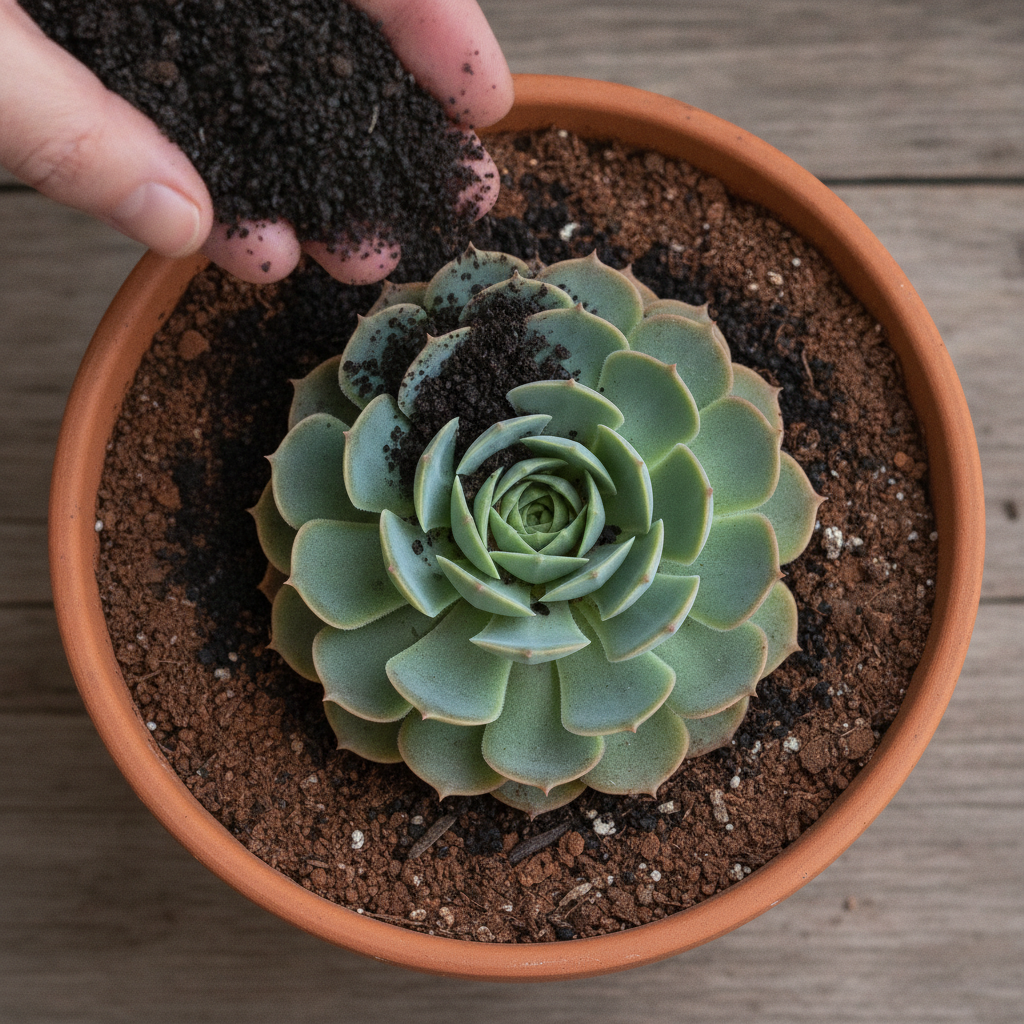
The rose succulent is a light feeder that evolved on poor, mineral rocky soils, so it needs far less fertiliser than a fast-growing leafy houseplant. A little feed at the right time supports steady growth and good colour, but too much pushes soft, weak, elongated leaves that spoil the rose form and are prone to pests.
Timing matters as much as quantity here. Because the plant grows in the cool months and rests through summer, all feeding should happen during the autumn-to-spring growing season and stop completely during dormancy. Feeding a resting plant simply loads the soil with salts it cannot use.
Understanding Plant Nutrients
Fertilisers are labelled with an N-P-K ratio showing the proportion of nitrogen, phosphorus and potassium, the three nutrients plants use in the largest amounts. For a succulent like this, a feed lower in nitrogen is preferable, because high nitrogen drives the lush, soft growth that ruins the compact shape. The table below summarises the main nutrients and what a shortage of each looks like.
| Nutrient | Symbol | Primary Function | Deficiency Symptoms |
|---|---|---|---|
| Nitrogen | N | Leaf and stem growth | Pale, small leaves and slow growth |
| Phosphorus | P | Root development and flowering | Weak roots and dull, purplish leaves |
| Potassium | K | Overall vigour and stress resistance | Yellow or scorched leaf edges |
| Calcium | Ca | Cell wall strength | Distorted, weak new growth |
| Magnesium | Mg | Chlorophyll production | Yellowing between leaf veins |
| Iron | Fe | Green pigment formation | Pale new leaves with green veins |
Types of Fertiliser
Liquid fertilisers: The easiest option to control. A balanced or low-nitrogen liquid feed, diluted to half or quarter strength, is applied in solution during watering and gives you precise command over how much the plant receives. This is the recommended choice for most growers.
Slow-release granular: Coated prills that release nutrients gradually over months. They are convenient but risky for a plant with such a specific growing season, because they keep feeding into the summer dormancy when the plant wants nothing. If you use them, use them sparingly and only at the start of the growing season.
Organic fertilisers: Gentle options such as diluted worm-casting tea or a thin top-dressing of worm castings feed slowly and are very hard to overdo, making them well suited to a plant that resents strong feeding. They also improve the soil life without spiking salt levels.
Feeding Schedule
Feed once a month with a half-strength or weaker balanced feed during the active growing season, from early autumn to late spring. Stop entirely through the summer while the plant is dormant. That handful of dilute feeds across the growing season is all a rose succulent needs to stay healthy and hold its colour; there is no benefit to feeding more often, and real risk in feeding at the wrong time.
Pro Tip — Less Is Safer: When in doubt with this plant, under-feed. A slightly hungry rose succulent stays compact, colourful and tough, while an over-fed one grows soft and loses its shape. Diluting your feed further than the label suggests is almost never a mistake here.
How to Fertilise
- Confirm the plant is in active growth, with open rosettes, before feeding at all; never feed a folded, dormant plant.
- Water lightly first if the soil is completely dry, so the feed does not hit and burn dry roots.
- Mix a balanced or low-nitrogen fertiliser to half strength or weaker in your watering can.
- Apply the solution to the soil at the base, keeping it off the leaves and out of the crown.
- Flush the pot with plain water every couple of months to wash out any accumulated fertiliser salts.
Warning — Salt Build-Up: Over time, fertiliser salts accumulate in the mix and can burn the roots, showing up as brown, crisped leaf edges and a white crust on the soil. If you see these signs, stop feeding and leach the pot by running a generous volume of plain water through it several times to dissolve and flush the excess away.
Propagation
Propagating the rose succulent is one of the quiet pleasures of growing it, and mercifully it is far easier than its delicate looks suggest. The plant naturally forms offsets, small daughter rosettes that cluster around the base of the parent, and these are the most reliable route to new plants. Stem cuttings and, less dependably, leaf cuttings offer further options.
As with everything about this plant, timing helps. Propagate at the start of or during the cool growing season, when the plant is actively rooting, rather than in summer dormancy when cuttings and divisions simply sit and sulk. A little patience is essential; these are slow plants, and new offsets take their time to size up.
Understanding Offsets and Rosettes
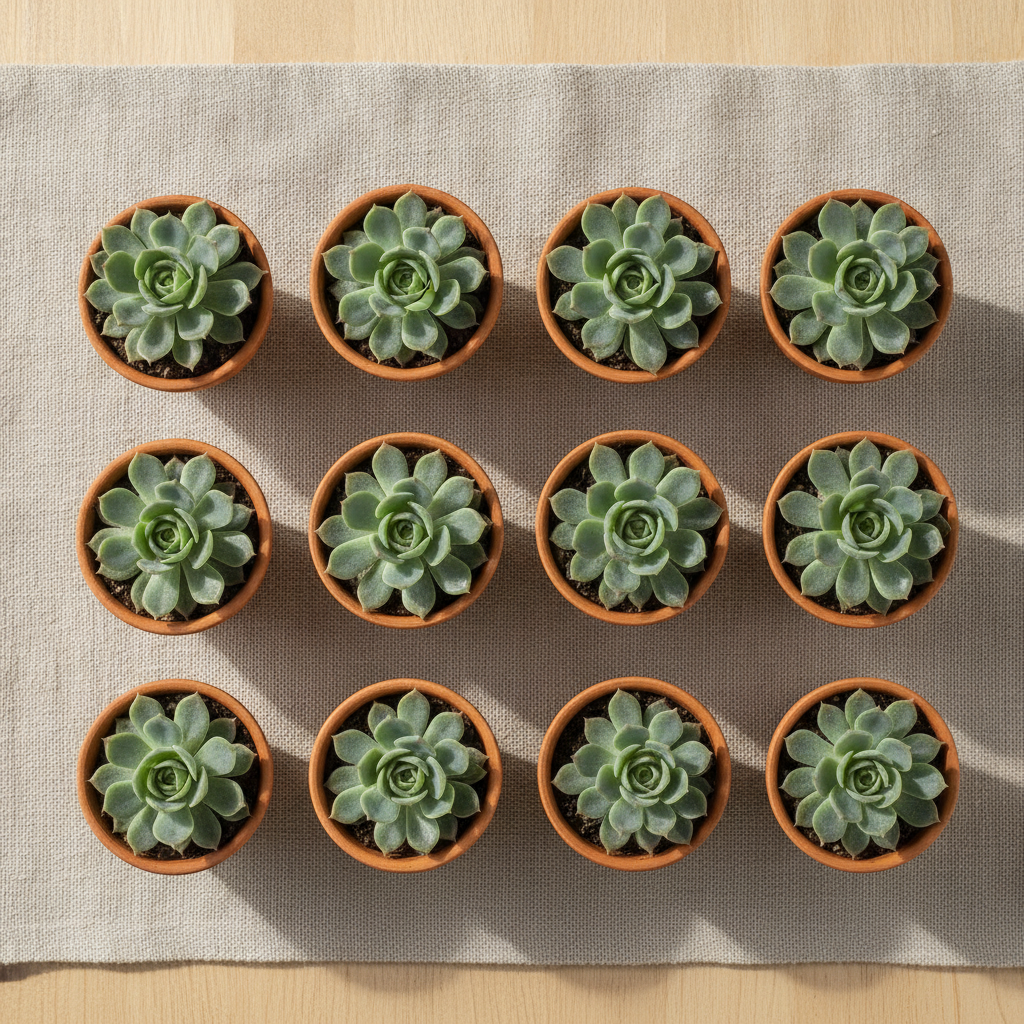
Each rose succulent rosette is a self-contained growing unit sharing a common root system with its neighbours in a clump. Around the base of a mature rosette, small offsets appear, often already carrying a few of their own roots where they meet the soil. Because each of these is essentially a ready-made young plant, separating and potting them is both the easiest and the fastest way to propagate. Understanding that the clump is a colony of rosettes rather than one single plant makes the whole process intuitive.
Division of Offsets: Step-by-Step
This is the recommended method for almost everyone, giving robust plants with minimal effort. Work at the start of the growing season for the quickest establishment.
- Unpot the clump and gently brush away soil so you can see where the offsets join the parent and where their roots are.
- Choose offsets that already carry a few roots of their own, as these establish fastest.
- Separate each offset by hand, twisting gently, or cut it away cleanly with a sterilised blade if it is firmly attached.
- Let any cut surfaces callus in a dry, shaded spot for two to three days so they seal against rot.
- Pot each offset into its own small pot of gritty, barely-moist succulent mix, setting it just deep enough to stand upright.
- Keep in bright, indirect light and water sparingly until new growth signals that roots have taken hold.
Pro Tip — Callus Before Potting: Resist the urge to pot a freshly separated offset straight into damp soil. Those few days of drying that let the wound callus over dramatically reduce the chance of rot and are the difference between most cuttings succeeding and most failing.
Stem Cuttings: Step-by-Step
If a rosette has stretched on a length of stem, or you simply want more plants, a whole rosette can be cut and re-rooted. This is also the standard rescue technique for a plant that has begun to rot at the base.
- Using a clean, sharp blade, cut the rosette from its stem, leaving a short length of stem attached below the leaves.
- Strip away the lowest few leaves to expose a small section of bare stem for rooting.
- Set the cutting aside in a dry, shaded place for three to five days until the cut end has calloused firmly.
- Rest the calloused cutting on top of, or just barely into, a pot of dry gritty mix so the stem sits at the surface.
- After a week begin misting the soil surface very lightly every few days, or give a tiny drink, to coax roots downward.
- Once roots have gripped and the rosette resists a gentle tug, switch to normal soak-and-dry watering.
Troubleshooting Propagation
| Problem | Likely Cause | Solution |
|---|---|---|
| Cutting rots before rooting | Potted too wet or without callusing | Let cuttings callus longer and keep the mix barely moist |
| Offset shrivels and dries out | Too little moisture with no roots yet | Mist lightly and move out of direct sun until established |
| No roots after many weeks | Attempted during summer dormancy | Wait for the cool growing season and try again |
| Leaf cuttings fail to take | This species roots poorly from single leaves | Use offsets or whole-rosette cuttings instead |
Pests & Diseases
A healthy rose succulent grown in good light and gritty soil is a tough, resilient plant that shrugs off most trouble. The problems it does face fall into two groups: a few sap-sucking insects drawn to its fleshy leaves, and rot-based diseases that trace almost entirely back to excess moisture. The good news is that nearly all of them are preventable with sound culture.
The dense, folded structure of the rosette is both a beauty and a weakness, because it offers sheltered nooks where pests hide and where water lingers. Regular close inspection, especially into the packed centre and leaf axils, catches problems while they are still small and easy to deal with.
Common Pests
Mealybugs (Pseudococcus species)
The most common pest of this plant by far, mealybugs are small, soft insects that hide in the leaf axils and the packed centre of the rosette as white, cottony blobs. They suck sap, weaken the plant and leave sticky honeydew that can turn to sooty mould. Because they tuck into exactly the sheltered spots the rosette provides, they are easy to miss until a colony has built up.
Treatment: Dab each insect directly with a cotton bud dipped in isopropyl alcohol, which kills them on contact, then treat the whole plant with a neem oil or insecticidal soap spray. Repeat every week for three to four weeks to catch newly hatched crawlers, and isolate the plant from your collection until it is clear.
Aphids (Aphidoidea)
Aphids are small green, black or pink insects that cluster on tender new growth and any flower stalk the plant sends up. They multiply quickly and, like mealybugs, excrete honeydew, distorting the fresh growth they feed on.
Treatment: Rinse light infestations off with a jet of water, or wipe them away by hand. For persistent numbers, spray with insecticidal soap or neem oil, paying attention to the growing points where they gather.
Fungus gnats (Bradysia species)
Small dark flies drifting around the pot are fungus gnats, whose larvae live in damp soil and feed on organic matter and fine roots. They are less a direct threat than a clear warning sign, because their presence means the soil is staying wetter than it should for this plant.
Treatment: Let the soil dry out more thoroughly between waterings, which alone usually breaks their cycle. Yellow sticky traps catch the flying adults, and a top layer of grit denies them the damp surface they need to breed.
Common Diseases
Root and Stem Rot (Pythium and Fusarium species)
By far the most serious threat to the rose succulent, rot sets in when the roots or stem base sit in moisture for too long, allowing soil-borne fungi to invade. It shows as blackening, softening and collapse at the base, often spreading upward before the grower notices anything is wrong above the soil.
Treatment: There is no cure for rotted tissue, so the response is surgical. Unpot the plant, cut away every soft, discoloured part until only firm, clean tissue remains, let the wound callus for several days, and re-root the healthy crown in fresh dry mix. Prevention through careful watering and gritty soil is far more effective than any rescue.
Crown Rot (Phytophthora species)
Distinct from root rot, crown rot begins in the centre of the rosette when water is left sitting among the tightly packed leaves, especially in cool, still conditions. The heart of the rosette darkens and turns mushy, and because that is the growing point, the whole rosette is usually lost.
Treatment: Prevention is everything: water at the soil, never into the rosette, and ensure good airflow so any stray moisture evaporates fast. If caught extremely early, removing affected leaves and drying the plant out may save it, but a rotted crown rarely recovers.
Pest and Disease Summary
| Pest / Disease | Identification | Treatment |
|---|---|---|
| Mealybugs | White cottony blobs in leaf axils and crown | Alcohol dab plus repeated neem or soap sprays |
| Aphids | Clusters of small insects on new growth | Rinse off, then insecticidal soap or neem |
| Fungus gnats | Small dark flies around the soil | Dry the soil, use sticky traps and a grit topping |
| Root and stem rot | Blackened, soft, collapsing base | Cut back to clean tissue and re-root |
| Crown rot | Mushy, darkened centre of the rosette | Prevent by keeping the crown dry; usually fatal |
Prevention Strategies
Prevention with this plant is overwhelmingly about moisture management. A gritty, fast-draining mix, a pot with drainage, disciplined watering that respects the plant’s seasons, and good airflow together head off almost every disease before it can begin. Keeping water out of the crown and never letting the plant stand in a saucer of runoff removes the two conditions rot most needs.
For pests, vigilance is the best defence. Inspect new arrivals before adding them to your collection, keep a new rose succulent isolated for a couple of weeks, and look over the plant closely each time you water. A pest colony caught in its first days is a five-minute job, while one left to establish deep in the rosette can take a month of repeated treatment to clear.
Pro Tip — Airflow Beats Everything: More rose succulents are lost to still, damp air than to any insect. A gently moving current of air, whether from an open window in mild weather or a small fan, keeps the rosette dry, hardens the growth and makes the plant an unwelcoming host for both fungi and pests.
Popular Varieties
The rose succulent belongs to a small cluster of closely related Canary Island rosette plants, several of which were once placed in the genus Greenovia before being folded into Aeonium. To a collector these related species and their colour forms are all sold under the umbrella of rose succulents or mountain roses, and they differ mainly in size, leaf colour and the intensity of the rose-bud effect.
Because naming in this group is genuinely muddled in the trade, plants are often labelled simply as mountain rose or rose succulent regardless of their exact species. The forms below are the ones you are most likely to encounter, and knowing their differences helps you choose the look you want.
| Variety | Leaf Appearance | Light Needs | Growth Rate | Availability |
|---|---|---|---|---|
| Green Mountain Rose | Bright apple-green, glossy cupped rosette | Bright with gentle sun | Slow | Common |
| Powder Blue Rose | Glaucous blue-green with chalky bloom | Bright with gentle sun | Slow | Common |
| Greenovia diplocycla | Larger open rosette, softer green | Bright indirect | Slow | Occasional |
| Greenovia dodrantalis | Small, very tight rose-bud form | Bright with gentle sun | Very slow | Occasional |
| Dwarf Mountain Rose | Compact clustering miniature rosettes | Bright indirect | Slow | Specialist |
| Variegated Mountain Rose | Green leaves streaked cream or yellow | Bright, protect variegation from harsh sun | Very slow | Rare |
Featured Varieties
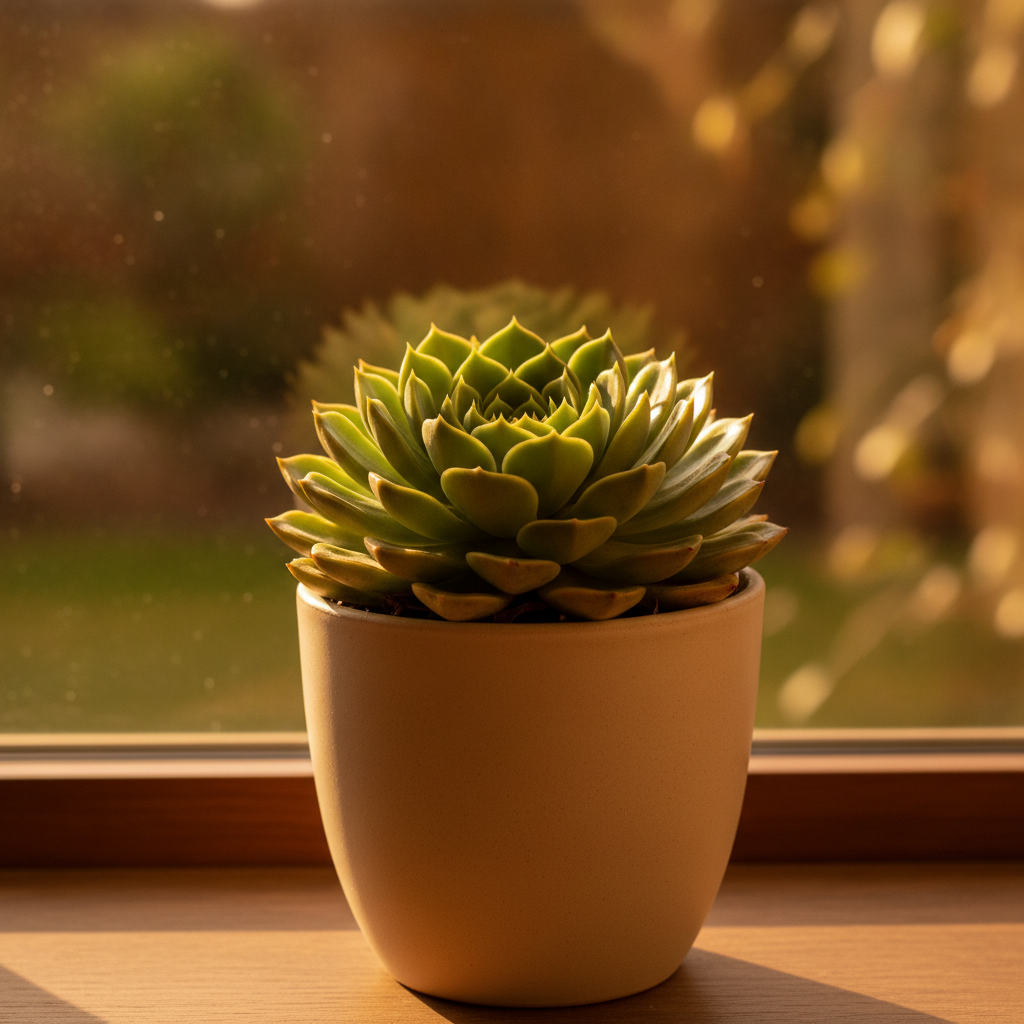
Green Mountain Rose
The classic form and the one most people picture, with fresh apple-green leaves in a glossy, tightly cupped rosette that reads unmistakably as a rose. It shows the seasonal opening and closing most clearly, making it a satisfying plant to watch through the year.
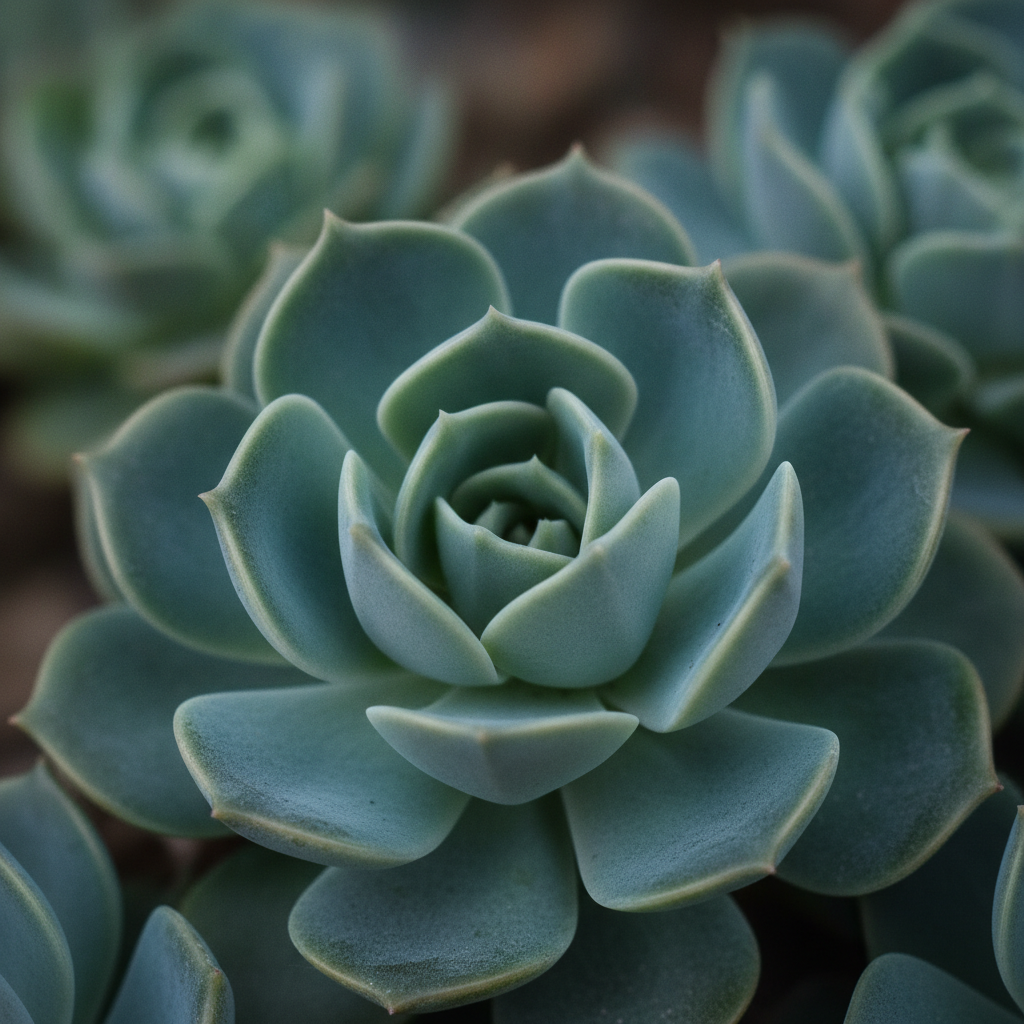
Powder Blue Rose
A cooler-toned form whose blue-green leaves carry a fine chalky bloom that lends the whole rosette a soft, frosted look. The bloom is delicate, so handle it by the pot rather than the leaves to keep the powdery finish intact.
Variety Profiles in Detail
Green Mountain Rose (Aeonium aureum)
This is the benchmark rose succulent, a compact rosette of bright green spoon-shaped leaves that opens into a shallow cup in the cool growing season and folds tight in summer. It clusters readily into small colonies over time and is the most widely sold and most forgiving of the group, making it the best starting point for a first-time grower.
Dwarf Mountain Rose (Greenovia dodrantalis)
Once a species in its own right and still often labelled as such, this miniature form makes small, extremely tight rosettes that cluster into dense mats of tiny roses. It is slower and a touch more particular about drainage than the green form, but its perfectly formed little rosettes are the reason many collectors seek it out.
Choosing the Right Variety for Your Space
For a first rose succulent, the classic Green Mountain Rose is the sensible choice, being the most vigorous, the most widely available and the most tolerant of small mistakes. If you want a cooler colour palette, the Powder Blue Rose offers the same easy nature with a frosted finish. Collectors chasing the tightest, most flower-like rosettes will gravitate to the dwarf forms, accepting slower growth in return for near-perfect little roses, while the rare variegated forms are a prize for anyone who enjoys tracking down the unusual. Whatever the form, the care is fundamentally the same, so choose on looks and let the shared winter-growing rhythm guide how you tend it.
Frequently Asked Questions
Why is my rose succulent closing up into a bud?
This is completely normal and is the plant’s natural summer behaviour. As heat and dryness arrive, the rose succulent folds its leaves inward to protect its growing point and conserve moisture during dormancy. It is not a sign of distress or thirst, and you should not respond by watering heavily. When cooler, wetter weather returns in autumn, the rosette will open again on its own.
How often should I water a rose succulent?
Water on the soak-and-dry principle, but let the season set the pace. During the autumn-to-spring growing season, water thoroughly roughly every week to ten days once the mix has dried out. Through summer dormancy, cut right back to a light drink every three or four weeks. Always let the soil dry almost completely before watering again, and adjust for your own conditions rather than following a fixed calendar.
Is the rose succulent toxic to pets?
No. The rose succulent is considered non-toxic to cats, dogs and humans, which makes it a safer choice than many other succulents, particularly those in the spurge and kalanchoe families. It is still not something you want pets to eat, as the fleshy leaves can cause mild digestive upset simply through volume, but it poses no serious poisoning risk.
Why is my rose succulent stretching and losing its shape?
Stretching, or etiolation, is a sign of too little light. The plant lengthens and spreads its leaves to reach for more, which flattens and opens the rose form. Move it to a brighter spot with some gentle direct sun, and consider a grow light through the dark winter months when it is growing hardest. Existing stretched growth will not tighten again, but you can behead the rosette and re-root it to restart a compact shape.
Why is the base of my plant turning black and soft?
A blackened, mushy base is rot, almost always caused by overwatering or poor drainage. Act quickly: unpot the plant, cut away all soft, discoloured tissue until you reach firm, clean growth, let the cut callus for a few days, and re-root the healthy crown in fresh, dry, gritty mix. In future, water less, use a fast-draining mix and a pot with drainage, and keep water out of the crown.
Does the rose succulent need a special growing season?
Yes, and this is the key thing to understand about it. Unlike most popular succulents, it is a winter grower, active and open through the cool, damp months and dormant and folded through summer. This reverses the usual advice: give it the most water and light in autumn, winter and spring, and let it rest with little water in summer. Match your care to its calendar and the plant becomes easy.
Will my rose succulent flower, and what happens if it does?
Mature rosettes can eventually send up a tall stalk of small yellow flowers. Like other aeoniums, a flowering rosette is usually monocarpic, meaning that particular rosette dies after it blooms. This is not a disaster, because the plant almost always leaves behind offsets that carry on. If you would rather keep a rosette going, some growers cut off the emerging flower stalk, though the plant may still decline.
Can I grow a rose succulent outdoors?
In a mild, frost-free climate it makes a lovely outdoor plant in a bright, lightly shaded spot with excellent drainage. It is not frost hardy, though, and temperatures near or below freezing will damage or kill it, so in colder regions grow it in a pot that can be moved indoors or into a frost-free greenhouse for winter. Keep it above 5°C (41°F) to be safe.






