

Few palms translate the drama of a tropical riverbank into the corner of a living room as gracefully as the pygmy date palm. A true miniature in the date family, Phoenix roebelenii grows wild along the banks of the Mekong in Laos, Vietnam and southern China, where seasonal flooding and dappled forest light have shaped a palm that is compact, resilient and unusually forgiving of indoor life. In the home it rarely exceeds 1.2 to 1.8 metres (4 to 6 feet), carrying a rounded crown of finely divided, arching fronds on one or several slender trunks dressed in a handsome lattice of old leaf bases.
What makes this palm such a satisfying houseplant is the distance between merely surviving and genuinely thriving. A pygmy date palm will limp along for years in a dim hallway with erratic watering, holding onto just enough green to stay alive. Give it bright light, a gritty free-draining mix and a steady rhythm of watering and feeding, though, and it rewards you with a full, softly weeping canopy that looks like it was lifted straight from a resort courtyard. This guide walks through every element of that care, from the quirks of its fluoride sensitivity to the sharp spines you will want to respect at repotting time.
- Quick Reference
- Why the Pygmy Date Palm Makes a Rewarding Houseplant
- Light
- Watering
- Soil
- Fertilising
- Propagation
- Common Pests and Problems
- Varieties and Forms
- Frequently Asked Questions
Quick Reference
Use the table below as an at-a-glance summary, then read on for the reasoning behind each recommendation. The pygmy date palm is a plant where understanding the why matters, because most of the problems people run into come from treating it like a generic tropical foliage plant rather than the light-hungry, sharp-spined little date palm that it is.
| Attribute | Detail |
| Botanical name | Phoenix roebelenii |
| Common names | Pygmy date palm, miniature date palm, dwarf date palm, robellini palm |
| Family | Arecaceae |
| Origin | Southeast Asia, along the Mekong basin |
| Mature height indoors | 1.2 to 1.8 metres (4 to 6 feet) |
| Light | Bright indirect to some direct sun |
| Water | Keep evenly moist, allow the top few centimetres to dry |
| Soil | Gritty, free-draining, slightly acidic |
| Temperature | 18 to 27 degrees Celsius (65 to 80 degrees Fahrenheit) |
| Humidity | Moderate to high, above 40 per cent |
| Feeding | Monthly in the growing season with a palm fertiliser |
| Propagation | Seed, or separation of clumped seedlings |
| Toxicity | Non-toxic to cats and dogs, but bears sharp spines |
| Difficulty | Easy to moderate |
Why the Pygmy Date Palm Makes a Rewarding Houseplant
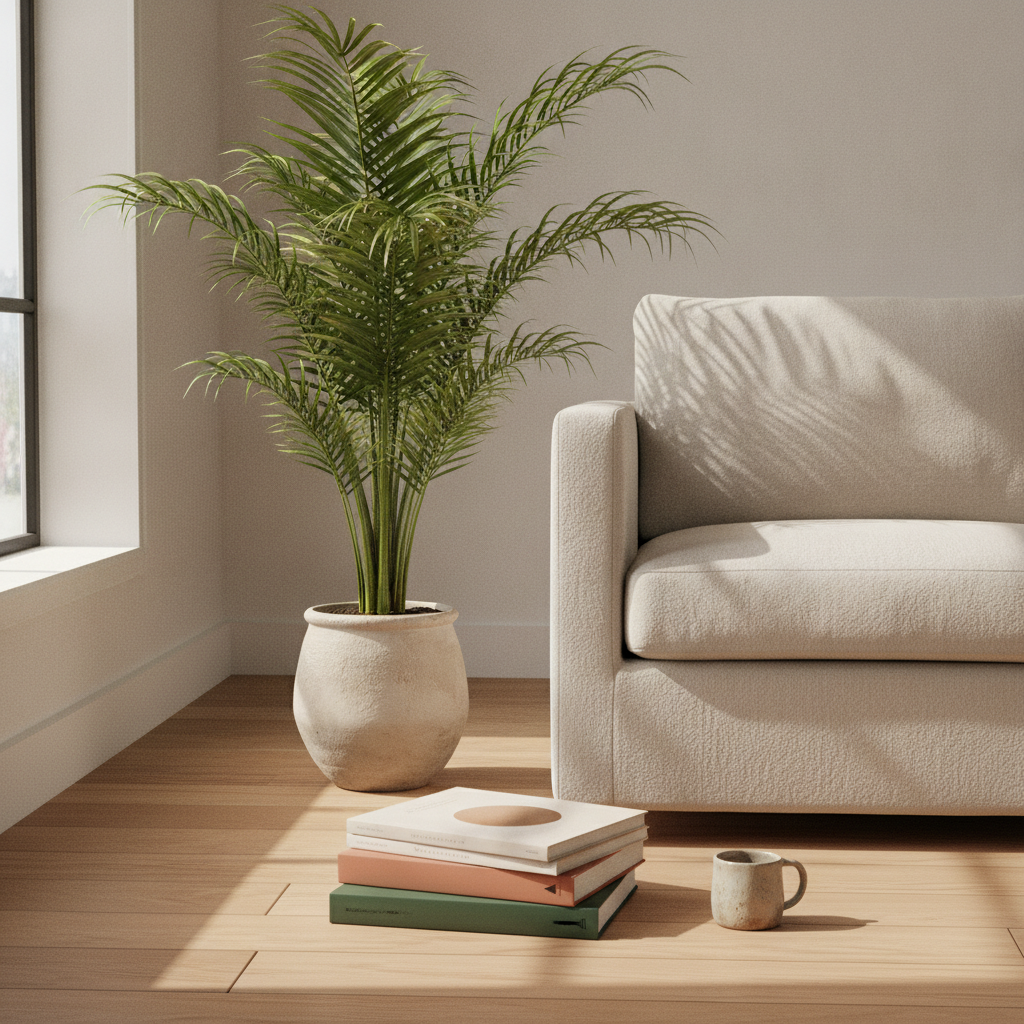
The pygmy date palm earns its place in the home on several counts at once. It is one of the few palms that stays genuinely small, so it fits a bright corner without threatening the ceiling within a couple of years, and its slow growth means the plant you buy is close to the plant you will keep. The fronds are finely pinnate, each one a soft green arc of dozens of narrow leaflets, giving the plant a delicate, fern-like softness that larger palms such as the kentia or areca cannot quite match at this scale.
It is also an honest air purifier and a hardy traveller. Originally described from cultivated stock in the late nineteenth century and named for the German horticulturist who introduced it, Phoenix roebelenii has been a florist and interiorscape staple for well over a century precisely because it tolerates the dry, low-light conditions of indoor life better than most palms while still looking lush. In frost-free climates it doubles happily as a patio or courtyard plant, and it is often moved outdoors for the warm months to soak up stronger light before returning inside for winter.
There is one honest caveat worth stating up front. Near the base of each frond, several leaflets are modified into rigid, needle-sharp spines that can reach 5 to 8 centimetres (2 to 3 inches) long. They are not venomous and the plant is not toxic, but a jab is genuinely painful and can introduce infection, so gloves are non-negotiable when repotting or pruning. Position the palm where passing arms and curious pets will not brush the lower fronds, and you will get all of its grace with none of the grief.
Light
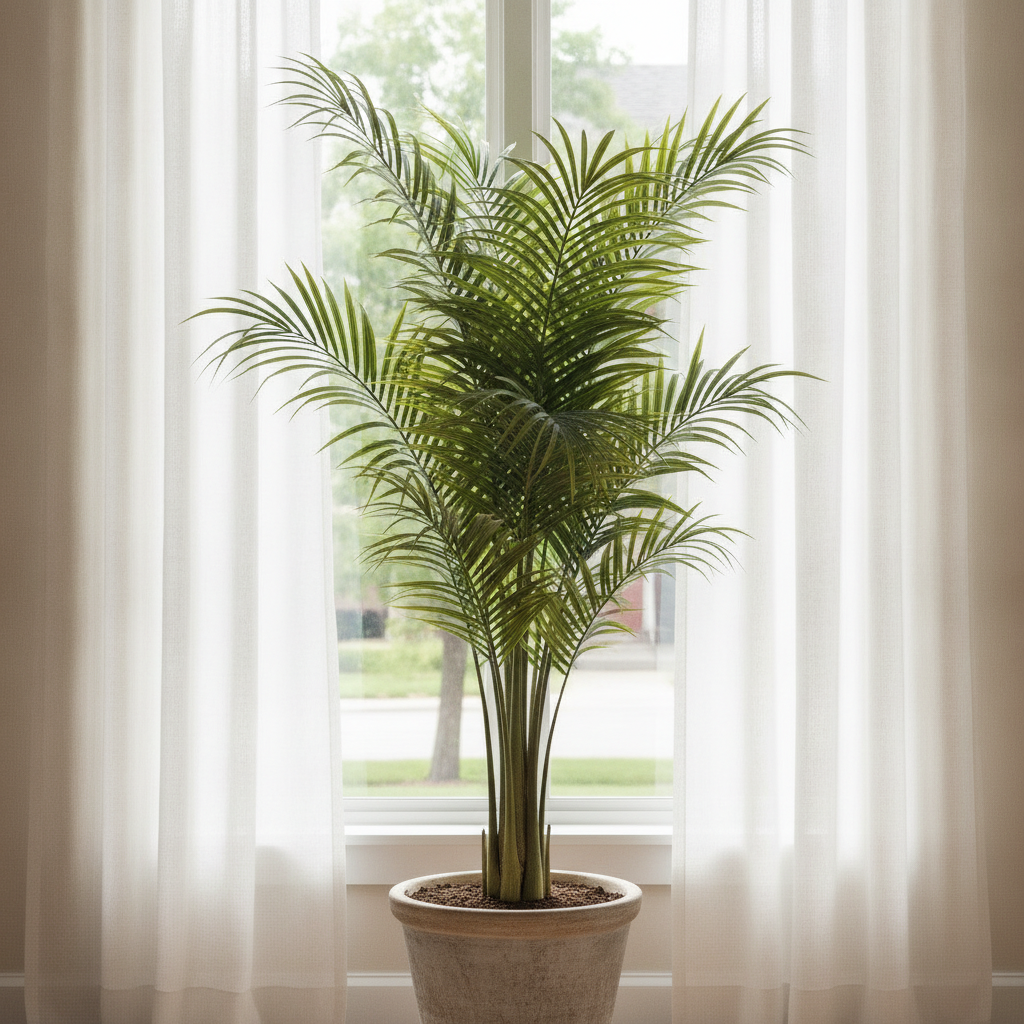
Light is the single factor that most clearly separates a surviving pygmy date palm from a thriving one. In the wild this is a plant of open riverbanks and forest edges, accustomed to hours of strong, filtered sun each day, and it carries that appetite indoors. The brighter the position you can give it, the fuller and more compact the crown will be, with fronds held in a tight, arching rosette rather than stretched thin and reaching.
The ideal indoor spot is directly in front of, or within a metre of, a south or west-facing window where it receives several hours of bright light and can tolerate a few hours of gentle direct sun. An east-facing window with soft morning sun works well too. North-facing windows and dim interior corners will keep the plant alive but slowly starve it, producing sparse new fronds, elongated stems and a gradual thinning of the canopy from the bottom up. If a bright natural spot simply is not available, the palm responds well to a full-spectrum LED grow light run for ten to twelve hours a day.
A palm that has been living in low light should be moved to brighter conditions gradually. Foliage grown in shade has thinner tissue and can scorch if it is thrust into direct summer sun without a transition, showing up as bleached or brown patches on the most exposed leaflets. Move it in stages over a week or two, and rotate the pot a quarter turn every time you water so that all sides of the crown receive even light and the plant grows symmetrically rather than leaning toward the glass.
Pro Tip — Summer Holiday Outdoors: If you can, move the palm outside to a bright but sheltered spot for the warmest months, acclimatising it to stronger light over a week. A summer of real sun builds a noticeably denser crown that carries the plant through the darker indoor winter.
Watering
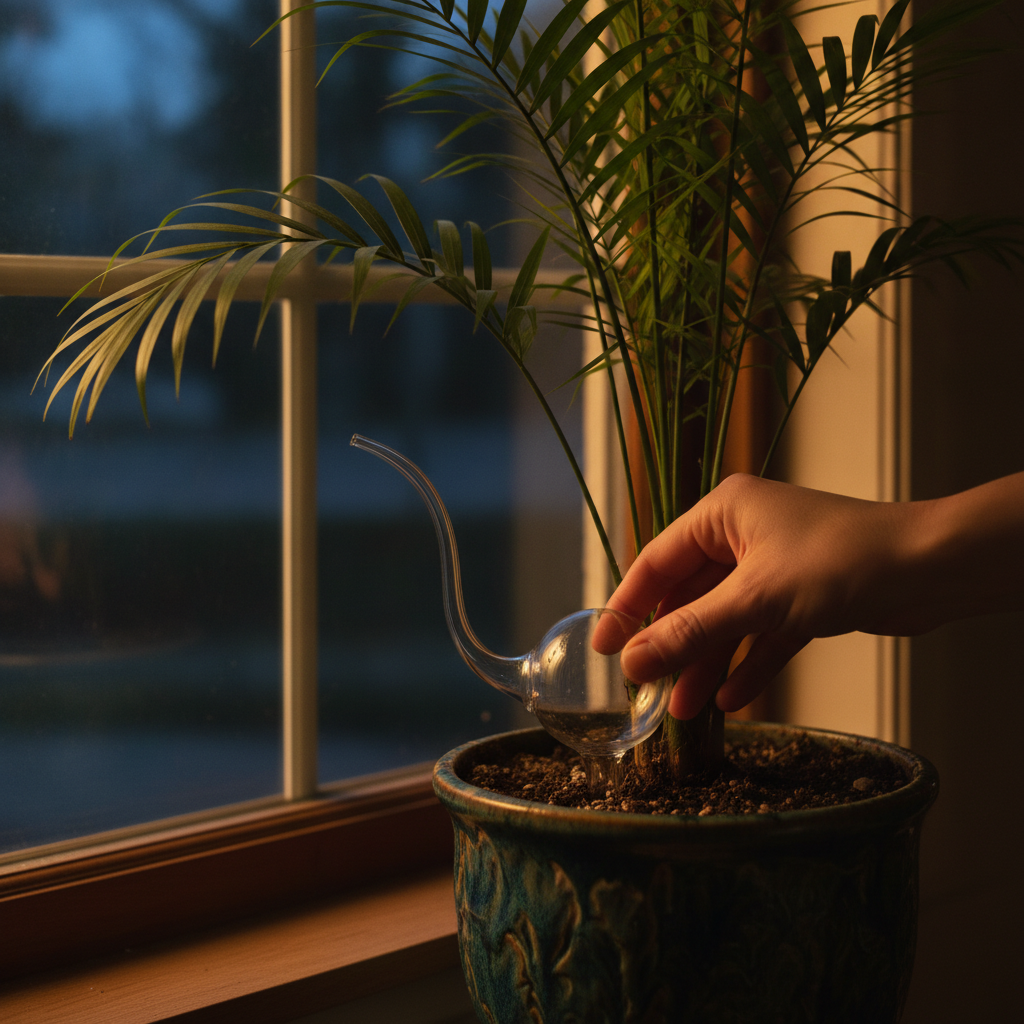
The pygmy date palm likes to be evenly moist but never waterlogged, a balance that is easier to strike than it sounds once you understand the plant’s roots. As a riverbank species it can cope with brief flooding in the wild, but in a pot with limited drainage, roots left sitting in cold, saturated soil quickly rot. The reliable approach is to water thoroughly until liquid runs from the drainage holes, then wait until the top 2 to 4 centimetres (roughly one to one and a half inches) of the mix have dried before watering again.
In practice that usually means watering once or twice a week during the warm growing season and appreciably less in winter, when growth slows and the mix stays wet far longer. Rather than watering on a fixed calendar, check the soil with a finger or a moisture meter each time, because pot size, light levels and the temperature of the room all change how fast the plant drinks. A palm in a bright, warm sunroom in July will need water far more often than the same plant in a cool bedroom in January.
Water quality deserves particular attention with this species. Phoenix roebelenii is sensitive to fluoride and to a build-up of soluble salts, both of which show up as brown, scorched leaflet tips. If your tap water is heavily fluoridated or softened, use filtered water, collected rainwater or water that has stood uncovered overnight, and flush the pot thoroughly every couple of months by running plenty of water through it to wash accumulated salts out of the mix. Consistent brown tips despite correct watering are almost always a water-quality problem rather than a thirst problem.
Soil
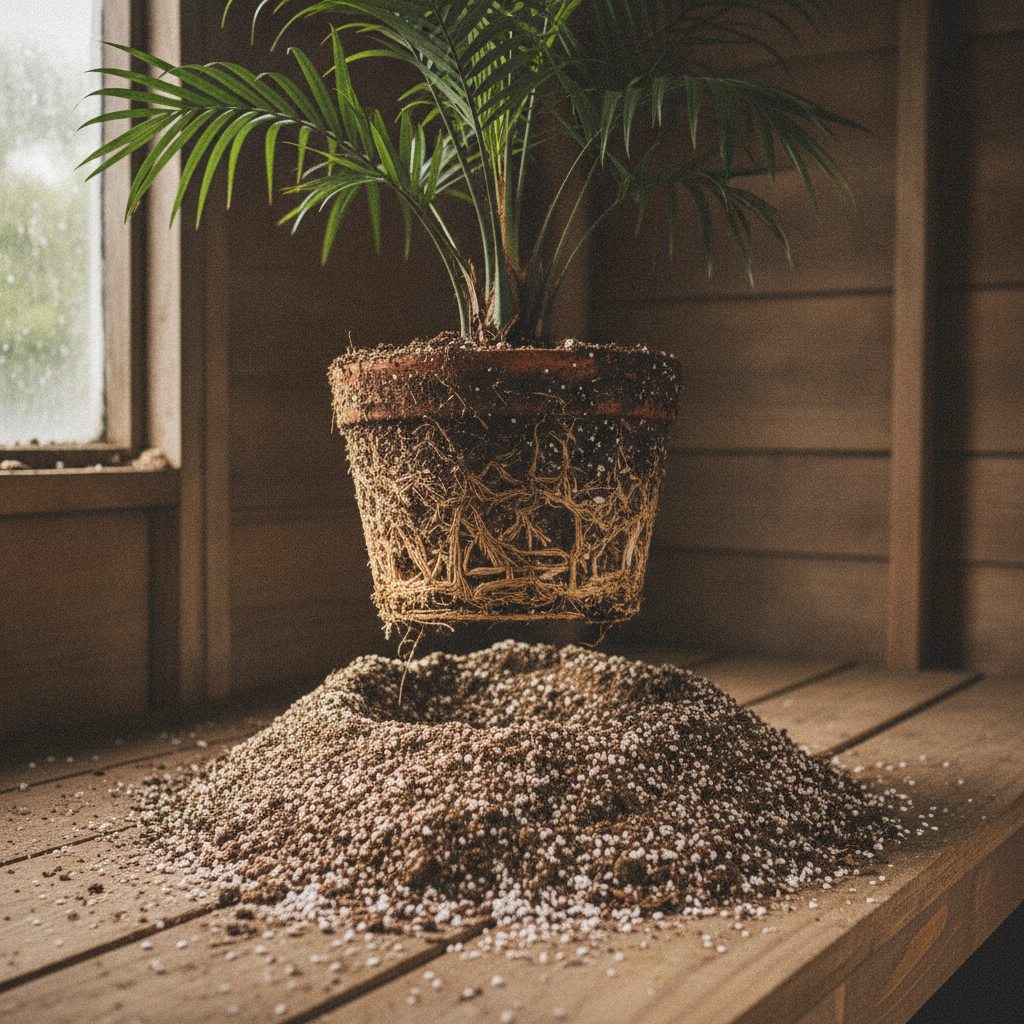
The right growing medium for a pygmy date palm is one that holds enough moisture to keep the root ball from drying to dust, yet drains fast enough that water never lingers around the roots. A quality general-purpose potting compost forms a good base, but on its own it tends to compact and stay soggy, so it should be opened up with generous amounts of coarse grit. A reliable recipe is roughly two parts potting compost to one part coarse sand or perlite and one part composted bark or coir, which together create the airy, gritty texture palm roots prefer.
The palm favours a slightly acidic to neutral soil, in the range of about pH 6.0 to 7.0, which most peat-free or standard composts already provide. Whatever the mix, the pot must have drainage holes. Decorative cachepots without drainage are the most common cause of slow decline in this species, because water collects invisibly in the base and rots the roots from below. If you use a cachepot for looks, keep the palm in a plastic nursery pot inside it and tip out any water that collects after watering.
Pygmy date palms are slow growers with fairly restrained root systems and do not need frequent repotting. Every two to three years is usually enough, moving up just one pot size when roots begin to circle the base or emerge from the drainage holes. Spring is the ideal time, as the plant is entering active growth and recovers fastest. Wear thick gloves and long sleeves for the job, keep the trunk at the same depth it sat before, and resist the urge to overpot, since a pot that is too large holds excess wet soil the roots cannot use.
Fertilising
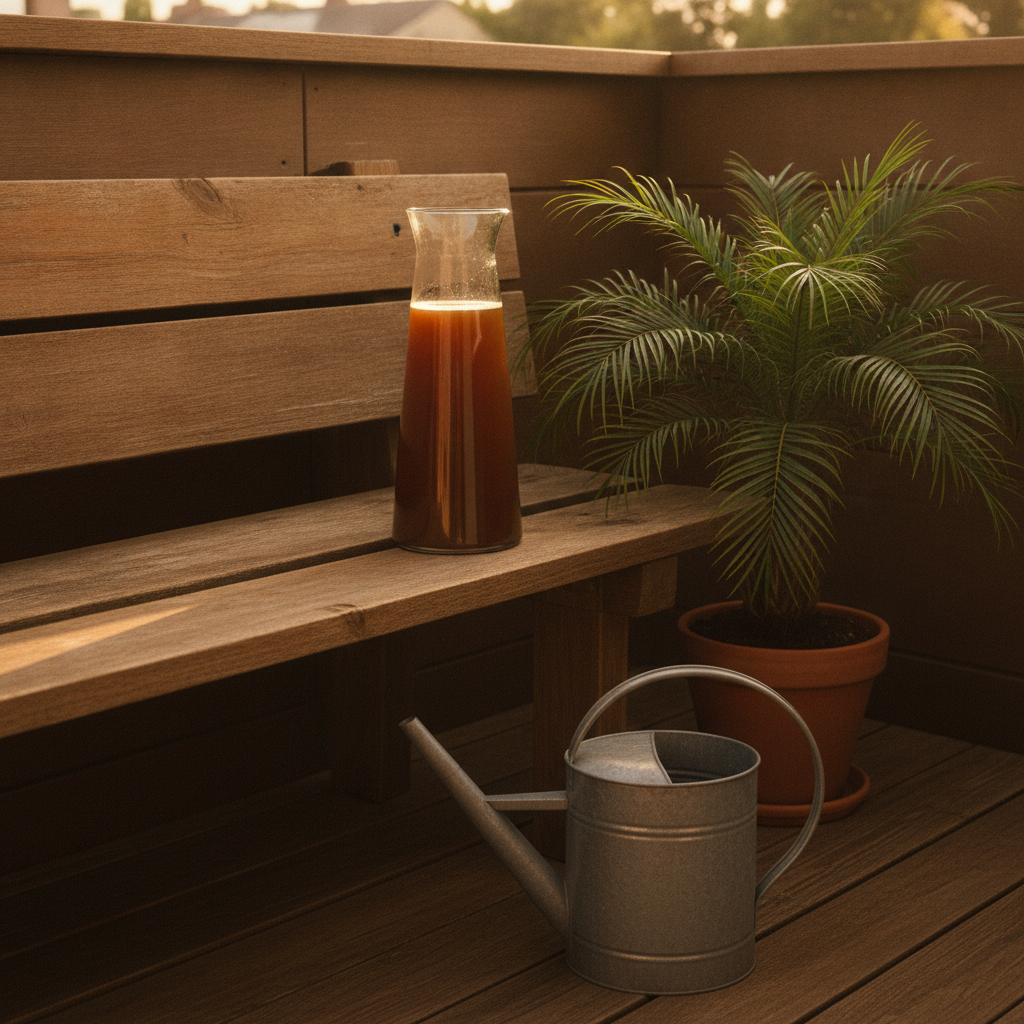
Palms are surprisingly hungry plants, and the pygmy date palm is prone to specific nutrient deficiencies that a general houseplant feed does not always address. During the growing season, from spring through early autumn, feed monthly with a fertiliser formulated for palms, or a balanced liquid houseplant feed diluted to half strength. Palm-specific formulas matter because they include magnesium, potassium and micronutrients such as manganese in the ratios palms actually use, and getting those right prevents most of the yellowing and frond damage that plagues neglected specimens.
The two deficiencies to watch for are potassium and magnesium. Potassium shortage shows first on the oldest, lowest fronds as translucent yellow or orange flecking that progresses to scorched, frizzled leaflet tips, a look growers call frizzle top. Magnesium shortage appears as broad yellow bands along the margins of older fronds while the centre stays green. Because palms cannot move these nutrients back out of old fronds, damaged leaves never recover, so the goal of steady feeding is to prevent the deficiency from reaching the newer growth in the first place.
Ease off feeding entirely from late autumn through winter, when growth naturally stalls and unused fertiliser salts simply accumulate in the mix. Over-feeding is as damaging as under-feeding here, causing the same brown, burnt leaflet tips as poor water quality and salt build-up. When in doubt, feed a little less rather than a little more, and flush the pot with plain water periodically to keep salt levels in check.
Warning — Do Not Over-Prune: It is tempting to trim off every frond with a brown tip, but palms draw nutrients from older leaves to build new ones. Remove only completely brown, dead fronds, and never cut into green tissue or the growing tip, which a palm cannot regenerate.
Propagation
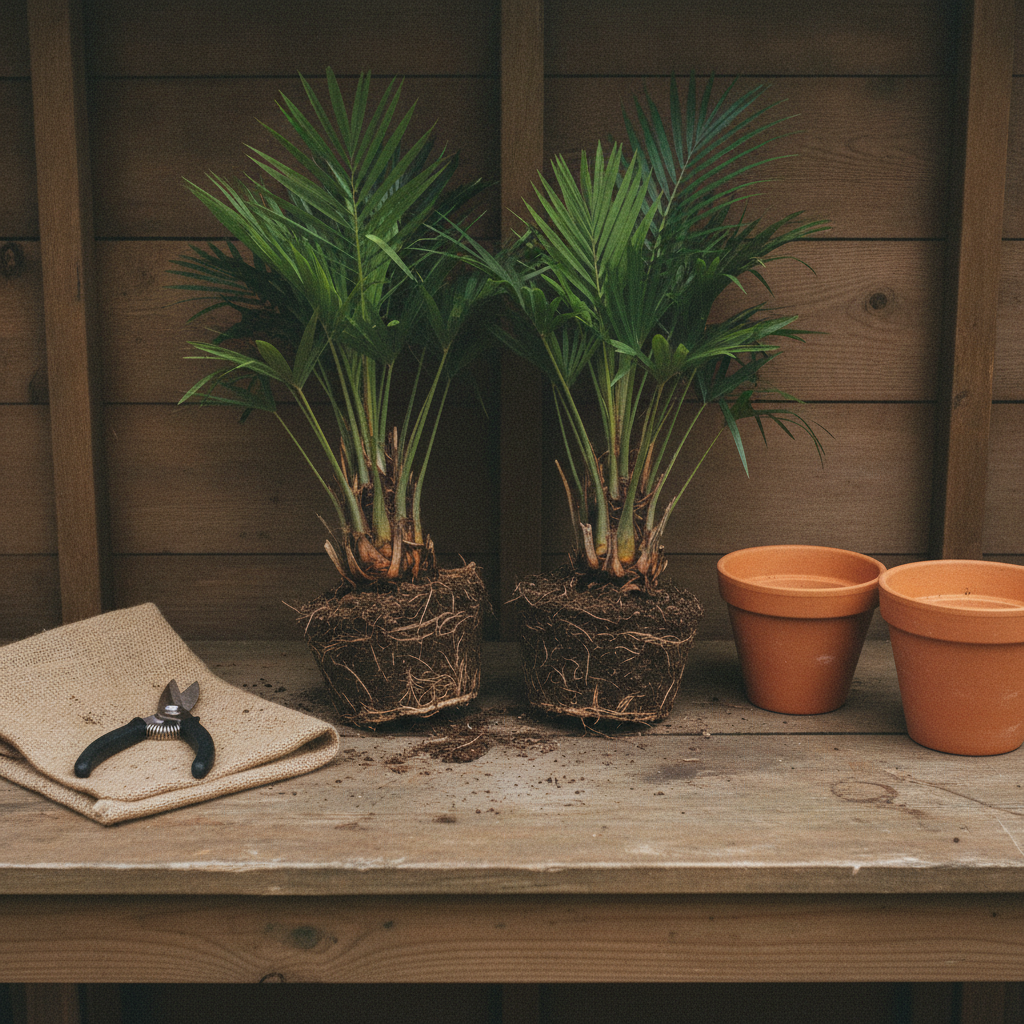
Propagation is the one area where the pygmy date palm asks for patience rather than skill. Unlike aroids or trailing succulents, palms cannot be grown from a leaf or a stem cutting, because they have a single growing point and no dormant buds along the trunk to sprout roots. The genuine method of increase is from seed, and while it is slow, it is reliable if you have fresh seed and a warm, humid spot to germinate it.
Many pygmy date palms sold in garden centres are actually two or three separate seedlings potted together to create a fuller, multi-trunked look. Where that is the case, a mature clump can sometimes be teased apart into individual plants at repotting time, provided each stem has its own established roots. This is not true division in the way a clumping fern divides, and it does stress the plants, so it is best attempted only on vigorous, well-rooted specimens in spring.
- For seed, sow fresh cleaned seed just below the surface of a moist, gritty seed mix, ideally after soaking it in warm water for a day or two to soften the coat.
- Keep the pot consistently warm, at 27 to 32 degrees Celsius (80 to 90 degrees Fahrenheit), and humid, covering it loosely to hold moisture. Germination can take one to three months or longer, so do not give up early.
- To separate a clump instead, unpot the plant, wear thick gloves, and gently wash soil from the roots so you can see where the individual stems join.
- With a clean, sharp blade, cut apart stems that each carry their own healthy root mass, keeping as many roots intact per division as possible.
- Pot each division into its own small container of gritty palm mix, water lightly, and keep it warm, humid and out of direct sun until new growth signals that it has re-established.
Common Pests and Problems
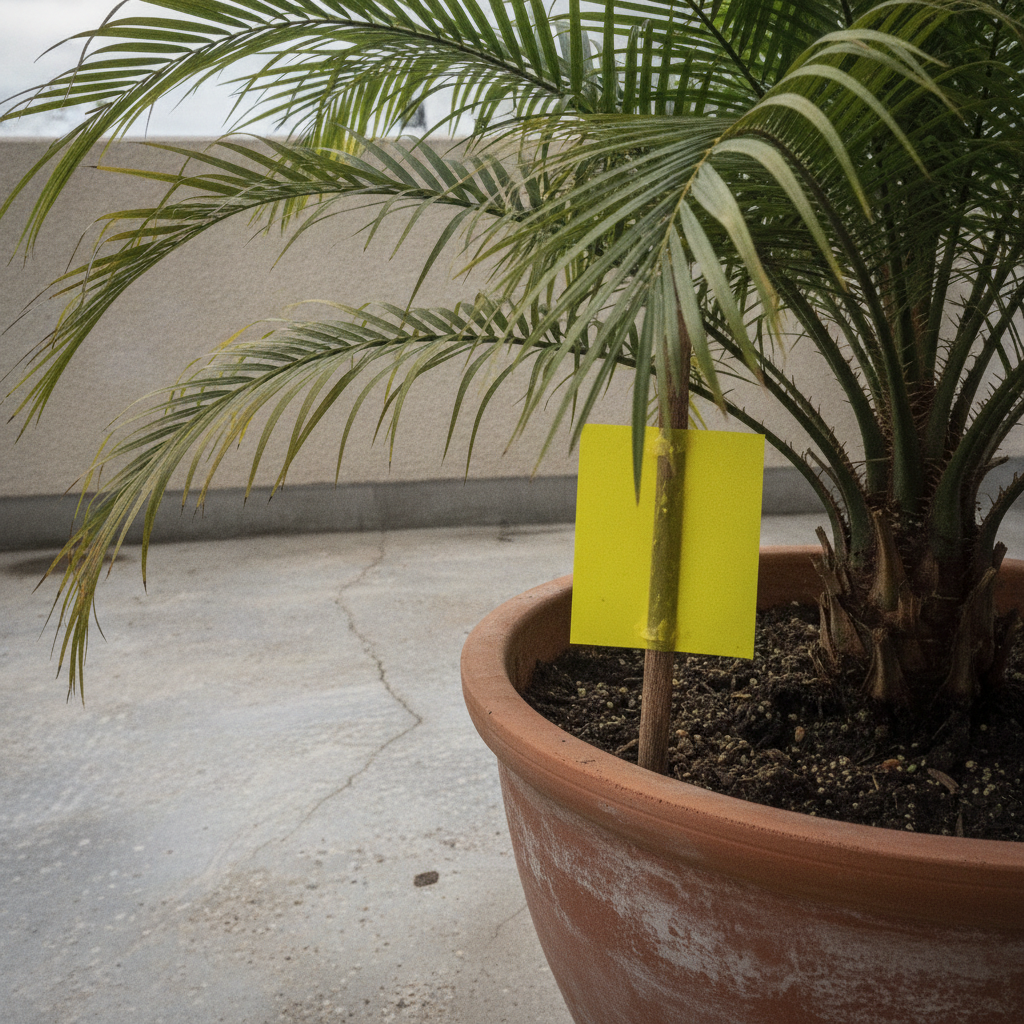
Indoors, the pygmy date palm’s main adversary is the spider mite, which thrives in the warm, dry air of centrally heated rooms and can colonise a palm quickly. The earliest signs are a faint stippling or silvering of the leaflets and, in heavier infestations, fine webbing strung between the fronds. Because the fronds are so finely divided, mites can build up unnoticed, so it pays to inspect the undersides regularly and to raise humidity, since mites hate moist air. Scale insects and mealybugs are the other frequent visitors, appearing as brown bumps along the stems or white cottony tufts in the leaf axils.
Most infestations are manageable if caught early. Wipe the fronds and stems with a cloth dipped in diluted insecticidal soap, dab individual scale and mealybugs with a cotton bud moistened with isopropyl alcohol, and treat persistent problems with a horticultural oil such as neem, spraying the undersides of the leaflets where pests shelter. Isolating a newly affected plant from the rest of your collection while you treat it prevents a small outbreak from spreading.
Beyond pests, the most common complaints are cultural, and the table below matches the symptom to its usual cause. The recurring theme is that brown leaflet tips, the single most frequent worry with this palm, are far more often a sign of fluoride, salt build-up or dry air than of any pest or disease.
| Symptom | Likely Cause | Remedy |
| Brown, crispy leaflet tips | Fluoride or salt build-up, low humidity, over-feeding | Switch to filtered or rainwater, flush the pot, raise humidity, feed less |
| Stippled, silvery leaflets with webbing | Spider mites | Raise humidity, rinse foliage, treat with neem or insecticidal soap |
| Yellowing lower fronds | Potassium or magnesium deficiency, or natural ageing | Feed with a palm fertiliser, remove only fully dead fronds |
| Fronds pale and stretched | Insufficient light | Move to a brighter position or add a grow light |
| Mushy base, general collapse | Root rot from overwatering or poor drainage | Unpot, cut away rotten roots, repot in fresh gritty mix, water less |
| White cottony tufts or brown bumps | Mealybugs or scale | Dab with alcohol, wipe down, treat with horticultural oil |
Varieties and Forms
The pygmy date palm is grown almost entirely as the true species, and it has few named cultivars in the way that aroids or begonias do. What varies most in the trade is the form the plant is trained into, and the two you will encounter are worth distinguishing, because they suit different spaces and grow into quite different silhouettes over time.
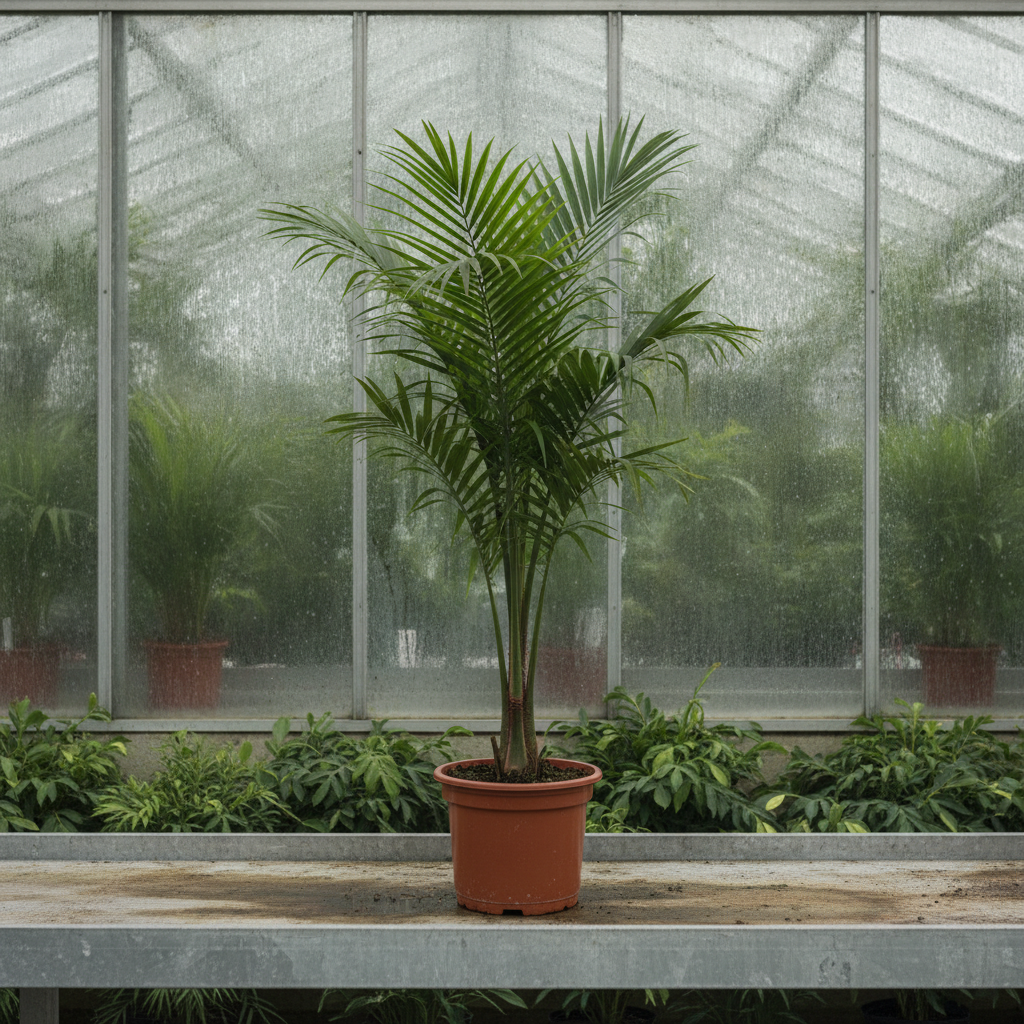
The single-trunk form is the palm in its natural solitary habit, a lone slender stem topped with one full, rounded crown of arching fronds. It reads as more upright and architectural, ages into an elegant miniature tree with a patterned trunk, and is the better choice for a narrow spot or a formal look.
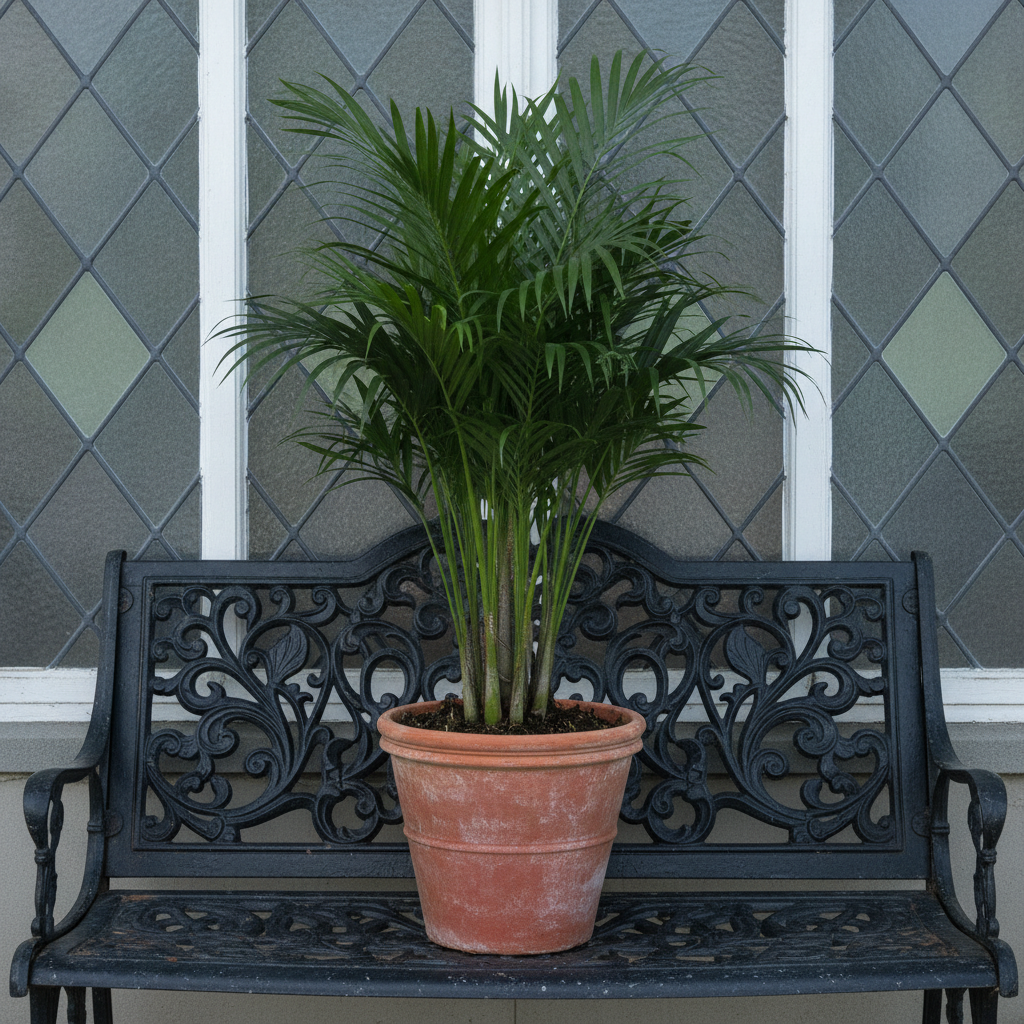
The triple or multi-trunk form is created by potting two or three seedlings together so their trunks lean outward into a fuller, bushier clump. It gives an instantly lush, tropical mass of overlapping fronds and fills a wider corner, though the clustered stems compete for root space and benefit from a slightly larger pot.
Both forms are the identical species with identical care needs, so the choice comes down to the shape you want. It is also worth knowing the pygmy date palm apart from its larger relatives in the Phoenix genus, such as the Canary Island date palm, Phoenix canariensis, and the true date palm, Phoenix dactylifera. Those are landscape giants that quickly outgrow any room, whereas Phoenix roebelenii is the only member of the group truly suited to life as a houseplant.
Frequently Asked Questions
Why are the tips of my pygmy date palm turning brown?
Brown leaflet tips are the most common complaint and usually come down to water quality or humidity rather than watering itself. This palm is sensitive to fluoride and to a build-up of soluble salts from tap water and fertiliser, both of which scorch the tips. Switch to filtered water or rainwater, flush the pot thoroughly every couple of months, raise the humidity around the plant, and ease back on feeding. Persistent brown tips despite correct watering almost always point to one of these causes.
Is the pygmy date palm safe for cats and dogs?
Yes, Phoenix roebelenii is listed as non-toxic to cats and dogs, so it will not poison a pet that nibbles a frond. The real hazard is physical rather than chemical, because the leaflets near the base of each frond are modified into long, rigid spines that can injure a curious pet or a passing hand. Position the plant so that its lower fronds are out of reach and handle it with gloves.
How fast does a pygmy date palm grow, and how big will it get indoors?
It is a slow grower, typically adding only a handful of new fronds each year, which is part of what makes it such a manageable houseplant. Indoors it generally reaches 1.2 to 1.8 metres (4 to 6 feet) over many years, and it will not suddenly overwhelm a room. Brighter light and steady feeding speed growth modestly, but you should expect a plant that changes gradually rather than one you have to repot every season.
Can I grow a pygmy date palm from a date pit?
Not from a supermarket date, which comes from the much larger Phoenix dactylifera. To grow the pygmy date palm you need fresh seed from Phoenix roebelenii itself. Sow it in a warm, humid, gritty mix and be prepared to wait, as germination can take one to three months. There is no shortcut through cuttings, because palms grow from a single point and cannot root from a leaf or a section of trunk.
Why are the lower fronds on my palm turning yellow?
A little yellowing of the very oldest, lowest fronds is natural as the palm sheds spent leaves. Widespread yellowing, though, usually signals a potassium or magnesium deficiency, which appears as flecking or yellow banding on older fronds. Feed with a fertiliser formulated for palms, which supplies these nutrients in the right ratio. Remember that damaged fronds will not turn green again, so remove only those that are fully brown and dead, and let steady feeding protect the newer growth.






