
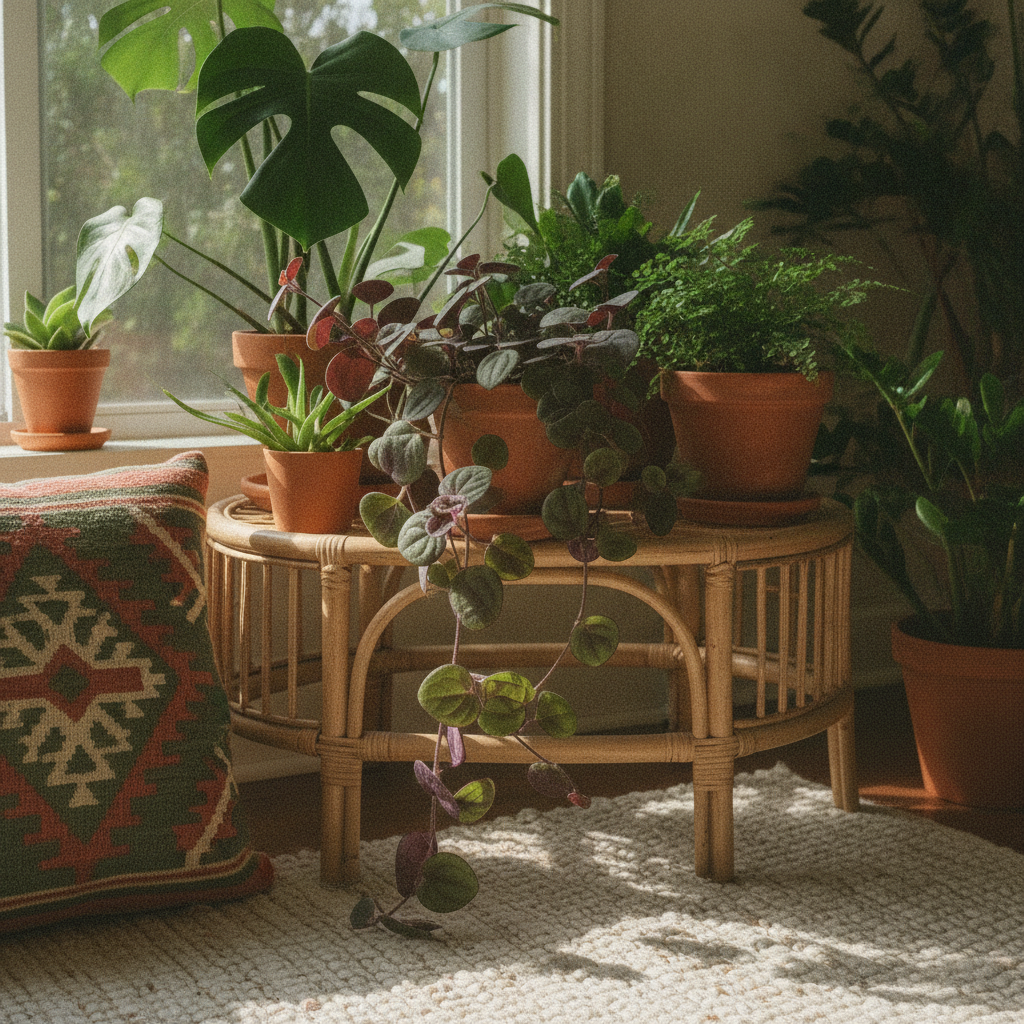
Few trailing houseplants earn their keep as quickly as purple Swedish ivy (Plectranthus purpuratus). It is neither Swedish nor an ivy, yet the name has stuck for generations because Scandinavian growers popularised it as a cascading windowsill plant in the mid twentieth century. What actually sits in the pot is a soft-stemmed member of the mint family from southern Africa, clothed in rounded, scallop-edged leaves that are velvety green above and flushed a deep burgundy-purple beneath. Give it a bright spot and the purple deepens until the whole plant seems lit from within.
This is a plant that rewards beginners. It grows fast, roots from almost any cutting, forgives the occasional missed watering, and tells you clearly when something is wrong. The gap between merely keeping it alive and helping it truly thrive comes down to a handful of decisions about light, water and pruning, all of which this guide walks through in detail.
- Quick reference
- Why grow purple Swedish ivy
- Light
- Watering
- Soil and potting
- Fertilising
- Propagation
- Pests and problems
- Varieties
- Frequently asked questions
Quick reference
The table below distils the essentials for anyone who wants the headline figures before reading further. Treat it as a summary rather than the full picture, as the sections that follow explain the reasoning behind each number.
| Common names | Purple Swedish ivy, purple plectranthus, Swedish begonia |
| Botanical name | Plectranthus purpuratus |
| Family | Lamiaceae (the mint family) |
| Origin | Southern Africa, chiefly South Africa and Eswatini |
| Mature size | 20 to 30 cm (8 to 12 in) tall, with stems trailing 60 cm (24 in) or more |
| Light | Bright indirect light, plus a little gentle direct sun to keep the purple strong |
| Water | When the top 2 to 3 cm (1 in) of soil is dry, roughly weekly in summer |
| Soil | Light, free-draining houseplant mix with added perlite |
| Temperature | 15 to 24 degrees C (59 to 75 degrees F), never below 10 degrees C (50 degrees F) |
| Humidity | Average household humidity is fine |
| Feeding | Balanced liquid feed once a month in spring and summer |
| Toxicity | Generally regarded as non-toxic, though the aromatic foliage is best not eaten |
| Difficulty | Very easy, an excellent first houseplant |
Why grow purple Swedish ivy
The immediate appeal is colour. Most trailing houseplants offer variations on green, but purple Swedish ivy carries a second colour on the reverse of every leaf, so a plant seen from below or backlit by a window glows with wine-dark tones. The stems themselves are purple and softly hairy, and in strong light even the upper leaf surface takes on a bronzed, plum-tinged sheen. Set on a shelf where the trailing stems can hang, the plant creates movement and depth that a static upright specimen cannot.
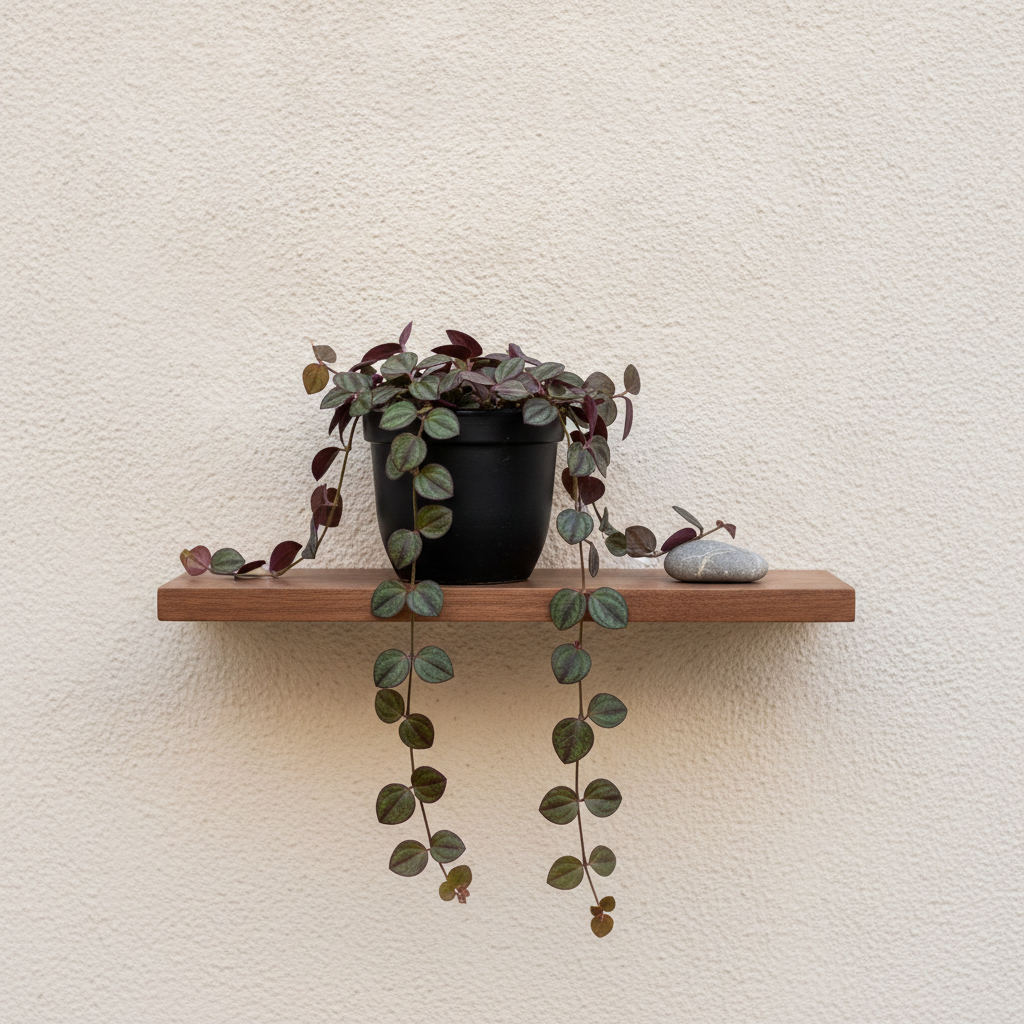
Speed is the second reason to grow it. In a warm, well-lit room a rooted cutting can fill a hanging basket within a single season. That pace makes it a satisfying plant for anyone who has watched slower species sulk for months, and it means a leggy or tired specimen can be cut back hard and rebuilt into a full, bushy plant in weeks rather than years. The mint-family heritage also gives the crushed foliage a faint aromatic scent, herbal and slightly spicy, which many growers find pleasant and which appears to make the leaves less appealing to some pests.
Finally, there is forgiveness. Purple Swedish ivy holds water in its slightly fleshy stems, so it tolerates a missed watering far better than a fern would, yet it is not a true succulent and will not rot at the first sign of moisture the way some desert plants do. It sits in a comfortable middle ground that suits real homes and imperfect routines, which is exactly why it has remained a windowsill favourite for so long.
Light
Light is the single biggest lever you have over how this plant looks. To simply survive, purple Swedish ivy will accept moderate light and keep producing green leaves, but to thrive and to develop its signature purple it needs to be bright. The ideal is a position that receives plenty of indirect light all day plus an hour or two of gentle direct sun, such as an east-facing windowsill that catches the softer morning rays, or a spot set back slightly from a south or west window where the fiercest midday sun is filtered.
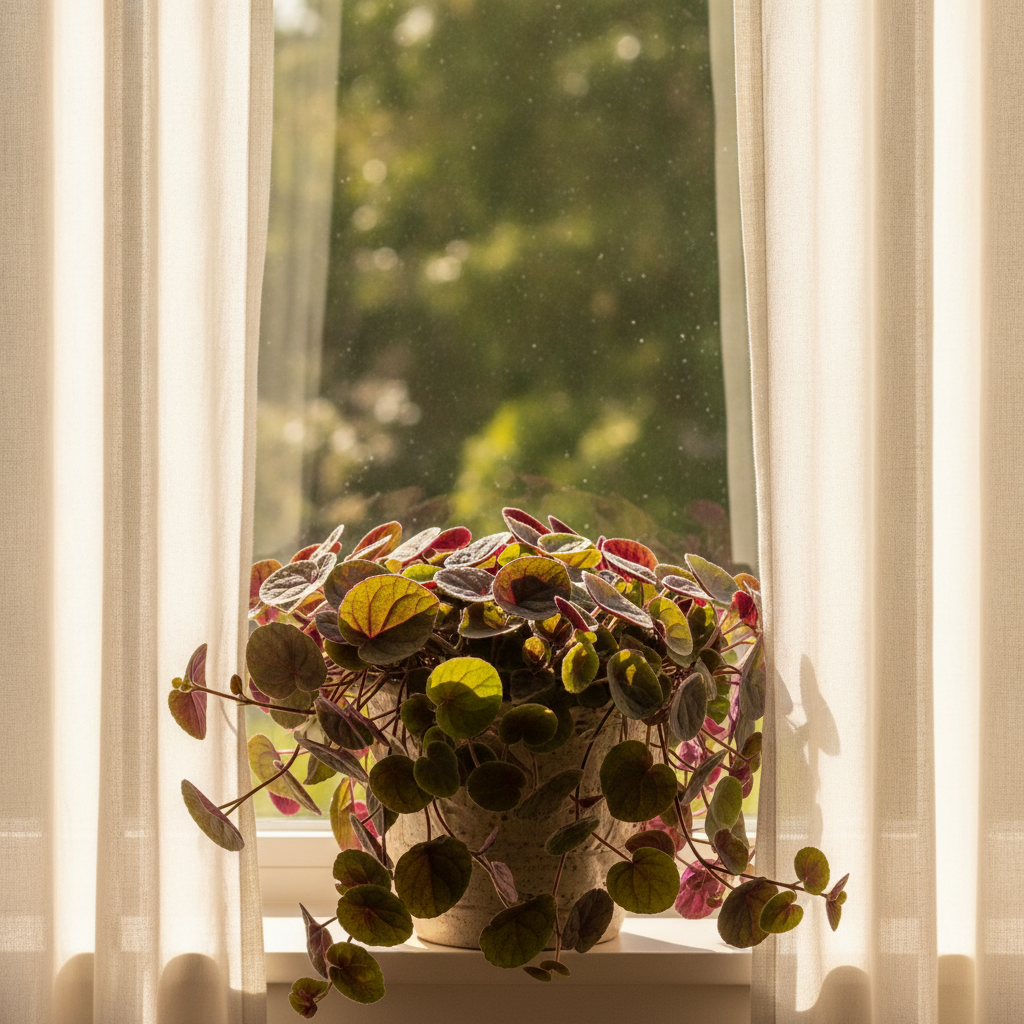
When light is too low the plant does not die dramatically, it simply drifts. The gaps between leaves stretch, the stems grow thin and reaching, and the purple fades toward a flat, dull green. This etiolation is the most common complaint growers have, and the fix is always the same: move the plant closer to a window or add a grow light. When light is genuinely excessive, usually unfiltered summer sun through glass, the leaves scorch into bleached or brown patches and the foliage can take on a hard, reddish, stressed look rather than a rich purple. The sweet spot between the two is wide, which is part of why the plant is so easy, but erring toward more light will always give you better colour.
Pro Tip — Rotate for even growth: Trailing stems all lean toward the light source, so a plant left in one position becomes lopsided. Give the pot a quarter turn every time you water and the plant will build a full, balanced skirt of foliage on every side.
If your home simply lacks a bright window, a modest full-spectrum LED grow light suspended above the plant for ten to twelve hours a day will keep the colour strong and the growth compact. Because the plant is small and fast, even an inexpensive clip-on light makes a visible difference within a couple of weeks.
Watering
Purple Swedish ivy likes its soil to dry partway between drinks but not to bake bone dry for long stretches. The reliable method is to feel the surface: when the top 2 to 3 cm (about an inch) of the mix is dry to the touch, water thoroughly until it runs from the drainage holes, then empty the saucer so the roots never sit in standing water. In a warm, bright room during the growing season this usually works out to roughly once a week, but you should always let the soil, not the calendar, make the decision.
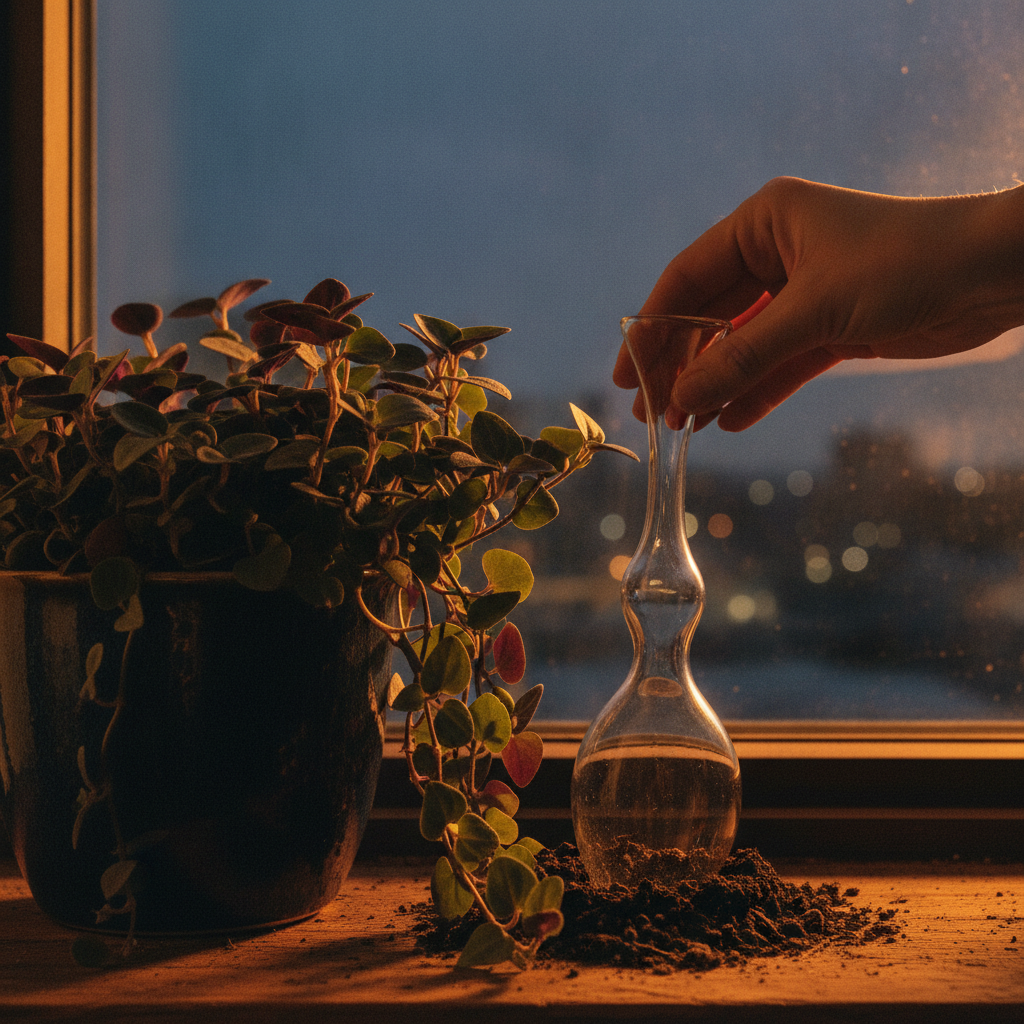
The plant is refreshingly honest about its needs. When it is thirsty the soft stems and leaves lose their rigidity and the whole plant wilts visibly, then perks back up within an hour or two of watering. A single wilt now and then does no harm, but repeated severe wilting stresses the plant and leads to crisp leaf edges and dropped lower leaves, so use the wilt as a late warning rather than a routine schedule. In winter, when growth slows and light is weaker, cut back noticeably: the soil stays wet far longer in cool, dim conditions, and cold wet roots are the fastest route to rot.
Overwatering is the more dangerous mistake because the symptoms mimic thirst. Yellowing lower leaves, a soft translucent look to the stems near the soil, and a sour smell from the pot all point to roots suffocating in constantly wet mix. If you see these signs, stop watering, check that the pot drains freely, and if necessary lift the plant to inspect the roots, trimming any that are brown and mushy. Because purple Swedish ivy roots so easily, a badly rotted plant can often be saved simply by taking healthy stem cuttings and starting again.
Warning — Room-temperature water: A blast of very cold tap water on the roots of a warm plant can cause a check in growth and pale spotting on the foliage. Let water come to room temperature before using it, particularly in winter.
Soil and potting
The guiding principle for this plant’s soil is drainage. Its roots want moisture and air in equal measure, so a mix that holds water without turning to sludge is exactly right. A good, inexpensive recipe is two parts ordinary peat-free houseplant compost to one part perlite, which keeps the blend open and prevents the compaction that leads to root rot. A handful of fine bark or coarse grit adds further structure and mimics the loose, gritty ground the species grows in across its native range.
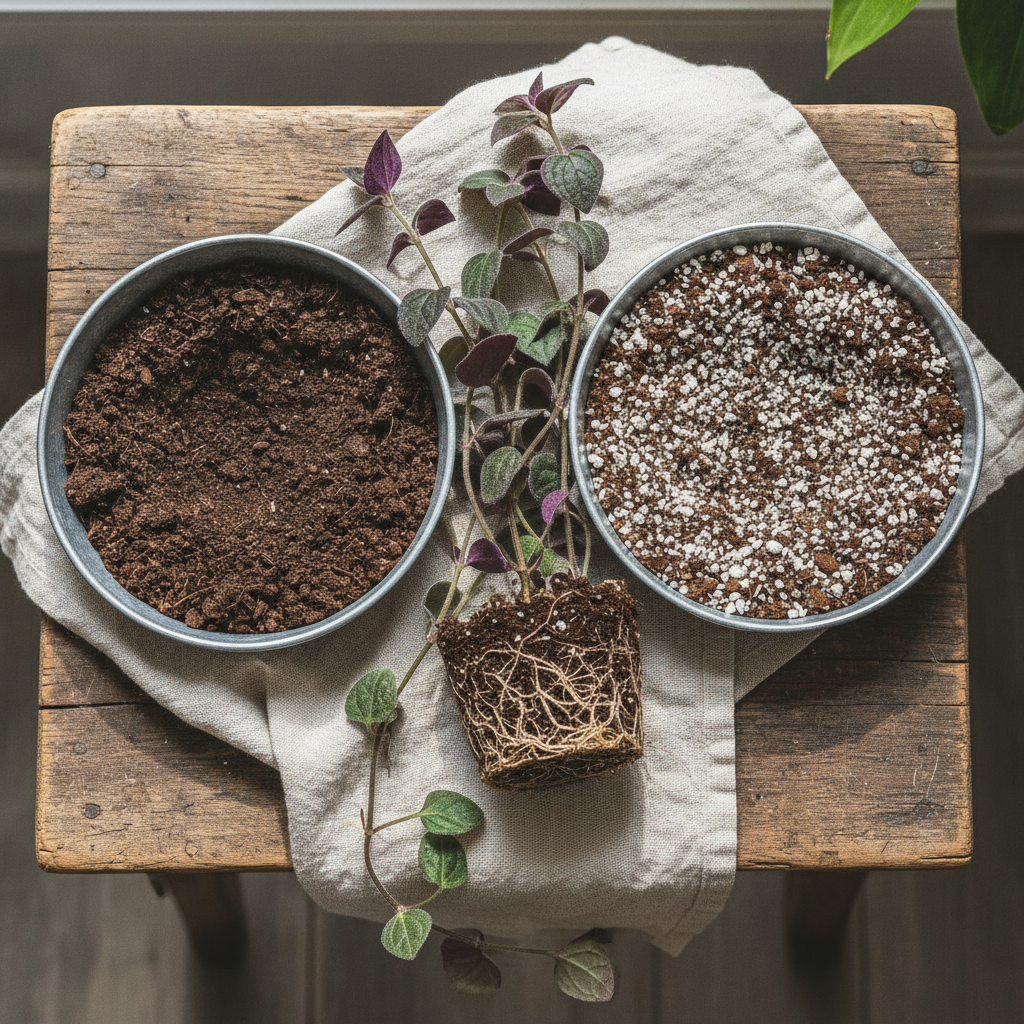
Choose a pot with drainage holes above all else. Purple Swedish ivy is untroubled by material, growing equally well in plastic, terracotta or glazed ceramic, though terracotta’s porous walls let the soil dry faster and suit anyone prone to overwatering. Because the plant trails, it also looks and grows well in a hanging pot or a tall vessel that lets the stems fall freely. Size the pot only slightly larger than the root ball; an oversized pot holds a reservoir of wet soil the small root system cannot use, which again invites rot.
Repot every one to two years in spring, or whenever roots begin to circle the base and escape the drainage holes. The plant tolerates root disturbance well, so this is a low-stress operation. Repotting is also the ideal moment to refresh tired soil and to divide or take cuttings from an overgrown specimen. After repotting, water lightly and keep the plant out of harsh sun for a few days while it settles.
Pro Tip — Pinch as you pot: Whenever you repot, pinch out the growing tips at the same time. This triggers branching lower down and turns a single trailing strand into a dense, well-clothed plant far faster than leaving it to grow unchecked.
Fertilising
As a fast grower, purple Swedish ivy appreciates regular feeding through the active season, but its needs are modest and easily overdone. A balanced liquid houseplant fertiliser diluted to half the label strength and applied once a month from spring through late summer is plenty. This steady, gentle supply keeps the foliage full and the colour saturated without the surge of soft, weak growth that heavy feeding produces.
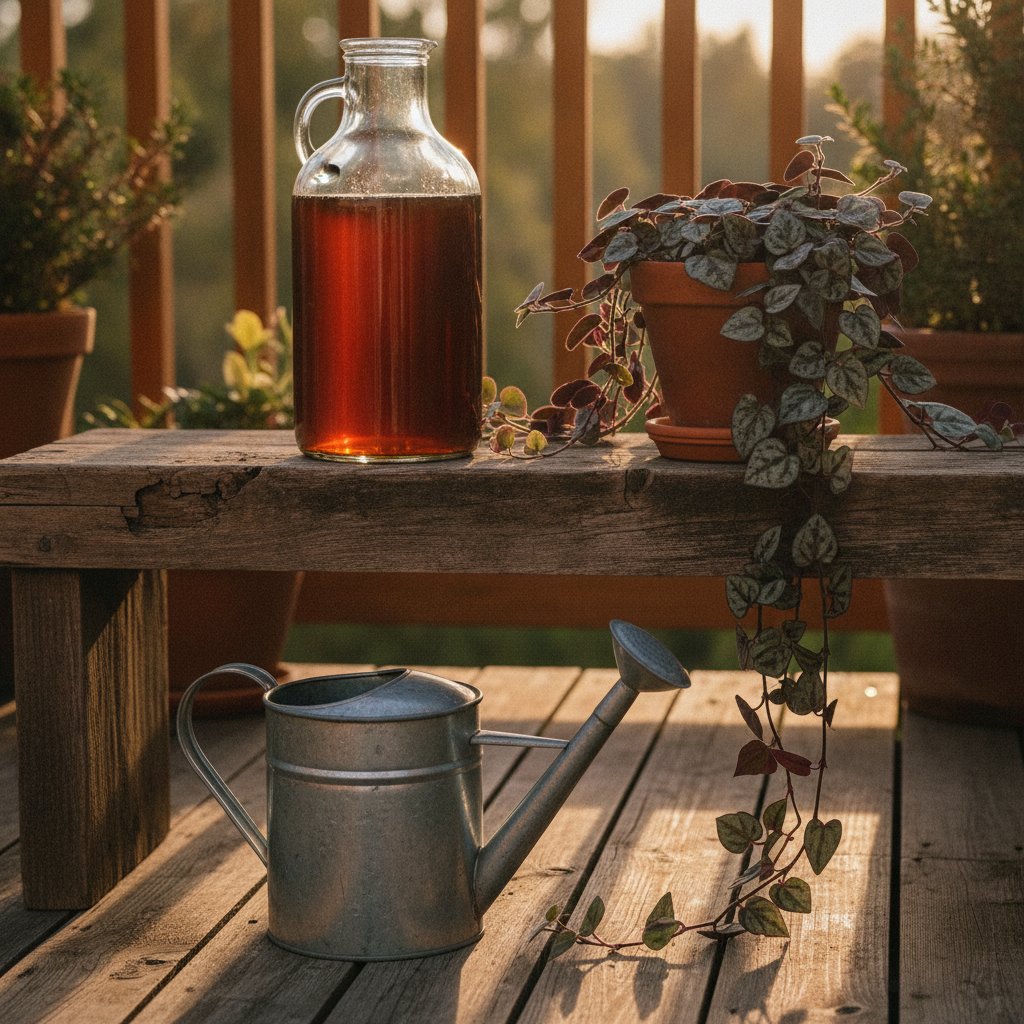
Always feed onto already-moist soil rather than dry mix, as concentrated fertiliser drawn straight into dry roots can scorch them. If you prefer an organic approach, a well-diluted seaweed feed or a weak compost tea works well and gently improves soil life at the same time. Watch for the tell-tale signs of overfeeding, which include a white crust of mineral salts on the soil surface or pot rim and brown, burnt leaf tips. If these appear, flush the pot thoroughly with plain water and hold off feeding until the plant recovers.
Stop feeding altogether from autumn to late winter. In the short, dim days the plant is barely growing and cannot use the extra nutrients, so continued feeding simply builds up salts in the soil. Resume in spring when you see fresh growth returning, which is the plant’s own signal that its appetite has come back.
Propagation
If this plant has a party trick, it is how easily it propagates. Purple Swedish ivy roots from stem cuttings with almost comical reliability, and every session of pruning becomes a chance to make more plants or to bulk up the parent for a fuller look. The best time is spring or summer, when warmth and light drive rapid rooting, but a warm windowsill will produce results at any time of year.
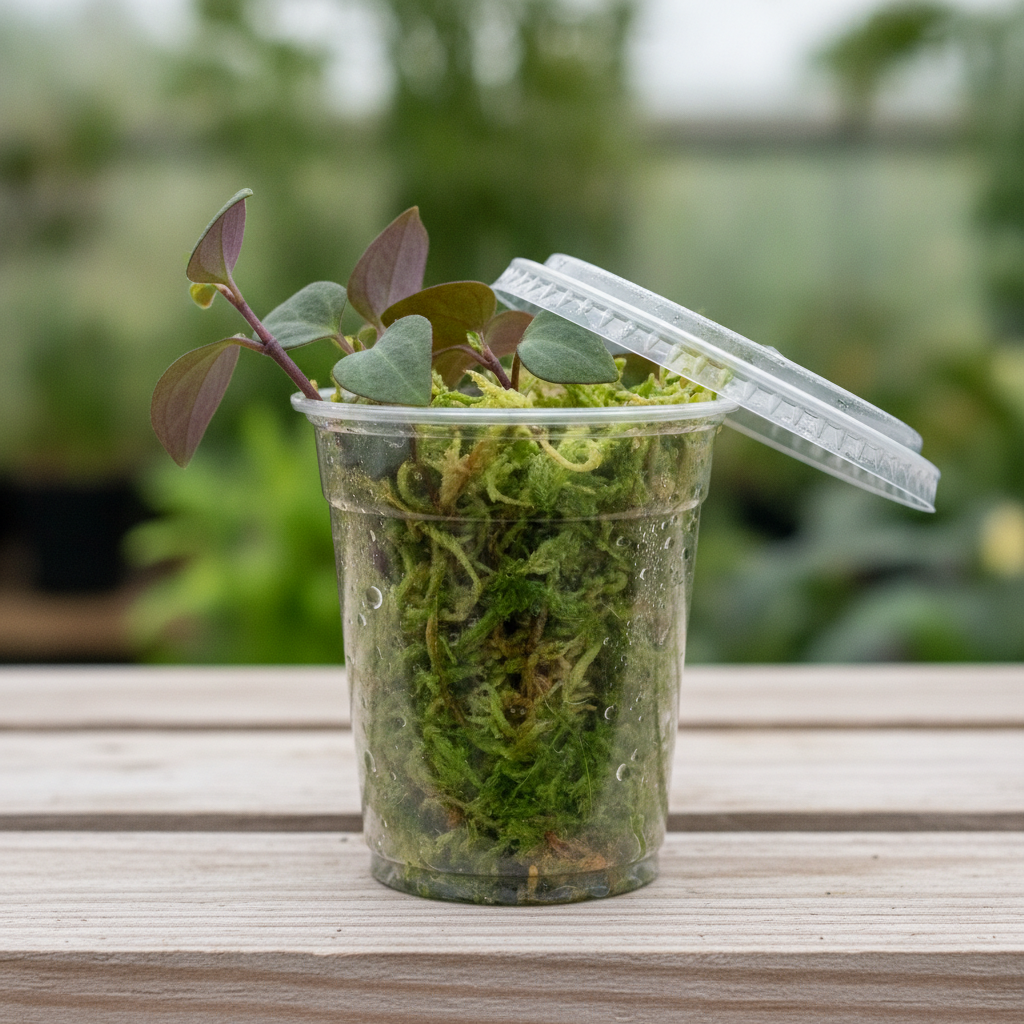
To take cuttings, follow these steps:
- Using clean scissors, cut a healthy stem tip 8 to 12 cm (3 to 5 in) long, snipping just below a node, the small swelling where leaves join the stem.
- Strip the leaves from the lowest one or two nodes, leaving a bare section of stem, as these nodes are where new roots will form.
- Set the cutting to root in one of three ways: stand it in a jar of water, nestle it into damp sphagnum moss in a covered container, or push it directly into moist, free-draining potting mix.
- Keep the cutting warm and in bright indirect light, topping up water or misting the moss so it never dries out.
- Roots typically appear within one to two weeks. Once water or moss roots reach 3 to 4 cm (1.5 in), pot the cutting into soil and keep it slightly moister than usual for the first fortnight while it establishes.
For the fullest results, root several cuttings together in a single pot rather than one at a time. A cluster of three to five cuttings fills out into a lush, bushy plant far quicker than a lone stem, and because the parent plant regrows so readily from where you cut, you lose nothing by being generous. Cuttings rooted directly in soil tend to transition most smoothly, as they never have to adjust from soft water roots to soil roots, though water rooting is the more entertaining method to watch.
Pests and problems
Purple Swedish ivy is not especially pest-prone, and its aromatic foliage seems to deter some insects, but no houseplant is immune. The pests most likely to appear are mealybugs, which look like small tufts of white cotton tucked into leaf axils and along stems; aphids, which cluster on soft new growth; spider mites, which announce themselves with fine webbing and a stippled, dusty look to the leaves in hot dry air; and whitefly, tiny white insects that lift off in a cloud when the plant is disturbed. Fungus gnats may also breed in soil that is kept too wet.
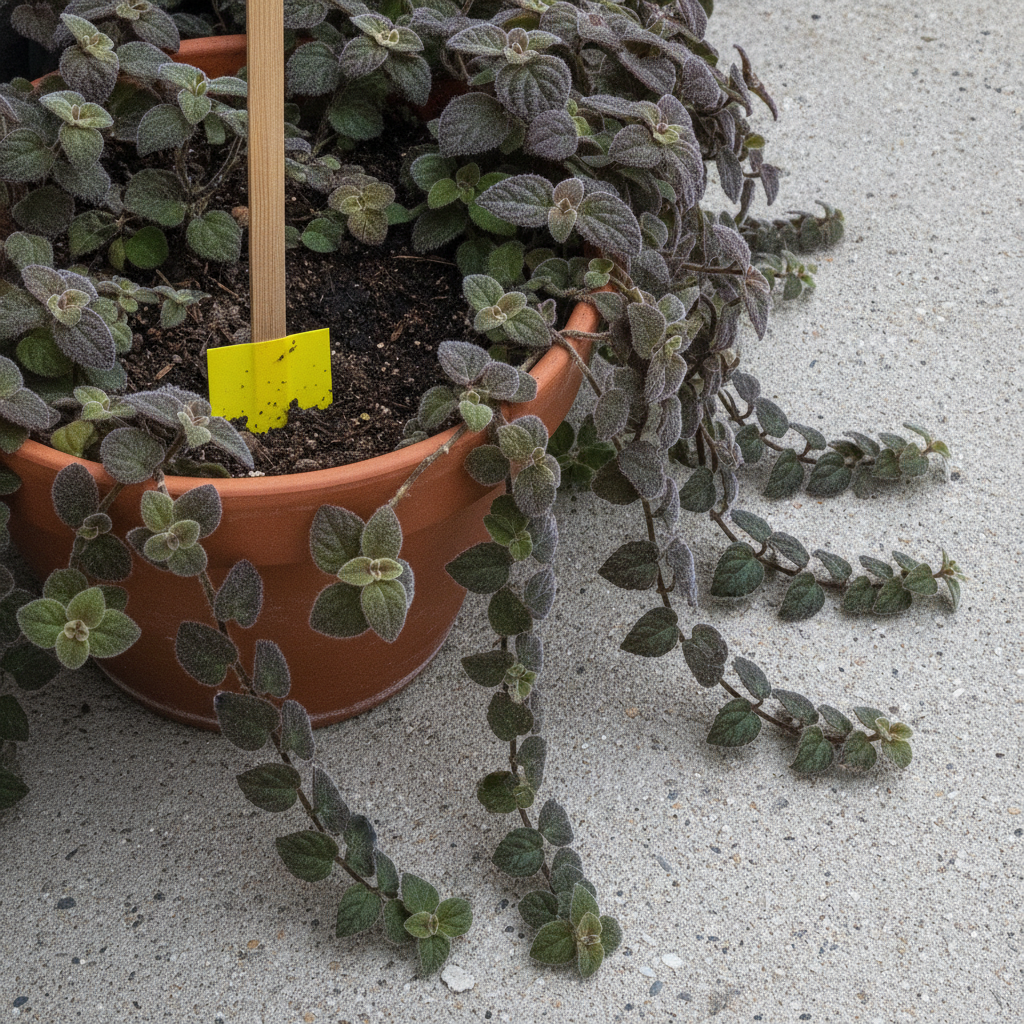
The best defence is a habit of looking. Inspect the undersides of leaves and the leaf joints whenever you water, and deal with any newcomers early, while numbers are still small. For light infestations, wiping the foliage with a cloth dipped in soapy water, or dabbing individual mealybugs with a cotton bud moistened in dilute isopropyl alcohol, is often enough. For anything more persistent, treat the whole plant with an insecticidal soap or a diluted neem oil spray, repeating every week or so until the problem clears. Yellow sticky traps pushed into the soil monitor and reduce flying pests such as whitefly and fungus gnats.
Most non-pest problems trace back to watering and light. Yellowing, mushy lower leaves usually mean the soil has stayed too wet, while crisp brown edges and sudden wilting point to it drying out too far. Pale, leggy, washed-out growth is a plea for more light, and bleached or scorched patches mean the plant is getting too much direct sun. Because each of these has a clear cause, purple Swedish ivy is one of the easier plants to diagnose: read the symptom, adjust the condition behind it, and the plant recovers quickly thanks to its natural vigour.
Warning — Isolate new arrivals: Whenever you bring home a new plant, keep it apart from your collection for a couple of weeks and check it over. Most pest outbreaks begin with a single hitchhiker on a newly bought plant, and a short quarantine stops a small problem becoming a shelf-wide one.
Varieties
The name Swedish ivy is applied loosely to several related trailing plectranthus, so it helps to know what you are actually holding. True purple Swedish ivy, Plectranthus purpuratus, is defined by the intense purple on the undersides of its leaves and on its stems. Its close cousin, the plain green Swedish ivy (Plectranthus verticillatus), shares the same habit and care but lacks the purple colouring, while the popular Plectranthus hybrid ‘Mona Lavender’ is a larger, more upright plant grown chiefly for its lavender flower spikes. The two most commonly encountered forms of the purple species itself are shown below.
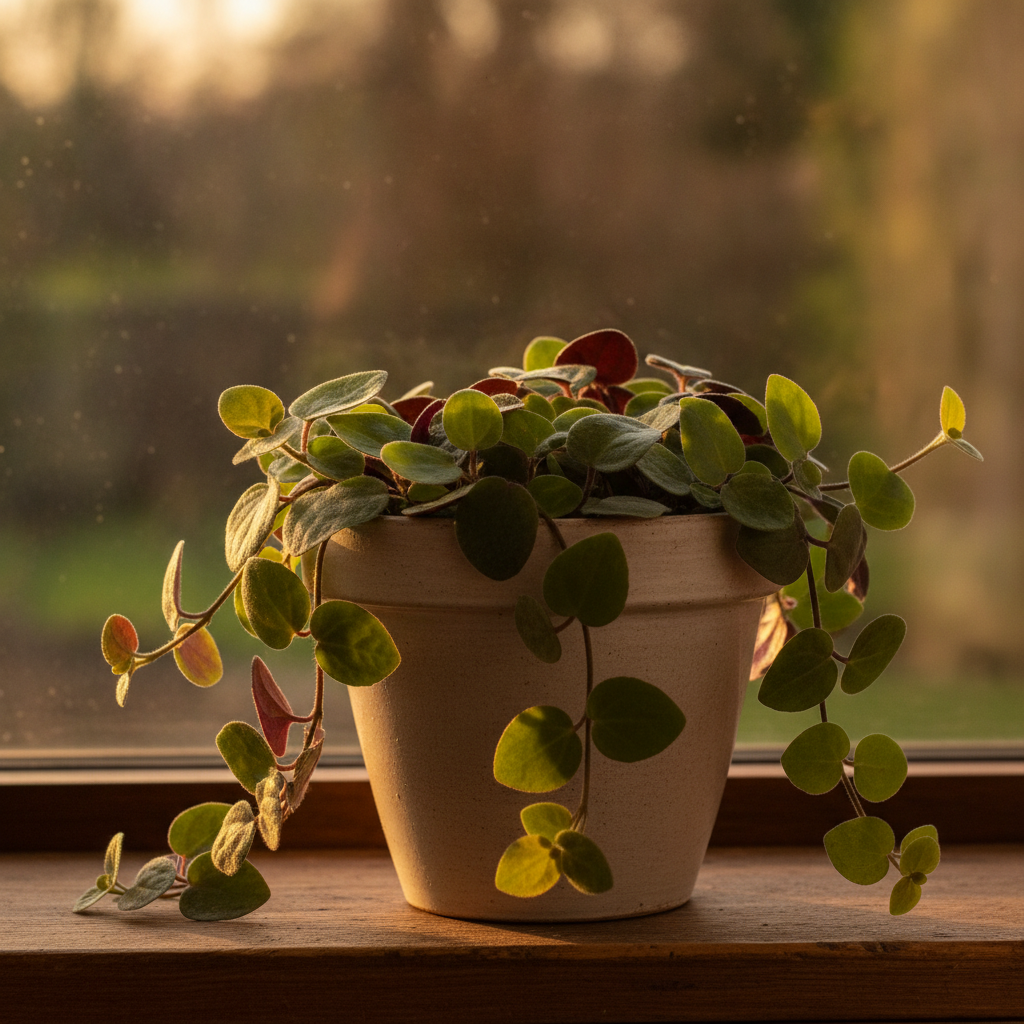
‘Purpuratus’ (the classic form) is the plant most people mean by purple Swedish ivy. Its velvety mid-green leaves flush an intense burgundy-purple beneath, a colour that strengthens the brighter you grow it. This is the most vigorous and widely sold form and the one to choose for maximum contrast.
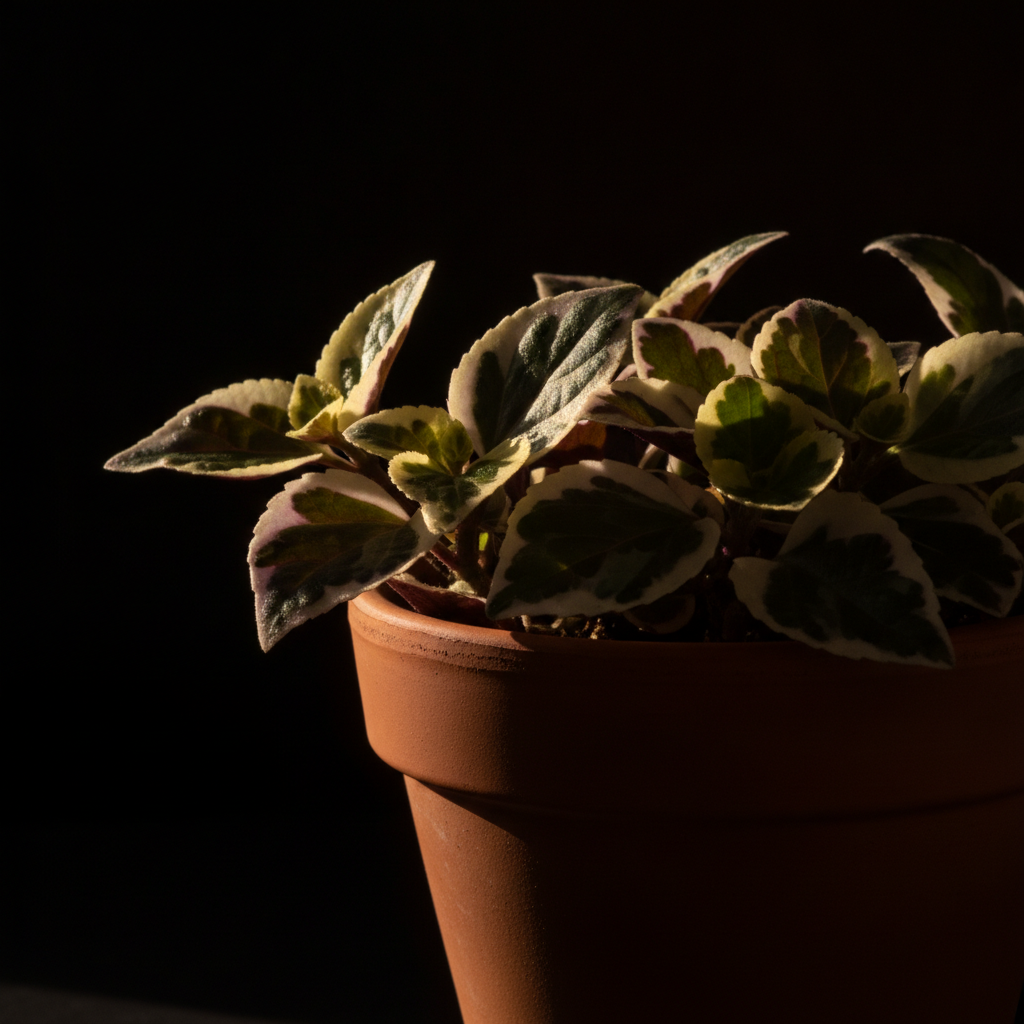
Variegated purple Swedish ivy is a scarcer selection whose leaves are irregularly edged and splashed with creamy white, the green centres and purple undersides still clearly visible. The variegation makes it a striking novelty, though the reduced chlorophyll means it grows a little more slowly and needs consistently bright light to keep its patterning crisp.
Frequently asked questions
Why is my purple Swedish ivy not purple?
Almost always the answer is light. The purple pigment develops in response to bright conditions, so a plant in a dim corner produces flat green leaves with only a faint purple wash beneath. Move it to a brighter spot with some gentle direct sun and the colour will return within a few weeks of new growth.
Is purple Swedish ivy toxic to cats and dogs?
It is generally regarded as non-toxic and does not appear on the major lists of plants dangerous to cats and dogs, which is part of its appeal in pet homes. That said, the leaves are strongly aromatic and no plant is meant to be eaten, so it is sensible to discourage nibbling and to contact a vet if a pet consumes a large amount.
Why has my plant gone leggy and bare in the middle?
Legginess comes from too little light combined with a lack of pruning. Stems reach toward the window, stretch, and shed their oldest leaves, leaving a bare centre. The cure is to move the plant brighter and to prune hard: cut the long stems back by half or more, and the plant will branch out from the cut points into a much fuller shape. Root the trimmings and add them back to the pot for an instant boost.
Does purple Swedish ivy flower?
Yes. In good light a mature plant produces slender spikes of small tubular flowers in pale mauve to white, held above the foliage. The blooms are modest rather than showy, and many growers pinch off the flower spikes to keep the plant’s energy directed into its foliage, which is the real attraction.
How often should I repot?
Every one to two years is typical, or sooner if roots are circling the pot and escaping the drainage holes. Spring is the best time. Because the plant grows so fast and roots so easily, many people skip formal repotting altogether and instead refresh the display each year by taking cuttings and starting a new, dense potful from scratch.
Can I grow it outdoors?
In a warm, frost-free climate it makes an excellent outdoor trailing plant for shaded to partly sunny spots, in beds, baskets or containers. In cooler regions treat it as a summer visitor: move it outside once nights are reliably warm, keep it out of scorching midday sun, and bring it back indoors well before temperatures drop toward 10 degrees C (50 degrees F), as it has no tolerance for frost.






