
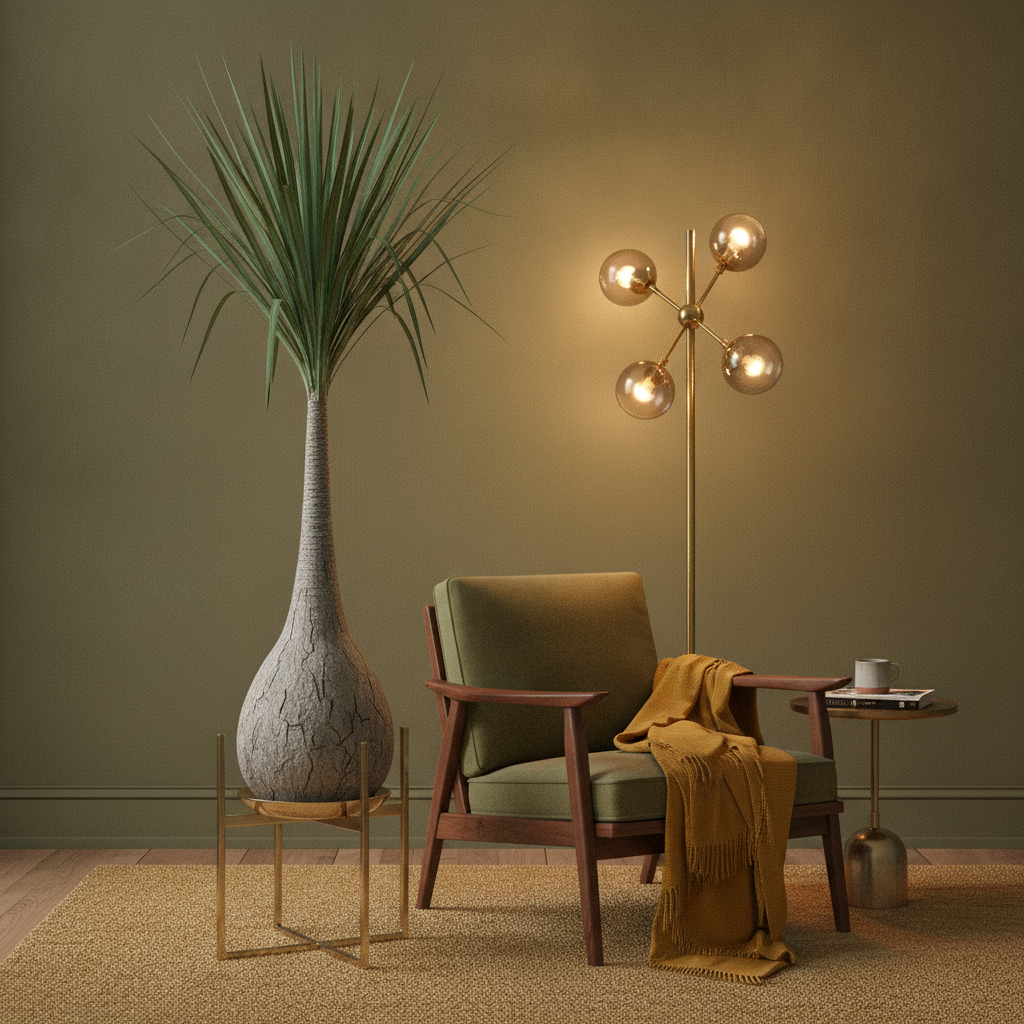
Few houseplants carry their biography so plainly as the Ponytail Beaucarnea, a plant whose swollen, bottle-like base looks less like a pot plant and more like a piece of desert sculpture. Known botanically as Beaucarnea stricta and often sold as the Mexican Ponytail Palm, it is not a palm at all but a member of the asparagus family, native to the hot, rocky drylands of Oaxaca and Puebla in southern Mexico. That bulbous grey caudex is a water tank, engineered over millions of years to carry the plant through months of drought, and it is the single most important thing to understand about keeping one alive indoors.
Where its better-known relative Beaucarnea recurvata throws out long, soft, cascading leaves that spill downward like a fountain, B. stricta holds itself more upright and rigid, with stiffer, straighter, blue-green strap-like leaves and finely toothed margins. It has a reputation as one of the most forgiving plants you can own, and that reputation is largely deserved. But there is a meaningful gap between a Ponytail Beaucarnea that merely survives on a windowsill for years and one that actively thrives, thickens its caudex and pushes fresh flushes of growth. This guide covers everything you need to close that gap, from the light it craves to the watering rhythm that will make or break it.
Contents
- Quick Reference
- Why Ponytail Beaucarnea Makes an Excellent Houseplant
- Light Requirements
- Watering & Humidity
- Soil, Potting & Repotting
- Fertilising
- Propagation
- Pests & Diseases
- Popular Varieties
- Frequently Asked Questions
Quick Reference: Ponytail Beaucarnea at a Glance
| Light | Bright light with several hours of direct sun; the more the better |
| Watering | Soak thoroughly, then let the soil dry out completely; roughly every 2 to 3 weeks in summer, monthly or less in winter |
| Temperature | 18 to 27 degrees Celsius (64 to 81 Fahrenheit); keep above 10 degrees Celsius (50 Fahrenheit) |
| Humidity | Low to average; tolerates dry indoor air with ease |
| Fertiliser | Light feeding once a month in spring and summer only |
| Toxicity | Non-toxic to cats, dogs and humans |
Why Ponytail Beaucarnea Makes an Excellent Houseplant
The Ponytail Beaucarnea earns its place in a home the way few plants can: it asks for almost nothing and rewards neglect. That water-storing caudex means it can be left unwatered for weeks without complaint, making it the ideal plant for frequent travellers, forgetful waterers, or anyone who has killed a string of thirstier plants and lost confidence. It thrives on the two things most houseplant owners struggle to provide too much of anyway, bright light and dry soil, and it actively resents fussing.
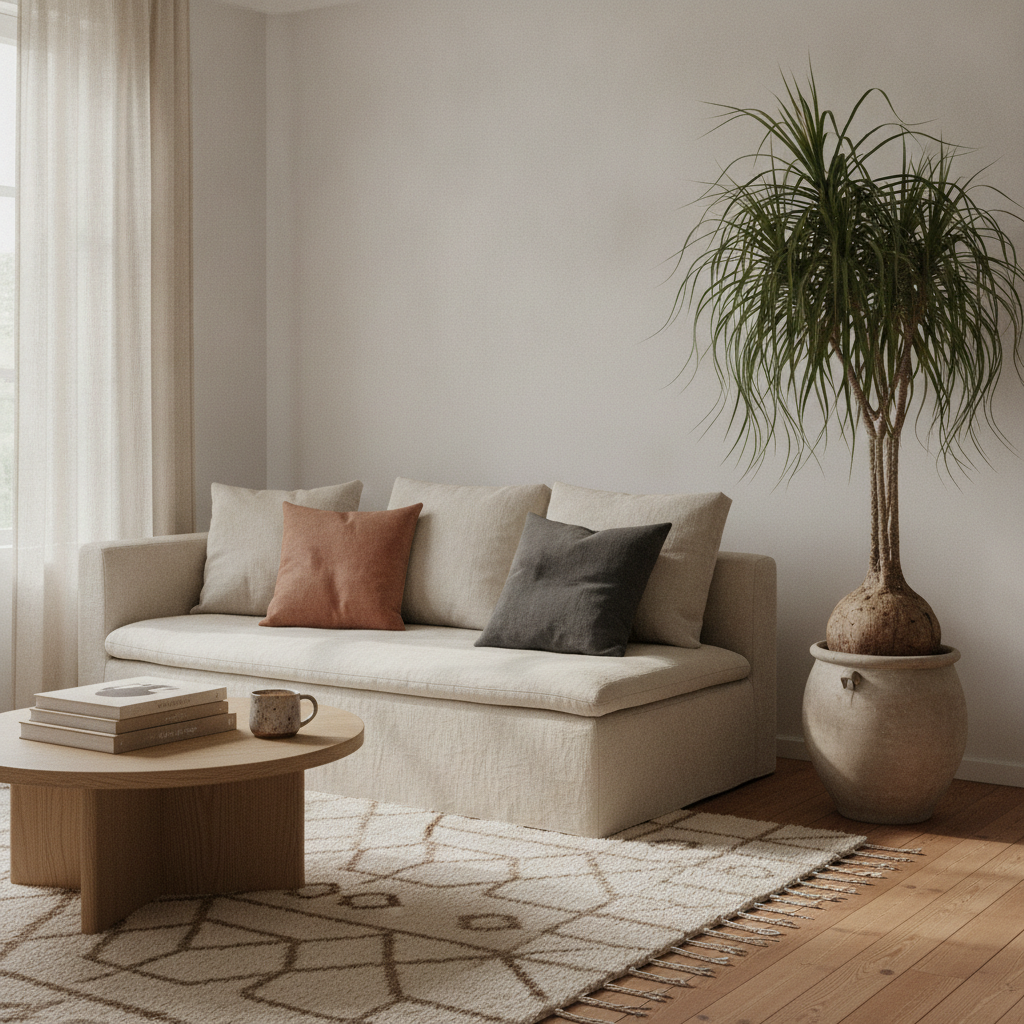
Beyond its easy temperament, it is a genuinely striking specimen. The contrast between the fat, cracked-bark base and the fine spray of stiff foliage gives it an architectural presence that works as a living sculpture on a side table or, in a larger specimen, as a floor plant. It is exceptionally long-lived, with plants happily persisting for decades and slowly thickening year on year, so a Ponytail Beaucarnea is less a seasonal purchase than a long-term companion. And because it is non-toxic, it can share a room with curious cats, dogs and children without concern.
Important — Toxicity: The Ponytail Beaucarnea is listed as non-toxic to cats, dogs and horses by the ASPCA, and it is not poisonous to humans. The stiff leaf edges are finely serrated, however, so a determined pet chewing on the foliage may get a mild scratch rather than a stomach upset. It is a safe choice for pet households.
Light Requirements
If there is one area where a Ponytail Beaucarnea will quietly decline rather than dramatically die, it is light. This is a full-sun desert plant, and while it will tolerate moderate indoor light for a surprisingly long time by drawing on the reserves in its caudex, it will never truly flourish there. Insufficient light produces weak, floppy, over-stretched leaves and a base that fails to thicken. Give it as much light as your home can offer.
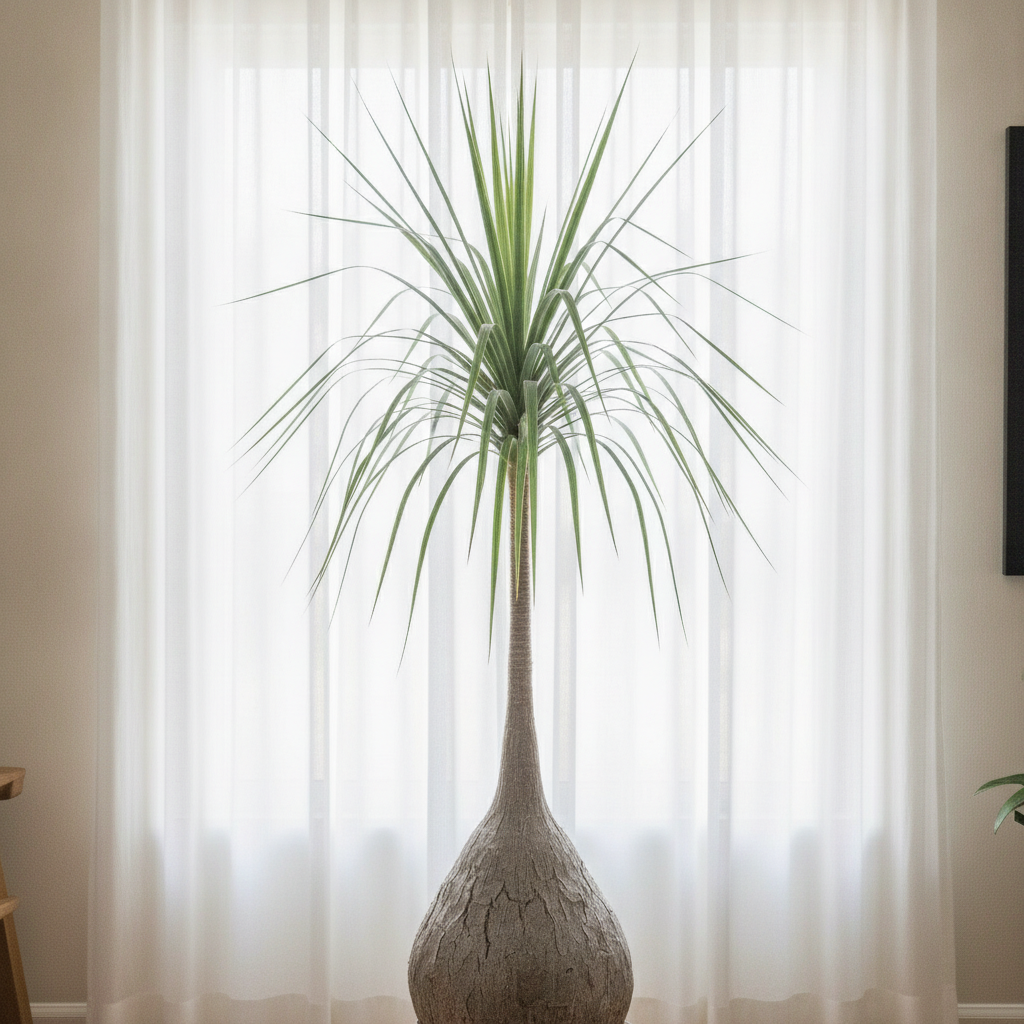
The ideal position is directly in or beside your brightest window, where it receives at least four to six hours of direct sun each day. Unlike many houseplants that scorch in strong light, the Ponytail Beaucarnea welcomes it, and a spot on a sunny sill or in a conservatory will bring out the tightest, most compact growth and the healthiest foliage colour.
Light Levels Explained
Understanding how different light intensities translate to positions in a real home helps you place the plant well. The table below summarises what to expect at each level, measured roughly in lux for reference.
| Light Category | Approx. Level | Typical Location | Outcome |
|---|---|---|---|
| Direct sun | 20,000 lux and above | On a south or west sill | Ideal; compact growth, thick caudex |
| Bright indirect | 10,000 to 20,000 lux | Just back from a bright window | Good; steady but slower growth |
| Medium | 5,000 to 10,000 lux | A few metres from a window | Tolerated; leaves may stretch |
| Low | 1,000 to 5,000 lux | Interior wall, north room | Survival only; weak, floppy foliage |
| Very low | Below 1,000 lux | Hallway, windowless corner | Slow decline; not recommended |
Window Orientation and Placement
South-facing window: The best possible spot in the northern hemisphere. Place the plant right on or beside the sill to capture the full day of direct sun. This is where a Ponytail Beaucarnea looks its best and grows most compactly.
East-facing window: A good option, delivering several hours of gentler morning sun. Growth will be healthy though slightly slower than in a south window, and the plant will hold its form well.
West-facing window: Also excellent, offering strong afternoon sun. The intensity of late-day light suits this plant perfectly, so a west sill is very nearly as good as a south one.
North-facing window: The weakest choice. A north window rarely supplies enough intensity for vigorous growth, and a plant kept here long-term will stretch and weaken. If a north window is your only option, consider supplementing with a grow light.
Pro Tip — Rotate for Symmetry: Because the foliage reaches toward the strongest light, give the plant a quarter turn every week or two. This keeps the crown growing evenly on all sides rather than leaning permanently toward the glass.
How Light Affects Growth and Form
Light does more than keep this plant alive; it dictates its shape. In strong light the leaves stay short, stiff and densely packed, and the caudex swells more readily because the plant is photosynthesising at full capacity. In dim conditions the opposite happens: leaves elongate and soften as the plant reaches for light, the crown becomes sparse, and the whole plant takes on a tired, drawn-out look that no amount of watering or feeding will correct. Light is the lever that controls form.
Warning — Sudden Sun Exposure: Although this plant loves direct sun, a specimen that has spent months in low light can still scorch if moved abruptly into fierce midday summer sun. Acclimatise it over a week or two, increasing exposure gradually, to let the leaves adjust and avoid pale, bleached patches.
Artificial Lighting
Where natural light falls short, a full-spectrum LED grow light is an effective substitute. Position it 20 to 30 centimetres (8 to 12 inches) above the crown and run it for 10 to 12 hours a day. Because this is such a high-light plant, artificial lighting is genuinely worthwhile in a dim room or through the darkest winter months, and it will hold form far better than a plant left to struggle on ambient light alone.
Seasonal Adjustments
Light intensity drops sharply indoors during autumn and winter, and this is the season when a marginal position becomes a poor one. Move the plant to your brightest available window as the days shorten, and clean the leaves and the glass so nothing dims the light further. As spring returns and the sun climbs higher, you can ease it back to its summer position and reintroduce stronger midday sun gradually.
Watering & Humidity
Watering is where most Ponytail Beaucarnea plants are lost, and almost always by kindness rather than neglect. The caudex holds a substantial reserve of water, so the plant simply does not need frequent watering, and giving it more than it can use is the fastest route to root rot. The governing principle is simple: water thoroughly, then wait until the soil is bone dry before watering again.
When to Water
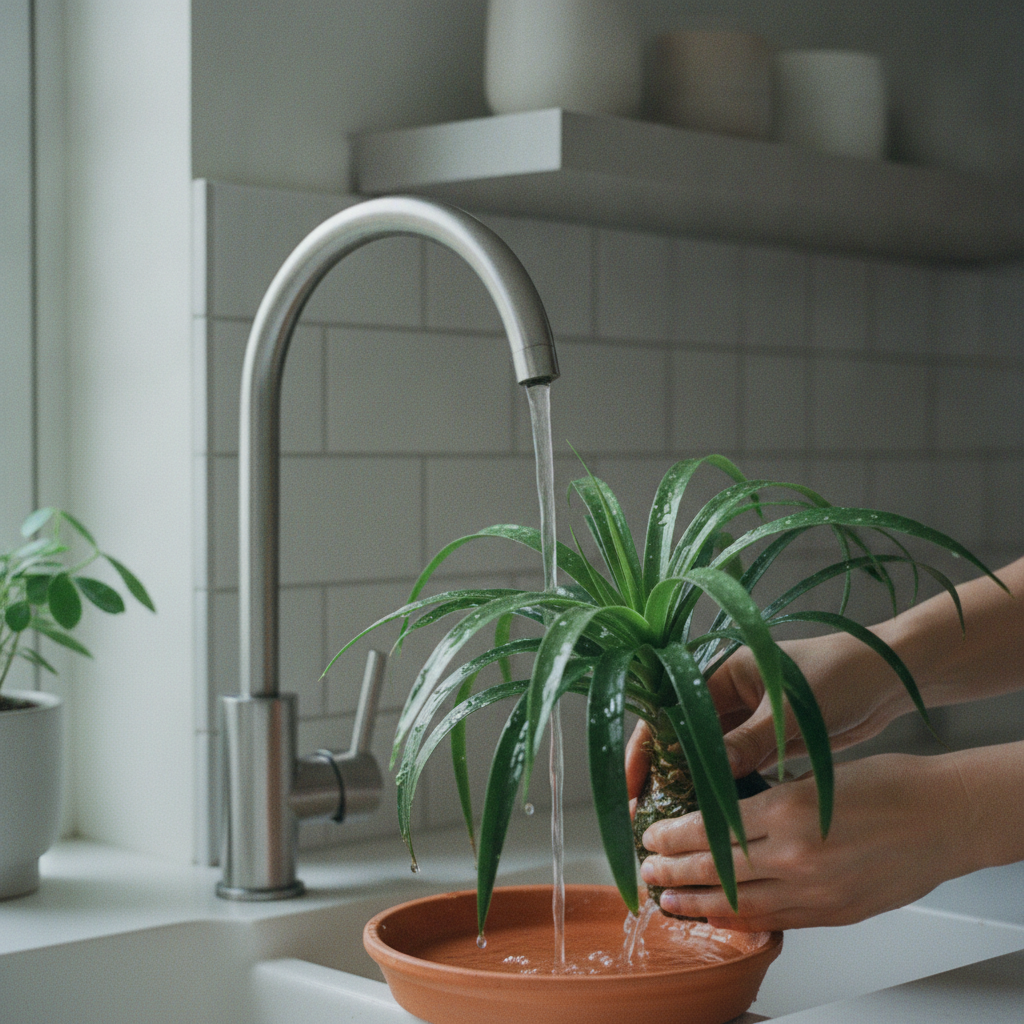
Rather than watering on a fixed calendar, check the soil. Push a finger several centimetres into the mix, or lift the pot to feel its weight; a dry pot is noticeably light. Only water when the soil is completely dry all the way through. In practice this tends to mean roughly every two to three weeks during the warm growing season, stretching to once a month or less in winter.
The exact interval depends on your conditions. A plant in strong summer light and a small terracotta pot will dry out far faster than one in a large plastic pot in a cooler, dimmer room. Always let the plant and the soil tell you when to water rather than following a rigid schedule, and when in doubt, wait a few more days. This plant is far more forgiving of being too dry than too wet.
Pro Tip — The Weight Test: Learn the difference between the heft of a freshly watered pot and a fully dry one. Lifting the pot becomes the most reliable watering gauge you have, more dependable than any finger test or moisture meter, once you know what dry feels like.
How to Water Correctly
- Confirm the soil is completely dry throughout before you begin.
- Water slowly and thoroughly at the soil surface, avoiding the crown of the caudex where water can pool and rot the base.
- Continue until water runs freely from the drainage holes, which ensures the whole root ball is moistened.
- Let the pot drain fully in a sink or tray for several minutes.
- Empty any saucer completely so the pot never stands in water.
- Return the plant to its spot and do not water again until the mix is bone dry.
Signs of Overwatering vs. Underwatering
| Symptom | Overwatering | Underwatering |
|---|---|---|
| Leaf colour | Yellowing, often starting at the base | Browning, crisp leaf tips |
| Leaf texture | Soft, limp, translucent | Dry, papery, brittle |
| Caudex | Soft, spongy, wrinkled or squishy | Firm but shrunken and deeply wrinkled |
| Soil | Stays wet for a long time, may smell sour | Bone dry, pulling away from the pot |
| Stem base | Blackening or mushy rot at the base | Firm, simply dehydrated |
A useful distinction: a slightly shrunken, wrinkled caudex is a sign of thirst and plumps back up quickly after a good soak, whereas a soft, squishy caudex signals rot and is a far more serious problem. When you are unsure which way a plant is failing, err toward dryness.
Warning — Root Rot: A soft, spongy base and a sour smell from the soil mean rot has set in. Unpot the plant immediately, cut away any blackened or mushy roots and caudex tissue with a sterile blade, let the wounds callus for a day or two, and repot into fresh dry gritty mix. Caught early, the plant can often be saved; left standing in wet soil, it will not.
Humidity Requirements
Here the Ponytail Beaucarnea makes life easy. As a plant of arid climates, it is perfectly content in the dry air of a centrally heated or air-conditioned home and needs no humidity provision whatsoever. Average household humidity of 30 to 50 percent is ideal, and it will cope happily with even lower levels.
You are unlikely to see humidity-related problems on this plant, but crisp brown leaf tips, if they appear, are more often a sign of underwatering, mineral build-up, or fluoride in tap water than of dry air. There is no benefit in raising humidity for a Beaucarnea, and doing so can actually work against it by slowing evaporation from the soil.
Avoid the common instinct to mist this plant. Misting does nothing useful for a desert species and, if water settles into the crown, it can encourage rot at exactly the point where the plant is most vulnerable. Keep the foliage dry and let the plant enjoy the arid conditions it evolved for.
Water Quality
The Ponytail Beaucarnea is not especially fussy about water, but because it is watered so infrequently, minerals and salts have plenty of time to concentrate in the soil between waterings. If your tap water is very hard or heavily chlorinated, and you notice persistent leaf-tip browning, switching to filtered or rainwater can help. For most homes, ordinary tap water left to stand for an hour is perfectly adequate.
Soil, Potting & Repotting
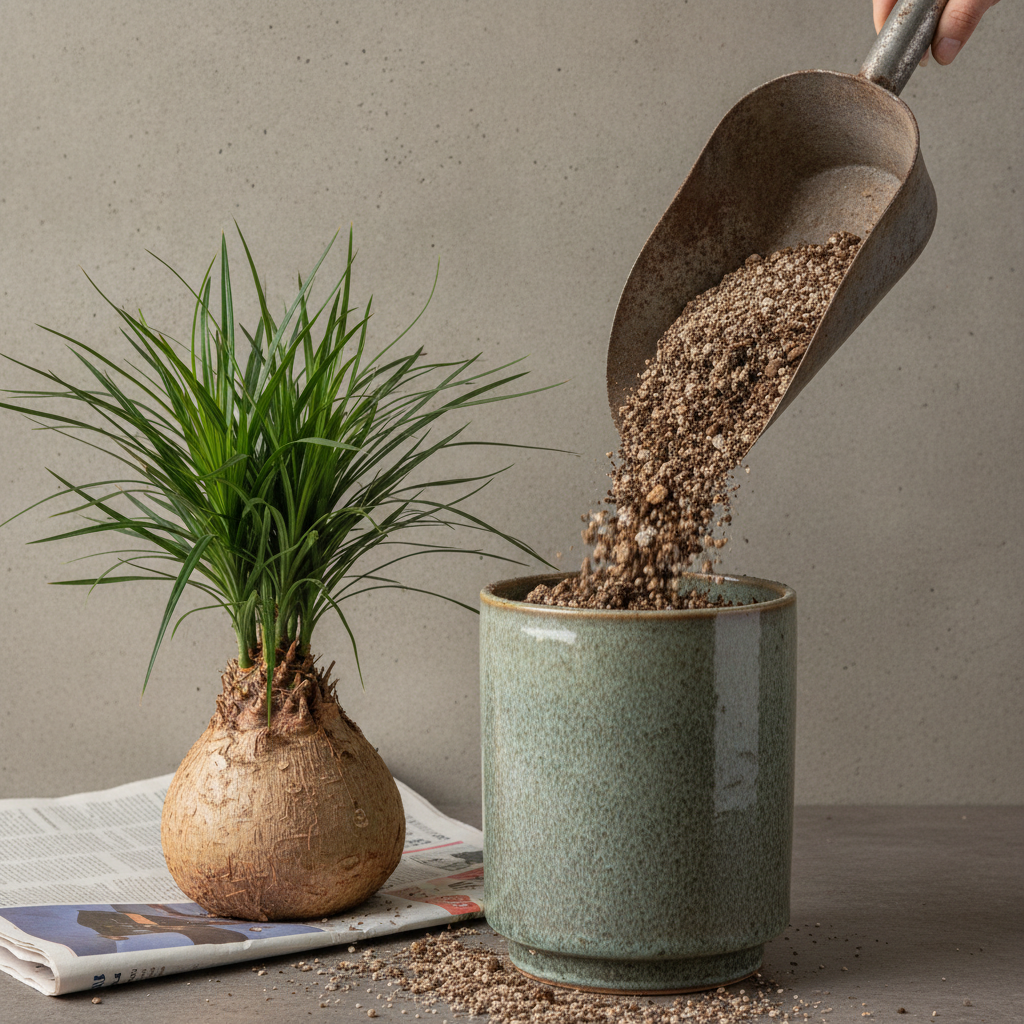
Get the soil right and half the battle with a Ponytail Beaucarnea is won, because the correct mix makes overwatering almost impossible to sustain. This plant needs a fast-draining, gritty, low-organic substrate that holds very little water and lets air reach the roots. A dense, moisture-retentive potting compost is the single most common mistake, trapping water around the base and inviting rot.
Ideal Soil Composition
The goal is a mix that drains within seconds of watering and dries out fully between soakings. A dedicated cactus and succulent compost is a good starting point, but most are improved by adding extra grit or perlite to sharpen the drainage further. The proportions below give a reliable, free-draining blend.
| Component | Proportion | Function |
|---|---|---|
| Cactus or succulent compost | Half | Provides structure and modest nutrients |
| Horticultural grit or coarse sand | One quarter | Adds weight and rapid drainage |
| Perlite or pumice | One quarter | Keeps the mix open and aerated |
The Ponytail Beaucarnea prefers a neutral to slightly acidic soil, in the region of pH 6.0 to 7.0, which most cactus mixes fall comfortably within. Precise pH management is unnecessary for this tolerant plant; the priority is always drainage over chemistry.
Pro Tip — Quick Mix Recipe: Two parts cactus compost, one part perlite and one part coarse grit makes a near-perfect Beaucarnea mix. If you can squeeze the freshly watered mix in your hand and it falls apart rather than holding a wet clump, you have the drainage right.
Choosing the Right Pot
Pot choice has an outsized effect on this plant because it governs how quickly the soil dries. The wrong pot can undo even a perfect soil mix.
Drainage holes are non-negotiable. Never plant a Ponytail Beaucarnea in a pot without drainage. Standing water at the base of the caudex is fatal, and no watering discipline can compensate for a pot that cannot drain. If you love a decorative cachepot, keep the plant in a plain draining nursery pot and slip it inside.
Pot material: Terracotta is the ideal material here. Its porous walls wick moisture from the soil and allow it to evaporate, helping the mix dry quickly and giving the roots a margin of safety against overwatering. Glazed ceramic and plastic both work but hold moisture longer, so lean toward terracotta if you tend to water generously.
Pot size: Choose a pot only slightly larger than the caudex. This plant likes to be snug, and an oversized pot holds a large volume of slow-drying soil that stays wet around the roots for too long. A tight fit also helps keep the plant stable, as the top growth can become top-heavy relative to the root system.
When to Repot
The Ponytail Beaucarnea is a slow grower and positively prefers to be pot-bound, so it needs repotting only infrequently, typically every three to four years or when the caudex has filled the pot and is pressing against the sides. Repot in spring at the start of the growing season, and resist the urge to move up more than one pot size at a time. A plant that is comfortably snug is a happy plant.
How to Repot: Step-by-Step
- Water lightly a day or two beforehand so the root ball holds together, then let it drain.
- Ease the plant out by tipping the pot and supporting the caudex, never by pulling on the leaves.
- Gently tease away old soil from the roots and inspect them, trimming any that are dark, soft or rotten with a sterile blade.
- Add a layer of fresh gritty mix to the base of a pot one size larger, positioning the plant at the same depth as before.
- Fill around the roots with mix, keeping the caudex sitting proud of the soil line rather than buried.
- Firm gently and settle the plant, but do not overpack the mix, as air pockets are less harmful than compaction.
- Wait a week before watering to let any disturbed roots callus and heal, reducing the risk of rot.
Warning — Transplant Shock: Keep the caudex above the soil line when repotting. Burying the swollen base deeper than it sat before traps moisture against it and is a frequent cause of rot in freshly repotted plants. When in doubt, plant a little high rather than a little low.
Fertilising
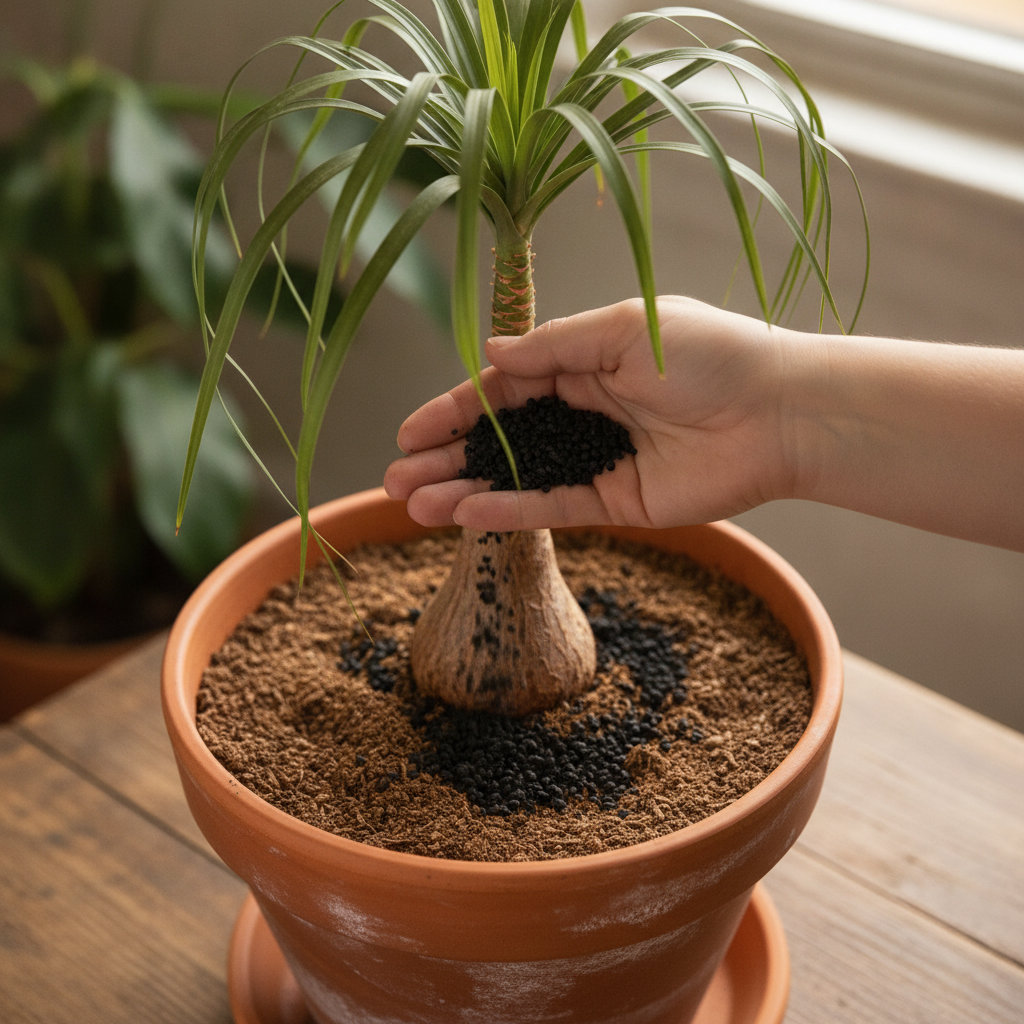
Feeding a Ponytail Beaucarnea is a matter of restraint. Adapted to poor, rocky desert soils, it needs very little supplementary nutrition, and heavy feeding does more harm than good by encouraging soft, weak growth and building up salts in the soil. A light hand produces the best results.
Think of fertiliser as a gentle seasonal boost rather than a regular necessity. A well-potted plant in fresh mix will get much of what it needs from the soil, and many owners feed only once or twice a year with no ill effect at all.
Understanding Plant Nutrients
Fertilisers are labelled with an NPK ratio, standing for nitrogen, phosphorus and potassium, the three nutrients plants use in the largest quantities. A balanced feed diluted well below its recommended strength suits this plant, but it helps to know what each element does and how a deficiency shows.
| Nutrient | Symbol | Primary Function | Deficiency Symptoms |
|---|---|---|---|
| Nitrogen | N | Leaf and stem growth | Pale, yellowing older leaves |
| Phosphorus | P | Root development and energy | Weak roots, stunted growth |
| Potassium | K | Overall vigour and water regulation | Browning leaf edges, weak stems |
| Calcium | Ca | Cell wall structure | Distorted new growth |
| Magnesium | Mg | Chlorophyll production | Yellowing between leaf veins |
| Iron | Fe | Chlorophyll and enzyme function | Yellowing on young leaves |
Types of Fertiliser
Liquid fertilisers: The easiest option to control, as you can dilute them heavily and apply only when the plant is actively growing. A balanced houseplant feed or a cactus-specific formula at half or quarter strength is ideal.
Slow-release granular: A small amount of slow-release feed mixed into the soil at repotting can supply gentle nutrition across the whole season with no further effort, which suits the low-maintenance nature of this plant.
Organic fertilisers: A light top-dressing of worm castings in spring is a mild, forgiving way to feed, releasing nutrients slowly and improving the soil without any risk of chemical burn.
Feeding Schedule
Feed only during the active growing season of spring and summer, roughly once a month, using a diluted balanced fertiliser. Stop feeding entirely in autumn and winter, when growth naturally slows and the plant cannot make use of the extra nutrients. Over a whole year, three or four light feeds are plenty.
Pro Tip — Less Is More: When it comes to feeding a Beaucarnea, it is always safer to underfeed than to overfeed. If you are unsure whether to feed at all, skip it. This plant grows perfectly well on very little and shows stress from excess far more readily than from scarcity.
How to Fertilise
- Dilute a balanced liquid fertiliser to half or quarter of the recommended strength.
- Water the plant with plain water first if the soil is bone dry, to protect the roots from a concentrated dose.
- Apply the diluted feed to the damp soil, avoiding the caudex and foliage.
- Let any excess drain away and never leave the pot standing in fertiliser solution.
- Return to plain water for the next several waterings before feeding again.
Warning — Salt Build-Up: Because this plant is watered so seldom, fertiliser salts can accumulate in the soil and scorch the roots, showing as brown leaf tips. Once or twice a year, flush the pot with plenty of plain water, letting it run freely through the drainage holes to leach out accumulated salts.
Propagation
Propagating a Ponytail Beaucarnea is a test of patience more than skill. Unlike the many houseplants that root readily from a cutting in a glass of water, this plant cannot be grown from a leaf or a stem section. It offers two realistic routes: separating the offsets, or pups, that form around the base of a mature plant, and growing from seed.
Of the two, offset division is by far the more practical for the home grower, giving a plant that is genetically identical to the parent and already partway grown. Seed is possible but very slow and rarely worthwhile unless you enjoy the long game. Either way, propagation is an occasional bonus rather than a reliable production line with this species.
Understanding Offsets
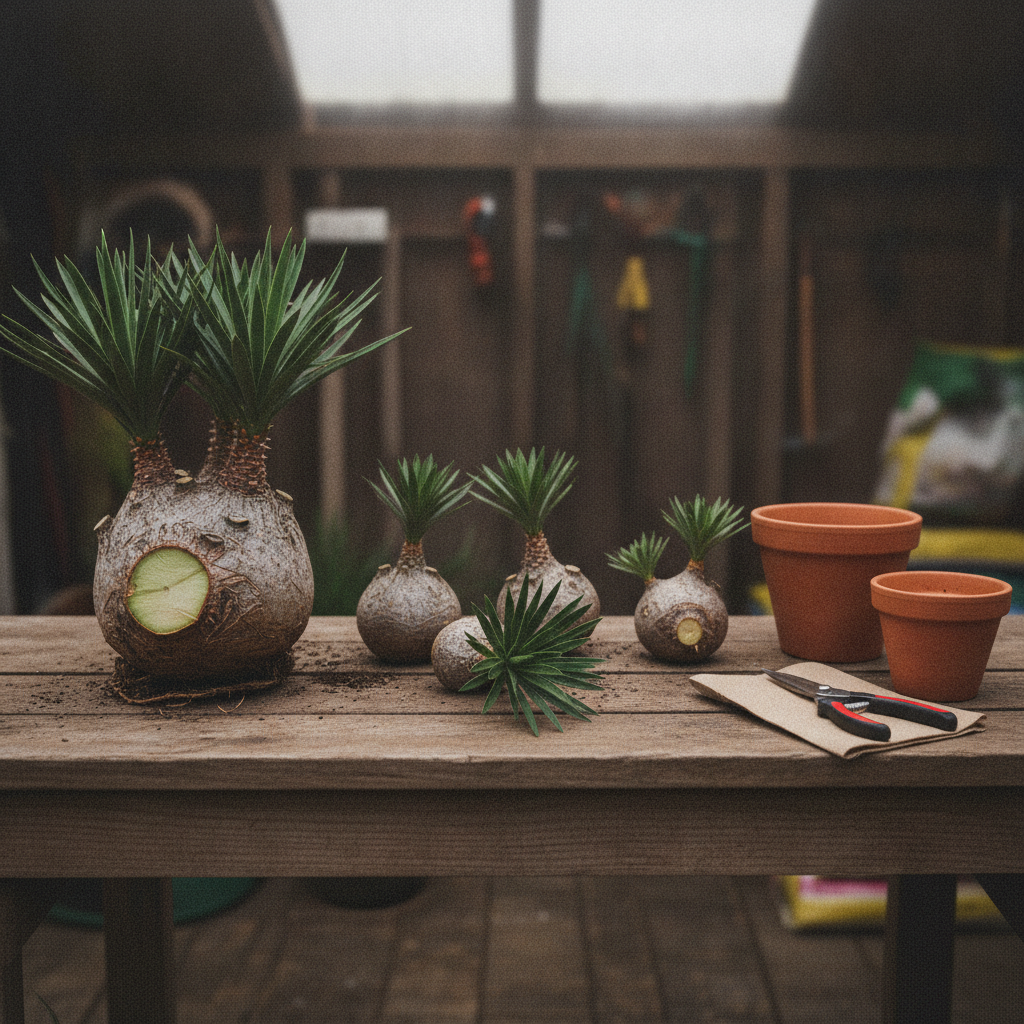
A healthy, established Ponytail Beaucarnea will, in time, produce small offsets around the base of its caudex. These pups are miniature versions of the parent, each capable of forming its own roots and eventually its own swollen base. They are the plant’s natural means of vegetative reproduction, and separating them is the simplest way to make new plants. Wait until an offset is at least 8 to 10 centimetres (3 to 4 inches) tall and has begun to develop its own roots before attempting to remove it.
Offset Division: Step-by-Step
The best time to divide offsets is in spring, when the plant is entering active growth and wounds heal fastest. Work with a clean, sharp blade and handle the pups gently.
- Unpot the parent plant so you can see where each offset joins the base.
- Locate an offset with its own roots and cut it cleanly away from the parent with a sterile knife, taking as many of its roots as possible.
- Let the cut surfaces of both the pup and the parent callus over in a dry, shaded spot for two to three days.
- Pot the offset into a small pot of dry, gritty cactus mix, just deep enough to hold it upright.
- Wait about a week before the first light watering, then water sparingly until you see new growth.
- Keep the young plant in bright light and treat it as a small adult once it is established.
Pro Tip — Let It Callus: The callusing step is not optional. Potting a freshly cut offset straight into moist soil almost guarantees rot at the wound. Giving the cut a few days to dry and seal over is the single biggest factor in success.
Growing From Seed: Step-by-Step
Seed propagation is a slower path but the only option if your plant produces no offsets. Fresh seed germinates best, and warmth is the key to success.
- Soak fresh seed in warm water for 24 hours to soften the coat and encourage germination.
- Sow onto the surface of a moist, gritty seed mix and cover very lightly.
- Keep the tray warm, around 21 to 27 degrees Celsius (70 to 81 Fahrenheit), and in bright indirect light.
- Maintain light, even moisture until germination, which can take several weeks to a few months.
- Once seedlings have a few leaves, begin letting the surface dry between waterings and grow them on slowly.
Troubleshooting Propagation
| Problem | Likely Cause | Solution |
|---|---|---|
| Offset rots after potting | Potted before callusing, or soil too wet | Let cuts callus and use dry gritty mix |
| Offset fails to root | Removed too young, with no roots of its own | Wait until the pup has visible roots before separating |
| Seed does not germinate | Old seed or insufficient warmth | Use fresh seed and provide steady bottom heat |
| Very slow progress | Normal for the species | Be patient; this is a naturally slow grower |
Pests & Diseases
The Ponytail Beaucarnea is remarkably resistant to pests and disease, another reason for its easy reputation. Its stiff, tough leaves are unappealing to many common invaders, and its dry-loving nature discourages the fungal problems that plague more moisture-hungry plants. Most trouble that does arise traces back to overwatering rather than to any pest.
That said, no houseplant is entirely immune, and stressed or crowded plants can attract sap-sucking insects. Regular inspection, especially of the leaf bases and undersides, catches problems while they are still easy to deal with.
Common Pests
Spider Mites (Tetranychus urticae)
These tiny arachnids thrive in warm, dry conditions and can appear on a Beaucarnea, showing as fine stippling on the leaves and delicate webbing between them. A heavy infestation gives the foliage a dusty, faded look.
Treatment: Wipe the leaves with a damp cloth to remove mites and webbing, then treat with insecticidal soap or a diluted neem oil spray, repeating weekly until they are gone. Improving air circulation helps prevent their return.
Mealybugs (Pseudococcus species)
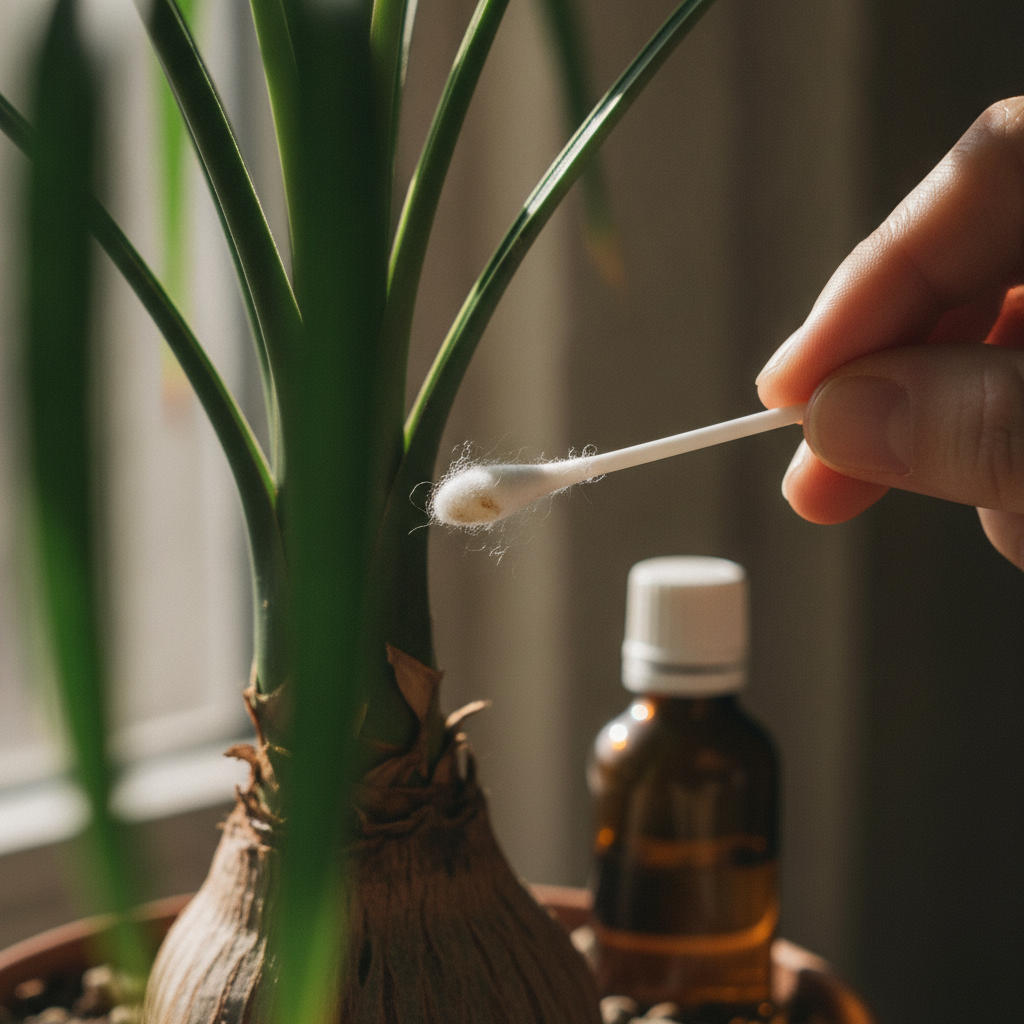
Mealybugs appear as small, white, cottony clusters tucked into the leaf bases and crevices around the crown, where they suck sap and weaken the plant. They can be surprisingly persistent in the sheltered folds of the foliage.
Treatment: Dab each insect directly with a cotton bud dipped in isopropyl alcohol, which kills them on contact. Follow up with insecticidal soap for larger outbreaks and inspect regularly, as they hide well.
Scale (Coccoidea species)
Scale insects show up as small, brown, immobile bumps along the leaves and stem, protected by a waxy shell that makes them easy to miss and stubborn to remove. They too feed on sap and can cause yellowing and general decline.
Treatment: Scrape or rub the scales off gently with a fingernail or an alcohol-dipped cotton bud, then treat with horticultural oil to catch any crawlers. Persistence over several weeks is usually needed.
Common Diseases
Root and Stem Rot (Pythium and Fusarium species)
By far the most serious threat to a Ponytail Beaucarnea, rot is caused by overwatering and poor drainage. It shows as a softening, browning or blackening of the caudex base, often accompanied by a sour smell and collapsing lower leaves, and it can kill a plant quickly once established.
Treatment: Unpot the plant, cut away all soft and discoloured tissue with a sterile blade, let the wounds callus, and repot into fresh dry gritty mix. Prevent recurrence by watering only when bone dry and ensuring the pot drains freely.
Leaf Tip Browning (physiological)
Not a disease in the strict sense but a common complaint, crisp brown leaf tips usually reflect underwatering, salt build-up from fertiliser, or minerals in tap water rather than any pathogen.
Treatment: Flush the soil with plenty of plain water to leach out salts, review your watering to make sure the plant is not being left too dry for too long, and trim the browned tips for cosmetic reasons if you wish.
Pest and Disease Summary
| Pest / Disease | Identification | Treatment |
|---|---|---|
| Spider mites | Fine stippling and webbing | Wipe down, insecticidal soap or neem |
| Mealybugs | White cottony clusters in leaf bases | Alcohol on a cotton bud, insecticidal soap |
| Scale | Brown waxy bumps on leaves and stem | Scrape off, horticultural oil |
| Root and stem rot | Soft, browning caudex, sour smell | Cut out rot, dry out, repot in gritty mix |
| Leaf tip browning | Crisp brown tips | Flush soil, adjust watering |
Prevention Strategies
The best defence is the plant’s preferred environment. Bright light, a fast-draining soil, careful watering and good air circulation together make conditions inhospitable to most pests and diseases. A plant grown correctly is rarely troubled, and the occasional problem is usually a symptom of a care lapse rather than bad luck.
Inspect new arrivals before introducing them near your Beaucarnea, and quarantine anything that looks suspect. A quick check of the leaf bases every few weeks, where mealybugs and scale like to hide, will catch the vast majority of issues before they take hold.
Pro Tip — Prevention Over Cure: The overwhelming majority of Beaucarnea deaths come from overwatering, not pests. If you master the dry-out-between-waterings rhythm, you will have solved the plant’s single greatest vulnerability and rarely need to reach for a treatment at all.
Popular Varieties
The genus Beaucarnea contains a handful of ornamental species, and the plants sold as ponytail palms are often a mix of them. While Beaucarnea stricta is the stiff, upright Mexican species covered by this guide, it is worth knowing its close relatives, because they share almost identical care and are frequently confused in the trade.
The main visual differences lie in the leaves, some species holding them rigid and erect, others letting them arch and cascade, and in the shape and colour of the caudex. Whichever you own, the guidance in this article applies with only minor adjustments.
| Variety | Leaf Appearance | Light Needs | Growth Rate | Availability |
|---|---|---|---|---|
| Beaucarnea stricta | Stiff, straight, blue-green | Bright, direct | Slow | Occasional |
| Beaucarnea recurvata | Long, soft, cascading | Bright, direct | Slow to moderate | Very common |
| Beaucarnea ‘Gold Star’ | Blue-green with gold margins | Bright, direct | Slow | Uncommon |
| Beaucarnea gracilis | Fine, grey-green, upright | Bright, direct | Very slow | Rare |
| Beaucarnea guatemalensis | Reddish-tinged, arching | Bright, direct | Slow | Rare |
Featured Varieties
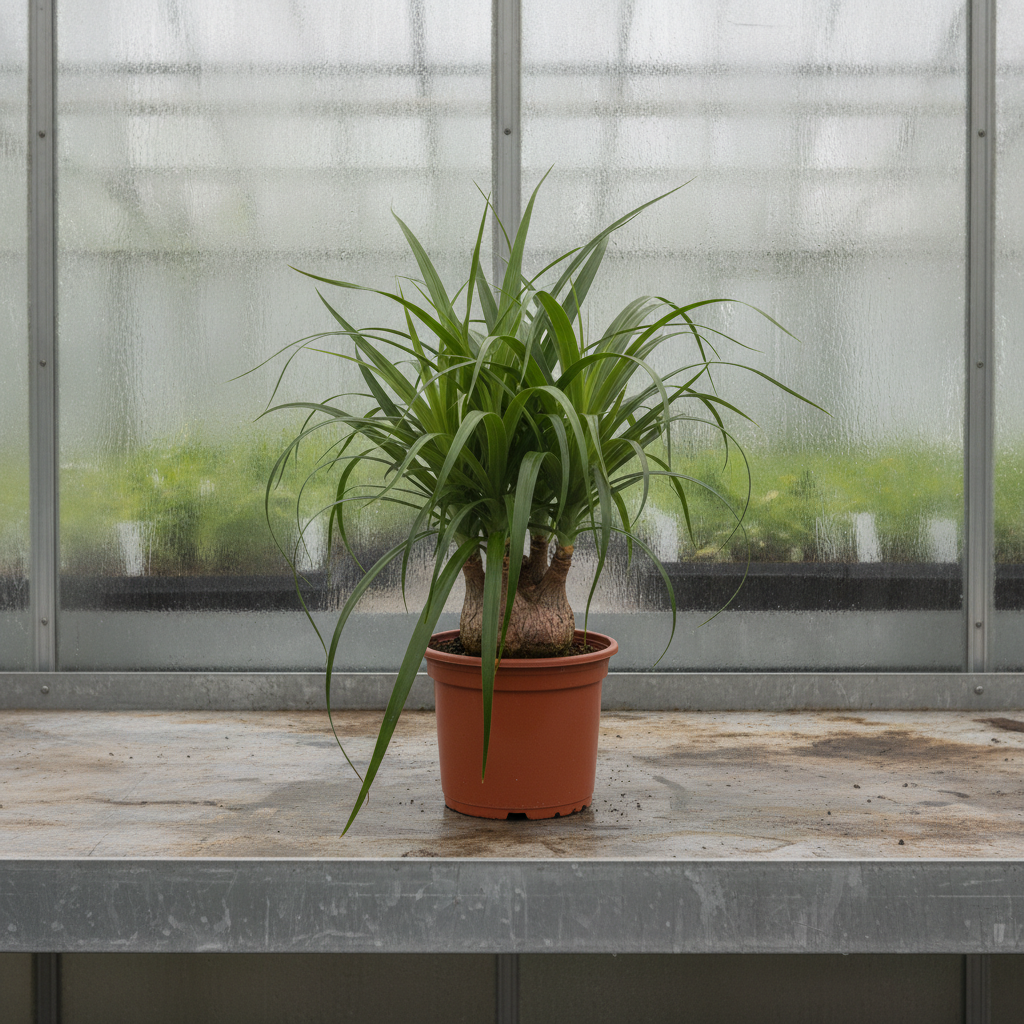
Beaucarnea recurvata
The classic ponytail palm and the most widely sold of all. It has a fatter, more onion-shaped base and long, soft leaves that arch and cascade downward like a fountain, giving it a gentler, more relaxed silhouette than the stiff-leaved stricta.
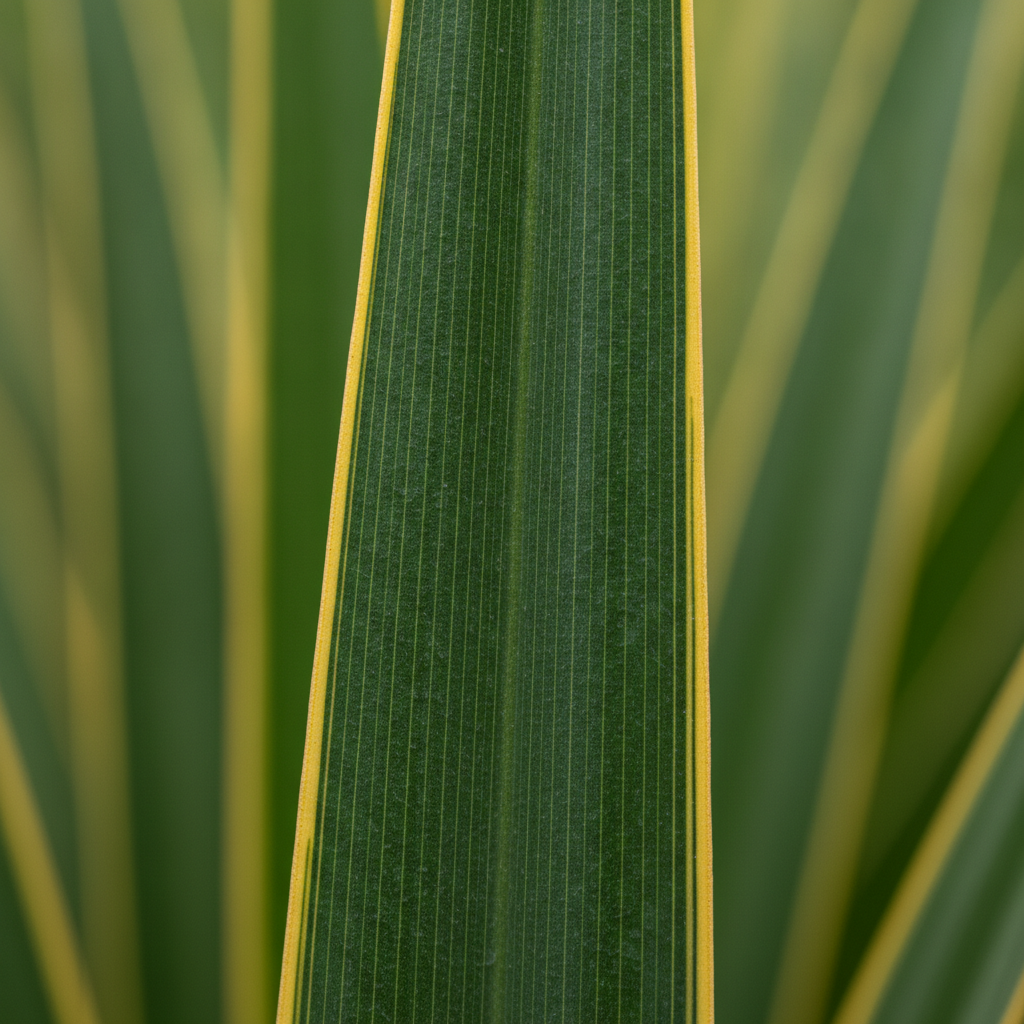
Beaucarnea ‘Gold Star’
A more collectable selection prized for its foliage, which carries fine golden-yellow margins along stiff blue-green leaves. The variegation glows in strong light and gives an otherwise green plant a warm, luminous edge.
Variety Profiles in Detail
Beaucarnea recurvata (Beaucarnea recurvata)
If you have seen a ponytail palm in a garden centre, it was almost certainly this species. Its swollen, bulbous base is more pronounced and rounded than that of B. stricta, earning it the common name elephant’s foot, and its foliage is longer, softer and more freely cascading. It is the easiest to find and the most tolerant of a range of conditions, making it an ideal first Beaucarnea.
Beaucarnea gracilis (Beaucarnea gracilis)
A slower, more refined species with very fine, grey-green upright foliage and a distinctly craggy, textured base. Sought after by succulent and caudiciform collectors, it is rarely offered as a mainstream houseplant but rewards the patient grower with an especially sculptural form.
Choosing the Right Variety for Your Space
For most homes, the choice comes down to form and availability. If you want the softer, cascading, fountain-like look and easy availability, Beaucarnea recurvata is the natural pick. If you prefer the tidier, more upright and architectural silhouette of stiff foliage, Beaucarnea stricta is the one to seek out, while variegated selections like ‘Gold Star’ reward collectors willing to hunt a little. Reassuringly, every one of them thrives on the same bright light, gritty soil and sparing water, so your decision is purely aesthetic.
Frequently Asked Questions
Is the Ponytail Beaucarnea actually a palm?
No, despite the common name it is not a palm at all. It belongs to the asparagus family, Asparagaceae, and is more closely related to plants like agave and dracaena. The swollen base and tuft of strap-like leaves simply give it a palm-like look, which is how the misleading nickname stuck.
How often should I water my Ponytail Beaucarnea?
Only when the soil is completely dry, which typically works out to every two to three weeks in summer and once a month or less in winter. Rather than following a strict schedule, check the soil or lift the pot to feel its weight, and always err on the side of waiting longer. This plant handles drought far better than excess water.
Why is the base of my plant going soft?
A soft, squishy caudex is a warning sign of rot, almost always caused by overwatering or a pot that does not drain. Act quickly by unpotting the plant, cutting away all soft tissue with a sterile blade, letting the wounds dry, and repotting into fresh gritty mix. A firm but slightly wrinkled base, by contrast, just means the plant is thirsty.
Why are the tips of the leaves turning brown?
Brown leaf tips usually come down to underwatering, a build-up of fertiliser salts, or minerals in hard tap water. Try flushing the soil thoroughly with plain water, make sure you are not leaving the plant bone dry for excessively long stretches, and consider filtered or rainwater if your tap water is very hard. You can trim the brown tips for appearance.
How big will a Ponytail Beaucarnea get indoors?
Indoors it grows slowly and stays manageable, usually reaching one to two metres (three to six feet) over many years. In its native habitat it can become a small tree several metres tall, but as a houseplant its slow pace and pot-bound roots keep it modest for a very long time.
Is the Ponytail Beaucarnea safe for cats and dogs?
Yes. It is listed as non-toxic to cats, dogs and horses by the ASPCA and is not poisonous to humans, making it a genuinely pet-friendly choice. The only minor caution is that the stiff leaves have finely serrated edges, so a pet chewing them might get a small scratch, but there is no toxicity risk.
Why isn’t my plant growing?
Some slowness is entirely normal, as this is one of the slower-growing houseplants even in good conditions. That said, if growth has stalled completely, the most likely cause is insufficient light. Move the plant to your brightest window, ensure it gets some direct sun, and be patient through the growing season before expecting a noticeable response.
Can I grow a new plant from a leaf?
No, unlike many succulents this plant cannot be propagated from a leaf or a stem cutting. The only reliable methods are separating the offsets, or pups, that form around a mature plant’s base, or growing from fresh seed. Offset division is much faster and is the route most home growers use.






