
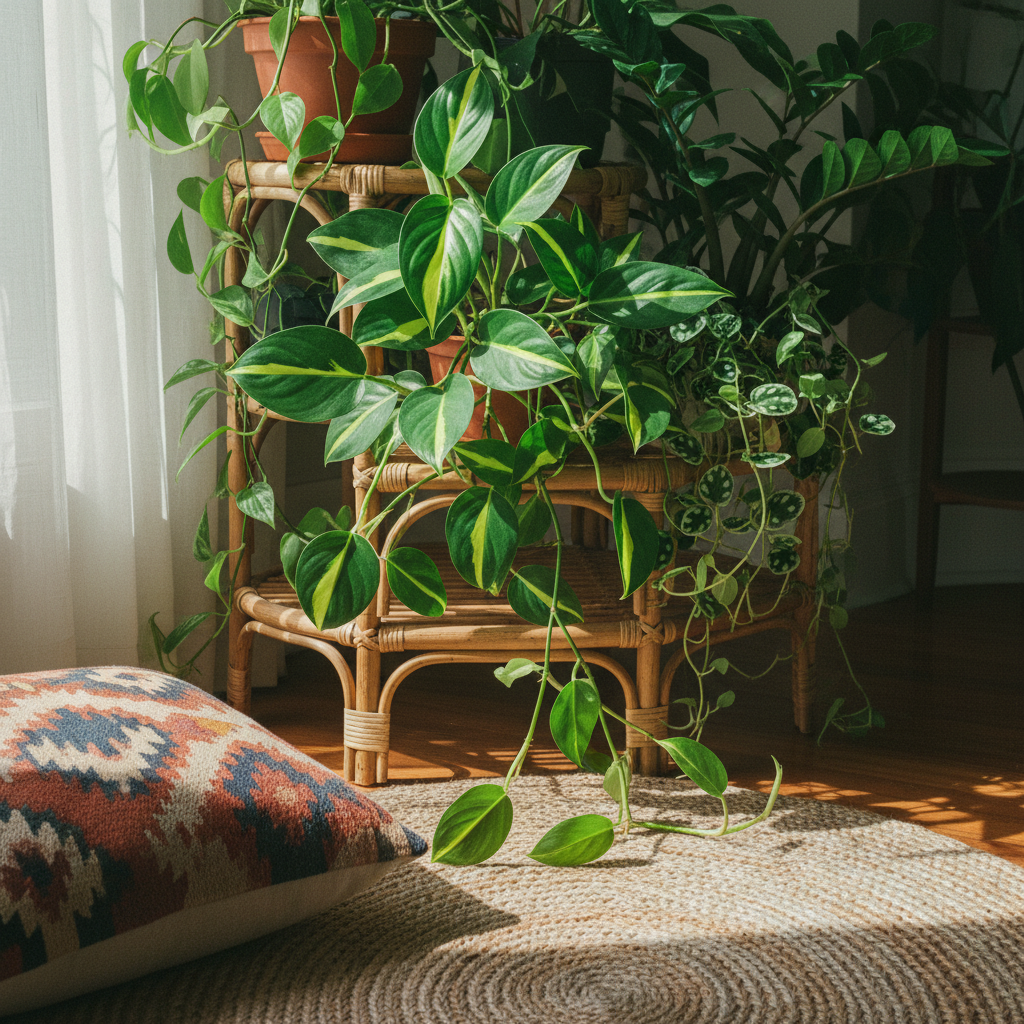
Few houseplants combine the easy-going temperament of a heartleaf philodendron with the dressed-up appeal of a true variegate quite as gracefully as the Philodendron Brasil. Botanically Philodendron hederaceum ‘Brasil’, this cultivar is a stable chartreuse-and-lime sport of the common heartleaf philodendron, native to the humid lowland forests of the Caribbean, Central America and tropical South America. The cultivar takes its name from the green-and-yellow colour pairing of the Brazilian flag, a quiet bit of horticultural branding that has done a great deal for its popularity since it first reached the trade in the late 1990s. Today it is one of the most widely sold trailing aroids in the world, and for good reason.
The Brasil’s reputation as a beginner-friendly plant is well earned, but reputation alone can be misleading. A neglected Brasil will limp along for months on a draughty bookshelf, producing pale, leggy growth with weak variegation, and the owner will reasonably conclude the plant is fine. It is surviving, not thriving. A Brasil grown with intent looks like an entirely different organism: thick stems, hand-sized leaves, the chartreuse centre streak vivid and saturated, vines tumbling a metre or more from the pot. This guide covers everything needed to push your plant from the first state to the second, with detailed sections on light, water, soil, feeding, propagation and the pests and diseases that occasionally show up.
Contents
- Quick Reference
- Why Philodendron Brasil Makes a Brilliant Houseplant
- Light Requirements
- Watering and Humidity
- Soil, Potting and Repotting
- Fertilising
- Propagation
- Pests and Diseases
- Popular Varieties
- Frequently Asked Questions
Quick Reference: Philodendron Brasil at a Glance
| Light | Bright, indirect light; tolerates medium light but variegation fades |
| Watering | Water when the top 2 to 3 cm (1 inch) of soil feels dry; reduce in winter |
| Temperature | 18 to 27 degrees Celsius (65 to 80 degrees Fahrenheit); avoid below 13 degrees Celsius (55 degrees Fahrenheit) |
| Humidity | 50 to 60 per cent ideal, tolerates 40 per cent with no obvious decline |
| Fertiliser | Balanced liquid feed at half strength every 4 to 6 weeks during the growing season |
| Toxicity | Toxic to cats, dogs and humans due to insoluble calcium oxalate crystals |
Why Philodendron Brasil Makes a Brilliant Houseplant
The species behind the cultivar, Philodendron hederaceum, has been a fixture of indoor horticulture for well over a century. It tolerates a forgiving range of light levels, accepts irregular watering, recovers quickly from setbacks and propagates with almost embarrassing ease. The Brasil cultivar inherits every one of these traits while adding the visual interest of a stable, predictable variegation. Unlike many variegated aroids, Brasil rarely reverts entirely to green and seldom produces the all-white leaves that signal an unstable chimera. The result is a plant that looks like a designer cultivar but behaves like the most undemanding houseplant in the room.
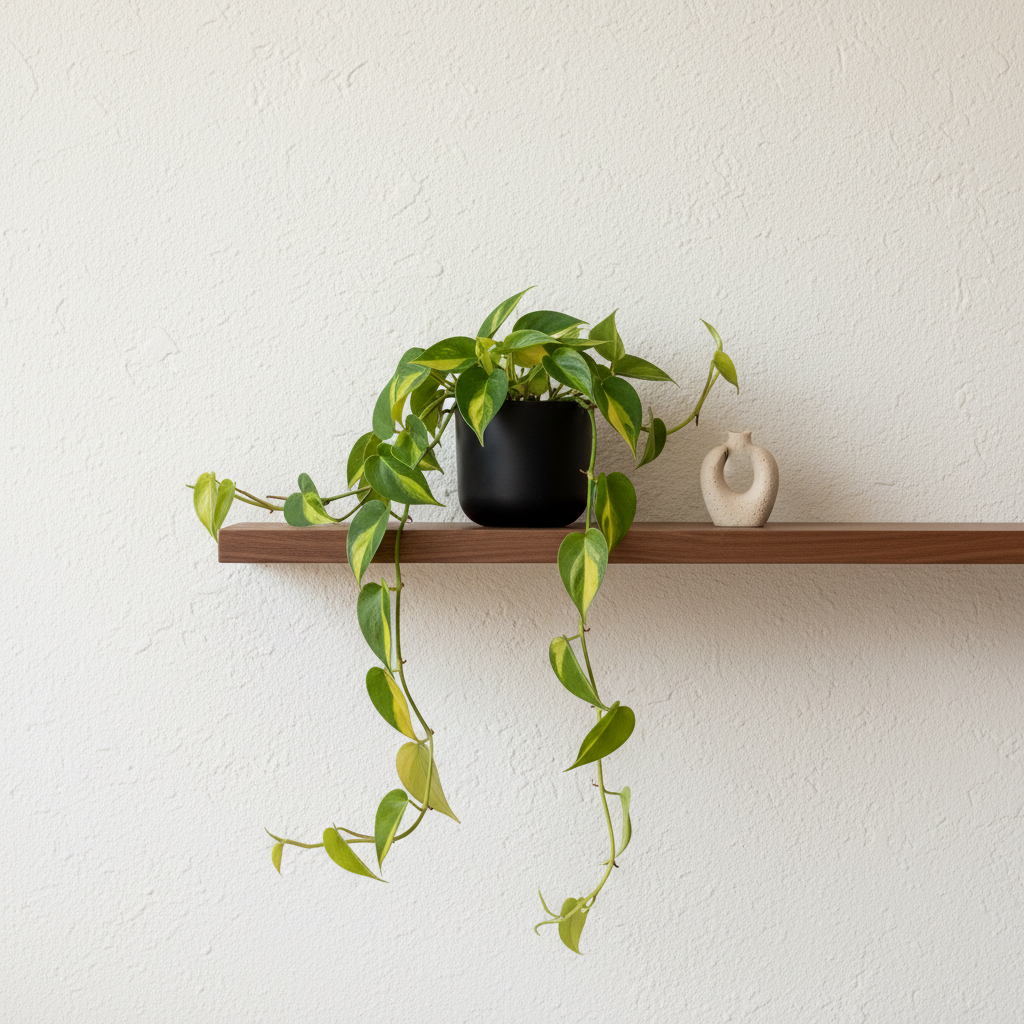
Practically, the Brasil offers something most variegated tropicals do not: it grows quickly. A healthy plant in a 15 centimetre (6 inch) pot can put on 30 to 60 centimetres (12 to 24 inches) of vine each year, and a few well-placed cuttings will fill a hanging basket within a single growing season. This makes it ideal for renters who want immediate impact, for beginners who learn best when their plant responds visibly to their care, and for collectors who enjoy training vines along bookshelves, picture rails and macramé hangers. It also tolerates the lower light and drier air of a typical centrally heated home with minimal complaint, which sets it apart from showier but pickier philodendrons like the Pink Princess or White Knight.
Important — Toxicity: Like all philodendrons, Brasil contains insoluble calcium oxalate crystals in its sap. Chewing the leaves causes intense oral irritation, drooling and swelling in cats, dogs and small children. Keep it well out of reach of curious pets, and wash your hands after taking cuttings if you have sensitive skin.
Light Requirements
Light is the single most important factor determining whether your Brasil shows off the cultivar’s signature chartreuse striping or settles into a pleasant but unremarkable mass of mid-green leaves. Variegated plants have less chlorophyll per leaf than their fully green parents and must therefore intercept more light to produce the same amount of sugar. Place a Brasil in a dim corner and it will protect itself by producing greener, less variegated new leaves, sometimes accompanied by long internodes and a sparse, stretched-out habit.
The ideal exposure is bright, indirect light for at least six hours a day. A position one to two metres back from a south or west window, behind a sheer curtain in an east window, or directly in front of a north window in the brightest part of a room will all produce excellent results. The leaves should look glossy and the chartreuse centre should read as vivid lime rather than dull olive. If new leaves emerge consistently smaller than older ones, or if the variegation is thinning, the plant is asking for more light, not less.
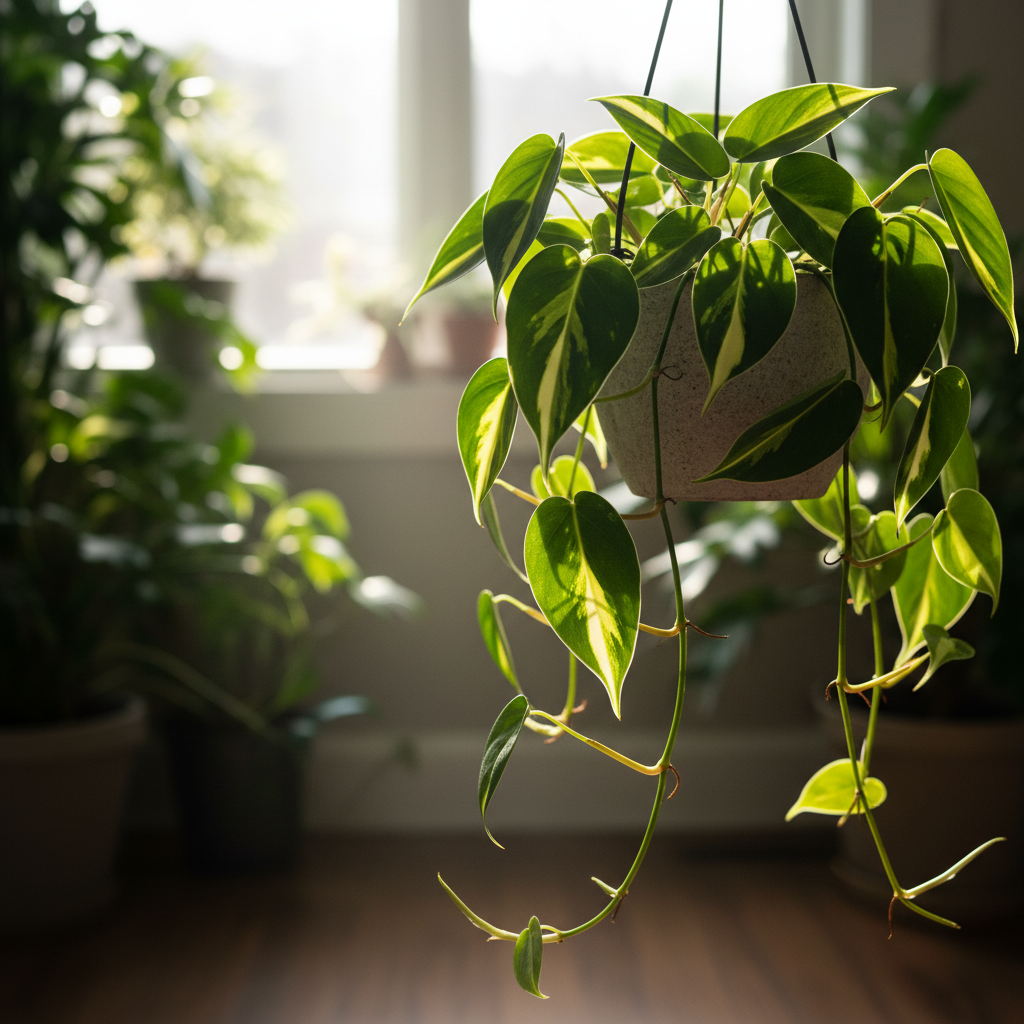
Light Levels Explained
Houseplant light is usually described in vague terms like bright or low, which can be hard to apply to a real room. A simple lux meter, or the free meter built into most smartphones, makes the categories below much easier to act on. As a rule of thumb, hold your hand 30 centimetres above the plant on a bright day and look at the shadow; a crisp shadow indicates direct or very bright indirect light, a soft but visible shadow indicates medium light, and a barely perceptible shadow indicates low light.
| Light Category | Approx. Level | Typical Location | Outcome for Brasil |
|---|---|---|---|
| Direct sun | 20,000 lux and above | Unfiltered south or west window | Leaf burn within hours, bleaching of variegation |
| Bright indirect | 10,000 to 20,000 lux | Near a south, east or west window with sheer curtain | Best growth, strongest variegation, compact internodes |
| Medium | 2,500 to 10,000 lux | Centre of a well-lit room, north-facing window | Acceptable growth, some loss of variegation contrast |
| Low | 500 to 2,500 lux | Hallway, corner of a room, far from windows | Survives but stretches, new leaves smaller and greener |
| Very low | Below 500 lux | Windowless rooms, behind furniture | Gradual decline, leaf drop, eventual death |
Window Orientation and Placement
South-facing window: Excellent in the United Kingdom and northern Europe, where winter sun is gentle enough to place the plant directly on or beside the sill. In southern Europe, North America and Australia, set the plant one to two metres back from the glass or behind a sheer curtain to avoid scorch during summer.
East-facing window: Arguably the perfect aspect. Two to three hours of gentle morning sun followed by bright indirect light for the rest of the day suits the Brasil beautifully and produces strong variegation without any risk of burn.
West-facing window: Good, but afternoon sun in summer can be harsher than morning sun. Place the plant slightly back from the glass, or use a sheer curtain between roughly two o’clock and five o’clock in the afternoon.
North-facing window: Workable but marginal. The plant will survive and produce some growth, but variegation will steadily weaken and new leaves will be smaller. A grow light or a brighter position elsewhere in the room is worth considering.
Pro Tip — Rotate Weekly: Vines naturally grow toward the strongest light source, which produces a lopsided plant if you never rotate it. A quarter turn each time you water keeps growth even and ensures variegation develops on leaves all the way around the pot.
How Light Affects Variegation
The chartreuse centre on a Brasil leaf is the result of localised reduction in chlorophyll within the mesophyll cells, leaving the underlying yellow and yellow-green pigments visible. Because the variegated tissue produces less sugar than the green margins, the plant balances its energy budget by adjusting how much variegation it expresses on each new leaf, and the trigger for that adjustment is light. In bright conditions the plant can afford a generous chartreuse stripe and still photosynthesise enough to grow vigorously. In dim conditions it cannot, so new leaves emerge with progressively narrower stripes or solid green. This is not a permanent change to the plant; once light improves, subsequent leaves will return to typical variegation. Old leaves do not revariegate, however, so persistent low light gradually replaces the showy older growth.
Warning — Direct Sunlight: A few hours of gentle morning sun is fine, but midday or afternoon sun pouring directly through unfiltered glass will scorch leaves within a single afternoon. Bleached white-yellow patches that turn crisp and brown a few days later are the telltale sign of sunburn, and the damaged tissue will never recover.
Artificial Lighting
Brasil responds well to supplemental lighting, which makes it a good candidate for offices, windowless flats and basement plant collections. A full-spectrum LED grow light delivering roughly 200 to 400 micromoles per square metre per second at the leaf surface, run for 12 to 14 hours a day, will produce growth equivalent to a bright window. Position the light 30 to 45 centimetres above the foliage. If you only have a single fixed lamp, rotate the plant weekly so all sides receive equal exposure. Modern white-spectrum LEDs are essentially invisible in their effect on room aesthetics; the magenta-pink “blurple” lights, while perfectly effective, can be visually intrusive in a living space.
Seasonal Adjustments
Day length and sun angle change significantly over the course of a year, particularly at temperate latitudes. A window that delivers bright indirect light in June can drop to medium or even low light by December, when the sun never rises far above the horizon. Move plants closer to windows in autumn and winter, consider adding a small supplemental light for the darkest months, and be prepared to move them back in spring before the strengthening sun starts to scorch the same leaves that struggled in November. Growth naturally slows as light drops, and that is a normal seasonal response, not a problem to fix.
Watering and Humidity
Watering is where most Brasils succeed or fail. The plant is genuinely forgiving compared with finicky calatheas or maidenhair ferns, but the most common cause of death by a large margin is overwatering, especially in winter when low light and cool temperatures slow water uptake to a trickle. The Brasil’s epiphytic ancestry, climbing tree trunks in humid forests rather than rooting in dense ground soil, means its roots evolved to handle frequent wetting followed by rapid drainage and good airflow. Indoor pots only mimic this when watering is paired with a chunky, well-aerated potting mix and a container with drainage holes.
When to Water
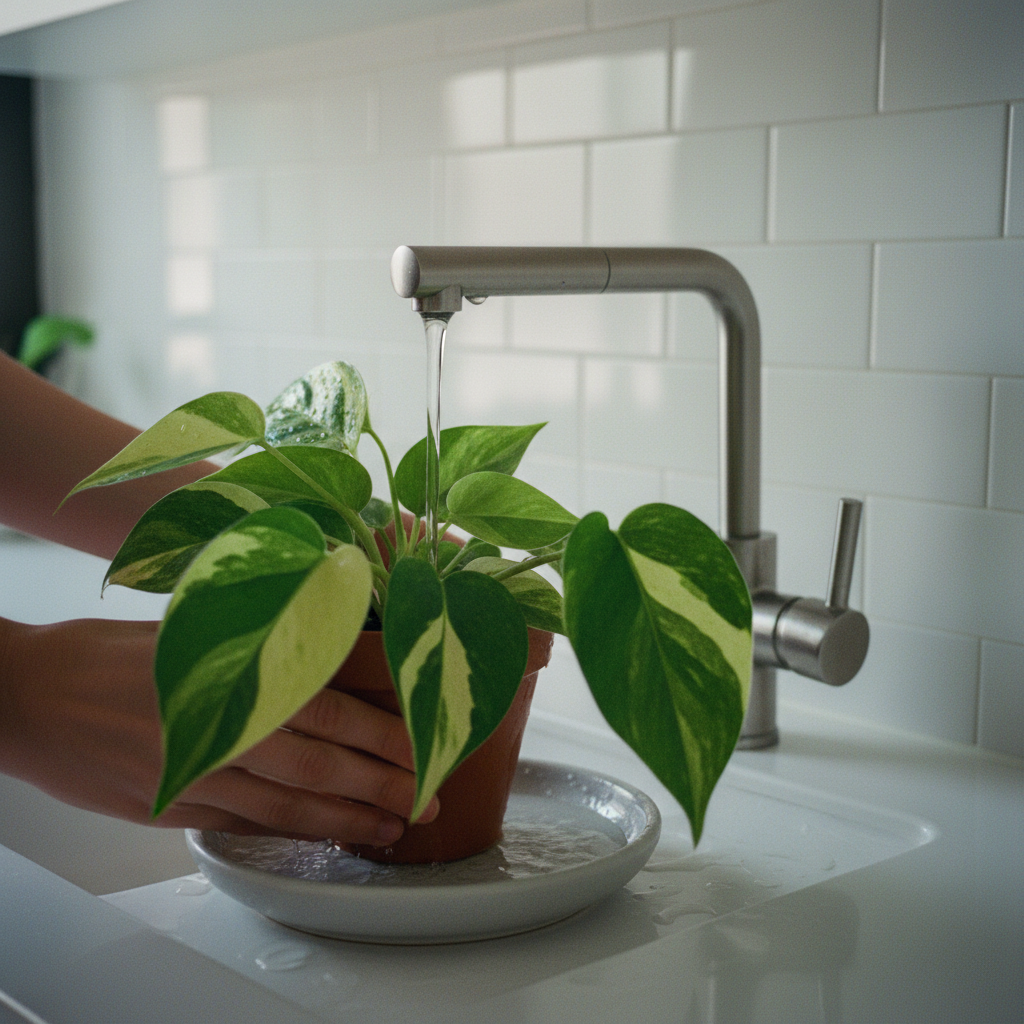
Aim to water when the top 2 to 3 centimetres (about 1 inch) of soil have dried out. Push a finger into the mix or, more reliably, use a wooden chopstick or skewer; if it comes out with dark, damp soil clinging to it, wait another day or two. In a typical centrally heated home in summer, a Brasil in a 15 centimetre pot needs water roughly once a week. In winter, with lower light and cooler temperatures, the same plant might only need water every two to three weeks. Avoid watering on a fixed schedule. The plant does not care about the calendar; it cares about the moisture available to its roots.
Drooping leaves are an unmistakable signal that the plant is thirsty, and Brasil is one of the most communicative species in this regard. A plant whose leaves and petioles are soft and slumping will usually recover fully within an hour or two of a thorough watering, with no lasting harm. Repeatedly letting it reach the wilt point is stressful and slows growth, but the occasional dramatic recovery is not catastrophic and is sometimes the best teacher for a beginner trying to calibrate their watering instinct.
Pro Tip — Lift the Pot: A clay or plastic pot of dry soil feels strikingly lighter than the same pot of moist soil. Lift the pot before and after watering for a couple of weeks and you will quickly develop a reliable feel for when watering is due, with no probe or meter required.
How to Water Correctly
- Carry the plant to a sink or bathtub if it is small enough; otherwise place a deep saucer beneath the pot to catch runoff.
- Pour room-temperature water slowly and evenly across the soil surface, taking care not to direct the stream onto the crown or stems.
- Continue watering until a generous flow drains from the holes at the bottom of the pot. This flushes accumulated salts and ensures the root ball is fully rehydrated.
- Let the pot drain freely for 10 to 15 minutes. Do not let the pot stand in standing water afterwards.
- Empty the saucer thoroughly before returning the plant to its display position. A pot sitting in residual water for hours is the single most reliable way to start root rot.
- Note the date and the approximate volume used; over a few weeks this builds a useful internal rhythm for the season.
Signs of Overwatering vs. Underwatering
| Symptom | Overwatering | Underwatering |
|---|---|---|
| Leaf colour | Yellowing of multiple lower leaves at once, often with brown soft patches | Older leaves yellow individually, then crisp at the edges |
| Leaf texture | Soft, limp leaves even though the soil is moist | Dry, papery leaves with curled margins |
| Soil | Persistently wet, sour smelling, sometimes with fungus gnats | Pulls away from the pot edge, water runs through and out without soaking |
| Roots | Brown or black, mushy, slip out of their casing when pulled | Pale, dry, brittle, intact but desiccated |
| Stem base | Soft, sometimes blackened, may smell unpleasant | Firm, lighter in colour, no odour |
Warning — Root Rot: If you suspect root rot, act quickly. Unpot the plant, wash the root ball clear of old soil, trim away every blackened or mushy root with sterilised scissors, and repot into fresh, chunky aroid mix in a clean container. Withhold water until you see new growth or firm white root tips appear. A Brasil caught early almost always recovers; one left to sit in a swamp for weeks rarely does.
Humidity Requirements
Brasil’s tropical origin suggests it should crave high humidity, and it does prefer 50 to 60 per cent relative humidity, but the plant is remarkably tolerant of the 30 to 45 per cent typical of centrally heated homes in winter. The first visible sign of distress in very dry air is browning, crisp leaf tips, sometimes paired with curled margins on new leaves. Variegation tends to weaken slightly under prolonged low humidity, but the plant rarely dies from dry air alone.
If your home consistently reads below 40 per cent on a hygrometer through the heating season, your other tropical plants are probably suffering more visibly than the Brasil. Use this as your trigger to act. Grouping plants together raises local humidity through their shared transpiration, a pebble tray with shallow water under the pot adds a modest boost, and a small ultrasonic humidifier in the same room is by far the most effective option. Bathrooms with a frosted window are excellent for Brasils precisely because they combine humidity, warmth and diffuse light.
Misting is widely recommended and only modestly helpful. Each misting raises humidity in the air around the leaves for perhaps 15 to 30 minutes before levels return to ambient, and frequent misting on plants in cool rooms can encourage fungal leaf spots if the foliage does not dry within a few hours. If you enjoy misting as part of a daily care routine, do it in the morning so leaves are dry by evening; but invest in a humidifier rather than relying on a mister for serious humidity correction.
Water Quality
Brasil is relatively unfussy about water quality, but mineral build-up from very hard tap water can eventually scorch leaf margins and clog the soil. If your area has hard water with high calcium or sodium readings, consider using rainwater, filtered tap water, or letting tap water stand uncovered for 24 hours to allow some of the chlorine to dissipate. Distilled water is unnecessary for this plant and provides no nutritional benefit. Cold water straight from the tap can shock roots in winter; aim for room temperature, which is gentler on actively respiring roots and on the leaves you might accidentally splash.
Soil, Potting and Repotting
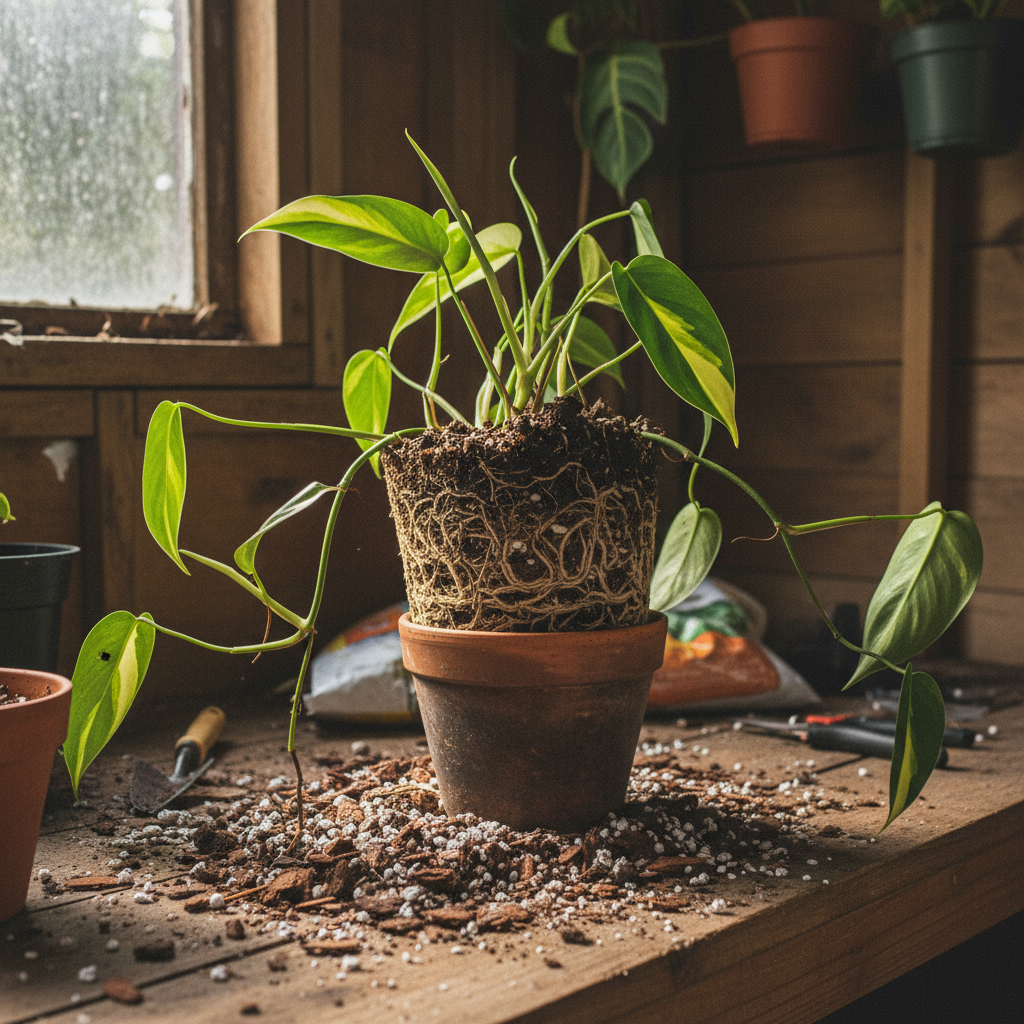
The right potting mix is more important for a Brasil than the right pot, the right fertiliser or, arguably, the right watering routine, because the mix determines how quickly roots can breathe again after each watering. In the wild, Philodendron hederaceum climbs tree trunks with its roots scrambling through loose litter, mossy bark and pockets of decomposing leaves. That habitat is the opposite of dense, water-retentive multipurpose compost. A typical bagged houseplant compost, used straight from the bag, holds water for far too long around philodendron roots and is one of the most reliable triggers for the slow decline so many Brasils suffer through.
Ideal Soil Composition
The aim is a substrate that drains quickly, holds enough moisture to keep roots happy for a week or so, and contains plenty of air pockets to support the fine root hairs that take up water and nutrients. A simple, reliable recipe is two parts standard houseplant compost, one part orchid bark, one part perlite and one part coco coir. Worm castings can replace a small fraction of the compost for slow-release fertility. A few handfuls of horticultural charcoal help keep the mix sweet between repottings, and a teaspoon of agricultural lime per litre can buffer the pH if your tap water is acidic.
| Component | Proportion | Function |
|---|---|---|
| Houseplant compost | 40 per cent | Base structure, moderate moisture retention, basic fertility |
| Orchid bark, medium grade | 20 per cent | Creates large air pockets, mimics epiphytic substrate |
| Perlite | 20 per cent | Improves drainage and aeration, prevents compaction |
| Coco coir | 15 per cent | Retains water without going anaerobic, supports root hairs |
| Worm castings | 5 per cent | Slow-release nutrients, beneficial microbes |
Brasil prefers a slightly acidic to neutral pH, broadly between 5.5 and 6.5. Most quality houseplant composts already sit in this range, and the addition of bark and coir keeps the pH stable for many months. If your plant develops a pale, washed-out look despite adequate light and feeding, an off-balance pH can occasionally be the cause, but it is far less common than overwatering or insufficient light.
Pro Tip — Quick Mix Recipe: If you have no time to source individual ingredients, mix one part premium houseplant compost with one part chunky aroid blend sold ready-made at most garden centres. This shortcut gets you 80 per cent of the way to the recipe above with none of the measuring.
Choosing the Right Pot
Brasil is a vining plant with a relatively modest root system compared with its visible top growth, so it does not need a large pot. A pot that is 2 to 3 centimetres (about an inch) wider than the current root ball is the right size when repotting. Pots that are too large hold too much wet soil away from the roots, which sits sour and unused between waterings and substantially raises the risk of rot.
Drainage holes are non-negotiable. A decorative cachepot without drainage may look the part on a shelf, but the plant inside must always be in a true nursery pot with holes that you can lift out to water and drain. Drilling a hole in the bottom of a glazed pot is preferable to leaving the plant in a sealed vessel. Layers of gravel or polystyrene chunks placed in the bottom of a hole-free pot do not help; they only raise the water table inside the soil and accelerate rot.
Pot material: Unglazed terracotta wicks moisture out through its walls, drying the root ball faster and making it more forgiving for heavy-handed waterers. Plastic and glazed ceramic retain moisture for longer, which suits drier homes or owners who travel often. Hanging baskets work beautifully for Brasil thanks to its trailing habit, but make sure the inner liner has free drainage and that the drips are caught with a saucer below.
Pot size: Resist the urge to put a small plant straight into a large display pot. Step up gradually, one pot size at a time, when roots begin to circle the bottom or push out of the drainage holes. Most Brasils only need repotting every 18 to 24 months.
When to Repot
The clearest signal that repotting is due is when roots begin to circle the inside of the pot or grow visibly out of the drainage holes. Other prompts include water that runs straight through the pot without soaking in, suggesting compacted, hydrophobic soil; persistent slow growth despite adequate light and feeding; and obvious top-heaviness, where the plant repeatedly tips over. The best time to repot is spring or early summer, when growth is most active and roots recover from disturbance quickly. Avoid repotting in deep winter unless you suspect rot.
How to Repot: Step-by-Step
- Water the plant lightly a day before repotting so the root ball comes out cleanly and the roots are well hydrated.
- Choose a clean pot 2 to 3 centimetres wider than the current one, with adequate drainage holes.
- Add a layer of fresh aroid mix to the bottom of the new pot, enough that the top of the root ball will sit roughly 1 centimetre below the rim.
- Slide the plant out by tipping the pot and supporting the base of the stems. Gently loosen the outer roots with your fingers and tease away most of the old soil.
- Inspect the roots, snipping away any dark, mushy or distinctly damaged sections with sterilised scissors.
- Position the plant in the centre of the new pot and fill around it with fresh mix, pressing gently to remove air pockets but not packing tightly.
- Water thoroughly, let it drain, then place the plant in moderate, indirect light for a week or two to recover before returning it to its usual spot.
Warning — Transplant Shock: Some leaf droop, slowed growth or one or two yellowing older leaves are normal in the first fortnight after repotting. Do not respond by overwatering or fertilising; this only stresses an already disturbed root system. Patience is the right treatment, and the plant will rebound on its own.
Fertilising
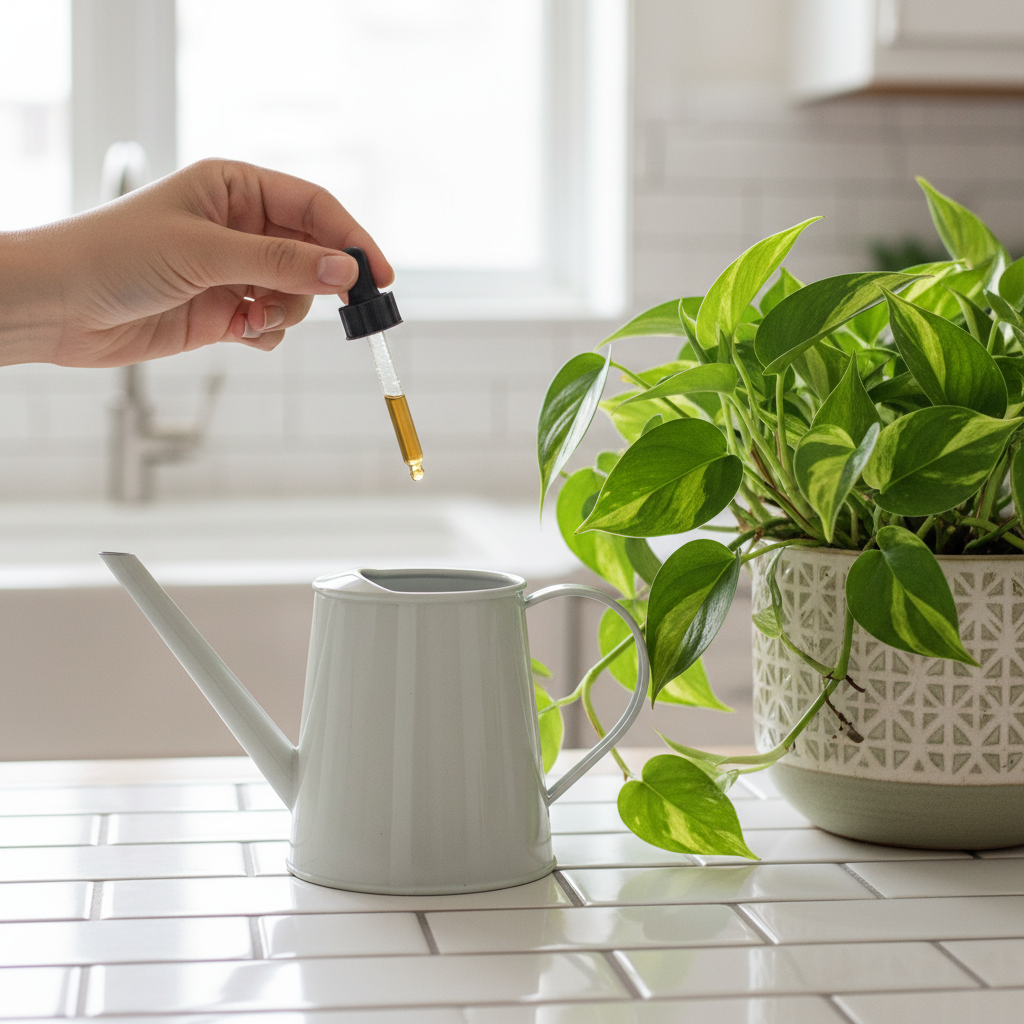
A well-mixed aroid substrate carries enough natural fertility to support a Brasil for several months after potting, but the plant is a moderately fast grower and will exhaust those reserves within a season. Supplemental fertilising is therefore worthwhile, and a Brasil that receives regular dilute feeding during the growing season puts on noticeably larger leaves, longer vines and stronger variegation than one left to live on tap water alone.
That said, more is not better. Brasil is sensitive to mineral build-up, which shows up as browning leaf tips, a white crust on the soil surface and, in extreme cases, leaf drop. The rule is to feed lightly and often rather than rarely and heavily.
Understanding Plant Nutrients
Houseplant fertilisers are labelled with three numbers, the NPK ratio, which gives the percentage by weight of nitrogen (N), phosphorus (P) and potassium (K). For a foliage plant like Brasil, a balanced ratio such as 10-10-10 or 20-20-20, or a foliage-leaning ratio such as 3-1-2, both work well. Trace elements, especially calcium, magnesium and iron, matter more than most beginners realise; deficiencies show up as pale new leaves with darker veins (iron), pale older leaves with green veins (magnesium), and weak, distorted new growth (calcium).
| Nutrient | Symbol | Primary Function | Deficiency Symptoms |
|---|---|---|---|
| Nitrogen | N | Leaf growth, chlorophyll production | Pale, yellowing older leaves; slow growth |
| Phosphorus | P | Root development, energy transfer | Stunted growth, dark or reddish leaves |
| Potassium | K | Overall vigour, water regulation | Yellow or brown leaf margins, weak stems |
| Calcium | Ca | Cell wall structure, new growth | Distorted, hooked new leaves |
| Magnesium | Mg | Central atom of chlorophyll | Interveinal yellowing on older leaves |
| Iron | Fe | Chlorophyll synthesis | Pale new leaves with darker green veins |
Types of Fertiliser
Liquid fertilisers: The most convenient option for indoor growers. A small bottle of complete liquid houseplant feed, diluted to half the label rate and added to the watering can every fortnight in spring and summer, is more than adequate. Liquid feeds are easy to control, leach away cleanly with the next watering and make it trivial to flush the soil if you suspect build-up.
Slow-release granular: Pellets or prills designed to release nutrients over three to six months. Useful for low-effort care, but harder to fine-tune. A small pinch sprinkled on top of the soil at the start of spring is plenty for a Brasil in a 15 centimetre pot. Avoid mixing them deeply into the root zone, where overheated pockets can scorch fine roots.
Organic fertilisers: Worm castings as a top dressing, dilute seaweed or kelp extract, and well-rotted compost are gentle, microbially beneficial options that reduce the risk of fertiliser burn. They release nutrients more slowly than synthetics and can sometimes smell faintly earthy when freshly applied, but they pair well with a synthetic liquid feed used at a reduced rate.
Feeding Schedule
From early spring to early autumn, when daylight is long and growth is active, feed every two to four weeks with a balanced liquid fertiliser diluted to half the recommended strength. As days shorten in late autumn, taper to once every six to eight weeks, and stop entirely from late November to mid-February in northern Europe and equivalent winter periods elsewhere. A dormant or slowed plant cannot use the nutrients you add, and unused fertiliser accumulates in the soil where it can damage roots.
Pro Tip — Half Strength, Twice as Often: Most labels recommend a full-strength dose every four weeks. For houseplants, half strength every two weeks delivers the same total nutrients more gently and dramatically reduces the risk of leaf-tip burn from salt build-up.
How to Fertilise
- Water the plant lightly first with plain water to moisten the soil; never apply fertiliser to a fully dry root ball.
- Mix liquid fertiliser into a watering can at half the rate on the bottle.
- Pour evenly across the soil surface, avoiding the crown and the bases of stems.
- Let the pot drain freely and empty the saucer afterwards.
- Every third or fourth watering, skip the fertiliser and water with plain water alone to flush accumulated salts through the substrate.
Warning — Salt Build-Up: A white crust on the soil surface or around the rim of the pot is mineral residue from fertiliser and hard water. Flush the soil thoroughly with two or three full waterings of plain water until the runoff comes through clear, and scrape off any visible crust. Persistent build-up is a sign that you are feeding too heavily or not flushing often enough.
Propagation
Propagating Philodendron Brasil is one of the easiest jobs in the indoor horticulture calendar. The plant produces aerial roots at every node along its vines and roots vigorously from stem cuttings using almost any reasonable medium. A single mature plant can yield ten or twenty new plants in a season with no specialised equipment, which is part of why Brasil is so often passed along between friends, gifted at plant swaps, and used as a forgiving introduction to home propagation.
The two methods covered here, water rooting in glass jars and soil rooting under light cover, between them produce success rates above 90 per cent in normal conditions. Both rely on the same essential anatomy: a stem section with at least one healthy node, taken from active growth on a parent plant in good health.
Understanding the Node
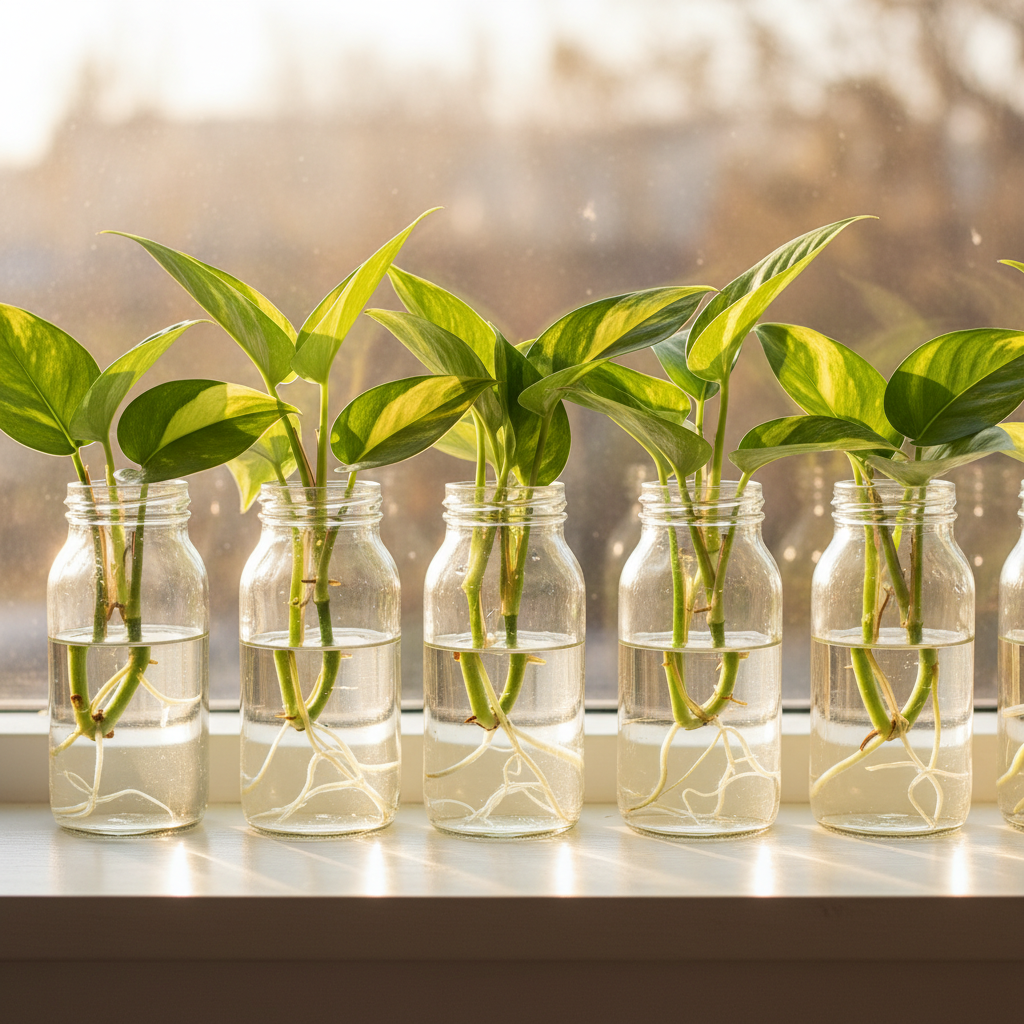
A node is the slightly thickened point on a vine where a leaf joins the stem; you can usually see a small bump or stubby aerial root tucked beside it. Every Brasil node contains dormant meristematic tissue capable of producing both new roots and new shoots, which is why cuttings root so reliably from this point. A length of stem with leaves but no nodes will not root, no matter how long it sits in water, so the first rule of philodendron propagation is to always take cuttings that include at least one clearly identifiable node, and preferably two.
Water Propagation: Step-by-Step
Water rooting is visually rewarding because progress is obvious, which makes it ideal for beginners. The new roots that emerge in water are slightly different in structure from soil roots, with fewer fine hairs, so a transition to soil is needed eventually, but the plant adapts quickly.
- Choose a healthy vine and identify a section with two to three nodes. Cut the stem cleanly with sterilised scissors about 1 centimetre below the lowest node.
- Remove the lowest leaf so its node sits below the waterline; leave the upper leaves intact for photosynthesis.
- Place the cutting in a clear glass jar of room-temperature water deep enough to submerge at least one node but to keep the remaining leaves dry.
- Set the jar in a warm, bright but indirect spot. A windowsill that gets morning sun is ideal.
- Change the water completely every five to seven days to prevent algae and stagnation.
- Roots should be visible within one to three weeks. When the longest are 5 to 8 centimetres long, the cutting is ready to transition to soil.
- Pot up into a small container of moist aroid mix, keeping the substrate slightly moister than usual for the first two to three weeks to reduce transition shock.
Pro Tip — Multiple Cuttings, One Pot: A single rooted cutting in a pot looks sparse for months. Pot three to five rooted cuttings together at the centre of the same container and the resulting plant will look bushy and mature within a single growing season.
Soil Propagation: Step-by-Step
Soil propagation skips the water-to-soil transition and produces a stronger, more native root system from the start, at the cost of being slightly less visually obvious in the early weeks.
- Prepare a small pot or seedling tray with a loose, lightly moistened aroid mix or a 50:50 perlite-and-coir blend.
- Take a node-bearing cutting as above and remove the lowest leaf.
- Optionally, dip the cut end in rooting hormone powder. This is not necessary for Brasil but can shorten the rooting time slightly.
- Push the lowest node about 2 centimetres into the substrate so it is fully buried, and firm the mix gently around the stem.
- Cover the tray loosely with a clear plastic bag or place it inside a small propagator with the vent slightly open, to keep humidity high but allow some airflow.
- Keep the substrate barely moist and check weekly. A gentle tug after three to four weeks will tell you if roots have formed; resistance means they have.
Troubleshooting Propagation
| Problem | Likely Cause | Solution |
|---|---|---|
| Stem turns black and mushy at the cut | Bacterial rot, often from dirty water or tools | Discard the cutting, sterilise tools, start again with fresh water |
| No roots after a month | Cut taken above the node, or too cold or dim | Recut just below a node, move to a warmer, brighter spot |
| Leaves yellow on the cutting | Energy drain on a stressed cutting | Normal if minor; only worry if all leaves yellow at once |
| Roots form but new leaves fail to emerge | Cutting potted too deep or in waterlogged soil | Repot at correct depth in a chunkier, drier mix |
Pests and Diseases
Brasil is comparatively pest-resistant. Its glossy, somewhat thick leaves are less attractive to many sap-sucking insects than the soft new growth of plants like begonias or marantas, and a vigorous plant in good light shrugs off light infestations without showing much distress. Nonetheless, a few familiar troublemakers do occasionally find their way onto a Brasil, and early action keeps every infestation manageable.
A weekly inspection is the single most useful pest control measure available to any indoor grower. Lift a few leaves, look at the undersides and the leaf axils, and run a finger along the petioles. Most problems are easy to fix when caught in the first generation; the same problems become weeks of work once they have spread across an entire plant.
Common Pests
Spider Mites (Tetranychus urticae)
Tiny arachnids that thrive in dry, warm conditions, often in centrally heated rooms in winter. They are hard to see without a magnifier but produce telltale fine webbing in leaf axils and a stippled, dusty look on the upper leaf surfaces. Leaves eventually turn pale and brittle, and severe infestations defoliate entire vines.
Treatment: Rinse the entire plant under a tepid shower to dislodge mites, then spray weekly with insecticidal soap or a 1 per cent neem oil emulsion for at least three weeks, covering both leaf surfaces and axils. Raise local humidity afterwards to discourage return.
Mealybugs (Pseudococcus longispinus)
White, cottony insects that cluster in leaf axils and along the undersides of leaves, sucking sap and excreting honeydew that promotes sooty mould. Brasil’s tucked-in leaf joints are favourite hiding spots, so infestations are easy to miss until a sticky residue starts to spread on the surfaces below the plant.
Treatment: Dab visible insects with a cotton bud dipped in 70 per cent isopropyl alcohol, which kills on contact. Follow with a thorough spray of insecticidal soap every five to seven days for a month to catch hatching young.
Aphids (Aphis gossypii)
Soft-bodied, pear-shaped insects, usually green or black, that cluster on tender new growth and flower stalks. They reproduce extremely quickly indoors, where natural predators are absent.
Treatment: Knock them off with a strong jet of water from a tap or hose. Follow up with insecticidal soap or a neem oil spray once a week for two to three weeks until no new aphids appear.
Fungus Gnats (Bradysia spp.)
Small dark flies that breed in persistently moist soil. The adults are mostly a nuisance, but the larvae feed on fine roots and organic matter and can stunt young plants if numerous.
Treatment: Let the top 2 to 3 centimetres of soil dry out completely between waterings to interrupt the breeding cycle. Yellow sticky traps catch adult flies and indicate population trends. A drench of Bacillus thuringiensis var. israelensis (Bti), available as mosquito dunks dissolved in water, kills larvae without harming the plant.
Common Diseases
Root Rot (Pythium and Phytophthora spp.)
The most common cause of Brasil decline by some margin. Roots in waterlogged, oxygen-poor soil suffocate and become vulnerable to soil-borne water moulds. Above ground the plant looks limp despite damp soil, leaves yellow and drop, and pulling the plant from the pot reveals brown, mushy, foul-smelling roots.
Treatment: Unpot immediately, wash roots clear, trim away all rotted tissue with sterilised scissors, repot into fresh chunky aroid mix in a clean pot, and withhold water until new growth resumes. A dilute hydrogen peroxide rinse (one part 3 per cent solution to four parts water) on the roots before repotting can help suppress lingering pathogens.
Bacterial Leaf Spot (Erwinia spp.)
Watery, dark green or black spots that expand quickly and may exude a yellowish slime in humid conditions. Most often introduced by overhead watering or prolonged wet foliage in cool rooms.
Treatment: Remove and discard affected leaves promptly with sterilised scissors. Improve airflow around the plant, avoid overhead watering, and reduce humidity slightly until the spread is halted. A copper-based fungicide can help suppress further infection but rarely cures established disease.
Powdery Mildew (Erysiphales)
A white, powdery fungal coating on the upper leaf surfaces, generally restricted to plants kept in poor air circulation and persistent high humidity. It does not kill Brasil quickly but disfigures leaves and weakens the plant over time.
Treatment: Improve airflow, reduce humidity to mid-range levels, and wipe leaves with a 1:9 milk-and-water solution or a commercial fungicide. Remove badly affected leaves entirely.
Pest and Disease Summary
| Pest / Disease | Identification | Treatment |
|---|---|---|
| Spider mites | Fine webbing, stippled pale leaves | Shower, insecticidal soap, neem oil, raise humidity |
| Mealybugs | White cottony clusters in axils | Alcohol on a cotton bud, follow-up soap spray |
| Aphids | Clusters on tender new growth | Water jet, insecticidal soap |
| Fungus gnats | Small dark flies above the soil | Dry soil surface, Bti drench, sticky traps |
| Root rot | Limp plant, mushy brown roots | Repot in fresh chunky mix, trim rotted roots |
| Bacterial leaf spot | Watery dark patches, slime | Remove leaves, improve airflow, lower humidity |
| Powdery mildew | White powdery coating | Improve airflow, fungicide spray |
Prevention Strategies
The single most effective prevention strategy is to quarantine every new plant for two to three weeks before placing it near your existing collection. Spider mites, mealybugs and thrips routinely hitchhike home from even the most reputable nurseries, and quarantine catches an outbreak before it can spread. A magnifying glass on a desk in your plant area is worth its weight in unused insecticide.
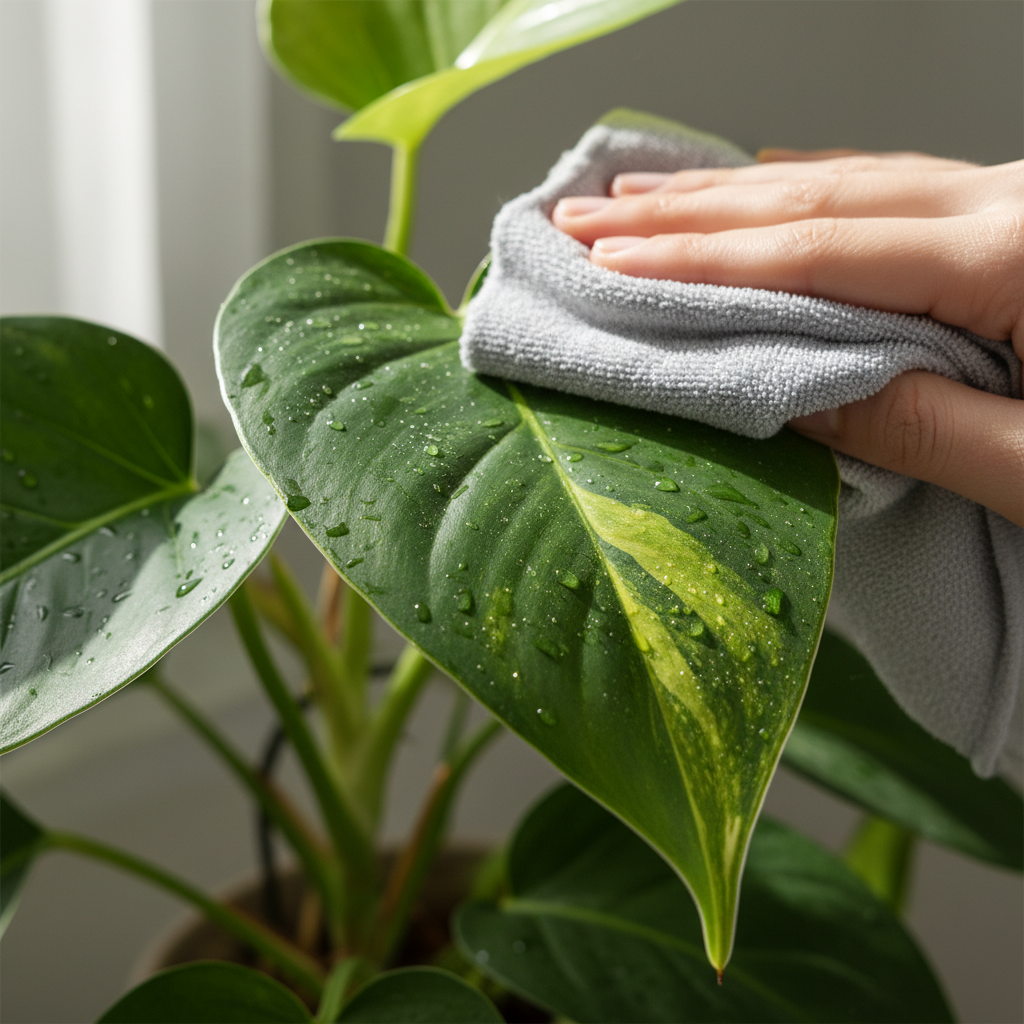
Routine leaf cleaning serves the same purpose. Wiping the upper surfaces of Brasil leaves with a damp microfibre cloth every two to three weeks removes dust, improves photosynthetic efficiency and gives you a close look at the foliage. Combined with good airflow, adequate but not excessive humidity and avoidance of overwatering, this passive routine prevents the great majority of pest and disease problems before they begin.
Pro Tip — Neem Oil Rotation: A monthly preventative spray of dilute neem oil during the growing season suppresses spider mite eggs, thrips and many aphid colonies before they establish. Use a 1 per cent solution with a drop of mild dish soap as emulsifier, and spray in the evening so the oil does not magnify direct sunlight onto wet leaves.
Popular Varieties
The Philodendron Brasil sits within a wider family of Philodendron hederaceum cultivars, many of which are popular trailing houseplants in their own right. Together they form one of the most varied groups of vining philodendrons available to home growers, ranging from the bold lime of the Neon cultivar to the soft velvet of Micans. Most share Brasil’s easy care, fast growth and tolerance of indoor conditions, which makes building a small collection from this single species a practical and rewarding project.
The table below covers the cultivars most likely to appear in nurseries and online plant shops. Availability varies sharply between regions and between years, with rare cultivars like Cream Splash commanding premium prices when they do appear.
| Variety | Leaf Appearance | Light Needs | Growth Rate | Availability |
|---|---|---|---|---|
| Brasil | Heart-shaped, deep green with chartreuse central stripe | Bright indirect | Fast | Widely available |
| Rio | Compact heart-shaped, slim silver-grey central streak | Bright indirect | Moderate | Common |
| Cream Splash | Broad creamy-white sectors on deep green | Bright indirect | Moderate | Rare, premium price |
| Neon | Solid bright chartreuse, no variegation | Bright indirect | Fast | Widely available |
| Lemon Lime | Solid lime-green, slightly more yellow than Neon | Bright indirect | Fast | Common |
| Micans | Velvety bronze-green, iridescent underside | Medium to bright indirect | Moderate | Common |
| Silver | Soft silver patches over green | Bright indirect | Moderate | Less common |
| Heartleaf (species) | Solid deep green, smooth surface | Medium to bright indirect | Fast | Widely available |
Featured Varieties
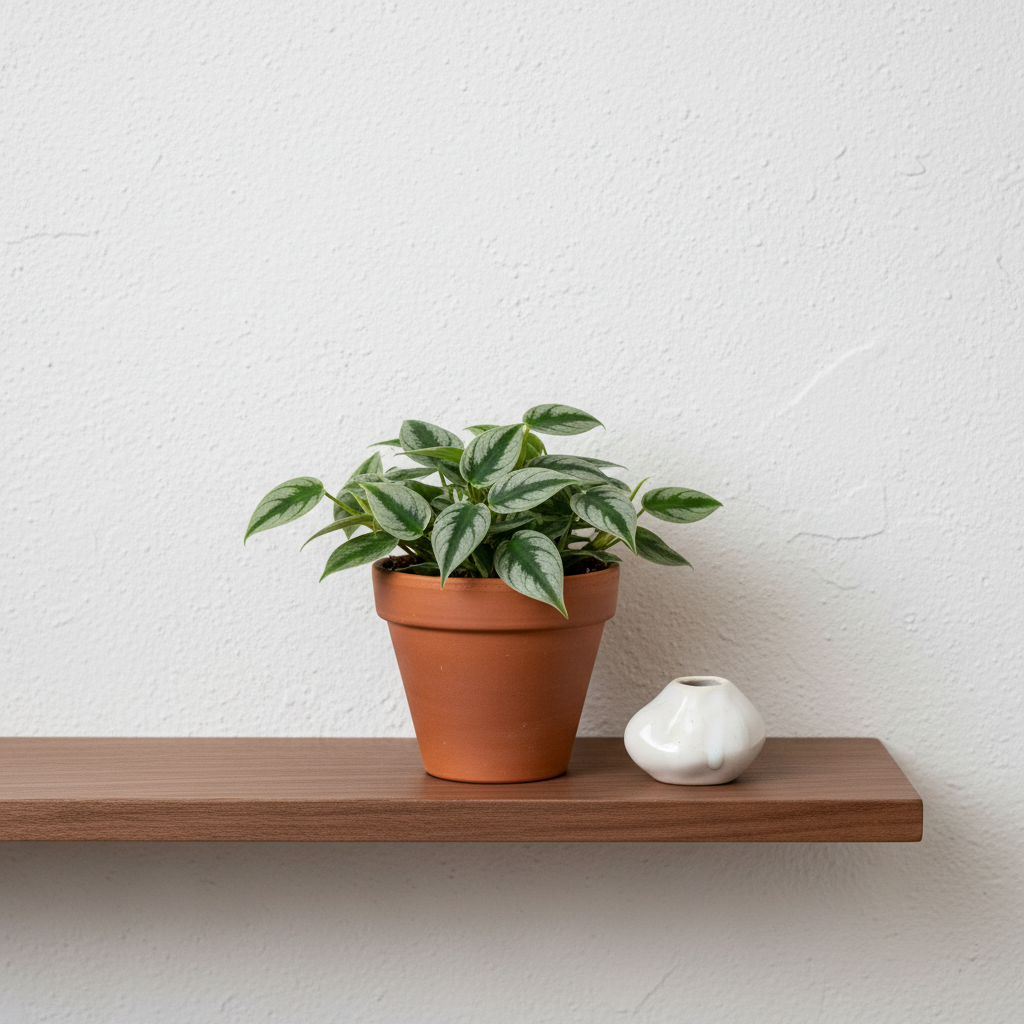
Rio
A more compact, slightly slower-growing sport of Brasil discovered in the late 2010s. Each heart-shaped leaf carries a tighter, more silvery central streak between two even bands of deep green, producing a refined, almost watercolour appearance. Excellent for smaller spaces and as a structured contrast to its more flamboyant parent.
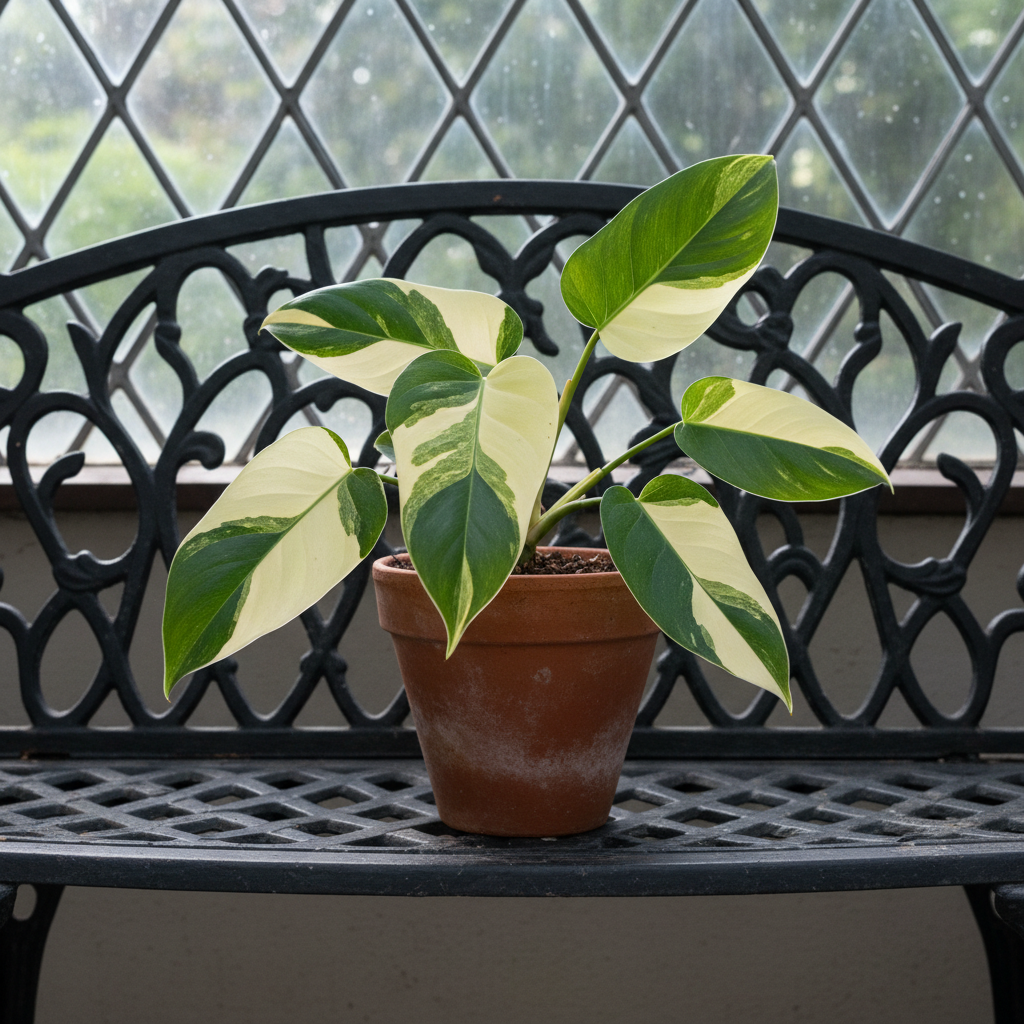
Cream Splash
A rare and highly sought-after cultivar with broad, irregular cream-white and pale yellow sectors splashed across deep green leaves. Less stable than Brasil and prone to reverting if light is inadequate, but worth the attention for collectors. Treat exactly like Brasil but give the brightest indirect light available.
Variety Profiles in Detail
Neon (Philodendron hederaceum ‘Neon’)
Solid chartreuse leaves with no green margins at all, producing a striking lime-green mass that contrasts beautifully with deeper foliage. Growth and care are identical to Brasil, but Neon shows poor variegation under low light by going noticeably duller in colour rather than reverting to green stripes.
Micans (Philodendron hederaceum var. hederaceum)
A velvet-leaved botanical variety of the same species, with iridescent bronze-green leaves that shimmer when the light catches them. Slightly less tolerant of low humidity than Brasil and a touch slower to root from cuttings, but otherwise care is identical.
Silver (Philodendron hederaceum ‘Silver’)
A less commonly seen cultivar with soft silver-grey patches splashed irregularly across mid-green leaves. Appearance can be unstable, with some specimens producing strongly silvered new growth and others reverting after a few months. Bright indirect light is essential to maintain the pattern.
Choosing the Right Variety for Your Space
For a first vining philodendron, the classic Brasil is hard to beat: fast, forgiving and unmistakable. If your space is on the smaller side, Rio offers a more refined silhouette in less square footage. Collectors after rare colour pairings will gravitate toward Cream Splash, accepting its higher cost and slightly trickier light demands. If you want a single bold block of colour, Neon or Lemon Lime perform brilliantly in the right light. And for owners drawn to texture rather than variegation, Micans introduces a velvety quality unique within the heartleaf group.
Frequently Asked Questions
Why is my Philodendron Brasil losing its variegation?
Almost always the cause is insufficient light. Variegated leaves contain less chlorophyll, so the plant compensates by producing greener leaves when light is limited. Move the plant closer to a window or add a grow light, and subsequent new growth will gradually recover its chartreuse stripes. Old, fully green leaves will not revariegate.
Why are the leaves yellowing?
Yellowing of multiple lower leaves at once usually signals overwatering or compacted, oxygen-starved soil. Yellowing of one old leaf at a time is normal seasonal turnover. Yellow leaves with green veins suggest a nutrient deficiency, most often iron or magnesium, which is corrected with a balanced liquid feed.
Is Philodendron Brasil safe around cats and dogs?
No. Like all philodendrons, Brasil contains insoluble calcium oxalate crystals throughout its tissues. Chewing the leaves causes intense oral irritation, drooling, vomiting and difficulty swallowing in cats and dogs, and similar symptoms in children. Keep the plant well out of reach of pets, and contact a vet promptly if ingestion is suspected.
How long do Philodendron Brasil vines grow?
Indoors, well-grown vines routinely reach 2 to 3 metres (6 to 10 feet) and can exceed 4 metres (13 feet) with dedicated care. Pruning to maintain a shorter, fuller habit is straightforward, and the cut sections root easily as new plants.
Should I train my Brasil on a moss pole or let it trail?
Either is fine; Brasil’s anatomy supports both habits. A moss pole encourages larger leaves over time, as the aerial roots find footing on the damp moss and the plant shifts into a more juvenile-mature climbing mode. Allowed to trail, leaves stay smaller but the cascade itself becomes the feature. Many growers keep one of each for the contrast.
Why are the leaves on my Brasil so small?
Small leaves usually indicate one of three things: low light, root-bound conditions or chronic underfeeding. Address the most likely culprit first, give the plant a season to respond, and reassess. A move to a brighter spot is the most common single fix.
How do I make my Brasil bushier?
Prune vines just above a node and root the cuttings back into the same pot. The original stem will branch from the node below the cut, while the new cuttings fill out the centre. Repeat once or twice over a year and you will have a noticeably fuller plant.
Does Philodendron Brasil flower indoors?
Very rarely. The species produces typical aroid spathe-and-spadix flowers in the wild, but indoors most plants never accumulate enough light or maturity to bloom. Brasil is grown for its foliage, and the absence of flowers is a feature rather than a problem.
What is the difference between Brasil and Pothos?
Both are vining aroids that look superficially similar, but Brasil belongs to the genus Philodendron while Pothos is Epipremnum aureum. Brasil has softer, more pliable leaves with a clear chartreuse central stripe, smooth leaf bases and a sheath at every new leaf. Pothos has thicker, slightly waxier leaves with irregular variegation and no sheath. Care is broadly similar, but Brasil is more forgiving of variable humidity and slightly faster-growing in good conditions.
Can I grow Philodendron Brasil entirely in water?
Yes, indefinitely, although growth is slower than in soil and leaves stay smaller over time. Use a clear glass vessel, change the water every one to two weeks, and add a few drops of hydroponic liquid fertiliser at quarter strength every month. Many growers keep a permanent water-grown cutting on a windowsill as a decorative accent.






