
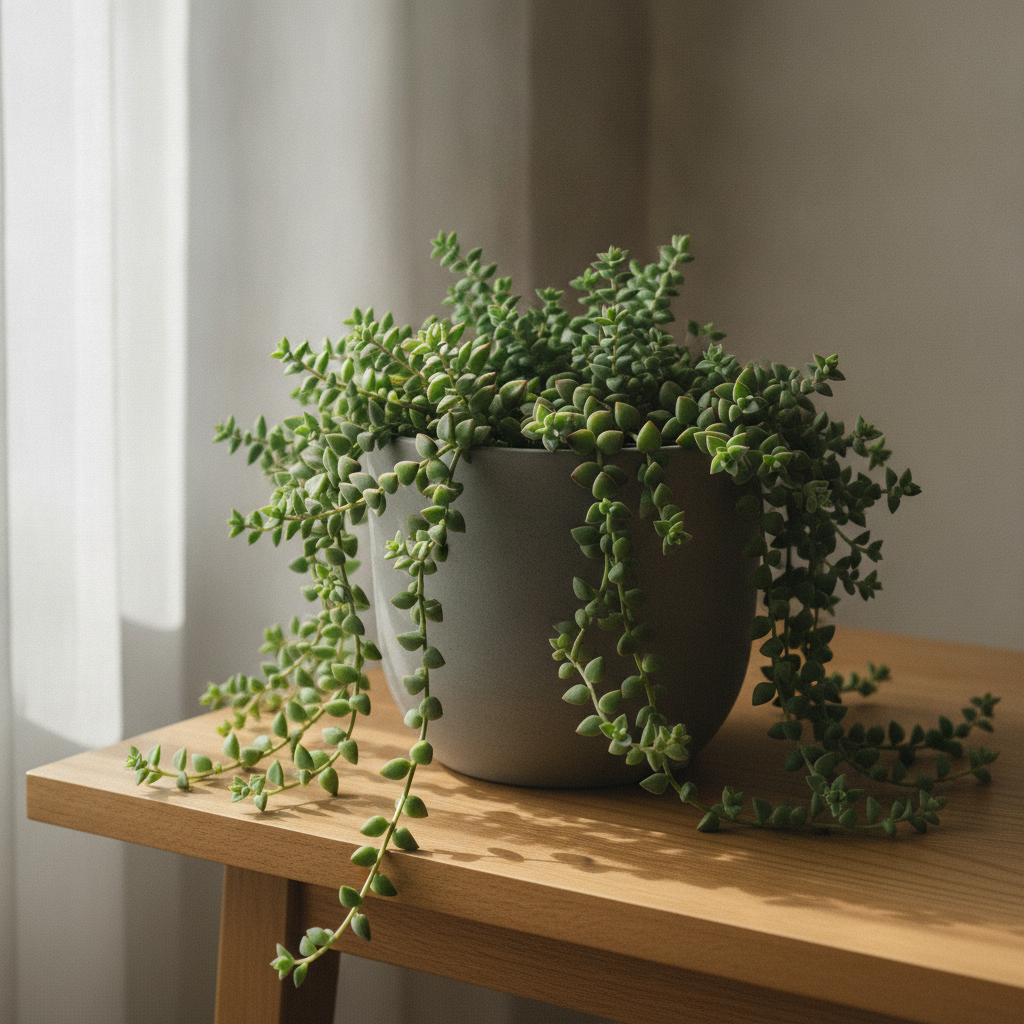
Few succulents announce their architecture as plainly as the pagoda plant. Its small triangular leaves clasp the stem in tightly stacked, opposite pairs, each tier rotated a quarter-turn from the one below, so a healthy stem really does resemble a miniature tiered tower or a string of green buttons threaded along a wire. Known botanically as Crassula perforata, this South African native earns both of its common names, pagoda plant and string of buttons, from that distinctive geometry, while the species epithet perforata refers to the way the paired leaves appear to be pierced through by the stem that runs between them.
As houseplants go, Crassula perforata sits firmly in the forgiving category. It tolerates neglect, asks for very little water, and propagates so willingly that a single broken stem becomes a new plant within weeks. That said, there is a real difference between a pagoda plant that merely survives on a dim shelf, stretching pale and leggy as it reaches for light, and one that thrives in a bright spot where the leaves stay compact, blue-grey and edged in rosy pink. This guide covers everything you need to move your plant from the first column to the second, from light and watering through to soil, feeding, propagation, pests and the handful of varieties worth seeking out.
Contents
- Quick Reference
- Why Pagoda Plant Makes a Rewarding Houseplant
- Light Requirements
- Watering & Humidity
- Soil, Potting & Repotting
- Fertilising
- Propagation
- Pests & Diseases
- Popular Varieties
- Frequently Asked Questions
Quick Reference: Pagoda Plant at a Glance
| Light | Bright light with several hours of direct sun; a south or west window indoors |
| Watering | Soak thoroughly, then let the soil dry out completely; roughly every 10 to 14 days in summer, far less in winter |
| Temperature | 18 to 24°C (64 to 75°F) ideal; protect from anything below 7°C (45°F) |
| Humidity | Low; prefers dry air and good airflow |
| Fertiliser | Dilute succulent feed once or twice during spring and summer only |
| Toxicity | Generally considered non-toxic to mildly toxic; best kept out of reach of pets and children that chew on plants |
Why Pagoda Plant Makes a Rewarding Houseplant
The pagoda plant belongs to the genus Crassula, a large group within the stonecrop family Crassulaceae that also includes the familiar jade plant. Like its relatives, Crassula perforata evolved in the dry, sun-baked landscapes of South Africa, where it grows on rocky slopes and among scrub in the Eastern Cape, Western Cape and KwaZulu-Natal. That heritage explains almost everything about its care: it is built to store water in its fleshy leaves, to ride out long dry spells, and to bask in light levels that would scorch a tropical foliage plant. Bring those instincts indoors and you have a plant that genuinely prefers to be left alone between waterings.
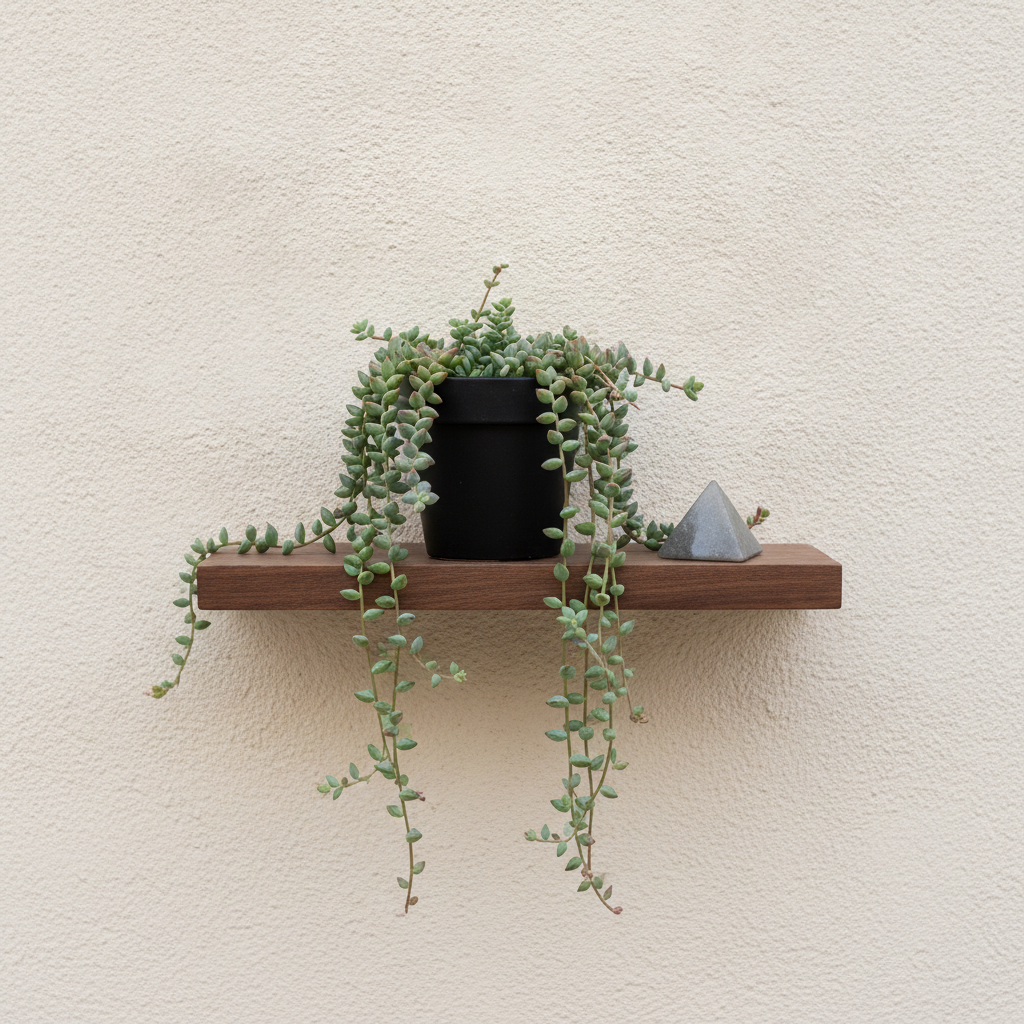
What makes it especially rewarding is how much character it packs into a small footprint. Young plants grow upright in neat little towers, but as the stems lengthen they begin to sprawl and trail, which makes the pagoda plant a natural choice for a hanging pot, a shelf edge or the lip of a bright windowsill. Grown hard in strong light and lean soil, the leaves take on a chalky blue-grey bloom and flush pink to coral along their margins, and in spring a mature plant may send up slender stalks of small, pale star-shaped flowers. It is collectable, almost indestructible once you understand its rhythm, and endlessly easy to share with friends thanks to its eagerness to root from cuttings.
Important — Toxicity: The wider Crassula genus has a mixed reputation, with the jade plant in particular listed as toxic to cats and dogs. Crassula perforata itself is usually regarded as non-toxic to mildly toxic, but the safest approach is to keep it out of reach of pets and small children who might be tempted to nibble the plump leaves, and to wash your hands after handling cut stems.
Light Requirements
Light is the single most important factor in keeping a pagoda plant looking the way it should. This is a sun-loving succulent, and it needs far more light than the average leafy houseplant to stay compact and colourful. In too little light the stems elongate dramatically, the gaps between leaf pairs stretch open, and the whole plant loses its tidy stacked look, a process called etiolation that cannot be reversed once it has happened.
Indoors, aim for the brightest position you can offer: ideally a spot that receives several hours of direct sun each day plus bright light for the rest. A windowsill is usually perfect, since the plant is small enough to sit right in the glass where light is strongest. Outdoors in a warm climate it is happy in full sun to light shade, though plants moved suddenly from indoors into fierce summer sun should be acclimatised gradually to avoid scorching.
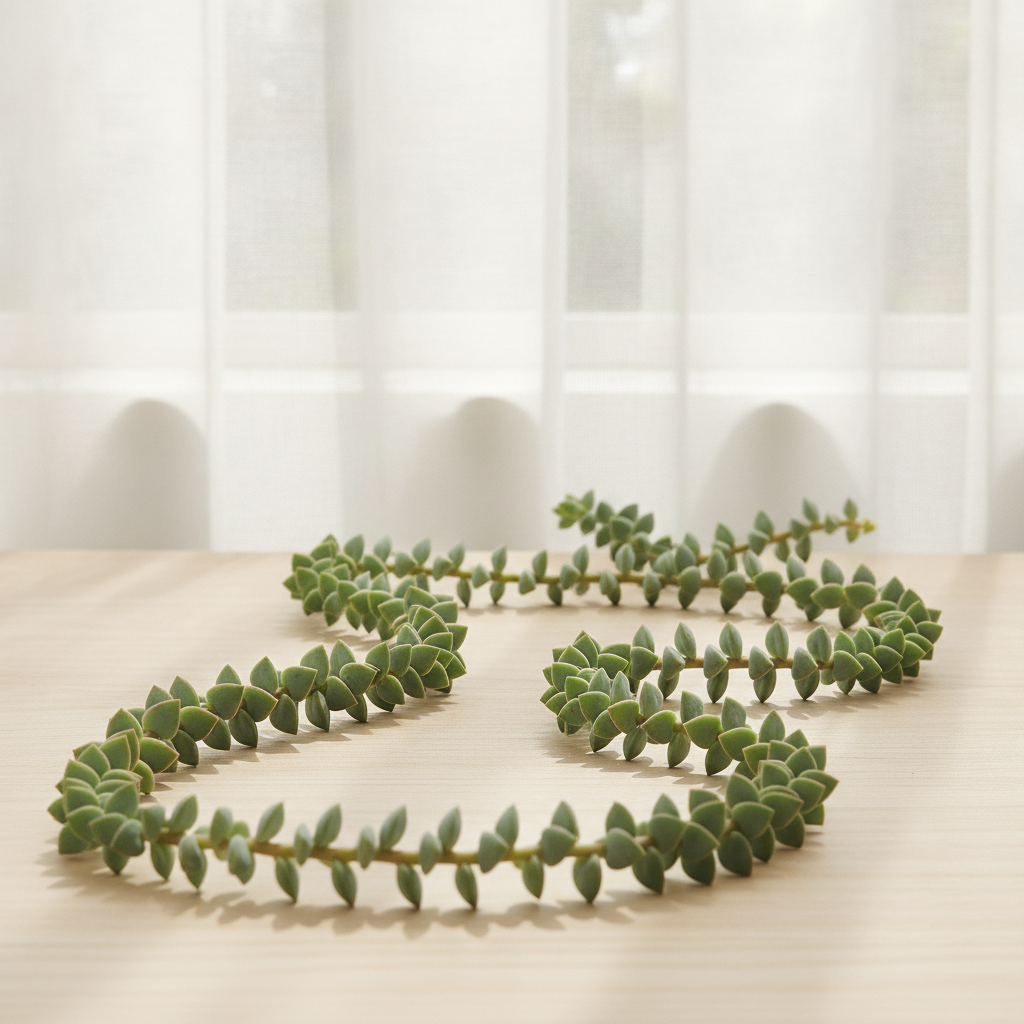
Light Levels Explained
Gardeners describe light in broad categories, and it helps to know where the pagoda plant falls within them. As a desert-adapted succulent, it sits at the bright end of the scale and will struggle in anything described as medium or low light.
| Light Category | Approx. Level | Typical Location | Outcome |
|---|---|---|---|
| Direct sun | Over 50,000 lux | On a south or west windowsill | Ideal; compact growth and pink margins |
| Bright indirect | 10,000 to 20,000 lux | Just back from a sunny window | Good; healthy but slightly less colourful |
| Medium | 5,000 to 10,000 lux | A few metres from a bright window | Marginal; stems begin to stretch |
| Low | 1,000 to 2,500 lux | An interior wall or north room | Poor; severe etiolation, weak growth |
| Very low | Under 1,000 lux | A hallway or windowless corner | Unsuitable; the plant slowly declines |
Window Orientation and Placement
South-facing window: The best choice in the northern hemisphere, delivering the long hours of direct light this succulent craves. Place the pot right on the sill and rotate it every week or two so all sides colour up evenly.
East-facing window: A good option that offers bright morning sun followed by softer light. Growth stays reasonably compact here, though the leaf colour may be a touch greener than in a south window.
West-facing window: Also very suitable, with strong afternoon sun. Watch that the glass does not overheat the plant on the hottest summer days, and ease back if the leaves look stressed.
North-facing window: Generally too dim for a pagoda plant. The plant will survive for a while but stretch and lose its form, so reserve north light for shade-tolerant foliage plants instead, or supplement with a grow light.
Pro Tip — Reading the Stems: Your plant tells you whether it has enough light. Tightly packed leaf pairs with short gaps mean the light is good. Long bare sections of stem with widely spaced leaves mean it is reaching for more, so move it closer to the window before the stretching gets worse.
How Light Affects Leaf Colour
One of the joys of growing Crassula perforata is watching its colour shift with the light. In bright conditions and especially under a little gentle stress, such as strong sun combined with cool nights and lean soil, the blue-grey leaves develop vivid rosy-pink to coral margins. The variegated form turns even more theatrical, blushing deep pink over its cream edges. Move the same plant into shade and those warm tones fade to plain green within weeks, so colour is a direct and reversible signal of how much light the plant is receiving.
Warning — Direct Sunlight: While this is a sun-loving plant, a specimen grown indoors or freshly bought from a shaded shop bench can still sunburn if thrown straight into intense outdoor summer sun. Burn shows as pale, papery or brown patches that never recover. Introduce strong sun over a week or two, giving an hour more each day, to let the leaves toughen up.
Artificial Lighting
If you lack a bright enough window, a full-spectrum LED grow light is an effective substitute and is often the difference between a stretched plant and a compact one in darker homes or through northern winters. Position the light around 15 to 30cm (6 to 12in) above the plant and run it for roughly 12 to 14 hours a day. Because the pagoda plant is small, even a modest desk-style grow lamp provides plenty of coverage.
Seasonal Adjustments
Light intensity falls sharply in autumn and winter, so a position that was perfect in summer may suddenly be too dim. Move the plant to your brightest window for the darker months, and do not be alarmed by slower growth; like most succulents, the pagoda plant naturally rests in winter. Come spring, increase light gradually and resume normal care as the days lengthen and new growth appears at the stem tips.
Watering & Humidity
If light is where most people go wrong with the pagoda plant, watering is the close second. As a leaf succulent that stores its own moisture, Crassula perforata is built to withstand drought and is far more likely to die from too much water than too little. The guiding principle is simple: water generously, then wait until the soil is bone dry before watering again. Get that rhythm right and the rest of its care almost looks after itself.
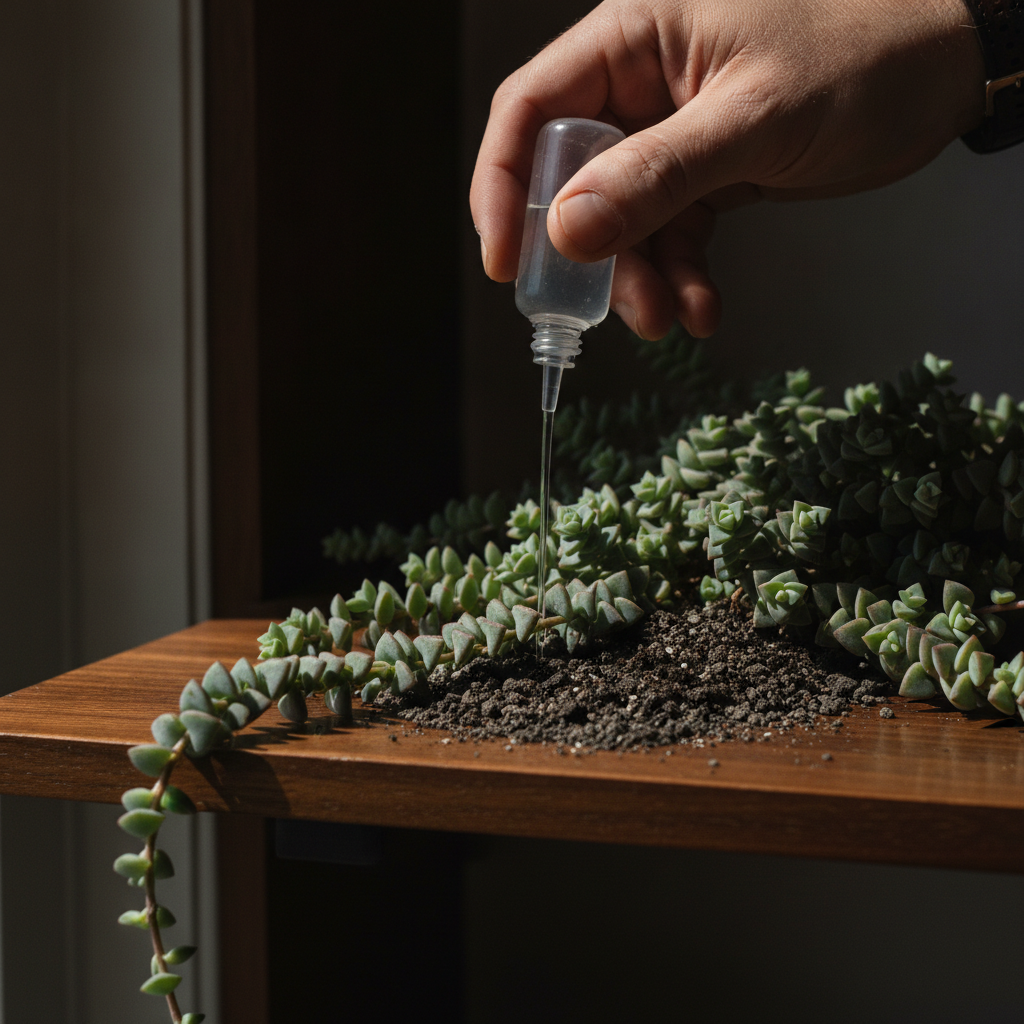
When to Water
Forget any fixed schedule and let the soil be your guide. Push a finger into the mix or lift the pot to feel its weight: water only when the soil is completely dry all the way through and the pot feels light. In a warm, bright spot during the growing season this often works out to roughly once every 10 to 14 days, but the interval depends entirely on your conditions, so check rather than assume.
In winter, when light is low and the plant is resting, watering drops to a fraction of the summer rate, perhaps once every three to four weeks or even less. A cool, dormant pagoda plant that is kept damp is the classic recipe for root rot, so when in doubt during the cold months, leave it dry a little longer.
Pro Tip — The Wrinkle Test: A slightly thirsty succulent is healthier than a soggy one. If the leaves start to look faintly soft or wrinkled, the plant is using its stored water and is ready for a drink. Plump, firm leaves mean it has plenty in reserve, so there is no need to water yet.
How to Water Correctly
- Wait until the soil is completely dry and the pot feels noticeably light.
- Water at the soil surface, directing the flow around the base of the stems rather than over the leaves.
- Soak the mix thoroughly until water runs freely from the drainage holes, wetting the entire root ball.
- Let the pot drain completely and never leave it standing in a saucer of water.
- Tip away any water that collects in the saucer or decorative outer pot within a few minutes.
- Do not water again until the soil has dried out fully, however long that takes.
Signs of Overwatering vs. Underwatering
| Symptom | Overwatering | Underwatering |
|---|---|---|
| Leaf colour | Yellowing, translucent or blackening leaves | Leaves dull and slightly faded |
| Leaf texture | Soft, mushy and swollen, leaves drop at a touch | Soft, wrinkled and shrivelled but still attached |
| Soil | Stays wet for days, may smell sour | Bone dry and pulling away from the pot edge |
| Roots | Brown, black and mushy with a foul smell | Dry and intact, simply thirsty |
| Stem base | Soft, dark and collapsing | Firm but the lower leaves may dry and fall |
Warning — Root Rot: Mushy, blackening stems and a sour smell from the soil signal root rot, the most common killer of this plant. Act fast: unpot it, cut away every soft or discoloured root and stem, let the healthy remnant callus for a day or two, and replant into fresh dry succulent mix. Often the surest rescue is to take a clean cutting from the top and start again, since the original roots may be beyond saving.
Humidity Requirements
Unlike tropical houseplants, the pagoda plant has no need for extra humidity and in fact prefers dry air with good circulation. Ordinary household humidity is ideal, and the plant will be perfectly content in the same conditions you find comfortable.
Problems only tend to arise when humidity is high and air is stagnant, conditions that encourage fungal issues and rot on a plant adapted to arid slopes. Crowded, still, damp corners are the enemy here, not dry air.
There is no need to mist a pagoda plant; misting wets the leaves and crown unnecessarily and can do more harm than good. If anything, focus on airflow: a position with gentle air movement keeps the foliage dry and discourages pests and disease.
Water Quality
The pagoda plant is not fussy about water quality and tolerates ordinary tap water in most areas. In regions with very hard water you may see faint mineral spotting on the leaves over time, which is cosmetic only. If you prefer, rainwater or filtered water avoids this, but for a tough succulent like this it is rarely necessary.
Soil, Potting & Repotting
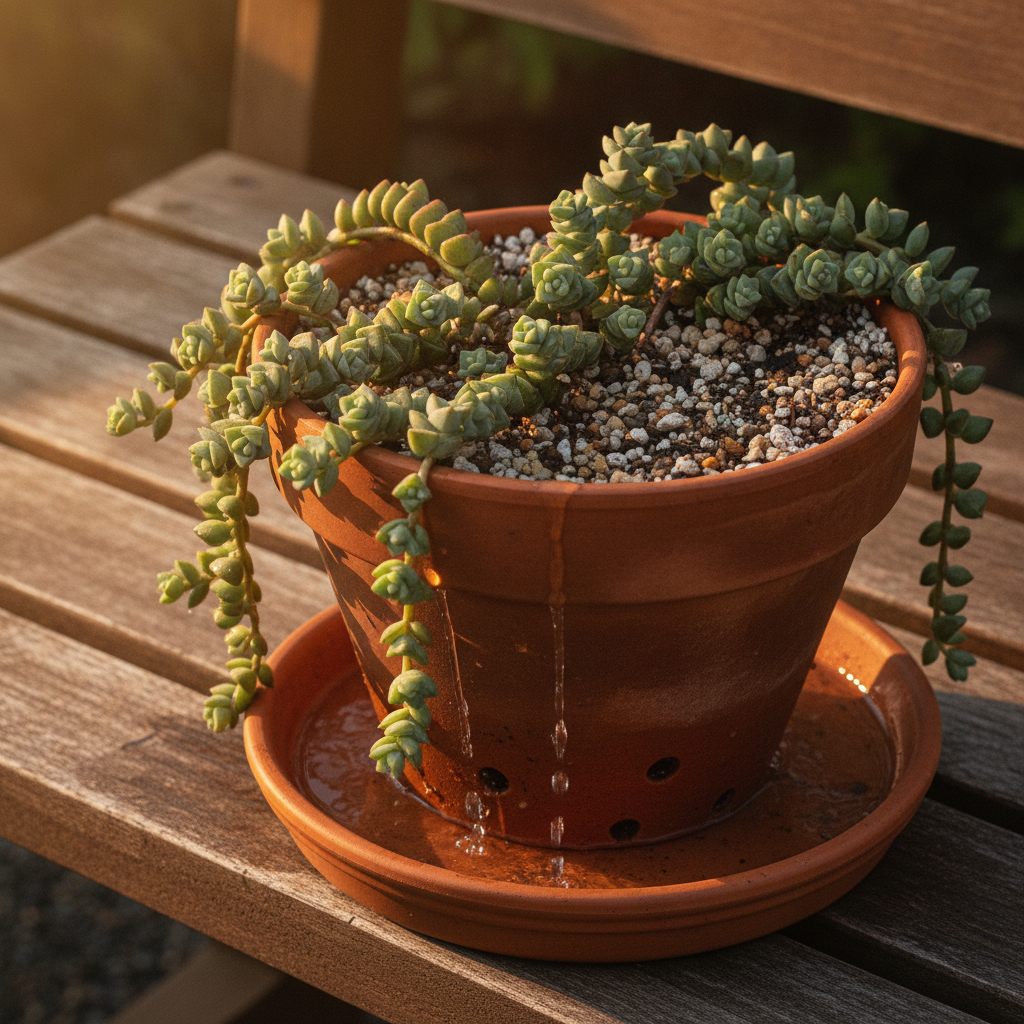
The right soil does half the watering work for you. Because Crassula perforata will not tolerate wet feet, it needs a gritty, fast-draining medium that lets water rush through and air reach the roots. A dense, moisture-retentive potting compost, the kind sold for general houseplants, holds far too much water for a succulent and is the most common cause of slow decline.
Ideal Soil Composition
The simplest approach is to buy a ready-made cactus and succulent compost, then improve its drainage further by mixing in extra grit or perlite. The aim is a mix that feels coarse and open in the hand, never claggy, so that water cannot linger around the roots. As a rough target, around half mineral grit to half organic matter suits this plant well.
| Component | Proportion | Function |
|---|---|---|
| Cactus and succulent compost | 50% | Provides structure and modest nutrients |
| Horticultural grit or coarse sand | 25% | Adds weight and sharp drainage |
| Perlite or pumice | 25% | Creates air pockets and prevents compaction |
In terms of acidity, the pagoda plant is relaxed and grows well in a slightly acidic to neutral range of roughly pH 6.0 to 7.0, which is what most cactus mixes provide by default. There is no need to test or adjust pH for ordinary indoor growing.
Pro Tip — Quick Mix Recipe: No succulent compost to hand? Combine two parts of ordinary peat-free potting compost with one part perlite and one part coarse grit or sharp sand. The result drains fast enough to keep a pagoda plant happy and costs a fraction of specialist mixes.
Choosing the Right Pot
Pot choice matters more for succulents than for almost any other group of houseplants, because the container directly affects how quickly the soil dries. A well-chosen pot works with your soil to keep the roots on the dry side between waterings.
Drainage holes are non-negotiable. Never plant a pagoda plant in a pot without drainage. Without a way for excess water to escape, the soil stays saturated at the bottom and root rot is almost guaranteed. If you love a decorative pot that has no hole, use it as a cover pot and keep the plant in a plain plastic nursery pot inside it.
Pot material: Terracotta is the ideal partner for this plant. Its porous walls wick moisture out of the soil and let it evaporate, drying the mix faster and providing a useful safety margin against overwatering. Glazed ceramic and plastic both work but hold moisture longer, so you will need to water even more cautiously in them.
Pot size: Choose a snug pot only slightly larger than the root ball. An oversized pot holds a large volume of damp soil that the small root system cannot use, which keeps the mix wet for too long. Trailing specimens also look their best spilling over the rim of a modest pot or hanging container.
When to Repot
The pagoda plant is a slow, modest grower and is quite happy being a little root-bound, so it rarely needs frequent repotting. Plan to refresh the soil or move up a pot size every two to three years, or sooner if roots are growing out of the drainage holes, the soil has broken down and stays wet too long, or the plant has become top-heavy. The best time to repot is spring, at the start of the active growing season.
How to Repot: Step-by-Step
- Water lightly a day or two beforehand, or repot while dry, whichever you find easier to handle.
- Gently ease the plant out of its pot, supporting the fragile stems and taking care not to snap them.
- Tease away most of the old soil and inspect the roots, trimming off anything brown, black or mushy with clean scissors.
- Part-fill the new pot with fresh, dry succulent mix and set the plant at the same depth it grew before.
- Fill around the roots with more mix, firming it gently so the plant sits steady without burying the stems.
- Resist watering straight away; wait around a week so any damaged roots can callus over before they meet moisture.
- Return the plant to its bright spot and resume normal watering once it has settled in.
Warning — Transplant Shock: Because the stems are brittle and detach easily, expect a few segments to break off during repotting. This is nothing to worry about. Do not bin them; let the broken pieces dry for a day, then lay them on fresh mix to root, and you will have free new plants from the repotting offcuts.
Fertilising
The pagoda plant is a light feeder, evolved to thrive in the lean, mineral soils of its native rocky slopes. It needs only modest feeding to do well, and far more harm comes from overfeeding than from underfeeding. Treat fertiliser as a gentle seasonal boost rather than a regular requirement.
A plant freshly potted into good succulent mix has all the nutrients it needs for many months, so there is no rush to feed a recent purchase or repotting. Established plants benefit from a little feeding through the growing season to support new growth and good colour.
Understanding Plant Nutrients
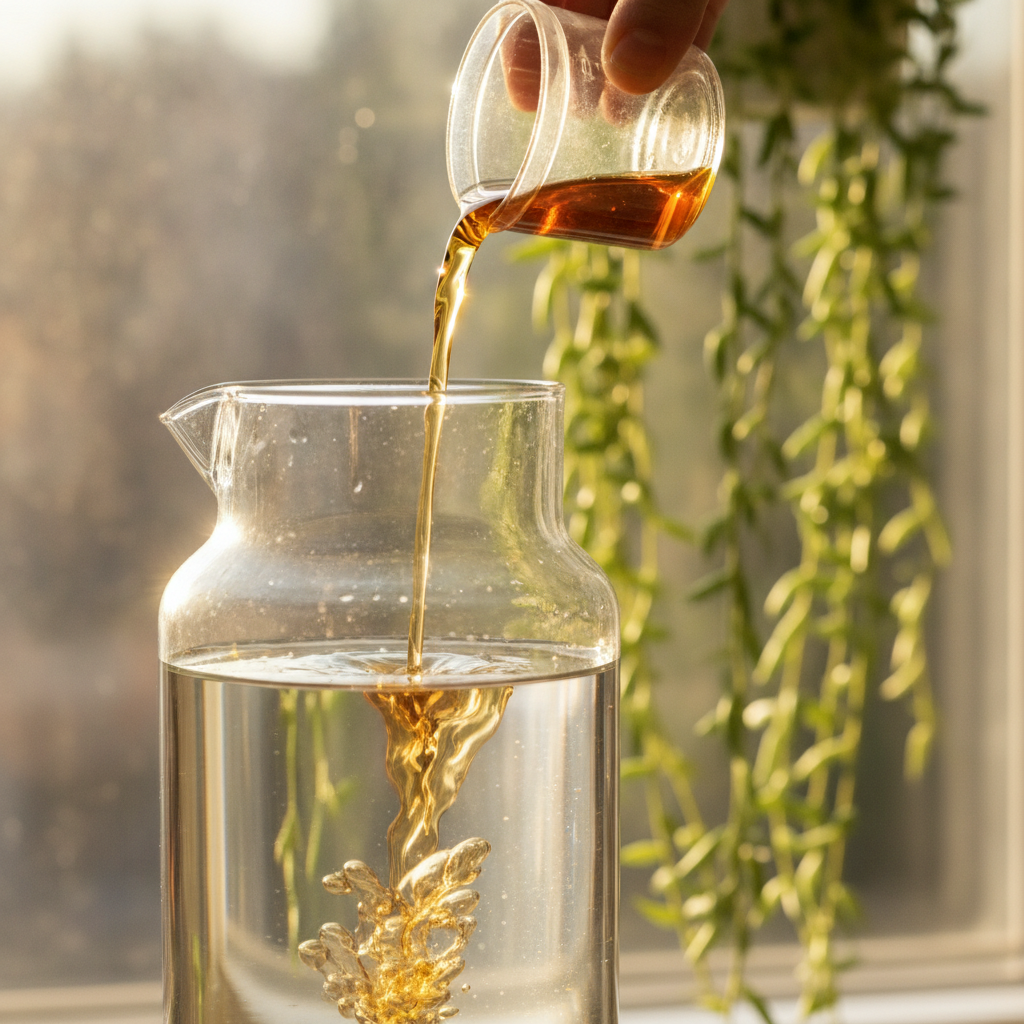
Fertilisers are labelled with an N-P-K ratio describing their balance of the three main nutrients: nitrogen for leafy growth, phosphorus for roots and flowering, and potassium for overall vigour and stress resistance. For a compact succulent like the pagoda plant, a balanced or slightly low-nitrogen formula is preferable, since too much nitrogen drives soft, sappy growth that stretches and is prone to pests.
| Nutrient | Symbol | Primary Function | Deficiency Symptoms |
|---|---|---|---|
| Nitrogen | N | Drives stem and leaf growth | Pale, slow, stunted growth |
| Phosphorus | P | Supports roots and flowering | Weak roots, poor flowering |
| Potassium | K | Aids vigour and stress tolerance | Yellow leaf edges, weak stems |
| Calcium | Ca | Builds firm cell walls | Distorted new growth |
| Magnesium | Mg | Central to chlorophyll | Yellowing between leaf veins |
| Iron | Fe | Needed for green pigment | Pale yellow young leaves |
Types of Fertiliser
Liquid fertilisers: The easiest choice for succulents. A liquid succulent or cactus feed, or a balanced houseplant feed diluted to roughly a quarter or half of the recommended strength, mixes into your watering can and is taken up quickly. This is the method most growers use for a pagoda plant.
Slow-release granular: A few granules of a low-strength slow-release feed worked into the soil in spring will drip-feed nutrients gently over the season. Use sparingly, as it is easy to over-apply to such a small, light-feeding plant.
Organic fertilisers: Mild organic options such as a dilute seaweed feed or a thin top-dressing of worm castings work well and are hard to overdo. They release nutrients slowly and also support healthy soil life.
Feeding Schedule
Feed only during the active growing season of spring and summer. One application early in spring and perhaps one more in midsummer is plenty for most plants. Stop feeding entirely in autumn and winter, when the plant is resting and cannot use the nutrients, as feeding a dormant succulent simply lets salts build up in the soil.
Pro Tip — Less Is More: When it comes to feeding succulents, the safest rule is to dilute further and feed less often than you think you should. A weak feed once or twice a year keeps a pagoda plant healthy without driving the soft, stretched growth that over-fed plants produce.
How to Fertilise
- Dilute a succulent or balanced feed to a quarter or half of the label strength.
- Water the plant with plain water first if the soil is completely dry, to avoid feeding parched roots.
- Apply the diluted feed to the soil, not the leaves, until it drains from the bottom.
- Let the pot drain fully and tip away any runoff that collects.
- Wait until the next normal watering before feeding again, and only during spring and summer.
Warning — Salt Build-Up: Over-fertilising leaves a crust of mineral salts in the soil that can scorch the roots, showing as brown, crisp leaf tips and weak growth. If you see this, flush the pot thoroughly with plain water several times to wash the salts out, and ease right back on feeding.
Propagation
If there is one thing the pagoda plant does effortlessly, it is multiply. Crassula perforata is among the easiest of all succulents to propagate, rooting readily from stem cuttings and even from individual segments that break off on their own. A single plant can quickly become a windowsill full, and propagation is also the best way to rejuvenate a specimen that has grown leggy and bare at the base.
The two reliable methods are stem cuttings and division of offsets, both of which have a very high success rate. Spring and summer are the ideal times to propagate, when the plant is in active growth and cuttings root fastest, though this obliging little succulent will often oblige at other times of year too.
Understanding Nodes and Callusing
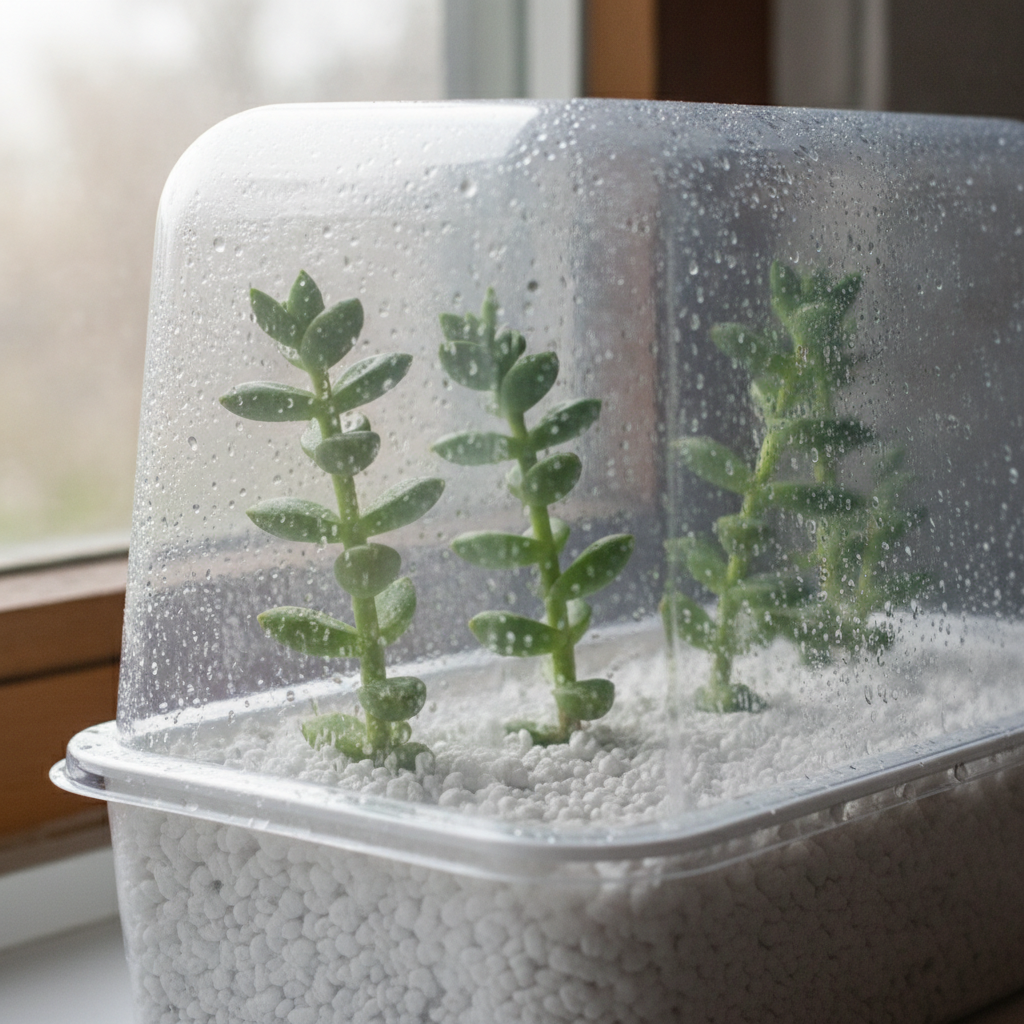
Two ideas make succulent propagation reliable. The first is the node, the point on the stem where leaves attach and where new roots emerge most readily, so a cutting that includes several nodes roots faster. The second is callusing: after you cut a succulent, the wound needs a day or two in the open air to dry and seal over before planting. A callused cutting resists rot when it meets soil, while a fresh wet cut pushed straight into damp mix often simply rots away.
Stem Cuttings: Step-by-Step
Stem cuttings are the quickest and most popular way to propagate a pagoda plant, producing a full new plant rather than a single rosette. This is the method to reach for if your plant has grown leggy and you want to start a fresh, compact specimen from its tip.
- Using clean, sharp scissors, snip a healthy stem section a few centimetres long, ideally including several pairs of leaves.
- Gently remove the lowest one or two leaf pairs to expose a short length of bare stem.
- Set the cutting aside in a dry, shaded spot for one to three days until the cut end has callused over.
- Insert the callused end into barely moist, gritty succulent mix or a tray of damp perlite.
- Keep it in bright, indirect light and mist or lightly water only when the mix is fully dry.
- Roots usually form within two to three weeks; a gentle tug that meets resistance means it has rooted and normal care can begin.
Pro Tip — Lay and Wait: You do not even need to plant the cuttings upright. Pieces of pagoda plant stem laid flat on the surface of dry, gritty mix will often sprout roots from the nodes along their length and new growth from the tip, all on their own. It is one of the most carefree ways to propagate any succulent.
Division of Offsets: Step-by-Step
A mature, clumping pagoda plant produces side shoots and offsets at its base, which can be separated to make new plants while keeping the parent intact. Division is best done at repotting time so you handle the roots only once.
- Unpot the whole plant and gently shake or tease the soil away from the roots.
- Identify natural clumps or offsets that have their own roots attached to the main plant.
- Separate them by hand, or cut cleanly with sterilised scissors, keeping as many roots as possible on each piece.
- Allow any cut surfaces to dry for a day, then pot each division into its own small pot of dry succulent mix.
- Wait about a week before the first light watering, then care for the new plants as normal.
Troubleshooting Propagation
| Problem | Likely Cause | Solution |
|---|---|---|
| Cutting rots and turns mushy | Planted before callusing, or kept too wet | Let cuts dry longer and keep the mix barely moist |
| No roots after several weeks | Too cold, too dark, or taken in winter | Move to a warmer, brighter spot and wait for spring |
| Cutting shrivels and dries up | Far too dry with no humidity at all | Mist very lightly or move to a slightly more humid spot |
| Roots form but no new growth | Insufficient light after rooting | Increase light gradually once roots are established |
Pests & Diseases
A healthy, well-grown pagoda plant is relatively trouble-free, but no succulent is entirely immune. The vast majority of problems trace back to one of two causes: sap-sucking insects that take hold on stressed or crowded plants, and fungal rots that follow overwatering. Catch either early and the plant recovers easily.
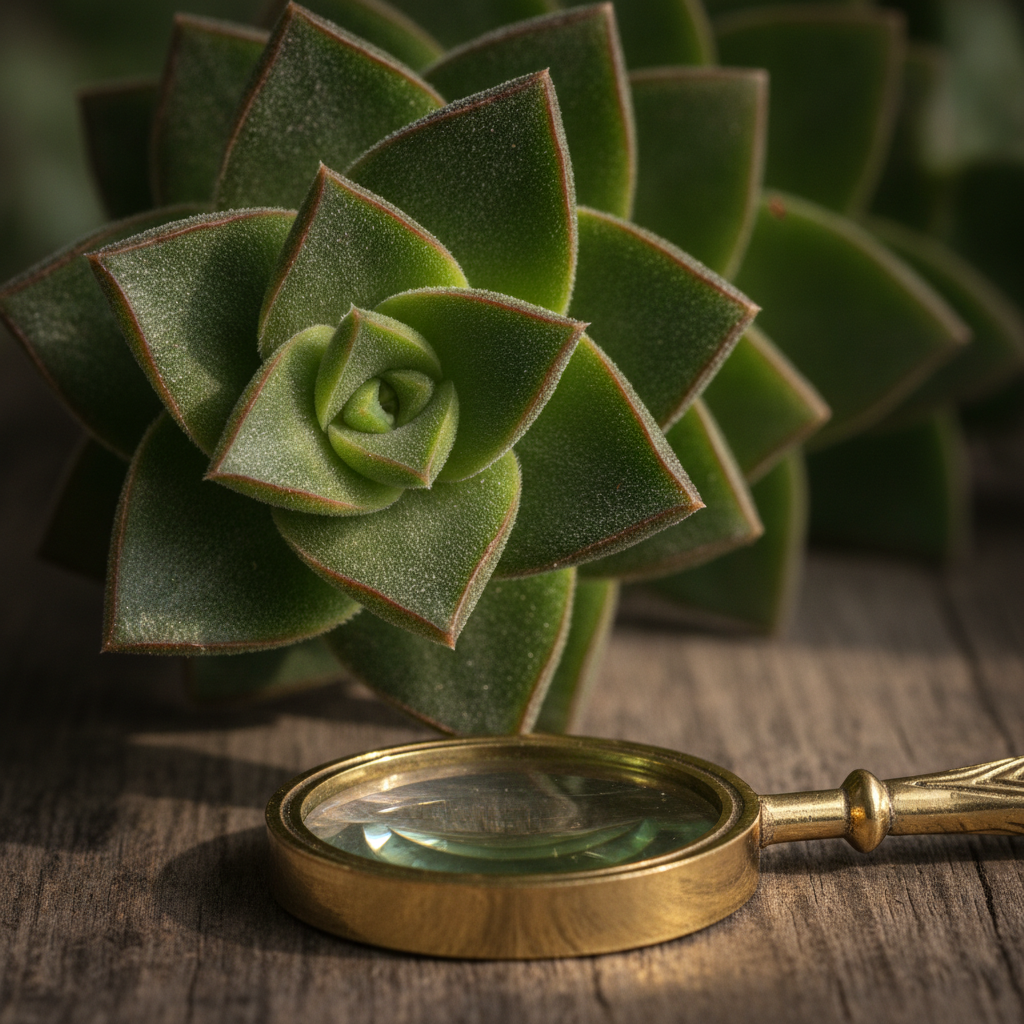
The best defence is regular observation. Because the stacked leaves create tight little crevices where pests can hide, it pays to look closely now and then, parting the leaf pairs and checking the joints where leaf meets stem.
Common Pests
Mealybugs (Pseudococcus spp.)
By far the most common pest of Crassula, mealybugs appear as small white, cottony tufts tucked into the joints between leaves and stem. They suck sap, weaken the plant and leave a sticky residue that can turn into sooty mould. The tight leaf stacking of a pagoda plant gives them perfect hiding places.
Treatment: Dab each insect directly with a cotton bud dipped in isopropyl alcohol, which kills them on contact. For heavier infestations, treat the whole plant with a horticultural soap or neem oil spray, repeating every week or so until no new bugs appear, and isolate the plant from your others in the meantime.
Aphids (Aphidoidea)
Aphids are small green, black or pink insects that cluster on soft new growth and flower stalks, where they suck sap and excrete sticky honeydew. They tend to appear most often when a plant is putting out tender spring growth.
Treatment: Rinse them off with a gentle stream of water, or spray with diluted insecticidal soap. Repeat every few days until the colony is gone, paying attention to the growing tips where they congregate.
Spider Mites (Tetranychus urticae)
These tiny mites thrive in hot, dry, dusty conditions and are easy to miss until fine webbing appears between the leaves and the foliage takes on a stippled, faded look. They are more of a risk on plants kept in very warm, still air.
Treatment: Wipe the plant down, improve airflow, and treat with neem oil or a miticide. Because mites multiply fast, repeat treatments are usually needed to break their life cycle.
Common Diseases
Root and Stem Rot (Fusarium and Pythium spp.)
The most serious threat to a pagoda plant, rot sets in when the roots or stem base sit in wet soil for too long. It shows as softening, blackening tissue and a sour smell, and can collapse a plant quickly once it takes hold.
Treatment: There is no cure for rotted tissue, so the strategy is to salvage what is healthy. Cut well above any soft, discoloured stem, let the clean cutting callus, and root it afresh in dry mix. Prevention through careful watering and gritty soil is far more effective than any treatment.
Sooty Mould (Capnodium spp.)
A black, soot-like film that grows on the sticky honeydew left by mealybugs and aphids. It does not attack the plant directly but blocks light from the leaves and signals an underlying pest problem.
Treatment: Wipe the mould away with a damp cloth and, crucially, deal with the sap-sucking pests producing the honeydew. Once the insects are gone, the mould has nothing to feed on and will not return.
Pest and Disease Summary
| Pest / Disease | Identification | Treatment |
|---|---|---|
| Mealybugs | White cottony tufts in leaf joints | Alcohol on a cotton bud, then neem or soap |
| Aphids | Clusters on new growth, sticky honeydew | Rinse off, spray with insecticidal soap |
| Spider mites | Fine webbing, stippled faded leaves | Improve airflow, treat with neem or miticide |
| Root and stem rot | Soft black tissue, sour smell | Cut to healthy tissue, re-root cuttings in dry mix |
| Sooty mould | Black film over sticky leaves | Wipe off and eliminate the pests producing honeydew |
Prevention Strategies
Prevention is mostly about good basic culture. A pagoda plant grown in bright light, gritty soil and with careful watering is naturally resilient and far less likely to attract pests or succumb to rot than a stressed, overwatered one. Good airflow keeps the foliage dry and discourages both mites and fungal problems.
Quarantine is the other key habit. Always inspect new plants closely and keep them apart from your collection for a couple of weeks, since mealybugs in particular often arrive hidden on a new purchase and spread to neighbouring succulents before you notice them.
Pro Tip — Alcohol on Standby: Keep a small bottle of isopropyl alcohol and a pack of cotton buds near your plants. The moment you spot a single mealybug, a quick dab knocks it out before it can breed, and dealing with one insect is far easier than tackling a full infestation a month later.
Popular Varieties
While Crassula perforata has not been bred into dozens of cultivars the way some houseplants have, there are a few distinct forms worth knowing, along with several close relatives that are often sold under similar names and care for in much the same way.
The two forms you are most likely to encounter are the classic green species and the eye-catching variegated cultivar. Beyond those, the genus Crassula offers a family of stacked-leaf lookalikes that make natural companions on a sunny shelf.
| Variety | Leaf Appearance | Light Needs | Growth Rate | Availability |
|---|---|---|---|---|
| Species (green form) | Grey-green stacked triangles, rosy edges in sun | Bright, direct sun | Slow to moderate | Common |
| ‘Variegata’ | Cream and yellow margins flushing pink | Bright, direct sun | Slow | Common |
| Crassula rupestris | Plumper, rounder stacked leaves | Bright, direct sun | Slow to moderate | Fairly common |
| ‘Baby’s Necklace’ | Tight bead-like leaves, red tips | Bright, direct sun | Slow | Common |
| Crassula ‘Buddha’s Temple’ | Densely stacked grey columns | Bright, direct sun | Very slow | Collectable |
Featured Varieties
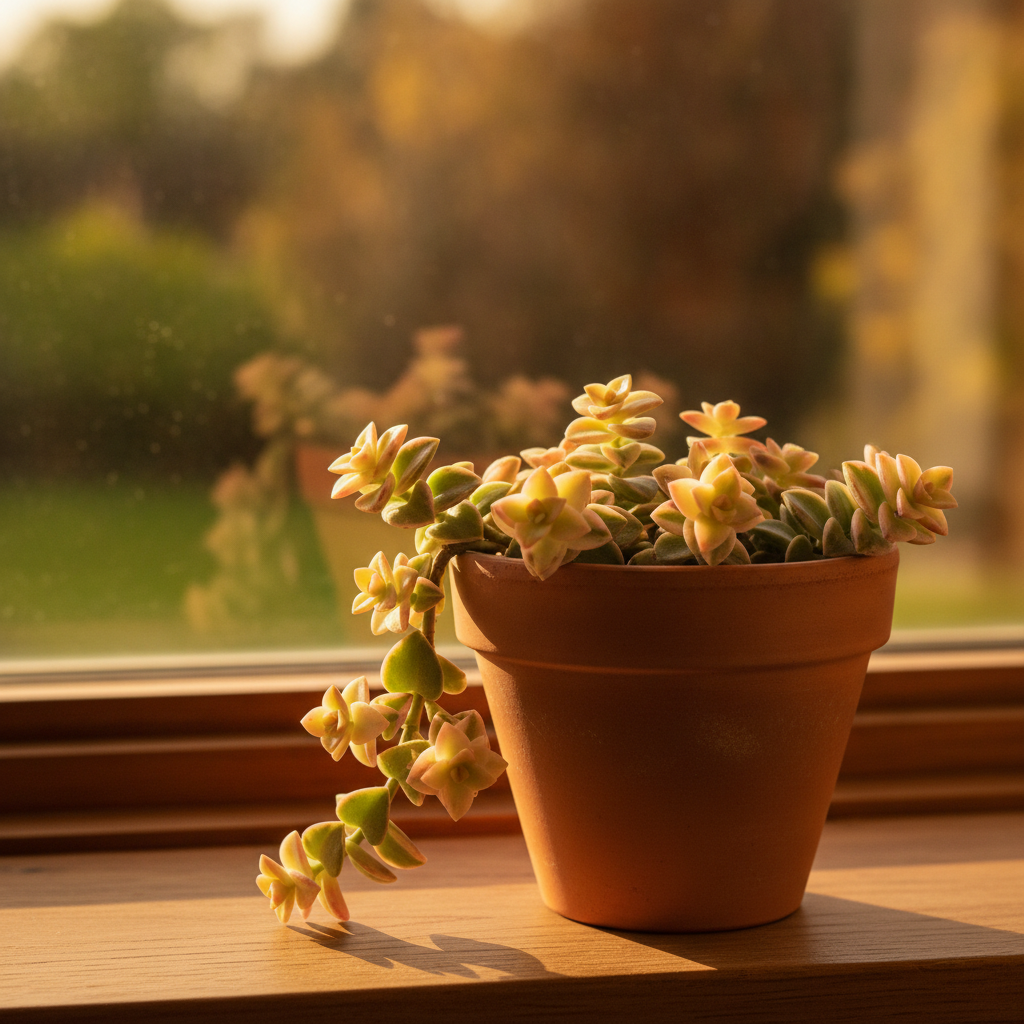
‘Variegata’
The showstopper of the group. Its stacked leaves carry broad creamy-yellow margins that blush a striking rose-pink under strong light, making it the most sought-after form of string of buttons. It grows a little slower than the green species and needs good light to hold its variegation and colour.
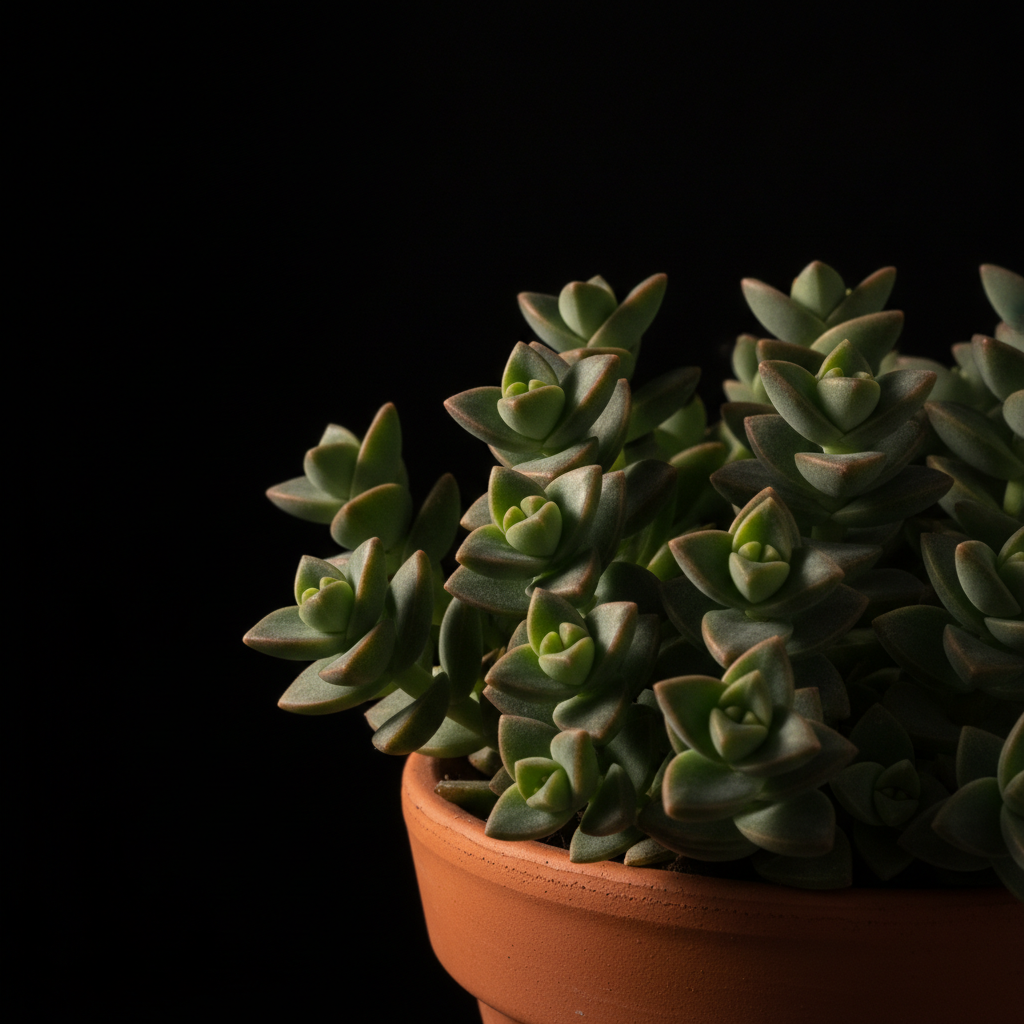
Species (Green Form)
The original wild form and still a beautiful plant. Tightly stacked blue-grey triangular leaves run up trailing stems, edged in rosy red when grown in bright sun. It is the most vigorous and forgiving form, and the easiest to find and to propagate.
Variety Profiles in Detail
String of Buttons ‘Variegata’ (Crassula perforata ‘Variegata’)
This is the form most collectors covet. The cream-and-green variegation is genetically stable and reliable, and the warm pink flush it develops in sun gives it a softer, more pastel look than the species. Because variegated tissue contains less chlorophyll, it grows slightly slower and appreciates as much bright light as you can give it, but otherwise its care is identical to the green form.
Baby’s Necklace (Crassula rupestris subsp. marnieriana)
A closely related and frequently confused relative, baby’s necklace has rounder, bead-like leaves stacked even more tightly along the stem, often tipped in red. It is sometimes sold interchangeably with string of buttons and shares exactly the same bright-light, dry-soil requirements, making it a natural companion plant.
Choosing the Right Variety for Your Space
For a bright, sunny windowsill where you want maximum colour, the variegated form is hard to beat, provided you can give it strong light to keep its pink and cream tones. If your conditions are a little less intense, or you simply want the toughest, fastest-growing option, the green species is the dependable choice. Either way, all forms of the pagoda plant want the same things: lots of light, gritty soil and a careful hand with the watering can, so once you have mastered one you can grow them all.
Frequently Asked Questions
Why is my pagoda plant stretching out and looking leggy?
Almost always a sign of too little light. When a pagoda plant cannot get enough sun, it elongates the stem and spaces the leaf pairs further apart as it reaches for brightness. Move it to your sunniest window or add a grow light. The stretched section will not tighten back up, but you can cut off the leggy growth and re-root the tip to start a compact new plant.
How often should I water a pagoda plant?
Only when the soil has dried out completely. In a warm, bright spot in summer that often works out to roughly every 10 to 14 days, but the right interval depends on your light, pot and temperature, so always check the soil rather than following a calendar. In winter, water far less, perhaps once every three to four weeks or less.
Why are the leaves on my pagoda plant turning pink or red?
This is usually a good sign. Strong light, especially combined with cool nights and lean conditions, brings out rosy pink to coral tones along the leaf margins, a natural form of stress colouring that many growers prize. As long as the plant is otherwise firm and healthy, pink edges simply mean it is getting plenty of light.
Is the pagoda plant safe for cats and dogs?
Crassula perforata is generally regarded as non-toxic to mildly toxic, but some members of the genus, notably the jade plant, are toxic to pets. To be safe, keep the plant out of reach of cats, dogs and small children, and if a pet does eat a significant amount and shows any signs of illness, contact your vet.
Does a pagoda plant flower indoors?
It can. A mature, well-grown plant in good light may send up slender stalks of small, pale star-shaped flowers, usually in late winter or spring. Flowering is more likely when the plant has had a bright, cool, dry winter rest, which mimics the seasonal cues it responds to in the wild.
My pagoda plant’s leaves are wrinkled and soft. What is wrong?
Wrinkled, slightly soft leaves that are still firmly attached usually mean the plant is thirsty and drawing on its stored water, so a good soak will plump them back up within a day or two. If, however, the leaves are mushy, translucent and dropping off, that points to overwatering and possible rot, which needs the opposite response of drying out and checking the roots.
Can I grow a pagoda plant in a hanging basket?
Absolutely, and it is one of the best ways to display it. As the stems lengthen they trail and sprawl attractively over the edge of a pot, so a hanging container or a high shelf shows off that cascading habit beautifully. Just make sure the basket has drainage and that it hangs somewhere bright enough to keep the growth compact.
How do I make my pagoda plant bushier?
Pinching or pruning the stem tips encourages the plant to branch and grow fuller, and you can root the pieces you remove to add more stems to the same pot. Combined with bright light to keep new growth compact, regular tip pruning over a season or two turns a sparse plant into a dense, full one.






