
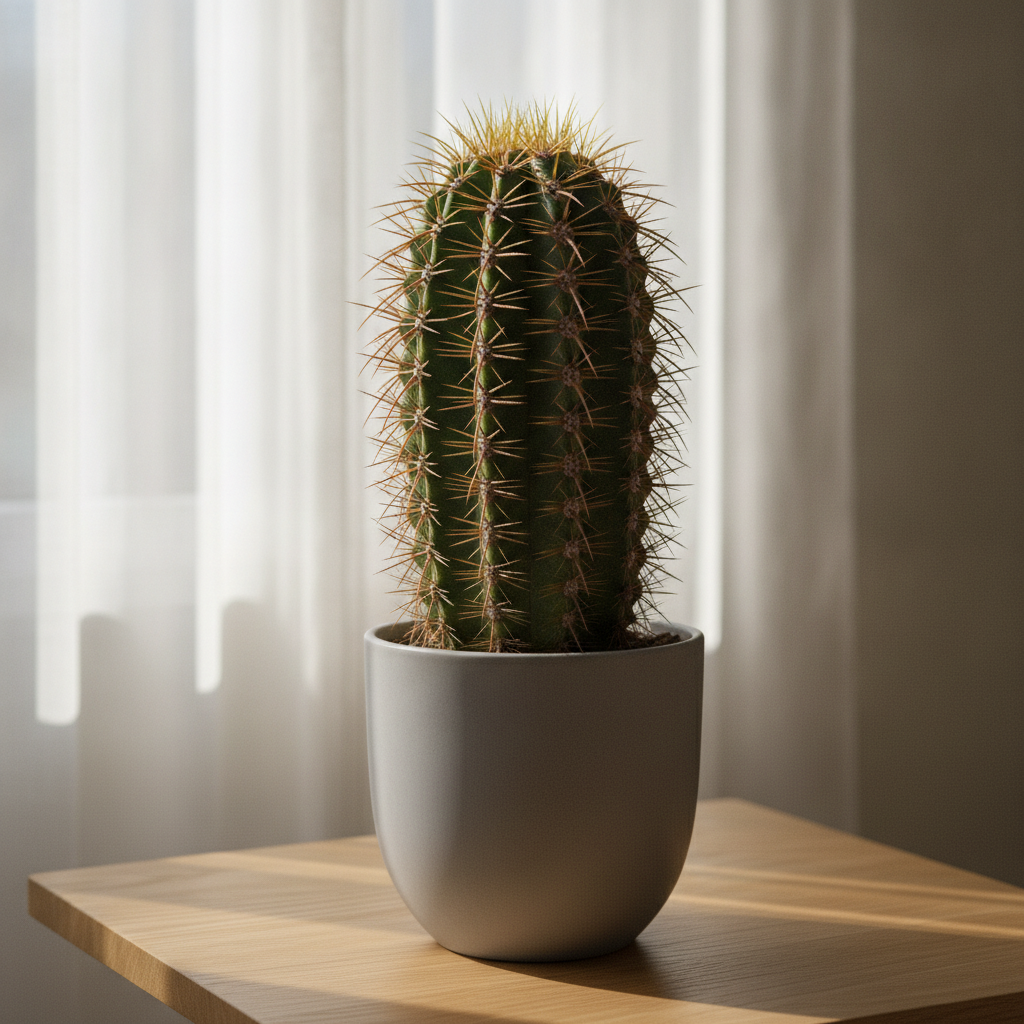
The orchid barrel cactus (Ferocactus cylindraceus) is one of the most architectural plants a grower can bring indoors: a solitary, deeply ribbed green column bristling with curved spines that glow amber, straw-gold and crimson when the light catches them. Native to the Sonoran and Mojave deserts of the southwestern United States and northwestern Mexico, it is far better known by its field names, the California barrel cactus and the compass barrel, the latter earned by its habit of leaning gently towards the sun as it ages. The “orchid barrel” label is largely a nursery trade name, but whatever it is called, this is a plant built for heat, light and neglect.
Among barrel cacti this species has a reputation for being genuinely easy, provided you understand what it actually wants, which is the opposite of what most houseplants ask for. It thrives on bright, direct sun, tolerates blistering warmth and asks for water only when its gritty soil has been bone dry for some time. The gap between merely keeping one alive and growing a robust, well-coloured specimen with dense fresh spines comes down to a handful of details around light intensity, drainage and a genuine winter rest. This guide covers all of them, from placement and watering rhythm to raising new plants from seed and dealing with the occasional pest.
Contents
- Quick Reference
- Why Orchid Barrel Cactus Makes a Rewarding Houseplant
- Light Requirements
- Watering & Humidity
- Soil, Potting & Repotting
- Fertilising
- Propagation
- Pests & Diseases
- Popular Varieties
- Frequently Asked Questions
Quick Reference: Orchid Barrel Cactus at a Glance
| Light | Full, direct sun; the brightest position you can offer, ideally a south-facing window with several hours of unfiltered light |
| Watering | Deep and infrequent; only once the soil is completely dry. Roughly every 10 to 21 days in summer, and little to none in winter |
| Temperature | 21 to 32 degrees Celsius (70 to 90 Fahrenheit) in growth; a cool, dry winter rest around 7 to 13 Celsius (45 to 55 Fahrenheit) is ideal |
| Humidity | Low; 30 to 40 per cent is perfect. Dislikes damp, stagnant air |
| Fertiliser | A dilute low-nitrogen cactus feed once or twice during spring and summer only |
| Toxicity | Non-toxic to cats, dogs and humans; the sharp, hooked spines are the only real hazard |
Why Orchid Barrel Cactus Makes a Rewarding Houseplant
Few houseplants offer the sculptural presence of a mature barrel cactus. Where trailing foliage plants soften a room, Ferocactus cylindraceus anchors it, a solid geometric form that reads almost like an object of design rather than a living thing. Its ribs run in clean vertical pleats around the body, and the spine clusters, borne on felted areoles along each rib, layer into a shimmering armour that shifts colour with age and light. On a sunny sill it becomes a small piece of the desert, quietly compelling and almost impossible to kill through under-attention.
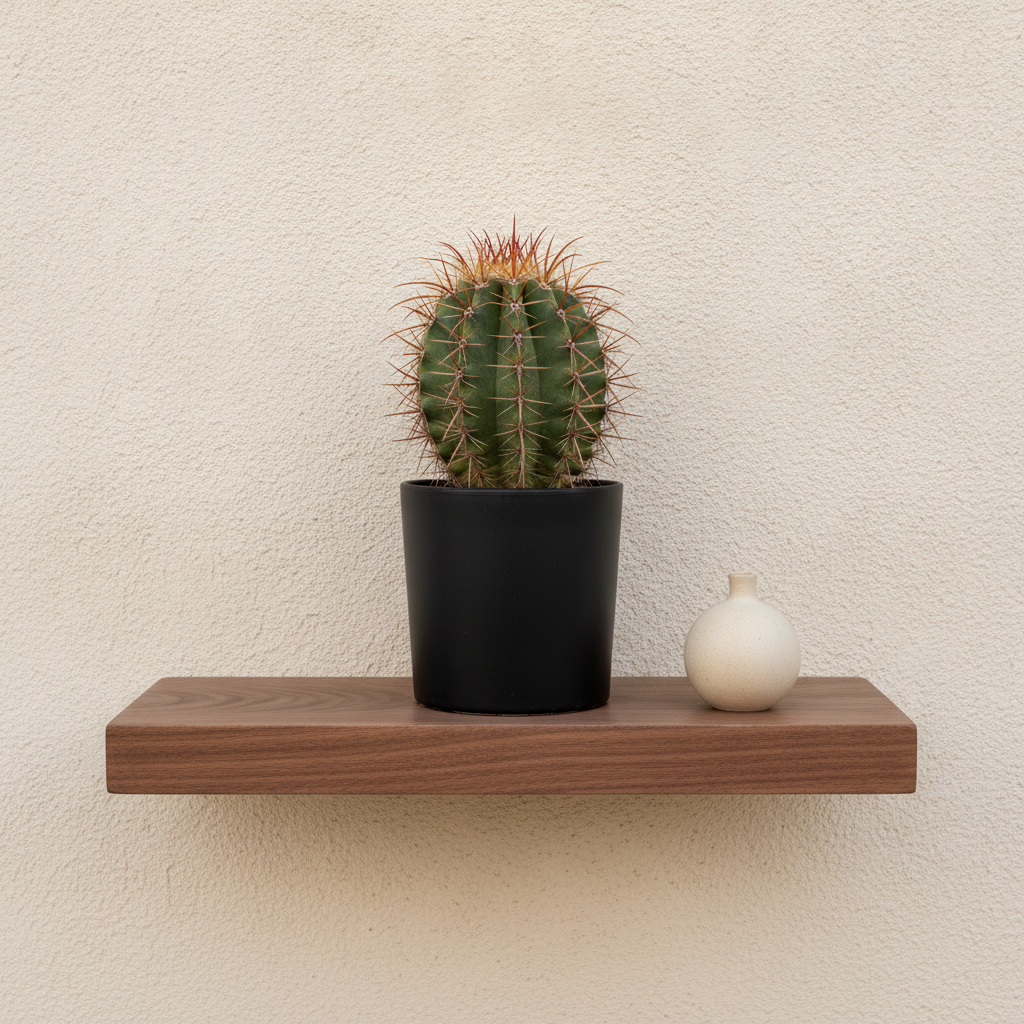
The practical case is just as strong. This is a plant that positively rewards forgetfulness. It stores water in its ribbed body and can go weeks without a drink, which makes it forgiving for travellers, busy households and anyone who has drowned a fern or two. It has no interest in the misting, pebble trays and humidity domes that fussier tropicals demand, and it carries few pest problems when kept dry and bright. The main adjustment for a new owner is psychological rather than horticultural: you must learn to do less, to water rarely and to resist the urge to nurture it into rot. Get that balance right and a healthy specimen will slowly thicken, colour up and, in time, crown itself with a ring of waxy yellow-to-orange flowers.
Important — Toxicity: The orchid barrel cactus is not toxic to cats, dogs or people, so it will not poison a curious pet or child. The genuine danger is mechanical. The stiff, hooked central spines can pierce skin deeply and are notoriously difficult to remove, so site the plant well out of the reach of pets and small children and handle it only with thick gloves or a folded strip of newspaper.
Light Requirements
Light is the single most important factor in growing this cactus well, and it is where most indoor failures begin. In the wild, Ferocactus cylindraceus grows on open, rocky desert slopes exposed to some of the most intense sunlight on the continent. It is adapted to receive that light in full, all day, for most of the year. Bring that expectation indoors and you understand why a barrel cactus tucked into a dim corner slowly etiolates, growing pale, narrow and soft as it stretches towards whatever light it can find.
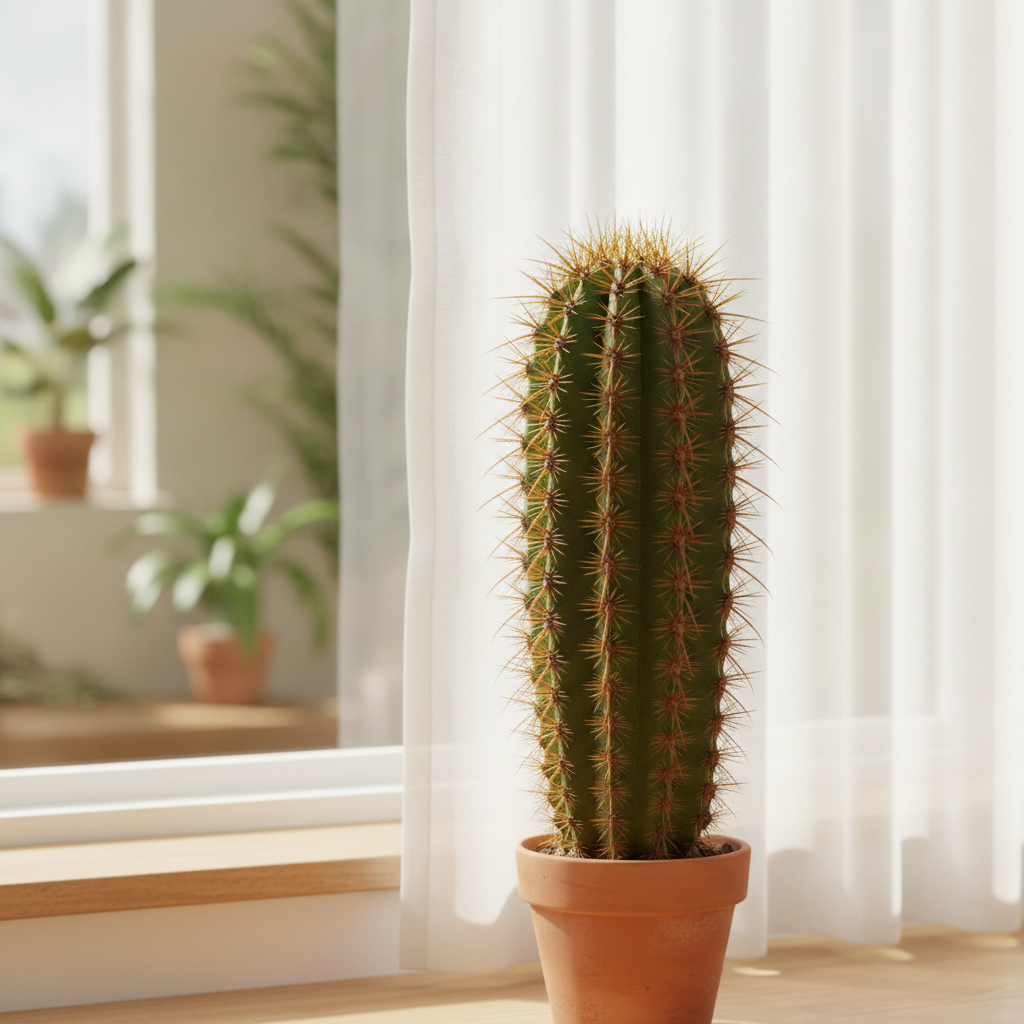
The ideal indoor position is the brightest window in the home, and for this plant that almost always means a south-facing aspect in the northern hemisphere, where it can bathe in several hours of direct, unfiltered sun each day. Unlike most houseplants, which want bright but indirect light, the orchid barrel cactus genuinely wants the sun on its body. The more direct light it receives, the denser and more richly coloured its new spines become, and the tighter and more compact its growth stays.
Light Levels Explained
Understanding how light intensity translates into indoor positions helps you place the plant with confidence. The table below sets out the practical tiers and what each means for a desert barrel cactus.
| Light Category | Approx. Level | Typical Location | Outcome |
|---|---|---|---|
| Direct sun | Over 50,000 lux | On or beside a south-facing window | Ideal; compact growth, dense colourful spines, best chance of flowering |
| Bright indirect | 10,000 to 25,000 lux | A short way back from a bright window | Adequate; slow growth, spines a little sparser, unlikely to flower |
| Medium | 5,000 to 10,000 lux | East or west window set back from the glass | Marginal; etiolation begins, body pales and softens |
| Low | 1,000 to 5,000 lux | North window or interior wall | Poor; stretching, weak growth, eventual decline |
| Very low | Under 1,000 lux | Hallway or windowless room | Unsuitable; the plant will slowly starve |
Window Orientation and Placement
South-facing window: This is the best position by a wide margin and the one to aim for. Placed right against the glass, the cactus receives the long hours of direct sun it evolved to use. In summer, keep an eye out only for overheating in a sealed, unventilated window where temperatures can spike.
East-facing window: A workable second choice. Morning sun is gentle and the plant will grow, though more slowly, and colour and flowering may suffer. Set it as close to the glass as possible to make the most of the available light.
West-facing window: Also serviceable, offering strong afternoon sun. The main caution is heat build-up on summer afternoons, so ensure a little air movement. Growth and spine colour are generally good in a west window.
North-facing window: Not suitable for the long term. A north aspect never delivers the intensity a barrel cactus needs, and a plant kept here will gradually etiolate and weaken. If a north window is your only option, supplement heavily with a grow light.
Pro Tip — Rotate for Symmetry: Because the compass barrel naturally leans towards the sun, a specimen kept at a window will slowly grow lopsided, tilting and colouring more on the lit side. Give the pot a quarter turn every couple of weeks to keep the body upright and evenly spined.
How Light Affects Spine Colour and Form
The spectacular spine colour that makes this species so collectable is directly driven by light. Under strong sun the freshly emerging spines at the crown flush deep red and warm gold, a pigmentation that acts in part as sunscreen for the growing tip. In weaker light those same spines emerge paler and duller, and the body itself takes on a soft, slightly yellowed green rather than a firm deep green. Strong light also keeps the plant squat and barrel-shaped; deprived of it, the growing point elongates into a narrow, pale column that never recovers its proper form. If you value the colour and the classic barrel silhouette, treat light as non-negotiable.
Warning — Direct Sunlight: Although this cactus loves sun, a plant that has spent months in low winter light or has just arrived from a shaded shop can scorch if moved abruptly into fierce summer sun. Sudden exposure causes permanent pale or brown patches on the previously shaded flank. Acclimatise gradually over two to three weeks, increasing exposure a little at a time.
Artificial Lighting
Where natural light falls short, a full-spectrum LED grow light can carry the plant, though cacti are demanding customers. Aim for a high-output horticultural light positioned reasonably close to the crown and run for twelve to fourteen hours a day. Because Ferocactus needs such high intensity, an ordinary desk lamp or a weak strip will not be enough; look for lights rated for high-light plants and be prepared to keep them close. A grow light is also useful for maintaining a barrel cactus through a dim northern winter without it stretching.
Seasonal Adjustments
Light levels swing dramatically through the year indoors, and the plant’s needs swing with them. Through spring and summer, give it everything the brightest window offers. As autumn light fades, the cactus naturally slows and enters dormancy, so slightly reduced light is not a problem provided you also cut back watering to match. The main risk is the reverse: a plant that has coasted through a dark winter must be reintroduced to strong spring sun gradually, or the first bright days can scorch tissue that has grown soft in the low light.
Watering & Humidity
If light is where indoor growers most often fall short, watering is where they most often kill. The orchid barrel cactus is a xerophyte, engineered by its desert origins to survive long droughts by hoarding water in its swollen ribbed body and releasing it slowly. Almost every problem this plant develops indoors traces back to too much water applied too often, and the single most valuable habit you can build is patience between waterings.
When to Water
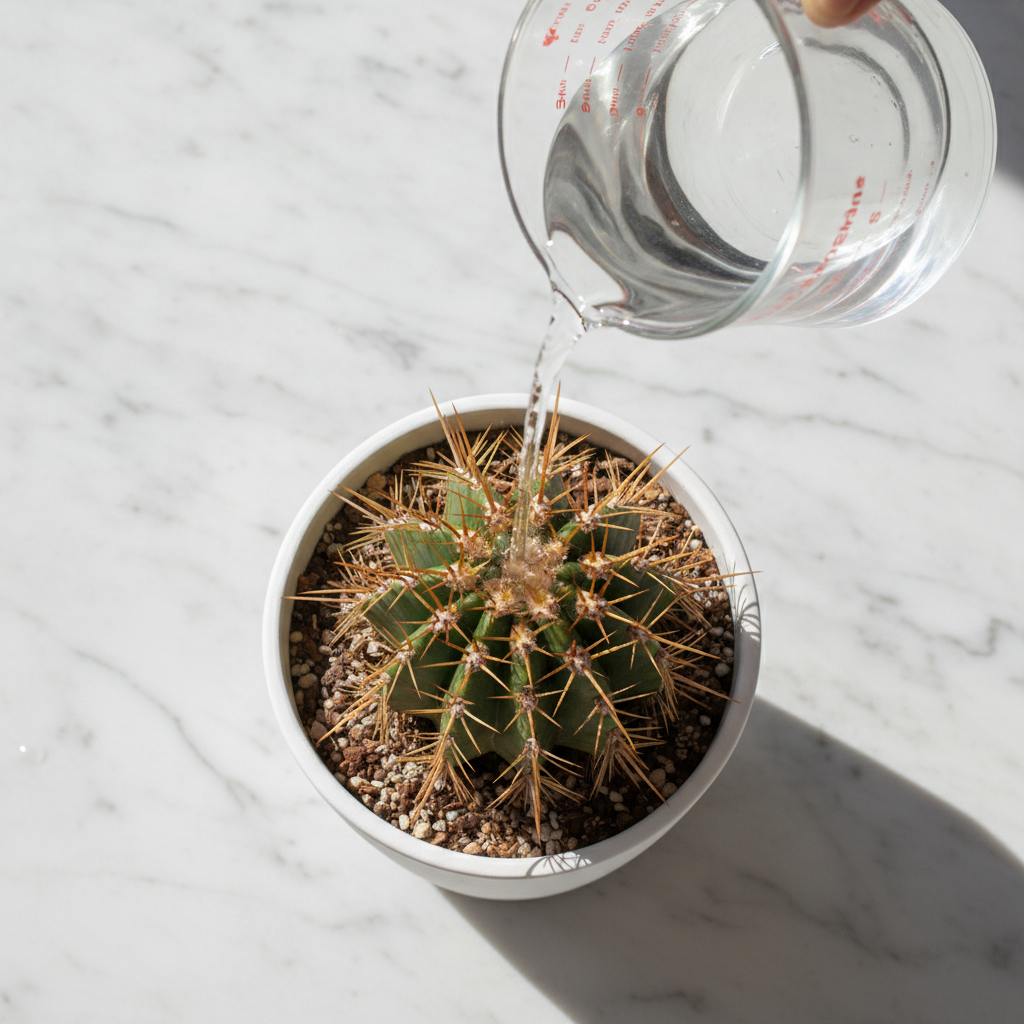
The governing rule is simple: water only when the potting mix is completely dry, top to bottom, and then water thoroughly. During the warm growing months this might mean a deep soak every ten days to three weeks, depending on pot size, soil and how much sun and warmth the plant receives. Rather than counting days, check the soil. Push a wooden skewer to the base of the pot or lift the pot to feel its weight; a pot that is still heavy or a skewer that comes out cool and damp means wait.
In winter the picture changes entirely. A barrel cactus kept cool and dormant needs little or no water for weeks at a time, and many growers withhold it almost completely from late autumn to early spring, giving perhaps one light drink if the body starts to look noticeably shrunken. This dry winter rest is not neglect; it is essential to the plant’s health and is what allows it to flower and to survive cold better. Watering a dormant, cold cactus is the classic route to fatal rot.
Pro Tip — Weigh the Pot: The most reliable way to judge watering is by weight. Lift the pot right after a thorough soak and again once you know the soil is bone dry, and commit both to memory. From then on a quick lift tells you instantly whether the plant still holds water, far more accurately than any surface inspection.
How to Water Correctly
- Confirm the soil is completely dry throughout, not just at the surface.
- Water the soil directly, aiming the flow at the mix and keeping it off the body and crown of the cactus.
- Apply water slowly and generously until it runs freely from the drainage holes, wetting the entire root zone.
- Let the pot drain fully and tip away any water that collects in the saucer or cachepot.
- Return the plant to its bright spot and do not water again until the mix has dried out completely.
- Through the winter rest, suspend this cycle almost entirely, watering only sparingly if the body visibly shrinks.
Signs of Overwatering vs. Underwatering
| Symptom | Overwatering | Underwatering |
|---|---|---|
| Body colour | Yellowing, then translucent or brown as tissue collapses | Dull, faded green, sometimes with a purplish cast |
| Body texture | Soft, mushy or squishy, especially near the base | Firm but shrunken, with ribs drawn tightly together |
| Body form | Bloated or split from taking up too much water | Wrinkled, deflated ribs and a slightly sunken crown |
| Base of plant | Blackening, wet rot spreading up from soil level | Dry and firm, no discolouration |
| Roots | Brown, slimy and foul-smelling | Dry and pale, still intact and able to recover after watering |
Warning — Root Rot: Root and basal rot is the leading killer of barrel cacti indoors. Once the base turns soft and black the tissue is dead and cannot be revived by drying out. If you catch it early, unpot the plant, cut away all soft and discoloured tissue with a sterile blade until only firm green flesh remains, let the wound callus for several days, and reroot in fresh dry mix. Prevention through restraint is far more reliable than any cure.
Humidity Requirements
Humidity is refreshingly simple with this plant: it wants very little of it. Ordinary household air, typically somewhere between 30 and 50 per cent relative humidity, suits it perfectly, and the low, dry conditions that leave tropical plants gasping are exactly what a desert cactus prefers. There is no need for misting, humidifiers or pebble trays, all of which do more harm than good here.
The one thing to avoid is prolonged damp, stagnant air, which encourages fungal problems on the body. A bathroom or a sealed, humid room is a poor home for a barrel cactus. If your home runs humid, prioritise good air movement and be even more conservative with watering to compensate.
Good airflow around the plant matters more than any humidity figure. A gently circulating draught, an open window on warm days or simply an uncrowded position all help the surface stay dry between waterings and keep fungal spores from settling. Cramped, still conditions among a crowd of other plants are best avoided.
Water Quality
Barrel cacti are not especially fussy about water quality, but there are small gains to be had. Hard tap water, high in dissolved minerals, can leave chalky deposits on the soil surface and gradually raise salt levels in the mix, so an occasional deep flush helps. Where tap water is very hard, collected rainwater is a pleasant treat. Water at room temperature rather than icy cold, particularly in cooler weather, to avoid shocking the roots.
Soil, Potting & Repotting
The right soil is the safety net that makes the whole watering regime forgiving. A fast-draining, mineral-heavy mix lets water pass quickly through the root zone and dry out promptly, mimicking the coarse, rocky ground the orchid barrel cactus grows in naturally. Get the soil right and the occasional overwatering does far less damage; get it wrong, in a dense water-retentive compost, and even careful watering can drown the roots.
Ideal Soil Composition
Aim for a mix that is at least half mineral grit by volume. A reliable starting point is roughly one part standard cactus or peat-free compost to one or two parts of coarse mineral material such as pumice, perlite, coarse horticultural sand or fine gravel. The finished blend should feel gritty and open in the hand and should not clump together when squeezed damp. If in doubt, add more grit rather than less.
| Component | Proportion | Function |
|---|---|---|
| Cactus or peat-free compost | Around one third | Holds a little moisture and provides modest nutrients |
| Pumice or perlite | Around one third | Creates air pockets and sharp drainage in the root zone |
| Coarse grit or sharp sand | Around one third | Adds weight, stability and rapid free drainage |
| Fine gravel top dressing | Thin surface layer | Keeps the crown dry and deters surface fungus and pests |
In terms of pH, the orchid barrel cactus is easygoing, favouring a neutral to slightly alkaline range of roughly 6.0 to 7.5. Most commercial cactus composts sit comfortably in this band, so pH rarely needs active adjustment. A little added limestone grit suits it well and nudges the mix towards the alkaline end it enjoys.
Pro Tip — Quick Mix Recipe: For a fuss-free blend, combine one part bagged cactus compost, one part pumice and one part coarse grit, then top the pot with a centimetre of fine gravel. It drains fast, resists compaction and keeps the base of the plant dry where rot would otherwise start.
Choosing the Right Pot
The container matters almost as much as the mix inside it. Because a barrel cactus grows a broad, relatively shallow root system and stores its water above ground, it does not need a deep pot, and an oversized container simply holds a large volume of slow-drying soil around the roots.
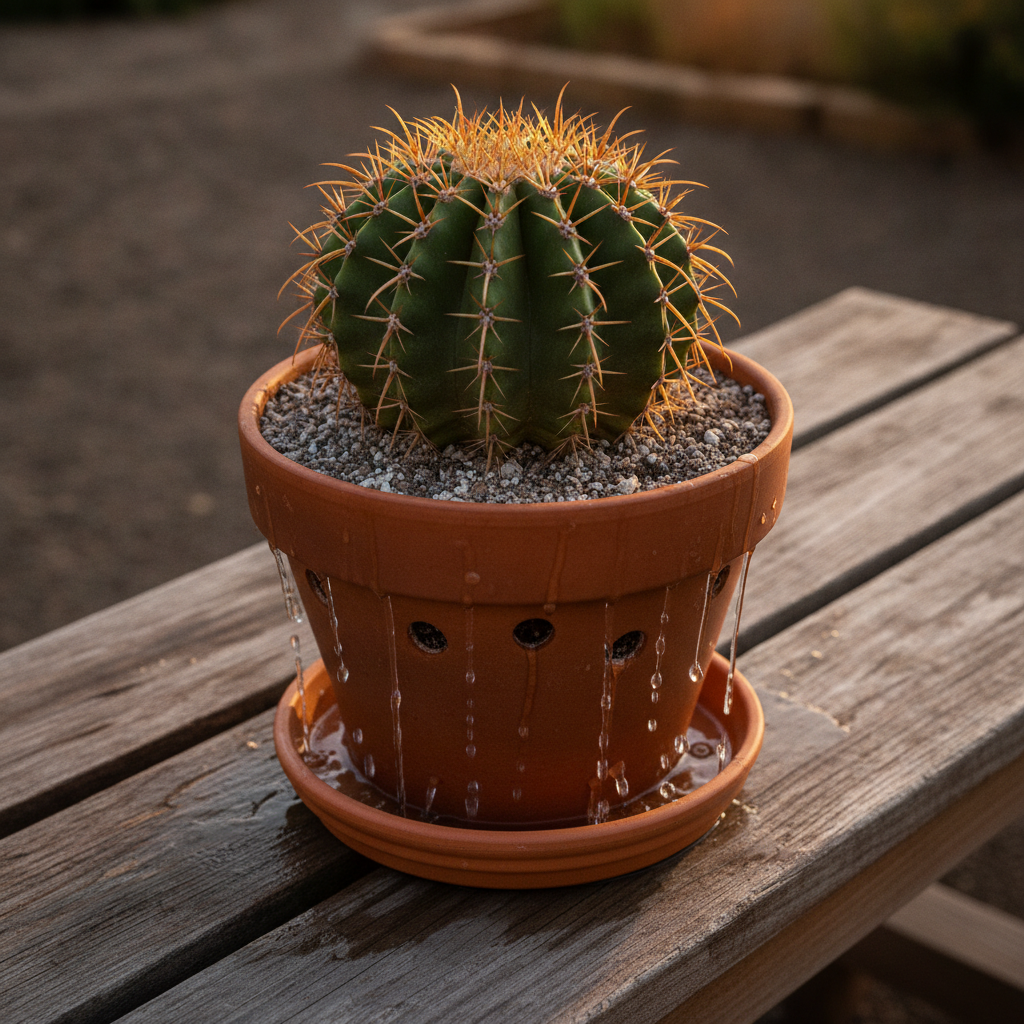
Drainage holes are non-negotiable. Never plant a barrel cactus in a pot without generous drainage. Standing water at the base of the pot will rot the roots within days. If you love a decorative cachepot with no hole, use it only as an outer sleeve and keep the plant in a plain draining pot that you can lift out to water.
Pot material: Unglazed terracotta is the traditional and arguably best choice. Its porous walls wick moisture from the soil and let it evaporate, helping the mix dry faster between waterings. Glazed ceramic and plastic hold moisture longer, so if you use them, lean even harder on a gritty mix and cautious watering. A heavy pot also lends welcome stability to a top-heavy, spiny plant.
Pot size: Choose a pot only slightly wider than the body of the cactus, leaving a couple of centimetres of space around it. Barrel cacti actually grow best a little snug, and a tight pot dries out faster and reduces the risk of waterlogging. Resist the temptation to pot up into something roomy in the hope of faster growth; you will only invite rot.
When to Repot
This is a slow-growing plant, so repotting is an occasional event rather than an annual chore. Expect to move a young specimen up a size every two to three years and an older one even less often, repotting only when the roots have genuinely filled the pot, the plant looks unstable or top-heavy, or the old mix has broken down and stopped draining freely. The best time is early spring, at the start of the growing season, when the plant can recover quickly. Always repot into dry mix and wait several days before the first watering.
How to Repot: Step-by-Step
- Let the soil dry out fully in the days before repotting so the root ball slides out cleanly.
- Protect your hands with thick leather gloves and wrap the body in a folded strip of newspaper or a length of hosepipe to grip it safely.
- Ease the plant from its pot and gently tease away the old mix, inspecting the roots and trimming any that are dead, brown or mushy with a sterile blade.
- Part-fill a clean, barely larger pot with fresh dry gritty mix and set the cactus at the same depth it grew before, never burying the body.
- Fill in around the roots with more dry mix, firming lightly, and finish with a layer of gravel top dressing.
- Wait at least five to seven days before watering to let any damaged roots callus and heal.
- Return the plant to bright light and resume normal, cautious watering.
Warning — Transplant Shock: Watering immediately after repotting is a common and costly mistake. Roots inevitably suffer small tears during the move, and water on those fresh wounds is an open invitation to rot. Always repot into dry mix and hold off watering for the better part of a week.
Fertilising
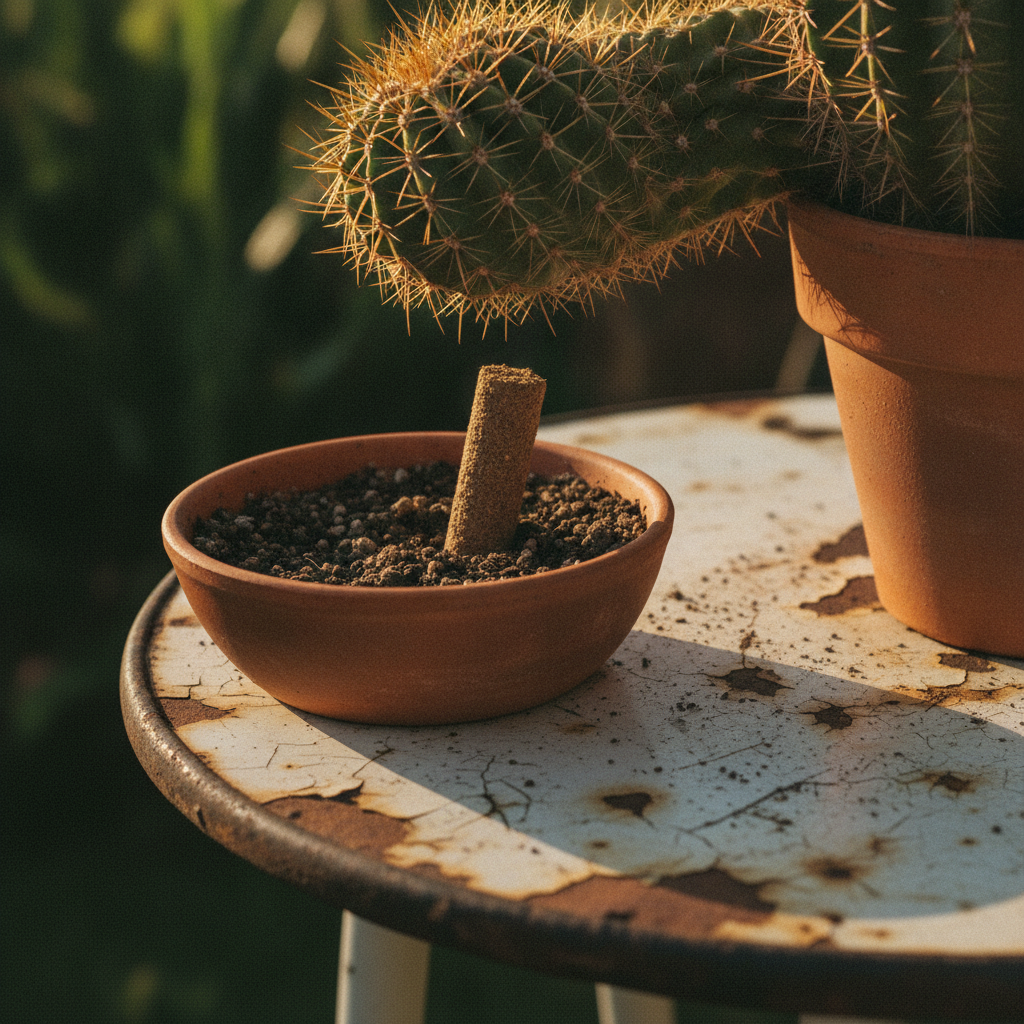
The orchid barrel cactus is a lean feeder, adapted to nutrient-poor desert soils, and it needs far less fertiliser than the average houseplant. In fact, overfeeding is more dangerous than underfeeding, producing soft, swollen, disfigured growth that is prone to splitting and rot. A light touch produces the firm, well-coloured, compact plant you are after.
Think of feeding as an occasional supplement during the active season rather than a routine. A couple of dilute feeds spread across spring and summer is plenty, and many growers whose plants sit in fresh mix skip fertiliser altogether for a year or two after repotting with no ill effect.
Understanding Plant Nutrients
Fertilisers are described by their ratio of the three main nutrients, nitrogen, phosphorus and potassium, shown on the label as N-P-K. For cacti a formula relatively low in nitrogen and higher in potassium suits best, because too much nitrogen drives the soft, fast, weak growth that a desert plant is not built to support. The table below sets out what each nutrient does and how a shortfall shows.
| Nutrient | Symbol | Primary Function | Deficiency Symptoms |
|---|---|---|---|
| Nitrogen | N | Drives green tissue and overall growth | Pale body and slow, stunted growth; rarely a problem in cacti |
| Phosphorus | P | Supports roots, flowering and energy transfer | Weak rooting and poor flower production |
| Potassium | K | Firms tissue and improves stress and drought resistance | Soft growth, weak spines and reduced resilience |
| Calcium | Ca | Builds strong cell walls and firm structure | Distorted new growth at the crown |
| Magnesium | Mg | Central to chlorophyll and photosynthesis | Yellowing of older tissue while veins stay green |
| Iron | Fe | Enables chlorophyll formation | Pale, yellowed new growth in alkaline conditions |
Types of Fertiliser
Liquid fertilisers: A specialist liquid cactus feed, diluted to half the recommended strength, is the most controllable option. It is applied with normal watering during the growing season and lets you feed lightly and stop the moment the season ends.
Slow-release granular: A small dose of controlled-release granules mixed into the soil at repotting can supply gentle nutrition across a whole season. Use a light hand, as it is harder to withdraw once applied, and choose a low-nitrogen formulation.
Organic fertilisers: Mild organic options such as a dilute worm-cast tea release nutrients slowly and gently, making them hard to overdo. They suit growers who prefer a low-intervention approach, though they act more slowly than mineral feeds.
Feeding Schedule
Feed only during the active growing period from mid-spring to late summer, and never in autumn or winter when the plant is resting. One feed as growth resumes in spring and another in midsummer is entirely sufficient for a healthy specimen. As the days shorten and growth stalls, stop feeding completely and let the plant wind down into its dry winter dormancy.
Pro Tip — Dilute and Halve: Whatever feed you choose, mix it at half the strength stated on the label. Cacti are easily overfed, and a weak solution applied occasionally gives all the benefit with none of the risk of soft, distorted growth or fertiliser burn.
How to Fertilise
- Water the plant lightly a day beforehand so the roots are not bone dry when feed is applied.
- Mix a cactus fertiliser to half its recommended strength in room-temperature water.
- Apply it to the soil in place of a normal watering, keeping the solution off the body.
- Let the pot drain fully and never leave feed standing in the saucer.
- Resume the normal dry-out cycle and do not feed again until the next scheduled application.
Warning — Salt Build-Up: Fertiliser salts accumulate in the mix over time and can scorch roots, showing as a white crust on the soil or pot. Once or twice a year, flush the pot by running plenty of plain water through it until it drains freely, carrying the excess salts away.
Propagation
Propagating the orchid barrel cactus is a lesson in patience. Unlike clustering cacti that throw out easy offsets or leafy plants that root from cuttings, Ferocactus cylindraceus is a solitary species that almost never branches or produces pups. That leaves seed as the primary and, for most growers, the only realistic method of raising new plants.
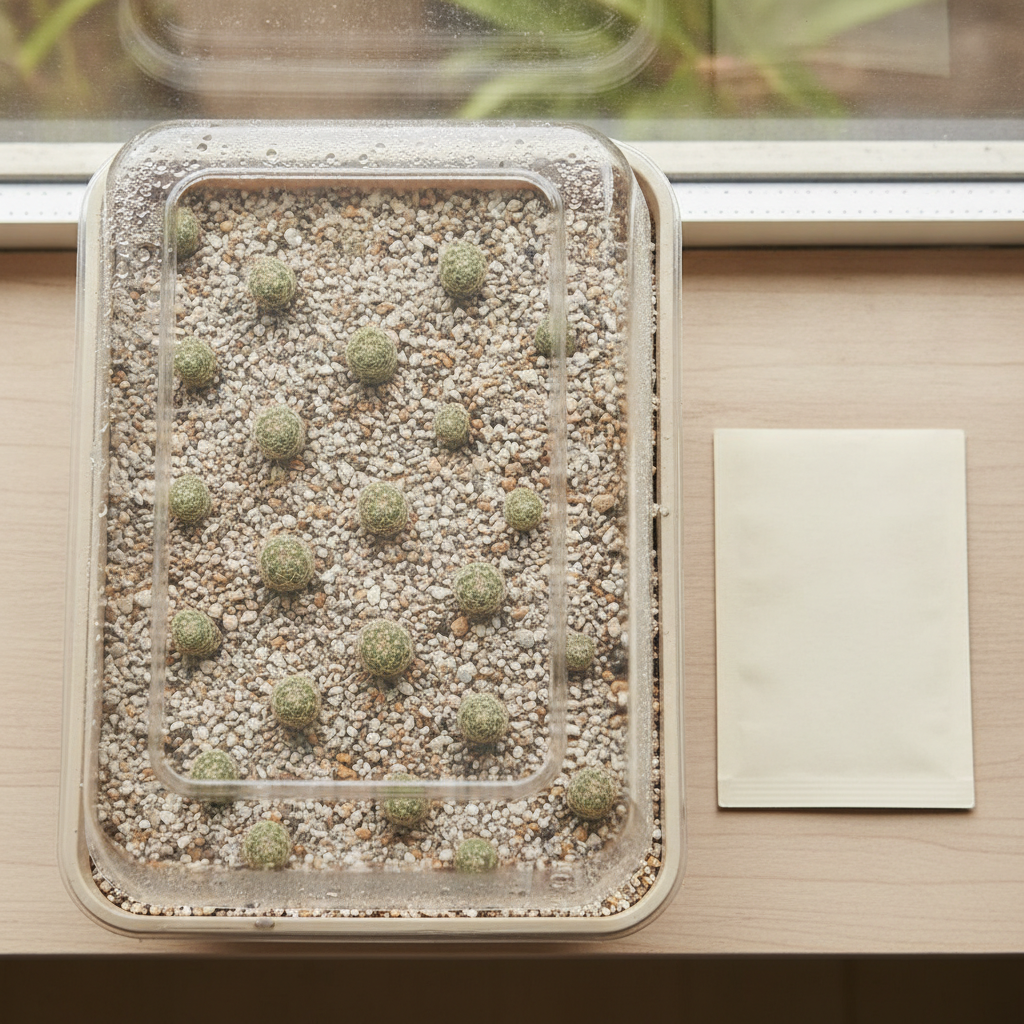
Growing from seed is slow but genuinely rewarding, and it is the way commercial nurseries produce their stock. The seedlings appear as tiny green spheres that take several years to become recognisable little barrels, so this is a project for growers who enjoy the long game rather than anyone after a quick result.
Understanding Seed and Solitary Growth
Because this cactus grows as a single unbranched body, there is no clump to divide and no side shoot to detach. In habitat it reproduces almost entirely by seed, set after its summer flowers are pollinated and ripened in fleshy fruits. A mature plant can produce copious seed, and fresh seed germinates readily under warm, bright, humid conditions. Understanding that seed is the natural route saves a lot of frustration; there is no shortcut of snipping a cutting as you might with a tropical.
Growing From Seed: Step-by-Step
Sowing barrel cactus seed is straightforward if you can provide warmth, light and humidity for the first weeks. Spring and early summer are the best times, when warmth comes easily.
- Fill a shallow tray or pot with a gritty, sterile seed mix and level and lightly firm the surface.
- Scatter the fine seed thinly across the top and press it gently in, leaving it barely covered or uncovered as light aids germination.
- Moisten from below by standing the tray in water until the surface darkens, then let it drain.
- Cover with a clear lid or place the tray inside a clear bag to hold humidity, and set it somewhere warm and bright but out of scorching direct sun.
- Keep the temperature around 21 to 27 degrees Celsius (70 to 80 Fahrenheit) and the surface lightly moist while germination proceeds over one to several weeks.
- Once seedlings appear, ventilate gradually over the following weeks to acclimatise them and reduce damping-off.
- Grow them on undisturbed for many months before pricking out into individual small pots of gritty mix.
Pro Tip — Ventilate Gradually: The riskiest moment for cactus seedlings is the transition out of the humid dome. Lift the cover a little more each day over a week or two rather than all at once, so the tiny plants harden off slowly and are not felled by fungal damping-off.
Rescuing Offsets: Step-by-Step
Very occasionally, usually after damage to its growing tip, a barrel cactus will produce one or more offsets low on the body. These are rare but can be removed and rooted if they appear, giving a genuine clone of the parent.
- Wait until an offset has grown large enough to handle, ideally with a few of its own spine clusters formed.
- Using a sterile blade and thick gloves, cut the offset cleanly away from the parent at its narrowest point of attachment.
- Set the offset aside in a dry, shaded, airy spot for a week or more until the cut face forms a firm callus.
- Rest the callused offset on the surface of dry gritty mix and support it upright with a collar of gravel.
- Wait a couple of weeks, then begin watering very sparingly to encourage roots, keeping it warm and bright throughout.
Troubleshooting Propagation
| Problem | Likely Cause | Solution |
|---|---|---|
| Seed fails to germinate | Old or non-viable seed, or too cool | Use fresh seed and maintain steady warmth of 21 to 27 Celsius |
| Seedlings collapse and rot | Damping-off from stagnant, over-wet conditions | Improve airflow, ventilate the dome and avoid waterlogging |
| Offset rots instead of rooting | Cut surface not callused, or watered too soon | Allow a longer dry callus period and delay the first watering |
| Growth painfully slow | Normal for the species, worsened by low light | Accept the slow pace and provide maximum warmth and light |
Pests & Diseases
Kept bright, warm and dry, the orchid barrel cactus is a robust, largely trouble-free plant. Most of the problems it does encounter are self-inflicted, stemming from overwatering, and the handful of pests that trouble cacti are usually a symptom of a stressed or overcrowded plant rather than bad luck.
Prevention is straightforward and largely automatic if the care basics are right. A vigilant grower who inspects the plant now and then, keeps it in an airy spot and resists overwatering will rarely face a serious infestation. The dense spines do make treatment fiddly, though, so early detection is worth the effort.
Common Pests
Mealybugs (Pseudococcus species)
Mealybugs are the most frequent pest of barrel cacti, appearing as small white cottony tufts nestled between the ribs and around the spine clusters where they are easily hidden. They suck sap and slowly weaken the plant, leaving a sticky residue behind.
Treatment: Dab each insect directly with a cotton bud dipped in isopropyl alcohol, then treat the whole plant with a diluted neem or horticultural soap solution, repeating every week or so until no new bugs appear. Check the roots too, as a related root mealybug can lurk unseen in the soil.
Spider Mites (Tetranychus urticae)
Spider mites thrive in the hot, dry conditions this cactus enjoys, so they can appear despite good care. They are almost too small to see, betraying themselves by fine pale stippling or rusty scarring on the body and, in bad cases, faint webbing around the crown.
Treatment: Wipe the body gently and apply a miticide or neem solution, repeating to catch newly hatched mites. Improving air movement and occasionally rinsing dust from the plant makes the environment less hospitable to them.
Scale Insects (Diaspididae family)
Scale insects attach themselves to the body as small, hard, limpet-like brown bumps that do not move, drawing sap from beneath their protective shells. They are easily mistaken for part of the plant and can build up unnoticed.
Treatment: Scrape or lift the scales off carefully with a fingernail or blunt tool, then treat with neem oil or a systemic insecticide to reach any crawlers hidden among the spines. Persistence over several weeks is usually needed.
Common Diseases
Root and Basal Rot (Fusarium and Phytophthora species)
By far the most serious threat to the plant, rot sets in when the roots or the base of the body sit in cold, wet conditions. It shows as softening, browning or blackening at soil level that spreads upward, often with an unpleasant smell, and can destroy a plant quickly once established.
Treatment: Act immediately. Unpot the plant, cut away every trace of soft or discoloured tissue with a sterile blade until only firm green flesh remains, let the wound callus for several days, and reroot in fresh dry mix. The surest medicine is prevention through gritty soil and disciplined watering.
Fungal Spotting (various pathogens)
Damp, stagnant air and water lingering on the body can allow fungal spots to develop, appearing as sunken, discoloured or corky patches on the surface. While rarely fatal in themselves, they mar the plant permanently and signal conditions that are too wet or too still.
Treatment: Improve ventilation, keep water off the body and remove any badly affected tissue. A copper-based or general fungicide can check the spread, but correcting the growing conditions is the real fix.
Pest and Disease Summary
| Pest / Disease | Identification | Treatment |
|---|---|---|
| Mealybugs | White cottony tufts between ribs and spines | Alcohol swabs and repeated neem or soap sprays |
| Spider mites | Fine stippling, rusty scarring, faint webbing | Miticide or neem, better airflow, occasional rinsing |
| Scale insects | Hard brown immobile bumps on the body | Remove by hand, then neem or systemic insecticide |
| Root and basal rot | Soft, blackening base, foul smell | Cut out rot, callus and reroot; prevent with dry culture |
| Fungal spotting | Sunken, corky or discoloured patches | Improve airflow, remove tissue, apply fungicide |
Prevention Strategies
Almost every pest and disease problem is easier to prevent than to cure. The pillars of prevention are the same conditions that keep the plant thriving: bright light, warmth, sharp drainage, cautious watering and good air movement. A plant grown hard and dry, in the sun it craves, is naturally resistant, while a soft, overwatered specimen in poor light is a magnet for trouble.
Beyond good culture, quarantine any new plant for a few weeks before it joins your collection, and give your cactus an occasional close inspection, parting the spines to check the ribs and crown where pests like to hide. Catching a handful of mealybugs early is trivial; tackling an established infestation buried among the spines is anything but.
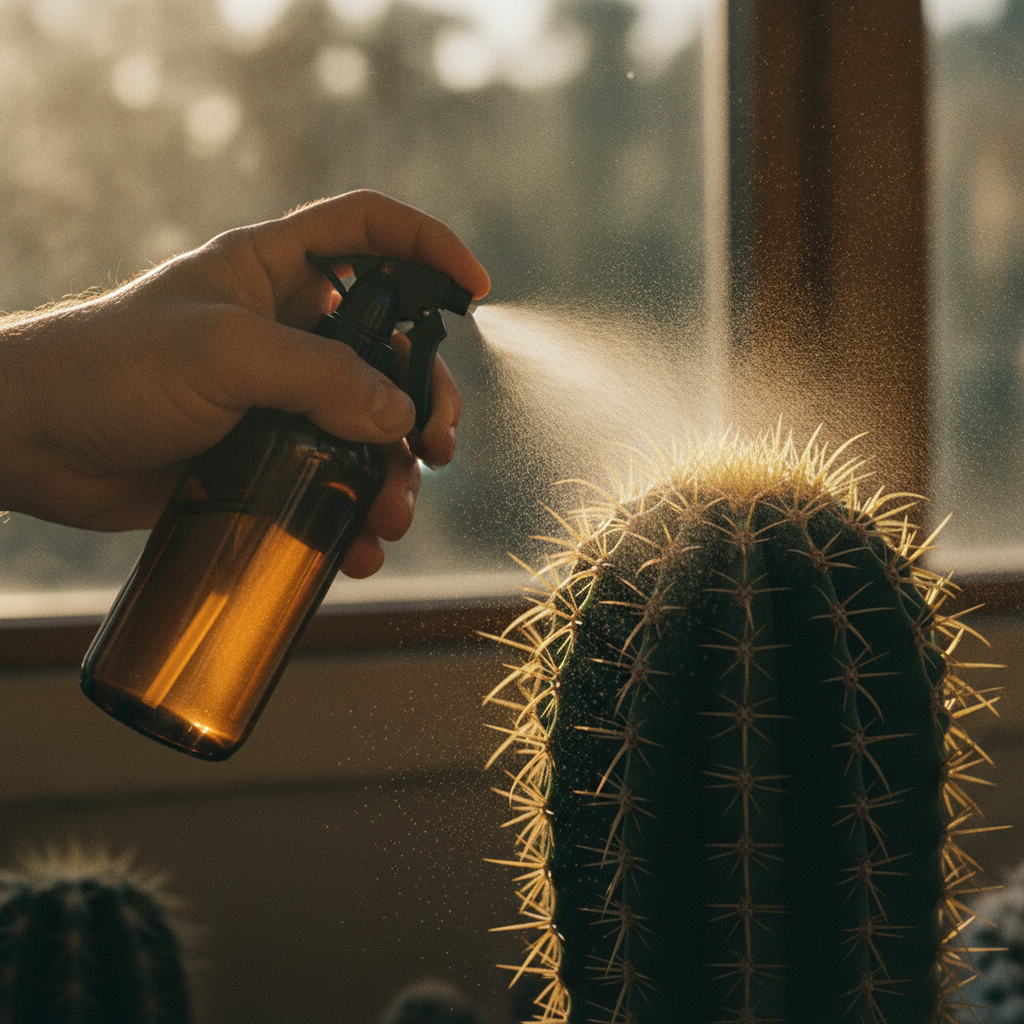
Pro Tip — Neem as Routine: A light preventative spray of dilute neem oil once a month during the growing season, applied in the evening to avoid sun scorch, keeps most sap-sucking pests from ever gaining a foothold and doubles as a gentle general tonic for the plant.
Popular Varieties
The orchid barrel cactus is a wide-ranging desert species rather than a heavily bred ornamental, so its “varieties” are mostly natural regional forms and closely related barrel cacti rather than named cultivars. Even so, growers prize the differences in spine colour, curvature and body shape that appear across its range, and the wider Ferocactus genus offers several handsome relatives for anyone drawn to the barrel form.
The forms below span the natural variation within Ferocactus cylindraceus and a few of its best-known cousins. When shopping, judge the individual plant in front of you, as spine colour and density can vary noticeably even between siblings, and choose the one whose colouring appeals most.
| Variety | Spine Appearance | Light Needs | Growth Rate | Availability |
|---|---|---|---|---|
| Golden-spined California barrel | Dense straw-gold radial spines over deep green | Full sun | Slow | Common |
| Red-spined form (var. lecontei) | Hooked crimson central spines fading to grey | Full sun | Slow | Frequent |
| Compass barrel type | Curved amber spines on a body that leans south | Full sun | Slow | Common |
| Fishhook barrel (Ferocactus wislizeni) | Long, strongly hooked red-grey central spines | Full sun | Slow to moderate | Frequent |
| Golden barrel (Echinocactus grusonii) | Rings of bright yellow spines on a globe body | Full sun | Slow | Very common |
| Emory’s barrel (Ferocactus emoryi) | Stout single red central spine per areole | Full sun | Slow | Occasional |
Featured Varieties
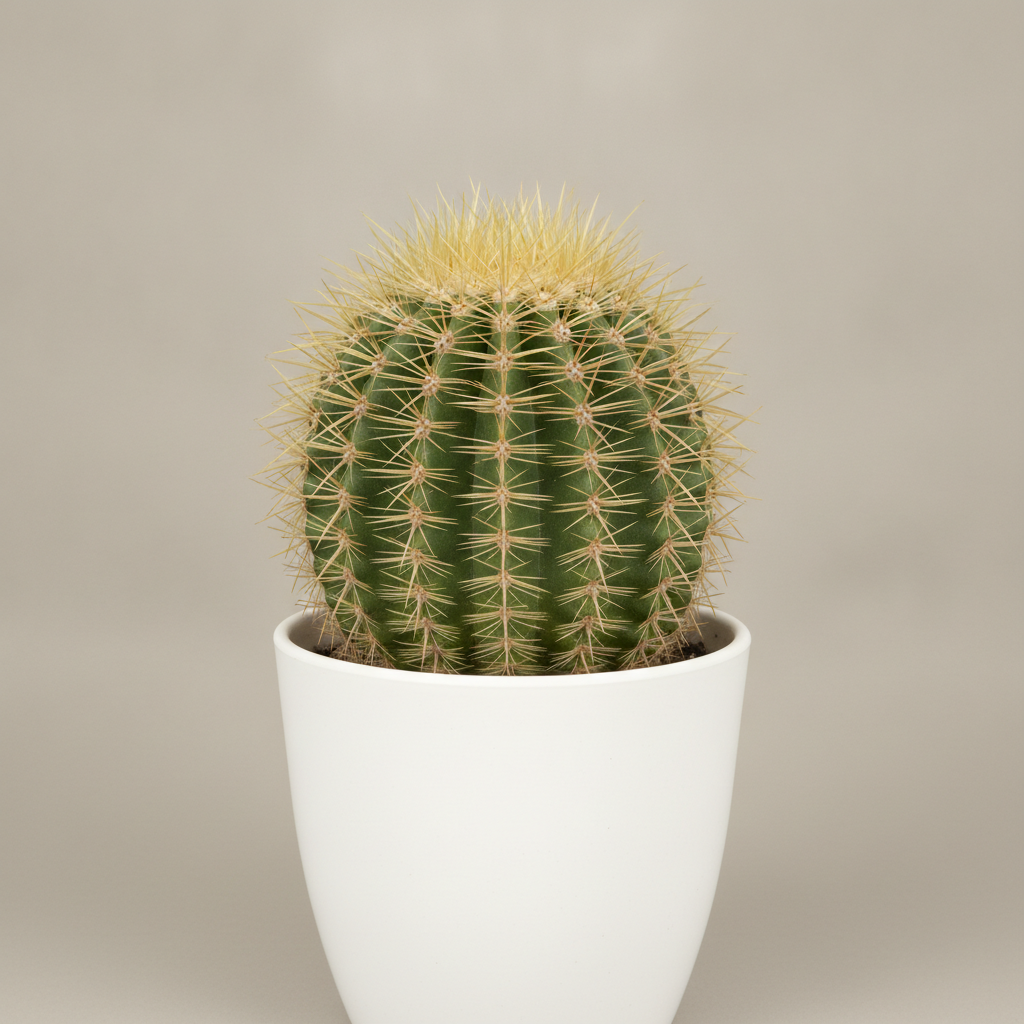
Golden-Spined California Barrel
The classic and most sought-after form, clothed in densely packed straw-gold radial spines that shimmer over a deep green ribbed body. It is the picture most people have in mind of the species, and it colours most vividly in full, unfiltered sun.
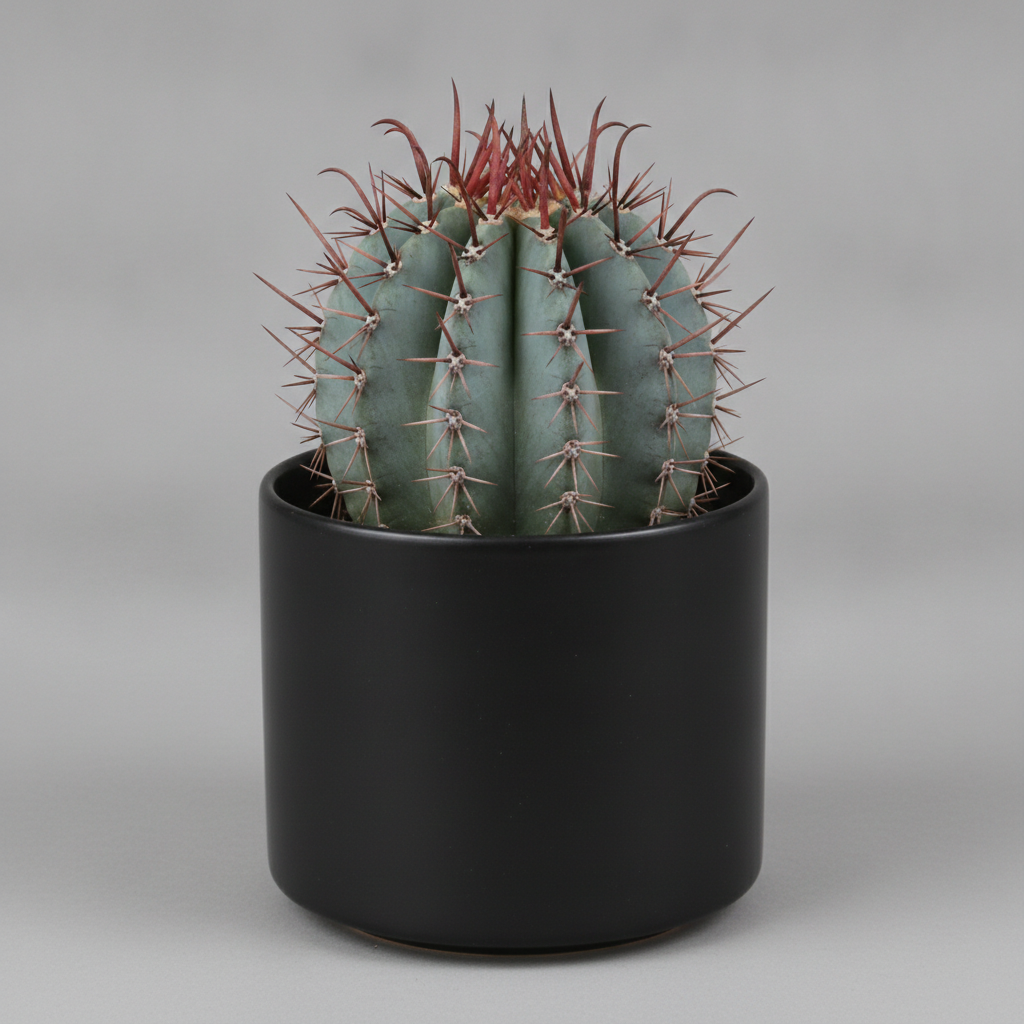
Red-Spined Form (var. lecontei)
A dramatic regional form with flattened, strongly hooked crimson central spines that mellow to grey with age, set against a slightly blue-green barrel. The bold red new spines at the crown make it a favourite among collectors of desert cacti.
Variety Profiles in Detail
Fishhook Barrel (Ferocactus wislizeni)
A close relative and near-twin in cultivation, the fishhook barrel is named for its long, prominent, strongly hooked central spines. It grows a touch faster and larger than the orchid barrel and produces showy orange to red flowers, making it a rewarding companion plant with identical care needs.
Golden Barrel (Echinocactus grusonii)
Perhaps the most familiar barrel cactus of all, the golden barrel forms a near-perfect green globe ringed with brilliant yellow spines. Though a different genus, it shares the same love of sun, grit and dry culture, and it is often grown alongside the orchid barrel for its rounder, more symmetrical form.
Choosing the Right Variety for Your Space
Since every barrel cactus wants the same thing, the brightest, sunniest spot you can offer, choosing between them is largely a matter of looks. If you want the quintessential golden-spined desert barrel, seek out a well-coloured California form; if you prefer drama, the red-spined types and the hooked fishhook barrel are hard to beat. For a rounder, more compact silhouette on a sunny sill, the golden barrel is a natural fit. Whatever you pick, buy the healthiest, firmest, most richly spined individual you can find and give it the light it deserves.
Frequently Asked Questions
How often should I water my orchid barrel cactus?
Only when the soil has dried out completely, which in warm, bright summer conditions usually means every ten days to three weeks. In winter, water very rarely or not at all while the plant rests. Always judge by the dryness and weight of the pot rather than a fixed schedule, and when in doubt, wait.
Why is my barrel cactus turning yellow or soft?
Yellowing combined with a soft, squishy body almost always signals overwatering and the onset of rot. Stop watering at once, check the base and roots for softening, and if rot is present, cut it out and reroot the firm portion in dry gritty mix. A firm but merely faded plant is more likely reacting to insufficient light.
Is the orchid barrel cactus safe around pets and children?
The plant is not toxic if nibbled, so it poses no poisoning risk to cats, dogs or children. The real hazard is its spines, which are stiff, sharp and hooked and can cause painful injuries that are hard to remove. Keep it well out of reach of pets and small children for everyone’s safety.
Will my barrel cactus flower indoors?
It can, but only under favourable conditions. Flowering typically requires a mature plant, intense sunlight through the growing season and a cool, dry winter rest to trigger bud formation. Indoors, a specimen on a very bright south-facing sill given a proper dormancy stands the best chance, producing a crown of waxy yellow to orange blooms in summer.
How big will it get, and how fast?
This is a slow grower. In the wild the species can eventually reach one to three metres (three to ten feet) tall over many decades, but as a potted houseplant it typically stays a manageable size, adding only a little girth and height each year. Expect a patient, long-lived companion rather than a fast-filling feature plant.
Why is my cactus growing tall and thin instead of round?
A barrel cactus that stretches into a narrow, pale column is etiolating from lack of light. It is straining towards whatever light it can reach and cannot maintain its proper squat form. Move it to the brightest possible window or add a strong grow light. Unfortunately the stretched growth will not fill back out, though new growth from a well-lit crown will be normal.
What soil is best for a barrel cactus?
A very free-draining, mineral-rich mix, at least half grit by volume. Combine a cactus or peat-free compost with generous amounts of pumice, perlite and coarse grit so that water runs straight through and the mix dries quickly. Dense, moisture-retentive potting soil is the wrong choice and greatly raises the risk of rot.
Can I grow it outdoors?
In a hot, dry climate with mild winters it makes an excellent outdoor plant, relishing full sun and heat. It tolerates considerable cold when kept bone dry but resents wet, freezing conditions, so in cooler or wetter regions it is best grown in a pot that can spend summer outdoors in the sun and return to a bright, frost-free spot for winter.
My cactus has not grown in months. Is something wrong?
Probably not. These cacti grow slowly at the best of times and pause entirely during their winter dormancy and during any period of insufficient warmth or light. As long as the body stays firm and well coloured, a long spell without visible growth is completely normal. Growth should resume as warmth and strong light return in spring.






