
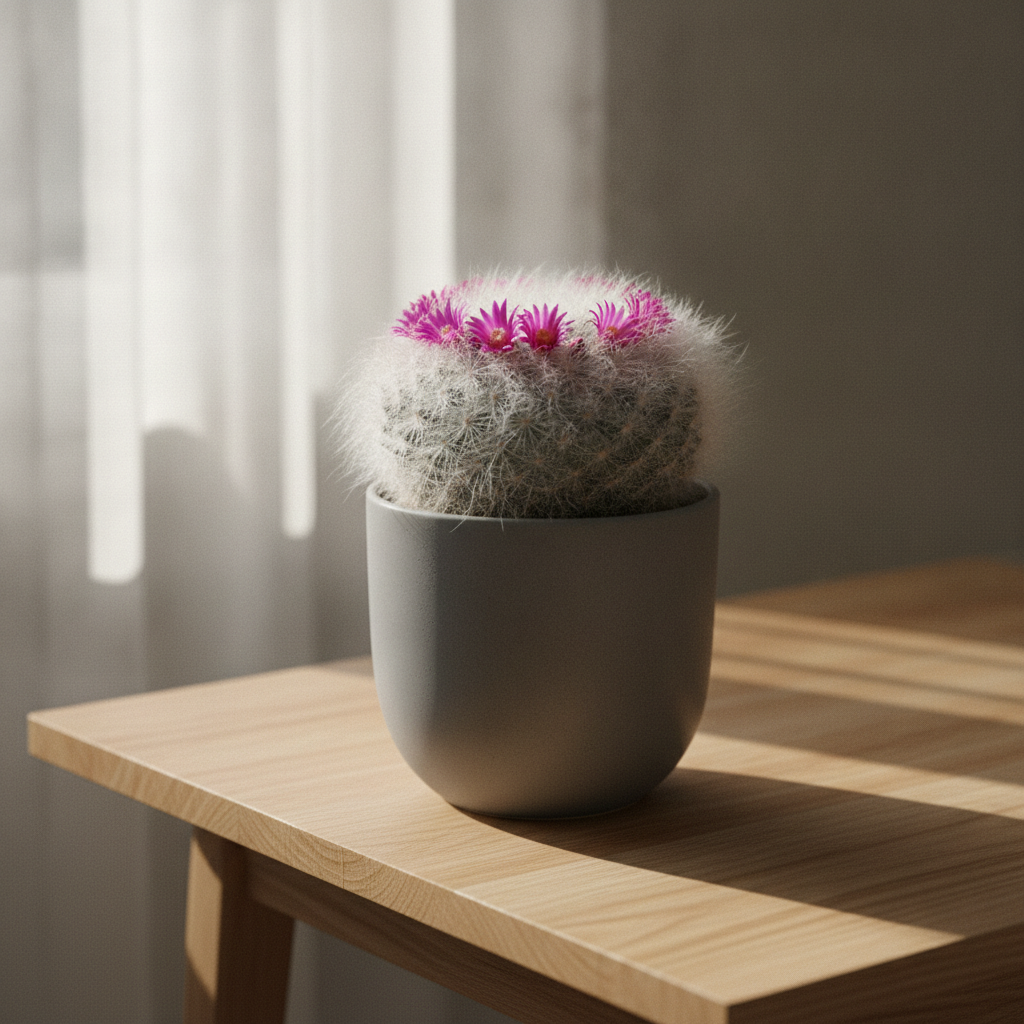
Few small cacti look as deliberately dressed as the old lady cactus. A neat blue-green globe wrapped in a fine net of silvery white hairs, Mammillaria hahniana earns its common name from the woolly veil that softens its outline and gives older specimens the look of a powdered wig. It is native to the limestone hills and dry scrub of central Mexico, particularly the states of Querétaro and Guanajuato, where it grows in bright, baking conditions among rock and thin soil. In cultivation it stays compact, rarely exceeding 10 to 12 centimetres (4 to 5 inches) tall, though it slowly clusters into a low mound of heads over many years.
It has a reputation as one of the more forgiving members of a famously fussy genus, and that reputation is mostly deserved. The old lady cactus will survive a great deal of neglect, but surviving and thriving are different things. A plant that merely survives sits green and static, never flowering; a plant that thrives builds dense wool, plumps to a healthy globe, and rings itself each spring with a crown of small magenta flowers. This guide covers everything that separates the two outcomes, from the precise light it wants and the rhythm of watering through the gritty soil it depends on, how to feed it, how to multiply it from offsets, and how to keep the pests that love cacti at bay.
Contents
- Quick Reference
- Why the Old Lady Cactus Makes a Rewarding Houseplant
- Light Requirements
- Watering & Humidity
- Soil, Potting & Repotting
- Fertilising
- Propagation
- Pests & Diseases
- Popular Varieties
- Frequently Asked Questions
Quick Reference: Old Lady Cactus at a Glance
| Light | Very bright light with several hours of direct sun; a south-facing window is ideal |
| Watering | Soak thoroughly, then let the soil dry out completely; roughly every 10 to 14 days in summer, almost none in winter |
| Temperature | 18 to 27 degrees Celsius (64 to 81 degrees Fahrenheit) in growth; a cool, dry winter rest at 7 to 13 degrees Celsius (45 to 55 degrees Fahrenheit) encourages flowering |
| Humidity | Low; thrives in dry household air and dislikes still, humid conditions |
| Fertiliser | A dilute low-nitrogen cactus feed once a month through spring and summer only |
| Toxicity | Not toxic to cats, dogs or people; the fine spines and hairs are the only real hazard |
Why the Old Lady Cactus Makes a Rewarding Houseplant
The appeal of Mammillaria hahniana begins with its texture. Most cacti present hard geometry and sharp defences, but the old lady cactus drapes itself in soft white hairs that catch the light and blur its silhouette, so it reads as gentle even though fine spines hide beneath the fleece. On a windowsill it holds its shape year round without dropping leaves, shedding petals or sprawling, which makes it one of the tidiest plants a small space can hold.
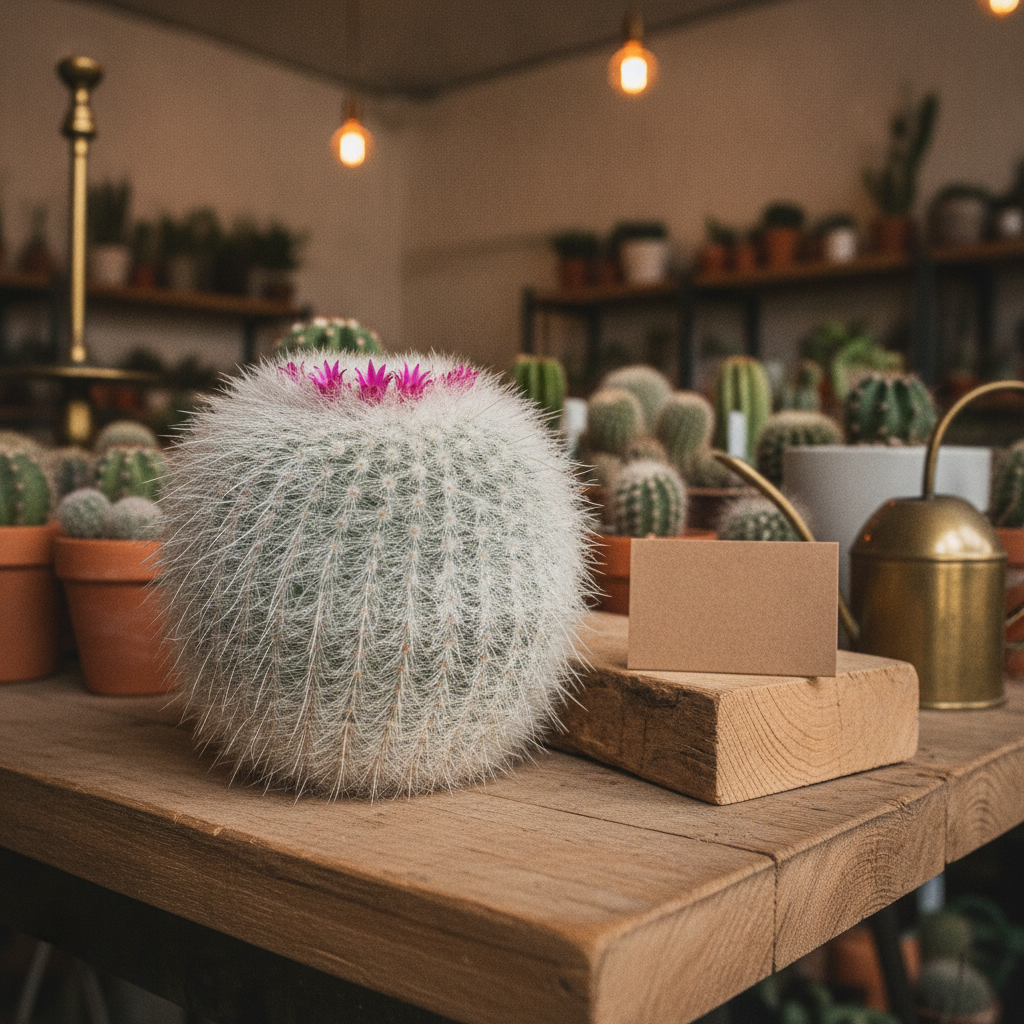
Its second virtue is patience. This is a slow, undemanding plant that asks for very little intervention, which suits busy households and beginners who are still learning to read a plant’s needs. The reward for getting the basics right is the spring display: a ring of small, funnel-shaped flowers in deep pink to purplish-magenta opens in a neat circle near the top of the body, often followed by slim red fruit. Few houseplants pack so much character into so small a footprint, and a healthy clustering specimen can crown several heads at once.
Important — Toxicity: The old lady cactus is not listed as toxic to cats, dogs or humans, so an accidental nibble is unlikely to poison a curious pet. The genuine danger is mechanical: the fine spines and barbed hairs detach easily and lodge in skin, paws and mouths. Site the plant where pets and small children cannot brush against it, and handle it with folded paper or thick gloves.
Light Requirements
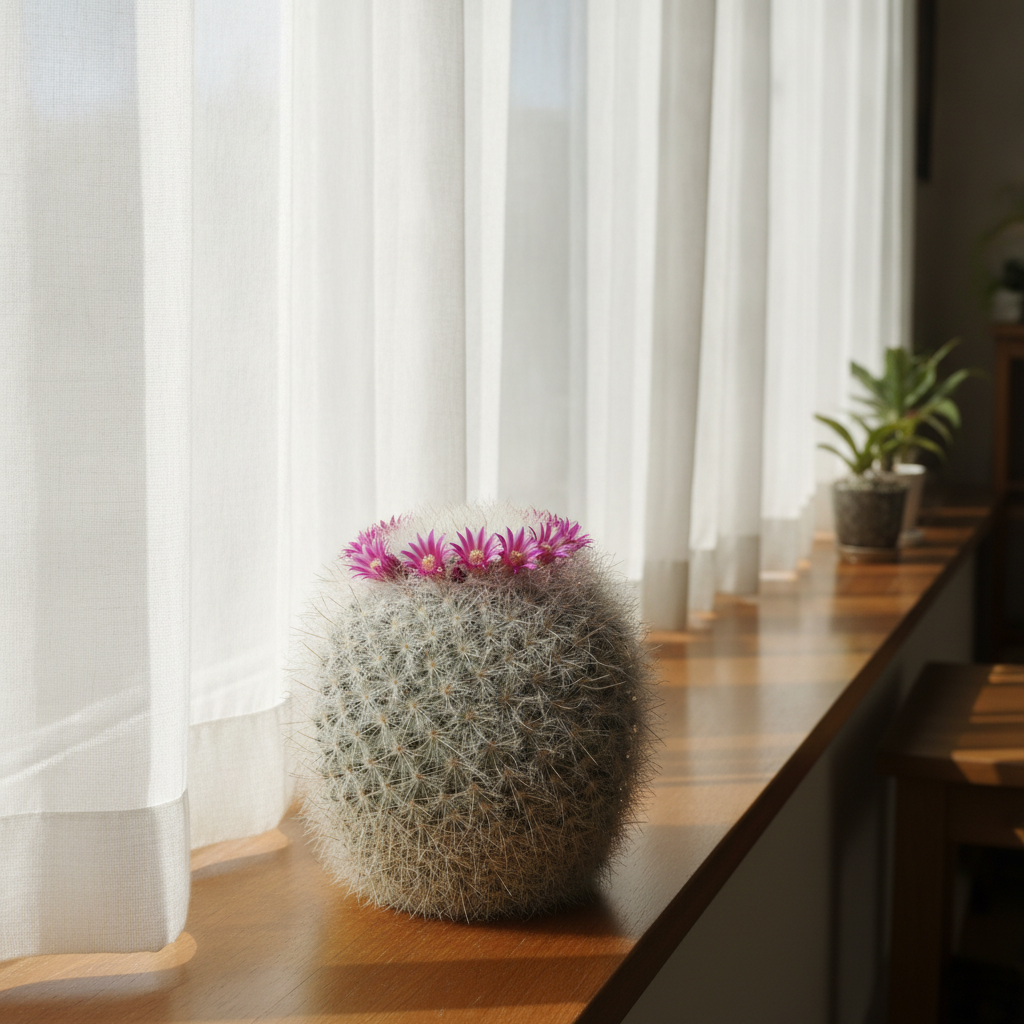
Light is the single factor that most often decides whether an old lady cactus thrives or merely persists. In its native Mexican habitat it grows fully exposed on sunny slopes, and indoors it wants the brightest position you can give it. Several hours of direct sun a day is not a luxury for this plant but a requirement, both for healthy growth and for the dense white wool and spring flowers that make it worth owning.
The ideal indoor spot is directly on a south-facing windowsill where the body sits in unobstructed sun for much of the day. In a position like this the plant grows symmetrically, develops a thick, even coat of hairs, and stores the energy it needs to bloom. Too little light and the consequences appear slowly but unmistakably, as described below.
Light Levels Explained
The table below translates the usual houseplant light categories into what each means specifically for this sun-loving cactus.
| Light Category | Approx. Level | Typical Location | Outcome |
|---|---|---|---|
| Direct sun | Over 50,000 lux | On a south windowsill | Ideal; compact growth, dense wool, reliable flowering |
| Bright indirect | 10,000 to 25,000 lux | Near but not on a bright window | Acceptable; slower growth, fewer flowers |
| Medium | 5,000 to 10,000 lux | A couple of metres from a window | Poor; etiolation begins, wool thins |
| Low | 1,000 to 5,000 lux | Interior wall, north room | Decline; stretching, no flowers, weak growth |
| Very low | Under 1,000 lux | Hallway, far from windows | Unsustainable; the plant slowly fails |
Window Orientation and Placement
South-facing window: The best choice in the northern hemisphere, delivering the long hours of direct light the plant evolved for. Place it right against the glass.
East-facing window: Workable, giving direct morning sun followed by bright light. Growth will be a little slower and flowering less certain than in a south window.
West-facing window: Also workable, providing strong afternoon sun. Watch for heat build-up behind glass on hot summer afternoons, which can scorch a plant moved suddenly into that position.
North-facing window: Not enough light on its own. A north window will keep the plant alive but it will stretch, lose its dense wool and almost never flower. If a north room is the only option, supplement with a grow light.
Pro Tip — Turn for Symmetry: A cactus grows towards its light source, so a plant left untouched on a windowsill will gradually lean and develop a flat, pale back. Give the pot a quarter turn each week to keep the globe even and the wool uniform on all sides.
How Light Affects Wool and Flowering
The white hairs that define this species are not merely decorative; in the wild they shade the body from fierce sun and trap a thin layer of still air against the skin. Strong light prompts the plant to produce them densely, so a sun-grown old lady cactus is noticeably whiter and shaggier than one grown in shade. Insufficient light has the opposite effect: the new growth at the crown emerges greener, balder and elongated, and the characteristic woolly look is lost. Flowering, too, depends on a season of strong light feeding the plant before its winter rest, so a poorly lit specimen will stay stubbornly flowerless year after year.
Warning — Direct Sunlight: Acclimatise gradually. A plant that has spent winter in weaker light, or one just bought from a shaded shop, can scorch if moved straight into intense summer sun. Sudden scorch shows as bleached yellow or rusty-brown patches that never recover. Increase exposure over two to three weeks.
Artificial Lighting
Where natural light falls short, a full-spectrum LED grow light makes an effective substitute. Position it 15 to 30 centimetres (6 to 12 inches) above the plant and run it for 12 to 14 hours a day during the growing season. Grow lights are particularly useful through dark winters in northern latitudes, though if you are deliberately giving the plant a cool dormant rest to trigger flowering you should reduce both light and warmth together rather than keeping it growing.
Seasonal Adjustments
Light intensity indoors falls sharply between summer and winter, even on the same windowsill. Through spring and summer give the plant the most direct sun available. As autumn arrives and the plant enters its rest, the lower light naturally accompanies the cooler, drier conditions it needs. Move it to your brightest winter window so it receives what little sun there is, and resist the urge to compensate with extra water, which the resting plant cannot use.
Watering & Humidity
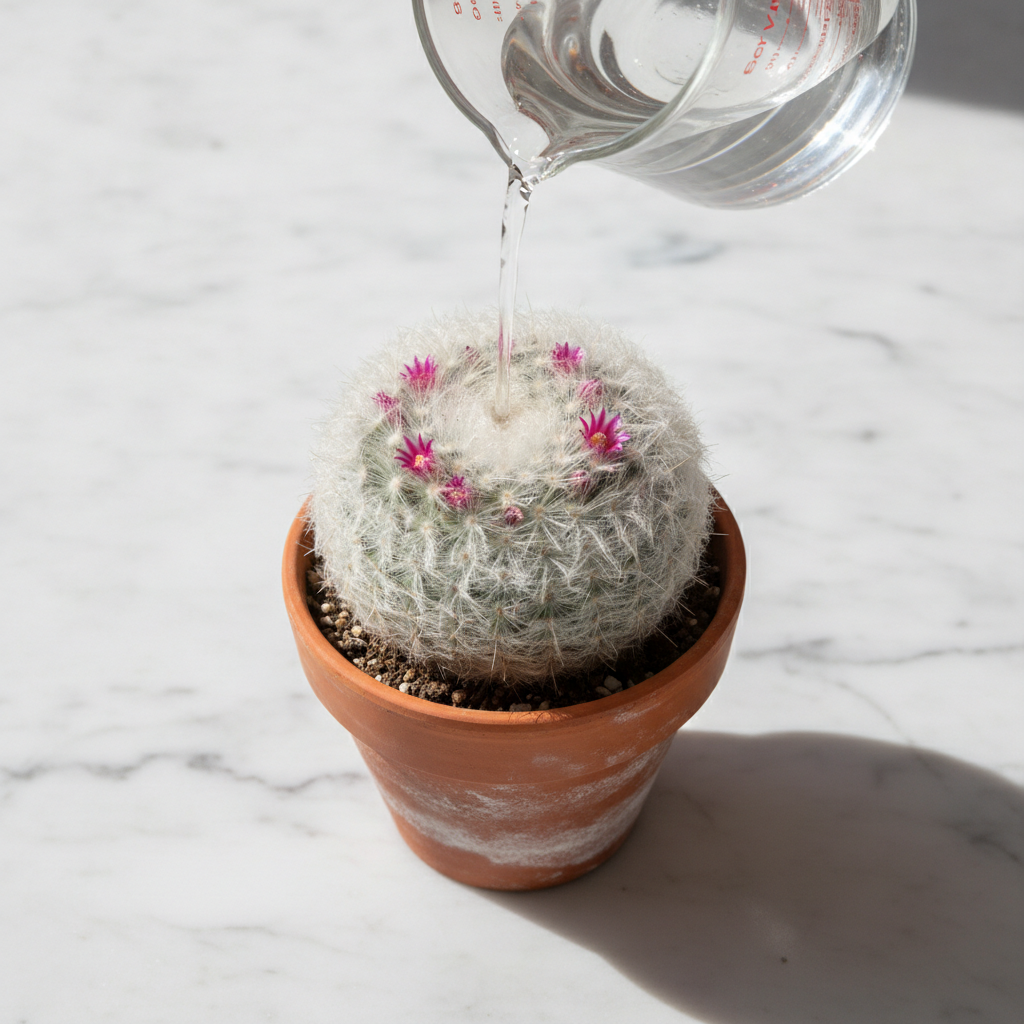
Watering is where most old lady cacti are lost, and almost always through kindness rather than neglect. As a desert plant adapted to brief rains and long droughts, Mammillaria hahniana stores water in its swollen body and expects the soil around its roots to dry out completely between drinks. The single principle to internalise is this: when you do water, water thoroughly, and then do not water again until the soil is bone dry.
When to Water
Through the active growing season of spring and summer, a healthy plant in gritty soil and a sunny window will usually need watering about every 10 to 14 days, but you should always check rather than count. Push a wooden skewer to the bottom of the pot, or lift the pot to feel its weight: a dry pot is conspicuously light, and only then is it time to water.
In autumn and winter the plant rests and its water needs collapse almost to nothing. Most growers give a resting old lady cactus no water at all from late autumn until early spring, or at most a tiny splash once a month if the body begins to look shrivelled. This enforced dry, cool dormancy is not cruelty; it is precisely the trigger that brings on the spring ring of flowers.
Pro Tip — The Dry Winter Rest: If you want flowers, keep the plant cool and almost completely dry from November to February, somewhere around 7 to 13 degrees Celsius (45 to 55 degrees Fahrenheit). A bright, unheated spare room or porch is perfect. Resume watering only when you see fresh growth or flower buds appear at the crown.
How to Water Correctly
- Confirm the soil is completely dry all the way through before you begin.
- Water the soil surface directly, pouring slowly and keeping water off the woolly body.
- Continue until water runs freely from the drainage holes, wetting the entire root ball.
- Let the pot drain fully and tip away any water that collects in the saucer.
- Return the plant to its sunny spot and do not water again until the soil has dried out entirely.
Signs of Overwatering vs. Underwatering
| Symptom | Overwatering | Underwatering |
|---|---|---|
| Body colour | Yellowing, translucent or browning patches | Dull, faintly greyed green |
| Body texture | Soft, mushy, sometimes splitting | Wrinkled, shrunken, firm |
| Base of plant | Blackening and collapse at soil line | Shrinks but stays firm and healthy |
| Soil | Stays wet for many days | Bone dry, pulling from the pot edge |
| Roots | Brown, slimy, foul-smelling | Pale, dry but intact |
Warning — Root Rot: A soft, blackening base is the classic sign of root rot, and by the time it shows the damage is often advanced. If you catch it early, unpot the plant, cut away every soft brown root and any rotted tissue with a sterile blade, let the cut surfaces dry and callous for several days, and repot into fresh dry gritty mix. A shrivelled, underwatered plant almost always recovers; a rotted one frequently does not.
Humidity Requirements
Unlike most tropical houseplants, the old lady cactus actively prefers dry air and the ordinary low humidity of a centrally heated home suits it perfectly. It has no need of misting, pebble trays or humidifiers, and indeed these can do harm.
The danger to watch for is not dryness but stagnation. Moisture trapped in the dense wool of the crown, combined with still air, invites fungal spotting and rot at the growing point. This is why you should always water the soil rather than the body, and why good air movement matters more than any attempt to raise humidity.
Rather than raising humidity, focus on ventilation. A position with gentle air circulation, an occasionally opened window or simply an open, uncrowded windowsill, keeps the wool dry between waterings and greatly reduces the risk of disease.
Water Quality
The old lady cactus is not especially sensitive to tap water and most growers use it without issue. In hard-water areas, however, dissolved minerals can leave pale crusts on the soil and, over time, build up salts around the roots. If your water is very hard, rainwater or filtered water is a gentle alternative, and an occasional thorough flush helps wash accumulated salts out of the pot.
Soil, Potting & Repotting
If light decides whether the old lady cactus flowers, soil decides whether it lives. This plant cannot tolerate roots sitting in moisture, so the growing medium must drain fast and dry quickly. Ordinary houseplant compost holds far too much water and is the most common cause of slow decline, so a sharply draining, gritty mix is not optional but fundamental.
Ideal Soil Composition
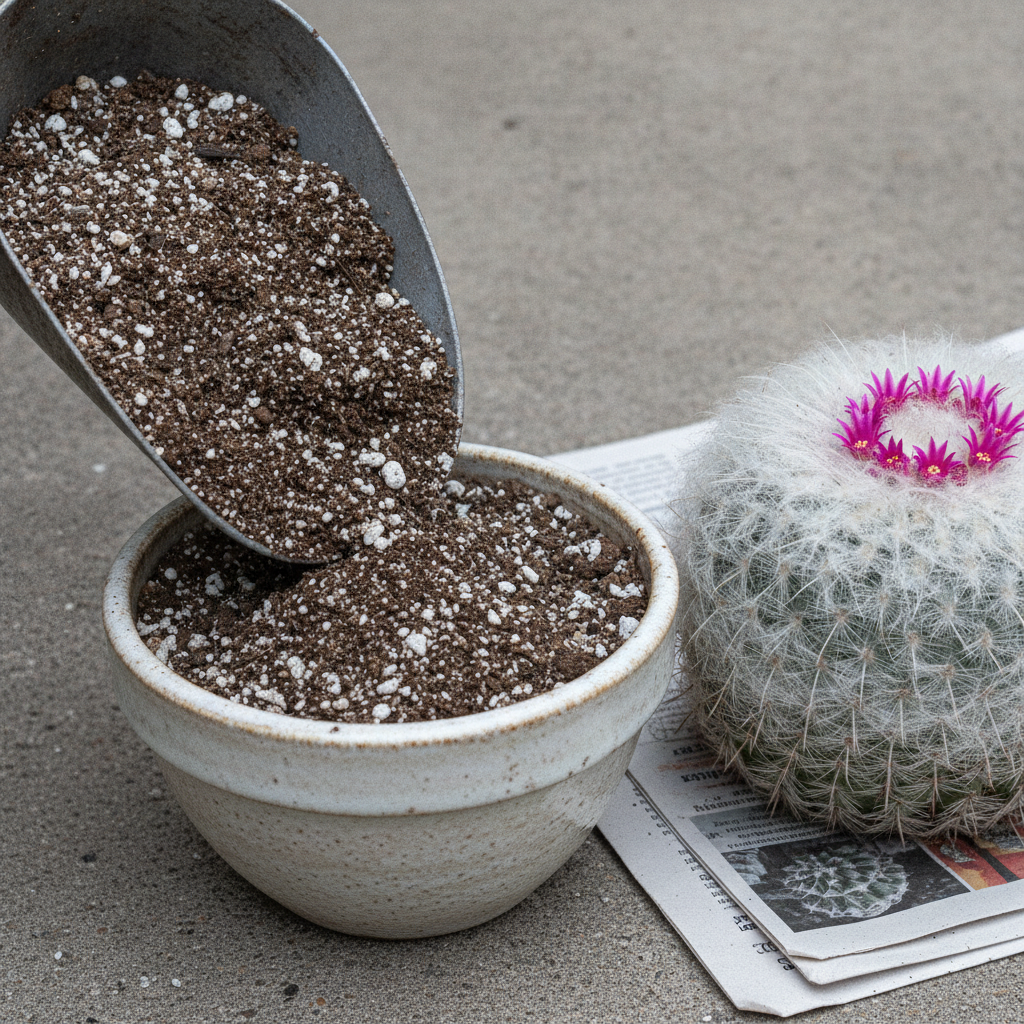
The aim is a mix that is more mineral grit than organic matter, so water passes straight through and air reaches the roots. A good blend combines a base of cactus or general compost with a generous proportion of coarse mineral material such as pumice, perlite or grit.
| Component | Proportion | Function |
|---|---|---|
| Cactus or peat-free compost | 1 part | Holds a little moisture and nutrients |
| Pumice or coarse perlite | 1 part | Creates air pockets and rapid drainage |
| Horticultural grit or coarse sand | 1 part | Adds weight and sharp drainage |
The old lady cactus grows naturally on limestone, so it tolerates and even appreciates a neutral to slightly alkaline soil, unlike many houseplants that prefer acidity. A handful of crushed limestone or a little dolomite added to the mix mimics its native ground, though it is not essential for healthy growth.
Pro Tip — Quick Mix Recipe: Combine one part peat-free compost, one part pumice and one part horticultural grit. To test it, wet a handful and squeeze: it should fall apart immediately rather than holding together in a ball. If it clumps, add more grit.
Choosing the Right Pot
The right container does as much for drainage as the soil itself, and for a slow, shallow-rooted cactus the choice is straightforward.
Drainage holes are non-negotiable. Never plant an old lady cactus in a pot without drainage. Without an escape route for excess water, even the grittiest mix becomes a waterlogged trap that rots the roots within weeks.
Pot material: Unglazed terracotta is the classic and best choice because its porous walls draw moisture from the soil and let it evaporate, speeding the drying the plant needs. Plastic and glazed ceramic retain water longer, so if you use them, lean even harder on a gritty mix and water more cautiously.
Pot size: Choose a pot only slightly wider than the plant’s body. An oversized pot holds a large reservoir of damp soil the small root system cannot use, and that lingering moisture is exactly what causes rot. A snug pot dries faster and keeps the plant safe.
When to Repot
The old lady cactus grows slowly and resents disturbance, so it needs repotting only every two to four years, or when the plant has visibly outgrown its pot or the soil has broken down and stopped draining. The best time is early spring, just as growth resumes, and always into dry soil. Crucially, do not water for a week or two after repotting, so any roots damaged in the move can heal before they meet moisture.
How to Repot: Step-by-Step
- Make sure the soil is dry, which makes the plant easier to handle and protects the roots.
- Protect your hands by wrapping the body in a folded strip of newspaper or thick cloth, or wear leather gloves.
- Ease the plant from its pot and gently crumble the old soil away from the roots.
- Inspect the roots, trimming away any that are dead, brown or rotten with a sterile blade.
- Settle the plant into fresh dry gritty mix in a pot only slightly larger, at the same depth it sat before.
- Firm the mix lightly and add a top dressing of gravel around the base to keep the body off damp soil.
- Wait one to two weeks before the first watering to let the roots recover.
Warning — Transplant Shock: A cactus watered immediately after repotting is far more likely to rot, because the inevitable small root wounds become open doors for fungus in wet soil. The dry waiting period is the most important and most often skipped step of the whole process.
Fertilising
The old lady cactus evolved in poor, thin soils and has modest appetites to match, so it needs far less feeding than a leafy houseplant. A little fertiliser at the right time of year supports steady growth and flowering, but too much does real harm, forcing soft, swollen growth that splits and inviting salt damage to the roots.
The guiding rule is to feed only when the plant is actively growing, which means spring and summer, and never during the autumn and winter rest. A resting cactus cannot use nutrients, and fertiliser applied then simply accumulates in the soil as harmful salts.
Understanding Plant Nutrients
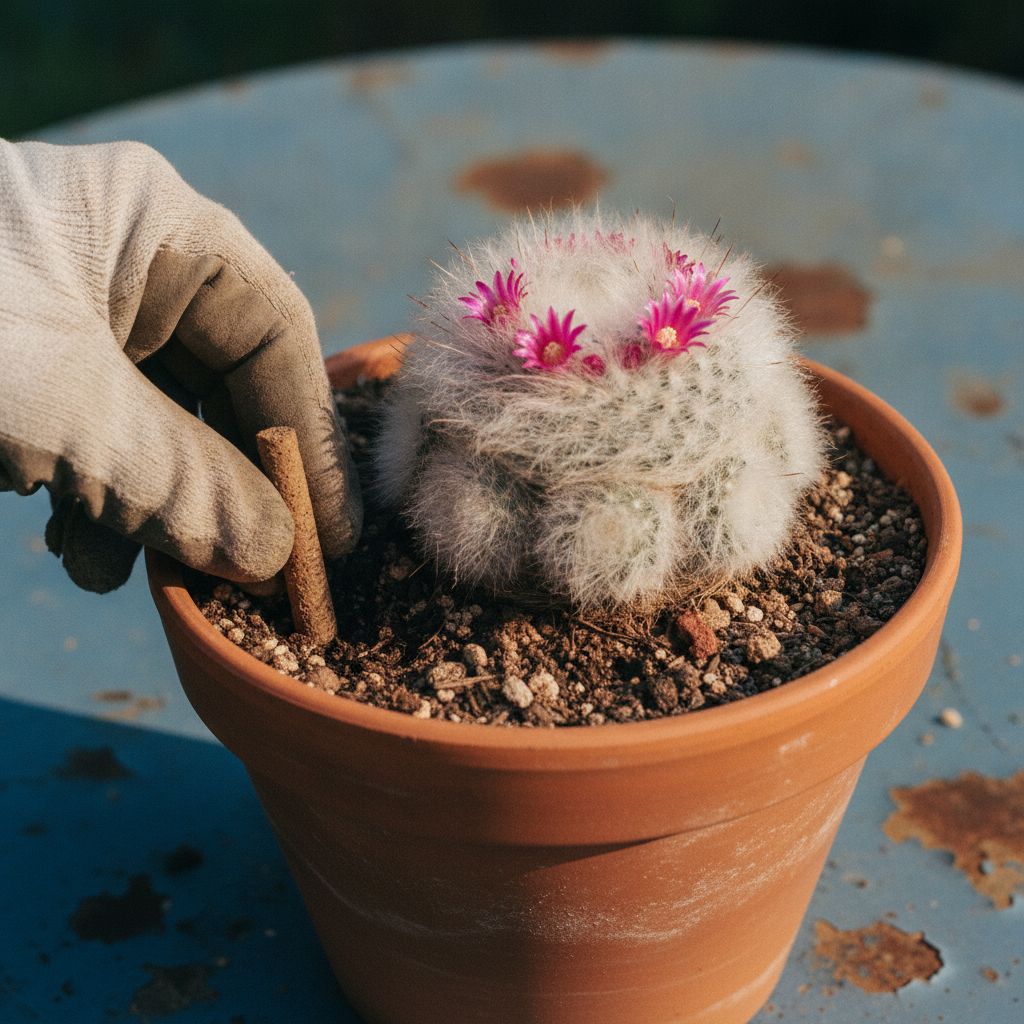
Fertilisers are labelled with three numbers giving the ratio of nitrogen, phosphorus and potassium. For a cactus you want a feed low in nitrogen and relatively higher in potassium, which favours firm growth and flowering rather than the soft leafy growth that high nitrogen drives. A dedicated cactus fertiliser is formulated exactly this way.
| Nutrient | Symbol | Primary Function | Deficiency Symptoms |
|---|---|---|---|
| Nitrogen | N | Body growth and green tissue | Pale colour, stalled growth |
| Phosphorus | P | Root development and flowering | Weak roots, few flowers |
| Potassium | K | Firmness, flowering, disease resistance | Soft growth, poor blooms |
| Calcium | Ca | Cell walls and structure | Distorted new growth |
| Magnesium | Mg | Core of the chlorophyll molecule | Yellowing on the body |
| Iron | Fe | Chlorophyll production | Pale, yellowed new growth |
Types of Fertiliser
Liquid fertilisers: The easiest option for a cactus, mixed into the watering can at half the recommended strength and applied during a normal summer watering. They act quickly and are simple to control.
Slow-release granular: A small dose of slow-release pellets in spring feeds the plant gently over months. Use a light hand, as it is easy to overdose a small pot, and choose a low-nitrogen formulation.
Organic fertilisers: Diluted organic feeds such as worm-casting tea work well and are gentle, with little risk of scorching the roots, though their nutrient content is lower and less predictable than synthetic feeds.
Feeding Schedule
Feed roughly once a month from spring through late summer, using a dilute cactus fertiliser. Three or four feeds across the growing season are plenty. Stop entirely by early autumn so the plant can wind down into its dry, dormant rest, and give no fertiliser at all until growth resumes the following spring.
Pro Tip — Less Is More: When in doubt, underfeed. A cactus that is fed too little simply grows slowly, which does no harm, but one that is overfed produces soft, distended growth that scars permanently and is far more vulnerable to rot and pests. Always dilute to half the strength suggested on the bottle.
How to Fertilise
- Water the plant lightly first if the soil is completely dry, to protect the roots from concentrated feed.
- Dilute a cactus fertiliser to half the recommended strength.
- Apply it to the soil during a normal watering, never onto the body of the plant.
- Let the pot drain fully and resume the usual dry-out cycle before watering again.
Warning — Salt Build-Up: Repeated feeding leaves mineral salts in the soil, which appear as a white crust on the surface or pot rim and can burn the roots. Once or twice a year, flush the pot with plenty of plain water, letting it run freely from the drainage holes, to wash these salts away.
Propagation
The old lady cactus offers two reliable routes to new plants: lifting the offsets it produces as it clusters, and sowing seed. Of the two, dividing offsets is by far the quicker and easier, giving an established new plant in a single season, while seed is a slower but rewarding way to raise many plants at once.
Note that, unlike many succulents, this cactus cannot be grown from a leaf or a simple stem cutting in the way a jade plant or pothos can. Its only vegetative method is the removal of whole offsets, so the techniques below are tailored to that habit.
Understanding Offsets and Clustering
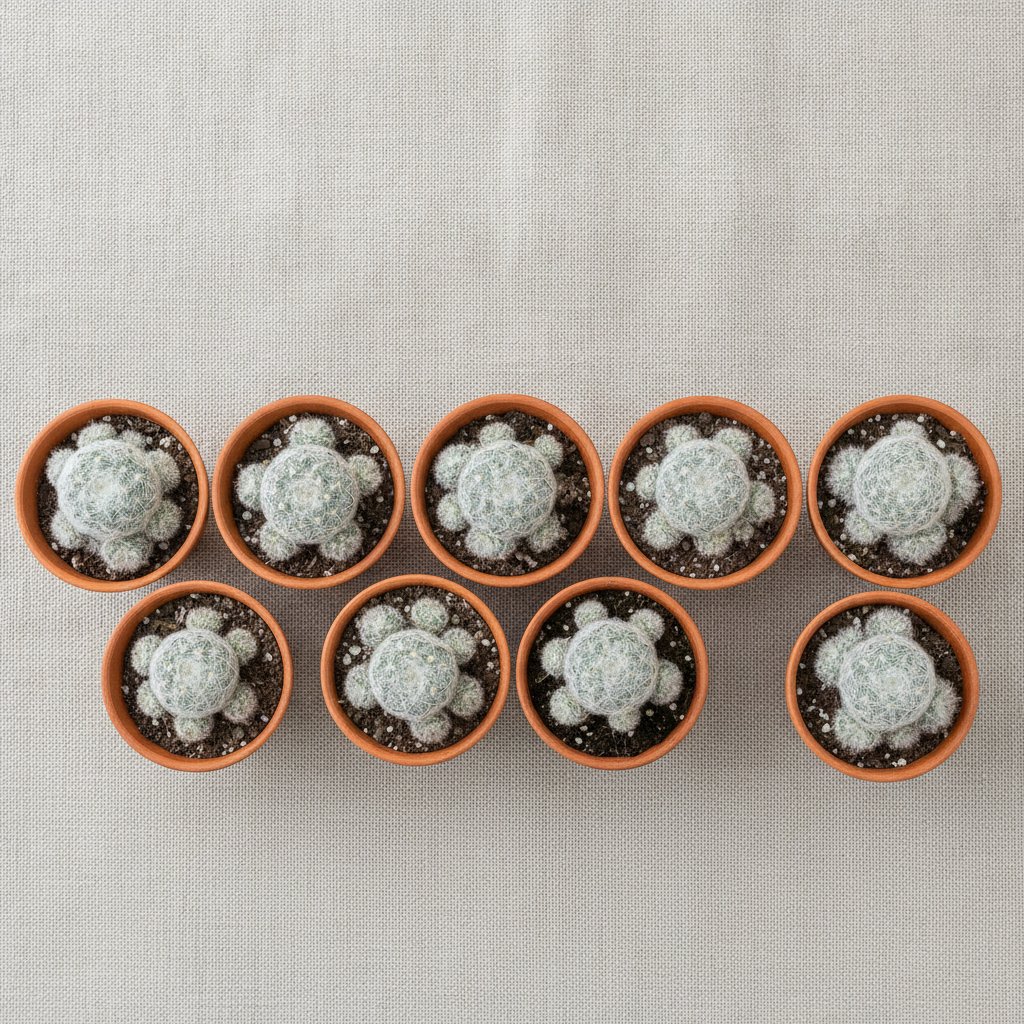
As it matures, the old lady cactus naturally produces small daughter heads, or offsets, around the base and sides of the main body. In time these form the attractive low clump the species is admired for. Each offset is a complete miniature plant capable of growing its own roots, which is what makes division so straightforward: you are simply separating something the plant has already made.
Dividing Offsets: Step-by-Step
This is the fastest method and is best done in spring or early summer when the plant is growing strongly and will heal quickly.
- Choose a plump, well-formed offset and gently twist or cut it away from the parent with a clean, sharp blade.
- Set the offset aside in a dry, shaded place for several days until the cut surface dries and forms a firm callus.
- Fill a small pot with dry gritty cactus mix and set the calloused offset on the surface or just barely into it.
- Wait about a week, then begin watering very lightly to encourage roots to form.
- Once the offset resists a gentle tug, it has rooted; move it gradually into brighter light and the normal care routine.
Pro Tip — Callous First: The single most important step is letting the cut dry before potting. An offset planted while its wound is still moist will almost always rot rather than root. Give it a few days, longer in humid weather, until the cut surface is dry and firm to the touch.
Growing from Seed: Step-by-Step
Seed is slower and demands patience, but it lets you raise many plants and is the only way to multiply a solitary specimen that has not yet offset.
- Sow the fine seed thinly on the surface of a moist, sterile gritty mix in a shallow tray and do not bury it.
- Cover the tray with a clear lid or bag to hold humidity and place it somewhere warm and bright but out of harsh direct sun.
- Keep the surface lightly moist and expect germination over one to several weeks.
- Once seedlings appear, gradually increase ventilation and light over the following weeks.
- Let the tiny plants grow on undisturbed for several months to a year before pricking them out into individual pots.
Troubleshooting Propagation
| Problem | Likely Cause | Solution |
|---|---|---|
| Offset rots before rooting | Potted while cut was still moist, or soil kept too wet | Allow a longer callous period and water only sparingly |
| Offset shrivels and never roots | Soil too dry or air too hot once roots should be forming | Begin light watering after the first week and keep out of scorching sun |
| Seeds fail to germinate | Old seed, too cold, or surface allowed to dry out | Use fresh seed, keep warm and maintain steady surface moisture |
| Seedlings damp off and collapse | Fungal infection in still, overly wet conditions | Use sterile mix, improve airflow and reduce moisture |
Pests & Diseases
A healthy old lady cactus grown in bright light and gritty soil is a robust plant that shrugs off most trouble. The problems it does suffer fall into two groups: the sap-sucking insects that find shelter in its dense wool, and the rots and fungal spots that follow excess moisture. Almost every disease it encounters traces back to overwatering.
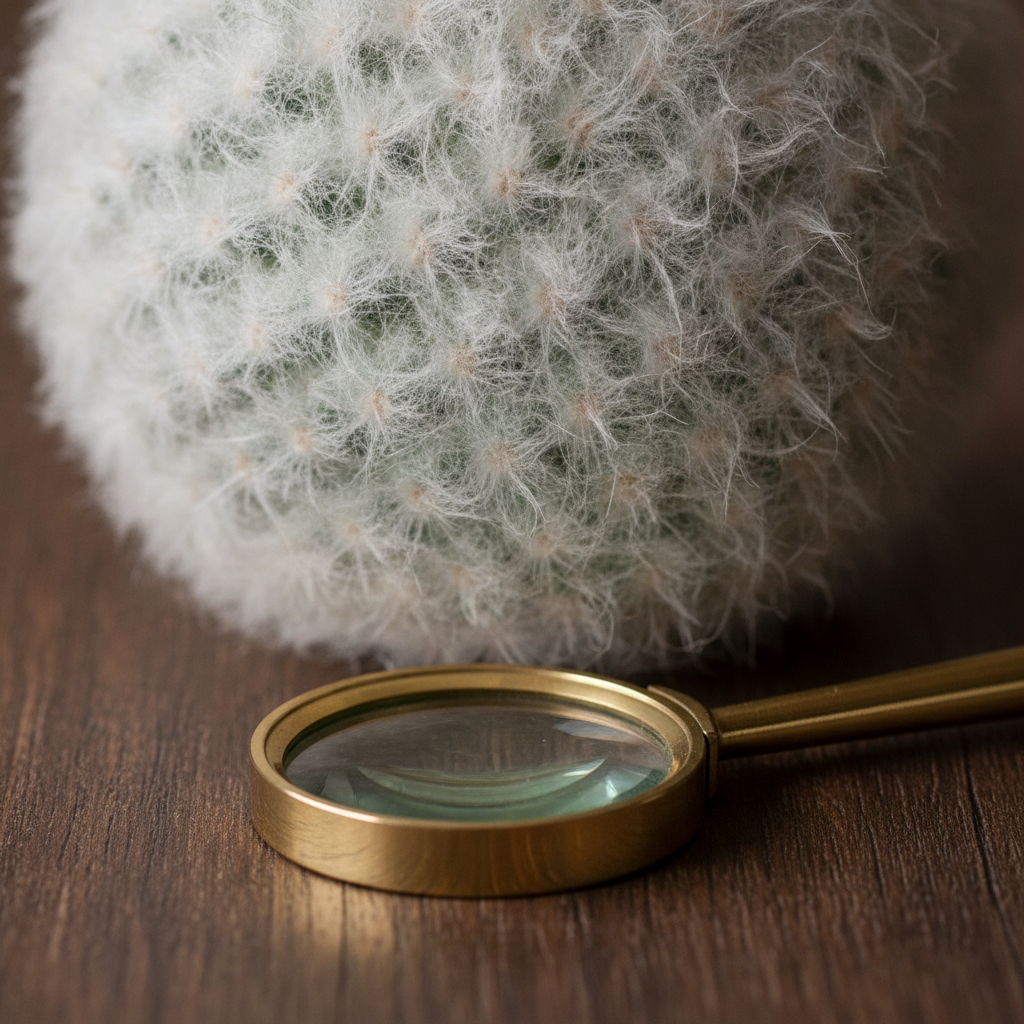
The plant’s woolly coat is both its glory and its weakness, because pests like mealybugs hide and breed within it, screened from view. Regular close inspection, parting the hairs to look at the body beneath, is the best defence and lets you catch an infestation while it is still small.
Common Pests
Mealybugs (Pseudococcus species)
The most common and persistent pest of this cactus, mealybugs are small soft-bodied insects that cover themselves in white waxy fluff, which makes them maddeningly easy to mistake for the plant’s own wool. They cluster in the crown and crevices, sucking sap and weakening the plant.
Treatment: Dab each insect directly with a cotton bud dipped in isopropyl alcohol, which dissolves their protective wax. For heavier infestations, treat the whole plant with a systemic insecticide or repeated alcohol applications, and check again every few days as eggs hatch.
Root Mealybugs (Rhizoecus species)
A hidden relative of the common mealybug that lives in the soil and feeds on the roots, often unnoticed until the plant declines without obvious surface cause. Telltale signs are white waxy deposits on the roots and inner pot wall when you unpot the plant.
Treatment: Unpot the plant, wash all soil from the roots, and either soak the roots in a systemic insecticide solution or rinse thoroughly before repotting into fresh mix and a clean pot.
Spider Mites (Tetranychus urticae)
Tiny arachnids that thrive in hot, dry conditions and feed on the body, leaving fine pale stippling and, in bad cases, faint webbing. They are most likely on a plant kept very warm with little air movement.
Treatment: Improve air circulation, and treat with a suitable miticide or insecticidal soap, repeating to break the breeding cycle. The scarring they leave on a cactus body is permanent, so early action matters.
Common Diseases
Root and Stem Rot (various fungi and bacteria)
The most serious threat to the species, caused almost always by overwatering or poor drainage. It begins as a soft, darkening patch at the base or roots and spreads upward through the body, turning tissue mushy and black.
Treatment: Act fast. Cut away all soft, discoloured tissue with a sterile blade until only firm green flesh remains, let the wound callous, and repot into fresh dry mix. Prevention through careful watering and gritty soil is far more reliable than any cure.
Fungal Spotting (various fungi)
Appears as discoloured corky or sunken spots on the body, usually where moisture has lingered against the skin in still, humid conditions, particularly within the wet wool of the crown.
Treatment: There is no cure for existing marks, which are permanent, so the priority is to halt the spread by improving ventilation, watering the soil rather than the body, and keeping the crown dry.
Pest and Disease Summary
| Pest / Disease | Identification | Treatment |
|---|---|---|
| Mealybugs | White waxy fluff in the wool and crevices | Alcohol on a cotton bud, or systemic insecticide |
| Root mealybugs | White deposits on roots and pot wall | Wash roots, treat and repot in fresh mix |
| Spider mites | Fine pale stippling and faint webbing | Miticide or insecticidal soap, better airflow |
| Root and stem rot | Soft, blackening tissue at base or roots | Cut to firm tissue, callous and repot dry |
| Fungal spotting | Corky or sunken marks on the body | Improve ventilation, keep the crown dry |
Prevention Strategies
Prevention with this plant is almost entirely about water and air. Gritty, fast-draining soil, a pot with drainage, watering only when the soil is fully dry, and good air circulation together head off the overwhelming majority of both pest and disease problems before they start.
Beyond that, inspect the plant regularly and quarantine any newly bought cactus for a few weeks before placing it among your collection, since shop plants are a frequent source of mealybugs. A healthy, sun-grown plant in the right conditions has strong natural resistance and will rarely trouble you.
Pro Tip — Inspect Under the Wool: Because mealybugs disguise themselves so well among the white hairs, make a habit of gently parting the wool with a soft brush or skewer every few weeks to check the body beneath. Catching them early, before they spread, turns a serious infestation into a five-minute job.
Popular Varieties
The old lady cactus is a variable species across its range, and botanists recognise several subspecies and varieties that differ in the density of their wool, the size of the body and the colour of the flowers. Alongside these natural forms, a number of closely related woolly Mammillaria are sold under the same affectionate common name.
The differences between them are mostly a matter of how shaggy and how solitary or clustering each form is, and all share the same easy care. The table and profiles below cover the forms most likely to be offered to collectors.
| Variety | Appearance | Light Needs | Growth Rate | Availability |
|---|---|---|---|---|
| Mammillaria hahniana (type) | Blue-green globe in dense white wool | Full sun | Slow | Common |
| subsp. woodsii | Especially shaggy, very white wool | Full sun | Slow | Fairly common |
| var. werdermanniana | Larger, greener body, sparser wool | Full sun | Slow | Specialist |
| subsp. mendeliana | Larger heads, strong magenta flowers | Full sun | Slow | Specialist |
| var. giseliana | Compact with fine, neat hairs | Full sun | Slow | Specialist |
| ‘Snowball’ forms | Selected for extra-dense white cover | Full sun | Slow | Occasional |
Featured Varieties
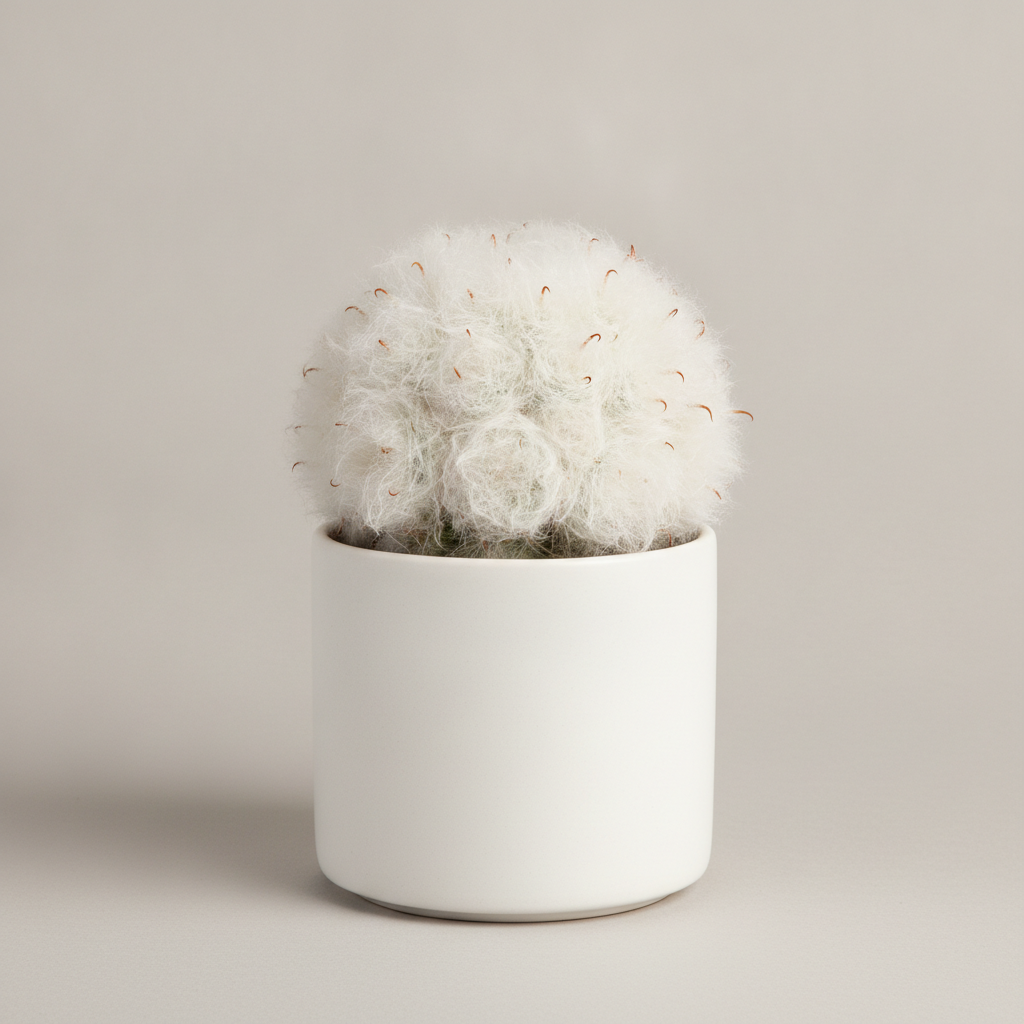
Mammillaria hahniana subsp. woodsii
The form most often imagined when people picture the old lady cactus, wrapped in an exceptionally dense, long coat of pure white wool that almost hides the green body beneath. It keeps a tight, rounded shape and is prized for its snowy appearance.
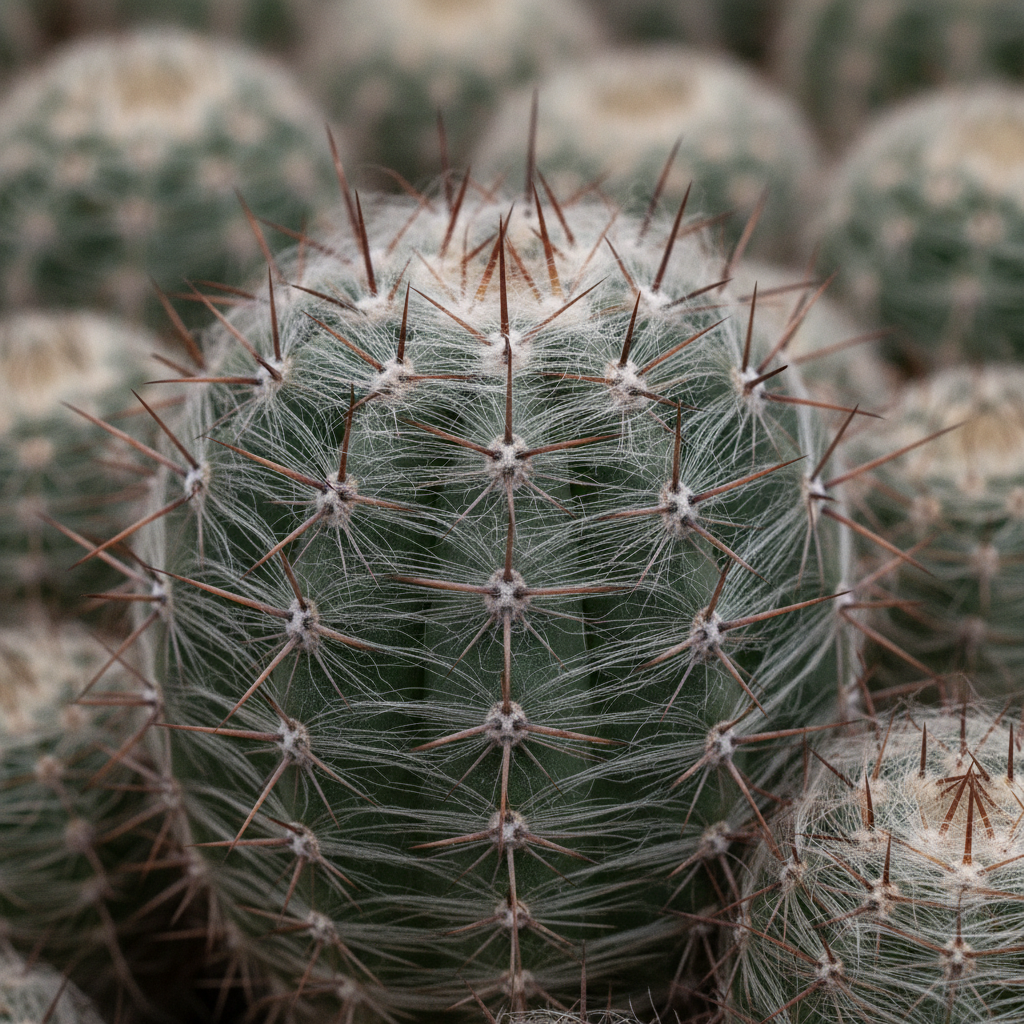
Mammillaria hahniana var. werdermanniana
A larger, more solitary form with a noticeably greener body and shorter, sparser wool, so more of the surface and spines show through. It offers a cleaner, less fleecy look for those who prefer to see the plant’s geometry.
Variety Profiles in Detail
Mammillaria hahniana subsp. mendeliana (Mammillaria hahniana subsp. mendeliana)
This subspecies tends to larger heads and is admired for the strength of its flowering, producing a particularly vivid ring of magenta blooms. It clusters readily with age and makes an impressive mature clump.
Mammillaria hahniana var. giseliana (Mammillaria hahniana var. giseliana)
A neat, compact variety with finer, tidier hairs than the type, giving a more delicate, even fleece. It stays small and well-proportioned, which suits collectors short on windowsill space.
Choosing the Right Variety for Your Space
For most growers the choice comes down to how much wool you want to see. If the snowy, shaggy look is the appeal, seek out subsp. woodsii or a selected ‘Snowball’ form; if you prefer to see more of the body and spines, var. werdermanniana is the cleaner option. All of them need the same bright sun, gritty soil and careful watering, so the decision is purely aesthetic and any of these forms will thrive given a sunny windowsill.
Frequently Asked Questions
Why won’t my old lady cactus flower?
The two usual reasons are too little light and the lack of a proper winter rest. To flower, the plant needs a summer of strong direct sun to build energy, followed by a cool, dry, almost waterless dormancy from late autumn to early spring. Skip that cold dry rest and even a healthy plant will stay green and flowerless.
How often should I water it?
In spring and summer, water thoroughly roughly every 10 to 14 days, but only once the soil has dried out completely; always check rather than water on a fixed schedule. In autumn and winter, water very little or not at all while the plant rests.
Is the old lady cactus safe around pets?
It is not chemically toxic to cats or dogs, so a nibble is unlikely to poison them. The real risk is physical: the fine spines and barbed hairs can lodge painfully in paws, mouths and skin, so keep it out of reach of curious animals and children.
Why is the new growth at the top thin and green?
Thin, elongated, balder growth at the crown is etiolation, the plant stretching towards insufficient light. Move it to your brightest window or add a grow light. The stretched growth will not revert, but the plant will return to a dense, compact form once it has enough sun.
My cactus has gone soft and brown at the base. Can I save it?
That is rot, almost always from overwatering. If caught early you can sometimes save the plant by cutting away every soft, discoloured part with a sterile blade until only firm green tissue remains, letting it callous, and repotting into fresh dry gritty mix. Advanced rot is usually fatal, so prevention through careful watering is essential.
How big does it get?
It stays small, usually reaching around 10 to 12 centimetres (4 to 5 inches) tall, though over many years it slowly clusters into a wider low mound of several heads. It is a genuinely slow grower, so a large clump represents a plant of considerable age.
Do I need to mist it for humidity?
No. The old lady cactus prefers dry air and ordinary household humidity suits it well. Misting is unnecessary and can be harmful, as moisture trapped in the wool encourages fungal spotting and rot. Good airflow matters far more than humidity.
Those white insects look just like the wool. How do I tell them apart?
Mealybugs disguise themselves as the plant’s own fluff, but they cluster in distinct cottony blobs, often in the crevices and crown, and can be smeared away to reveal a small soft insect, whereas the wool is anchored evenly across the body. If a white patch wipes off on a cotton bud and the bud comes away dirty, you have mealybugs.
Can I grow it from a piece broken off the plant?
Only if that piece is a whole offset, a complete small head from the base. Unlike many succulents, this cactus cannot regrow from a leaf or a cut slice of body. Let a removed offset callous for several days, then pot it into dry gritty mix and root it as described in the propagation section.






