
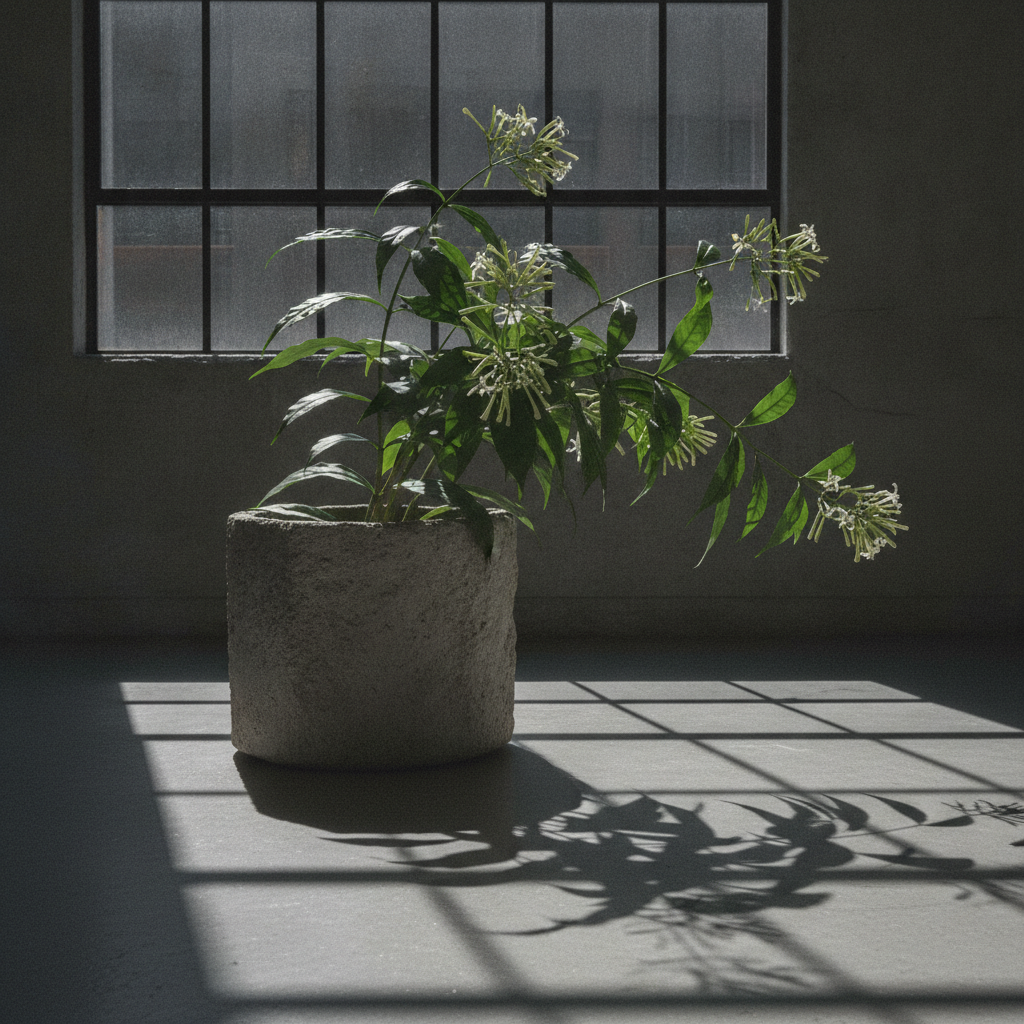
Few plants announce themselves as boldly after dark as night blooming jasmine. Despite the common name, Cestrum nocturnum is not a true jasmine at all but a woody evergreen member of the nightshade family, Solanaceae, making it a relative of tomatoes, potatoes and petunias rather than the jasmines of the olive family. Native to the West Indies and the tropical belt of Central America, it is also sold under the names lady of the night, night jessamine and queen of the night, and it has spread far beyond its homeland as a garden and container plant valued for one thing above all others: a nocturnal perfume so powerful it can carry for many metres on still evening air.
As a houseplant, night blooming jasmine has a reputation as a rewarding but slightly demanding subject. It is not difficult to keep alive, since it grows vigorously and forgives the occasional lapse, but coaxing it into the generous, repeated flushes of scented bloom that make it worth growing takes real light, steady warmth and attentive feeding. This guide covers everything from the light and water it needs to survive through to the conditions that let it truly thrive, along with propagation, pests and the important safety considerations that come with growing a fragrant member of the nightshade family indoors.
Contents
- Quick Reference
- Why Night Blooming Jasmine Makes a Rewarding Houseplant
- Light Requirements
- Watering & Humidity
- Soil, Potting & Repotting
- Fertilising
- Propagation
- Pests & Diseases
- Popular Varieties
- Frequently Asked Questions
Quick Reference: Night Blooming Jasmine at a Glance
| Light | Bright light with several hours of direct sun; a south or west facing window indoors |
| Watering | Keep evenly moist in growth, letting the top 2 to 3 cm (1 in) dry between waterings; reduce in winter |
| Temperature | 15 to 27°C (59 to 81°F); protect from anything below 10°C (50°F) |
| Humidity | Moderate to high, ideally 50 per cent or above |
| Fertiliser | Balanced liquid feed every 2 to 4 weeks from spring to early autumn |
| Toxicity | Toxic to humans, cats and dogs; all parts, especially the berries; the scent may irritate sensitive people |
Why Night Blooming Jasmine Makes a Rewarding Houseplant
The single most compelling reason to grow Cestrum nocturnum is its fragrance, which is widely regarded as one of the most potent of any cultivated plant. The flowers themselves are visually modest: slender, tubular, greenish-white to pale cream blooms, each around 2 cm (0.8 in) long, gathered in loose clusters along arching woody stems clothed in glossy, lance-shaped mid-green leaves. During the day the flowers stay tightly closed and give off almost no scent. As dusk falls they open and release a sweet, honeyed perfume in waves, an adaptation that draws in the night-flying moths that pollinate the plant in its native range.
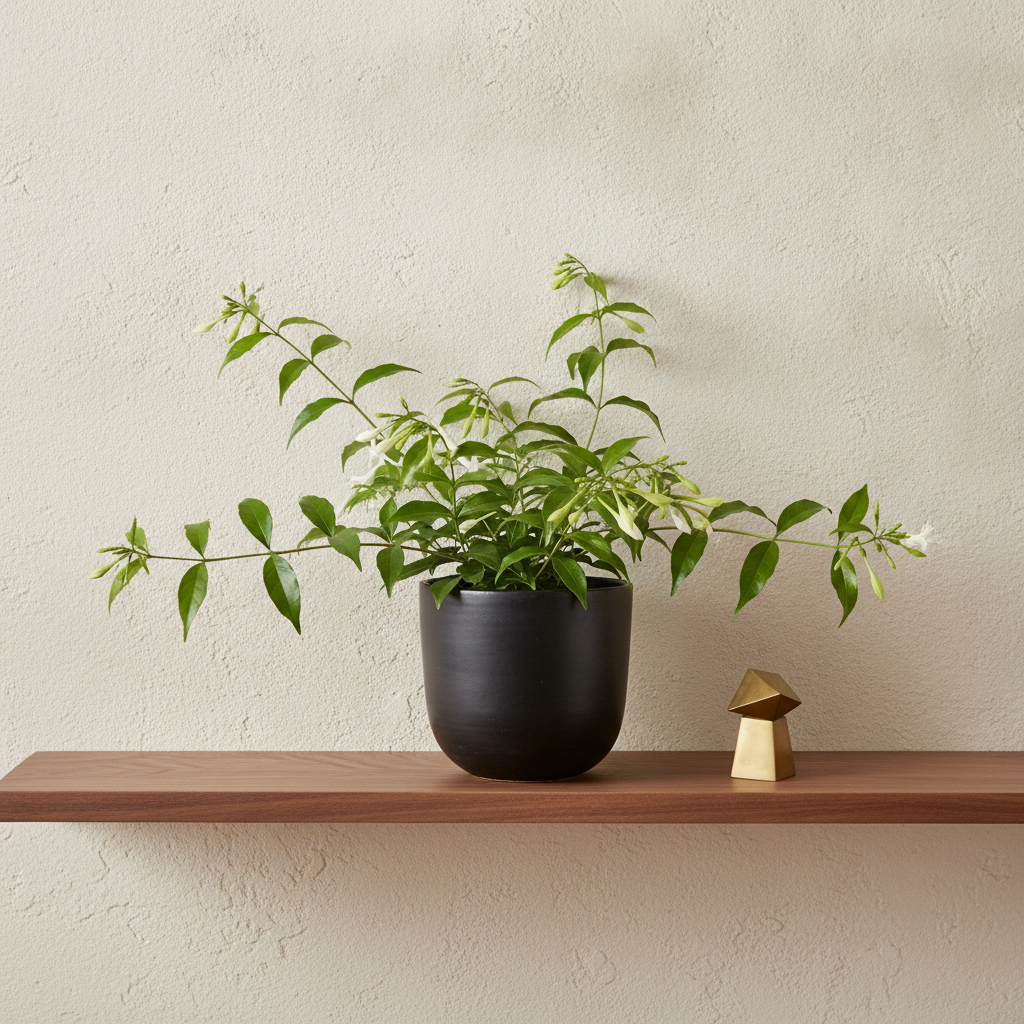
Beyond the perfume, the plant earns its place through sheer vigour and generosity. In warm, bright conditions it can flower in repeated flushes from late spring through to autumn, so a single well-grown specimen can perfume a conservatory or terrace night after night for months. It responds quickly to good care, roots readily from cuttings, and can be pruned hard to keep it compact in a container, which makes it far more manageable indoors than its potential outdoor height of up to 4 metres (13 feet) might suggest. For anyone with a sunny room, a heated conservatory or a sheltered balcony, it offers a level of sensory reward that few foliage houseplants can match.
Important — Toxicity: Every part of night blooming jasmine is toxic if eaten, a trait it shares with other members of the nightshade family. The berries and foliage contain alkaloids and saponins that can cause nausea, vomiting, elevated heart rate, salivation and, in serious cases, more severe symptoms in people, cats, dogs and livestock. Keep the plant well out of reach of children and pets, and be aware that the intense night-time scent can trigger headaches, nausea or respiratory irritation in sensitive individuals when the plant is grown in a small, poorly ventilated room. A conservatory, hallway or well-aired space suits it far better than a bedroom.
Light Requirements
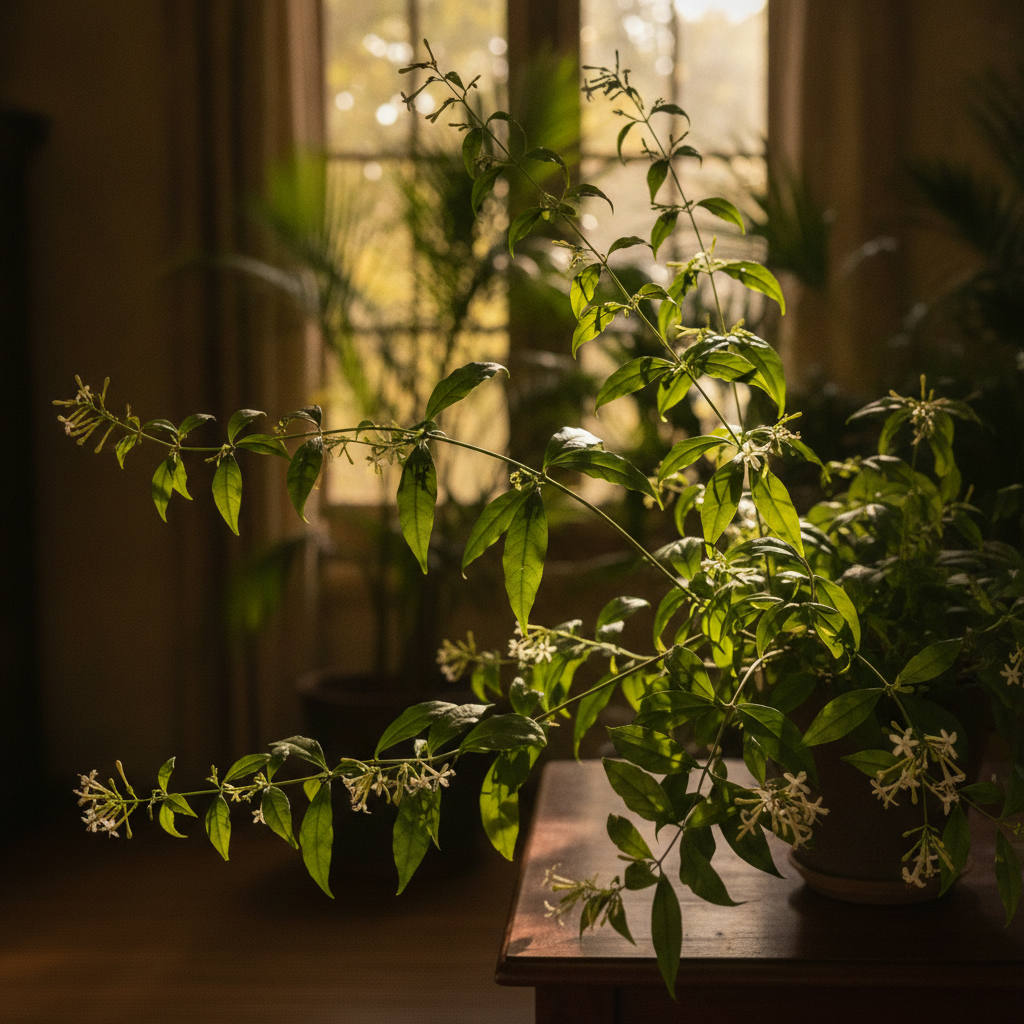
Light is the factor that most often separates a night blooming jasmine that merely survives from one that flowers freely. In the wild it grows in open, sunny thickets and woodland edges, and that appetite for light carries over to cultivation. Indoors it wants the brightest position you can offer, with several hours of direct sun each day to fuel the energy-hungry business of producing bloom after bloom.
The ideal indoor spot is directly in front of a large south or west facing window where the plant catches strong morning or afternoon sun. A plant kept in dim light will still grow, putting out leggy, sparse stems, but it will flower poorly or not at all, and the celebrated fragrance simply never materialises. If your home cannot supply enough natural light, this is one of the houseplants that genuinely benefits from being moved outdoors to a sheltered, sunny patio for the warm months.
Light Levels Explained
Understanding how different light levels translate into real positions in the home makes it easier to judge whether your plant is getting enough to bloom. The table below sets out the main categories and the outcome you can expect from each.
| Light Category | Approx. Level | Typical Location | Outcome |
|---|---|---|---|
| Direct sun | 20,000 lux and above | On a south or west windowsill, or outdoors | Strong growth and abundant flowering; the ideal |
| Bright indirect | 10,000 to 20,000 lux | Just back from a sunny window | Healthy foliage and moderate, reliable flowering |
| Medium | 5,000 to 10,000 lux | Near an east window or a shaded south one | Leaf growth continues but flowering becomes sparse |
| Low | 1,000 to 5,000 lux | A few metres from a window | Leggy, stretched stems and little to no bloom |
| Very low | Below 1,000 lux | Interior wall or north corner | Gradual decline; unsuitable for this plant |
Window Orientation and Placement
South-facing window: This is the premier position in the Northern Hemisphere, delivering the long hours of strong light that drive prolific flowering. Place the plant as close to the glass as possible and simply watch for signs of scorch during the most intense midsummer weeks.
East-facing window: Bright, gentle morning sun here suits the plant well and produces good foliage, though flowering may be a little less generous than at a south window. It is a reliable, low-risk choice for most homes.
West-facing window: Strong afternoon sun makes a west aspect nearly as good as a south one for encouraging bloom. The warmth that builds through the afternoon is welcome, provided watering keeps pace on hot days.
North-facing window: A north aspect rarely supplies enough light for this sun-loving shrub. The plant will survive but grow thin and shy of flowering, so a north window should be treated as a last resort or supplemented with a grow light.
Pro Tip — Rotate for Even Growth: Because the plant leans hard towards its light source, give the pot a quarter turn every week or so. This keeps the arching stems balanced and stops the shrub from developing a lopsided, one-sided habit over a season.
How Light Affects Flowering
For most foliage houseplants light chiefly governs leaf colour and compactness, but for night blooming jasmine it directly controls the feature you are growing the plant for. Flower production is closely tied to the amount of accumulated light energy the plant receives, so a shrub in full sun will set many more flower clusters, and rebloom more often, than the same plant in medium light. If your specimen produces lush green growth but stubbornly refuses to bloom, insufficient light is the first and most likely cause, ahead of feeding or watering issues.
Warning — Direct Sunlight: Although the plant loves sun, a specimen that has spent the winter in dim indoor light can scorch if moved abruptly into fierce summer sun. Acclimatise it over one to two weeks, increasing exposure gradually, to avoid pale, bleached patches or crisp brown scorch marks on the leaves.
Artificial Lighting
Where natural light falls short, night blooming jasmine responds well to supplementary lighting. A full-spectrum LED grow light positioned 20 to 30 cm (8 to 12 in) above the plant and run for 12 to 14 hours a day can make the difference between a non-flowering plant and a blooming one through the darker months. Because the plant is large and hungry for light, a single small clip-on lamp is rarely enough; aim for a panel or bulb rated for flowering plants rather than a token seedling light.
Seasonal Adjustments
As daylight shortens in autumn, move the plant to your brightest available window and be ready to supplement with artificial light if flowering is to continue. Growth slows naturally in winter, and a short rest is normal, so do not be alarmed if blooming pauses. In spring, as light strengthens, resume any summer outdoor routine gradually and expect the plant to reward the returning sun with a fresh surge of growth and, before long, its first scented flush of the year.
Watering & Humidity
Night blooming jasmine is a thirsty plant during its active growing season, reflecting the fast pace at which it builds foliage and flowers. The aim is to keep the soil consistently and evenly moist without ever letting it become waterlogged, striking a balance between the plant’s appetite for water and its dislike of sitting in a saturated pot.
When to Water
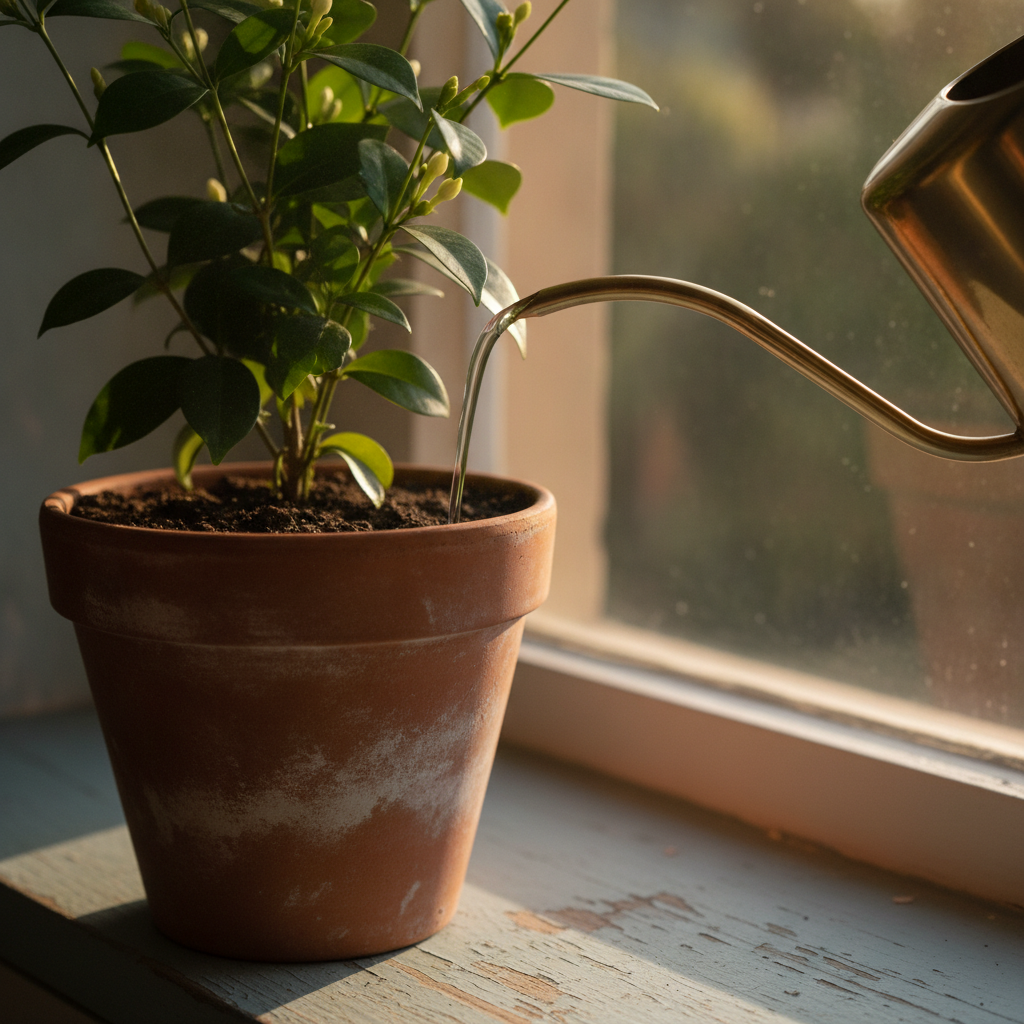
The most reliable guide is the soil itself. Push a finger into the top of the pot and water when the top 2 to 3 cm (about 1 in) has dried out but the soil below is still slightly damp. During the warm, bright growing months a vigorous plant in a sunny window may need watering two or three times a week, particularly if it is spending summer outdoors where sun and wind dry the pot quickly.
In winter, when growth slows and light is weaker, the plant uses far less water. Allow the top third of the soil to dry before watering, and take care not to keep the compost cold and wet, which is the fastest route to root problems in the dormant season. Always adjust to the plant in front of you rather than watering to a fixed calendar, since temperature, pot size and light all change how quickly the soil dries.
Pro Tip — Water in the Morning: Watering early in the day lets the foliage and soil surface dry before the cooler night, reducing the risk of fungal problems. It also means the plant goes into its evening flowering period well hydrated, which supports better bloom and scent production.
How to Water Correctly
- Check the soil first, watering only once the top 2 to 3 cm (1 in) has dried.
- Use tepid water and pour slowly and evenly across the whole soil surface, not just one spot.
- Continue until water flows freely from the drainage holes, ensuring the entire root ball is moistened.
- Let the pot drain completely for several minutes before returning it to its saucer or cover pot.
- Tip away any water that collects in the saucer so the roots never stand in it.
Signs of Overwatering vs. Underwatering
| Symptom | Overwatering | Underwatering |
|---|---|---|
| Leaf colour | Yellowing, often starting with lower leaves | Dull green fading to yellow, then browning at the edges |
| Leaf texture | Soft, limp and sometimes translucent | Dry, crisp and brittle to the touch |
| Soil | Stays wet for days and may smell sour | Dry, pulling away from the sides of the pot |
| Roots | Dark, mushy and foul-smelling | Dry and pale but still firm |
| Flowers and buds | Buds drop before opening | Buds shrivel and flowering stalls |
Warning — Root Rot: Persistently soggy soil starves the roots of oxygen and invites the fungal and bacterial organisms behind root rot. If you notice yellowing paired with a sour smell and soft, dark roots, remove the plant from its pot, cut away all rotten tissue with clean tools, and repot into fresh, free-draining compost. Caught early, night blooming jasmine usually recovers thanks to its natural vigour.
Humidity Requirements
Coming from warm, often humid tropical regions, night blooming jasmine appreciates moderate to high humidity, ideally around 50 per cent or above. It is more tolerant of average household air than many delicate tropicals, but very dry indoor conditions, especially near radiators or in centrally heated rooms in winter, can leave leaf tips brown and stress the plant.
Signs that the air is too dry include crisp, browning leaf edges, slowed growth and an increased susceptibility to spider mites, which thrive in warm, arid conditions. These symptoms often appear in the depths of winter when heating systems are running and can be reversed once humidity is raised.
To raise humidity, group the plant with other plants so they share moisture, stand the pot on a wide tray of damp pebbles kept topped up with water, or run a room humidifier during the driest months. A humidifier is the most effective and consistent method for a plant of this size; occasional misting does little on its own and can encourage leaf spotting if the foliage stays wet overnight.
Water Quality
Night blooming jasmine is not especially fussy about water quality and tolerates most tap water well. In hard-water areas, mineral build-up can gradually raise soil salinity over time, so if you notice a white crust forming on the soil or pot, flush the compost thoroughly every couple of months by watering heavily and letting it drain. Where tap water is heavily treated, letting it stand overnight before use allows some chlorine to dissipate, and collected rainwater is always an excellent choice if you have it.
Soil, Potting & Repotting
The right growing medium underpins everything else in this plant’s care. Night blooming jasmine wants a soil that holds enough moisture to satisfy its thirst during active growth while still draining freely enough that the roots never sit in stagnant water. A rich but open, well-structured mix delivers exactly this balance.
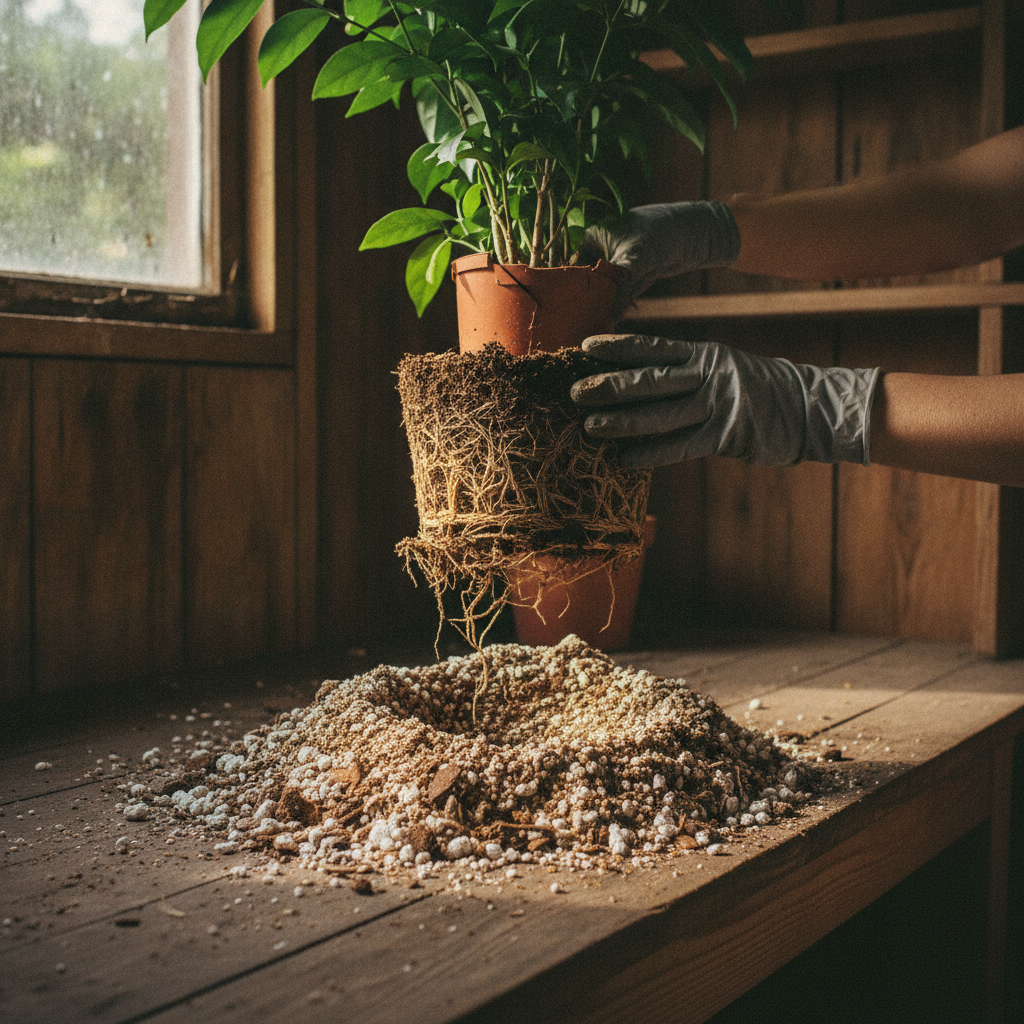
Ideal Soil Composition
A good starting point is a quality general-purpose potting compost enriched with organic matter for fertility and opened up with grit or perlite for drainage. The organic content feeds the plant’s appetite for nutrients, while the coarse material prevents compaction and keeps air moving around the roots. The table below outlines a reliable blend.
| Component | Proportion | Function |
|---|---|---|
| Quality potting compost | 50 per cent | Provides the main body, moisture retention and fertility |
| Composted bark or coir | 25 per cent | Adds structure and holds moisture without compacting |
| Perlite or coarse grit | 20 per cent | Ensures sharp drainage and aeration around the roots |
| Worm castings or compost | 5 per cent | Supplies a slow, gentle source of nutrients |
Night blooming jasmine grows happily across a broad range of soil acidity but does best in a slightly acidic to neutral medium, roughly pH 6.0 to 7.0. Most commercial potting composts fall comfortably within this band, so there is rarely any need to adjust it for container culture.
Pro Tip — Quick Mix Recipe: For a simple, dependable blend, combine two parts good potting compost, one part composted bark or coir, and one part perlite, then stir a handful of worm castings through it. This gives the moisture-retentive yet free-draining medium the plant prefers without any fuss.
Choosing the Right Pot
Because night blooming jasmine grows fast and can become a substantial shrub, the pot needs to offer both stability and room for a vigorous root system. A slightly heavier container also helps counterbalance the arching top growth so the plant does not topple in a breeze when placed outdoors.
Drainage holes are non-negotiable. Whatever pot you choose must have generous drainage holes. Without them, water collects invisibly at the base and rots the roots no matter how carefully you water from above. If you love a decorative cover pot with no holes, keep the plant in a plain nursery pot inside it and lift it out to water.
Pot material: Terracotta is an excellent choice for this plant, since its porous walls allow excess moisture to evaporate and reduce the risk of overwatering, while its weight adds welcome stability. Glazed ceramic and plastic hold moisture longer, which can be an advantage in hot weather but calls for more careful watering the rest of the year.
Pot size: Choose a pot only 2 to 5 cm (1 to 2 in) wider in diameter than the current root ball when potting on. An oversized pot holds a large reservoir of wet soil around the roots that dries slowly and encourages rot, so step up gradually rather than moving the plant into a very large container in one leap.
When to Repot
A vigorous young night blooming jasmine may need repotting every year, while a mature specimen settled into a large container can go two years or more between moves. Tell-tale signs that it is time include roots emerging from the drainage holes, water running straight through without wetting the soil, and growth that has slowed despite good light and feeding. The best time to repot is in spring, just as the plant wakes into active growth and can recover quickly.
How to Repot: Step-by-Step
- Water the plant a day beforehand so the root ball is moist and holds together well.
- Ease the plant from its pot, supporting the base of the stems and tipping rather than pulling.
- Gently tease apart any tightly circling roots and trim away any that are dark or damaged.
- Add a layer of fresh mix to the new pot so the plant will sit at its previous soil level.
- Position the plant, then fill around it with fresh compost, firming lightly to remove air pockets.
- Water thoroughly to settle the soil, then top up any that sinks and return the plant to bright light.
Warning — Transplant Shock: Expect a short pause in growth, and perhaps the loss of a few buds, in the week or two after repotting. Keep the plant out of harsh direct sun and hold off feeding for three to four weeks while new roots establish. Resist the urge to overwater a freshly repotted plant, as the disturbed roots take up less moisture until they recover.
Fertilising
Producing wave after wave of flowers through a long season is nutritionally demanding, and night blooming jasmine is a hungry feeder as a result. Regular fertilising during the growing season is one of the surest ways to keep it blooming generously rather than merely ticking over.
That said, more is not always better. Overfeeding can drive lush leafy growth at the expense of flowers and lead to a damaging build-up of salts in the soil, so the goal is steady, moderate nutrition rather than heavy dosing.
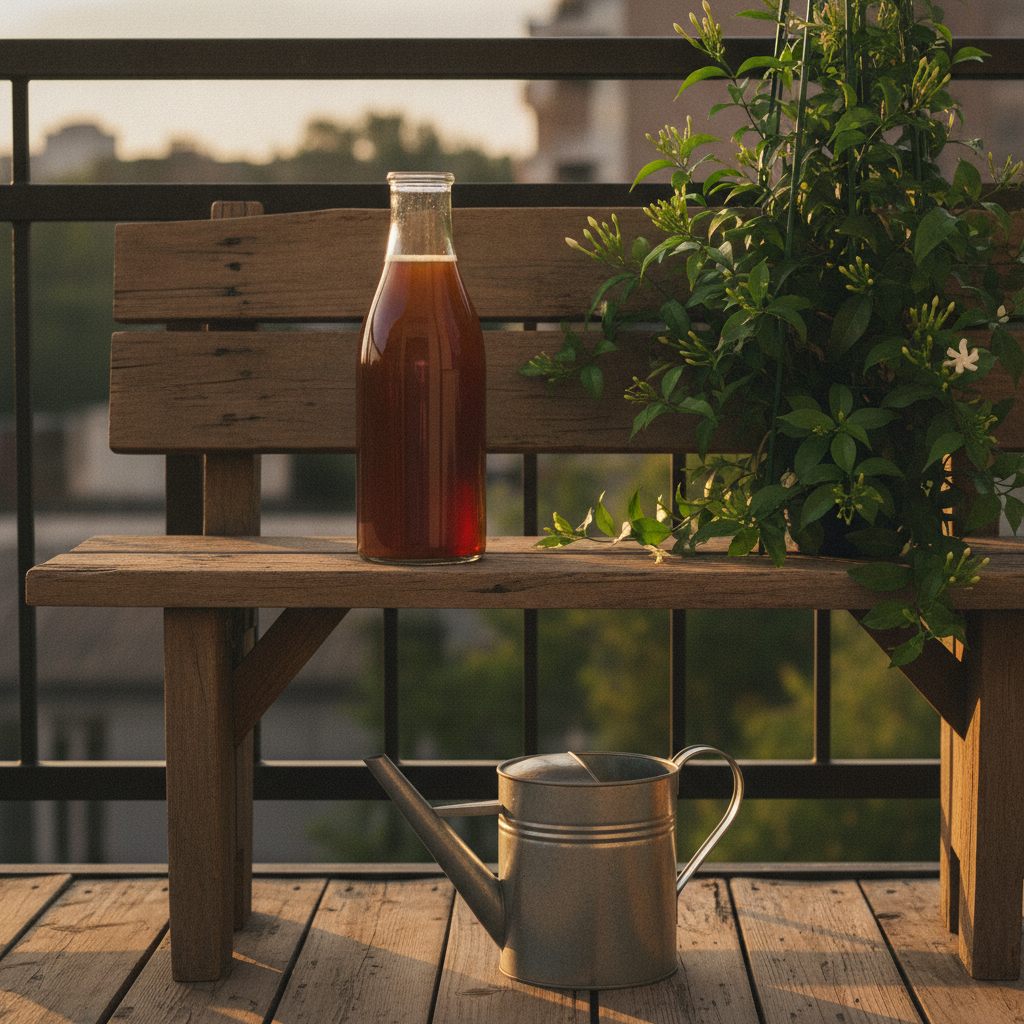
Understanding Plant Nutrients
Fertilisers are labelled with an N-P-K ratio showing the percentage of nitrogen, phosphorus and potassium they contain, the three nutrients plants need in the largest amounts. Alongside these, several secondary nutrients and trace elements play crucial supporting roles. The table below summarises what each does and how a shortage shows itself.
| Nutrient | Symbol | Primary Function | Deficiency Symptoms |
|---|---|---|---|
| Nitrogen | N | Drives leafy growth and green pigment | Overall paling and yellowing of older leaves |
| Phosphorus | P | Supports root growth and flowering | Poor flowering and dull, sometimes purplish leaves |
| Potassium | K | Regulates water use and bloom quality | Yellow or scorched leaf margins |
| Calcium | Ca | Builds strong cell walls and new growth | Distorted, weak new shoots and tips |
| Magnesium | Mg | Central to chlorophyll and photosynthesis | Yellowing between the veins of older leaves |
| Iron | Fe | Essential for chlorophyll formation | Yellowing between the veins of new leaves |
Types of Fertiliser
Liquid fertilisers: Diluted and applied with watering, liquid feeds are the easiest way to give this plant the regular, controllable nutrition it wants. A balanced formula supports overall growth, while a feed slightly higher in potassium, such as a tomato fertiliser, can be used to encourage flowering during the blooming season.
Slow-release granular: Pelleted feeds mixed into the soil or scattered on the surface release nutrients gradually over several months, which is convenient for busy growers. They give less precise control than liquids, so they suit gardeners who prefer a low-maintenance routine.
Organic fertilisers: Worm castings, well-rotted compost, seaweed extract and diluted organic feeds improve soil life as well as feeding the plant. They act more slowly and gently, making it hard to overfeed, and they pair well with an occasional liquid boost during peak flowering.
Feeding Schedule
From spring through to early autumn, feed every two to four weeks with a balanced liquid fertiliser at the recommended strength, switching to a higher-potassium feed as flowering gets under way if you want to push bloom. As growth slows in late autumn, taper off feeding, and stop altogether through winter while the plant rests. Resume in spring once you see fresh growth appearing.
Pro Tip — Feed a Moist Root Ball: Always apply liquid feed to already-damp soil rather than a bone-dry pot. Fertilising dry roots can scorch them, whereas watering lightly first, then feeding, spreads the nutrients evenly and protects the delicate root tips.
How to Fertilise
- Dilute the fertiliser to the strength stated on the label, erring on the weaker side.
- Water the plant lightly first if the soil has dried, so the roots are moist.
- Apply the diluted feed evenly across the soil surface until it begins to drain.
- Every month or so, water with plain water alone to flush out any accumulated salts.
Warning — Salt Build-Up: A white or yellowish crust on the soil surface or around the pot rim signals a build-up of fertiliser salts, which can burn the roots and brown the leaf tips. Flush the pot thoroughly with plenty of plain water two or three times, letting it drain fully each time, and cut back on feeding until the plant recovers.
Propagation
One of the pleasures of growing night blooming jasmine is how readily it multiplies. Its woody but fast-growing stems root with little trouble, so a single plant can quickly become several, whether to spread the fragrance around the home and garden or to share with friends.
The two most dependable methods are stem cuttings and layering, both of which produce plants identical to the parent. Growing from seed is possible where berries have formed, but it is slower and less predictable, so cuttings remain the method of choice for most growers.
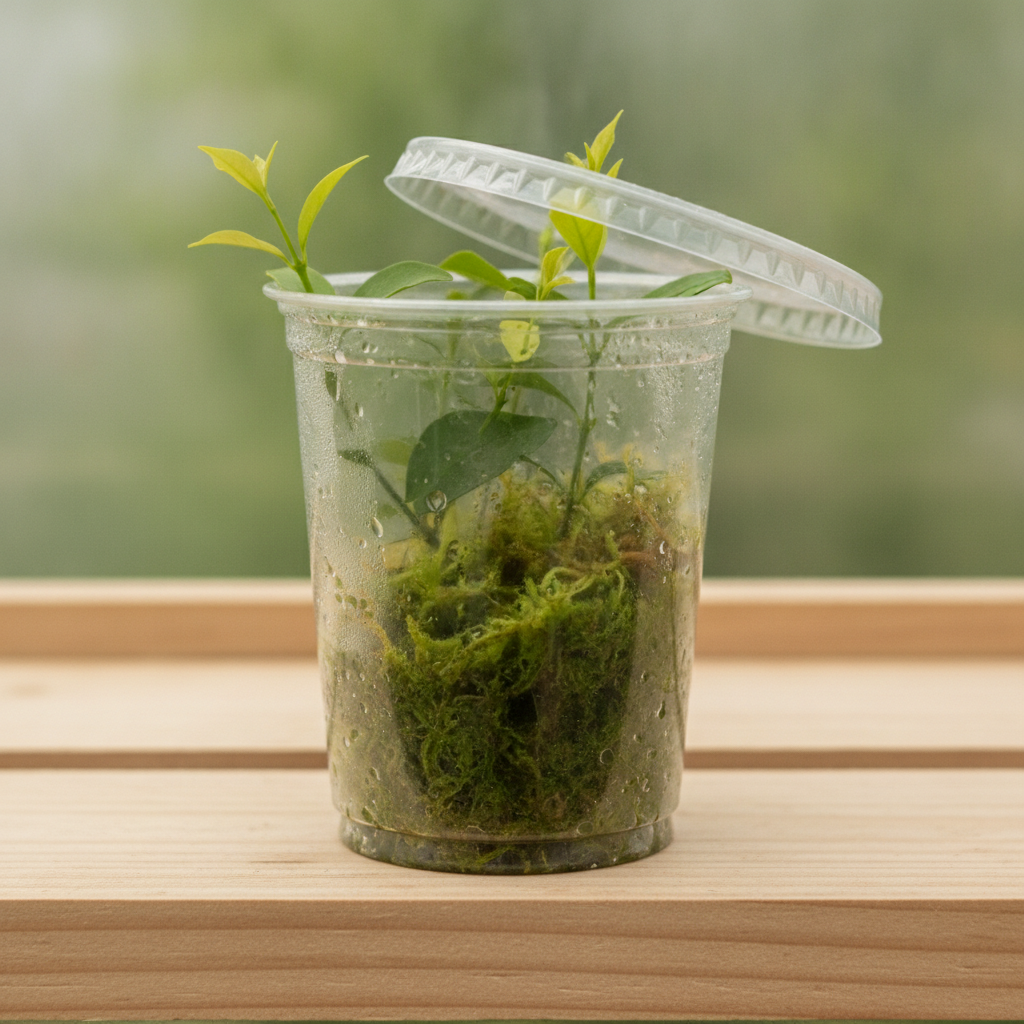
Understanding Stem Nodes
Successful cuttings depend on the node, the slightly swollen point on a stem where a leaf joins and where dormant growth cells are concentrated. It is from these nodes that new roots emerge, so every cutting must include at least one, and ideally two, nodes below the surface of the rooting medium. A cutting taken from healthy, semi-ripe wood, neither too soft and green nor too old and woody, roots most reliably.
Stem Cuttings: Step-by-Step
Taking cuttings in late spring or early summer, when the plant is growing actively, gives the fastest and most reliable results. Choose healthy, non-flowering shoots for the best rooting.
- Select a healthy stem and cut a 10 to 15 cm (4 to 6 in) length just below a node using clean, sharp secateurs.
- Remove the leaves from the lower half of the cutting, leaving two or three leaves at the top.
- Dip the cut end in rooting hormone to speed the process, though this plant will often root without it.
- Insert the cutting into moist, free-draining cutting compost or a jar of damp sphagnum moss, burying at least one node.
- Cover with a clear bag or propagator lid to hold in humidity, and keep in bright, indirect light and warmth around 21 to 24°C (70 to 75°F).
- Keep the medium lightly moist; roots usually form within three to six weeks, after which you can pot the cutting on.
Pro Tip — Bottom Heat Speeds Rooting: Night blooming jasmine roots noticeably faster with gentle warmth beneath the pot. A heated propagation mat set to around 24°C (75°F) can cut rooting time significantly and improve the strike rate, especially for cuttings taken earlier or later in the season.
Layering: Step-by-Step
Layering roots a stem while it is still attached to the parent plant, which makes it almost foolproof since the new plant is supported by the parent until its own roots form. It works especially well with the plant’s long, flexible outer stems.
- Choose a long, low, flexible stem that can be bent down to soil level, either into the parent pot or an adjacent one.
- At the point of contact, scrape away a little of the outer bark on the underside of the stem to expose the tissue beneath.
- Pin the wounded section firmly into the soil with a bent wire or a small stone, keeping the tip pointing upward.
- Keep the soil at that point consistently moist, and after several weeks to a couple of months roots will form.
- Once well rooted, sever the new plant from the parent and grow it on in its own pot.
Troubleshooting Propagation
| Problem | Likely Cause | Solution |
|---|---|---|
| Cutting rots at the base | Medium too wet or not free-draining | Use a lighter, better-drained mix and water more sparingly |
| Cutting wilts and shrivels | Too little humidity or too much direct sun | Cover to raise humidity and move to bright, indirect light |
| No roots after many weeks | Too cold, or wood too old and hard | Provide bottom heat and take semi-ripe rather than woody cuttings |
| Leaves drop from the cutting | Normal stress, or the medium drying out | Keep the medium evenly moist and be patient if the stem stays firm |
Pests & Diseases
Night blooming jasmine is a robust plant, but its soft new growth and dense foliage can attract the usual sap-sucking houseplant pests, particularly when it is grown indoors or brought inside for winter. Vigilance and early action are the keys to keeping it clean and healthy.
Most problems are far easier to deal with when caught early, so make a habit of inspecting the plant, especially the undersides of leaves and the tender shoot tips, whenever you water. A healthy, well-cared-for specimen shrugs off minor infestations that would overwhelm a stressed one.
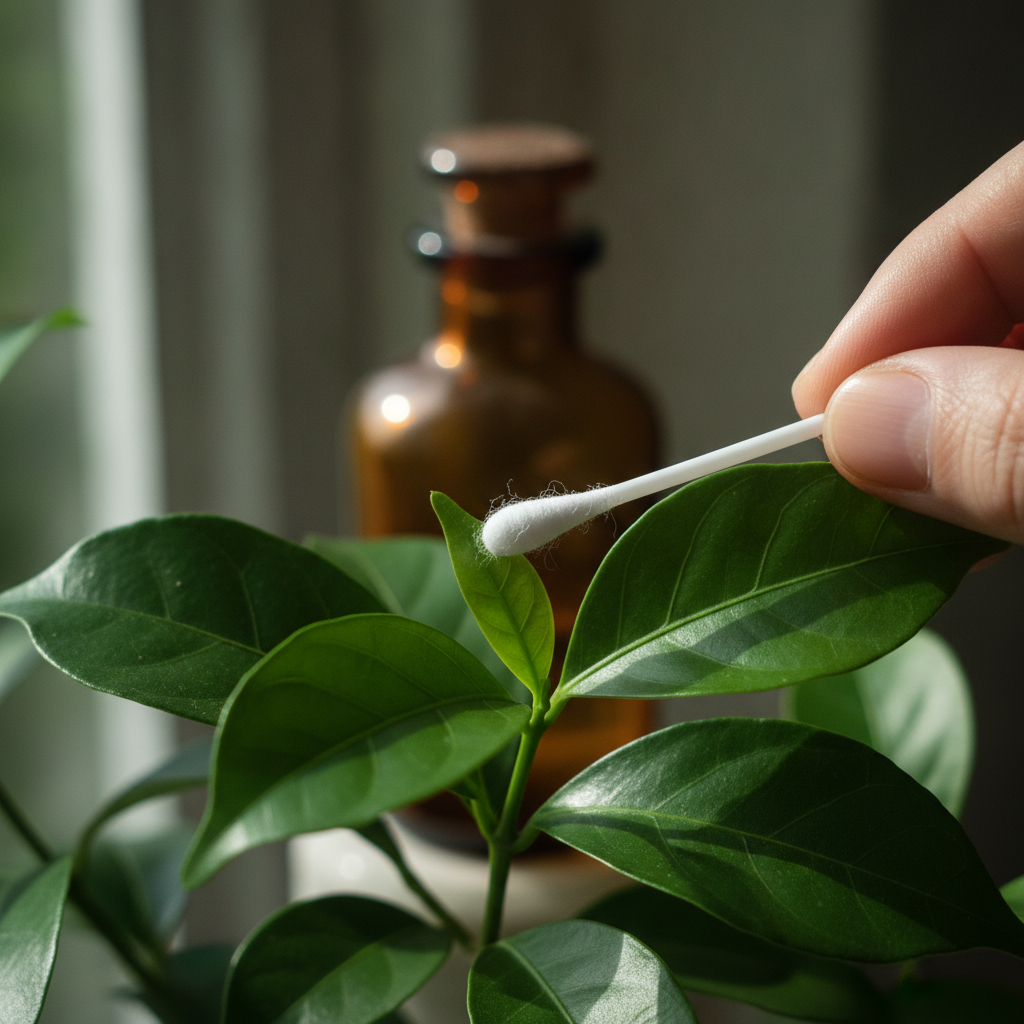
Common Pests
Aphids (Aphidoidea)
These small green, black or pink insects cluster on soft new growth and flower buds, sucking sap and excreting sticky honeydew that can turn black with sooty mould. Heavy infestations distort young shoots and can cause buds to drop before they open.
Treatment: Blast them off with a firm jet of water, then treat with insecticidal soap or a diluted neem oil spray, repeating every week until they are gone. Check the growing tips regularly, as aphids reproduce quickly in warm conditions.
Mealybugs (Pseudococcidae)
Mealybugs appear as small, white, cottony masses tucked into leaf axils and along stems. They too feed on sap and secrete honeydew, gradually weakening the plant and leaving it sticky and prone to sooty mould.
Treatment: Dab individual insects with a cotton bud dipped in isopropyl alcohol, then follow up with neem oil or insecticidal soap across the whole plant. Persistent infestations may need repeated treatments over several weeks to catch newly hatched crawlers.
Spider Mites (Tetranychus urticae)
Thriving in hot, dry air, spider mites are tiny and hard to see but leave tell-tale fine webbing and a stippled, speckled yellowing across the leaves. They are most common on indoor plants during heated winter months.
Treatment: Raise humidity, rinse the foliage thoroughly including the undersides, and treat with neem oil or a specific miticide. Because they breed rapidly in warmth, repeat treatments at short intervals until no new webbing appears.
Whiteflies (Aleyrodidae)
As members of the nightshade family, night blooming jasmine can be a magnet for whitefly, tiny white winged insects that rise in a cloud when the plant is disturbed. They feed on the undersides of leaves and, like aphids, leave sticky honeydew behind.
Treatment: Hang yellow sticky traps to catch the adults, and spray the undersides of leaves with insecticidal soap or neem oil every few days to break the breeding cycle. Isolating the plant helps stop them spreading to other houseplants.
Common Diseases
Root Rot (Pythium and Phytophthora)
The most serious disease risk, root rot follows chronic overwatering or poor drainage. Affected plants yellow and wilt despite wet soil, and the roots turn brown, soft and foul-smelling as the tissue dies.
Treatment: Unpot the plant, cut away all soft, dark roots with sterile tools, and repot into fresh, free-draining compost in a clean pot. Water sparingly until recovery, and correct the underlying watering habits to prevent a recurrence.
Leaf Spot (various fungi)
Fungal leaf spots show as brown or black blotches, sometimes with a yellow halo, and tend to appear when foliage stays wet for long periods in poorly ventilated conditions. They are unsightly rather than usually fatal but can spread if ignored.
Treatment: Remove and dispose of affected leaves, improve air circulation, and avoid wetting the foliage when watering. A copper-based or general fungicide can be used for stubborn cases.
Pest and Disease Summary
| Pest / Disease | Identification | Treatment |
|---|---|---|
| Aphids | Clusters of small insects on new growth and buds | Rinse off, then insecticidal soap or neem oil |
| Mealybugs | White cottony masses in leaf axils | Alcohol on a cotton bud, then neem oil |
| Spider mites | Fine webbing and stippled yellowing | Raise humidity, rinse and apply miticide or neem |
| Whiteflies | Tiny white flies rising when disturbed | Yellow sticky traps and neem oil sprays |
| Root rot | Wilting in wet soil, dark mushy roots | Trim rot, repot in fresh mix, water less |
| Leaf spot | Brown or black blotches on leaves | Remove affected leaves, improve airflow |
Prevention Strategies
Prevention is far easier than cure. Keep the plant well cared for with appropriate light, water and food, since a strong plant resists pests and disease better than a stressed one. Inspect regularly, wipe or rinse the leaves from time to time to keep them clean, and ensure good air circulation around the foliage.
Whenever you bring home a new plant, or return this one indoors after a summer outside, quarantine it away from your other plants for a couple of weeks and check it over carefully. This simple habit stops hitchhiking pests from spreading through a whole collection and is especially worthwhile with a nightshade-family plant that whiteflies find so appealing.
Pro Tip — Neem Oil as a Preventative: A light monthly spray of diluted neem oil, applied in the evening to avoid leaf scorch and out of direct sun, deters many common pests before they take hold. Cover the undersides of the leaves thoroughly, where most pests choose to feed and breed.
Popular Varieties
Unlike many popular houseplants, Cestrum nocturnum itself has few named cultivars, since it is grown almost entirely for its fragrance rather than for ornamental leaf or flower variation. The species you buy is generally the straight wild form, which is exactly the one prized for its powerful evening scent.
The wider genus Cestrum, however, contains a number of closely related and often confused relatives, several of which are grown as fragrant or colourful garden and container plants. Getting to know these relatives helps you choose the right plant for the effect you want, whether that is night-time perfume, daytime scent or bold flower colour.
| Variety | Flower & Scent | Light Needs | Growth Rate | Availability |
|---|---|---|---|---|
| Night Blooming Jasmine (C. nocturnum) | Greenish-white, intensely scented at night | Full sun to bright light | Fast | Common |
| Day-Blooming Jasmine (C. diurnum) | White, star-shaped, scented by day | Full sun to bright light | Fast | Common |
| Orange Cestrum (C. aurantiacum) | Bright orange-yellow, lightly scented | Full sun to bright light | Fast | Occasional |
| Red Cestrum (C. elegans) | Deep pinkish-red, tubular, unscented | Full sun to bright light | Fast | Occasional |
| Green Cestrum (C. parqui) | Yellow-green, scented at night | Full sun | Fast | Uncommon |
| Cestrum ‘Newellii’ | Rich crimson clusters, unscented | Full sun to bright light | Fast | Occasional |
Featured Varieties
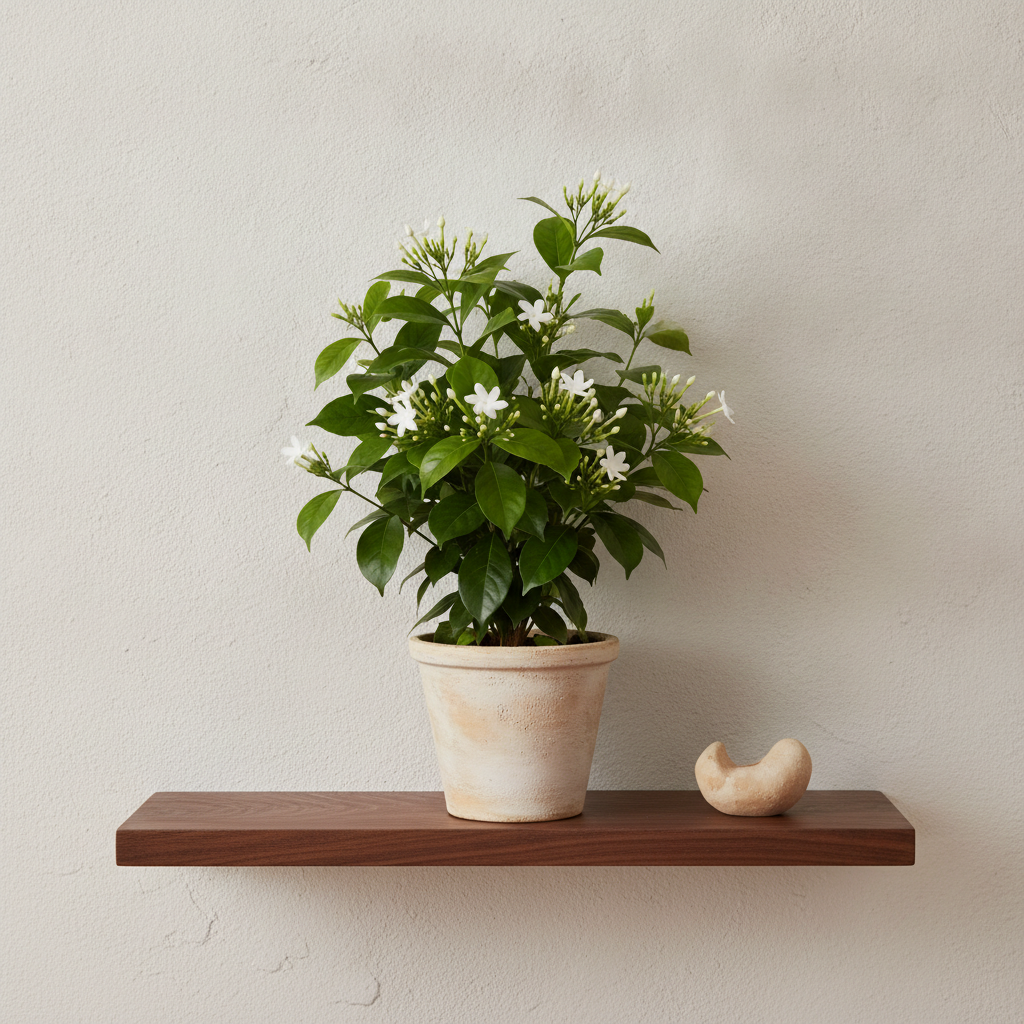
Day-Blooming Jasmine
The daytime counterpart, Cestrum diurnum, carries clusters of small white, star-shaped flowers that release a sweet scent during daylight hours rather than at night, making it a good partner for a nocturnal plant.
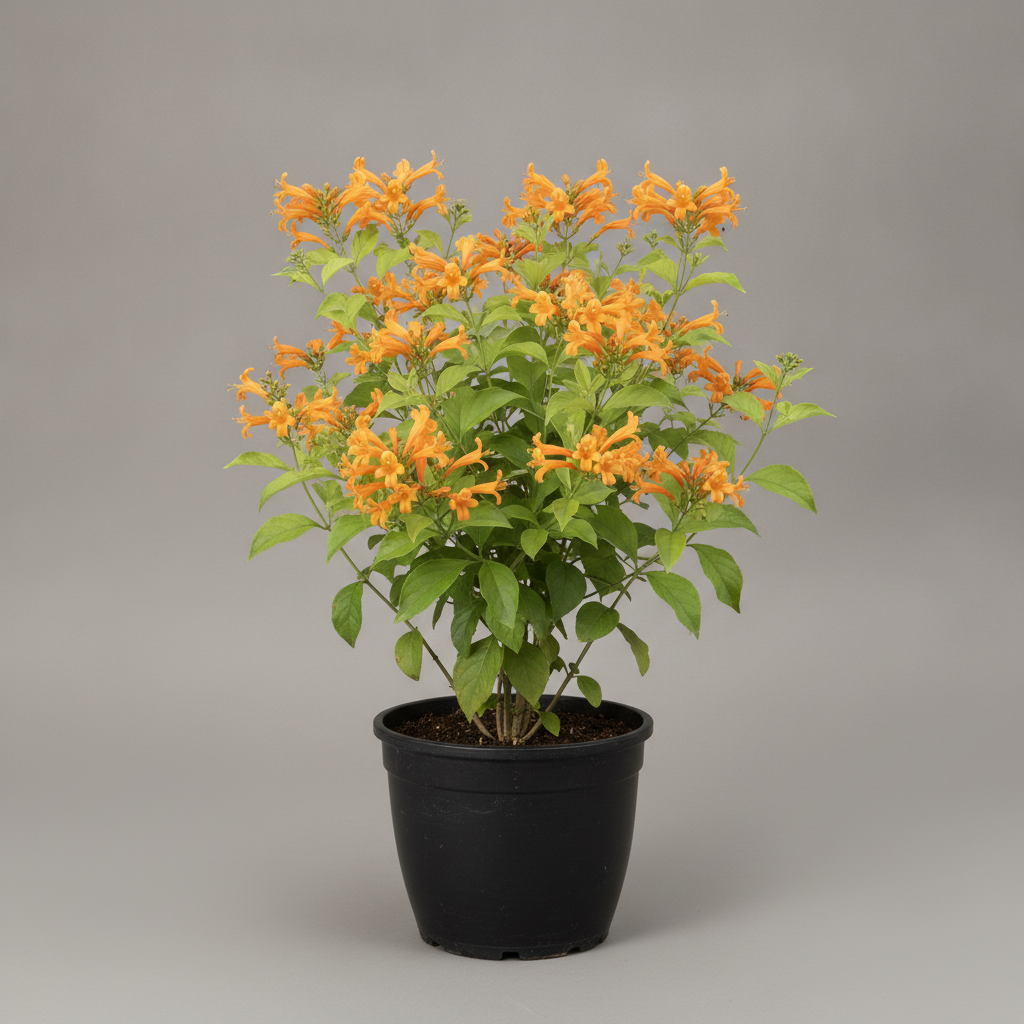
Orange Cestrum
Grown for colour rather than scent, Cestrum aurantiacum bears vivid orange-yellow tubular flowers against light green foliage, bringing a warm, tropical brightness that its white-flowered relatives lack.
Variety Profiles in Detail
Day-Blooming Jasmine (Cestrum diurnum)
Often grown alongside its night-flowering cousin, day-blooming jasmine is an upright evergreen shrub with glossy deep-green oval leaves and dense clusters of small white flowers that perfume the daytime garden. Its care mirrors that of C. nocturnum almost exactly, wanting the same warmth, light and free-draining soil, and it shares the same toxicity, so it too should be kept away from children and pets.
Orange Cestrum (Cestrum aurantiacum)
A more sprawling, semi-scandent shrub, orange cestrum is valued for its showy clusters of bright orange-yellow tubular flowers held over a long season. It enjoys the same sunny, warm conditions as the rest of the genus and can be trained against a support or allowed to arch naturally in a large container.
Red Cestrum (Cestrum elegans)
Grown purely for its ornamental impact, red cestrum produces drooping clusters of deep pinkish-red tubular flowers followed by red berries. It lacks the fragrance of the night-blooming species but makes a striking flowering shrub for a conservatory or sheltered spot, with the same fast growth and love of sun.
Choosing the Right Variety for Your Space
If evening fragrance is your goal, the straight species Cestrum nocturnum remains unbeatable and is the one to seek out. Where you would rather enjoy scent during the day, choose C. diurnum, and if it is bold flower colour you are after, look to C. aurantiacum or C. elegans. All share the same essential needs of sun, warmth, regular water and free-draining soil, so once you can grow one well you can grow them all, and a mixed group can keep a bright room or conservatory in scent and colour across the whole warm season.
Frequently Asked Questions
Why won’t my night blooming jasmine flower?
The most common reason is too little light. This plant needs several hours of direct sun to bloom well, so a shady position will give you healthy leaves but few or no flowers. Move it to your sunniest window or outdoors for the summer, and make sure it is being fed through the growing season, and flowering usually follows.
Is night blooming jasmine safe to grow around cats and dogs?
No. As a member of the nightshade family, every part of the plant is toxic if eaten, and the berries are especially dangerous. Keep it well out of reach of pets and children, and if you suspect ingestion, contact a vet or medical professional promptly. The strong scent can also bother sensitive animals and people in an enclosed space.
Why is the fragrance so strong at night but absent during the day?
The flowers open and release their perfume after dark to attract night-flying moths, which pollinate the plant in its native range. During the day the blooms stay closed and produce little scent. This natural rhythm is why the plant is at its most spectacular in the evening and why it earns names like lady of the night.
Can the scent really cause headaches?
For some people, yes. The perfume is extraordinarily concentrated, and in a small, poorly ventilated room it can trigger headaches, nausea or mild respiratory irritation in sensitive individuals. Growing the plant in an airy space such as a conservatory, hallway or terrace, rather than a bedroom, usually keeps the fragrance enjoyable rather than overwhelming.
How big does night blooming jasmine get indoors?
In the ground in a warm climate it can reach up to 4 metres (13 feet), but in a container and with regular pruning it is easily kept to a manageable 1 to 2 metres (3 to 6 feet) or less. Pruning after a flowering flush keeps it bushy and compact and encourages more of the flowering side shoots.
Should I prune my night blooming jasmine, and when?
Yes, pruning keeps the plant tidy and productive. Trim it back after a flowering flush or in early spring before new growth begins, cutting stems to shape and removing any weak or crowded growth. Because it flowers on new wood, regular pruning actually encourages more blooms rather than fewer.
Can I move my plant outdoors in summer?
Absolutely, and it often flowers best when it does. Once all danger of frost has passed and nights are reliably warm, acclimatise it gradually to outdoor conditions over a week or two, then place it in a sunny, sheltered spot. Bring it back inside well before the first autumn frosts, as it is not cold hardy and suffers below about 10°C (50°F).
Why are the leaves on my plant turning yellow?
Yellowing most often points to a watering issue. Overwatering, with soft yellow leaves and constantly wet soil, is the usual culprit, while underwatering causes yellowing with dry, crisping edges. Check the soil moisture and drainage first, and consider whether the plant is hungry, since a lack of nitrogen or magnesium can also yellow older leaves during active growth.






