
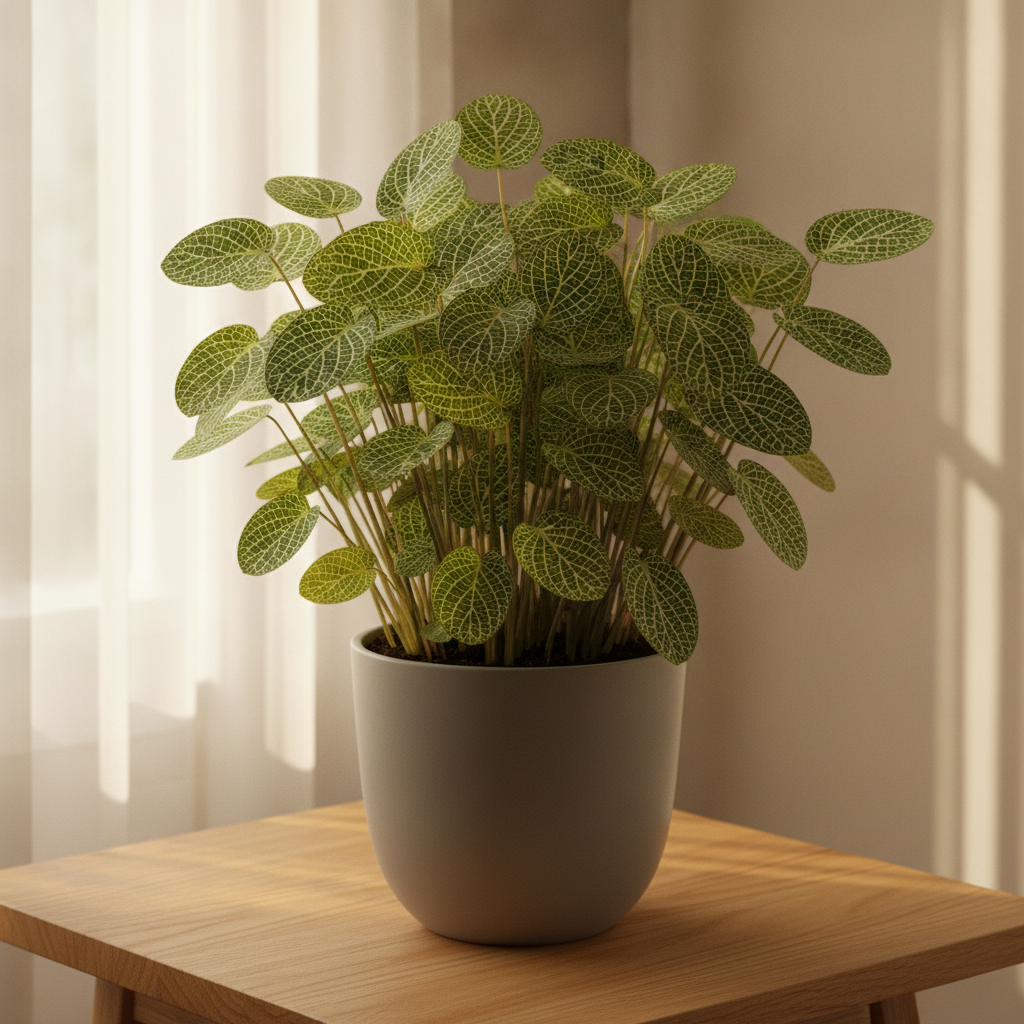
Hold a leaf of the network calathea up to a window and the reason for its name becomes obvious. Across the surface runs an impossibly fine lattice of veins, pale green threads crossing deeper green panels in a pattern so regular it looks engineered, like green stained glass or a circuit board grown rather than printed. Among the calatheas, a group prized for bold brushstrokes of colour, Goeppertia musaica takes the opposite path: no pink, no purple, no cream, just an intricate green mosaic that rewards close looking. It is one of the most graphic foliage plants you can grow on a windowsill, and, helpfully, one of the more forgiving members of a famously temperamental family.
This guide covers everything you need to keep a network calathea not just alive but genuinely thriving, from the quality of water it drinks to the humidity it craves and the one method that actually works for making more of it. The species was long sold as Calathea musaica and is still labelled that way in many shops; botanists now place it in the genus Goeppertia, and you will also see it written as Goeppertia kegeljanii. Whatever the tag says, the plant in the pot is the same, and so is the care.
- Quick reference
- Why grow a network calathea
- Light
- Watering and humidity
- Soil and potting
- Fertilising
- Propagation
- Pests and problems
- Varieties
- Frequently asked questions
Quick reference
The table below sets out the conditions a network calathea needs to do well indoors. Treat the figures as targets rather than absolutes; the plant tolerates a band around each one, and the rest of this guide explains where the flexibility lies and where it does not.
| Botanical name | Goeppertia musaica (syn. Calathea musaica, Goeppertia kegeljanii) |
| Common names | Network calathea, mosaic plant, network plant |
| Family | Marantaceae (the prayer plant family) |
| Origin | Rainforest understorey of eastern Brazil |
| Light | Bright, indirect light; no direct midday sun |
| Water | Keep evenly moist; water when the top 2 to 3 cm (1 inch) feels dry |
| Water quality | Sensitive to hard tap water; use filtered, distilled or rainwater |
| Humidity | High, ideally 60 per cent or more; minimum around 50 per cent |
| Temperature | 18 to 27 degrees Celsius (64 to 81 Fahrenheit) |
| Soil | Light, airy, moisture-retentive mix; slightly acidic |
| Feeding | Balanced feed at quarter to half strength, monthly in spring and summer |
| Mature size | Around 30 to 50 cm (12 to 20 inches) tall and wide indoors |
| Propagation | Division of the rhizome only |
| Toxicity | Non-toxic to cats, dogs and humans |
Why grow a network calathea
Most calatheas earn their place through colour, the violent pinks of a rose-painted calathea or the silvered feathering of a medallion. The network calathea earns its place through pattern alone. Each leaf is a small ovate panel, glossy and slightly puckered, etched with a grid of veins so dense and orderly that the eye keeps returning to it, looking for the rule behind the regularity. The effect is strongest in good light, when the pale veins seem to glow against the darker tissue between them. No two leaves are quite identical, yet the family resemblance across the whole plant gives it a quiet, architectural coherence that few houseplants match.
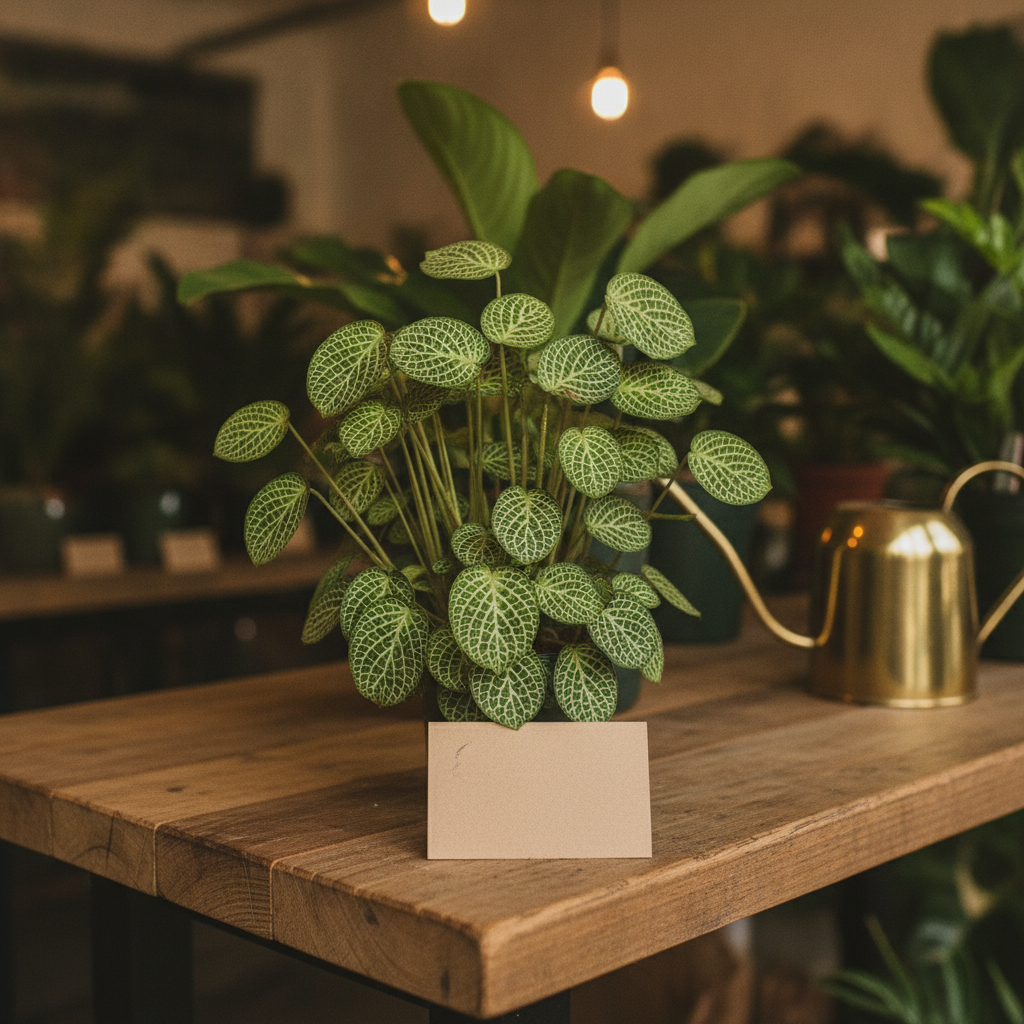
It belongs to the Marantaceae, the prayer plant family, and shares their best-loved habit: the leaves move. Driven by a swollen hinge of tissue called the pulvinus at the base of each leaf stalk, the foliage lifts and folds upward through the evening and relaxes open again by morning, a slow daily rhythm known as nyctinasty. The movement in Goeppertia musaica is gentler than in some of its showier cousins, but it is there, and it gives the plant a faint sense of being alive in a way a static fern never is.
Two further qualities recommend it. First, it is genuinely safe around pets and children; like the rest of its family it contains none of the calcium oxalate crystals that make so many popular houseplants a hazard, so a curious cat or dog comes to no harm. Second, and to the relief of anyone who has wrestled with a sulking calathea before, it has a reputation as one of the easier members of a difficult genus. It still asks for humidity and clean water, but it is markedly more tolerant of ordinary household conditions than the thin-leaved, high-drama calatheas, which makes it a sensible first step into the group rather than a heartbreak waiting to happen.
Light
In the wild this plant grows on the shaded floor of the Brazilian rainforest, under a canopy that filters the strong tropical sun long before it reaches the leaves below. That single fact explains almost everything about its light needs indoors. It wants brightness without directness: plenty of ambient light to drive growth and keep the vein pattern crisp, but no shaft of midday sun falling straight onto the foliage. Direct sun scorches the thin leaves within hours, leaving bleached patches that never recover, and over time it washes out the very contrast that makes the plant worth growing.
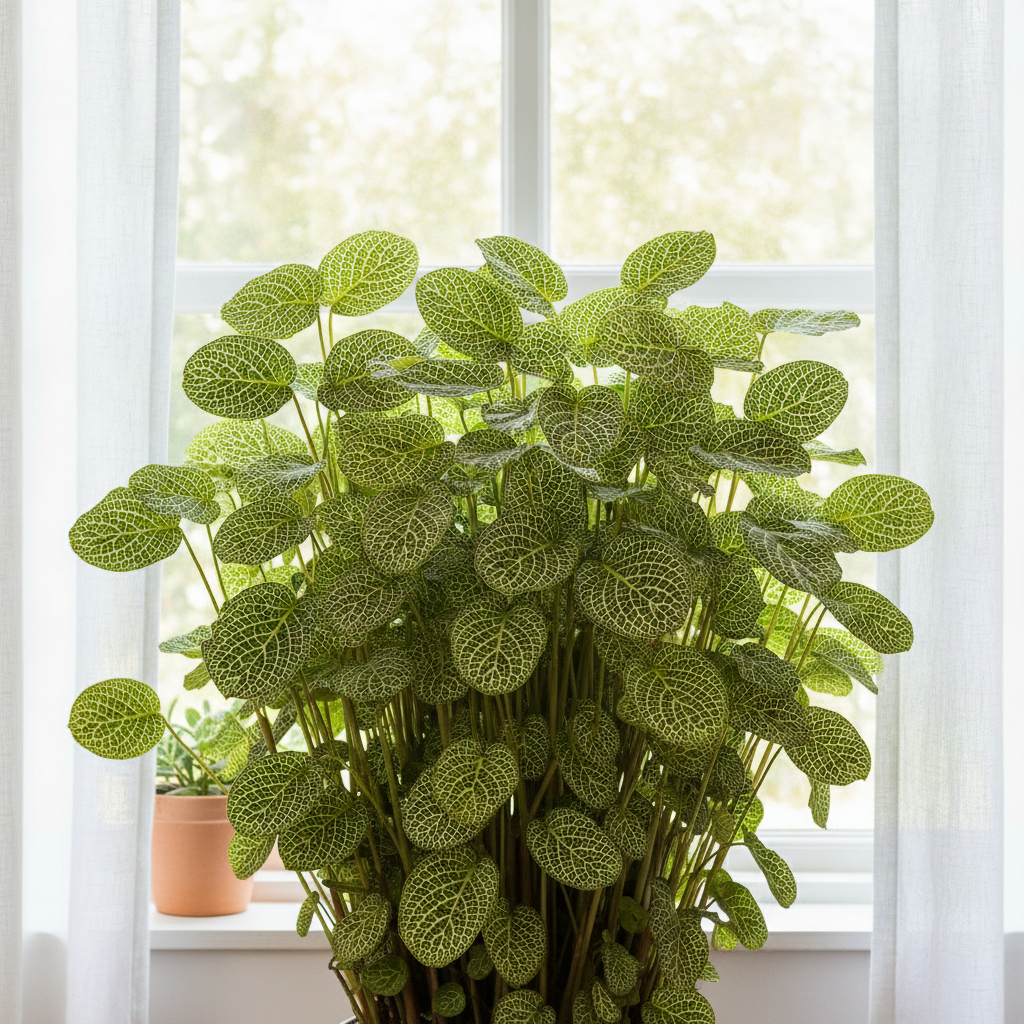
The ideal spot is a position a metre or two back from a bright window, or directly beside one screened by a sheer curtain. An east-facing window, which delivers gentle morning light and then shade for the rest of the day, is close to perfect. A north window suits it well in summer, though growth slows in the dimmer months. South and west windows are usable only if the glass is curtained or the plant is set well to one side, out of the direct beam. The network calathea will also tolerate genuinely medium light better than most calatheas, so a brightish interior wall is not a death sentence, but the leaves will be spaced further apart and the pattern less intense.
Pro Tip — Read the leaves: The plant tells you when the light is wrong. Pale, faded, crispy patches mean too much direct sun, so move it back from the glass. Leggy growth with long gaps between small leaves means too little light, so move it closer. Rotate the pot a quarter turn each week so every side grows evenly and the plant does not lean toward the window.
Watering and humidity
Watering is where the network calathea is most particular, and where most problems begin. The aim is steady, even moisture: a growing medium that is damp like a wrung-out sponge but never waterlogged, and never bone dry. In practice that means checking the top of the pot every few days and watering when the upper 2 to 3 cm (about an inch) has dried out, then watering thoroughly until it runs from the drainage holes and emptying the saucer afterward. The plant resents both extremes. Sit it in standing water and the roots rot; let it dry out completely and the leaves curl, crisp at the edges and may not fully recover.
Water quality matters as much as quantity. Like many prayer plants, Goeppertia musaica is sensitive to the fluoride, chlorine and dissolved salts in hard tap water, and reacts to a build-up of them with browning, crisping leaf margins. If your tap water is hard, switch to filtered water, collected rainwater or distilled water, or at the very least leave tap water standing uncovered overnight so some of the chlorine can dissipate. Room-temperature water is gentler on the roots than cold water straight from the tap. Through the darker months, when growth slows and the medium dries more slowly, ease back on the frequency and let the surface dry a little more between waterings to avoid the roots sitting cold and wet.
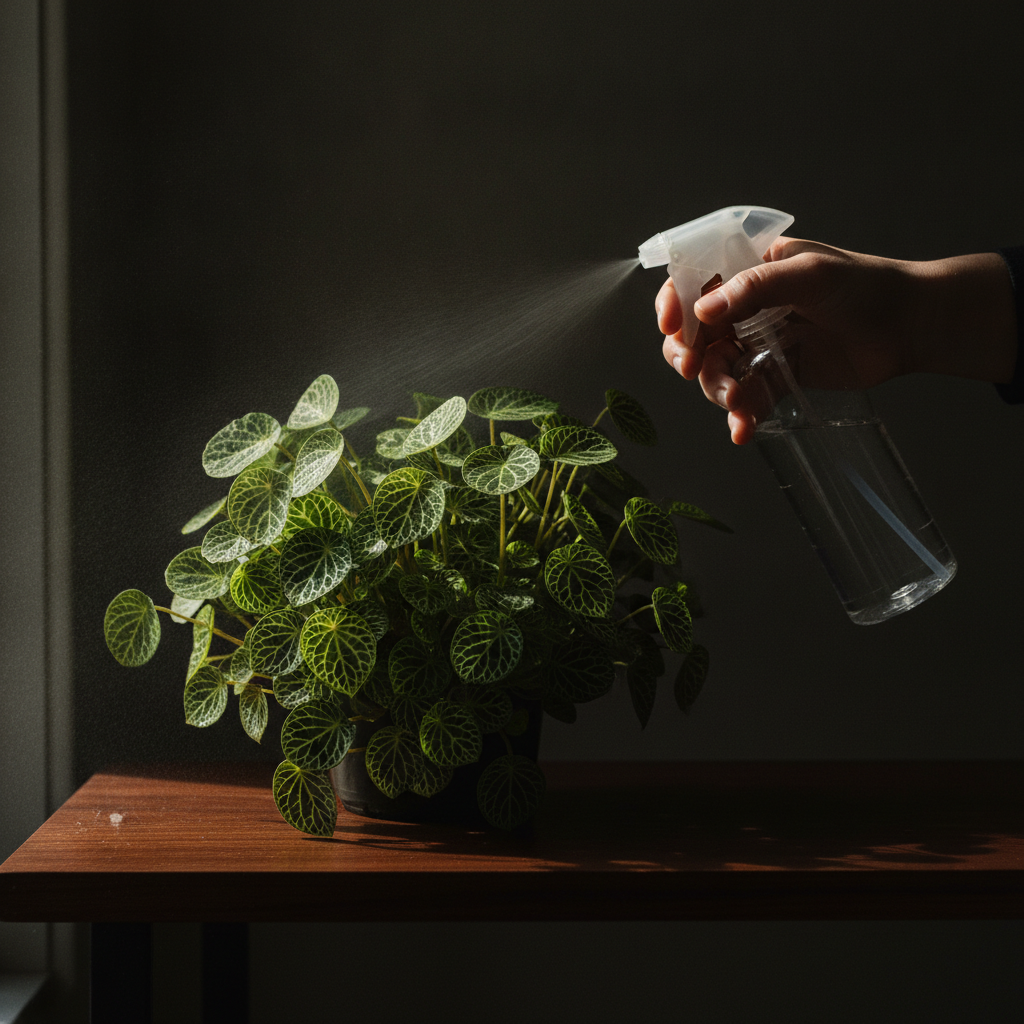
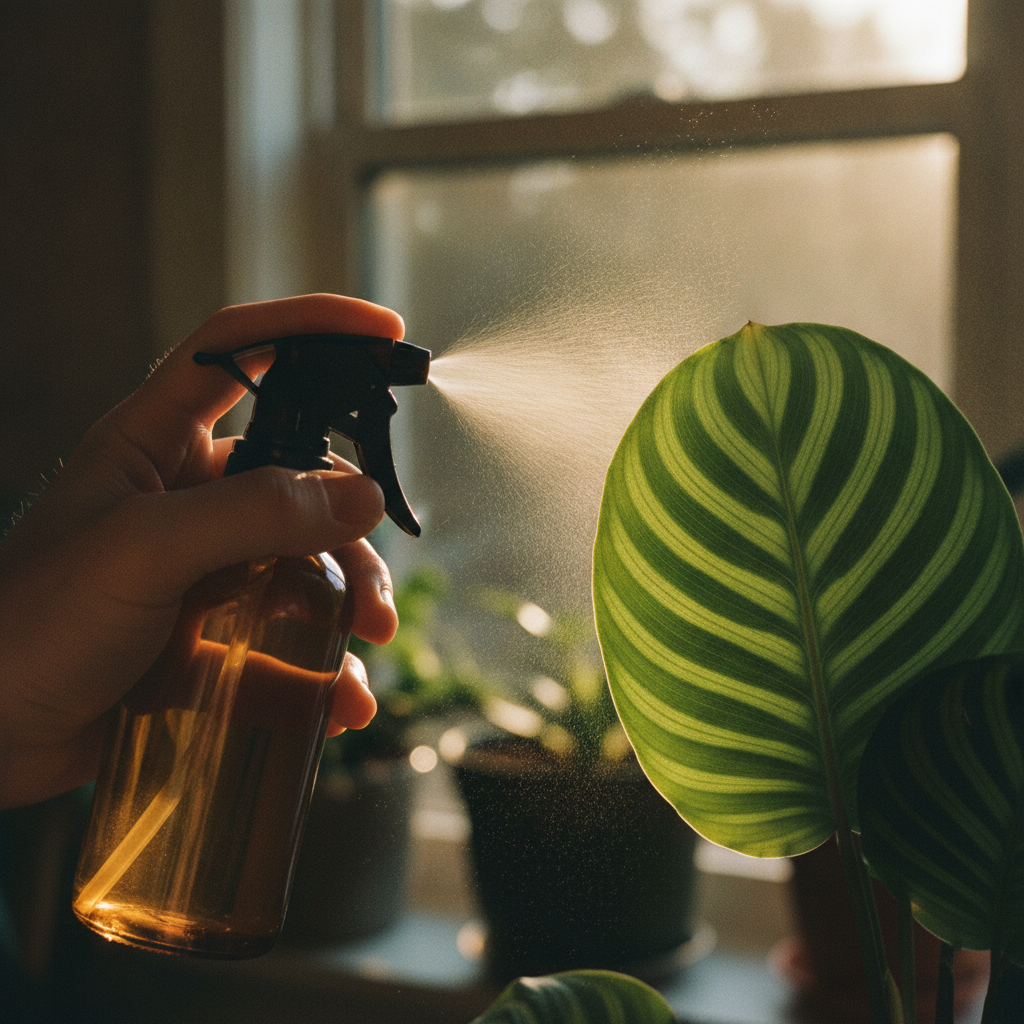
Humidity is the other half of the watering equation and arguably the single most important factor in keeping the foliage flawless. This is a rainforest plant accustomed to air that rarely drops below 60 per cent humidity, and the dry air of a heated or air-conditioned room is its chief enemy, showing up as brown, papery leaf edges. Aim to keep the air around it at 50 per cent or higher, and ideally above 60. A small room humidifier is the most reliable way to achieve this. Standing the pot on a tray of pebbles topped up with water, or grouping it with other plants so they share the moisture they transpire, both help. Misting raises humidity only briefly and, if the foliage stays wet for long, can encourage fungal spotting, so it is a minor tool rather than a substitute for genuinely humid air. A steamy bathroom with good light can be an excellent home for this plant.
Warning — Crispy edges: Brown, crunchy leaf margins are the network calathea’s distress signal, and they have three usual causes: low humidity, inconsistent watering, or mineral build-up from hard tap water. Work through them in that order. Damaged tissue will not turn green again, so trim the brown edge away with clean scissors if it bothers you, and focus on preventing the next leaf from doing the same.
Soil and potting
The contradiction at the heart of calathea care, a plant that wants constant moisture but hates wet feet, is resolved entirely in the choice of growing medium. What the network calathea needs is a mix that holds water without becoming dense or soggy: open and airy enough that excess water drains freely and the roots can breathe, yet retentive enough that it never dries out in a day. A plain bag of general houseplant compost is too heavy on its own and tends to compact, smothering the fine roots.
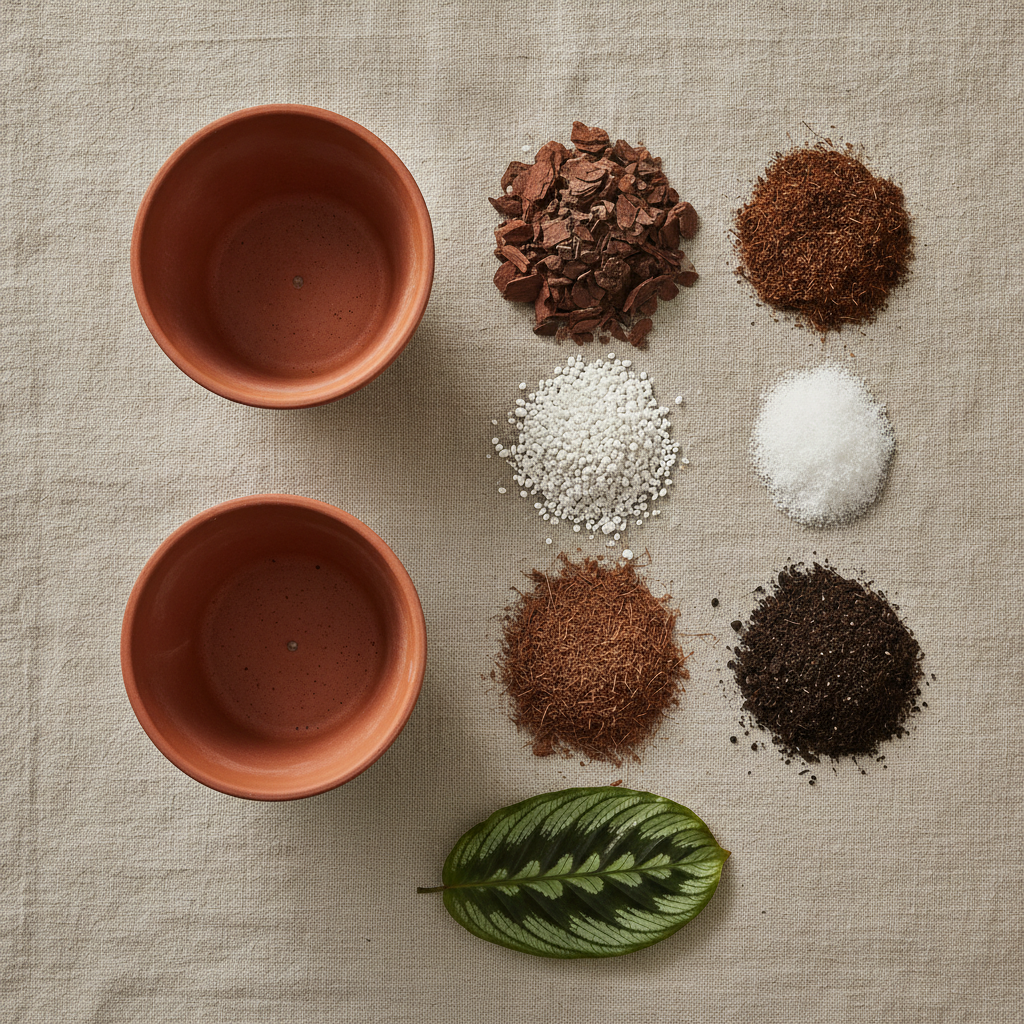
A reliable recipe is roughly two parts of a coir-based or peat-based potting compost to one part perlite for drainage and aeration, with a generous handful of fine orchid bark stirred through to keep the structure open. A little worm casting or compost adds gentle nutrition. The plant prefers a slightly acidic medium, which a coir or peat base provides naturally. Whatever you mix, the pot must have drainage holes; no calathea survives long in a sealed container, however careful your watering.
Repot every one to two years, in spring as growth resumes, moving up just one pot size at a time. The network calathea has a relatively modest root system and is happier slightly snug than swimming in a huge pot of wet medium, which only invites rot. Spring repotting also offers the ideal moment to divide the plant, since you have the rhizome out and exposed anyway. Settle a freshly repotted plant back into bright, indirect light, water it in, and expect a short pause before it puts out new leaves while the roots recover.
Fertilising
The network calathea is not a heavy feeder, and a light hand is far safer than a generous one. Through the active growing season, from spring into late summer, a balanced liquid houseplant fertiliser applied at a quarter to half the strength recommended on the bottle, roughly once a month, is ample. This steady trickle of nutrition supports new leaf production without overwhelming the sensitive roots.
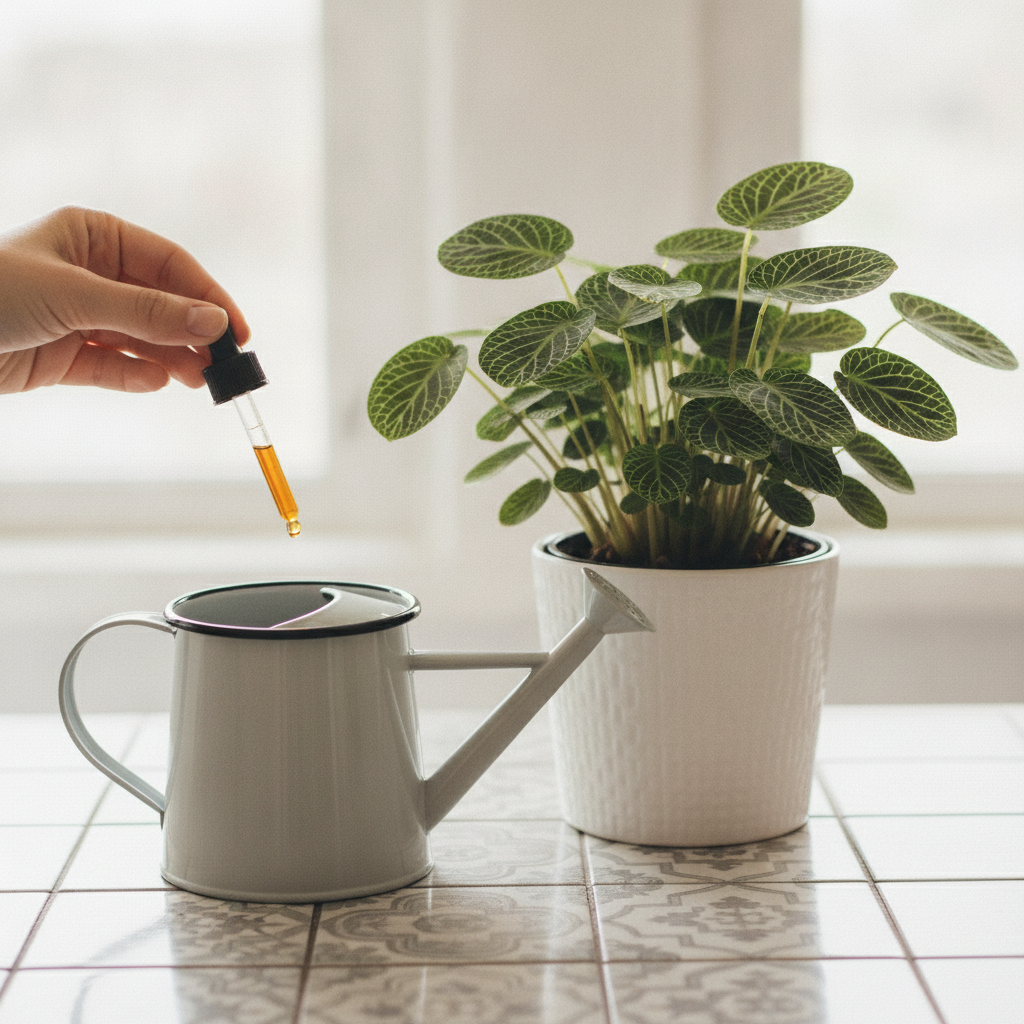
The same salt sensitivity that governs watering applies to feeding. Fertiliser is, in effect, mineral salts, and the plant that browns at the leaf edge from hard water will do the same from an over-strong feed accumulating in the medium. Always water the plant first, or feed with the watering, so the diluted solution moves through damp medium rather than hitting dry roots, and every couple of months flush the pot through with several changes of plain water to wash out any accumulated salts. Stop feeding altogether through autumn and winter, when growth naturally stalls; fertiliser the plant cannot use simply builds up in the medium and does harm rather than good. If you see a white crust forming on the soil surface or the pot rim, that is salt build-up, and it is time to flush thoroughly and ease off.
Pro Tip — Less is more: When in doubt, underfeed. A network calathea will quietly tolerate going a month without fertiliser, but it reacts quickly and visibly to too much. Diluting to a quarter strength and feeding monthly through the warm season covers all its needs with no risk of burning the roots.
Propagation
There is only one way to make more network calatheas, and it is worth being clear about this because a good deal of online advice is simply wrong. The plant cannot be propagated from a leaf or a stem cutting. It has no trailing vines to root and no node that will sprout in a jar of water; a severed leaf placed in water will only rot. The plant grows from an underground rhizome that slowly produces new clumps, and the only reliable method of multiplying it is to divide that rhizome. The good news is that division is straightforward, has a high success rate, and gives you a substantial new plant immediately rather than a fragile cutting to nurse for months.
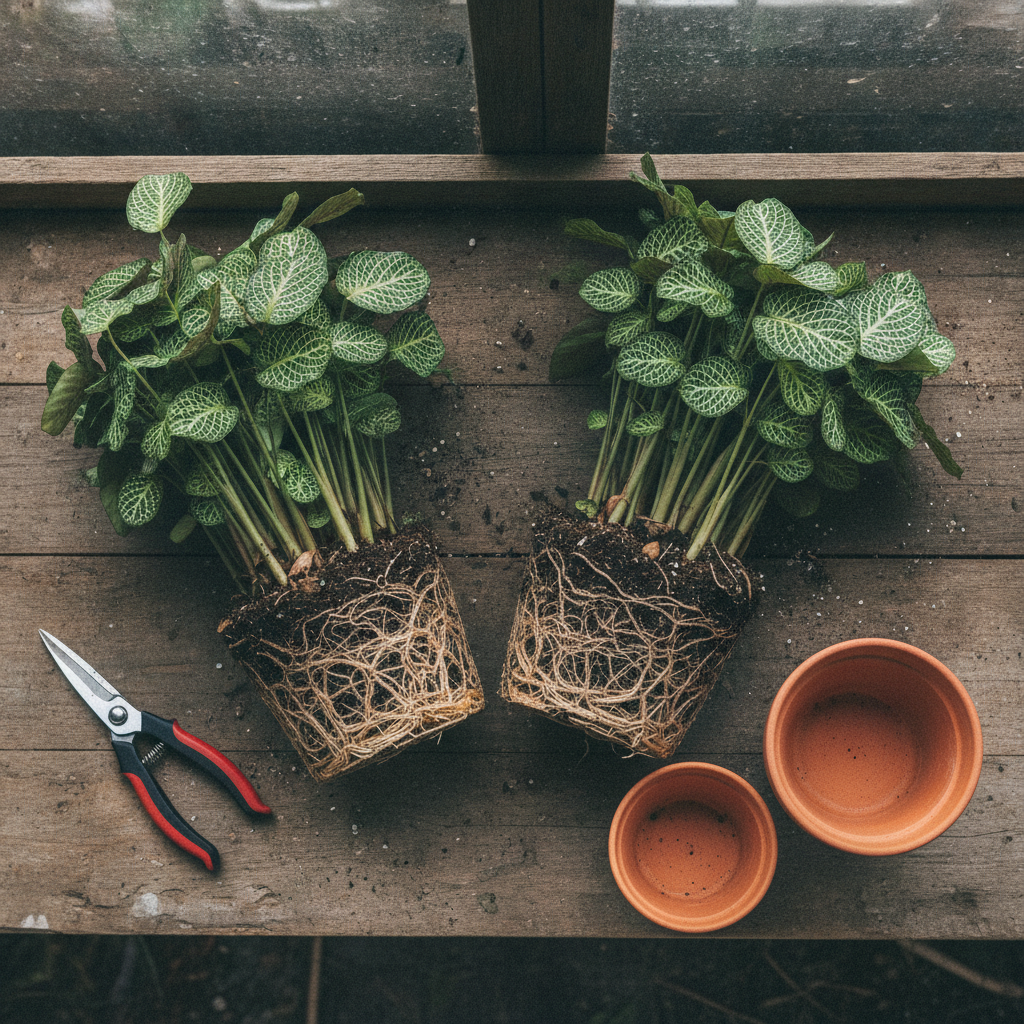
The best time is spring, ideally combined with routine repotting, when the plant is entering its strongest growth and recovers fastest. Choose a mature, well-established plant with several clumps of growth; a small or recently bought plant is better left to bulk up for a year first. Then work through the following steps:
- Water the plant a day or two beforehand so it is well hydrated and the medium loosens easily, then slide the whole root ball out of its pot.
- Gently tease away the loose medium from around the roots with your fingers until you can see the rhizome and where the natural clumps of stems separate.
- Identify a section that has its own healthy roots and at least two or three leaves of its own. Either ease it apart by hand where it comes away naturally, or cut cleanly through the rhizome with a sterilised knife or scissors.
- Pot each division into its own small container of fresh, airy calathea mix, setting it at the same depth it grew before and firming the medium gently around the roots.
- Water in thoroughly and place the new divisions somewhere warm with bright, indirect light and, crucially, high humidity. A loose clear plastic bag over the pot for the first week or two holds in moisture while the roots settle.
Expect each division to sulk briefly, perhaps drooping or pausing while it re-establishes. Keep the humidity up, the medium evenly moist and the light gentle, and resist the urge to feed until you see clear new growth, which signals that the roots have taken hold and the plant is ready to grow on.
Pests and problems
A network calathea grown in humid air and clean conditions is reasonably resilient, but the same dry household air that crisps its leaves also rolls out the welcome mat for its commonest pest. Spider mites thrive in warm, dry conditions and are drawn to stressed, under-humidified calatheas, so keeping the humidity up is as much a pest-prevention measure as a cosmetic one. The table below summarises what to watch for and how to respond.
| Problem | Signs | What to do |
| Spider mites | Fine webbing in leaf joints, tiny pale stippling or speckling on leaves, dull foliage | Raise humidity, rinse the plant down, wipe leaves and treat with neem oil or insecticidal soap, repeating weekly |
| Thrips | Silvery streaks, pale scarring and tiny black specks of frass on the foliage | Isolate the plant, wipe down the leaves and treat with neem oil or an appropriate insecticide over several weeks |
| Mealybugs | White, cottony tufts tucked into leaf bases and stem joints | Dab each insect with a cotton bud dipped in isopropyl alcohol, then treat with neem oil |
| Fungal leaf spot | Dark or water-soaked spots, often with a yellow halo, after foliage has stayed wet | Remove affected leaves, improve air movement and avoid wetting the foliage |
| Root rot | Yellowing lower leaves, a sour smell, mushy blackened roots | Unpot, cut away rotten roots, repot into fresh airy mix and water less |
Beyond pests, most of the troubles this plant presents are not diseases at all but responses to its environment. Curling leaves usually mean it is thirsty or the air is too dry. Yellowing lower leaves point to overwatering and soggy medium, while the occasional old leaf yellowing and dying back is simply natural ageing. Faded or scorched patches indicate too much direct sun. Brown, crisp edges, the most frequent complaint of all, trace back to dry air, erratic watering or hard tap water, as covered in the watering section. Because so many symptoms share so few causes, the most efficient approach when something looks wrong is to run through the basics in order: humidity, water quality, watering consistency and light. Fix those and the plant almost always recovers.
Warning — Catch mites early: Spider mites breed explosively on a dry, stressed calathea and can defoliate a plant before you realise they are there. Check the undersides of the leaves and the leaf joints regularly, especially in winter when heating dries the air, and act at the first sign of webbing or stippling rather than waiting.
Varieties
The network calathea is not a plant of many named cultivars; its appeal lies in a single, distinctive pattern rather than in colour variants. What you will encounter instead is the same species at different stages and selections, most often the compact commercial form sold simply as ‘Network’, and the larger, looser growth a plant takes on as it matures.
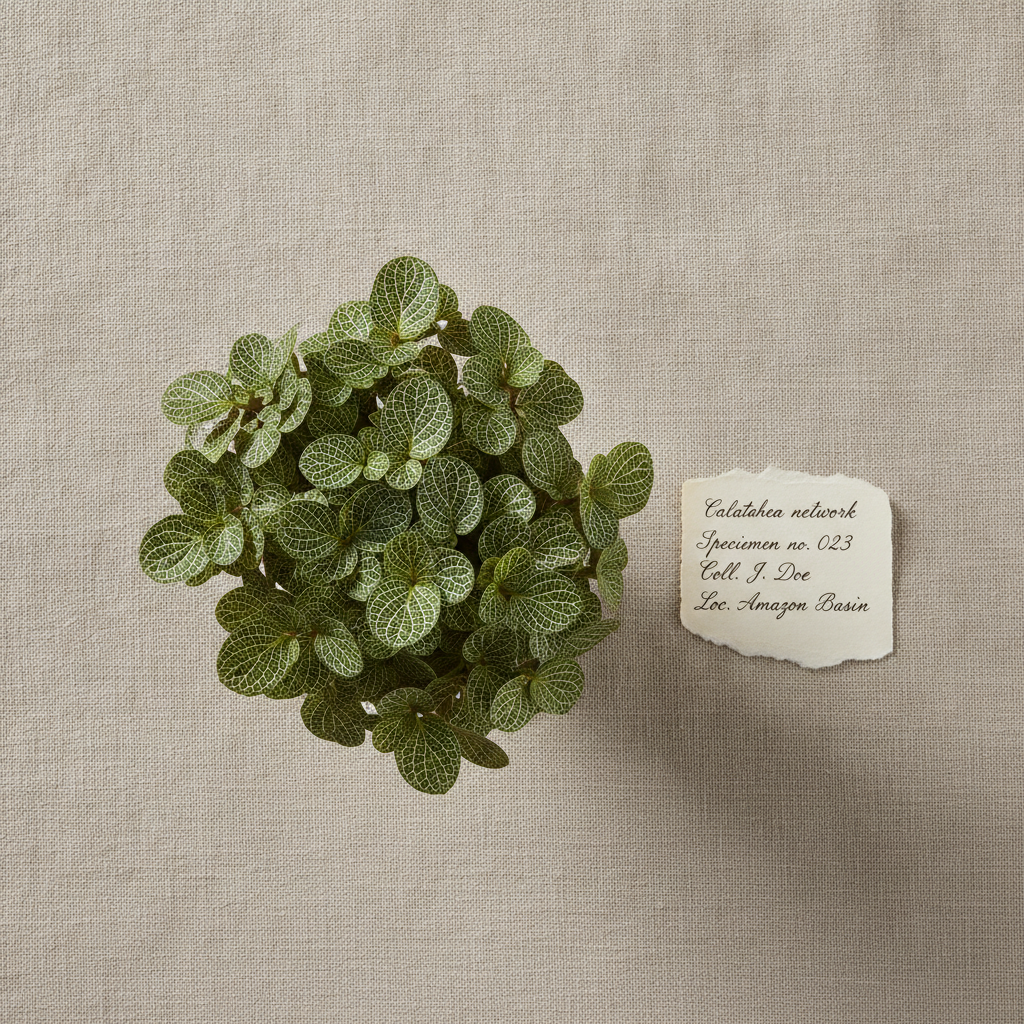
‘Network’
The form almost everyone buys, sold as a tidy, bushy plant of small, intensely tessellated leaves. The mosaic vein network is at its finest and densest here, so close-knit it can look like green graph paper, and the compact habit keeps the whole plant in proportion on a windowsill or shelf. Care is exactly as described throughout this guide.
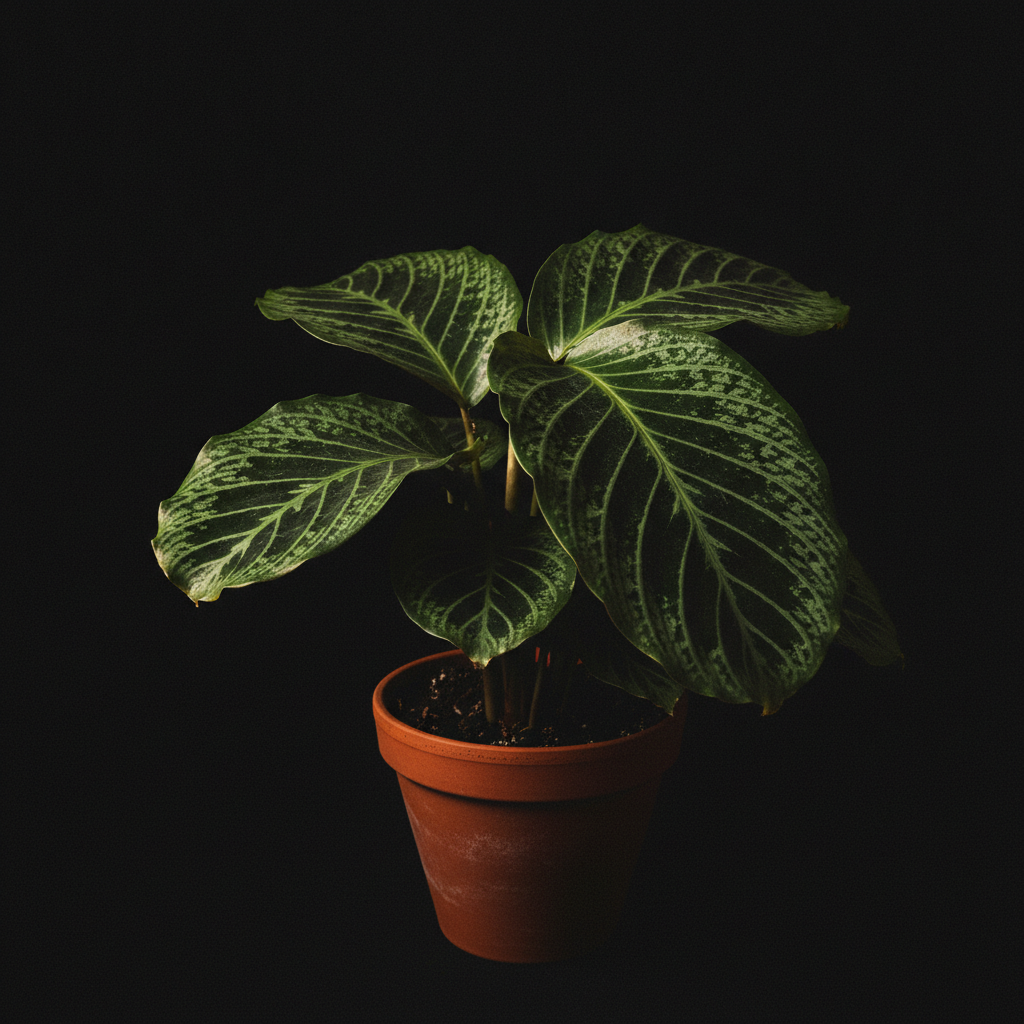
Mature large-leaf form
Given time, good light and room to grow, the same plant produces noticeably larger, broader leaves with a coarser, more open mosaic and a deeper, glossier green. This is not a separate cultivar but the species showing its full potential, and it makes an imposing specimen. The pattern reads from further away, though it loses a little of the jewel-like fineness of the young ‘Network’ form.
Frequently asked questions
Is the network calathea safe for cats and dogs?
Yes. Like the rest of the prayer plant family, Goeppertia musaica is non-toxic to cats, dogs and humans. It contains none of the calcium oxalate crystals that make many houseplants a hazard, so it is a safe choice for homes with curious pets or young children.
Why are the leaf edges turning brown and crispy?
Brown, crisp edges are almost always a sign of low humidity, inconsistent watering, or a build-up of minerals from hard tap water. Raise the humidity around the plant, keep the medium evenly moist rather than swinging between wet and dry, and switch to filtered, distilled or rainwater. Damaged tissue will not recover, but new leaves will come in clean once the conditions are right.
Can I propagate it from a leaf or stem cutting?
No. The network calathea cannot be grown from a leaf or a stem cutting, which will simply rot. It grows from an underground rhizome, and the only reliable way to propagate it is to divide a mature plant at repotting time in spring, separating clumps that each have their own roots and leaves.
Does it flower indoors?
It can produce small, insignificant whitish flowers, but indoors it rarely blooms and the flowers are not the reason anyone grows it. This is firmly a foliage plant, valued entirely for the patterned leaves rather than any display of flowers.
Why do the leaves move during the day?
The movement is a natural family trait called nyctinasty. A swollen hinge of tissue at the base of each leaf stalk, the pulvinus, lifts and folds the leaves upward in the evening and lowers them again by morning. It is harmless and a sign of a healthy, responsive plant, though the movement in this species is subtler than in some of its prayer plant relatives.
Is it really easier than other calatheas?
By most accounts, yes. The network calathea is widely regarded as one of the more forgiving members of a notoriously fussy genus, tolerating ordinary household conditions better than the thin-leaved, brightly coloured calatheas. It still wants humidity and clean water to look its best, but it is far less likely to collapse over a minor lapse, which makes it a good introduction to the group.






