
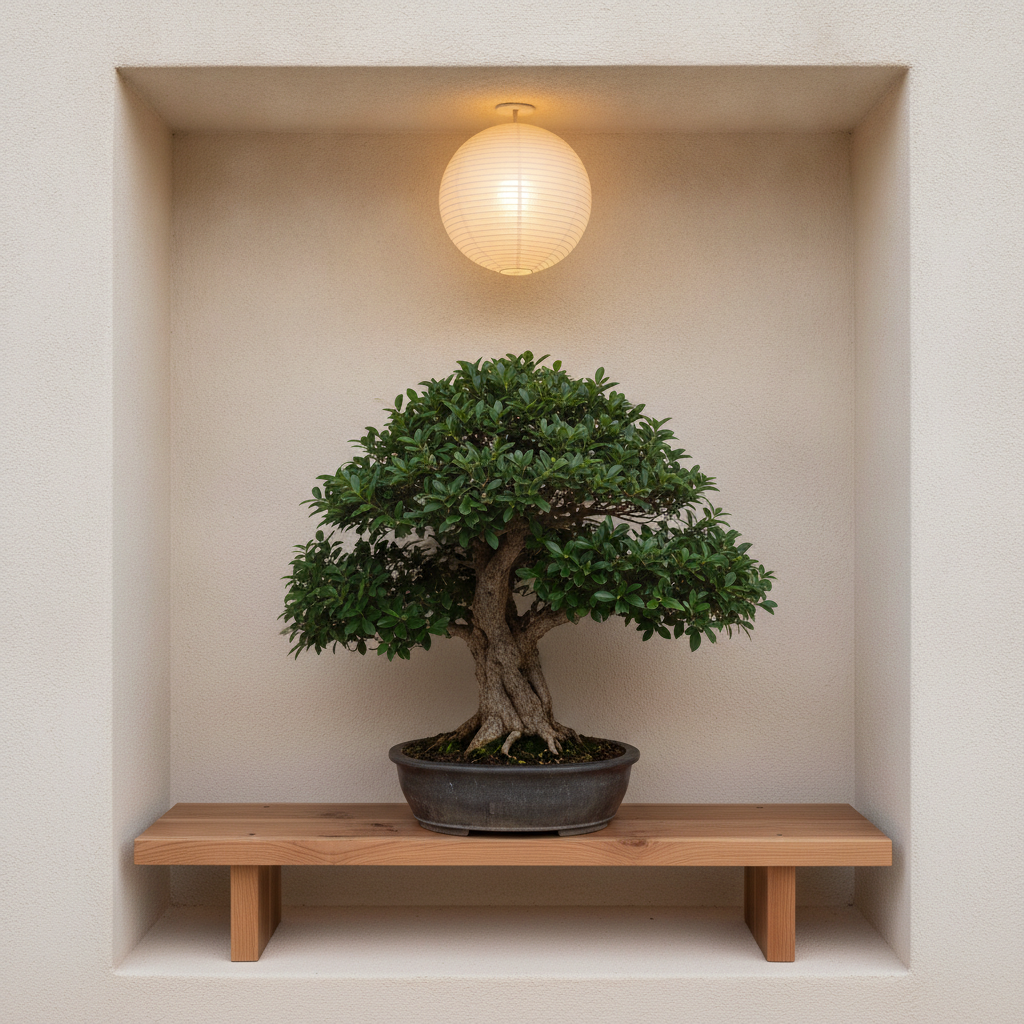
Few trees make the leap from riverbank giant to living-room tabletop as gracefully as the Natal mahogany. In its native African forests, Trichilia emetica can tower to twenty metres with a spreading, shade-giving crown, yet the same species takes remarkably well to the shallow pot and patient pruning of bonsai culture. Grown small, it keeps the glossy, deep green compound leaves and thickening trunk that make it such a stately tree, condensed into a form you can keep on a bright windowsill. This guide covers everything needed to keep a Natal mahogany bonsai not merely alive but genuinely thriving indoors.
Quick Reference
Use the table below as an at-a-glance summary. The sections that follow explain the reasoning behind each figure, because a bonsai in a shallow pot behaves quite differently from the same species growing freely in the ground.
| Botanical name | Trichilia emetica |
| Common names | Natal mahogany, Cape mahogany, Christmas bells, thunder tree |
| Family | Meliaceae (the mahogany family) |
| Native range | Riverine and coastal forests of sub-Saharan Africa |
| Light | Bright indirect light with some gentle direct sun; the brightest spot you can offer indoors |
| Water | Keep the soil evenly, lightly moist; never bone dry, never waterlogged |
| Humidity | Moderate to high, ideally above 50 per cent |
| Temperature | 18 to 27 degrees Celsius (64 to 81 Fahrenheit); keep above 12 degrees Celsius (54 Fahrenheit) |
| Soil | Free-draining bonsai or loam-based mix with generous grit |
| Feeding | Balanced feed every two to four weeks in spring and summer |
| Growth rate | Fast for a bonsai subject; responds quickly to pruning |
| Toxicity | Seeds and bark are toxic if eaten; keep away from pets and children |
| Difficulty | Moderate; forgiving of pruning, less forgiving of drought |
| In this guide |
Why Grow Natal Mahogany as a Bonsai Houseplant

The Natal mahogany belongs to the true mahogany family, Meliaceae, and shares that lineage’s reputation for handsome timber and a dignified, rounded canopy. In the wild it is a creature of water margins, growing along rivers and in coastal dune forests where its roots stay cool and its crown reaches for filtered light. Understanding this origin explains almost every care decision that follows: the tree wants steady moisture, warmth, and bright but not scorching light, and it resents drying out completely.
As a bonsai subject it has several genuine virtues. The leaves are pinnately compound, meaning each leaf is made of several paired leaflets arranged along a central stalk, and they carry a deep, lacquered green that reads as lush even in a small specimen. The species is vigorous, so it recovers quickly from pruning and thickens its trunk faster than many traditional bonsai trees, which rewards the impatient grower with visible progress within a season or two. Because it evolved in warm frost-free forests, it also takes happily to life indoors, where many temperate bonsai species sulk without a cold winter rest.
There is a note of caution that belongs in the introduction rather than buried later. The specific epithet emetica refers to the emetic, or vomit-inducing, properties of parts of the plant. The bright red seeds enclosed in their scarlet aril are toxic if eaten, and the bark has a long history of medicinal and poisonous use in its native range. Grown as a small indoor bonsai it rarely flowers or fruits, so the practical risk is low, but it is still wise to site it out of reach of pets and small children who might be tempted to chew a leaf or twig.
Pro Tip — Think tree, not houseplant: Because Natal mahogany is a genuine forest tree rather than a soft-stemmed houseplant, it appreciates being treated like one. Good airflow, real light, and a proper wet-and-slightly-drier rhythm matter more to it than the gentle, forgiving neglect that suits a pothos.
Light
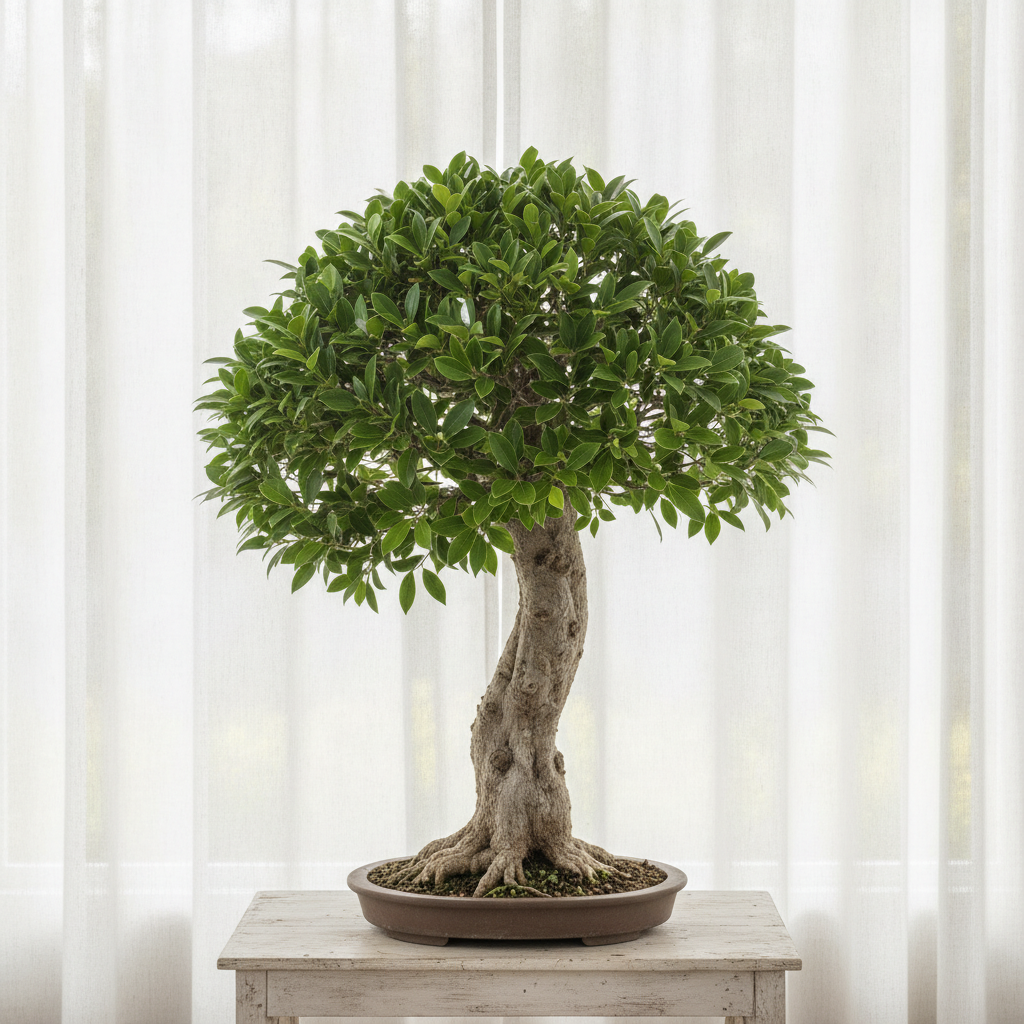
Light is the single factor that most often separates a Natal mahogany bonsai that survives from one that thrives. In the forest the tree grows tall enough to reach bright canopy light, and even young specimens want considerably more illumination than the average foliage houseplant. Indoors, the goal is the brightest position you can offer that stops short of harsh, unbroken midday sun magnified through glass.
An east or west-facing window is usually ideal, giving several hours of gentle direct sun at the softer ends of the day along with bright ambient light for the rest. A south-facing window works well too, provided a sheer curtain or a little distance from the glass tempers the fiercest hours around noon, which can scorch tender new leaflets. A north-facing window will keep the tree alive but tends to produce leggy growth with longer gaps between leaves, undermining the compact, twiggy structure that makes a bonsai convincing.
Watch the plant for its own feedback. Leaves that stay deep green, sit close together, and hold themselves flat indicate contentment. Pale, yellowish new growth with long internodes, the stretches of bare stem between leaves, is the classic signal that the tree is reaching for more light. If your home simply cannot supply a bright enough spot, particularly through a dim northern winter, a full-spectrum LED grow light positioned above the canopy for ten to twelve hours a day makes an enormous difference and keeps growth tight through the darkest months.
Rotate the pot a quarter turn every week or two so that every side receives its share of light. Bonsai are viewed in the round, and a tree that always faces the window will thin out and lean towards it, spoiling the balance you are working to build.
Watering
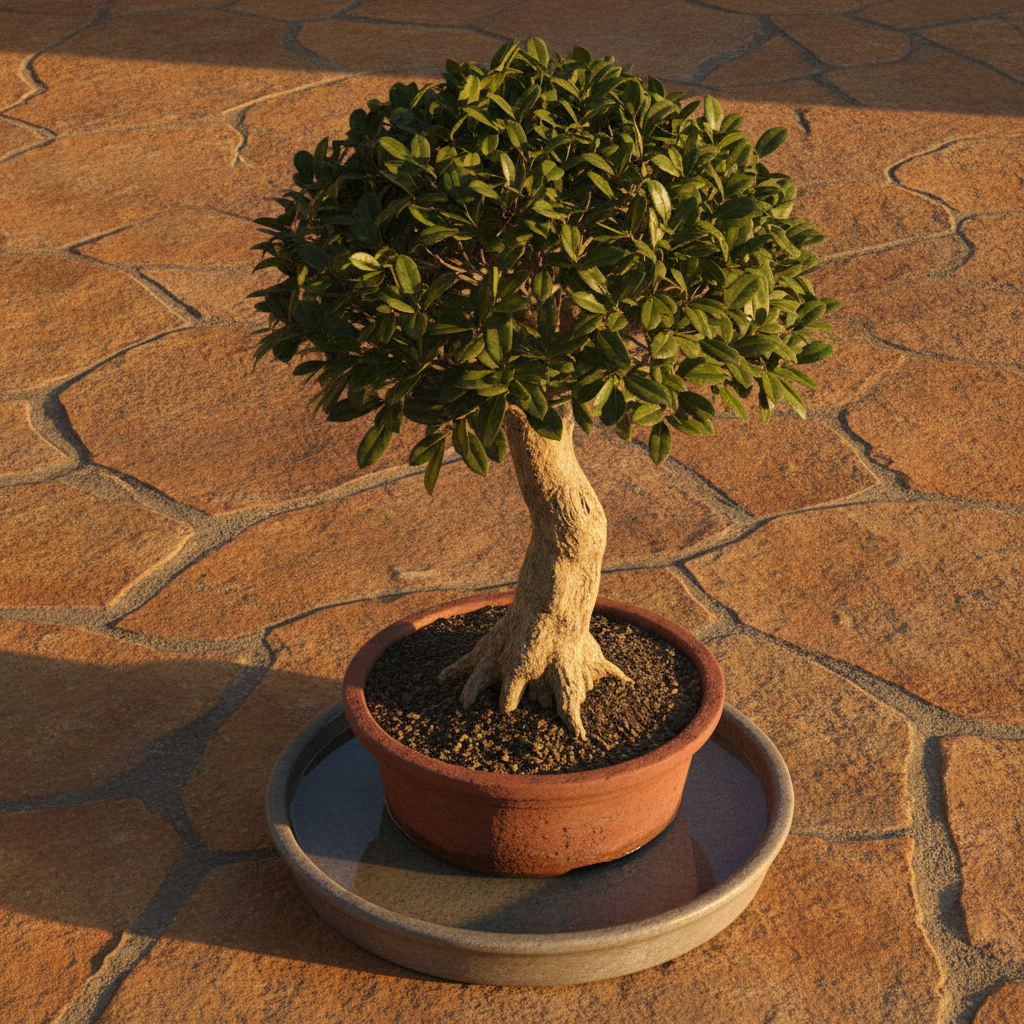
Watering is where the bonsai form changes the rules most sharply. A Natal mahogany planted in open ground can send roots deep to find moisture and shrug off dry spells, but the same tree in a shallow bonsai pot holds only a small reservoir of soil that can dry out within a day in warm weather. Because this is a riverside species that dislikes drought, consistency matters more here than with almost any succulent or cactus.
The aim is soil that stays evenly and lightly moist, like a wrung-out sponge, never soggy and never dust dry. Check daily during the growing season by pressing a fingertip into the surface or lifting the pot to feel its weight; a pot that feels surprisingly light has usually dried further down than the surface suggests. When the top few millimetres begin to feel dry, water thoroughly until it runs freely from the drainage holes, then let the excess drain away completely.
Two methods suit bonsai well. Watering from above with a fine-rosed can wets the whole surface gently without washing out the soil, while bottom watering, standing the pot in a shallow dish of water for ten to fifteen minutes, lets the root mass draw moisture up evenly and is especially useful if the mix has become water-repellent after drying. Whichever you choose, always empty any saucer afterwards, because a pot left standing in water will suffocate and rot the fine feeder roots the tree depends on.
Reduce the frequency in winter, when lower light and cooler temperatures slow the tree’s water use, but do not let it dry out entirely even then. Room-temperature water is kinder than cold from the tap, and if your water is very hard, occasional use of rainwater or filtered water helps prevent mineral crusting on the soil surface.
Warning — Wilting is a late signal: By the time a Natal mahogany’s leaflets droop and curl from drought, the tree is already stressed and may drop foliage. Rely on soil moisture and pot weight rather than waiting for visible wilting, which is a rescue signal, not a routine one.
Soil and Potting
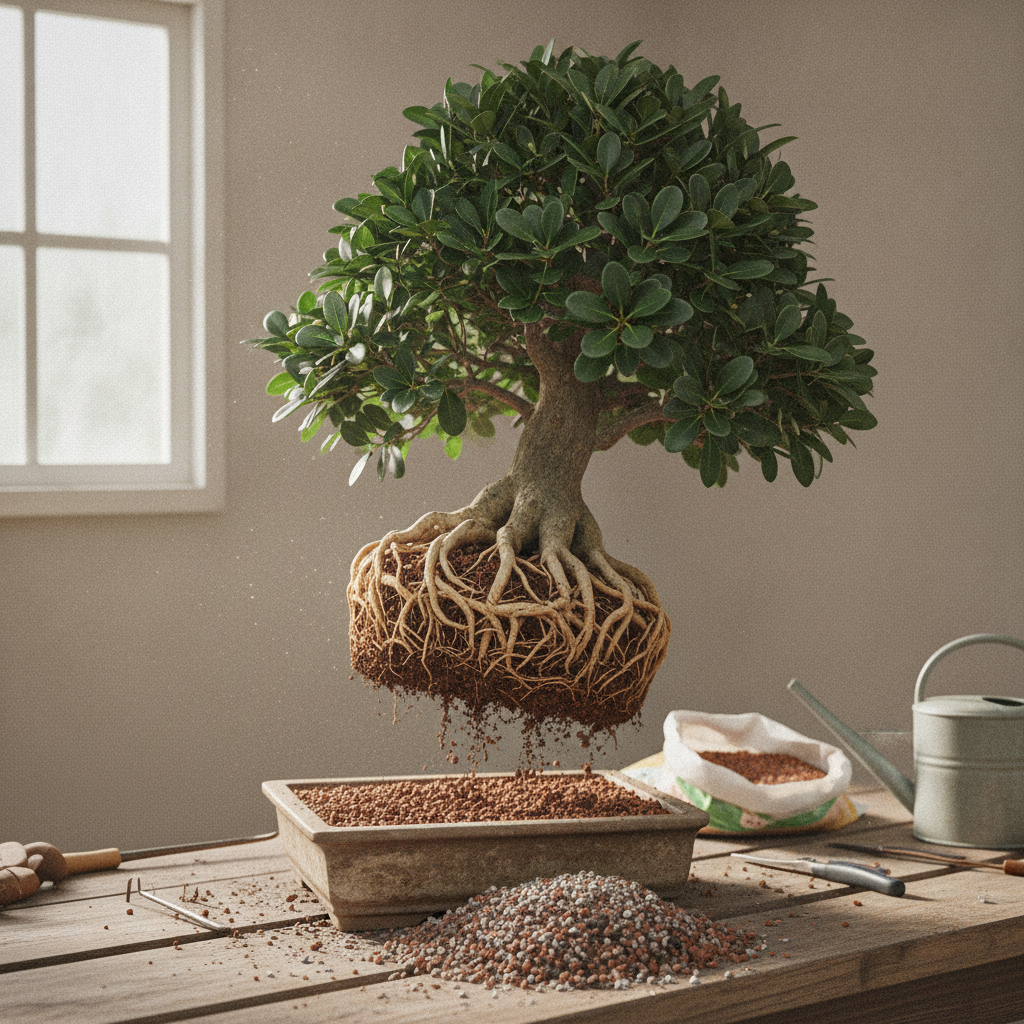
The apparent contradiction of bonsai soil is that it must hold moisture reliably while draining almost instantly, and Natal mahogany makes this balance particularly important because it wants steady moisture but will rot in stagnant, airless mud. Ordinary bagged houseplant compost, used alone, compacts in a shallow pot and holds too much water for too long, so it is worth mixing something more open.
A classic bonsai substrate built from akadama, a fired Japanese clay granule, blended with pumice and lava rock gives excellent drainage and air to the roots while still retaining useful water. If you cannot source specialist components, a serviceable alternative is a loam-based compost lightened with roughly one third by volume of coarse horticultural grit or perlite and a handful of fine bark. Whatever the recipe, the finished mix should feel gritty and loose, and water poured onto it should vanish within seconds rather than pooling on the surface.
Repot a young, vigorous Natal mahogany every one to two years in early spring, just as growth is about to accelerate, and an older, more settled specimen every two to three years. Repotting is also the moment to prune the roots, which keeps the tree in proportion to its pot and refreshes the soil. Ease the tree from its pot, tease out the outer roots with a chopstick or root hook, and trim back the thickest and longest of them by up to a third, leaving the fine feeder roots that do the real work of drinking. Settle the tree into fresh mix, work the substrate gently among the roots so no air pockets remain, and water it in well.
After root pruning, keep the freshly repotted tree in slightly softer light and warm, sheltered conditions for a couple of weeks while it recovers, and hold off feeding until you see new growth confirming that the roots have taken hold.
Fertilising
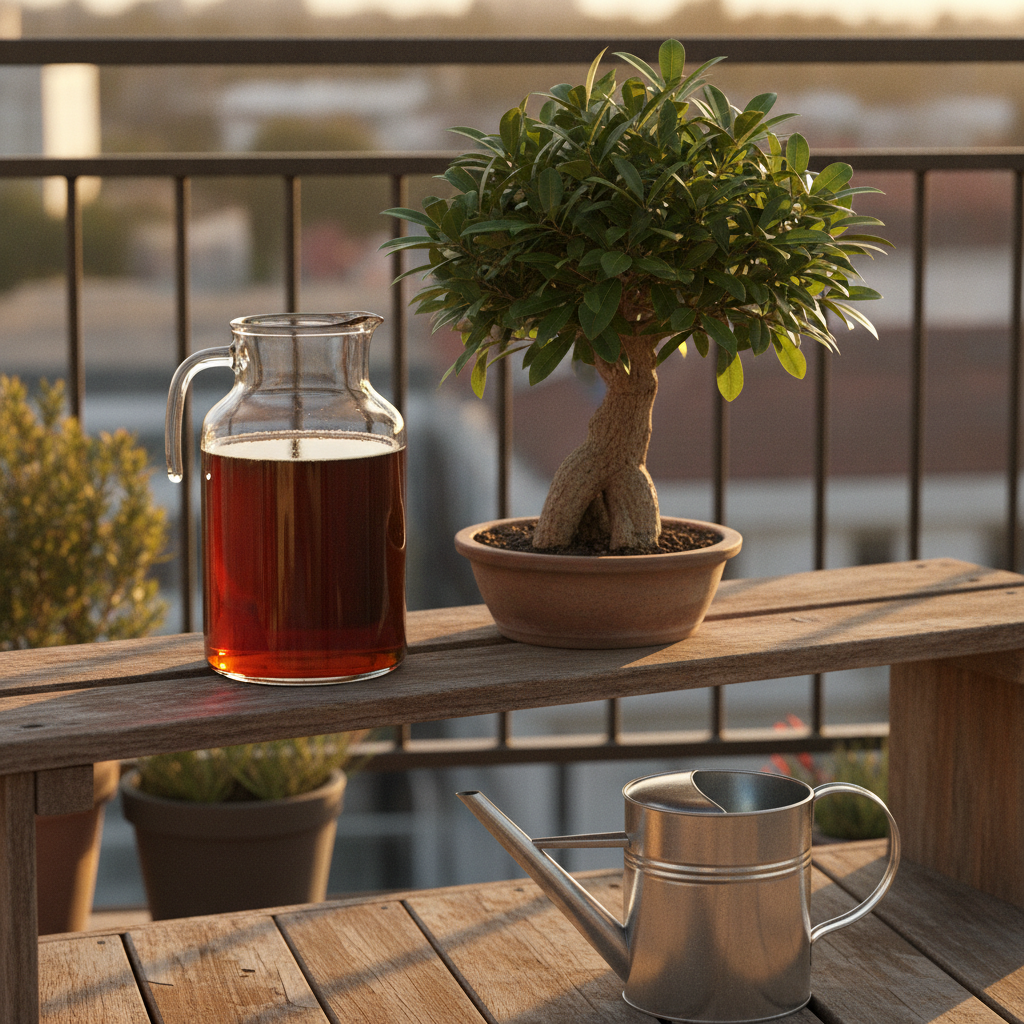
Because a bonsai lives in such a small volume of soil, its roots quickly exhaust the modest nutrients that mix can hold, and regular feeding becomes essential rather than optional. Natal mahogany is a fast grower for a bonsai, so it is a hungrier subject than many, and steady feeding through the warm months underpins the vigour that lets it heal from pruning and thicken its trunk.
Through spring and summer, feed every two to four weeks with a balanced liquid fertiliser diluted to roughly half the strength recommended for ordinary houseplants. A balanced feed, one with fairly even nitrogen, phosphorus and potassium, supports both leafy growth and root and structural development. Some growers prefer slow-release bonsai fertiliser pellets or cakes placed on the soil surface, which release nutrients gradually with each watering and suit those who would rather not measure a liquid feed every fortnight. A dilute organic option such as a well-strained compost or worm-casting tea works too, feeding the soil life as well as the tree.
Always apply liquid feed to soil that is already damp rather than bone dry, since fertiliser drawn into dry roots can scorch them. Taper feeding off in autumn and pause almost entirely in winter, when the tree’s growth slows and it cannot use the extra nutrients; feeding a resting tree simply lets unused salts build up in the soil. If you ever see a white crust forming on the surface or around the drainage holes, flush the pot thoroughly with plain water to wash those accumulated salts away.
Pro Tip — Less, but more often: Frequent weak feeds suit bonsai far better than occasional strong ones. A half-strength feed every two weeks gives the tree a steady supply without the risk of root burn or a sudden flush of coarse, oversized leaves that spoil the fine proportions you are cultivating.
Propagation
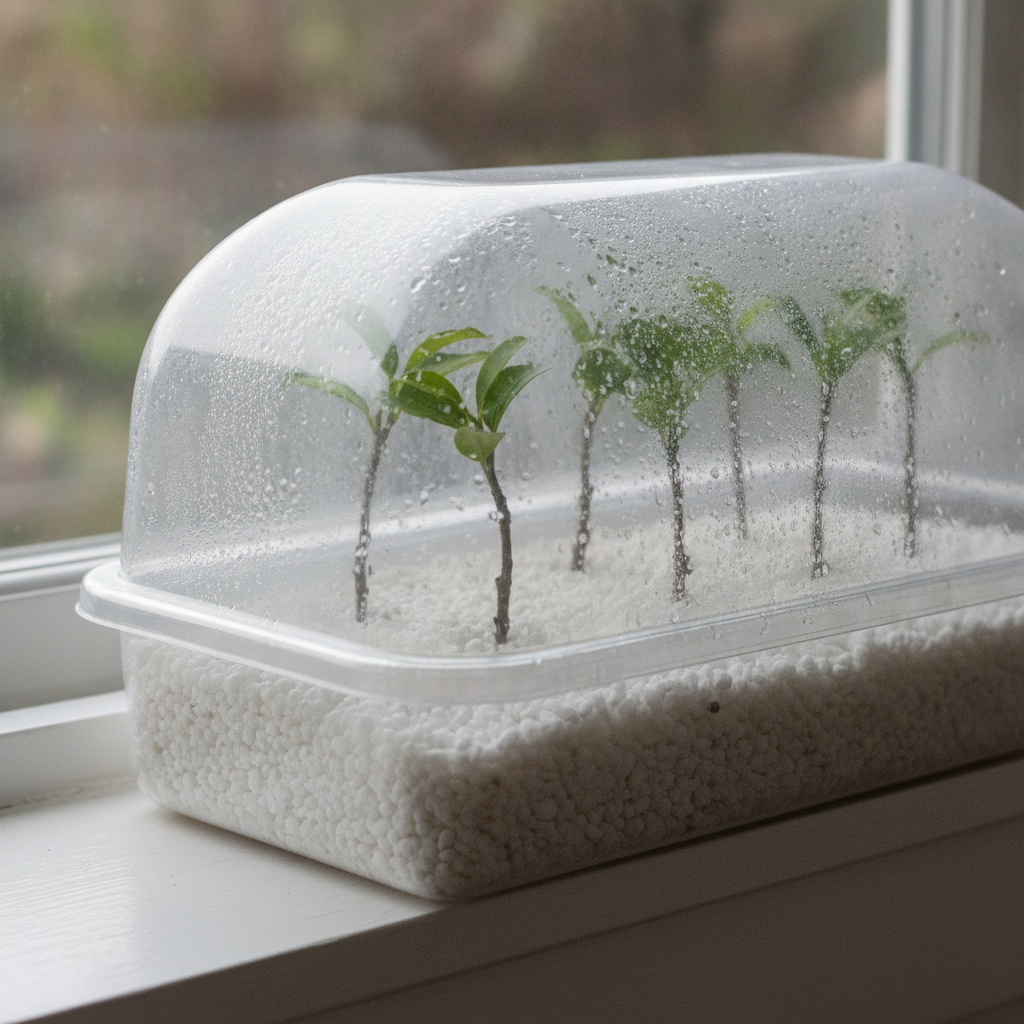
Natal mahogany can be raised from seed or from cuttings, and each route has its place. Seed gives the strongest root system and the most natural trunk taper, which is why it is favoured for growing bonsai stock from scratch, but fresh seed is rarely available to indoor growers and rarely produced by a small potted specimen. For most people, semi-hardwood cuttings taken in the warmth of late spring or early summer are the practical choice, and air layering offers a third option for creating a larger tree with a thicker trunk more quickly.
To propagate from cuttings, work when the tree is in active growth and follow these steps.
- Select a healthy, semi-ripe shoot from the current season, one that has begun to firm up but is not yet fully woody, and cut a length of roughly ten to fifteen centimetres (four to six inches) just below a node using clean, sharp secateurs.
- Remove the lower leaves, leaving two or three leaflet clusters at the top, and if the remaining leaves are large, trim them in half to reduce moisture loss.
- Dip the cut base in rooting hormone, which noticeably improves success with this woody species, tapping off any excess.
- Insert the cutting into a moist, free-draining medium such as damp perlite, or a mix of perlite and fine bark, firming it gently so it stands upright.
- Cover with a clear humidity dome or a loose plastic bag to hold humidity high, and place the tray in bright, indirect warmth around 22 to 27 degrees Celsius (72 to 81 Fahrenheit), out of direct sun.
- Keep the medium lightly moist and air the dome briefly every few days to refresh it and discourage mould; roots typically form over four to eight weeks.
- Once new growth appears and a gentle tug meets resistance, the cutting has rooted; pot it on into a small container of gritty bonsai mix and grow it on before any serious styling.
Air layering is worth considering if you want a substantial tree sooner. Choose a straight section of branch, remove a ring of bark, wrap the wound in damp sphagnum moss enclosed in clear film, and keep the moss moist until roots fill it, at which point the rooted section can be severed and potted as an established young tree. Whichever method you use, patience during the establishment phase pays off, because a well-rooted start underlies every good bonsai.
Pests and Problems

A well-grown Natal mahogany kept in good light with steady moisture is a fairly robust tree, but indoor conditions, with their still air and dry heating, can invite the usual sap-sucking pests. Catching them early, while the tree is small enough to inspect leaf by leaf, is the great advantage of the bonsai form, and a weekly look under the leaflets during routine watering is the best defence.
| Problem | Signs | Response |
| Spider mites | Fine speckling on leaves, faint webbing in leaf axils, dull foliage | Raise humidity, shower the foliage, treat with insecticidal soap or neem |
| Mealybugs | White cottony tufts where leaflets meet the stem | Dab with a cotton bud dipped in diluted alcohol, repeat weekly |
| Scale | Small brown limpet-like bumps on stems and leaf undersides, sticky residue | Scrape off gently, then treat with horticultural oil |
| Aphids | Clusters of soft green or black insects on new shoots | Rinse off, follow with insecticidal soap if they persist |
| Leaf drop | Sudden shedding of leaflets | Check for drought, cold draughts or a sharp change in light |
Beyond pests, most trouble with this species traces back to water and light. Yellowing lower leaves that fall away often point to overwatering and airless soil, while crisp brown leaf edges and general wilting suggest the opposite, a tree that has been allowed to dry out too far. Leaf drop is the Natal mahogany’s standard response to stress of almost any kind, including the shock of being moved from a bright shop to a dimmer home or the chill of a cold windowsill in winter, so a settling-in period of adjustment is normal and rarely fatal.
Fungal problems are uncommon unless the soil stays waterlogged, in which case root rot is the real danger. If a tree declines despite adequate watering and its soil smells sour, lift it, inspect the roots, cut away any that are blackened and mushy, and repot into fresh, free-draining mix. Good drainage, sensible watering and bright airy conditions prevent the great majority of problems before they start.
Styles and Varieties
Natal mahogany is grown as a species rather than in a range of named cultivars, so the meaningful variety for a bonsai grower lies in how the tree is trained rather than in leaf colour or pattern. The two classical styles below suit the species particularly well, because its naturally rounded, spreading crown and quick-thickening trunk lend themselves to a full, tree-like silhouette. Both begin with the same plant; the difference is in the structure you guide it towards over the years.
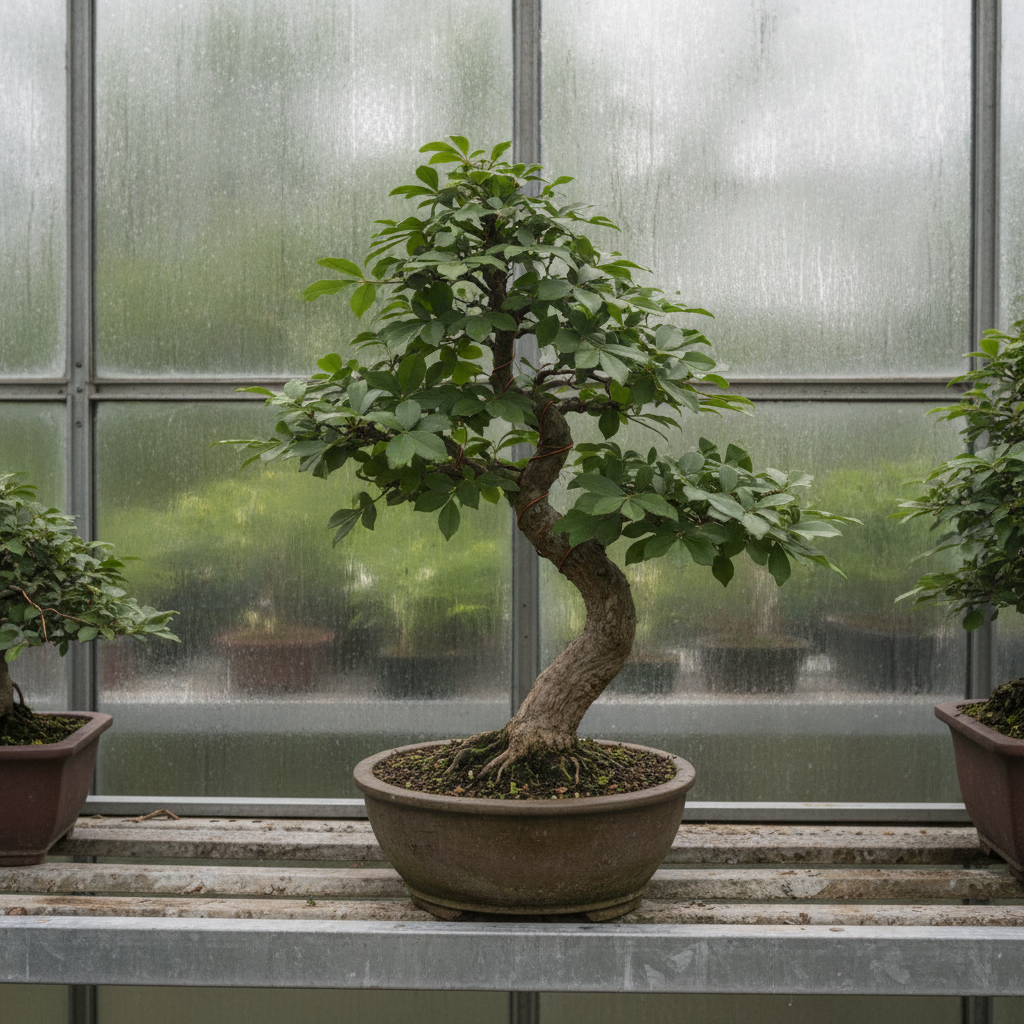
Informal Upright (Moyogi)
The informal upright style trains a gently curving trunk that rises with a natural, slightly meandering line while the apex stays roughly over the base. Foliage is developed into soft, layered pads that step up the trunk, echoing the way a mature forest tree carries its branches. It is the most forgiving and natural-looking style for Natal mahogany, flattering the tree’s vigorous growth and glossy compound leaves without demanding the rigid discipline of a formal design.
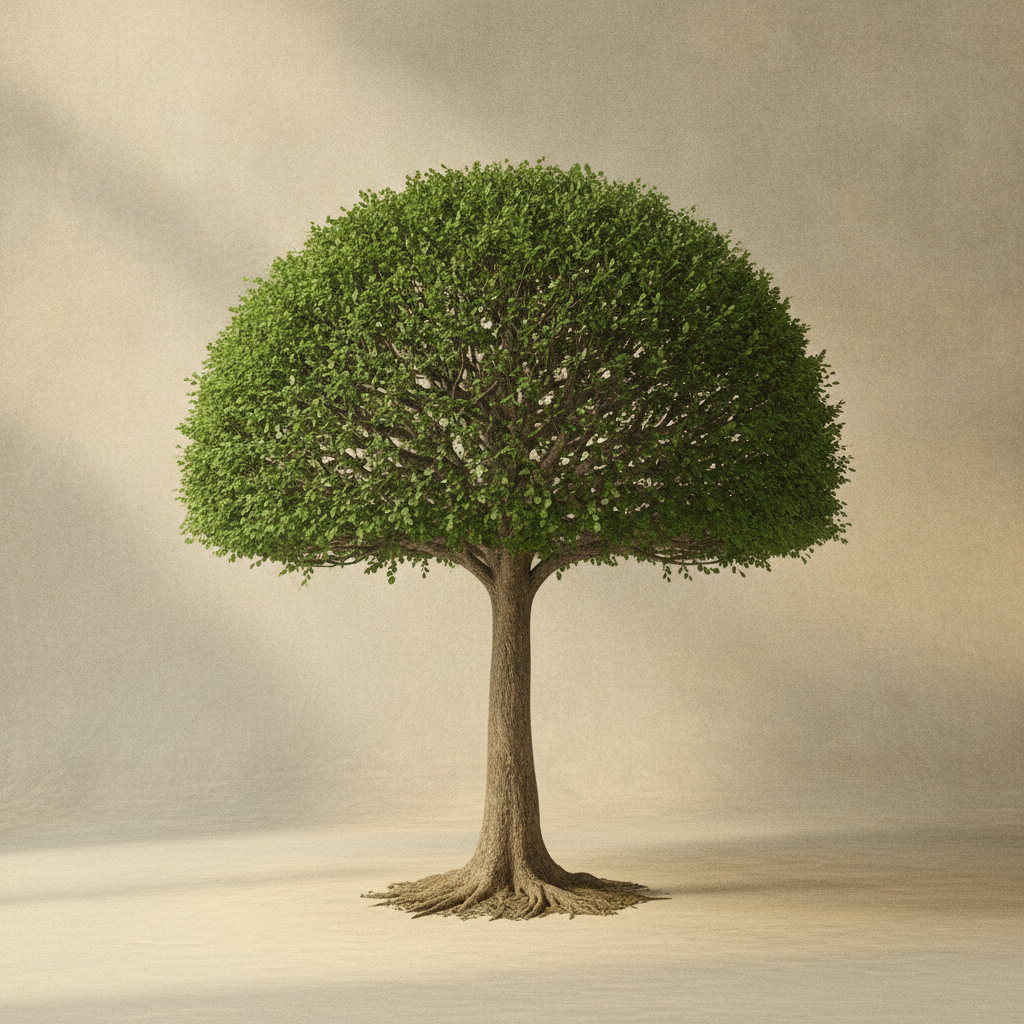
Broom Style (Hokidachi)
The broom style sets a straight, upright trunk beneath a symmetrical, rounded dome of fine branching, the branches fanning out and up like the head of an old street tree. It showcases the Natal mahogany’s dense, twiggy ramification and even canopy beautifully, though it asks for more patient, methodical pruning to build the balanced crown. The result is a serene, classic silhouette that looks especially convincing once the tree has filled in over several seasons.
Whichever direction you take, the training principles are the same. Prune in the growing season to encourage branching, pinch back new shoots to keep growth compact, and use soft wire carefully if you wish to set the angle of a branch, removing it before it bites into the swelling bark. Because the species grows quickly, it forgives mistakes and refills gaps readily, which makes it an encouraging tree on which to learn.
Frequently Asked Questions
Is Natal mahogany bonsai suitable for beginners?
It is a good choice for a beginner who can commit to consistent watering. The tree is forgiving of pruning and grows quickly, so mistakes in styling are soon outgrown, but it is far less tolerant of drying out completely than a jade or a ficus. If you can keep it in bright light and check its moisture daily in warm weather, it is a rewarding tree to start with.
How often should I water a Natal mahogany bonsai?
There is no fixed schedule, because the rate depends on light, warmth, pot size and season. In summer a small bonsai may need water every day, while in winter it might go several days between waterings. Check the soil rather than the calendar: water thoroughly when the top few millimetres begin to feel dry, and always let the excess drain away.
Why is my Natal mahogany dropping leaves?
Leaf drop is this species’ standard reaction to stress, most often a change in conditions. A recent move, a cold draught, a spell of drought or a sudden drop in light can all trigger it. Settle the tree in a stable, bright, warm spot, keep watering steady, and it will usually push out fresh growth once it has adjusted.
Can a Natal mahogany bonsai live outdoors?
It can spend the warm months outdoors in a bright, sheltered spot, which it enjoys, but it is frost-tender and must come inside well before temperatures approach freezing. Keep it above roughly 12 degrees Celsius (54 Fahrenheit), and acclimatise it gradually when moving it between indoors and out to avoid a shock of light or temperature.
Is Natal mahogany toxic to pets?
The seeds and bark contain toxic compounds and can cause illness if eaten, so it is sensible to keep the tree out of reach of curious pets and children. A small indoor bonsai seldom flowers or fruits, which removes the most dangerous part, but the safest course is still to site it where it will not be nibbled.
How fast does a Natal mahogany bonsai grow?
Quickly, by bonsai standards. Given warmth, light and regular feeding it puts on vigorous growth through spring and summer and thickens its trunk faster than many traditional bonsai species. That speed is part of its appeal, because it responds visibly to pruning and rewards attention within a single season.






