
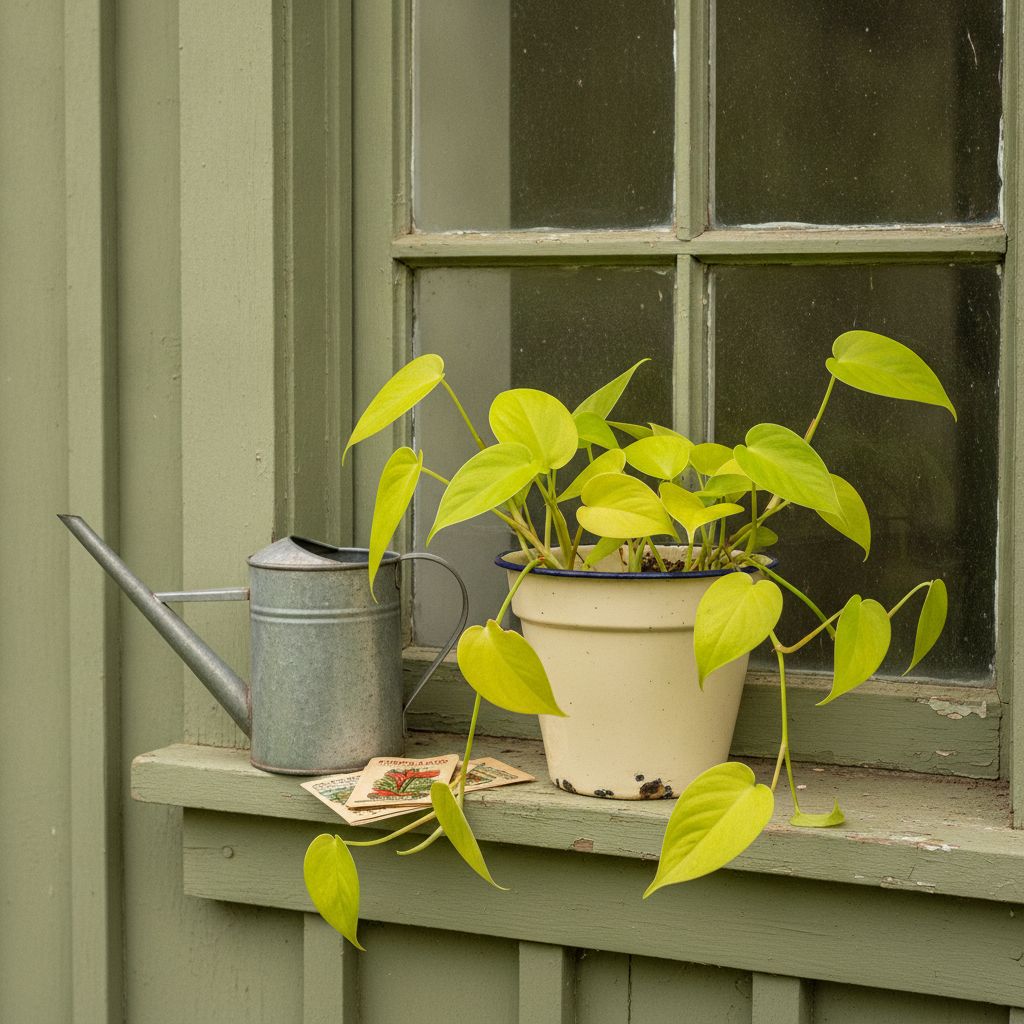
Few houseplants light up a shaded corner the way the lemon lime philodendron does. A selected cultivar of the common heartleaf philodendron, Philodendron hederaceum ‘Lemon Lime’, it trades the species’ deep forest green for a glowing chartreuse that ranges from acid yellow on the newest leaves to a soft lime as they mature. The heart-shaped foliage and trailing, self-clinging stems are pure heartleaf philodendron, but the colour reads almost backlit even in a dim room. Sometimes sold under the names Neon Heartleaf or simply “Lemon Lime”, it is native, in its parent form, to the tropical forests of Central America and the Caribbean, where heartleaf philodendrons scramble up tree trunks toward filtered light.
It has earned its popularity honestly. This is one of the most forgiving aroids you can grow, tolerant of neglect, low light and irregular watering, yet capable of putting on a genuinely spectacular show when its modest needs are met. That gap between surviving and thriving is the theme of this guide. A lemon lime philodendron will cling to life in a north-facing hallway watered when you remember, but give it bright filtered light, a chunky free-draining mix and steady warmth and it will cascade a metre or more of luminous foliage in a single season. Everything below is aimed at closing that gap.
Contents
- Quick Reference
- Why Lemon Lime Philodendron Makes a Great Houseplant
- Light Requirements
- Watering & Humidity
- Soil, Potting & Repotting
- Fertilising
- Propagation
- Pests & Diseases
- Popular Varieties
- Frequently Asked Questions
Quick Reference: Lemon Lime Philodendron at a Glance
| Light | Bright, indirect light brings out the brightest colour; tolerates medium and low light, but growth slows and the lime fades toward green |
| Watering | Water when the top 2 to 3 cm (1 inch) of mix is dry, roughly weekly in summer and every 10 to 14 days in winter |
| Temperature | 18 to 27 degrees C (64 to 81 degrees F); avoid anything below 13 degrees C (55 degrees F) |
| Humidity | Happy at average household humidity of 40 to 60 percent; appreciates more but does not demand it |
| Fertiliser | Balanced liquid feed at half strength every 4 to 6 weeks in spring and summer |
| Toxicity | Toxic to cats, dogs and humans if chewed or swallowed, due to insoluble calcium oxalate crystals |
Why Lemon Lime Philodendron Makes a Great Houseplant
The first thing anyone notices is the colour, and the colour is genuinely useful as well as pretty. Most variegated or brightly coloured houseplants demand strong light to hold their pigment, which puts them out of reach for the average flat with one decent window. The lemon lime philodendron is different. Its chartreuse is not variegation in the usual sense but the leaf’s natural colour, so it stays cheerful in light levels that would leave a calathea sulking. That makes it one of the rare plants that can brighten a genuinely dim spot rather than merely tolerate it.
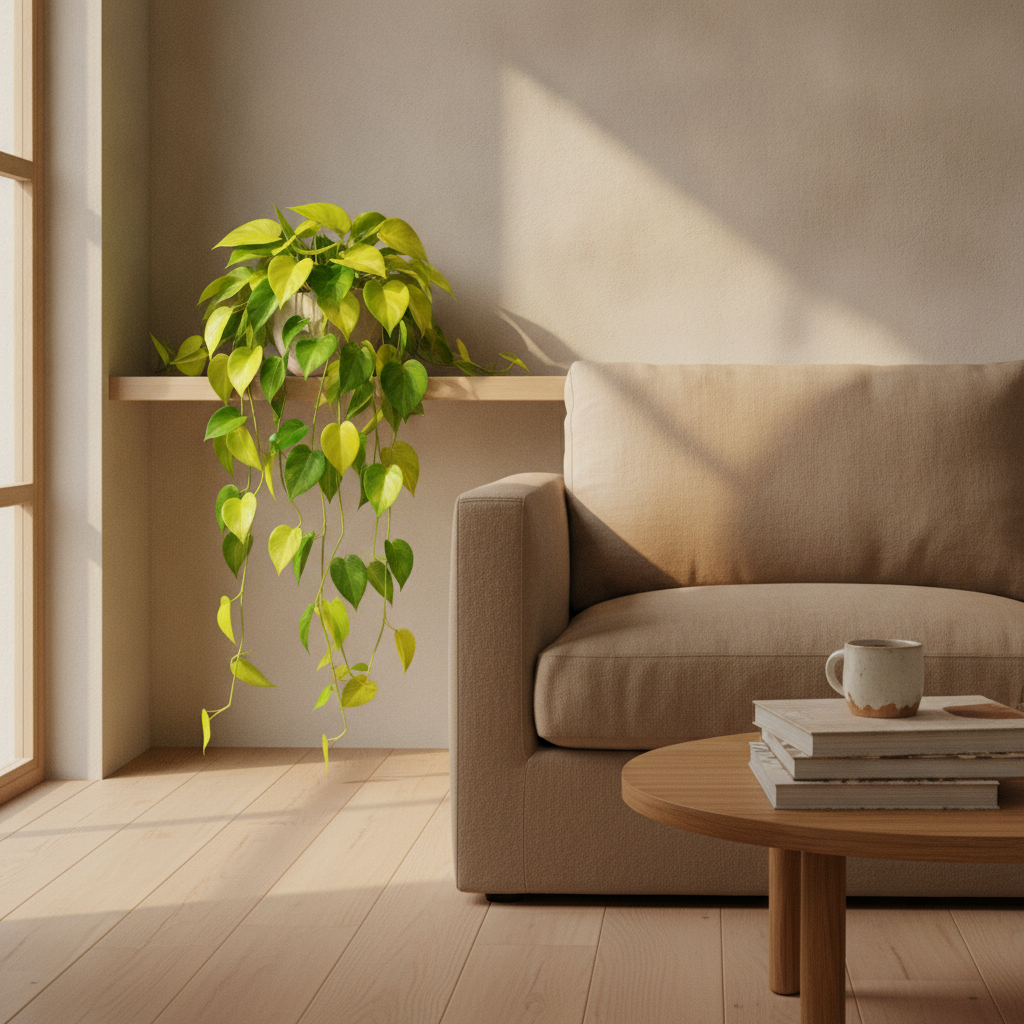
Beyond looks, it is one of the easiest aroids in cultivation. It forgives missed waterings, recovers quickly from a hard prune, roots almost effortlessly from cuttings and shrugs off the fluctuating temperatures and dry air of a centrally heated home. Its trailing or climbing habit gives you options too: let it cascade from a high shelf or hanging planter, or train it up a moss pole and watch the leaves grow noticeably larger as it climbs. For a beginner it offers an almost guaranteed win, and for an experienced grower it is a fast, rewarding plant that fills space quickly. The combination of resilience, speed and that unmistakable glow is why it has become a fixture on plant-shop benches worldwide.
Important — Toxicity: Like all philodendrons, the lemon lime contains insoluble calcium oxalate crystals in its sap. Chewing or swallowing any part can cause intense burning of the mouth and throat, drooling, and swelling in cats, dogs and humans. Keep it out of reach of pets and small children, and wash your hands after taking cuttings.
Light Requirements
Light is the single biggest lever you have over how this plant looks. In the forest understorey its parent species grows in dappled shade, climbing toward brighter light as it matures, and the cultivated lemon lime has inherited that broad tolerance. It will live across a wide span of indoor light, but where it lands on that span determines whether the foliage glows acid-bright or settles into a muted green.
The ideal is bright, indirect light: a position a metre or two back from a window that receives plenty of daylight but little or no direct sun on the leaves. In that light the plant produces compact growth, short spaces between leaves, and the most intense lemon-lime colour. Move it darker and it survives perfectly well, but the stems stretch, the leaves space out and shrink, and the chartreuse drifts toward a flatter green as the plant manufactures extra chlorophyll to harvest the scarce light.
Light Levels Explained
Indoor light is easy to misjudge because the eye adjusts so well. The table below translates the usual descriptions into rough lux figures and the practical outcome you can expect for a lemon lime philodendron in each.
| Light Category | Approx. Level | Typical Location | Outcome |
|---|---|---|---|
| Direct sun | Over 50,000 lux | On an unshaded south windowsill | Risk of scorch and bleaching; avoid |
| Bright indirect | 10,000 to 20,000 lux | Near an east or west window, or back from the south | Best colour and compact, vigorous growth |
| Medium | 5,000 to 10,000 lux | A metre or two into a bright room | Good growth; colour slightly softer |
| Low | 1,000 to 5,000 lux | North window, or interior shelf | Survives; leggy, slower, greener |
| Very low | Under 1,000 lux | Dim hallway or windowless room | Decline over time; supplement with a lamp |
Window Orientation and Placement
South-facing window: The brightest option in the northern hemisphere. Excellent if you set the plant back from the glass or filter the light with a sheer curtain, so that the foliage receives strong brightness without direct midday rays falling on the leaves.
East-facing window: Arguably the sweet spot. Gentle direct sun in the morning is rarely strong enough to harm the leaves, and the bright indirect light through the rest of the day keeps the colour vivid and the growth tidy.
West-facing window: Similar to east but with hotter afternoon sun. Pull the plant back from the glass a little to avoid the harshest rays, and it will reward you with strong colour.
North-facing window: The dimmest aspect, but still workable. The plant will live and even grow here, just more slowly and with longer gaps between leaves. Expect the colour to lean green rather than lemon.
Pro Tip — Read the Spacing: The distance between leaves along the stem is your best light gauge. Tight, evenly spaced leaves mean the plant is happy. Long bare stretches of stem with leaves far apart, known as leggy growth, are a clear signal to move it somewhere brighter.
How Light Affects Leaf Colour
The defining lemon-lime glow is a direct response to light. In bright conditions the leaves carry less chlorophyll, which lets the underlying yellow-green pigments dominate and produces that electric chartreuse. As light drops, the plant builds extra chlorophyll to capture every available photon, and the foliage darkens. None of this harms the plant, but if colour is the reason you bought it, brighter light is the answer. New leaves always emerge their most vivid yellow and deepen slightly as they age, so a healthy plant should show a gradient from acid-bright tips to softer lime lower down.
Warning — Direct Sunlight: Because the leaves contain less chlorophyll than a standard green philodendron, they are more prone to scorching. Strong direct sun can bleach the chartreuse to a pale, papery cream and leave crisp brown patches that never recover. Always filter or distance harsh sun.
Artificial Lighting
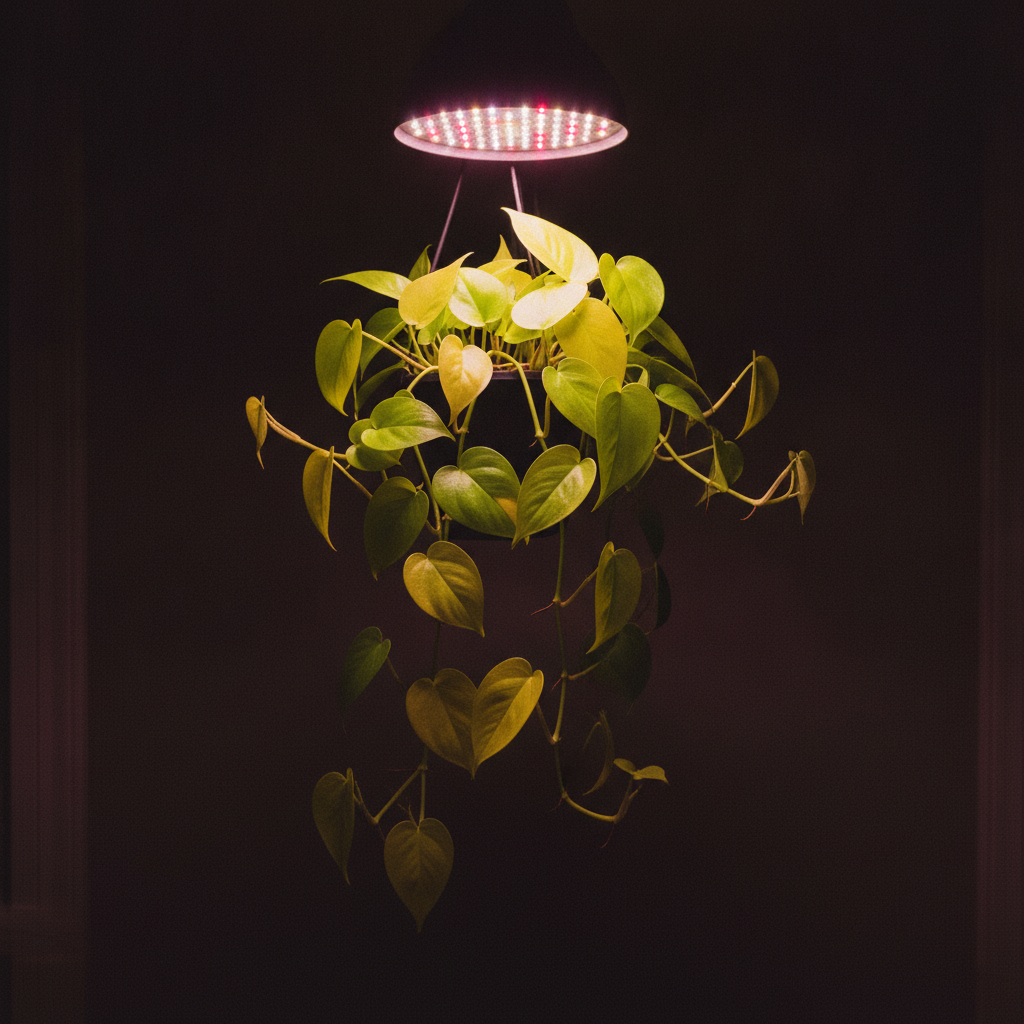
This plant takes very well to artificial light, which makes it a strong choice for offices and rooms with no good window. A standard full-spectrum LED grow light positioned 30 to 45 cm (12 to 18 inches) above the foliage for 10 to 12 hours a day will keep the colour bright and the growth compact. Even an ordinary bright LED room light helps in a pinch. Because the plant signals its light needs so clearly through spacing and colour, you can fine-tune the distance and duration by watching how it responds over a few weeks.
Seasonal Adjustments
Light indoors can halve between summer and midwinter, so a spot that was perfect in July may be too dim by December. Move the plant closer to the window as the days shorten, clean dust from the leaves so they capture what light there is, and consider a grow light through the darkest months. As spring returns and the sun strengthens, step it back again to avoid scorch on the freshly emerging leaves.
Watering & Humidity
More lemon lime philodendrons are killed by kindness at the watering can than by anything else. The roots are adapted to the forest floor, where moisture comes and goes and the litter never stays sodden. They want a drink followed by a chance to breathe, not constant wet feet. Get the rhythm right and watering becomes the easiest part of caring for this plant.
When to Water
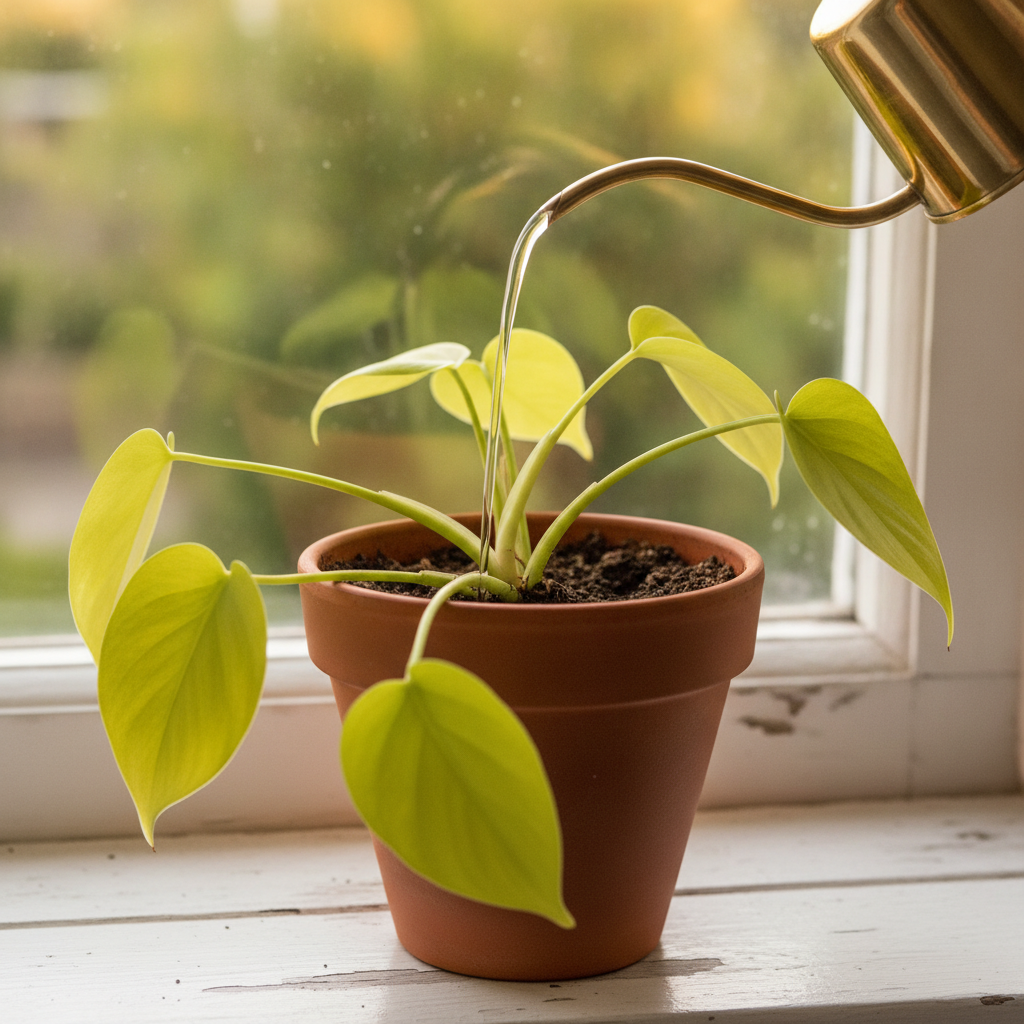
Forget any fixed schedule and check the mix instead. Push a finger into the top 2 to 3 cm (about 1 inch) of soil. If it feels dry, it is time to water. If it is still damp, wait a few days and check again. In a bright, warm spot through spring and summer this usually works out to roughly once a week, while in the cooler, darker months it may stretch to every 10 to 14 days.
The plant helps you read it. When it is genuinely thirsty, the stems and leaves lose a little rigidity and take on a faint droop, perking back up within hours of a drink. A slight wilt followed by quick recovery is a reliable, harmless cue. Letting it reach that point occasionally is far safer than keeping the mix permanently moist, which is the fast track to root rot.
Pro Tip — Weigh the Pot: Lift the pot just after watering and again when the plant needs a drink. The difference in weight is dramatic, and after a week or two you will be able to judge whether it needs water simply by picking it up, faster and more reliable than any moisture meter.
How to Water Correctly
- Check that the top few centimetres of mix are dry before you begin.
- Pour room-temperature water evenly over the surface, working all the way around the pot rather than in one spot.
- Keep going until water runs freely from the drainage holes, which ensures the whole root ball is moistened.
- Let the pot drain fully for several minutes in a sink or on a saucer.
- Tip away any water left standing in the saucer or cover pot so the roots never sit in it.
Signs of Overwatering vs. Underwatering
| Symptom | Overwatering | Underwatering |
|---|---|---|
| Leaf colour | Yellowing, often several leaves at once, lower ones first | Pale, then browning and crisping at the tips and edges |
| Leaf texture | Soft, limp, sometimes translucent | Dry, papery and curling |
| Soil | Stays wet for days, may smell sour | Bone dry, pulling away from the pot sides |
| Roots | Brown, mushy and foul-smelling | Dry and brittle but still firm |
| Stem base | Soft, blackening, may collapse | Firm but slightly shrunken |
Warning — Root Rot: Persistent overwatering suffocates the roots and invites rot, the leading cause of death for this plant. If the stem base feels soft or the mix smells sour, unpot immediately, trim away any brown mushy roots with sterile scissors, and repot into fresh, barely moist mix. Healthy cuttings taken from the top can save a plant whose roots are too far gone.
Humidity Requirements
One of this plant’s great virtues is that it does not fuss over humidity. It grows perfectly well at the 40 to 60 percent that most homes sit at, which sets it apart from the fussier tropical aroids. Higher humidity does encourage slightly larger leaves and faster growth, so if you happen to keep it in a bright bathroom or kitchen it will appreciate the extra moisture, but it is in no way a requirement.
If the air in your home turns very dry, typically in winter when the heating runs, you may see brown, crisping leaf tips. This is cosmetic rather than dangerous, but it is the plant’s way of telling you the air has dropped below its comfort zone, usually under about 30 percent.
Raising humidity is easy where needed. Group it with other plants so they share the moisture they transpire, stand the pot on a tray of damp pebbles kept topped up with water, or run a small humidifier nearby during the driest weeks. Misting offers only a fleeting lift and, on a plant this tolerant, is rarely worth the effort.
Water Quality
Ordinary tap water suits this plant in most areas. If you live somewhere with heavily chlorinated or very hard water and notice mineral crusting on the soil or persistent tip burn, let the water stand overnight before using it, or switch to filtered or collected rainwater. Always bring water to room temperature first, as a slug of cold water can shock the roots and check growth.
Soil, Potting & Repotting
The right mix does half your watering for you. As an epiphytic climber, the lemon lime philodendron evolved to root in loose forest debris and along bark, where its roots get plenty of air. Pack it into dense, water-retentive potting soil and you fight root rot constantly. Give it a chunky, free-draining medium and most watering mistakes simply drain away.
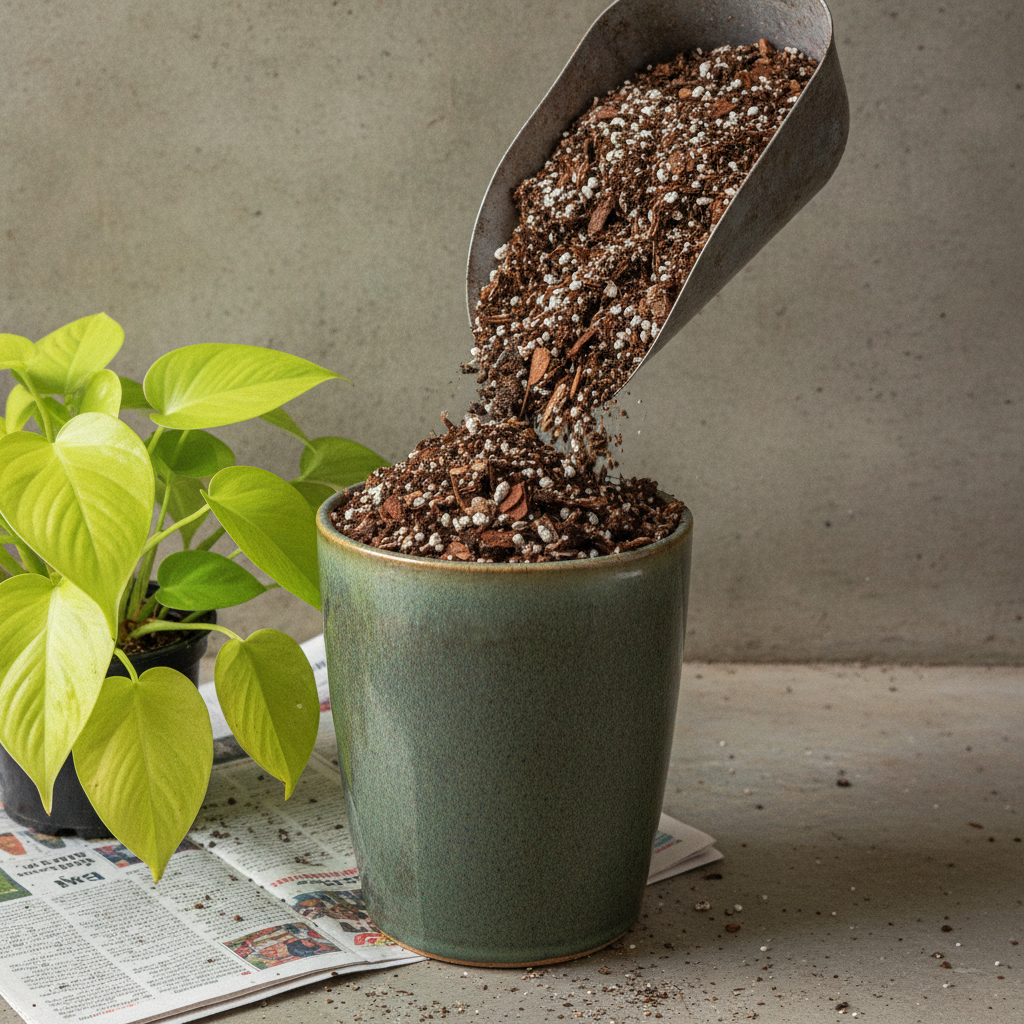
Ideal Soil Composition
Aim for a medium that holds some moisture and nutrients while draining fast and staying open and airy. A standard houseplant compost on its own is too dense; the trick is to bulk it out with chunky materials that create air pockets. The blend below is a reliable starting point.
| Component | Proportion | Function |
|---|---|---|
| Quality potting compost | 50 percent | Base structure, moisture and nutrient retention |
| Orchid bark | 25 percent | Air pockets and chunky structure for the roots to grip |
| Perlite | 20 percent | Drainage and aeration, prevents compaction |
| Worm castings or coco coir | 5 percent | Gentle nutrition and moisture buffering |
The plant prefers a slightly acidic to neutral medium, roughly pH 6.0 to 6.5, which is exactly where most peat-free and coir-based composts naturally fall, so you rarely need to adjust it deliberately.
Pro Tip — Quick Mix Recipe: No time to source individual ingredients? Take two big handfuls of ordinary houseplant compost and one big handful each of orchid bark and perlite. That rough one-to-one-to-one of compost to chunk gives you a perfectly serviceable aroid mix in under a minute.
Choosing the Right Pot
The container matters as much as what goes in it. Because this plant trails, many growers favour hanging pots or place it high on a shelf, but the same principles apply whatever style you choose.
Drainage holes are non-negotiable. Without a way for excess water to escape, even the best mix will stay waterlogged and the roots will rot. If you adore a decorative pot with no holes, use it as a cover pot and keep the plant in a plain plastic nursery pot that lifts out for watering.
Pot material: Plastic retains moisture longer and suits anyone who tends to underwater or forget. Unglazed terracotta breathes and dries faster, which is a safety net for heavy-handed waterers but means more frequent drinks. Either works well; just match your watering habits to the pot.
Pot size: Go up only one size at a time, typically 2 to 4 cm (1 to 2 inches) wider than the current pot. An oversized pot holds a large volume of damp mix that the modest root system cannot use, and that standing moisture invites rot.
When to Repot
This is a fast grower that typically needs moving on every one to two years. The clearest signals are roots creeping out of the drainage holes or circling tightly around the inside of the pot, water that races straight through without wetting the mix, and growth that has stalled despite good care. Spring and early summer are the best times to repot, when the plant is in active growth and recovers quickly. Refreshing the top few centimetres of mix each year is a gentler alternative in the off years.
How to Repot: Step-by-Step
- Water the plant a day ahead so the root ball is hydrated and slides out cleanly.
- Ease the plant from its pot, supporting the base of the stems, and tease apart any tightly circling roots.
- Inspect the roots, trimming away any that are brown, soft or rotten with sterile scissors.
- Add a layer of fresh mix to the new pot so the plant will sit at the same depth as before.
- Position the plant, backfill around the root ball with fresh mix, and firm it gently to remove large air gaps.
- Water thoroughly, let it drain, and return it to its usual spot out of direct sun while it settles.
Warning — Transplant Shock: A little droop or a paused growth spurt for a week or two after repotting is normal. Resist the urge to fertilise straight away or to overwater in sympathy. Keep conditions stable, hold off feeding for three or four weeks, and let the roots establish before you ask the plant to grow.
Fertilising
A lemon lime philodendron is not a heavy feeder, but because it grows so quickly it does draw down the nutrients in its pot faster than slower plants. Modest, regular feeding through the growing season keeps the new leaves full sized and the colour bright, while the right restraint keeps you out of trouble.
The golden rule with this plant is that less is more. It is far easier to fix an underfed plant, which simply puts out a feed and recovers, than an overfed one, where built-up fertiliser salts scorch the roots and brown the leaf edges. When in doubt, feed weaker and less often.
Understanding Plant Nutrients
Most houseplant feeds list three numbers, the N-P-K ratio, standing for nitrogen, phosphorus and potassium. A balanced feed with roughly equal numbers suits foliage plants like this one, where leafy growth is the goal. The table below covers the main nutrients and the symptoms that hint at a shortage.
| Nutrient | Symbol | Primary Function | Deficiency Symptoms |
|---|---|---|---|
| Nitrogen | N | Leafy growth and rich colour | Overall paling, slow growth, small leaves |
| Phosphorus | P | Root development and energy transfer | Weak roots, stunting, dull foliage |
| Potassium | K | Overall vigour and water regulation | Yellowing and browning at leaf margins |
| Calcium | Ca | Cell-wall strength and new growth | Distorted or weak emerging leaves |
| Magnesium | Mg | Core of the chlorophyll molecule | Yellowing between the veins on older leaves |
| Iron | Fe | Chlorophyll production | Yellowing between veins on the newest leaves |
Types of Fertiliser
Liquid fertilisers: The easiest option for this plant. Diluted into the watering can, they give you precise control over strength and timing, and they are flushed through the mix at every watering so salts are less likely to accumulate. A balanced liquid houseplant feed at half the recommended strength is ideal.
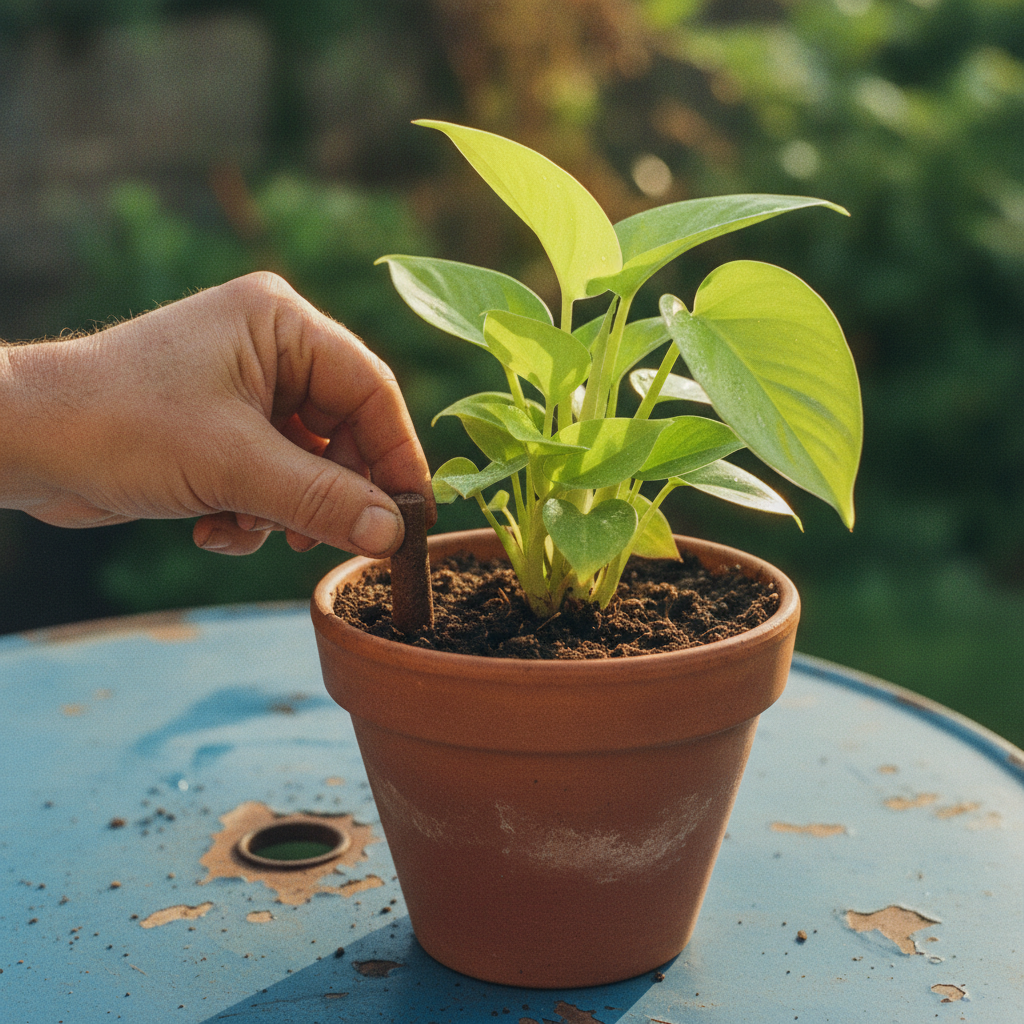
Slow-release granular: Coated prills or pushed-in sticks release nutrients gradually over weeks or months. Convenient for the forgetful, though you sacrifice some control and they keep feeding even when the plant is dormant, so remove or avoid them heading into winter.
Organic fertilisers: Worm castings, diluted seaweed and similar gentle organics feed the soil life as well as the plant and are almost impossible to overdose. They act more slowly and smell earthier, but they are a safe, forgiving choice for a plant this tolerant.
Feeding Schedule
Feed every four to six weeks through spring and summer, when the plant is actively pushing out new leaves. As light fades in autumn and growth slows, taper off, and stop altogether in winter. Feeding a dormant plant simply leaves unused salts in the mix that can burn the roots. Resume in spring when you see fresh growth appear.
Pro Tip — Half Strength, Double Confidence: Manufacturers’ dosing instructions are pitched for hungry plants in bright light. For an easygoing aroid in a typical home, mix to half the stated strength. You get steady, healthy growth with almost no risk of fertiliser burn.
How to Fertilise
- Water the plant lightly first if the mix is bone dry, so the feed never hits parched roots.
- Dilute a balanced liquid fertiliser to half the recommended strength in your watering can.
- Apply evenly over the mix until a little drains from the bottom, which also flushes old salts.
- Let the pot drain fully and tip away any runoff so the roots do not sit in concentrated solution.
Warning — Salt Build-Up: A white crust on the soil surface or pot rim and persistent brown leaf tips signal accumulated fertiliser salts. Flush the pot every couple of months by running plenty of plain water through it for a minute, letting it drain completely, to wash the excess away.
Propagation
If there is a plant designed to make new gardeners feel like experts, this is it. The lemon lime philodendron roots so readily from stem cuttings that a single afternoon of trimming can turn one trailing plant into half a dozen. Cuttings also let you make a sparse, leggy plant bushy by replanting the rooted pieces back into the parent pot.
Spring and summer are the most productive times, when the plant is in active growth and cuttings root fastest, but you can propagate at any time of year with a little patience. The two reliable methods below cover almost everyone’s needs.
Understanding Nodes
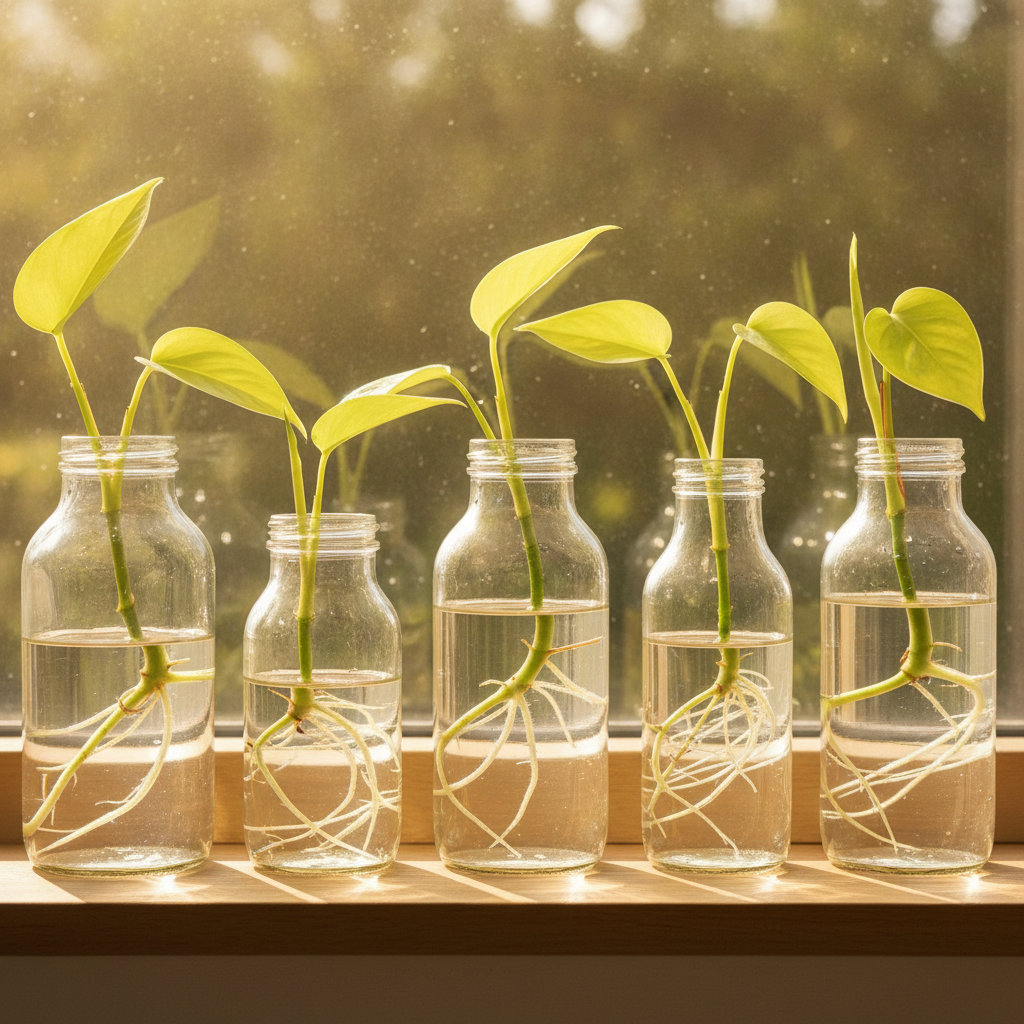
Successful propagation comes down to one structure: the node. A node is the slightly raised band on the stem where a leaf joins, and it is the only point from which new roots and shoots can emerge. You will often see small brown nubs there, the aerial roots, which is exactly where the plant intends to root. Every cutting you take must include at least one node; a leaf with no node attached will never root, no matter how long you wait.
Water Propagation: Step-by-Step
Water rooting is the most satisfying method because you can watch the roots develop, and it has the highest success rate for beginners.
- Choose a healthy vine and cut just below a node with clean, sharp scissors, taking a piece with two or three leaves.
- Remove the lowest leaf or two so that the bare nodes will sit underwater while the upper leaves stay dry.
- Place the cutting in a clear glass of room-temperature water, submerging the nodes but keeping the leaves above the surface.
- Set it in bright, indirect light and refresh the water every three to five days to keep it oxygenated.
- Wait for white roots to appear from the nodes, usually within two to three weeks.
- Once the roots reach 3 to 5 cm (1 to 2 inches), pot the cutting into moist aroid mix and keep it a little more humid for the first fortnight.
Pro Tip — Pot Up Promptly: Roots grown in water are slightly different from roots grown in soil. Transfer cuttings to mix once the water roots are a few centimetres long rather than letting them grow long, so the young plant adapts to soil more easily and skips a sulky transition.
Direct Soil Propagation: Step-by-Step
Planting cuttings straight into mix skips the water-to-soil transition and tends to produce sturdier roots, at the cost of being unable to watch progress.
- Take cuttings as before, each with at least one node and a couple of leaves, removing the lowest leaf.
- Insert the bare node or two into moist aroid mix, firming gently so the node makes good contact with the soil.
- For a faster, fuller plant, push several cuttings into the same pot around the edge.
- Keep the mix lightly moist but never soggy, and place the pot in warm, bright, indirect light.
- Resist tugging to check progress; a gentle resistance after three to four weeks means roots have formed.
Troubleshooting Propagation
| Problem | Likely Cause | Solution |
|---|---|---|
| Cutting rots in water | A leaf left underwater, or water changed too rarely | Strip lower leaves, refresh water more often, restart with a clean cut |
| No roots after a month | No node included, or light too low and cold | Confirm a node is submerged and move somewhere warmer and brighter |
| Roots form but cutting wilts after potting | Shock from water roots meeting dry soil | Keep the mix evenly moist and humidity higher for the first two weeks |
| Cutting shrivels in soil | Mix too dry, or node not in contact | Firm the cutting in, keep lightly moist, and consider a humidity cover |
Pests & Diseases
Healthy lemon lime philodendrons are robust and rarely troubled, but no houseplant is entirely immune. Most problems are introduced on a new plant or carried over from a neighbouring one, and most are easily beaten if you catch them early. A quick look over the leaves, especially their undersides, each time you water is the single best habit you can build.
The plant is honest about distress: discolouration, sticky residue, fine webbing or tiny moving specks all point to a problem worth investigating. Isolate any affected plant from your collection while you treat it, so a minor outbreak does not become a household-wide one.

Common Pests
Mealybugs (Pseudococcidae)
The most frequent visitor on philodendrons. Mealybugs look like tiny tufts of white cotton wool tucked into leaf axils and along the stems, where they suck sap and weaken the plant, often leaving sticky honeydew behind.
Treatment: Dab each bug with a cotton bud dipped in isopropyl alcohol to kill it on contact, then wipe the plant down and follow up with a neem oil or insecticidal soap spray weekly until no new bugs appear.
Spider Mites (Tetranychus urticae)
Thriving in warm, dry air, spider mites are almost too small to see but betray themselves with fine webbing between leaves and stems and a stippled, dusty look to the foliage as they drain the cells.
Treatment: Rinse the plant thoroughly under a tepid shower to dislodge them, raise the humidity, which they hate, and treat with neem oil or insecticidal soap every five to seven days until the webbing is gone.
Fungus Gnats (Sciaridae)
Small black flies hovering around the pot are fungus gnats, whose larvae live in the top layer of constantly damp soil. The adults are mostly a nuisance, but heavy larval numbers can nibble young roots.
Treatment: Let the top of the mix dry out more thoroughly between waterings to break their life cycle, set yellow sticky traps to catch the adults, and top-dress with a layer of grit if they persist.
Common Diseases
Root Rot (Pythium and Phytophthora)
By far the most serious threat to this plant, root rot is caused by waterlogged conditions that suffocate the roots and let soil-borne fungi take hold. Yellowing leaves, a soft stem base and a sour smell from the soil are the warning signs.
Treatment: Unpot the plant, cut away all brown, mushy roots with sterile scissors, and repot into fresh, free-draining mix in a clean pot. If the rot is advanced, take healthy top cuttings and start over from those.
Bacterial Leaf Spot (Erwinia and others)
Dark, water-soaked spots that may be ringed in yellow and spread in consistently wet, humid conditions, especially where water sits on the foliage overnight.
Treatment: Remove affected leaves promptly, improve air circulation, and keep water off the foliage when watering. Avoid misting until the outbreak has cleared.
Pest and Disease Summary
| Pest / Disease | Identification | Treatment |
|---|---|---|
| Mealybugs | White cottony tufts in axils and on stems | Alcohol on a cotton bud, then neem or insecticidal soap |
| Spider mites | Fine webbing and stippled, dusty leaves | Rinse off, raise humidity, treat with neem |
| Fungus gnats | Small black flies around the pot | Dry out the topsoil, use sticky traps |
| Root rot | Yellowing, soft stem, sour soil smell | Trim rotten roots, repot in fresh mix |
| Bacterial leaf spot | Dark water-soaked spots ringed in yellow | Remove leaves, improve airflow, keep foliage dry |
Prevention Strategies
Prevention is far easier than cure, and almost all of it comes down to good basic care. A plant in suitable light, in a free-draining mix, watered only when it needs it, is naturally resistant to most pests and diseases. Quarantine every new arrival for a couple of weeks before it joins your collection, and inspect it closely during that time.
Keep the leaves clean by wiping off dust now and then, which both helps the plant photosynthesise and lets you spot trouble early. Maintain a little air movement around your plants, avoid leaving foliage wet overnight, and never let the pot stand in water. These small habits prevent the great majority of problems before they start.
Pro Tip — Neem as Routine: A monthly preventative spray of diluted neem oil over the leaves, including the undersides, deters most common pests before they establish. Apply it in the evening or out of direct sun so the oil does not magnify light onto the leaves and cause scorching.
Popular Varieties
The lemon lime is one of several selected forms of the heartleaf philodendron, Philodendron hederaceum, a species that has given rise to a whole family of easy, collectable trailing plants. If you have fallen for the lemon lime’s glow and forgiving nature, its close relatives offer the same effortless care in a range of colours and textures.
The table below sets the lemon lime alongside its best-known cousins, all of which share its light, water and feeding needs, so you can build a varied collection without learning a new routine for each plant.
| Variety | Leaf Appearance | Light Needs | Growth Rate | Availability |
|---|---|---|---|---|
| Lemon Lime | Glowing chartreuse to neon yellow-green hearts | Bright indirect for best colour | Fast | Common |
| Heartleaf (species) | Glossy deep green hearts | Low to bright indirect | Fast | Very common |
| Brasil | Green leaves with a central lime-yellow stripe | Bright indirect | Fast | Common |
| Micans | Velvety bronze-green with reddish undersides | Medium to bright indirect | Moderate | Fairly common |
| Rio | Silvery-cream centre stripe on green | Bright indirect | Moderate | Less common |
| Gabby | Cream and mint variegation, gentle tones | Bright indirect | Slow to moderate | Less common |
Featured Varieties
Philodendron Brasil
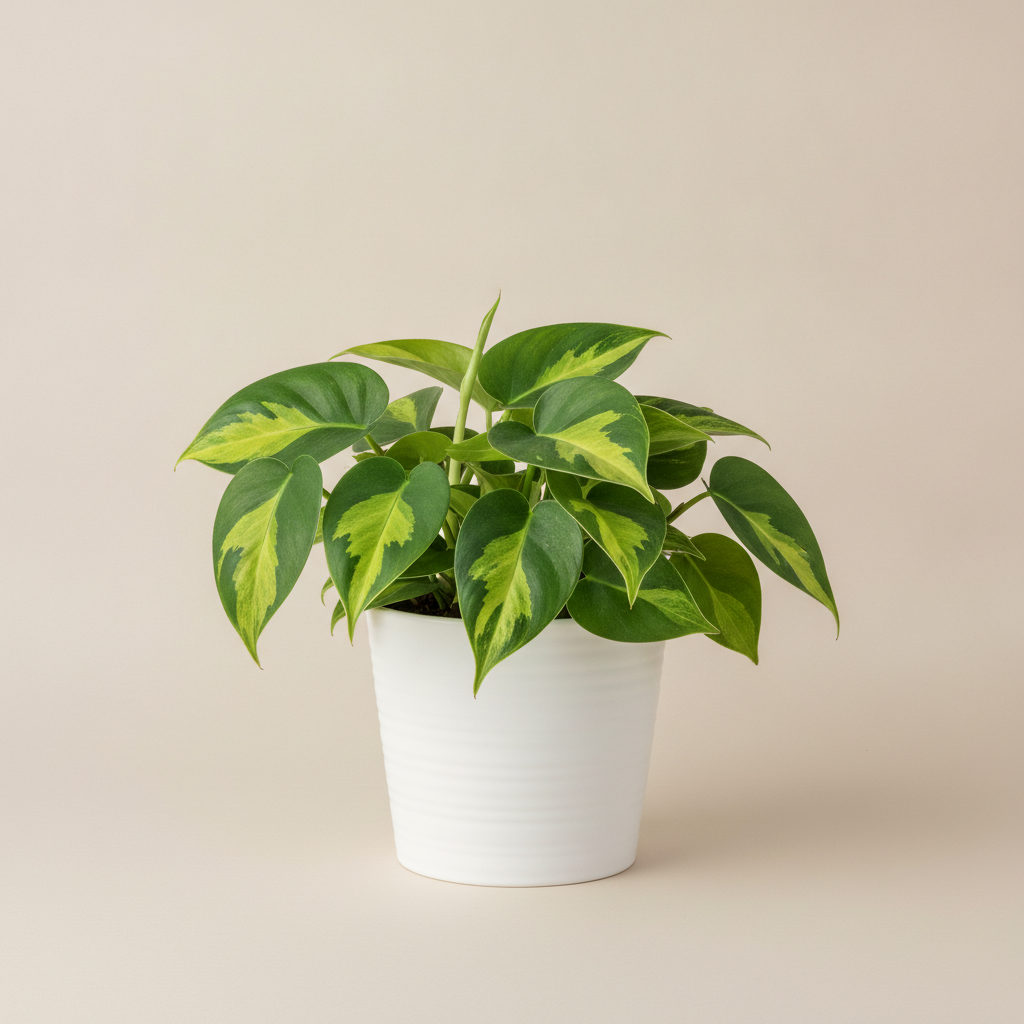
If the lemon lime is all-over glow, Brasil is its painterly sibling, each deep green heart brushed down the centre with a stripe of lime and pale yellow. No two leaves are marked the same, and it grows just as fast and forgivingly as the lemon lime.
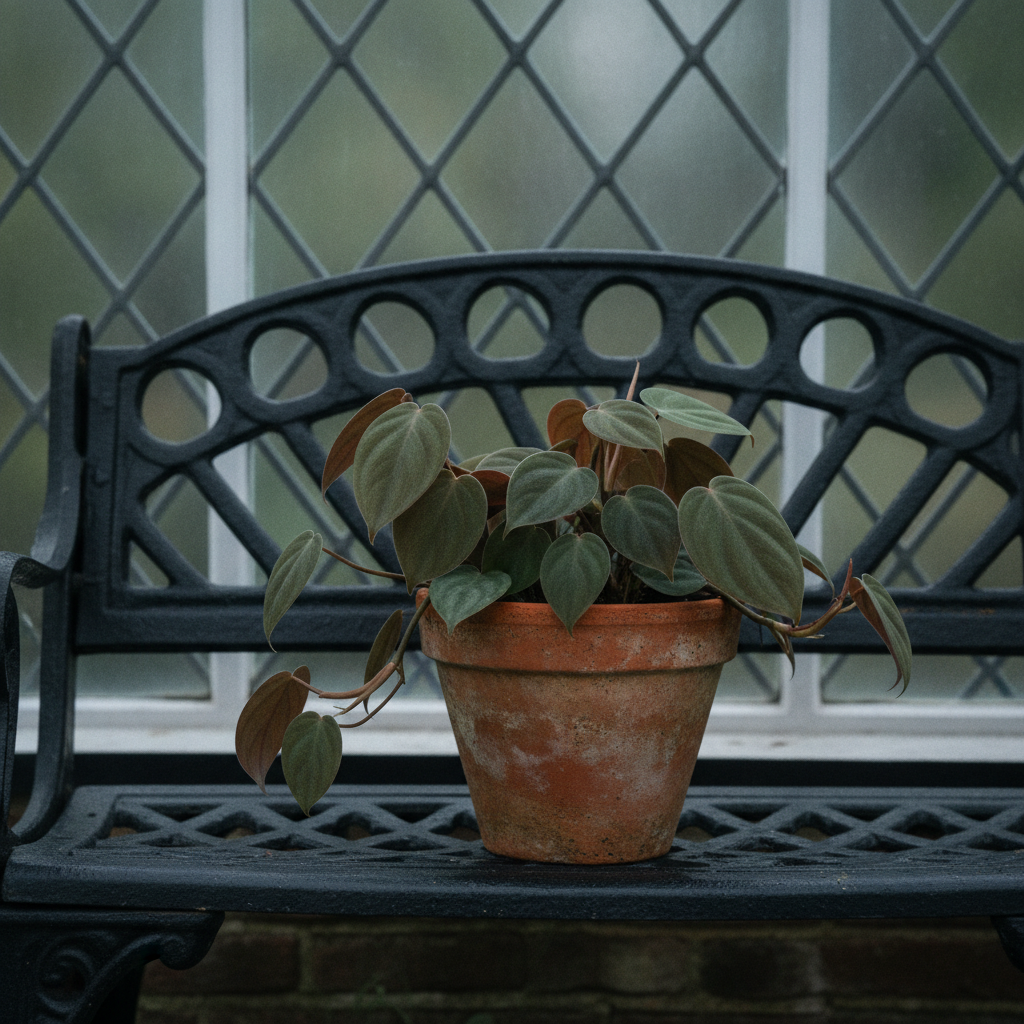
Philodendron Micans
The velvet member of the family, Micans carries matte, bronze-green hearts with a soft iridescent sheen and reddish-purple undersides. New leaves emerge a warm copper before deepening, giving it a richer, moodier feel than the bright lemon lime.
Variety Profiles in Detail
Philodendron Brasil (Philodendron hederaceum ‘Brasil’)
Named for its resemblance to the Brazilian flag, Brasil pairs glossy green with central flashes of lime and yellow. Its variegation is more stable in slightly brighter light, and an occasional all-green or all-yellow leaf is normal. It trails beautifully and roots from cuttings as readily as the lemon lime.
Philodendron Micans (Philodendron hederaceum var. hederaceum)
A velvet-leaved form prized for its tactile, light-absorbing foliage and copper-toned new growth. It grows a touch more slowly than its glossy relatives and prefers to avoid direct sun, which can dull the velvety surface, but otherwise shares the same easygoing care.
Choosing the Right Variety for Your Space
Let your light guide the choice. If you have a bright spot and want maximum impact, the lemon lime or Brasil will reward you with vivid colour. For a darker corner, the plain heartleaf species or the velvety Micans cope better with reduced light while still looking lush. Because all of these share identical care, the only real question is which colour and texture you want spilling from your shelf, and there is no wrong answer.
Frequently Asked Questions
Why is my lemon lime philodendron turning green?
Almost always a light issue. In dimmer conditions the plant produces more chlorophyll to harvest the scarce light, which masks the lemon-lime pigment and darkens the leaves. Move it somewhere brighter, though still out of direct sun, and the new growth will come through in its characteristic chartreuse.
Why are the leaves on my plant so far apart and leggy?
Long stretches of bare stem between leaves mean the plant is reaching for light. Relocate it to a brighter spot, and prune the leggy stems back to encourage bushier growth. You can root the cuttings you remove and plant them back into the same pot to fill it out.
Is the lemon lime philodendron safe around pets?
No. Like all philodendrons it contains insoluble calcium oxalate crystals that are toxic to cats and dogs if chewed, causing mouth irritation, drooling and vomiting. Keep it out of reach of curious pets, ideally trailing from a high shelf or hanging planter where the foliage cannot be reached.
How fast does it grow?
Quickly, given decent light and warmth. In the growing season a healthy plant can add several centimetres of vine a week and easily trail a metre or more in a year. Growth slows naturally in winter as light fades, which is normal and not a cause for concern.
Should I let it trail or train it to climb?
Either suits it. Left to trail, it produces the familiar cascade of small to medium hearts. Given a moss pole to climb, it roots in along the way and the leaves grow noticeably larger, since climbing mimics its natural ascent toward brighter light. It is purely a matter of the look you prefer.
Why are the tips of the leaves turning brown?
Brown, crispy tips usually point to very dry air, inconsistent watering, or a build-up of fertiliser salts or minerals in the soil. Raise the humidity a little, keep your watering rhythm steady, and flush the pot with plain water occasionally to clear accumulated salts.
Can I grow it permanently in water?
You can keep a cutting alive in water for a long time, and many people do as a decorative feature, but it will never grow as vigorously as it would in soil. If you go this route, change the water regularly and add a few drops of dilute hydroponic fertiliser, since plain water offers almost no nutrition.
How do I make my plant bushier?
Regular pruning is the secret. Cutting a stem just above a node prompts it to branch from that point, producing two stems where there was one. Root the trimmings and tuck them back into the pot, and over a season or two a sparse plant becomes full and lush.






