
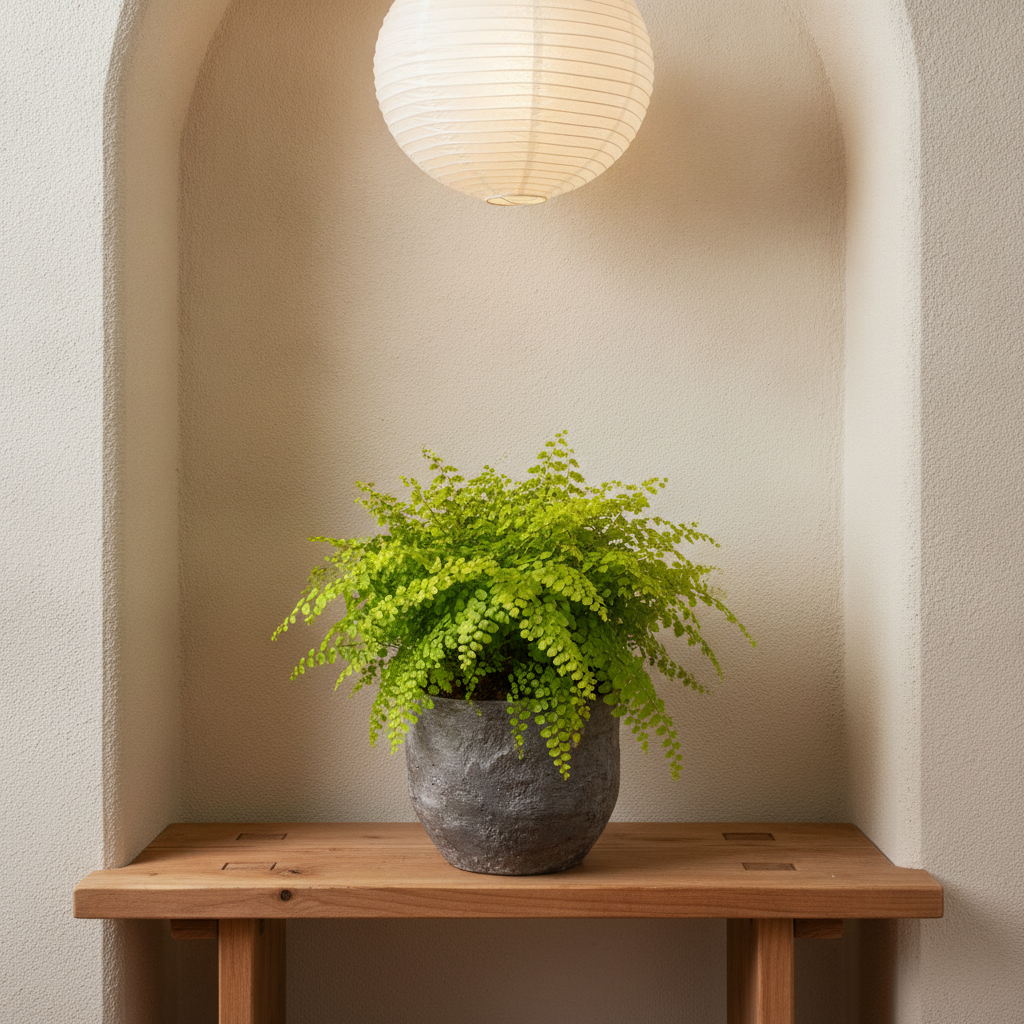
Most ferns arrive in the home with a reputation for drama, demanding humidity levels that few living rooms can honestly provide. The lemon button fern (Nephrolepis cordifolia ‘Duffii’) is the quiet exception. A dwarf selection of the vigorous sword fern, it packs the soft, layered greenery people want from a fern into a tidy mound rarely taller than 30cm (12in), and it tolerates ordinary household air far better than its delicate cousins. Brush a frond and you may catch the faint lemony scent that gives the plant its name. This guide covers everything needed to move a lemon button fern from merely surviving to genuinely thriving.

Quick Reference
- Why grow a lemon button fern
- Light
- Watering
- Soil and potting
- Fertilising
- Propagation
- Pests and problems
- Varieties and relatives
- Frequently asked questions
| Botanical name | Nephrolepis cordifolia ‘Duffii’ |
| Common names | Lemon button fern, button sword fern, fishbone fern (parent species) |
| Family | Nephrolepidaceae |
| Mature size | 20 to 30cm (8 to 12in) tall and wide indoors |
| Light | Bright indirect to moderate; no direct midday sun |
| Water | Keep evenly moist, never waterlogged or bone dry |
| Humidity | Prefers 50 percent and above, tolerates average rooms |
| Temperature | 16 to 24C (61 to 75F) |
| Toxicity | Non-toxic to cats, dogs and humans |
Why Grow a Lemon Button Fern as a Houseplant
The appeal of the lemon button fern begins with its scale. Where the Boston fern (Nephrolepis exaltata) sprawls into a metre-wide fountain that sheds leaflets across the floor, the lemon button form holds itself in a neat, upright-to-arching mound. Each frond is lined with small, rounded pinnae that overlap like a row of green coins, and the whole plant reads as soft and full without ever becoming unruly. That restraint makes it one of the few ferns that genuinely suits a bookshelf, a bathroom windowsill or the corner of a desk.
It also earns its place through resilience. Nephrolepis cordifolia is a pantropical species, widespread across Asia, Australia and the Pacific, and it carries small underground tubers that store water and energy. Those tubers buy the plant time, so a lemon button fern recovers from a missed watering or a dip in humidity that would leave a maidenhair fern (Adiantum) crisp and brown within hours. For anyone who has killed a fern before and concluded they simply cannot grow them, this is the species that tends to change the verdict.
There is a sensory bonus, too. The foliage releases a faint, fresh, citrus-like fragrance when handled or brushed in passing, a quiet pleasure that few other houseplants offer. Combined with its pet-safe status, the lemon button fern works well in homes with cats, dogs or curious children, where a trailing pothos or a philodendron would raise concerns.
Pro Tip – Survive versus thrive: A lemon button fern will survive in a dim corner with erratic watering, holding on through its tubers. To make it thrive, give it steady moisture, bright indirect light and a little extra humidity, and it will push out fresh fronds almost year round.
Light
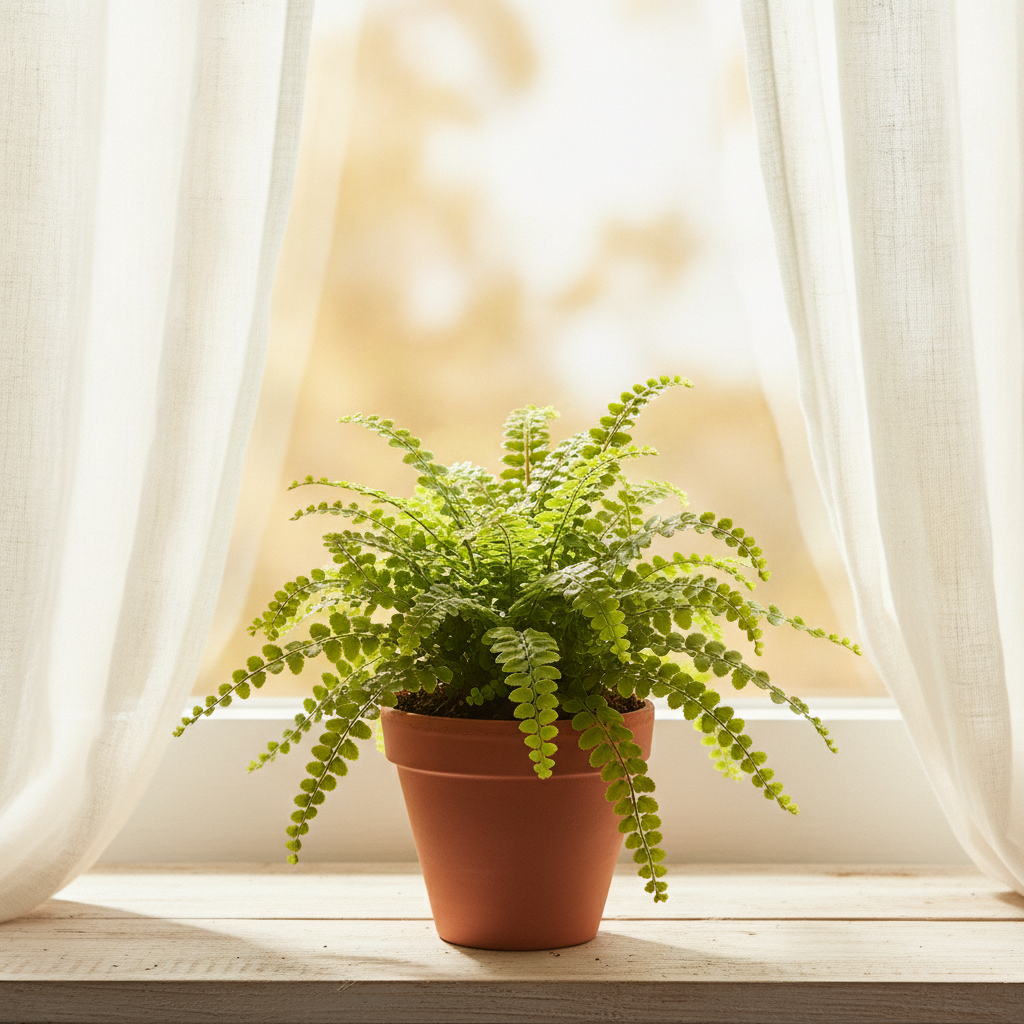
In the wild, the lemon button fern grows in the dappled understorey of forests and along shaded banks, where sunlight reaches it filtered through a canopy. The indoor equivalent is bright, indirect light. An east-facing window, which delivers gentle morning sun and softer light for the rest of the day, is close to ideal. A north-facing window suits it well too, particularly in summer. South and west windows can work provided the plant sits a metre or so back from the glass, or behind a sheer curtain that scatters the harshest rays.
Direct midday sun is the one thing to avoid. The thin fronds scorch quickly, developing pale, bleached patches that later turn brown and crisp. Those burned sections will not recover, so prevention matters more than cure. If the leaflets look washed out rather than a healthy mid green, or if the soil dries alarmingly fast between waterings, the plant is probably receiving more light than it wants and should be moved back from the window.
The fern also copes with moderate, lower light better than most, which is why it turns up in bathrooms and on interior shelves. It will not thrive in true gloom, where growth slows to a halt and the centre of the plant can thin out, but it accepts conditions that would leave a sun-loving succulent etiolated and leggy. If natural light is genuinely limited, a small full-spectrum grow light running for ten to twelve hours a day keeps the fern dense and healthy.
Pro Tip – Even growth: Ferns grow towards their light source, so a plant on a windowsill gradually leans. Give the pot a quarter turn each time you water to keep the mound symmetrical and full on all sides.
Watering
Watering is where most fern owners go wrong, and the lemon button fern asks for a middle path. The goal is soil that stays consistently, lightly moist, much like a wrung-out sponge, never sodden and never completely dry. Because the plant stores reserves in its tubers, it forgives the occasional lapse better than a true moisture addict, but repeated drought still shows up as browning leaflet tips and a thinning crown.
The reliable method is to check the top of the compost with a fingertip. When the upper one to two centimetres (about half an inch) feels dry, it is time to water. Add water until it runs freely from the drainage holes, then let the pot drain completely before returning it to its cover pot or saucer. Standing water around the roots is the fastest route to rot, the most common cause of death in this otherwise tough plant. In practice, a lemon button fern in a bright room often needs watering once or twice a week in the growing season, dropping to roughly weekly in winter, though the finger test always beats a fixed schedule.
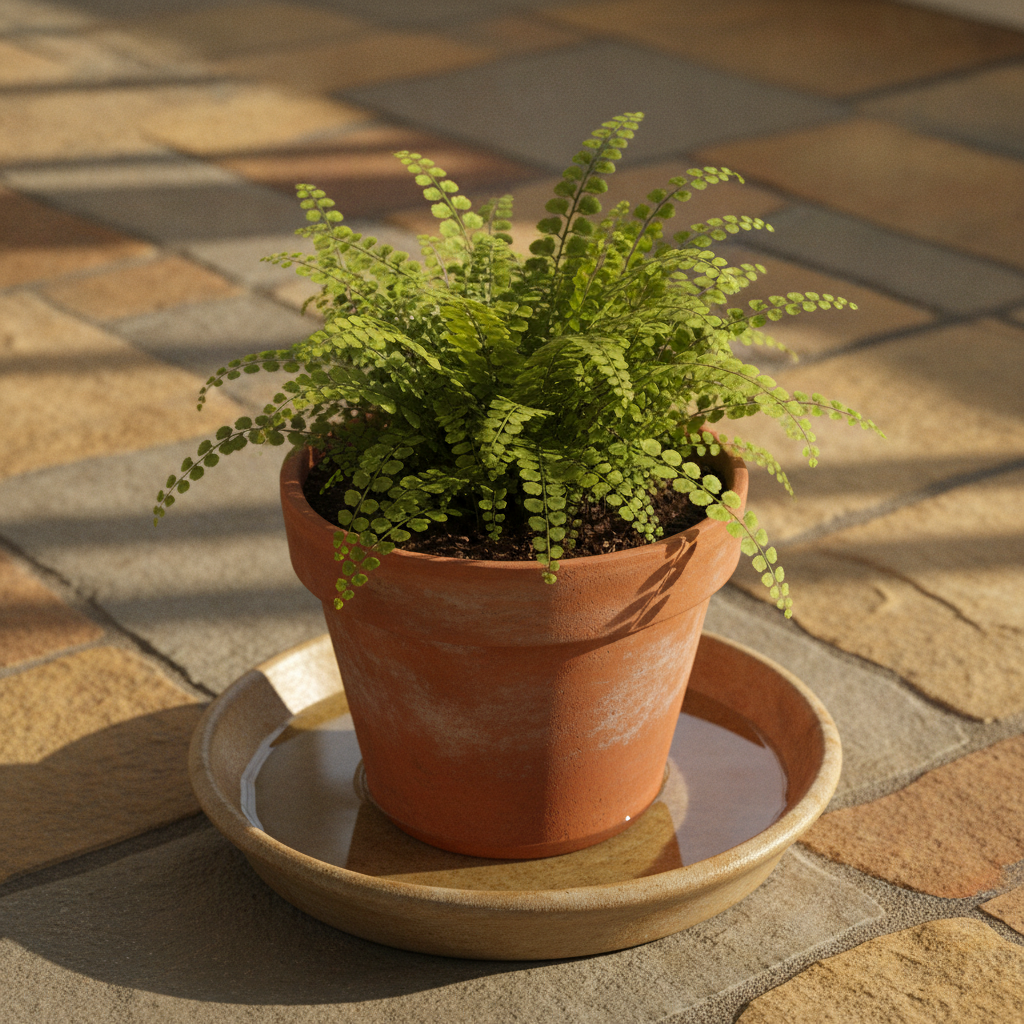
Bottom watering suits this fern especially well. Standing the pot in a tray of water for fifteen to twenty minutes lets the compost wick up moisture evenly and keeps the dense crown dry, which discourages fungal problems. Whichever method you use, room-temperature water is kinder than cold straight from the tap, and rainwater or filtered water is appreciated in hard-water areas, where mineral build-up can scorch the sensitive frond edges over time.
Humidity and watering work together. In a dry, centrally heated room, the fern transpires faster and needs water more often, while the leaflet tips may still brown from the arid air. Raising humidity, covered in the soil and environment section below, reduces that stress and makes the watering routine more forgiving.
Warning – Avoid the bone-dry rescue cycle: If a lemon button fern dries out completely, the compost can become hydrophobic and shed water straight down the sides. Rehydrate by soaking the whole pot in a basin for half an hour, then resume normal watering rather than drowning it daily to compensate.
Soil, Potting and Humidity

The ideal potting mix balances two demands that sound contradictory: it must hold moisture, yet drain freely so the roots never sit in water. A peat-free houseplant compost forms a good base. Lighten and open it with a generous handful of perlite for drainage and a little fine orchid bark or coco coir for structure and water retention. The result should feel airy and spring back when squeezed, rather than packing into a dense, airless block.
Choose a pot with drainage holes, and resist the temptation to over-pot. Lemon button ferns grow happily a little snug and actually flower, in the fern sense of producing spores, more freely when their roots fill the available space. A pot only two to three centimetres (about an inch) wider than the rootball is plenty. Terracotta breathes and helps wick away excess moisture, which suits a plant prone to root rot, though it does dry faster and so calls for closer attention to watering. Repotting every one to two years, ideally in spring, refreshes the compost and gives the roots room; it is also the natural moment to divide the plant, as described in the propagation section.
Humidity deserves real attention because it is the lever that turns an acceptable lemon button fern into a lush one. The plant tolerates average household humidity better than most ferns, but it is happiest above 50 percent. The most reliable way to raise local humidity is to stand the pot on a tray of pebbles topped up with water, keeping the pot base above the waterline so the roots do not sit wet. Grouping it with other plants creates a shared humid microclimate, and a bathroom or kitchen with a bright window often provides the moisture it craves for free. Misting offers only fleeting relief and, if done late in the day, can encourage fungal spotting, so a pebble tray or a small humidifier is the better long-term answer.
Temperature needs are straightforward and match a comfortable home: 16 to 24C (61 to 75F) suits it well. Keep the fern away from cold draughts, single-glazed windows in winter, and the drying blast of radiators or heating vents, all of which brown the foliage. It will not survive frost, so it stays indoors year round in cool climates.
Fertilising
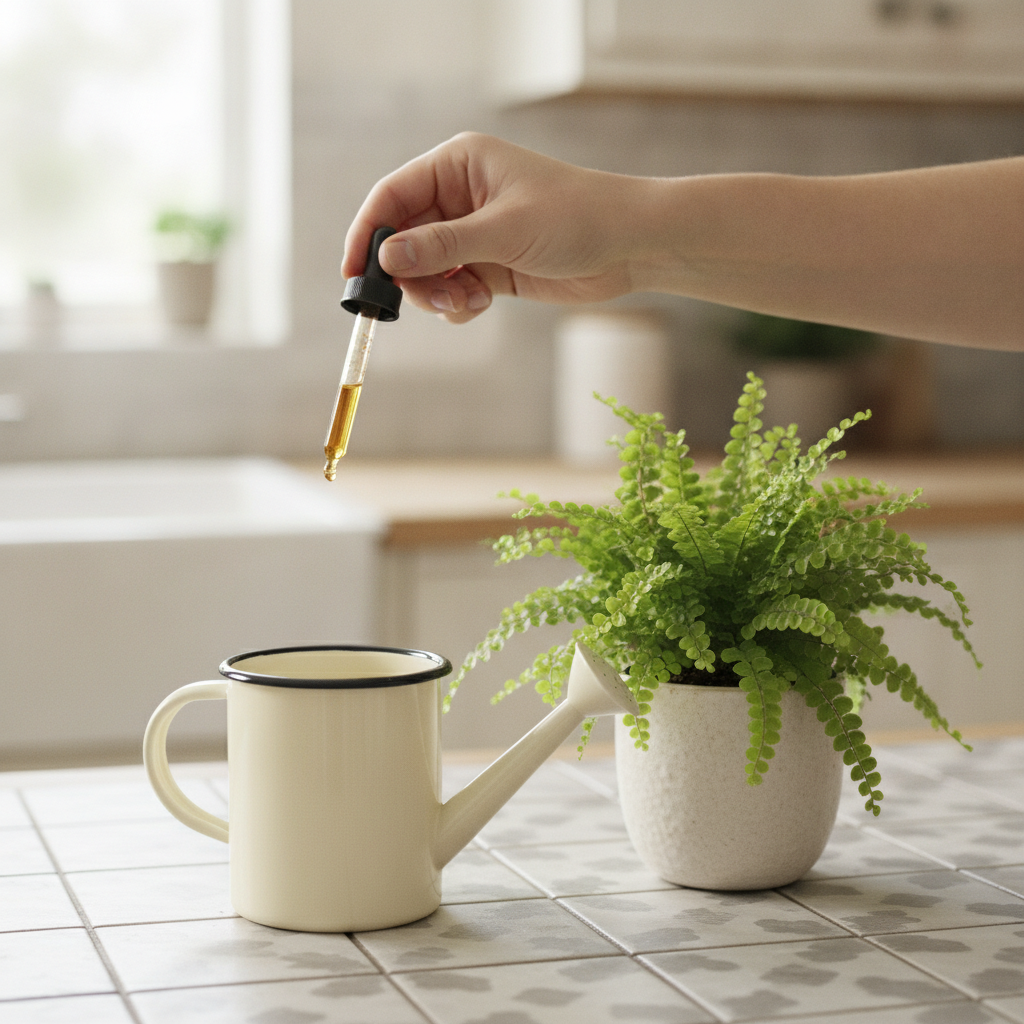
Lemon button ferns are light feeders. In their native understorey they draw modest nutrition from slowly decaying leaf litter, and indoors they need far less fertiliser than a fast-growing foliage plant. The fine roots are easily burned by concentrated feed, so the guiding principle is little and often, well diluted.
During the active growing season, from spring through to early autumn, feed roughly once a month with a balanced liquid houseplant fertiliser diluted to half the strength stated on the label. Always apply it to already-moist compost, never to a dry rootball, as feeding a thirsty plant draws the salts straight onto the roots and scorches them. Through late autumn and winter, when growth naturally slows, stop feeding altogether and let the plant rest.
Signs of overfeeding include a white, crusty crust of mineral salts on the soil surface or pot rim and brown, scorched leaflet tips that no amount of careful watering resolves. If you suspect a build-up, flush the pot thoroughly with plain water, letting it run through several times to leach out the excess, and ease back on the feeding. Underfeeding is far less common and shows simply as slow growth and a paler-than-usual green, both easily corrected once regular light feeding resumes.
Pro Tip – Gentle alternatives: A top-dressing of worm castings in spring, or an occasional watering with well-diluted seaweed feed, suits the lemon button fern’s preference for mild, organic nutrition and carries little risk of root burn.
Propagation
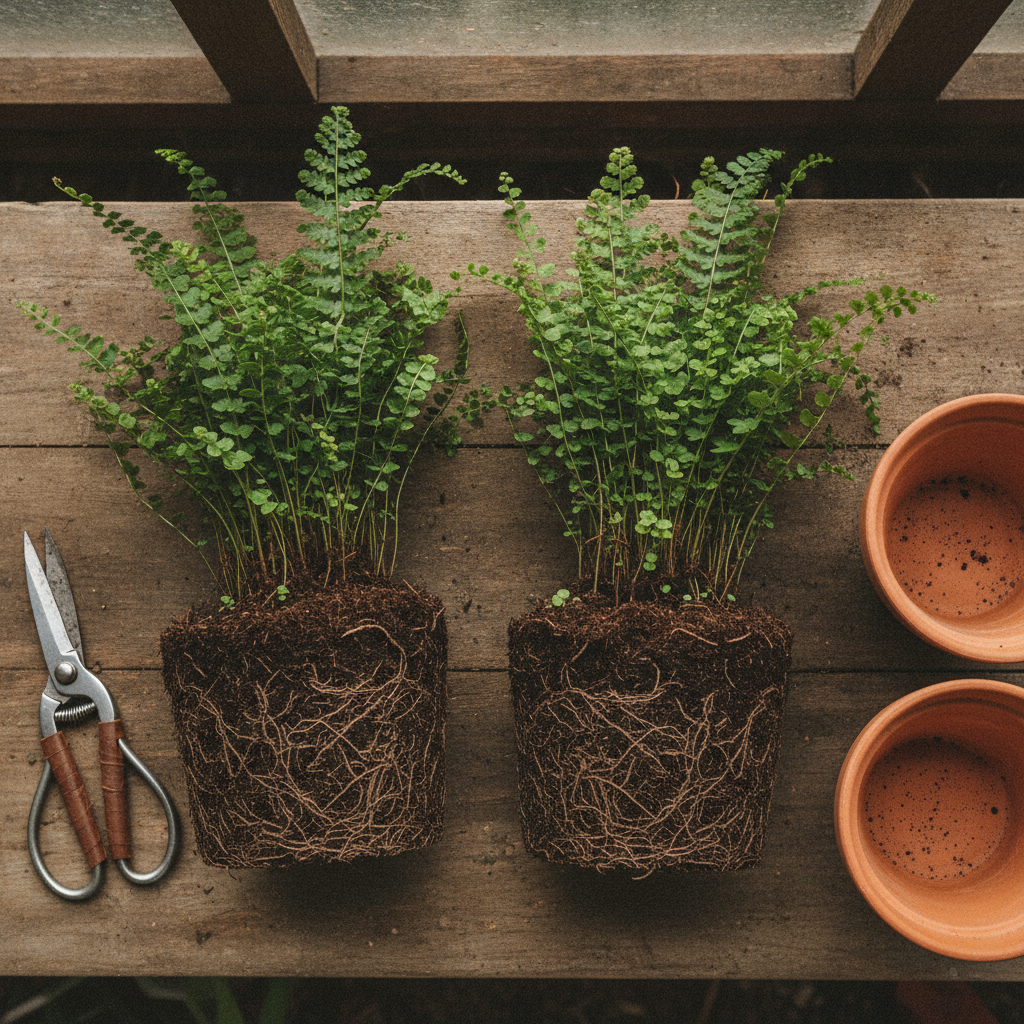
The lemon button fern does not root from leaf or stem cuttings the way a pothos or a begonia does. Ferns reproduce by spores in the wild, and while spore sowing is possible it is slow and fiddly, demanding sterile conditions and months of patience. For the home grower, division is the practical method, and it is both quick and almost foolproof. The best time is spring, ideally combined with the plant’s annual repotting.
To divide a healthy, established plant, follow these steps.
- Water the fern a day ahead so the rootball is hydrated and the compost holds together when handled.
- Slide the plant out of its pot and gently tease away the loose compost until you can see the crowns and the tangled root mass beneath.
- Look for natural divisions where the plant separates into distinct clumps, each with its own fronds and a healthy share of roots.
- Pull these sections apart by hand where you can; for a tightly knit rootball, cut cleanly through with a sterilised knife, aiming for two or three good divisions rather than many tiny ones.
- Pot each division into its own small container of fresh, free-draining mix, setting it at the same depth it grew before.
- Water in well, then keep the new plants somewhere warm and bright but out of direct sun, with slightly higher humidity for the first few weeks while they settle.
Expect a little sulking after division. Some fronds may yellow or wilt as the plant redirects energy into new roots, which is normal and not a sign of failure. Keep the compost lightly moist, resist the urge to feed until fresh growth appears, and within a month or two each division settles and begins pushing out new fronds. The parent species also produces wiry runners and small tubers, and an established plant occasionally throws up offsets nearby that can be potted on once they have their own roots.
Pests and Problems
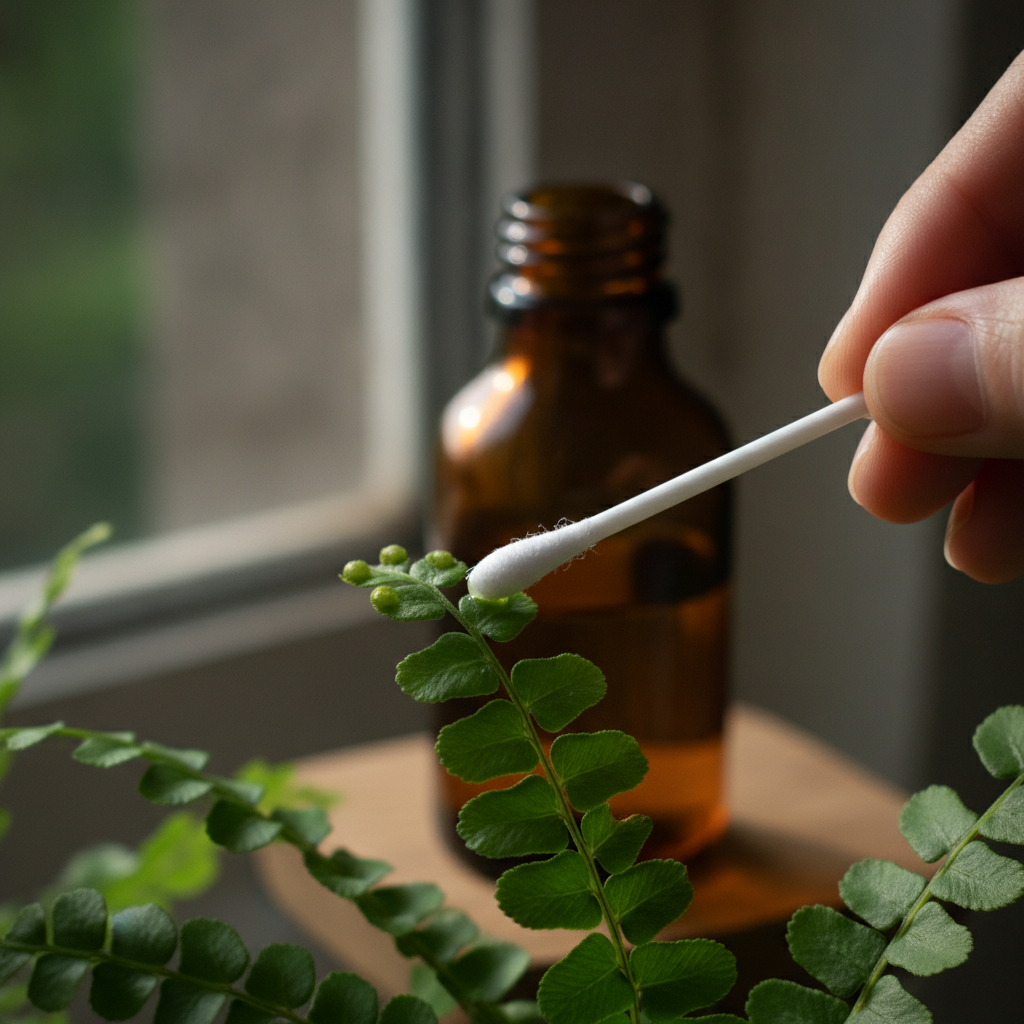
The lemon button fern is relatively untroubled by pests, but a stressed or dusty plant in dry air can attract a few familiar offenders. Scale insects are the most common, appearing as small brown limpet-like bumps along the frond midribs and undersides that do not brush off easily. Mealybugs leave white, cottony tufts in the leaf axils, while spider mites, encouraged by hot dry conditions, produce fine speckling on the foliage and faint webbing between the leaflets. Fungus gnats may also hover around persistently soggy compost.
Treatment needs a gentle hand, because ferns react badly to the harsh oil and synthetic sprays used freely on tougher plants. For scale and mealybugs, dab each insect with a cotton bud dipped in diluted isopropyl alcohol, then wipe the fronds clean; repeat every few days until they are gone. For spider mites, raising humidity and rinsing the foliage under a tepid shower disrupts their life cycle, and a very dilute insecticidal soap, tested first on a single frond, can follow if needed. Fungus gnats are best tackled at the source by letting the top of the compost dry out a little more between waterings and using yellow sticky traps to catch the adults.
Most lemon button fern complaints, though, are cultural rather than biological. The table below links the symptoms people see most often to their usual causes and fixes.
| Symptom | Likely cause | Remedy |
|---|---|---|
| Brown, crispy leaflet tips | Low humidity or dry air from heating | Raise humidity with a pebble tray, move away from radiators |
| Yellowing, limp fronds | Overwatering or waterlogged roots | Let soil dry slightly, check drainage, ease off watering |
| Pale, bleached patches | Direct sun scorch | Move to bright indirect light |
| Whole plant wilting, dry soil | Underwatering | Soak the pot, then keep evenly moist |
| Leggy, thin centre | Insufficient light | Move closer to a bright window or add a grow light |
| White crust on soil or rim | Fertiliser salt build-up | Flush the pot with plain water, reduce feeding |
Warning – Quarantine new arrivals: Pests usually hitch a ride from a newly bought plant. Keep any new houseplant separate for a couple of weeks and inspect it closely before letting it join a fern, whose dense fronds make an infestation hard to clear once established.
Varieties and Relatives
The lemon button fern itself is the cultivar Nephrolepis cordifolia ‘Duffii’, but it belongs to a wider genus of sword ferns that offers several related forms worth knowing. The two cards below show the classic button form alongside a feathery contrast, and the notes that follow place them among their better-known cousins.
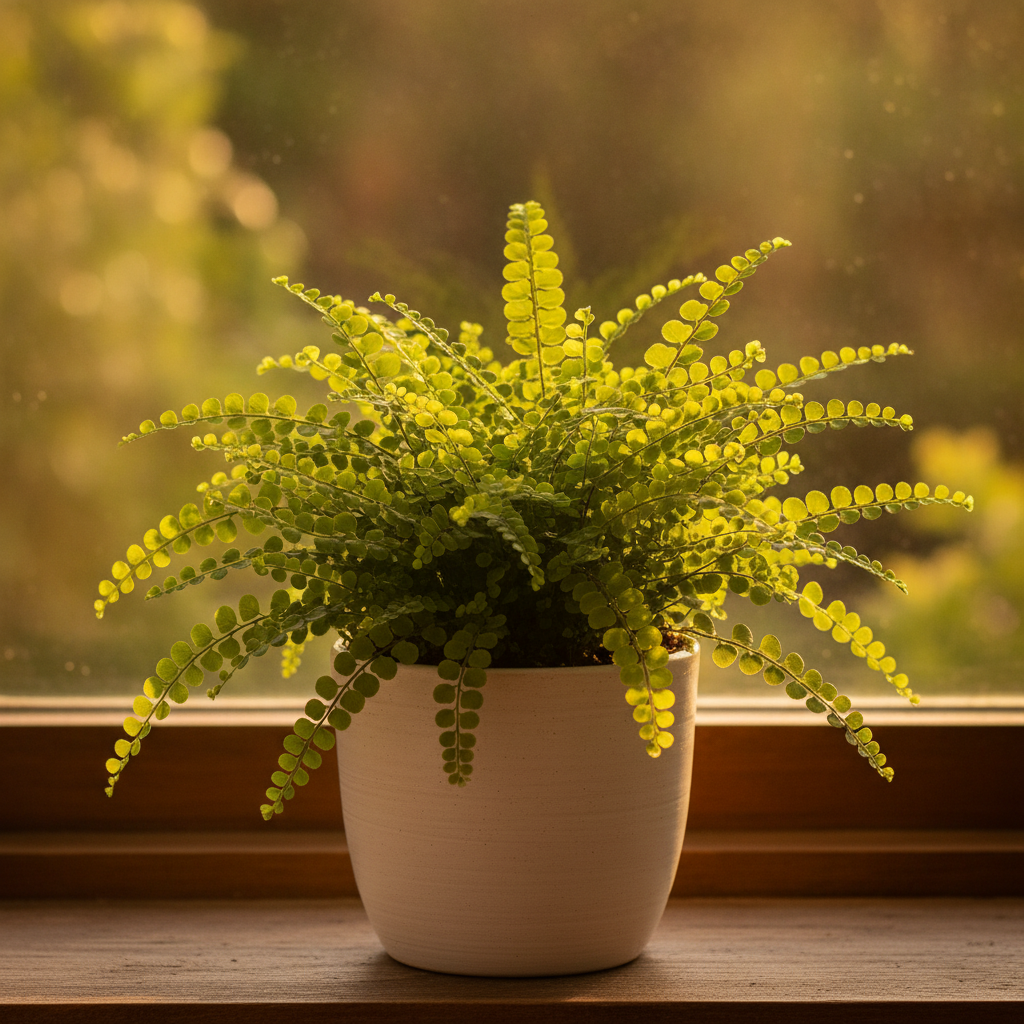
‘Duffii’ is the lemon button fern in its familiar form. Slender, upright-to-arching fronds carry rows of small, round, overlapping pinnae in a fresh lime green, giving the plant its distinctive beaded outline and its faint citrus scent. Compact and well behaved, it is the form most often sold simply as the lemon button fern.

‘Plumosa’ trades the tidy buttons for finely divided, softly frilled pinnae that give the fronds a feathery, plumed texture in a slightly deeper green. It keeps the same easygoing nature and compact habit, but reads as softer and fluffier, a pleasant contrast when grown alongside the rounded ‘Duffii’ form.
Beyond these selections, the genus Nephrolepis holds the lemon button fern’s larger relatives. The Boston fern (Nephrolepis exaltata ‘Bostoniensis’) is the best known, a much bigger plant with long, gracefully drooping fronds suited to hanging baskets and plant stands, though it is thirstier and more humidity-hungry than the button form. The Kimberly Queen fern (Nephrolepis obliterata) is more upright and sun-tolerant, often grown as a patio plant. The straight parent species, Nephrolepis cordifolia, sometimes called the fishbone or sword fern, is more vigorous still and can become invasive outdoors in warm climates, which is one reason the restrained ‘Duffii’ is the form embraced as a houseplant. Anyone who enjoys the lemon button fern will find the rest of the genus an easy and rewarding next step.
Frequently Asked Questions
Is the lemon button fern safe for cats and dogs?
Yes. Nephrolepis ferns, including the lemon button fern, are listed as non-toxic to cats and dogs, and they are safe around humans too. This makes the plant a sound choice for households with pets or small children, where many popular houseplants would be a concern. As with any plant, a curious animal that eats a large quantity of foliage may still get a mild upset stomach, so it is sensible to discourage nibbling.
Why are the tips of my lemon button fern turning brown?
Brown, crispy leaflet tips almost always point to dry air or inconsistent watering. Central heating, a nearby radiator or a dry winter room pulls moisture from the thin fronds faster than the plant can replace it. Raise the local humidity with a pebble tray or a small humidifier, keep the compost evenly moist rather than letting it swing between soggy and bone dry, and move the plant away from heat sources and draughts.
How often should I water a lemon button fern?
There is no fixed schedule, because the right frequency depends on light, warmth and pot size. Check the top one to two centimetres (about half an inch) of compost with a finger and water when it feels dry, aiming to keep the soil lightly moist at all times. In a bright, warm room this often means watering once or twice a week in the growing season, dropping to roughly weekly in winter. Always let the pot drain fully and never leave it standing in water.
Does the lemon button fern really smell of lemon?
It does, faintly. Brushing or gently crushing the fronds releases a soft, fresh, citrus-like scent, which is where the common name comes from. The fragrance is subtle rather than strong, so it tends to be noticed when handling or repotting the plant rather than filling a room, but it is a genuine and distinctive feature of this fern.
Why is my lemon button fern dropping or yellowing fronds?
Yellowing, limp fronds usually signal overwatering or poor drainage, with the roots sitting in waterlogged compost. Check that the pot drains freely, let the surface dry slightly before the next watering, and ease off the frequency. A few older fronds yellowing and dying back occasionally is normal as the plant renews itself; simply trim them at the base. If many fronds yellow at once, treat it as a watering or drainage problem first.
Can a lemon button fern live in a bathroom?
A bathroom is often an excellent home for one, provided it has a window offering bright indirect light. The naturally higher humidity from showers and baths suits the fern well and helps prevent the browning tips that plague plants in drier rooms. In a windowless bathroom, the lack of light will eventually weaken the plant, so a grow light or a periodic spell near a brighter window would be needed to keep it healthy.






