
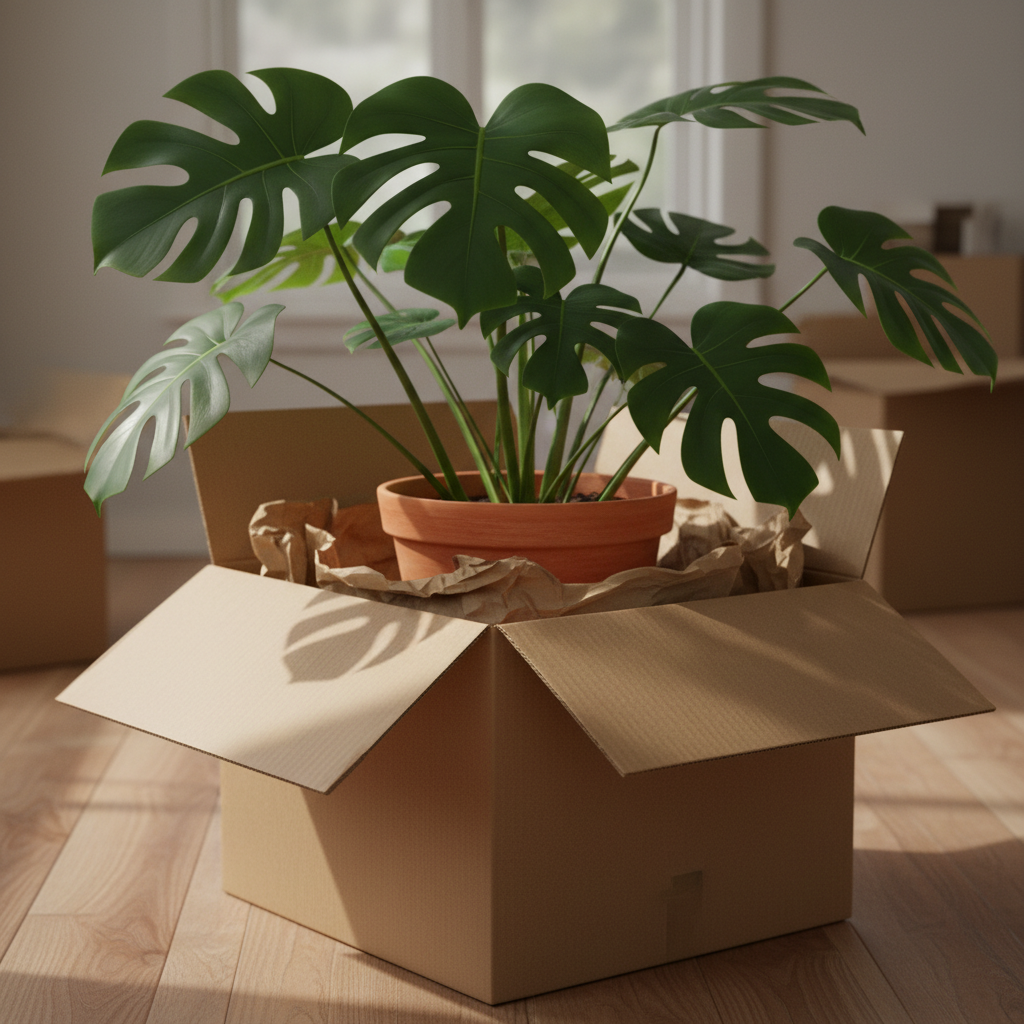
- Quick Reference: Moving Houseplants
- Inspect Before You Pack
- Do Not Overwater Before Transport
- Protect Plants From Temperature Extremes
- Pack Leaves and Stems Gently
- Let Plants Recover Before Styling Them
- Watch for Post-Move Stress
- Frequently Asked Questions
Moving houseplants is not just a matter of putting them in a box and hoping leaves forgive you. Plants notice changes in light, temperature, airflow, humidity and handling. They may drop leaves, wilt temporarily or stop growing while they adjust.
The goal is to reduce sudden stress. University of Minnesota Extension notes that houseplants need to be acclimated to new environments and should start in protected locations away from wind and direct sunlight when moved outdoors.[4] The same principle applies when moving houseplants between homes, rooms or climates: gradual adjustment is kinder than botanical whiplash.
Quick Reference: Moving Houseplants
| Stage | What to do | Why it matters |
|---|---|---|
| One week before moving | Inspect for pests and remove dead foliage. | Prevents transporting problems. |
| Two days before moving | Water only if needed. | Wet heavy pots are messy and roots dislike soggy travel. |
| Moving day | Protect plants from heat, cold and crushing. | Leaves and roots are vulnerable in transit. |
| Arrival | Place in bright indirect light first. | Reduces shock while plants adjust. |
| First month | Water carefully and avoid fertilising immediately. | Plants may slow down after environmental change. |
Inspect Before You Pack
Before moving, check undersides of leaves, stems, soil surfaces and drainage holes. University of Illinois Extension recommends inspecting plants before bringing them indoors because pests such as aphids, whiteflies, mealybugs, scale and spider mites can spread quickly once inside.[3]
Even if you are not moving plants indoors from outside, the advice still applies. A move is a good moment to remove dead leaves, wipe dusty foliage and isolate suspicious plants. Nobody wants to unpack boxes and discover that the mealybugs also changed address.
Do Not Overwater Before Transport
Water plants a day or two before the move only if they need it. The potting mix should be slightly moist, not dripping. Wet soil is heavier, messier and more likely to spill. Dry, compacted soil may shift around roots. Aim for the middle.
For plants in decorative cachepots, remove the inner pot and make sure no water is trapped in the outer container. University of Illinois Extension warns that decorative pots without drainage can collect water and should be checked carefully.[3]
Protect Plants From Temperature Extremes
Many houseplants are tropical or subtropical and do not tolerate cold well. University of Illinois Extension recommends bringing houseplants indoors when temperatures consistently fall below 55°F.[3] During a house move, even brief exposure to a cold driveway, hot car boot or windy pavement can cause damage.
Use the passenger area of a car when possible, not an unheated truck or sealed hot boot. In winter, warm the vehicle first and cover plants lightly while moving them between buildings. In summer, avoid leaving plants in a parked car. A plant in a hot car is not “in transit”; it is being steamed.
Pack Leaves and Stems Gently
For upright plants, wrap the pot to prevent soil spills and use paper around the foliage to reduce breakage. Avoid plastic wrapping for long periods because it traps moisture and can encourage fungal problems. Tall plants may need stakes or loose ties.
Trailing plants can be coiled loosely on top of the pot and protected with paper. Spiky plants should be boxed so they do not attack the mover, which is usually you.
Let Plants Recover Before Styling Them
After arrival, place plants in bright indirect light for a few days unless they clearly need high light. Avoid direct sun immediately after a stressful move. University of Minnesota Extension warns that plants moved into direct sunlight too quickly can burn, including succulents.[4]
Do not fertilise immediately. University of Illinois Extension notes that plants often slow growth after being moved indoors and need less water and fertiliser.[3] A recently moved plant needs stability more than encouragement.
Pro Tip — Expect Some Leaf Drop: A few yellowing or dropped leaves after a move can be normal. Panic-repotting every plant will usually create a second problem.
Watch for Post-Move Stress
| Symptom | Likely cause | What to do |
|---|---|---|
| Leaf drop | Light or temperature change | Stabilise location and avoid overwatering. |
| Wilting with moist soil | Root stress or cold damage | Keep warm, avoid fertiliser and monitor. |
| Crispy edges | Low humidity, heat or transport damage | Trim later and improve conditions. |
| Pale stretched growth | Too little light in the new location | Move gradually to brighter light. |
| Sudden pests | Hidden infestation before move | Isolate and identify before treating. |
Frequently Asked Questions
| Question | Answer |
|---|---|
| Should I repot plants before moving? | Usually no. Repotting adds stress. Wait until plants settle unless the pot is broken or unsafe. |
| Can movers transport houseplants? | Some can, but plants may not be insured or protected. Check policies and temperature conditions. |
| How long does plant shock last? | Minor adjustment may last days or weeks. Severe temperature or root stress can take longer. |
| Should I prune before moving? | Remove dead or damaged growth, but avoid heavy pruning unless necessary for safe transport. |



