
- Quick Reference: The First Month
- Inspect Before It Joins the Collection
- Do Not Repot Automatically
- Match the Light Gradually
- Water According to the Pot, Not the Tag
- Hold the Fertiliser
- When to Intervene Early
- Frequently Asked Questions
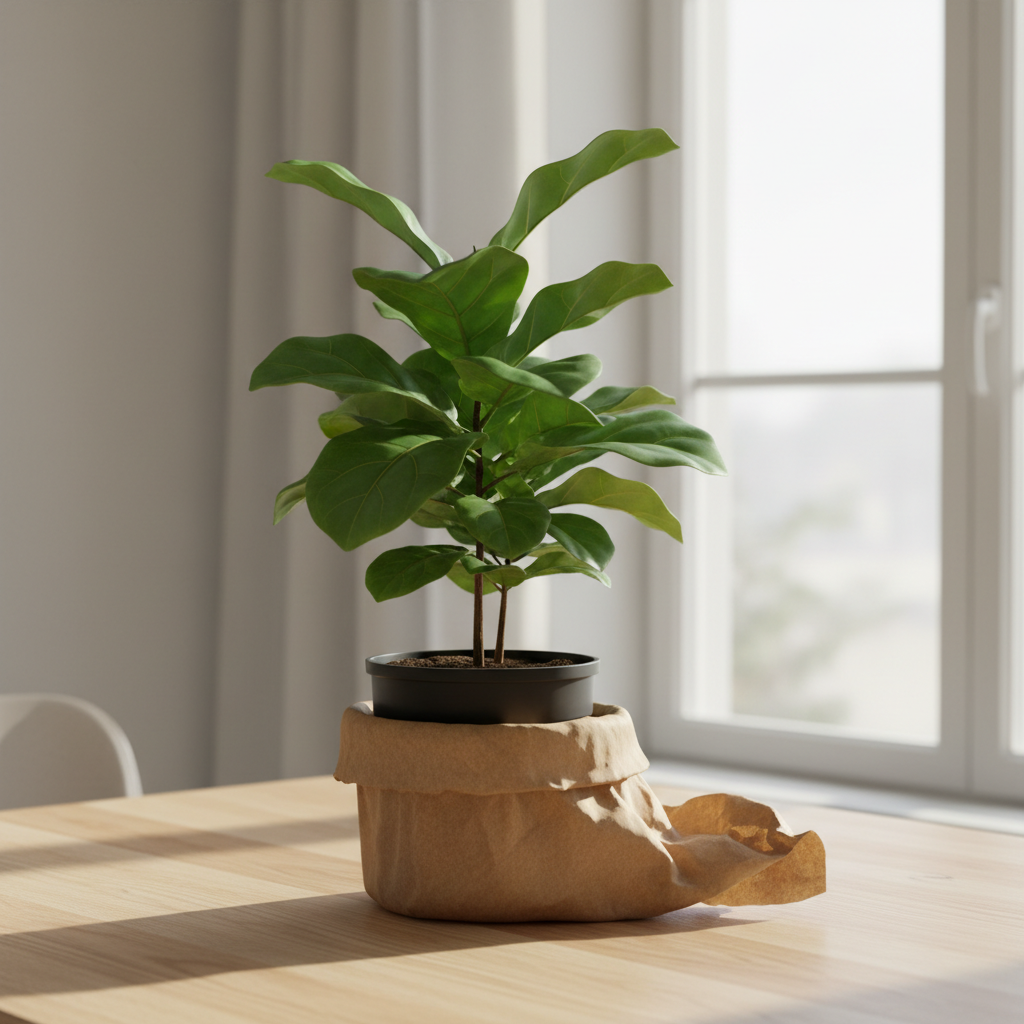
A new houseplant has already had a long week before it reaches your windowsill. It may have moved from greenhouse to shipping trolley, shop bench, car boot and finally your living room, all while light, humidity and watering changed around it. The first month at home is not the time to prove your devotion with repotting, fertiliser and three different sprays. It is the time to let the plant land.
Many plants decline after purchase not because they were doomed, but because the transition was handled too aggressively. A new plant needs inspection, quarantine, stable light, careful watering and patience.
Quick Reference: The First Month
| Time period | What to do | What to avoid |
|---|---|---|
| Day 1 | Inspect leaves, stems, soil and pot drainage. | Immediate repotting unless there is a serious problem. |
| Week 1 | Keep in bright appropriate light and away from other plants if possible. | Fertilising, pruning heavily or moving it repeatedly. |
| Weeks 2–3 | Monitor watering needs and pest signs. | Assuming shop watering rhythm still applies. |
| Week 4 | Decide whether repotting, pruning or relocation is needed. | Changing everything at once. |
Inspect Before It Joins the Collection
Before the plant takes its place among your existing plants, inspect it closely. Look under leaves, along stems, inside leaf sheaths, around new growth and on the soil surface. Common indoor pests include aphids, mealybugs and mites, and Oregon State University Extension recommends inspecting plants carefully before purchase and again when bringing outdoor plants back indoors.[1]
Sticky leaves may indicate honeydew from sap-feeding insects. Fine webbing and pale stippling suggest spider mites. White cottony patches suggest mealybugs. Brown shell-like bumps may be scale. Fungus gnats hovering around the soil often indicate persistently damp potting mix.
Pro Tip — Quarantine Is Kindness: Keep new plants separate for two weeks if space allows. This is not plant snobbery. It is pest prevention with a nicer name.
Do Not Repot Automatically
Repotting feels productive, but it is stressful. University of Missouri Extension notes that plants just brought home from greenhouse conditions seldom need immediate repotting and must adjust to the home environment first.[2] Unless the plant is in a pot without drainage, the roots are rotting, the mix is collapsing, or the plant is dangerously rootbound, wait.
The plant is already adjusting to new light, humidity and temperature. Repotting adds root disturbance exactly when the plant has the least information about its new life. Give it a few weeks, then decide with calmer eyes.
Match the Light Gradually
A plant grown under greenhouse shade cloth or shop lighting may scorch if moved straight into a hot south or west window. University of Minnesota Extension recommends easing houseplants into brighter spring positions over a week or two to prevent scorch, and the same principle applies to new purchases.[3]
Place the plant in the type of light it prefers, but avoid extremes at first. If the care guide says bright indirect light, choose bright indirect light, not direct summer sun “just to help it settle.” Plants do not settle faster by being lightly grilled.
Water According to the Pot, Not the Tag
The soil may already be wet when you bring the plant home. Check before watering. Lift the pot, feel the mix, and check drainage. Many new plants are watered heavily in shops so they look fresh on display. Watering again at home can turn a damp rootball into a saturated one.
The University of Maryland Extension advises watering when plants need it rather than on a fixed schedule, with soil testing as one useful method.[4] This is especially important for new plants because their previous conditions are unknown.
Hold the Fertiliser
A newly purchased plant has usually been fertilised during production, and if it is not actively growing in your home yet, it cannot use extra nutrients efficiently. University of Missouri Extension states that newly purchased plants seldom need additional fertiliser for a few weeks.[2] Feeding a stressed plant is like handing a sandwich to someone who needs sleep.
Wait until you see steady new growth in good light, then begin gently during the active growing season.
Warning — Do Not Fix Shock With More Care: Leaf drop after moving is often adjustment stress. More water, more fertiliser and a larger pot can make the problem worse. Stability is care.
When to Intervene Early
Patience does not mean ignoring real problems. Repot immediately if the pot has no drainage and the mix is wet, if roots smell sour or rotten, if the plant is wobbling because the root system has failed, or if pests are severe. Prune dead or mushy growth promptly. Isolate any plant with visible pests and treat before it joins the main collection.
For mild cosmetic damage, wait. A torn leaf, a bent stem or one yellowing lower leaf does not require a rescue operation.
Frequently Asked Questions
| Question | Answer |
|---|---|
| How long should I quarantine a new plant? | Two weeks is useful; a month is better for valuable collections. Inspect repeatedly during that time. |
| Should I remove nursery soil? | Not unless it is causing a problem. Many plants can remain in nursery mix until the next appropriate repotting window. |
| Why did leaves yellow after I brought it home? | Possible causes include light change, watering change, cold exposure, transport stress or normal older-leaf shedding. Check conditions before acting. |
| Can I place the new plant exactly where I want it? | Yes, if the location matches its needs and is not an extreme jump in light or temperature. |



