
- Quick Reference: Safer Plant-and-Pet Planning
- Start With Correct Plant Identification
- Know Your Pet, Not Just the Plant
- Placement Is a Safety Tool
- Choose Lower-Risk Plants Where Access Cannot Be Controlled
- Soil, Mulch and Fertiliser Safety
- What to Do If a Pet Chews a Plant
- Frequently Asked Questions
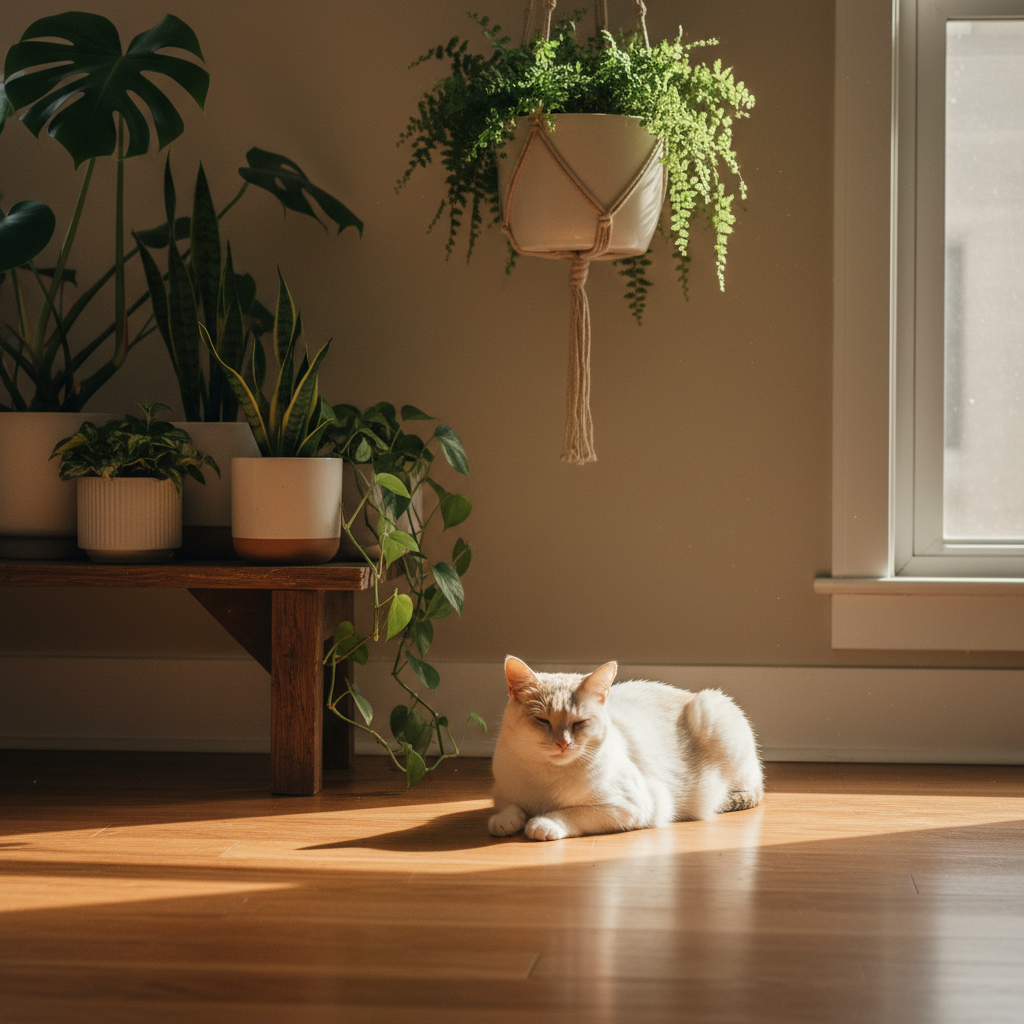
Houseplants and pets can live together peacefully, but the arrangement requires more planning than simply placing a monstera beside a cat and hoping everyone behaves like adults. Pets chew, dig, climb, swat and occasionally make horticultural decisions nobody requested.
The goal is not panic. It is risk management. Some houseplants can irritate mouths or stomachs if chewed, some are more dangerous, and some are usually considered safer choices. Plant safety depends on accurate plant identification, pet behaviour and placement.
Quick Reference: Safer Plant-and-Pet Planning
| Risk area | What to do | Why it helps |
|---|---|---|
| Toxicity | Confirm plant identity and check reputable toxicity resources. | Common names can be misleading. |
| Access | Place risky plants out of reach or avoid them. | Prevention is better than emergency guessing. |
| Chewing behaviour | Offer pet-safe enrichment and monitor tempting leaves. | Bored pets become botanists. |
| Soil digging | Use barriers, heavier top-dressing or inaccessible placement. | Prevents mess and root disturbance. |
| Fallen leaves | Remove promptly. | Dead leaves can still be chewed. |
Start With Correct Plant Identification
Common names can cause confusion. “Lily” may refer to very different plants, and toxicity risk varies dramatically. Before bringing a plant into a pet household, identify it by botanical name where possible. Plantlex care guides can help readers confirm identity, but for poisoning risk, they should also consult veterinary or poison-control resources specific to pets.
Oregon State University Extension notes that several familiar houseplants, including pothos, peace lily, dracaena, dumb cane, schefflera and rubber tree, can be toxic if chewed or ingested.[5] These plants are common, attractive and widely grown, but they are not ideal for every pet-accessible location.
Know Your Pet, Not Just the Plant
A plant that is technically risky may be manageable in a home with a dog that ignores furniture and plants completely. The same plant may be a terrible idea in a home with a kitten that treats shelves as a vertical buffet.
Observe your pet honestly. Does it chew grass? Dig in soil? Knock objects down? Climb curtains? Drink from saucers? If the answer is yes, design the plant collection around that reality. Denial is not a safety strategy, though pets find it very convenient.
Placement Is a Safety Tool
High shelves, hanging planters, plant cabinets and closed rooms can reduce access, but only if the pet cannot reach them. Cats in particular have a flexible definition of “out of reach.” Heavy pots are safer than lightweight ones on narrow ledges. Avoid trailing vines where leaves dangle into pet territory.
Do not place toxic plants beside pet beds, feeding areas or favourite windowsills. A plant in a pet’s daily route is more likely to be investigated than a plant in a low-traffic area.
Warning — Water in Saucers Is Not Pet Water: Do not let pets drink from plant saucers, especially if fertiliser, systemic treatments or decaying organic matter may be present.
Choose Lower-Risk Plants Where Access Cannot Be Controlled
If pets have free access to the plant area, choose plants generally regarded as pet-friendlier. Spider plants, many true ferns, peperomias, calatheas, moth orchids and some palms are often chosen for pet-conscious homes, though any plant can cause mild stomach upset if eaten in quantity. Always confirm the exact species.
Lower-risk does not mean maintenance-free. Spider plants, for example, can be irresistible to cats because of their arching leaves and dangling plantlets. A safer plant can still become a toy.
Soil, Mulch and Fertiliser Safety
Pet safety is not only about leaves. Some animals dig in potting mix or chew bark chips, moss poles and fertiliser sticks. Avoid leaving fertiliser pellets, granules or spikes where pets can reach them. Store potting products securely.
If a pet digs, try heavier pots, plant stands, cabinet doors or a physical barrier over the soil. Avoid sharp decorative stones or materials that could be swallowed.
What to Do If a Pet Chews a Plant
If you suspect a pet has eaten a potentially toxic plant, remove access immediately, identify the plant, estimate how much was eaten and contact a veterinarian or animal poison-control service. Do not wait for severe symptoms if the plant is known to be dangerous. Do not induce vomiting unless a veterinary professional instructs you to do so.
Keep plant labels, receipts or photos. A clear photo of the whole plant, leaves, stems and flowers can help professionals identify it quickly.
Frequently Asked Questions
| Question | Answer |
|---|---|
| Are all toxic houseplants deadly? | No. Toxicity ranges from mild irritation to serious poisoning, depending on plant, pet and amount eaten. |
| Can I keep toxic plants in a pet home? | Sometimes, if access is truly controlled. If not, choose safer plants. |
| Are hanging plants safe from cats? | Only if the cat cannot reach them. Many trailing plants become toys if they hang low. |
| What is the safest houseplant for pets? | There is no universal safest plant. Confirm species and consider the pet’s behaviour. |



