
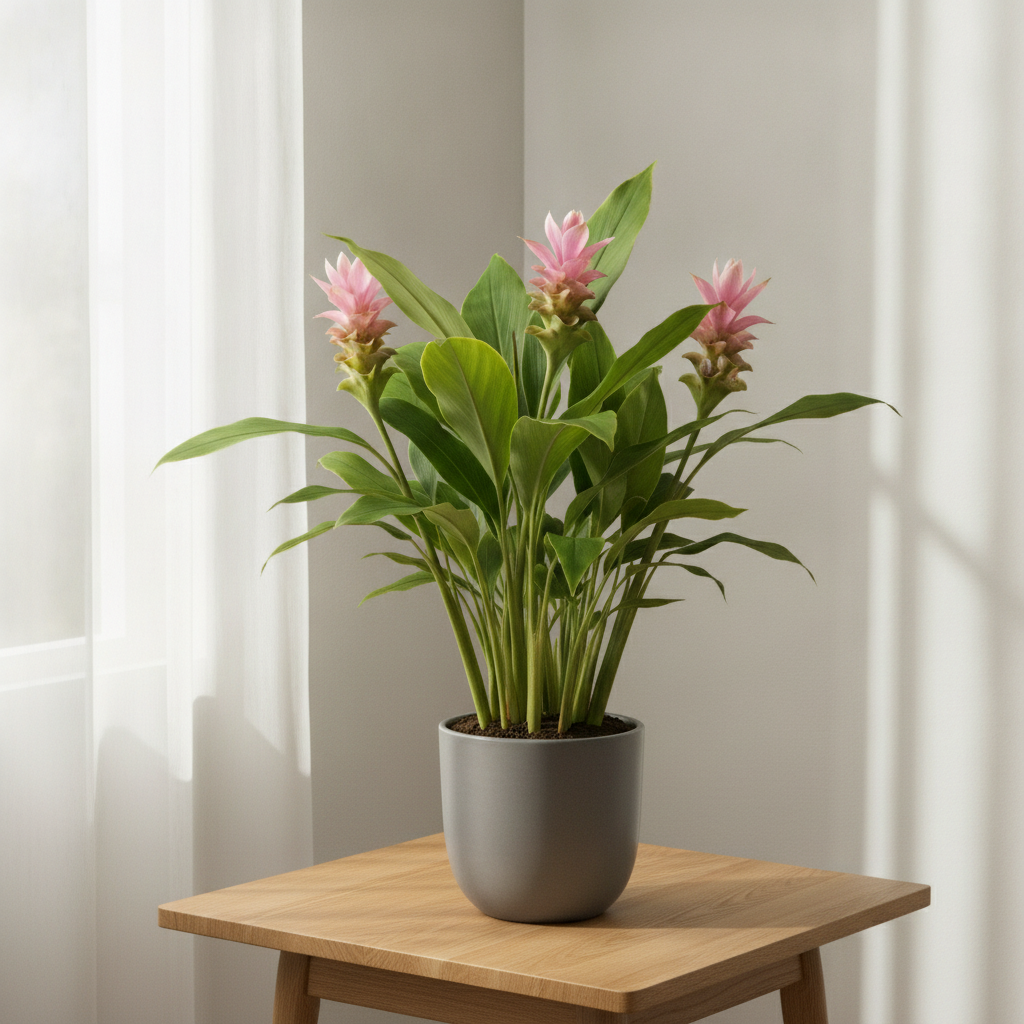
Few houseplants keep a secret quite as well as the hidden ginger. For much of the year it is a modest clump of upright, lance-shaped leaves, and then in the warmth of summer it sends up tall stems crowned with what look uncannily like pink tulips carved from wax. Those showy structures are not petals at all but colourful bracts, and the true flowers sit small and shy among the green bracts lower down, which is exactly how the plant earned its common name. Known botanically as Curcuma alismatifolia and sold just as often under the name Siam tulip, this is a plant that rewards a little seasonal understanding with one of the most striking displays available to an indoor grower.
This guide walks through everything you need to keep a hidden ginger not merely alive but genuinely thriving, from the light it prefers to the dormancy it insists upon each winter. The difference between a plant that survives and one that flowers reliably comes down to reading its rhythms, and once you understand that this ginger is a creature of two very different seasons, the rest becomes straightforward.
In This Guide
- Quick Reference
- Why the Hidden Ginger Makes a Rewarding Houseplant
- Light
- Watering
- Soil
- Fertilising
- Propagation
- Pests and Problems
- Varieties
- Frequently Asked Questions
Quick Reference
| Botanical name | Curcuma alismatifolia |
| Common names | Hidden ginger, Siam tulip, summer tulip |
| Family | Zingiberaceae (the ginger family) |
| Origin | Tropical Southeast Asia, chiefly Thailand, Cambodia and Laos |
| Light | Bright indirect light with some gentle direct sun |
| Watering | Consistently moist in growth, almost dry during winter dormancy |
| Humidity | Moderate to high, ideally above 50 per cent |
| Temperature | 18 to 30 degrees C (64 to 86 degrees F) in growth; keep above 10 degrees C (50 degrees F) when resting |
| Soil | Rich, free-draining mix with plenty of organic matter |
| Feeding | Every two to four weeks through spring and summer only |
| Mature size | 40 to 70 cm (16 to 28 in) tall, forming a modest clump |
| Propagation | Division of the rhizomes during dormancy or early spring |
| Toxicity | Generally regarded as non-toxic to cats, dogs and people |
| Growth pattern | Deciduous perennial that dies back and rests each winter |
Why the Hidden Ginger Makes a Rewarding Houseplant
The appeal of Curcuma alismatifolia begins with its flowers, but it does not end there. The inflorescence is an architectural thing, a cone of overlapping bracts held on a stem that rises well clear of the foliage. The upper bracts, the ones that draw every eye, are usually a clear rose pink, though cultivated forms range from deep ruby to pure white. Beneath them sit the green bracts, and tucked among these are the genuine flowers, small yellow and violet blooms that emerge a few at a time. Because these true flowers hide below the flamboyant crown, the plant reads as a tropical tulip, which is why the Thai flower trade has exported it for decades under that friendlier name.

What sets this plant apart from most flowering houseplants is its honesty about seasons. A hidden ginger does not pretend to be evergreen. It grows from a fleshy rhizome, sometimes described as a tuber, and each spring it pushes up fresh leaves and, once the clump is established, flowering stems. Through the long tropical summer it puts on a generous show, and then as the days shorten it begins to yellow, wind down, and retreat entirely to its underground storage organ for the winter. To a grower expecting a plant that looks the same in January as in July, this can be alarming. To one who understands the cycle, the dormancy is simply part of the deal, and the reappearance of new shoots in spring is one of the small annual pleasures of keeping it.
The foliage alone earns its place even before the flowers arrive. The leaves are broad and pleated, a fresh mid-green, and held upright on slender stems in a way that suggests a tropical understorey without demanding the space of a banana or a canna. As a member of the ginger family, Curcuma alismatifolia is a close relative of turmeric, and while it is grown for ornament rather than for its rhizome, it shares that clan’s love of warmth, moisture and rich soil. Give it those things during the growing season and it asks for very little else.
Pro Tip – Treat it like a bulb: If you have grown dahlias or cannas that are lifted and stored over winter, you already understand the hidden ginger. Thinking of it as a tender bulb rather than a permanent leafy houseplant makes its whole cycle click into place.
Light
Light is the single factor that most reliably decides whether a hidden ginger merely produces leaves or goes on to flower. In its native range the plant grows in open, seasonally wet grassland and at the margins of woodland, where it receives strong, bright light for much of the day but is spared the fiercest overhead sun. Indoors, the aim is to recreate that generous but filtered brightness. An east-facing window that catches gentle morning sun is close to ideal, as is a position a little back from a south or west window where the light is strong but the harshest rays are softened by a sheer curtain.
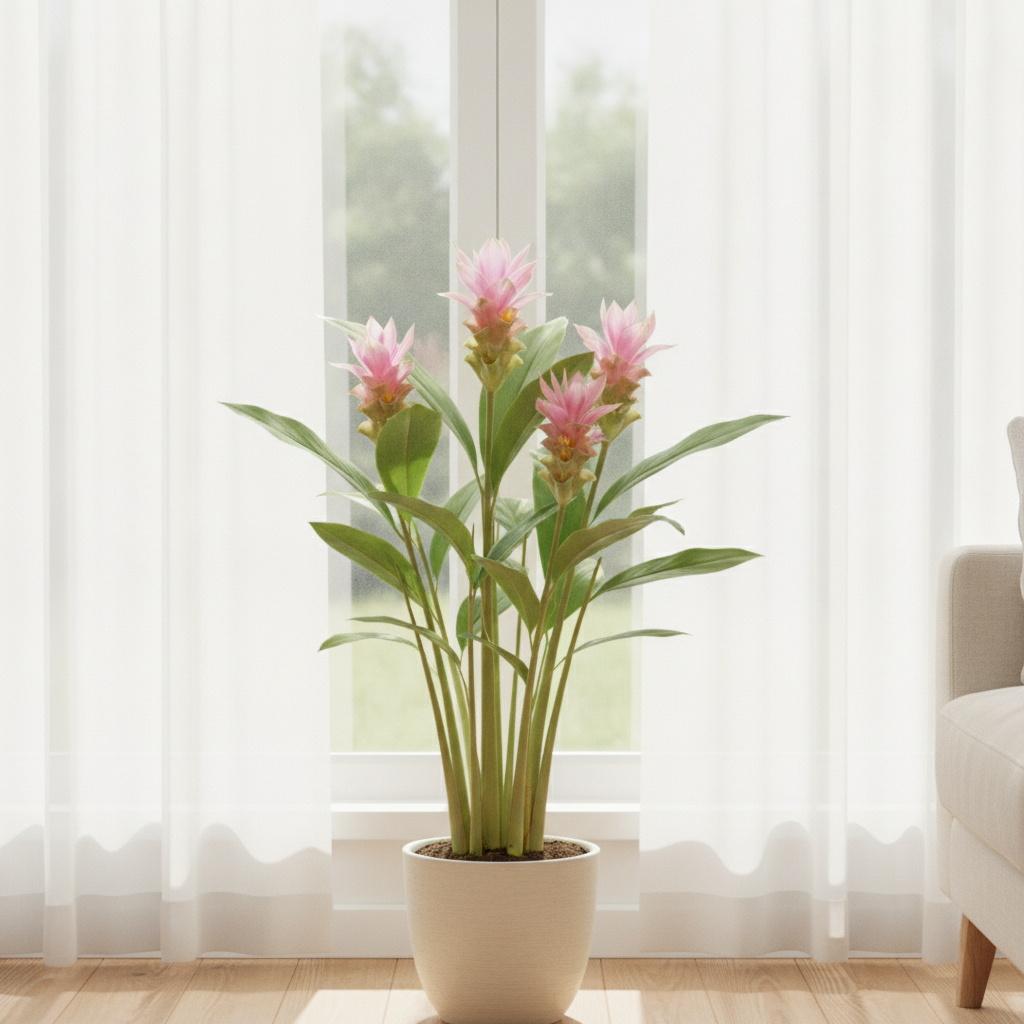
A plant kept too dark tells you plainly. The stems stretch and lean towards the glass, the spaces between leaves lengthen, and flowering becomes hesitant or fails altogether. This is the difference between survival and thriving in its clearest form, because a hidden ginger will happily keep making pale, elongated leaves in low light while quietly declining to do the one thing you bought it for. If your plant is all foliage and no flower, insufficient light is the first suspect, ahead of feeding or watering.
Some direct sun is not only tolerated but welcomed, provided it is the mild sun of early morning or late afternoon rather than the blaze of midday through unshaded glass. A couple of hours of soft direct light a day deepens the colour of both leaves and bracts. During the growing season you can move the plant outdoors to a bright, sheltered spot once nights are reliably warm, and many growers find it flowers most freely with a summer holiday on a patio or balcony. Introduce it to brighter conditions gradually over a week or so to avoid scorching the leaves, which show sun stress as bleached or crisped patches. When the plant enters dormancy and drops its foliage, light becomes irrelevant, and the dormant rhizome can rest in a cupboard or any out-of-the-way corner until spring.
Watering
Watering a hidden ginger correctly means watering it differently at different times of year, and this is where many otherwise attentive growers come unstuck. During active growth, from the moment new shoots appear in spring until the leaves begin to yellow in autumn, the plant is thirsty. It comes from a monsoon climate, where the growing season coincides with heavy seasonal rain, and it expects its roots to stay consistently moist throughout this period. Let the top centimetre or two of the mix dry between waterings, then water thoroughly until it runs from the drainage holes. In the heat of summer, a vigorous specimen in a bright spot may need watering every couple of days.
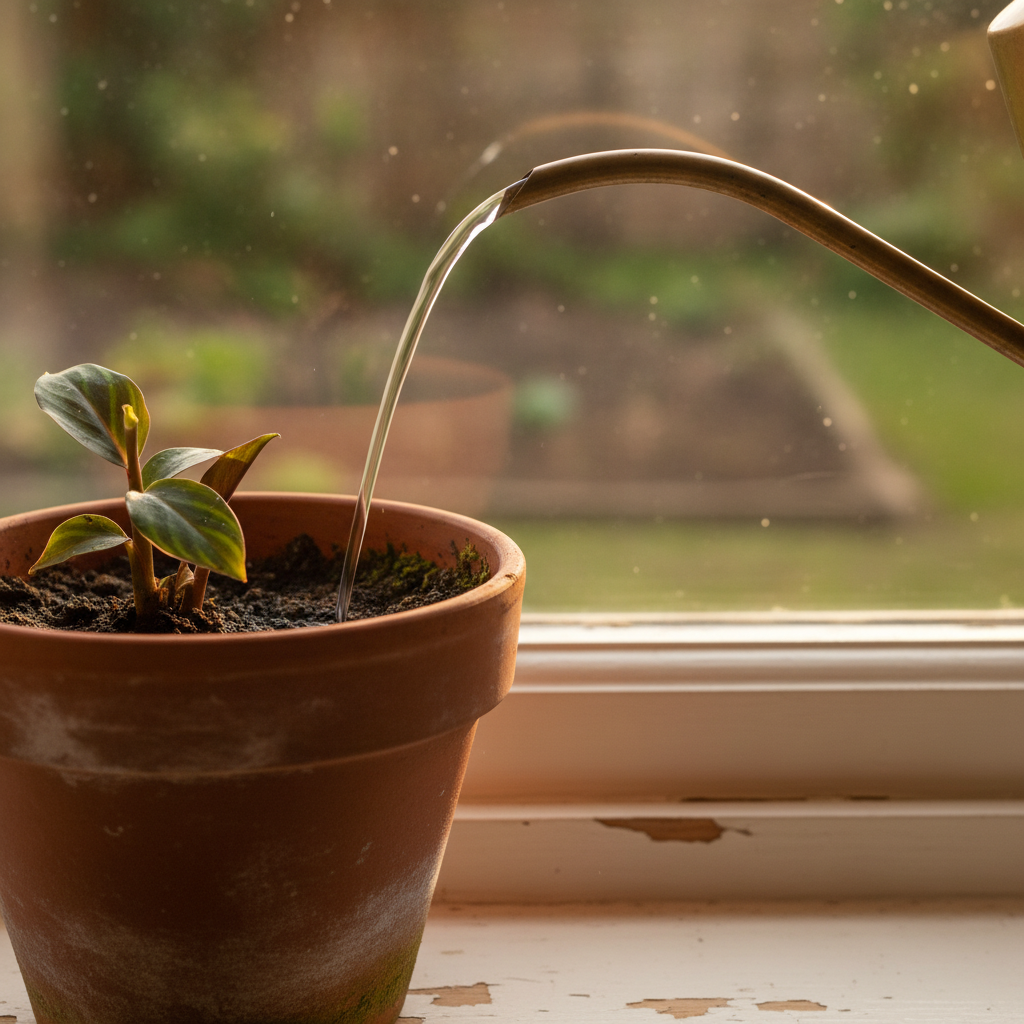
The essential balance is between moisture and drainage. The rhizome stores water and is vulnerable to rot if it sits in a saturated, airless mix, so consistent moisture must never tip into standing water. A pot with generous drainage holes and a mix that drains freely lets you water heavily without drowning the plant. Always empty the saucer after watering, and never allow the pot to stand in a pool. Warm rainwater or filtered water is appreciated if your tap water is very hard, though the plant is not especially fussy on this point.
Then, as autumn arrives, everything changes. When the leaves start to yellow and flop, resist the urge to rescue the plant with more water. This is not distress, it is the natural onset of dormancy, and the correct response is to water less and less as the foliage dies back. Once the leaves have withered completely, stop watering almost entirely. The rhizome now wants to rest in barely moist, cool conditions, and wet soil at this stage is the most common way to lose an otherwise healthy plant to rot over winter. Keep it just short of bone dry through the resting months, then resume regular watering only when new growth pushes up in spring.
Warning – Winter wet is the real killer: More hidden gingers are lost to overwatering during dormancy than to any pest or disease. If the leaves have died back, the plant does not need watering. Trust the cycle and keep the rhizome nearly dry until spring.
Soil
The ideal growing medium for a hidden ginger resolves the same tension that governs its watering, richness on the one hand and drainage on the other. In growth the plant is hungry and wants a fertile, moisture-retentive substrate, yet its rhizome will not forgive a mix that stays sodden. The answer is a soil that holds moisture and nutrients while still letting excess water pass through quickly, which you achieve by combining a good organic base with materials that open up the structure.
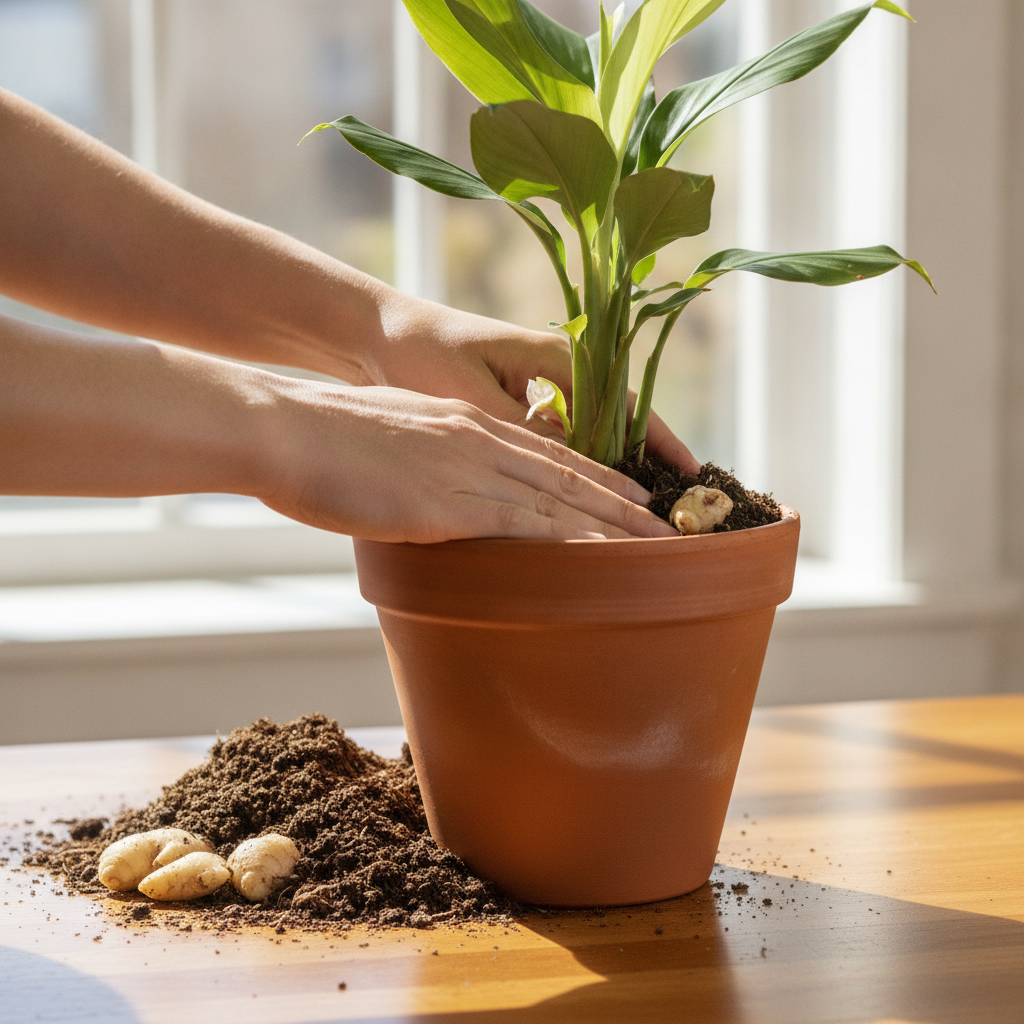
A reliable blend starts with a quality peat-free potting compost as the fertile core, lightened with roughly a third by volume of perlite or coarse horticultural grit to guarantee drainage, and enriched with a handful of well-rotted compost or worm castings for slow, steady nutrition. A little coir or leaf mould improves moisture retention without causing compaction. The finished mix should feel spongy and open rather than dense, and water poured onto it should disappear within a few seconds rather than pooling on the surface. A slightly acidic to neutral pH suits the plant well, which most general composts naturally provide.
Repotting is best done in early spring, just as the rhizome breaks dormancy but before it has put on much growth. This timing lets you refresh the tired soil, inspect the rhizome for any soft or rotten patches, and divide the clump if you wish, all with minimal disturbance to active roots. Choose a pot only a size larger than the rhizome mass, since these plants flower more freely when their roots are a little snug and an oversized pot holds excess wet soil that invites rot. Plant the rhizome so that it sits a few centimetres below the surface, growing points uppermost, and water it in modestly to settle the mix. In a well-chosen container with fresh soil, a hidden ginger needs repotting only every couple of years.
Fertilising
Because a hidden ginger builds an entire season of leaves and flowers in a matter of months and then lives off its stored reserves through winter, feeding during the growing season is genuinely worthwhile rather than optional. A well-fed plant produces sturdier stems, more flowering spikes and a fatter rhizome that carries more energy into the following year. The window for feeding is the active growth period only, roughly from the emergence of spring shoots until the foliage begins its autumn decline.
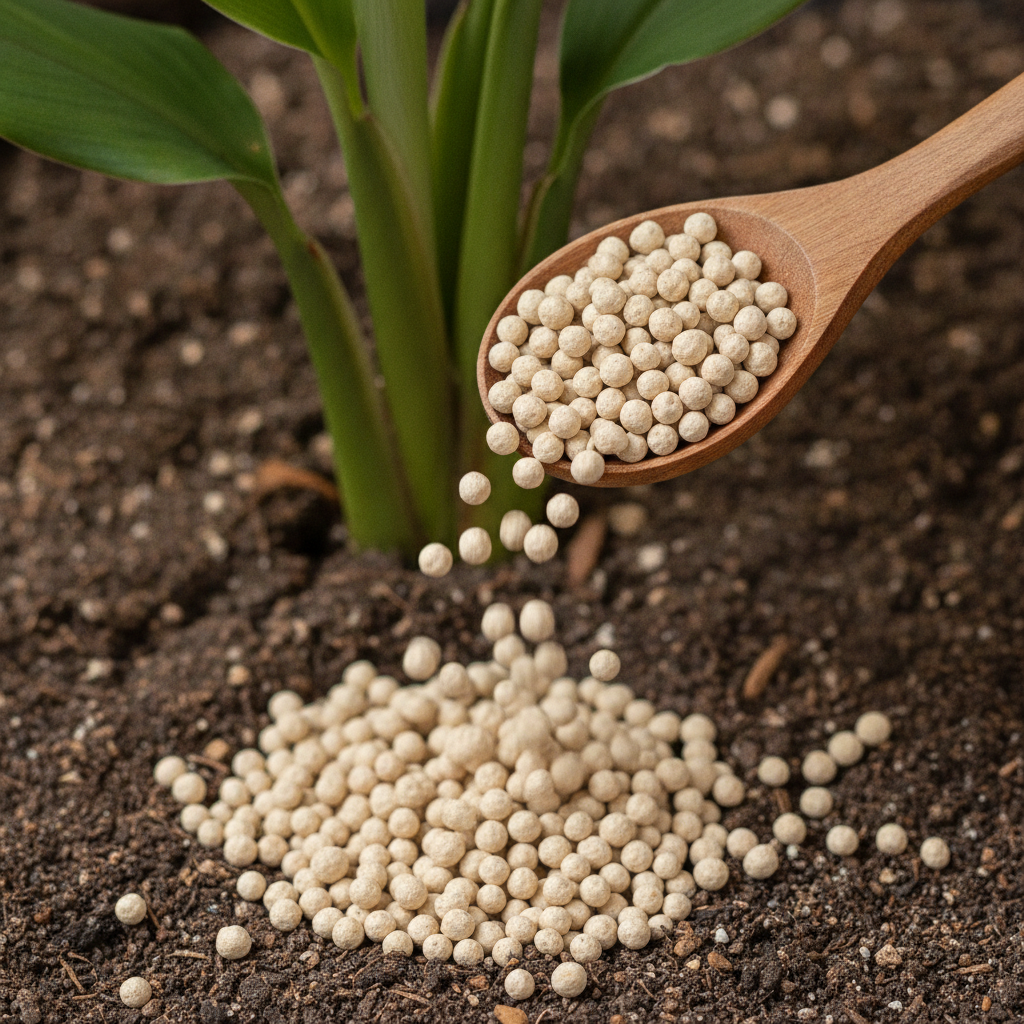
A balanced liquid fertiliser diluted to half strength and applied every two weeks suits the plant well during its most vigorous phase. As flowering approaches, some growers switch to a feed slightly higher in potassium, the kind sold for tomatoes or flowering plants, to support bract colour and bloom production. If you prefer a low-effort approach, a slow-release granular feed worked into the top of the soil in spring will drip-feed nutrients through the season, though it gives you less control than liquid feeding. Either way, the guiding principle is little and often rather than occasional heavy doses, which can scorch the roots and build up salts in the mix.
The most important feeding rule, however, is knowing when to stop. As the leaves begin to yellow in late summer or autumn, cut feeding out completely. The plant is winding down towards dormancy and can no longer use the nutrients, and fertiliser applied to a resting rhizome simply accumulates as unused salts that can harm the roots. Resume only when fresh green growth signals the start of a new season. Watching the plant rather than the calendar is the surest guide, since the exact timing shifts a little from year to year and home to home.
Propagation
Propagating a hidden ginger is refreshingly simple, because the plant does almost all the work itself by multiplying its rhizomes underground. Over a season or two a single rhizome develops into a branching cluster, each section bearing one or more growing points and, often, small storage tubers dangling on short roots. To make new plants you simply divide this cluster, and unlike the fiddly business of rooting cuttings, division gives you fully formed, ready-to-grow plants from the outset. This ginger does not root from leaf or stem cuttings, so division is the method to rely on.
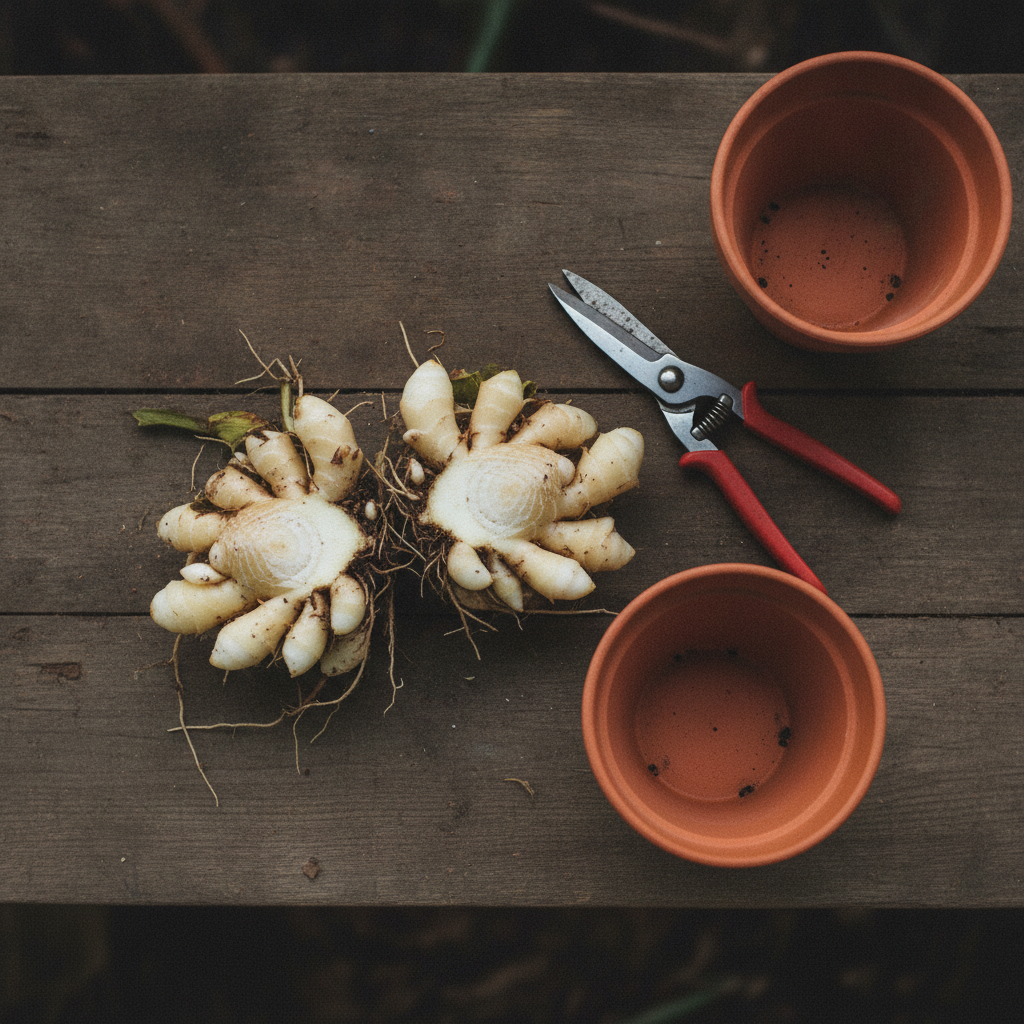
The right moment is during dormancy or, better still, at the very start of spring as the rhizome wakes. Tip the plant out of its pot and gently shake or wash away the old soil to reveal the structure of the cluster. You will see the fingerlike rhizomes, the pale root tubers, and the buds or shoots that mark where new growth will emerge. Work through the following steps to divide the clump cleanly.
- Clear the soil from the rhizome cluster so you can see the individual sections and their growing points clearly.
- Identify natural divisions where the rhizomes branch, aiming for pieces that each carry at least one healthy bud and a few attached root tubers.
- Separate the sections by hand where they come apart easily, or cut through firmer joins with a clean, sharp knife sterilised with alcohol between cuts.
- Dust any cut surfaces with a little cinnamon or leave them to dry for an hour or two, which reduces the risk of rot at the wound.
- Pot each division into its own container of fresh, free-draining mix, setting the rhizome a few centimetres deep with the growing point facing up.
- Water lightly once, then keep the mix barely moist and warm until active growth appears, at which point normal watering can begin.
Newly divided plants establish quickly once they start into growth and will often flower in their first full season if the division carried enough stored energy. Keep the smallest pieces in slightly larger company or grow them on for a year before expecting blooms, since a very small rhizome spends its first season simply building up reserves. Warmth is the great accelerator here, so a propagation mat or a consistently warm windowsill speeds the whole process along.
Pests and Problems
A healthy, well-grown hidden ginger is not especially troubled by pests, but its love of warmth and its lush summer foliage do attract a few familiar indoor culprits, and its seasonal cycle throws up a handful of problems that are more about care than about any attacker. Knowing which is which saves a good deal of needless worry, particularly in autumn when perfectly normal dormancy can look alarmingly like a plant in decline.
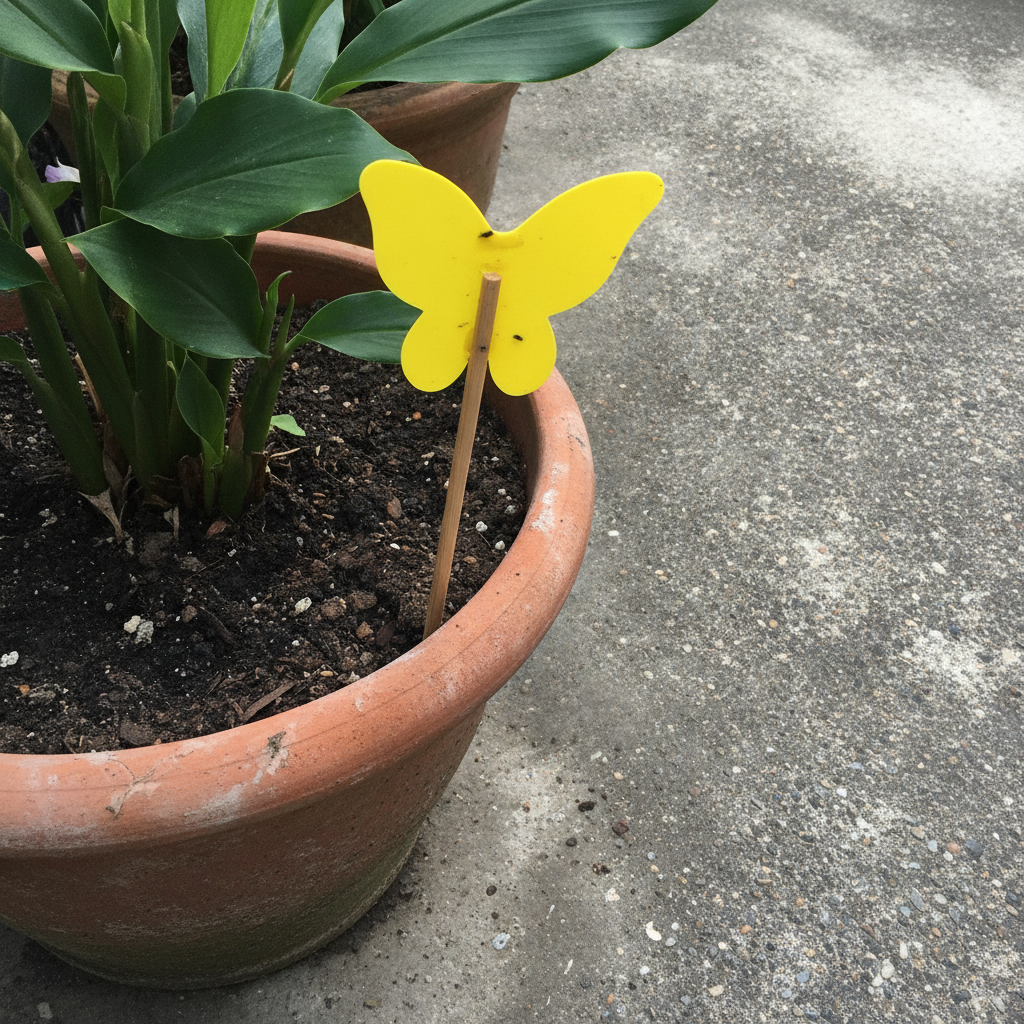
Spider mites are the pest most likely to appear, especially when the air is dry and warm, which is exactly the environment a centrally heated room provides. They show up first as fine pale stippling on the leaves and, in a bad infestation, as delicate webbing in the leaf joints. Because they multiply fast in dry conditions, raising humidity is both a preventive measure and part of the cure, along with rinsing the foliage and treating with a horticultural soap or neem oil. Aphids sometimes gather on the tender flowering stems and bracts, distorting new growth and leaving sticky honeydew, and mealybugs may lodge in the leaf axils as small white cottony clusters. All three respond to the same patient routine of physical removal, repeated treatment and improved air movement.
The more common problems, though, are cultural. Yellowing leaves in autumn are almost always the natural approach of dormancy rather than a sign of trouble, and the correct response is to reduce watering, not increase it. Yellowing in the middle of the growing season is a different matter and usually points to overwatering or poor drainage, with root or rhizome rot the danger to check for. A rhizome that has gone soft, brown and foul-smelling has rotted, typically from winter wet, and any affected tissue must be cut away back to firm, healthy flesh before the sound portion can be saved. Brown, crisped leaf edges suggest the air is too dry or the plant has been allowed to dry out too far in growth, while a plant that produces abundant leaves but no flowers is almost always short of light. Read against its seasonal rhythm, the hidden ginger is a remarkably honest plant, and most of its troubles announce their cause plainly to a grower who knows what to look for.
Varieties
The wild Curcuma alismatifolia is a clear rose pink, and that classic form remains the most widely grown, but the plant’s popularity in the cut-flower and pot trades has produced a growing palette of named selections. These differ mainly in the colour and form of the bracts, ranging from deep ruby reds through soft pinks to clean whites, with some bicoloured forms that shade from green at the base to a bright tip. All share the same care requirements, so choosing between them is purely a matter of taste.
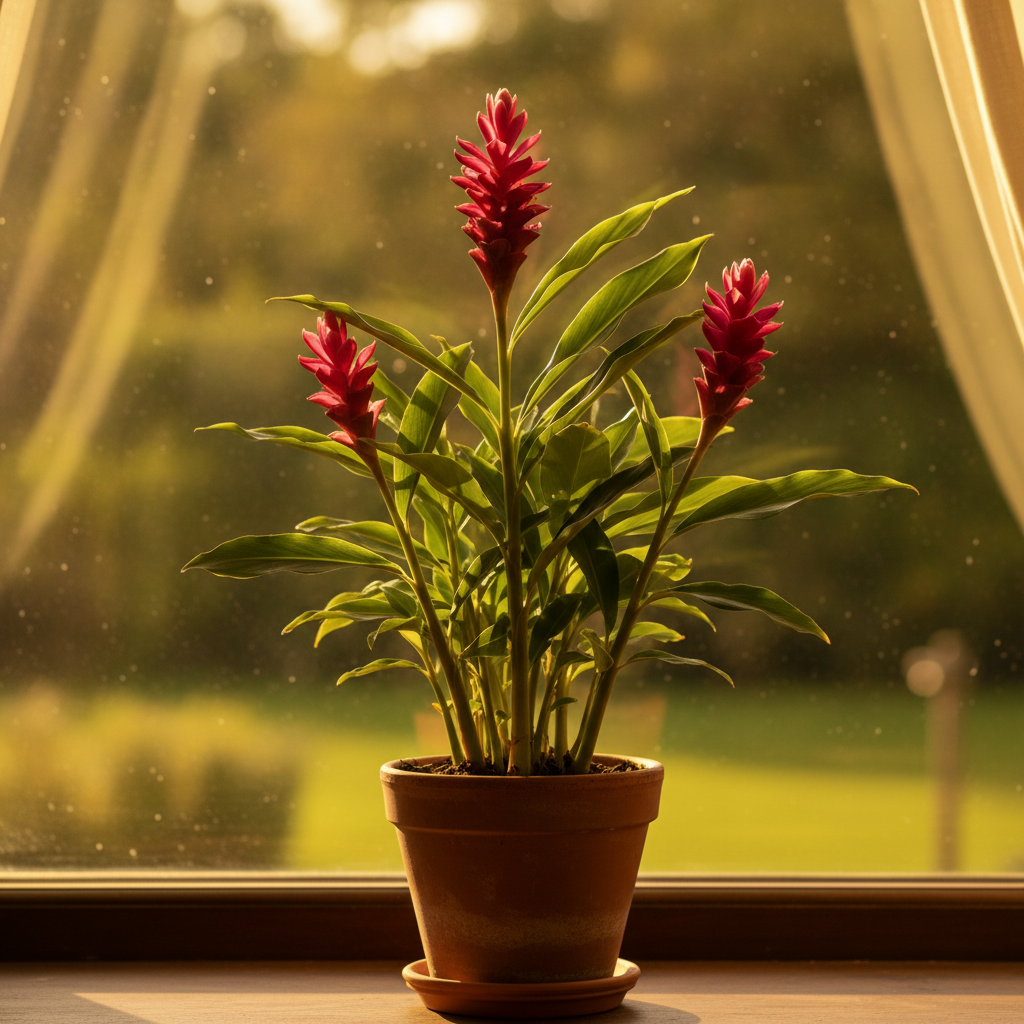
Siam Ruby
A richly coloured selection whose bracts glow a deep rose to ruby pink, holding their intensity well in strong light. The saturated colour reads dramatically against the fresh green foliage, and the sturdy stems make it a favourite for cutting as well as for pot display.
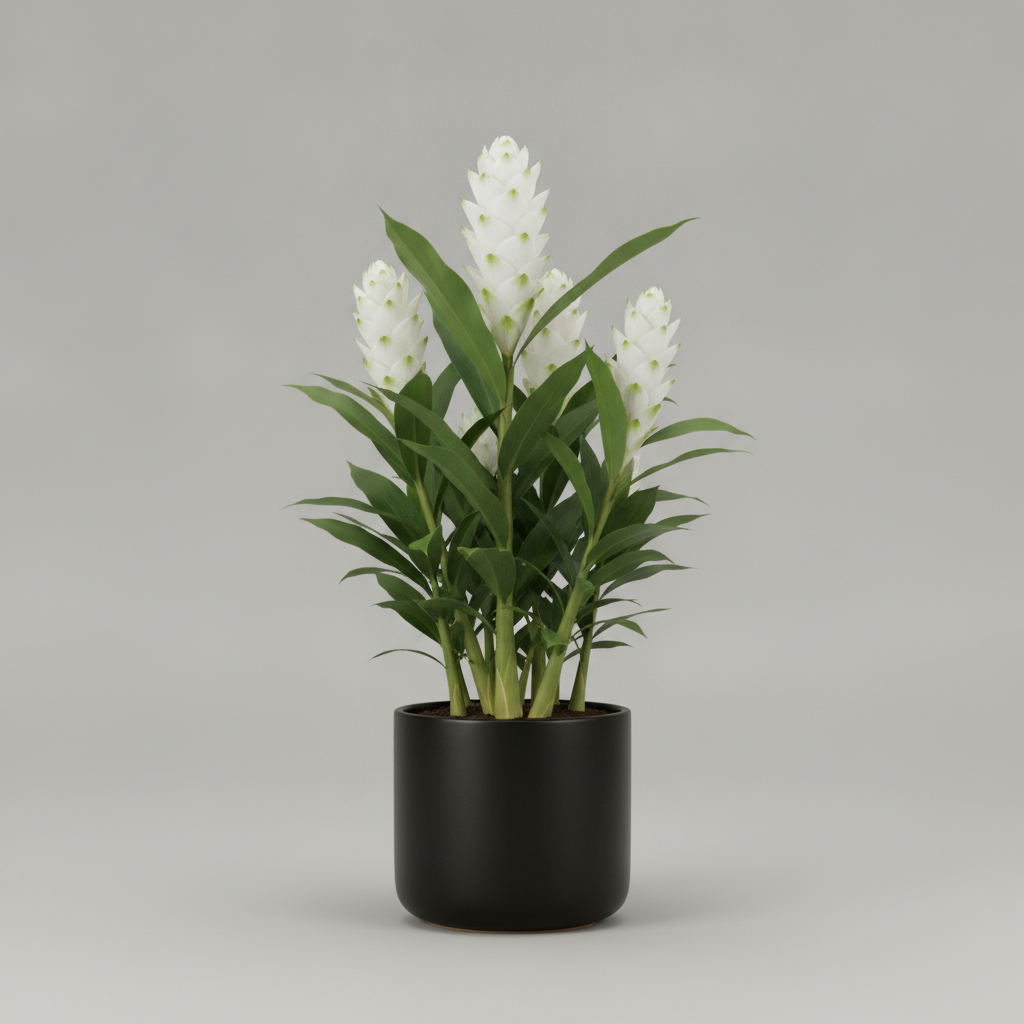
White Angel
An elegant white form, sometimes sold as Snow White, whose bracts are a clean cream to pure white finished with a gentle green tip. It brings a cooler, more restrained note than the pinks and looks particularly striking in a dark pot or against foliage plants.
Beyond these two, you may encounter selections such as the pale, soft-toned Chiang Mai forms and various compact strains bred for pot culture, which stay a little shorter and flower closer to the foliage. Whichever you grow, the plant delivers the same tulip-like summer performance, and building a small collection of two or three colours can extend the display and add variety to a bright windowsill or patio grouping.
Frequently Asked Questions
Why has my hidden ginger lost all its leaves?
If this happens in autumn or early winter, it is completely normal. Curcuma alismatifolia is a deciduous plant that dies back to its rhizome and rests through the cold months. Reduce watering as the leaves yellow, keep the rhizome cool and nearly dry, and wait for fresh shoots to appear in spring. Leaf loss during the growing season, by contrast, usually signals overwatering or cold damage.
Is the hidden ginger safe around pets?
Members of the genus Curcuma, which includes turmeric, are generally regarded as non-toxic to cats and dogs and are not listed as poisonous. That said, no plant is truly meant to be eaten by pets, and a curious animal that chews a good deal of any houseplant may suffer mild stomach upset, so it is still sensible to discourage nibbling.
Why won’t my plant flower?
The most frequent cause is too little light, so move the plant somewhere brighter with a little gentle direct sun. A rhizome that is too young or too small will also spend a season building strength before it blooms, and a plant that skipped its winter rest or was underfed during growth may put its energy into leaves rather than flowers. Give it a proper dormancy, feed it well through spring and summer, and provide strong light, and flowering usually follows.
How do I store the rhizome over winter?
You can leave the rhizome in its pot and simply keep it cool, dark and nearly dry, watering only enough to stop it shrivelling completely. Alternatively, lift the rhizome once the foliage has died back, brush off the soil, and store it in barely damp coir or sand somewhere frost-free at around 10 to 15 degrees C (50 to 59 degrees F). Either way, the key is to keep it dry enough to prevent rot but not so dry that it desiccates, then start it back into growth in spring.
How big does a hidden ginger get?
As a pot plant it typically reaches 40 to 70 cm (16 to 28 in) tall, forming a modest clump that widens over the years as the rhizome multiplies. Compact strains bred for containers stay towards the lower end of that range, while a well-fed plant in generous conditions can push towards the taller figure, with the flowering stems held clear above the foliage.
Can I grow it outdoors?
In a warm, frost-free climate it grows happily outdoors year-round in a bright, sheltered spot. In cooler regions it is best treated as a summer container plant, moved outside once nights are reliably warm and brought back under cover, or lifted and stored, before the first frosts. It will not survive freezing, so the rhizome must always be protected from cold.
The hidden ginger asks only that you meet it on its own seasonal terms. Give it warmth, bright light, steady moisture and food through the growing months, then let it sleep dry and undisturbed through winter, and it will reward you each summer with those unmistakable pink spires rising above the leaves. It is a plant that teaches patience and rhythm, and in doing so offers one of the most quietly satisfying displays a windowsill can hold.






