
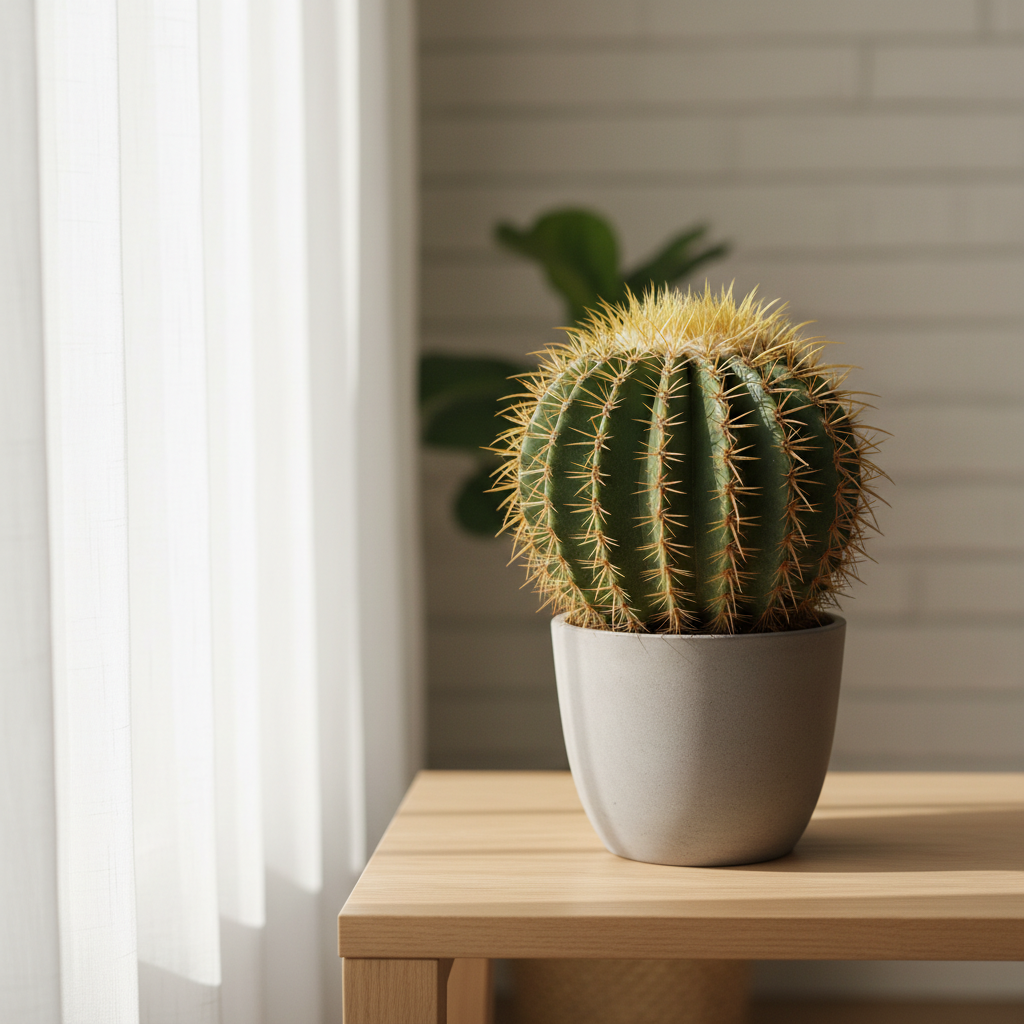
Few houseplants carry as much sculptural presence in so compact a form as the golden barrel cactus (Echinocactus grusonii). A perfectly rounded, ribbed green globe armoured in glowing golden spines, it reads less like a plant and more like an object placed deliberately on a sunlit sill. The good news for anyone nervous about cacti is that this species is among the most forgiving you can grow: it asks for light, sharp drainage and the patience to let it grow slowly. Get those three things right and it will outlive most of the other plants in your home.
Quick Reference
Use the table below for the essentials at a glance. The sections that follow expand on each point with the reasoning behind it, because understanding why a desert cactus behaves the way it does is what separates a barrel that merely survives from one that genuinely thrives.
| Common names | Golden barrel cactus, mother-in-law’s cushion, golden ball |
| Botanical name | Echinocactus grusonii |
| Light | Bright direct light, at least 4 to 6 hours of sun daily |
| Water | Soak only when soil is fully dry; roughly every 2 to 3 weeks in summer, monthly or less in winter |
| Soil | Free-draining mineral cactus mix; gritty and lean |
| Temperature | 21 to 32 degrees C (70 to 90 degrees F); tolerates brief lows near 5 degrees C (41 degrees F) if dry |
| Humidity | Low; average household air is fine |
| Feeding | Dilute low-nitrogen cactus feed once or twice during spring and summer |
| Growth rate | Very slow; a few centimetres a year |
| Mature size | Up to 90 cm (35 in) wide over many decades indoors |
| Toxicity | Non-toxic to pets, but the spines cause injury |
- Why grow a golden barrel cactus
- Light
- Watering
- Soil and potting
- Fertilising
- Propagation
- Pests and problems
- Varieties
- Frequently asked questions
Why Grow a Golden Barrel Cactus as a Houseplant
The golden barrel hails from a startlingly small native range in the arid highlands of central Mexico, principally the volcanic slopes and canyons around the state of Querétaro. There it grows in full, unrelenting sun on rocky, mineral-rich ground that drains in minutes. Tragically, the species is endangered in the wild, its habitat reduced by dam construction and over-collection, even as it has become one of the most widely cultivated cacti on the planet. The plant on your windowsill is, in a quiet way, an ambassador for a species far rarer in nature than its ubiquity in garden centres suggests.
What makes it such a satisfying houseplant is the combination of architectural form and genuine toughness. The body is a symmetrical sphere flattening slightly with age, divided into 20 to 35 sharp vertical ribs that deepen as the plant matures. Along each rib sit areoles bearing stiff, translucent golden spines that catch light beautifully, and from the woolly crown at the top emerge the newest spines and, in old age, a ring of small yellow flowers. A barrel asks almost nothing of you between waterings, never drops leaves to clean up, and tolerates the dry air of centrally heated rooms that ruins more demanding tropicals. The single discipline it demands is restraint: the most common way to kill one is kindness in the form of too much water.
Pro Tip — Slow by Design: Do not judge a golden barrel by the growth rate of your other plants. A few centimetres a year is healthy and normal. A barrel that suddenly puts on rapid, pale growth is usually being overwatered or overfed, and that soft tissue is far more vulnerable to rot than slow, hard, sun-grown growth.
Light
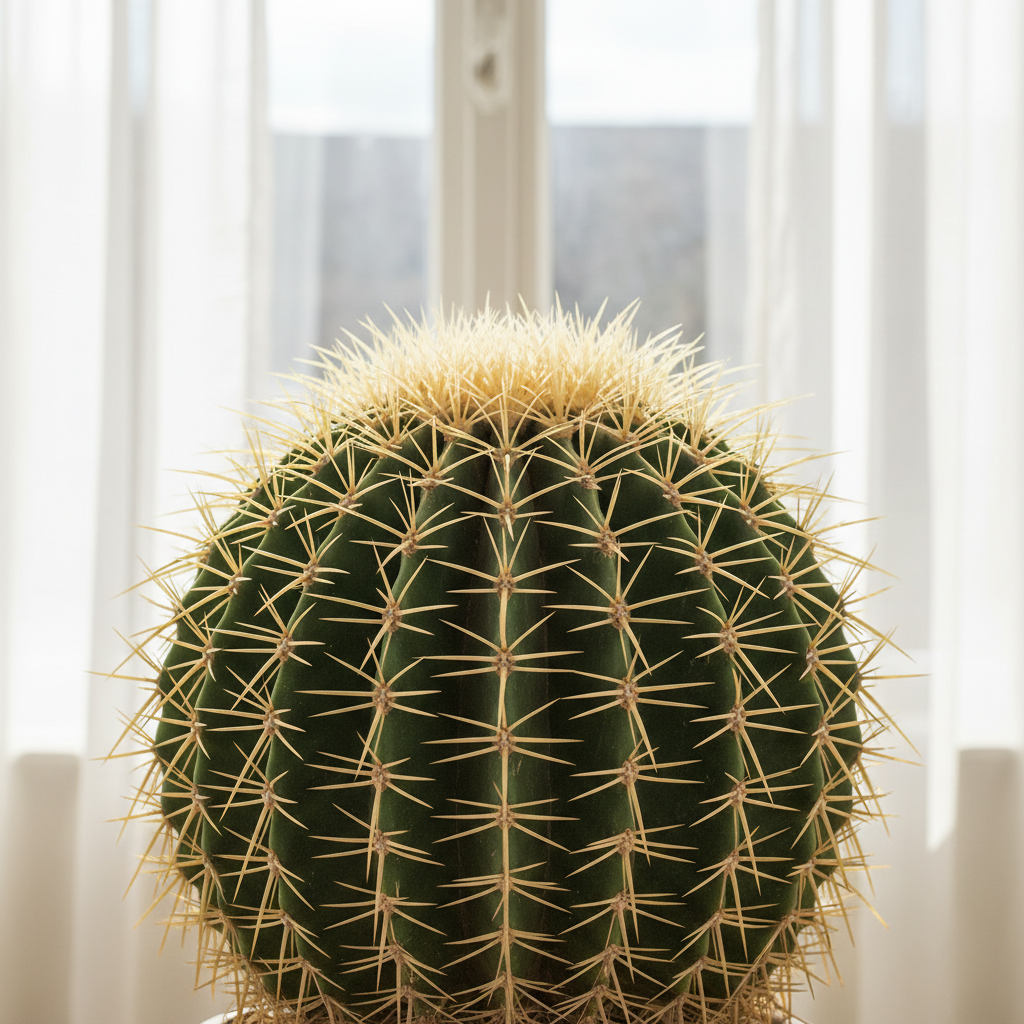
Light is where the golden barrel is least negotiable. This is a full-sun desert plant, and to look its best indoors it wants the brightest position you can offer, ideally a south-facing or west-facing window where it receives at least four to six hours of direct sun each day. In good light the spines come in thick and richly golden, the ribs stay tight and the body keeps its compact, even shape. Starve it of light and the signs appear gradually but unmistakably.
The classic symptom of insufficient light is etiolation: the plant stretches and the once-spherical body elongates into an unnatural column, narrower at the top, as it reaches for a brighter source. New spines emerge sparse and pale rather than dense and gold, and the fresh growth at the crown takes on a soft, light green that never hardens off properly. This stretching is permanent. The plant will not contract back into a globe once better light is restored, so the goal is to prevent it from the start by giving generous light year-round.
One caveat applies to plants moved suddenly from low light into fierce sun, or those bought from a shaded shop interior. A cactus acclimatised to dim conditions can scorch if thrown straight into intense summer glass-magnified light, developing pale bleached or brown patches on the sun-facing side that do not heal. Introduce strong light over a week or two rather than all at once. If you grow yours outdoors in summer, the same gradual acclimatisation applies in reverse each spring. Rotating the pot a quarter-turn every week or two keeps growth even, since the plant will otherwise lean almost imperceptibly toward the light over months and years.
Watering
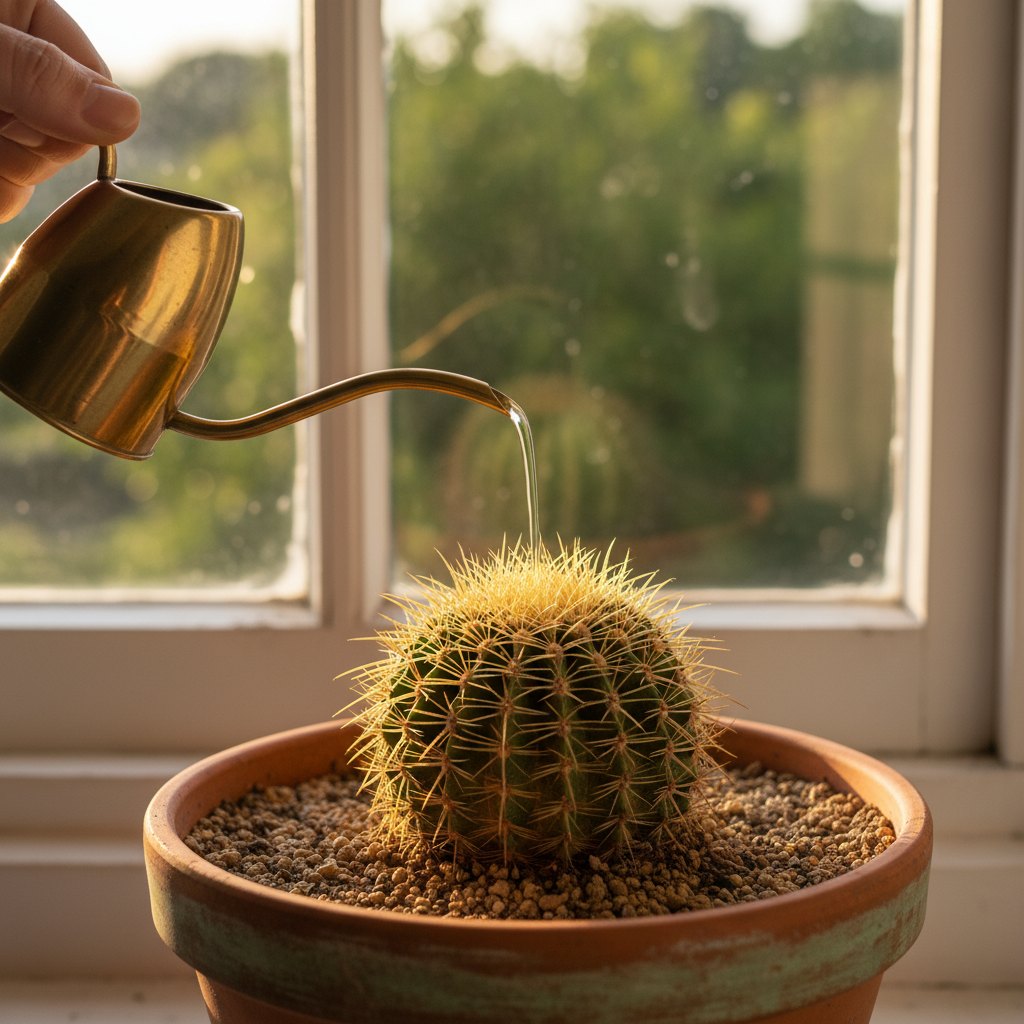
If you remember only one thing about golden barrel care, make it this: when in doubt, do not water. The species is built to store water in its swollen body and to ride out long droughts, and its roots rot quickly when left sitting in moist soil. The correct approach is the soak-and-dry method. When the potting mix has dried out completely, water generously until it runs freely from the drainage holes, then do not water again until the mix is bone dry once more, all the way to the bottom of the pot.
In practice that means watering roughly every two to three weeks during the warm, actively growing months of spring and summer, though the exact interval depends entirely on your light, pot size, mix and household temperature rather than on the calendar. Always check before reaching for the watering can. Lift the pot to feel its weight, since a dry pot is conspicuously light, or push a wooden skewer to the base and confirm it comes out dry and clean. As temperatures fall in autumn and the plant enters winter dormancy, cut back sharply, watering only monthly at most, and for plants kept cool and bright through winter, water hardly at all. A barrel kept cold and dry in winter is far safer than one kept warm and damp.
Try to keep water off the body itself, particularly the woolly crown where moisture can collect, sit in the depression and trigger rot at the growing point. Watering the soil directly, or standing the pot briefly in a tray of water to soak from below and then draining it fully, both work well. Always discard any water that collects in the saucer; a barrel must never stand in it. Where your tap water is very hard, the dissolved minerals can leave white crusting on the soil surface and the lower body over time, so rainwater or filtered water is a small kindness if it is easy to provide.
Warning — Reading Rot: A barrel that turns soft, yellow-brown or black at the base, or that feels squashy rather than firm, is rotting from overwatering and the damage moves upward fast. Stop watering immediately, unpot the plant, cut away all mushy tissue with a sterile blade well into healthy green, dust the wound with sulphur or cinnamon, and let it callus dry for a week before replanting in fresh dry mineral mix.
Soil and Potting
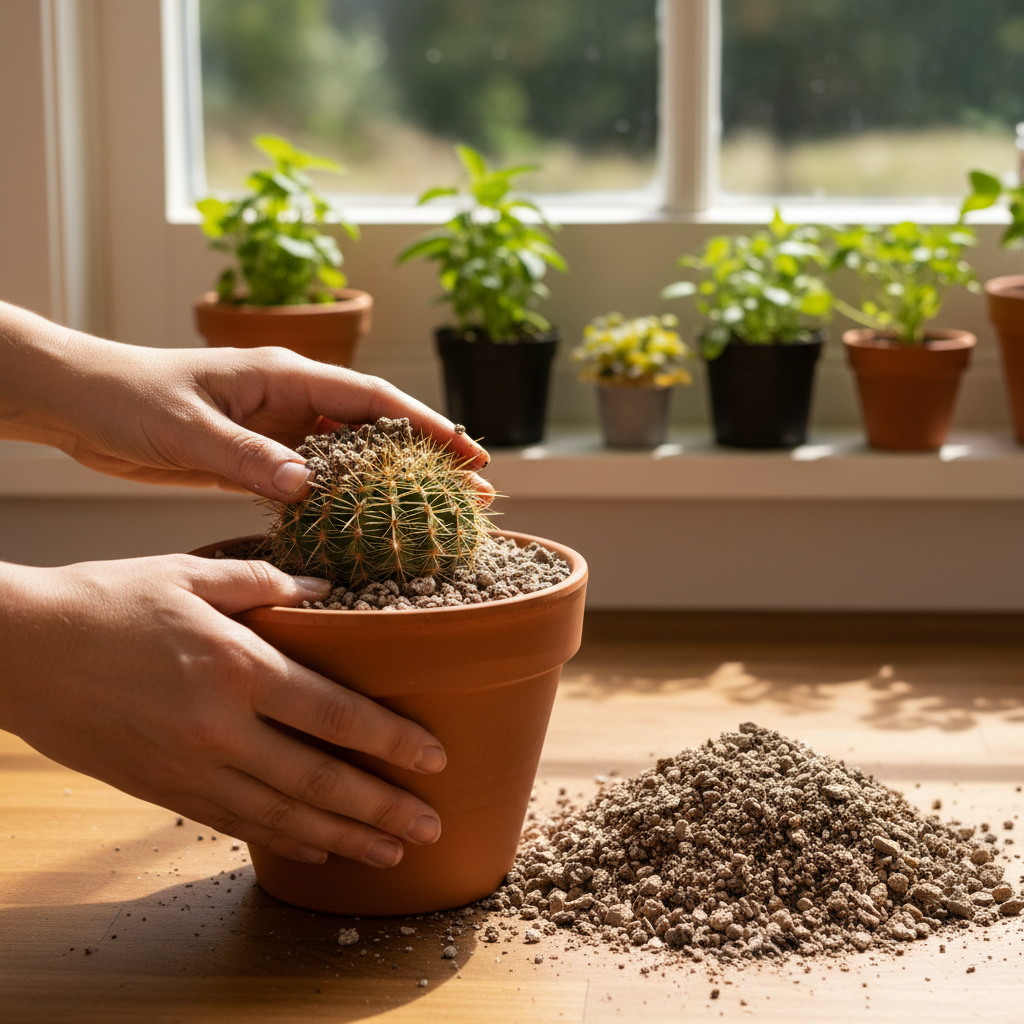
Drainage is everything for this plant, and the right soil does half the work of keeping it alive. A golden barrel wants a lean, gritty, fast-draining medium that holds very little moisture and dries quickly throughout. Standard houseplant compost is far too water-retentive and will keep the roots damp long enough to rot them. A good starting point is a commercial cactus and succulent mix cut heavily with extra mineral grit, aiming for at least half coarse mineral content by volume.
A reliable home blend is roughly one part standard potting compost to two parts coarse mineral material such as pumice, perlite, coarse horticultural grit or crushed lava rock. The mineral fraction creates air pockets and channels that let water pass straight through, and that fast drainage matters more than the precise recipe. Whatever you mix, it should feel gritty and loose in the hand, not soft and spongy, and water poured onto it should disappear within a few seconds.
Choose a pot only slightly larger than the body, with generous drainage holes; terracotta is ideal because its porous walls wick moisture out of the soil and help it dry faster. Barrels are slow growers with relatively modest root systems and are quite content slightly potbound, so resist the urge to overpot. Repot only every three to four years, or when the body has crowded the rim, and do it in spring when the plant is entering active growth. Let the soil dry out fully first so the root ball releases cleanly, and crucially, wait at least a week after repotting before watering. This pause lets any roots nicked during the move callus over rather than serving as an entry point for rot.
Handling a spiny barrel during repotting is the awkward part. Wrap a thick folded band of newspaper, a strip of old carpet or a length of garden hose split lengthways around the body to form a sling you can grip without impaling your hands, and wear thick gloves. Move slowly and deliberately, since broken spines do not regrow.
Fertilising
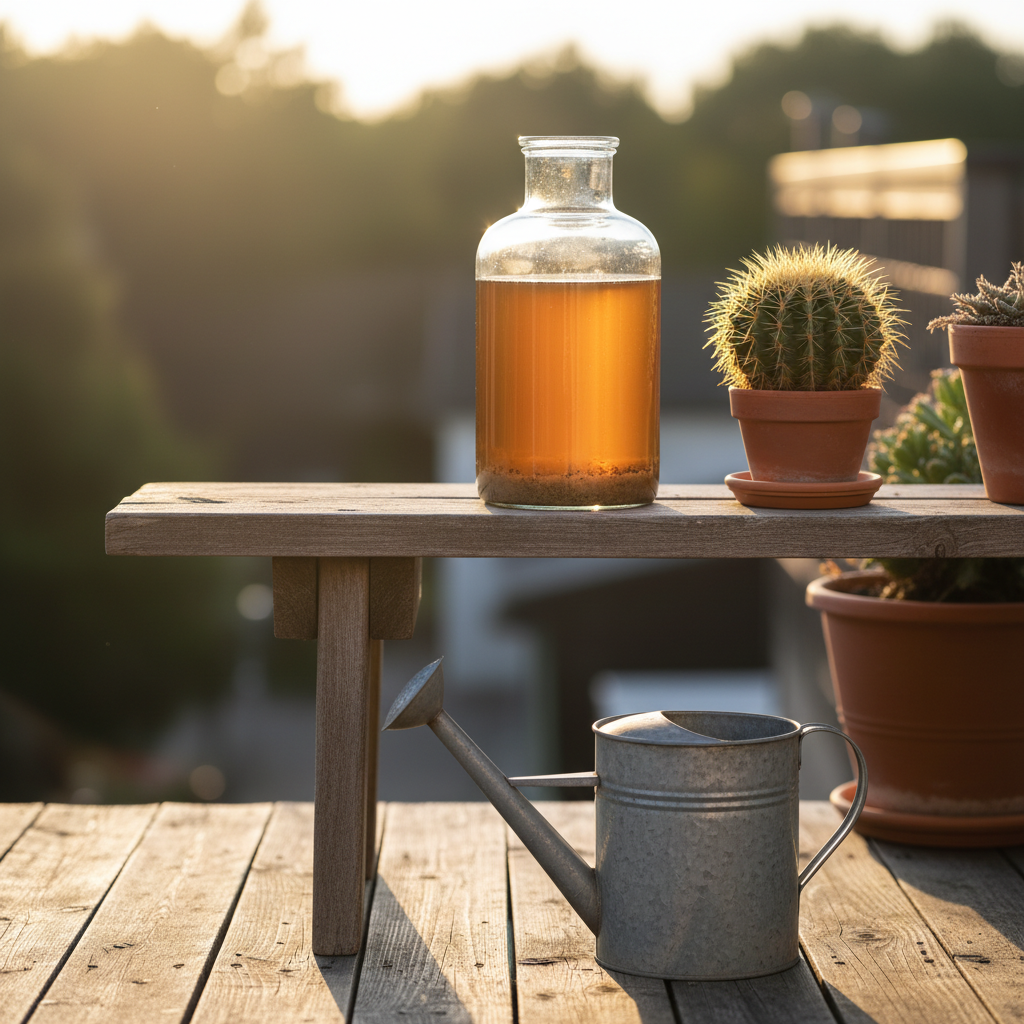
A golden barrel is adapted to nutrient-poor desert soils and needs very little feeding, so the guiding principle here is the same restraint that governs watering. Too much fertiliser, especially anything high in nitrogen, pushes soft, rapid, distorted growth that spoils the plant’s tight symmetry and leaves it prone to splitting and rot. Lean feeding keeps growth slow, hard and well-formed.
During the growing season of spring and summer, feed once or twice in total with a fertiliser formulated for cacti and succulents, which is low in nitrogen and higher in potassium and phosphorus, diluted to half the strength recommended on the label. Apply it dissolved in water as part of a normal soak, never onto dry roots, since concentrated feed on dry roots can scorch them. Always water a thirsty plant with plain water first and feed on the following watering if needed. Stop feeding entirely from late summer onward, and give nothing at all through autumn and winter when the plant is dormant and cannot use the nutrients. A freshly repotted barrel in new mix needs no feeding for its first year, as the fresh substrate already carries enough.
Propagation
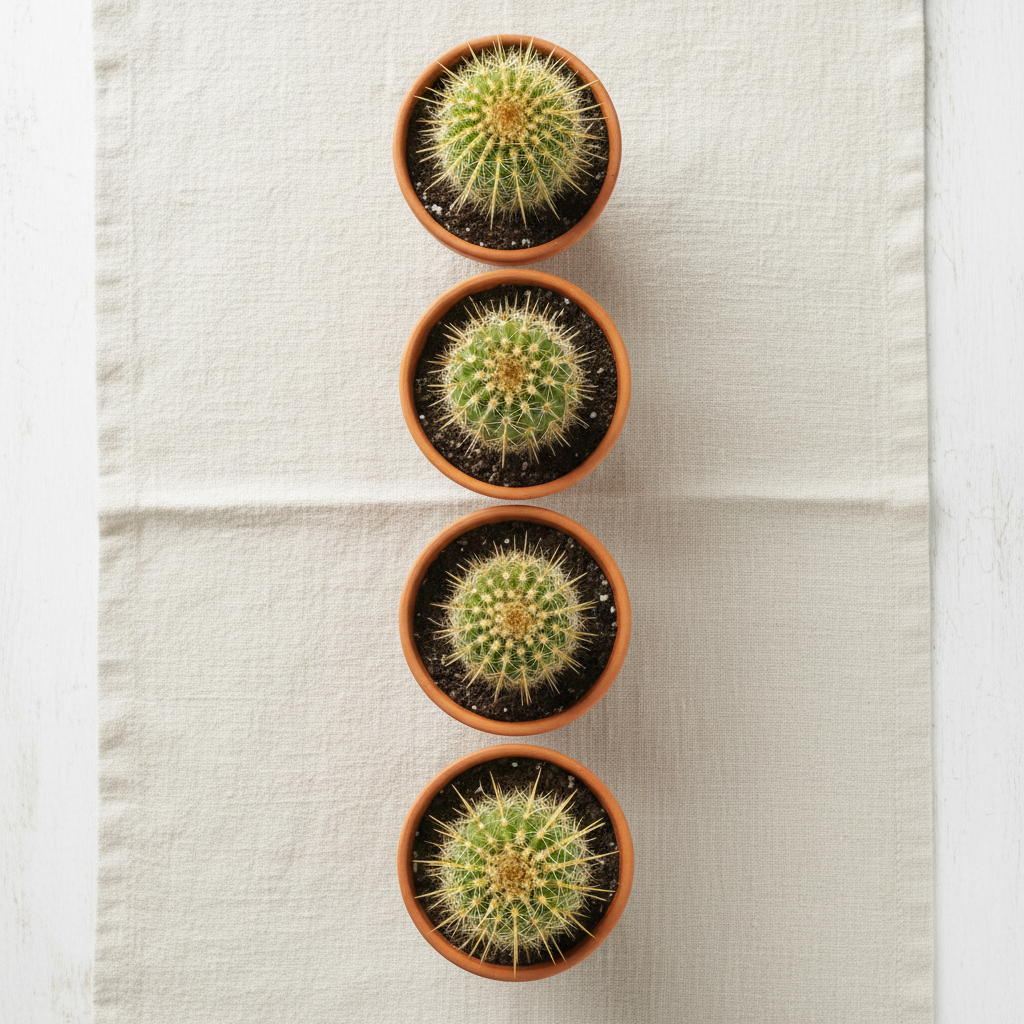
Propagating a golden barrel calls for patience above all else, because unlike many clumping cacti this species is reluctant to offset. Most plants grow as solitary globes and produce pups only occasionally, often after the growing tip has been damaged or with considerable age. When offsets do appear as small barrels clustered around the base of the parent, they offer the simplest route to a new plant.
To separate an offset, wait until it has reached a reasonable size with its own visible roots forming, then in spring or early summer twist or cut it cleanly away from the parent using a sterilised blade. The critical step that follows is callusing: set the offset aside in a warm, dry, shaded spot for several days to a week until the cut surface dries and seals over. Planting a fresh wet wound straight into soil is the surest way to lose it to rot.
- Choose a healthy offset that has begun forming its own roots and gently separate it from the parent with a clean, sterile knife.
- Lay the offset in a dry, shaded, airy place for five to seven days until the cut callus has hardened over.
- Settle the callused offset onto the surface of barely moist gritty cactus mix in a small pot, supporting it upright with a few stones if needed.
- Keep it warm and bright but out of harsh direct sun, and mist the soil lightly only every few days rather than soaking it.
- Once new root growth anchors the offset firmly, usually after several weeks, switch to the normal soak-and-dry watering routine.
The species is far more commonly raised from seed in commercial cultivation, which is in fact how nearly all the plants in trade are produced. Seed-raising is rewarding but a long game, with seedlings taking many years to form recognisable barrels and a decade or more to reach any real size. Sow fresh seed on the surface of a sterile gritty mix, keep it warm and humid under cover until germination, then ventilate gradually. For most home growers, buying a young plant and growing it on is the far more practical path to a sizeable barrel.
Pests and Problems
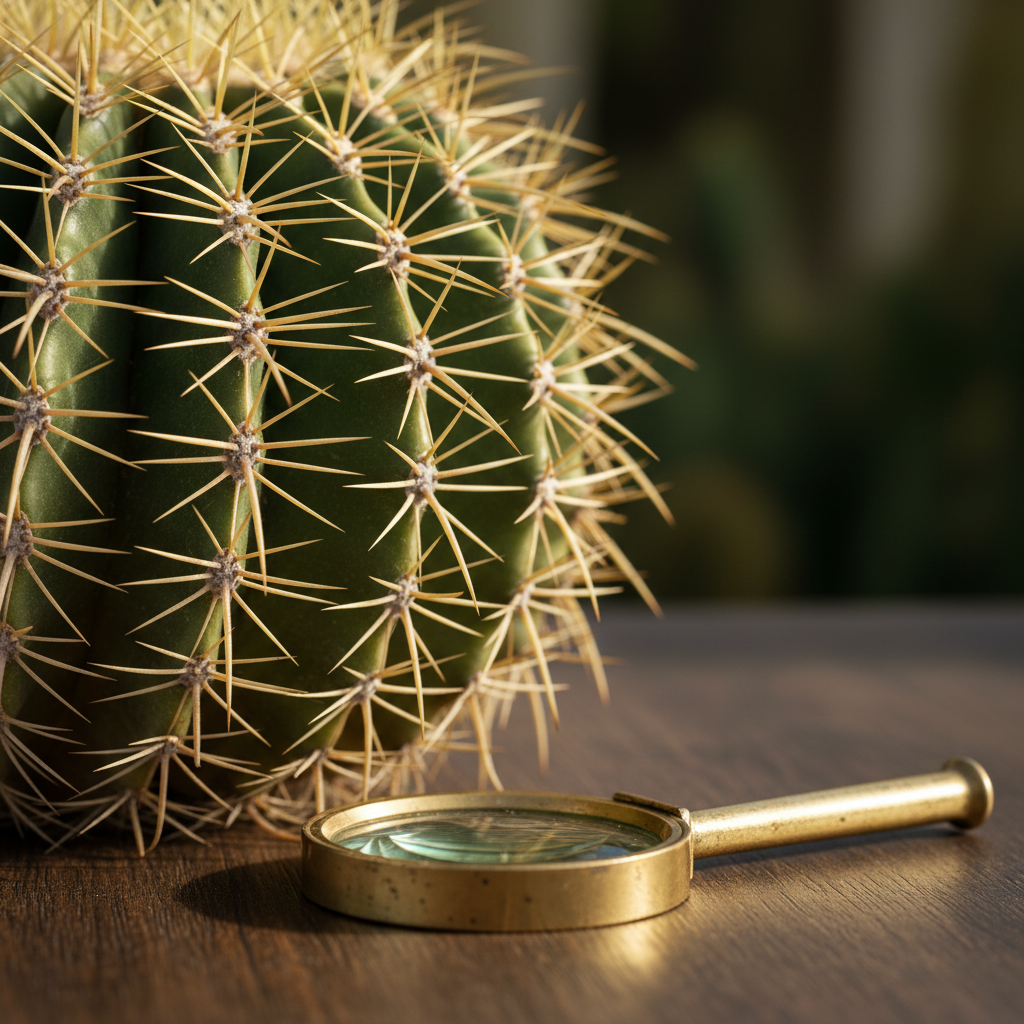
A healthy golden barrel is remarkably trouble-free, and the overwhelming majority of problems trace back to watering rather than to any pest. Even so, a few unwelcome visitors do find their way to the plant, and the spines that protect it from larger animals also make those pests harder to reach and to spot.
Mealybugs are the most common pest, appearing as small white cottony tufts tucked between the spines and in the woolly crown where they are easily mistaken for the plant’s own wool. They feed on sap and weaken the plant over time. Dab them off with a cotton bud dipped in diluted isopropyl alcohol, working carefully between the spines, and repeat every few days until they are gone. A particularly insidious relative, the root mealybug, infests the roots unseen and shows only as a plant that stops growing and slowly declines; it is found by unpotting and inspecting the root ball for white residue, and treated by washing the roots clean and repotting in fresh mix. Spider mites occasionally attack, leaving fine pale stippling and faint webbing on the body, and are discouraged by the plant’s preference for the open, airy conditions they dislike. Scale insects appear as small hard brown bumps that can be scraped off and treated with the same alcohol method.
The most serious problem is not a pest at all but root and basal rot from overwatering and poor drainage, covered in the watering section above. Beyond rot, watch for corky brown patches that can develop on older plants, which are usually harmless scarring from age, sun or old damage rather than disease, and for the soft pale stretching of etiolation that signals too little light. Read these signs as feedback. A barrel that is firm, compact and densely gold-spined is telling you the light, water and soil are right, while soft growth, pale spines or any squashiness is an early warning to correct course before damage sets in.
Varieties
The standard golden barrel is the form almost everyone grows, but a handful of distinctive variants circulate among collectors, prized for departures from the classic dense golden armour. Two of the most recognisable are shown below.
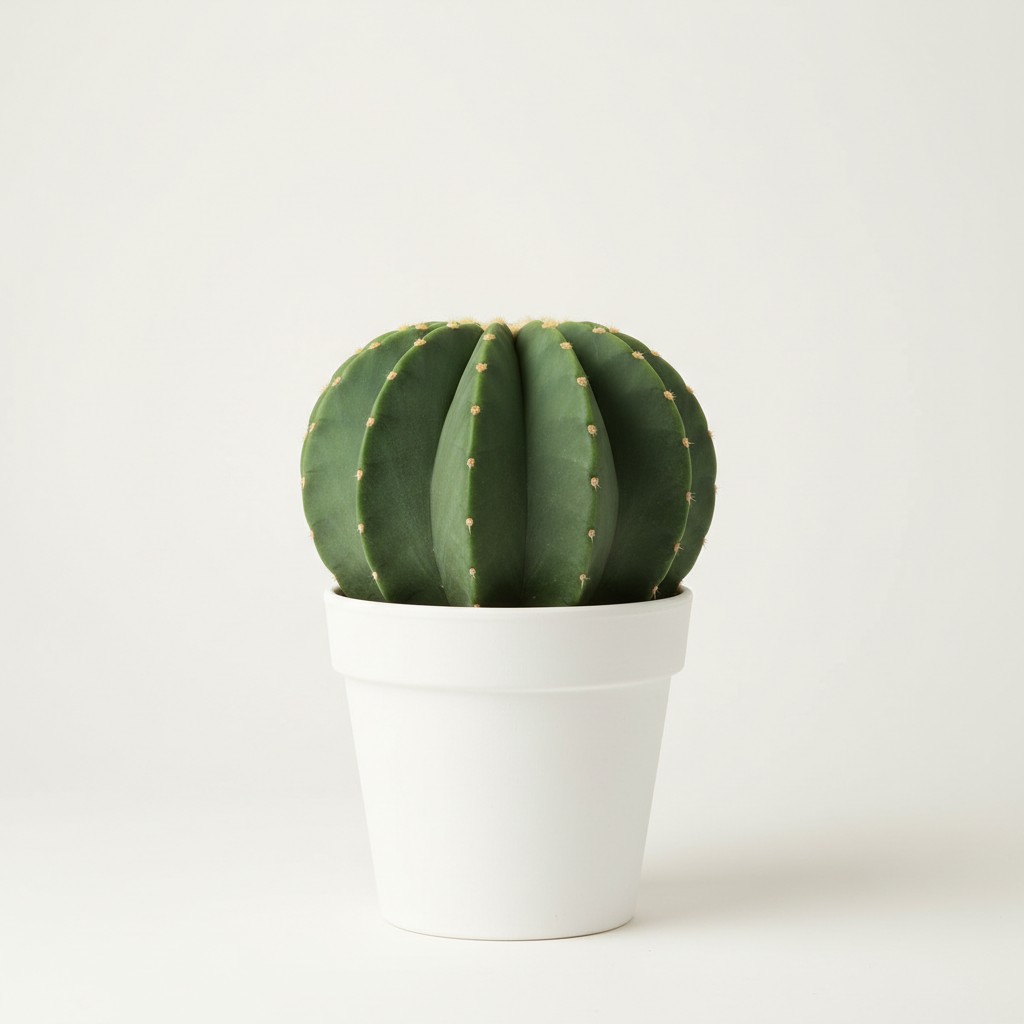
Spineless Golden Barrel (var. subinermis)
A naturally occurring form with greatly reduced, short and soft spines, putting the focus on the smooth green ribbed body rather than the golden armour. It is sought after for its sculptural minimalism and for being far friendlier to handle, though it lacks the luminous spine display of the standard plant. Care is identical to the species.
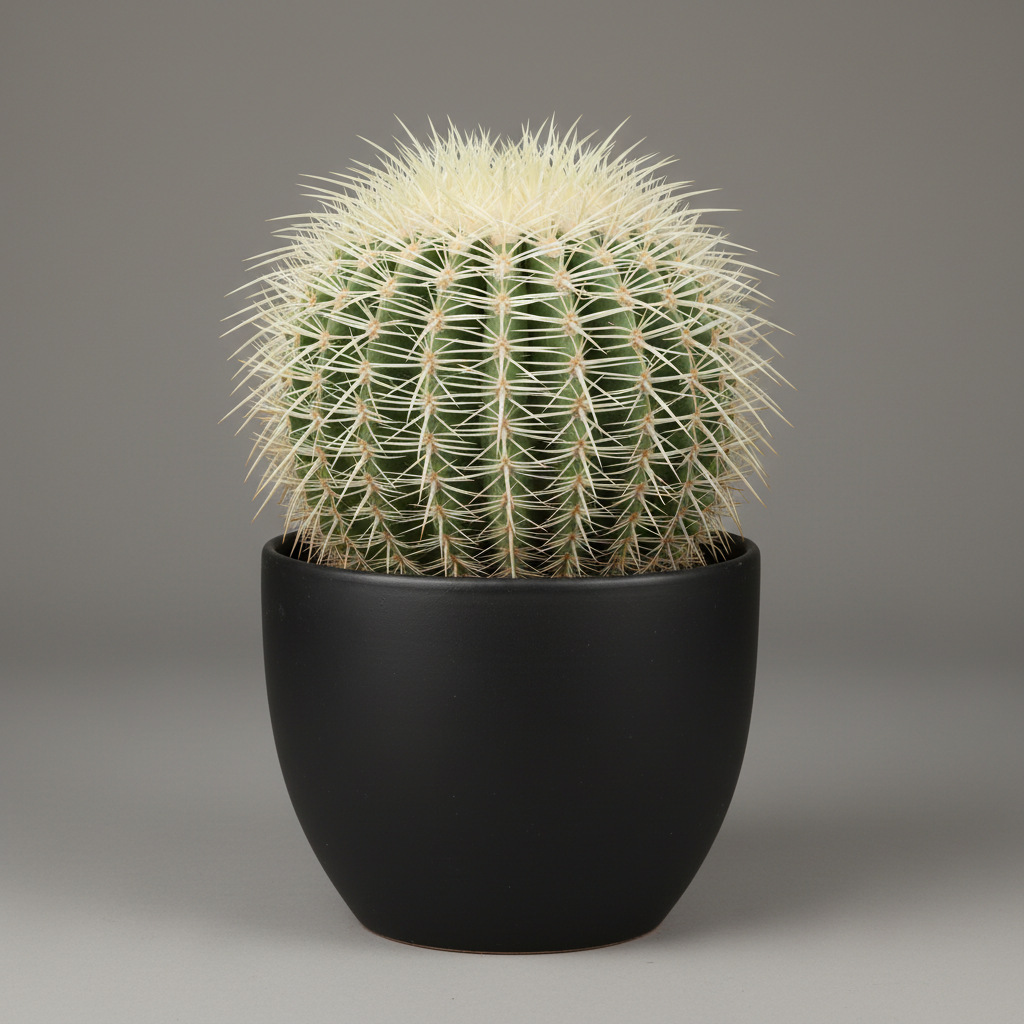
White-Spined Golden Barrel (f. albispinus)
This striking form wears the same globular ribbed barrel shape but clothes it in dense ivory-white spines instead of golden yellow, giving the plant a cooler, almost frosted appearance. It is rarer in cultivation and commands a premium, but its needs are exactly those of the ordinary golden barrel: full sun, sharp drainage and minimal water.
Frequently Asked Questions
How fast does a golden barrel cactus grow?
Very slowly. Expect only a few centimetres of growth a year, and many years before a young plant becomes a sizeable barrel. A specimen the size of a football may be decades old. This slow pace is normal and healthy; rapid soft growth usually means overwatering or overfeeding rather than success.
Why is my golden barrel turning yellow or brown at the base?
Soft yellowing, browning or blackening at the base that feels squashy is almost always rot from overwatering or poor drainage. Stop watering at once, unpot the plant, cut away all affected tissue with a sterile blade into firm green flesh, let it callus dry for a week, and replant in fresh dry gritty mix. Firm, dry corky patches on older plants, by contrast, are usually harmless age-related scarring.
Will a golden barrel cactus flower indoors?
Flowering is possible but uncommon indoors and reserved for old, large plants, typically those well over 20 years old and at least 40 cm (16 in) across. When it does occur, a ring of small yellow flowers emerges from the woolly crown in summer. Abundant sun, a cool dry winter rest and patience give the best chance, but most indoor barrels are grown for their form rather than their bloom.
Is the golden barrel cactus toxic to cats and dogs?
The plant is not chemically toxic to cats or dogs, so it will not poison a pet that nibbles it. The real hazard is mechanical: the stiff sharp spines can cause painful injuries to mouths, paws and eyes. Place it out of reach of curious pets and children for everyone’s safety.
Can a golden barrel cactus live outdoors?
In hot, dry climates with mild winters it makes an excellent outdoor specimen in full sun and sharp-draining ground. It is not frost-hardy, though, and prolonged cold or winter wet will kill it. In cooler or wetter regions grow it in a pot that can spend summer outdoors in the sun and move indoors to a bright, cool spot before the first frosts.
How do I water a golden barrel in winter?
Very little, and for a plant kept cool and bright, hardly at all. Winter is the dormant season, and a barrel kept cold and dry is far safer than one kept warm and damp. Water monthly at most, only if the plant is in a warm room and the soil has been completely dry for some time, and never let it sit in standing water at any point.






