
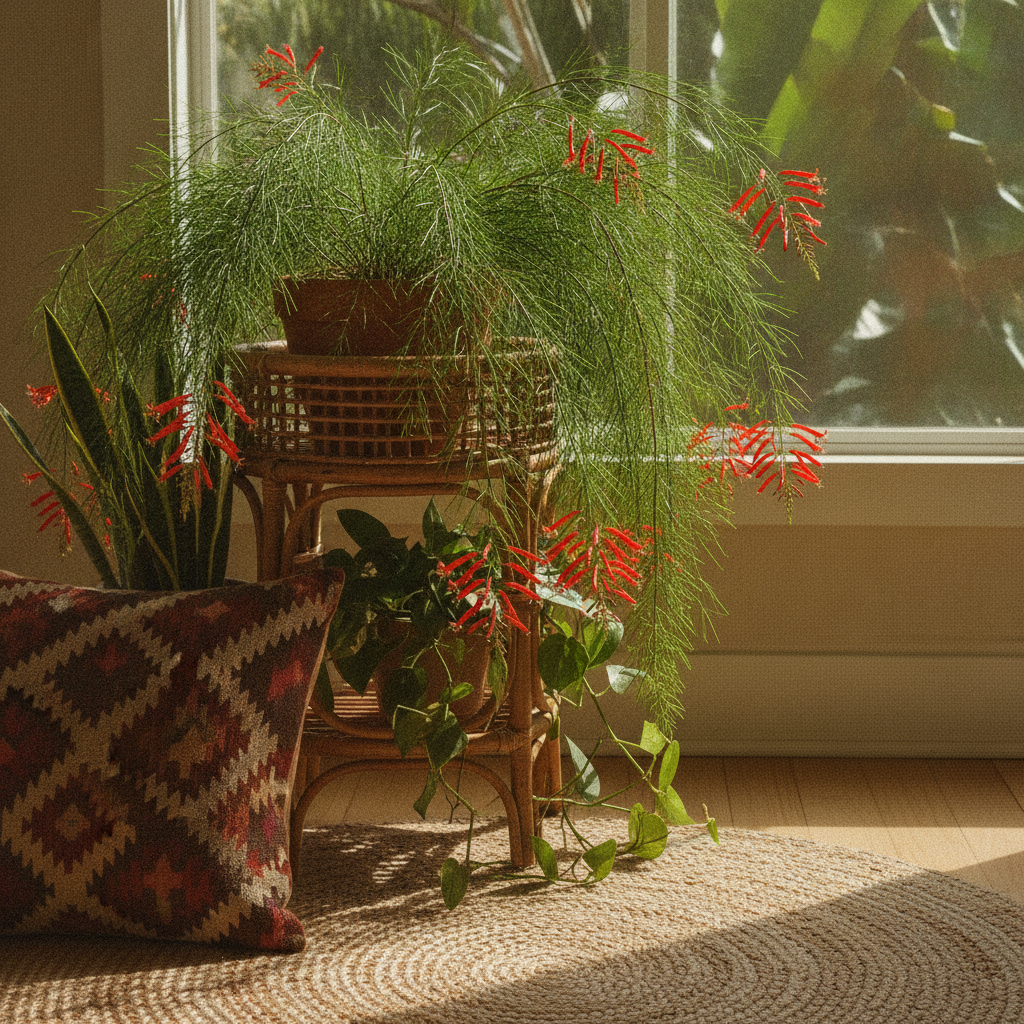
Few houseplants make an entrance quite like the firecracker plant. Known botanically as Russelia equisetiformis and sold under a string of evocative names including coral plant, fountain plant and coral fountain, it is an evergreen subshrub from Mexico and Guatemala that has built its reputation on movement and colour rather than bold foliage. Its arching, almost leafless green stems spill outward and downward in a weeping fountain, and from spring through autumn they are studded with slender, bright scarlet tubular flowers that genuinely resemble tiny firecrackers caught mid-burst. The species name equisetiformis means “horsetail-shaped”, a nod to the fine, rush-like stems that do most of the plant’s photosynthesis in place of conventional leaves.
Among growers the firecracker plant carries a reputation for being undemanding outdoors in warm climates yet a little particular indoors, and that distinction matters. Keeping one alive on a windowsill is not difficult, but coaxing it into the dense, flower-laden cascade that makes it worth growing is a different matter entirely. The gap between a survivor and a thriving specimen comes down almost entirely to light, paired with sensible watering and feeding. This guide walks through everything that separates the two: how much light it really needs, how to water a plant whose stems do the work of leaves, what soil and pot suit its trailing habit, how to feed it for continuous bloom, how to multiply it for free, and how to keep the handful of pests that bother it at bay.
Contents
- Quick Reference
- Why the Firecracker Plant Makes a Rewarding Houseplant
- Light Requirements
- Watering & Humidity
- Soil, Potting & Repotting
- Fertilising
- Propagation
- Pests & Diseases
- Popular Varieties
- Frequently Asked Questions
Quick Reference: Firecracker Plant at a Glance
| Light | Very bright light to full sun; at least 4 to 6 hours of direct sun for good flowering |
| Watering | Keep evenly moist during active growth; let the top 2 to 3cm (1in) dry between waterings; reduce in winter |
| Temperature | 18 to 29°C (64 to 84°F); protect from anything below about 7°C (45°F) |
| Humidity | Average to moderate, around 40 to 50 per cent; tolerant of normal room air |
| Fertiliser | Balanced or bloom-promoting feed every 2 to 4 weeks from spring to autumn |
| Toxicity | Not known to be toxic to cats, dogs or humans |
Why the Firecracker Plant Makes a Rewarding Houseplant
The firecracker plant earns its place indoors by offering something most foliage houseplants cannot: a long, generous flowering season combined with a graceful cascading form. Where a pothos or a philodendron gives you greenery, Russelia equisetiformis gives you motion and a near-continuous show of colour, with fresh scarlet flowers opening across the arching stems for months on end whenever it has enough light. Grown in a hanging basket or perched on a shelf or plant stand, its fine stems tumble down in a fountain that softens hard edges and fills vertical space in a way few other indoor plants manage.
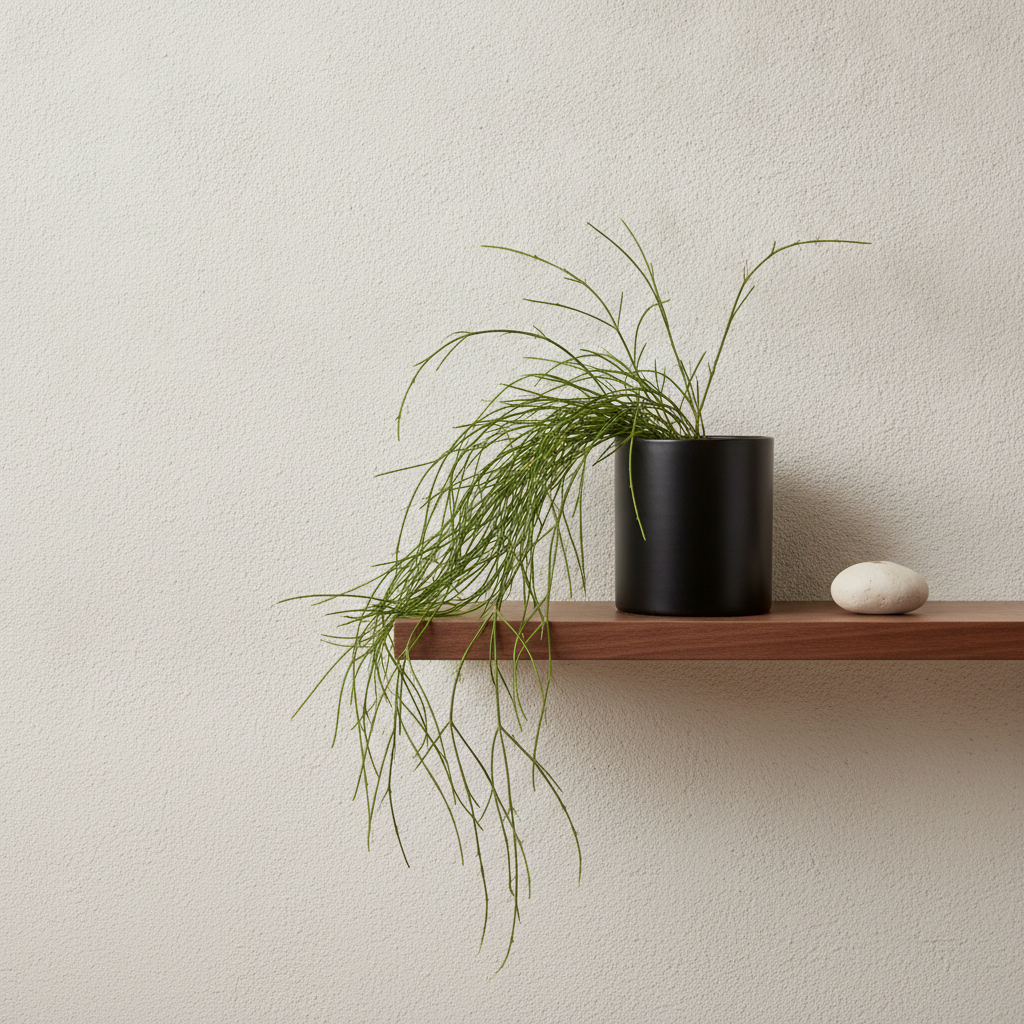
It is also a forgiving plant in the ways that count for a busy household. The fine green stems store a degree of moisture and the plant tolerates the occasional missed watering far better than a fern or a calathea would, while its pest resistance is well above average for a flowering indoor plant. The one thing it will not forgive is gloom. A firecracker plant placed in a dim corner does not die dramatically; it simply stretches, stops blooming and slowly thins out, which is why so many people conclude it is difficult when in truth it was only underlit. Give it a bright, sunny spot and the rest of its care is genuinely straightforward, making it an excellent choice for anyone who wants flowers indoors without the fuss of more temperamental bloomers.
Important — Toxicity: The firecracker plant is not listed as toxic to cats, dogs or humans, and it is generally regarded as a pet-safe choice. As with any plant, discourage pets and small children from chewing on the stems, since ingesting plant material can still cause mild stomach upset in sensitive individuals.
Light Requirements
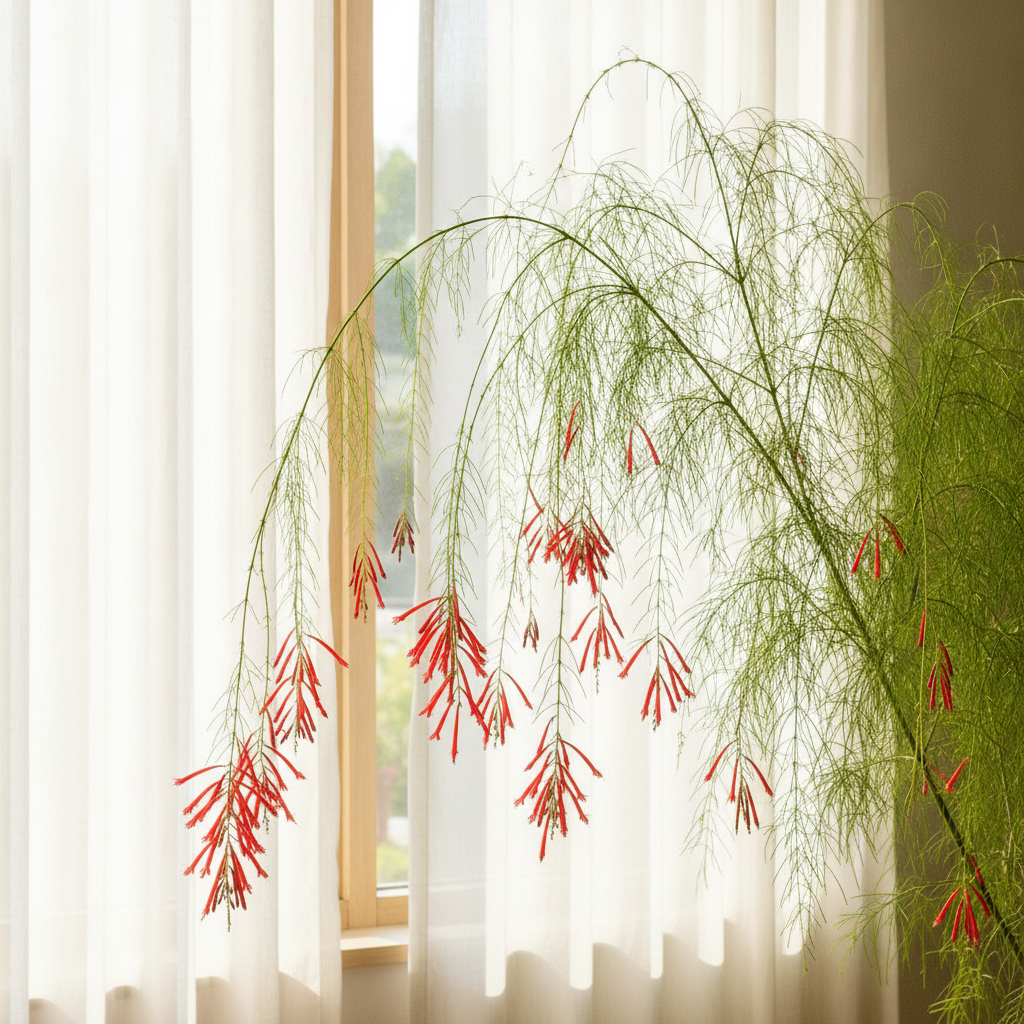
Light is the single most important factor in firecracker plant care, and it is where most indoor specimens fall short. In its native range and in the gardens of warm climates this is a full-sun plant, blooming hardest where the sun is strongest. Indoors that translates to the brightest position you can offer: it wants genuine direct sun for several hours a day, not merely the bright indirect light that satisfies a typical aroid.
The ideal indoor spot is directly in or immediately beside a south-facing or west-facing window where the plant receives a minimum of four to six hours of direct sunlight. With that much light, the stems stay short-jointed and dense and the plant flowers freely. Drop below it and the response is immediate and visible: stems elongate and grow sparse, the fountain habit loosens into straggle, and flowering tapers off or stops altogether. If you have only a bright but sun-free window, the plant will live, but you should expect foliage rather than fireworks.
Light Levels Explained
Light indoors falls away far faster than our eyes suggest, because the eye adjusts to brightness while a plant cannot. The table below sets out the practical tiers and what each means for a firecracker plant, which sits firmly at the bright end of the scale.
| Light Category | Approx. Level | Typical Location | Outcome |
|---|---|---|---|
| Direct sun | 20,000 lux and above | On a south or west sill, unobstructed | Ideal; dense growth and heavy flowering |
| Bright indirect | 10,000 to 20,000 lux | Just back from a sunny window | Healthy growth, sparse to moderate flowering |
| Medium | 5,000 to 10,000 lux | A few metres from a bright window | Survives, stretches, rarely blooms |
| Low | 1,000 to 5,000 lux | Interior wall, north room | Slow decline, leggy and flowerless |
| Very low | Below 1,000 lux | Hallway, far from any window | Unsuitable; will not persist |
Window Orientation and Placement
South-facing window: In the northern hemisphere this is the best indoor position for a firecracker plant, delivering the long hours of direct sun it needs to flower. Place it right at the glass. In a very hot climate, the lightest summer shading at midday can prevent scorching, but in most homes full exposure is what you want.
West-facing window: An excellent second choice, supplying strong direct sun through the afternoon and into the evening. The warmth that builds at a west window suits this heat-loving plant well, and flowering is usually reliable here.
East-facing window: Workable but marginal for blooming. The gentler morning sun keeps the plant healthy and green, yet often falls short of the intensity needed for a heavy flush of flowers. Expect a looser, less floriferous plant than a south or west aspect would give.
North-facing window: Insufficient on its own. A firecracker plant at a north window will survive for a while but stretch badly and refuse to flower. If a north room is your only option, supplement with a grow light.
Pro Tip — Rotate for an Even Fountain: Because the plant grows hardest toward the light, give the pot a quarter turn each week. This keeps the cascade balanced on all sides instead of leaning toward the glass, and stops the back of the plant going bare.
How Light Affects Flowering and Form
For most houseplants the visible reward of good light is rich leaf colour, but the firecracker plant trades almost entirely in flowers and form. Strong light drives the production of those scarlet tubular blooms and keeps the green stems compact and well-branched, so the plant reads as a full, weeping mound. Inadequate light produces the opposite: long bare internodes, thin stems that flop rather than arch, and few or no flowers. If your plant has gone leggy and shy, the remedy is almost always more light rather than more water or feed.
Warning — Direct Sunlight: A plant moved abruptly from a dim shop or a shaded interior into full sun can scorch, showing bleached or browned patches on the stems. Acclimatise it over a week to ten days, increasing exposure gradually, rather than placing a soft, under-lit plant straight onto a blazing sill.
Artificial Lighting
Because the firecracker plant demands so much light, it is one of the houseplants that genuinely benefits from supplementary grow lights, especially through the short days of winter or in a home short on sunny windows. A full-spectrum LED grow light positioned 20 to 30cm (8 to 12in) above the plant and run for twelve to fourteen hours a day can sustain flowering when natural light alone would not. Treat artificial light as a serious substitute here, not a token gesture; weak desk lamps will not move the needle for a plant accustomed to tropical sun.
Seasonal Adjustments
Light intensity and day length fall sharply in winter, and the firecracker plant responds by slowing down and flowering less. Move it to your brightest window for the darker months, clean the glass and the stems so nothing is lost to dust and grime, and accept that a winter rest is natural. As the days lengthen in spring, the plant will pick up again; that is the moment to resume heavier feeding and, if needed, to prune it back into shape for the coming season.
Watering & Humidity
Watering a firecracker plant is a balancing act between its two natures. It is vigorous and thirsty while in active growth and flower, yet its fine stems and Mediterranean-style toughness mean it resents sitting in cold, sodden soil. The aim is steady, even moisture during the growing season, easing off as growth slows, and never allowing the roots to stand in water.
When to Water
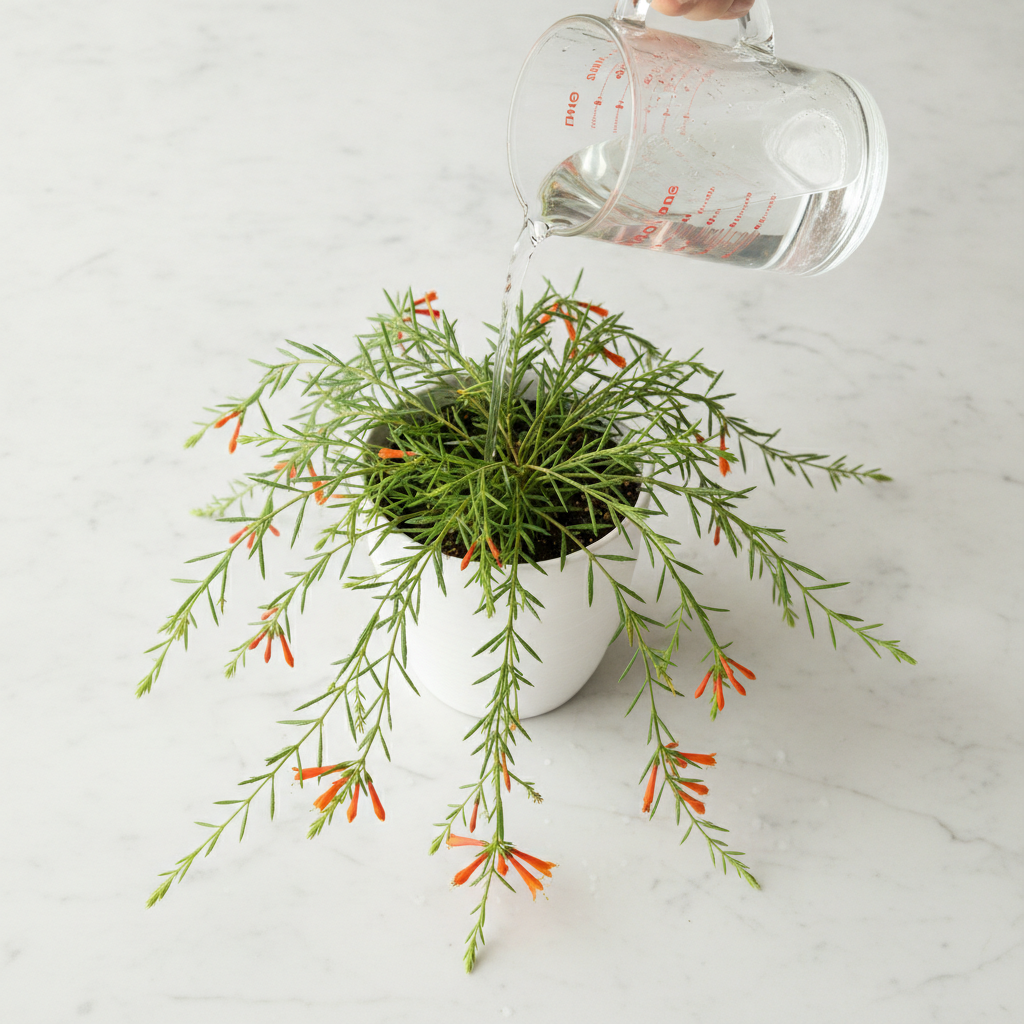
Let the top 2 to 3cm (1in) of the mix dry out before watering again. Push a finger into the soil to check rather than relying on the calendar, since a plant in full summer sun on a warm sill will drink far faster than the same plant in a cool, overcast week. During spring and summer that often means watering once or twice a week; in a heatwave a small pot may need attention daily.
In autumn and winter, as light and growth fade, cut back noticeably. Allow more of the pot to dry between waterings, watering perhaps every ten days to a fortnight, just enough to keep the stems from shrivelling. Cold, wet compost in winter is the surest way to rot the roots, so when in doubt during the dormant months, wait.
Pro Tip — Read the Stems: The fine green stems are a useful gauge. Plump, upright and glossy means the plant is well watered; a soft, slightly limp or dulled look usually signals thirst. Because the stems recover quickly after a drink, the firecracker plant tells you what it needs more clearly than many leafier plants.
How to Water Correctly
- Check the soil first, watering only when the top few centimetres have dried.
- Use room-temperature water to avoid shocking the roots with cold.
- Water the soil surface evenly all the way around the pot, not just on one side.
- Continue until water flows freely from the drainage holes, ensuring the whole root ball is wetted.
- Let the pot drain completely for a few minutes before returning it to its saucer or cover pot.
- Tip away any water that collects in the saucer so the roots never stand in it.
Signs of Overwatering vs. Underwatering
| Symptom | Overwatering | Underwatering |
|---|---|---|
| Stem colour | Yellowing, then browning and mushy at the base | Dull, fading green, drying from the tips |
| Stem texture | Soft, limp and waterlogged near the soil | Wiry, crisp and brittle |
| Soil | Stays wet for days, may smell sour | Bone dry, pulling away from the pot sides |
| Roots | Brown, soft and foul-smelling | Dry and papery but otherwise firm |
| Flowers | Buds drop before opening | Flowering stalls, existing flowers shrivel fast |
Warning — Root Rot: Persistent sogginess, particularly in cool conditions, leads to root rot, the most common killer of this otherwise tough plant. If stems collapse at the base and the soil smells sour, unpot at once, cut away any blackened roots and rotted stems, and repot into fresh, fast-draining mix in a clean pot.
Humidity Requirements
One of the firecracker plant’s conveniences as a houseplant is its relaxed attitude to humidity. Coming from open, sunny habitats rather than rainforest understorey, it is perfectly content in ordinary room air of around 40 to 50 per cent, and it does not demand the misting or pebble trays that fussier tropicals require.
Problems only arise at the extremes. Very dry air, such as next to a radiator in winter, can leave the stem tips browning and crisp, while stagnant, overly humid air with poor airflow can encourage fungal trouble. Neither is common in a normal living room, and the plant rarely shows humidity stress when its light and water are right.
If your home runs especially dry, grouping the firecracker plant with other plants or setting it on a tray of damp pebbles will gently lift the local humidity. Avoid heavy misting, however, since wet stems in cool, still conditions do more harm than the dry air you are trying to correct.
Water Quality
The firecracker plant is not notably fussy about water quality and tolerates ordinary tap water in most areas. In regions with very hard water or heavily chlorinated supplies, mineral salts can build up in the soil over time, showing as a white crust on the surface or pot rim. Flushing the pot thoroughly every month or two, or using filtered or collected rainwater, keeps that build-up in check and the roots happy.
Soil, Potting & Repotting
Drainage is the governing principle for firecracker plant soil. This is a plant that wants moisture during growth but cannot abide standing water, so the mix has to hold enough to keep the roots damp while letting excess flow straight through. A heavy, water-retentive compost is the enemy here; an open, free-draining blend is what keeps the plant thriving.
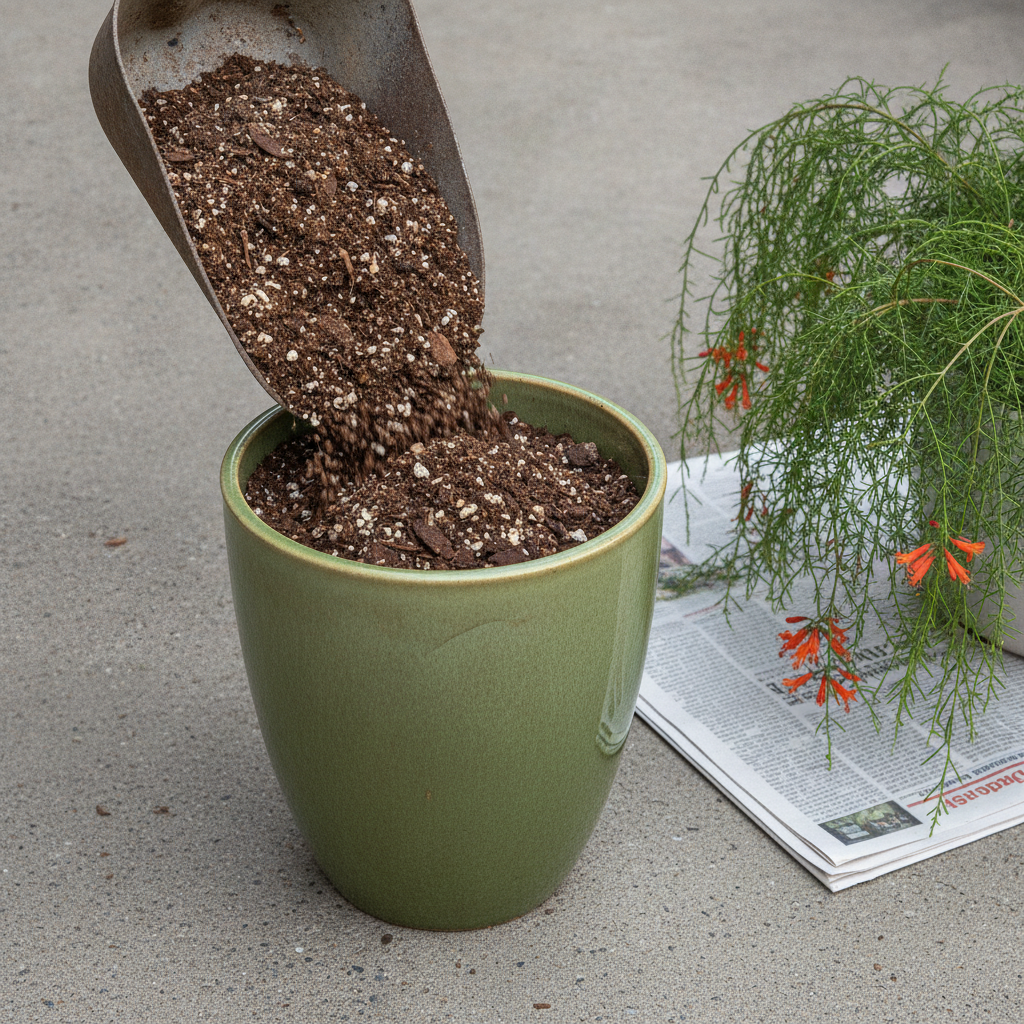
Ideal Soil Composition
A good firecracker plant mix starts from a quality general-purpose or houseplant compost and is opened up with grit and drainage material. The goal is a structure that stays evenly moist for a day or two after watering, then drains and breathes rather than staying sodden. The proportions below give a reliable starting point that you can adjust to your conditions.
| Component | Proportion | Function |
|---|---|---|
| Quality potting compost | 50 per cent | Holds moisture and nutrients, the bulk of the mix |
| Perlite or pumice | 25 per cent | Opens the structure for drainage and aeration |
| Horticultural grit or coarse sand | 15 per cent | Adds weight and sharp drainage at the root zone |
| Composted bark or coir | 10 per cent | Improves texture and long-term structure |
The firecracker plant is easy-going about pH, performing well in anything from slightly acidic to slightly alkaline soil, roughly in the range of 6.0 to 7.5. There is no need to chase a precise figure; an ordinary good compost sits comfortably within this band, and the plant’s drainage needs matter far more than its pH.
Pro Tip — Quick Mix Recipe: For a fast, dependable blend, stir together two parts standard houseplant compost, one part perlite and half a part horticultural grit. It drains freely, holds enough moisture for steady growth, and suits the firecracker plant in a hanging basket or a free-draining pot alike.
Choosing the Right Pot
Given its trailing habit, the firecracker plant is most often grown in a hanging basket or a raised pot that lets the stems cascade. Whatever the style, the priorities are good drainage and a size matched to the root ball, since this plant flowers more freely when its roots are comfortably, rather than generously, housed.
Drainage holes are non-negotiable. Never plant a firecracker plant in a pot without drainage. If you love a particular decorative cover pot, keep the plant in a plain plastic nursery pot with holes and slip it inside, lifting it out to water and drain. Standing water at the base will rot the roots no matter how careful you are with the watering can.
Pot material: Terracotta suits this plant especially well, since its porous walls let the soil breathe and dry more evenly, guarding against overwatering. Plastic and glazed ceramic hold moisture longer, which can be an advantage in hot, dry rooms but calls for a more cautious hand with the watering can.
Pot size: Choose a pot only a couple of centimetres wider than the current root ball. An oversized pot holds a reservoir of wet soil the roots cannot reach, inviting rot and, in this species, diverting energy from flowering into root growth. Pot up gradually rather than in big jumps.
When to Repot
A firecracker plant typically needs repotting every two years or so, or whenever roots appear at the drainage holes and the plant dries out almost as soon as you water it. Spring, as growth resumes, is the best time. Refreshing the top few centimetres of compost each spring, even in years when you do not move the plant up a pot size, replenishes nutrients and keeps the surface free of salt build-up.
How to Repot: Step-by-Step
- Water the plant a day beforehand so the root ball is moist and holds together.
- Slide the plant gently from its pot, supporting the crown and easing the sides rather than pulling on the stems.
- Tease a few outer roots loose if they are circling tightly, and trim any that are brown or mushy.
- Add a layer of fresh, free-draining mix to the base of a pot one size up.
- Set the plant at the same depth it sat before, and fill around the sides with fresh mix, firming lightly.
- Leave a small gap below the rim for watering, then water thoroughly to settle the soil.
- Return the plant to bright light and hold off on feeding for three to four weeks while it re-establishes.
Warning — Transplant Shock: After repotting, the firecracker plant may sulk briefly, dropping a few flowers or pausing growth. This is normal. Keep it warm and bright, water sensibly and avoid the temptation to feed straight away; pushing fertiliser onto freshly disturbed roots can scorch them and deepen the setback.
Fertilising
The firecracker plant flowers hard and long when it has the light to do so, and that sustained bloom comes at a nutritional cost. Regular feeding through the growing season keeps the supply of flowers coming and the stems a healthy green; a starved plant will flower thinly and may yellow even in good light.
That said, this is not a heavy feeder by the standards of, say, a hibiscus. A moderate, regular feed beats an occasional heavy dose, and over-feeding does more harm than under-feeding, encouraging soft, lush growth at the expense of flowers and risking salt damage to the roots.
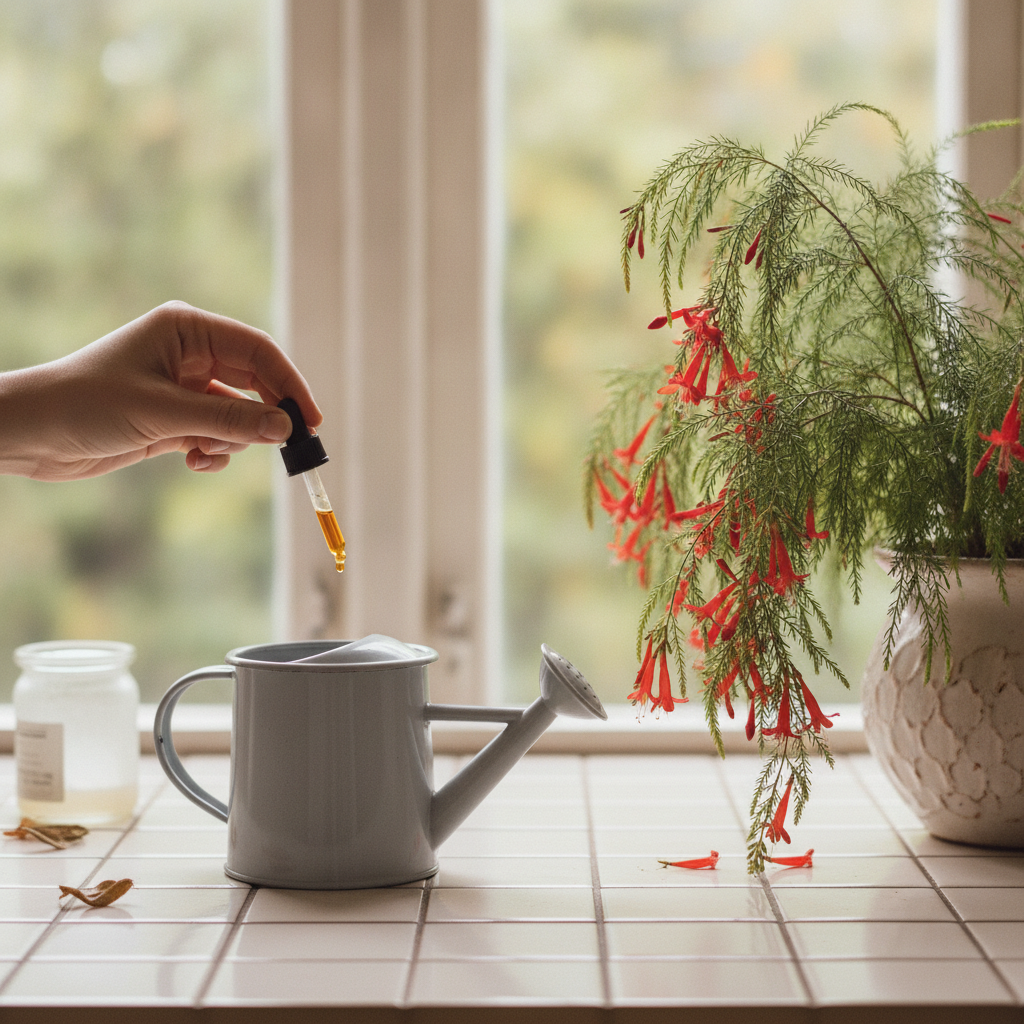
Understanding Plant Nutrients
Fertilisers are labelled with an NPK ratio giving the percentages of nitrogen, phosphorus and potassium, the three nutrients plants use in the greatest quantity. For a flowering plant such as the firecracker plant, a balanced feed works well, while one slightly higher in potassium can encourage bloom. The minor and trace nutrients matter too, and the table below summarises the key players and the signs of their absence.
| Nutrient | Symbol | Primary Function | Deficiency Symptoms |
|---|---|---|---|
| Nitrogen | N | Drives green stem and leaf growth | Overall yellowing, weak thin growth |
| Phosphorus | P | Supports roots, flowering and energy transfer | Poor flowering, dull or purplish tinge |
| Potassium | K | Regulates water use and bloom quality | Browning stem tips, sparse flowers |
| Calcium | Ca | Builds strong cell walls and new growth | Distorted or dying growing tips |
| Magnesium | Mg | Central to chlorophyll and photosynthesis | Yellowing between veins on older stems |
| Iron | Fe | Needed for chlorophyll formation | Yellowing of the newest growth, veins staying green |
Types of Fertiliser
Liquid fertilisers: The most convenient option for a flowering houseplant, mixed into the watering can and applied during the growing season. They act quickly and let you control the dose precisely, which suits the firecracker plant’s preference for a steady, moderate supply.
Slow-release granular: Pellets that release nutrients gradually over several months, stirred into the compost or scattered on the surface in spring. Useful for hands-off feeding, though they give you less fine control than a liquid feed and can over-supply in a small pot.
Organic fertilisers: Options such as worm castings, seaweed extract or diluted organic concentrates feed the plant gently while improving the soil. They are forgiving and hard to overdo, making them a sound choice for growers wary of chemical burn.
Feeding Schedule
Feed every two to four weeks from spring through to early autumn while the plant is actively growing and flowering, using a balanced or bloom-promoting fertiliser at half to full strength. As growth slows in autumn, taper the feeding off, and stop altogether through winter when the plant is resting. Resume in spring as new growth appears.
Pro Tip — Dilute and Feed Often: A weak feed given regularly outperforms a strong dose given rarely. Mixing your fertiliser at half the recommended strength and applying it more frequently gives the firecracker plant a steady supply without the risk of overwhelming its roots.
How to Fertilise
- Water the plant lightly first if the soil is very dry, so the feed does not hit parched roots.
- Dilute liquid fertiliser to the chosen strength in your watering can.
- Apply evenly to the soil, not over the stems and flowers.
- Let any excess drain away freely and discard what collects in the saucer.
- Flush the pot with plain water every couple of months to clear accumulated salts.
Warning — Salt Build-Up: A white crust on the soil surface or pot rim signals a build-up of fertiliser salts, which can scorch roots and brown the stem tips. Leach the pot by running plain water through it generously until it drains clear, and ease back on the feeding frequency.
Propagation
The firecracker plant is genuinely easy to multiply, which is welcome news given how readily a happy specimen fills a basket. The two most reliable methods are stem cuttings and division of an established clump, and both make use of the plant’s natural eagerness to root from its stems.
Spring and early summer, when the plant is growing strongly, give the best results, since cuttings root fastest and divisions recover quickest in warm, bright conditions. Both methods produce flowering-size plants far sooner than seed, and cost nothing but a little patience.
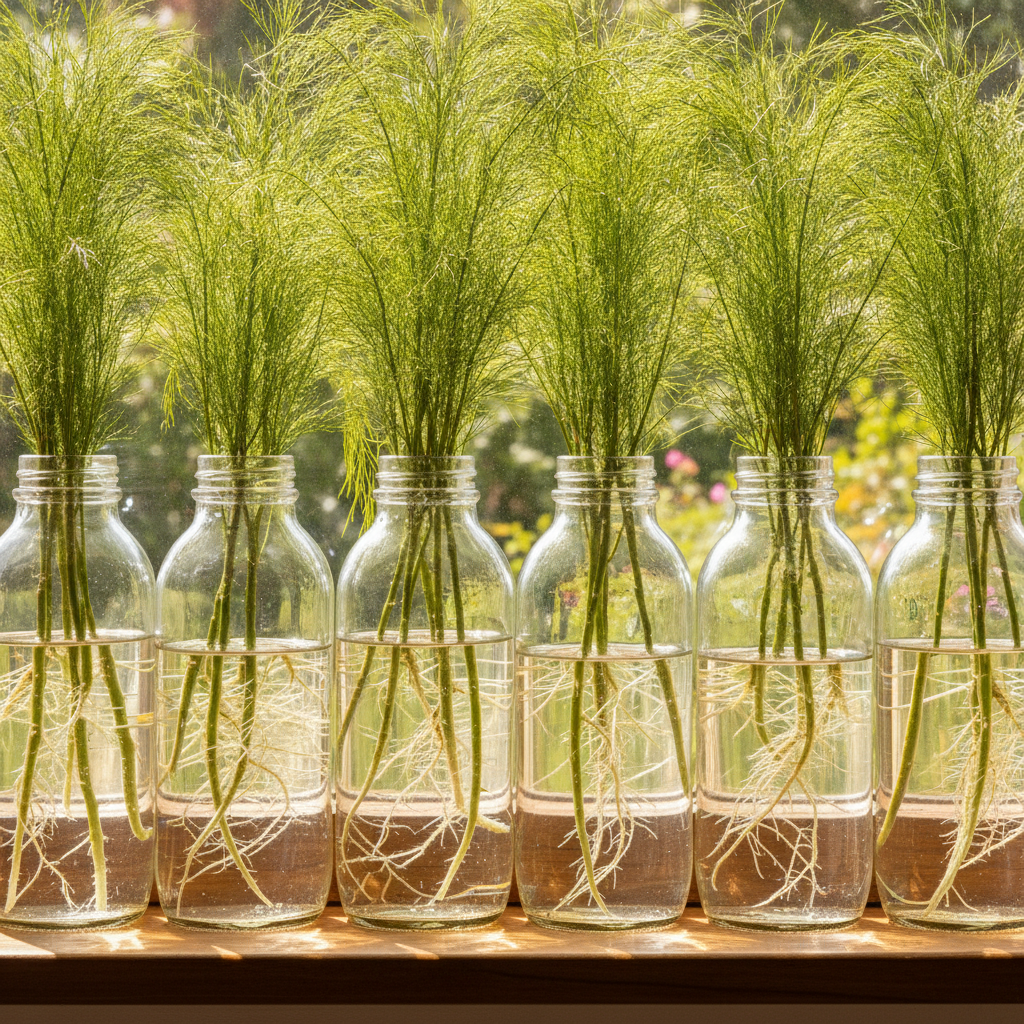
Understanding the Rooting Stems
The key to propagating this plant lies in its stems, which root from the nodes wherever they find moisture. In the wild and in the garden, the arching stems often layer themselves naturally, taking root where they touch damp soil. That same readiness makes both water-rooting and soil-rooting of cuttings straightforward, and it underpins the layering and division methods too.
Stem Cuttings: Step-by-Step
Stem cuttings are the simplest and most productive way to make new firecracker plants, and they can be rooted in water or straight into soil. Water-rooting has the advantage of letting you watch the roots develop.
- Choose healthy, non-flowering stems and cut a 10 to 15cm (4 to 6in) length just below a node with clean scissors.
- Strip any growth from the lowest few centimetres that would sit below the water or soil line.
- For water rooting, stand the cuttings in a clear jar of room-temperature water on a bright windowsill, changing the water every few days.
- For soil rooting, dip the cut end in rooting hormone if you have it and insert several cuttings into a pot of moist, free-draining mix.
- Keep warm and bright but out of harsh midday sun, and watch for white roots emerging within roughly two to three weeks.
- Once water-rooted cuttings have roots a few centimetres long, pot them into the firecracker plant mix and keep them evenly moist while they settle.
Pro Tip — Pot in Clumps: Root several cuttings together and pot the whole bundle into one container rather than spacing them out. A clump of cuttings fills a basket into a full, cascading plant far faster than a single stem ever could.
Division: Step-by-Step
An established, multi-stemmed firecracker plant can be split into two or more plants at repotting time, giving you instant flowering-size specimens. This works best on a healthy plant that has filled its pot.
- Water the plant a day ahead, then slide it from its pot and lay it on a clean surface.
- Gently tease the soil from the roots so you can see the natural clumps of stems.
- Separate the root ball into sections by hand, or cut through it with a clean, sharp knife, making sure each section has both healthy roots and several stems.
- Pot each division into its own container of fresh, free-draining mix at its original depth.
- Water in well and keep the new plants warm, bright and lightly moist while they recover over the following weeks.
Troubleshooting Propagation
| Problem | Likely Cause | Solution |
|---|---|---|
| Cuttings rot before rooting | Water too warm or stale, or soil kept sodden | Refresh water often, or use a leaner mix and water less |
| No roots after several weeks | Too cold or too dark | Move somewhere warmer and brighter and be patient |
| Cuttings wilt and shrivel | Too much sun or dry air before roots formed | Provide bright but indirect light and steady moisture |
| Divisions sulk or fail | Roots too badly torn during separation | Divide more gently, keeping ample roots on each piece |
Pests & Diseases
The firecracker plant is comparatively trouble-free, and a well-grown specimen in good light shrugs off most problems. It is not, however, immune, and the dry indoor air and lower light of a home make it more vulnerable to certain sap-sucking pests than it would be growing outdoors in the sun.
The best defence is a healthy plant and a regular look-over. Most infestations are easy to clear if caught early, and most diseases are really watering faults in disguise, traceable to soggy soil or stagnant air rather than to any aggressive pathogen.
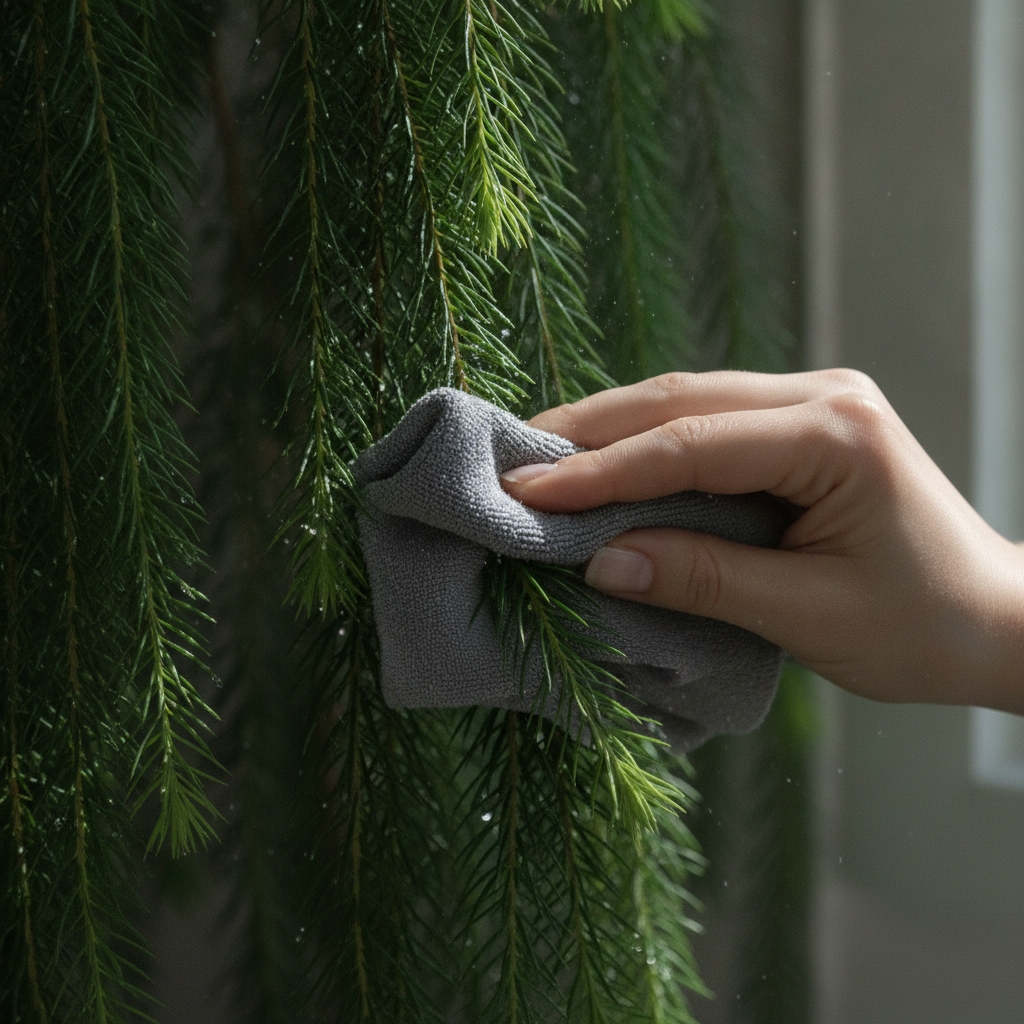
Common Pests
Spider Mites (Tetranychus urticae)
Spider mites thrive in warm, dry conditions and are the pest most likely to find a firecracker plant indoors. They are tiny, almost invisible to the naked eye, and betray themselves with fine speckling on the stems and faint webbing in the joints. Left unchecked they dull and weaken the whole plant.
Treatment: Rinse the plant under a tepid shower to dislodge the mites, then treat with insecticidal soap or neem oil, repeating every few days until clear. Raising the humidity and improving airflow makes the plant far less hospitable to them.
Aphids (Aphidoidea)
Aphids are soft-bodied insects that cluster on tender new growth and flower buds, sucking sap and leaving behind sticky honeydew. They can distort developing flowers and, in numbers, sap the plant’s vigour. Their fondness for buds makes them a particular nuisance on a flowering plant like this one.
Treatment: Knock them off with a strong jet of water, then follow up with insecticidal soap or neem oil on any survivors. Check the new growth regularly, since aphids reproduce quickly and small outbreaks become large ones in days.
Whitefly (Trialeurodes vaporariorum)
Whiteflies are minuscule white-winged insects that rise in a little cloud when the plant is disturbed. Like aphids they feed on sap and excrete honeydew, weakening the plant and fostering sooty mould. They favour the warm, sheltered conditions a sunny indoor spot provides.
Treatment: Yellow sticky traps catch the adults and help you monitor numbers, while insecticidal soap or neem oil applied to the stems tackles the rest. Persistence over a couple of weeks is usually needed to break their breeding cycle.
Common Diseases
Root Rot (Pythium and Phytophthora species)
Root rot is the most serious threat to the firecracker plant and almost always follows overwatering or poor drainage. The fungi attack roots left sitting in cold, wet soil, turning them brown and mushy, after which the stems collapse from the base and yellow from the bottom up.
Treatment: Unpot the plant, cut away all soft, blackened roots and affected stems, and repot into fresh, fast-draining mix in a clean pot. Water sparingly afterwards and correct the underlying drainage or watering habit that caused it.
Powdery Mildew (Erysiphales)
Powdery mildew shows as a dusty white coating on the stems, usually where air is stagnant and humidity high. It rarely kills the plant but disfigures it and, if it spreads, can weaken growth and reduce flowering. Crowded, poorly ventilated plants are the most at risk.
Treatment: Improve airflow around the plant and avoid wetting the stems, then treat affected growth with a suitable fungicide or a dilute potassium bicarbonate spray. Removing the worst-affected stems helps check its spread.
Pest and Disease Summary
| Pest / Disease | Identification | Treatment |
|---|---|---|
| Spider mites | Fine speckling and webbing in the joints | Rinse, then neem oil or insecticidal soap; raise humidity |
| Aphids | Clusters on new growth and buds, sticky honeydew | Water jet, then insecticidal soap or neem oil |
| Whitefly | Tiny white flies rising when disturbed | Yellow sticky traps and repeated neem oil treatment |
| Root rot | Brown mushy roots, collapsing stems, yellowing base | Cut away rot, repot in fresh mix, water less |
| Powdery mildew | Dusty white coating on stems | Improve airflow, fungicide or bicarbonate spray |
Prevention Strategies
Prevention is easier than cure, and with this plant it comes down to a few habits. Keep the firecracker plant in strong light with good airflow, water only when the surface has dried, and avoid the cold, soggy conditions that invite rot. A plant grown well in the right spot is naturally resilient and rarely troubled.
Inspect new acquisitions before introducing them to your other plants, and isolate anything suspect for a couple of weeks. Wiping the stems and removing spent flowers and any dead growth keeps the plant clean and denies pests the sheltered spots they like to colonise.
Pro Tip — Catch It Early: A weekly once-over with a close eye on the stem joints and new buds catches almost every pest before it becomes an infestation. Five minutes of inspection is worth more than any spray once the problem has taken hold.
Popular Varieties
The classic firecracker plant is the scarlet-flowered species, and it remains the most widely grown and most readily found. Plant breeders and nurseries have, however, selected a handful of colour forms over the years that bring the same fountain habit in different flower shades, broadening the appeal of an already striking plant.
All of them share the same easygoing nature and identical care, differing only in the colour of those tubular blooms. Availability varies by region and by season, with the red species form by far the easiest to source and the coloured selections turning up more often at specialist nurseries.
| Variety | Flower Appearance | Light Needs | Growth Rate | Availability |
|---|---|---|---|---|
| Species form | Bright scarlet-red tubular flowers | Full sun | Vigorous | Common |
| ‘Flamingo Park’ | Soft coral-pink tubular flowers | Full sun | Vigorous | Occasional |
| ‘Lemon Falls’ | Bright lemon-yellow tubular flowers | Full sun | Vigorous | Occasional |
| White form | Creamy white tubular flowers | Full sun | Moderate to vigorous | Rare |
Featured Varieties
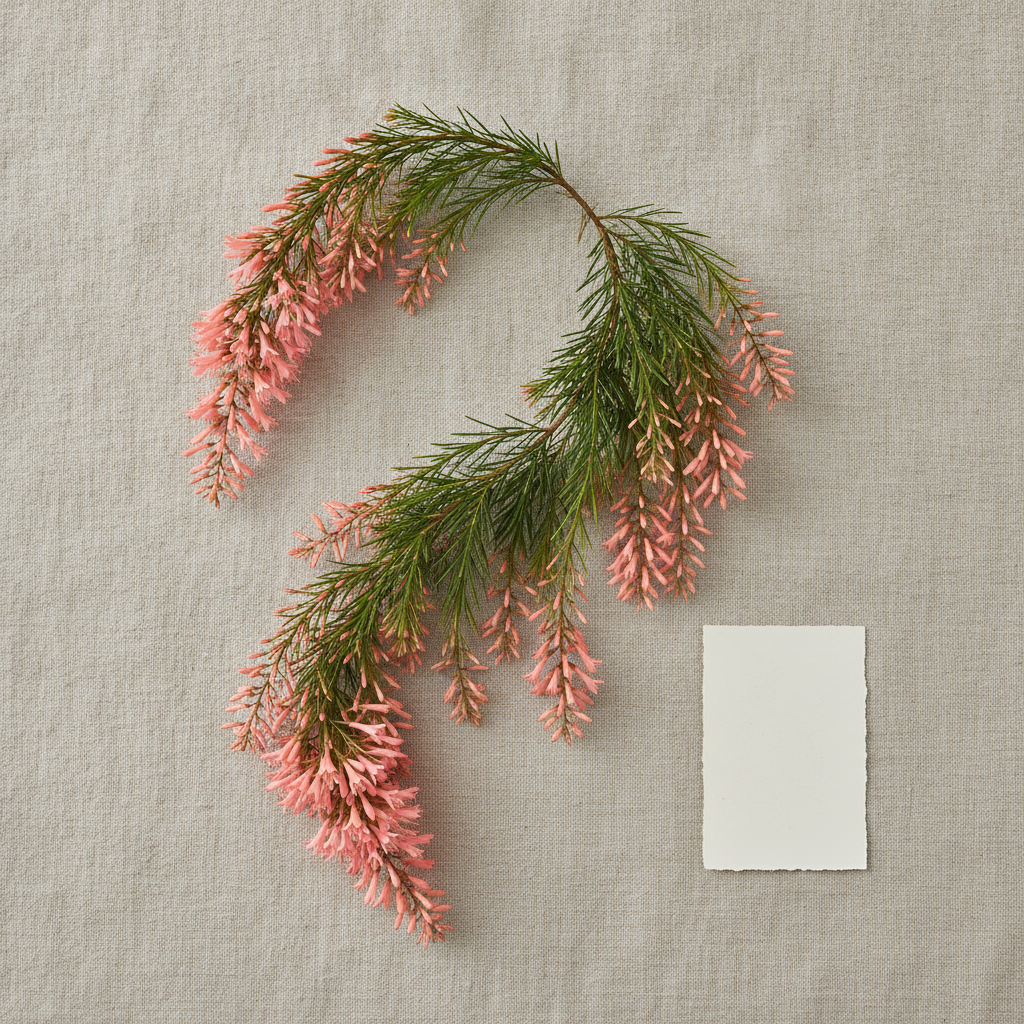
‘Flamingo Park’
A softer-toned selection that swaps the species’ fierce scarlet for gentle coral-pink flowers. It carries the same weeping, rush-like stems and the same long flowering season, offering a more pastel take on the firecracker effect that suits softer planting schemes.
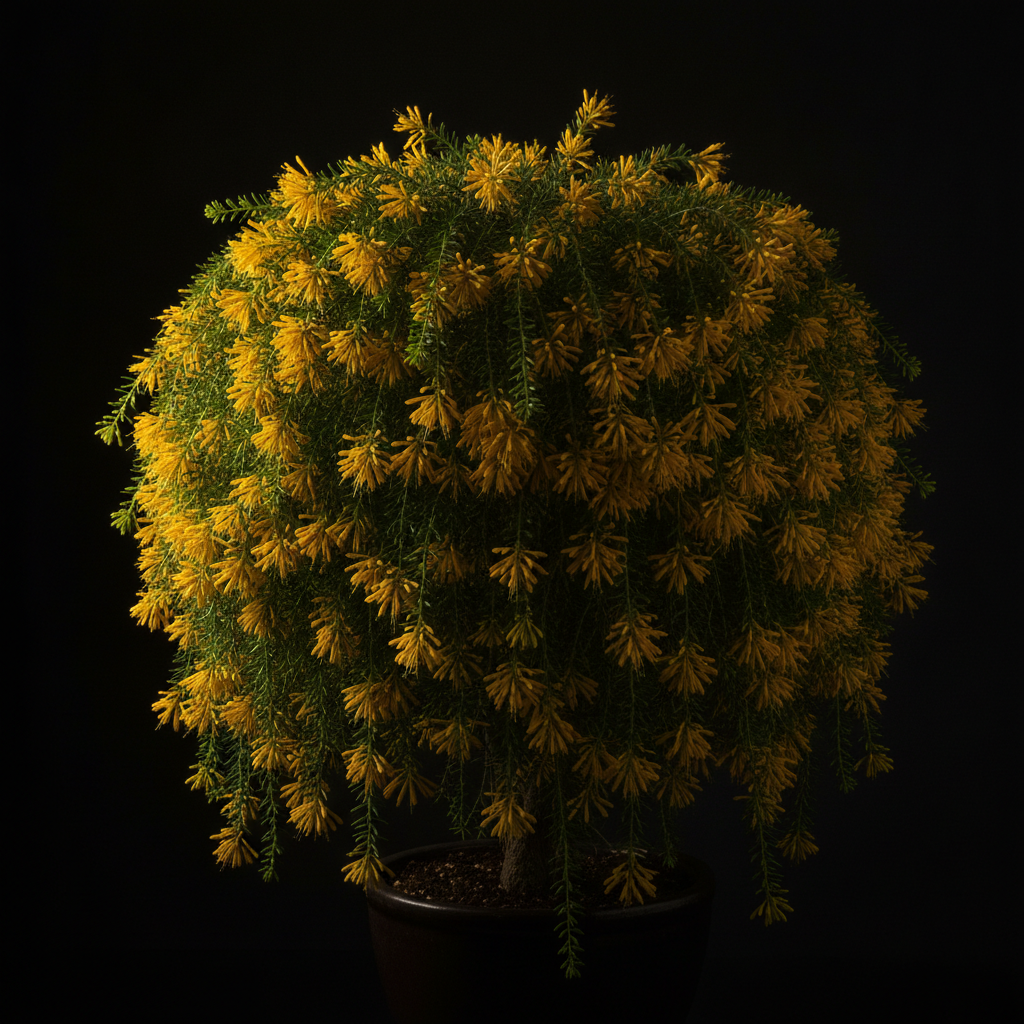
‘Lemon Falls’
A bright, sunny selection bearing masses of lemon-yellow tubular flowers against the same fine green cascade. The warm yellow reads as luminous in good light and makes a cheerful alternative to the red, while needing exactly the same care.
Variety Profiles in Detail
Species Form (Russelia equisetiformis)
The original and most popular form, and the one most people picture when they hear the name. Its bright scarlet flowers appear almost continuously in good light, dangling from the arching green stems like the sparks the common name evokes. Reliably vigorous and the easiest to find, it is the natural starting point for any grower.
‘Flamingo Park’ (Russelia equisetiformis ‘Flamingo Park’)
This coral-pink selection brings a quieter, more romantic colouring to the species. It is just as floriferous and just as easy to grow, and it combines beautifully with the red and yellow forms in a mixed display for a graduated, sunset-toned cascade.
‘Lemon Falls’ (Russelia equisetiformis ‘Lemon Falls’)
The yellow-flowered form is the brightest of the colour selections, its lemon blooms catching the light against the deep green stems. Like the others it asks only for sun, warmth and free drainage, and it rewards them with the same long, generous flowering season.
Choosing the Right Variety for Your Space
Since every firecracker plant variety needs the same strong light and free-draining soil, the choice between them is purely aesthetic. Match the flower colour to your scheme: the scarlet species form for maximum impact, ‘Flamingo Park’ for a softer look, or ‘Lemon Falls’ for brightness, and remember that whichever you choose, a sunny window and a free-draining pot will give you the best of it.
Frequently Asked Questions
Why is my firecracker plant not flowering?
By far the most common reason is insufficient light. The firecracker plant needs several hours of direct sun a day to bloom well, and in anything less it grows leggy and green but flowerless. Move it to your brightest south or west window, or add a grow light, and feed it through the growing season; flowering usually follows once the light is right.
Is the firecracker plant safe for cats and dogs?
The firecracker plant is not listed as toxic to cats, dogs or humans and is generally regarded as a pet-safe choice. As a sensible precaution, still discourage pets from chewing the stems, since eating any plant material can cause mild digestive upset in some animals.
Why are the stems turning yellow?
Yellowing stems usually point to overwatering or poor drainage, especially if the base feels soft and the soil stays wet. Let the top of the mix dry between waterings and make sure the pot drains freely. Occasionally yellowing reflects a nutrient shortfall, in which case a balanced feed during the growing season will green the plant up.
How big does a firecracker plant get?
Indoors in a pot or basket, the stems typically reach 0.6 to 1.2 metres (2 to 4ft) in length and spread at least as wide, forming a generous weeping mound. Grown in the ground in a warm climate it can become larger and shrubbier, but container culture and occasional pruning keep it to a manageable houseplant size.
Should I prune my firecracker plant?
Yes, and it responds well to it. Trimming the stems back in early spring encourages dense, bushy regrowth and keeps the plant from becoming bare and straggly at the base. You can also tidy stray stems through the season; the cuttings you remove root easily if you want more plants.
Can the firecracker plant be grown outdoors?
In warm, frost-free climates it is an excellent outdoor plant, beloved for spilling over walls and tumbling from hanging baskets, and it attracts hummingbirds and butterflies. It is tender, though, and damaged below about 7°C (45°F), so in cooler regions it is best grown in a container that can be moved to a bright, frost-free spot indoors for winter.
Does it really have no leaves?
Almost. The firecracker plant has only tiny, scale-like leaves, and the bulk of its photosynthesis is done by the slender green stems themselves, which is why it looks rush-like or horsetail-like rather than leafy. This is entirely normal and is the source of both its botanical name and its airy, fountain-like appearance.
How often should I water my firecracker plant?
There is no fixed schedule; water when the top 2 to 3cm (1in) of soil has dried, which in summer on a sunny sill often means once or twice a week, and in winter as little as every ten days to a fortnight. Always check the soil rather than the calendar, since light, warmth and pot size all change how fast the plant uses water.






