
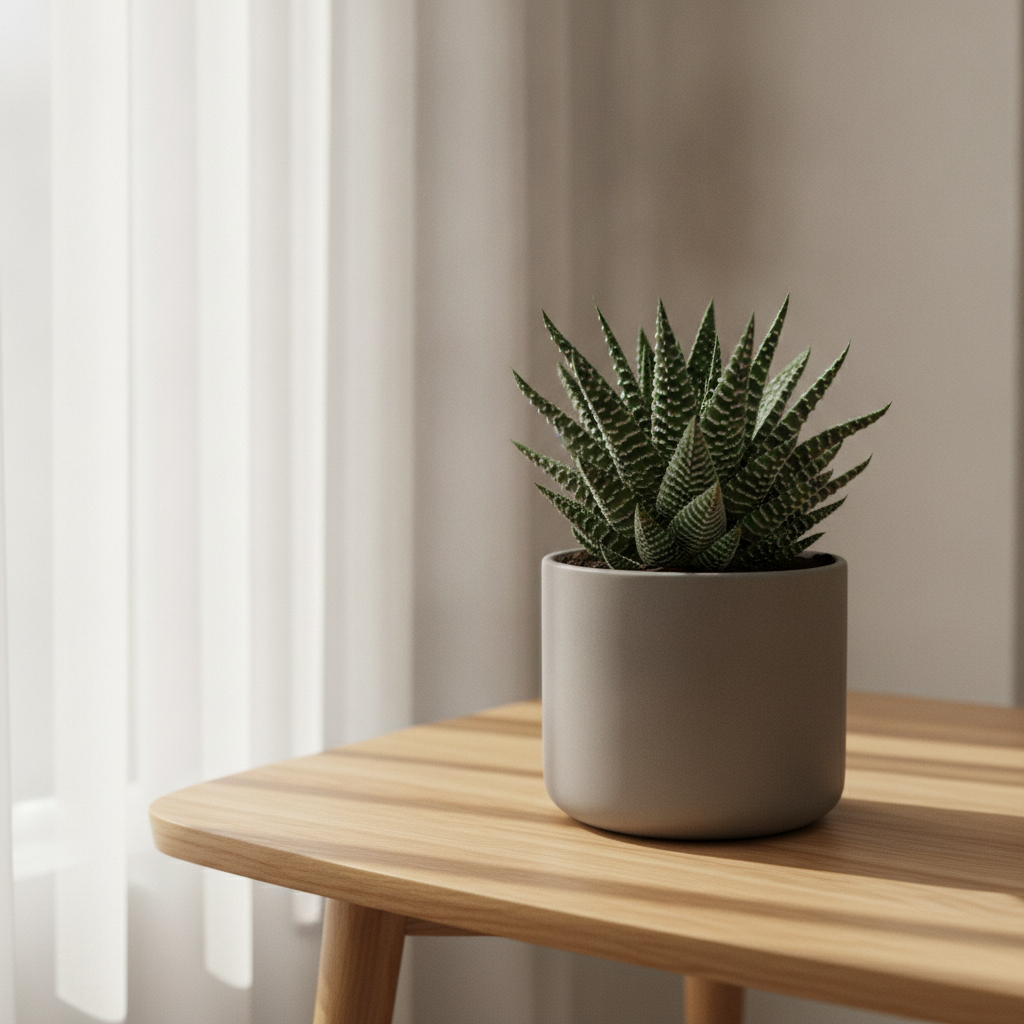
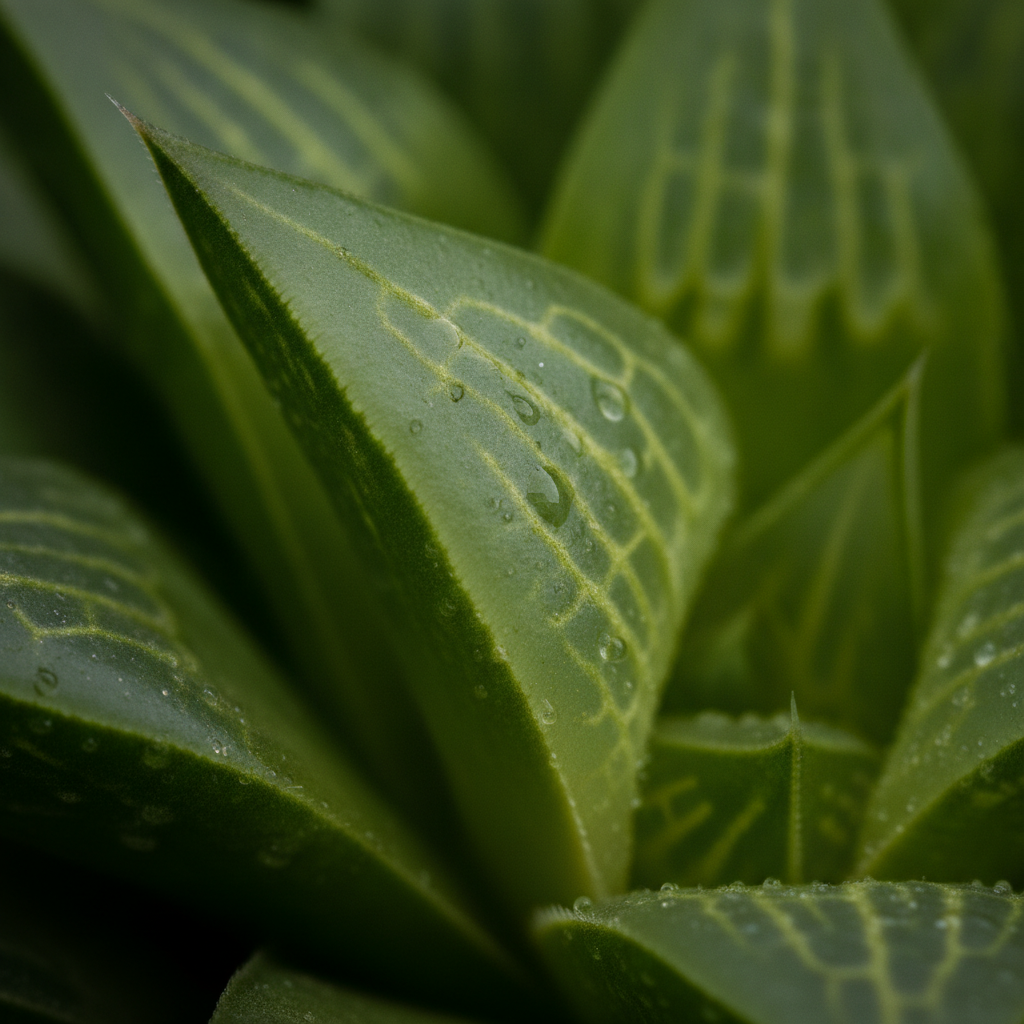
Run a fingertip down one of its stiff, triangular leaves and the fairy washboard (Haworthiopsis limifolia) explains its own name: a series of raised transverse ridges marches from leaf base to tip like the corrugations of an old laundry board, giving the plant the texture of a coarse file set in living green. This compact, slow-growing succulent forms a tight rosette of dark, incurved leaves rarely wider than a side plate, and it hails from the summer-rainfall regions of southern Africa, where it grows in rocky crevices and grassland across South Africa’s KwaZulu-Natal and Mpumalanga, the kingdom of Eswatini, and southern Mozambique. A member of the family Asphodelaceae, it sits among the aloes, gasterias and other haworthias, and until a 2013 reclassification it was known simply as Haworthia limifolia.
It has earned a reputation as one of the most forgiving succulents a beginner can own, shrugging off missed waterings, imperfect light and a wide swing of indoor temperatures with little complaint. Yet there is a meaningful gap between a fairy washboard that merely survives, hunkered down and static for years, and one that thrives, plumping its ridged leaves, deepening to a near-bronze green and pushing out a steady ring of offsets around its base. This guide covers everything that separates the two: how to read its light, how to water a plant built to store its own, what to pot it in, how to feed it without overdoing it, how to multiply it for free, and how to keep the few pests that bother it at bay.
Contents
- Quick Reference
- Why Fairy Washboard Makes an Excellent Houseplant
- Light Requirements
- Watering & Humidity
- Soil, Potting & Repotting
- Fertilising
- Propagation
- Pests & Diseases
- Popular Varieties
- Frequently Asked Questions
Quick Reference: Fairy Washboard at a Glance
| Light | Bright, indirect light; tolerates gentle direct morning sun |
| Watering | Soak fully, then let the soil dry out completely; roughly every 2 to 3 weeks in summer, monthly or less in winter |
| Temperature | 18 to 27°C (64 to 81°F); protect from anything below 5°C (41°F) |
| Humidity | Ordinary household humidity of 30 to 50% is perfect; no misting required |
| Fertiliser | A dilute, low-nitrogen succulent feed once or twice across spring and summer |
| Toxicity | Non-toxic to cats, dogs and humans; safe around pets and children |
Why Fairy Washboard Makes an Excellent Houseplant
Few houseplants reward so little effort so handsomely. The fairy washboard is a true succulent, storing water in its thick, fleshy leaves, which means it is engineered to weather the forgetful owner and the long weekend away. Its modest size, typically a rosette of 8 to 15 centimetres (3 to 6 inches) across, makes it equally at home on a crowded windowsill, a desk corner or a shelf where a larger plant would never fit, and its slow, orderly growth means it almost never outgrows its welcome. Where many fashionable houseplants demand a humidifier, a grow light and a watchful eye, this one asks only for grit underfoot, sun on its leaves and restraint at the watering can.
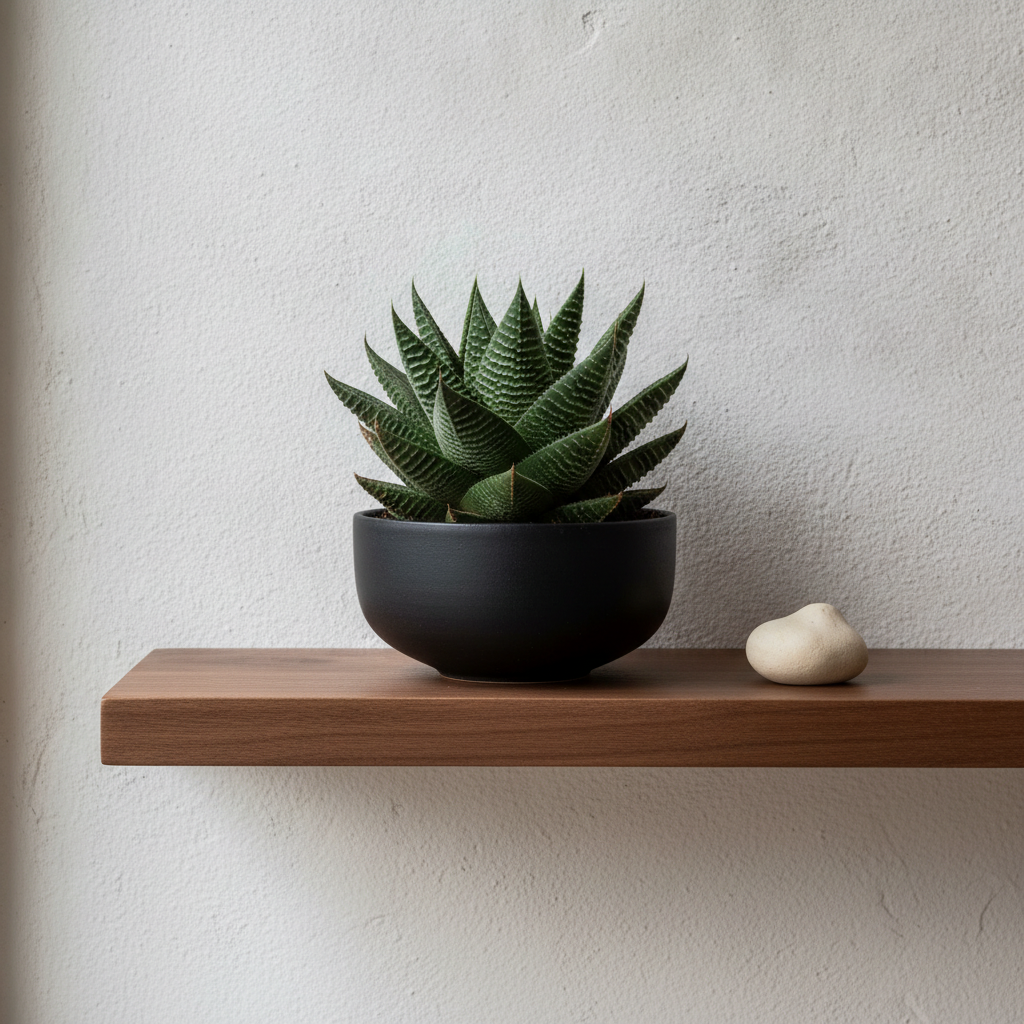
What lifts it above a merely easy plant is its character. The raised white-flecked ridges that band each leaf give it a tactile, architectural quality found in few other succulents, and the colour shifts with the light, deepening from fresh green in shade to a smoky bronze-purple under brighter conditions. It clumps generously, ringing itself with offsets that can be lifted and shared, so a single plant becomes a small dynasty over a few years. It is also genuinely long-lived, with well-kept specimens persisting for decades, and crucially it is safe: unlike aloes, euphorbias and many other succulents, the fairy washboard carries no toxic sap, making it a sensible choice for homes with curious cats, dogs or small children.
Important — Toxicity: The fairy washboard is listed as non-toxic to cats, dogs and humans, and no part of the plant is poisonous. It is one of the safest succulents to keep in a pet household. As with any houseplant, a pet that chews on the fleaves may suffer mild stomach upset simply from the fibrous, watery material, so it is still sensible to discourage nibbling, but there is no risk of poisoning.
Light Requirements
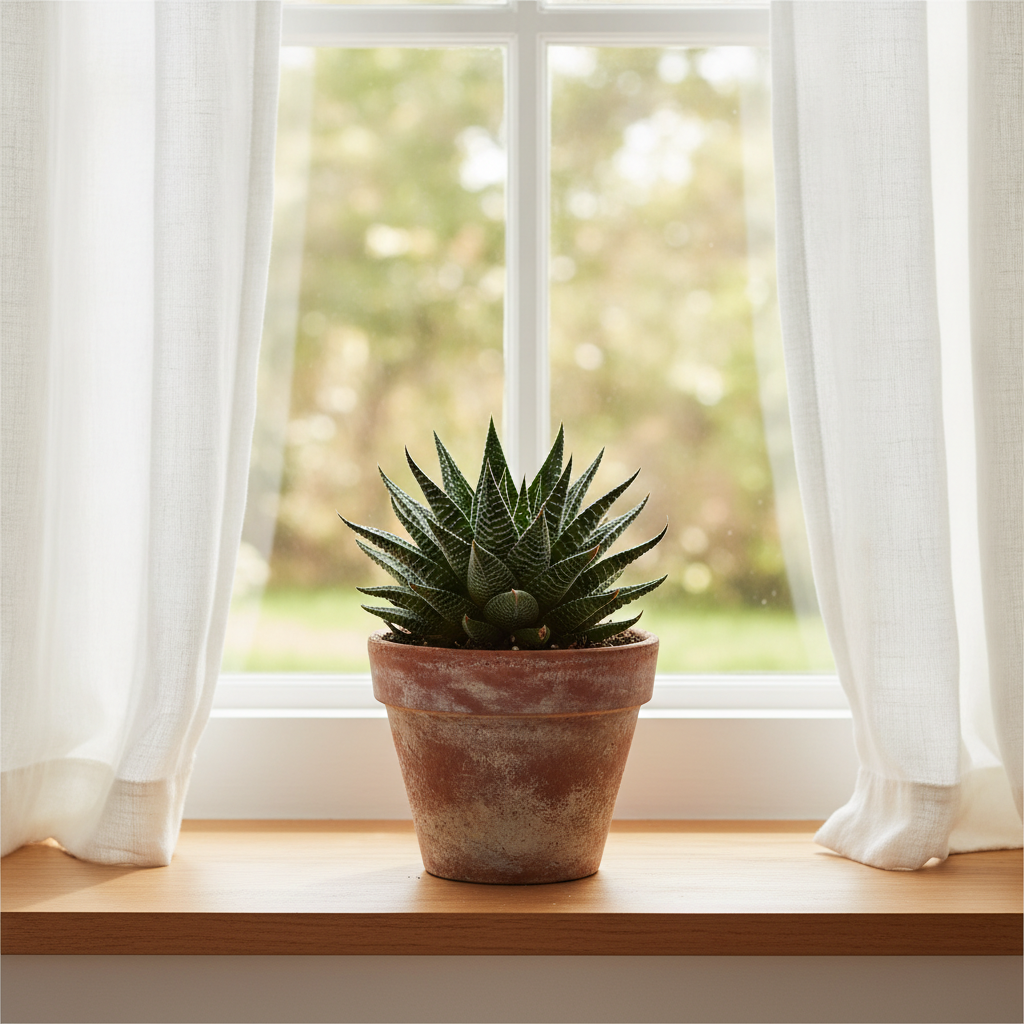
Light is the single lever that does the most to determine whether a fairy washboard merely holds its ground or genuinely flourishes. In the wild it grows in open, sunny grassland and rocky outcrops, often sheltering at the base of grasses and stones where it receives strong ambient light but is spared the full ferocity of the midday sun. Translated to the home, this makes it a bright-indirect plant that will also accept a few hours of gentle direct sun, particularly the soft light of early morning.
Aim to give it the brightest position you can without subjecting it to scorching afternoon sun through unfiltered glass. A spot within a metre (around 3 feet) of an east-facing window, or set slightly back from a south-facing one, suits it almost perfectly. Under good light the leaves stay short, fat and tightly stacked, and they often flush an attractive bronze or plum tone; under poor light the plant pales, the rosette loosens and the leaves stretch upward as the plant reaches for more, a process called etiolation that permanently distorts the neat shape.
Light Levels Explained
Understanding how the fairy washboard responds across the spectrum of indoor light makes placement far easier. The table below sets out the practical categories, from full sun to the dim interior of a room, and what you can expect from the plant in each.
| Light Category | Approx. Level | Typical Location | Outcome |
|---|---|---|---|
| Direct sun | Over 50,000 lux | Unobstructed south-facing sill | Tolerated in morning; harsh afternoon sun can scorch and redden leaves |
| Bright indirect | 15,000 to 40,000 lux | Near an east or filtered south window | Ideal; compact rosette, firm leaves, good colour |
| Medium | 8,000 to 15,000 lux | A metre back from a bright window | Acceptable; slower growth, slightly greener |
| Low | 2,000 to 8,000 lux | North window or interior wall | Survives but stretches; leaves loosen and pale |
| Very low | Under 2,000 lux | Hallway or windowless corner | Slow decline; etiolation and eventual collapse |
Window Orientation and Placement
South-facing window: The brightest option in the northern hemisphere and an excellent choice, provided you temper the strongest summer afternoon sun with a sheer curtain or by setting the plant back from the glass. Acclimatise it gradually to avoid sunburn.
East-facing window: Arguably the sweet spot. Cool, gentle morning sun followed by bright indirect light for the rest of the day gives the fairy washboard everything it wants with almost no risk of scorch.
West-facing window: A good option, though the afternoon sun here is stronger and warmer than the morning equivalent, so watch for any reddening or bleaching and pull the plant back slightly if the leaves look stressed.
North-facing window: The dimmest aspect and the most likely to cause stretching. A fairy washboard will persist here for a long time, but it will not be at its best, and supplementary lighting is worth considering through the darker months.
Pro Tip — Rotate for Symmetry: Because the rosette grows toward its light source, give the pot a quarter turn every week or two. This keeps the plant growing evenly and stops it leaning toward the glass, preserving the tidy, symmetrical form that makes the fairy washboard so appealing.
How Light Affects Leaf Colour
The fairy washboard is a quiet chameleon. Grown in cooler, shadier conditions it stays a deep, even green; pushed into brighter light, especially with cooler nights, it develops what growers call stress colour, a warm bronze, plum or near-black flush across the leaf surfaces that throws the pale ridges into sharp relief. This colouring is harmless and, for many enthusiasts, the whole point, but it is a tightrope. The same intensity that brings out the bronze can tip over into genuine sunburn if applied too suddenly, so the colour is best coaxed out by slowly increasing light over several weeks rather than moving the plant straight into a blazing sill.
Warning — Direct Sunlight: Sunburn on a fairy washboard appears as pale, bleached or brown patches that, unlike colour stress, do not recover and will scar the leaf permanently. A plant moved abruptly from a dim shop shelf to a hot summer windowsill is the classic casualty. Always acclimatise over two to three weeks, and shade the plant during the most intense midday hours in high summer.
Artificial Lighting
The fairy washboard responds well to a full-spectrum LED grow light, which is invaluable where natural light is scarce or during a dark northern winter. Position the light roughly 20 to 40 centimetres (8 to 16 inches) above the rosette and run it for around 10 to 12 hours a day to mimic a bright day. Because the plant is small and slow, even a modest desk-style grow lamp is enough, and the steady, controllable light it provides can produce a remarkably compact, well-coloured plant year round.
Seasonal Adjustments
As the sun weakens and the days shorten through autumn and winter, move the plant to your brightest available window to compensate. Light that would scorch in July is welcome in December, so a winter spell on a south-facing sill is usually safe and beneficial. When spring returns and the sun strengthens again, reverse the process gradually, easing the plant back from the glass over a few weeks so that it re-acclimatises without shock.
Watering & Humidity
If light is where most people under-supply the fairy washboard, water is where most people over-supply it. This is a plant that has evolved to hoard moisture in its leaves and roots and then ride out long dry spells, which means the single most important watering skill is the discipline to wait. Far more fairy washboards die from kindness, sitting in damp soil until their roots rot, than from any drought a forgetful owner could inflict.
When to Water
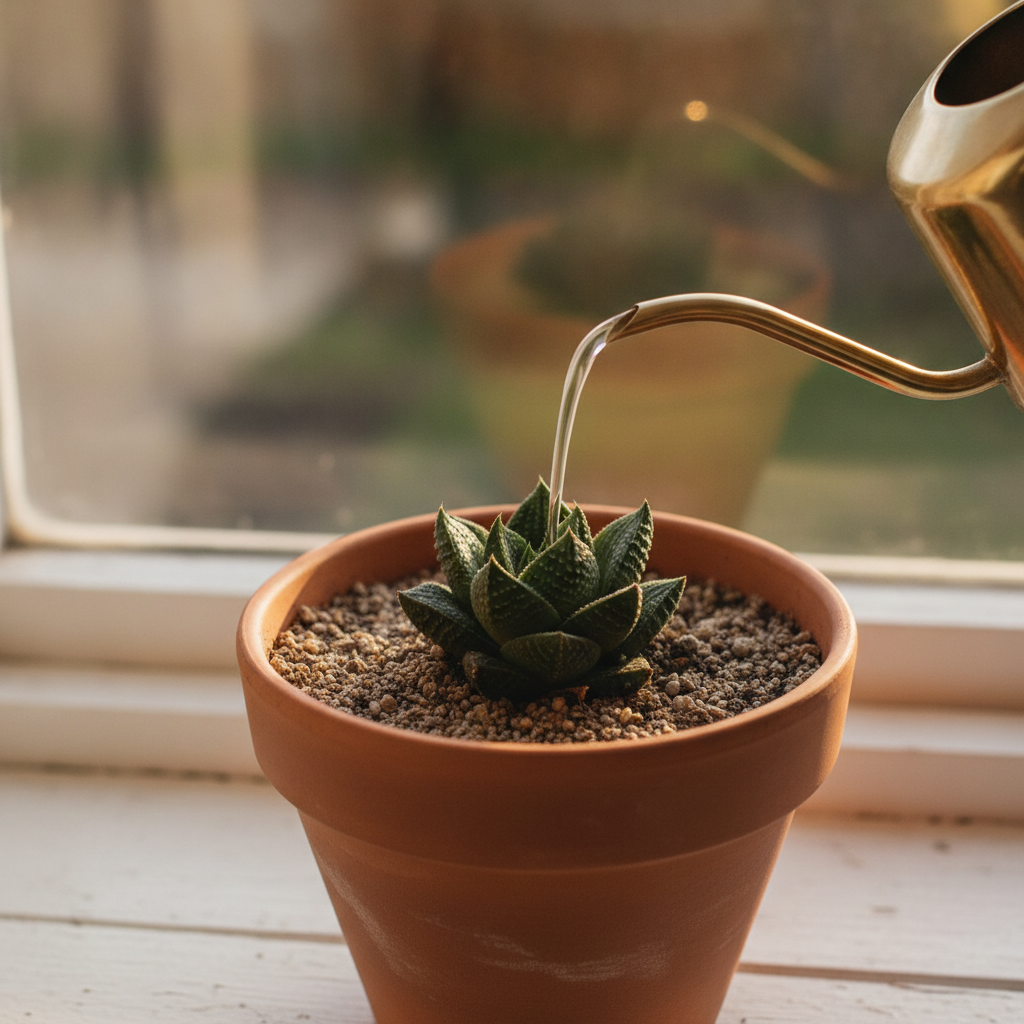
The governing rule is soak and dry. Water the plant thoroughly, then leave it completely alone until the potting mix has dried out all the way through, and only then water again. In practice this tends to mean watering roughly every two to three weeks during the warm, bright growing months of spring and summer, stretching to once a month or even less through the cool, dim days of winter, when the plant is barely growing and uses almost no moisture.
Rather than watering by the calendar, learn to read the plant and the pot. Lift the pot: a dry one is conspicuously light, a wet one noticeably heavy, and this heft test quickly becomes second nature. You can also push a finger or a wooden skewer into the mix, and if it comes out clean and dry to the bottom it is time to water. The leaves give a slower signal: a well-watered plant feels firm and full, while one that has gone too long develops slightly softer, wrinkled or puckered leaves, a gentle reminder that errs far safer than the alternative.
Pro Tip — When in Doubt, Wait: A thirsty fairy washboard recovers within hours of a good drink, plumping its leaves back up almost overnight. A waterlogged one, by contrast, may already be rotting at the roots before any symptom shows above the soil. If you are ever unsure whether to water, the safer answer is almost always to wait another few days.
How to Water Correctly
- Check first that the potting mix is dry all the way to the bottom of the pot, using the weight or skewer test.
- Water at the soil line, pouring slowly and evenly around the base of the rosette rather than over the leaves, which keeps water out of the crown where it can cause rot.
- Continue until water runs freely from the drainage holes, ensuring the entire root ball is moistened, not just the surface.
- Let the pot drain completely for several minutes, then tip away any water that collects in the saucer or cachepot.
- Return the plant to its spot and do not water again until the mix has dried out fully, however long that takes.
Signs of Overwatering vs. Underwatering
| Symptom | Overwatering | Underwatering |
|---|---|---|
| Leaf colour | Yellowing, translucent or blackening leaves | Dulling, slightly reddened or faded leaves |
| Leaf texture | Soft, mushy, water-soaked and squishy | Wrinkled, puckered, thin but still firm |
| Soil | Stays wet for many days; may smell sour | Bone dry, often pulling away from the pot |
| Roots | Brown, black, slimy and foul-smelling | Dry and wiry but otherwise intact |
| Stem base | Soft, dark and collapsing at soil level | Firm, simply shrunken slightly |
Warning — Root Rot: Root rot is the leading killer of the fairy washboard and it advances quickly once it takes hold. If the base of the plant turns soft, dark and mushy, act at once: unpot the plant, cut away every blackened root and any rotten tissue with a clean blade, let the wounds dry for a day or two, and replant the healthy remainder in fresh, dry, gritty mix. Withhold water for a week to let it settle.
Humidity Requirements
Here the fairy washboard is refreshingly undemanding. Adapted to dry, open habitats, it is perfectly content in the ordinary humidity of a centrally heated or air-conditioned home, somewhere in the range of 30 to 50 per cent, and it needs no help from humidifiers, pebble trays or misting.
In fact, excess humidity does more harm than good. Standing moisture trapped between the tightly packed leaves of the rosette, particularly in a cool, still room, invites fungal rot in the crown, which is precisely why misting this succulent is a mistake rather than a kindness. The plant draws all the water it needs through its roots, so the leaves are best kept dry.
If you grow your fairy washboard in an unusually humid spot, such as a steamy bathroom or a closed terrarium, compensate by improving air circulation and being even stricter with watering, since damp air slows the soil’s drying and raises the risk of rot considerably.
Water Quality
Ordinary tap water is fine for the fairy washboard in most areas, and this is not a plant that frets over chlorine or fluoride. In regions with very hard water, mineral salts can gradually build up and leave a white crust on the soil or pot rim, and an occasional flush with rainwater or distilled water clears this. Allowing tap water to stand overnight before use lets some chlorine dissipate and brings it to room temperature, sparing the roots a cold shock.
Soil, Potting & Repotting
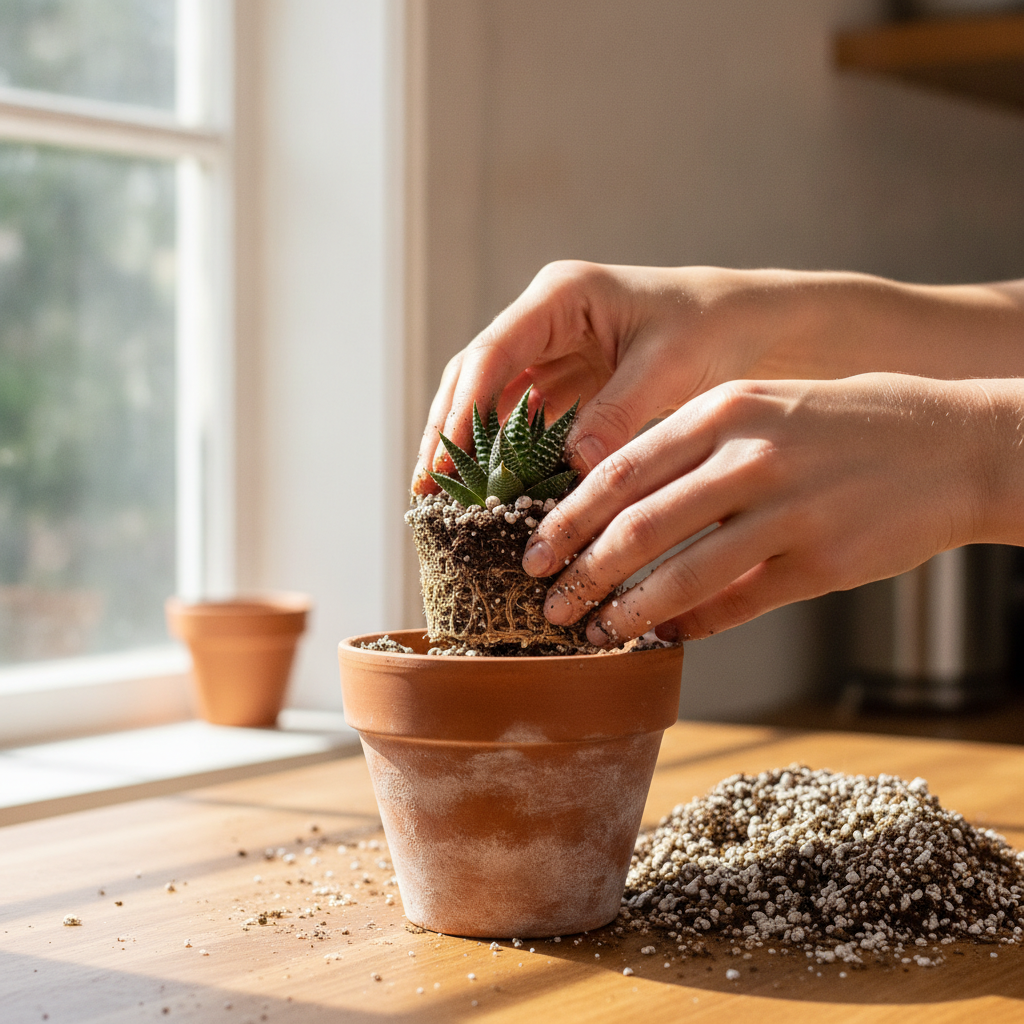
Everything about successful fairy washboard care comes back to drainage, and drainage starts in the pot. The fundamental aim is a gritty, open medium that holds enough moisture to satisfy the roots briefly and then dries fast, never leaving them sitting in soggy ground. Get the mix right and most watering mistakes become survivable; get it wrong and even careful watering struggles to keep the plant healthy.
Ideal Soil Composition
A standard houseplant compost holds far too much water for this succulent and will smother its roots. Instead, start with a proprietary cactus and succulent compost and open it up further with generous amounts of inorganic grit. A mix that is roughly half mineral grit and half organic matter drains quickly while still offering something for the roots to grip.
| Component | Proportion | Function |
|---|---|---|
| Cactus and succulent compost | 50% | Base medium holding nutrients and a little moisture |
| Perlite or pumice | 25% | Creates air pockets and speeds drainage |
| Coarse horticultural grit or sand | 20% | Adds weight and ensures water passes through fast |
| Fine bark or coir | 5% | Improves structure and slows complete drying |
The fairy washboard is relaxed about soil acidity, thriving across a slightly acidic to neutral range of roughly pH 6.0 to 7.0, which most cactus composts fall comfortably within. There is no need to test or adjust the pH for ordinary cultivation.
Pro Tip — Quick Mix Recipe: For a reliable blend, combine two parts shop-bought cactus compost, one part perlite or pumice and one part coarse grit. If you can grab only one bag at the garden centre, take pumice: a couple of handfuls stirred through ordinary cactus compost transforms its drainage and is the single most useful upgrade you can make.
Choosing the Right Pot
Because this is a small, shallow-rooted, slow-growing plant, it does not need a large or deep container, and a snug pot actually suits it better than a roomy one.
Drainage holes are non-negotiable. Whatever pot you choose, it must have at least one generous drainage hole. A decorative pot without one becomes a reservoir that keeps the roots wet and all but guarantees rot, so if you love a particular cachepot, grow the plant in a plain plastic nursery pot that drops inside it and lift it out to water.
Pot material: Unglazed terracotta is the classic and arguably the best choice, because its porous walls wick moisture out of the soil and let it breathe, which suits a rot-prone succulent perfectly. Glazed ceramic and plastic both hold water longer, so if you use them, lean even harder on a gritty mix and a careful hand at the watering can.
Pot size: Choose a pot only slightly larger than the rosette and its cluster of offsets, ideally just a centimetre or two of clearance around the root ball. An oversized pot holds a large volume of slow-drying soil that the small root system cannot use, and that excess damp soil is itself a rot risk.
When to Repot
The fairy washboard is a slow grower and is happy to stay put, so it typically needs repotting only every two to three years. The usual prompts are a pot crowded with offsets, roots creeping out of the drainage holes, soil that has broken down and no longer drains freely, or simply the wish to divide the clump. Spring, as the plant moves into active growth, is the ideal time, giving it the whole season to settle and recover.
How to Repot: Step-by-Step
- Wait until the soil is dry, which makes the plant easier to remove and is gentler on the roots than working with a wet root ball.
- Ease the plant out by squeezing a flexible pot or running a knife around the inside of a rigid one, then supporting the rosette and tipping it free.
- Gently tease away the old soil from the roots, taking the chance to inspect them and trim off anything brown, black or mushy with a clean blade.
- Separate any offsets now if you wish to propagate, pulling or cutting them away with a few roots attached.
- Position the plant in its new pot at the same depth it sat before, never burying the crown, and fill around it with fresh gritty mix, firming lightly.
- Leave the freshly repotted plant dry for about a week before its first watering, so any damaged roots can callus rather than rot.
Warning — Transplant Shock: Resist the urge to water a newly repotted fairy washboard straight away. Repotting inevitably nicks a few roots, and watering into those fresh wounds is an open invitation to rot. Keeping the plant dry for several days lets the cuts seal over, after which normal watering can resume safely.
Fertilising
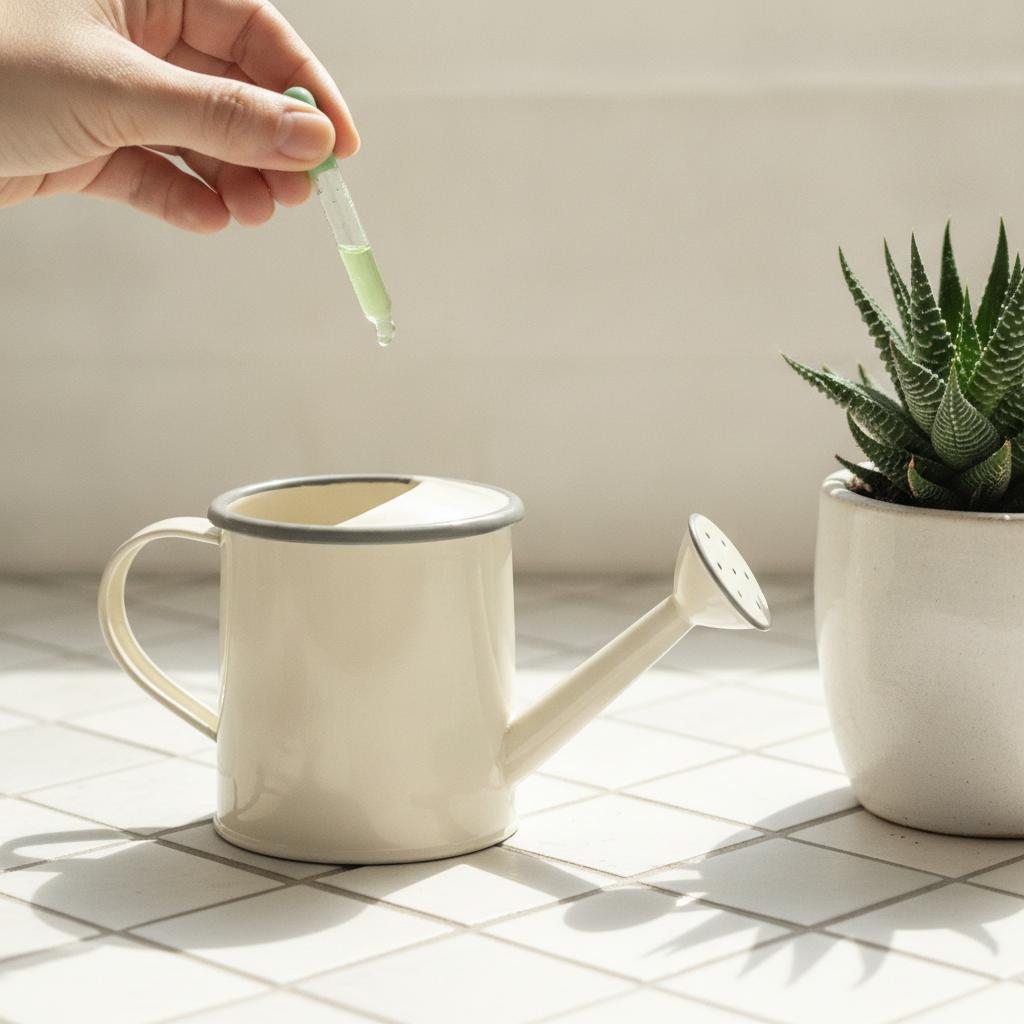
The fairy washboard is a famously light feeder, a plant adapted to lean, mineral soils where rich nutrition is the exception rather than the rule. It can grow perfectly well with no fertiliser at all, drawing what it needs from fresh potting mix, but a modest, well-timed feed during the growing season does encourage steadier growth and a fuller flush of offsets.
The watchword throughout is restraint. Overfeeding is far more damaging than underfeeding, pushing soft, weak, unnaturally fast growth that distorts the plant’s compact form and can chemically burn its roots. Feed sparingly, dilute heavily, and only when the plant is actively growing.
Understanding Plant Nutrients
Fertilisers are labelled with an NPK ratio, the proportions of nitrogen, phosphorus and potassium they contain, alongside a handful of secondary nutrients. For a succulent like the fairy washboard, a balanced or low-nitrogen formula is best, since too much nitrogen drives lush, soft growth at the expense of the firm, compact leaves you actually want.
| Nutrient | Symbol | Primary Function | Deficiency Symptoms |
|---|---|---|---|
| Nitrogen | N | Leaf and stem growth | Pale, slow, stunted growth |
| Phosphorus | P | Root development and flowering | Weak roots, poor flowering, dull leaves |
| Potassium | K | Overall vigour and stress resistance | Yellowing or browning leaf edges |
| Calcium | Ca | Cell wall strength | Distorted new growth, weak tissue |
| Magnesium | Mg | Core of the chlorophyll molecule | Yellowing between leaf veins |
| Iron | Fe | Chlorophyll production | Pale or yellow new leaves |
Types of Fertiliser
Liquid fertilisers: The easiest and most controllable option for a succulent, since you can dilute them precisely and apply them only when the plant is growing. A purpose-made cactus and succulent feed, used at half the recommended strength, is ideal.
Slow-release granular: Pellets that release nutrients gradually over months are convenient but harder to govern, which makes overfeeding easier with a plant this frugal. If you use them, apply at a fraction of the stated dose for succulents.
Organic fertilisers: Gentle options such as dilute worm-casting tea release nutrients slowly and are very hard to overdo, making them a forgiving choice, though they act more slowly than synthetic feeds and matter less for a plant with such small appetites.
Feeding Schedule
Feed only during the active growing months of spring and summer, and even then only once or twice across the whole season. A single dilute feed in late spring and another in midsummer is plenty. Stop entirely in autumn and winter, when the plant is resting and cannot use the nutrients, and feeding into that dormancy simply leaves unused salts to accumulate in the soil.
Pro Tip — Halve It, Then Halve It Again: When feeding succulents, dilute well below the label rate. Even the dose recommended for cacti and succulents is often stronger than a small fairy washboard needs, so mixing to a quarter or half of that strength gives the plant a gentle nudge without any risk of root burn.
How to Fertilise
- Choose a day when the plant is due to be watered and is in active growth during spring or summer.
- Mix a balanced or low-nitrogen succulent fertiliser to a quarter or half of the recommended strength.
- Water the plant with plain water first if the soil is bone dry, then apply the diluted feed, so the fertiliser never hits parched roots directly.
- Pour the solution evenly into the soil, avoiding the leaves and the crown of the rosette.
- Let the pot drain fully and resume your normal soak-and-dry routine afterwards.
Warning — Salt Build-Up: Over time, fertiliser salts can accumulate in the soil and appear as a white crust on the surface or pot rim, eventually scorching the roots and browning the leaf tips. Flush the pot thoroughly with plain water once or twice a year, letting plenty run out of the drainage holes, to wash these salts away.
Propagation
One of the quiet joys of the fairy washboard is how readily it multiplies. A mature plant rings itself with offsets, miniature versions of the parent that sprout around the base, and lifting and potting these is the simplest, most reliable way to turn one plant into many. Leaf cuttings are also possible, though slower and less certain, while seed is the province of the dedicated collector.
Spring and early summer, when the plant is growing strongly, are the best times to propagate, since cuttings and divisions root fastest and recover most quickly in warm, bright conditions. The whole process asks for a little patience but almost no skill.
Understanding Offsets
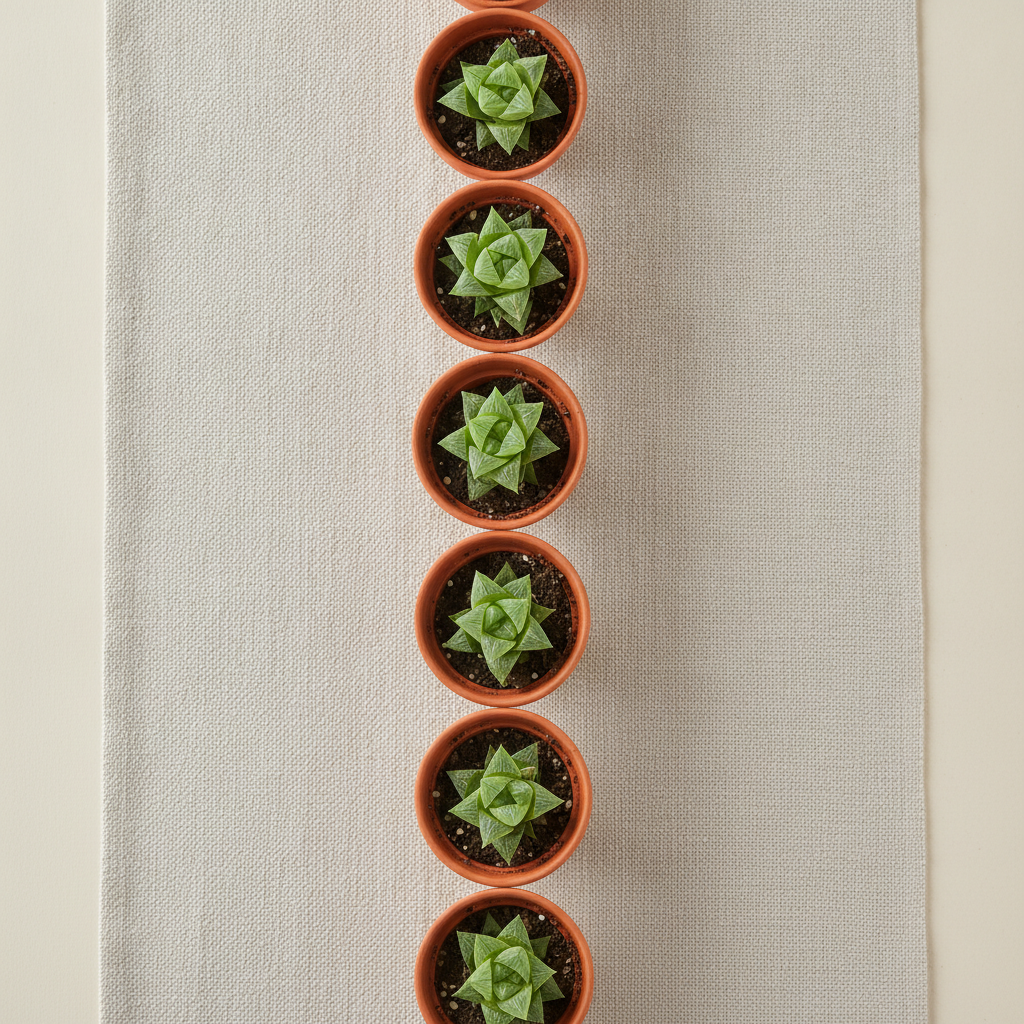
Offsets, also called pups, are baby plants the fairy washboard produces from its base as a natural means of spreading. Each is a genetic clone of the parent, often arriving with a few roots of its own already formed, which is what makes them so easy to establish. Left in place they slowly build the parent into a dense clump; removed and potted, each becomes an independent plant. Because they are clones, every offset will share the parent’s exact leaf form and colour.
Division of Offsets: Step-by-Step
This is by far the most dependable method and the one to reach for first. It works best done alongside a routine repotting, when the plant is already out of its pot and the offsets are easy to reach.
- Remove the whole plant from its pot and gently brush away the soil to expose the base of the rosette and the offsets clustered around it.
- Identify offsets that have their own roots, as these establish fastest, though rootless pups can also succeed.
- Separate each offset by hand where it pulls away cleanly, or cut it free with a clean, sharp blade, keeping as many of its roots as possible.
- Set the separated offsets aside in a dry, shaded place for one to two days so any cut surfaces callus over.
- Pot each offset into a small container of barely moist gritty mix, just deep enough to hold it upright.
- Keep them in bright, indirect light and wait about a week before the first light watering, then care for them as small adults.
Pro Tip — Let the Cut Heal: The single most important step in succulent propagation is allowing cut surfaces to dry and callus before they touch soil or water. A day or two in the open air forms a protective seal over the wound, dramatically cutting the chance of rot once the offset is potted up.
Leaf Cuttings: Step-by-Step
Leaf propagation is less reliable for the fairy washboard than for soft-leaved succulents, and not every leaf will take, but it is a worthwhile experiment when you have a leaf to spare or want more plants from a prized specimen.
- Select a healthy, plump outer leaf and remove it whole, gently twisting at the base so that none of the leaf tissue is left attached to the stem.
- Lay the leaf in a dry, shaded spot for several days until the broken end has thoroughly callused.
- Rest the callused leaf on the surface of barely moist gritty mix, with the cut end just touching the soil.
- Keep it warm and in bright, indirect light, misting the soil surface only very lightly every few days.
- Be patient, as roots and a tiny new rosette may take several weeks to many months to appear, and pot the new plantlet on once it is established and the parent leaf has shrivelled.
Troubleshooting Propagation
| Problem | Likely Cause | Solution |
|---|---|---|
| Offset rots after potting | Potted while wounds were fresh, or kept too wet | Let cuts callus for two days; use dry, gritty mix and water sparingly |
| Leaf cutting shrivels with no roots | Leaf removed with tissue missing, or kept too dry | Take whole leaves cleanly; keep the surface barely moist and warm |
| No new growth for weeks | Cool temperatures or low light slowing the plant | Move somewhere warmer and brighter and simply wait, as this plant is slow |
| Offsets pale and stretch | Insufficient light after potting | Provide bright, indirect light or a grow lamp |
Pests & Diseases
The fairy washboard is a robust, trouble-free plant, and a healthy specimen grown in good light and a dry, gritty mix is rarely bothered by anything. Most of the problems it does encounter are not pests at all but the consequences of overwatering, and the handful of insects that target it are easily managed if caught early.
The best defence is vigilance. Glance over your plant whenever you water, paying attention to the tightly packed leaf bases and the underside of the rosette where pests like to hide, and isolate any newly bought plant for a couple of weeks before letting it join your collection.

Common Pests
Mealybugs (Pseudococcus species)
The most frequent pest of the fairy washboard, mealybugs are small, soft-bodied insects that cloak themselves in a white, cottony wax and gather in the sheltered leaf axils and around the roots, sucking sap and slowly weakening the plant. A bad infestation leaves sticky honeydew and a generally tired, faded look.
Treatment: Dab each insect directly with a cotton bud soaked in isopropyl alcohol, which dissolves their waxy coat on contact. For larger outbreaks, treat the whole plant with a diluted neem oil or an insecticidal soap, repeating every week or two, and check the roots for the soil-dwelling form when you next repot.
Scale Insects (Coccoidea)
Scale appear as small, hard, brown or tan bumps stuck firmly to the leaves, often along the ridges, where they sit motionless and sap the plant. Because their shell-like covering protects them, they can be slow to notice and stubborn to shift.
Treatment: Scrape or lift them off gently with a fingernail or an alcohol-dipped cotton bud, then follow up with neem oil or insecticidal soap to catch the mobile young crawlers that the adult shells leave behind.
Fungus Gnats (Bradysia species)
Small black flies drifting around the pot are fungus gnats, and their presence is almost always a sign that the soil is being kept too wet. The adults are merely a nuisance, but their larvae live in damp soil and can nibble at fine roots.
Treatment: Let the soil dry out fully, which alone breaks their breeding cycle, and consider topping the pot with a layer of grit to deny the adults a place to lay. Yellow sticky traps catch the flying adults, while a soil drench of Bacillus thuringiensis targets the larvae.
Common Diseases
Root Rot (Pythium and Phytophthora)
By far the most serious threat to the fairy washboard, root rot is a fungal and water-mould decay driven by waterlogged soil. It works unseen below the surface until the base of the plant turns soft and dark and the leaves yellow and collapse, by which point it is often advanced.
Treatment: Unpot the plant immediately, cut away every soft, blackened root and any rotten crown tissue with a sterile blade, and let the healthy remainder dry for a day or two before replanting in fresh, dry, gritty mix. Prevention through careful watering and sharp drainage is far easier than cure.
Crown and Leaf Rot (Botrytis and others)
When water sits in the tightly packed centre of the rosette, particularly in cool, humid, still air, fungal rot can set into the crown and leaf bases, turning them brown, soft and sometimes furred with grey mould.
Treatment: Cut away affected tissue, improve air circulation, and water only at the soil line so moisture never pools in the crown. Move the plant somewhere warmer and brighter to help the remaining tissue dry and recover.
Pest and Disease Summary
| Pest / Disease | Identification | Treatment |
|---|---|---|
| Mealybugs | White cottony fluff in leaf axils and roots | Alcohol on a cotton bud; neem oil or insecticidal soap |
| Scale insects | Hard brown bumps fixed to leaves | Scrape off; follow with neem oil or soap |
| Fungus gnats | Small black flies around damp soil | Let soil dry; grit topping, sticky traps, Bt drench |
| Root rot | Soft black base, yellow collapsing leaves | Cut away rot, dry, replant in fresh gritty mix |
| Crown rot | Brown, soft or mouldy rosette centre | Remove affected tissue, improve airflow, water at soil line |
Prevention Strategies
Almost every problem this plant suffers traces back to the same root cause, which is too much water and too little air at the roots. Nail the basics, a gritty free-draining mix, a pot with drainage, bright light and a strict soak-and-dry watering routine, and you remove the conditions that pests and rot need to take hold.
Beyond that, quarantine new arrivals for a fortnight, inspect the plant each time you water, keep the leaves and crown dry, and ensure reasonable air movement around the pot. A vigorous, well-grown fairy washboard has its own resilience and shrugs off minor pest pressure that would overwhelm a stressed, overwatered one.
Pro Tip — Quarantine New Plants: Most infestations arrive hidden on a newly bought plant. Keep any new succulent apart from your collection for two to three weeks and watch it closely, so that any pests it carries reveal themselves and can be dealt with before they spread to everything else on the shelf.
Popular Varieties
Although the species itself is the form most often sold, Haworthiopsis limifolia is a variable plant in the wild and has given rise to several named varieties and cultivars prized by collectors. They differ in the strength of their ridging, the colour of their leaves and, most dramatically, in variegation, while sharing the same easy temperament.
Whether you want the boldest possible washboard texture, a softer paler form or a splash of cream variegation, there is a version of this plant to suit, and all of them respond to the identical care described in this guide.
| Variety | Leaf Appearance | Light Needs | Growth Rate | Availability |
|---|---|---|---|---|
| Species (var. limifolia) | Dark green, strongly ridged washboard texture | Bright indirect | Slow | Common |
| ‘Variegata’ | Green ridged leaves striped creamy yellow | Bright indirect | Very slow | Uncommon |
| var. ubomboensis | Smoother, paler olive, subtler ridges | Bright indirect | Slow | Uncommon |
| var. striata | Smoother surface with fine longitudinal lines | Bright indirect | Slow | Uncommon |
| var. gigantea | Larger rosette, broader ridged leaves | Bright indirect | Slow | Rare |
| ‘Spider White’ | Heavy white tubercles overlaying the ridges | Bright indirect | Very slow | Rare |
Featured Varieties
‘Variegata’
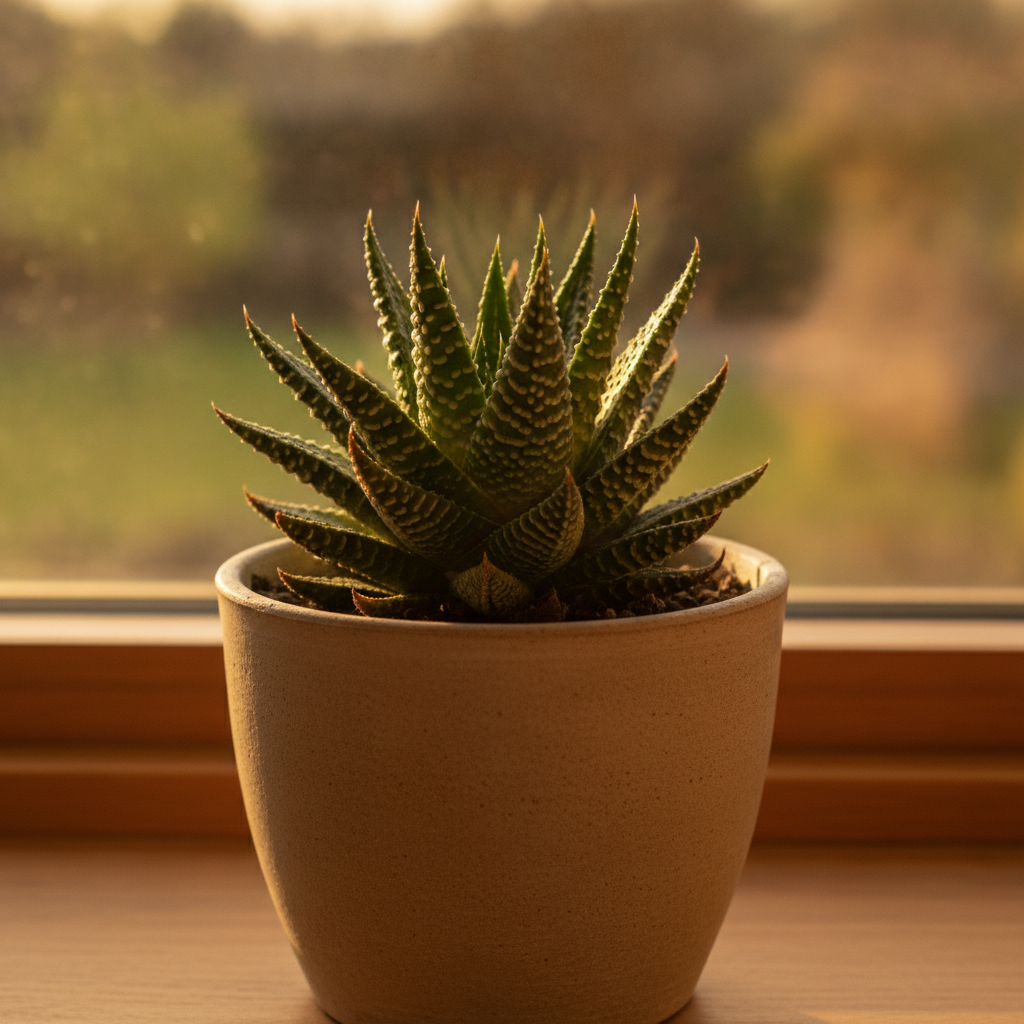
The most coveted form, its ridged green leaves streaked with longitudinal bands of creamy yellow. The variegation reduces the leaf’s green tissue, so it grows even more slowly than the species and appreciates good but never harsh light to keep the markings bright.
var. ubomboensis
A distinctive regional form with smoother, broader leaves in a paler olive green and far subtler ridging, giving an almost waxy, translucent look. It makes an elegant counterpoint to the strongly textured species and is just as easy to grow.
Variety Profiles in Detail
‘Variegata’ (Haworthiopsis limifolia ‘Variegata’)
Variegated fairy washboards are slow, capricious and much sought after, with each plant carrying a unique pattern of cream against green. Because the pale tissue holds less chlorophyll, these plants grow at a glacial pace and need consistently good light to keep the variegation crisp without burning the delicate cream sectors. They command a premium and reward the patient grower.
var. ubomboensis (Haworthiopsis limifolia var. ubomboensis)
Named for the Lebombo (Ubombo) mountains of its range, this variety trades the bold corrugations of the type for a smoother, almost polished leaf surface in a soft olive to grey-green. The ridges are present but muted, giving the rosette a gentler, more sculptural appearance that many collectors treasure precisely for its restraint.
‘Spider White’ (Haworthiopsis limifolia ‘Spider White’)
A striking selection in which the white tubercles that dot the species are amplified into a dense, raised network across the leaves, almost obscuring the green beneath. The effect is a pale, frosted, intricately textured rosette that stands well apart from the ordinary form, though it remains uncommon in cultivation.
Choosing the Right Variety for Your Space
For a first fairy washboard, the plain species is the obvious choice: inexpensive, widely available, the toughest of the group and the one that shows off the signature washboard texture most boldly. If you have grown succulents before and want something special, ‘Variegata’ offers the most visual drama, provided you can give it bright light and the patience its slow growth demands. Collectors drawn to subtler forms will enjoy var. ubomboensis or the heavily tuberculate ‘Spider White’, both of which bring distinct character while asking for exactly the same simple care.
Frequently Asked Questions
Why is my fairy washboard turning red or purple?
A reddish, purple or bronze flush is usually stress colour, a harmless response to bright light and cool nights that many growers actively encourage for its beauty. As long as the leaves stay firm and unblemished, it is a sign of a happy plant. If the colour comes with pale bleached patches or soft tissue, however, the light may be too intense and you should shade the plant slightly.
How often should I water my fairy washboard?
There is no fixed schedule, only a principle: water thoroughly, then wait until the soil is completely dry before watering again. In practice this is often every two to three weeks in summer and monthly or less in winter, but it depends on your light, warmth and pot, so always check that the soil is dry rather than counting days.
Is the fairy washboard safe for cats and dogs?
Yes. Haworthias, including the fairy washboard, are listed as non-toxic to cats and dogs, making this one of the safest succulents for a pet household. A pet that chews the leaves might get a mild stomach upset from the fibrous material, but there is no poisoning risk, so it is still worth gently discouraging nibbling.
Why are the leaves wrinkled and soft?
Wrinkled, slightly puckered leaves that are still firm usually mean the plant is thirsty, and a good soak will plump them up within a day. If instead the leaves are soft, mushy, translucent or yellowing, the cause is the opposite, overwatering and likely root rot, which calls for unpotting and trimming away the damaged roots.
Why is my fairy washboard stretching and losing its shape?
Stretching, where the rosette loosens and the leaves elongate and reach upward, is etiolation caused by too little light. The plant is straining toward a brighter source. Move it to your brightest window or add a grow light, though be aware that already-stretched growth will not tighten back up; only new growth in better light will return to the compact form.
Does the fairy washboard flower?
It does. A mature, well-grown plant sends up a slender stalk in spring or summer bearing small, tubular white flowers, often with faint pinkish or brownish veining. The blooms are modest rather than showy, as the plant is grown chiefly for its foliage, but they are a welcome sign of a thriving specimen and pose no strain on its health.
How big does a fairy washboard get?
It stays small. An individual rosette typically reaches only 8 to 15 centimetres (3 to 6 inches) across and a similar height, though over years a plant will widen into a clump as it produces offsets. This modest, slow-growing habit is part of its appeal and means it rarely needs a large pot or much space.
Why is my fairy washboard not growing?
Slow growth is entirely normal for this plant, which adds only a little each year even in ideal conditions, and it all but stops during the winter rest. If the growing season passes with no progress at all, check that it has enough light, that you are watering when the soil dries rather than leaving it bone dry for months, and that the roots are healthy and not quietly rotting.
Can I grow a fairy washboard in a pot without drainage holes?
It is strongly discouraged. Without drainage, water pools at the bottom of the pot and keeps the roots wet, which is the fastest route to fatal root rot in a succulent. If you adore a particular decorative pot that lacks holes, grow the plant in a plain nursery pot that fits inside it and lift it out to water, returning it only once it has fully drained.
How do I propagate a fairy washboard?
The easiest way is by division of offsets. When you repot, separate the rooted pups that cluster around the base, let any cut surfaces callus for a day or two, and pot them into small containers of gritty mix. Leaf cuttings are also possible but slower and less reliable, so offsets are the dependable route to more plants for free.






