
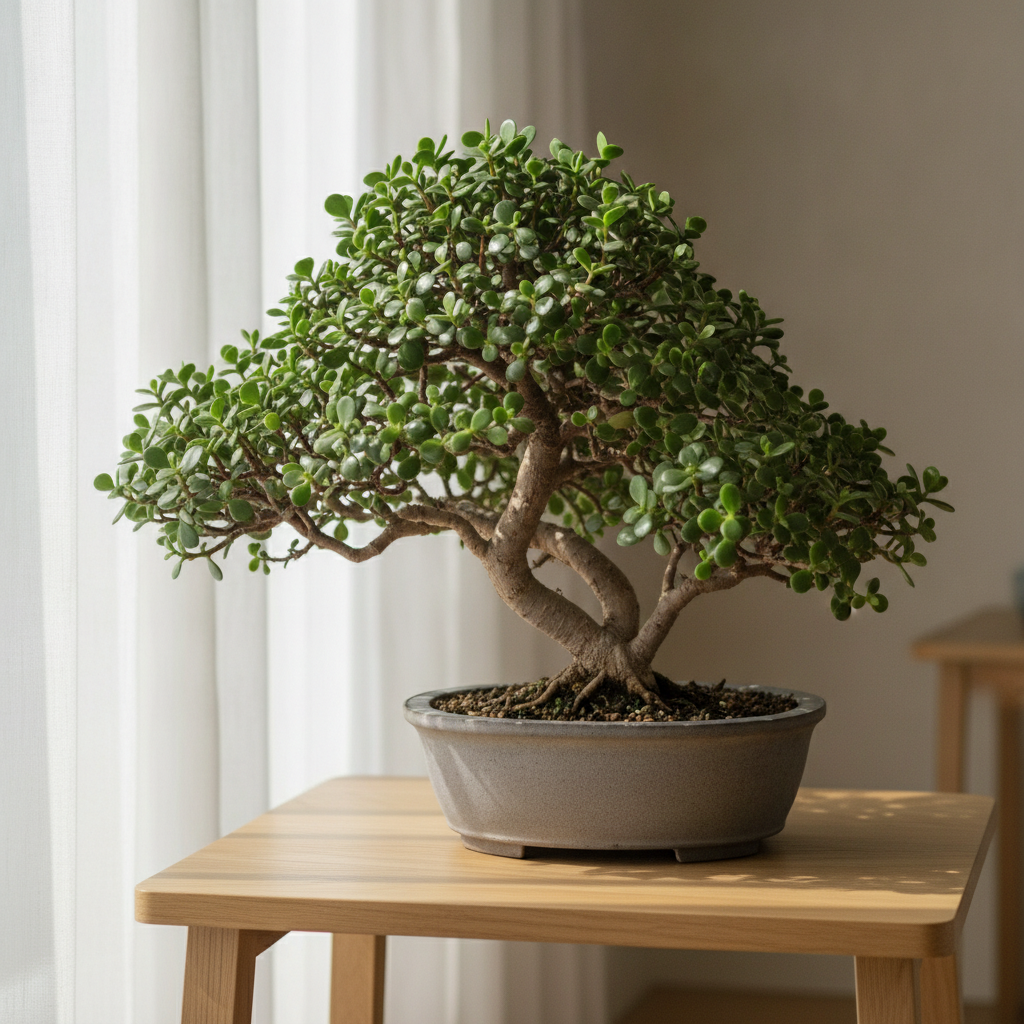
Few plants bridge the worlds of succulent-growing and bonsai as gracefully as the dwarf jade, Portulacaria afra. Native to the semi-arid thickets of South Africa’s Eastern Cape, where it is known as spekboom and grazed by elephants and tortoises alike, this soft-wooded succulent shrub carries small, rounded, glossy leaves on reddish-brown stems that thicken and gnarl with age. That combination of miniature foliage and a trunk that fattens quickly is exactly why growers reach for it when they want a bonsai that looks decades old within a few short years.
It is worth clearing up the name straight away, because the dwarf jade is not a true jade at all. The familiar jade plant of windowsills is Crassula ovata, an unrelated species that merely shares the same plump, jade-green look. Portulacaria afra is easier to keep, faster to grow and far more forgiving of the heavy pruning and wiring that bonsai demands. This guide covers everything from light and watering through to soil, feeding, propagation, pests and the handful of cultivars worth seeking out, with a consistent eye on the difference between merely keeping the plant alive and coaxing it to genuinely thrive as a specimen tree.
Contents
- Quick Reference
- Why the Dwarf Jade Bonsai Makes a Rewarding Houseplant
- Light Requirements
- Watering & Humidity
- Soil, Potting & Repotting
- Fertilising
- Propagation
- Pests & Diseases
- Popular Varieties
- Frequently Asked Questions
Quick Reference: Dwarf Jade Bonsai at a Glance
| Light | Bright light with several hours of direct sun; the brightest window in the home or a grow light |
| Watering | Soak thoroughly, then let the mix dry out almost completely before watering again |
| Temperature | 18 to 30 degrees C (64 to 86 degrees F); keep above 10 degrees C (50 degrees F) |
| Humidity | Undemanding; ordinary room humidity of 30 to 50 per cent is fine |
| Fertiliser | Dilute balanced feed roughly monthly through spring and summer |
| Toxicity | Non-toxic and even edible; safe around cats, dogs and children |
Why the Dwarf Jade Bonsai Makes a Rewarding Houseplant
The dwarf jade earns its place on the windowsill for reasons that go well beyond looks. As a succulent it stores water in its leaves and stems, which means it shrugs off the occasional missed watering that would finish off a fussier plant. It grows quickly for a bonsai subject, back-buds readily along old wood, and heals its pruning wounds fast, so mistakes made while learning to shape it are rarely permanent. For anyone taking their first steps into bonsai, that resilience is precisely what turns an intimidating art form into an approachable hobby.
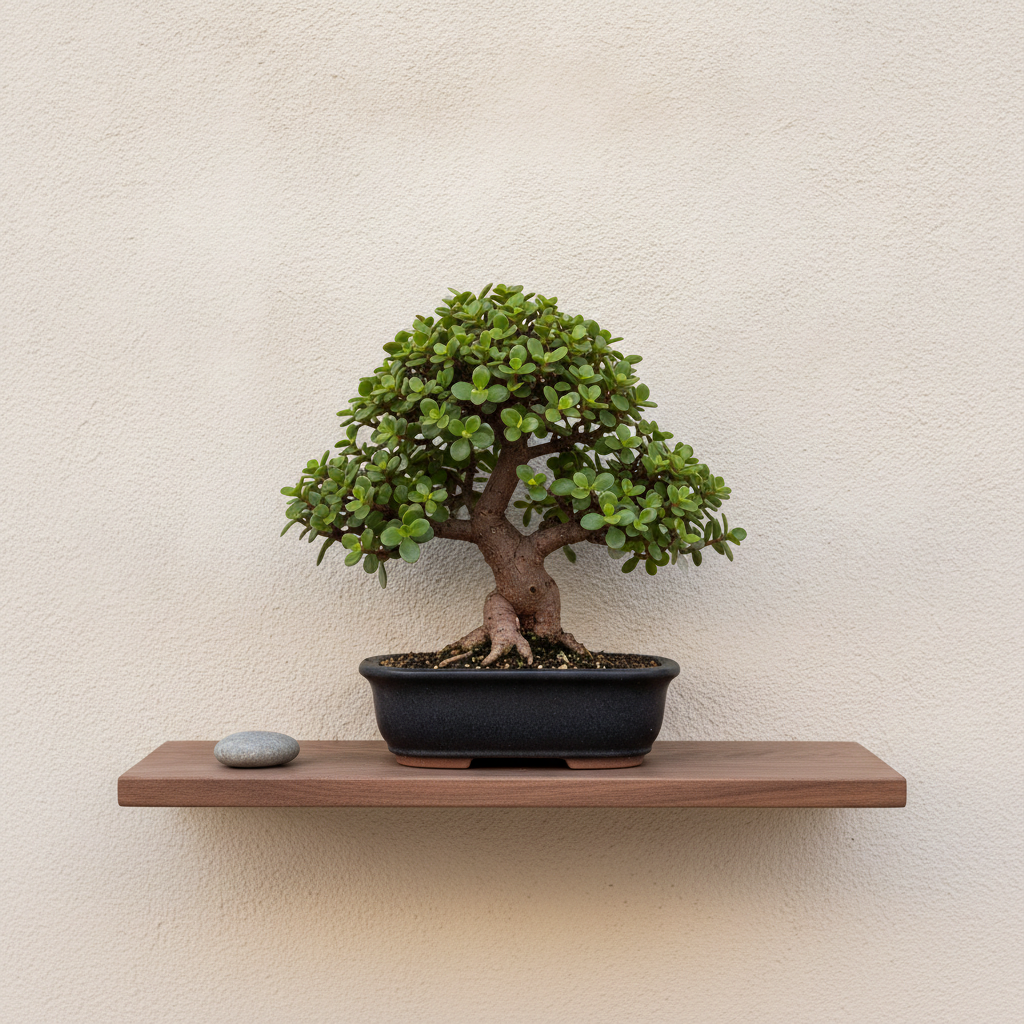
There is also a genuine ecological story behind this modest plant. In its South African homeland, spekboom is prized for its ability to lock up carbon, and large-scale plantings have been used to restore degraded thicket. On a domestic scale, a dwarf jade will quietly photosynthesise its way through the day using a flexible metabolism that lets it fix carbon efficiently in warm, bright conditions. None of this is essential to enjoying the plant, but it does explain why such a tough little shrub has become both a restoration hero abroad and a beginner’s bonsai favourite indoors.
Important — Toxicity: Unusually among popular houseplants, Portulacaria afra is not merely non-toxic but edible. Its tart, lemony leaves are eaten in salads in parts of southern Africa, and the plant is safe around cats, dogs and small children. This makes it a reassuring choice for pet-owning households where jade plants proper and many other succulents would be off-limits.
Light Requirements
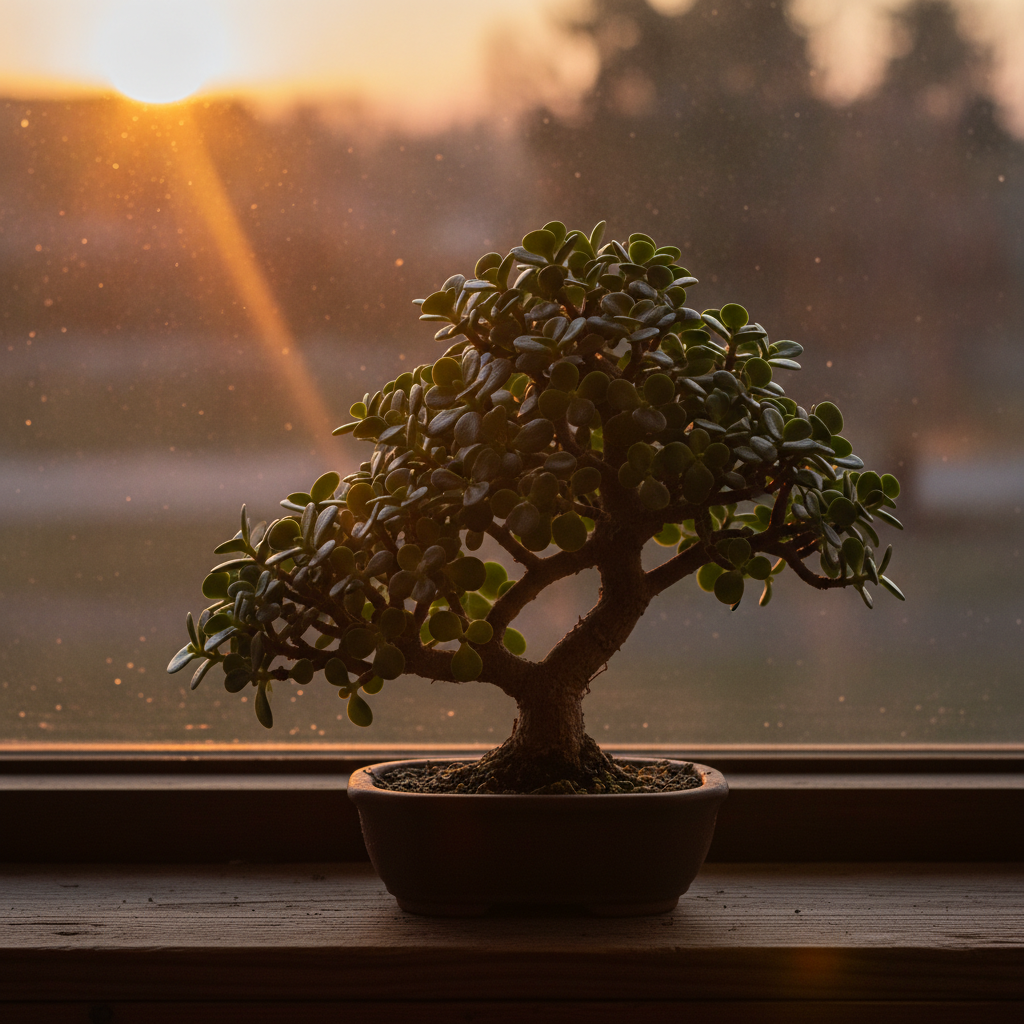
Light is the single biggest factor separating a dense, characterful dwarf jade from a lanky, disappointing one. This is a full-sun plant in the wild, and indoors it wants as much bright light as you can give it. Insufficient light is the most common reason a dwarf jade grows leggy, with long gaps between leaves and thin, floppy stems that undermine any attempt at a tree-like silhouette.
The ideal position is directly in front of the brightest window in the home, where the plant receives at least three to four hours of direct sun each day on top of ambient bright light. Given that, the internodes stay short, the leaves stay small and closely spaced, and the trunk thickens at a satisfying rate. Outdoors in summer it will happily take full sun once acclimatised, which is the quickest way to build a compact, ramified canopy.
Light Levels Explained
Understanding how the dwarf jade responds across the range of indoor light conditions helps you place it well and read the warning signs early. The table below sets out the practical outcomes at each level.
| Light Category | Approx. Level | Typical Location | Outcome |
|---|---|---|---|
| Direct sun | 20,000 lux and above | Right against a south-facing window or outdoors | Ideal; compact growth, small leaves, thick trunk |
| Bright indirect | 10,000 to 20,000 lux | Beside a bright window, just out of the sun’s path | Good; healthy but slightly looser growth |
| Medium | 5,000 to 10,000 lux | A metre or two back from a bright window | Marginal; noticeable stretching over time |
| Low | 1,000 to 5,000 lux | North-facing rooms, interior walls | Poor; leggy, weak, prone to leaf drop |
| Very low | Below 1,000 lux | Hallways, far corners | Unsustainable; steady decline |
Window Orientation and Placement
South-facing window: In the northern hemisphere this is the best spot in the house. The dwarf jade thrives on the strong, sustained light a south aspect delivers, and the plain green form in particular can sit right in the glass without complaint.
East-facing window: A good second choice. Gentle morning sun followed by bright light for the rest of the day keeps growth reasonably compact, though you may see slightly longer internodes than a southern exposure produces.
West-facing window: Also workable, offering strong afternoon sun. Watch that the hottest summer rays through glass do not scorch a plant that has not been gradually acclimatised.
North-facing window: The weakest option and best avoided for anything more than short spells. A north aspect rarely supplies enough energy to keep the plant tight, and a supplementary grow light becomes almost essential here.
Pro Tip — Rotate for Even Growth: Give the pot a quarter turn every week or two so every side receives its share of the light. Because the dwarf jade grows towards its light source, a plant left unturned will lean and develop a lopsided canopy that is hard to correct later.
How Light Affects Leaf Size and Colour
Strong light does more than keep the plant compact. Under bright conditions the stems and leaf margins often flush an attractive red or bronze, a natural sunstress response that adds character to a bonsai. Leaves grown in good light are noticeably smaller than those produced in shade, which matters enormously when the goal is to keep the foliage in proportion to a miniature tree. Variegated cultivars are the exception to the full-sun rule, as their cream and pink tissue holds less protective pigment and can bleach or scorch in the fiercest midday sun.
Warning — Direct Sunlight: A dwarf jade moved abruptly from a dim indoor spot to full outdoor sun can suffer sunscald, showing up as pale, papery patches or brown scorched areas on the most exposed leaves. Always harden the plant off over a week or two, increasing its sun exposure gradually, rather than relocating it in a single step.
Artificial Lighting
Where natural light falls short, the dwarf jade responds well to a full-spectrum LED grow light positioned 20 to 30 centimetres (8 to 12 inches) above the canopy and run for 12 to 14 hours a day. Because this is such a light-hungry plant, artificial lighting is often the difference between a healthy specimen and a struggling one in homes with limited window space, and it lets you keep growth tight right through the darker months.
Seasonal Adjustments
As daylight shortens through autumn and winter, move the plant to your brightest available window and expect growth to slow markedly. Many growers give their dwarf jades a cool, bright, near-dry winter rest, which suits the plant’s natural rhythm and helps prevent the weak, etiolated growth that low winter light otherwise encourages. Come spring, reintroduce stronger light gradually as the plant resumes active growth.
Watering & Humidity
Watering is where most dwarf jade problems begin and end. As a succulent, the plant is built to endure drought and stores considerable reserves in its leaves and stems, so the cardinal rule is to err firmly on the side of too little rather than too much. The shallow bonsai pots these plants are often grown in complicate matters, holding less soil and drying faster than a deep container, which makes reading the plant and the mix all the more important.
When to Water
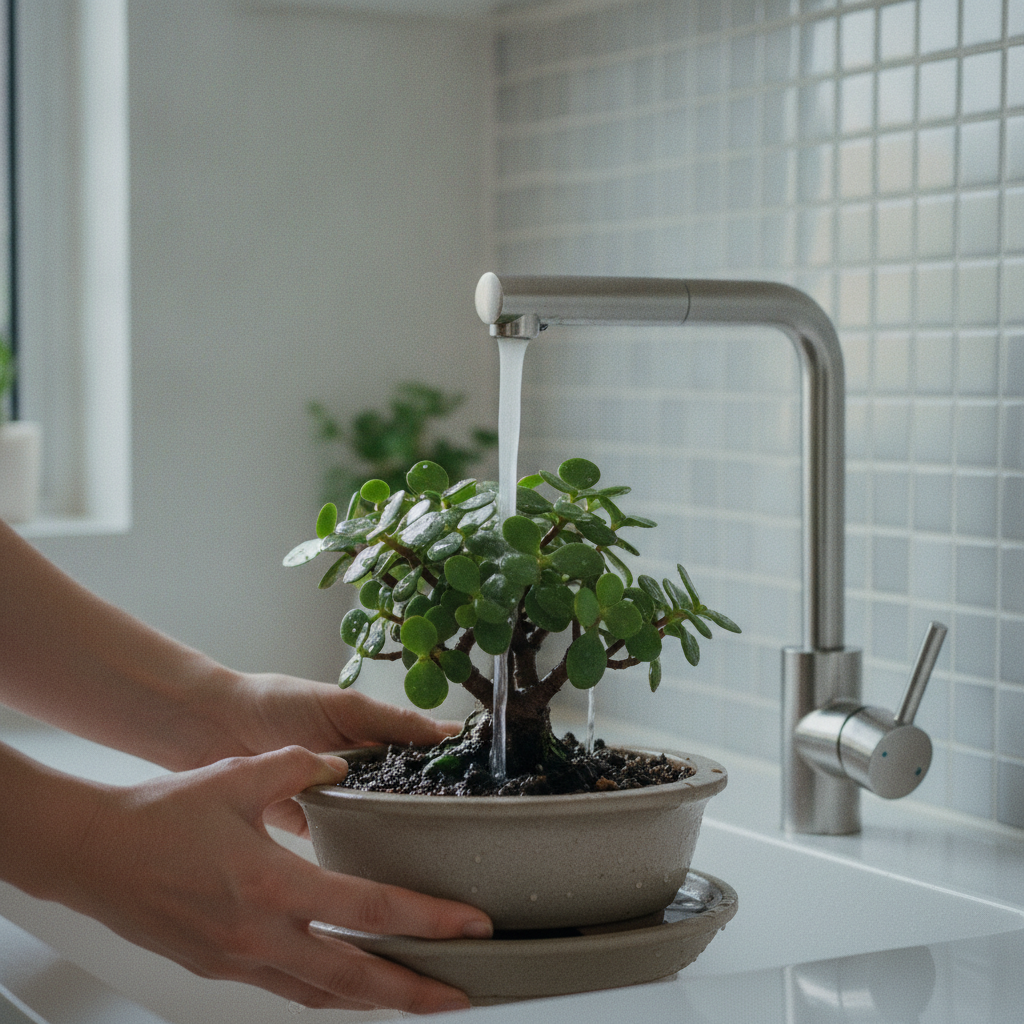
The approach that works best is often called soak and dry. Water thoroughly, then wait until the growing medium has dried out almost completely before watering again. In a bright, warm spot during summer this might mean watering every five to ten days, while in a cool, dim winter it can stretch to every few weeks. Rather than following a fixed calendar, check the mix with a finger or a wooden skewer pushed to the bottom of the pot, and water only when it comes out dry.
The plant itself gives useful feedback. Firm, plump leaves signal it is well hydrated and in no hurry for a drink, whereas leaves that begin to feel slightly soft or look faintly wrinkled indicate the reserves are running down and a watering is due. Learning to read this leaf turgor is more reliable than any schedule and quickly becomes second nature.
Pro Tip — Watch the Leaves, Not the Calendar: A dwarf jade will tell you when it is thirsty. Slightly soft, subtly wrinkled leaves mean go ahead and water; firm, glossy leaves mean wait. This simple habit prevents the overwatering that kills far more of these plants than drought ever does.
How to Water Correctly
- Confirm the mix is nearly or fully dry by checking deep in the pot before you begin.
- Water slowly and generously at the soil surface, or lower the pot into a basin of water, until the mix is evenly saturated.
- Allow the excess to drain completely from the holes; never let the pot stand in a saucer of water.
- Tip away any water that collects in the saucer or tray after a few minutes.
- Return the plant to its bright spot and leave it undisturbed until the mix has dried out once more.
Signs of Overwatering vs. Underwatering
| Symptom | Overwatering | Underwatering |
|---|---|---|
| Leaf colour | Yellowing, translucent or blackening leaves | Dull green, sometimes reddening at the edges |
| Leaf texture | Soft, mushy, swollen and squishy | Soft but wrinkled and shrivelled, not mushy |
| Leaf drop | Leaves fall while still plump and heavy | Oldest leaves drop after prolonged drought |
| Stem base | Dark, soft or foul-smelling at soil level | Firm but may feel lean and dehydrated |
| Recovery | Slow and uncertain; rot may already be set | Fast; leaves plump up within a day of watering |
Warning — Root Rot: Soggy soil is the dwarf jade’s greatest enemy. A pot without drainage holes, a dense water-retentive mix or simply watering too often will suffocate the roots and invite rot, which shows first as soft, blackening stems at soil level. If you catch it early, unpot the plant, cut away all affected tissue, let the wounds callus and repot into fresh, dry, gritty mix.
Humidity Requirements
Happily, humidity is one thing you can largely ignore with this plant. Coming from a warm, dry climate, the dwarf jade is thoroughly at home in the average centrally heated or air-conditioned room, and the 30 to 50 per cent humidity typical of most homes suits it perfectly.
There is no need to watch for the crispy leaf edges or brown tips that plague humidity-loving tropicals, because the dwarf jade simply does not suffer from dry air in the same way. If anything, excess humidity combined with poor airflow does more harm than good, raising the risk of fungal problems on a plant adapted to arid conditions.
For that reason, resist the urge to mist. Misting offers no benefit to a succulent and can encourage rot in the tightly packed foliage of a well-ramified bonsai. Good air movement around the plant is far more valuable than any attempt to raise the humidity.
Water Quality
The dwarf jade is not fussy about water quality and tolerates ordinary tap water in most areas without complaint. In regions with very hard water, mineral salts can accumulate in the mix over time, so an occasional flush with rainwater or the use of collected rainwater helps keep the substrate sweet. Letting tap water stand for a few hours before use allows some chlorine to dissipate, though this matters far less for a succulent than it does for more sensitive species.
Soil, Potting & Repotting
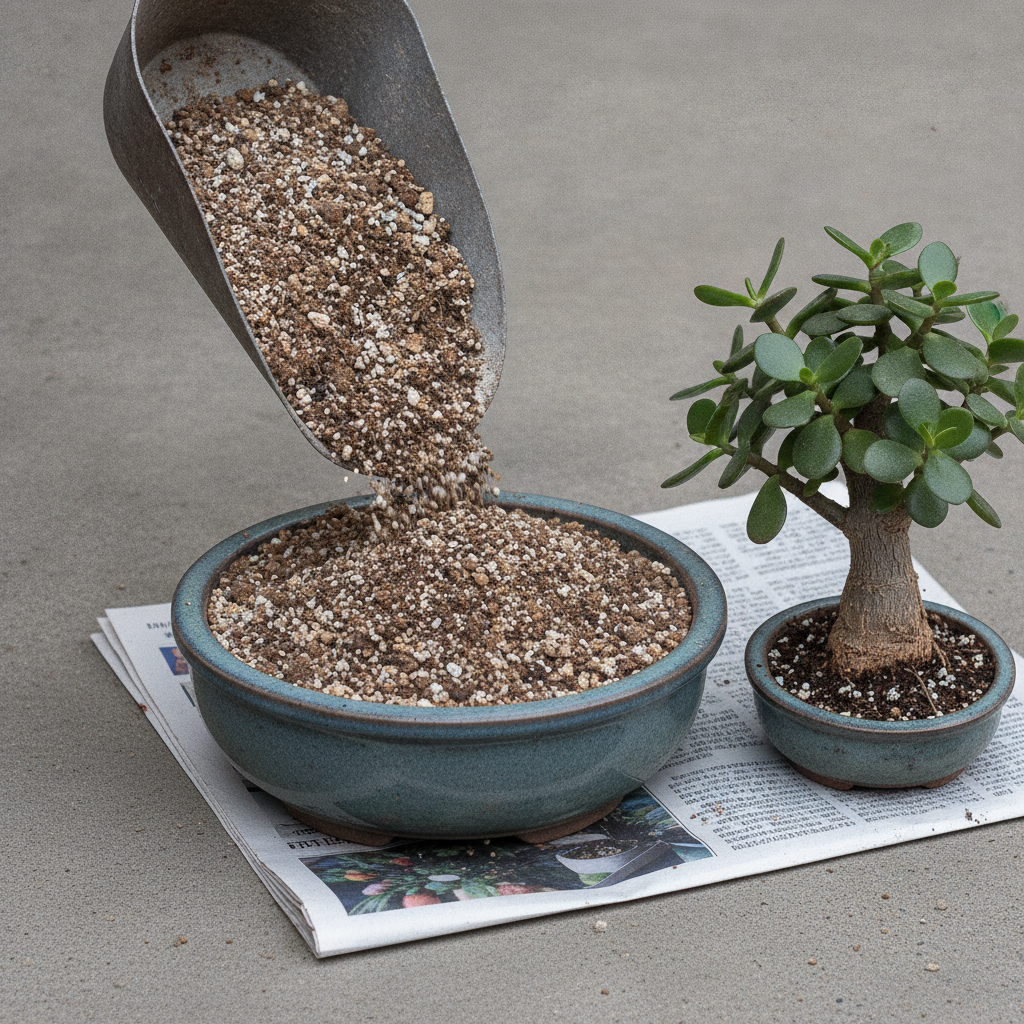
Getting the soil right is the foundation of a healthy dwarf jade, and it flows directly from everything already said about watering. This plant needs a substrate that drains fast and holds very little water, because its roots rot in anything that stays wet. A heavy, moisture-retentive potting compost is the surest route to failure, however diligent your watering.
Ideal Soil Composition
Aim for a coarse, open mix that is at least half inorganic grit by volume. A proprietary cactus and succulent compost bulked out with extra pumice, perlite or fine bonsai grit works well, as does a dedicated bonsai substrate such as akadama blended with pumice and a little organic matter. The exact recipe matters less than the principle: water should run straight through and the mix should never stay soggy.
| Component | Proportion | Function |
|---|---|---|
| Pumice or akadama | 40 to 50 per cent | Structure and controlled moisture retention |
| Perlite or grit | 20 to 30 per cent | Sharp drainage and aeration |
| Cactus or bonsai compost | 20 to 30 per cent | A modest reserve of nutrients and moisture |
| Fine bark (optional) | Up to 10 per cent | Extra air pockets and slow organic feed |
The dwarf jade is relaxed about pH, growing well anywhere from slightly acidic to neutral, roughly pH 6.0 to 7.0. There is no need to test or adjust the soil in normal circumstances, as a good succulent or bonsai mix naturally falls within this comfortable range.
Pro Tip — Quick Mix Recipe: For a reliable, low-fuss blend, combine two parts cactus compost, two parts pumice and one part perlite. It drains freely, holds just enough moisture between waterings and forgives the occasional heavy hand far better than any bagged houseplant compost used on its own.
Choosing the Right Pot
Pot choice for a dwarf jade bonsai balances aesthetics against the plant’s need for dry roots. Shallow bonsai pots flatter the tree-like form and restrain the roots to keep growth compact, but they hold little soil and can tip a top-heavy specimen, so stability and drainage are the priorities.
Drainage holes are non-negotiable. Whatever container you choose, it must have generous drainage. Many bonsai pots have two or more large holes precisely so water clears instantly, and wiring the plant into the pot through those holes also anchors a newly repotted or heavy specimen securely.
Pot material: Unglazed terracotta and traditional bonsai stoneware both breathe and wick moisture from the mix, which suits a plant that likes to dry out. Glazed ceramic and plastic hold moisture longer, so if you use them, lean even harder on a gritty mix and cautious watering.
Pot size: Keep the plant slightly underpotted. A container only a little larger than the root mass dries out at a healthy pace and encourages the fine ramified roots that support a compact canopy, whereas an oversized pot holds a reservoir of damp soil around roots that cannot use it.
When to Repot
A dwarf jade needs repotting every two to three years, or when roots begin to circle the pot, emerge from the drainage holes or lift the plant proud of the soil. Early spring, as growth resumes, is the best moment, giving the plant a full active season to re-establish. Repotting is also your opportunity to refresh tired mix, prune the roots and improve the plant’s position and angle in the pot.
How to Repot: Step-by-Step
- Let the soil dry out fully first, which makes the root ball easier to handle and reduces the risk of rot in freshly cut roots.
- Ease the plant from its pot and gently tease away the old mix from around the roots.
- Trim any dead, blackened or excessively long roots with clean, sharp scissors, removing up to a third of the root mass if reducing a vigorous plant.
- Position the plant in its pot, wiring it in through the drainage holes if it needs anchoring, and work fresh gritty mix around the roots.
- Firm the mix gently with a chopstick to remove air pockets, without compacting it into a solid mass.
- Wait a week before watering to let cut roots callus, then resume normal watering and keep the plant out of the fiercest sun while it settles.
Warning — Transplant Shock: Watering immediately after root pruning is a common mistake. Fresh cuts on succulent roots are gateways for rot, so keep the plant dry for about a week after repotting so the wounds seal over. A dwarf jade will tolerate this dry spell easily thanks to its stored reserves.
Fertilising
The dwarf jade is a light feeder that grows perfectly well on very little supplementary nutrition, but in the confined soil of a bonsai pot a modest feeding routine helps sustain the vigour needed for regular pruning and shaping. The aim is steady, unforced growth rather than a rush of soft, leggy shoots.
Because the plant naturally accesses only a small volume of mix, the little it does draw on is soon depleted, particularly after a couple of years in the same pot. A gentle, regular feed through the growing season replaces those lost nutrients without ever overwhelming a plant that prefers lean conditions.
Understanding Plant Nutrients
Plant fertilisers are built around three main nutrients, shown on the packaging as the N-P-K ratio for nitrogen, phosphorus and potassium. Nitrogen drives leafy growth, phosphorus supports roots and overall vigour, and potassium underpins general health and resilience. A balanced feed, or one slightly lower in nitrogen, keeps a dwarf jade compact rather than soft and stretched.
| Nutrient | Symbol | Primary Function | Deficiency Symptoms |
|---|---|---|---|
| Nitrogen | N | Leaf and stem growth | Pale, yellowing older leaves and slow growth |
| Phosphorus | P | Root development and vigour | Weak roots, dull foliage, stunted growth |
| Potassium | K | Overall health and stress tolerance | Yellow or scorched leaf edges |
| Magnesium | Mg | Chlorophyll production | Yellowing between the veins of older leaves |
| Iron | Fe | Chlorophyll and enzyme function | Yellowing of the newest leaves while veins stay green |
Types of Fertiliser
Liquid fertilisers: The easiest option for a bonsai, giving you precise control. A balanced houseplant or succulent feed diluted to half the recommended strength and applied to already-moist soil suits the dwarf jade well.
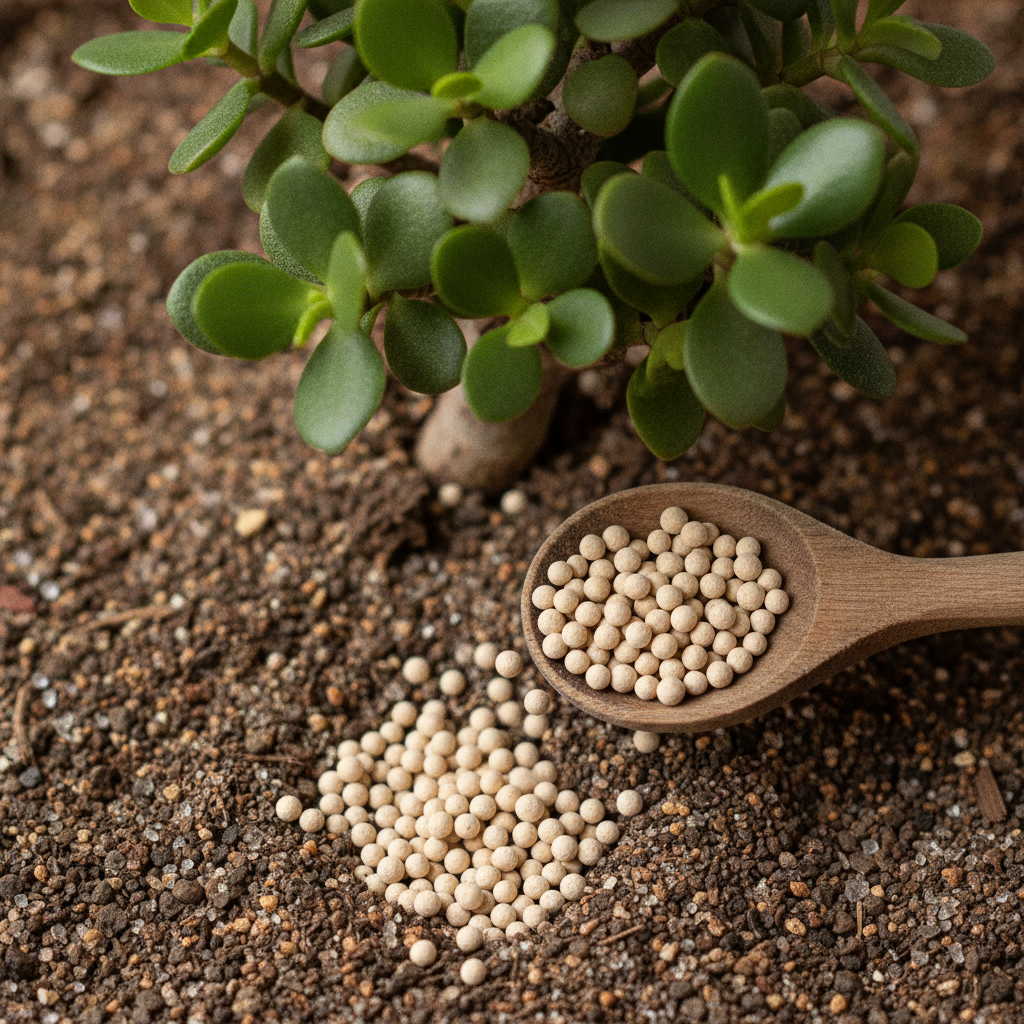
Slow-release granular: A scatter of coated slow-release prills on the soil surface in spring feeds the plant gradually over several months, which is convenient and hard to overdo, though it offers less control than liquid feeding.
Organic fertilisers: Traditional bonsai feeds such as rapeseed or seaweed-based products, and the pelleted organic cakes some growers favour, release nutrients slowly and gently. They are well matched to a plant that dislikes strong feeding, though they can carry a faint odour indoors.
Feeding Schedule
Feed roughly once a month through spring and summer while the plant is in active growth, and stop altogether in autumn and winter when growth slows and the plant takes its natural rest. Feeding a dormant or barely growing dwarf jade simply loads the mix with salts it cannot use, so when in doubt, hold back.
Pro Tip — Feed at Half Strength: Succulents are adapted to poor soils and are easily overfed. Diluting your chosen fertiliser to half the label rate gives the dwarf jade all it needs while avoiding the soft, weak, over-lush growth that undermines a compact bonsai form.
How to Fertilise
- Water the plant lightly first, or feed onto already-moist mix, so that concentrated fertiliser never touches dry roots.
- Dilute a balanced liquid feed to half the recommended strength in your watering can.
- Apply evenly across the soil surface until it just begins to drain from the holes.
- Withhold feeding entirely during autumn and winter, resuming only when spring growth begins.
Warning — Salt Build-Up: In the small soil volume of a bonsai pot, fertiliser salts accumulate quickly and can scorch roots and brown leaf edges. Flush the mix thoroughly with plain water every couple of months during the feeding season to wash out the excess, and always feed lightly rather than heavily.
Propagation
Propagating the dwarf jade is almost comically easy, which is part of its charm as a bonsai subject. The plant roots so readily from cuttings that the prunings you remove while shaping a tree can become new plants with minimal effort, and a single specimen can quickly furnish a whole collection.
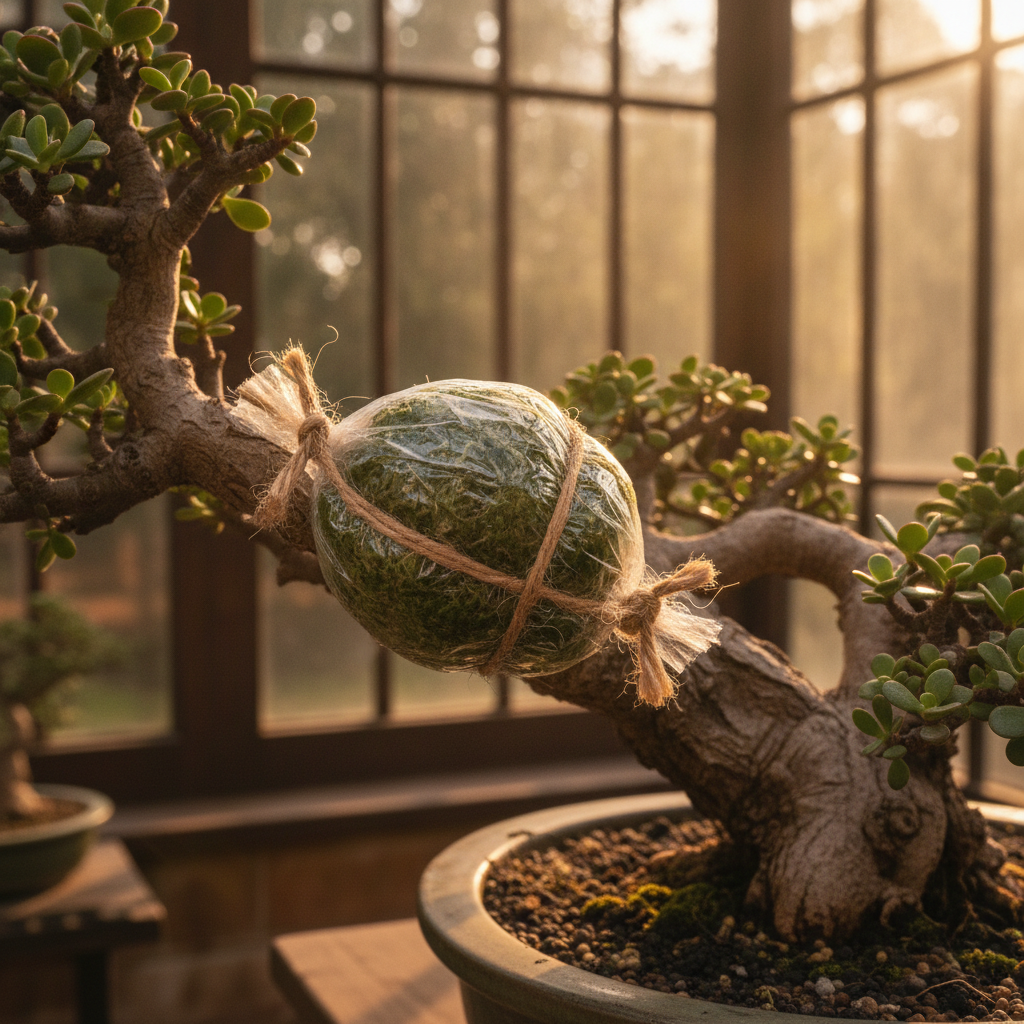
Two approaches cover almost every need. Straightforward stem cuttings are the workhorse method for multiplying plants and starting new bonsai material, while air layering is the technique bonsai growers reach for when they want a thicker, more developed trunk than a young cutting can offer in the same time frame.
Understanding the Stem and Node
New roots on a dwarf jade emerge readily from the nodes and from cut or wounded stem tissue, which is why both cuttings and air layers work so dependably. The plant’s succulent stems are also full of stored water and energy, giving a cutting everything it needs to survive while it forms roots. The one essential is patience with the drying stage: a fresh cut must be allowed to callus before it meets any moisture, or it will simply rot.
Stem Cuttings: Step-by-Step
This is the fastest and most reliable way to make new plants, ideal for using up prunings or bulking out a planting.
- Cut a healthy stem 8 to 15 centimetres (3 to 6 inches) long with clean, sharp secateurs.
- Strip the leaves from the lower third of the cutting to expose a length of bare stem.
- Set the cutting aside in a dry, shaded spot for several days until the cut end forms a firm, dry callus.
- Insert the callused end into a pot of dry, gritty succulent mix so it stands upright and stable.
- Wait about a week, then water sparingly and keep the cutting in bright, indirect light.
- Resist watering heavily until roots have formed, usually within three to six weeks, after which you can treat it as an established plant.
Pro Tip — Let It Callus: The single most important step in succulent propagation is the drying period. Giving the cut end several days to seal over before it touches soil or water is what separates a rooted cutting from a rotted one, and it costs nothing but a little patience.
Air Layering: Step-by-Step
Air layering produces a new plant with a substantial trunk already in place, making it invaluable for developing bonsai material quickly. It is best carried out in the warm growing season on a healthy, established branch.
- Choose a straight, healthy section of woody stem of the thickness you want in your finished trunk.
- Wound the stem by removing a ring of bark, or make a shallow upward cut, to interrupt the flow of sap at that point.
- Wrap the wounded area in a generous handful of damp sphagnum moss.
- Enclose the moss in clear plastic film and tie it firmly above and below so it holds moisture yet lets you monitor progress.
- Keep the moss lightly moist and wait for roots to appear through it, which can take several weeks to a few months.
- Once a strong root system is visible, sever the stem just below the new roots and pot up the rooted section as a new plant.
Troubleshooting Propagation
| Problem | Likely Cause | Solution |
|---|---|---|
| Cutting turns soft and black | Inserted before callusing, or kept too wet | Discard, and next time allow a longer dry callus period |
| No roots after many weeks | Too cool, too dark, or watered too heavily | Move to warmth and bright light, and keep the mix barely moist |
| Cutting shrivels badly | Very slow rooting drawing down reserves | Give a light watering; a thick cutting has ample reserves to recover |
| Air layer moss dries out | Film not sealed, or ambient air too dry | Re-moisten the moss and tie the plastic more securely at both ends |
Pests & Diseases
The dwarf jade is a robust plant that rarely falls seriously ill, and a well-grown specimen in bright light with a dry-leaning watering regime shrugs off most trouble. The problems that do arise are almost always linked to overwatering or the sap-sucking insects that find their way onto any indoor plant from time to time.
Vigilance is your best defence. Because this plant recovers so readily, catching an infestation or the first hint of rot early usually means an easy fix, whereas a neglected problem in a dense bonsai canopy can spread before you notice it. A quick inspection whenever you water keeps you a step ahead.
Common Pests
Mealybugs (Pseudococcus spp.)
The most frequent pest of the dwarf jade, mealybugs appear as small white, cottony tufts tucked into leaf axils and along stems, where they suck sap and weaken the plant. Their sheltered hiding places in a dense bonsai make them easy to overlook until numbers build.
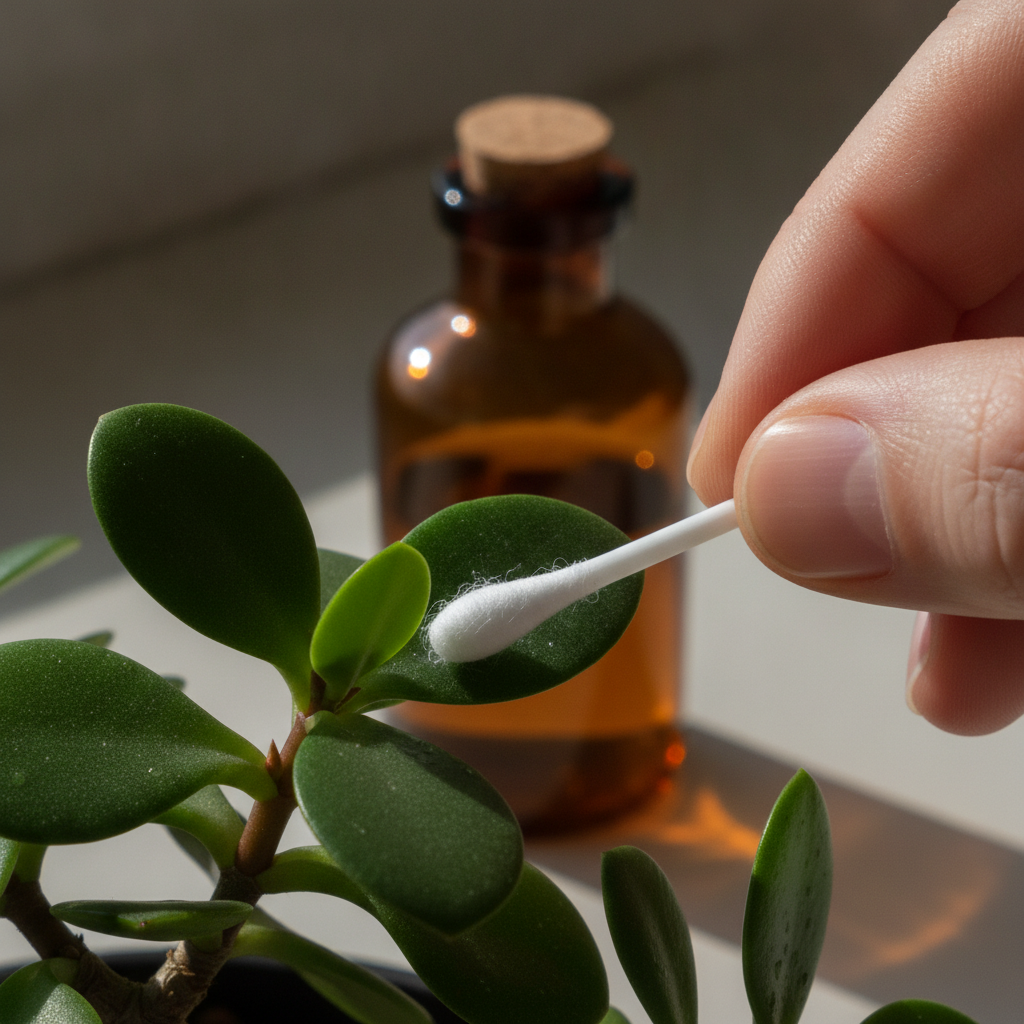
Treatment: Dab each insect directly with a cotton bud dipped in isopropyl alcohol, which kills them on contact. For heavier infestations, follow up with an insecticidal soap or a horticultural oil, repeating every week or two until no new bugs appear.
Spider Mites (Tetranychus urticae)
These tiny mites thrive in hot, dry conditions and show themselves through fine speckling on the leaves and, in bad cases, delicate webbing between stems. They are barely visible to the naked eye, so the damage is often noticed before the pest.
Treatment: Rinse the foliage to knock down the population, improve air circulation, and treat with insecticidal soap or a miticide, repeating to catch newly hatched mites. Persistent monitoring is key, as mites breed quickly.
Scale Insects (Coccidae)
Scale appear as small, immobile brown or tan bumps clinging to stems and the undersides of leaves, protected by a waxy shell that shrugs off many sprays. Like mealybugs, they feed on sap and can slowly sap a plant’s vigour.
Treatment: Scrape or rub off the scales by hand or with an alcohol-dipped cotton bud, then treat with horticultural oil to smother any survivors and newly settled crawlers.
Common Diseases
Root Rot (Pythium and Phytophthora spp.)
By far the most serious threat to a dwarf jade, root rot follows from soggy soil and poor drainage. It shows as soft, blackening tissue at the stem base, yellowing plump leaves and a plant that wilts despite wet soil, and if left unchecked it is often fatal.
Treatment: Unpot the plant at once, cut away every trace of soft or discoloured root and stem with clean tools, let the wounds callus for several days and repot into fresh, dry, gritty mix. Withhold water for a week and correct the watering habits that caused it.
Fungal Leaf Spot (various fungi)
Occasionally, in stagnant, humid conditions, dark or sunken spots develop on the leaves. This is uncommon on a plant that likes dry air, and it almost always points to poor airflow or foliage that stays wet too long.
Treatment: Remove affected leaves, improve ventilation, avoid wetting the foliage and let the plant dry more thoroughly between waterings. A fungicide is rarely necessary once conditions are corrected.
Pest and Disease Summary
| Pest / Disease | Identification | Treatment |
|---|---|---|
| Mealybugs | White cottony tufts in leaf axils | Alcohol on a cotton bud, then insecticidal soap |
| Spider mites | Fine speckling and webbing | Rinse, improve airflow, insecticidal soap or miticide |
| Scale | Brown immobile bumps on stems | Scrape off, then horticultural oil |
| Root rot | Soft black stem base, wilting in wet soil | Cut out rot, callus, repot dry, water less |
| Fungal leaf spot | Dark sunken spots on leaves | Remove leaves, improve ventilation, keep dry |
Prevention Strategies
Prevention with the dwarf jade comes down to the same handful of habits that keep it thriving in the first place. Bright light, a gritty free-draining mix, disciplined watering and good airflow together create conditions in which pests struggle to establish and rot never gets a foothold.
Inspect new leaves and stem junctions whenever you water, and isolate any newly acquired plant for a couple of weeks before letting it join the rest of your collection. Wiping the leaves occasionally not only keeps the plant looking its best but also gives you a close look at the earliest signs of trouble.
Pro Tip — Isolate and Inspect: Most infestations arrive on new plants. Quarantine any newcomer away from your other plants for two weeks and check it over carefully before introducing it, and you will head off the majority of pest problems before they ever start.
Popular Varieties
While the plain green species is the classic choice for bonsai, Portulacaria afra has given rise to several distinct cultivars, each bringing something different to the potting bench. Some are grown for foliage colour, others for a change in habit or leaf size, and all share the easy temperament that makes the dwarf jade such a pleasure to grow.
Choosing between them depends on your conditions and your intentions. The variegated forms bring colour but need a little shelter from the harshest sun, the trailing form suits hanging displays rather than upright bonsai, and the plain green species remains the most vigorous and forgiving canvas for a first tree.
| Variety | Leaf Appearance | Light Needs | Growth Rate | Availability |
|---|---|---|---|---|
| Species (green) | Small, rounded, glossy jade-green | Full sun to bright light | Fast | Common |
| Variegata | Cream and green, pink-tinged margins | Bright light, some sun protection | Moderate | Common |
| Aurea | Golden-yellow new growth, compact | Bright light with sun | Slow to moderate | Occasional |
| Prostrata | Small green leaves, trailing habit | Bright light | Moderate | Occasional |
| Cork Bark (f. macrophylla) | Larger leaves, corky textured bark | Full sun to bright light | Moderate | Specialist |
Featured Varieties
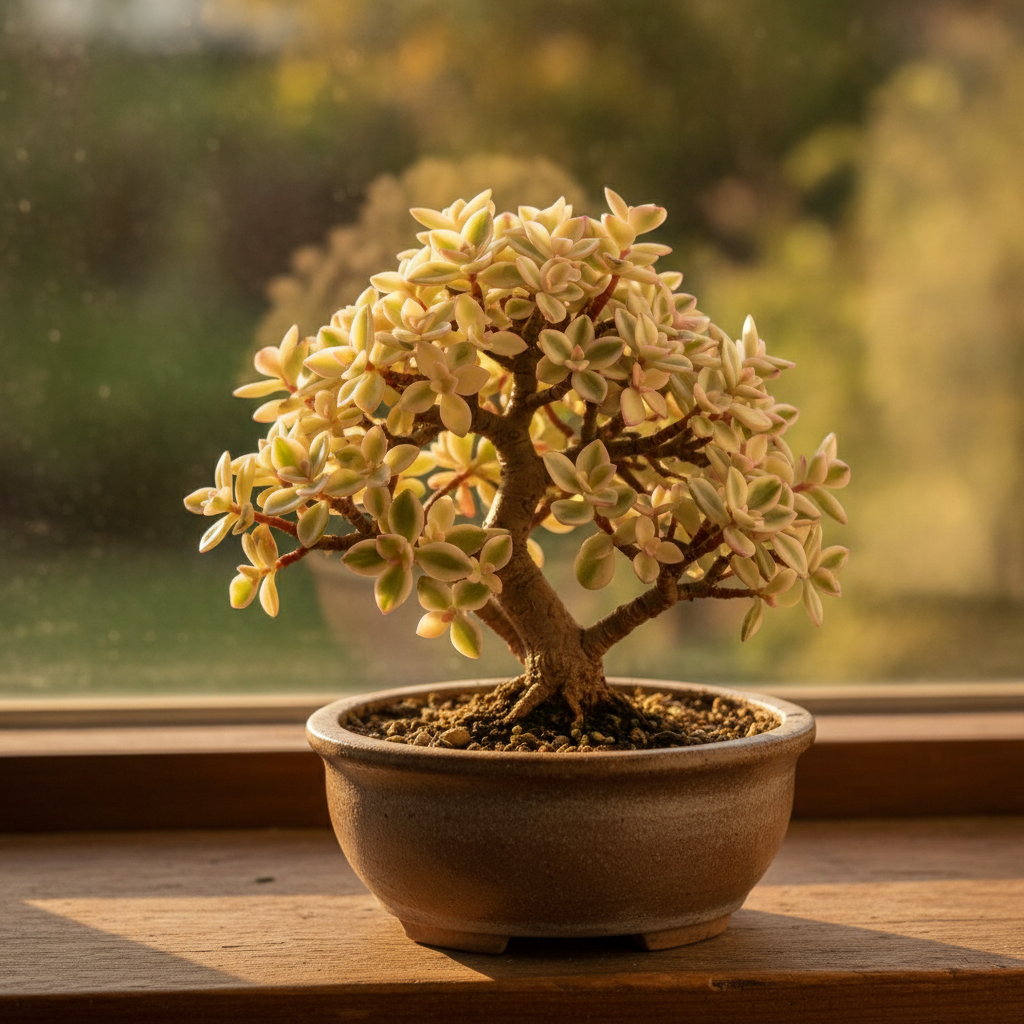
Variegata (Rainbow Bush)
The best-known cultivar, prized for cream-and-green variegated leaves that flush pink at the margins in good light. Slightly slower and more sun-sensitive than the species, but stunning as a colourful bonsai or trailing accent.
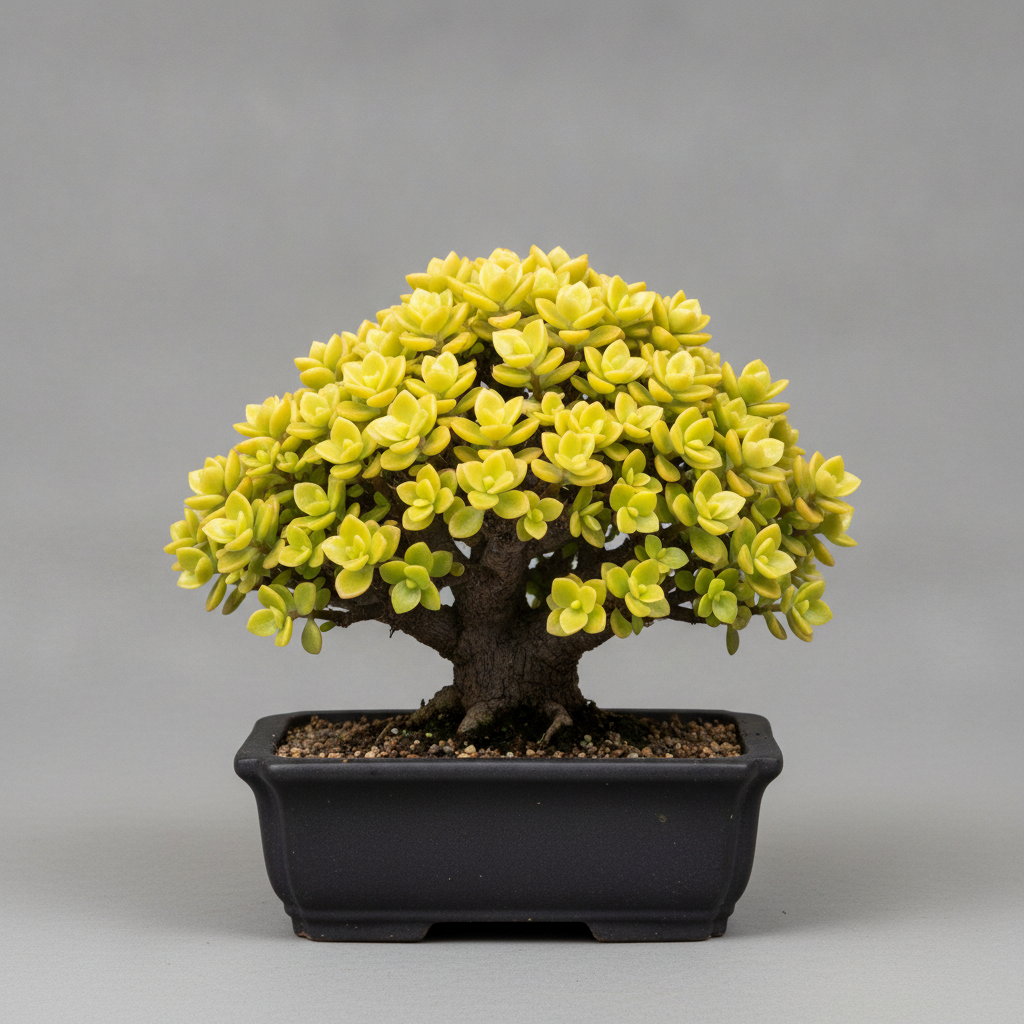
Aurea (Yellow Rainbow Bush)
A compact form whose new growth emerges bright golden-yellow before maturing to lime-green, with short internodes that lend themselves beautifully to small bonsai. The colour is strongest in full sun.
Variety Profiles in Detail
Variegata (Portulacaria afra ‘Variegata’)
This is the cultivar most people picture when they hear the name rainbow bush. Each fleshy leaf is splashed with cream and green and edged in pink where the sun touches it, and the reddish stems set off the pale foliage handsomely. It grows a little more slowly than the plain species and its variegated tissue is more prone to scorching, so it appreciates bright light with protection from the fiercest midday sun. It makes an eye-catching cascade or informal upright bonsai.
Cork Bark (Portulacaria afra f. macrophylla)
A larger-leaved, thicker-stemmed form whose bark takes on a rugged, corky texture as it matures, giving even a young plant the appearance of great age. Its bigger leaves make it less suited to the smallest bonsai but ideal for medium and larger specimens where its characterful trunk can be shown off. It is more of a specialist’s plant and less widely sold than the green species or Variegata.
Choosing the Right Variety for Your Space
For a first bonsai or the brightest, sunniest windowsill, the plain green species is unbeatable for vigour and forgiveness. If you want colour and can offer bright but slightly filtered light, reach for Variegata or Aurea, and if a trailing display appeals more than an upright tree, the prostrate form drapes attractively from a raised pot. Whichever you choose, the underlying care is identical, so you can grow a whole collection of contrasting forms on exactly the same routine.
Frequently Asked Questions
Is the dwarf jade bonsai safe for cats and dogs?
Yes. Portulacaria afra is non-toxic and even edible, making it one of the safest succulents to keep in a home with pets or young children. This is a real advantage over the true jade plant, Crassula ovata, which is toxic to cats and dogs.
Why is my dwarf jade growing tall and leggy?
Legginess, with long gaps between leaves and thin floppy stems, is almost always a sign of insufficient light. Move the plant to your brightest window or add a grow light, and prune back the stretched growth to encourage denser, more compact branching once the light improves.
How often should I water a dwarf jade bonsai?
There is no fixed schedule. Water thoroughly only when the mix has dried out almost completely, which might be every five to ten days in warm bright weather and every few weeks in a cool, dim winter. Let the plant’s leaf firmness and the dryness of the soil guide you rather than the calendar.
Can I grow a dwarf jade bonsai indoors permanently?
Yes, provided you give it enough light. The dwarf jade is one of the better succulents for year-round indoor bonsai, but it must have the brightest possible position, ideally with some direct sun or supplementary lighting. Many growers move theirs outdoors for the warm months to build stronger, more compact growth, then bring it back inside before temperatures fall.
How do I make the trunk thicker?
Trunks thicken fastest when the plant is allowed to grow freely with plenty of light, water in season and space, so many growers let a plant bulk up in a larger pot before refining it. Air layering is another route to an instantly thicker trunk, and regular pruning of the canopy over time encourages the base to fatten in proportion.
Why are the leaves shrivelling or dropping?
Shrivelled, wrinkled leaves usually mean the plant is thirsty and a good watering will plump them up within a day. If instead the leaves are plump yet yellowing and falling, suspect overwatering and check the roots for rot. A modest drop of the oldest leaves after repotting or a change of position is normal and nothing to worry about.
Can the dwarf jade tolerate cold?
Only mildly. It is not frost hardy and is damaged by temperatures below about 5 degrees C (41 degrees F), so keep it above 10 degrees C (50 degrees F) to be safe. If you summer the plant outdoors, bring it in well before the first frosts arrive.
How is the dwarf jade different from a true jade plant?
Despite the similar look, they are unrelated. The dwarf jade is Portulacaria afra, while the true jade plant is Crassula ovata. The dwarf jade has smaller leaves, more flexible reddish stems, a faster growth rate and a greater tolerance of hard pruning, all of which make it the superior choice for bonsai, and unlike the true jade it is non-toxic.






