
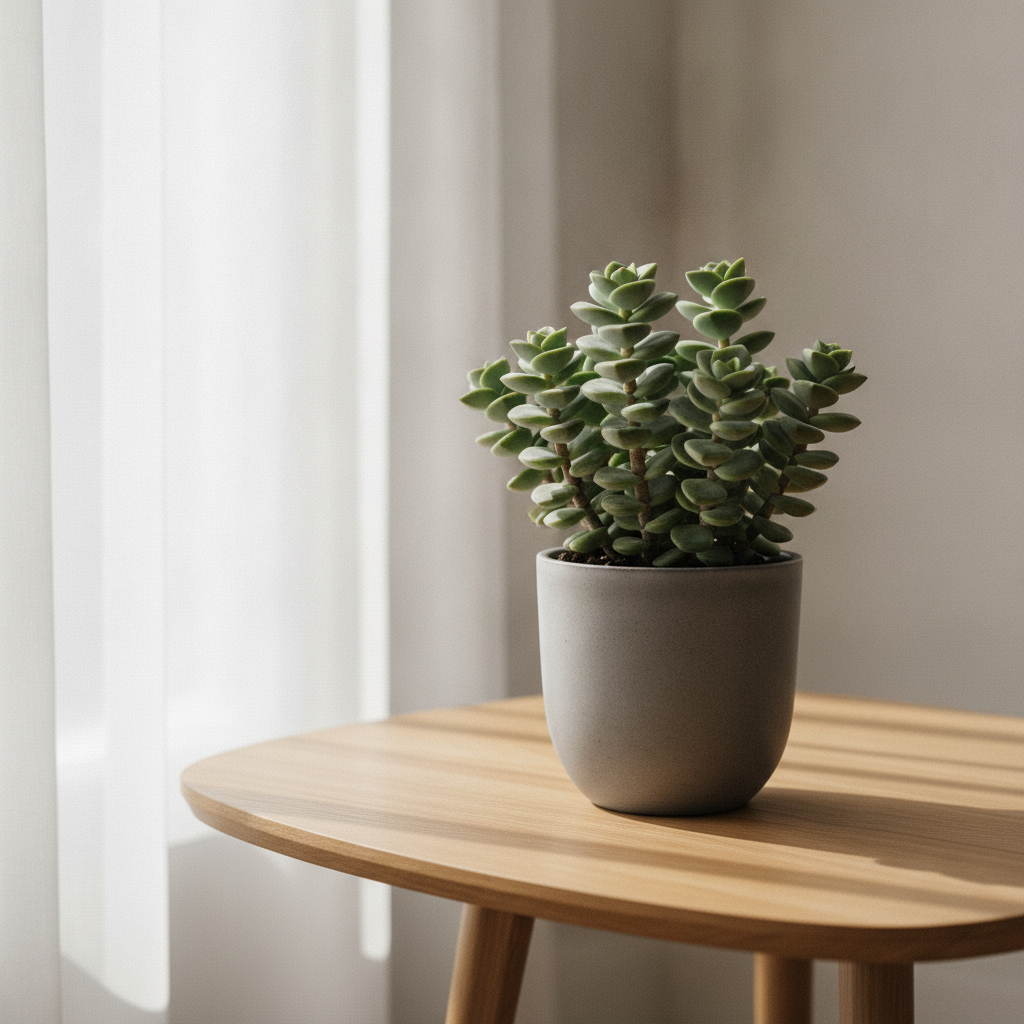
Few succulents carry themselves with the sculptural poise of the Desert Gem (Portulacaria molokiniensis), a compact Hawaiian shrub whose fat, coin-shaped leaves stack in tidy pairs up short reddish stems like a living cairn. Sometimes sold as the Molokini elephant bush, it hails from a handful of arid islets off the coast of Maui, most famously the crescent-shaped Molokini crater that gives the plant its scientific name, where it clings to rocky, sun-blasted slopes. That harsh pedigree is exactly what makes it such a forgiving houseplant: it stores water in its swollen leaves and stems, shrugs off missed waterings, and asks for very little beyond a bright windowsill and a gritty pot.
Keeping a Desert Gem alive is genuinely easy, but coaxing it to look its best, dense, upright, and richly glaucous rather than stretched and pale, takes a little understanding of how a desert succulent actually works. This guide covers everything from light and watering to soil, feeding, propagation, and the pests that occasionally take an interest, with the aim of helping you move well beyond mere survival and into the kind of thriving, characterful specimen that anchors a collection.
Contents
- Quick Reference
- Why Desert Gem Makes an Excellent Houseplant
- Light Requirements
- Watering & Humidity
- Soil, Potting & Repotting
- Fertilising
- Propagation
- Pests & Diseases
- Popular Varieties
- Frequently Asked Questions
Quick Reference: Desert Gem at a Glance
| Light | Very bright light; several hours of direct sun ideal. A south or west window indoors. |
| Watering | Soak thoroughly, then let the mix dry out completely. Roughly every 10 to 20 days in summer, monthly or less in winter. |
| Temperature | 18 to 27 degrees Celsius (64 to 81 degrees Fahrenheit). Protect from anything below about 5 degrees Celsius (41 degrees Fahrenheit). |
| Humidity | Low to average. Ordinary room air is perfect; high humidity is a liability. |
| Fertiliser | Dilute, low-nitrogen feed once a month during spring and summer only. |
| Toxicity | Generally considered non-toxic to cats, dogs, and people, in line with its close relative the elephant bush. |
Why Desert Gem Makes an Excellent Houseplant
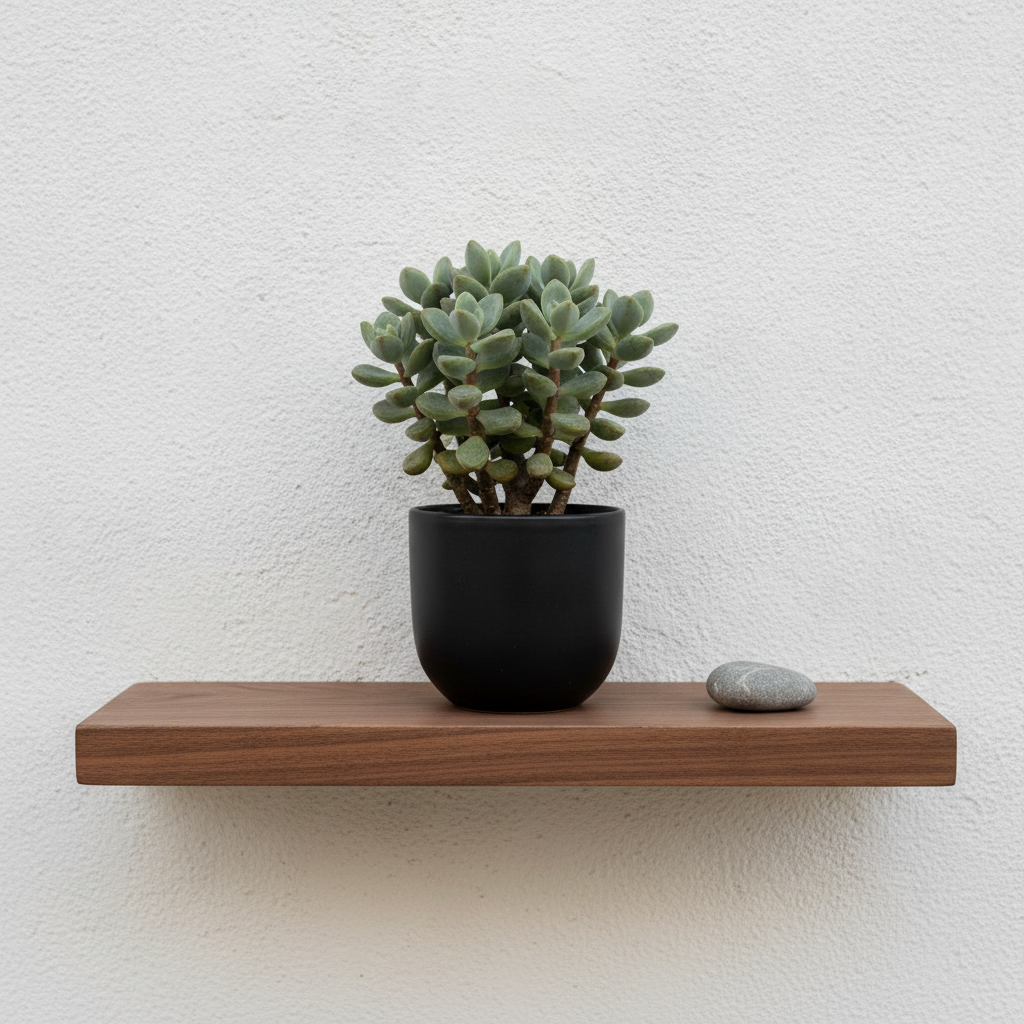
The Desert Gem earns its place on the windowsill through a rare combination of good looks and low maintenance. Its architecture is unusual for a succulent: rather than sprawling or rosetting, it grows as a stout, upright little tree, with plump paddle-shaped leaves arranged in neat opposite pairs so that a healthy plant resembles a stack of soft green coins. That naturally tidy, symmetrical habit means it looks composed and intentional with almost no pruning, which is a gift for anyone who wants sculptural greenery without a fussy grooming routine.
Beyond aesthetics, it is one of the most drought-tolerant plants you can grow indoors, storing weeks of water in its succulent tissue and genuinely preferring to be left alone between waterings. This makes it ideal for frequent travellers, forgetful beginners, and anyone whose home has a hot, bright spot where thirstier plants would sulk. It is also slow and predictable, rarely outgrowing its welcome, and it propagates readily from cuttings, so a single plant can become a windowsill full of them. There is a conservation footnote too: the species is rare and threatened in its tiny native range, so every cultivated plant is, in a small way, an ambassador for a botanical treasure.
Important — Toxicity: The Desert Gem is generally regarded as non-toxic to cats, dogs, and humans, consistent with its close relative Portulacaria afra, which is even used as browse for livestock and tortoises. That said, no plant is truly meant for eating, and nibbling can cause mild stomach upset in sensitive pets. If you have an enthusiastic chewer, place the plant out of reach and contact a vet if a large quantity is consumed.
Light Requirements
Light is the single most important factor in growing a good-looking Desert Gem, and it is where most indoor plants of this species go wrong. Coming from exposed, low-latitude Hawaiian islets that bask in intense sun for most of the year, this succulent is built to soak up far more light than the average leafy houseplant. Give it too little and it will not die quickly, but it will slowly betray its unhappiness by stretching, paling, and losing the tight, chunky form that makes it worth growing.
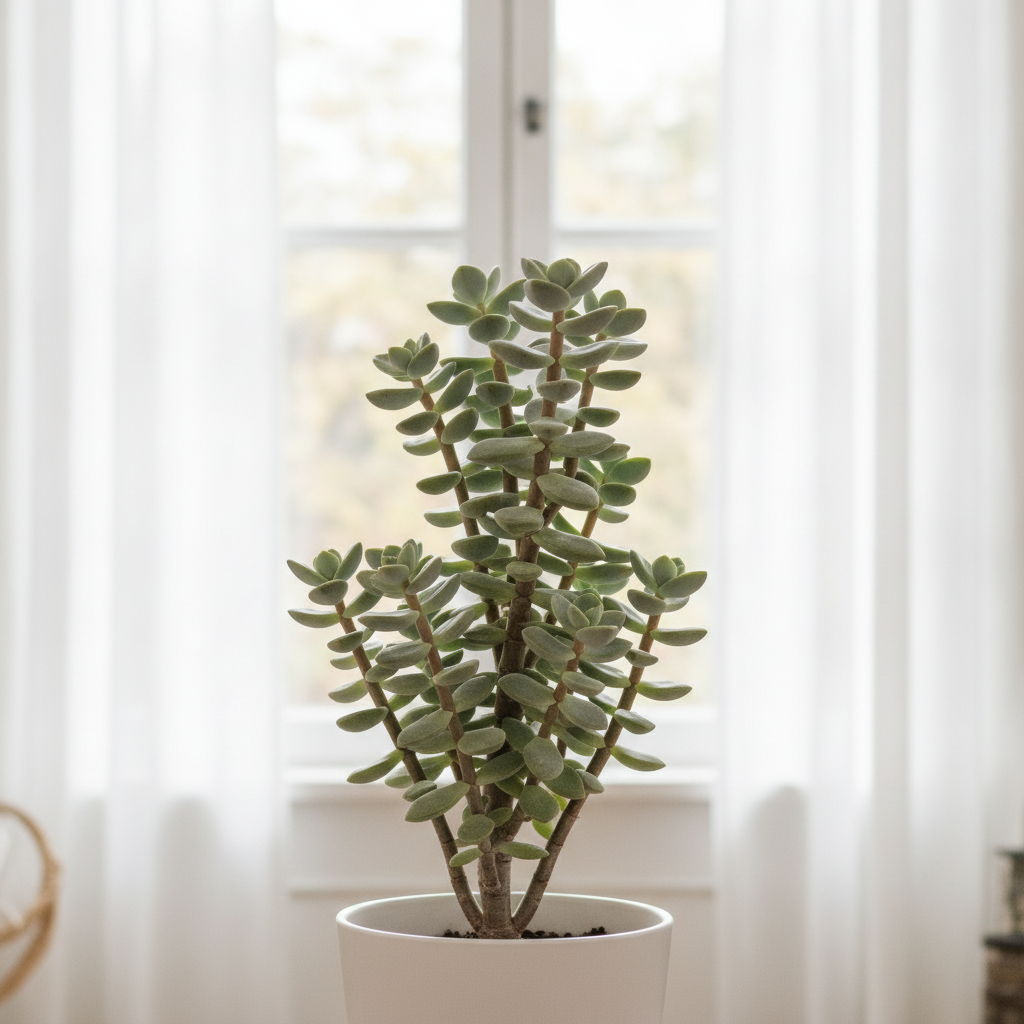
The ideal indoor position is directly in front of your brightest window, where the plant receives at least three to four hours of direct sun each day alongside bright ambient light for the rest. Acclimatised plants tolerate full midday sun indoors behind glass with ease, and outdoor summer plants can take direct sun once hardened off gradually. In practice, if you think a spot might be too bright for a Desert Gem, it probably is not.
Light Levels Explained
Understanding how horticultural light categories translate to real rooms helps you place the plant with confidence. The figures below are approximate illuminance values that give a rough sense of intensity rather than precise targets.
| Light Category | Approx. Level | Typical Location | Outcome |
|---|---|---|---|
| Direct sun | 50,000 lux and above | On the sill of a south or west window | Ideal; compact, colourful, sturdy growth |
| Bright indirect | 10,000 to 25,000 lux | Just back from a bright window | Acceptable; slightly looser but healthy |
| Medium | 5,000 to 10,000 lux | A few metres from a bright window | Poor; noticeable stretching over time |
| Low | 1,000 to 2,500 lux | North window or interior wall | Decline; etiolation and weak stems |
| Very low | Below 1,000 lux | Hallways, deep corners | Unsustainable; the plant slowly fails |
Window Orientation and Placement
South-facing window: The best possible position in the northern hemisphere. Place the plant right on the sill so it catches the full arc of daylight and several hours of direct sun. This is where a Desert Gem holds its tightest, most attractive form.
East-facing window: A good option that supplies gentle direct morning sun followed by bright light. Growth may be marginally looser than in a south window but remains healthy and compact enough for most growers.
West-facing window: Also excellent, offering strong direct afternoon sun. Watch for heat build-up against the glass in high summer, but otherwise this orientation keeps the plant thriving.
North-facing window: Generally too dim for a Desert Gem to prosper. The plant will survive for a while but steadily stretch and weaken. If a north window is your only option, plan to supplement with a grow light.
Pro Tip — Rotate for Symmetry: Because the Desert Gem grows toward light, give the pot a quarter turn every week or two. This keeps the naturally upright, symmetrical habit even, rather than letting the plant lean permanently toward the glass.
How Light Affects Leaf Form and Colour
Light does not just keep the plant alive, it sculpts its appearance. In strong light the leaves stay small, thick, and tightly spaced, often taking on a slightly waxy, glaucous blue-green cast, and the stems remain short and stout. Move the same plant somewhere dimmer and within weeks the internodes lengthen, the leaves grow larger and thinner as the plant reaches for light, and the whole specimen loses its jewel-box density. This process, called etiolation, is difficult to reverse once it has happened, so prevention through good placement matters far more than correction.
Warning — Direct Sunlight: While the Desert Gem loves sun, a plant grown in low light and then abruptly moved into fierce direct sun can scorch, developing bleached or brown patches on the sun-facing leaves. Whenever you increase light dramatically, or move a plant outdoors for summer, acclimatise it over a week or two by extending exposure gradually.
Artificial Lighting
If natural light is limited, the Desert Gem responds well to a good full-spectrum LED grow light. Because it demands high intensity, position the light fairly close, roughly 15 to 30 centimetres (6 to 12 inches) above the plant, and run it for 12 to 14 hours a day to mimic its sun-drenched origins. A grow light is often the difference between a leggy, disappointing plant and a compact one in homes without a strong south or west window.
Seasonal Adjustments
Light intensity indoors falls sharply through autumn and winter, and the sun sits lower and weaker. Move the plant to your brightest available window for the darker months, and do not be surprised if growth slows or stops entirely; this rest is natural. As days lengthen again in spring, reintroduce any increased sun gradually to avoid scorching leaves that have adjusted to lower winter light.
Watering & Humidity
If light is where growers go wrong slowly, watering is where they go wrong fast. The Desert Gem is a true succulent that evolved to endure long dry spells, and the overwhelming majority of problems people encounter with it stem from too much water rather than too little. The guiding principle is simple: water thoroughly, then wait until the soil is bone dry before watering again.
When to Water
Rather than watering on a fixed schedule, water according to how dry the mix is. Push a finger, a wooden skewer, or a moisture meter deep into the pot; only water when the entire volume of soil has dried out, not just the top couple of centimetres. In a bright, warm spot during the growing season this typically works out to somewhere between every 10 and 20 days, but the interval depends heavily on pot size, light, and the time of year.
The plant itself is an excellent gauge. Well-hydrated leaves feel firm and plump; as water reserves deplete, they soften slightly and may look a touch less taut. A gentle wrinkling or softening is your signal that a drink is welcome. When in doubt, wait another few days, because this species recovers from thirst far more readily than from waterlogging. In winter, when growth pauses, cut back dramatically to perhaps once a month or even less.
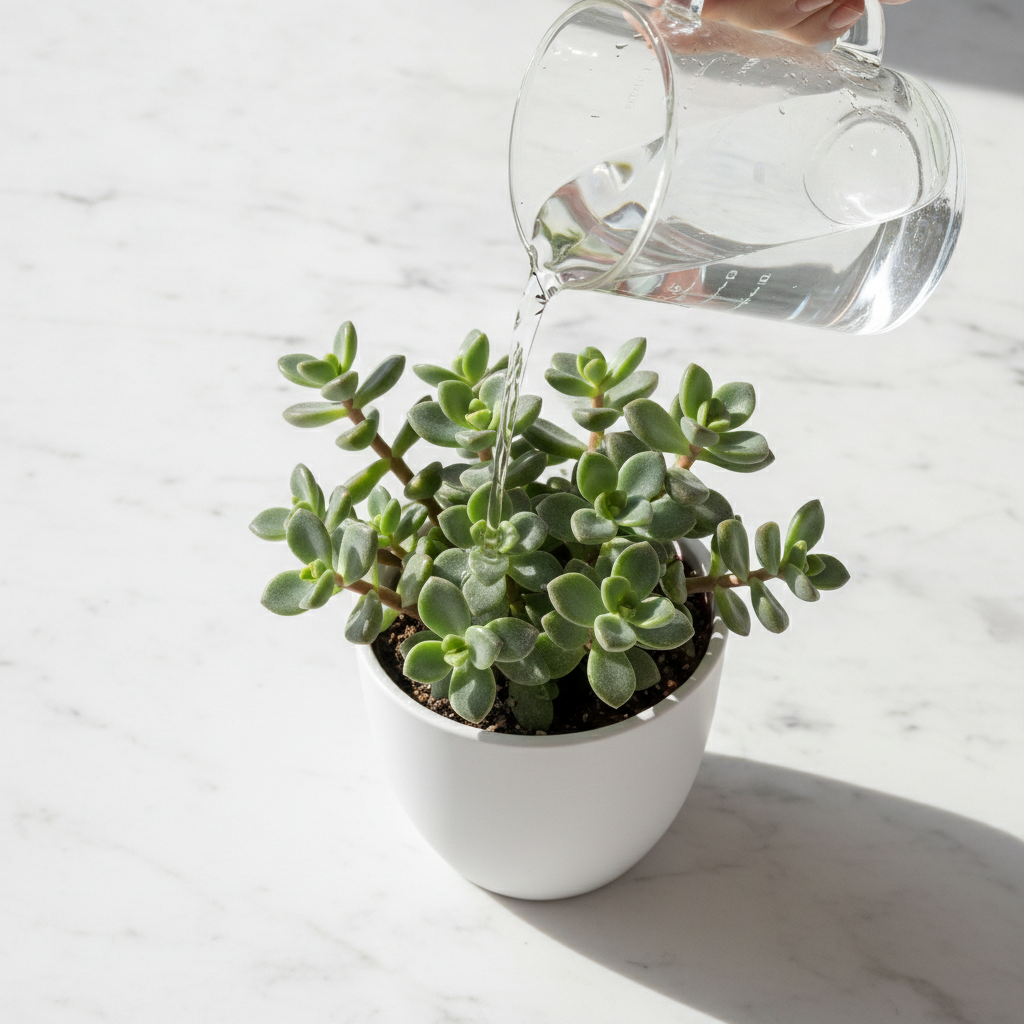
Pro Tip — The Soak and Dry Method: When you do water, do it properly. Drench the mix until water pours freely from the drainage holes, ensuring the entire root ball is wetted, then tip away anything that collects in the saucer. This mimics the infrequent but heavy rains of the plant’s native habitat far better than frequent little sips, which leave lower roots dry and upper roots perpetually damp.
How to Water Correctly
- Check that the soil is completely dry throughout the pot before you begin.
- Water at the base of the plant, keeping moisture off the leaf stacks where it can linger and cause rot.
- Continue until water runs freely from the drainage holes, wetting the whole root ball.
- Let the pot drain fully for several minutes.
- Empty the saucer or cache-pot so the plant never stands in water.
- Do not water again until the mix has dried out entirely.
Signs of Overwatering vs. Underwatering
| Symptom | Overwatering | Underwatering |
|---|---|---|
| Leaf colour | Yellowing, translucent, or blackened leaves | Slight dulling; colour otherwise holds |
| Leaf texture | Soft, mushy, waterlogged to the touch | Softly wrinkled, deflated, thinner |
| Leaf drop | Leaves drop while still plump and heavy | Oldest lower leaves shrivel and fall |
| Soil | Stays wet for many days; may smell sour | Bone dry throughout, pulling from pot sides |
| Stem base | Blackened, soft, or collapsing at the soil line | Firm, though the plant looks generally tired |
Warning — Root Rot: A soft, blackening stem base is the hallmark of root rot, the most common killer of this plant. If you catch it early, unpot immediately, cut away all mushy tissue with a clean blade, let the plant callus for a day or two, and either re-root the healthy top as a cutting or repot into fresh dry gritty mix. Waterlogged roots do not recover on their own.
Humidity Requirements
Here the Desert Gem is refreshingly undemanding. Adapted to dry island air, it is perfectly content in the low to average humidity of a typical home, generally in the range of 30 to 50 percent, and needs no misting, pebble trays, or humidifiers whatsoever.
In fact, high humidity is a hindrance rather than a help. Stagnant, damp air raises the risk of fungal problems and rot, particularly if water sits between the tightly packed leaves. If anything, the plant benefits from good air movement, so a room that feels a little dry and airy suits it far better than a steamy bathroom.
There is therefore no need to raise humidity for this species, and no cause for concern if your home runs dry in winter with the heating on. Simply keep the plant well lit, water sparingly, and let the ambient air be whatever it naturally is.
Water Quality
The Desert Gem is not fussy about water quality and tolerates ordinary tap water well in most areas. If your water is very hard, occasional mineral spotting may appear on leaves or a crust may form on the soil surface over time; using filtered or rainwater sidesteps this, but it is a cosmetic nicety rather than a necessity. Room-temperature water is gentler on the roots than very cold water straight from the tap.
Soil, Potting & Repotting
Because this plant will not forgive wet feet, the growing medium is your most important line of defence against rot. The single non-negotiable requirement is sharp, fast drainage: a mix that holds a little moisture briefly and then dries quickly, never one that stays soggy. Ordinary houseplant compost used straight from the bag holds far too much water and will eventually suffocate the roots.
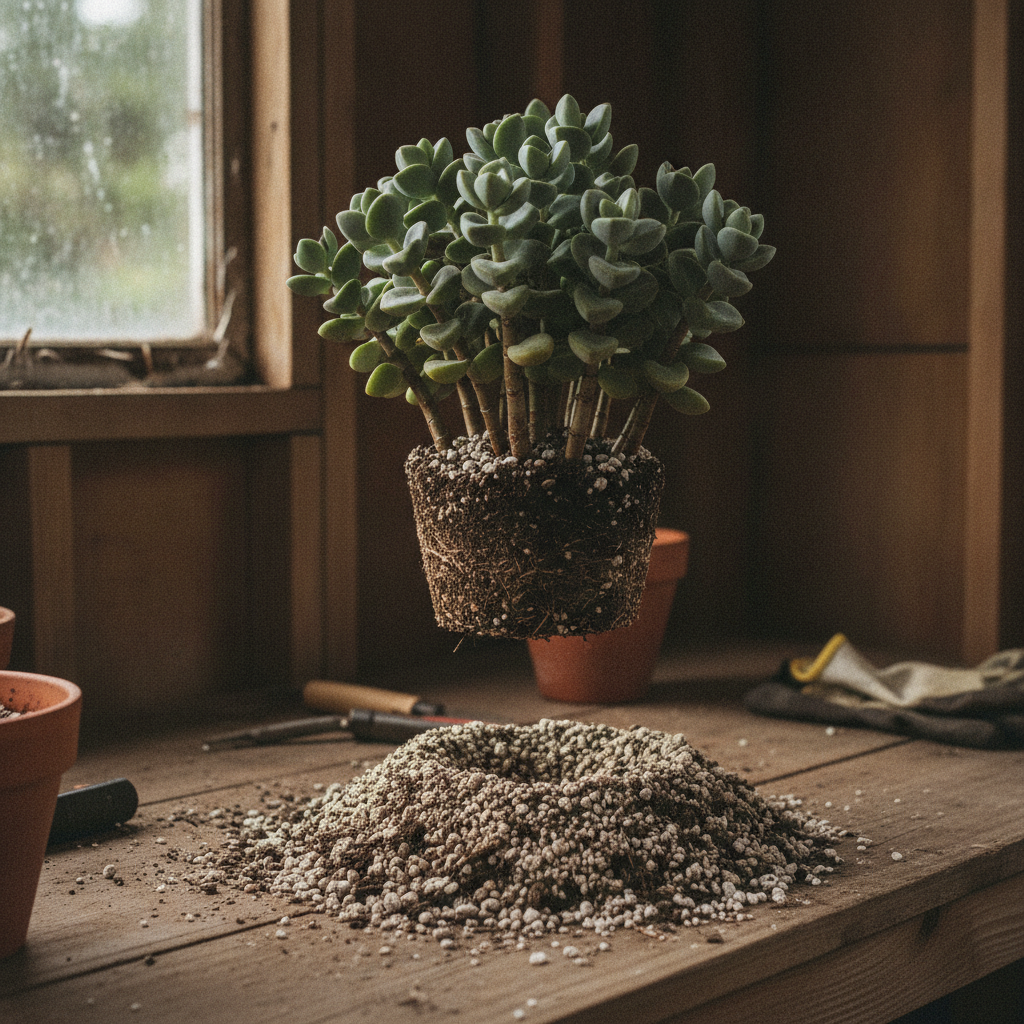
Ideal Soil Composition
Aim for a mix that is roughly half or more inorganic, gritty material. A proprietary cactus and succulent compost is a reasonable starting point, but most benefit from extra grit added to open them up further. The goal is a medium through which water flows quickly, leaving air pockets around the roots almost immediately after watering.
| Component | Proportion | Function |
|---|---|---|
| Cactus or succulent compost | Around 40 to 50 percent | Provides light organic matter and a small water reserve |
| Pumice or coarse perlite | Around 30 percent | Creates air pockets and speeds drainage |
| Coarse grit or fine gravel | Around 20 percent | Adds weight and further sharpens drainage |
| Optional horticultural sand | A small handful | Fine-tunes texture; use sparingly to avoid compaction |
The Desert Gem is not particular about pH and grows well in anything from slightly acidic to slightly alkaline soil, roughly pH 6.0 to 7.5. Because you feed lightly and repot periodically, obsessing over pH is unnecessary; a good gritty mix will sit comfortably in the acceptable range on its own.
Pro Tip — Quick Mix Recipe: For an easy, reliable blend, combine two parts cactus compost, one part pumice or perlite, and one part coarse grit. If you can crush a handful and it falls apart rather than clumping, and water poured through it drains out almost at once, you have the texture right.
Choosing the Right Pot
Pot choice works hand in hand with soil to control moisture. A smaller pot that dries quickly is far safer than an oversized one holding a large reservoir of damp soil the roots cannot use.
Drainage holes are non-negotiable. Never plant a Desert Gem in a pot without a drainage hole, however attractive the container. If you love a decorative cache-pot, keep the plant in a plain nursery pot inside it and lift it out to water, returning it only once it has drained fully.
Pot material: Terracotta is ideal because it is porous and wicks moisture away from the soil, helping it dry faster and giving you a valuable margin for error. Glazed ceramic and plastic both work but retain moisture longer, so lean toward an even grittier mix and more cautious watering if you use them.
Pot size: Choose a pot only slightly larger than the root ball. This slow grower is happy being a little snug, and a tight pot dries out at a healthy pace while discouraging the overwatering that plagues plants sitting in too much soil.
When to Repot
The Desert Gem grows slowly and dislikes disturbance, so it needs repotting only every two to three years, or when roots fill the pot and begin to escape the drainage holes. The best time is spring or early summer, at the start of the active growing season, when the plant can recover quickly. Always repot into dry mix and wait several days before the first watering, giving any disturbed roots time to heal.
How to Repot: Step-by-Step
- Ensure the plant is dry at the roots before you start; do not water for several days beforehand.
- Ease the plant gently from its old pot, supporting the base of the stems rather than pulling on the leaves.
- Tease away old spent soil and inspect the roots, trimming any that are black, mushy, or clearly dead with a clean blade.
- Position the plant in a slightly larger pot at the same depth it sat before, never burying the stem base.
- Fill around the roots with fresh dry gritty mix, firming lightly to remove large air gaps.
- Wait three to seven days before watering to let any root damage callus over.
- Resume normal soak-and-dry watering once the settling-in period has passed.
Warning — Transplant Shock: Watering straight after repotting is a classic mistake with succulents. Freshly cut or torn roots are open wounds, and wet soil around them invites rot. Keeping the plant dry for a few days after repotting lets those wounds seal and dramatically reduces the risk of losing the plant.
Fertilising
As a plant of poor, rocky soils, the Desert Gem needs very little feeding and is easily harmed by too much. In the wild it survives on the meagre nutrients of weathered island rock, so it interprets a heavy hand with fertiliser as an excess rather than a treat.
A light touch produces the best results: modest, well-timed feeding supports steady growth and healthy leaf colour without pushing the soft, stretched growth that over-fertilising encourages. When it comes to feeding this succulent, less is genuinely more.
Understanding Plant Nutrients
Fertilisers are labelled with an NPK ratio giving the percentages of nitrogen, phosphorus, and potassium, the three nutrients plants use in the largest amounts. Succulents like the Desert Gem generally prefer a feed that is not too high in nitrogen, since excess nitrogen drives fast, weak, water-filled growth at the expense of the compact form and hardiness you want.
| Nutrient | Symbol | Primary Function | Deficiency Symptoms |
|---|---|---|---|
| Nitrogen | N | Leaf and stem growth | Pale, generally yellowed older leaves; stalled growth |
| Phosphorus | P | Root development and energy transfer | Dull colour; weak, sluggish rooting |
| Potassium | K | Overall vigour and stress tolerance | Yellow or browning leaf edges |
| Calcium | Ca | Cell wall structure | Distorted or weak new growth |
| Magnesium | Mg | Core of the chlorophyll molecule | Yellowing between leaf veins |
| Iron | Fe | Chlorophyll production | Pale new leaves with green veins |
Types of Fertiliser
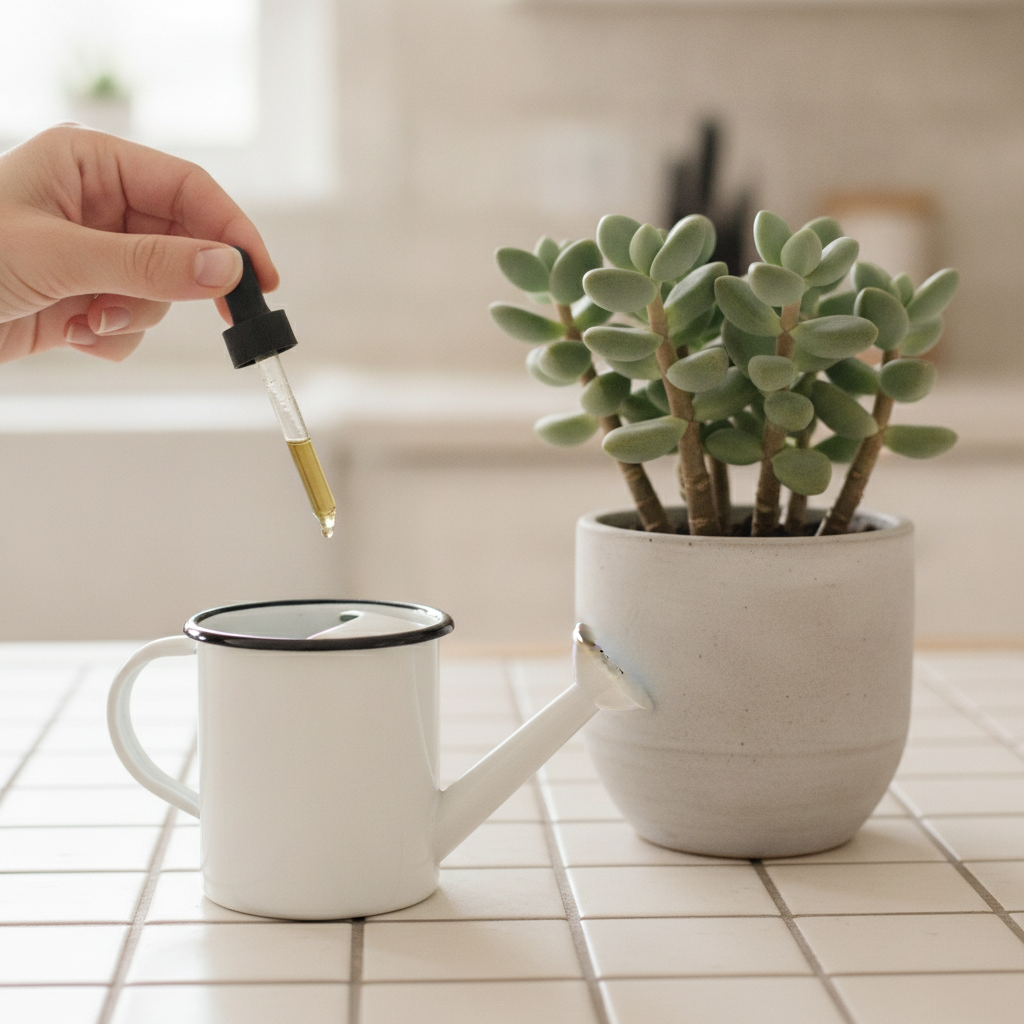
Liquid fertilisers: The easiest option for succulents. A balanced or specialist cactus feed diluted to half strength or less, applied to already-moist soil during the growing season, gives you precise control over how much the plant receives.
Slow-release granular: Convenient but harder to control, since the pellets release nutrients whenever the soil is warm and moist. If you use them, apply at well below the label rate for houseplants, as succulents need far less than leafy species.
Organic fertilisers: Gentle options such as heavily diluted worm-casting tea work well and are hard to overdo. They release nutrients slowly and improve the soil’s biology, though they act more subtly than synthetic feeds.
Feeding Schedule
Feed only during the active growing season of spring and summer, roughly once a month at most, and always with a dilute solution. Stop entirely in autumn and winter when the plant is resting, as feeding a dormant succulent simply lets salts accumulate in the soil with nowhere to go. A newly potted plant in fresh mix needs no feeding for the first couple of months.
Pro Tip — When in Doubt, Skip It: A Desert Gem that is never fed will grow slowly but stay perfectly healthy for years. One that is fed too often becomes soft, leggy, and prone to rot. If you are ever unsure whether to feed, the safe answer is almost always to leave it be.
How to Fertilise
- Dilute a balanced or low-nitrogen feed to half the recommended strength or less.
- Water the plant lightly first, or feed just after a normal watering, so the roots are never in contact with fertiliser in dry soil.
- Apply the dilute solution to the soil, keeping it off the leaves.
- Feed no more than once a month, and only during spring and summer.
- Flush the pot with plain water every few months to wash out accumulated mineral salts.
Warning — Salt Build-Up: A white crust on the soil surface or pot rim, or brown, scorched leaf tips, can signal a build-up of fertiliser salts. If you see this, leach the pot by running plenty of plain water through the mix until it flows freely from the base, and ease off feeding.
Propagation
One of the quiet pleasures of growing a Desert Gem is how readily it propagates from stem cuttings. Like its cousin the elephant bush, it roots willingly from pieces of stem, so a single plant can be multiplied into gifts, backups, and fuller displays with almost no equipment.
Stem cuttings are by far the most reliable route. Whole individual leaves rarely root successfully for this species, unlike some other succulents, so the sections below focus on stem and tip cuttings, which are quick, dependable, and forgiving.
Understanding Callusing
The key concept behind succulent propagation is callusing. When you cut a fleshy stem, the wound is wet and vulnerable, and if placed straight into soil it readily rots. Leaving the cutting in dry air for a few days allows the cut surface to dry and form a protective callus, after which it can be potted or rooted with a much higher success rate. Patience at this stage is the difference between a thriving cutting and a mushy failure.
Stem Cuttings in Soil: Step-by-Step
This is the classic, most dependable method, ideal for spring and summer when the plant is growing actively and roots form fastest.
- Using clean, sharp scissors or a knife, cut a healthy stem tip 5 to 10 centimetres (2 to 4 inches) long, just above a leaf pair on the parent.
- Remove the lowest one or two leaf pairs to expose a short length of bare stem for rooting.
- Set the cutting aside in a dry, shaded spot for three to seven days until the cut end has callused over.
- Insert the callused end into barely moist gritty succulent mix, deep enough to stand upright.
- Place the pot in bright, indirect light and leave it dry for a week, then water very sparingly.
- Resist the urge to tug; roots usually form within two to six weeks, signalled by new growth at the tip.
Pro Tip — Take Cuttings While Pruning: Any time you trim a Desert Gem to shape it, keep the healthy tips. Rather than composting them, callus and pot them up; pruning and propagation are the same job done twice, and you will rarely find easier free plants.
Rooting in Water or Moss: Step-by-Step
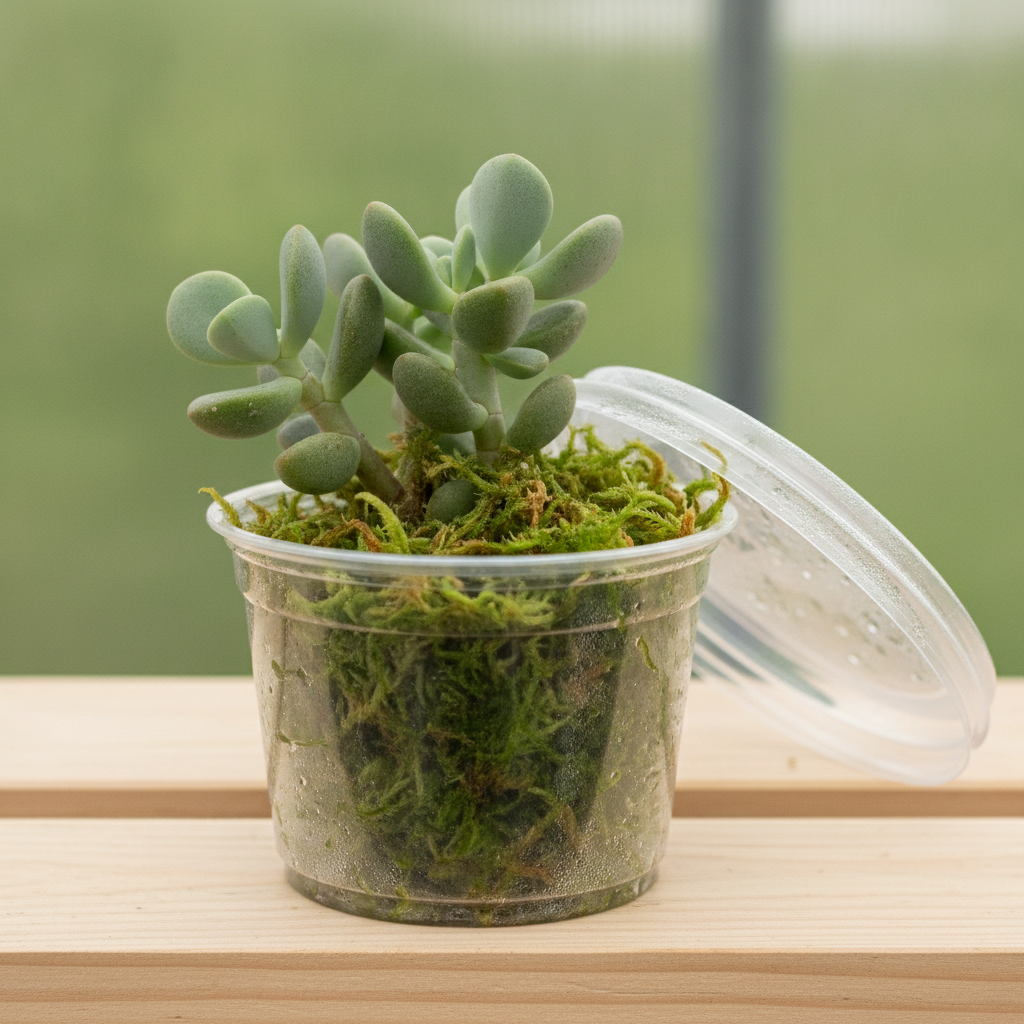
Some growers prefer to root cuttings in water or damp sphagnum moss so they can watch roots develop. It works, though the roots formed this way are slightly more delicate when transferred to soil.
- Take and callus a stem cutting exactly as for the soil method above.
- Suspend the callused end just above the surface of clean water, or nestle it into barely damp sphagnum moss in a container with the lid ajar.
- Keep it in bright, indirect light and refresh the water every few days, or keep the moss lightly moist but never sodden.
- Once roots reach two to three centimetres (about an inch) long, pot the cutting into gritty mix.
- Keep the newly potted cutting on the dry side at first so the roots adapt to soil without rotting.
Troubleshooting Propagation
| Problem | Likely Cause | Solution |
|---|---|---|
| Cutting turns soft and black | Rot from potting before callusing or from wet soil | Allow a longer callus period; keep the medium barely moist |
| Cutting shrivels badly | No roots yet and too little moisture, or too much heat | Give bright but indirect light; a light misting of the medium can help |
| No roots after many weeks | Cool temperatures or the dormant season | Wait for warm conditions; propagation is fastest in spring and summer |
| Individual leaves fail to root | This species rarely roots from single leaves | Use stem or tip cuttings instead of leaves |
Pests & Diseases
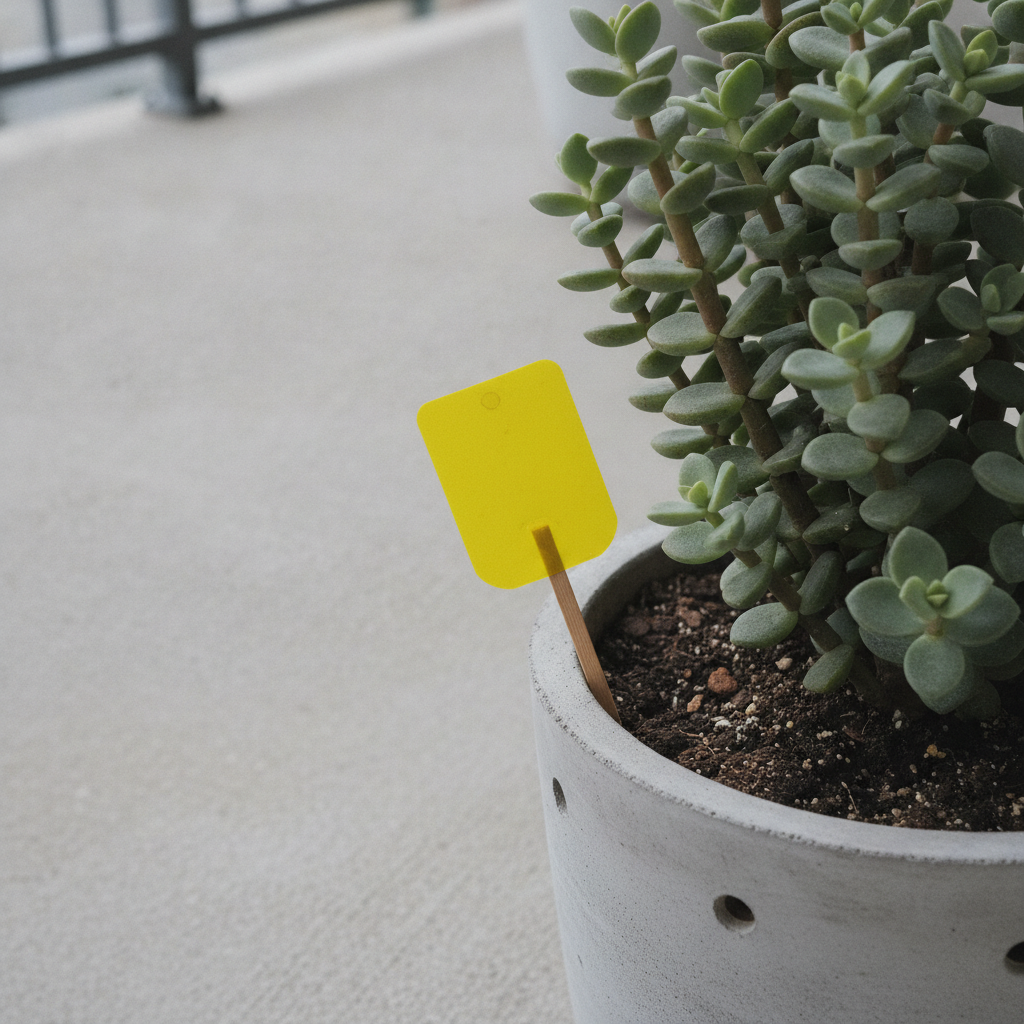
A healthy Desert Gem grown in bright light and gritty soil is remarkably trouble-free, and most of its problems are cultural rather than biological, traceable to overwatering rather than to any pest. Still, a few sap-sucking insects occasionally find their way onto indoor specimens, especially on plants that are stressed or crowded together with others.
Vigilance is the best defence. A quick inspection whenever you water, paying attention to the tightly packed leaf axils where pests like to hide, will catch almost any infestation early, while it is still easy to deal with.
Common Pests
Mealybugs (Pseudococcus species)
The most likely pest on a Desert Gem, mealybugs appear as small, white, cottony tufts tucked into leaf joints and around the stem base. They suck sap, weaken the plant, and leave behind a sticky residue that can attract sooty mould.
Treatment: Dab each insect with a cotton bud dipped in isopropyl alcohol, which kills them on contact. For larger infestations, follow up with an insecticidal soap or a diluted horticultural oil, and isolate the plant until it is clear.
Spider Mites (Tetranychus urticae)
Tiny and hard to see, spider mites thrive in hot, dry, stagnant conditions and reveal themselves through fine webbing and a stippled, dusty look on the leaves. They are less common on succulents than on thin-leaved plants but can still appear.
Treatment: Rinse the plant to knock mites off, improve air circulation, and treat with insecticidal soap or horticultural oil, repeating every few days to break the breeding cycle.
Scale Insects (Coccoidea)
Scale appears as small, hard, brown, limpet-like bumps stuck fast to stems and leaves. They are easy to overlook because they barely move, and like mealybugs they feed on sap and excrete sticky honeydew.
Treatment: Scrape or pick off individual scales, or dab them with alcohol, then treat with horticultural oil to smother any survivors. Persistence over several weeks is usually needed to clear them fully.
Common Diseases
Root and Stem Rot (Pythium and Fusarium species)
By far the most serious threat to this plant, rot sets in when roots sit in wet soil for too long. It shows as a soft, blackening, collapsing stem base and mushy roots, and if left unchecked it will destroy the whole plant quickly.
Treatment: Act fast. Unpot the plant, cut away every soft, discoloured part until only firm healthy tissue remains, let it callus, and re-root the salvageable top as a fresh cutting in dry gritty mix. Prevention through careful watering is far more effective than any cure.
Fungal Leaf Spot (various fungi)
Less common, leaf spot appears as dark, sometimes sunken patches on the leaves, usually where water has lingered in damp, still air. It is more a symptom of poor conditions than an aggressive disease.
Treatment: Remove affected leaves, improve air movement, avoid wetting the foliage, and let the plant dry out properly between waterings. Correcting the conditions usually resolves it without chemicals.
Pest and Disease Summary
| Pest / Disease | Identification | Treatment |
|---|---|---|
| Mealybugs | White cottony tufts in leaf joints | Alcohol swab, then insecticidal soap or oil |
| Spider mites | Fine webbing and stippled leaves | Rinse, improve airflow, treat with soap or oil |
| Scale | Hard brown bumps on stems and leaves | Scrape off, dab with alcohol, apply oil |
| Root and stem rot | Soft blackening base, mushy roots | Cut away rot, re-root healthy tissue, water less |
| Fungal leaf spot | Dark patches on leaves in damp air | Remove leaves, improve airflow, keep foliage dry |
Prevention Strategies
The best pest and disease control for a Desert Gem is simply excellent culture. A plant grown in strong light, gritty fast-draining soil, and a careful soak-and-dry watering rhythm is naturally robust and rarely troubled, because most problems only take hold on plants weakened by wet roots or poor light.
Quarantine every new plant for a couple of weeks before it joins your collection, inspect regularly, keep good airflow around the plant, and never let it sit in water. These simple habits prevent the vast majority of issues before they ever begin.
Pro Tip — Isolate and Inspect New Arrivals: Most infestations arrive on a newly bought plant. Keeping newcomers apart from your other succulents for two to three weeks, and checking them over closely, stops a single hitchhiking mealybug from spreading through an entire shelf.
Popular Varieties
As a rare species with a tiny natural range, Portulacaria molokiniensis has not been bred into the sprawling family of named cultivars you find with more commercial houseplants. Most plants sold are simply the true species, prized for their chunky, coin-stacked form. A few variations and closely related plants do circulate, though, and they are worth knowing when you are shopping.
The most notable is a variegated form, while collectors also train the species as a succulent bonsai and often grow it alongside its better-known relative, the elephant bush. The table below sketches the options you are most likely to encounter.
| Variety | Leaf Appearance | Light Needs | Growth Rate | Availability |
|---|---|---|---|---|
| Desert Gem (species) | Plump, round, glaucous grey-green, stacked in pairs | Very bright, direct sun | Slow | Uncommon but findable |
| Variegated Desert Gem | As species but marbled cream and blush pink | Very bright, with some sun protection | Very slow | Rare, collector item |
| Bonsai-trained Desert Gem | Species leaves on a thickened, shaped trunk | Very bright, direct sun | Slow | Specialist growers |
| Elephant Bush (P. afra) | Smaller, flatter leaves on wiry stems | Bright, direct sun | Moderate | Very common |
| Variegated Elephant Bush | Cream-edged small leaves, pink-tinged in sun | Bright, some sun | Moderate | Common |
Featured Varieties
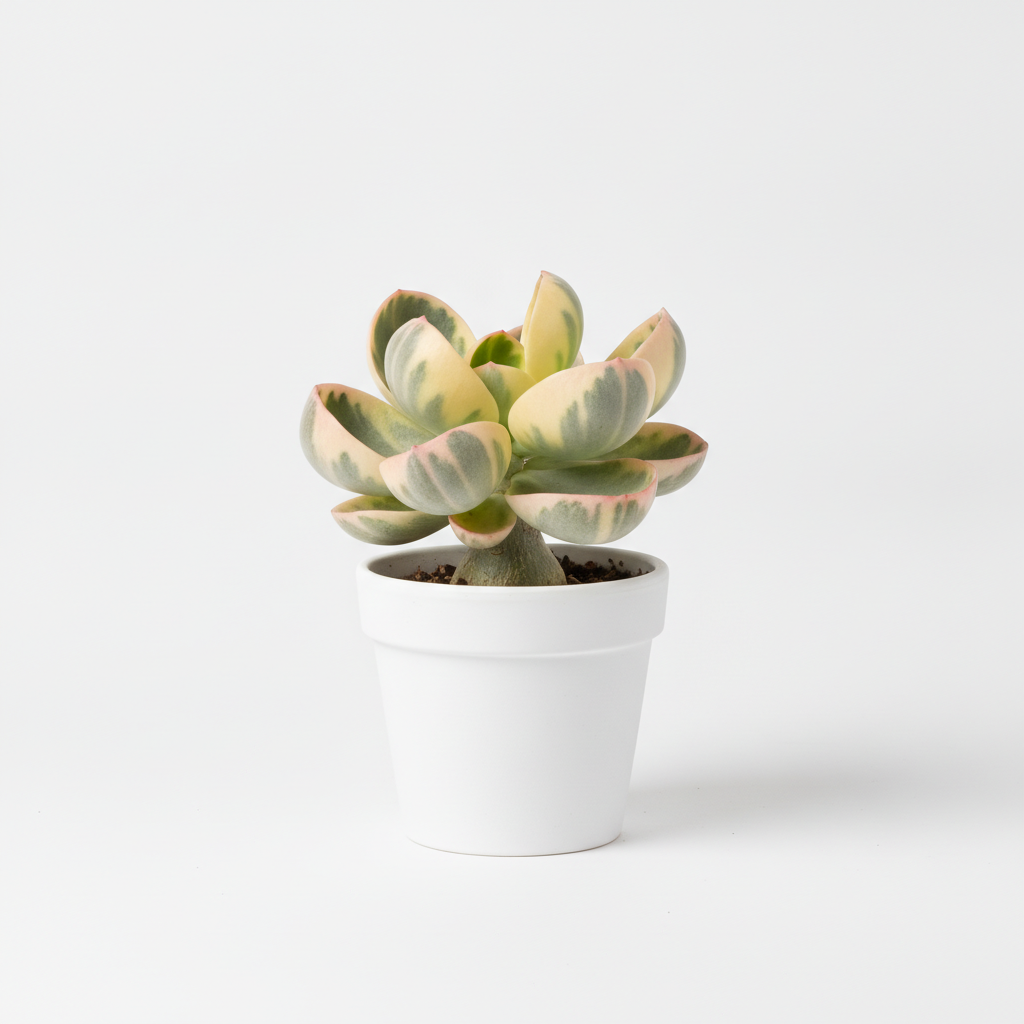
Variegated Desert Gem
A rare and coveted sport in which the plump leaves are marbled with creamy-yellow and, in bright light, soft blush-pink tones. The variegation reduces the plant’s chlorophyll, so it grows even more slowly than the species and appreciates strong light with a little protection from the harshest midday sun to avoid scorching the pale tissue.
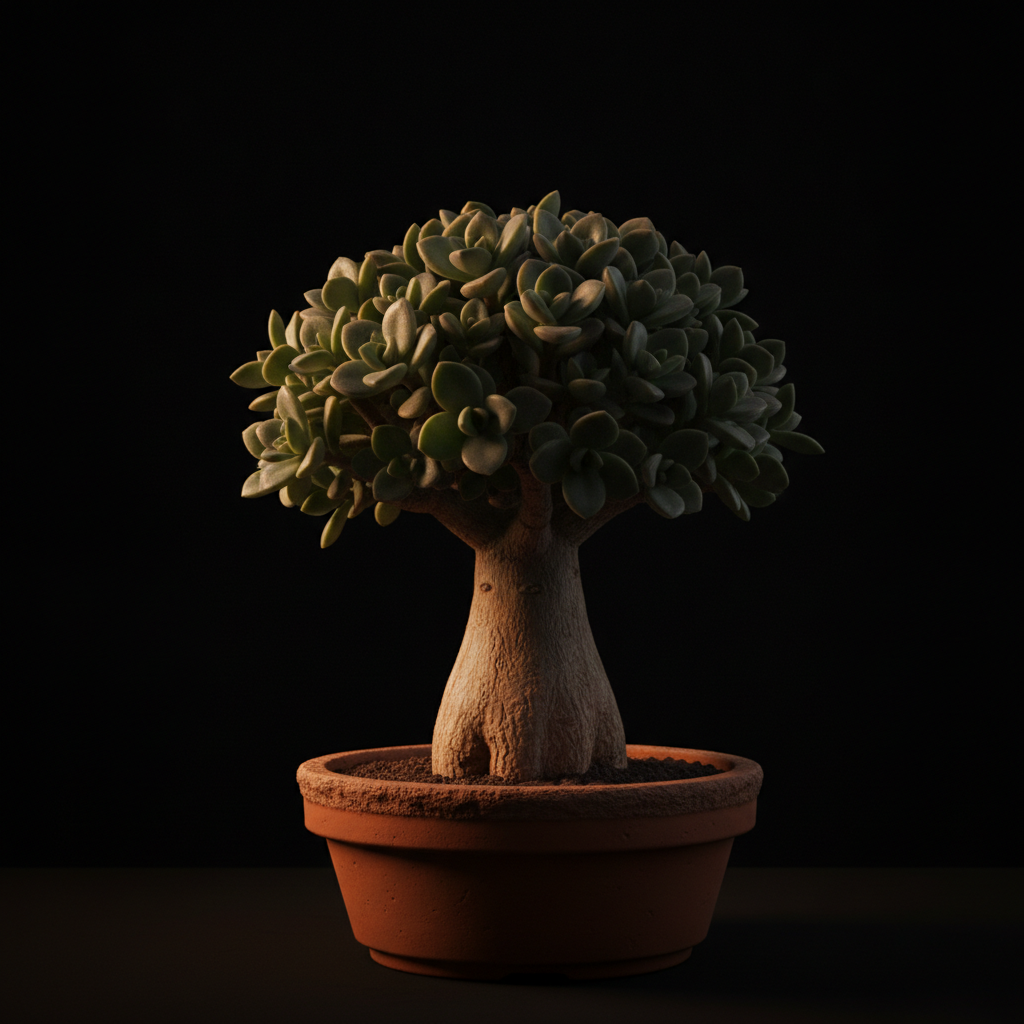
Bonsai-Trained Desert Gem
The species’ naturally tree-like habit and thickening trunk make it a favourite subject for succulent bonsai. Grown in a shallow dish and pruned over years, it develops a stout, tapering caudex topped with a compact canopy of coin-shaped leaves, offering the character of an ancient tree in miniature with the toughness of a desert plant.
Variety Profiles in Detail
Desert Gem (Portulacaria molokiniensis)
The true species remains the star: a stout, upright succulent shrub with thick, rounded, grey-green leaves neatly stacked in opposite pairs up reddish stems. Endemic to a few tiny arid islets near Maui, it is threatened in the wild, which lends cultivated plants a quiet conservation value alongside their sculptural charm.
Elephant Bush (Portulacaria afra)
The Desert Gem’s far more common South African relative, elephant bush has smaller, flatter leaves on thin, arching stems and a faster, more shrubby growth habit. It shares almost identical care, so it makes an easy, inexpensive companion plant and a good way to practise the growing techniques described in this guide.
Choosing the Right Variety for Your Space
If you want the definitive plant and have a genuinely sunny window, seek out the true species for its unmatched chunky form. Choose the variegated form only if you can offer excellent light and enjoy nurturing a slow, delicate collector’s plant. For a bolder statement, a bonsai-trained specimen rewards patience, while the humble elephant bush is the perfect low-cost stand-in for anyone wanting the same look and care on a larger, faster-growing, easier-to-source plant.
Frequently Asked Questions
How often should I water my Desert Gem?
Water only when the soil has dried out completely, which in a bright, warm spot usually means roughly every 10 to 20 days in spring and summer, and as little as once a month or less in winter. Always let the mix dry fully rather than following a rigid calendar, since overwatering is the most common cause of failure with this plant.
Why is my Desert Gem getting tall and leggy?
Stretching, with longer gaps between leaf pairs and larger, thinner leaves, is almost always a sign of insufficient light. Move the plant to your brightest window or add a grow light. The stretched growth will not tighten up again, but you can prune the plant back and root the healthy tips as new, compact cuttings.
Is the Desert Gem safe around cats and dogs?
It is generally considered non-toxic, in line with its close relative the elephant bush, which is safe enough to be eaten by tortoises and livestock. Even so, no houseplant is truly intended for eating, and a curious pet that chews on it may get a mild stomach upset, so it is sensible to discourage nibbling.
Why are the leaves shrivelling or wrinkling?
Soft, wrinkling leaves usually mean the plant is thirsty and drawing on its stored water, so a thorough soak should plump them up within a day or two. If the leaves are instead soft, translucent, and yellowing, the cause is the opposite, overwatering, and you should check the roots for rot and let the soil dry out completely.
How big does a Desert Gem get, and how fast?
It is a slow grower that stays compact for years, typically reaching perhaps 30 to 60 centimetres (12 to 24 inches) tall as a houseplant over a long time, and larger only with age and ideal conditions. Its unhurried pace is part of its appeal, as it rarely outgrows its spot or needs frequent repotting.
Can I grow my Desert Gem outdoors?
Yes, in warm, frost-free climates it thrives outdoors in full sun with sharp drainage. In cooler regions it is best treated as a container plant that spends summer outside and comes indoors before temperatures drop below about 5 degrees Celsius (41 degrees Fahrenheit), since it has no tolerance for frost.
Why won’t my leaf cuttings root?
Unlike some succulents, the Desert Gem does not reliably grow from single leaves. Use stem or tip cuttings instead: take a short section of stem, let the cut end callus for a few days, and then root it in gritty mix. Stem cuttings root readily where individual leaves almost always fail.
Does the Desert Gem ever flower?
Mature, well-grown plants can produce small clusters of pale pinkish flowers, usually in spring, though flowering is uncommon indoors and depends on the plant receiving plenty of light and reaching a good size. Most people grow this species for its striking foliage and form rather than its modest blooms.






