
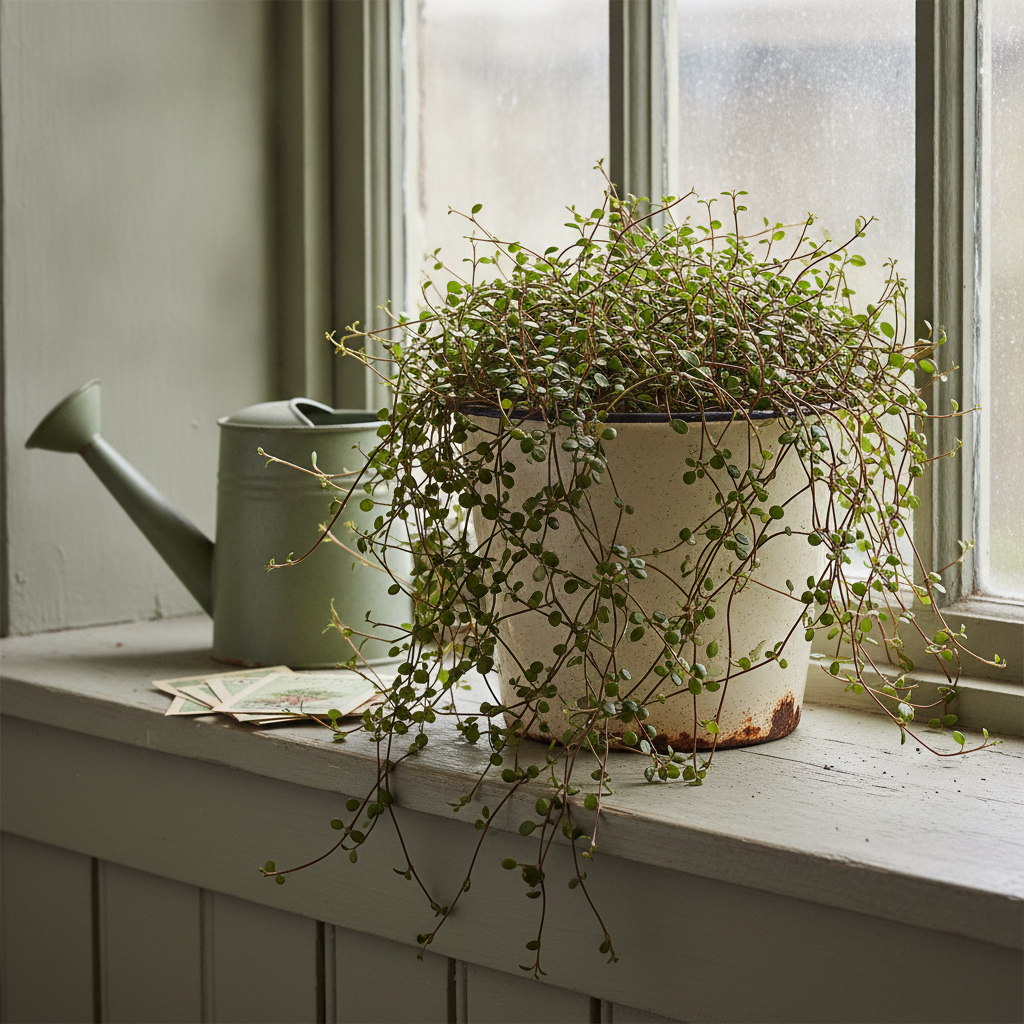
Few houseplants read quite like a living sketch the way the creeping wire vine does. Known botanically as Muehlenbeckia complexa and sold under a small crowd of common names including angel vine, maidenhair vine, necklace vine and simply wire vine, this New Zealand native builds itself from hundreds of thread-thin, dark reddish-brown stems studded with tiny glossy leaves rarely wider than a fingernail. Left to its own devices it weaves into a dense, cloud-like tangle that spills from a hanging basket, mounds over the rim of a pot, or clothes a topiary frame in fine green lace.
Its reputation sits somewhere between “beginner-friendly” and “quietly particular.” A creeping wire vine will survive a surprising amount of neglect, bouncing back from the odd missed watering and shrugging off pests that would flatten a fussier plant. Getting it to truly thrive, though, with that full, mossy density that makes it so photogenic, asks for a little more attention to light, moisture and grooming. This guide walks through every part of its care, from reading the light in your rooms to propagating new plants from a handful of trimmed stems, so you can move it from merely alive to genuinely flourishing.
Contents
- Quick Reference
- Why Creeping Wire Vine Makes a Rewarding Houseplant
- Light Requirements
- Watering & Humidity
- Soil, Potting & Repotting
- Fertilising
- Propagation
- Pests & Diseases
- Popular Varieties
- Frequently Asked Questions
Quick Reference: Creeping Wire Vine at a Glance
| Light | Bright, indirect light; tolerates a few hours of gentle direct sun and light shade |
| Watering | Keep evenly moist; water when the top 1 to 2 cm (0.5 to 0.75 in) of soil feels dry, never bone dry |
| Temperature | 10 to 24°C (50 to 75°F); keep above 7°C (45°F) indoors |
| Humidity | Average to high; 50% or more keeps the fine foliage from crisping |
| Fertiliser | Balanced liquid feed at half strength, monthly in spring and summer |
| Toxicity | Generally regarded as non-toxic to cats, dogs and humans |
Why Creeping Wire Vine Makes a Rewarding Houseplant
The appeal of Muehlenbeckia complexa is textural rather than showy. There are no large glossy leaves or dramatic variegation to catch the eye; instead the plant works through sheer intricacy, thousands of tiny leaves held on a scribble of wiry stems that catches the light and casts delicate shadows. That fine texture makes it a designer’s favourite for softening hard edges, whether it is trailing from a shelf, cascading out of a hanging basket, or trained over a wire sphere into a living topiary.
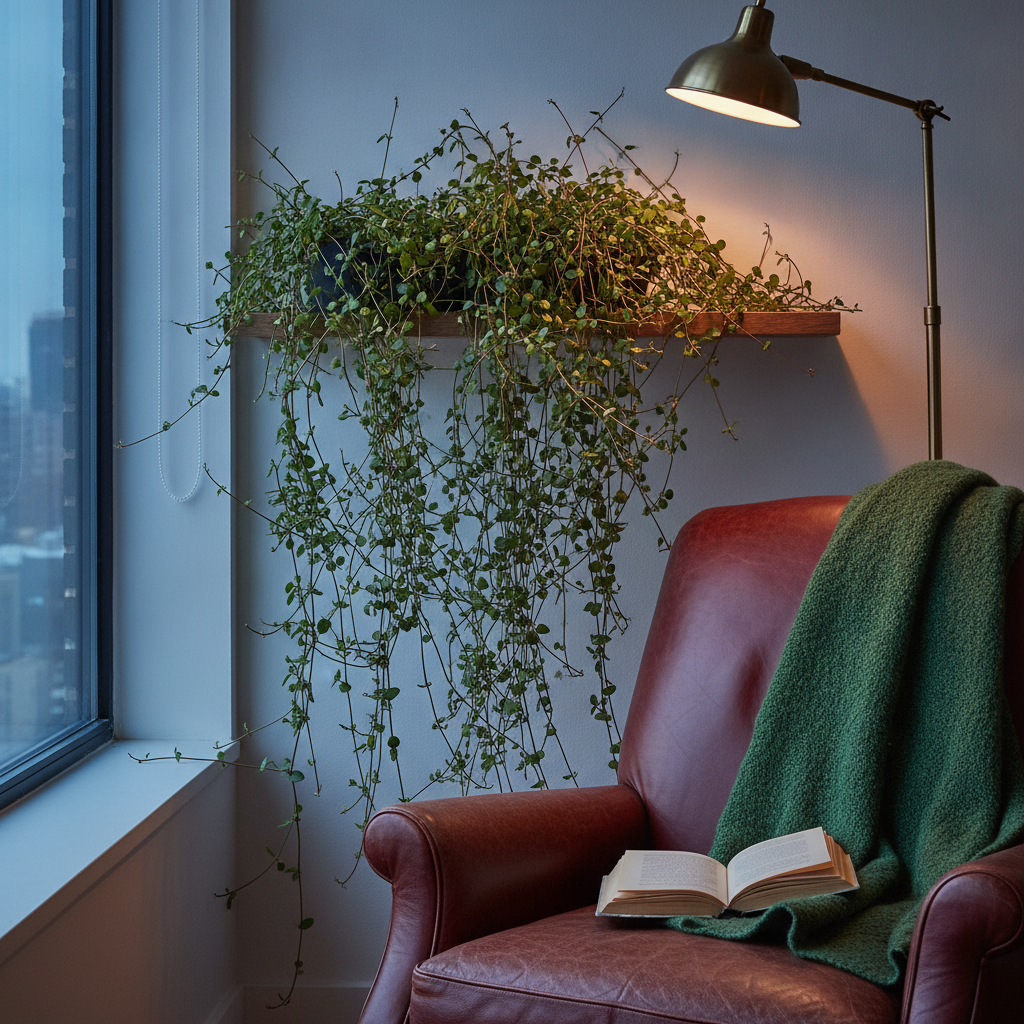
Beyond looks, it earns its place through resilience and pace. It is a genuinely fast grower, quickly filling a pot and rewarding light pruning with bushier regrowth, so a small starter plant becomes a full specimen within a single season. It also adapts to a wide range of conditions, coping with cooler rooms that many tropical houseplants dislike, and it is one of the easiest plants of all to propagate, meaning a single vine can furnish a whole windowsill of new plants for nothing. For anyone who enjoys grooming and shaping a plant over time, few subjects are as forgiving or as responsive.
Important — Toxicity: Creeping wire vine is generally listed as non-toxic to cats, dogs and people, and it is not recorded as poisonous by major pet-safety databases. Even so, no houseplant is truly meant to be eaten, and nibbling on the tiny fruits or foliage may cause mild stomach upset in sensitive pets, so it is still sensible to keep browsing to a minimum.
Light Requirements
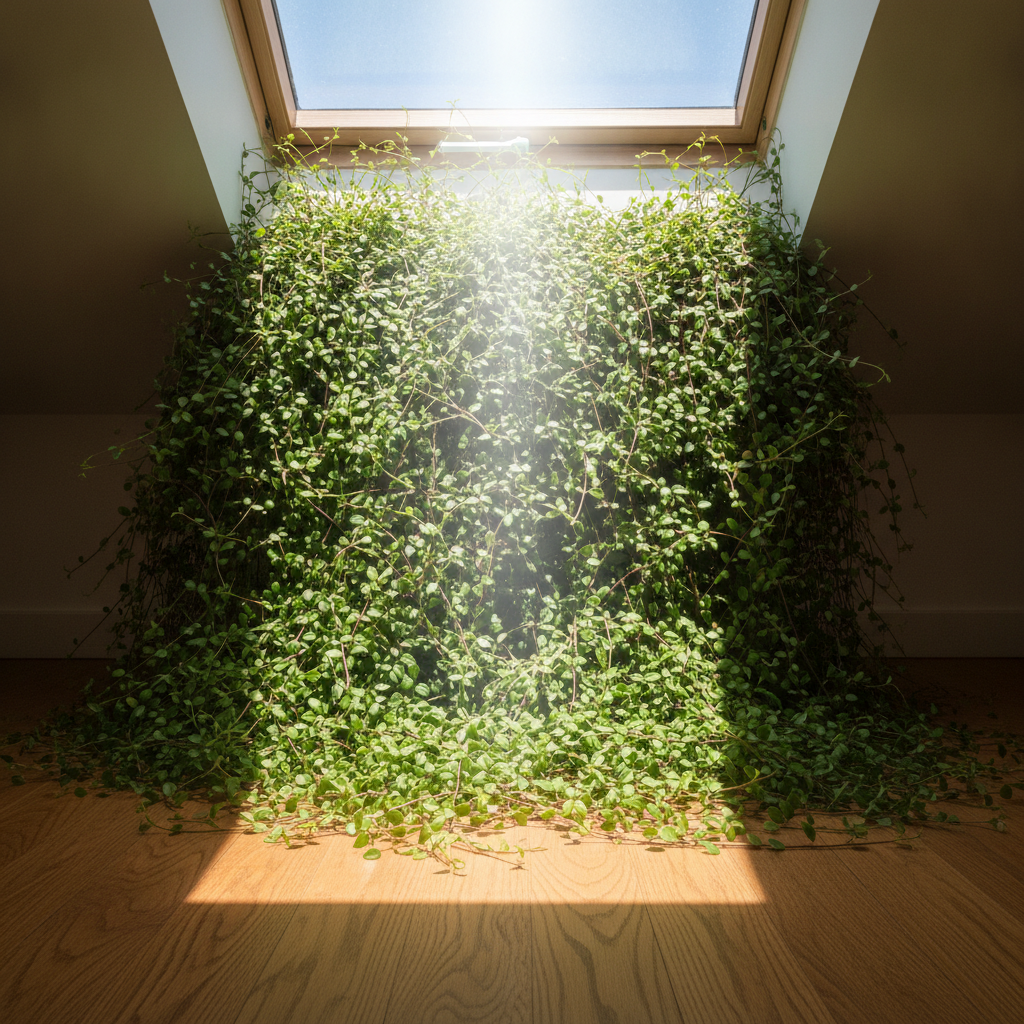
Light is the single biggest lever you have over how full and compact a creeping wire vine becomes. In its native New Zealand it scrambles over rocks, banks and coastal scrub in open, well-lit positions, so indoors it wants the brightest spot you can offer short of relentless, scorching sun. Give it plenty of light and it packs its stems with closely spaced leaves; starve it of light and it stretches, thins out and drops leaves, leaving bare wiry runners that look sparse rather than lush.
The ideal is bright, indirect light for most of the day, with perhaps two or three hours of gentle morning sun. A position within a metre or so of a bright window, or right on a sill that does not bake in the afternoon, usually hits the sweet spot between vigour and leaf scorch.
Light Levels Explained
Houseplant light is easier to judge once you attach rough numbers and everyday locations to each band. The table below translates the usual categories into what a creeping wire vine actually does in each.
| Light Category | Approx. Level | Typical Location | Outcome |
|---|---|---|---|
| Direct sun | 20,000 lux and up | On an unshaded south-facing sill | Fine in morning; harsh midday sun can scorch and dry the fine foliage |
| Bright indirect | 10,000 to 20,000 lux | Beside an east or bright north window | Ideal; dense, compact, richly leafy growth |
| Medium | 5,000 to 10,000 lux | A metre or two back from a bright window | Acceptable; slightly looser growth, still healthy |
| Low | 1,000 to 5,000 lux | A dim corner or interior wall | Poor; stems stretch, leaves space out and drop |
| Very low | Under 1,000 lux | A windowless room or deep hallway | Decline; will thin badly and eventually fail |
Window Orientation and Placement
South-facing window: The brightest option in the northern hemisphere and often too much at the glass in summer. Set the plant back slightly or filter the light with a sheer curtain so the fine leaves receive strong brightness without a full afternoon of scorching sun.
East-facing window: Close to perfect. Cool, gentle morning sun followed by bright indirect light for the rest of the day suits the plant’s density and colour beautifully.
West-facing window: Also very good, though the afternoon sun is stronger and hotter than the east. Watch for dryness and the odd crisped patch during heatwaves, and pull the plant back a little if needed.
North-facing window: Workable if the window is large and unobstructed, but this is the dimmest aspect and growth will be looser. Sit the plant as close to the glass as possible and consider supplementing with a grow light in winter.
Pro Tip — Rotate for Even Density: Because the wire vine grows towards light, one side will thicken while the shaded side thins. Give the pot a quarter turn every week or two and the whole plant fills in evenly instead of leaning into the window.
How Light Affects Density and Colour
Unlike variegated plants that lose their patterning in low light, the wire vine signals its light needs through habit rather than colour. In strong light the internodes stay short, so leaves sit close together and the plant looks plush and mossy, often with a warm bronze flush on new stems. In weak light the internodes lengthen, leaves become widely spaced, and the stems look like bare wire. If your plant is turning stringy, the cause is almost always too little light rather than a watering or feeding fault.
Warning — Direct Sunlight: The very feature that makes this plant charming, its tiny thin leaves, also makes it quick to scorch and dry out in harsh sun. Intense, unfiltered midday light through glass can brown the foliage and desiccate whole stems within a day or two, so ease the plant into any sunny spot gradually.
Artificial Lighting
Creeping wire vine responds well to supplementary light, which makes it a good candidate for darker flats and short northern winters. A full-spectrum LED grow light positioned 20 to 40 cm (8 to 16 in) above the plant and run for 10 to 12 hours a day will keep growth tight and green through the dim months. Because the plant is small and low, even a modest desk-style grow lamp is usually enough to make a visible difference.
Seasonal Adjustments
As daylight shortens in autumn, move the plant closer to its window or towards a brighter aspect to compensate for weaker, lower-angled sun. In spring, reverse the process gradually, reintroducing brighter positions over a week or two so the fresh growth is not shocked. Growth slows naturally in winter, so do not be alarmed by a quieter few months; the plant is simply matching its pace to the available light.
Watering & Humidity
Watering is where the creeping wire vine departs from the “let it dry out completely” rule that governs so many houseplants. Its stems and leaves are thin and hold little water, so the plant dries and wilts faster than its tough appearance suggests. The aim is steady, even moisture, damp but never soggy, with only the very surface of the soil allowed to dry between waterings.
When to Water
Check the plant every few days by pushing a finger into the top of the compost. When the top 1 to 2 cm (0.5 to 0.75 in) feels dry but the soil below is still cool and slightly moist, it is time to water. In a bright spot during summer this may mean watering two or three times a week; in winter it might drop to once a week or less. Rather than watering on a fixed schedule, let the pot’s weight and the feel of the soil guide you.
The consequence of getting this wrong is quick and visible. Allow the soil to dry out entirely and the fine foliage crisps and drops with alarming speed, sometimes leaving bare stems within a day. Keep the roots waterlogged and they suffocate, leading to yellowing, blackening stems and eventual rot. The plant is far more forgiving of the occasional dry spell than of constant sogginess, but neither extreme is what it wants.
Pro Tip — The Weight Test: Lift the pot just after watering to learn how heavy “full” feels, then lift it again every couple of days. As soon as it feels noticeably light, water. This weight cue is far more reliable for a thirsty plant like this than counting days on a calendar.
How to Water Correctly
- Take the plant to a sink or use a saucer so excess water can escape freely.
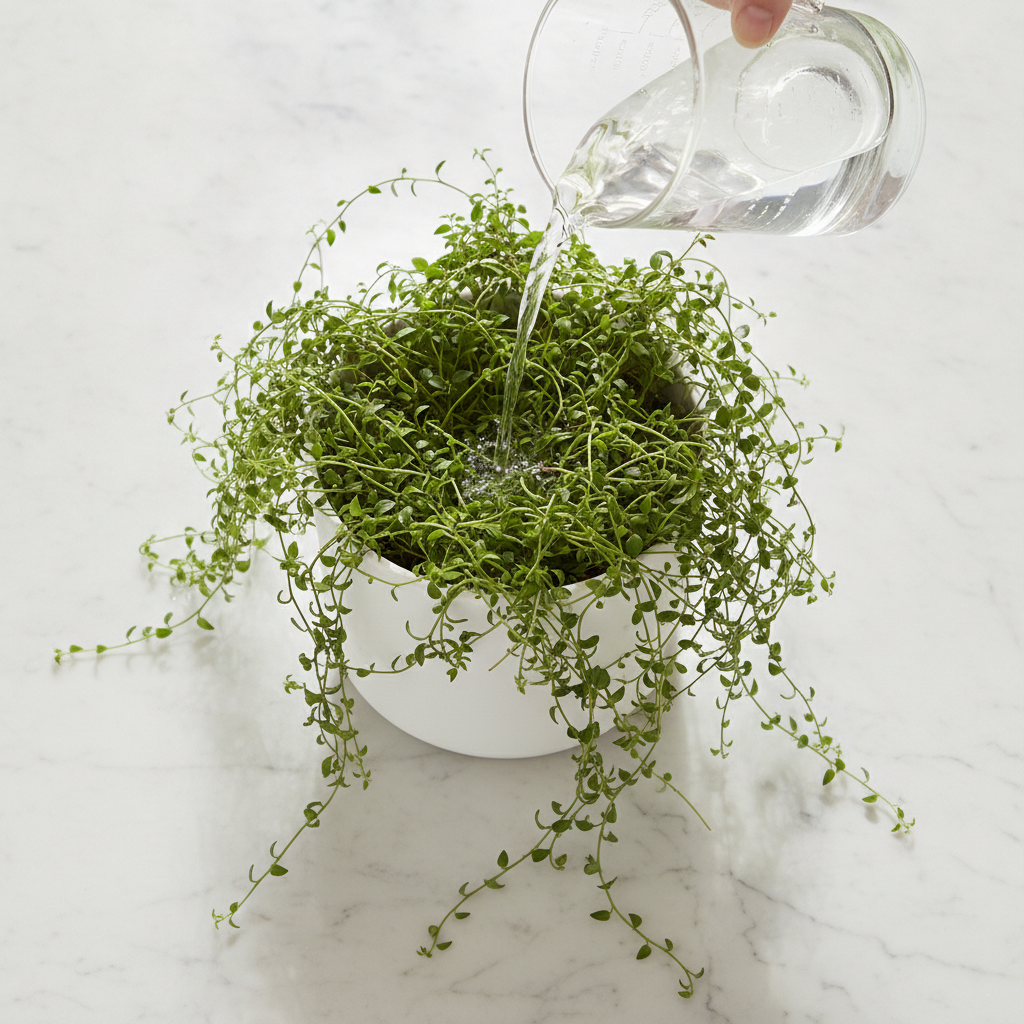
- Pour room-temperature water evenly over the soil surface, working around the base of the tangled stems.
- Continue until water runs steadily from the drainage holes, which ensures the whole root ball is moistened, not just the top.
- Let the pot drain fully for several minutes before returning it to its spot.
- Empty any water that collects in the saucer or cover pot so the roots never sit in standing water.
- In hard-water areas, occasionally water with collected rainwater or filtered water to limit mineral build-up on the fine foliage.
Signs of Overwatering vs. Underwatering
| Symptom | Overwatering | Underwatering |
|---|---|---|
| Leaf colour | Yellowing, often across whole sections | Browning and crisping from the tips |
| Leaf texture | Soft, limp, sometimes translucent | Dry, brittle, shrivelled, dropping readily |
| Soil | Stays wet for days, may smell sour | Pulls away from the pot edge, bone dry |
| Roots | Dark, mushy, foul-smelling | Dry and papery but generally intact |
| Stem base | Blackened, soft, collapsing | Wiry and dry, leaves shed but stems firm |
Warning — Root Rot: A wire vine sitting in soggy compost is the fastest way to lose the plant. Blackened, collapsing stems and a sour smell from the soil signal root rot. Unpot immediately, cut away any dark mushy roots, and repot into fresh, free-draining mix; badly affected plants may be better saved as clean cuttings.
Humidity Requirements
The wire vine appreciates average to slightly elevated humidity and generally does well in ordinary living rooms, which sets it apart from more demanding tropicals. Around 50% relative humidity or higher keeps the delicate leaves supple and reduces the crisping that dry indoor air can cause, particularly near radiators or in heated winter rooms.
The clearest sign that the air is too dry is browning, brittle leaf tips combined with quicker-than-usual soil drying. Because the foliage is so fine, this desiccation shows up sooner here than on thicker-leaved plants, so treat crisping tips as an early warning rather than a crisis.
Raising humidity is straightforward. Grouping plants together creates a moister microclimate, a pebble tray topped up with water lifts local humidity as it evaporates, and a small room humidifier is the most reliable option in very dry homes. Occasional misting gives a brief lift but is no substitute for these steadier methods.
Water Quality
Creeping wire vine is not especially fussy about water, but its fine leaves will show mineral spotting and slow salt build-up in very hard water over time. Tap water that has stood overnight is fine for most homes; in hard-water regions, alternating with rainwater or filtered water keeps both the foliage and the soil in better condition. Room-temperature water is always kinder to the roots than cold water straight from the tap.
Soil, Potting & Repotting
The wire vine wants a growing medium that solves two problems at once: it must hold enough moisture to keep those thirsty stems supplied, yet drain freely enough that the roots never sit in water. A good-quality general houseplant compost lightened with extra drainage strikes that balance well, giving the plant a steady reservoir without the sogginess that invites rot.
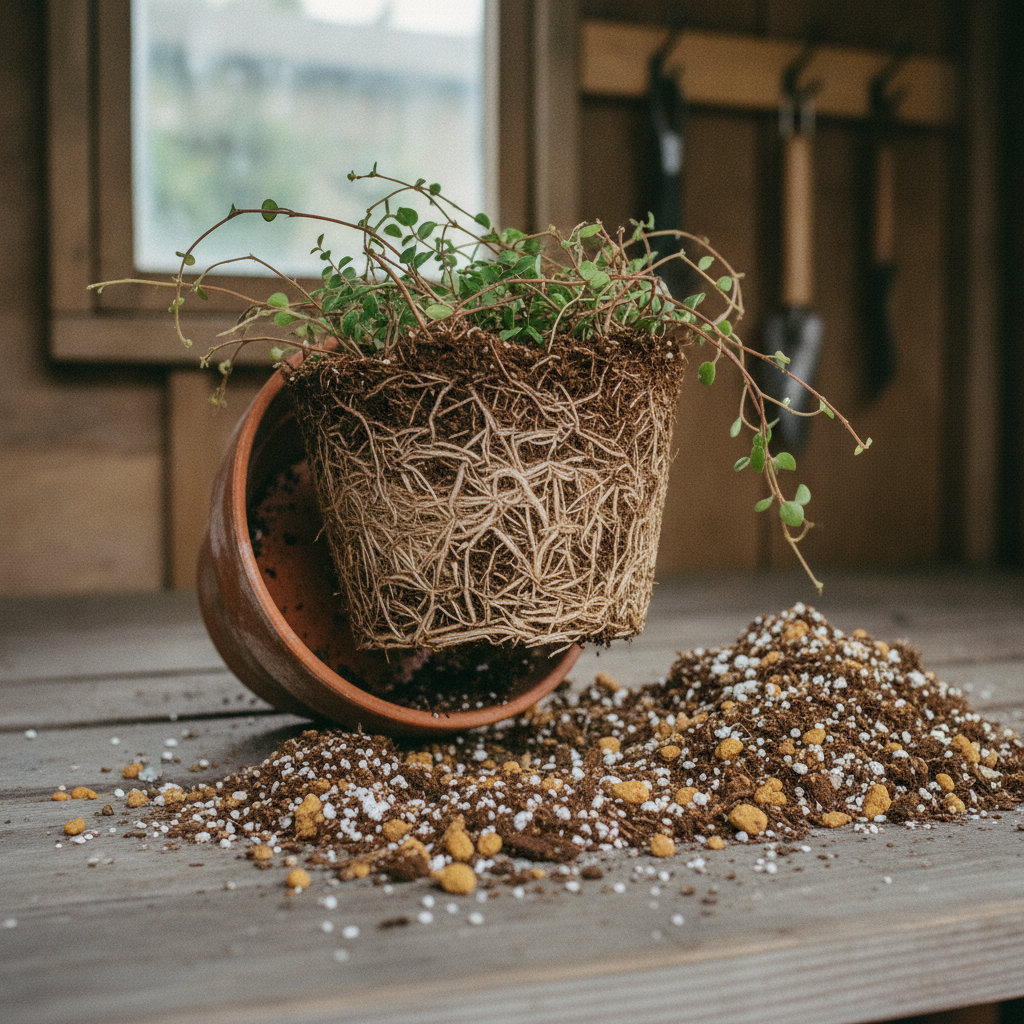
Ideal Soil Composition
Think of the mix as a moisture-retentive base opened up with drainage and enriched with a little organic matter. The proportions below make a reliable, forgiving blend for indoor wire vines.
| Component | Proportion | Function |
|---|---|---|
| General-purpose potting compost | 60% | Holds moisture and provides the bulk of the structure and nutrients |
| Perlite or coarse grit | 25% | Creates air pockets and lets excess water drain away quickly |
| Coco coir or peat-free fibre | 10% | Buffers moisture so the mix does not dry out too fast |
| Worm castings or compost | 5% | Adds gentle, slow-release nutrition and beneficial microbes |
In terms of pH, the wire vine is relaxed, thriving anywhere from slightly acidic to neutral, roughly pH 6.0 to 7.0. Ordinary bagged compost sits comfortably in this range, so there is no need to test or adjust for a healthy plant.
Pro Tip — Quick Mix Recipe: For a fast, dependable blend, stir together three handfuls of peat-free houseplant compost with one generous handful of perlite and a small scoop of worm castings. It drains well, holds enough water for a thirsty vine, and needs no special ingredients.
Choosing the Right Pot
Pot choice matters more for this plant than for many because of its taste for even moisture. The container needs to protect against both waterlogging and rapid drying, and its shape should flatter the plant’s cascading, mounding habit.
Drainage holes are non-negotiable. Whatever the material or style, the pot must have at least one generous drainage hole. Without it, water pools at the base and root rot becomes almost inevitable, no matter how carefully you water from above.
Pot material: Plastic and glazed ceramic hold moisture longest and suit the wire vine’s steady thirst, making them easier to manage for most growers. Terracotta breathes and dries faster, which reduces rot risk but means noticeably more frequent watering, a fair trade only if you tend to overwater.
Pot size: Choose a pot only 2 to 3 cm (about 1 in) wider than the current root ball. An oversized pot holds a large volume of wet soil the small roots cannot use quickly, which keeps the compost soggy and invites problems. Hanging baskets and wide, shallow bowls both showcase the trailing habit beautifully.
When to Repot
Given its speed, a healthy wire vine usually needs repotting every one to two years. Tell-tale signs include roots creeping from the drainage holes, water racing straight through the pot without wetting the soil, and growth that has slowed despite good light and feeding. Spring, as growth accelerates, is the best time to repot, giving the plant a full season to settle into its new home.
How to Repot: Step-by-Step
- Water the plant a day beforehand so the root ball is hydrated and holds together during the move.
- Gently ease the plant from its pot, supporting the tangle of stems and teasing the pot away rather than pulling on the foliage.
- Loosen the outer roots with your fingers and tease apart any tightly circling growth to encourage outward spread.
- Add a layer of fresh mix to a pot one size up, then position the plant at the same depth it grew before.
- Backfill around the root ball with fresh compost, firming gently so there are no large air gaps.
- Water thoroughly to settle the soil, top up any that sinks, and return the plant to bright, indirect light.
- Hold off feeding for four to six weeks while the roots recover and begin exploring the new compost.
Warning — Transplant Shock: Some leaf drop in the first week or two after repotting is normal as the plant adjusts. Keep conditions stable, avoid feeding, and resist the urge to overwater a stressed plant, which only compounds the setback. New growth usually resumes within a few weeks.
Fertilising
Creeping wire vine is a light feeder that grows quickly, a combination that means it benefits from regular but gentle nutrition during the growing season. It is not a hungry plant in the way that large-leaved tropicals can be, so the goal is a steady trickle of nutrients rather than heavy dosing.
Overfeeding is a more common mistake than underfeeding. Because the root system is fine and compact, it is easily burned by concentrated fertiliser, which shows up as browned leaf tips and a white crust of salts on the soil surface. Diluting to half the recommended strength gives all the benefit with none of the risk.
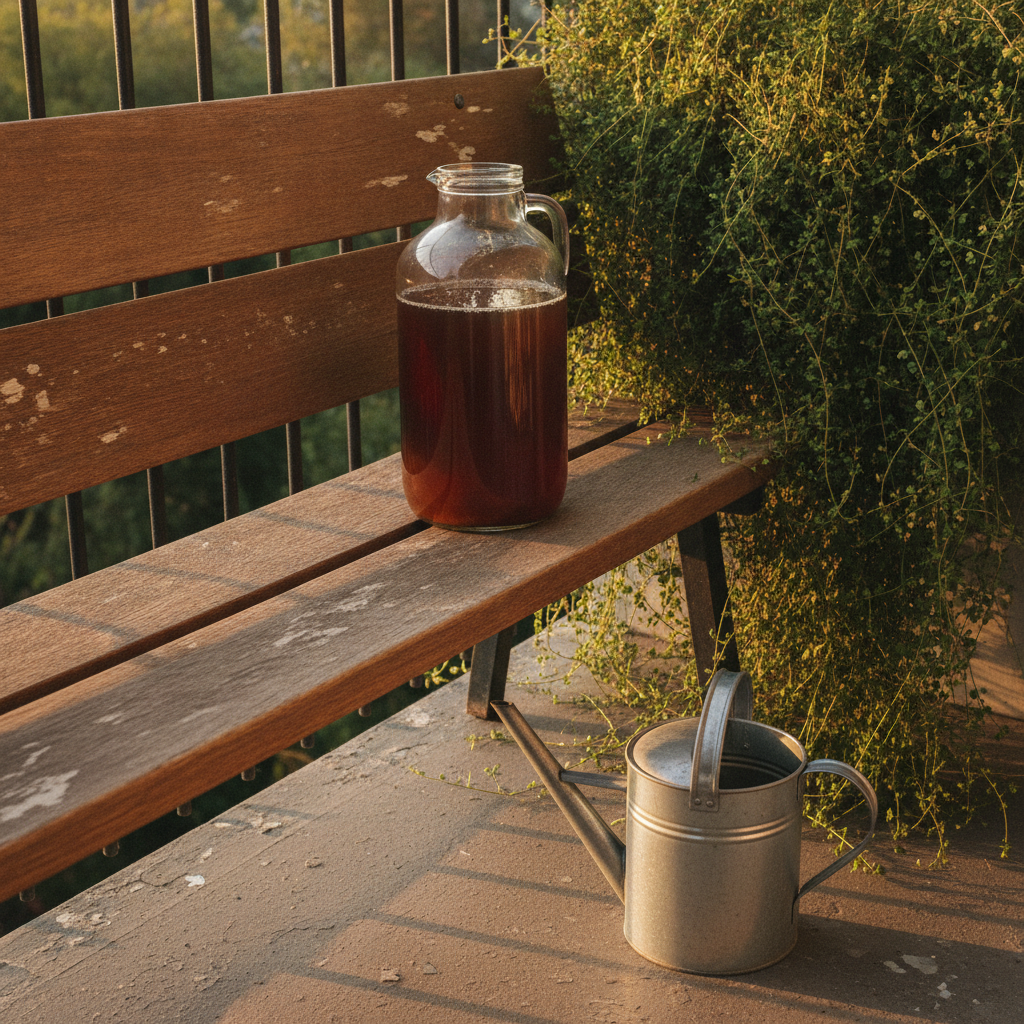
Understanding Plant Nutrients
Most balanced houseplant fertilisers list three headline numbers, the N-P-K ratio, alongside a handful of secondary and trace elements. Understanding what each does helps you read a deficiency in the plant and choose the right feed.
| Nutrient | Symbol | Primary Function | Deficiency Symptoms |
|---|---|---|---|
| Nitrogen | N | Drives leafy growth and green colour | Pale, yellowing older leaves and slow growth |
| Phosphorus | P | Supports root development and energy transfer | Stunted growth, dull or purplish foliage |
| Potassium | K | Regulates water use and overall vigour | Yellow or brown leaf edges, weak stems |
| Calcium | Ca | Builds strong cell walls and new growth | Distorted, weak new shoots and tips |
| Magnesium | Mg | Central to chlorophyll and photosynthesis | Yellowing between the veins of older leaves |
| Iron | Fe | Essential for chlorophyll in new growth | Yellowing between veins on the newest leaves |
Types of Fertiliser
Liquid fertilisers: The easiest match for the wire vine. A balanced liquid feed diluted in water gives precise control over strength and frequency, and it reaches the fine roots evenly. This is the recommended default for most growers.
Slow-release granular: Convenient for those who dislike regular feeding, releasing nutrients gradually over months. Use a light hand, as it is harder to correct if the plant shows signs of overfeeding, and choose a formulation intended for foliage houseplants.
Organic fertilisers: Worm castings, diluted seaweed extract and compost teas feed gently and improve soil life, which suits this plant’s dislike of harsh chemical dosing. They are more forgiving of slight over-application than synthetic feeds.
Feeding Schedule
Feed roughly once a month with a balanced liquid fertiliser at half strength through the active growing season of spring and summer. As growth slows in autumn, taper the feeding off, and stop altogether during the winter rest, when the plant is not growing enough to use the nutrients and unused salts simply accumulate in the soil.
Pro Tip — Feed a Moist Root Ball: Always apply fertiliser to already-damp soil, never to a bone-dry root ball. Feeding into dry compost concentrates the salts against the fine roots and risks burning them, so water first, then feed.
How to Fertilise
- Dilute a balanced liquid fertiliser to half the strength stated on the label.
- Water the plant lightly first if the soil is dry, so the roots are moist before feeding.
- Apply the diluted feed evenly across the soil surface until it just begins to drain.
- Every couple of months, flush the pot with plain water to wash out any accumulated salts.
Warning — Salt Build-Up: A white crust on the soil or around the pot rim, together with browning leaf tips, points to fertiliser salts accumulating faster than the plant can use them. Flush the pot thoroughly with plain water several times, and cut back on the feeding frequency going forward.
Propagation
If any houseplant makes propagation feel effortless, it is the creeping wire vine. Its stems root readily wherever they find moisture, so a few trimmings taken during routine grooming will happily become new plants with almost no fuss. This is also the ideal way to keep an ageing, bare-based specimen going, since a fresh batch of cuttings quickly outperforms a tired parent.
The two most reliable methods are rooting stem cuttings in water and taking advantage of the plant’s natural tendency to layer, where stems root along their length wherever they touch soil. Both work best in spring and summer when the plant is growing strongly.

Understanding Nodes and Rooting
The key to success is the node, the small point along a stem where a leaf attaches. Nodes contain the cells that produce new roots, so every cutting must include at least a few of them below the water or soil line. Because the wire vine’s stems carry nodes very close together, even a short trimming holds several rooting points, which is a large part of why cuttings take so readily.
Water Propagation: Step-by-Step
Rooting in water is the most satisfying method to watch, since the fine white roots are clearly visible as they emerge. It is well suited to the short, leafy stems this plant produces.
- Snip healthy stem tips 8 to 12 cm (3 to 5 in) long, cutting just below a node with clean scissors.
- Strip the leaves from the lowest 3 to 4 cm (about 1.5 in) so no foliage sits underwater.
- Stand the cuttings in a small jar of room-temperature water, keeping the bare nodes submerged.
- Place the jar in bright, indirect light and refresh the water every few days to keep it clear.
- Watch for fine white roots within one to two weeks, and pot up once they reach 2 to 3 cm (about 1 in) long.
- Move rooted cuttings into a small pot of the standard mix and keep the soil evenly moist while they establish.
Pro Tip — Pot in Clusters: Because each stem is so slender, a single rooted cutting looks sparse on its own. Pot five or six together in one small container and they knit into a full, bushy little plant far faster than a lone cutting ever would.
Soil Layering: Step-by-Step
Layering exploits the plant’s habit of rooting where its stems rest on damp soil, and it produces sturdier, faster-establishing plants because the new roots form while the stem is still attached to the parent.
- Choose a long, healthy trailing stem and lay a section of it across the surface of a nearby pot of moist compost.
- Pin the stem down at a node with a bent wire or hairpin so that node stays in firm contact with the soil.
- Keep the compost consistently moist and leave the stem attached to the parent plant.
- After several weeks, gently tug the pinned section; resistance means roots have formed at the node.
- Once well rooted, sever the new plant from the parent just beyond the rooted node and grow it on as normal.
Troubleshooting Propagation
| Problem | Likely Cause | Solution |
|---|---|---|
| Stems rot in water | Leaves left submerged or stale water | Strip lower leaves and change the water every few days |
| No roots after weeks | Too little light or cold conditions | Move to a warmer, brighter spot out of direct sun |
| Cuttings shrivel | Foliage drying faster than roots can supply | Increase humidity and keep out of harsh sun while rooting |
| Weak, sparse new plant | Only one thin cutting potted alone | Group several rooted cuttings together in one pot |
Pests & Diseases
One of the quiet pleasures of growing creeping wire vine is how little trouble it attracts. Its tough, wiry constitution shrugs off most of the pests and diseases that plague softer houseplants, and a healthy, well-lit plant is rarely bothered. That said, no plant is entirely immune, and the dense tangle of stems can hide a problem until it has taken hold, so regular inspection pays off.
Most issues that do appear trace back to stressed growing conditions, especially dry air, which invites spider mites, or soggy soil, which brings on rot. Get the culture right and pest problems largely take care of themselves.
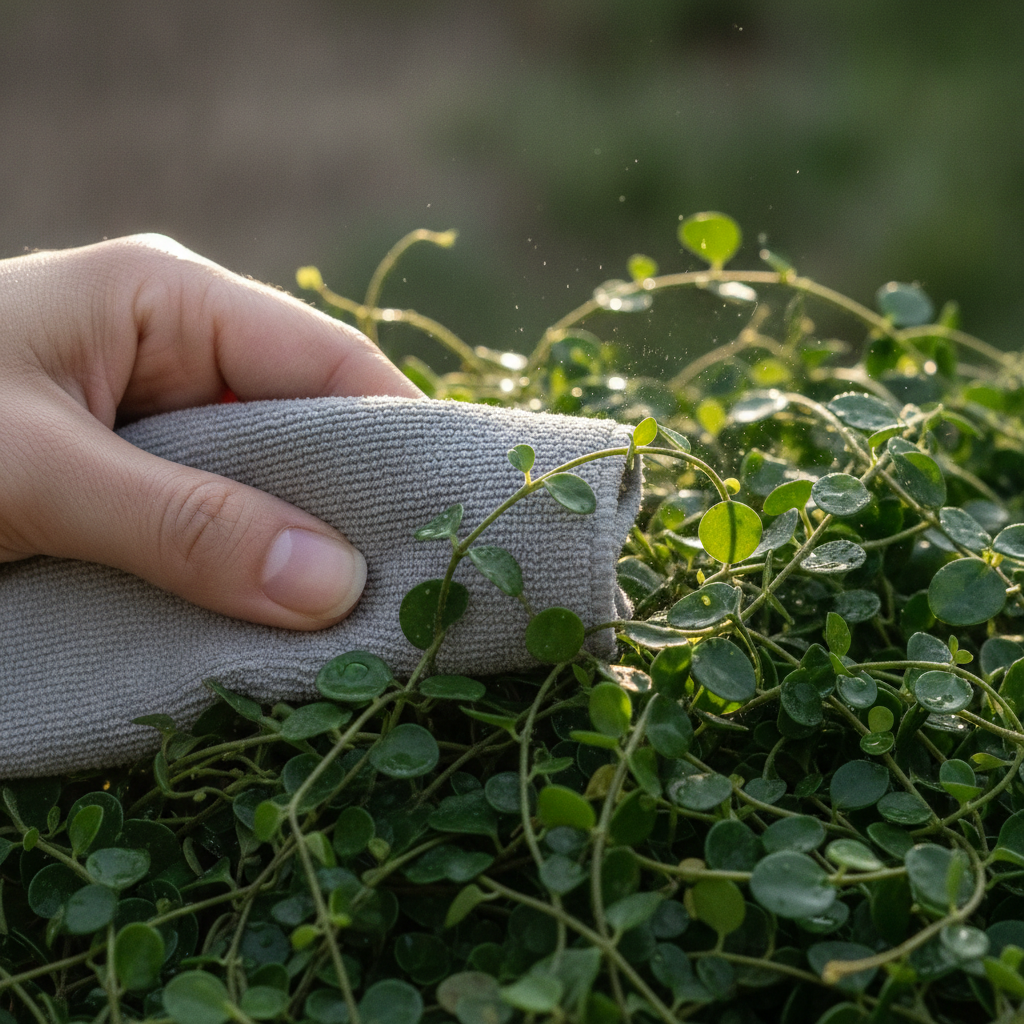
Common Pests
Spider Mites (Tetranychus urticae)
The pest most likely to trouble a wire vine, spider mites thrive in the warm, dry air of heated rooms. They are tiny and hard to see, but fine webbing across the stems and a dull, stippled, faded look to the leaves give them away. Because the foliage is so fine, an infestation can spread through the tangle quickly.
Treatment: Rinse the plant thoroughly under a tepid shower to knock populations back, raise the humidity to make conditions less favourable, and treat with insecticidal soap or a diluted neem oil spray, repeating every few days until the webbing and stippling stop appearing.
Aphids (Aphidoidea)
Soft-bodied aphids cluster on tender new growth, sucking sap and leaving behind sticky honeydew that can turn black with sooty mould. On a wire vine they tend to gather at the growing tips where the freshest stems appear.
Treatment: Dislodge light infestations with a firm spray of water, then follow up with insecticidal soap or neem oil. Check the tips regularly for a week or two afterwards, as aphids reproduce rapidly and can rebuild quickly.
Mealybugs (Pseudococcidae)
Mealybugs appear as small white, cottony tufts tucked into leaf joints and along the stems. They are slow-moving but persistent, and the dense growth of a wire vine gives them plenty of hiding places, so they can go unnoticed for a while.
Treatment: Dab individual insects with a cotton bud dipped in diluted isopropyl alcohol, then treat the whole plant with neem oil or insecticidal soap. Isolate the plant from others until the infestation is fully cleared.
Common Diseases
Root Rot (Pythium and Phytophthora spp.)
By far the most serious threat to a wire vine, root rot follows persistently waterlogged soil. Fungal and water-mould pathogens attack the drowning roots, and the first visible signs above ground are yellowing, softening stems and a general collapse despite wet soil.
Treatment: Unpot the plant, wash the roots, and cut away all dark, mushy tissue with clean scissors. Repot into fresh, free-draining mix in a clean pot, water sparingly until recovery is under way, and take healthy cuttings as insurance in case the parent cannot be saved.
Leaf Spot (various fungal pathogens)
Occasionally, dark or water-soaked spots appear on the foliage, usually where leaves stay wet for long periods in still, humid air. It is rarely serious on this plant but can spread if conditions stay damp and stagnant.
Treatment: Remove affected stems, improve airflow around the plant, and avoid wetting the foliage late in the day. Water at the soil rather than over the leaves to keep the tangle drier.
Pest and Disease Summary
| Pest / Disease | Identification | Treatment |
|---|---|---|
| Spider mites | Fine webbing, stippled dull leaves | Rinse, raise humidity, neem or insecticidal soap |
| Aphids | Clusters on new tips, sticky honeydew | Water spray, then insecticidal soap or neem |
| Mealybugs | White cottony tufts in joints | Alcohol swab, then neem or soap, isolate plant |
| Root rot | Yellow soft stems, wet sour soil | Trim rotten roots, repot dry, take cuttings |
| Leaf spot | Dark or water-soaked spots on leaves | Remove affected growth, improve airflow |
Prevention Strategies
Prevention with this plant is mostly a matter of good routine culture. Bright light, even moisture, decent airflow and appropriate humidity together make the plant robust enough to resist most pests on its own, while the two conditions that cause real trouble, bone-dry air and waterlogged soil, are both easy to avoid once you know to watch for them.
Quarantine any new plant for a couple of weeks before it joins your collection, and give the wire vine a quick inspection whenever you water. Parting the dense stems occasionally to check the interior catches hidden pests early, when they are still easy to deal with, rather than after they have colonised the whole tangle.
Pro Tip — Shower and Inspect: Every few weeks, take the plant to the shower and rinse the foliage with tepid water. It washes away dust and early pests in one go, and the moment while the wet stems cling together is the easiest time to look right into the centre of the plant for trouble.
Popular Varieties
The name “wire vine” is used loosely across a small group of closely related plants, so what is sold under the label can vary. Most houseplants labelled creeping wire vine are true Muehlenbeckia complexa, but you will also encounter named forms selected for leaf size and habit, as well as a couple of related species traded under similar names.
For indoor growing the differences are largely aesthetic, a matter of leaf size, density and how the plant drapes, rather than of care. Whichever you choose, the guidance in this article applies with only minor adjustments.
| Variety | Leaf Appearance | Light Needs | Growth Rate | Availability |
|---|---|---|---|---|
| Species (M. complexa) | Tiny round to fiddle-shaped, dark stems | Bright indirect | Fast | Common |
| ‘Nana’ | Even smaller leaves, tight cushion habit | Bright indirect | Moderate | Occasional |
| ‘Trilobata’ | Larger three-lobed, fiddle-shaped leaves | Bright indirect | Fast | Occasional |
| ‘Variegata’ | Green leaves splashed with cream | Bright indirect, a touch more light | Slow to moderate | Rare |
| M. axillaris | Small dark leaves, low creeping mat | Bright indirect to sun | Moderate | Occasional |
| M. astonii | Sparse leaves on zig-zag wiry twigs | Bright, tolerates sun | Slow | Rare indoors |
Featured Varieties
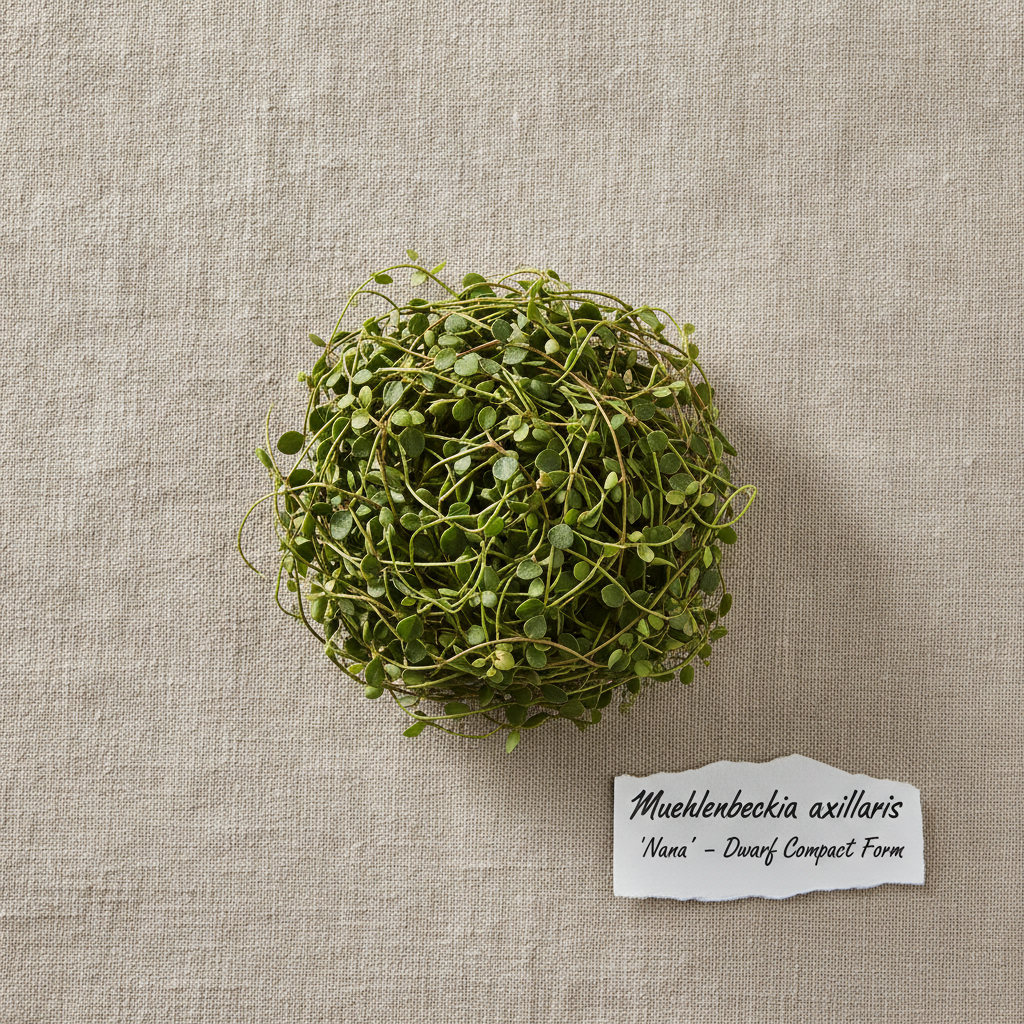
‘Nana’
The dwarf form, with even tinier leaves and extra-fine stems that knit into a tight, mossy cushion. Its compact habit makes it a favourite for terrariums, small topiary and fairy gardens where the full species would quickly outgrow its space.
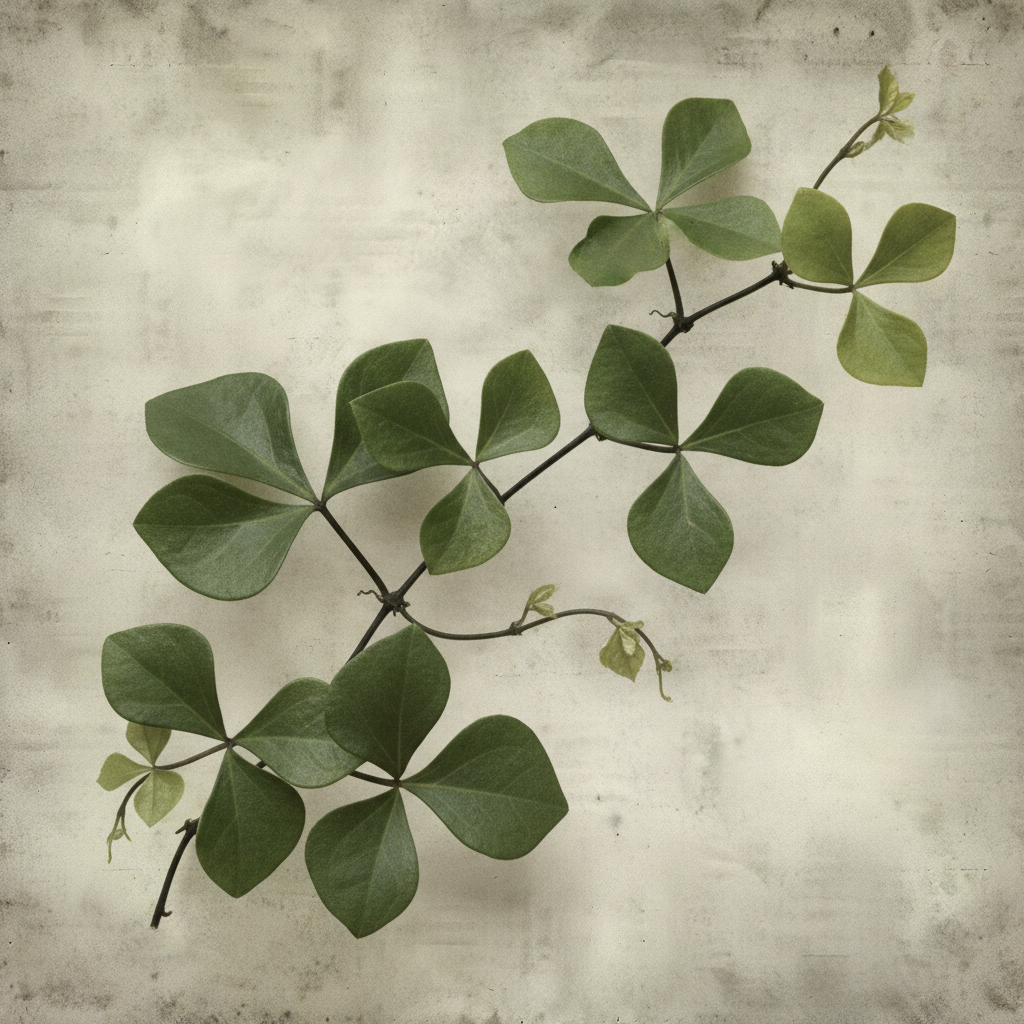
‘Trilobata’
A bolder form with noticeably larger, three-lobed leaves shaped like tiny fiddles, held on slightly sturdier dark stems. The bigger foliage gives it more presence and reads well from a distance, making it a good choice for a hanging basket or trailing shelf display.
Variety Profiles in Detail
Angel Vine, the species (Muehlenbeckia complexa)
The plant most people mean by creeping wire vine, with its signature tangle of thread-fine dark stems and closely spaced round leaves. It is the fastest growing and most widely available, and it takes to training over frames, cascading from baskets or mounding in a pot with equal ease.
Variegated Wire Vine (Muehlenbeckia complexa ‘Variegata’)
A scarcer selection whose leaves are splashed and margined with cream. It grows more slowly than the plain species and wants slightly brighter light to hold its variegation, but its lighter, speckled effect is striking against the dark stems where you can find it.
Matted Lignum (Muehlenbeckia axillaris)
A closely related, lower-growing species often sold under the same common names. It forms a flatter creeping mat with small dark leaves and is a touch hardier outdoors, so it is sometimes used as ground cover as well as a houseplant. Its care indoors mirrors that of the true wire vine.
Choosing the Right Variety for Your Space
For a full, fast-filling trailing plant or a topiary project, the true species is the obvious pick. If you are planting a terrarium or want something that stays neat and slow, seek out ‘Nana’. Where you want more visible leaf detail from across a room, ‘Trilobata’ delivers with its larger foliage, while the variegated form is worth hunting down if you prefer a lighter, patterned look and can give it the extra light it needs.
Frequently Asked Questions
Why is my creeping wire vine dropping its leaves?
Sudden leaf drop is almost always a water or light problem. The most common cause is the soil drying out completely, which the fine leaves cannot tolerate, so they shed within a day or two. Too little light, cold draughts and the stress of a recent repot can also trigger it. Restore even moisture and bright light, and fresh growth usually follows.
Is creeping wire vine safe for cats and dogs?
Yes, it is generally regarded as non-toxic to cats, dogs and people and is not listed as poisonous by the major pet-safety databases. As with any plant, it is best not to let pets make a habit of chewing it, since even non-toxic foliage can cause mild stomach upset if eaten in quantity.
How do I make my wire vine bushier?
Two things drive density: bright light and regular pruning. Give the plant the strongest indirect light you can and trim the stem tips back every so often. Each cut encourages the stem to branch, so consistent light grooming over a season turns a stringy plant into a full, mounded one. Rotating the pot keeps the density even all round.
Can I grow creeping wire vine outdoors?
In mild, frost-light climates it grows happily outdoors as ground cover or a trailing plant, tolerating a fair range of conditions. Be aware that in some warm regions it is considered invasive and can smother other plants, so check its status locally before planting it out. In colder areas, grow it as a houseplant or bring it indoors before frost.
How often should I water it?
There is no fixed schedule, because it depends on light, warmth and pot size, but expect to water more often than most houseplants. Check the top of the soil every few days and water once the top 1 to 2 cm (0.5 to 0.75 in) has dried, keeping the layer below lightly moist. In a bright, warm room in summer this can mean several waterings a week.
Why are the leaf tips turning brown and crispy?
Crispy tips usually point to dry air, underwatering or a build-up of mineral salts from hard water or overfeeding. Raise the humidity around the plant, keep the soil evenly moist, and flush the pot with plain water occasionally to wash out accumulated salts. Trimming the worst-affected stems tidies the plant while it recovers.
Does it flower?
It does, though the flowers are tiny, greenish-white and easy to miss, appearing among the foliage in the growing season. On mature plants they can be followed by small translucent fruits with a black seed at the centre. Indoors, the wire vine is grown almost entirely for its foliage and habit rather than these modest blooms.
How fast does creeping wire vine grow?
Quickly, given good light and even moisture. A small starter plant can fill out its pot and begin trailing within a single growing season, which is part of why it is so popular for topiary and hanging displays. That vigour also means it benefits from regular pruning to keep it neat and to supply cuttings for new plants.






