
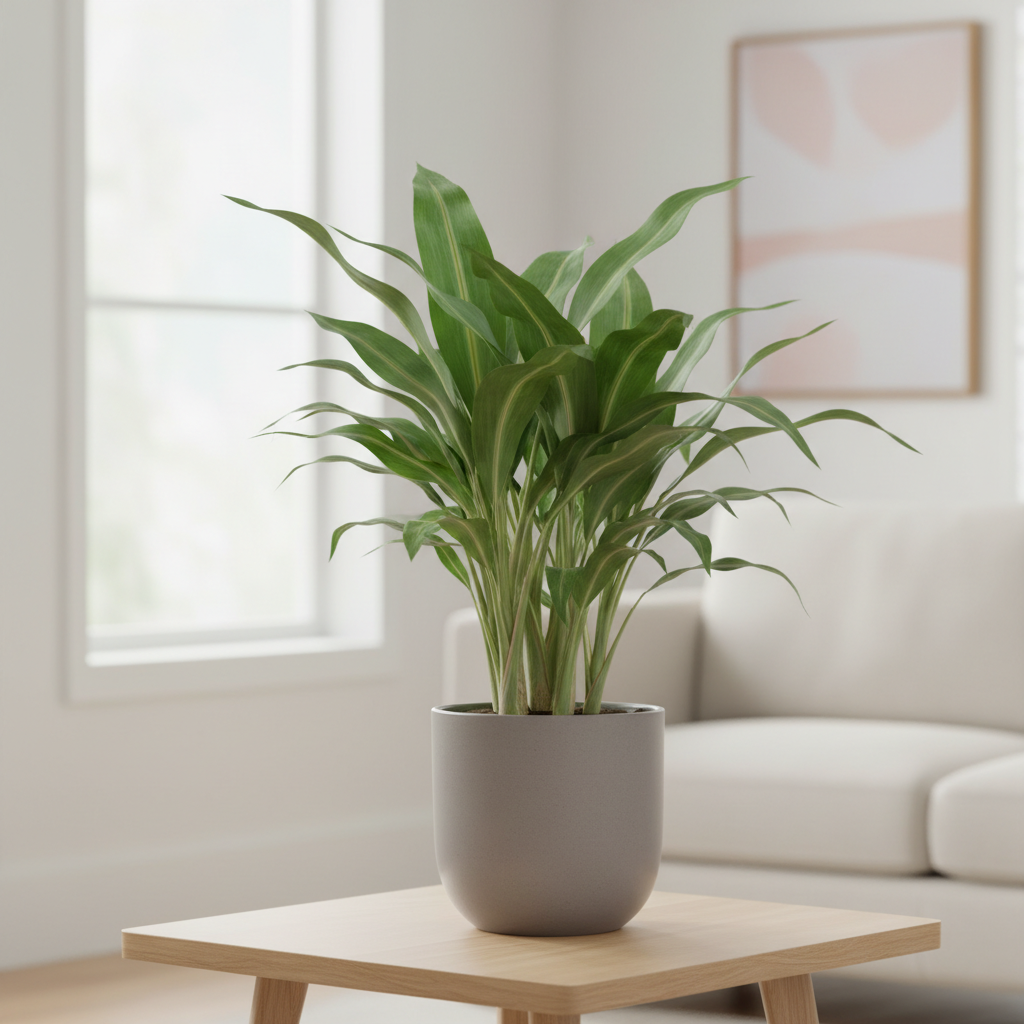
The corn plant, Dracaena fragrans, is one of the most quietly dependable trees ever to wander out of the African understorey and into a living room. Native to a sweeping arc of tropical Africa that runs from Sudan and Ethiopia down through the Congo basin and into Mozambique, it grows in nature as a slow, slender tree with thick woody trunks topped by a fountain of glossy, strap-shaped leaves. Indoors it is best known by its other names — mass cane, fragrant dracaena, or simply “the one that looks like a baby palm with corn-like leaves” — and it has been a fixture in shopping centres, offices and apartments for so long that it tends to be overlooked rather than appreciated.
That familiarity is a clue to its true value. The corn plant earned its everywhere-status the honest way, by tolerating dim corners, forgetful waterers and dry centrally heated air with quiet patience. But there is a wide gap between a corn plant that is simply surviving — pale, leggy, with crispy tips and a tilt towards the nearest light source — and one that is genuinely thriving, with deep glossy foliage, plump healthy canes and the occasional cloud of intensely fragrant cream flowers. This guide is written for growers who want the second version. We will cover light, watering, soil, fertilising, propagation, pests and the most popular cultivars in enough depth that you can read your own plant and respond to what it is telling you, rather than following a rigid schedule.
Contents
- Quick Reference
- Why Corn Plant Makes a Forgiving Houseplant
- Light Requirements
- Watering and Humidity
- Soil, Potting and Repotting
- Fertilising
- Propagation
- Pests and Diseases
- Popular Varieties
- Frequently Asked Questions
Quick Reference: Corn Plant at a Glance
| Botanical name | Dracaena fragrans (Asparagaceae) |
| Common names | Corn plant, mass cane, fragrant dracaena, cornstalk dracaena |
| Light | Medium to bright indirect light. Tolerates lower light but variegation fades and growth slows. |
| Watering | Water when the top 5 to 7 cm (2 to 3 in) of soil is dry. Roughly every 10 to 14 days indoors. Do not let it sit in a saucer of water. |
| Temperature | 18 to 27 °C (65 to 80 °F). Avoid drops below 13 °C (55 °F) and cold draughts. |
| Humidity | Prefers 40 to 60 percent. Tolerates lower but tip-browning worsens in dry winter air. |
| Soil | Free-draining, peat-based houseplant mix amended with perlite and orchid bark. Slightly acidic, pH 6.0 to 6.5. |
| Fertiliser | Balanced liquid feed at half strength, every 4 to 6 weeks during spring and summer. |
| Mature size | 1.2 to 1.8 m (4 to 6 ft) indoors, occasionally taller. Up to 15 m (50 ft) in the wild. |
| Toxicity | Toxic to cats and dogs (saponins). Mildly irritating to humans if ingested. Keep away from pets. |
| Water sensitivity | Highly sensitive to fluoride. Use rainwater, filtered or distilled water if your tap supply is fluoridated. |
Why Corn Plant Makes a Forgiving Houseplant
Few houseplants are as quietly accommodating as Dracaena fragrans. In its native African forests it grows in the dappled mid-storey, shaded by larger canopy trees and shielded from harsh sun. That ecology translates almost perfectly to the conditions found in a typical home: filtered light, fluctuating warmth, occasional dry spells and no strong wind. A corn plant is essentially preadapted to the indoors, and that is a large part of why it has been a fixture of office lobbies and shopping malls for decades. It puts up with a great deal and rarely complains in obvious ways.
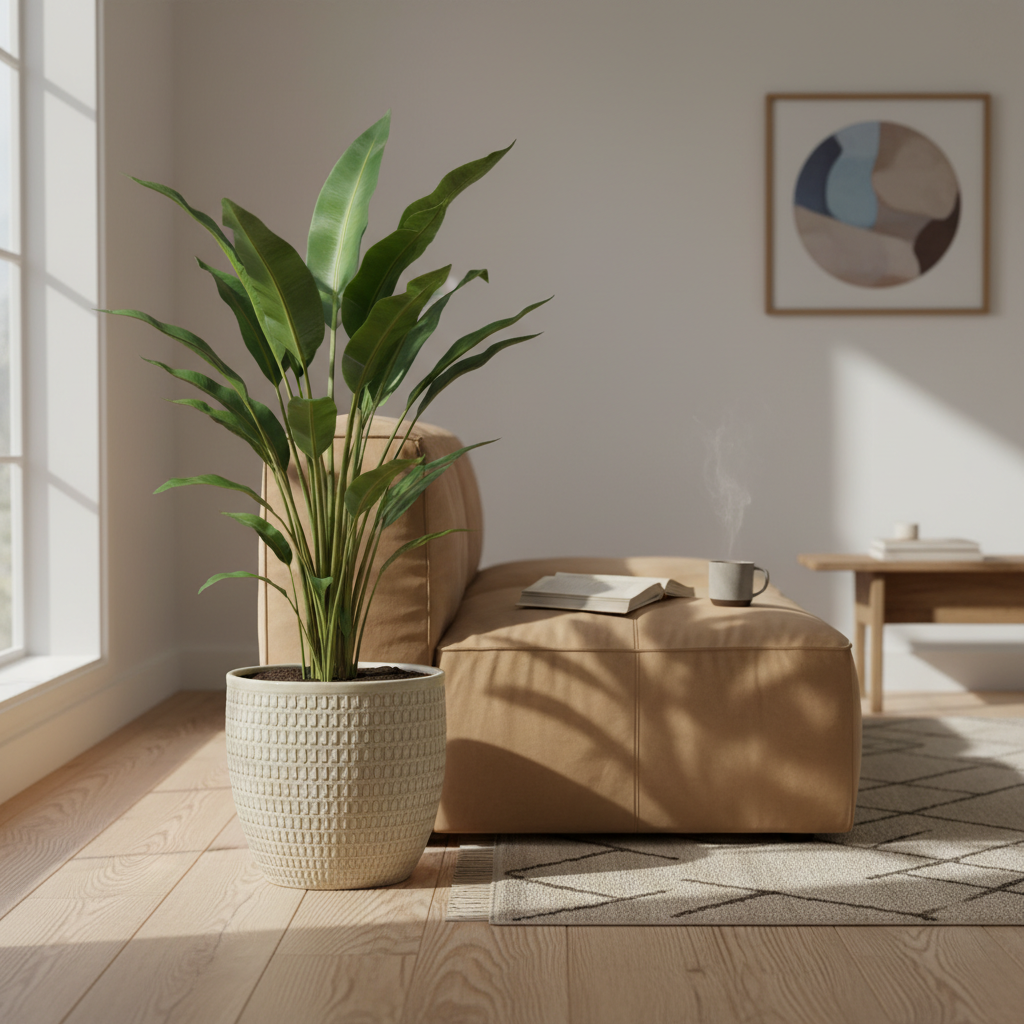
Architecturally, the corn plant offers something most houseplants cannot. The thick, woody canes give it a tree-like presence, while the loose tufts of arching, glossy foliage at the top soften the silhouette. A 1.5-metre specimen reads instantly as “small indoor tree” rather than “potted plant”, which makes it a useful tool for filling the awkward vertical space beside a sofa, behind a desk or in the corner of an entryway. Because it is grown commercially from imported logs and is widely available, even a tall multi-cane specimen costs less than most comparably sized indoor trees, and replacements are easy to find if you ever need one.
It also has a track record as an air-cleaning houseplant. The much-cited NASA Clean Air Study of 1989 identified Dracaena fragrans as effective at removing trace volatile organic compounds such as formaldehyde, benzene and trichloroethylene from sealed laboratory chambers. Real-world conditions are far less generous than a sealed chamber, and you would need a literal forest of corn plants to meaningfully filter the air of an average room, but the underlying point still holds: this is a plant with healthy, vigorous leaves and no concerning emissions of its own. If you like the idea of greener indoor air without having to read peer-reviewed papers about it, the corn plant earns its place.
Pro Tip — Look at the cane first: When buying a corn plant, judge the woody cane before the leaves. A firm, evenly coloured cane with no soft spots, oozing wounds or fungal blooms predicts a healthy specimen, even if the existing foliage looks tired. Leaves can be regrown; a rotting cane cannot.
Light Requirements
Light is the single most powerful lever you have over a corn plant’s appearance. The species has a famously wide tolerance, which is why it has survived in shopping-mall planters for years on artificial light alone, but tolerance is not the same as preference. A corn plant in deep shade does not die quickly. It does, however, drop lower leaves one by one, stretch its canes towards whatever weak light it can find, and gradually lose the bright yellow or chartreuse stripes that make the variegated cultivars worth growing in the first place. If you want the plant from the catalogue photo rather than the plant from the abandoned office lobby, light is where you start.
The ideal placement
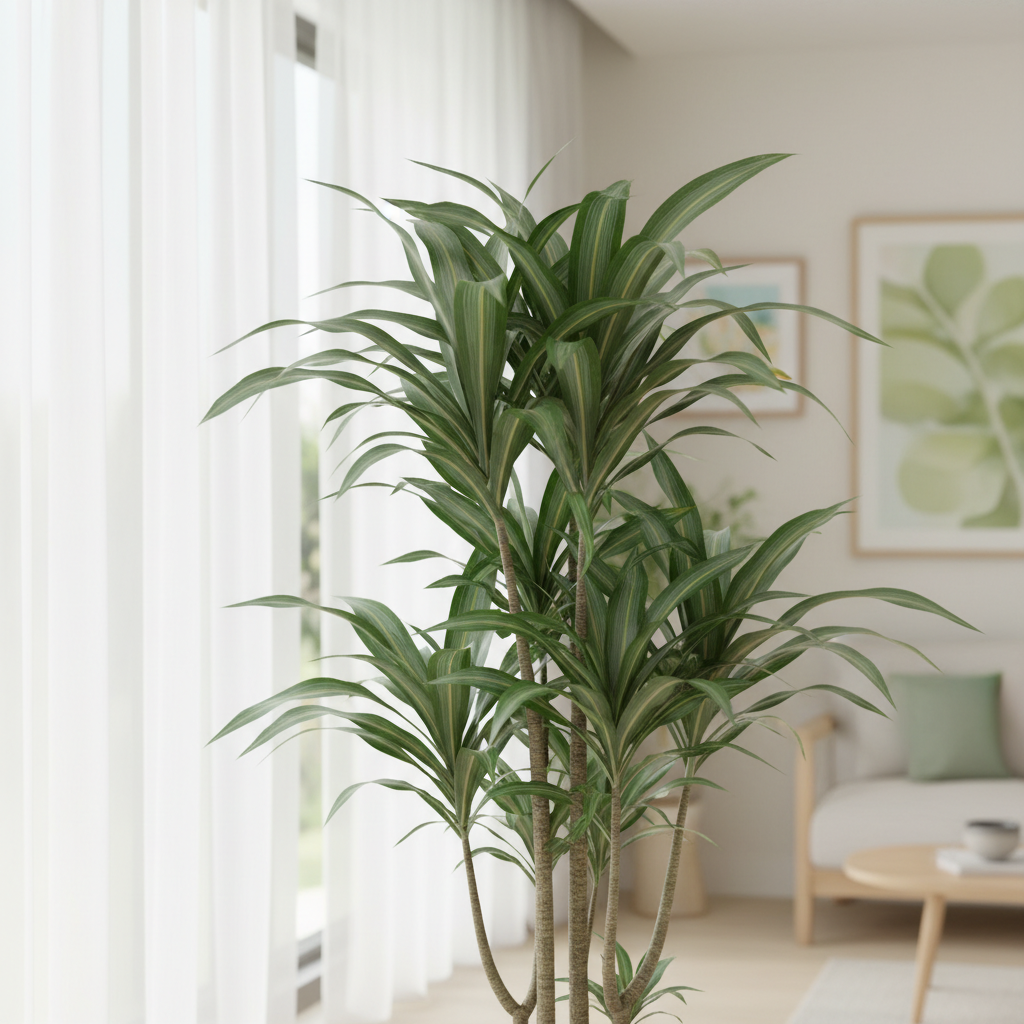
The corn plant thrives in medium to bright indirect light, roughly the brightness you can comfortably read a book by during the day, with no direct sun touching the leaves. In practical terms that means about 1 to 2 metres back from an east, west or south-facing window, ideally with a sheer curtain to diffuse the strongest hours of sun. A north-facing window in the Northern Hemisphere can work well in summer but will leave the plant under-fed during short winter days. If you can stand where the plant lives and clearly see the sky reflected in your screen, you are probably close to the right brightness.
Reading the leaves
The plant gives clear feedback if you watch the new growth. Healthy new leaves on a well-lit corn plant emerge with rich colour straight away, the stripes and bands fully expressed, and the rosette stays tight and symmetrical. In low light the new leaves come in paler, longer and more widely spaced, and the rosettes lean noticeably towards the brightest source. Older leaves on a shaded plant may also fade, but a fade that affects the youngest leaves first is the more reliable warning sign. Variegated cultivars such as Lemon Lime are particularly informative: when the yellow margins narrow or turn dull green, the plant is asking for more light.
Avoiding direct sun
Although corn plants can tolerate brief morning sun, prolonged direct midday and afternoon sun scorches the foliage. Sunburn shows up as pale, bleached patches with brown crispy centres in the middle of leaf blades, usually on the side facing the window. The damage is permanent on those leaves and the affected tissue often expands as it dries. If you cannot rearrange the room, a sheer curtain or a strategically placed taller plant in front of the window is enough to take the edge off. In winter, when the sun sits lower in the sky, even normally safe spots can suddenly receive a direct shaft of sun for an hour or two, so reassess placement at the change of seasons.
Rotating and grooming
Because the canes are stiff and the rosettes are at the top, a corn plant can develop a noticeable lean towards the light if not turned. Rotate the pot a quarter turn every two to three weeks to keep growth symmetrical. A specimen with three or four canes of staggered heights, which is how most are sold, will look best with the tallest cane towards the back of the arrangement and the shorter canes facing the room.
Watering and Humidity
Watering is where most corn plant owners go wrong, and the failure mode is nearly always the same: too much, too often, in water that the plant cannot tolerate. The species evolved in deep, well-drained forest soil where heavy tropical downpours alternate with long dry spells, and the thick woody canes act as water reservoirs. That means the plant prefers a clear dry-out between drinks and resents a constantly damp root zone. It is also, unusually for a houseplant, genuinely sensitive to the chemistry of the water you pour into the pot.
How often to water
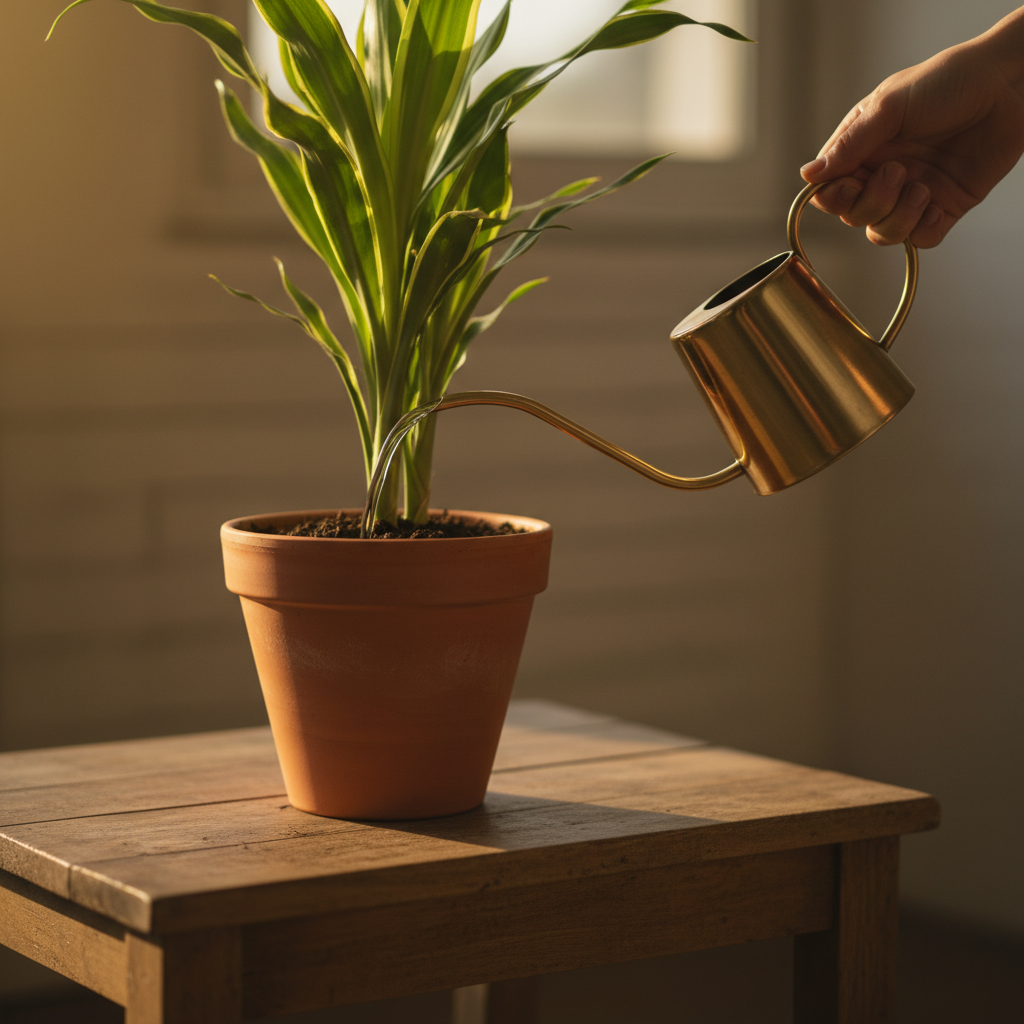
The reliable rule is to water only when the top 5 to 7 cm (2 to 3 in) of the soil feels dry to the touch. For a typical 25 cm (10 in) pot in average indoor conditions, that works out to roughly every 10 to 14 days in spring and summer, and every 2 to 4 weeks in autumn and winter. A moisture meter is helpful but a clean wooden chopstick pushed deep into the pot tells you the same thing for free: pull it out, and if it comes up with dry, crumbly soil clinging to the lower end the plant is ready for a drink; if it is still damp or soil sticks to it darkly, wait. The plant’s woody canes can also be lightly squeezed at the base. A turgid, firm cane signals comfortable hydration, while a softer or slightly puckered cane suggests you are overdue.
How to water
When it is time, water thoroughly. Pour evenly around the cane until water runs freely from the drainage holes, then empty the saucer after about ten minutes. The goal is to flush the entire root zone, dissolve any built-up mineral salts and ensure water reaches the deepest roots. Shallow, splash-and-go watering encourages roots to crowd near the soil surface, where they are more vulnerable to drying out and to bumps. If your pot has gone bone dry and the water races through without wetting the rootball, set the whole pot in a sink with 5 cm (2 in) of tepid water and let the mix rehydrate from below for 20 to 30 minutes before draining.
Water quality matters
Corn plants are one of the few common houseplants demonstrably sensitive to fluoride, and to a lesser extent to chlorine and boron. The classic symptom is brown, crispy leaf tips with a thin yellow halo separating the damage from the still-green tissue, often starting on the oldest leaves. If your tap water is fluoridated, which is the case in much of North America and parts of the United Kingdom and Ireland, regular use will produce this pattern over months. The fix is to water with rainwater, filtered water from a carbon-based filter, or distilled water. Letting tap water stand overnight helps with chlorine but does not remove fluoride. If switching water is impractical, accept that some tip-browning is the cost of using fluoridated water and trim damaged tips with clean scissors for cosmetic purposes.
Humidity
The corn plant prefers humidity in the 40 to 60 percent range, which is broadly the comfort zone of most homes outside of midwinter. It tolerates significantly lower humidity without dying but does respond with the same tip-browning that fluoride causes, making it hard to tell the two apart without a hygrometer. In a centrally heated home where winter humidity sometimes drops below 30 percent, grouping plants together, running a small humidifier on a timer or placing the pot on a pebble tray makes a measurable difference. Misting alone gives a momentary boost but raises ambient humidity only briefly and is not a substitute for adjusting the room.
Temperature and draughts
Keep corn plants between 18 and 27 °C (65 and 80 °F) and they will be content. Brief excursions outside this range are tolerated but sustained exposure to cold below 13 °C (55 °F) causes leaf damage and, if combined with wet soil, root rot. Cold draughts from an opened winter window, an air-conditioning vent or a poorly insulated front door are a common cause of sudden mass leaf drop in otherwise healthy plants. If a row of older leaves suddenly turns mushy and falls in unison, look at the airflow in the room before you blame anything else.
Warning — Fluoride looks like underwatering: A corn plant with brown leaf tips will look thirsty, which tempts owners to water more. If you are already watering on a sensible schedule, do not water more. Switch the water source first and observe for six to eight weeks. New growth coming in clean is the signal that the change has worked.
Soil, Potting and Repotting
Although the corn plant accepts a wide variety of mixes, the underlying requirements are consistent: free-draining, structurally stable, slightly acidic and moisture-retentive without becoming waterlogged. The plant’s root system is modest relative to the size of the canes and dislikes being smothered in heavy, compacted soil. Many problems blamed on watering trace back to soil instead.
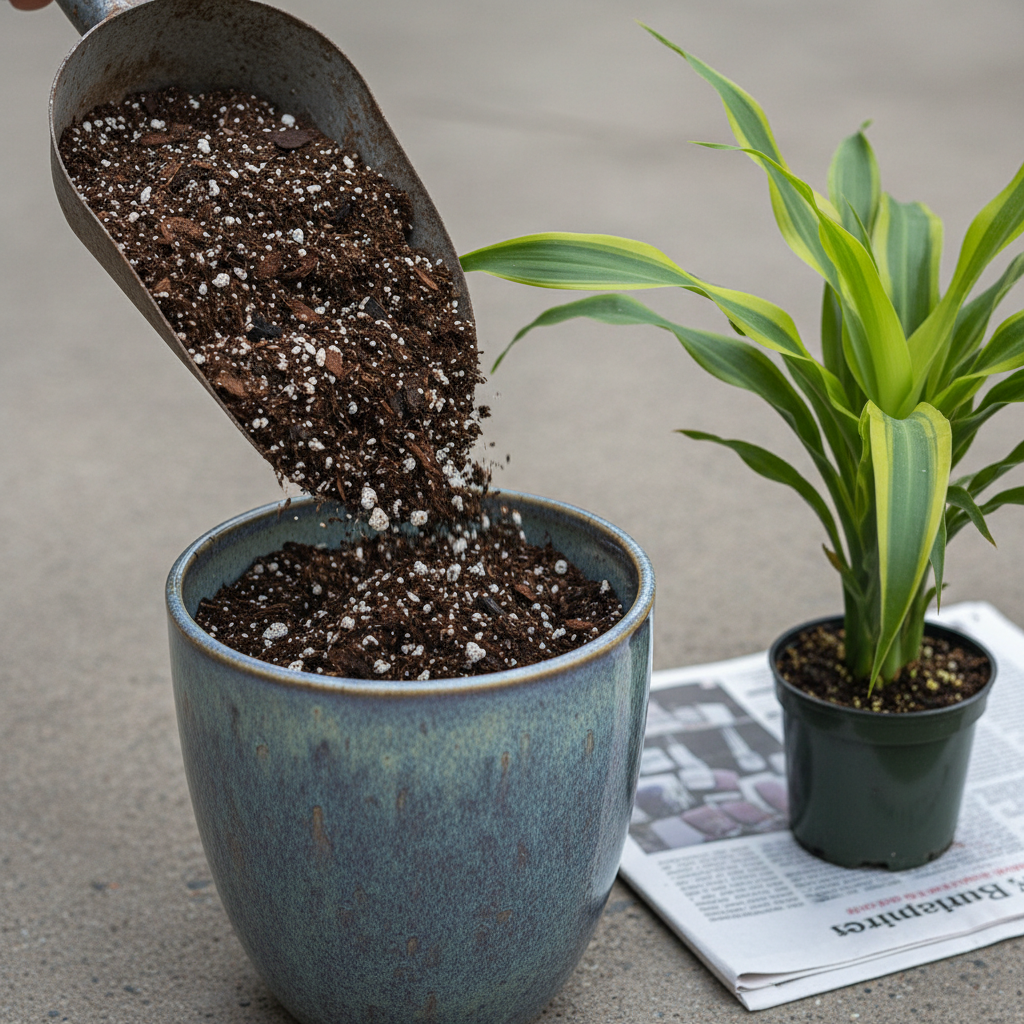
A reliable corn plant mix
A simple and effective mix is two parts good quality peat-based or coir-based houseplant compost, one part perlite, and half a part of fine orchid bark or pine bark. The compost provides the moisture-retentive base, the perlite opens it up for air, and the bark adds structural chunks that keep the mix from compacting over time. If you prefer a peat-free starting point, use a coir-based houseplant mix and increase the perlite slightly. A pinch of dolomitic lime can be added if the base mix is very acidic, but most commercial houseplant composts are already buffered to a friendly pH.
Pot choice
Drainage is non-negotiable. A pot without drainage holes will eventually kill a corn plant, no matter how careful the watering. Use a pot with at least one generous drainage hole, sized so that the root ball has 2 to 4 cm (1 to 1.5 in) of fresh soil around it but is not swimming in a much larger volume. Excess soil that the roots cannot fully occupy stays wet for too long and invites rot. Terracotta wicks moisture away from the soil and suits over-eager waterers; glazed ceramic and plastic hold moisture longer and suit forgetful waterers. Tall, narrow pots are often more stable than they look once the cane is in place because most of the root mass sits in the lower two-thirds.
When to repot
Corn plants are slow growers and do not need frequent repotting. Most specimens are happy in the same pot for two to three years, and a slightly snug rootball is actually an advantage because it slows water loss and keeps growth tidy. Repot when you see roots circling the bottom of the pot, water rushing straight through without absorbing, or the plant tipping out of balance because the rootball has filled the container. Spring is the best time to repot, when the plant has light and warmth to recover quickly. Move up only one pot size, no more than 2 to 5 cm (1 to 2 in) wider than the current pot.
Step-by-step repotting
- Water the plant lightly a day before repotting so the root ball holds together when removed.
- Tip the pot on its side and ease the plant out, working a knife around the edge if needed.
- Tease away any loose old soil from the outside of the root ball with your fingers. Trim any black, mushy or strongly circling roots with clean scissors.
- Place 3 to 5 cm (1 to 2 in) of fresh mix in the new pot. Set the plant in so the surface of the root ball sits about 2 cm (1 in) below the pot rim.
- Backfill around the sides with fresh mix, firming gently with your fingers. Do not bury the cane deeper than it was previously growing.
- Water thoroughly until liquid runs from the drainage holes. Let it drain fully, then return the plant to a bright but not directly sunny spot.
- Hold off on fertiliser for at least four to six weeks while new roots establish.
Fertilising
Corn plants are light feeders. In the wild they grow in forest soils that are rich in slowly decomposing organic matter but never flushed with concentrated nutrients, and in cultivation they show their displeasure with over-feeding quickly. The leaf-tip browning so often blamed on water can equally come from fertiliser salt accumulation, especially in plants that are watered with mineral-rich tap water and fed at full label strength. A light hand is the right hand here.
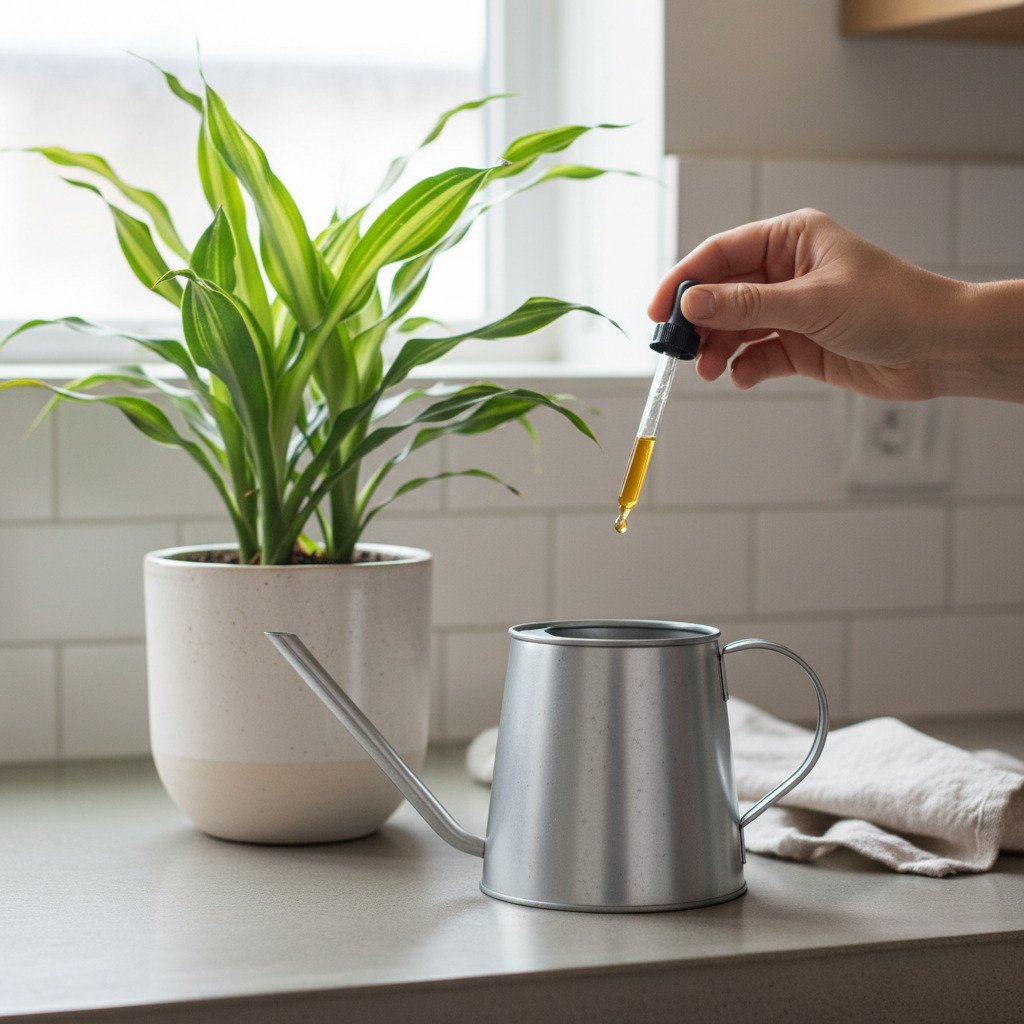
What to use
A balanced liquid houseplant fertiliser with an NPK ratio close to 10-10-10 or 20-20-20 works well, applied at half the strength recommended on the bottle. Slightly nitrogen-heavier formulas such as 3-1-2 are also fine and encourage lush foliage. If you prefer organic options, a diluted seaweed or fish emulsion at half strength is gentle and works with the plant’s natural rhythms, though it can smell briefly indoors. Slow-release fertiliser prills can be top-dressed in spring, but use about half the label dose because the corn plant will not use the rest before the salts build up.
How often
Feed every 4 to 6 weeks during spring and summer, then taper off in autumn and stop completely in winter. The plant essentially pauses growth in the cooler, lower-light months, and any fertiliser applied during that pause sits in the soil waiting to cause problems. Resume in spring once you see new spear-shaped leaves emerging from the centre of the rosettes. A corn plant that is putting out new growth is using nutrients; a static one is not.
Flushing salt build-up
Every three to four months, give the pot a thorough flush with low-mineral water. Run roughly three pot volumes of rainwater, filtered water or distilled water through the soil over the course of ten minutes, letting each pass drain completely before adding the next. This dissolves accumulated fertiliser salts and washes them out through the drainage holes. White crusts on the soil surface or on the inside of clay pots are visible reminders that this is overdue. If you see them, flush.
Pro Tip — Less is more: If you are unsure whether to fertilise, do not. A corn plant will tell you it is hungry by pushing pale, undersized new leaves; it will never thank you for an extra feed when it is content. The biggest fertiliser-related mistake is over-application, not under-application.
Propagation
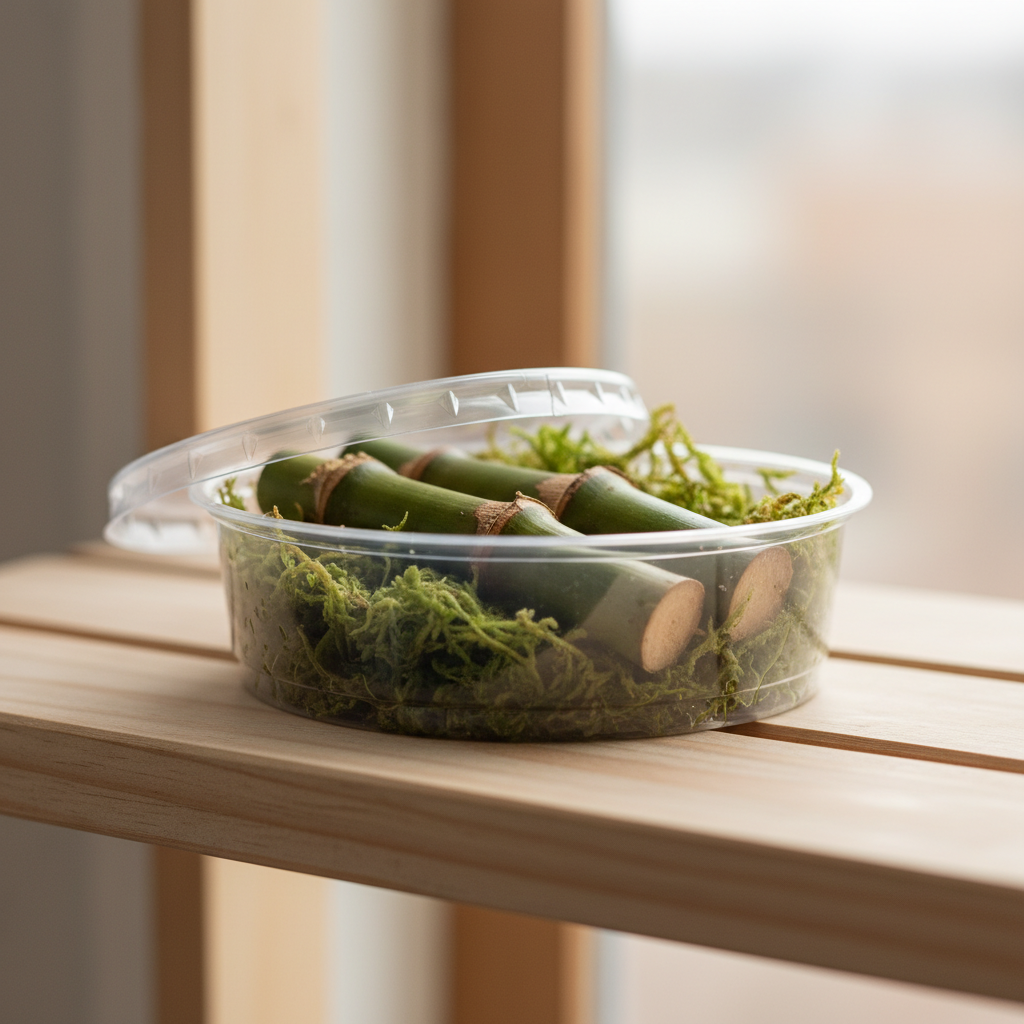
One of the quiet pleasures of owning a corn plant is that it propagates from sections of its own cane. The mass-produced trees in shops were almost all started this way: log-like cane sections were harvested in tropical Africa or Central America, dipped in wax to seal the cut ends, shipped to nurseries and rooted into pots, where they eventually sprouted new tufts of leaves at the top. You can do the same at a smaller scale at home, and the process is rewarding because each section reliably produces an entirely new plant.
When to propagate
Spring and early summer are by far the best windows for propagation. Warmer soil and longer days encourage faster callusing and root development. Attempting it in autumn or winter usually produces slow, stalled cuttings that sit dormant for months or rot quietly in their pots. If you happen to be pruning a leggy corn plant in autumn, you can hold cuttings in a paper bag in a cool dry spot until spring rather than starting them straight away.
Cane cuttings step-by-step
- Choose a healthy cane on a parent plant that has become too tall or leggy. Sterilise a sharp pruning saw or strong secateurs with isopropyl alcohol.
- Cut the cane into sections about 10 to 20 cm (4 to 8 in) long. Make sure each section has at least two visible nodes or growth rings, and mark the original top of each section with a small pencil dot. Cane orientation matters because cuttings only root from the bottom.
- Seal the upper cut end of each section with a thin layer of melted candle wax, beeswax or a dab of pruning sealer. This prevents the cane from drying out from the top.
- Dip the lower cut end in rooting hormone powder, tapping off the excess.
- Bury the lower 4 to 6 cm (1.5 to 2.5 in) of the cane in damp sphagnum moss or a 50/50 mix of perlite and peat-free seed compost. Keep the medium evenly moist but never soggy.
- Maintain warmth of 21 to 27 °C (70 to 80 °F) and bright indirect light. A heated propagator helps in cool homes. Cover loosely with a clear plastic dome or bag to maintain humidity.
- After 4 to 8 weeks, new leaf tufts should emerge from the top of the cane. Roots typically appear from the buried base around the same time. Confirm rooting by gently tugging the cutting; resistance means roots are anchoring.
- Once new top growth is at least 5 cm (2 in) long, pot up into a small container of standard corn plant mix and care for it as a normal young plant.
Top cuttings (also reliable)
If your plant has become leggy, you can take the entire top rosette as a single large cutting. Cut the cane about 15 cm (6 in) below the lowest leaves with a sharp saw, strip off the bottom few leaves to expose nodes, and root the cutting in water or in damp moss exactly as above. Top cuttings often root noticeably faster than mid-cane sections because they already have active foliage. The parent stump left behind, provided it still has healthy bark and at least one visible node, will usually send out new rosettes from below the cut within a few months. This is the classic way to rejuvenate a tired old corn plant: one cut, two plants.
Water rooting
Top cuttings also root readily in plain water. Place the cutting in a clear glass with 5 to 8 cm (2 to 3 in) of clean water at room temperature, change the water weekly, and watch white roots appear from submerged nodes after two to four weeks. Pot up once roots are at least 5 cm (2 in) long. Water-rooted plants sometimes hesitate when transitioned to soil because their roots adapt to a watery environment, so keep humidity high and soil evenly moist for the first month after potting.
Pests and Diseases
Corn plants are relatively pest-resistant compared with thinner-leaved indoor species, but they are not immune. The thick, waxy foliage discourages many soft-bodied insects, yet certain pests have learned to specialise in dracaenas, and a few opportunists will show up whenever the plant is stressed. Routine inspection during watering catches most issues before they get out of hand.
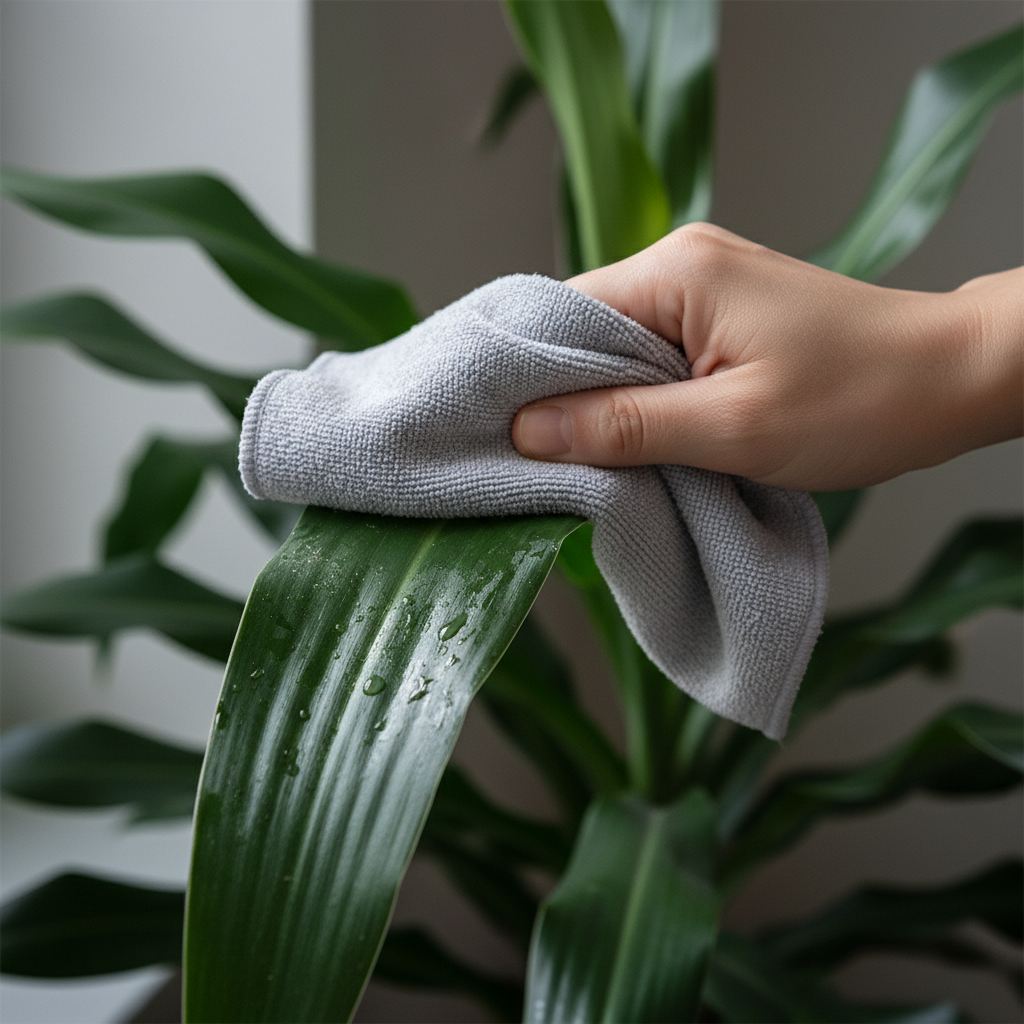
Spider mites
Spider mites are the single most common pest on indoor corn plants, especially in dry, centrally heated rooms. The first sign is fine yellow stippling along the leaf surface, usually visible against the dark green areas. Severe infestations produce wispy webbing in the leaf axils and the new growth points. Treat early by rinsing the foliage thoroughly under tepid water in the shower or with a hose outdoors, then follow up weekly with insecticidal soap or a diluted neem oil spray, covering both leaf surfaces. Repeat every seven days for at least three weeks to catch successive hatching cycles. Raising ambient humidity also discourages reinfestation.
Mealybugs and scale
Mealybugs appear as fluffy white deposits tucked into leaf axils and along the underside of midribs. Scale insects look like small, flat, brown lumps stuck to the canes and leaves and are easily mistaken for natural texture. Both feed on plant sap and excrete sticky honeydew, which then attracts sooty mould. Dab individual mealybugs and scales with a cotton bud dipped in 70 percent isopropyl alcohol, then wipe down the affected areas. For larger infestations, alternate alcohol treatment with insecticidal soap applications every 7 to 10 days until you have not seen a live insect for three weeks.
Thrips
Thrips are less common but increasingly seen on imported nursery plants. They cause silvery streaks and small black faecal dots along the leaves, and the damaged tissue often distorts as it grows. Yellow sticky traps near the plant help confirm their presence. Treatment combines hosing the plant down, weekly sprays of insecticidal soap or spinosad, and isolation from other plants for at least three weeks because thrips reproduce quickly and travel readily.
Root rot
Root rot is by far the most serious disease problem and is almost always traceable to overwatering, poor drainage or a too-large pot. The above-ground symptoms include yellowing lower leaves, a softening base of the cane, a sour or musty smell from the soil and, in advanced cases, the cane wobbling loose in the pot. Unpot the plant immediately, cut away all soft, black or mushy roots back to firm white or tan tissue, and repot into fresh dry mix in a smaller pot. Water sparingly for several weeks while new roots regrow. Severely rotted canes can sometimes be rescued by treating the diseased base as a top cutting: cut above the damage, discard the rotten base and root the top fresh.
Leaf-spot fungi
Brown or black spots with concentric rings or yellow halos can appear if water sits on the leaves for long periods, particularly in poorly ventilated rooms. Remove affected leaves with clean scissors, improve air circulation by spacing plants further apart or running a small fan nearby, and avoid wetting the foliage when watering. Fungicidal sprays are rarely needed indoors once cultural conditions are corrected.
Warning — Pet safety: All parts of Dracaena fragrans are toxic to cats and dogs because of the saponins they contain. Ingested leaves cause vomiting, drooling, dilated pupils in cats and loss of appetite. Place the plant where pets cannot access it, and contact your vet promptly if you suspect any nibbling.
Popular Varieties
Dracaena fragrans has been cultivated and bred for so long that the species name has become an umbrella for a family of distinct cultivars, each with its own foliage signature. Two have become so popular that they dominate the houseplant trade and define what most people picture when they hear “corn plant”.
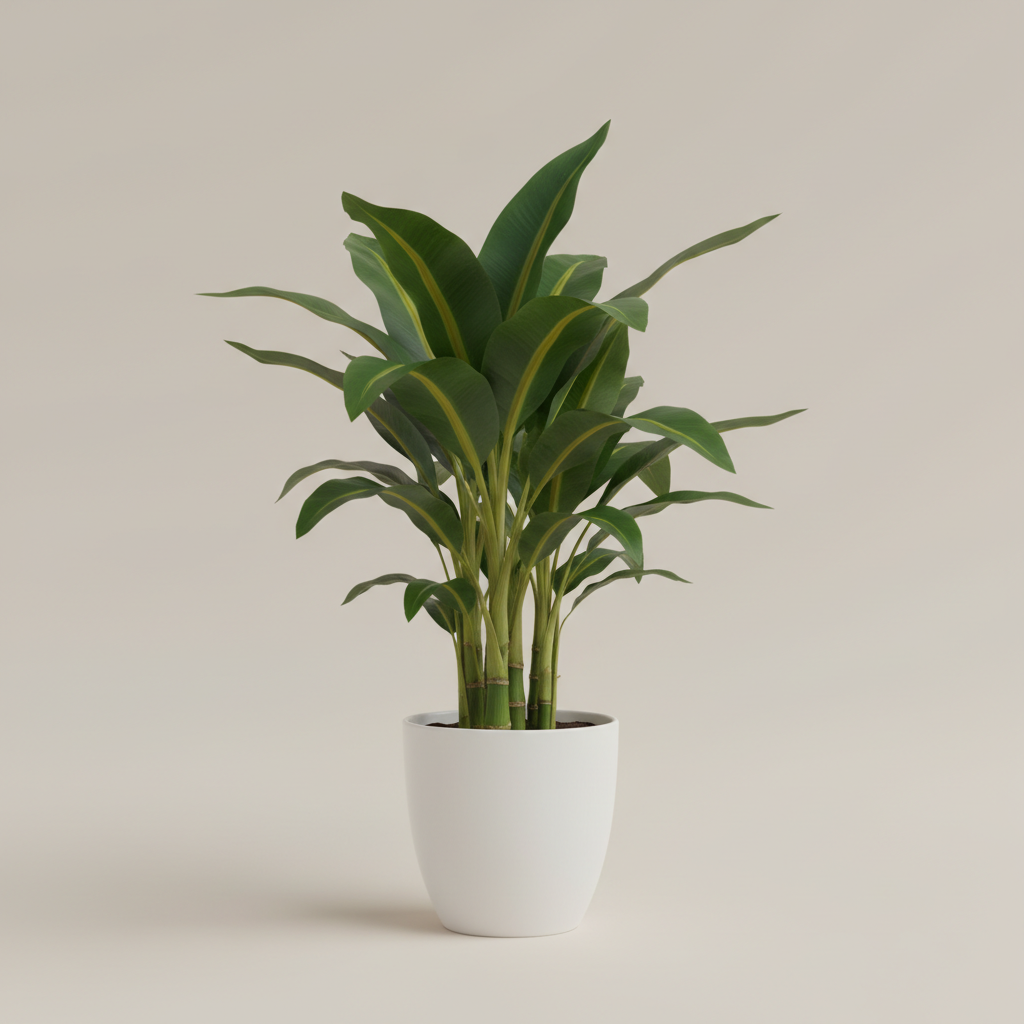
‘Massangeana’
‘Massangeana’ is the corn plant most people know without realising it has a name. Broad, arching dark green leaves carry a single bold golden-yellow central band down the length of each midrib, and the rosettes form generously at the tops of thick woody canes. It is the cultivar most often sold as multi-stem “mass cane” trees of staggered heights, and its forgiving, slow-growing nature has made it a fixture of office plant rentals worldwide. Light is forgiving but the central stripe widens and brightens with more of it.
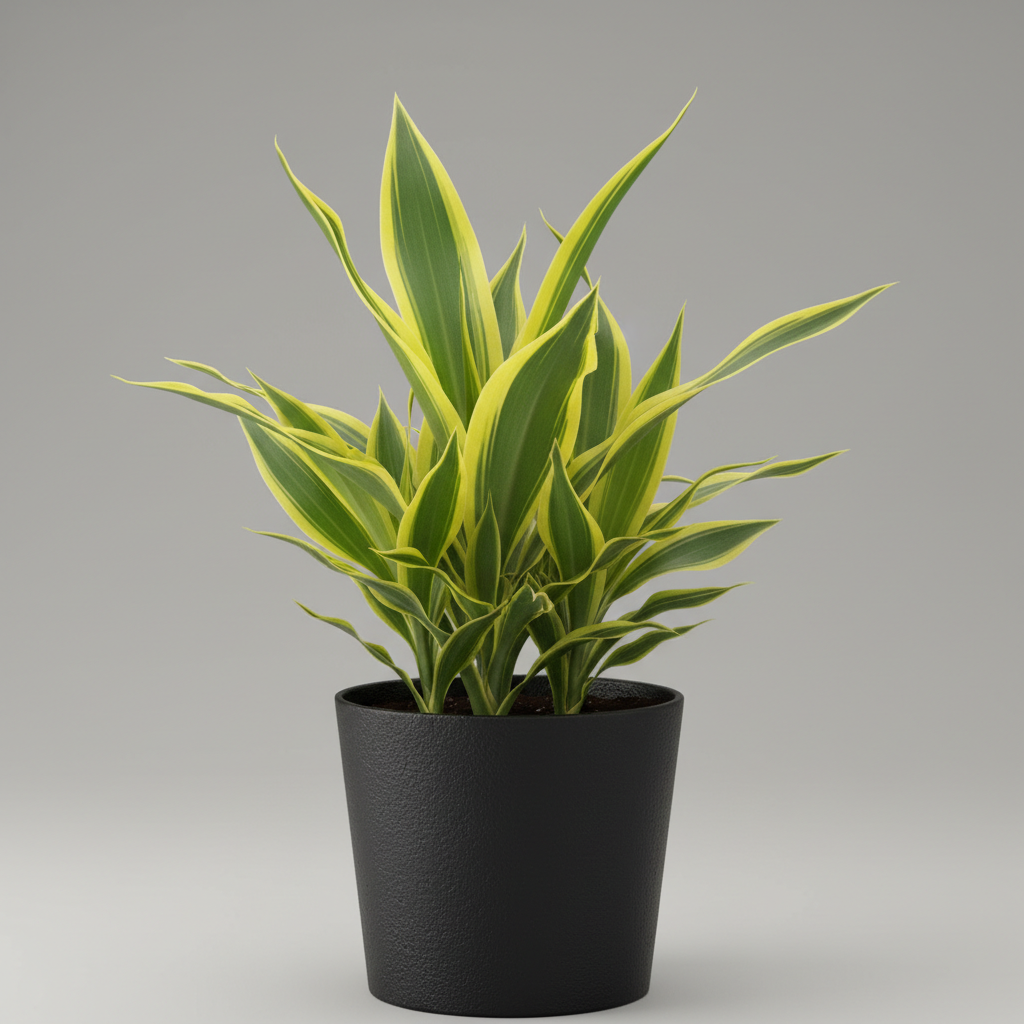
‘Lemon Lime’
‘Lemon Lime’ inverts the variegation pattern of ‘Massangeana’. The leaf margins glow in vivid chartreuse and yellow, framing a contrasting dark green central band, and the leaves themselves are narrower and more upright. The cultivar lights up under bright indirect light and demands more of it than the green-and-yellow classic to maintain saturation. In low light the bright margins fade towards a muted lime green, which is reversible once light improves. It works particularly well as a single-cane statement piece in a minimalist room.
Other cultivars worth knowing
Beyond the two icons, several other cultivars circulate in specialist shops. ‘Janet Craig’ is a deeper, plainer dark green with no stripe, prized for tolerating very low light and often used in commercial interiors where bright sun is unavailable. ‘Warneckii’ or ‘Warneckei’ carries fine white longitudinal stripes along narrow upright leaves, giving a more pinstriped silhouette. ‘Compacta’ grows slowly into a tight bottle-brush rosette atop a single stem and stays small, which suits desks and shelves. ‘Limelight’ resembles ‘Lemon Lime’ but is closer to a uniform glowing chartreuse with no contrast band. All share the same basic care; the main differences are how much light they need to keep their variegation vivid.
Frequently Asked Questions
Why are the tips of my corn plant leaves brown?
The most likely culprit is fluoride or chlorine in tap water, especially if you live in an area where water is fluoridated. Salt build-up from fertilisers and chronically low humidity produce the same brown crispy tips. Diagnose by switching to rainwater, filtered or distilled water for two months, flushing the soil thoroughly, and reducing or pausing fertiliser. New leaves coming in clean confirm the cause.
Is the corn plant safe around pets?
No. Dracaena fragrans contains saponins that are toxic to cats and dogs. Ingestion causes vomiting, hypersalivation, depression and dilated pupils in cats. If you have curious pets, place the plant well out of reach, on a high shelf or in a room they cannot enter, and contact your veterinarian if you suspect any has been eaten.
Why is my corn plant leaning?
Two causes account for almost every leaning corn plant: phototropism towards a light source on one side of the room, and a soft cane base from overwatering. Test by gently pushing the cane upright. If it feels firm at soil level, simply rotate the pot a quarter turn every two weeks and the plant will gradually straighten. If the cane feels soft or wobbly, unpot and inspect for root rot.
How fast does a corn plant grow?
Slowly. A healthy indoor specimen adds about 15 to 30 cm (6 to 12 in) of new top growth per year under good light, and far less in low light. Cane diameter grows even more slowly. This is part of why nursery-grown mass cane is propagated from full-sized imported canes rather than raised from seed.
Will my corn plant ever flower?
Sometimes, yes. Mature, well-cared-for corn plants occasionally produce dramatic flower spikes covered in clusters of small cream-coloured blooms that are intensely fragrant, especially at night. The species name fragrans refers to this scent. Flowering indoors is unpredictable and may take many years, and the flowers leave a sticky nectar drip beneath them, but it is a memorable event when it happens.
Can I keep my corn plant outside in summer?
Yes, in temperate climates. Place it in a shaded or dappled spot once nights stay reliably above 13 °C (55 °F), and bring it back inside well before autumn nights cool down. Acclimatise it gradually to outdoor light over a week to avoid sunburn, and inspect carefully for hitchhiking pests before bringing it back indoors.
My corn plant is losing lower leaves. Is it dying?
Probably not. Corn plants naturally shed their oldest, lowest leaves as new ones emerge from the centre, gradually exposing the woody cane. One or two yellowing lower leaves every couple of months is normal. If the pattern accelerates dramatically, or the leaf drop comes from the middle and top of the rosette rather than the very bottom, look for a sudden cold draught, overwatering or root rot.
Should I cut off brown leaf tips?
Cosmetic trimming is fine. Use clean, sharp scissors and follow the natural curve of the leaf tip to keep it looking neat. Trimming will not fix the underlying cause, however, so identify and correct the water-quality or humidity issue alongside the trimming, otherwise the new tips will also brown over time.
Looked after attentively, a corn plant is a quiet long-term companion that will hold its place for years and ask very little of you. Get the water right, give it gentle light and feed it sparingly, and it will reward you with steady, architectural growth and, if you are lucky, the occasional cloud of evening fragrance.






