
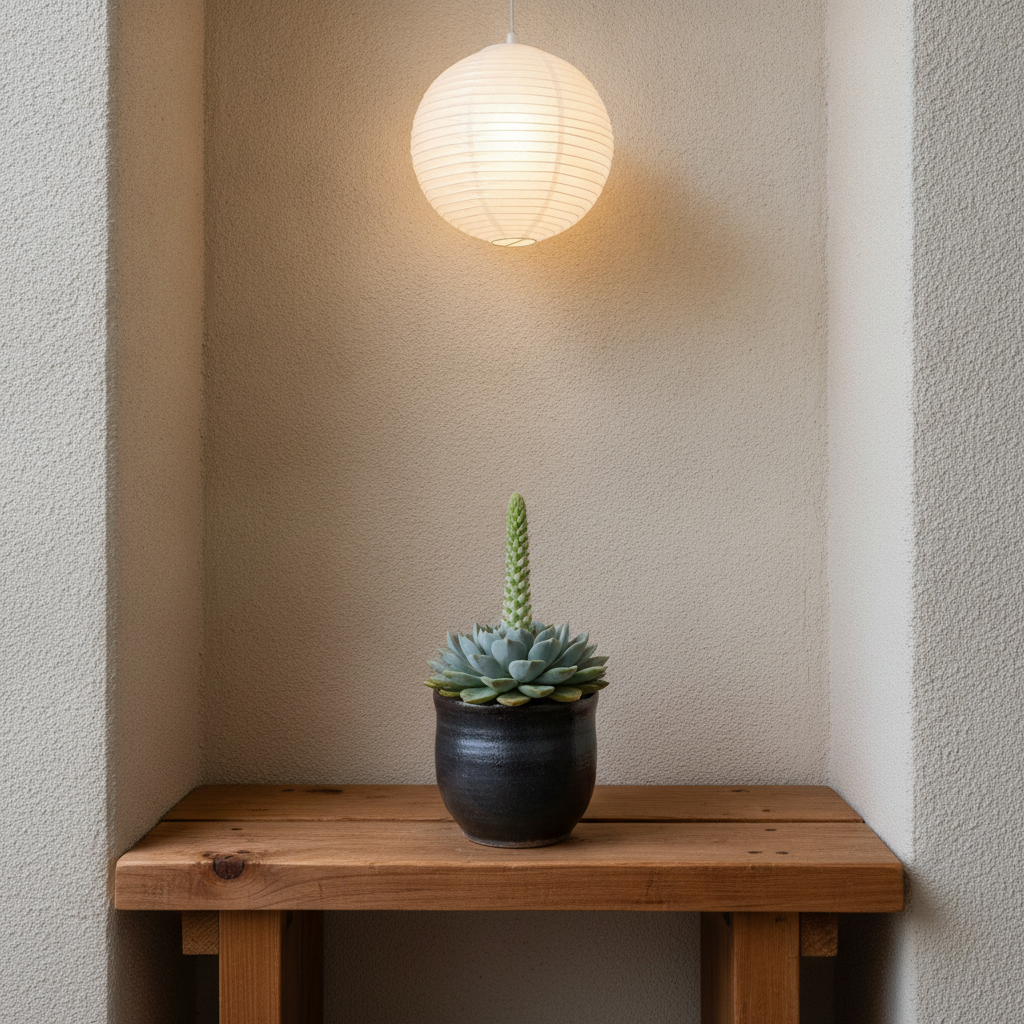
The Chinese dunce cap is one of the more curious small succulents you can grow indoors, named for the way each mature rosette stretches upward into a tall, tapering cone of tiny flowers that looks unmistakably like a pointed cap. Known botanically as Orostachys iwarenge and sold under common names including Dunce Caps and rock pine, it belongs to the stonecrop family Crassulaceae and hails from Japan, Korea and parts of China, where it colonises rocky outcrops, cliff faces and even the weathered clay tiles of old rooftops. That rooftop habit is captured in its species name, which references a lotus growing on stone. Its low, powdery blue-grey rosettes spread outward on thread-like runners, producing dense clusters of offsets that gradually knit into a spreading mat much like a sempervivum.
What makes this plant so appealing is that it is genuinely forgiving while still rewarding attention with something unusual. It survives happily on neglect, tolerating drought, poor soil and a surprising amount of cold, yet it thrives and puts on its best colour and its signature flowering spire only when you get its light, watering rhythm and seasonal rest right. This guide walks through every aspect of its care, from replicating the bright, gritty conditions of its native cliffs to understanding its monocarpic life cycle, so you can keep a colony going for years rather than watching a single rosette bloom itself to death.
Contents
- Quick Reference
- Why Chinese Dunce Cap Makes a Hardy Houseplant
- Light Requirements
- Watering & Humidity
- Soil, Potting & Repotting
- Fertilising
- Propagation
- Pests & Diseases
- Popular Varieties
- Frequently Asked Questions
Quick Reference: Chinese Dunce Cap at a Glance
| Light | Bright light with several hours of gentle direct sun; the brightest windowsill you have indoors |
| Watering | Sparingly; soak thoroughly then let the mix dry out completely, roughly every 10 to 14 days in growth and far less in winter |
| Temperature | Happy at 15 to 24 degrees Celsius (59 to 75 degrees Fahrenheit) in growth; remarkably frost hardy and benefits from a cool winter rest near 5 to 10 degrees Celsius (41 to 50 degrees Fahrenheit) |
| Humidity | Low; prefers dry, airy conditions and dislikes stagnant, humid air |
| Fertiliser | Light feeder; a dilute, low-nitrogen succulent feed once or twice during the growing season |
| Toxicity | Generally considered non-toxic to cats, dogs and humans, though not intended for consumption |
Why Chinese Dunce Cap Makes a Hardy Houseplant
Few succulents combine this much resilience with this much character. The Chinese dunce cap evolved on exposed rock and rooftop tiles, environments that swing between baking sun, driving rain and hard winter frost, so it comes pre-adapted to the kind of inconsistent care that kills fussier plants. It stores water in its fleshy leaves, shrugs off short droughts, and unlike most succulents it laughs at cold that would turn a jade plant or an echeveria to mush. For anyone who wants a living sculpture on a bright windowsill or a cold porch, it asks very little in return.
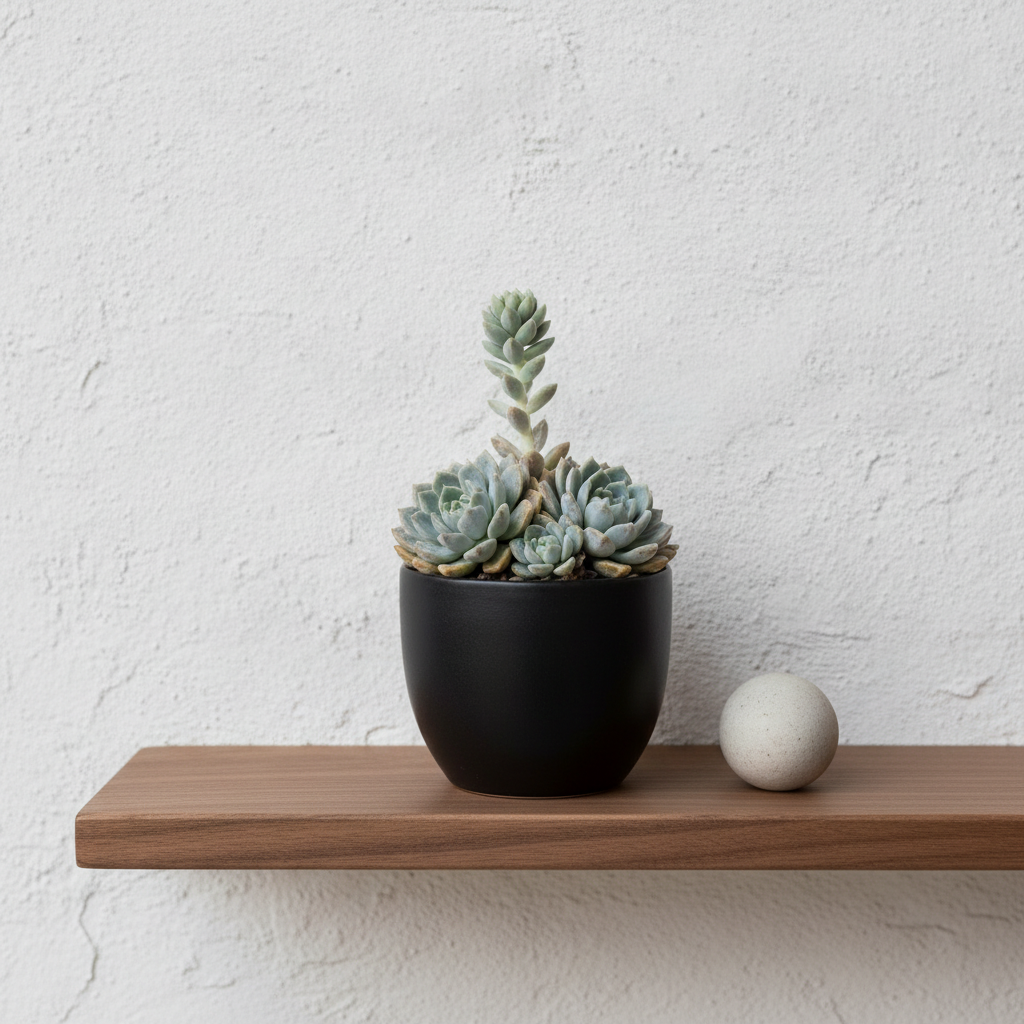
The other reason it earns its place is the spectacle of its bloom. Each rosette is monocarpic, meaning it flowers only once, but when it does it transforms, elongating into a slender pagoda-like spire packed with hundreds of tiny greenish-white to pinkish blooms. That flowering rosette then dies back, which sounds alarming until you realise the plant has already hedged its bets by throwing out a ring of offset pups on runners. Manage those pups well and a single plant becomes a self-renewing colony that can outlive many of the woody houseplants around it. Surviving is easy; thriving, and coaxing out that architectural flower, is the satisfying part.
Important — Toxicity: The Chinese dunce cap is generally regarded as non-toxic to cats, dogs and people, and it does not appear on the major lists of plants poisonous to pets. Even so, no succulent is meant to be eaten, and curious animals or children who chew the fleshy leaves may suffer mild stomach upset, so it is sensible to keep it out of reach.
Light Requirements
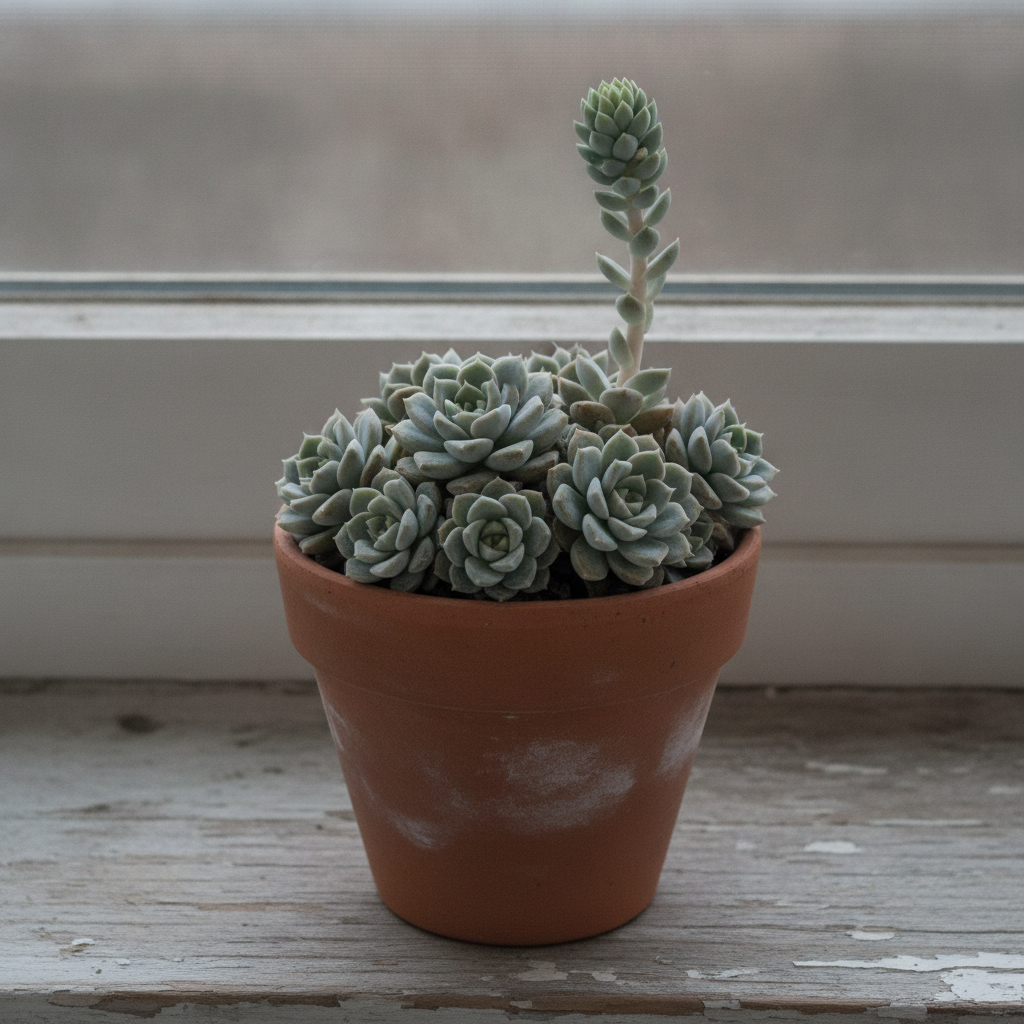
Light is the single biggest factor in whether your Chinese dunce cap stays tight and colourful or stretches into a pale, floppy shadow of itself. In the wild it grows fully exposed on rock and rooftop, so it is adapted to strong light and craves far more of it than the average leafy houseplant. Indoors, the goal is to give it the brightest position you can, with a few hours of gentle direct sun each day to keep the rosettes compact and to bring out the soft blue-grey tones in the leaves.
The ideal indoor spot is a south or east-facing windowsill where the plant sits right up against the glass. Morning sun is perfect because it is intense enough to satisfy the plant without the scorching heat of midday behind glass. If your only bright window faces the harsh afternoon sun, a sheer curtain or a slight setback from the glass in high summer will prevent the fleshy leaves from cooking.
Light Levels Explained
Understanding how much light different positions actually deliver helps you place this sun-loving succulent correctly. The figures below are approximate and measured in lux, a unit of illumination, to give a sense of relative brightness.
| Light Category | Approx. Level | Typical Location | Outcome |
|---|---|---|---|
| Direct sun | 50,000 lux and above | Right against a south window, outdoors in the open | Excellent; tight rosettes and best colour, with only midsummer caution |
| Bright indirect | 10,000 to 25,000 lux | Just back from a bright window, sheer-curtained sill | Good; healthy but slightly looser growth |
| Medium | 2,000 to 10,000 lux | A metre or two from a bright window | Tolerated short term; rosettes begin to stretch |
| Low | 500 to 2,000 lux | North window, interior shelf | Poor; etiolated, pale and weak over time |
| Very low | Below 500 lux | Hallways, rooms without direct windows | Unsuitable; steady decline |
Window Orientation and Placement
South-facing window: The best choice in most homes, delivering the sustained brightness and direct sun this succulent needs to stay compact. In the height of summer, watch for signs of stress on the most exposed leaves and diffuse the harshest midday rays if necessary.
East-facing window: An excellent option. Bright morning sun followed by softer afternoon light suits the plant well and reduces the risk of scorching, making it the safest strong-light position for most of the year.
West-facing window: Workable, though the strong afternoon light carries more heat. Position the plant with a little airflow and keep an eye on it during heatwaves.
North-facing window: Generally too dim to keep this plant compact and healthy. If a north window is all you have, plan to supplement with a grow light or the rosettes will quickly stretch and lose their form.
Pro Tip — Rotate for Symmetry: Because the rosettes turn to face the light, give the pot a quarter turn every week or so. This keeps the whole colony growing evenly rather than leaning toward the glass, which matters especially when a rosette begins to send up its flowering spire.
How Light Affects Colour and Form
In strong light the leaves develop their characteristic powdery, silvery blue-grey bloom and the rosettes stay dense and low. Move the plant somewhere dimmer and two things happen: the colour fades toward a plain flat green, and the rosette stretches, lengthening the gaps between leaves in a process called etiolation as it reaches for brighter conditions. Etiolated growth cannot be reversed, so prevention through good placement is far better than trying to fix a stretched plant after the fact.
Warning — Direct Sunlight: Although this is a sun-loving plant, a specimen grown in low light and then moved abruptly into full sun can scorch, developing brown, papery patches on the leaves. Acclimatise it over a week or two by increasing sun exposure gradually rather than relocating it in a single step.
Artificial Lighting
If natural light is limited, this succulent responds very well to a full-spectrum LED grow light. Position the light 15 to 30 centimetres (6 to 12 inches) above the rosettes and run it for around 12 hours a day to replace the missing sun. A grow light is also useful over winter in darker climates, though if you are giving the plant a cool dormant rest you can reduce the hours in step with the natural short days.
Seasonal Adjustments
This plant is most actively growing in the cooler, brighter parts of spring and autumn, and it can slow down or rest during both the peak heat of midsummer and the depths of winter. As the sun weakens through autumn, move the plant to your brightest available window and expect its water needs to drop sharply. In spring, ramp light and water back up gradually as growth resumes and the rosettes plump out again.
Watering & Humidity
Watering is where most Chinese dunce caps are lost, and almost always through kindness rather than neglect. As a rock-dwelling succulent it is built to endure drought, storing moisture in its leaves and expecting its roots to dry out completely between drinks. The guiding principle is simple: water thoroughly but infrequently, and when in doubt, wait.
When to Water
Rather than watering on a fixed calendar, water according to the soil. Wait until the potting mix has dried out completely, then give the plant a thorough soak. During active growth in spring and autumn this might mean watering roughly every 10 to 14 days, but the interval depends entirely on your light, temperature, pot size and mix, so always check before you pour.
The most reliable test is to push a finger or a wooden skewer into the mix; if it comes out with any damp soil clinging to it, hold off. In winter, if you are keeping the plant cool and dormant, you may water only once every few weeks or barely at all, just enough to stop the rosettes shrivelling entirely.
Pro Tip — Read the Leaves: The plant tells you when it is genuinely thirsty. Well-hydrated rosettes look plump and firm, while a plant that needs water shows slightly softer, thinner leaves that lose their taut sheen. Learning to read this is far more reliable than any schedule.
How to Water Correctly
- Check that the potting mix is completely dry all the way through before you begin.
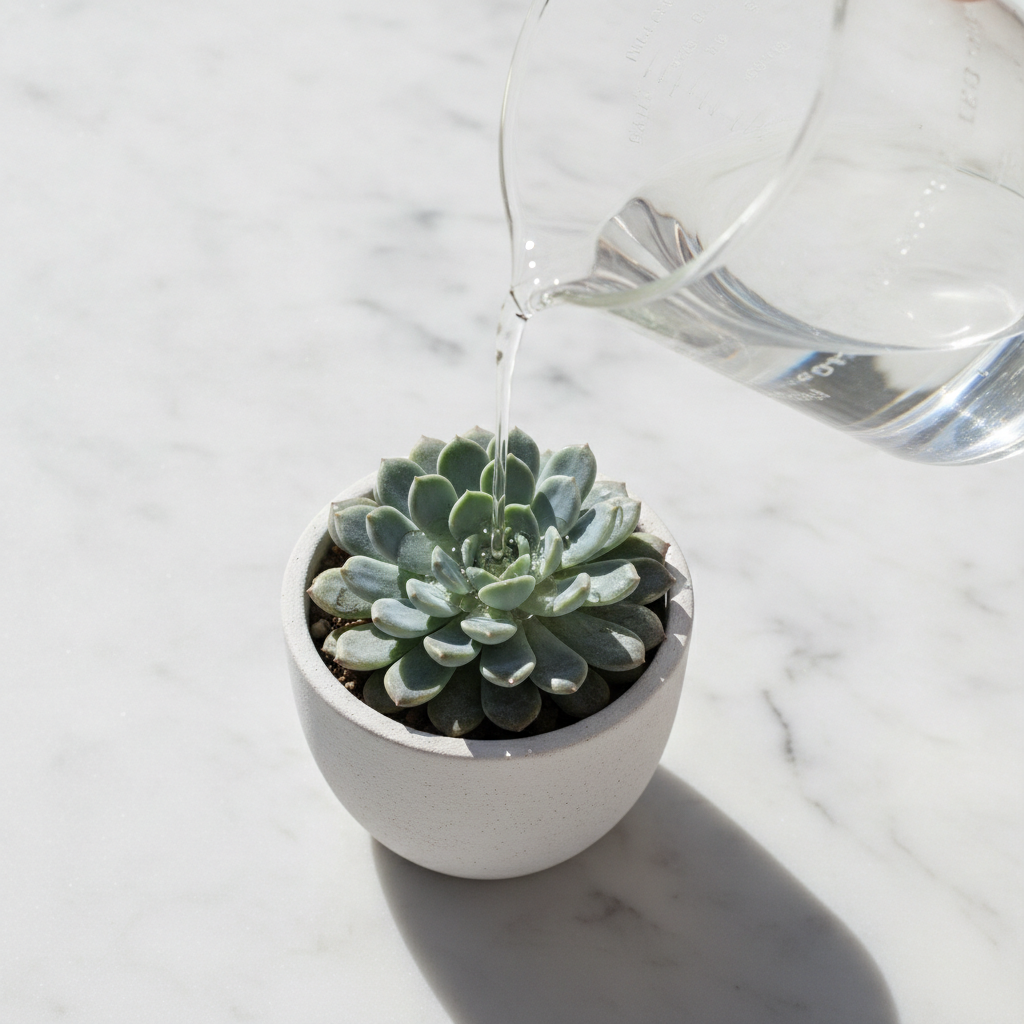
- Water at the soil surface, directing the flow around the base of the rosettes rather than over the top of them.
- Continue until water runs freely from the drainage holes, ensuring the whole root zone is moistened.
- Let the pot drain fully and tip away any water that collects in the saucer or cover pot.
- Avoid leaving water sitting in the centre of the rosettes, as trapped moisture there can cause rot.
- Wait until the mix is bone dry again before the next watering.
Signs of Overwatering vs. Underwatering
| Symptom | Overwatering | Underwatering |
|---|---|---|
| Leaf colour | Yellowing, translucent or blackening leaves | Duller colour, sometimes reddish stress tints |
| Leaf texture | Soft, mushy, water-soaked and collapsing | Thin, wrinkled and slightly shrivelled |
| Soil | Stays damp for days, may smell sour | Bone dry for an extended period |
| Roots | Brown, black and slimy when inspected | Dry and intact but growth stalls |
| Base of rosette | Blackened, rotting at the crown | Firm but shrinking as reserves are used |
Warning — Root Rot: Soft, blackening leaves at the base of a rosette are the classic sign of root rot from overwatering, and it can spread fast. If you catch it, unpot the plant immediately, cut away all mushy roots and rotten tissue, let the healthy remainder callus for a day or two, and replant into fresh dry, gritty mix. Salvaging a few firm offsets is often the best outcome.
Humidity Requirements
Unlike tropical foliage plants, the Chinese dunce cap wants nothing to do with high humidity. It is native to dry, exposed, well-ventilated places and is perfectly content with the low humidity of a typical heated home. Average indoor air suits it fine, and if anything it prefers conditions on the drier side.
Problems arise not from a lack of humidity but from an excess of stagnant, damp air, which encourages fungal issues and rot on the fleshy rosettes. If you see mould appearing on the soil surface or persistent damp settling in the crowns, the answer is more airflow and less moisture, not more.
There is no need to mist this plant, group it with humidifiers, or set it on a pebble tray. In fact all of those practices work against it. The best thing you can do for its atmosphere is to keep it somewhere bright with gentle air movement, which mirrors the breezy rooftops and cliffs it comes from.
Water Quality
This is not a fussy plant when it comes to water quality, and ordinary tap water is fine in most areas. If your water is very hard you may notice pale mineral deposits building up on the soil surface or pot rim over time, which is cosmetic rather than harmful. Rainwater or filtered water avoids that entirely if you prefer, and letting tap water stand for a while before use is a small courtesy that does no harm.
Soil, Potting & Repotting
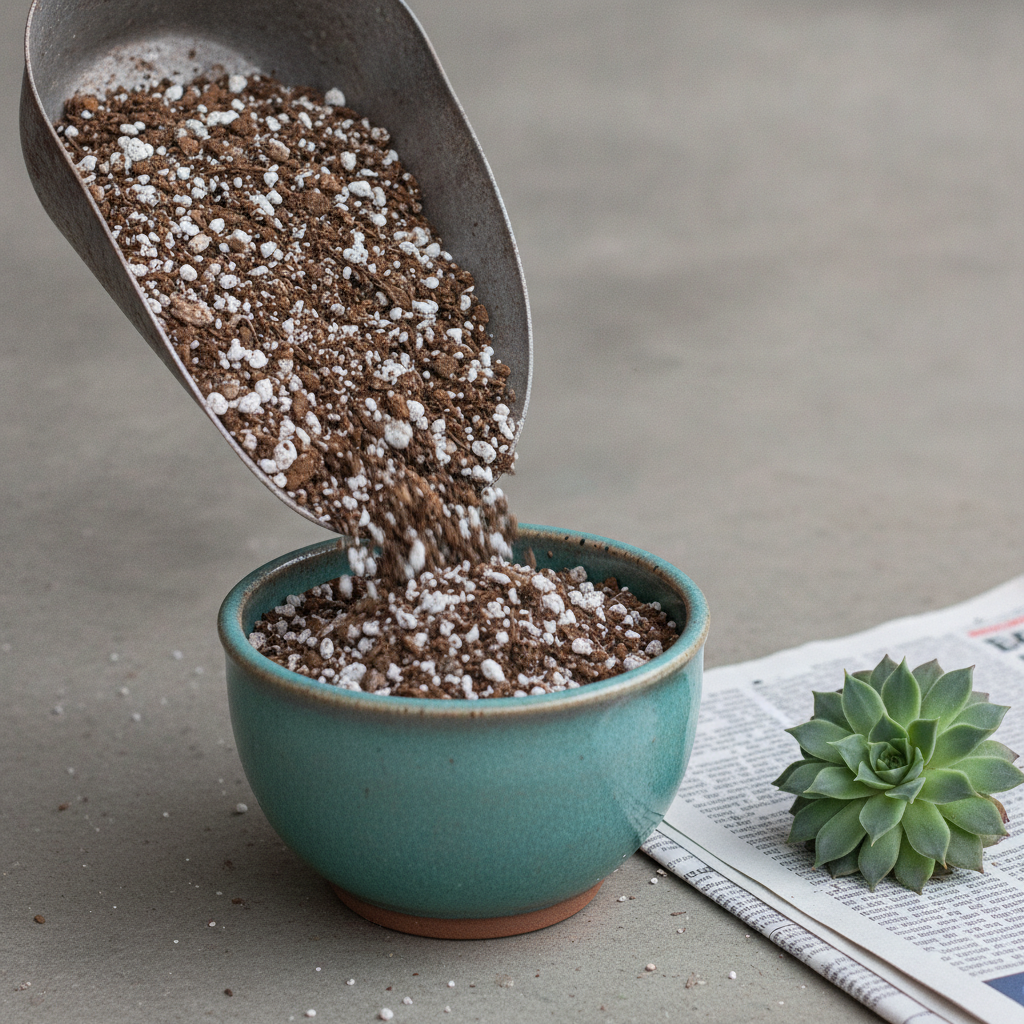
Given that this plant grows naturally in the thinnest crevices of rock and the grit that gathers on old roof tiles, the most important quality in its soil is sharp drainage. A dense, moisture-retentive potting compost is the fastest route to root rot, whereas a gritty, open mix that dries quickly mimics its native footing and keeps it healthy.
Ideal Soil Composition
Start with a good-quality cactus and succulent compost, then push it even further toward the mineral end by adding extra grit. The aim is a mix that water passes through quickly, holds very little moisture around the roots, and offers plenty of air pockets. A blend that is roughly half gritty mineral material and half open compost is a solid target.
| Component | Proportion | Function |
|---|---|---|
| Cactus and succulent compost | Half | Provides structure and a small nutrient and moisture reserve |
| Pumice or coarse perlite | One quarter | Creates air pockets and speeds drainage |
| Coarse horticultural grit or fine gravel | One quarter | Adds mineral weight and mimics the native rocky substrate |
The plant is not particular about soil pH and does well in the neutral to slightly acidic range that most succulent mixes fall into naturally. There is no need to test or adjust pH for ordinary growing.
Pro Tip — Quick Mix Recipe: If you want a fast, reliable blend, combine two parts shop-bought cactus compost with one part pumice and one part coarse grit. Top the finished pot with a thin layer of grit or fine gravel to keep the base of the rosettes dry and to discourage fungus gnats.
Choosing the Right Pot
Because this succulent spreads sideways on runners rather than growing tall, a shallow, wide container suits it far better than a deep one. A wide pan or bulb bowl gives the offsets room to fill out into an attractive colony while keeping the root zone shallow and quick to dry.
Drainage holes are non-negotiable. Whatever container you choose must have at least one generous drainage hole. Decorative pots without holes trap water at the base and will eventually rot the roots, no matter how careful your watering. If you love a particular cover pot, plant into a plastic pot with holes and slip it inside.
Pot material: Terracotta is ideal because it is porous and wicks moisture out of the mix, helping the roots dry between waterings and adding useful weight for a low, spreading plant. Glazed ceramic and plastic both work too but hold moisture longer, so lean toward a grittier mix and a longer wait between waterings if you use them.
Pot size: Choose a container only slightly larger than the current spread of the colony. An oversized pot holds a large volume of damp soil that the modest root system cannot use, which keeps the mix wet for too long and invites rot.
When to Repot
This is a slow, shallow-rooted plant that does not need frequent repotting. Expect to move it on every two to three years, or sooner if the colony has filled its container and offsets are spilling over the edges. The best time to repot is in early spring as growth picks up, which also happens to be the ideal moment to divide the pups. Always repot into dry mix and wait several days before the first watering to let any disturbed roots heal.
How to Repot: Step-by-Step
- Water the plant a few days beforehand if the mix is bone dry, so the root ball holds together, then let it drain fully.
- Gently ease the colony out of its pot, supporting the rosettes with your hand rather than pulling on them.
- Tease away the old mix from the roots and inspect them, trimming off any that are dry, dead or rotten.
- Part-fill the new shallow pot with fresh gritty mix and position the plant at the same depth it was growing before.
- Fill in around the roots with more mix, firming lightly so the plant sits stable without being packed hard.
- Top with a thin grit dressing, then set the pot in a bright spot and wait several days before watering.
Warning — Transplant Shock: Watering immediately after repotting is a common mistake. Freshly cut or disturbed roots are vulnerable to rot, so the plant needs a few dry days to callus before it meets moisture again. Repotting into damp soil and watering straight away is one of the quickest ways to lose an otherwise healthy plant.
Fertilising
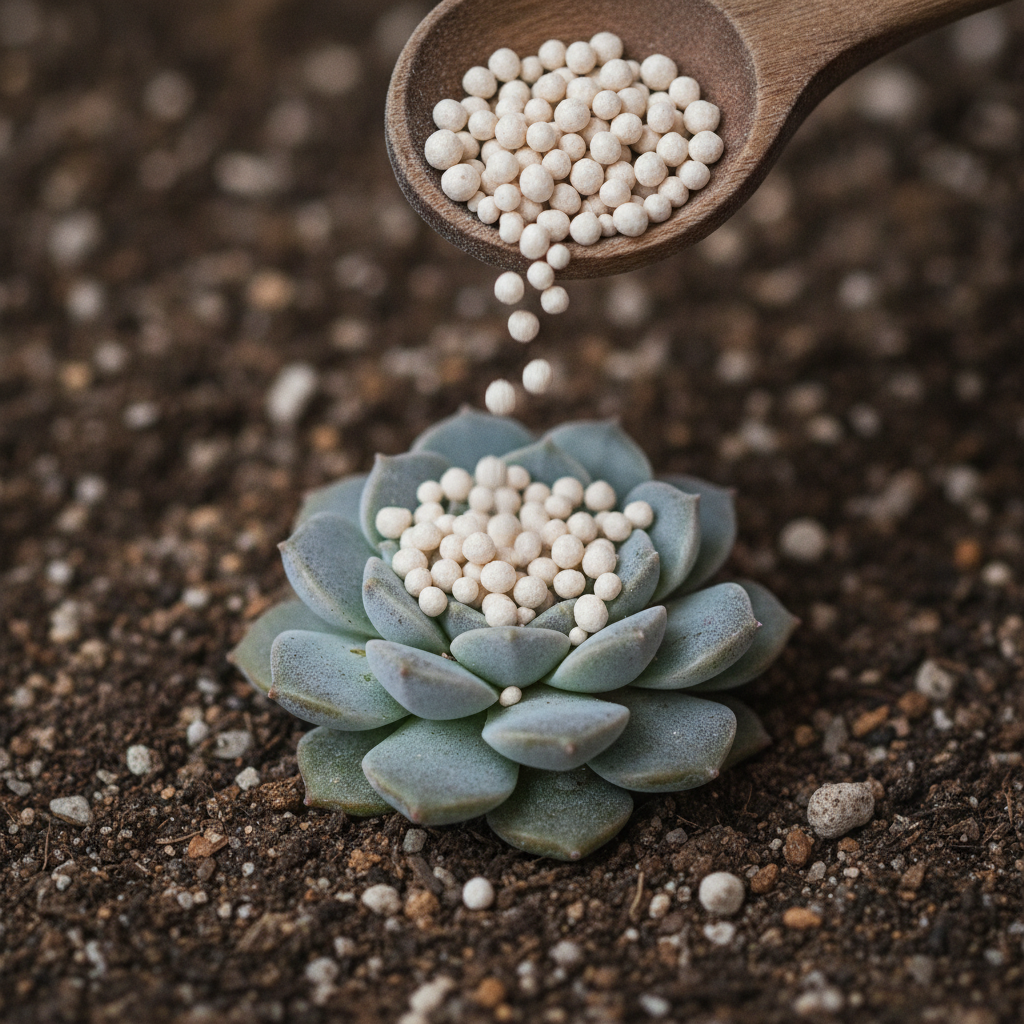
The Chinese dunce cap is a lean feeder by nature, having evolved to scrape a living from mineral-poor rock crevices. It needs very little supplementary feeding, and the most common fertiliser mistake is giving it too much rather than too little, which produces soft, sappy growth that stretches and rots more easily.
A light touch is all that is required. A dilute feed once or twice across the whole growing season is plenty to keep the colony vigorous and to support the development of offsets and the occasional flowering spire.
Understanding Plant Nutrients
Fertilisers are labelled with three numbers, the N-P-K ratio, standing for nitrogen, phosphorus and potassium. For a compact succulent like this, a formula low in nitrogen is preferable, because high nitrogen drives the loose, leafy growth that undermines the plant’s tight form. The table below summarises the main nutrients and what their absence looks like.
| Nutrient | Symbol | Primary Function | Deficiency Symptoms |
|---|---|---|---|
| Nitrogen | N | Leaf and stem growth | Pale, slow growth; but excess causes soft, stretched rosettes |
| Phosphorus | P | Root development and flowering | Poor rooting, reluctance to bloom |
| Potassium | K | Overall vigour and stress resistance | Weak growth, poor drought and cold tolerance |
| Calcium | Ca | Cell wall strength | Distorted new growth |
| Magnesium | Mg | Chlorophyll production | Yellowing between leaf veins |
| Iron | Fe | Chlorophyll and enzyme function | Pale new leaves with green veins |
Types of Fertiliser
Liquid fertilisers: A liquid succulent or cactus feed, diluted to half the recommended strength or weaker, is the easiest way to feed this plant. It is applied with a normal watering during the growing season and gives you full control over how much the plant receives.
Slow-release granular: A small amount of slow-release granular feed worked lightly into the top of the mix in spring will drip-feed nutrients gently over the season. Use a light hand, as it is easy to over-apply granules to a plant that wants so little.
Organic fertilisers: Gentle organic options such as a very dilute worm-casting tea suit the plant’s modest appetite and release nutrients slowly. They are forgiving and unlikely to cause the sudden surge of soft growth that strong synthetic feeds can trigger.
Feeding Schedule
Feed only during active growth in spring and autumn, offering a dilute feed perhaps once at the start of each of those periods. Do not feed at all during the peak heat of midsummer if the plant has slowed, and never feed a dormant plant over winter, when it is resting and cannot use the nutrients.
Pro Tip — Less Is More: When feeding succulents, err on the side of weaker and less frequent. A quarter-strength feed given twice a year will keep this plant far healthier than a full-strength dose that pushes lush, vulnerable growth. If you are unsure, skip a feed entirely; this plant genuinely thrives on austerity.
How to Fertilise
- Wait until the plant is in active growth and the soil is due for watering anyway.
- Mix your chosen liquid feed to half strength or weaker in a watering can.
- Water the plant lightly with plain water first if the mix is completely bone dry, to protect the roots.
- Apply the diluted feed to the soil, avoiding the rosettes, until it just begins to drain.
- Let the pot drain fully and resume your normal dry-out-and-soak rhythm afterwards.
Warning — Salt Build-Up: Over-fertilising leaves a build-up of mineral salts in the mix, which can burn the roots and show as brown, crisped leaf tips. If you suspect this, flush the pot by watering thoroughly with plain water two or three times, letting it drain completely each time, to leach the excess salts away.
Propagation
Propagation is where the Chinese dunce cap really shines, because it does most of the work for you. The plant naturally throws out offsets, or pups, on slender runners, and these are the key to keeping a colony going indefinitely, especially given that each rosette dies after it flowers. Learning to separate and pot up these offsets turns the plant’s monocarpic habit from a drawback into a steady supply of new plants.
The two practical routes are dividing the established offsets and, less commonly, growing from the seed produced after flowering. Division is faster, more reliable and by far the more useful method for the home grower, so it is worth mastering first.
Understanding Offsets and Runners
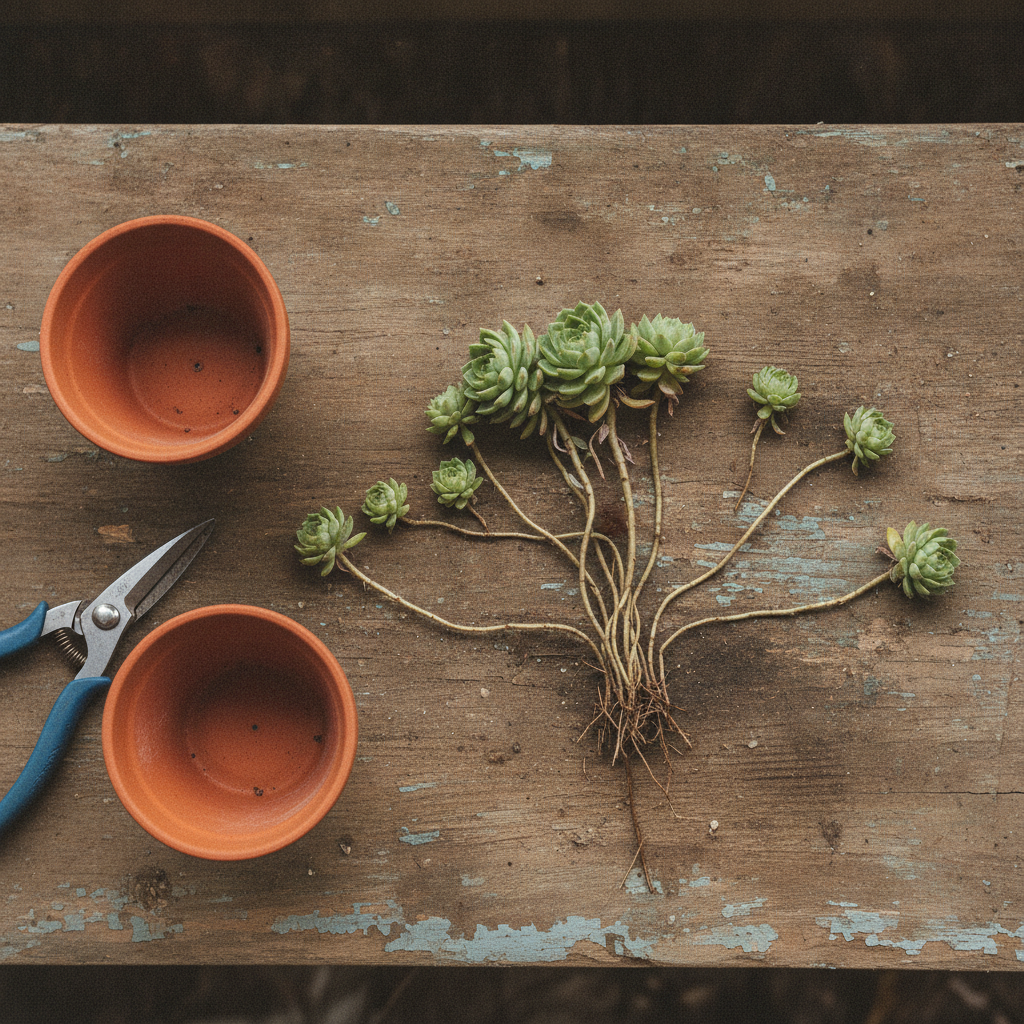
Each mature rosette sends out thin horizontal runners, or stolons, that end in a small new rosette. These pups root readily where they touch soil, which is how the plant forms its characteristic spreading mat on rock and roof. Because the parent rosette is monocarpic and will eventually flower and die, these offsets are the plant’s insurance policy and your propagation material. A healthy colony produces them freely, so there is rarely any shortage of new plants to pot on or share.
Division of Offsets: Step-by-Step
Dividing offsets is best done in spring, ideally at the same time as repotting, when the plant is entering active growth and will re-establish quickly. All you need is a clean, sharp blade and some fresh gritty mix.
- Ease the whole colony out of its pot so you can see the runners connecting the parent rosettes to their pups.
- Identify offsets that already have a few small roots of their own, as these establish fastest.
- Sever the runner connecting each chosen pup to the parent with a clean, sharp blade.
- Set the separated offsets aside in a dry, shaded spot for a day or two so the cut surfaces callus over.
- Pot each pup into its own small container of dry, gritty mix, or space several across a shallow pan.
- Wait a few days, then begin watering lightly, keeping the offsets bright but out of the harshest direct sun until they root in.
Pro Tip — Let Them Callus: Resist the urge to pot up and water freshly cut offsets straight away. Giving the cut a day or two to dry and seal dramatically reduces the chance of rot, and a callused pup pushed into barely moist grit will root far more reliably than one planted wet.
Growing from Seed: Step-by-Step
After a rosette flowers it may set fine seed, and while this is a slower and more variable route, it can be rewarding if you want quantities of plants or simply enjoy the process. Bear in mind the seed is tiny and the seedlings are slow at first.
- Collect the fine seed from a spent flowering spire once it has dried on the plant.
- Scatter it thinly over the surface of a tray of moist, gritty seed mix without burying it, as it needs light to germinate.
- Cover the tray with a clear lid or bag to hold humidity and keep it warm and bright but out of scorching sun.
- Mist lightly to keep the surface just moist until tiny rosettes appear, which can take a few weeks.
- Once seedlings are large enough to handle, gradually reduce humidity and pot them on into individual gritty mix.
Troubleshooting Propagation
| Problem | Likely Cause | Solution |
|---|---|---|
| Offsets rot after potting | Potted wet or watered too soon | Let cuts callus first and use barely moist, gritty mix |
| Pups fail to root | Too dark, too cold, or no roots at separation | Provide bright warmth and choose offsets that already have roots |
| Seed does not germinate | Seed buried, or surface allowed to dry out | Surface-sow only and keep evenly moist under a cover |
| Seedlings damp off | Too much moisture and poor airflow | Ease off watering and increase ventilation gradually |
Pests & Diseases
The Chinese dunce cap is a robust plant with few serious pest problems, and most troubles it does encounter trace back to overwatering rather than to bugs. That said, the tight, overlapping leaves of its rosettes offer hiding places for a handful of common succulent pests, so it pays to look the plant over regularly.
Catching an infestation early makes it far easier to deal with. A quick weekly glance at the leaf axils and undersides, particularly when you water, will usually spot any visitors before they become a problem.
Common Pests
Mealybugs (Pseudococcus species)
Mealybugs are the most likely pest on this plant, appearing as small white, cottony tufts tucked into the tight junctions between leaves. They suck sap, weakening the plant and leaving a sticky residue that can lead to sooty mould. Their favourite hiding spots in the rosette crevices make them easy to miss until numbers build.
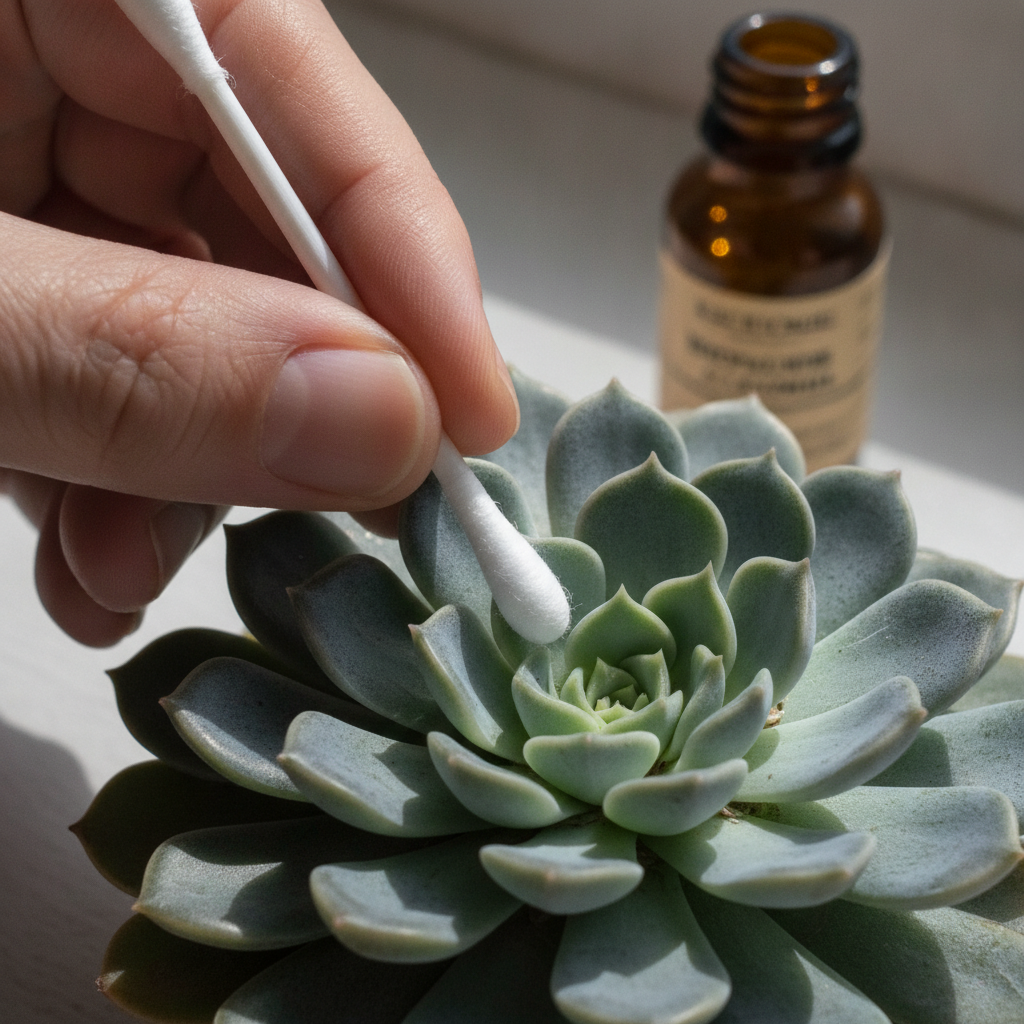
Treatment: Dab each insect directly with a cotton bud dipped in dilute isopropyl alcohol, which kills them on contact. For heavier infestations, treat the whole plant with a suitable insecticidal soap or a systemic houseplant insecticide, repeating every week or two until no new bugs appear.
Root Mealybugs (Rhizoecus species)
A less visible relative, root mealybugs live in the soil and feed on the roots, showing themselves as a white, powdery coating on the root ball and mix when you unpot the plant. They cause an otherwise healthy succulent to stall and decline for no obvious above-ground reason.
Treatment: Unpot the plant, rinse all the old soil from the roots, and repot into fresh mix in a clean pot. A soil drench with a systemic insecticide gives added control if the problem recurs.
Aphids (Aphidoidea)
Aphids are most likely to appear on the tender flowering spire when a rosette blooms, clustering on the soft flower stalk to feed on its sap. They are small, soft-bodied and often green, and they multiply quickly in warm conditions.
Treatment: Rinse them off with a gentle jet of water or wipe them away, then follow up with insecticidal soap if they return. Removing a heavily infested flower stalk is a quick and acceptable fix, since the rosette will die after flowering anyway.
Common Diseases
Root and Crown Rot (Pythium and Phytophthora species)
By far the most serious threat to this plant, rot sets in when the roots or the base of the rosettes sit in wet conditions for too long. It shows as blackening, softening tissue at the crown and mushy, collapsing leaves, and once established it spreads rapidly through the colony.
Treatment: Act fast. Cut away every trace of soft, discoloured tissue, salvage any firm offsets, let them callus, and replant into fresh dry, gritty mix. Prevention through sharp drainage and restrained watering is far more effective than any cure.
Fungal Leaf Spot (various fungi)
In stagnant, humid conditions, dark or discoloured spots can appear on the leaves where fungal spores take hold. It is uncommon on a plant kept dry and airy but can occur if water regularly sits in the crowns or if airflow is poor.
Treatment: Remove affected leaves, improve ventilation, and keep water off the foliage. A copper-based or general fungicide can help in persistent cases, but correcting the growing conditions is usually enough.
Pest and Disease Summary
| Pest / Disease | Identification | Treatment |
|---|---|---|
| Mealybugs | White cottony tufts in leaf axils | Alcohol on a cotton bud, insecticidal soap |
| Root mealybugs | White powder on roots, unexplained decline | Rinse roots, repot fresh, systemic drench |
| Aphids | Small soft insects on the flower stalk | Rinse off, insecticidal soap, remove spike |
| Root and crown rot | Blackening, mushy base and leaves | Cut out rot, salvage offsets, replant dry |
| Fungal leaf spot | Dark spots on leaves in humid air | Remove leaves, improve airflow, fungicide |
Prevention Strategies
Almost every problem this plant faces is prevented by the same handful of habits: use a sharply draining mix, water only when the soil is bone dry, and keep the plant bright with good air movement. A succulent grown hard in these conditions is naturally tough and far less appealing to pests and pathogens than one kept soft and wet.
Quarantine any new plants for a few weeks before they join your collection, since mealybugs in particular are often brought in on new purchases. Inspect the plant when you water, remove dead leaves and spent flower stalks promptly so debris does not harbour pests, and avoid crowding it so tightly against other plants that air cannot circulate.
Pro Tip — Alcohol Spot Check: Keep a small bottle of isopropyl alcohol and a pack of cotton buds near your plants. A quick dab on any mealybug the moment you spot it, before it can breed, is the single most effective way to keep this pest from ever gaining a foothold in the rosette crevices.
Popular Varieties
The Chinese dunce cap is grown in a handful of forms and is often sold alongside its close relatives within the genus Orostachys, all of which share the same rosette-and-runner habit and monocarpic flowering. Because the plants hybridise and names are applied loosely in the trade, you will sometimes find these forms labelled interchangeably, but the following are the ones you are most likely to encounter.
Whichever form you choose, the care is essentially identical, so selection comes down to the leaf colour and texture that appeals to you and to what is available locally. The variegated forms are the most sought after and command a premium, while the plain species and its relatives are tougher and easier to find.
| Variety | Leaf Appearance | Light Needs | Growth Rate | Availability |
|---|---|---|---|---|
| Species (Orostachys iwarenge) | Powdery blue-grey spoon-shaped leaves | Bright with some sun | Moderate | Common |
| ‘Fuji’ | Blue-grey centres with creamy variegated margins | Bright with some sun | Slow | Uncommon |
| Orostachys boehmeri | Small, tight powder-blue rosettes | Bright with some sun | Moderate | Fairly common |
| Orostachys spinosa | Green rosettes tipped with fine spines | Bright with full sun | Moderate | Uncommon |
| Orostachys malacophylla | Broader, flatter grey-green rosettes | Bright with some sun | Moderate | Rare |
Featured Varieties
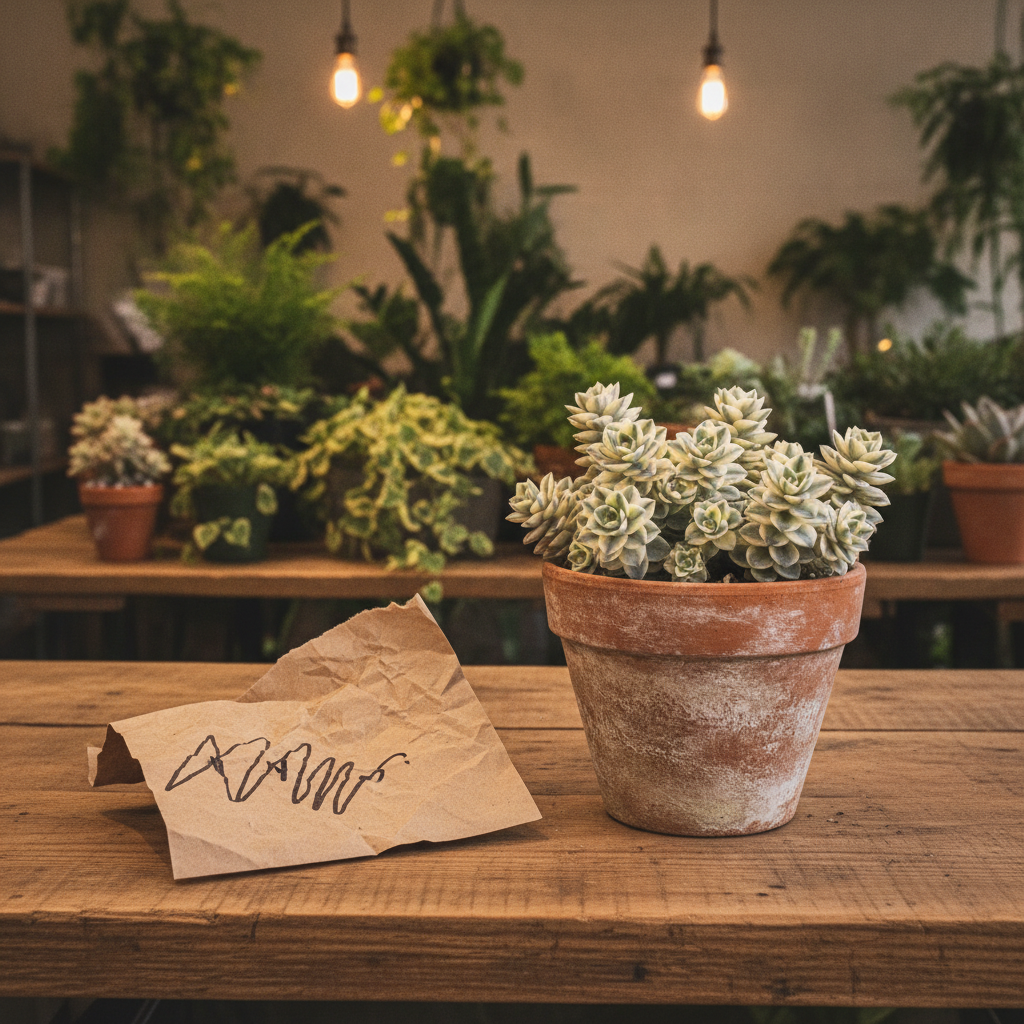
‘Fuji’
The most prized form, with each blue-grey leaf edged in a band of creamy white variegation. It is a little slower and slightly more delicate than the plain species, and its colour is at its best in strong light.
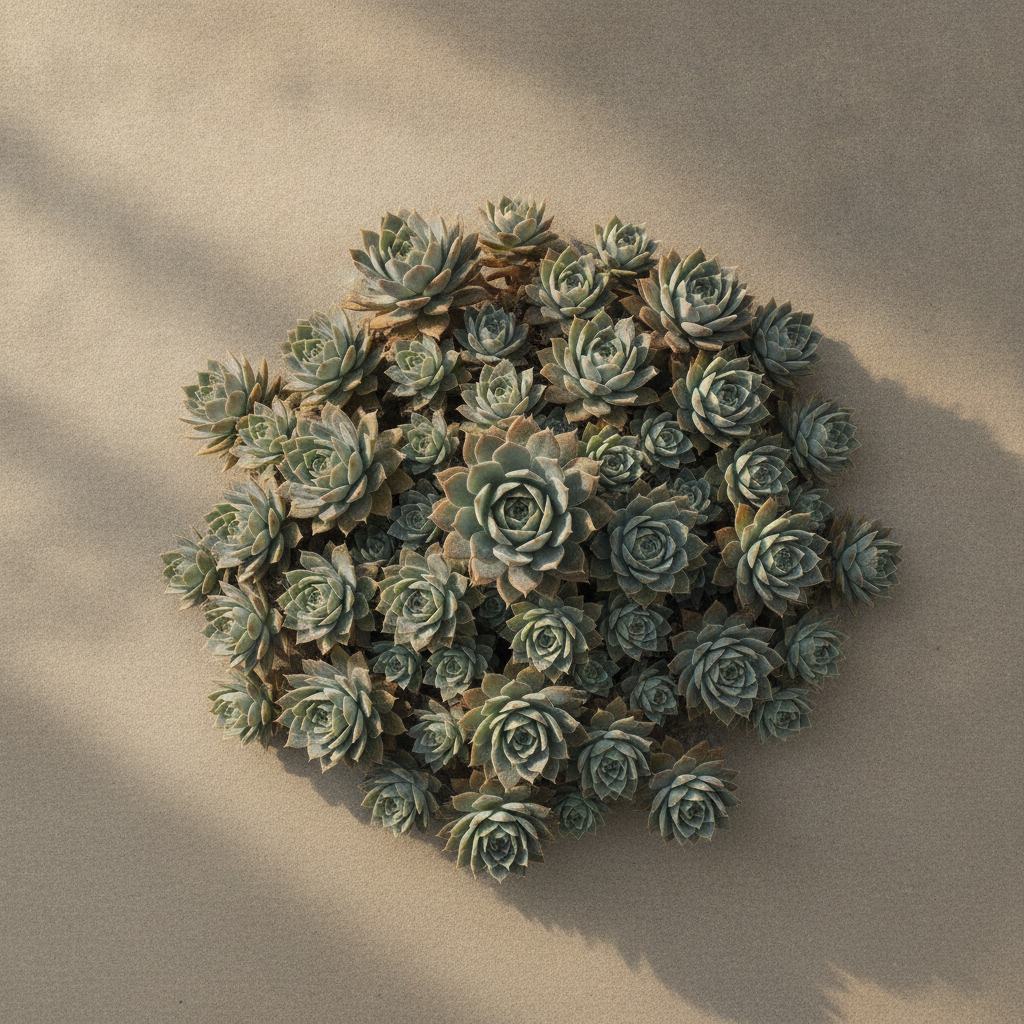
Orostachys boehmeri
A close relative with smaller, tighter powder-blue rosettes that form dense, ground-hugging mats. Often sold under the same Dunce Caps name, it is a touch hardier and just as easy, making it an excellent companion to the species.
Variety Profiles in Detail
‘Fuji’ (Orostachys iwarenge ‘Fuji’)
This variegated cultivar is the show-stopper of the group, with clean creamy margins framing the blue-grey heart of each leaf. The variegation means it carries a little less chlorophyll, so it grows more slowly and appreciates bright light to hold its contrast without stretching. It is otherwise cared for exactly like the species and makes a beautiful specimen in a shallow display pot.
Dunce Caps (Orostachys boehmeri)
Frequently confused with the true species in cultivation, this relative forms tighter, smaller rosettes of a soft powder blue and spreads readily into a low carpet. It is prized for its neat, uniform habit and its excellent cold tolerance, and it is one of the easiest of the group to establish outdoors in a sheltered, well-drained spot.
Spiny Stonecrop (Orostachys spinosa)
For those who like a little more texture, this species carries green rosettes with each leaf tipped by a fine, sharp point, giving the whole plant a bristly, architectural look. It is extremely cold hardy, demands the brightest light and sharpest drainage of the group, and rewards that with a distinctly different silhouette.
Choosing the Right Variety for Your Space
If you have a genuinely bright windowsill and want a striking specimen, the variegated ‘Fuji’ rewards the extra light with its two-tone leaves. For a tougher, faster-spreading colony, or for growing on a cold porch or in a sheltered outdoor pot, the plain species or Orostachys boehmeri are the more forgiving choices. All of them stay small and low, so any of these forms suits a shallow dish on a sunny sill, and none will outgrow its welcome.
Frequently Asked Questions
Why is my Chinese dunce cap dying after it flowered?
This is completely normal and not a sign that you have done anything wrong. Each rosette is monocarpic, meaning it flowers only once and then dies. The good news is that the plant produces offsets on runners well before it blooms, so as long as you have nurtured those pups the colony carries on. Simply remove the spent rosette once it has died back and let the surrounding offsets take over.
How often should I water it?
Water only when the potting mix has dried out completely, which in active growth often works out to roughly every 10 to 14 days, and much less in winter. There is no fixed schedule, because the right interval depends on your light, temperature and pot. When in doubt, wait a few more days, as this plant tolerates drought far better than excess water.
Can it survive frost and cold?
Remarkably, yes. Unlike most succulents, the Chinese dunce cap is genuinely cold hardy and can withstand frost, which is why it can be grown outdoors year-round in many temperate climates. It even benefits from a cool winter rest, during which it contracts into a tight closed bud. Just make sure it has sharp drainage, as cold combined with wet soil is far more dangerous than cold alone.
Why does it close up into a tight bud in winter?
When temperatures drop, the rosettes fold their leaves inward to form a compact, closed resting bud that can look almost like a small pinecone or bulb. This is a natural dormancy response that protects the plant through cold and dark periods. Keep it cool, bright and nearly dry, and it will reopen and resume growth as the days lengthen in spring.
Is the Chinese dunce cap safe around pets?
It is generally regarded as non-toxic to cats and dogs and does not appear on the main lists of pet-poisonous plants. That said, it is not food, and a pet that chews the fleshy leaves could still get a mild stomach upset, so it is best kept somewhere out of reach of determined nibblers.
Why are the rosettes stretching and turning pale?
Stretching, known as etiolation, together with a loss of the silvery colour is almost always a sign of too little light. This sun-loving plant needs the brightest position you can offer, ideally with some direct sun. Move it to a brighter window or add a grow light. Do note that stretched growth will not tighten back up, though new growth in better light will return to the compact form.
Do I need to feed it?
Very little. This is a lean-living plant adapted to poor, rocky soils, so a dilute, low-nitrogen succulent feed once or twice during the growing season is more than enough. Over-feeding does more harm than good by forcing soft, weak growth, so when it comes to fertiliser, restraint is the safest policy.
How do I get more plants from it?
Division of offsets is the easiest and most reliable method. In spring, separate the small pups that form on runners around the parent, let the cut surfaces callus for a day or two, then pot them into dry, gritty mix. Because the plant produces these offsets so freely, you will rarely be short of new plants to grow on or give away.
What kind of pot and soil does it need?
Use a shallow, wide pot with drainage holes, since the plant spreads sideways rather than rooting deeply. Fill it with a very free-draining, gritty mix, such as cactus compost bulked up with pumice and grit. Sharp drainage is the most important factor in keeping this rot-prone succulent healthy, so err firmly on the gritty side.
Why won’t my plant flower?
Flowering is triggered by maturity and by the seasonal cues of strong light and a cool winter rest, so a young plant or one kept in dim, uniformly warm conditions may simply not be ready. Give it bright light through the year and a genuinely cool, dry dormancy in winter, and be patient. Remember too that flowering signals the end of that particular rosette’s life, so a colony that is not blooming is also one that is not losing its rosettes.






