
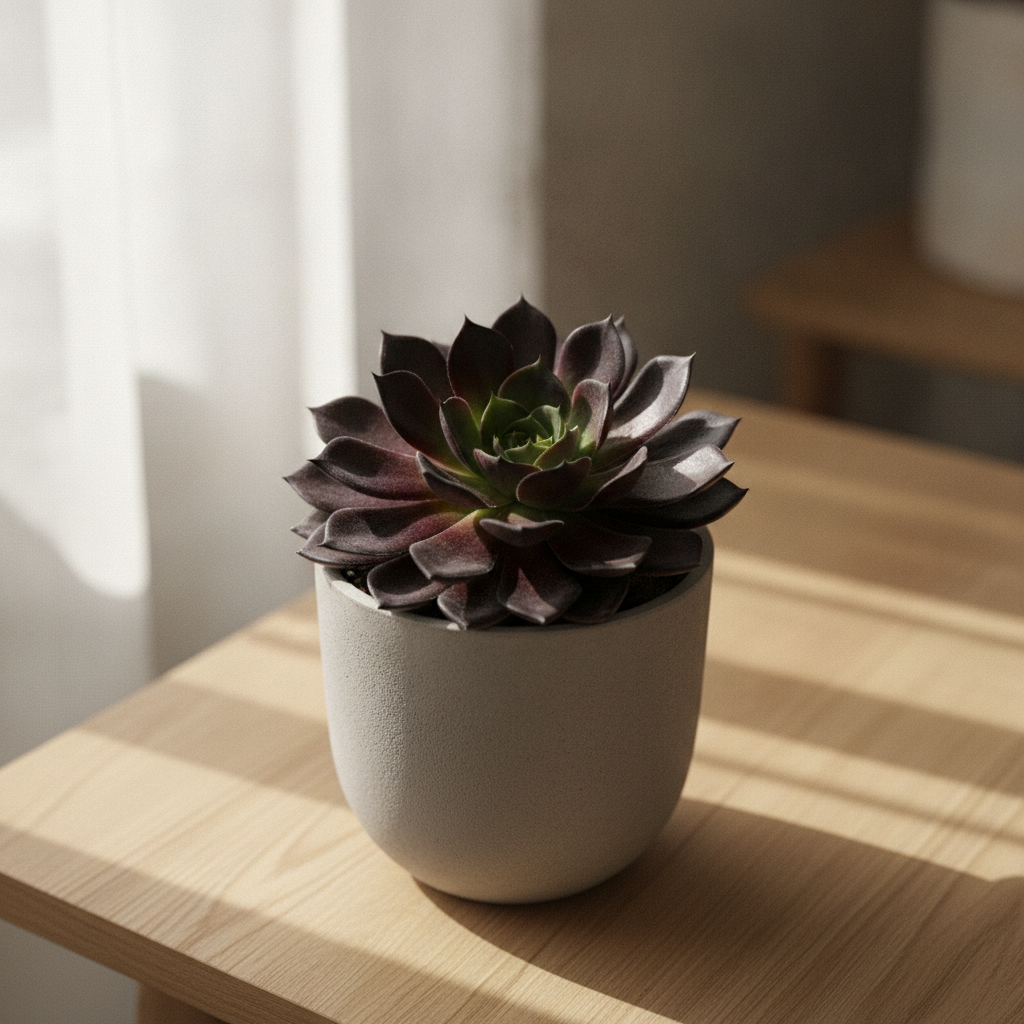
Few houseplants trade on colour quite as boldly as the Black Prince echeveria. Where most succulents lean into cheerful blue-green or powdery pastel, this compact rosette does the opposite, deepening to a smoky chocolate-maroon so dark it reads as black across a room. It is a hybrid selection of Echeveria raised for that drama, and it rewards a grower who understands one simple truth: the colour is a response to light and stress, not a fixed trait. Give it what it wants and the rosette tightens into a near-black star; deprive it and it drifts back to ordinary green. This guide covers everything needed to keep Echeveria ‘Black Prince’ not merely alive but genuinely thriving, indoors or on a bright sill.
- Quick Reference
- Why Grow the Black Prince Echeveria
- Light
- Watering
- Soil and Potting
- Fertilising
- Propagation
- Pests and Problems
- Varieties and Relatives
- Frequently Asked Questions
Quick Reference
| Botanical name | Echeveria ‘Black Prince’ (a hybrid of Echeveria affinis and Echeveria shaviana) |
| Common names | Black Prince echeveria, black hens and chicks |
| Light | Bright direct light, four to six hours of sun; the dark colour fades in shade |
| Watering | Soak thoroughly, then let the soil dry out completely; roughly every 10 to 14 days in growth |
| Soil | Fast-draining gritty mix, about half mineral grit to half potting compost |
| Temperature | Ideal 18 to 27°C (64 to 81°F); protect below 5°C (41°F) |
| Humidity | Low; average dry room air is ideal |
| Feeding | Dilute succulent feed once monthly in spring and summer |
| Mature size | Rosette 10 to 15 cm (4 to 6 in) across, clumping over time |
| Toxicity | Considered non-toxic to cats and dogs |
| Difficulty | Easy, provided light and drainage are right |
Why Grow the Black Prince Echeveria
The Black Prince is one of the best known of the dark hybrid echeverias, bred in the mid twentieth century by the plantsman Frank Reinelt by crossing Echeveria affinis, itself a naturally dark Mexican species, with the frilly-leaved Echeveria shaviana. The result is a tight, symmetrical rosette of pointed, triangular leaves that emerge green at the centre and mature to a deep oxblood that verges on black at the tips. In strong light and cool nights the whole plant can look almost lacquered, a colour that sets it apart from nearly everything else on a succulent shelf.
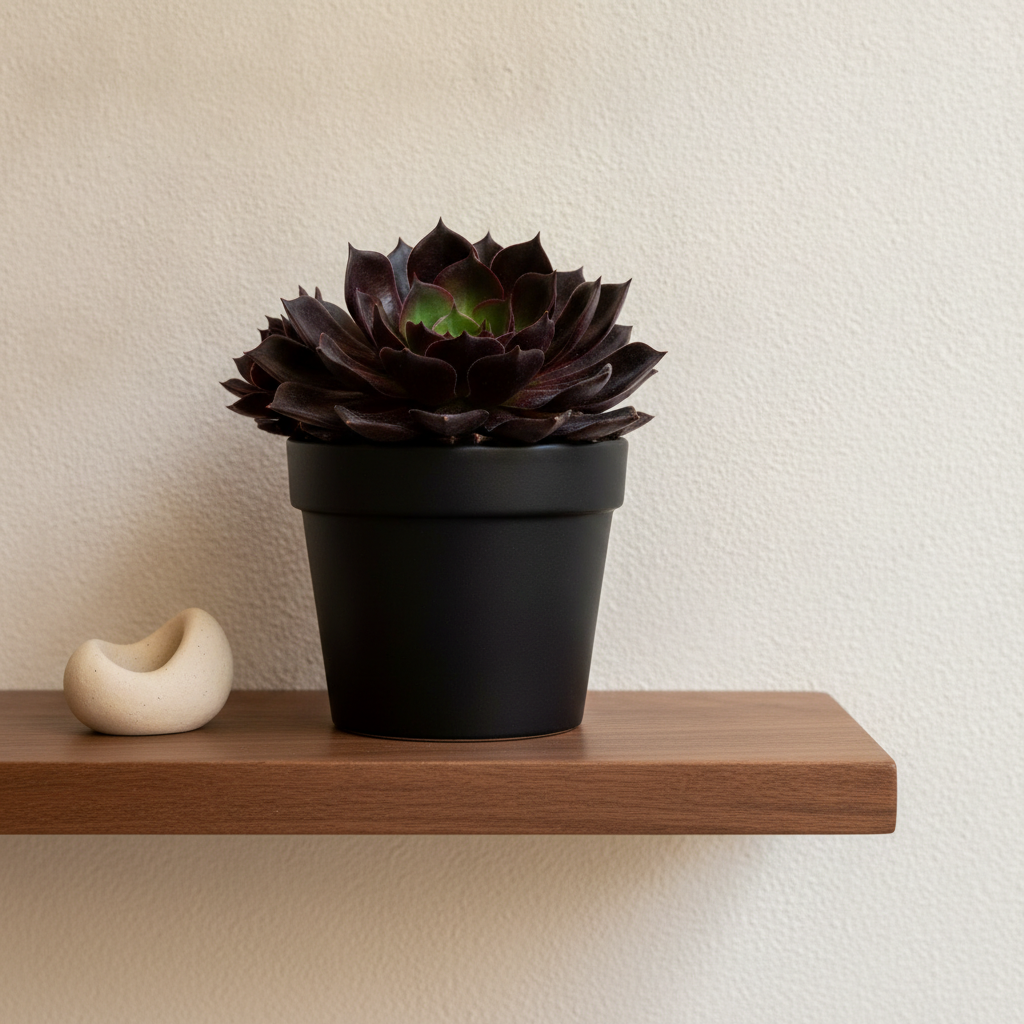
Beyond looks, the plant earns its keep by being genuinely forgiving. Like most echeverias it stores water in its fleshy leaves, so it tolerates the forgetful and the busy far better than a fern or a calathea would. It stays small, rarely exceeding 15 cm (6 in) across, which makes it ideal for windowsills, desks and grouped succulent arrangements where floor space is scarce. Mature plants slowly offset, producing miniature rosettes around the base that can be lifted and grown on, so a single specimen becomes a small colony over a few years. In autumn and early winter a well-grown plant sends up an arching flower stalk lined with bell-shaped coral-red blooms, an unexpected flush of warm colour against the dark foliage.
The distinction worth keeping in mind throughout this guide is the one between surviving and thriving. A Black Prince will survive in a moderately lit room with occasional water, but it will be green, loose and a little sad. To thrive, and to earn the dark colour that is the whole point of the plant, it needs the three things it evolved for: intense light, sharp drainage and a proper dry spell between waterings. Everything below is really an elaboration of those three ideas.
Light
Light is the single most important factor for this plant, because light is what produces the colour. The dark pigment is a protective response to strong sun, so the more direct light the rosette receives, the deeper and blacker it becomes. Grown in genuinely bright conditions with several hours of direct sun each day, the leaves flush to their signature near-black with a fine matte finish. Grown in shade or too far back from a window, the same plant reverts to a flat mid-green, loses its tight form and begins to stretch.
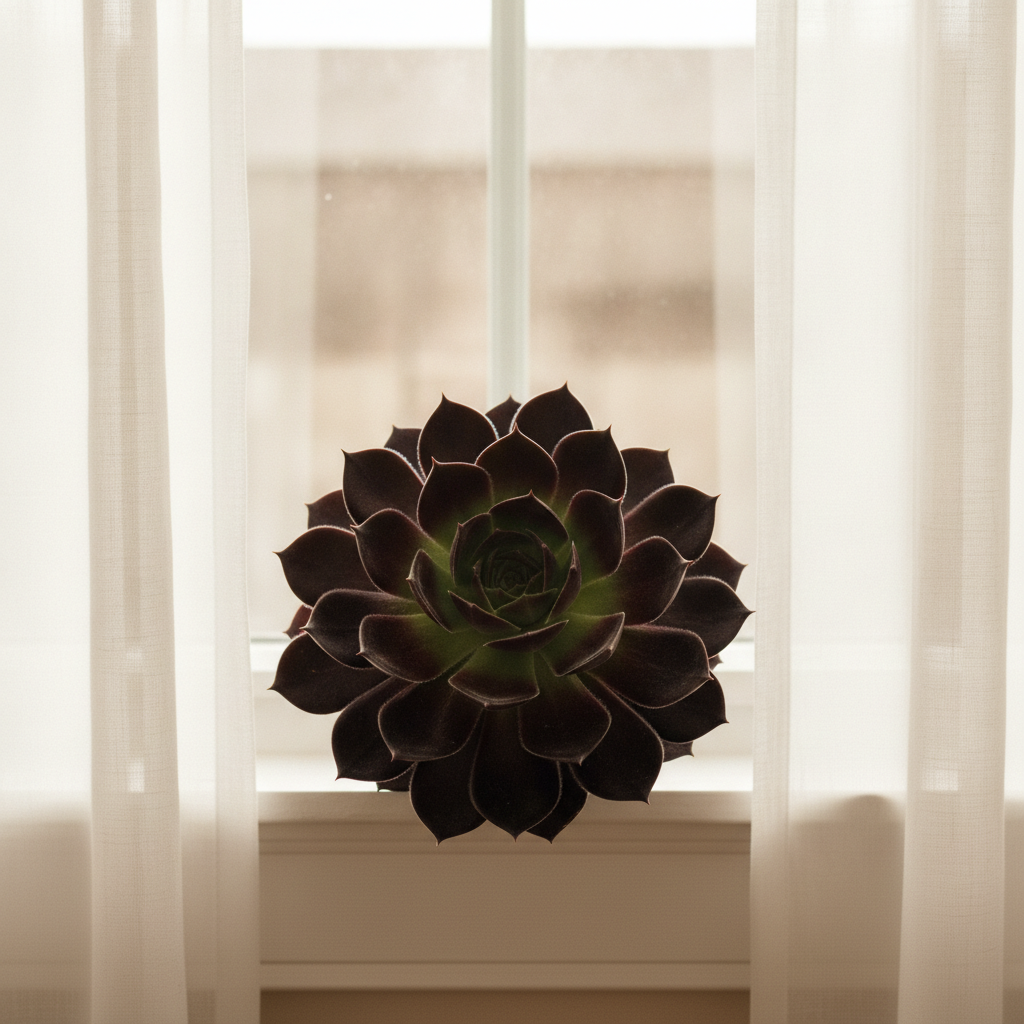
Indoors, aim for the brightest window in the home. A south-facing sill in the northern hemisphere is ideal, giving four to six hours of direct sun; an east or west window can work if the plant sits right against the glass. North windows are almost never bright enough to keep the colour, and a plant there will slowly green up and elongate no matter how well it is watered. If natural light is limited, a full-spectrum LED grow light positioned 20 to 30 cm (8 to 12 in) above the rosette for 10 to 12 hours a day is an effective substitute and will hold the dark tone through winter.
The clearest warning sign of insufficient light is etiolation, where the central stem lengthens, the leaves space out and point upward, and the rosette loses its neat geometry. This is permanent for the stretched section; the plant cannot un-stretch, though it can be beheaded and restarted (see propagation). If moving a plant from a dim spot into full sun, do it gradually over a week or two, as a shaded rosette suddenly exposed to midday summer glare can scorch, leaving pale bleached or brown patches on the upper leaf surfaces.
Pro Tip — Chasing the black: The darkest colour comes from a combination of strong light and a slight cool-night stress. Plants grown outdoors in autumn, with warm sunny days and cool nights, often reach the deepest, most theatrical black. A little controlled stress is exactly what this cultivar is bred to show.
Watering
The Black Prince stores water in its leaves and evolved in a climate of infrequent, heavy rain followed by long dry spells, so the goal is to mimic that rhythm rather than to keep the soil evenly moist. The reliable method is the soak and dry approach: water thoroughly until it runs from the drainage holes, then withhold water entirely until the soil has dried out completely to the bottom of the pot. Only then does it get watered again. In practice, during the active spring and summer growth this tends to mean a drink every 10 to 14 days, but the calendar is less important than the actual dryness of the soil, which shifts with pot size, light and season.
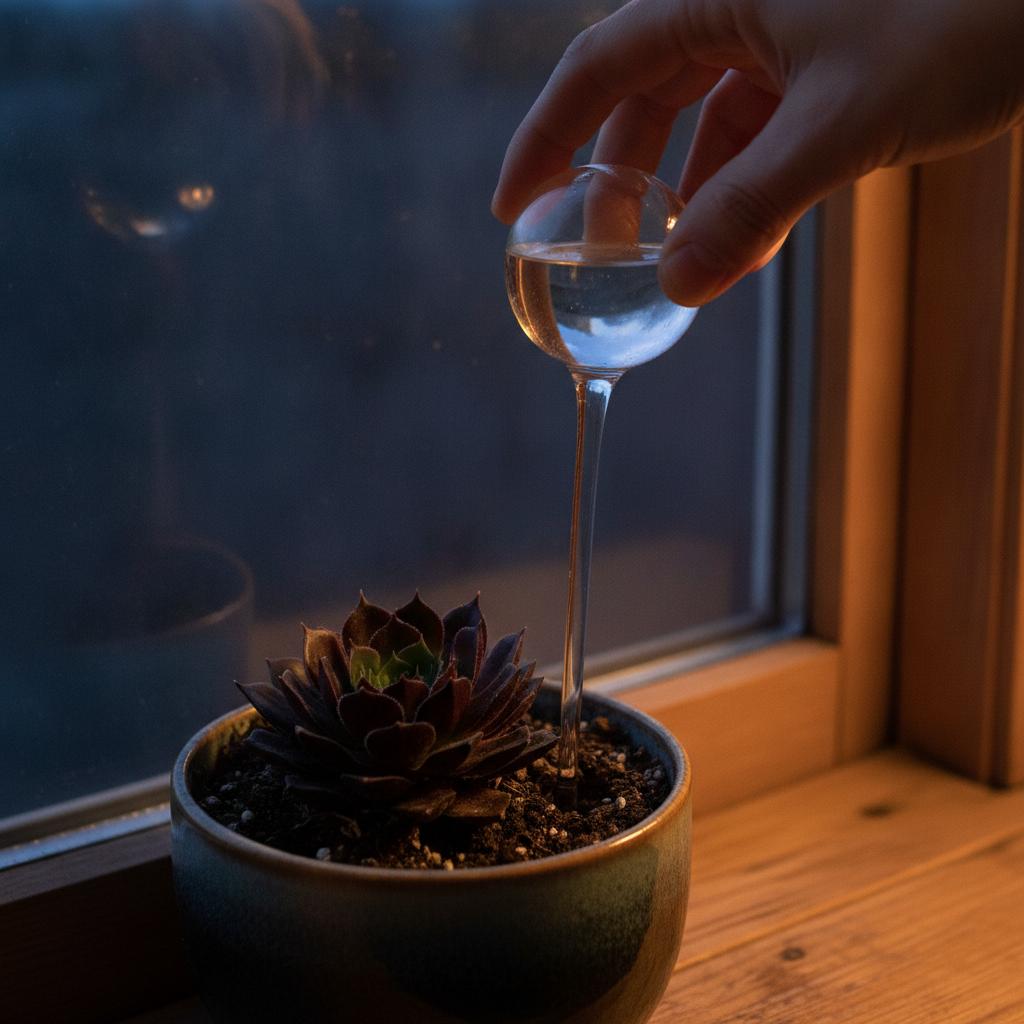
How you deliver the water matters as much as how often. Aim the flow at the soil surface, not over the top of the plant, because water pooling in the tight central rosette can sit against the crown and trigger rot, especially in cool or dim conditions where it evaporates slowly. Bottom watering, where the pot is stood in a shallow tray of water for 10 to 15 minutes to draw moisture up through the drainage holes, is an excellent way to keep the crown dry while still soaking the roots. Whichever method you use, always tip away any water left standing in the saucer afterwards.
In autumn and winter, growth slows and water needs fall away sharply. Reduce watering to roughly once every three to four weeks, or just enough to stop the lower leaves shrivelling. Overwatering is by a wide margin the most common way to kill this plant. The early signs are translucent, yellowing or mushy lower leaves and a soft, blackened base; caught early, the fix is simply to stop watering and let everything dry out. A plant that is thirsty, by contrast, shows firm but slightly wrinkled and softening leaves that plump up again within a day of a drink, which is a far safer state to err toward.
Warning — When in doubt, wait: A succulent recovers from underwatering in hours but rarely recovers from rot. If you are unsure whether it is time to water, wait another few days. Dry stress is cosmetic and reversible; root rot is usually fatal.
Soil and Potting
Drainage is everything for a succulent, and the Black Prince is no exception. Its roots need air as much as water, and a dense, moisture-retentive compost that stays wet for days will suffocate and rot them. The aim is a gritty, open mix that holds a little moisture but drains fast and dries quickly. A reliable recipe is roughly half mineral grit, such as perlite, pumice or coarse horticultural sand, to half a standard peat-free potting compost. A dedicated cactus and succulent compost is a fine base, though most bagged versions still benefit from an extra handful or two of perlite or pumice to open them up further.
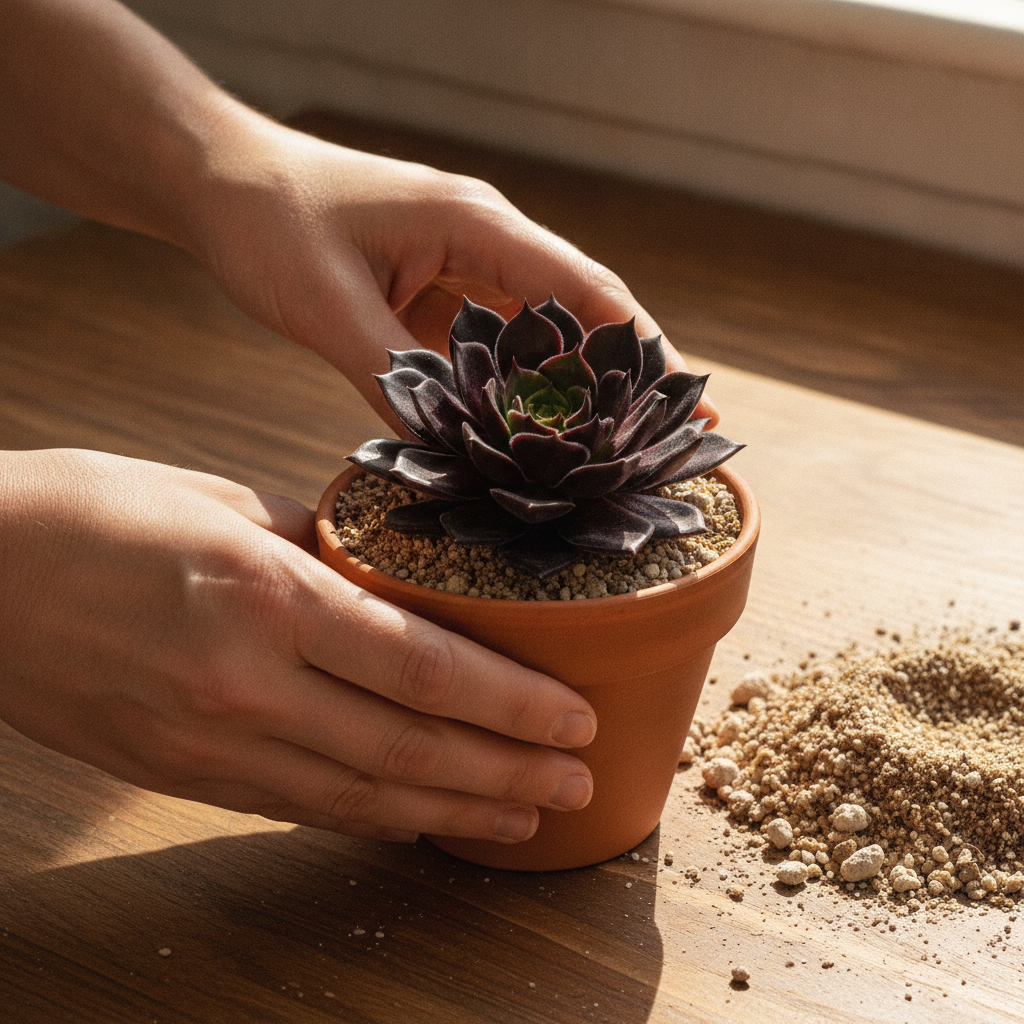
The pot is part of the drainage system. A drainage hole is non-negotiable; decorative pots without one are a common cause of quiet root rot. Terracotta is particularly well suited to this plant because the porous clay wicks moisture out of the soil and lets it dry faster, buying a margin of safety against overwatering. Choose a pot only slightly larger than the rosette, as an oversized pot holds a large volume of damp soil the small root system cannot use, and that lingering moisture invites rot.
Repot every two to three years, or when the plant has clearly outgrown its container or filled it with offsets. Spring, at the start of the growing season, is the best time. Let the soil dry first, ease the plant out, gently tease away the old compost from the roots, and settle it into fresh gritty mix at the same depth it grew before. Resist the urge to water straight away; waiting three to seven days after repotting lets any roots damaged in the move callus over, which greatly reduces the chance of rot taking hold in the fresh, moist soil.
Fertilising
The Black Prince is a light feeder, adapted to the poor, mineral soils of its native range, so it needs far less feeding than a leafy tropical houseplant. Too much fertiliser produces soft, elongated, pale growth that loses the compact form and dark colour the plant is grown for, so restraint is the rule. During the active growing months of spring and summer, a feed roughly once a month is plenty. Use a fertiliser formulated for cacti and succulents, which is lower in nitrogen, or a balanced general houseplant feed diluted to half or even quarter of the recommended strength.
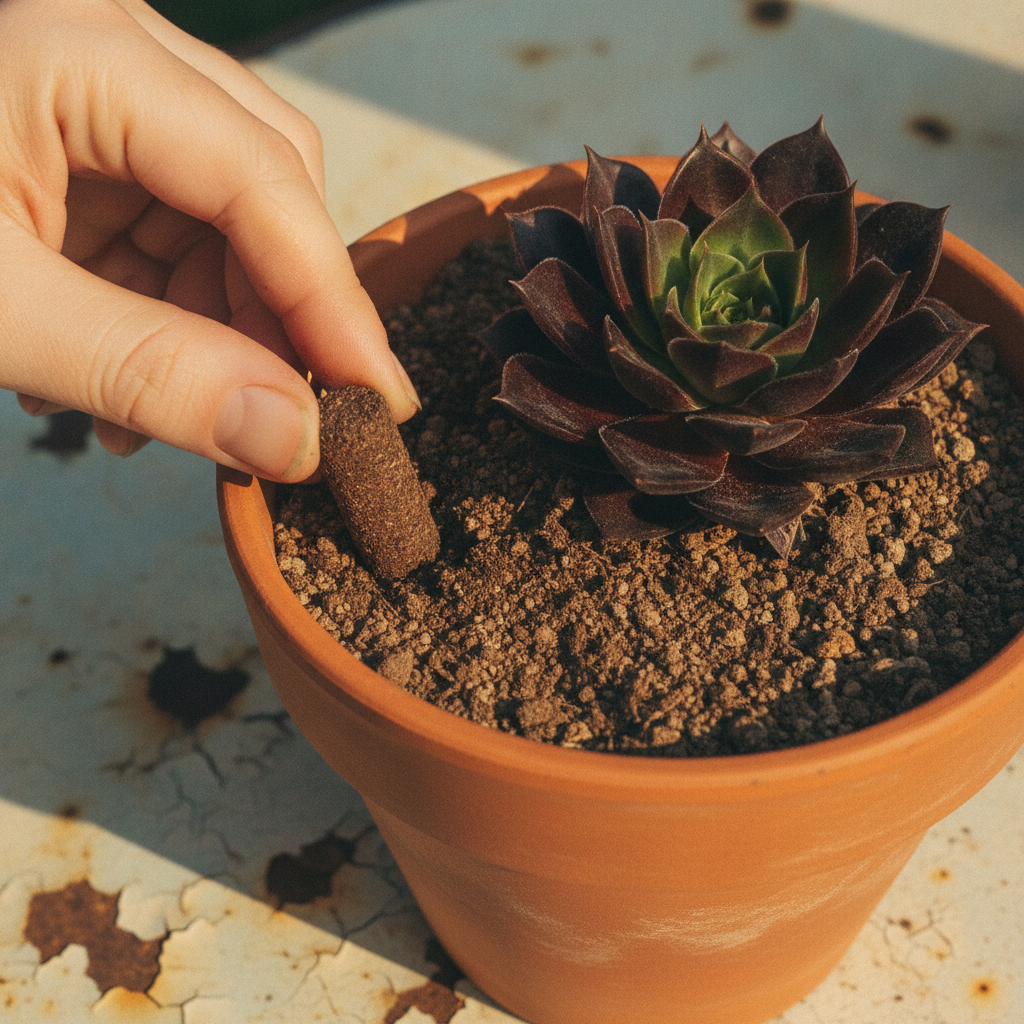
Always apply feed to soil that is already slightly moist rather than bone dry, as concentrated fertiliser drawn into completely dry soil can scorch the fine roots. The simplest routine is to dilute the feed into the watering can and deliver it as part of a normal watering, so nutrients and moisture arrive together. Stop feeding entirely in autumn and winter, when the plant is resting; pushing fertiliser at a dormant plant only encourages weak, stretched growth that will not colour up and is prone to rot in the low light of the cold months. A plant in fresh compost has enough residual nutrients to skip feeding altogether for its first season after repotting.
Propagation
The Black Prince is straightforward to propagate, and there are three dependable routes: separating offsets, taking leaf cuttings, and beheading a stretched plant. Offsets, the small daughter rosettes that appear around the base of a mature plant, are the quickest and most reliable, since they are already miniature plants with their own emerging roots.
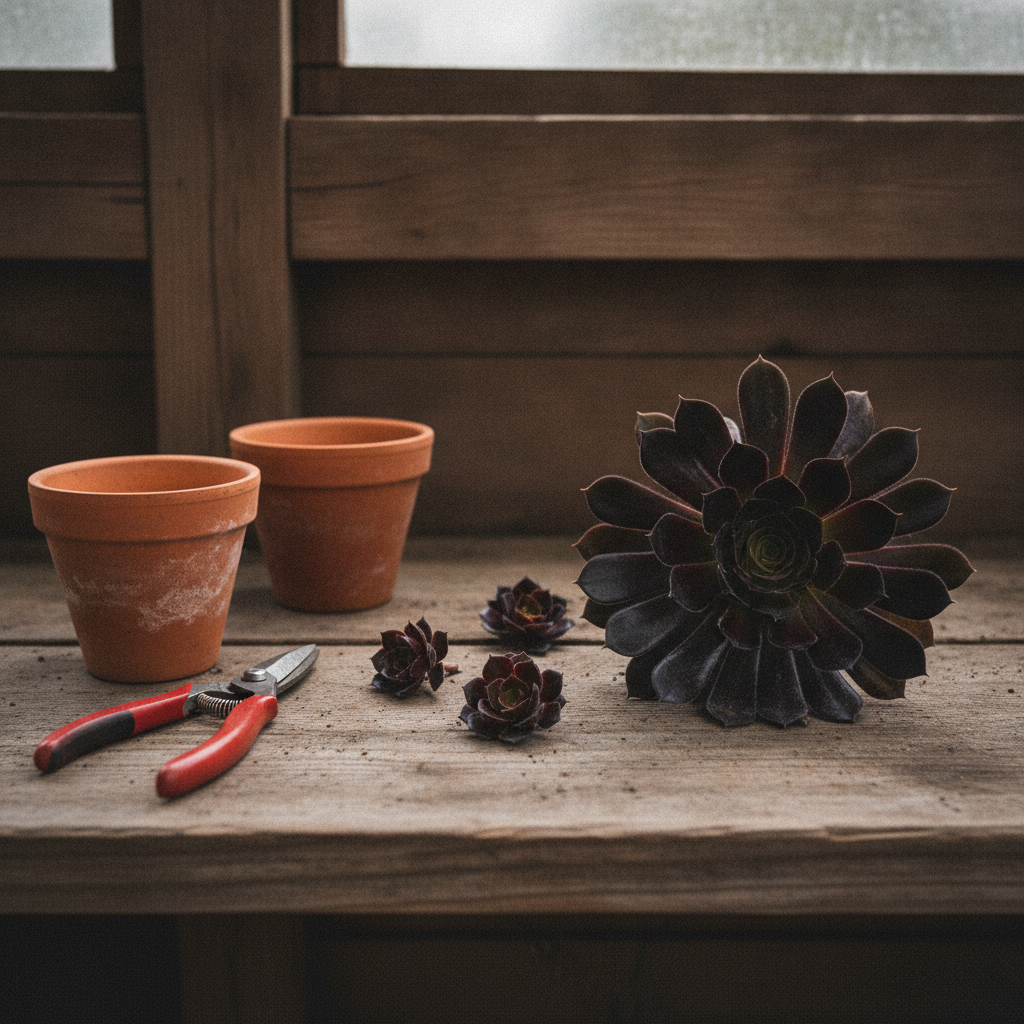
To divide offsets, gently pull or cut a pup away from the mother plant, keeping as much of its own root as possible, then leave it in a dry, shaded spot for a day or two so the wound calluses before potting it into gritty mix. To take a leaf cutting, remove a healthy lower leaf with a gentle sideways twist so the whole leaf comes away cleanly at the stem, then set it aside to callus. Beheading is the answer for a stretched, etiolated plant: cut the rosette off cleanly on its stem, let the cut end callus for several days, and root it as a cutting, while the remaining stump will often sprout new offsets from its base.
The steps for a leaf or beheaded cutting are much the same:
- Let the cutting or leaf callus in a dry, shaded place for three to seven days until the cut end is dry and sealed.
- Lay leaves on top of, or set rosette cuttings just resting on, a tray of barely moist gritty mix or perlite.
- Keep them in bright indirect light, out of scorching direct sun, and mist the surface lightly every few days rather than soaking it.
- Within a few weeks, roots and, for leaves, a tiny new rosette appear at the base; once rooted, pot up and begin normal care.
- Allow the original leaf to wither away naturally, as the baby plant draws on it until it is spent.
Patience is the main requirement. Leaf propagation in particular can take several weeks to show roots and many months to reach a decent size, and not every leaf takes, so it is worth starting more than you need. Warmth and bright light speed the process; cold, damp conditions stall it and encourage the cuttings to rot instead.
Pests and Problems
A healthy, well-lit Black Prince is not especially troubled by pests, but a few opportunists turn up on stressed or overwatered plants. Mealybugs are the most persistent: small, white, cottony insects that hide deep in the tight central rosette and in the crevices between leaves, where they suck sap and weaken the plant. Because the leaves pack so closely, they are easy to miss until a colony is established, so it pays to inspect the crown regularly. The reliable spot treatment is a cotton bud dipped in isopropyl alcohol, dabbed directly onto each insect, repeated every few days until they are gone.
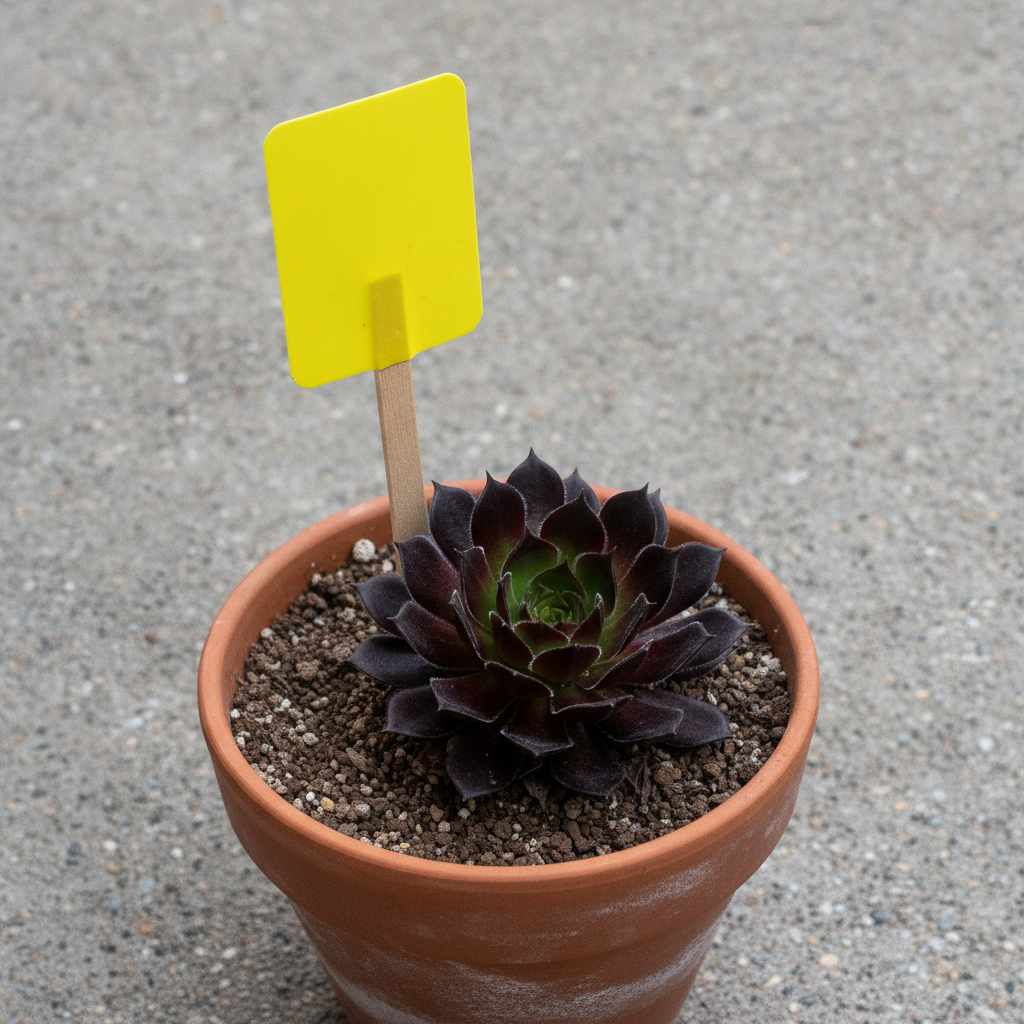
Fungus gnats, small dark flies drifting around the pot, are less a pest of the plant than a symptom of overwatering, since their larvae live in persistently damp soil. Letting the mix dry out fully between waterings usually breaks their cycle, and a yellow sticky trap catches the adults while the soil dries. Aphids sometimes cluster on the tender flower stalks in autumn and can be rinsed off or wiped away. In cool, damp, still air, watch also for grey mould or leaf spots, which are best prevented with good airflow and a dry crown.
The most serious problem, though, is not an insect at all but root and stem rot from overwatering, and it accounts for the great majority of lost plants. A base that turns soft, brown or black, and lower leaves that go translucent and mushy, are the signs. If caught early, cut away all the rot, let the healthy remaining tissue callus, and re-root it as a cutting, treating the episode as an unplanned propagation. One further cosmetic point specific to this cultivar: the leaves carry a delicate matte bloom, and rubbing or handling them leaves permanent fingerprints or shiny marks, so it is best to move the plant by its pot and resist the urge to polish the foliage.
Varieties and Relatives
The Black Prince belongs to a small family of dark echeverias, several of which are close enough in appearance to be confused for one another. Two are worth knowing, both because they are commonly sold alongside it and because comparing them helps pin down what makes the Black Prince itself distinctive.
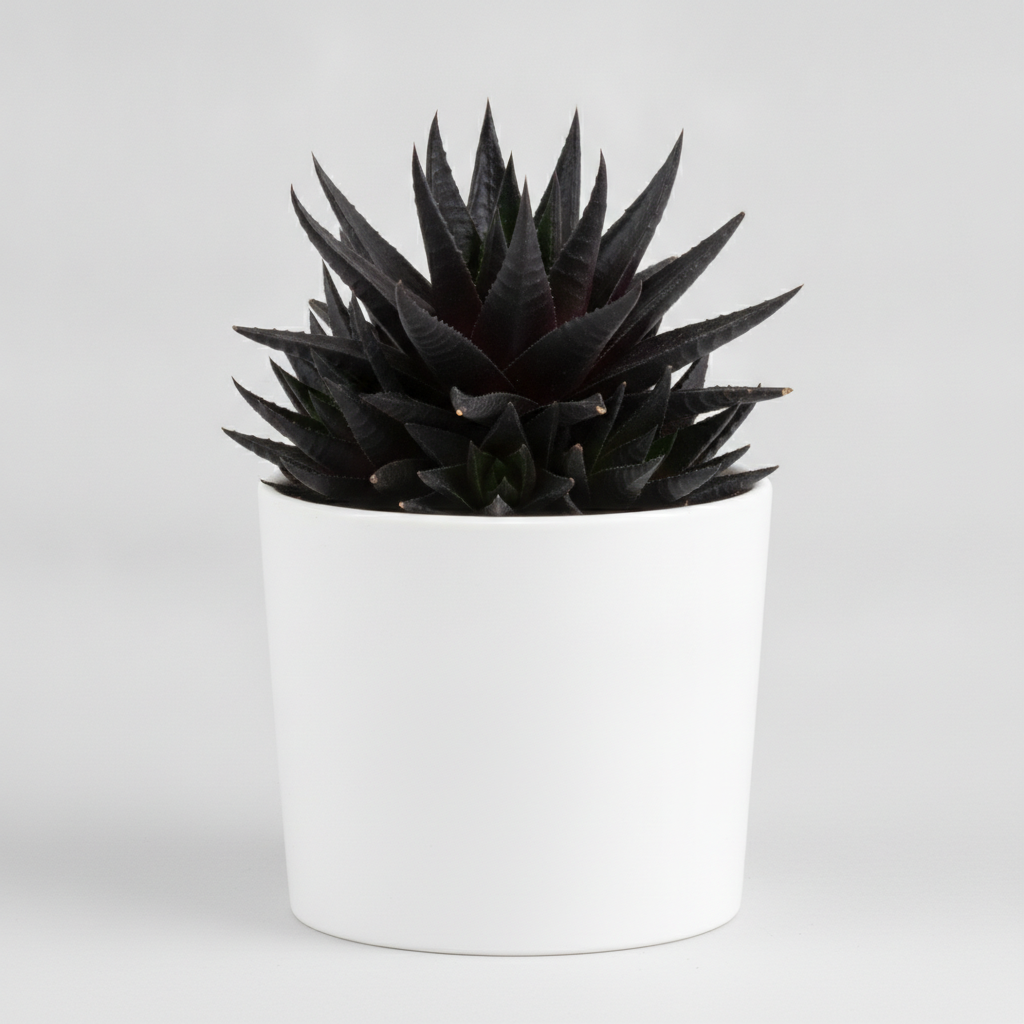
Echeveria ‘Black Knight’ is the Black Prince’s darker, more slender sibling. Its leaves are narrower, longer and more sharply pointed, and the rosette often holds an even deeper, more consistent black. The two are frequently mislabelled for each other in shops; the giveaway is leaf shape, with ‘Black Knight’ spikier and ‘Black Prince’ broader and more triangular. Care is identical.
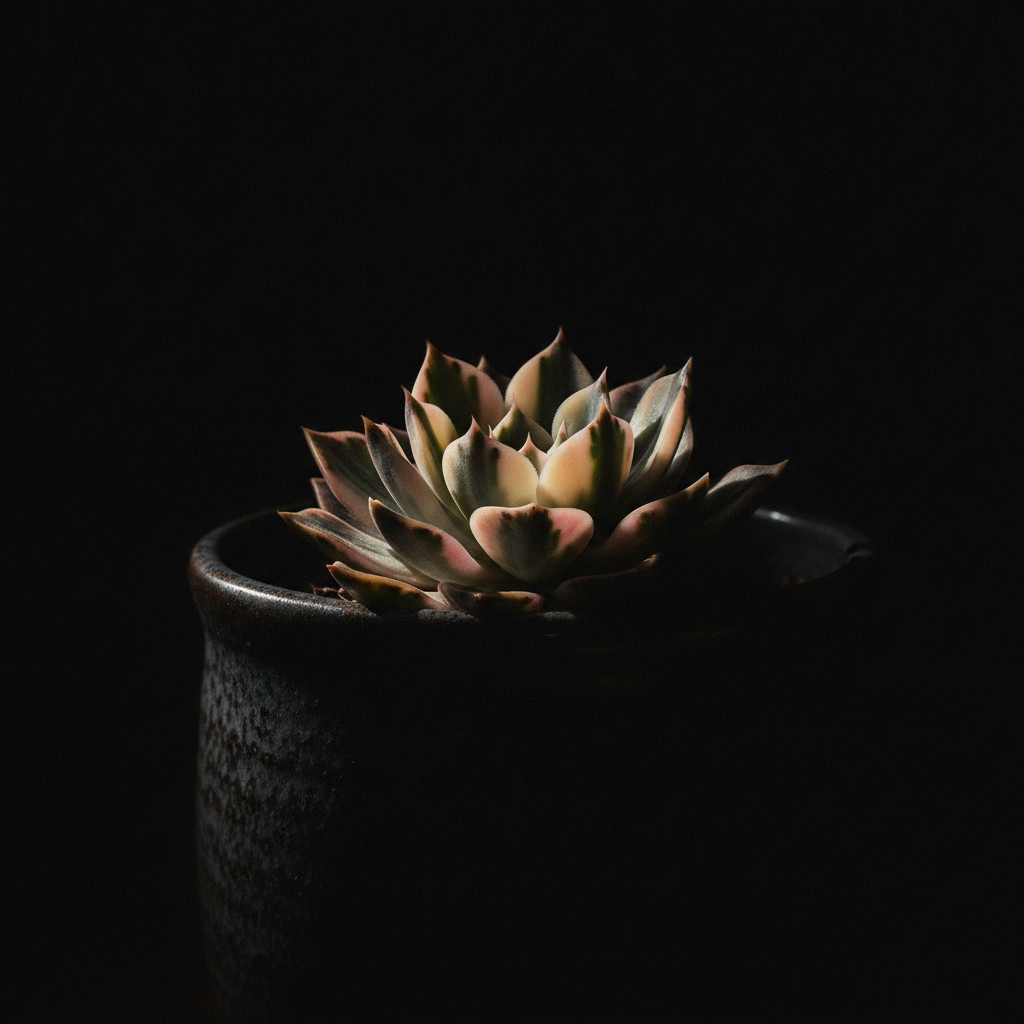
Echeveria ‘Bess Bates’ is a variegated sport of the Black Prince, carrying the same dark base leaf irregularly streaked and marbled with cream, pink and pale green. The variegation makes it slower growing and a touch more light-hungry, since the pale tissue photosynthesises less, but it is otherwise grown exactly like its parent. It is prized by collectors and correspondingly harder to find.
Other dark echeverias sold under names such as ‘Black Knight’, ‘Onyx’ and ‘Romeo’ overlap in look and, more usefully for the grower, in care. Whatever the label, the same rules apply: intense light for colour, gritty soil for drainage, and a hard dry spell between waterings.
Frequently Asked Questions
Why is my Black Prince turning green instead of black?
Almost always this is a lack of light. The dark pigment is a response to strong sun, so a plant in a dim spot or set back from the window reverts to green and starts to stretch. Move it to the brightest window available, or add a grow light, and the colour will slowly deepen again as new growth comes in.
How often should I water it?
Water only when the soil has dried out completely, which in bright, warm conditions tends to be every 10 to 14 days in spring and summer and far less, perhaps once every three to four weeks, in winter. Judge by the dryness of the soil rather than the calendar, and when unsure, wait.
Is the Black Prince echeveria toxic to cats and dogs?
Echeveria are generally regarded as non-toxic to cats and dogs, so the Black Prince is one of the safer succulents to keep around pets. Even so, no plant is truly meant to be eaten, and a curious animal chewing on the fleshy leaves may get a mild stomach upset, so it is still best kept out of reach.
Why are the lower leaves shrivelling and dropping?
A few older leaves drying up at the very bottom of the rosette is normal ageing and nothing to worry about. If many leaves are going soft, translucent or mushy, that points to overwatering and possible rot, so ease off watering. If they are thin, wrinkled and papery, the plant is simply thirsty and a good soak will plump it back up.
My plant has stretched out and looks leggy. Can I fix it?
Stretching, or etiolation, is caused by too little light and cannot be reversed on the existing growth. The remedy is to behead the rosette, let the cut end callus for a few days, and re-root it as a cutting in a much brighter spot; the leftover stem will often push out fresh offsets. Give the new plant strong light from the start so it grows compact.
Does it flower, and what should I do with the bloom?
Mature plants send up an arching stalk of coral-red bell-shaped flowers, usually in autumn or early winter. The blooms are harmless and attractive, so enjoy them; once the stalk has finished and dried out, simply cut it away at the base. Flowering takes some energy, so a light feed after blooming helps the plant recover.






