
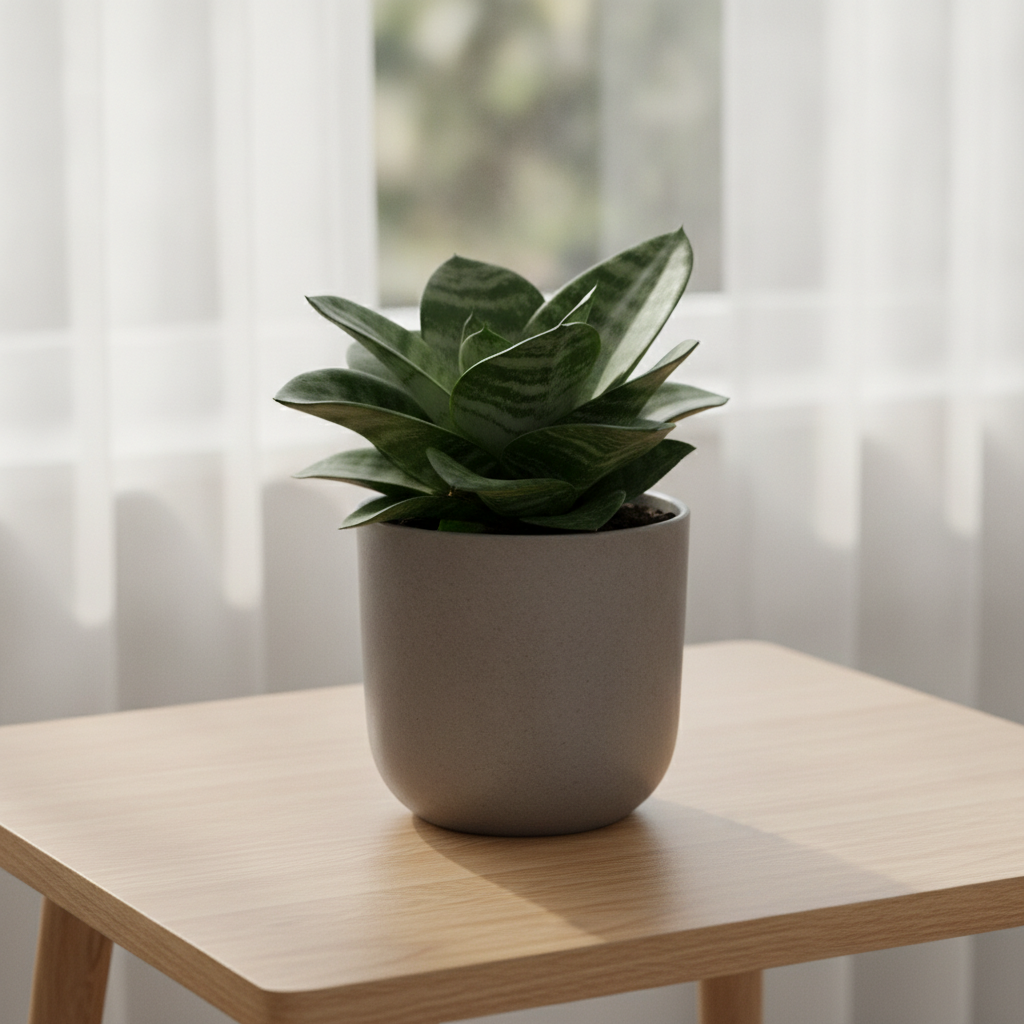
Where most snake plants reach skyward with tall, sword-shaped blades, the Bird’s Nest Snake Plant does the opposite and gathers itself into a tight, funnel-shaped rosette that sits low and neat like a green bird’s nest. This dwarf cultivar, botanically Dracaena trifasciata ‘Hahnii’ and still widely sold under its former name Sansevieria trifasciata ‘Hahnii’, packs all the toughness of a full-size snake plant into a plant that rarely exceeds 15 to 20 centimetres (6 to 8 inches) tall. It was selected in the United States around 1939 and patented under the name Hahnii, and it has been a windowsill and desktop favourite ever since. The parent species hails from the rocky, seasonally dry regions of tropical West Africa, which explains the plant’s succulent, drought-hardy constitution.
The Bird’s Nest Snake Plant has a well-earned reputation as one of the most forgiving houseplants you can own, and it is genuinely difficult to kill through neglect. That said, there is a meaningful gap between a plant that merely survives in a dim corner and one that thrives, tightens into a dense rosette, and colours up beautifully. This guide walks through everything that separates the two: the light that brings out its markings, a watering rhythm that keeps root rot at bay, the gritty soil it prefers, when and how to feed it, two reliable ways to propagate it, and the handful of pests and problems worth watching for.
Contents
- Quick Reference
- Why the Bird’s Nest Snake Plant Makes a Great Houseplant
- Light Requirements
- Watering & Humidity
- Soil, Potting & Repotting
- Fertilising
- Propagation
- Pests & Diseases
- Popular Varieties
- Frequently Asked Questions
Quick Reference: Bird’s Nest Snake Plant at a Glance
| Light | Tolerates low light, thrives in bright indirect light; some gentle direct sun is fine |
| Watering | Sparingly. Let the soil dry out completely, roughly every 2 to 3 weeks, less in winter |
| Temperature | 18 to 27 degrees Celsius (65 to 80 degrees Fahrenheit); keep above 10 degrees Celsius (50 degrees Fahrenheit) |
| Humidity | Undemanding. Ordinary household humidity of 30 to 50 percent is ample |
| Fertiliser | Light feeder. A dilute cactus or general feed once or twice across spring and summer |
| Toxicity | Mildly toxic to cats and dogs if eaten, due to saponins |
Why the Bird’s Nest Snake Plant Makes a Great Houseplant
The strongest argument for this plant is its combination of resilience and small footprint. A full-size snake plant can throw leaves a metre (around 3 feet) tall and quickly dominate a corner, but the Hahnii stays compact and rosette-forming, making it one of the few genuinely tough plants that fits comfortably on a desk, a bathroom shelf, a bookshelf, or a crowded windowsill. It asks for almost nothing: no misting, no fussing over humidity, no rigid watering schedule. For beginners, forgetful owners, students in dorm rooms, and offices with unreliable care, it is close to ideal.
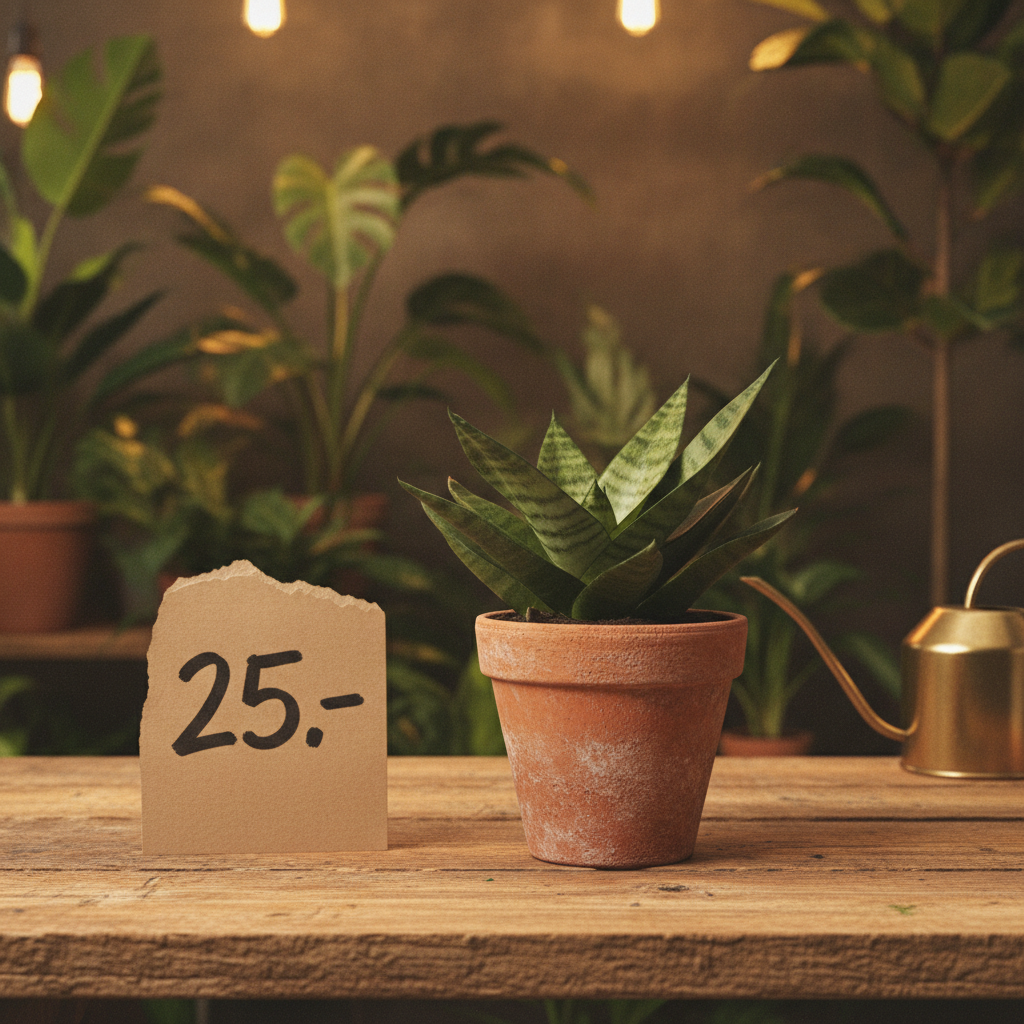
Beyond toughness, the plant earns its keep aesthetically and practically. The banded, sculptural rosette has an architectural quality that suits both minimal and busy interiors, and cultivars such as ‘Golden Hahnii’ and ‘Silver Hahnii’ add colour without needing extra care. Like all snake plants, it uses Crassulacean acid metabolism, a water-thrifty form of photosynthesis that lets it open its pores at night, and it continues quietly releasing a little oxygen after dark, which is part of why it has a reputation as a good bedroom plant. It is also slow-growing enough that it seldom needs repotting, so once settled it can be left almost entirely alone.
Important — Toxicity: The Bird’s Nest Snake Plant contains saponins that are mildly toxic to cats and dogs if chewed or swallowed, and can cause drooling, nausea, vomiting, and diarrhoea. It is also mildly irritating to people if ingested. Keep it out of reach of pets that like to nibble, and wash your hands after handling cut leaves.
Light Requirements
The Bird’s Nest Snake Plant is famous for tolerating low light, and that reputation is deserved, but tolerance and preference are not the same thing. In a dim corner it will hang on for months without complaint, yet its growth slows to a crawl, the rosette loosens and stretches, and the colour on variegated forms fades. Give it bright, indirect light and it responds by staying tight and compact, holding its markings, and pushing out new leaves at a respectable pace for a slow grower.
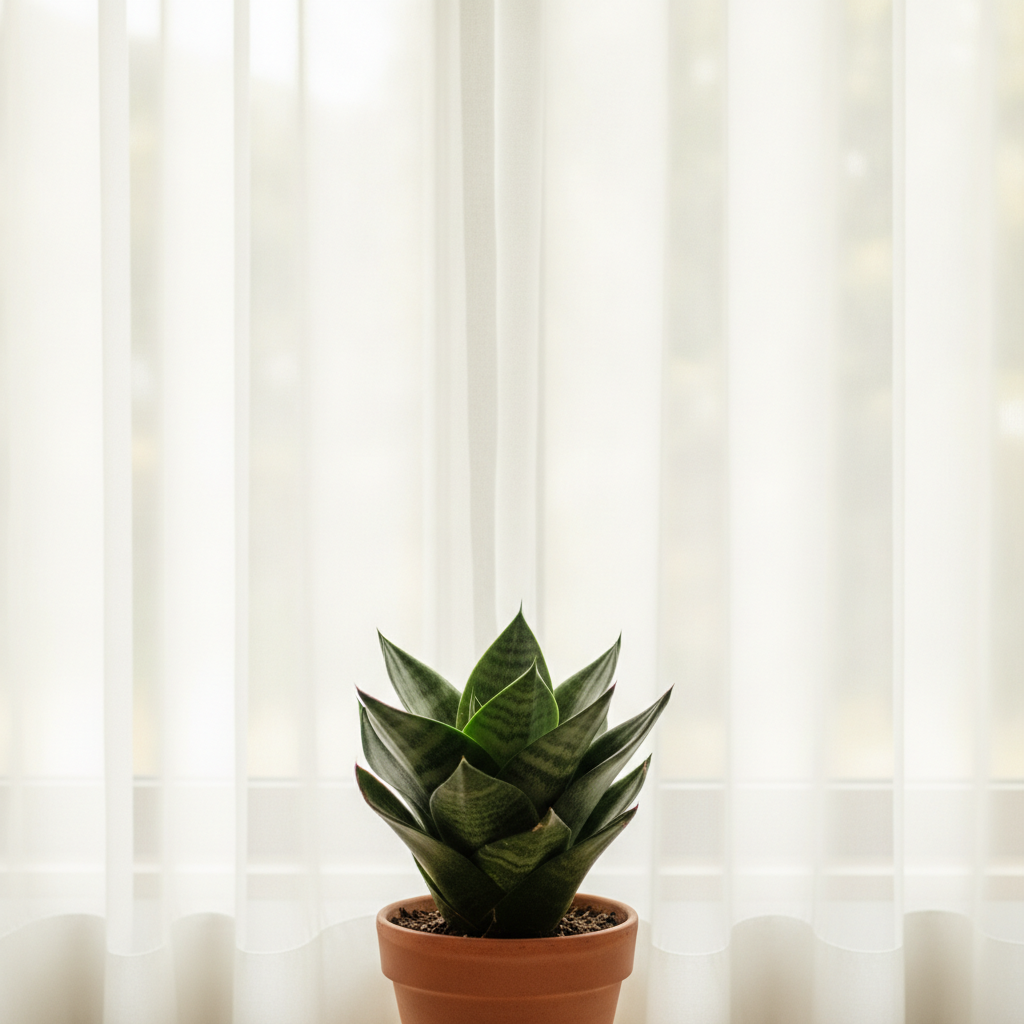
The ideal position is a spot that receives plenty of ambient brightness with a few hours of gentle, filtered sun, such as near an east-facing window or set back a little from a brighter south or west aspect. Unlike many houseplants, this species handles some direct sun well once acclimatised, so a sunny sill is not off limits, but harsh midday summer sun through glass can scorch the leaves if the plant has not been eased into it.
Light Levels Explained
The table below translates the usual houseplant light categories into what they mean for a Bird’s Nest Snake Plant specifically, so you can match a category to the reality of your rooms.
| Light Category | Approx. Level | Typical Location | Outcome |
|---|---|---|---|
| Direct sun | Over 20,000 lux | On a south or west sill against the glass | Fine once acclimatised; risk of scorch if sudden |
| Bright indirect | 10,000 to 20,000 lux | Near an east window, or set back from a bright sill | Best: compact rosette, strong colour, steady growth |
| Medium | 5,000 to 10,000 lux | A metre or two from a bright window | Good; slightly slower growth |
| Low | 1,000 to 5,000 lux | Interior wall, dim hallway, north corner | Survives; slow growth, looser habit, faded colour |
| Very low | Under 1,000 lux | Windowless room with only artificial light | Long-term decline unless supplemented with a grow light |
Window Orientation and Placement
South-facing window: The brightest position in the northern hemisphere and perfectly usable, but ease the plant into it. A sheer curtain or a placement a short distance back from the glass tempers the fiercest summer rays while still giving excellent light.
East-facing window: Arguably the sweet spot. Soft morning sun followed by bright ambient light for the rest of the day suits the plant well and rarely causes scorch.
West-facing window: Good, with strong afternoon light. Acclimatise gradually and pull the plant back slightly in high summer to avoid the hottest direct sun on the leaves.
North-facing window: The dimmest aspect, and the plant will cope here better than almost any other, though growth will be slow and variegated forms may lose definition. A north sill is preferable to an interior corner.
Pro Tip — Rotate for an Even Rosette: Because the plant grows as a low rosette, the leaves nearest the light source can lean and crowd that side. Give the pot a quarter turn every week or two so the funnel stays symmetrical and open rather than lopsided.
How Light Affects Leaf Colour and Form
Light is the single biggest lever you have over how this plant looks. In good bright indirect light, the dark green cross-banding stays crisp, and cultivars like ‘Golden Hahnii’ hold wide, buttery-yellow margins while ‘Silver Hahnii’ keeps its pale, frosted sheen. Move the same plant into low light and the story changes: the yellow edges narrow and green over, the silvery tones dull, and the whole rosette elongates and opens up as the leaves reach for brightness. If your plant looks leggy or washed out, the fix is almost always more light.
Warning — Direct Sunlight: A plant moved abruptly from a shady spot into strong, unfiltered sun can develop pale, bleached, or brown scorch patches that do not recover. Always acclimatise over a week or two, shifting it progressively closer to the light rather than all at once.
Artificial Lighting
The Bird’s Nest Snake Plant grows happily under artificial light, which makes it a natural choice for windowless offices and interior rooms. A standard LED grow light running for 10 to 12 hours a day, positioned 30 to 45 centimetres (12 to 18 inches) above the plant, provides more than enough energy to keep it compact and coloured. Even ordinary bright office lighting left on through the working day will sustain it, though growth will be slower than under a dedicated grow light.
Seasonal Adjustments
Light levels indoors fall sharply in winter as the sun sits lower and days shorten. It is worth moving the plant closer to a window for the darker months, or shifting it to a brighter aspect, then easing it back in spring. The plant naturally slows or pauses growth over winter regardless, so do not be alarmed by the lull; it is simply waiting for the light and warmth to return.
Watering & Humidity
If there is one skill that separates a thriving Bird’s Nest Snake Plant from a dead one, it is restraint with the watering can. This is a succulent plant that stores moisture in its thick leaves and rhizome, and it is built to endure drought, not to sit in damp soil. Overwatering is by a wide margin the most common cause of death, so the guiding principle is simple: when in doubt, wait.
When to Water
Water only when the potting mix has dried out completely, from top to bottom. In practice that usually means every 2 to 3 weeks in the warmer, brighter months, and considerably less often in winter, when a monthly check or even longer between waterings is normal. Rather than watering on a fixed calendar, test the soil: push a finger or a wooden skewer deep into the pot, and if it comes out dry and clean, it is time; if there is any moisture or clinging soil, wait.
Several factors shift this rhythm. Warmth, bright light, a small terracotta pot, and dry indoor air all speed drying and call for slightly more frequent watering, while cool temperatures, low light, a large or plastic pot, and winter dormancy all slow it dramatically. A plant in a dim, cool room over winter may need water only once every five or six weeks.
Pro Tip — The Wrinkle Test: When this plant is genuinely thirsty, its leaves lose a little rigidity and may show faint wrinkling or softening. That is your safest cue to water. A firm, plump rosette needs nothing, so you can always err on the side of waiting until you see that subtle change.
How to Water Correctly
- Confirm the soil is dry all the way down before doing anything.
- Water at the soil surface, around the base of the rosette, keeping the dense crown itself dry to avoid rot collecting between the leaves.
- Add water until it runs freely from the drainage holes, so the whole root ball is moistened, not just the top.
- Let the pot drain fully for several minutes.
- Empty any saucer, cover pot, or tray so the plant never stands in leftover water.
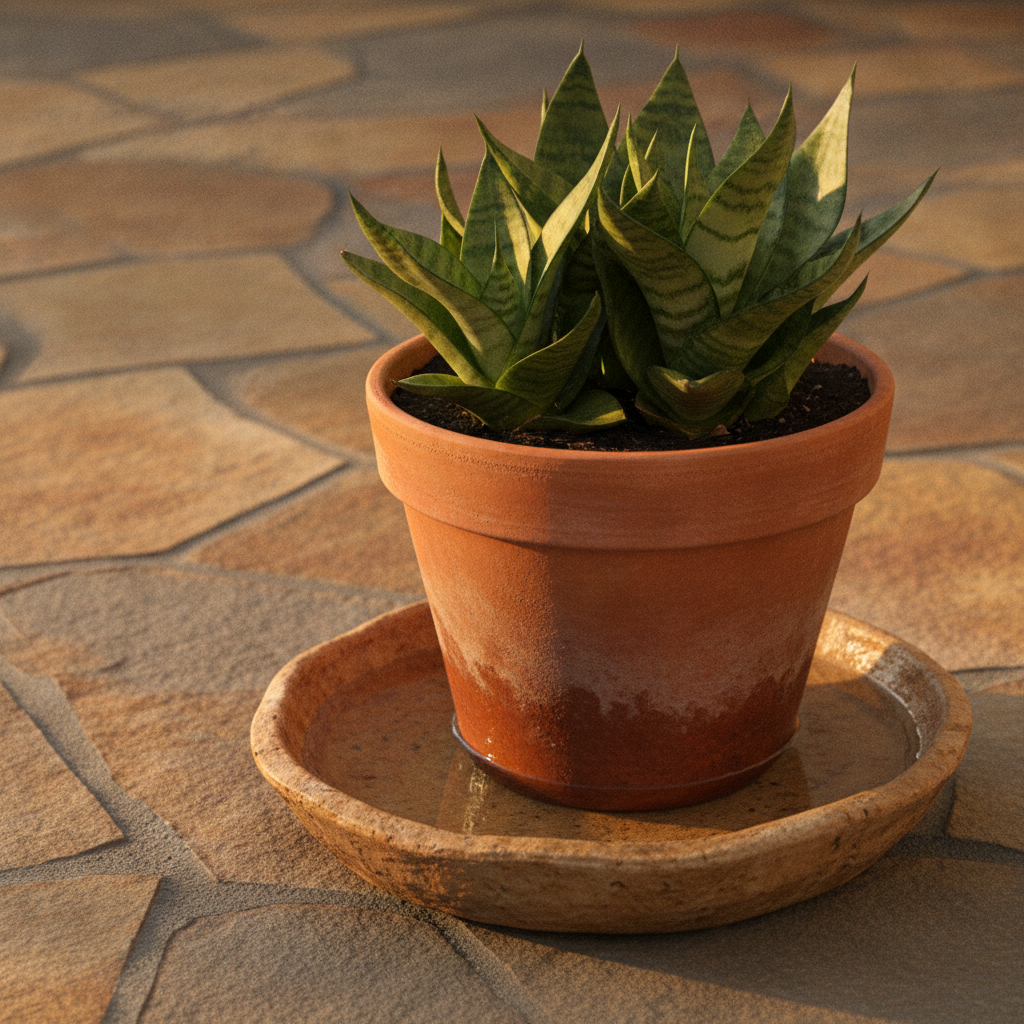
- Alternatively, bottom water by setting the pot in a shallow dish of water for 10 to 15 minutes, then lifting it out to drain; this keeps the crown dry and encourages roots to grow downward.
Signs of Overwatering vs. Underwatering
| Symptom | Overwatering | Underwatering |
|---|---|---|
| Leaf colour | Yellowing, often starting at the base | Dulling, slight paling of the whole leaf |
| Leaf texture | Soft, mushy, translucent at the base | Wrinkled, puckered, slightly leathery |
| Soil | Persistently wet, sometimes a sour smell | Bone dry, pulling away from the pot sides |
| Roots | Brown, soft, foul-smelling; the crown loosens | Dry but generally intact and pale |
| Base of rosette | Collapsing, leaves toppling from a rotten core | Firm but the whole plant softens gradually |
Warning — Root Rot: Soft, yellowing leaves that pull away easily from a mushy centre point to root rot, the plant’s most serious threat. Act fast: unpot it, cut away every blackened, slimy root and rotten leaf with clean tools, let the plant air-dry for a day, and repot into fresh, dry, gritty mix. Then water far more sparingly than before.
Humidity Requirements
Humidity is refreshingly not a concern with this plant. Coming from seasonally arid habitats, it is entirely comfortable in the dry air of a centrally heated or air-conditioned home, and ordinary household humidity of 30 to 50 percent is more than adequate. There is no need to mist it, and in fact misting is counterproductive here.
Because the leaves form a tight funnel, water sitting in the crown from misting or overhead watering can linger and encourage rot at the very centre of the rosette, which is exactly where the plant is most vulnerable. There is no humidity-related deficiency to watch for; if anything, the risk runs the other way, toward too much moisture around the leaves.
If you happen to keep the plant somewhere very humid, such as a steamy bathroom, simply lean even harder on good drainage and sparing watering to compensate, and make sure the room has some air movement so moisture does not stagnate around the crown.
Water Quality
Bird’s Nest Snake Plants are not especially fussy about water quality and tolerate normal tap water in most areas. If your water is very hard or heavily chlorinated, or if you notice a crusty mineral build-up on the soil surface over time, switching to filtered water or rainwater, or letting tap water stand overnight before use, will keep things tidy. Room-temperature water is gentler on the roots than very cold water straight from the tap.
Soil, Potting & Repotting
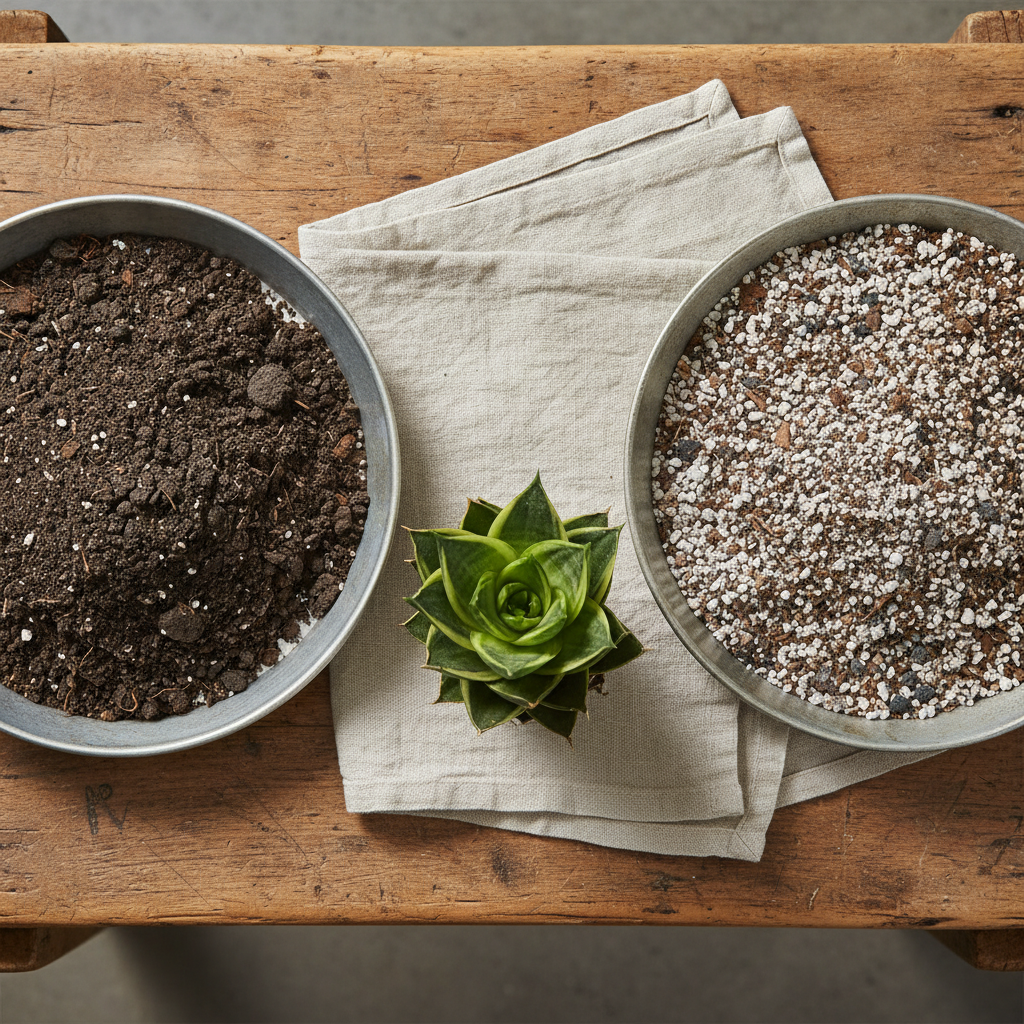
Drainage is everything for this plant. Given how sensitive it is to sitting in moisture, the goal with soil is a mix that holds just enough water to sustain the plant between waterings while draining fast and staying airy around the roots. A dense, moisture-retentive potting compost used on its own is a recipe for root rot; the mix needs plenty of grit.
Ideal Soil Composition
The simplest reliable option is a commercial cactus and succulent compost, which is formulated for exactly this kind of drought-loving plant. If you prefer to mix your own, aim for a blend that is roughly half standard potting mix and half coarse drainage material such as perlite, horticultural grit, or coarse sand. The table below shows a dependable recipe and what each part contributes.
| Component | Proportion | Function |
|---|---|---|
| Standard potting compost | 2 parts | Base structure, holds a little moisture and nutrients |
| Perlite or pumice | 1 part | Opens the mix, adds air pockets, speeds drainage |
| Coarse horticultural grit or sand | 1 part | Weight and sharp drainage, mimics native rocky soil |
| Coco coir (optional) | Small handful | Improves structure and re-wets more evenly than peat |
The plant prefers a slightly acidic to neutral pH, roughly in the range of 5.5 to 7.5, which most general and cactus composts fall within naturally. There is no need to test or adjust pH under normal circumstances; a good free-draining mix takes care of the essentials.
Pro Tip — Quick Mix Recipe: No cactus compost to hand? Take any bag of ordinary houseplant compost and stir through an equal volume of perlite, plus a couple of handfuls of grit. That two-to-one-to-one blend drains freely and suits a Bird’s Nest Snake Plant almost as well as a purpose-made succulent mix.
Choosing the Right Pot
Because the plant is small and slow-growing, pot choice is more forgiving than for fast, thirsty species, but the fundamentals still matter, and drainage sits at the top of the list.
Drainage holes are non-negotiable. A pot without holes will trap water at the bottom out of sight, and given this plant’s sensitivity to wet feet, that almost guarantees rot in the end. If you love a decorative cover pot with no holes, use it only as an outer sleeve and keep the plant in a plain nursery pot that drains freely inside it.
Pot material: Terracotta is an excellent match because its porous walls wick moisture out of the soil and let it breathe, which suits a plant that hates staying wet. Glazed ceramic and plastic both work too, but they hold moisture longer, so you will need to water even more conservatively in them.
Pot size: Choose a snug pot rather than a generous one. A container only slightly larger than the root ball holds less excess soil and therefore less lingering moisture, and snake plants actually flower and stay compact more readily when a little root-bound. Oversized pots stay wet in the middle and invite trouble.
When to Repot
This is a plant you will repot rarely, typically only once every two to three years, or when it has clearly outgrown its container. Tell-tale signs include roots or rhizomes pushing out of the drainage holes or spiralling visibly at the surface, a pot that a cluster of offsets has begun to bulge or crack, or water that runs straight through because the roots have displaced most of the soil. Spring or early summer, at the start of the active growing season, is the best time to do it.
How to Repot: Step-by-Step
- Water lightly a day or two beforehand if the soil is completely dry, so the root ball holds together, then let it drain.
- Ease the plant out by tipping the pot and supporting the base of the rosette; avoid yanking on the leaves.
- Gently tease away old spent soil from the roots and inspect them, trimming off any that are soft, brown, or rotten with clean tools.
- Choose a pot just one size larger, with drainage holes, and add a layer of fresh gritty mix to the bottom.
- Position the plant at the same depth it sat before, then backfill around it with fresh mix, firming gently to remove large air gaps.
- Leave the newly potted plant dry for a few days to let any disturbed roots callus over.
- Resume normal sparing watering after that settling-in period, and keep it out of harsh direct sun while it re-establishes.
Warning — Transplant Shock: Watering immediately after repotting is a common mistake. Freshly cut or disturbed roots are prone to rot if they meet wet soil straight away, so resist the urge and wait several days. A short dry rest dramatically lowers the risk of losing the plant to rot after repotting.
Fertilising
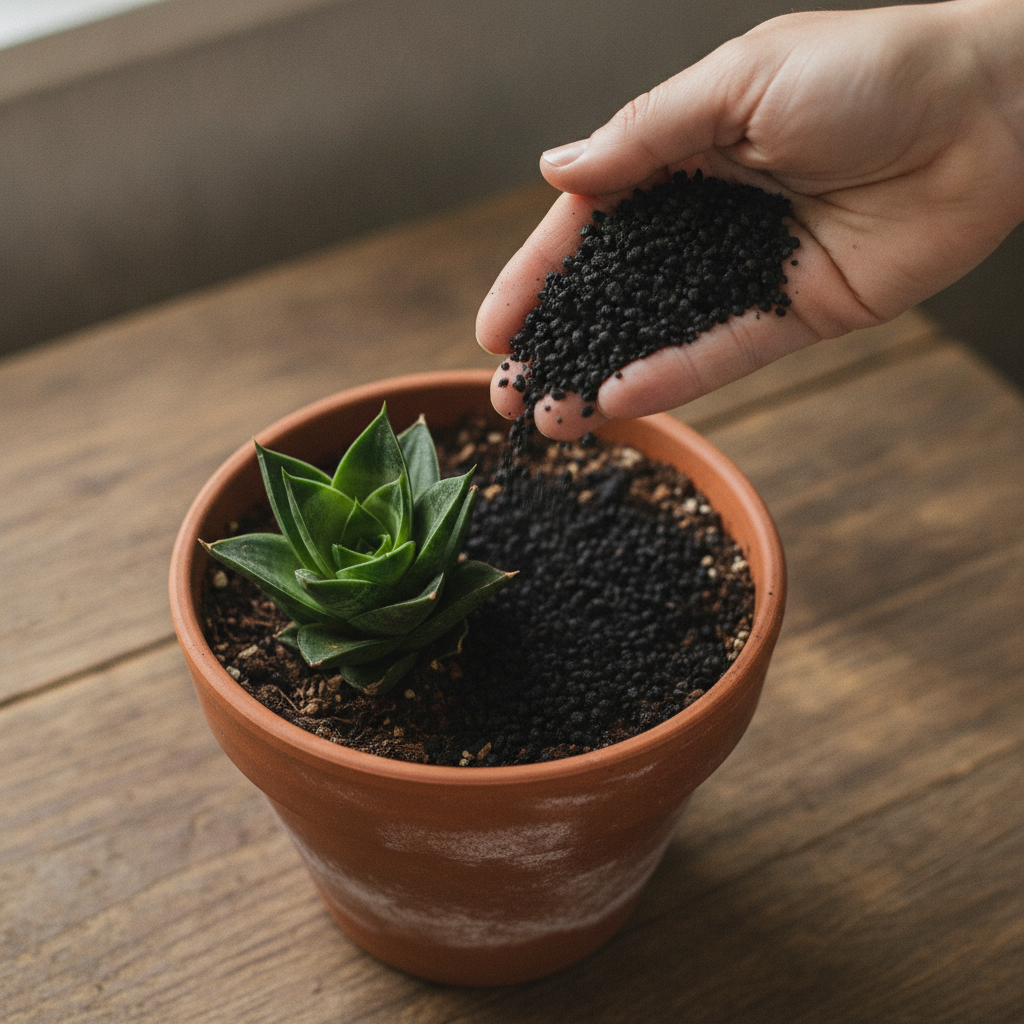
The Bird’s Nest Snake Plant is a genuinely light feeder, and far more plants are harmed by overfeeding than by going hungry. In its native habitat it grows in lean, gritty soil, so it is adapted to make do with very little, and a modest feeding routine is all it ever needs.
Feeding matters mainly during the active growing season of spring and summer, when the plant is actually putting on new leaves and can use the nutrients. Through autumn and winter, when growth naturally stalls, you should stop feeding altogether, because fertiliser applied to a resting plant simply accumulates in the soil as salts.
Understanding Plant Nutrients
Most fertilisers are labelled with an N-P-K ratio, showing the proportion of nitrogen, phosphorus, and potassium, the three nutrients plants use in the largest amounts. For a foliage plant like this, a balanced ratio is perfectly good. The table summarises the key nutrients and the signs that one is lacking, though true deficiencies are uncommon in this undemanding plant.
| Nutrient | Symbol | Primary Function | Deficiency Symptoms |
|---|---|---|---|
| Nitrogen | N | Leaf and stem growth, green colour | Pale, yellowing older leaves, stalled growth |
| Phosphorus | P | Root development and energy transfer | Weak roots, dull colour, poor establishment |
| Potassium | K | Overall vigour and water regulation | Yellowing or browning leaf edges |
| Calcium | Ca | Cell wall strength | Distorted or weak new growth |
| Magnesium | Mg | Core of the chlorophyll molecule | Yellowing between the veins of older leaves |
| Iron | Fe | Chlorophyll production | Yellowing between veins on newer leaves |
Types of Fertiliser
Liquid fertilisers: The easiest option for this plant. A general houseplant feed or a cactus feed, diluted to half the recommended strength, gives you full control and is simply added to the watering can once every few weeks in the growing season.
Slow-release granular: A few granules worked into the topsoil in spring will feed the plant gradually over several months. Convenient, though you give up some control over exactly how much the plant receives, so use a light hand.
Organic fertilisers: Gentle options such as diluted worm-casting tea or a light top-dressing of worm castings release nutrients slowly and are very hard to overdo, which makes them well suited to a plant that resents being overfed.
Feeding Schedule
A realistic routine is to feed once every four to six weeks during spring and summer with a half-strength balanced liquid feed, which comes to just two or three feeds across the whole year. That is genuinely all this plant asks for. Then stop completely from autumn through winter and let it rest.
Pro Tip — Less Is More: When it comes to feeding a snake plant, under-doing it is always safer than over-doing it. If you are unsure, halve the dose again. A slightly hungry plant recovers the moment you feed it, whereas one damaged by fertiliser salt build-up takes far longer to bounce back.
How to Fertilise
- Feed only during active growth in spring and summer, never on a dormant winter plant.
- Dilute liquid feed to half the label strength, or less, in your watering can.
- Water the plant lightly first if the soil is bone dry, so the feed does not scorch dry roots.
- Apply the diluted feed to the soil around the base, avoiding the crown of the rosette.
- Flush the pot with plain water every few months to wash out any accumulated fertiliser salts.
Warning — Salt Build-Up: A crusty white or yellow layer on the soil surface or around the pot rim is a sign of fertiliser salts accumulating. Left unchecked these can burn the roots and brown the leaf tips. Flush the pot thoroughly with plain water two or three times to leach them out, and cut back on feeding.
Propagation
Propagating a Bird’s Nest Snake Plant is straightforward and rewarding, and there are two dependable methods to choose from: division of the clump, and leaf cuttings. Both are easy, but they are not equivalent, and which you pick depends on whether you care about keeping a variegated plant true to type.
The best time to propagate is spring or early summer, when the plant is growing actively and wounds heal fastest. Whichever method you use, work with clean, sharp tools and be patient, because snake plants are slow and rooting can take weeks.
Understanding Rhizomes and Pups
Snake plants spread by rhizomes, thick underground stems that creep sideways and send up new rosettes, known as pups or offsets, a short distance from the parent. Over time a single plant becomes a small colony of connected rosettes sharing one root system. This natural offsetting is what makes division so easy: you are simply separating pups that the plant has already produced, each with its own roots. Understanding this also explains why variegation carries through division but not always through leaf cuttings.
Division: Step-by-Step
Division is the fastest, most reliable method and the only one that preserves the colouring of variegated cultivars such as ‘Golden Hahnii’ and ‘Silver Hahnii’. It works best when the plant has filled its pot and produced a few pups.
- Slide the whole plant out of its pot and brush away loose soil so you can see the rhizomes and roots.
- Identify natural clumps or pups, each ideally with its own roots and one or more healthy leaves.
- Separate them by gently teasing the roots apart, or by cutting through the connecting rhizome with a clean, sharp knife.
- Let the cut surfaces air-dry and callus for a few hours to a day to reduce the risk of rot.
- Pot each division into its own small pot of gritty, free-draining mix at the same depth it grew before.
- Wait a few days, then water sparingly and keep the new plants in bright, indirect light while they settle.
Pro Tip — Keep Variegation True: If your plant is a coloured cultivar and you want the babies to match, always divide rather than take leaf cuttings. Variegation in these plants is held in the rhizome tissue, so a divided pup keeps its yellow margins or silver sheen, whereas a leaf cutting almost always reverts to plain green.
Leaf Cuttings: Step-by-Step
Leaf cuttings are a fun way to make many new plants from a single leaf, and they work well for plain green forms. Just remember that this method sacrifices variegation, so any yellow or silver colouring will be lost in the offspring.
- Choose a healthy, firm leaf and cut it off cleanly at the base.
- Cut the leaf crossways into several sections a few centimetres long, and note which end of each piece was lower, since it must be planted the same way up.
- Leave the sections to dry and callus for a day or two so the cut ends seal.
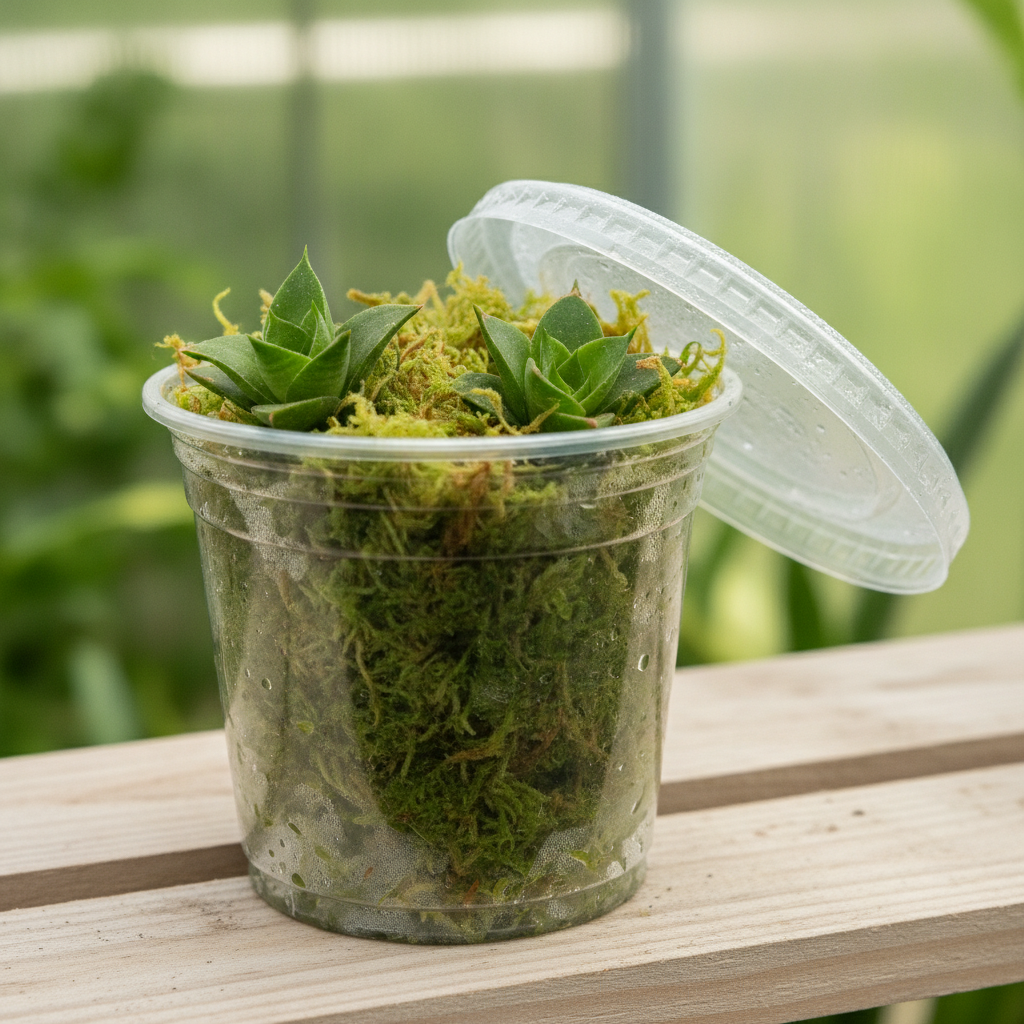
- Insert each section, lower end down, a couple of centimetres into damp gritty mix or damp sphagnum moss.
- Keep the medium barely moist and warm in bright indirect light, and be patient as roots and then tiny pups form over several weeks to a few months.
- Pot the rooted sections on into their own containers once new growth is established.
Troubleshooting Propagation
| Problem | Likely Cause | Solution |
|---|---|---|
| Cutting rotted and turned mushy | Medium kept too wet, or cut not calloused | Use barely moist mix, and always dry cuts for a day first |
| No roots after many weeks | Normal slowness, or too cold and dark | Be patient; provide warmth and bright indirect light |
| New leaves came out plain green | Variegated leaf propagated by cutting | Expected; use division to keep colour |
| Section planted upside down | Ends were confused when cutting | Re-cut and replant with the original lower end down |
Pests & Diseases
The Bird’s Nest Snake Plant is remarkably pest-resistant, and a healthy specimen in good conditions rarely runs into trouble. Its tough, waxy leaves are unappealing to many common houseplant pests, and the biggest threats it faces are almost all self-inflicted through overwatering rather than caused by insects.
Still, no houseplant is entirely immune, especially if it is stressed or kept alongside infested neighbours. Knowing the few pests and diseases that can appear, and catching them early, keeps small issues from becoming serious.
Common Pests
Mealybugs (Pseudococcus species)
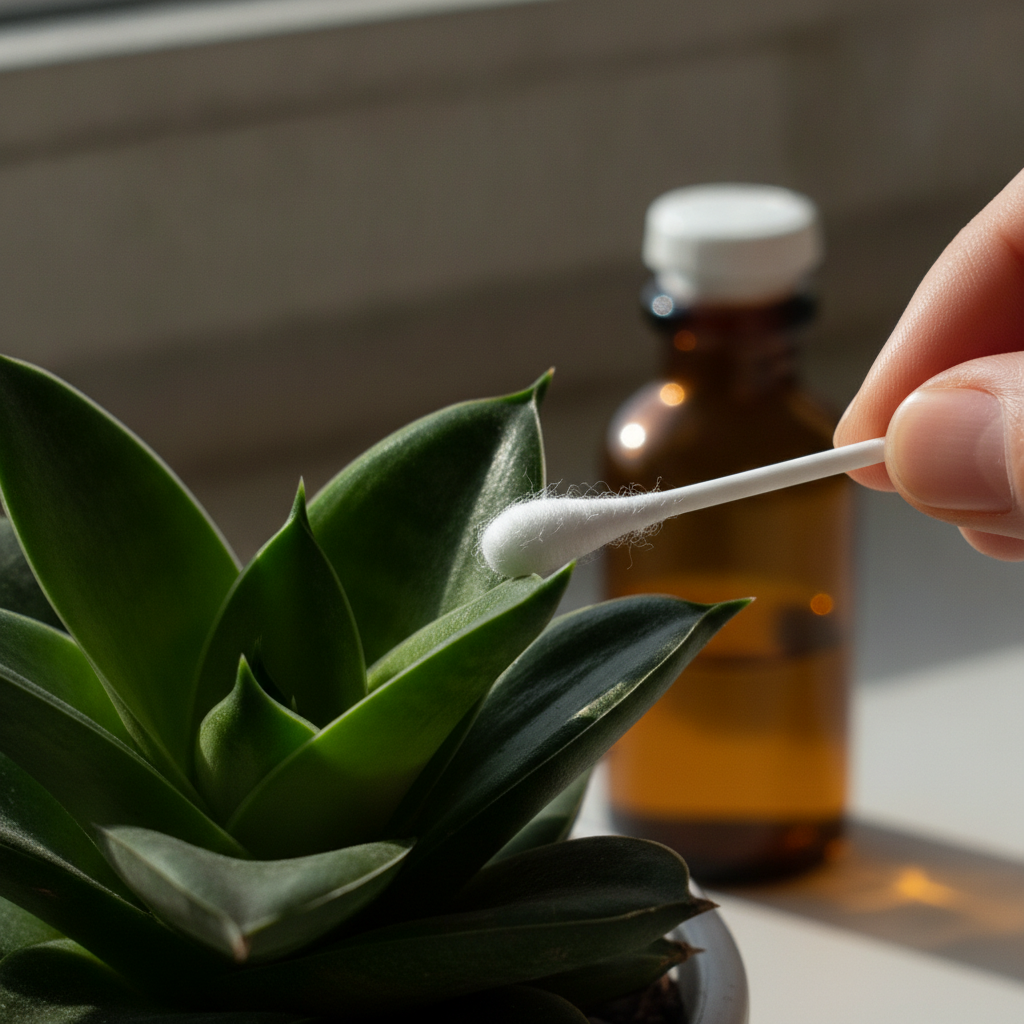
The most likely pest on a snake plant, mealybugs show up as small, white, cottony tufts tucked into the crevices where leaves meet at the base of the rosette. They suck sap and slowly weaken the plant, and the dense funnel of a Hahnii gives them plenty of sheltered spots to hide.
Treatment: Dab each insect directly with a cotton bud dipped in isopropyl alcohol, which kills them on contact, then wipe the area clean. For heavier infestations, treat with insecticidal soap or diluted neem oil, and repeat weekly until no new bugs appear.
Spider Mites (Tetranychus urticae)
Uncommon on snake plants but possible in hot, dry conditions, spider mites are tiny and hard to see, betraying themselves through fine speckling on the leaves and delicate webbing in the crevices. They multiply quickly when air is very dry and warm.
Treatment: Wipe the leaves down with a damp cloth to remove mites and webbing, then apply insecticidal soap or neem oil to both leaf surfaces. Improving air movement and repeating treatment every few days breaks their breeding cycle.
Scale Insects (Coccidae family)
Scale appear as small, hard, brown, limpet-like bumps clinging to the leaves, often along the base or undersides. They can be mistaken for part of the plant, and like mealybugs they feed on sap and sap the plant’s vigour over time.
Treatment: Scrape or rub them off gently with a fingernail or an alcohol-dipped cotton bud, then treat with neem oil or insecticidal soap to catch the mobile young. Persistent checking over several weeks is key, as scale can be stubborn.
Common Diseases
Root Rot (Fusarium and Pythium species)
By far the most serious problem this plant faces, root rot is caused by overwatering and poor drainage, which suffocate the roots and let fungi take hold. Signs include soft, yellowing leaves, a mushy base, a bad smell from the soil, and a rosette that collapses or topples from a rotten core.
Treatment: Unpot the plant immediately, cut away all blackened, slimy roots and rotten leaves with clean tools, and let it dry for a day before repotting into fresh, dry, gritty mix. Then water much more sparingly. Severely rotted plants may be saved only by rooting a healthy leaf cutting or an unaffected pup.
Southern Blight and Leaf Spot (fungal, Sclerotium and others)
Less common, these fungal issues appear as sunken brown or reddish spots on the leaves, sometimes with a fuzzy growth, and tend to arise where the crown or leaves stay wet and air is stagnant. Water pooling in the funnel of the rosette is a frequent trigger.
Treatment: Remove affected leaves, keep the crown dry, improve air circulation, and avoid overhead watering. A copper-based or general houseplant fungicide can help in stubborn cases, but correcting the moisture around the crown usually resolves it.
Pest and Disease Summary
| Pest / Disease | Identification | Treatment |
|---|---|---|
| Mealybugs | White cottony tufts in leaf crevices | Alcohol on a cotton bud, then neem or insecticidal soap |
| Spider mites | Fine speckling and faint webbing | Wipe down, apply neem or insecticidal soap, raise airflow |
| Scale | Hard brown bumps on leaves | Scrape off, treat with neem or insecticidal soap |
| Root rot | Soft yellow leaves, mushy base, smell | Cut away rot, dry, repot in gritty mix, water less |
| Leaf spot / blight | Brown sunken spots on leaves | Remove leaves, keep crown dry, improve air circulation |
Prevention Strategies
Prevention with this plant comes down to good fundamentals rather than routine spraying. Water sparingly and only into dry soil, use a gritty free-draining mix in a pot with drainage holes, keep the crown dry, and give the plant decent light and a little air movement. A plant kept in these conditions is rarely troubled by anything.
Inspect new plants before bringing them home and isolate them for a couple of weeks, since most infestations arrive on newcomers rather than appearing spontaneously. Wiping the leaves occasionally to remove dust also lets you spot the earliest signs of a problem while it is still easy to deal with.
Pro Tip — Isolate and Inspect: The simplest pest defence is a two-week quarantine for every new plant that enters your home, kept apart from your collection while you watch for hitchhikers. Catching one mealybug on a single quarantined plant is far easier than clearing an outbreak that has spread across a whole shelf.
Popular Varieties
The name Hahnii refers to the compact, bird’s-nest rosette form rather than to a single colour, and over the years growers have selected a whole family of Hahnii cultivars in different shades. All share the same easy care and small stature, so choosing between them is purely a matter of looks.
The most widely available forms range from plain deep green through gold-edged and silvery to almost black, giving you real variety within a single, dependable plant type. The table gives a quick comparison, followed by closer profiles of the best known.
| Variety | Leaf Appearance | Light Needs | Growth Rate | Availability |
|---|---|---|---|---|
| Green Hahnii | Deep green with darker cross-banding | Low to bright indirect | Slow | Common |
| Golden Hahnii | Broad creamy-yellow margins, green centre | Bright indirect for best colour | Slow | Common |
| Silver Hahnii | Silvery grey-green with faint mottling | Bright indirect | Slow | Fairly common |
| Black Hahnii | Very dark, near-black green leaves | Bright indirect | Slow | Less common |
| Jade Hahnii | Solid rich jade green, no banding | Low to bright indirect | Slow | Fairly common |
| Loop’s Pride Hahnii | Wavy leaves with pronounced banding | Bright indirect | Slow | Uncommon |
Featured Varieties
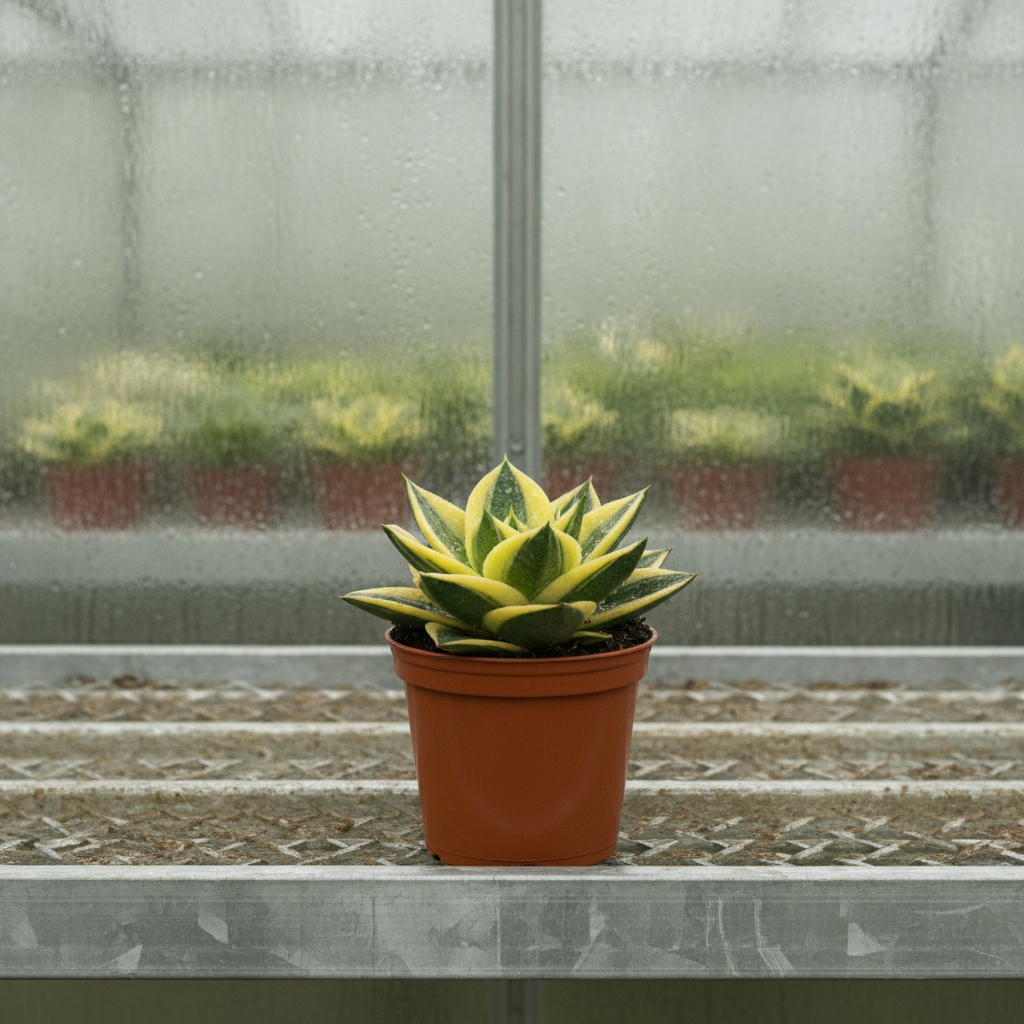
Golden Hahnii
The showiest of the group, with broad, buttery-yellow margins framing a green centre. It needs good bright indirect light to keep those wide gold edges from greening over, and it is best propagated by division to preserve the colour.
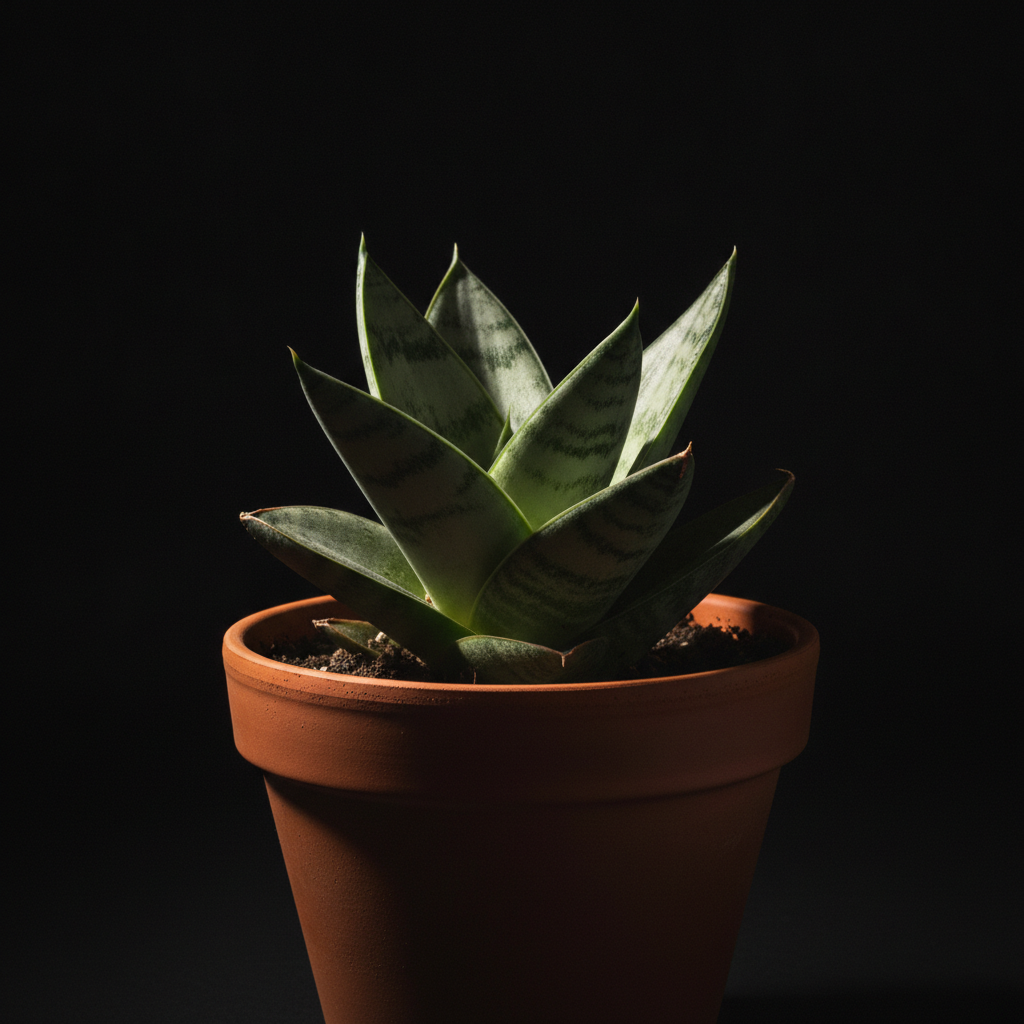
Silver Hahnii
A softer, more muted look, with silvery grey-green leaves overlaid by faint darker mottling and cross-banding. It brings a cool, frosted tone to a shelf and, like the golden form, holds its colour best in bright light and when propagated by division.
Variety Profiles in Detail
Green Hahnii (Dracaena trifasciata ‘Hahnii’)
The original and most robust of the family, with deep green leaves marked by darker horizontal banding. Being fully green rather than variegated, it is the most tolerant of low light and the least fussy of all the Hahnii forms, making it an excellent first snake plant.
Golden Hahnii (Dracaena trifasciata ‘Golden Hahnii’)
Often described as one of the most beautiful dwarf snake plants, prized for its bold yellow-edged leaves. It rewards a bright position and a little patience, and its variegation is genuinely striking when the plant is grown well.
Black Hahnii (Dracaena trifasciata ‘Black Hahnii’)
A moody, collectable form with very dark, almost black-green foliage that looks dramatic against a pale pot. It appreciates bright indirect light to deepen that colour and, like the others, thrives on the same minimal care.
Choosing the Right Variety for Your Space
If your spot is on the dim side, choose a plain green form such as Green or Jade Hahnii, which hold up best in lower light. For a bright sill or a position under good artificial light, the variegated Golden and Silver forms will pay you back with vivid colour. And if you love the dramatic, the near-black Hahnii makes a real statement. Whichever you choose, the care is identical, so you can mix several forms on one shelf and treat them all the same.
Frequently Asked Questions
How often should I water my Bird’s Nest Snake Plant?
Only when the soil has dried out completely, which is usually every 2 to 3 weeks in spring and summer and much less in winter, sometimes only once a month or even less. Always check the soil rather than watering on a fixed schedule, and when in doubt, wait a few more days. This plant is far happier a little too dry than a little too wet.
Why is my snake plant’s rosette flopping open or the leaves falling over?
Two causes are most likely. If the leaves are soft, yellowing, and topple from a mushy centre, the plant is overwatered and probably suffering root rot, so unpot it and cut away any rot. If the plant is simply loosening and stretching while otherwise firm, it is reaching for more light, so move it somewhere brighter and it will tighten up again over time.
Is the Bird’s Nest Snake Plant safe for cats and dogs?
No, it is mildly toxic to both. The leaves contain saponins that can cause drooling, nausea, vomiting, and diarrhoea if a pet chews or swallows them. The effects are usually mild rather than life-threatening, but it is best to keep the plant out of reach of pets that nibble houseplants, and to contact a vet if a large amount is eaten.
Can it really survive in low light?
Yes, it is one of the most low-light-tolerant houseplants available and will survive in quite dim spots for a long time. Just remember that surviving and thriving differ: in low light it grows very slowly, loosens its form, and loses colour, so for the best-looking plant give it bright indirect light even though it will forgive you if you cannot.
Why won’t my Golden Hahnii keep its yellow edges?
Variegated snake plants need good light to hold their colour, and in dim conditions the yellow margins narrow and green over as the plant produces more chlorophyll to cope. Move it to a brighter position with plenty of indirect light. Also note that if you propagated it from a leaf cutting, the new plant will revert to green regardless, because variegation only carries through division.
Does the Bird’s Nest Snake Plant flower?
It can, though flowering indoors is uncommon and unpredictable. A mature, slightly root-bound plant in good light may occasionally send up a slender spike of small, fragrant, creamy-white flowers. It is a pleasant surprise rather than something to expect, and the plant is grown almost entirely for its foliage.
How big does it get, and how fast?
This is a true dwarf, generally staying around 15 to 20 centimetres (6 to 8 inches) tall and spreading slowly outward as it produces pups. Growth is slow, so it holds its neat size for a long time and rarely needs repotting more than once every couple of years, which is a big part of its appeal for small spaces.
Why are the leaf tips turning brown?
Brown, crispy tips usually trace back to inconsistent watering, a build-up of fertiliser salts or minerals in the soil, or occasionally cold draughts. Flush the pot with plain water to leach out salts, ease into a steadier watering rhythm, keep the plant away from cold windows and heat sources, and trim the browned tips off with clean scissors if you want to tidy its appearance.






