
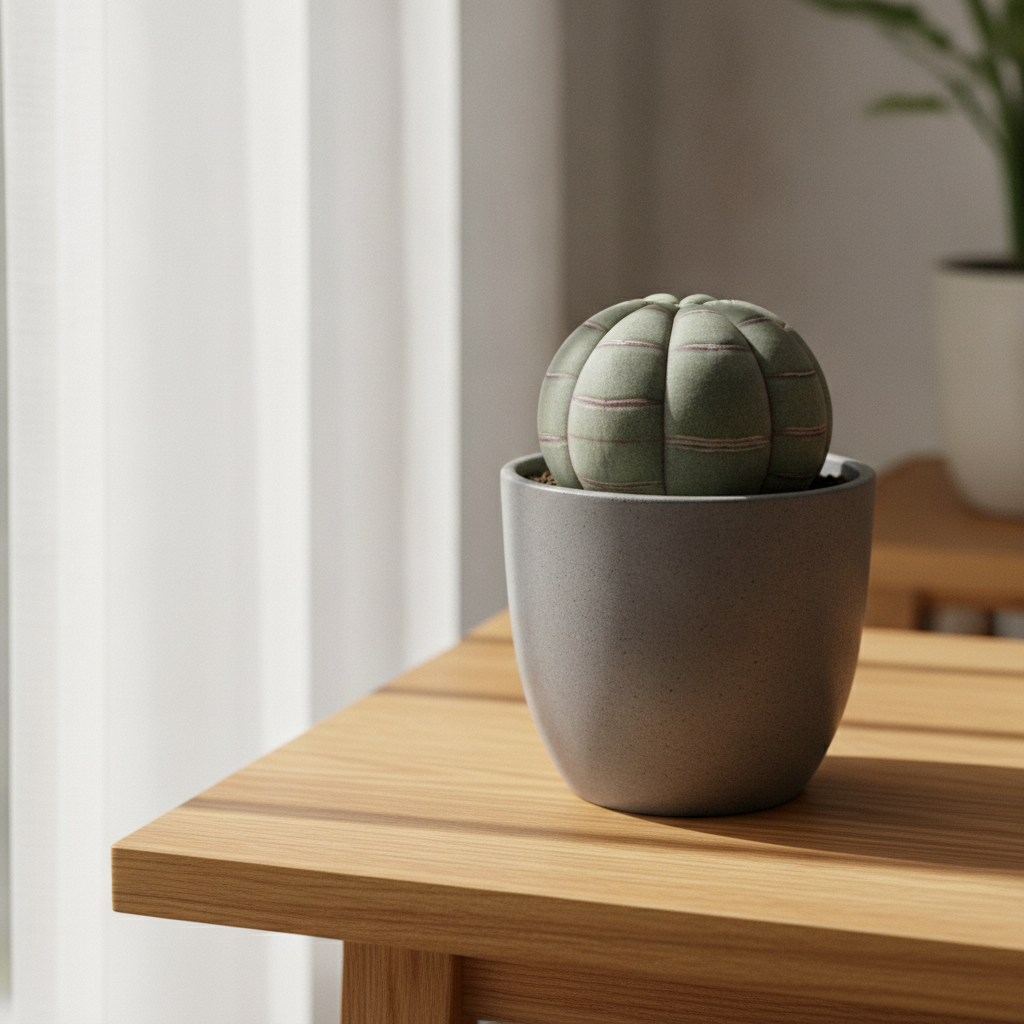
Few succulents look quite so deliberately designed as the baseball plant, a solitary green sphere ribbed and banded as though stitched by hand. Known botanically as Euphorbia obesa, it is a spineless, leafless succulent native to a tiny patch of the Eastern Cape in South Africa, where it grows half-buried among rocks in the arid Great Karoo near Graaff-Reinet. Its common names, baseball plant and sea urchin plant, both nod to the same thing: a near-perfect globe of grey-green tissue marked with fine reddish-purple cross-banding and eight low ribs. Collectors have prized it for more than a century, and its curious geometry has made it one of the most recognisable of all the dwarf euphorbias.
The baseball plant has a reputation for being fussy, but that reputation is only half-earned. Keeping one alive is genuinely easy once you accept that it wants to be treated like the desert plant it is. The difference between a baseball plant that merely survives and one that thrives comes down to three things: enough light to hold its compact shape, a gritty mineral soil that never stays wet, and the discipline to water far less often than instinct suggests. This guide covers every one of those points in detail, along with feeding, propagation from seed, the pests to watch for, and the collectible forms worth seeking out.
Contents
- Quick Reference
- Why the Baseball Plant Makes a Striking Houseplant
- Light Requirements
- Watering & Humidity
- Soil, Potting & Repotting
- Fertilising
- Propagation
- Pests & Diseases
- Popular Varieties
- Frequently Asked Questions
Quick Reference: Baseball Plant at a Glance
| Light | Bright direct light to full sun; a south-facing window or grow light indoors |
| Watering | Sparingly in spring to autumn, only once the soil is bone dry; nearly none in winter |
| Temperature | 18 to 29°C (64 to 84°F) when growing; keep above 10°C (50°F) |
| Humidity | Low; ordinary dry room air is ideal, 30 to 50 per cent |
| Fertiliser | A dilute low-nitrogen feed once or twice in the growing season |
| Toxicity | Toxic; the milky latex is a strong skin and eye irritant and is harmful if eaten |
Why the Baseball Plant Makes a Striking Houseplant
The appeal of the baseball plant is almost entirely sculptural. A mature specimen is a tidy sphere roughly the size of a tennis ball, around 8 to 12 centimetres (3 to 5 inches) across, that slowly elongates into a short barrel as it ages. It has no spines to catch on clothing, no leaves to drop, and no sprawling habit to manage. It simply sits there, compact and symmetrical, asking for almost nothing. For anyone with a sunny sill and a tendency to forget the watering can, it is close to an ideal plant.
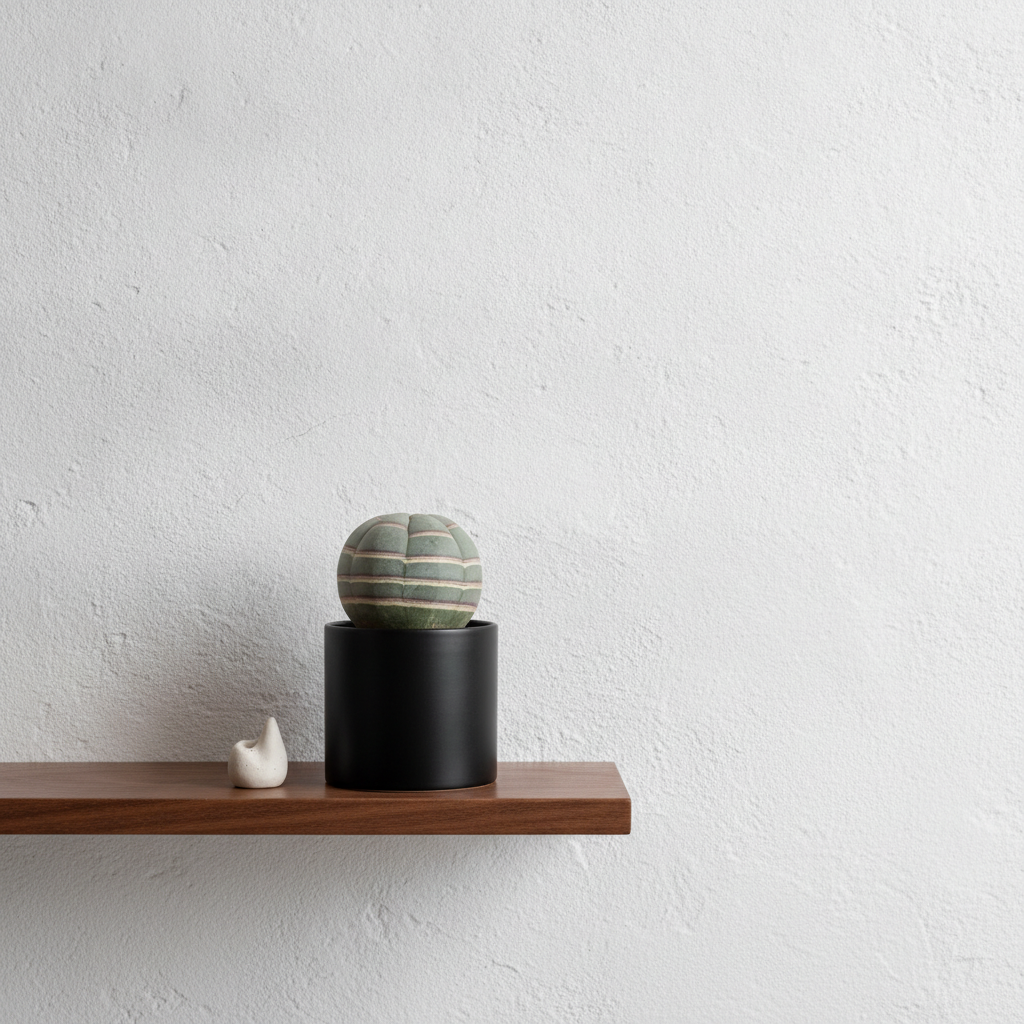
Beyond looks, the baseball plant is remarkably forgiving of neglect. It evolved to store water through long Karoo droughts, so a missed watering does no harm at all, and its slow metabolism means it rarely outgrows its pot or its welcome. The plant is also long-lived, with well-kept specimens persisting for decades and gradually developing the columnar, ribbed character that collectors find most attractive. The one thing it will not tolerate is wet feet, which is why most of this guide circles back to drainage and restraint. Get those right and the plant practically looks after itself.
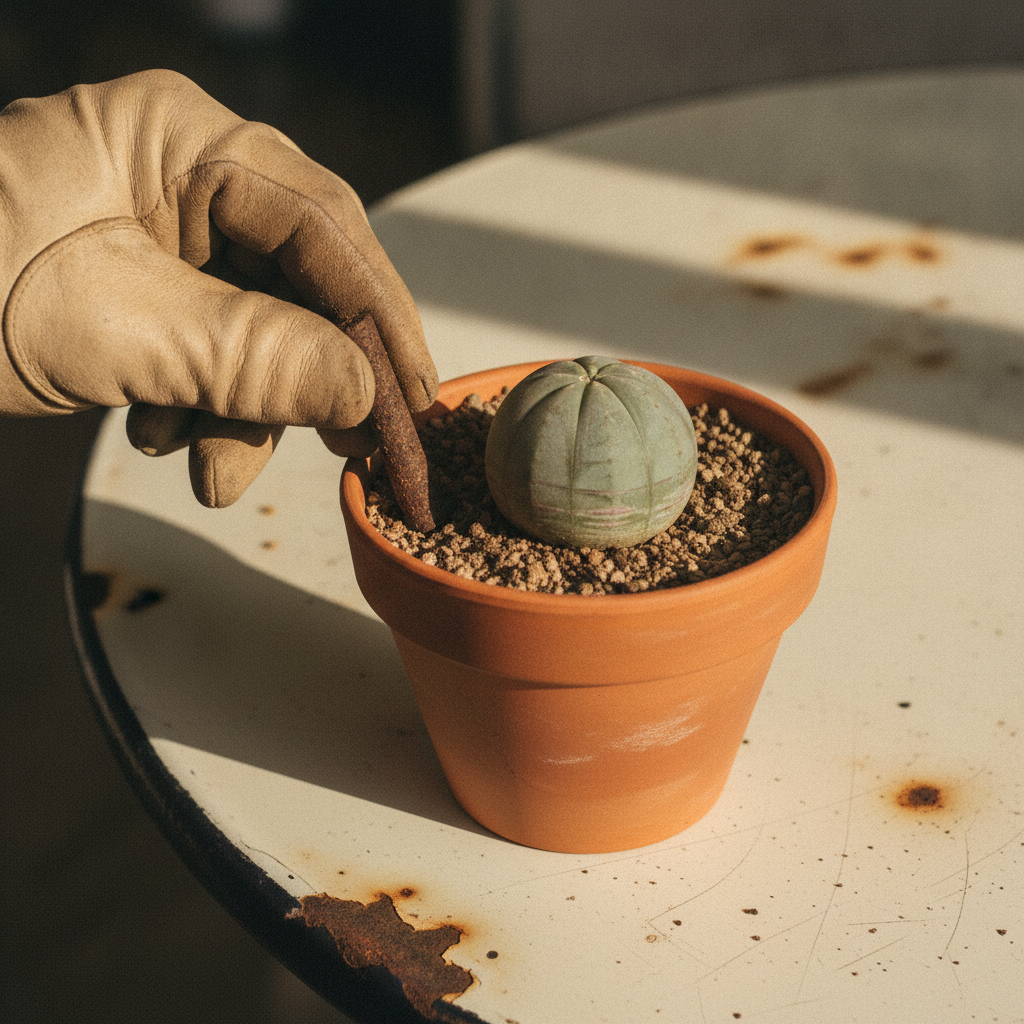
Important — Toxicity: Like all euphorbias, the baseball plant bleeds a milky white latex when cut or bruised. This sap is caustic and can cause painful skin rashes and serious eye irritation, and it is toxic if swallowed by people or pets. Always wear gloves when repotting or handling damaged tissue, keep the sap away from your eyes and mouth, and site the plant out of reach of children and animals.
Light Requirements
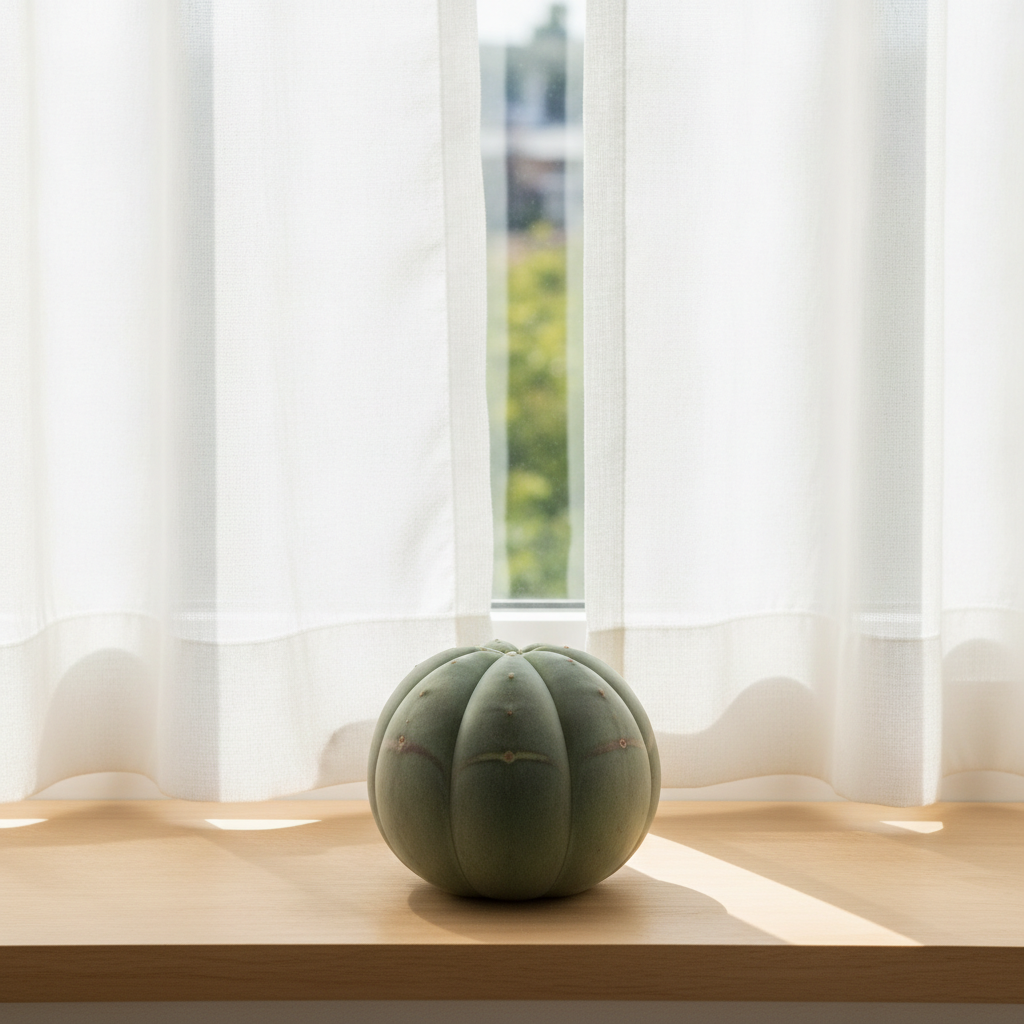
Light is the single most important factor in keeping a baseball plant looking the way it should. In habitat it grows fully exposed to the fierce South African sun, and it carries that need indoors. Given plenty of bright light it stays compact, keeps its strong ribbing and rich banding, and holds its globe shape for years. Starved of light it does the opposite, stretching upward into a pale, soft column and losing the very symmetry that makes it worth growing.
Indoors, the ideal position is right against the brightest window you have, where the plant receives several hours of direct sun each day. A baseball plant cannot really get too much light in a typical home, provided it has been acclimated gradually, so err on the side of more rather than less. If your brightest window still leaves the plant reaching or fading, a full-spectrum grow light is a reliable substitute.
Light Levels Explained
The table below translates the usual indoor light categories into what each one means for a baseball plant. Because it is a true desert succulent, its needs sit firmly at the high end of the scale compared with most houseplants.
| Light Category | Approx. Level | Typical Location | Outcome |
|---|---|---|---|
| Full sun | Over 50,000 lux | Outdoors in summer, or pressed to a south window | Best colour, tight ribbing, ideal shape |
| Bright direct | 20,000 to 50,000 lux | On a south-facing sill | Healthy, compact growth |
| Bright indirect | 10,000 to 20,000 lux | Just back from a bright window, or an east sill | Survives well, slightly slower |
| Medium | 2,500 to 10,000 lux | A few metres from a window | Etiolation begins, body softens and stretches |
| Low | Under 2,500 lux | North room or interior wall | Pale, weak, prone to rot; not viable long term |
Window Orientation and Placement
South-facing window: This is the best position in the northern hemisphere. The long hours of direct sun suit the baseball plant perfectly, and the plant can usually be pressed right up to the glass once acclimated.
East-facing window: A good second choice. Gentle morning sun is enough to keep the plant reasonably compact, though growth will be a little slower than in a south aspect.
West-facing window: Workable, offering strong afternoon sun. Watch that the hot, concentrated light of a summer afternoon does not scorch a plant that has been moved suddenly from a shadier spot.
North-facing window: Generally too dim. A baseball plant on a north sill will etiolate over a season and become vulnerable to rot. If north light is all you have, add a grow light rather than relying on the window alone.
Pro Tip — Rotate for Symmetry: Because the plant grows toward the light, a baseball plant left in one position will slowly lean and lose its even shape. Give the pot a quarter turn every week or two so all sides receive equal light and the globe stays balanced.
How Light Affects Shape and Colour
In strong light the baseball plant stays squat and rounded, its ribs well defined and its cross-banding flushed with reddish-purple tones. In weak light it produces pale, soft new tissue at the apex that stretches the body upward and flattens the ribbing, a process called etiolation. Etiolated growth cannot be reversed, so the stretched section remains a permanent record of a season spent too far from the window. Bright light from the start is the only real cure.
Warning — Direct Sunlight: A plant grown in lower light and then moved abruptly into full summer sun can scorch, developing bleached or corky patches that never fully recover. Whenever you increase light, do it gradually over two to three weeks so the plant can build up its protective pigments.
Artificial Lighting
Baseball plants respond very well to grow lights, which makes them practical for homes without a bright window. A full-spectrum LED positioned 20 to 30 centimetres (8 to 12 inches) above the plant and run for 12 to 14 hours a day will keep growth tight and healthy. Because the plant is so small, even a modest desk-style fixture is usually enough to cover it.
Seasonal Adjustments
Light levels fall sharply through winter, and a baseball plant that was happy on a sill in July may struggle there in December. As the plant enters its winter rest it needs less light, but it still benefits from the brightest spot you can offer, kept slightly cooler and almost completely dry. In spring, reintroduce stronger light gradually rather than all at once, especially if the plant will go outdoors for the summer.
Watering & Humidity
If light decides how a baseball plant looks, watering decides whether it lives. This is a plant built to endure drought, storing months of moisture inside its swollen body, and the most common way to kill one is kindness in the form of too much water. The guiding principle is simple: water thoroughly but rarely, and only when the soil has been completely dry for a while.
When to Water
During the active growing season, from spring through to early autumn, water only when the potting mix is bone dry all the way through. In a gritty mix on a sunny sill this usually works out to roughly once every two to three weeks, but the calendar matters far less than the actual dryness of the soil. Lift the pot to feel its weight, or push a wooden skewer to the base; if there is any dampness or weight left, wait.
Through winter the plant rests and its water needs collapse almost to nothing. From late autumn until spring, give only the occasional splash every four to six weeks, just enough to stop the roots shrivelling entirely, and only on a mild day. A cool, dry winter rest is exactly what the plant experiences in habitat, and withholding water at this time is one of the secrets to healthy, well-shaped growth.
Pro Tip — Weigh the Pot: The most reliable way to judge watering is by weight. Pick up the pot just after a thorough soak and again when it is fully dry, and memorise the difference. A light pot means it is safe to water; a pot that still feels heavy means wait.
How to Water Correctly
- Confirm the soil is completely dry by weight or with a skewer before you begin.
- Water the soil directly, keeping moisture off the body of the plant to avoid trapped water and rot.
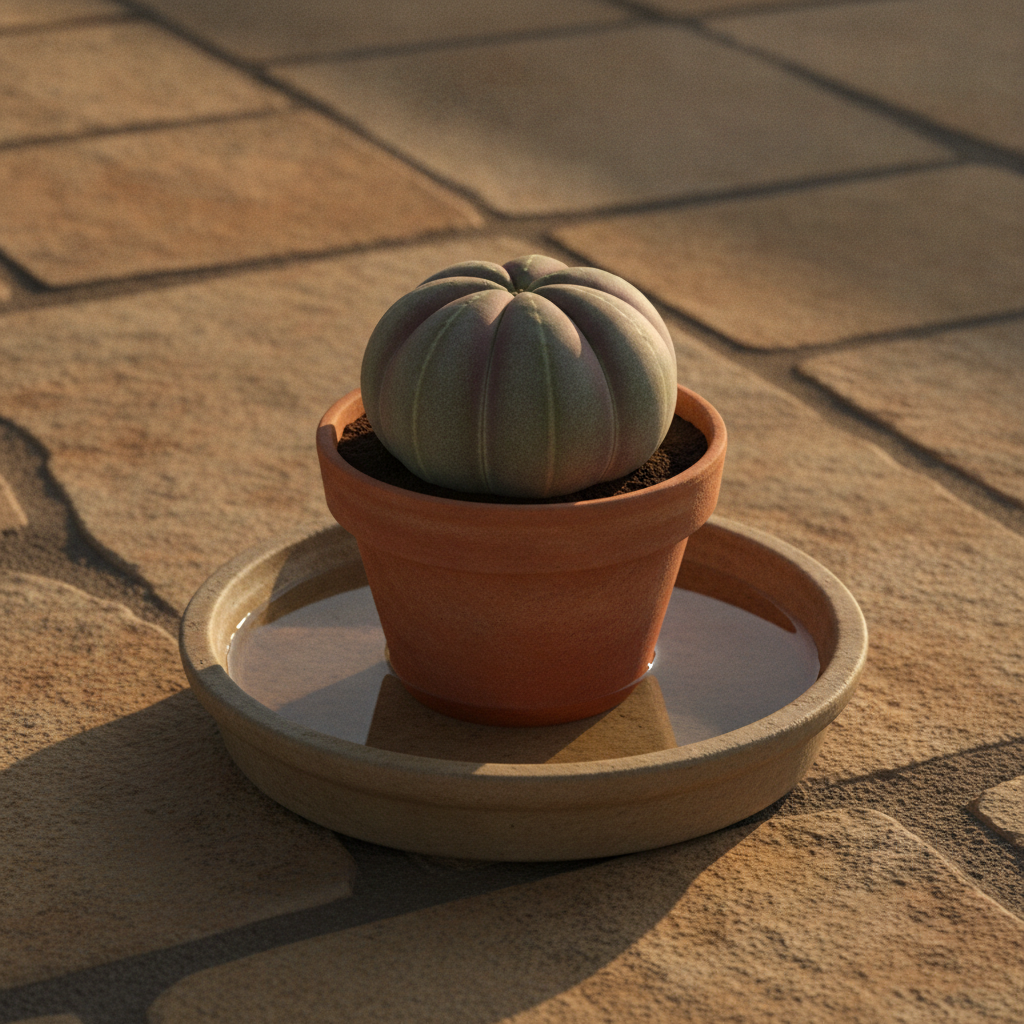
- Soak the mix thoroughly until water runs freely from the drainage holes, or stand the pot in a shallow dish and let it draw moisture up from below.
- If bottom-watering, remove the pot once the surface darkens, usually within ten to twenty minutes.
- Let the pot drain completely and never leave it standing in a saucer of water.
- Wait until the mix is bone dry again before the next watering, however long that takes.
Signs of Overwatering vs. Underwatering
| Symptom | Overwatering | Underwatering |
|---|---|---|
| Body firmness | Soft, squishy, swollen at the base | Slightly shrunken, ribs drawn inward |
| Colour | Yellowing, blackening or translucent patches | Duller grey-green, slight purpling under stress |
| Base of plant | Mushy, browning, sometimes with a foul smell | Firm but a little wrinkled |
| Soil | Stays damp for days, may grow algae | Bone dry for an extended period |
| Recovery | Often fatal once rot reaches the core | Quick rebound after a thorough soak |
Warning — Root Rot: A baseball plant that goes soft at the base is usually already rotting from the roots up, and by the time the surface shows it the damage is often done. If you catch it early, unpot the plant, cut away all rotten tissue with a clean blade, let the wound callus for several days, and replant in dry, fresh gritty mix. Prevention through restraint is far more reliable than any cure.
Humidity Requirements
Humidity is one area where the baseball plant asks for nothing special. It is adapted to dry desert air and is perfectly content in the low humidity of an ordinary heated or air-conditioned home, somewhere in the region of 30 to 50 per cent. There is no need for misting, pebble trays or humidifiers, and in fact high humidity combined with poor air movement raises the risk of fungal problems.
Symptoms of unsuitable conditions are far more likely to come from excess moisture than from dry air. If a baseball plant develops soft spots or surface mould, the culprit is almost always wet soil or stagnant, humid air rather than a lack of humidity. Good airflow around the plant keeps the surface dry and discourages rot.
Because the plant needs no added humidity, the only adjustment worth making is to ensure decent ventilation, particularly in winter when the plant is barely watered and any lingering dampness is slow to clear. An open door or a gently circulating fan in a stuffy room is more useful to a baseball plant than any humidity device.
Water Quality
Baseball plants are not especially sensitive to water quality, and ordinary tap water is usually fine. Because you water so infrequently, mineral build-up is slow, but over years hard water can leave a chalky crust on the soil and pot. If your tap water is very hard, an occasional watering with rainwater or filtered water helps keep the mix sweet. Whatever you use, let cold water reach room temperature before applying it to avoid shocking the roots.
Soil, Potting & Repotting
The right soil is the foundation of everything else with a baseball plant. A mix that drains fast and dries quickly forgives the occasional watering mistake, while a dense, moisture-retentive compost makes rot almost inevitable. The aim is a gritty, mineral-heavy blend that holds just enough moisture to support slow growth and lets the rest pass straight through.
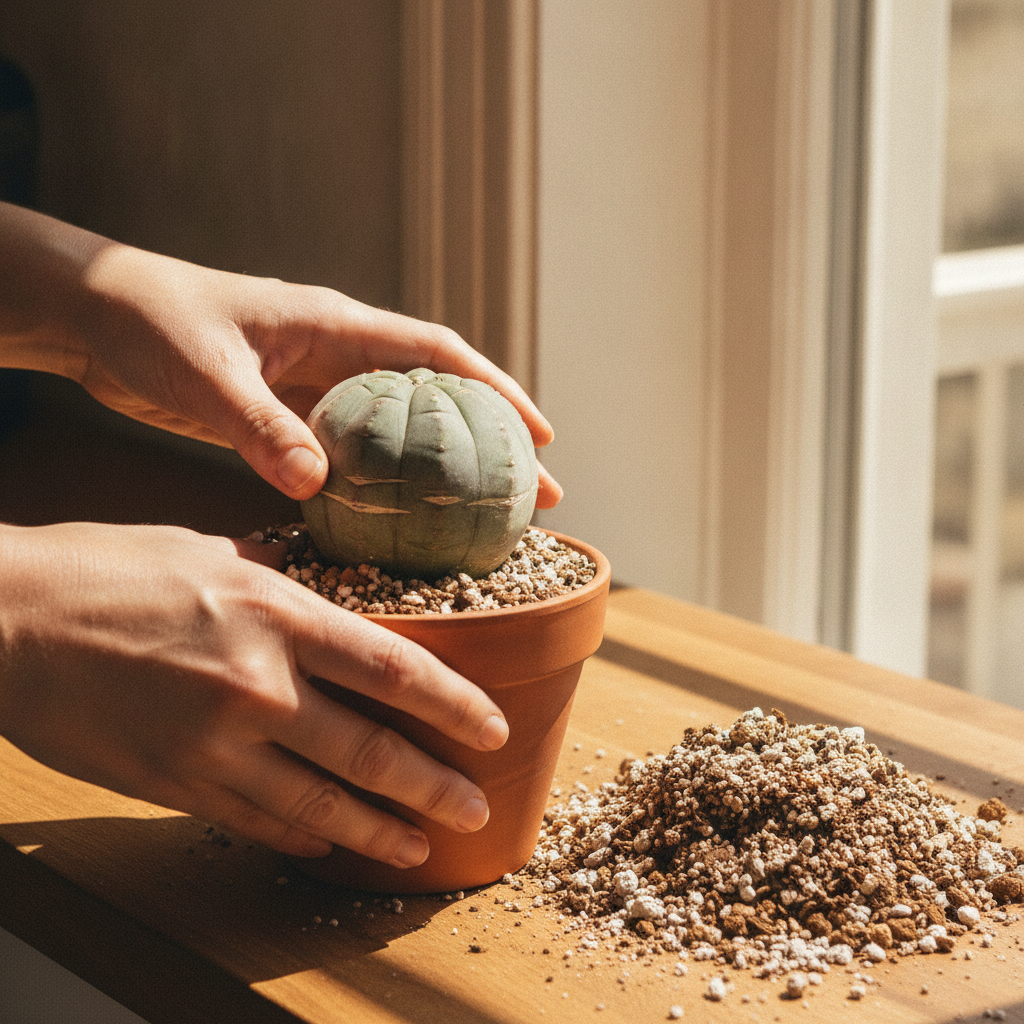
Ideal Soil Composition
A good baseball plant mix is at least half mineral grit by volume. A reliable blend combines a base of bagged cactus and succulent compost with a generous addition of coarse drainage material such as pumice, perlite or fine grit. The finished mix should look gritty and open, with visible particles, and water poured onto it should drain through in seconds rather than pooling on the surface.
| Component | Proportion | Function |
|---|---|---|
| Cactus and succulent compost | 40 to 50 per cent | Provides structure and a little moisture and nutrients |
| Pumice or coarse perlite | 30 per cent | Creates air gaps and rapid drainage |
| Coarse grit or fine gravel | 20 per cent | Adds weight, sharp drainage and stability |
| Top dressing of gravel | Surface layer | Keeps the plant base dry and deters pests |
Baseball plants prefer a neutral to slightly acidic soil, broadly in the pH range of 6.0 to 7.0, which most commercial cactus composts already provide. Soil pH is rarely a practical concern for this plant as long as the mix is open and free-draining, so it is better to focus your attention on grit content than on chasing an exact pH figure.
Pro Tip — Quick Mix Recipe: For a no-fuss blend, combine two parts bagged cactus compost with two parts pumice and one part coarse grit. This holds together for repotting yet dries out within days of watering, which is exactly what a baseball plant wants.
Choosing the Right Pot
Pot choice has a real effect on how often the soil dries and therefore on the plant’s safety. Because a baseball plant has a shallow, modest root system, it does best in a snug pot that is only a little wider than the body itself, with plenty of depth for the taproot.
Drainage holes are non-negotiable. Never plant a baseball plant in a container without a drainage hole, however attractive it is. Without an escape route, water collects unseen at the bottom and the roots sit in it, which is the fastest path to rot. If you love a particular decorative pot with no hole, use it only as a cover and keep the plant in a plain plastic pot inside it.
Pot material: Terracotta is the classic and safest choice because it is porous and wicks moisture away, helping the soil dry faster. Glazed ceramic and plastic both work too, but they hold moisture longer, so if you use them you must be even more cautious with watering.
Pot size: Keep the pot small. A container only one to two centimetres wider than the plant means less surplus soil staying wet around the roots. Oversized pots are a common and avoidable cause of rot in baseball plants.
When to Repot
Baseball plants grow slowly and dislike disturbance, so they need repotting only rarely, typically every three to four years or when the plant has clearly filled its pot. The best time is early spring, just as the growing season begins, when the plant can recover quickly. Repot only into the next size up, and always into fresh gritty mix, since old soil breaks down over time and holds too much moisture.
How to Repot: Step-by-Step
- Make sure the soil is dry, which makes the plant easier to handle and reduces root damage.
- Put on gloves to protect against the irritant sap, and wrap the body in a folded strip of newspaper or thick cloth to hold it without bruising.
- Ease the plant out of its pot and gently crumble the old soil away from the roots.
- Inspect the roots, trimming away any that are dead, mushy or brown with a clean, sharp blade.
- Set the plant in a clean pot at the same depth as before and fill around it with fresh gritty mix, firming lightly.
- Add a top dressing of gravel to keep the base dry, then leave the plant unwatered.
- Wait at least a week before the first watering so any damaged roots can callus and heal.
Warning — Transplant Shock: Watering a freshly repotted baseball plant straight away is a frequent cause of rot, because cut roots take up water before they have sealed. Always allow a dry rest of at least seven days after repotting, longer if you trimmed many roots, before watering again.
Fertilising
Baseball plants are extremely light feeders, a reflection of the poor, mineral soils they grow in naturally. They need only the smallest amount of supplementary feeding, and far more plants are harmed by overfeeding than by going hungry. A little fertiliser at the right time supports steady growth and good colour, but the watchword throughout is restraint.
Too much fertiliser, especially one high in nitrogen, pushes soft, swollen, fast growth that distorts the plant’s tidy shape and makes it more prone to rot and splitting. A baseball plant is meant to grow slowly, and trying to speed it up with feed works against everything that makes it attractive.
Understanding Plant Nutrients
Plant fertilisers are described by their ratio of three main nutrients, nitrogen, phosphorus and potassium, usually printed as an NPK figure on the label. For a baseball plant you want a feed that is low in nitrogen relative to the other two, since high nitrogen drives the soft growth this plant should avoid. The table below summarises the key nutrients and what a shortage of each looks like.
| Nutrient | Symbol | Primary Function | Deficiency Symptoms |
|---|---|---|---|
| Nitrogen | N | Drives green tissue and overall growth | Pale body, very slow growth |
| Phosphorus | P | Supports roots and flowering | Weak roots, poor flowering |
| Potassium | K | Strengthens tissue and stress tolerance | Soft growth, lower drought resistance |
| Calcium | Ca | Builds firm cell walls | Distorted or weak new growth |
| Magnesium | Mg | Central to chlorophyll and photosynthesis | Yellowing of older tissue |
| Iron | Fe | Aids chlorophyll production | Pale new growth despite feeding |
Types of Fertiliser
Liquid fertilisers: A liquid cactus and succulent feed, diluted to half the recommended strength or weaker, is the easiest option for a baseball plant. It is applied with normal watering and gives you full control over how much the plant receives.
Slow-release granular: A few granules of a balanced slow-release feed mixed into the soil at repotting can supply a gentle trickle of nutrients across the season. Use a light hand, as it is easy to over-apply when you cannot see how much is left.
Organic fertilisers: Mild organic options such as a very dilute worm-casting tea work well and are hard to overdose with. They release nutrients slowly and suit the gentle feeding regime this plant prefers.
Feeding Schedule
Feed only during the active growing season, from spring to early autumn, and even then sparingly. For most baseball plants, one or two dilute feeds across the whole growing season is plenty. Never fertilise in winter while the plant is resting, and never feed a plant that is dry at the roots, as concentrated nutrients on dry soil can scorch them. Apply feed only to already moist soil.
Pro Tip — Dilute and Halve: Whatever the label recommends for houseplants, mix your feed at half that strength or less for a baseball plant, and feed half as often as you think you should. It is far easier to add a little more next time than to undo the bloated growth caused by overfeeding.
How to Fertilise
- Choose a day during the growing season when the plant is in active growth.
- Water normally first, or feed while the soil is still slightly moist from a recent watering, never when bone dry.
- Mix a low-nitrogen succulent fertiliser to half strength or weaker.
- Apply it to the soil only, keeping it off the body of the plant.
- Let any excess drain away and do not feed again until the next scheduled feed.
Warning — Salt Build-Up: Over time, fertiliser salts can accumulate in the mix and show as a white crust on the soil or pot, drawing moisture away from the roots and burning them. Once a year, flush the pot with several pot volumes of plain water and let it drain fully to wash these salts out.
Propagation
Propagation is where the baseball plant differs most from familiar houseplants. Unlike trailing succulents that root readily from a snipped stem, Euphorbia obesa is a solitary, unbranched plant that does not take from cuttings in the usual way. For all practical purposes it is grown from seed, which makes propagation a slower and more deliberate undertaking, but also a deeply rewarding one for patient growers.
The reason comes down to the plant’s biology. A baseball plant has no branches or leaves to take cuttings from, and cutting into the body itself simply wounds the plant. Only occasionally, usually after the growing tip has been damaged, will a plant throw out small offsets that can be removed and rooted. The dependable route to new plants is pollination and seed.
Understanding Flowers and Seed
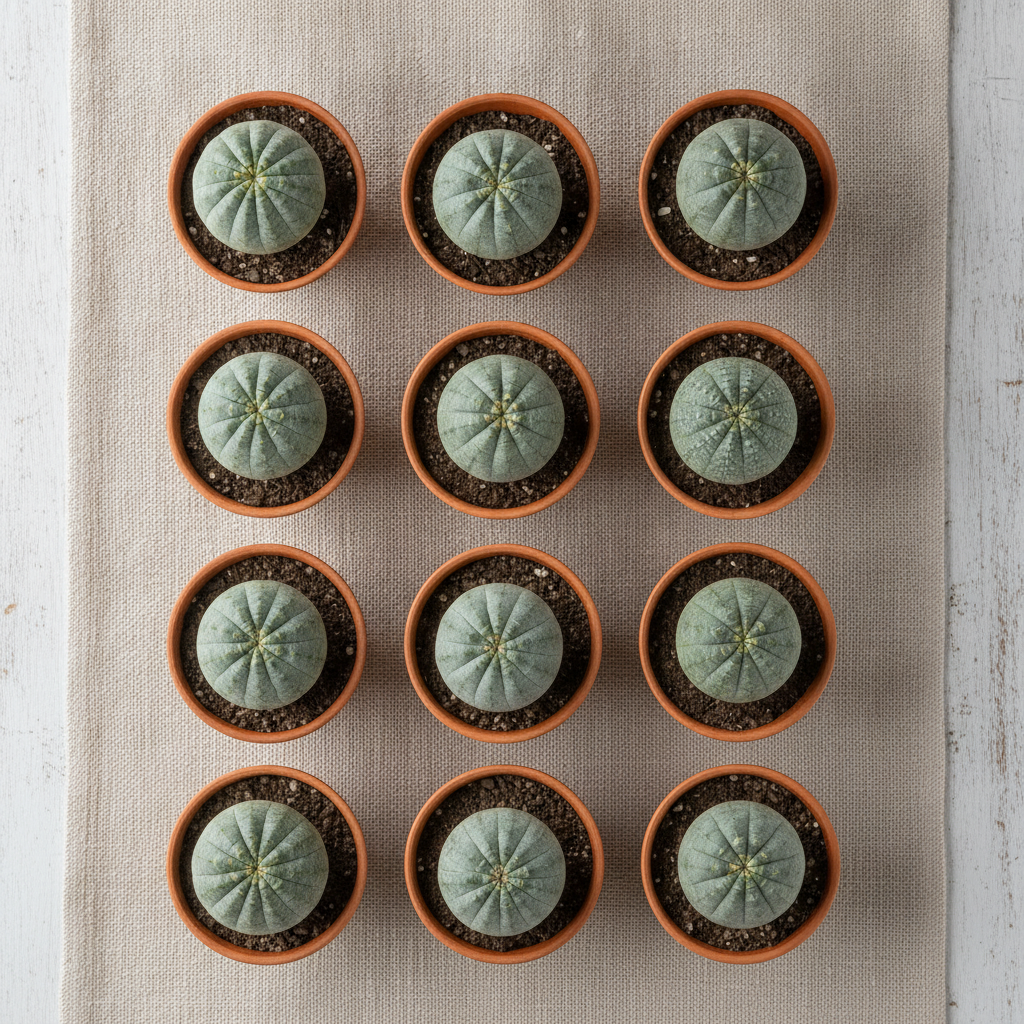
The baseball plant is dioecious, meaning individual plants are either male or female, and you need one of each to produce seed. The small cup-shaped flowers, called cyathia, appear at the apex of the body, and a female plant only sets viable seed if its flowers receive pollen from a male plant in bloom at the same time. This is why raising baseball plants from seed is mostly the preserve of dedicated collectors, who keep both sexes and hand-pollinate to be sure of a set.
Growing from Seed: Step-by-Step
Seed is the standard way to multiply baseball plants. If you have both a male and a female plant flowering together, you can pollinate by hand and collect your own seed; otherwise, fresh seed is the place to start, as viability drops quickly with age.
- When both sexes are in flower, transfer pollen from the male cyathia to the female ones with a fine brush, repeating over several days.
- Once the seed capsules ripen they split explosively, so tie a small fabric bag over them to catch the seed before it scatters.
- Sow fresh seed on the surface of a moist, sterile gritty mix and barely cover it.
- Keep the tray warm, around 21 to 27°C (70 to 81°F), in bright indirect light, and lightly humid until germination.
- Once seedlings appear, gradually increase light and air movement and let the surface dry between waterings.
- Grow the seedlings on slowly, potting them individually once they are large enough to handle safely.
Pro Tip — Catch the Seed: Baseball plant capsules fire their seed several centimetres when ripe, so an unbagged plant will scatter its seed across the windowsill and you will never find it. A scrap of fine cloth or an organza bag tied loosely over each ripening capsule saves the entire crop.
Removing Offsets: Step-by-Step
Occasionally a baseball plant produces clustering offsets, most often after the growing point has been injured. These pups are the only vegetative way to propagate the plant, and they can be detached once they are reasonably sized.
- Wearing gloves, gently twist or cut a well-developed offset cleanly from the parent body.
- Blot the cut with a damp cloth to stop the flow of irritant latex.
- Set the offset aside in a dry, shaded spot for several days to a week so the wound calluses over fully.
- Once a dry seal has formed, place the offset on top of barely moist gritty mix.
- Withhold water until fine roots form, then water sparingly as you would an adult plant.
Troubleshooting Propagation
| Problem | Likely Cause | Solution |
|---|---|---|
| No seed sets | Only one sex present, or flowers not synchronised | Keep both a male and female plant and hand-pollinate |
| Seed fails to germinate | Old or stored seed past viability | Sow fresh seed as soon as possible after collecting |
| Seedlings damp off | Mix kept too wet or poorly ventilated | Use a sterile gritty mix and improve airflow |
| Offset rots before rooting | Cut surface watered before it calloused | Allow a full week of dry callusing before any moisture |
Pests & Diseases
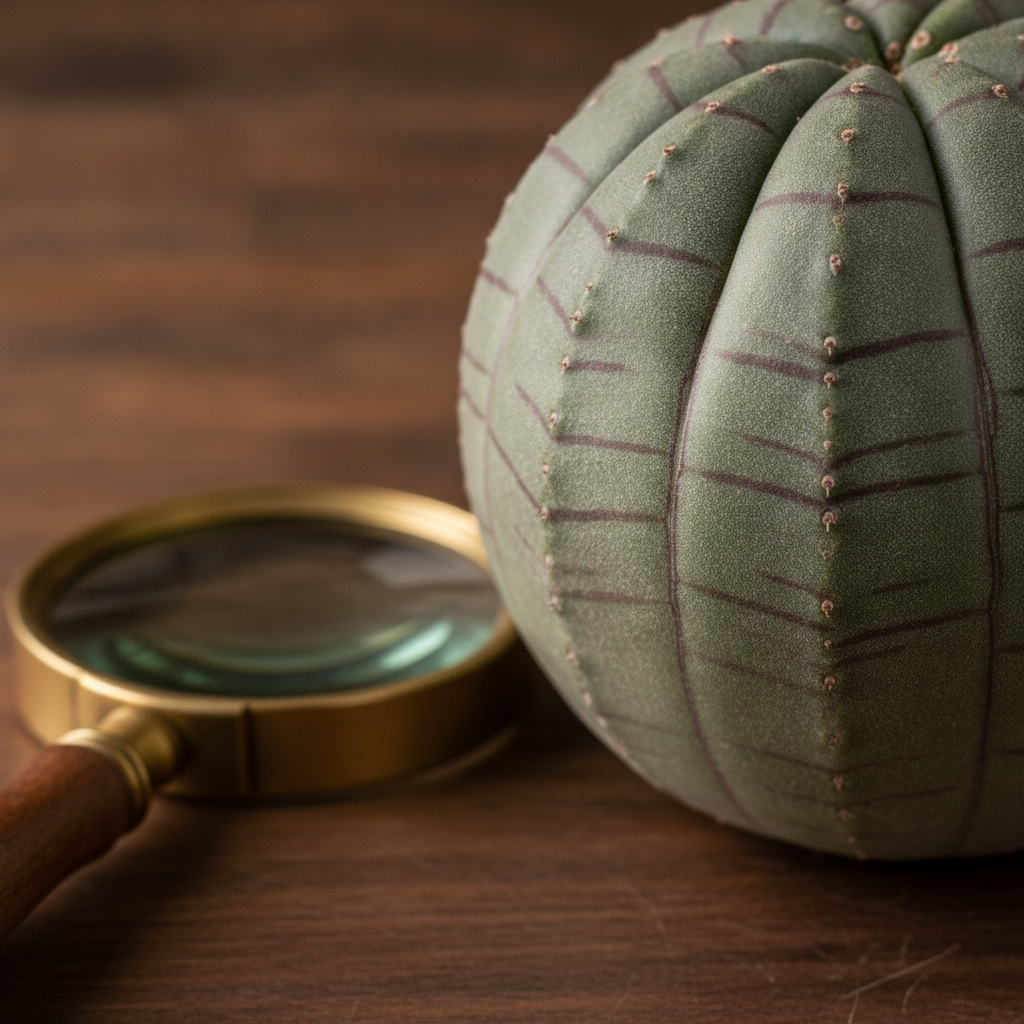
A healthy baseball plant grown hard and dry is not especially troubled by pests, but it is not immune. The same few sap-sucking insects that bother other succulents will find it, and because the plant grows so slowly, damage and infestations can take hold quietly before you notice. Regular inspection is the best defence.
By far the most serious threats, though, are the diseases that follow overwatering. Root and stem rot account for the great majority of baseball plant deaths, and almost all of them trace back to soil that stayed too wet for too long. Keeping the plant lean and well-drained prevents more problems than any spray ever cures.
Common Pests
Mealybugs (Pseudococcus species)
Mealybugs are the most common pest of baseball plants, appearing as small white cottony tufts tucked into the ribs and around the base where they are easy to miss. They suck sap and weaken the plant, and a related root mealybug can infest the soil unseen, showing only as a general decline.
Treatment: Dab visible mealybugs with a cotton bud dipped in isopropyl alcohol, and for heavier or root infestations drench the soil with a systemic insecticide or unpot and wash the roots clean before repotting in fresh mix.
Spider mites (Tetranychus urticae)
Spider mites thrive in hot, dry conditions and can scar the body of a baseball plant with fine pale stippling and rusty patches. They are tiny and often noticed only once fine webbing appears across the ribs, by which time numbers are high.
Treatment: Wipe the body gently to remove mites and webbing, then treat with a miticide or insecticidal soap, repeating every few days to break the breeding cycle. Better airflow helps discourage them.
Scale insects (Coccus species)
Scale appear as small, hard brown bumps fixed to the surface of the plant, where they sit and feed on sap. They can be mistaken for part of the plant’s natural markings, so look for raised, removable bumps rather than the flat banding of the body.
Treatment: Scrape scale off gently with a fingernail or soft brush, then treat with a cotton bud dipped in alcohol or a horticultural oil to catch the mobile young.
Common Diseases
Root and stem rot (Fusarium and Pythium species)
Rot is the defining disease of the baseball plant and the leading cause of death. It begins in waterlogged roots and creeps upward, turning the base soft, brown and eventually mushy, often before the upper body shows any sign of trouble. By the time the surface yellows or collapses, the rot is usually advanced.
Treatment: Act at the first hint of softness. Unpot the plant, cut away every trace of rotten tissue with a sterile blade until only firm green growth remains, dust the wound with sulphur or fungicide, let it callus for several days, and replant in dry, fresh gritty mix. Prevention through careful watering is far more dependable.
Corky scab and oedema (physiological disorder)
Rough, corky tan patches sometimes spread across the body of a baseball plant. These are usually not an infection but a response to erratic watering, cold damp conditions or sudden bright sun, where the tissue scars over. The marks are permanent but generally harmless to the plant’s overall health.
Treatment: There is no cure for existing scarring, but you can prevent more by keeping watering even, light steady and conditions warm and bright rather than cold and damp.
Pest and Disease Summary
| Pest / Disease | Identification | Treatment |
|---|---|---|
| Mealybugs | White cottony tufts in ribs and at the base | Alcohol swabs or a systemic drench |
| Spider mites | Pale stippling and fine webbing on the body | Miticide or insecticidal soap, improved airflow |
| Scale | Hard brown bumps fixed to the surface | Scrape off and treat with alcohol or oil |
| Root and stem rot | Soft, browning, mushy base | Cut out rot, callus, replant dry; water less |
| Corky scab | Rough tan scarred patches | Prevent with even watering and steady conditions |
Prevention Strategies
Prevention with a baseball plant is mostly a matter of good growing conditions. A plant kept in bright light, gritty soil and a small pot, watered only when bone dry, is naturally resilient and rarely succumbs to either pests or rot. Inspect the ribs and base whenever you water, and isolate any new plant for a few weeks before placing it near your collection.
Good airflow and a dry surface deny most pests and fungi the damp, stagnant conditions they need. Removing fallen debris from the soil surface, avoiding overhead watering, and keeping the body itself dry all reduce the openings for trouble. A clean, lean plant is a healthy plant.
Pro Tip — Quarantine New Plants: Most pest outbreaks arrive on a newly bought plant. Keep any new succulent apart from your others for three to four weeks and check it over carefully before introducing it, and you will avoid the majority of infestations entirely.
Popular Varieties
The baseball plant is a single species, but it comes in several recognised forms and has been crossed with its relatives to produce a small family of collectible variations. These range from subtle differences in proportion to dramatic crested mutations, and they are what keep enthusiasts returning to the species.
It is worth remembering that Euphorbia obesa is protected in the wild, listed on CITES and threatened by past over-collection in its tiny native range. Happily, the plant is now propagated in huge numbers in cultivation, so every form below can be bought as nursery-raised stock with a clear conscience. The varieties table and profiles that follow cover the forms you are most likely to encounter.
| Variety | Appearance | Light Needs | Growth Rate | Availability |
|---|---|---|---|---|
| True baseball plant (E. obesa) | Solitary grey-green globe, eight ribs, fine banding | Bright to full sun | Slow | Common |
| subsp. symmetrica | Squatter, flatter, very even ribbing | Bright to full sun | Slow | Common |
| Crested form (f. cristata) | Fan-shaped, brain-like wavy ridges | Bright, slightly softer | Very slow | Uncommon |
| Variegated baseball plant | Globe marbled with yellow and cream | Bright, avoid harsh midday sun | Very slow | Rare |
| Euphorbia ‘Cocklebur’ | Knobbly, offsetting hybrid (obesa × susannae) | Bright to full sun | Moderate | Uncommon |
| Euphorbia meloformis | Close melon-shaped relative, often confused | Bright to full sun | Slow | Common |
Featured Varieties
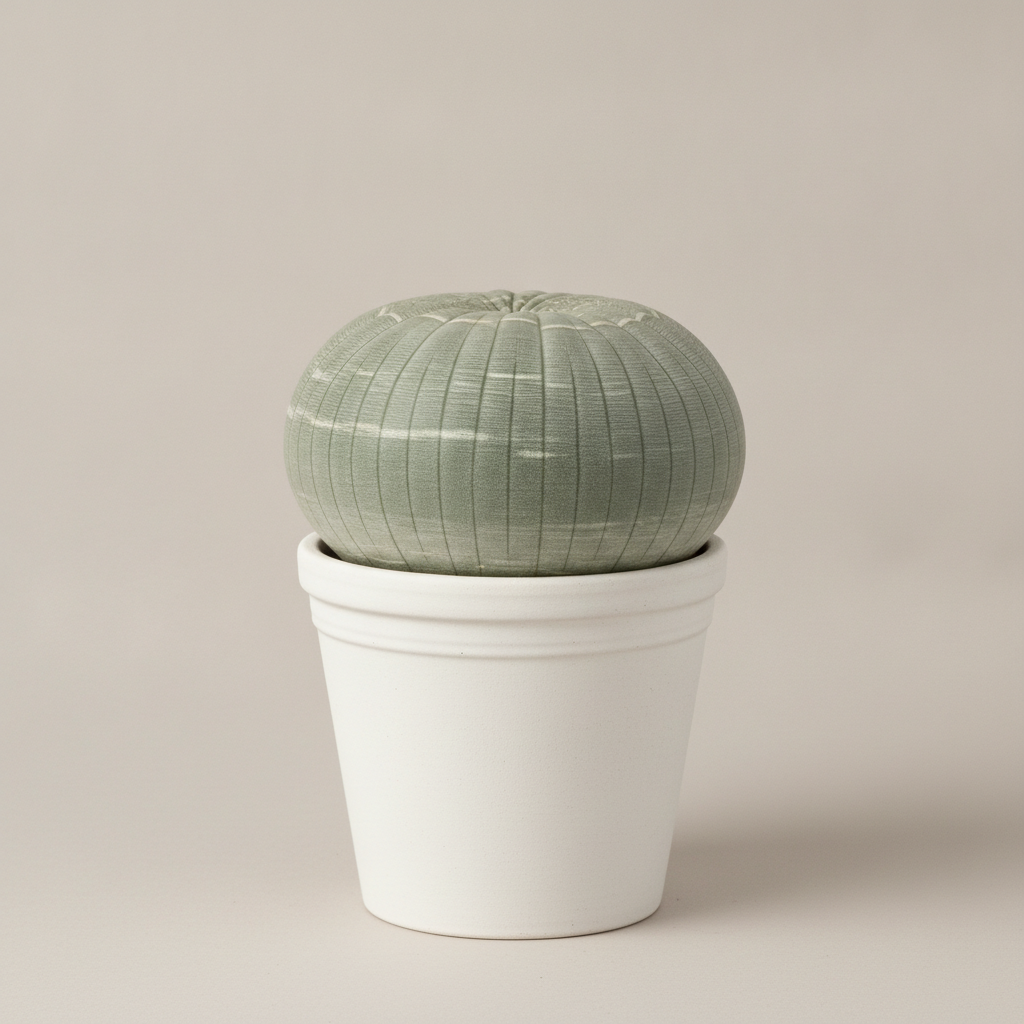
Euphorbia obesa subsp. symmetrica
The symmetrica form is squatter and broader than the type, with a flattened top and exceptionally fine, even ribbing that gives it an almost machine-turned look. It is often the more perfectly spherical of the two and is just as easy to grow.
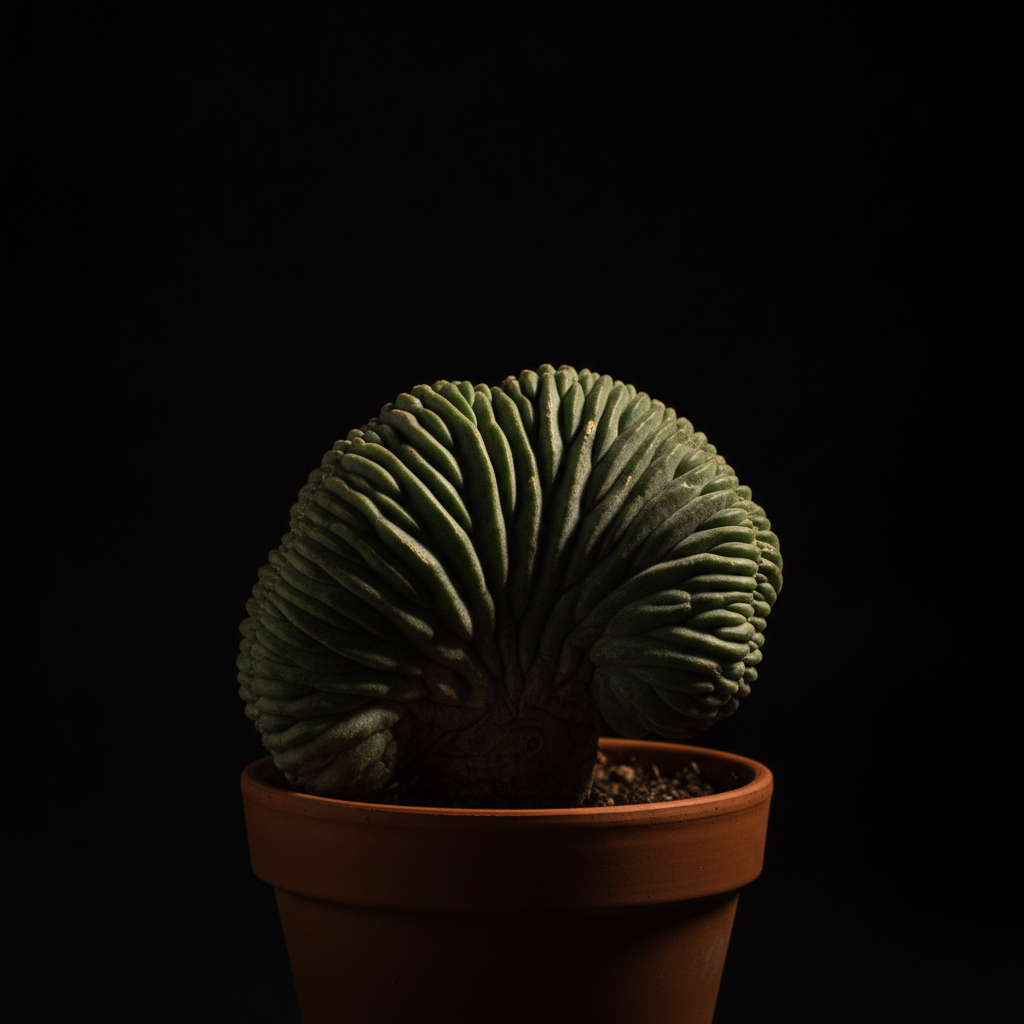
Crested Baseball Plant (f. cristata)
The crested form is a mutation in which the growing point fuses into a wavy, fan-shaped or brain-like ridge instead of a sphere. Each crest is unique, growing very slowly into a sculptural mass that is among the most sought-after of all baseball plant forms.
Variety Profiles in Detail
True Baseball Plant (Euphorbia obesa)
The species itself is the form most people picture: a single grey-green sphere with eight low ribs and delicate reddish-purple cross-banding, slowly lengthening into a short barrel over many years. It is the benchmark against which the other forms are judged and the easiest to find and grow.
Variegated Baseball Plant (Euphorbia obesa variegata)
Variegated plants carry irregular marbling of yellow and cream across the green body, the result of patches of tissue lacking normal pigment. They are slower and a little more delicate than plain plants, since the pale areas photosynthesise less, and they are correspondingly rare and prized.
Cocklebur Hybrid (Euphorbia ‘Cocklebur’)
This popular hybrid between the baseball plant and Euphorbia susannae inherits the rounded form of one parent and the freely offsetting, knobbly habit of the other. Unlike the solitary species, it clusters readily, which makes it both easier to propagate from offsets and a good gateway plant for newcomers to the group.
Choosing the Right Variety for Your Space
For a first baseball plant, the true species or the symmetrica form is the sensible choice: both are widely available, inexpensive and undemanding, and they show off the classic look at its best. If you have a very bright sill and a taste for the unusual, the crested or variegated forms reward the extra patience they demand, while the Cocklebur hybrid suits anyone who wants a baseball-plant character that will multiply itself over time. Whichever you pick, the care is essentially identical, so let availability and your own eye guide the decision.
Frequently Asked Questions
How often should I water a baseball plant?
Only when the soil is completely dry, which in a gritty mix usually means roughly every two to three weeks in the growing season and almost never in winter. The exact interval depends on your conditions, so judge by the dryness and weight of the pot rather than by a fixed schedule.
Why is my baseball plant turning into a tall column?
Some elongation is natural with age, but rapid stretching into a pale, soft column is etiolation caused by too little light. Move the plant to a much brighter spot or add a grow light. The stretched growth will not shrink back, but stronger light will keep all future growth compact.
Is the baseball plant toxic to pets and children?
Yes. Like all euphorbias it contains a milky latex that strongly irritates skin and eyes and is harmful if swallowed. Keep it out of reach of pets and children, and wear gloves whenever you cut or handle damaged tissue.
Why won’t my baseball plant produce seed?
Baseball plants are either male or female, so a single plant cannot set seed on its own. You need a male and a female flowering at the same time and usually have to hand-pollinate between them to get a viable set.
Can I propagate a baseball plant from a cutting?
Not in the usual sense. It is a solitary, unbranched plant with nothing to cut for a cutting, and slicing the body only wounds it. New plants come from seed, or occasionally from offsets when a plant happens to produce them.
Why has the base of my plant gone soft and brown?
A soft, brown base is almost always root or stem rot from overwatering or poor drainage. Stop watering at once, unpot the plant, cut away all rotten tissue, let it callus and replant in dry gritty mix. In future, water far less and ensure the soil dries fully between waterings.
How big does a baseball plant get?
It stays small. Most plants reach around 8 to 12 centimetres (3 to 5 inches) across and, over many years, may elongate to perhaps 20 centimetres (8 inches) tall. Its slow, compact growth is part of what makes it such a manageable windowsill plant.
Can a baseball plant live outdoors?
It can spend warm summers outdoors in a bright, sheltered spot, which often improves its colour and shape, but it is frost-tender. Bring it back inside well before temperatures fall toward 10°C (50°F), and never expose it to frost, which is fatal.
Why is my baseball plant not growing?
Slow growth is normal for this species, and in winter it stops altogether during its rest. As long as the plant is firm and well coloured, a lack of visible growth is nothing to worry about. If you want to encourage what little growth it makes, give it more light rather than more water or feed.






