
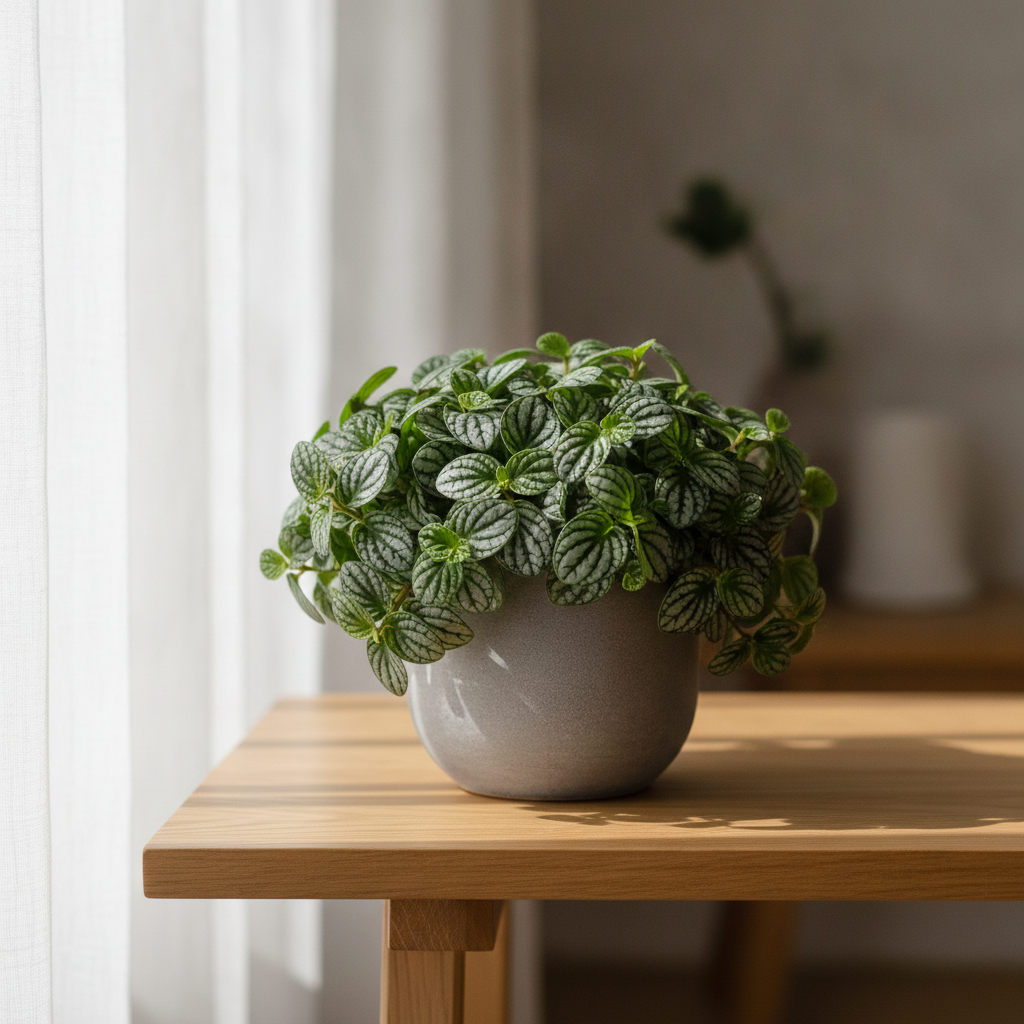
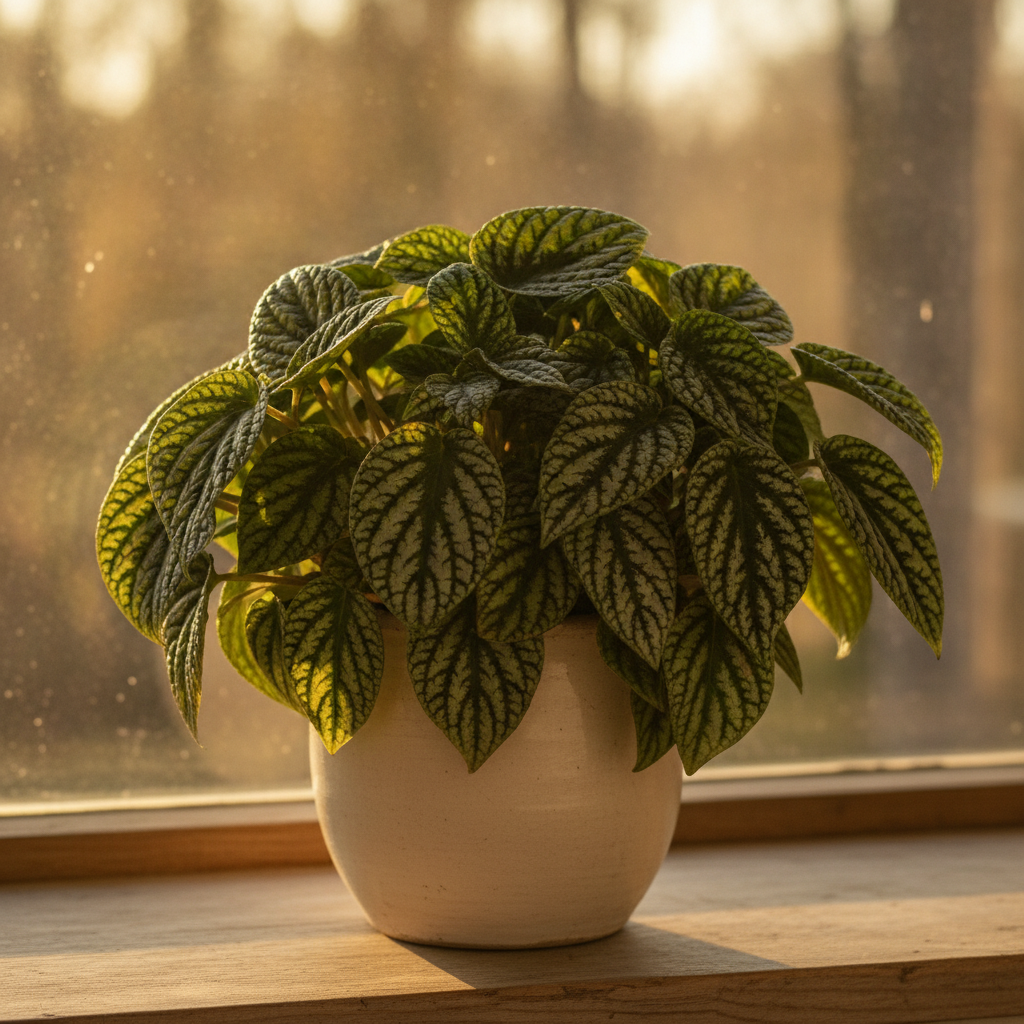
Few small houseplants earn their keep as reliably as the aluminum friendship plant (Pilea cadierei minima), the dwarf form of the classic aluminium plant. Its dark green leaves look as though someone has pressed patches of brushed metal between the veins, and it packs that shimmer into a tidy mound rarely taller than the width of a paperback. It is one of the easier members of the nettle family to keep alive, yet the gap between an aluminum friendship plant that merely survives and one that truly thrives comes down to a handful of details this guide walks through in full.
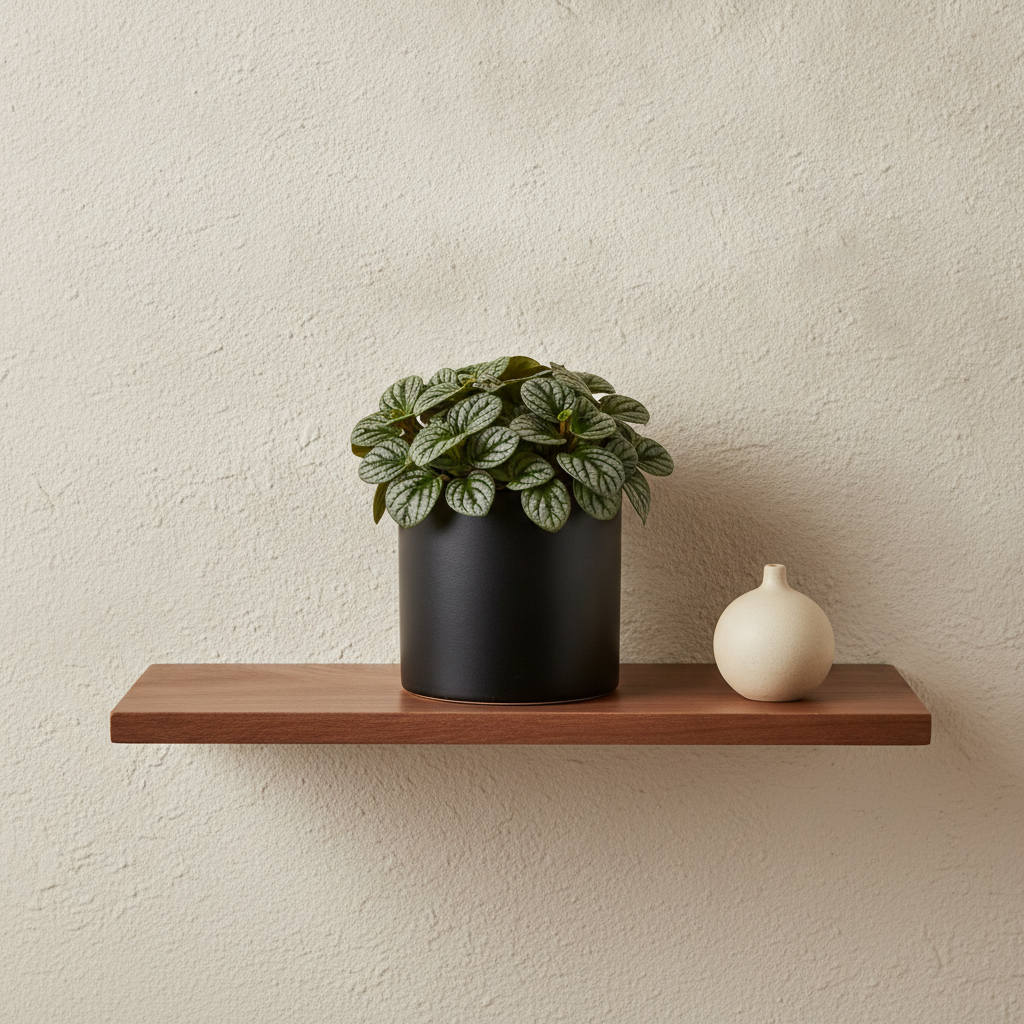
Quick Reference
The table below gives you the shorthand version. The sections that follow explain the reasoning behind each figure, because an aluminum friendship plant responds far better to understood care than to numbers followed blindly.
| Common name | Aluminum friendship plant, dwarf aluminium plant |
| Botanical name | Pilea cadierei minima |
| Family | Urticaceae (nettle family) |
| Origin | Rainforest floors of southern China and Vietnam |
| Light | Bright, indirect light; no harsh midday sun |
| Water | Keep evenly moist; let the top 1 to 2 cm (0.5 to 0.75 in) dry between drinks |
| Humidity | Moderate to high, 50 percent or more preferred |
| Temperature | 18 to 24 degrees C (64 to 75 degrees F); keep above 13 degrees C (55 degrees F) |
| Soil | Light, free-draining, peat or coir based mix |
| Feeding | Balanced liquid feed, diluted, every 4 weeks in spring and summer |
| Mature size | 15 to 20 cm (6 to 8 in) tall and wide |
| Toxicity | Non-toxic to cats, dogs and people |
| Difficulty | Easy, with a little attention to moisture and pruning |
Why Grow the Aluminum Friendship Plant as a Houseplant
Scale is the first argument in its favour. Where the full-size aluminium plant can stretch and flop toward 30 cm, the dwarf minima holds itself in a neat cushion that suits a windowsill, a shelf edge or the front row of a grouped display. That silvery marbling is not a variegation that fades in poor light the way pale leaf margins often do; it is a structural feature of the leaf surface, so the plant keeps its metallic sparkle even in the medium light of a north-facing room, which makes it unusually forgiving for a plant grown chiefly for its foliage.
It also earns the “friendship” half of its name honestly. Stem cuttings root so readily that a single healthy plant can supply pots for half a street, and passing on rooted pieces is exactly how this Pilea has travelled from window to window for decades. For anyone nervous about killing plants, an aluminum friendship plant offers a low-stakes way in: it grows fast enough to reward good care within weeks, and when it does sulk it tells you loudly and recoverably, wilting dramatically when thirsty and perking up again within an hour of a drink. Add that it is genuinely non-toxic to cats, dogs and curious toddlers, and it becomes one of the safest choices for a busy household.
Pro Tip — Pinch for a cushion: The dwarf form still wants to reach for the light and can turn leggy within a season. Pinch out the growing tips every few weeks and the plant branches from lower nodes, staying dense and mounded rather than sparse and stretched.
Light
On the forest floors of its native range the aluminum friendship plant grows in the broken, filtered light that reaches beneath the canopy, and that is the quality of light to recreate indoors. Bright but indirect light keeps the leaves compact and the silver markings crisp. An east-facing windowsill that catches gentle morning sun, or a spot a metre or so back from a brighter south or west window, sits comfortably in its sweet spot. A sheer curtain over a strong window does the same job by scattering the direct beam.
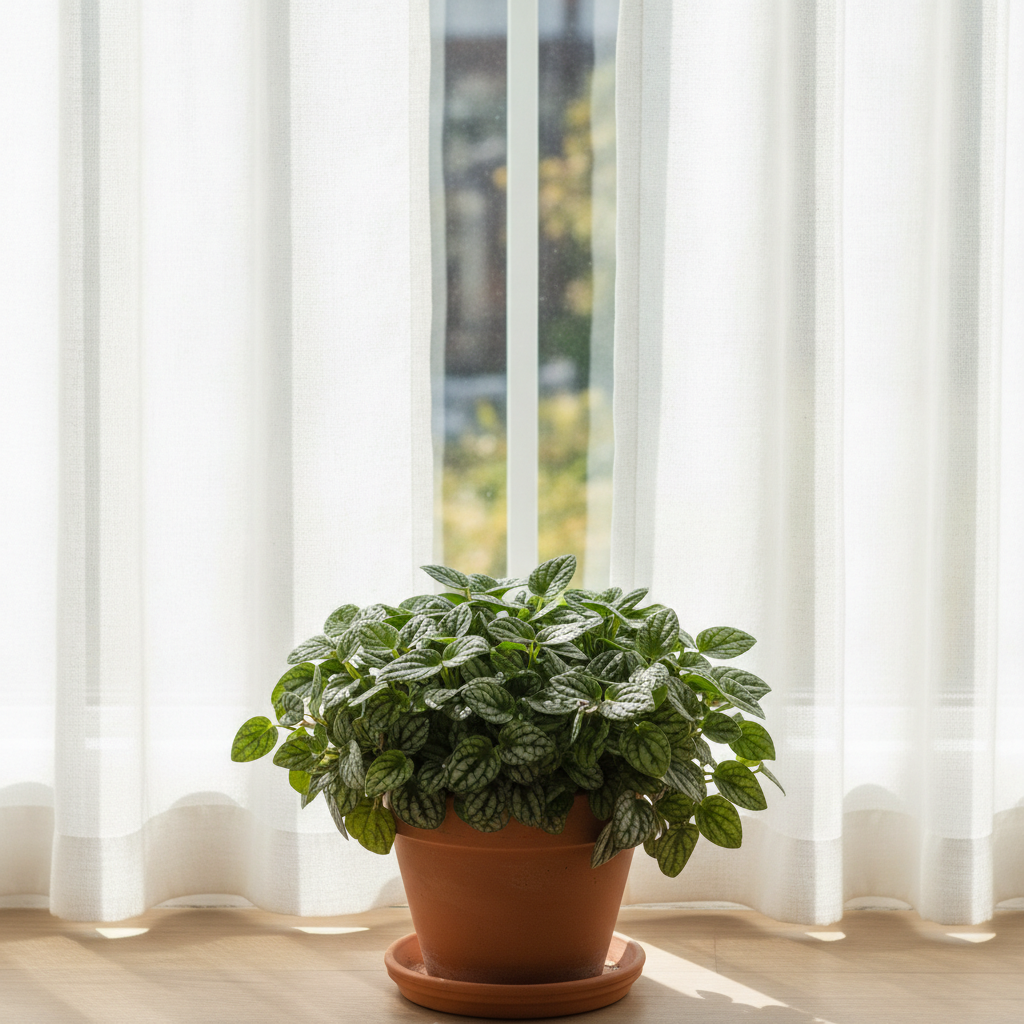
The two failure modes sit at opposite ends. Too little light and the plant stretches, the gaps between leaves lengthening as it reaches toward the window, and the mound loosens into a straggle. Too much direct sun, especially through glass in the middle of the day, scorches the thin leaves, bleaching the green to a bleached tan and crisping the edges. If you notice the newest leaves emerging smaller and further apart, move the plant brighter; if you see pale, sunburnt patches, pull it back from the glass. Rotating the pot a quarter turn each week keeps growth even, since the plant leans noticeably toward its light source.
In a genuinely dim room the aluminum friendship plant will persist but slowly decline, and a modest LED grow light on a timer for ten to twelve hours a day is enough to keep it dense through a dark winter.
Watering
Watering is where most people either lose or master this plant, because it wants the middle ground and dislikes both extremes. The aim is soil that stays lightly and evenly moist, never waterlogged and never bone dry. In practice that means letting only the top 1 to 2 cm (0.5 to 0.75 in) of the mix dry before you water again, then watering thoroughly until it runs from the drainage holes and tipping away whatever collects in the saucer.
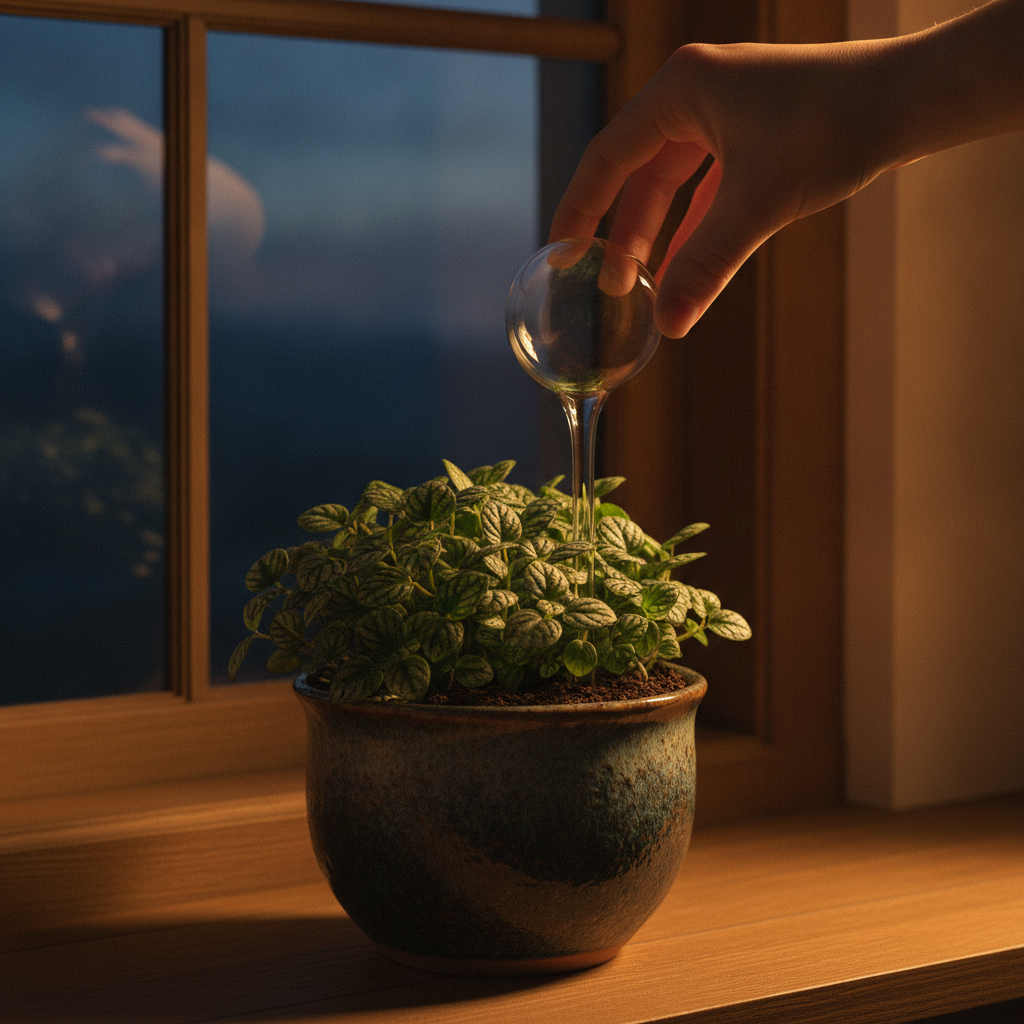
The plant is refreshingly honest about thirst. When the rootball dries too far the whole cushion wilts and flattens, an alarming sight that reverses within an hour of watering with no lasting harm if it happens rarely. Repeated wilting, though, costs lower leaves, so treat the collapse as a warning rather than a routine. Overwatering is the quieter and more dangerous fault. Soil kept sodden starves the roots of air, and the first signs are mushy, yellowing lower leaves and a sour smell from the pot. Because the fine roots rot quickly, an aluminum friendship plant lost to overwatering often goes fast, so err toward checking the soil with a finger before every drink rather than watering to a fixed schedule.
Cool tap water at room temperature suits it well. In winter, when growth slows and the light weakens, the surface dries more slowly, so stretch the interval between waterings and let your finger, not the calendar, make the call. Humidity matters here too: this is a plant that appreciates moisture in the air, ideally 50 percent or more. A pebble tray, a grouping of plants or a spot in a naturally humid kitchen or bathroom all help, while the dry air near a radiator will brown the leaf edges and invite spider mites.
Warning — Cold and draughts: Keep the aluminum friendship plant above 13 degrees C (55 degrees F) and away from cold windowsills in winter and the blast of air-conditioning in summer. Sudden chills cause leaf drop and blackened patches that no amount of later care will undo.
Soil
The right mix for an aluminum friendship plant holds enough moisture to keep the roots evenly damp while draining fast enough that they never sit in water. A quality peat-free houseplant compost based on coir forms a good foundation, lightened with roughly a quarter to a third of its volume in perlite or fine bark to open up the structure. The result should feel springy and airy in the hand, not dense and claggy, because compacted soil is the fastest route to the root rot this plant is prone to.
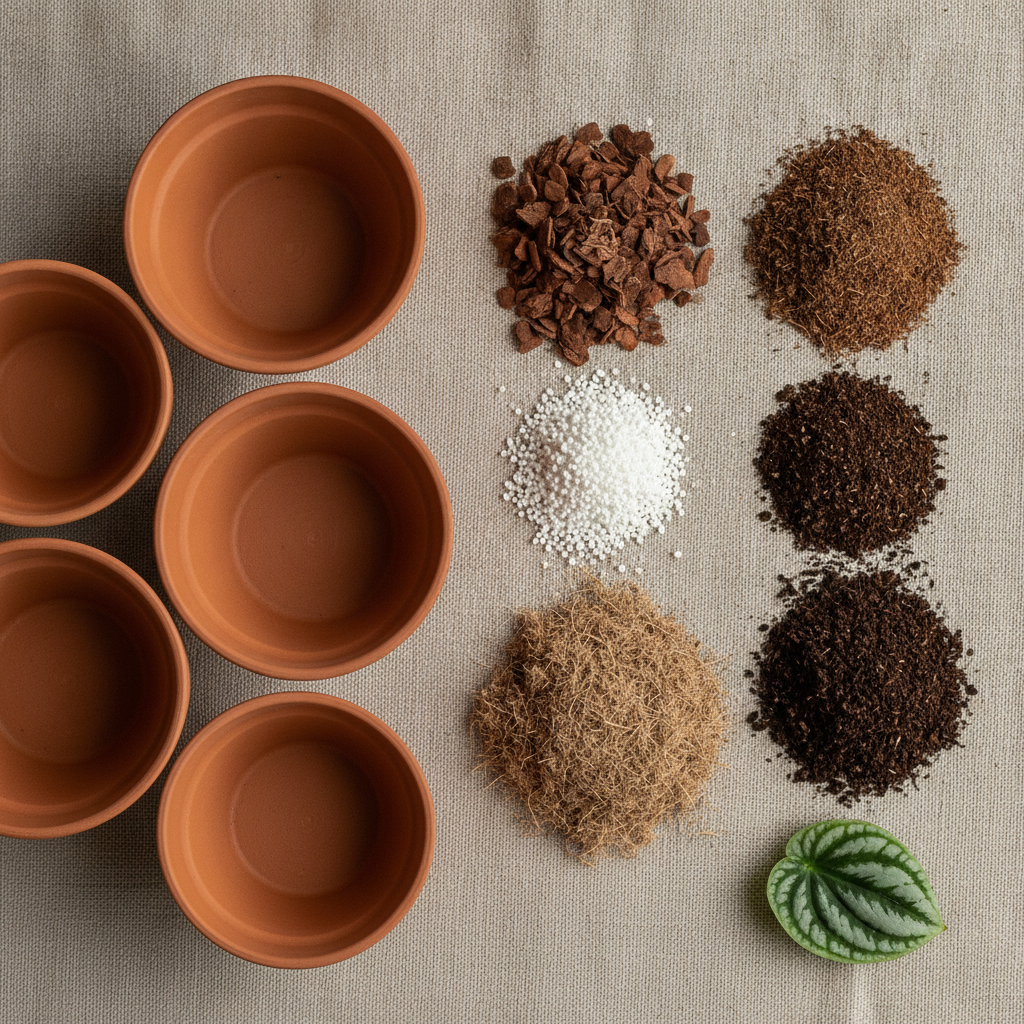
Because the plant is small and shallow rooted, it does best in a modest pot that its roots can fill within a season, always one with drainage holes. An oversized container holds a reservoir of wet soil the roots cannot reach, and that stagnant moisture is exactly what turns roots to mush. Repot in spring only when roots begin to show at the surface or through the base, moving up a single pot size at a time. Many growers find that rather than repotting an old, leggy plant they prefer to start fresh from cuttings every couple of years, since the dwarf aluminium plant naturally loses its looks as it ages and division rejuvenates the display entirely.
When you do repot, water lightly beforehand so the rootball holds together, tease away the outermost roots gently, and settle the plant at the same depth it grew before, firming fresh mix around it without packing it hard.
Fertilising
An aluminum friendship plant is not a heavy feeder, but its fast growth through the warm months does draw on the soil, and a light regular feed keeps the foliage full and the silver markings bright. A balanced liquid houseplant fertiliser diluted to half the strength on the label, applied roughly every four weeks from spring through late summer, is all it asks. Always feed onto already-moist soil rather than a dry rootball, since concentrated feed on dry roots can scorch the fine root tips.
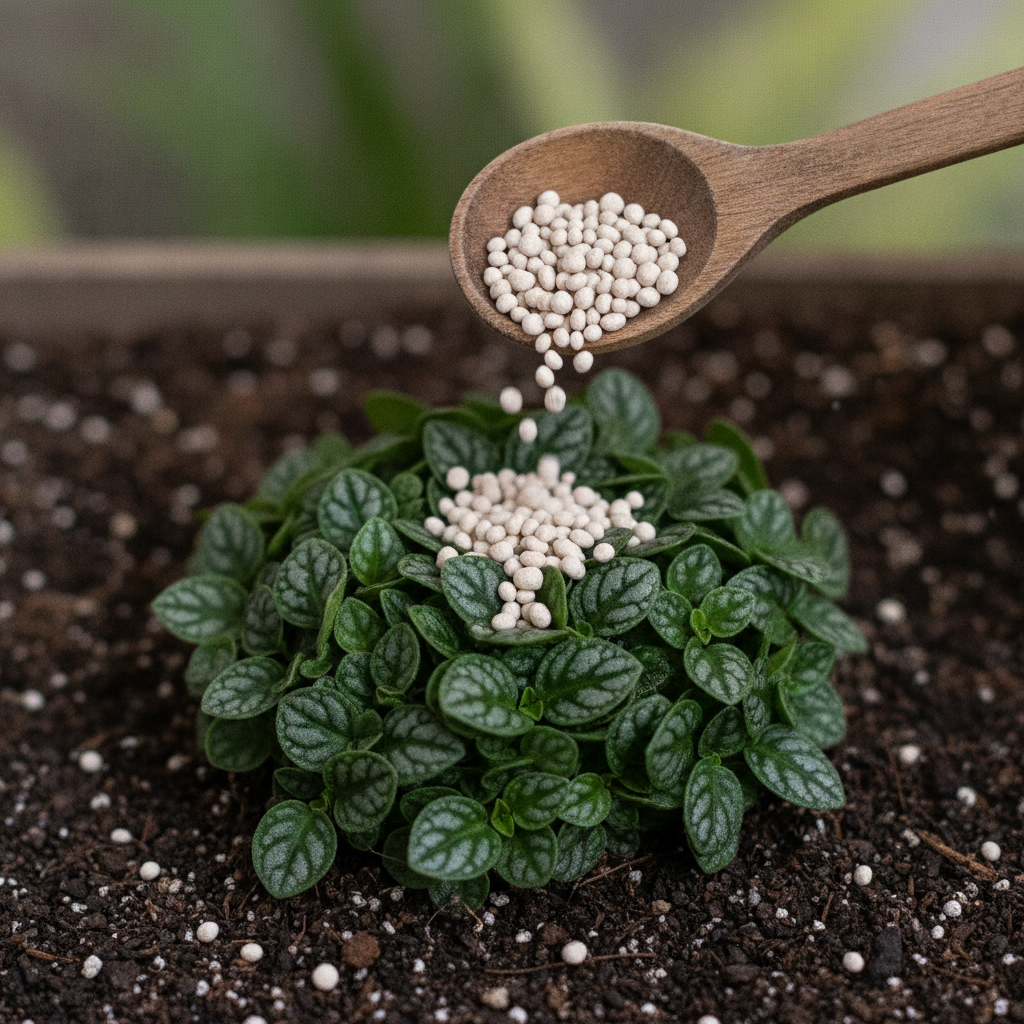
More is emphatically not better with this plant. Overfeeding builds up mineral salts that brown the leaf tips and edges, the same symptom you might mistake for underwatering, and it can push soft, weak growth that flops. In autumn and winter, as light fades and growth all but stops, pause feeding entirely and resume only when you see fresh leaves unfurling in spring. If you prefer a hands-off approach, a small amount of slow-release fertiliser worked into the surface in spring feeds the plant gradually through the season, though take care to use only the reduced rate suited to a small pot.
Propagation
Propagation is the great pleasure of this plant and the reason it changes hands so freely. It roots from stem tip cuttings with almost no effort, and because an ageing plant tends to grow leggy, taking cuttings doubles as a way of renewing your display. Spring and early summer, when growth is most vigorous, give the fastest and most reliable results.
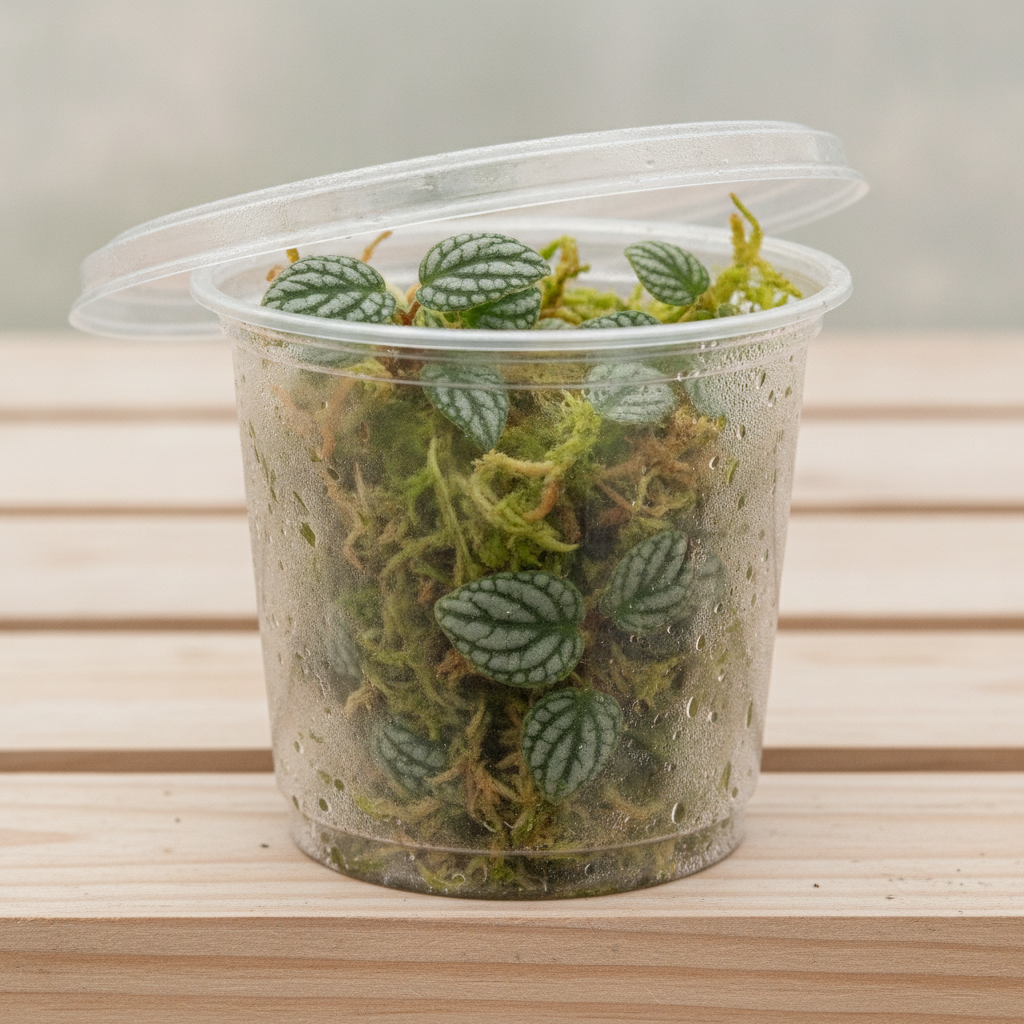
To take cuttings, follow these steps:
- Choose a healthy shoot and cut a tip section 5 to 8 cm (2 to 3 in) long just below a leaf node using clean, sharp scissors.
- Strip the leaves from the lowest node or two, leaving a bare length of stem to sit in the rooting medium.
- Insert the cutting into damp sphagnum moss, a light coir and perlite mix, or simply a glass of water, keeping at least one bare node buried or submerged.
- Set it somewhere warm and bright but out of direct sun, and raise the humidity with a loose clear cover or propagation box, venting it occasionally to prevent rot.
- Keep the medium damp and watch for roots within two to three weeks; once they reach 2 to 3 cm (about 1 in), pot the cutting into normal mix.
For an instantly full pot, root several cuttings together and plant the whole cluster into one container. This is the quickest way to a dense, showy aluminum friendship plant, and it is precisely how nurseries produce the bushy specimens sold in shops. Water-rooted cuttings transplant fine but adapt a little more smoothly if you pot them while the roots are still young and short.
Pests and Problems
Kept in good health the aluminum friendship plant is not especially prone to pests, but dry air and stress open the door to the usual suspects. Spider mites are the most common, thriving in the warm, dry conditions near radiators and betraying themselves with fine speckling on the leaves and faint webbing in the leaf axils. Mealybugs appear as small white cottony tufts where leaf meets stem, aphids cluster on soft new growth, and fungus gnats hover around soil that is kept too wet. Whitefly occasionally join in, rising in a small cloud when the plant is disturbed.
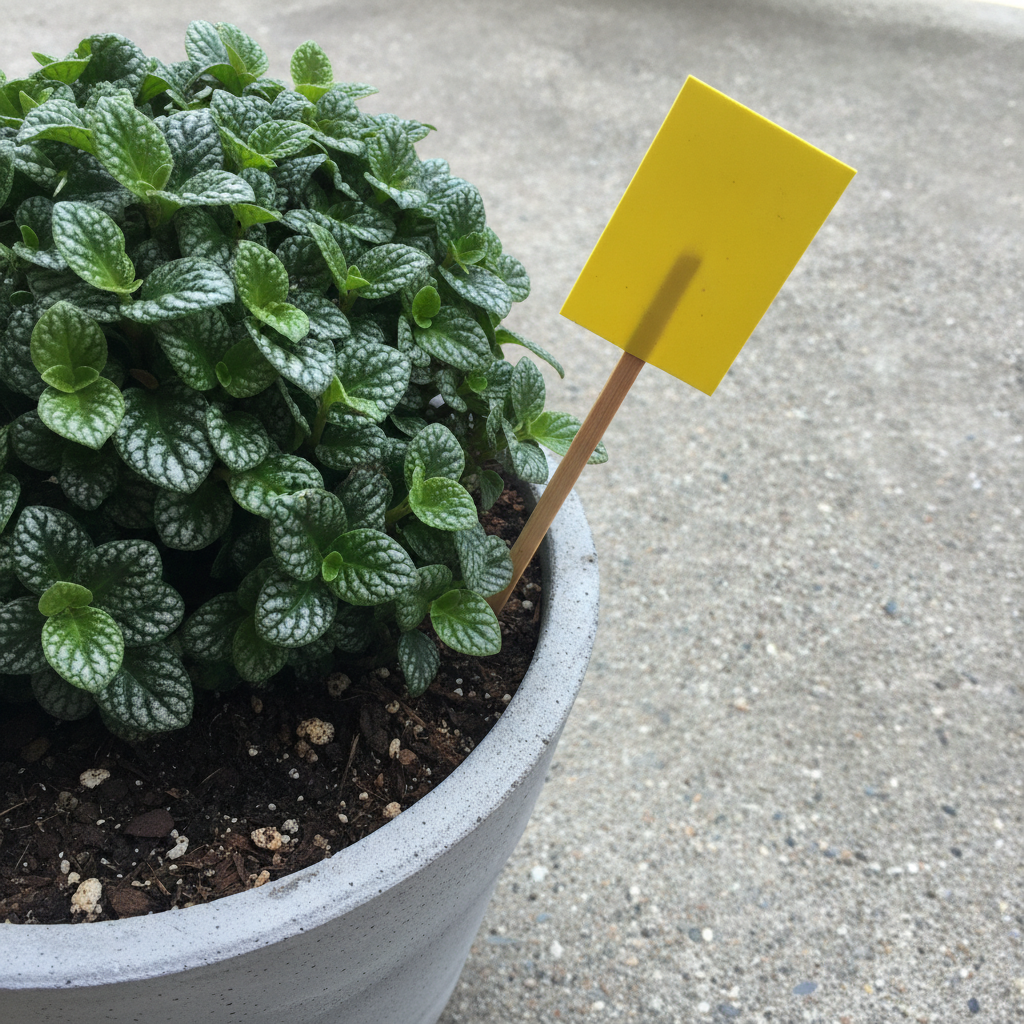
Catch any of these early and control is simple. Isolate a newly affected plant, wipe the leaves and axils with a cloth or cotton bud dipped in diluted isopropyl alcohol to deal with mealybugs and mites directly, and follow up with a spray of insecticidal soap or neem oil every week or so until the trouble clears. Raising the humidity discourages spider mites at the source, while letting the top of the soil dry between waterings and standing a yellow sticky trap in the pot breaks the fungus gnat cycle.
Most complaints about this plant, though, are not pests at all but responses to care. Browning leaf tips point to dry air or a build-up of fertiliser salts; yellowing lower leaves usually mean the soil has been kept too wet; a sudden leggy, sparse habit signals too little light or simply the plant’s natural ageing, both answered by pinching and fresh cuttings; and dramatic wilting is nearly always thirst that reverses within the hour. Read the leaves as feedback and the aluminum friendship plant becomes one of the most communicative plants you can keep.
Varieties and Relatives
The dwarf aluminum friendship plant belongs to a small circle of silver-marked pileas that make handsome companions on the same shelf. The two below are the ones you are most likely to meet, and both enjoy the identical care described in this guide.
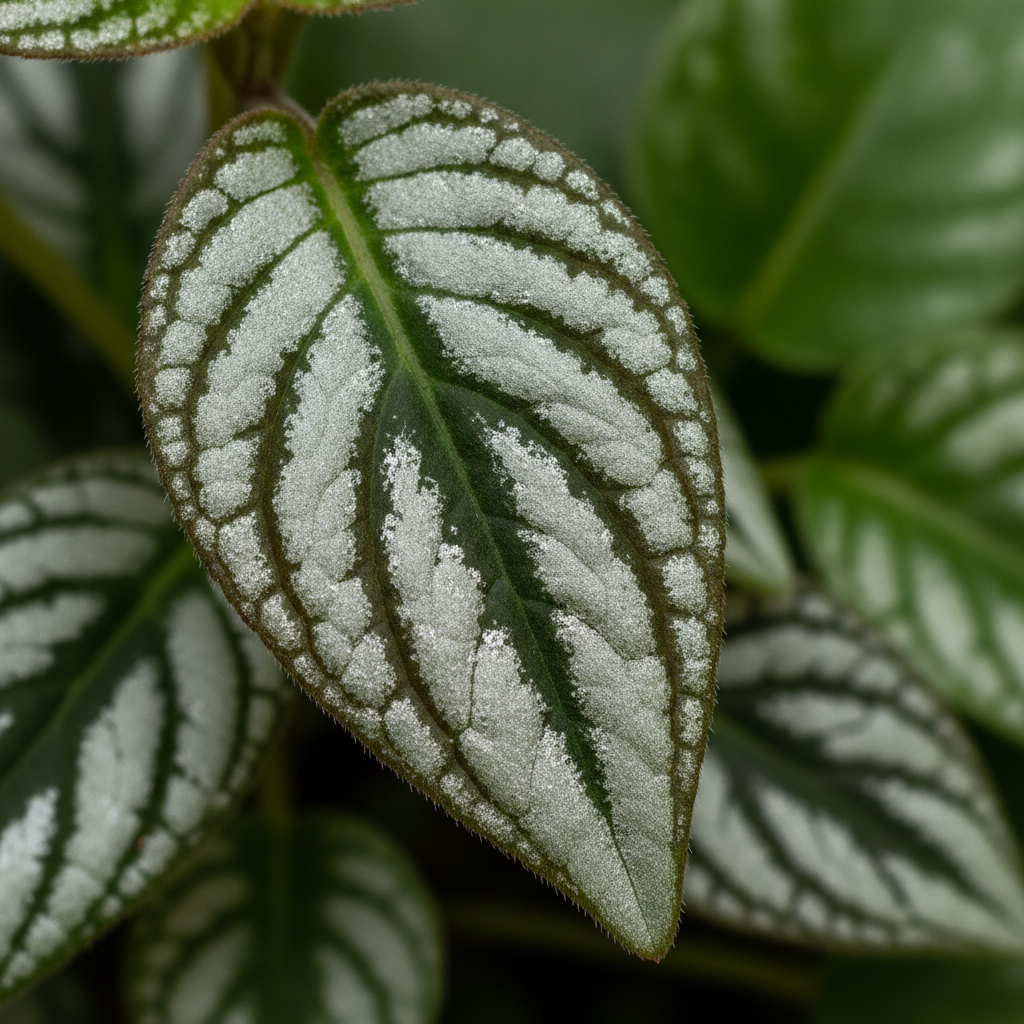
The full-size species from which minima is bred, this is an upright, bushy plant that reaches around 30 cm with noticeably larger, deeply quilted leaves banded in bold aluminium-silver. It offers the same metallic drama on a larger scale and suits a floor-level plant stand or a bigger pot, though it needs more frequent pinching to stay full as it grows.
A close relative rather than a true cultivar, the Silver Tree carries bronze-green, textured leaves marked by a broad central silver stripe and scattered silver flecks. It brings a warmer, darker tone to a grouping and contrasts beautifully with the cooler grey of the aluminium plant, asking for exactly the same bright indirect light and even moisture.
Frequently Asked Questions
Is the aluminum friendship plant toxic to cats and dogs?
No. Pilea cadierei and its dwarf form are non-toxic to cats, dogs and people, which makes it one of the safer choices for a home with pets or small children. A nibbled leaf may cause mild stomach upset simply through novelty, but the plant carries no toxic compounds.
Why has my aluminum friendship plant gone leggy?
Legginess has two causes. The most common is too little light, which makes the plant stretch and the leaves spread apart; move it somewhere brighter and pinch the tips to encourage bushier growth. The second is simple age, since even well-grown plants loosen after two or three years. When that happens, take a handful of cuttings and start a fresh, dense pot rather than trying to reform the old one.
Why are the leaf tips turning brown?
Brown, crispy tips and edges usually point to air that is too dry, especially near a radiator, or to a build-up of fertiliser salts in the soil. Raise the humidity with a pebble tray or by grouping plants, ease off feeding, and flush the pot thoroughly with plain water to wash out excess minerals.
My plant collapsed suddenly. Have I killed it?
Almost certainly not. A dramatic, all-over wilt is this plant’s signature thirst signal, and a thorough watering usually revives it within an hour. Treat it as a prompt to check the soil more often rather than a disaster, but avoid letting it happen repeatedly, since each collapse tends to cost a few lower leaves.
How often should I repot it?
Only when it needs it, typically every one to two years, and always in spring. Move up just one pot size when you see roots at the surface or emerging from the drainage holes. Many growers skip repotting old plants altogether and instead renew the display from cuttings, which keeps it looking its best.






